
Roofing for Manufacturers in Medford, OR
Roof care for Medford, OR manufacturing plants and processing facilities: production continuity, exhaust and chemical exposure, and condition-graded planning.
Overview
A plant manager in the Rogue Valley measures a roof in lost production hours, not in square feet. When a seam opens above a packaging line or a drain backs up over a finished-goods bay, the cost is the shift that stops, the inventory that gets wet and the order that ships late, all long before anyone prices the repair. Heat is part of the cause, because a manufacturing roof carries its own sun load plus whatever heat the process below pushes upward, and 61 afternoons a year pass 90 F with 11 passing 100 F.
Our work with manufacturers starts from the production calendar. The roof gets a condition grade and a service-life estimate, and the repair or replacement is placed where the plant can absorb it, at a planned shutdown or a seasonal low, rather than wherever the next leak happens to land.
The service life of a plant roof also depends on what the smoke seasons leave behind. After 26 smoke days in Medford in 2021, soot on a membrane near exhaust outlets mixes with process residue, so cleaning happens more often than on an office roof.
Plants and processors across the valley
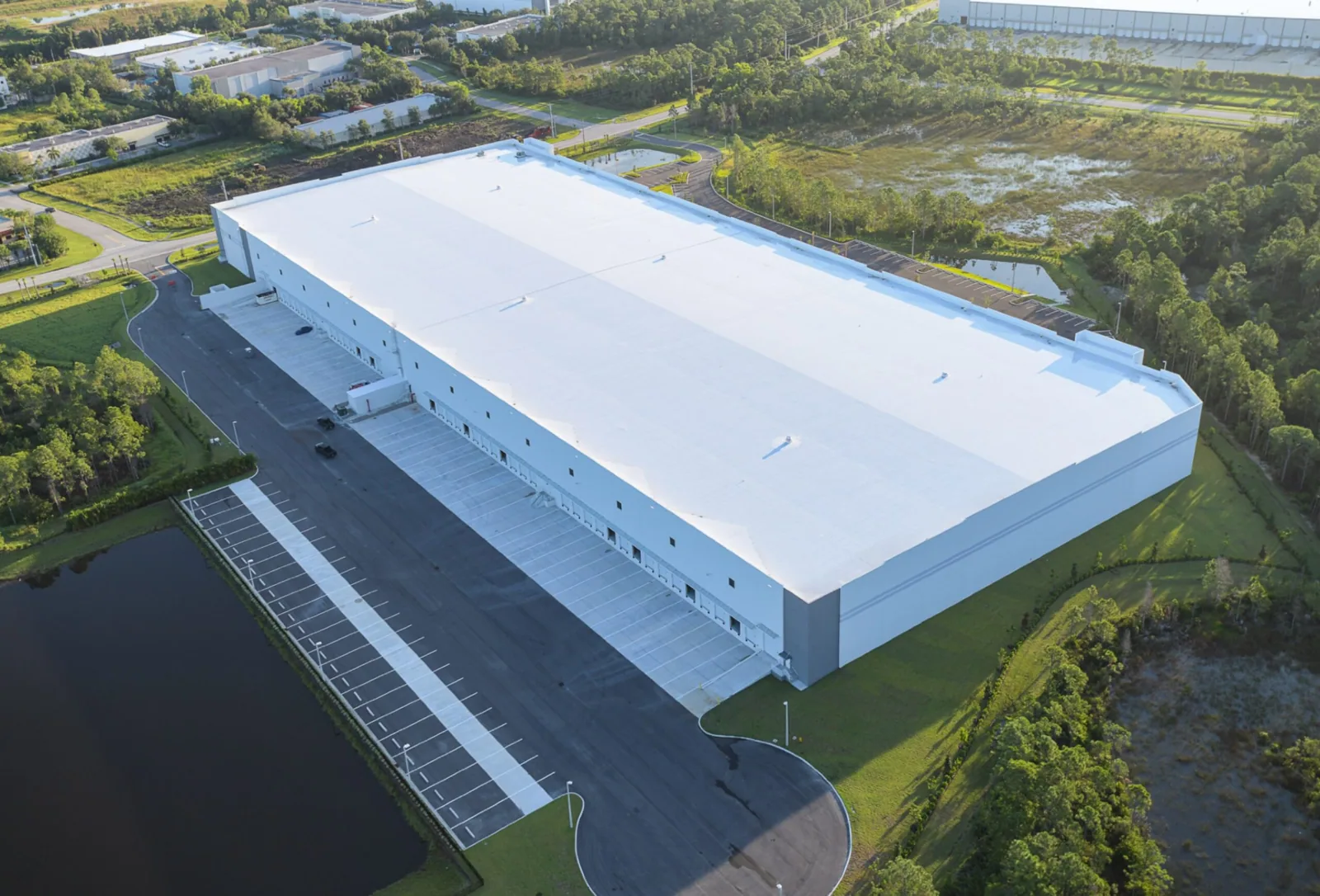
Jackson County's main industries are health care, agriculture, lumber, manufacturing and tourism, and the building stock follows. Harry and David's Medford site, the largest employer in Southern Oregon with about 1,700 year-round and 6,700 seasonal workers, brings orchards, manufacturing and distribution into one footprint. Central Point has Knife River Materials, USF Reddaway and Pilot Travel Center among its employers, and Erickson Air Crane is based there as well. Phoenix Industrial Park, a 26-acre heavy-industrial zone, and the White City Industrial Park both offer rail-served industrial buildings.
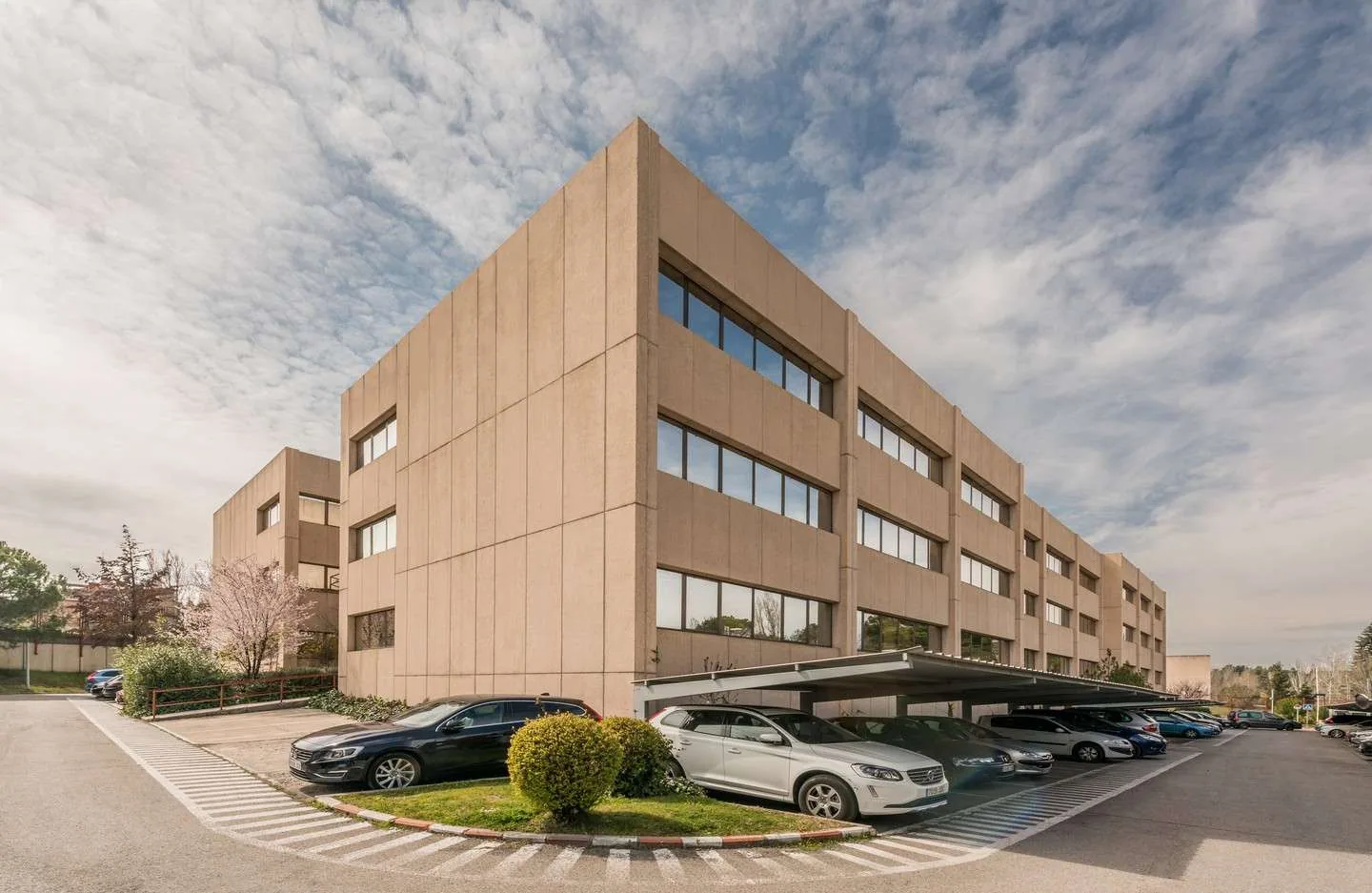
The roofs over these operations, from plant roofs to flex industrial buildings, range from simple spans to buildings with heavy rooftop equipment and large exhaust paths. Wine and agricultural processing around the Applegate and Rogue Valley appellations adds smaller production buildings with their own demands, including washdown and seasonal crush schedules.
Where goods leave the plant by truck or rail, the roof belongs to a larger chain; outbound partners in logistics and 3PL operations depend on the same buildings staying dry, and a leak in a shipping bay disrupts them as much as the plant. For plants that sell through large retail customers, a retail chain receiving late product is the real cost of a wet dock.
What the process puts on the roof
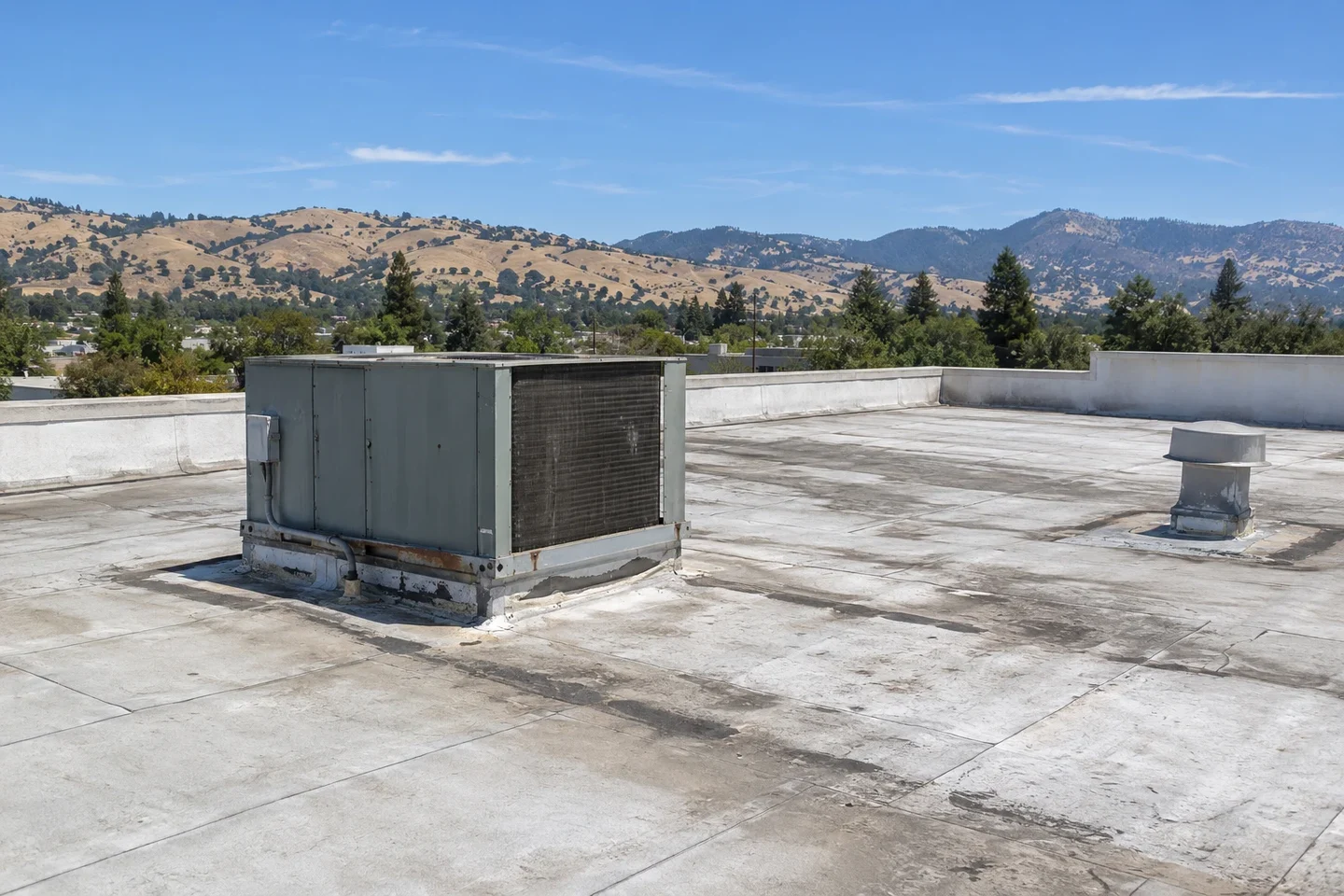
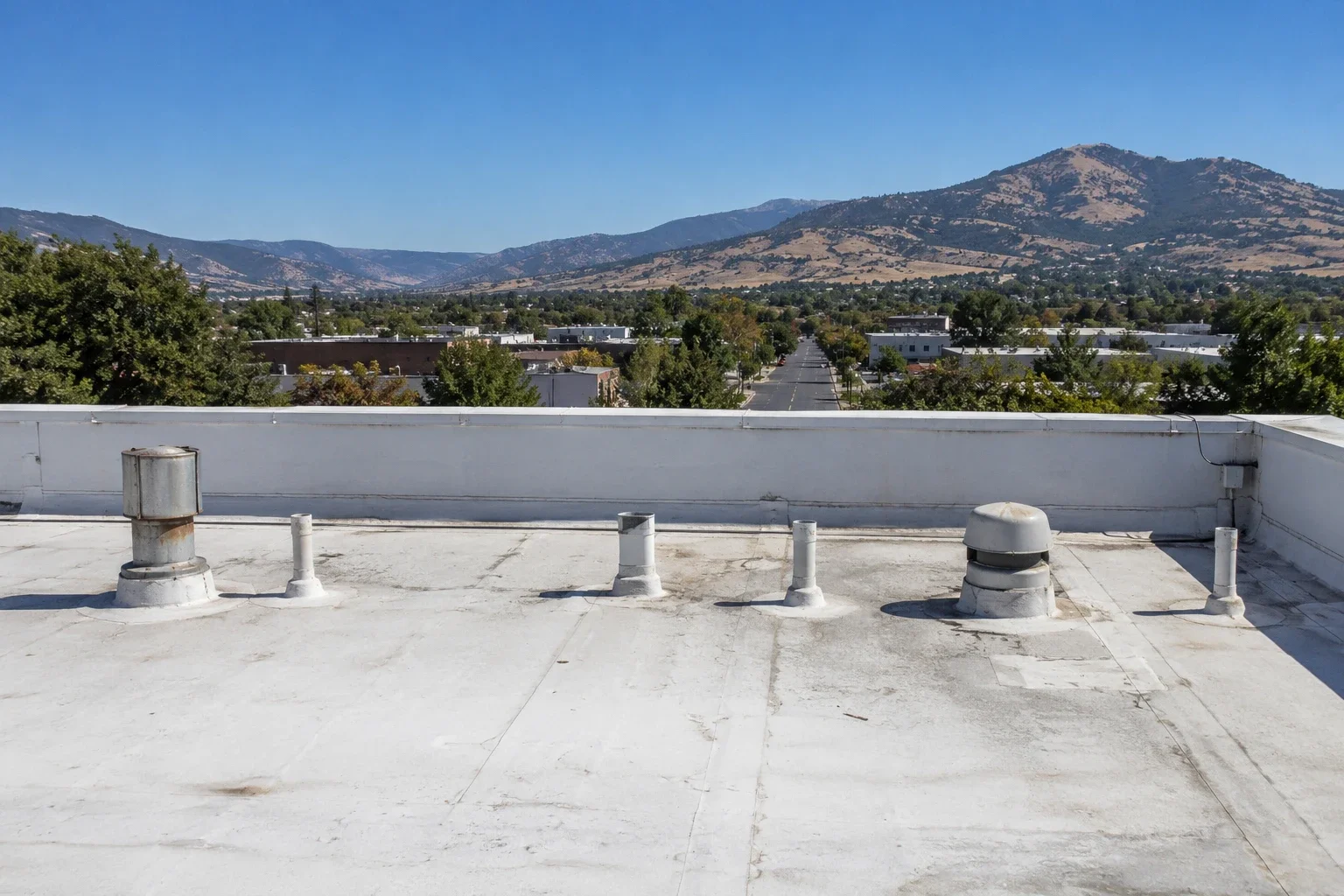
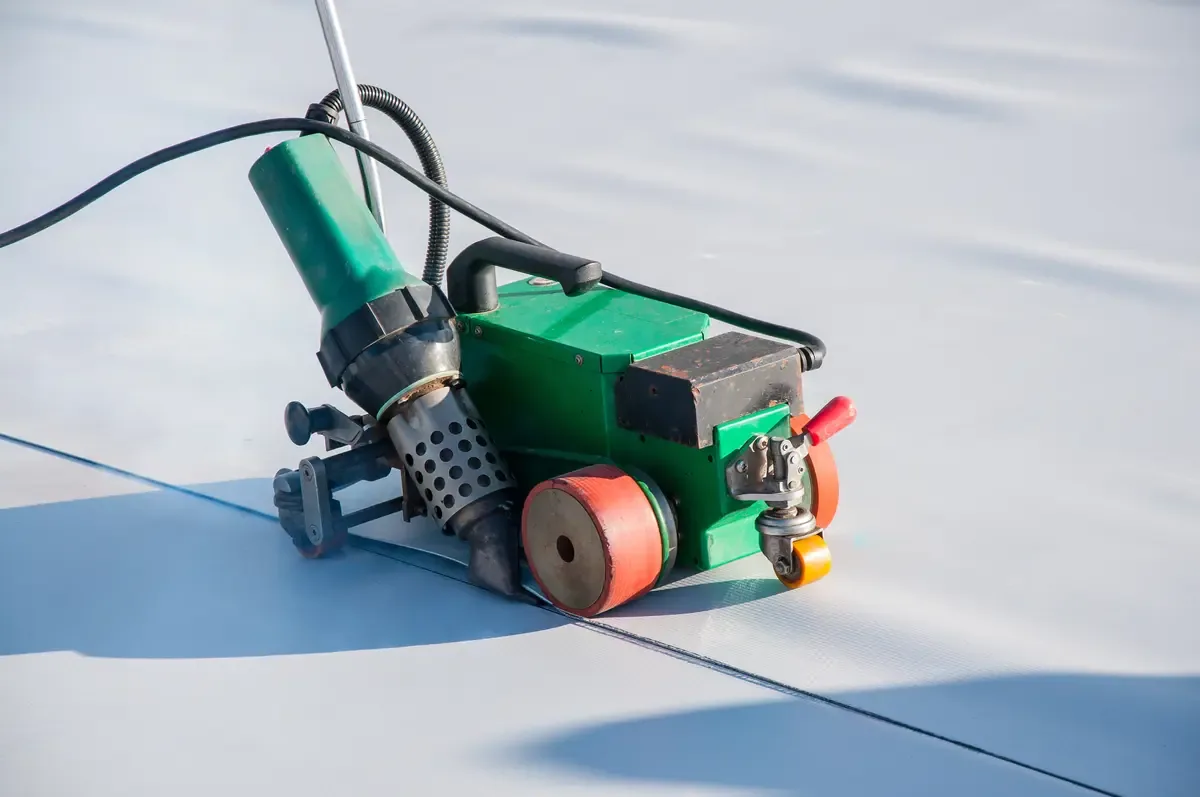
A manufacturing roof is exposed to more than weather. Exhaust stacks discharge hot, moist or chemical air that can attack membranes and flashings nearby. Grease, oils and solvents from process vents can break down some single-ply sheets, which is why membrane selection matters. A PVC roof is often chosen where oils and grease are expected, because the material resists them better than many alternatives.
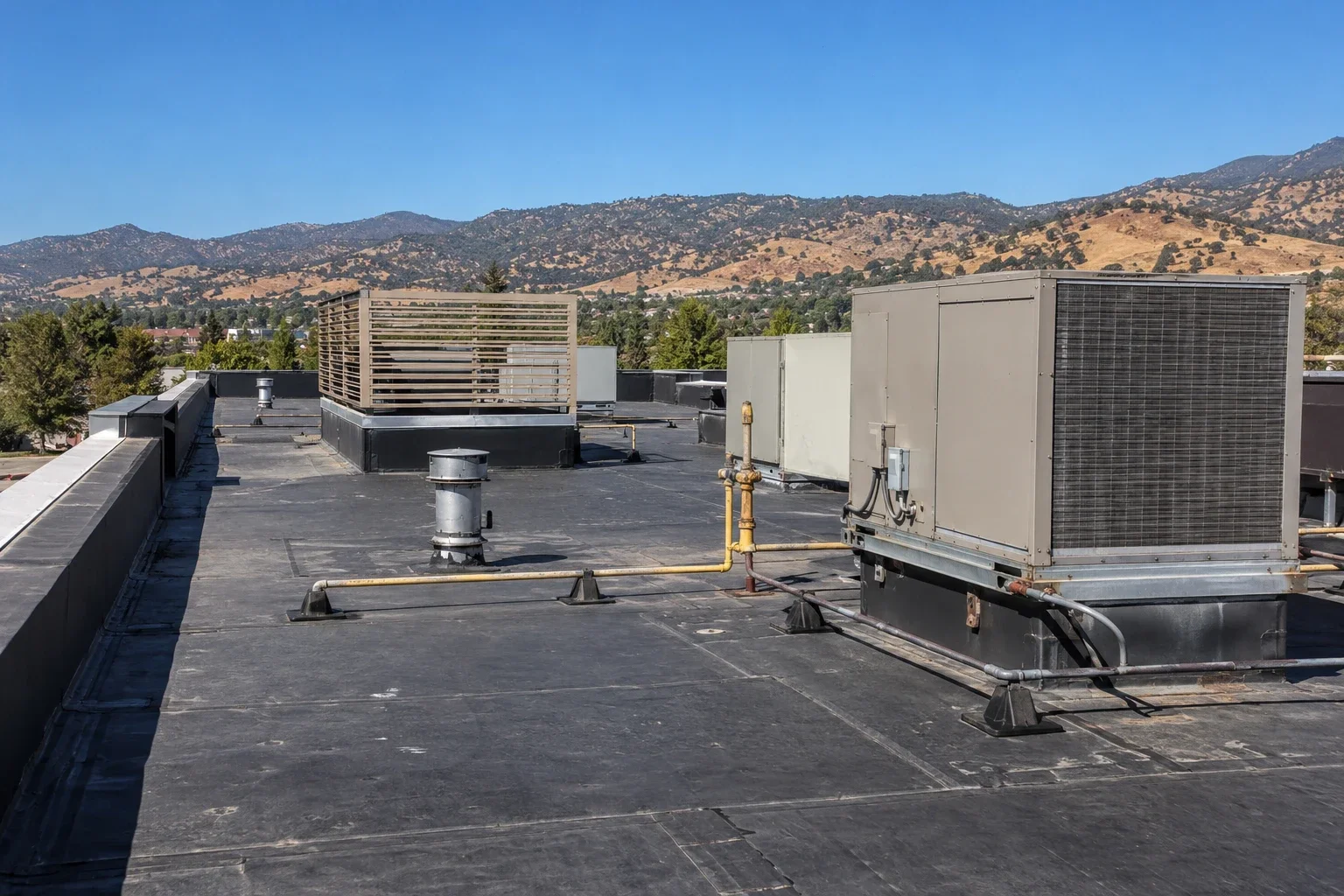
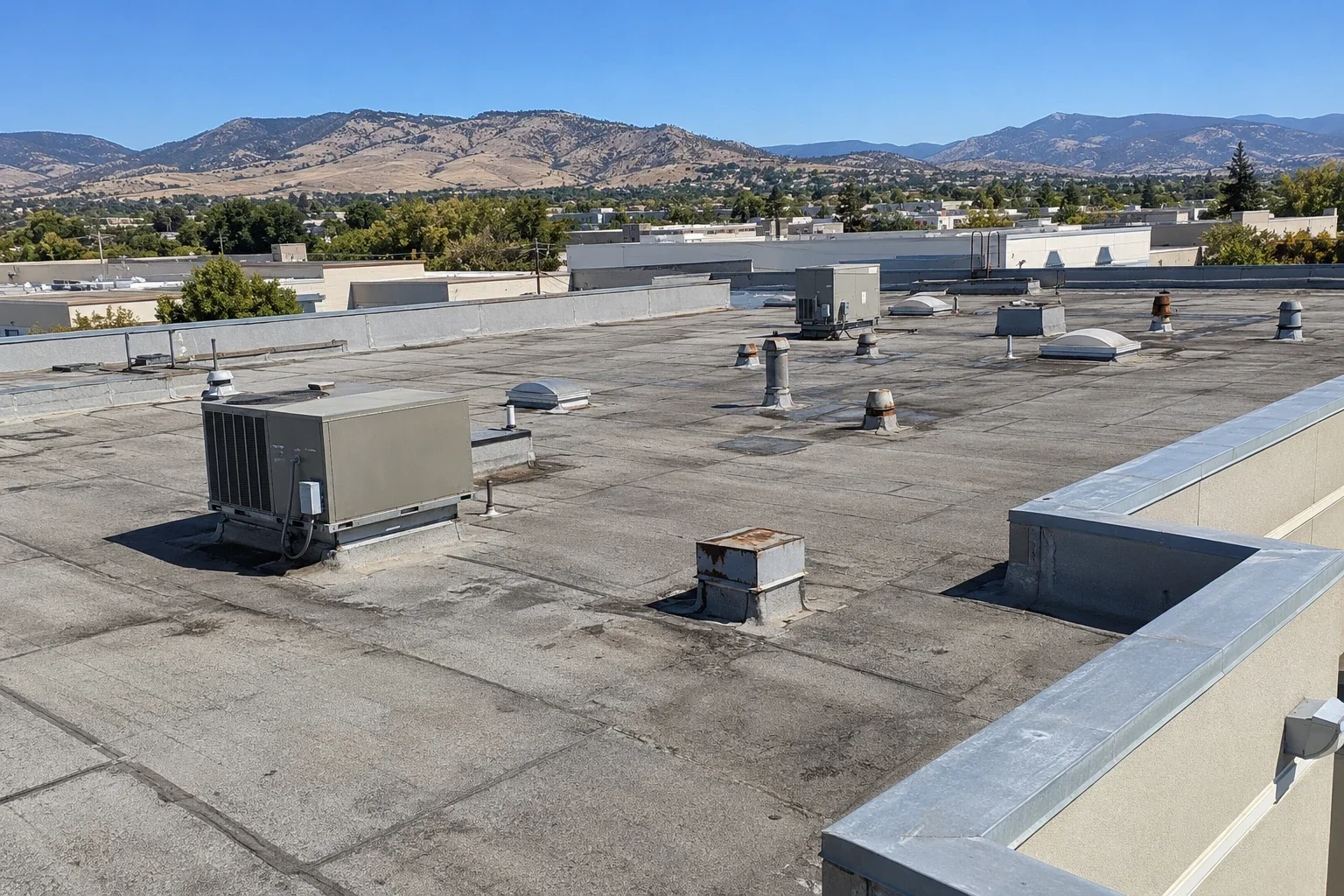
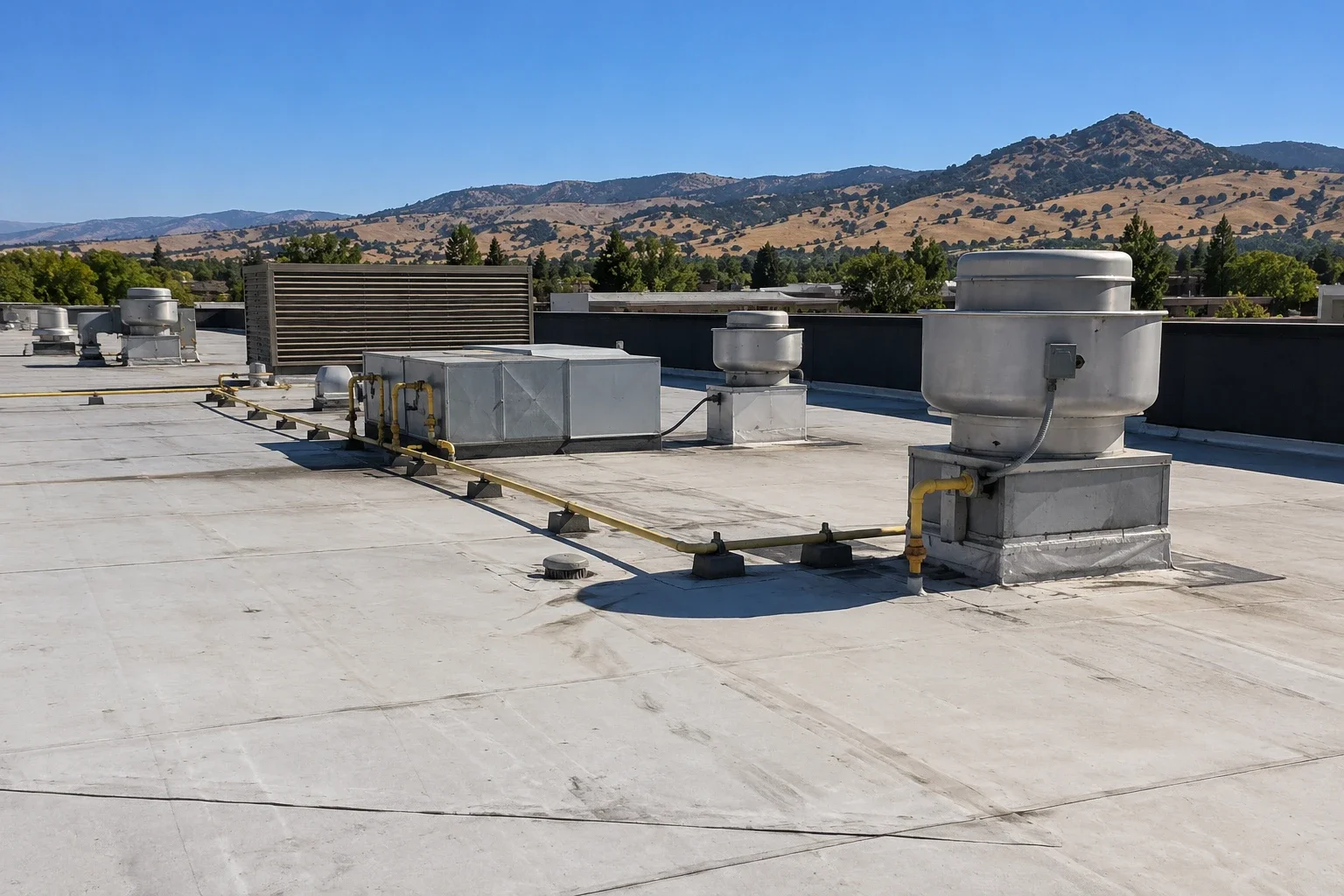
Rooftop equipment adds its own demands: dust collectors, fans, ducts and piping. Those penetrations and supports need regular attention, which is where curbs and equipment supports become a recurring maintenance item. Process moisture rising from below can also condense under a membrane in winter inversion weeks, so we check insulation condition with a moisture survey whenever a roof shows unexplained deterioration.
Corrosion deserves a separate look. Exhaust that is mildly acidic or salty will eat at metal flashings, fasteners and edge details long before it harms the membrane, and the damage can look like ordinary rust. We check metal near vents, replace with stainless or coated material where the exposure calls for it and note the location in the register so the next inspection starts there.
Working around production schedules
Plants that run around the clock cannot give a crew a clear roof for a week. We plan in sections, working above the quieter lines first, and we line up tear-off and loud work with planned shutdowns or lower-demand periods. For seasonal operations, the off-season is the natural window: a food or beverage processor's slow weeks are when a large reroof fits best.
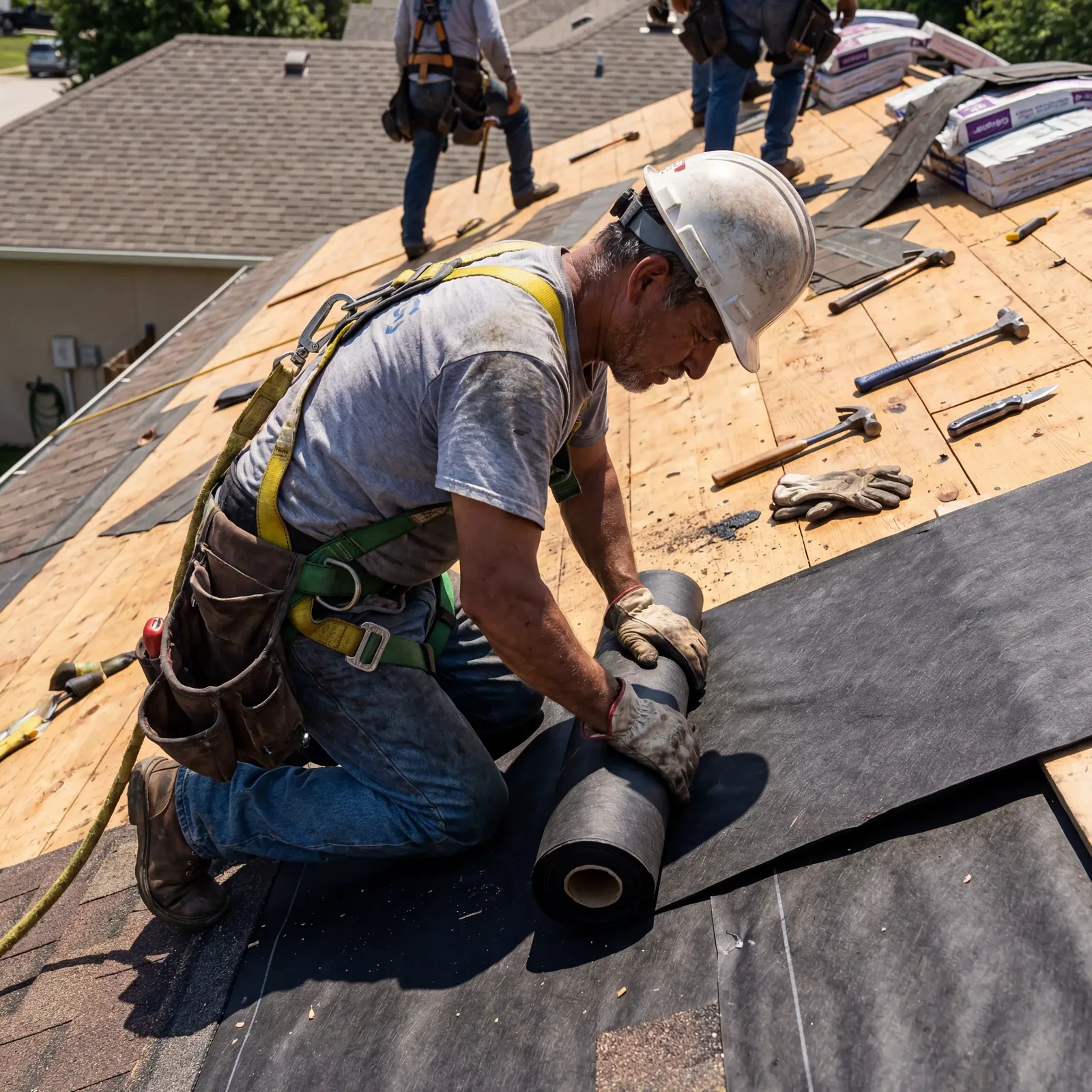
Where production cannot stop, protective measures take over. We install overhead protection above sensitive equipment, cover or isolate product areas, and seal each day's work against the weather. Dust, odors and noise are managed to the plant's own rules, including food-safety or cleanroom requirements where they apply. A written plan goes to the plant manager and the safety lead before work begins.
Cost is mostly about access and interruption. A plant that gives the crew an empty roof for a weekend pays less than one that needs protection over live lines, and the estimate separates the roofing from the protection so management can see what each constraint adds.
Safety, permits and plant rules
Manufacturing sites have their own safety culture, and our crews follow it. We take orientation at the gate, comply with lockout and hot-work procedures, and keep roof access controlled so that unqualified people do not wander onto the deck. Where roof hatches or ladders are locked, access is arranged in advance.
Hot work on a roof above a plant with flammable material requires a permit, a fire watch and often a pause in production below. Cold-applied or mechanically attached systems avoid some of that when the plant prefers it. The decision on system type is made with the safety lead, not around them, so insurance and internal policy are satisfied before the first day on site.
Environmental rules also apply: stormwater leaving a roof carries whatever has landed on it, and material from old roofs has to be disposed of properly. We handle waste streams and document disposal, and we ask the plant about any permits that touch roof drainage.
Planning the roof as a plant asset
A plant's roof belongs in the same capital conversation as its conveyors and boilers. We provide a roof register with condition grades, expected service life, and a replacement forecast, so finance and operations can see what is coming. For owners with several plants, the same grading scale applies at each address, a pattern that the multi-site roof programs make practical.
Maintenance matters as much as replacement. Debris and process residue collect around drains, and a missed cleaning can turn into a ponded bay within a season. Regular visits, such as those we run under preventive maintenance, keep drains clear and flashings sound between capital projects.
Budget conversations improve when the roof is priced as one line among several. Owners can compare a restoration against a replacement, and weigh the shutdown cost of each, with the register showing how many service years each option returns.
Share the plant list and shutdown calendar

Related Roofing Pages

Questions About Manufacturers
Which roof system holds up best against exhaust and grease?
PVC and some KEE membranes resist oils and many chemicals better than other single-ply options. The choice depends on what the vents emit, so we ask for the process list before recommending.
Can you replace a roof while the plant runs?
Yes, with sectioned work, overhead protection and a plan that follows the shifts. Some areas may require partial shutdowns for the noisiest steps.
How do you protect product and equipment inside?
With barriers, covers and daily dry-in, plus coordination with the plant's own housekeeping. Sensitive zones are marked on the roof plan before any work begins above them.
What if production schedules change mid-job?
We keep the sections small so we can pause, close and resume without leaving the building exposed. The schedule moves with the plant, and the weather-tight closure at the end of each day does not change.
Do seasonal operations need a different approach?
They benefit from timing. Orchard, packing and wine operations have quiet weeks when a reroof is easier, and we try to land major work there instead of during harvest.