
TPO Roofing in Medford, OR
TPO roofing in Medford, OR: how a white welded single-ply holds reflectance through triple-digit heat and smoke season, and what it means for the reserve.
Overview
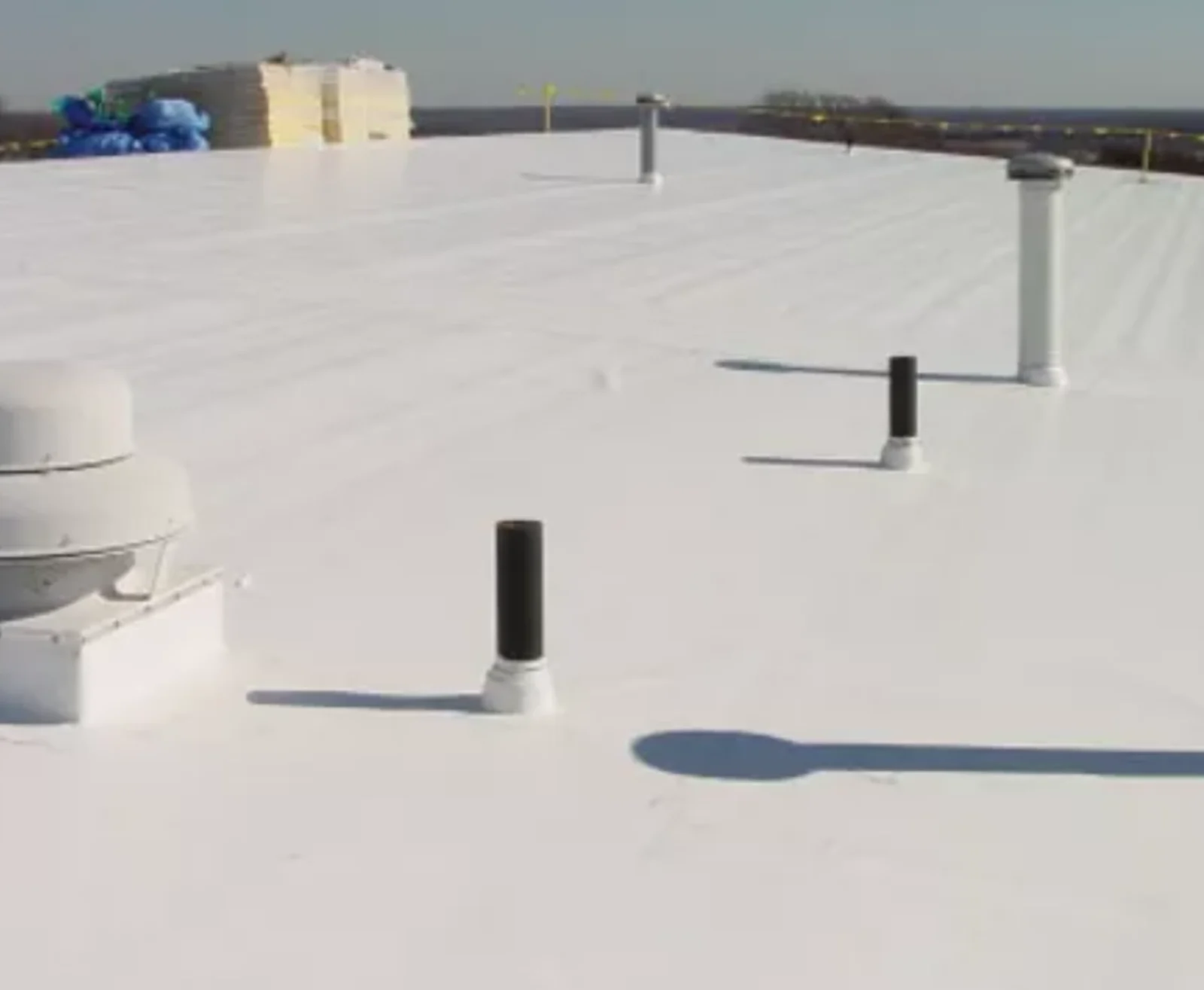
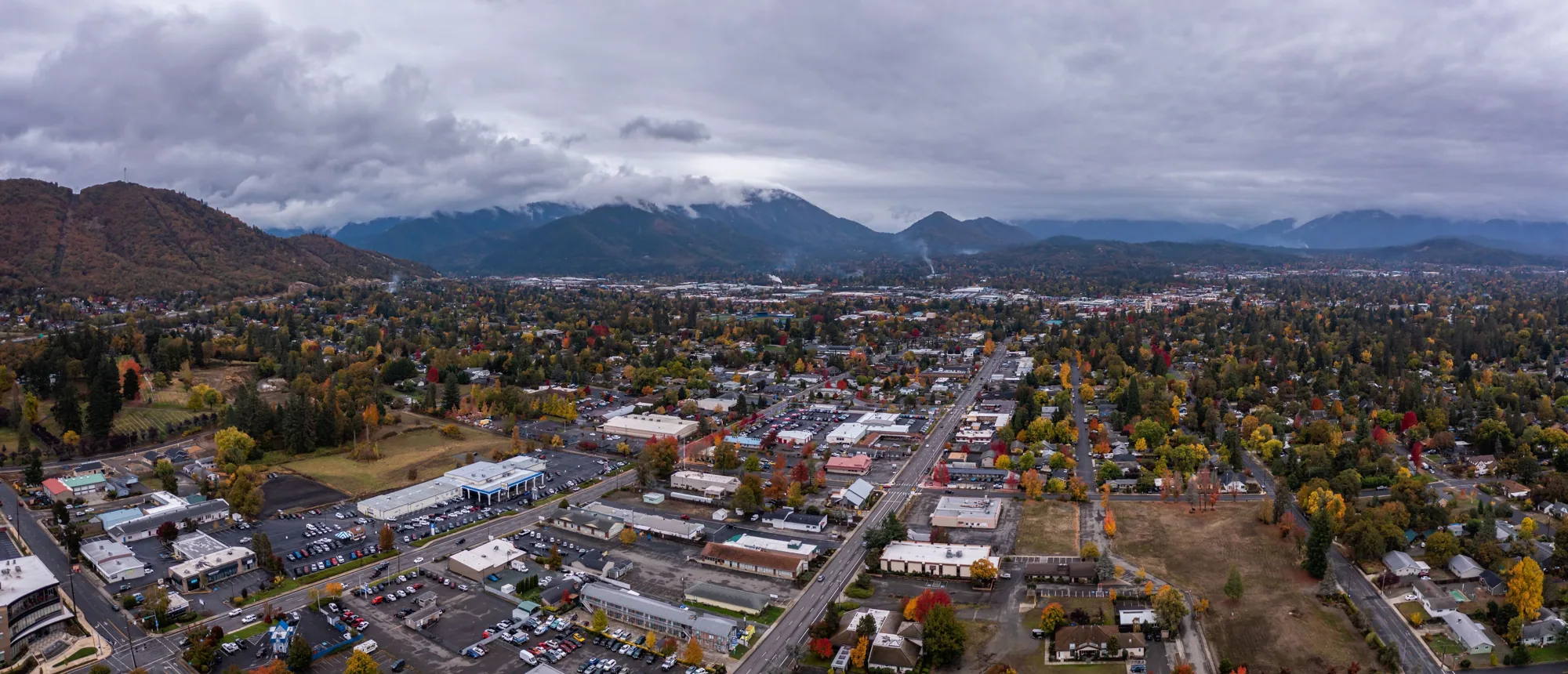
A white TPO roof in Medford, OR starts life as the cheapest cooling the building will ever buy, and then the valley begins drawing it down. Summers here bring about 61 days above 90 F, including 11 above 100 F, with 115 F as the record high. Each of those afternoons spends a little of the membrane's UV budget, and each smoke week lays a film of soot that darkens the surface and raises its temperature. The reserve schedule assumed a service life; the valley decides how much of it remains.
For a property manager, the useful question is how fast reflectance is being lost and which line in the owner report that moves.
Why owners choose TPO for valley roofs
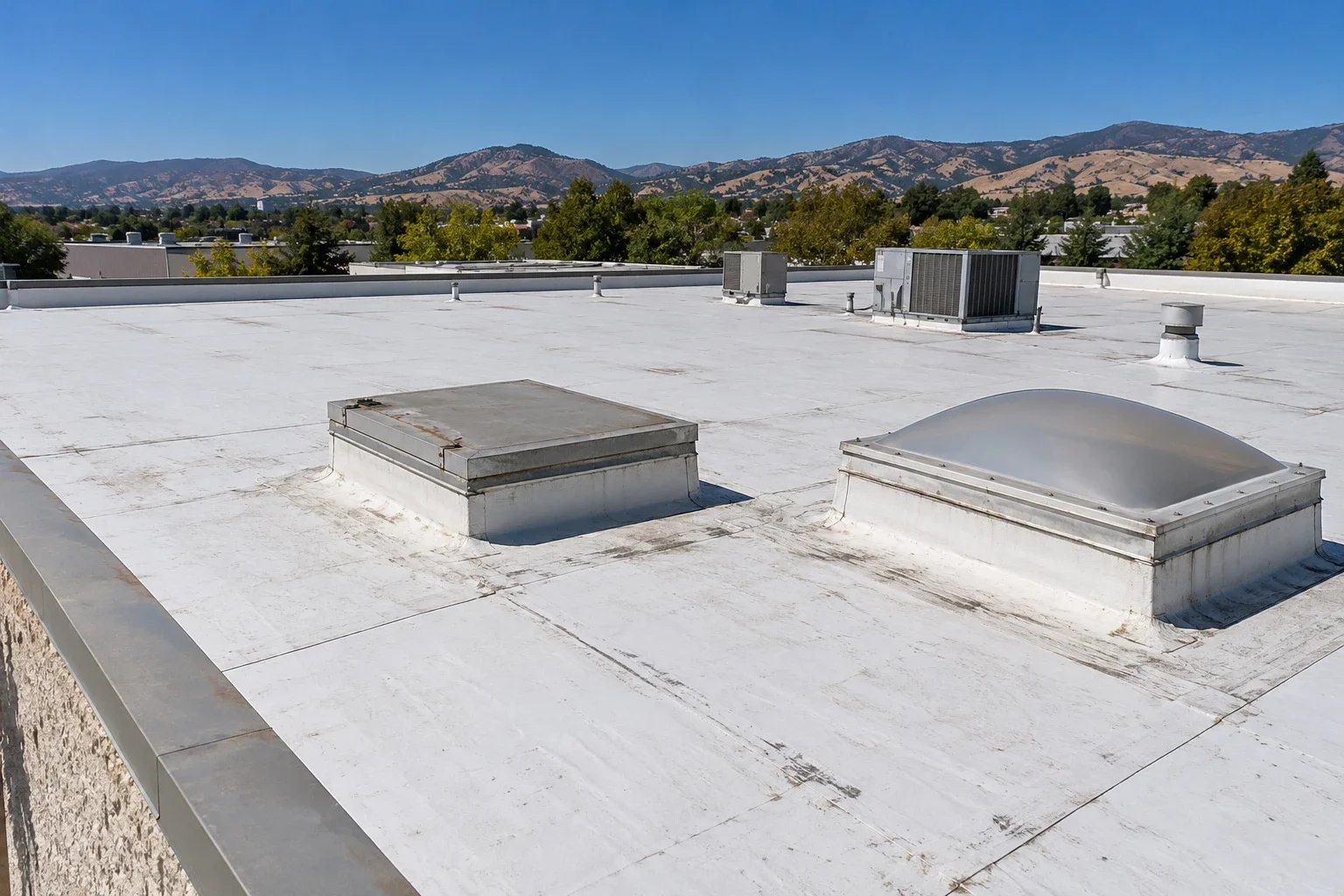
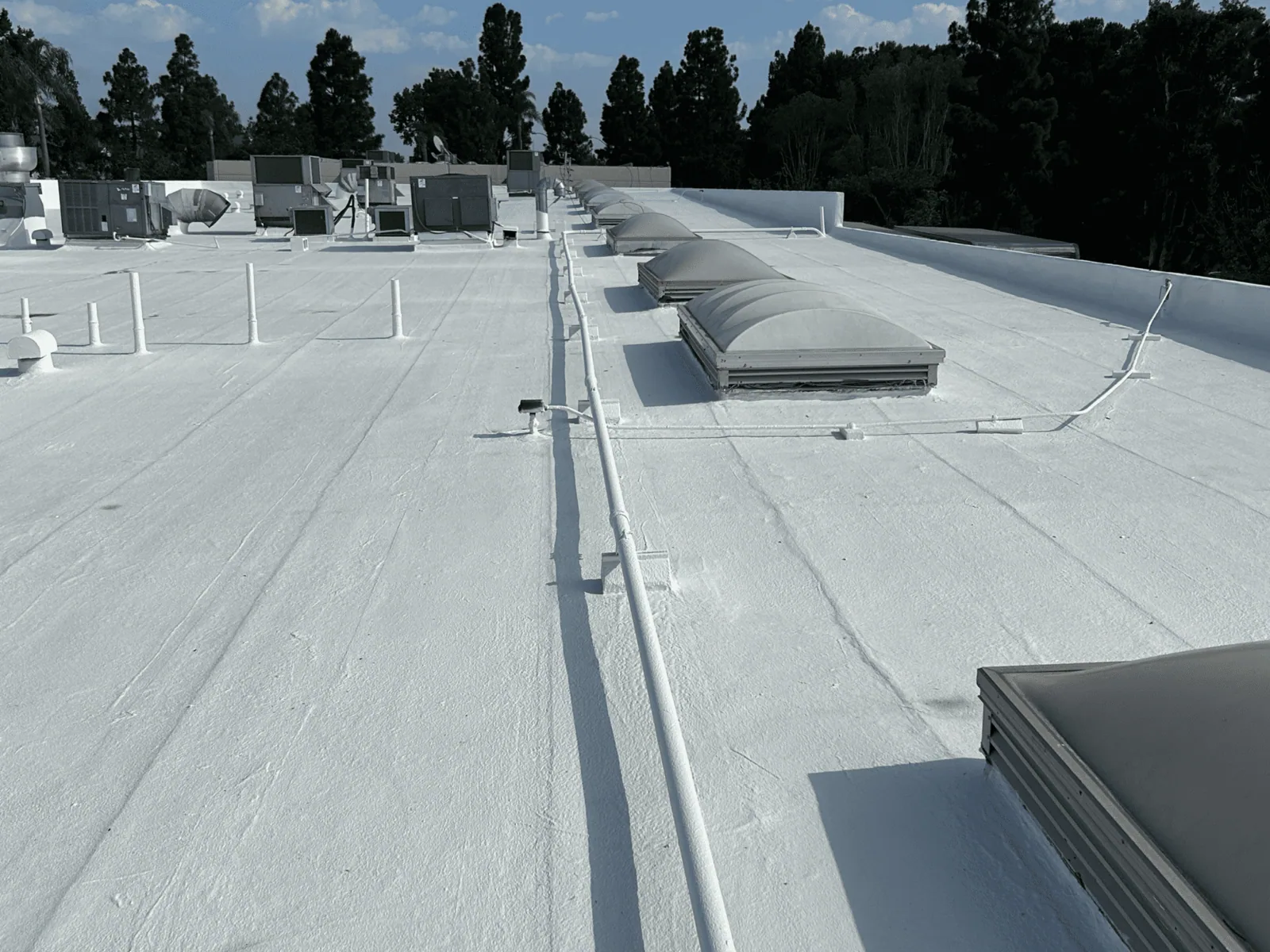
TPO is a heat-welded thermoplastic sheet, usually white, installed mechanically attached, fully adhered or under ballast, and it dominates large low-slope roofs because it installs quickly and welds into one continuous membrane. In a place where cooling load dominates the utility bill, a reflective surface reduces rooftop temperature on the hottest afternoons and trims the strain on the rooftop units beneath it.
The same qualities create the exposure. A thermoplastic sheet softens in heat, stiffens slowly over years of ultraviolet exposure, and gathers soot and dust that cut reflectance. We grade each roof for those changes and record them, so the property manager sees whether a membrane is aging on plan or ahead of it.
UV budget and reflectance loss
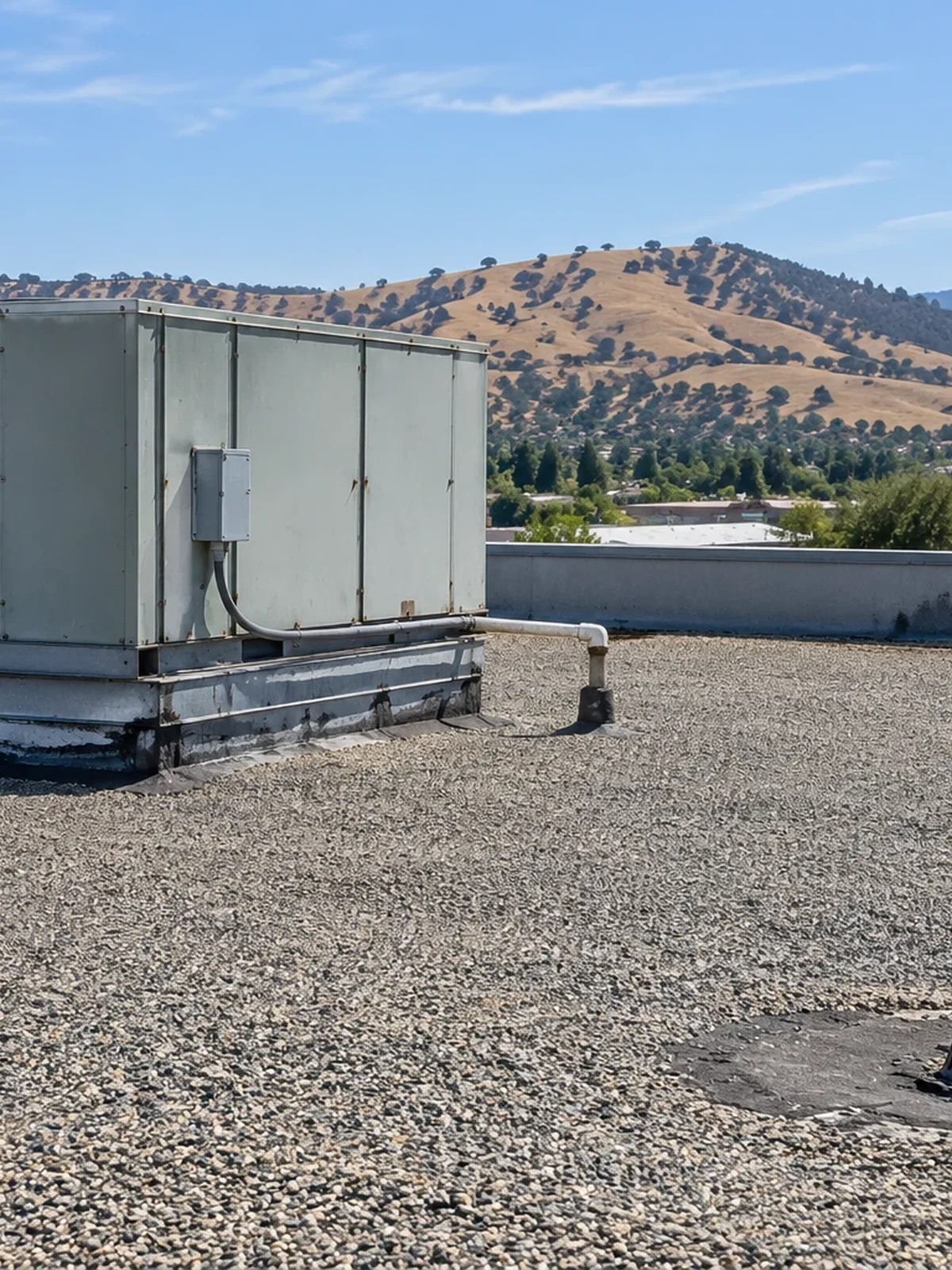
Every membrane carries an ultraviolet budget, the sum of exposure it can absorb before surface cracking, seam stiffening and chalking begin. A Medford summer spends that budget faster than a coastal one, because the rain shadow delivers sun with little cloud and few washing storms. Dirt and ash then stay on the surface instead of rinsing away.
Reflectance loss shows first as a gray or tan cast on what was white. It matters because a dirtier roof runs hotter, which accelerates the aging that produced it. A spring cleaning, supported by silicone or acrylic coatings where the sheet has aged, and a condition grade each year keep the loss visible, and the roof register records both the grade and the cleaning date for the owner report.
Smoke season, soot and ember exposure
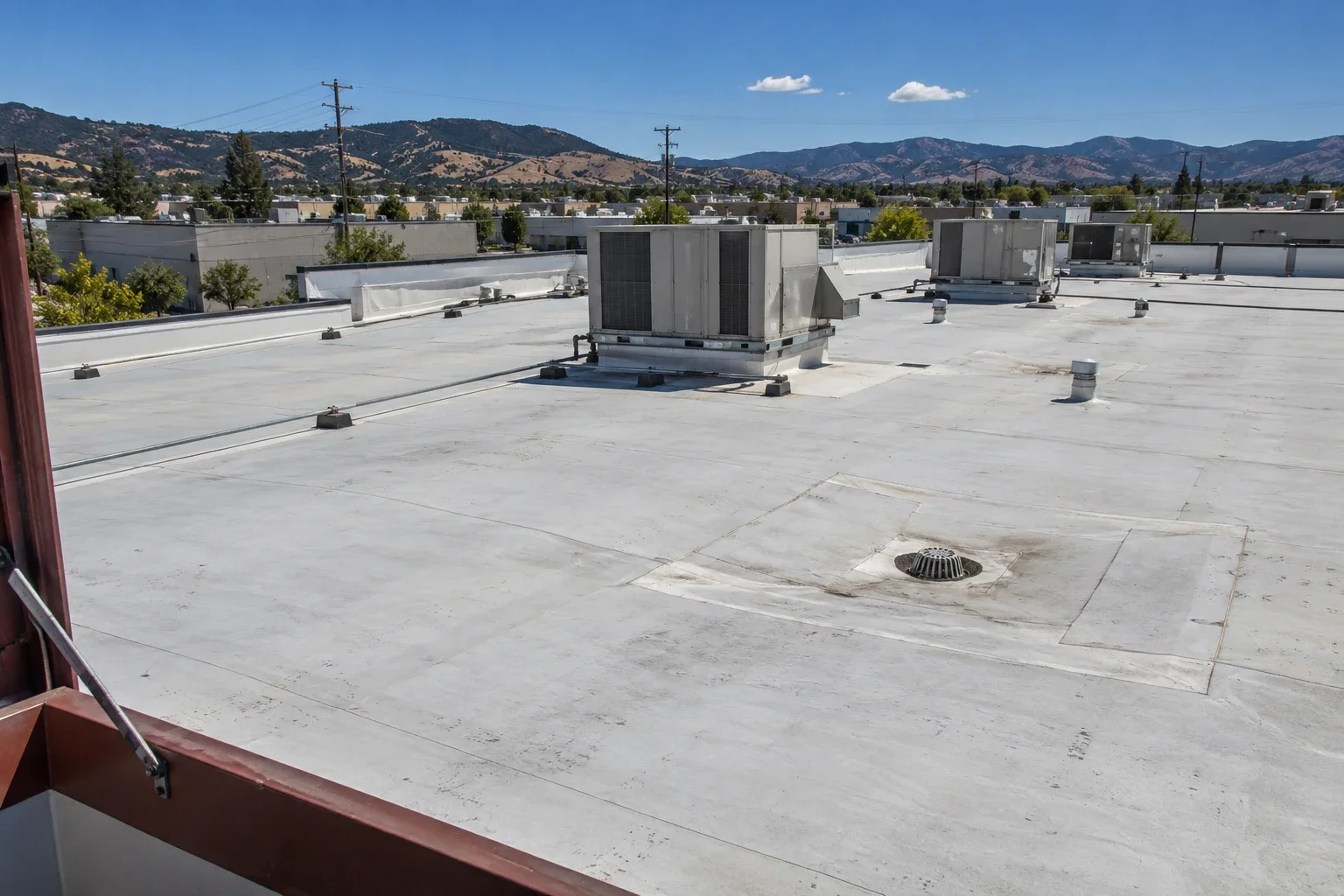
The valley breathed smoke on 26 days in 2021, a year after fires burned roughly 2,600 homes in Jackson County. Smoke-season soot settles on a reflective surface within days, and ash that lands on a hot membrane can bake into it. After a heavy smoke event we inspect for soot loading, check drains and scuppers for ash, and look at edges for ember exposure.
TPO is not fireproof, and the assembly beneath it matters. Cover board and insulation choice set the roof's fire classification, and the sheet is only one layer of it. We confirm the assembly rating against the plans before specifying, and we keep rooftop intake filters on the maintenance list, since soot reaches the units as well as the membrane.
Seams, welds and summer installation
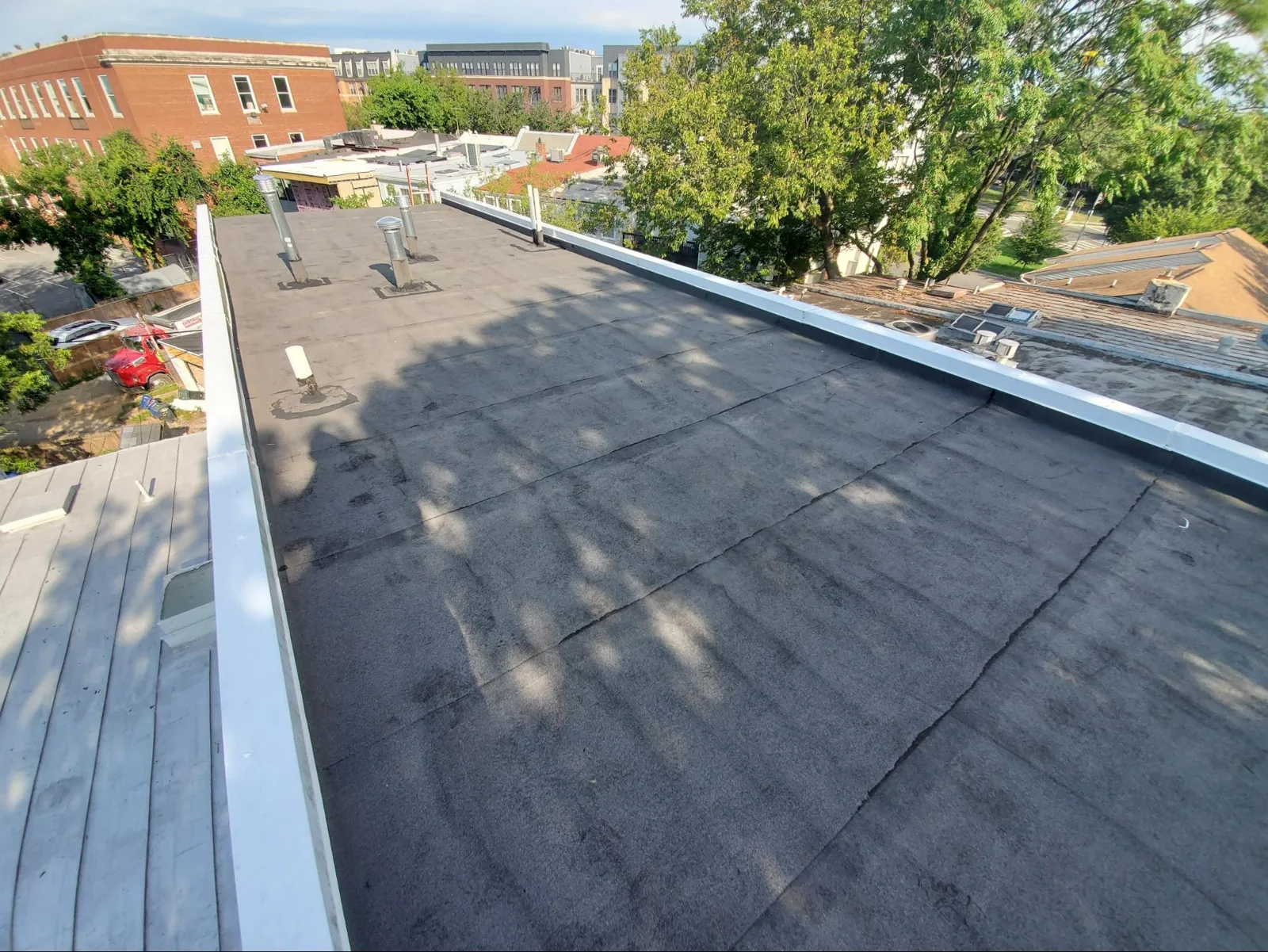
The quality of a TPO roof is the quality of its welds. Hot-air welding needs the right heat, speed and pressure, and a dark or sun-baked surface changes all three. In a triple-digit stretch, crews start at first light, stop when the deck temperature climbs and test-weld again whenever conditions shift. We probe every seam after it cools and pull test welds at the start of each shift.
Existing roofs show weld problems in a characteristic way: seam edges that lift, small cracks along the lap and a chalky, stiff surface near the weld. These are the repairs that belong in the condition grade, and they usually arrive before the field of the roof fails. Catching them early keeps a repair small and the replacement date where the reserve schedule put it.
Insulation, cover board and heat
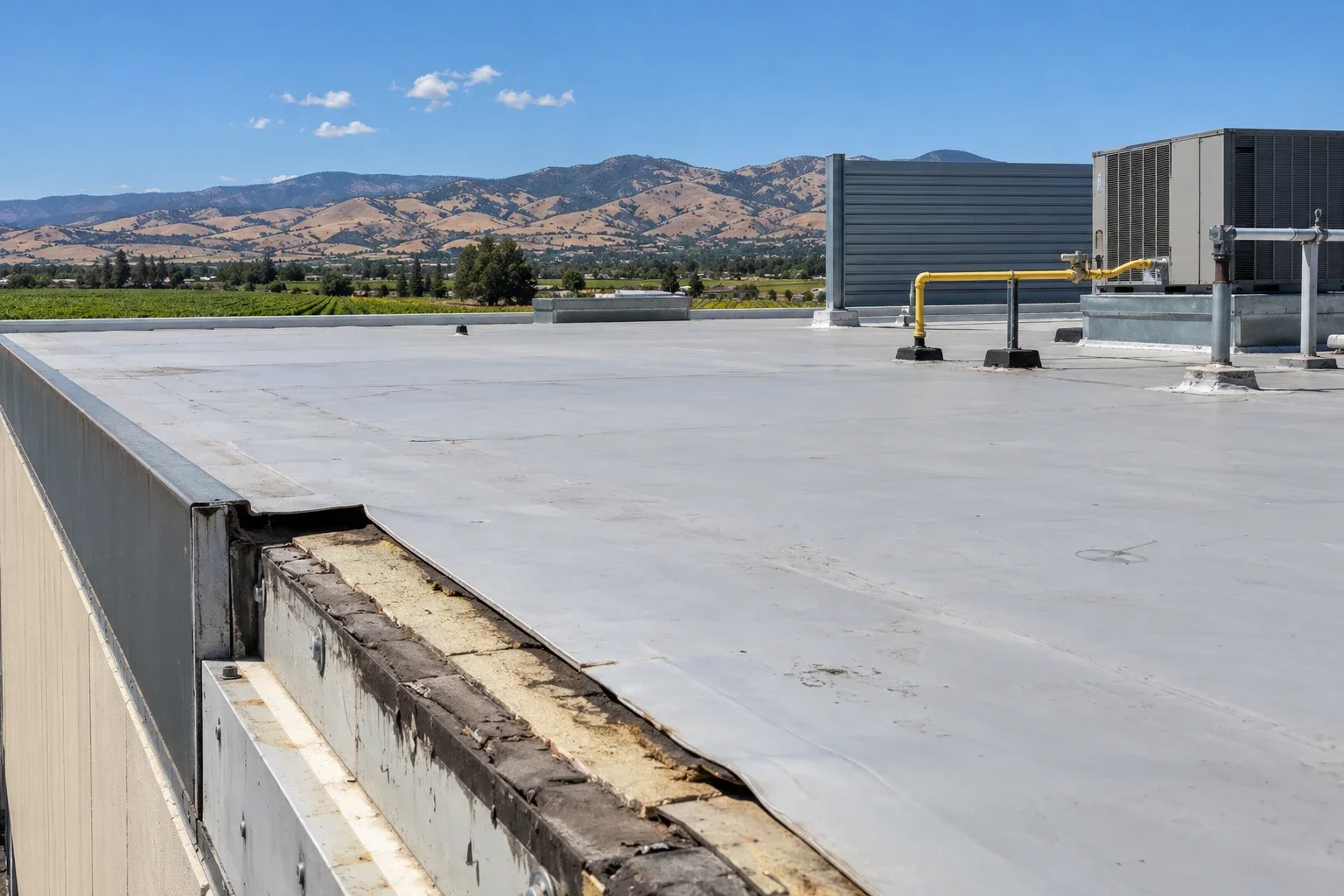
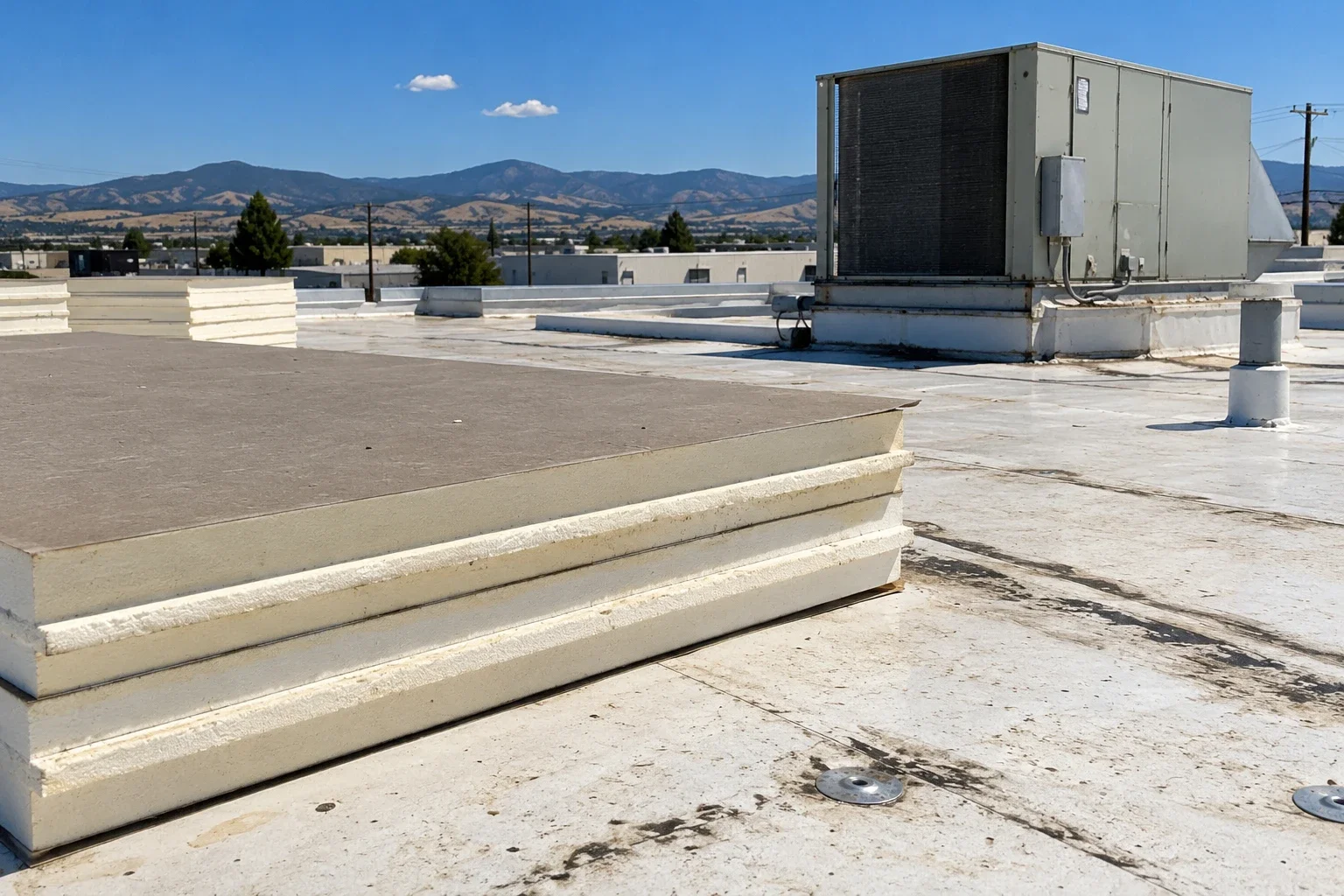
The sheet is only the top of the assembly, and in a valley this hot the layers beneath it carry as much of the load. Insulation thickness sets how much heat reaches the deck, cover board protects the insulation from foot traffic and hail, and the attachment method sets how the membrane behaves when it expands in the afternoon and contracts overnight. Mechanically attached sheets flutter slightly in wind and are the fastest to install. Fully adhered sheets give a flatter surface and cost more in labor.
We price insulation and cover board as separate lines, because they are the choices an owner can adjust without touching the membrane. A thicker assembly raises the parapet and flashing heights, so we check those first. The insulation and cover board scope sets the numbers, and the owner report carries them forward as part of the roof's record.
Where TPO fits across the valley
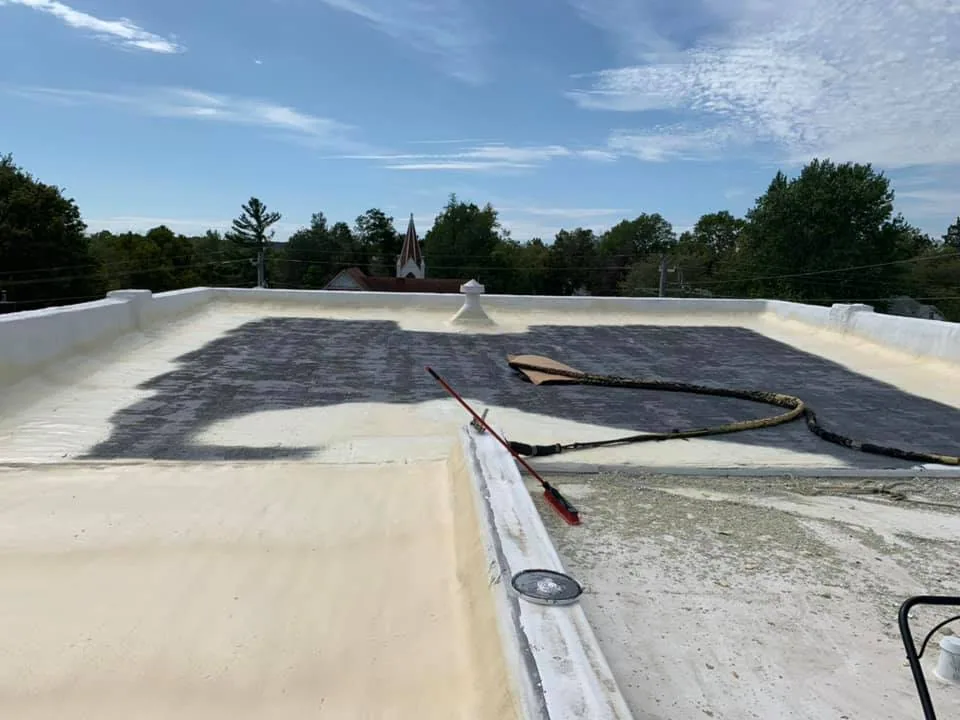
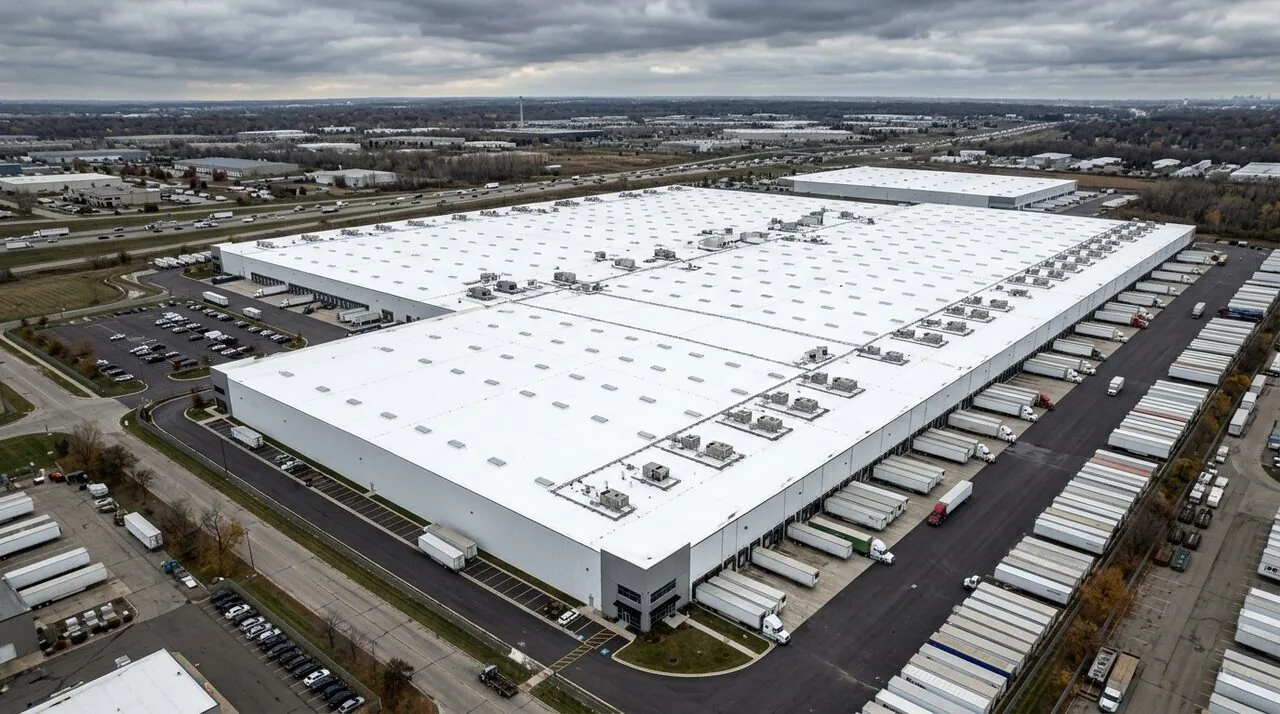
Large flat roofs favor TPO. Rogue Valley Mall, roughly 640,000 to 847,000 square feet of enclosed retail on North Riverside Avenue, is the kind of large flat-roof retail where a welded single-ply gets priced, and retail along the North Riverside and Crater Lake Highway corridor follows. The warehouses along Table Rock Road, including an 87,750 square foot ground-distribution building, and the heavy-industrial stock at Phoenix Industrial Park are in the same class.
Healthcare campuses are a different case. Over 2,000 people work at Asante Rogue Regional Medical Center and Providence Medford Medical Center, whose roofs carry mechanical equipment, tight schedules and infection control rules. TPO appears there too, usually with a heavier gauge and a cover board, and the work is phased around the hospital.

Work window, reserve schedule and lease timing
A replacement planned now is checked against Oregon's 2025 edition of its structural code, in force since April 1, 2026, since insulation, wind and fastening requirements can move the price. We note the code edition in each scope and in the owner report.
On the lease side, a roof that will go through a tenant turnover is best replaced before it, not after. Replacement is a reserve-schedule line with a date, and a coating or recover can defer it when the insulation is dry. The roof register carries the remaining service life, the condition grade and the carrying cost of waiting, so the owner can compare the choices.
The spring work window is the best part of the Medford year for single-ply installation: temperatures are moderate, adhesives and welds behave and the roof is not yet baking. It is also when tenants are making summer plans, so the schedule is a conversation with the property manager. We section the roof so each day closes watertight, shield rooftop intakes during welding and coordinate noise with quiet hours.
Summer jobs are possible with adjustments. Crews start at dawn, avoid dark surfaces in the afternoon and pause when conditions leave the working range. Fall can work after the smoke clears, since ash in the air is a poor companion to adhesives. We hold a make-up day in every schedule and report the actual dates to the owner, so the roof register reflects when the work was done.
Send the building list for a condition grade
Related Roofing Pages


Questions About TPO Roofing
Does white TPO stay white in Medford?
Not fully. Dust, ash and soot cut reflectance in the first seasons. A yearly cleaning restores much of it, and we record the grade.
Can TPO be installed in a heat wave?
Yes, with early starts and test welds. We stop when deck temperature rises past the working range.
Is a cover board worth it under TPO?
On roofs with foot traffic or hail risk, yes. It protects the insulation and gives the sheet a firmer bed.
How long should a TPO roof last here?
It depends on gauge, installation and cleaning. The condition grade and remaining service life tell you more than age alone.
What does smoke do to the warranty?
Soot is a maintenance matter, not a defect. Keep cleaning records, since a warranty review asks for them.