
Preventive Roof Maintenance in Medford, OR
Scheduled roof maintenance for Medford, OR commercial buildings: heat, smoke and soot visits that slow wear and keep the reserve schedule honest.
Overview
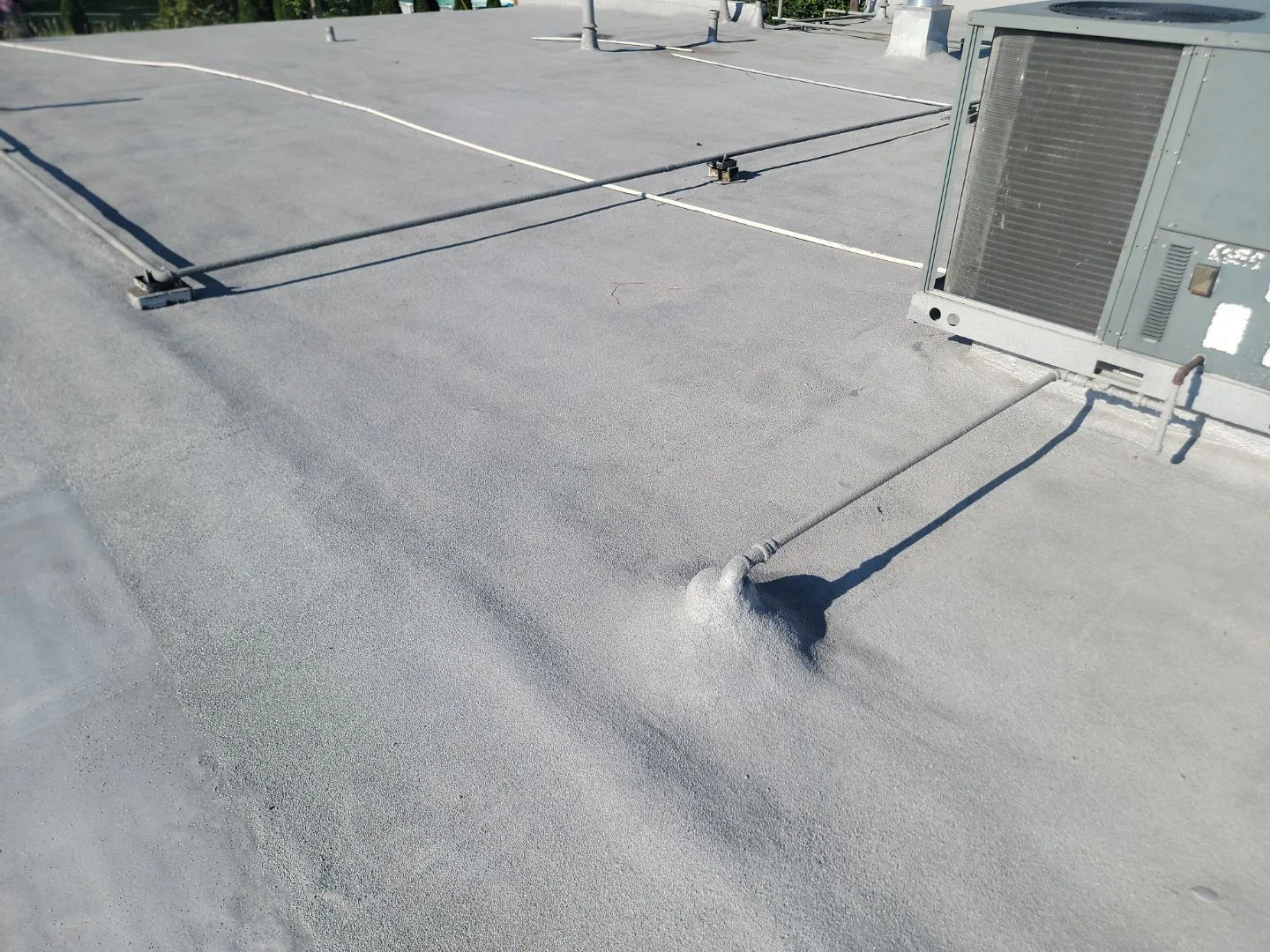
Two or three triple-digit weeks in a Medford, OR summer cost a membrane more than a mild year of rain ever does, and the loss rarely shows until a seam lifts or a drain strainer packs with soot. Preventive maintenance exists to catch that slow spending while it is still cheap to correct. A roof that is visited on a calendar, cleaned, tightened and recorded keeps more of its remaining service life than one that is only seen when a ceiling tile stains. For a property manager, the effect lands in one place: the reserve schedule, where a planned replacement year either holds or gets pulled forward by two or three seasons of neglect.
Our maintenance programs are written around that ledger. Each visit produces a condition entry for the roof, a short list of small repairs completed on the spot, and a note of anything that will need budget next year.
What the valley does between visits
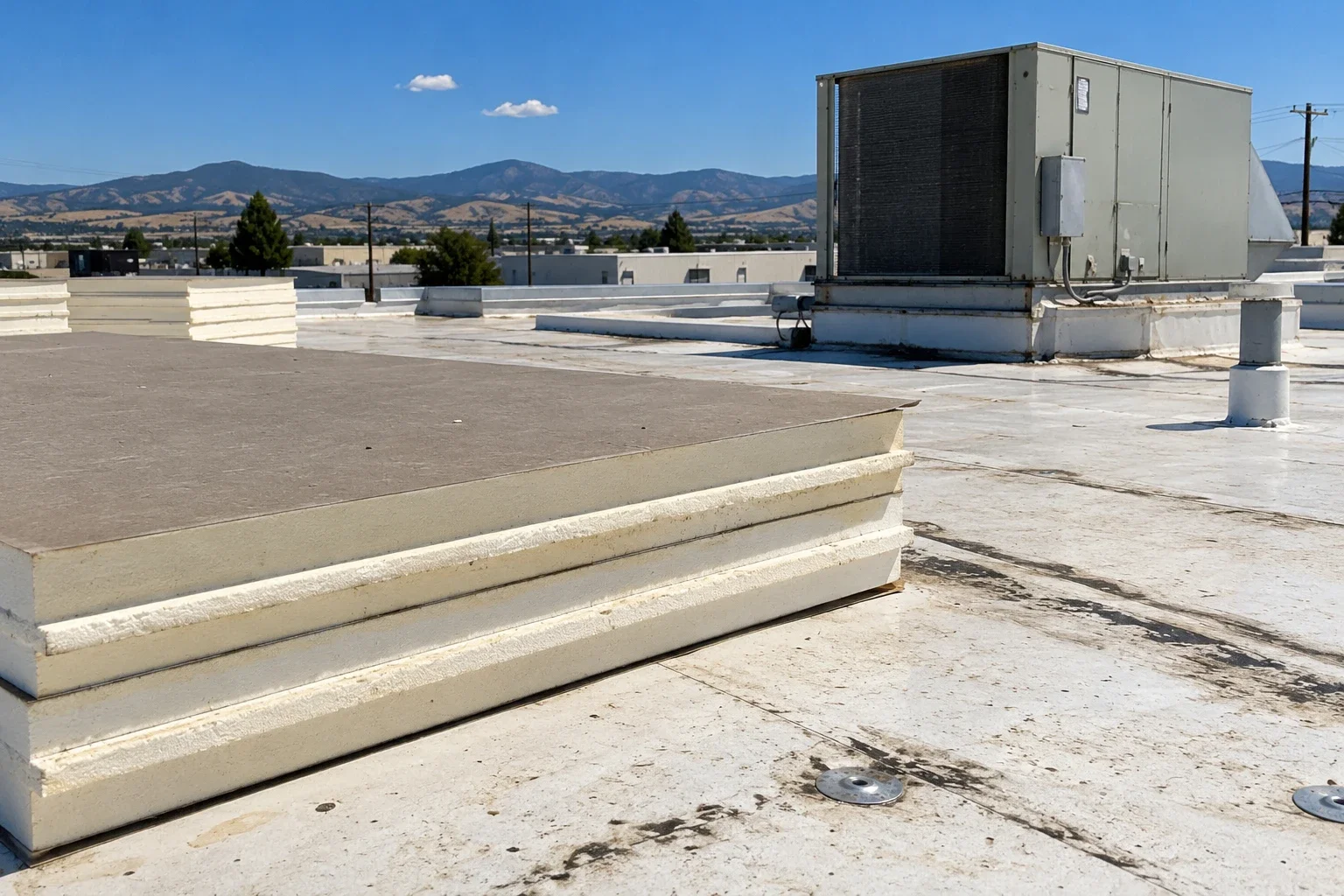
The rain shadow between the Cascades and the Siskiyou Mountains gives Medford about 61 afternoons above 90 F in a typical year, with roughly 11 above 100 F and a record of 115 F. Dark and light membranes alike take that heat as a daily expansion cycle, and the stress concentrates where materials meet: perimeter metal, pipe boots, curb corners and the laps of single-ply sheets. Adhesives soften, sealants chalk, and small gaps open that a spring walkthrough would have closed with a bead of the right compound.
Winter adds a gentler second pattern. About 64 freezing mornings a year, plus inversion weeks when fog sits in the valley for days, leave moisture in every pinhole the summer created. None of it is dramatic, which is exactly why a scheduled visit earns its fee: the damage is cumulative and quiet, and the visit is the only moment anyone looks at it closely.
On a single-ply roof, the first sign is often cosmetic: a faint chalk line at a seam, or a ripple where the membrane has crept under thermal movement. On a coated or metal roof, it is fastener heads that have lifted a fraction of an inch. A trained eye reading those marks in April can retire a leak that would otherwise open in August, when the roof is hottest and the crew is busiest. That timing difference is the entire argument for scheduled care over reactive calls.
The visit itself
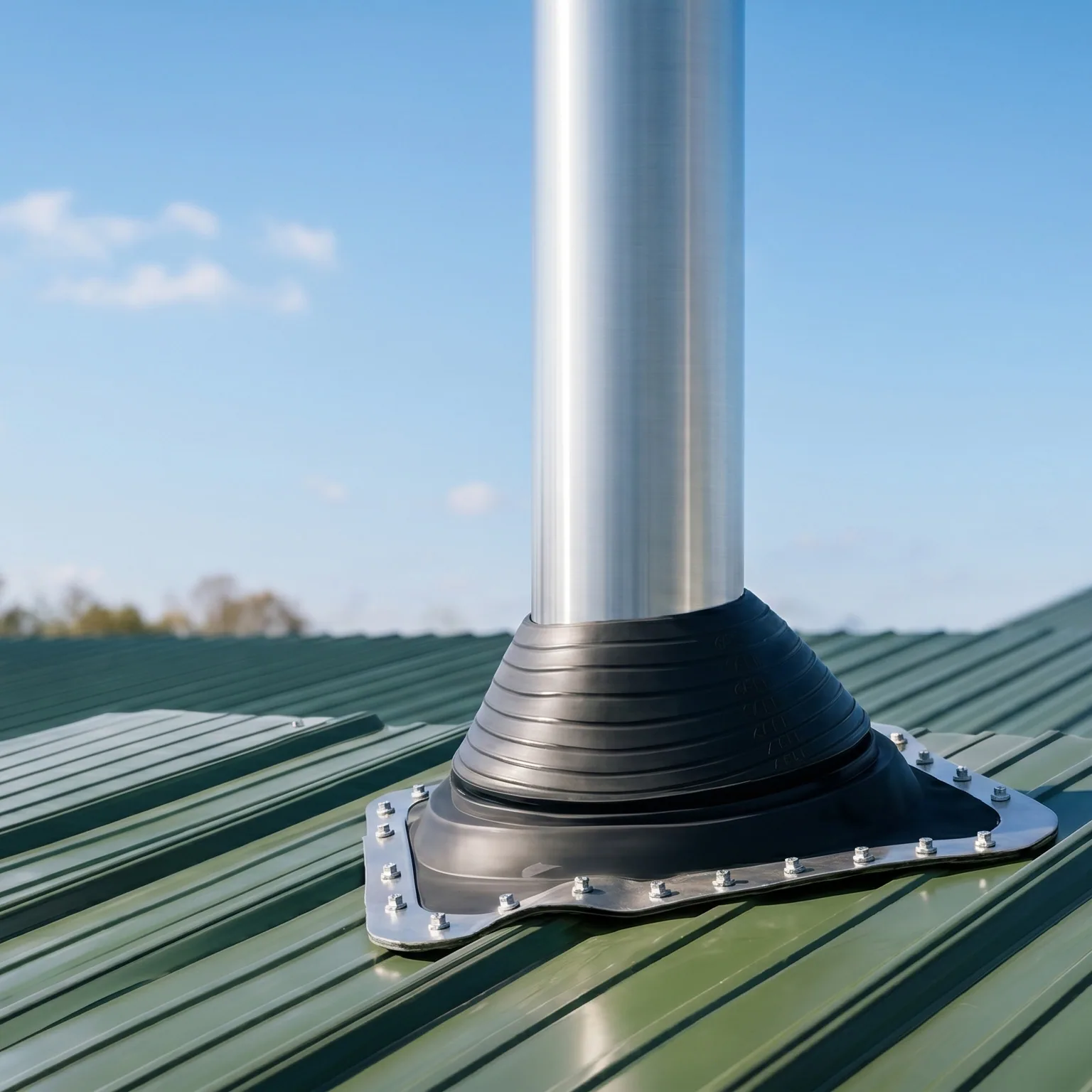
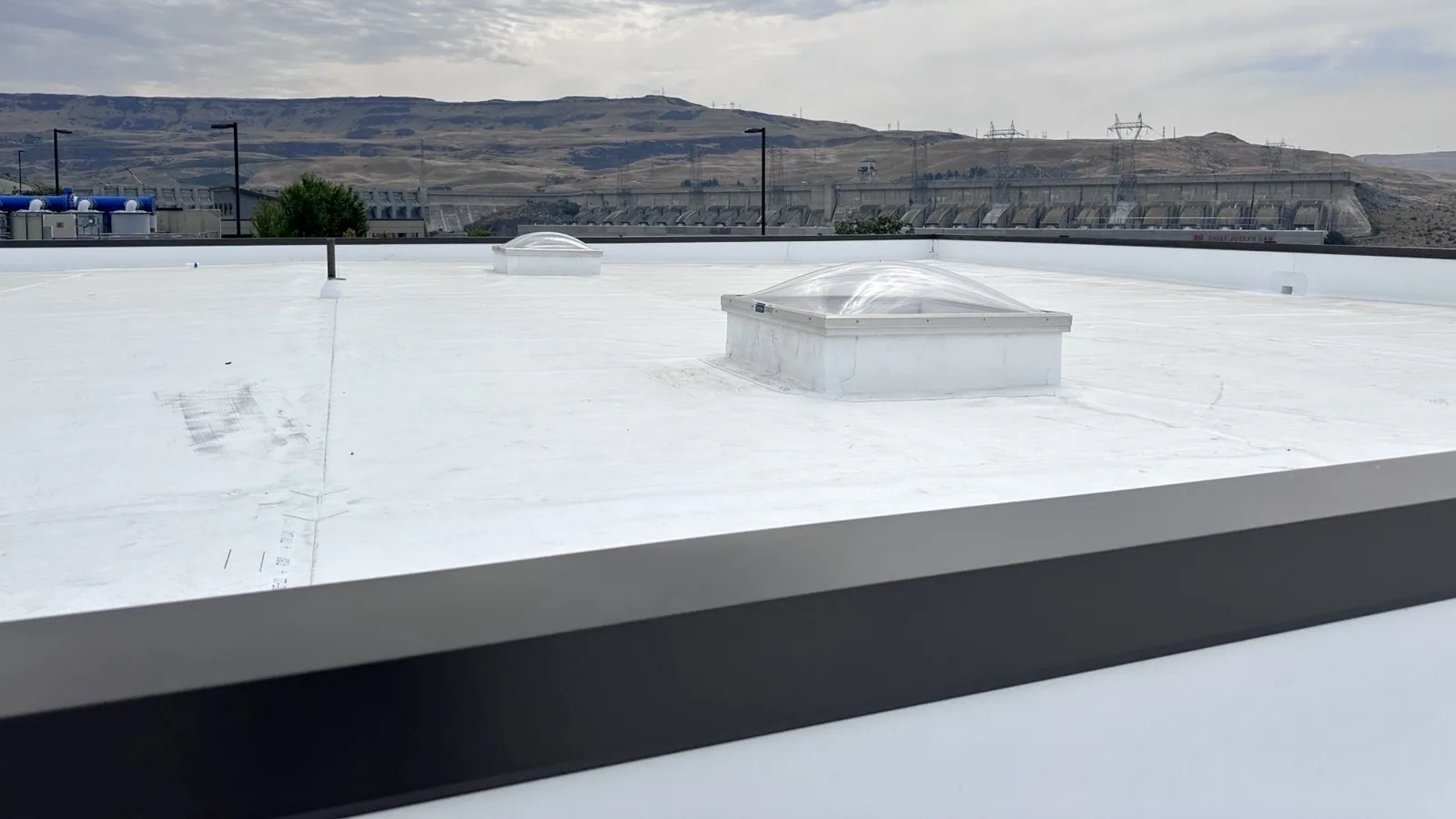
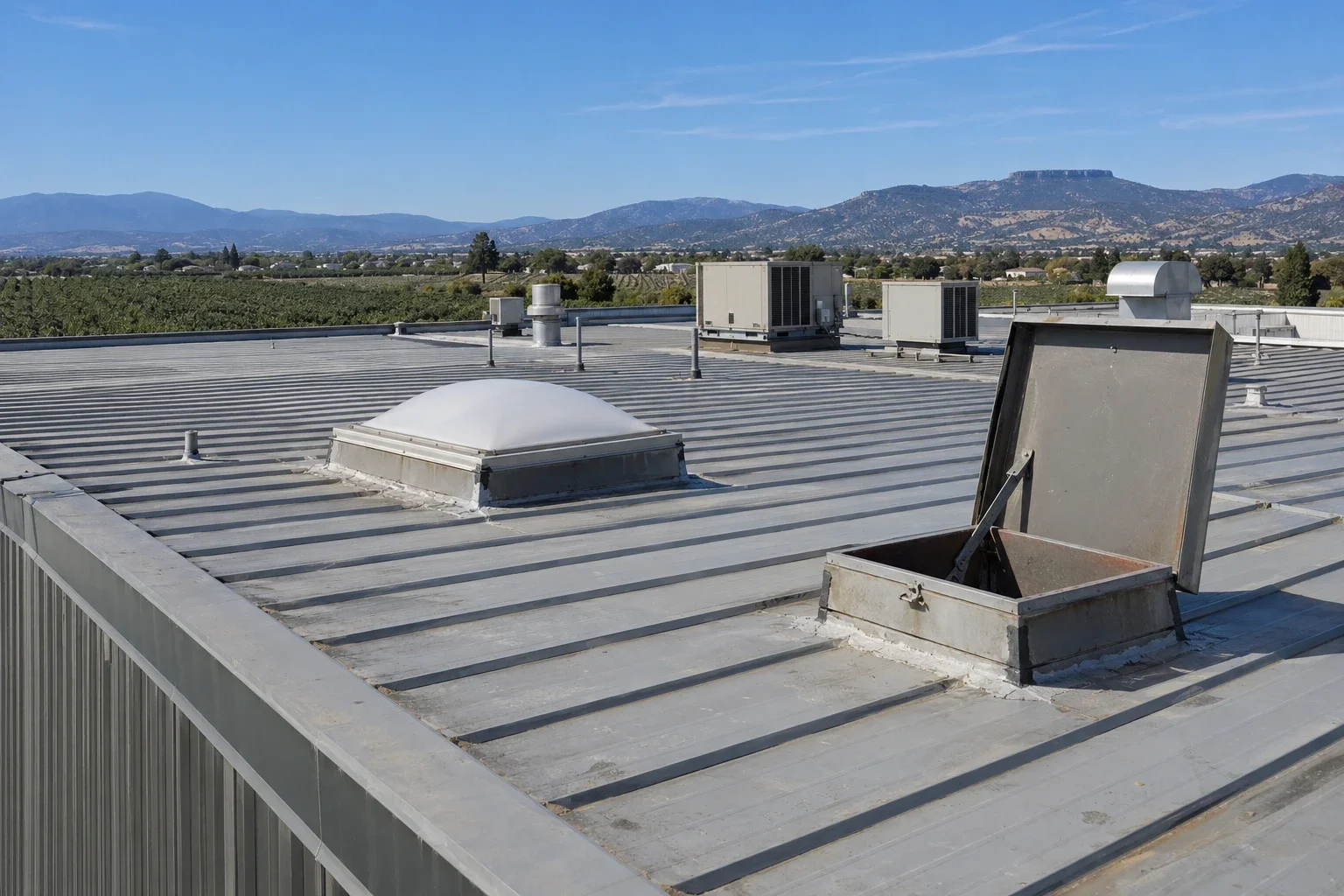
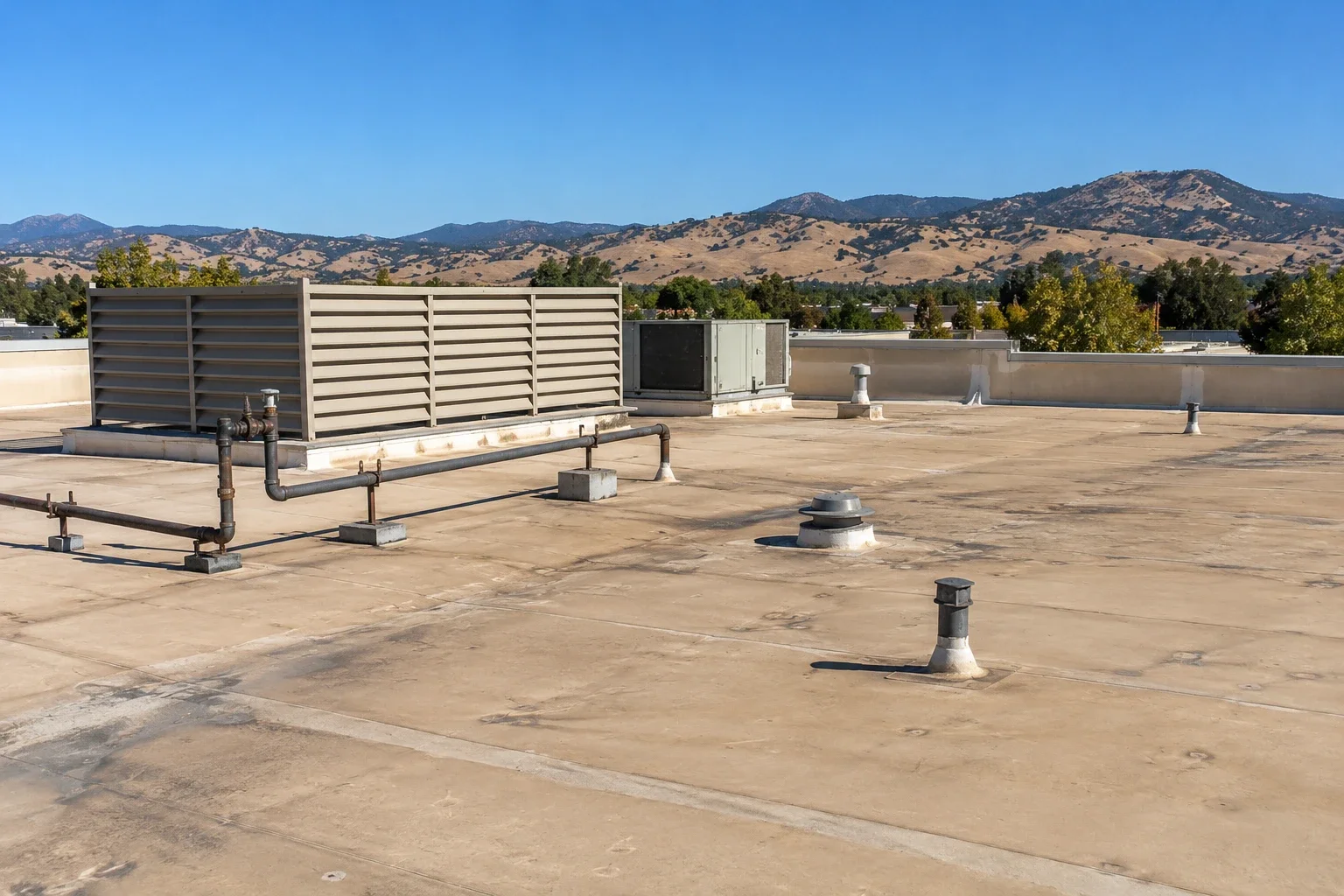
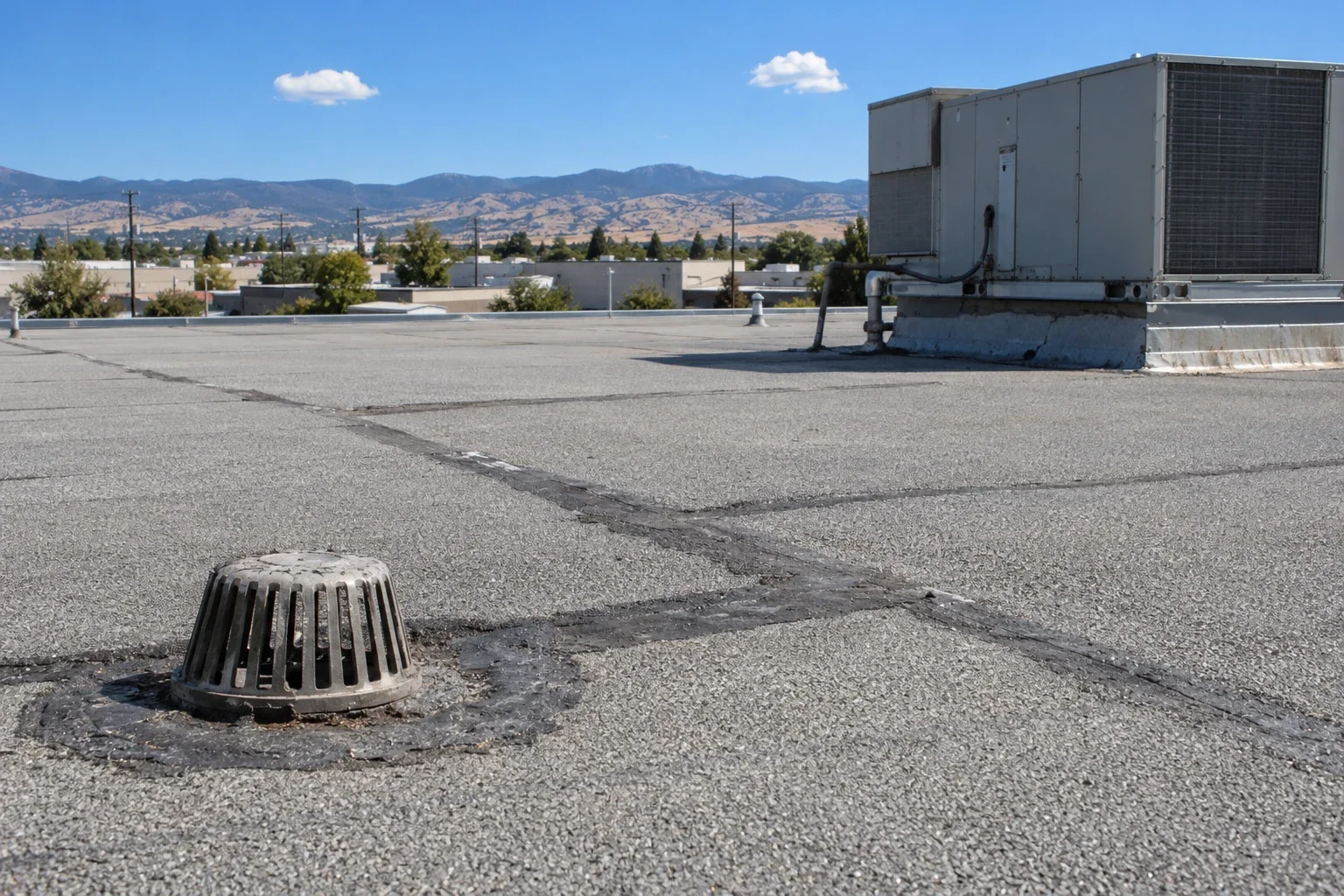
A maintenance visit starts at the drains. We clear strainers, scuppers and gutters, check that water leaves the roof surface within a reasonable time after a rain or a wash-down, and mark any low spot that holds a puddle. From there we work the penetrations and flashings, because those details fail long before a field membrane does, then walk the seams and the edge metal looking for fastener backout, open laps, split sealant and scuffed surfacing.
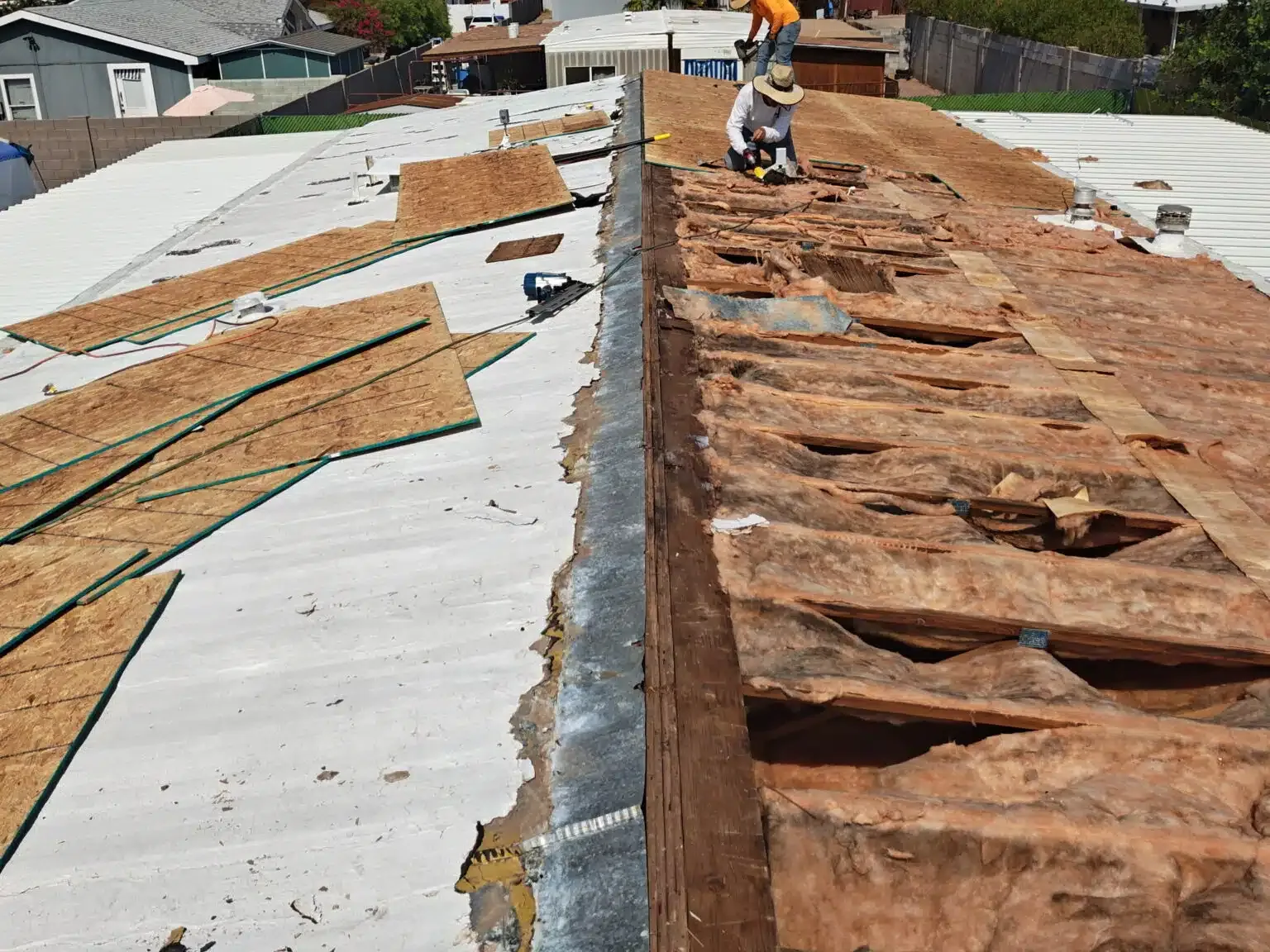
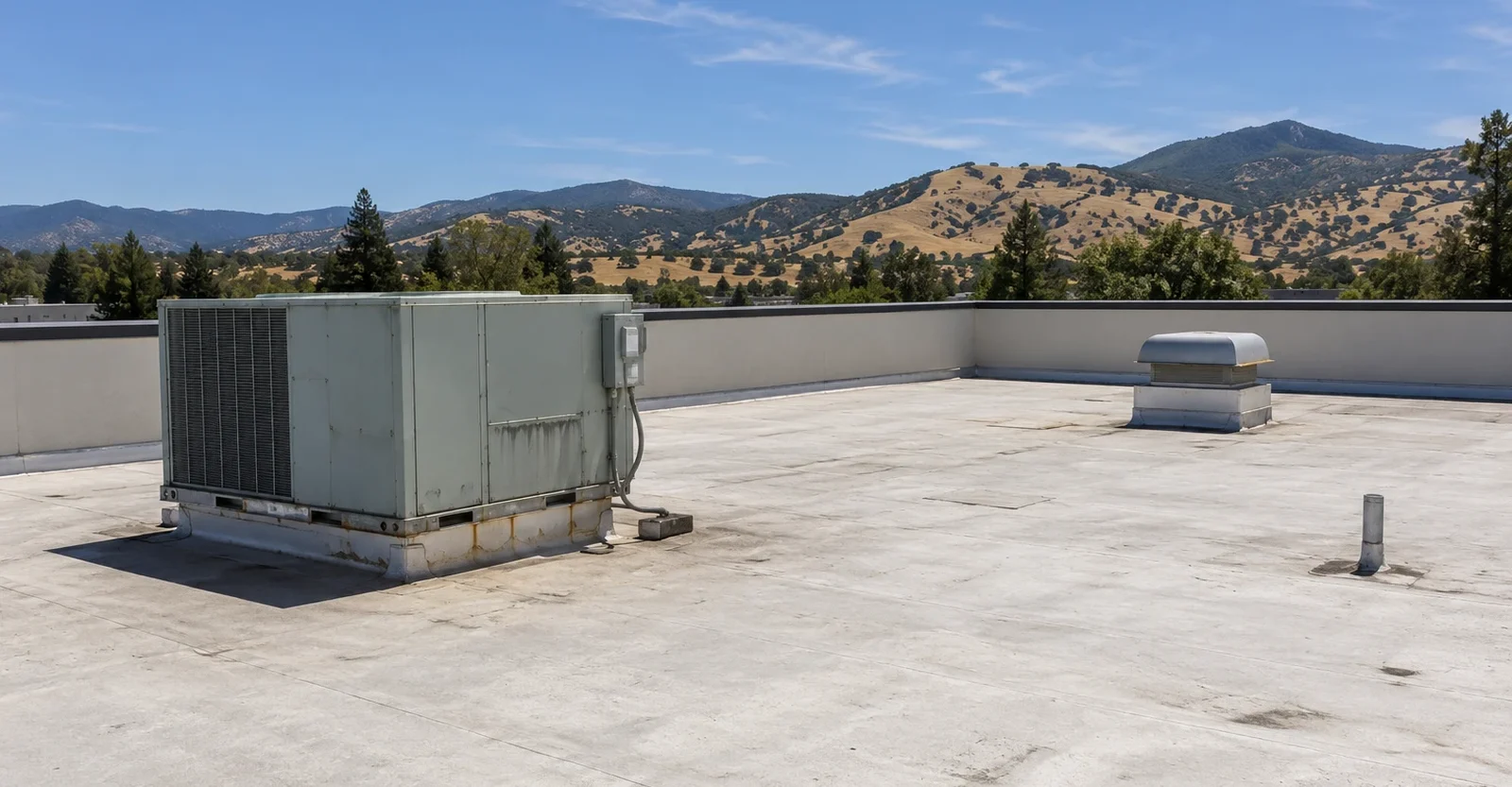
Small repairs are made as we go: resealing a boot, replacing a cracked cap, restoring a lifted termination bar, patching a puncture left by another trade. Larger findings are photographed, located on a roof plan and priced separately, so the owner decides which items are repairs and which belong in the next capital conversation. Equipment platforms and rooftop unit curbs get a look for new traffic wear, since service technicians cross the same path every month.
Smoke season and soot loading
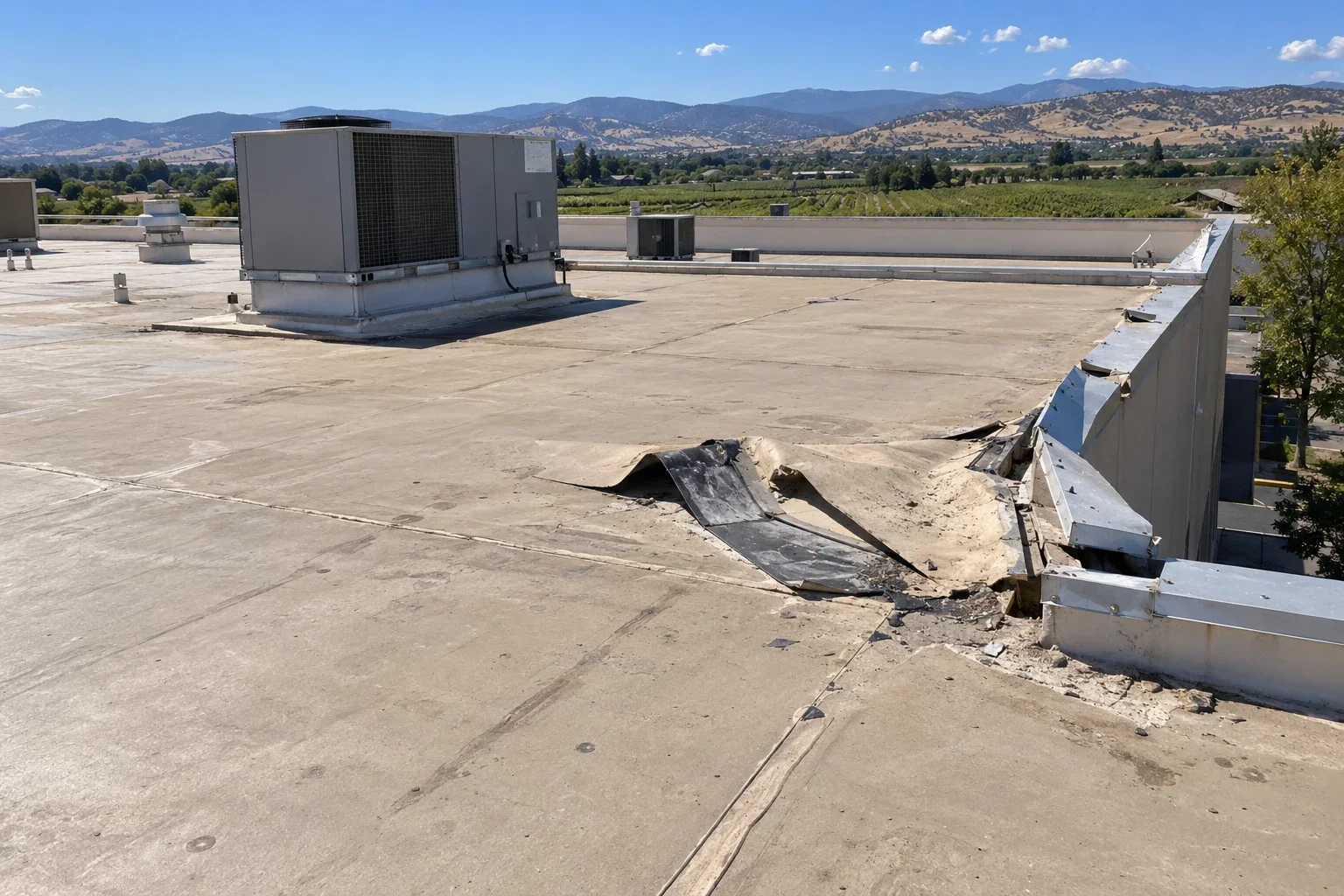
The valley counted 26 smoke days in 2021, a year after fires took about 2,600 Jackson County homes. Smoke is no longer a rare event for rooftops here. Soot settles on a reflective surface, darkens it, and raises surface temperature for months afterward, which is a direct subtraction from the UV budget the membrane was designed to carry. Ash also collects in valleys, around drains and behind parapets, where it holds moisture against the sheet.
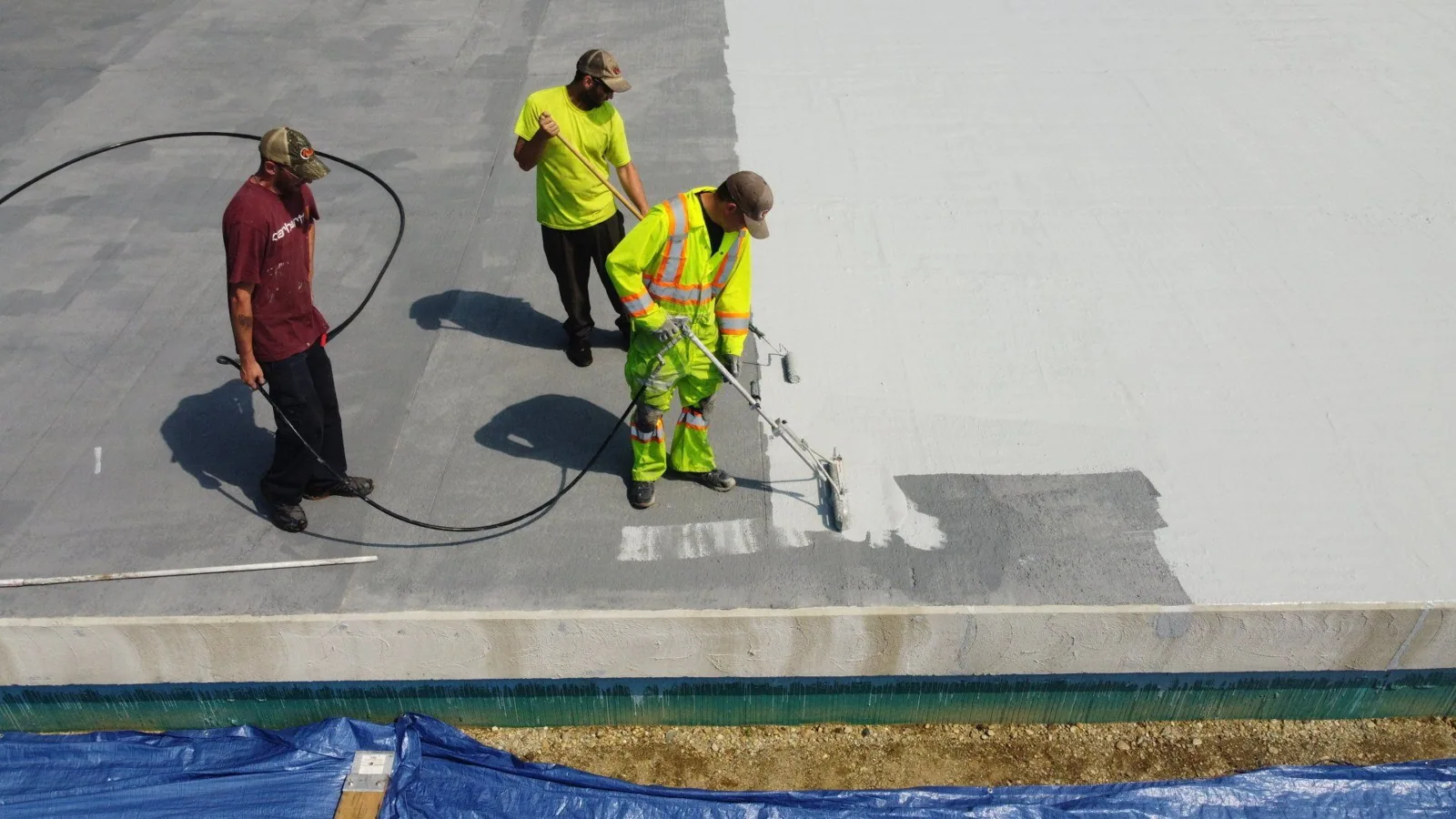
A post-smoke visit is part of the program rather than an extra. We rinse or wash the surface where the membrane allows it, clear debris from drainage paths, and check edges and penetrations for ember pitting. Rooftop intake filters on mechanical units tend to load quickly in these weeks, so we flag them for the building engineer. Where soot has already cut reflectance meaningfully, the condition grade says so, and the owner can weigh a cleaning or a reflective coating against waiting.
Frequency, timing and tenant contact
Spring, before the first heat, and fall, after leaf drop and the first smoke has cleared, are the two visits most valley roofs need. Roofs under tree cover, near an orchard-to-distribution complex, or beside heavy truck traffic on Table Rock Road collect debris faster and may justify a third pass. Older roofs near the end of their service life get closer attention than new ones, because the interval between a small defect and an interior leak shortens as the sheet ages.
We book access around tenant hours. Medical office roofs on the hospital side of town and retail roofs in the North Riverside corridor each come with their own sensitivities: patient parking, loading windows, holiday trading weeks. We confirm roof hatch locations and any fall-protection tie-off points before arrival, and we report to the property manager rather than the tenant so nobody receives a surprise notice.
The owner report and the roof register
Every visit ends with a written entry in the roof register: a condition grade, the repairs made, the items deferred, and a revised estimate of remaining service life. Photographs are tied to roof locations so a later reader can compare the same corner year over year. When an asset manager asks for a carrying-cost forecast, the register already holds the history needed to answer it with something better than a guess.
The report format is plain enough to forward unedited to an owner's accountant or a lender. Condition grades run from sound through watch to action, each with a line explaining the reasoning, and the deferred items carry a repair estimate range so the reserve schedule can absorb them as numbers rather than worries. A written roof condition report becomes the permanent shape of that entry.
That record matters at lease renewal and at sale. A buyer's lender reading five years of dated visits sees a roof that has been managed, and a leak claim that follows a documented program is easier to explain to a carrier. Where a building needs a deeper look than a maintenance pass, we pair the program with a full commercial roof inspection or an aerial survey from a drone roof inspection.
Send the building list and roof ages

Related Roofing Pages


Questions About Preventive Roof Maintenance
Which roofs gain the most from a maintenance program?
Single-ply roofs in their second decade, roofs with many penetrations, and any building with a tenant who cannot tolerate a leak. Retail along North Riverside Avenue and clinics near the Medford hospitals fit all three.
Does maintenance replace repairs after a leak?
No. A program lowers the number of leaks, but a roof that is already wet needs a targeted leak repair first, and the program then keeps the repair from being the last attention the roof receives.
How do you handle a roof that failed the spring visit?
We grade it low, list what is failing, and price a repair path next to a replacement path. The owner sees both numbers before the reserve schedule is touched.
Will you work around a warranty held by someone else?
Maintenance entries are written so they can be handed to a manufacturer or an installer if the warranty requires proof of upkeep. We do not alter the roof in ways the warranty prohibits.
What does a program look like for a building in Central Point or White City?
The same visit rhythm, adjusted for the building. Warehouse roofs near a freight corridor such as Table Rock Road, or in the White City industrial area, can collect more dust and truck debris, so drains get more attention and the interval tightens.