
Roof Recover and Overlay in Medford, OR
A new membrane over a dry, sound existing roof in Medford, OR: when a recover saves cost and downtime, and when the building code or moisture rules it out.
Overview
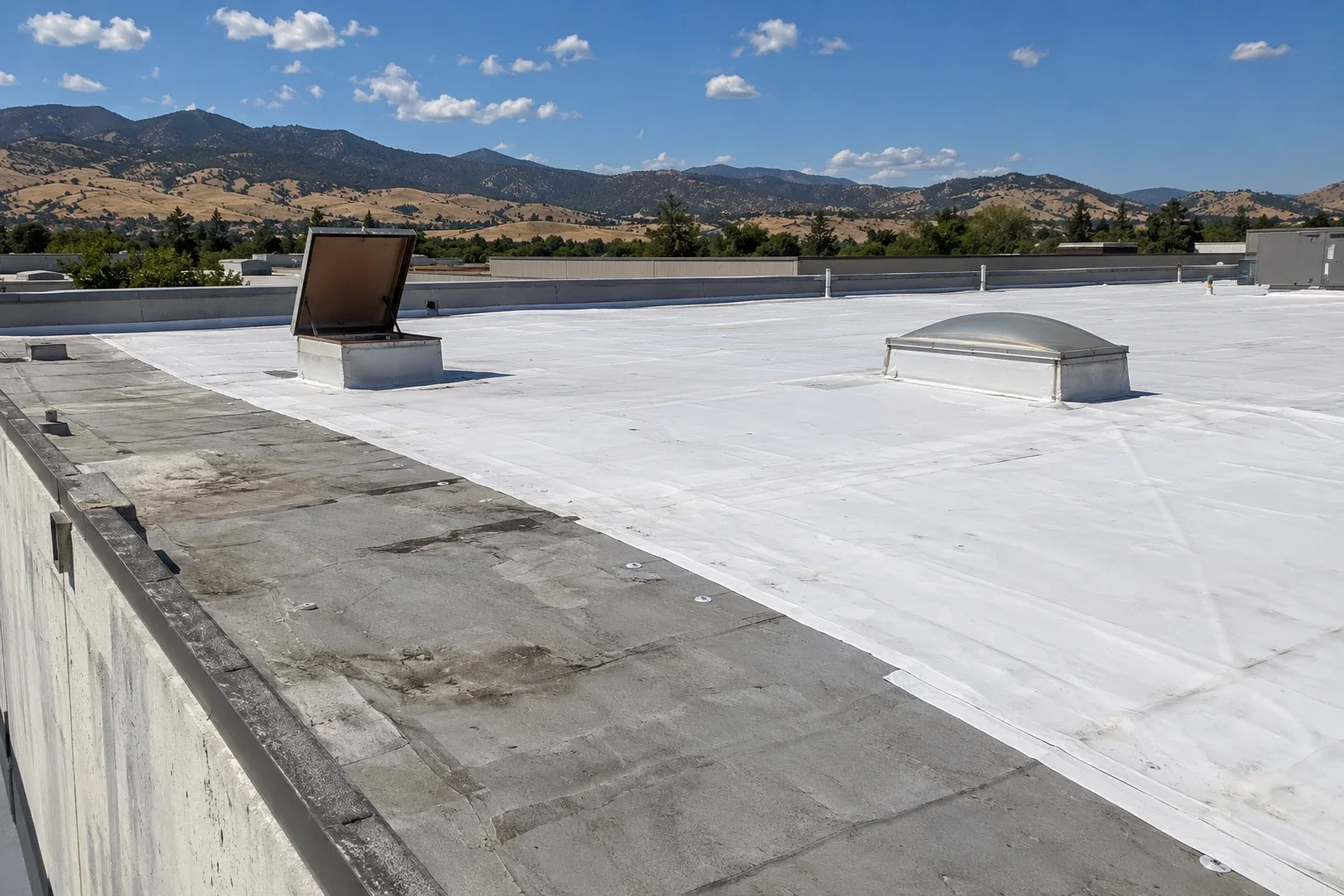
Soot from a bad smoke season settles on a white roof, darkens it, and pushes up the surface temperature that the membrane underneath has to survive, which is one reason Medford, OR owners start asking whether the existing roof can be covered instead of torn off. A recover answers that question when the answer is yes. A new membrane goes over the old assembly, the building keeps its insulation and deck in place, and the carrying cost of the reroof drops because there is no disposal of the old system and far less disturbance inside.
The catch is that a recover only works on a roof that is still dry and still structurally sound. The work starts with telling those roofs apart from the ones that look similar from the parking lot but are not, and the decision then goes into the roof register where the next owner can read it.
Which existing roofs qualify
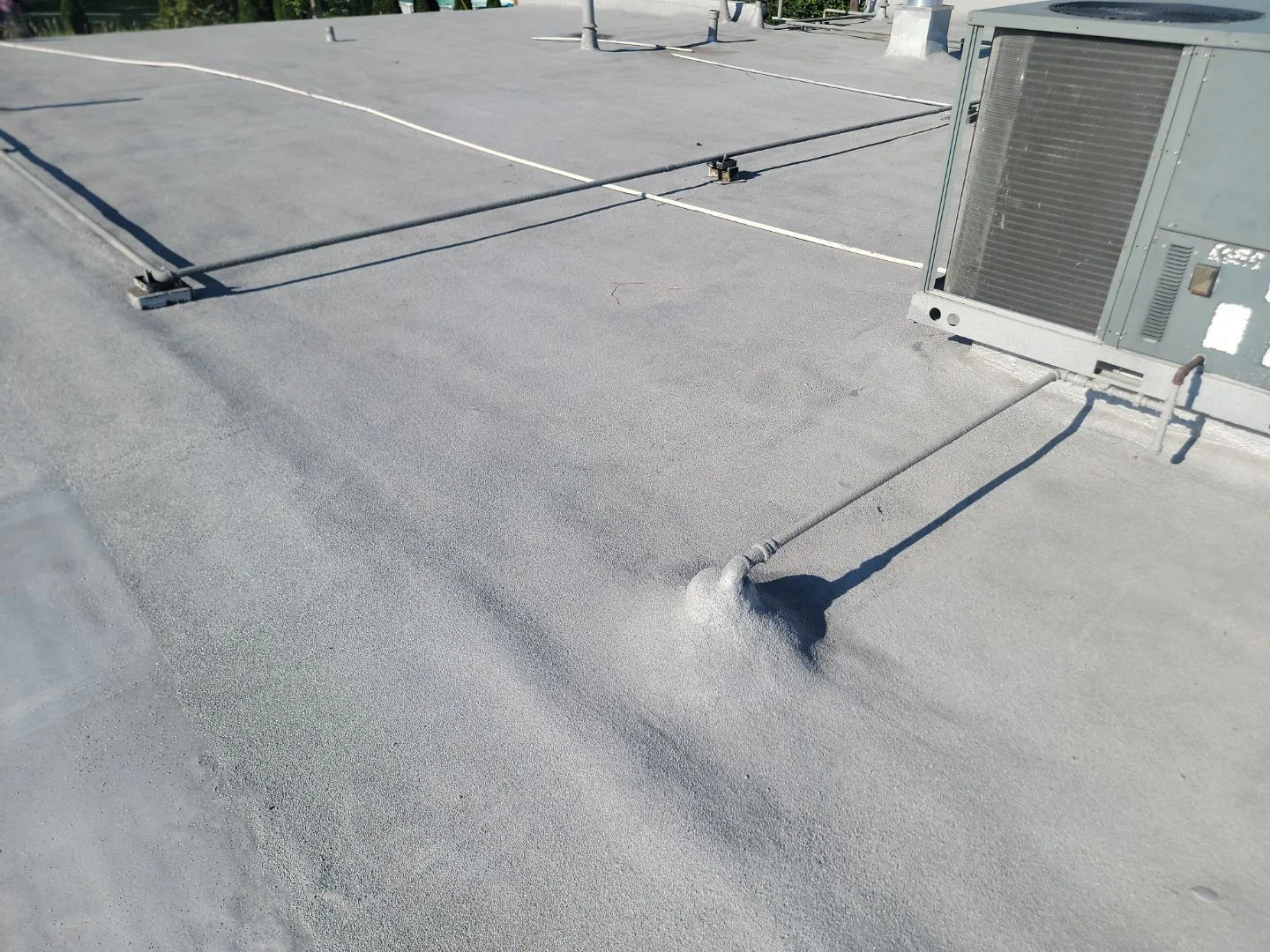
Three things decide eligibility before any material is ordered. The first is moisture: insulation that has taken on water cannot be covered, because the trapped dampness keeps working on the deck and the new sheet. The second is layer count, since the building code limits how many roof assemblies can stack on one deck and the structure has to carry the added dead load. The third is condition of the deck itself, where rust, rot or loose fasteners rule out an overlay no matter how good the surface looks.
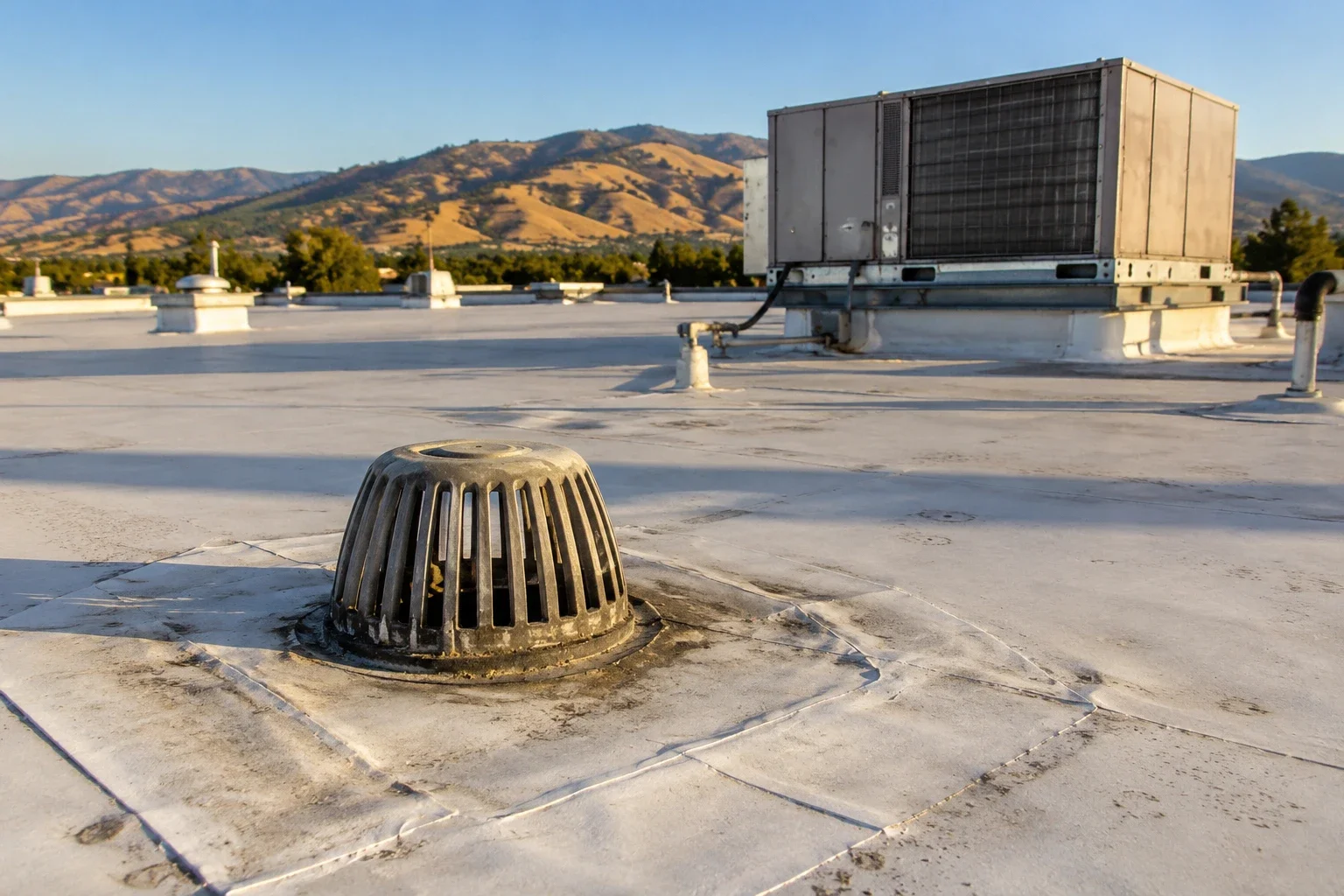
A roof that passes all three usually has a membrane that is worn but not saturated, seams that are open in places rather than everywhere, and drains that still sit lower than the surrounding surface. Those roofs are the best recover candidates in the valley, and a spring survey is the way to find them.
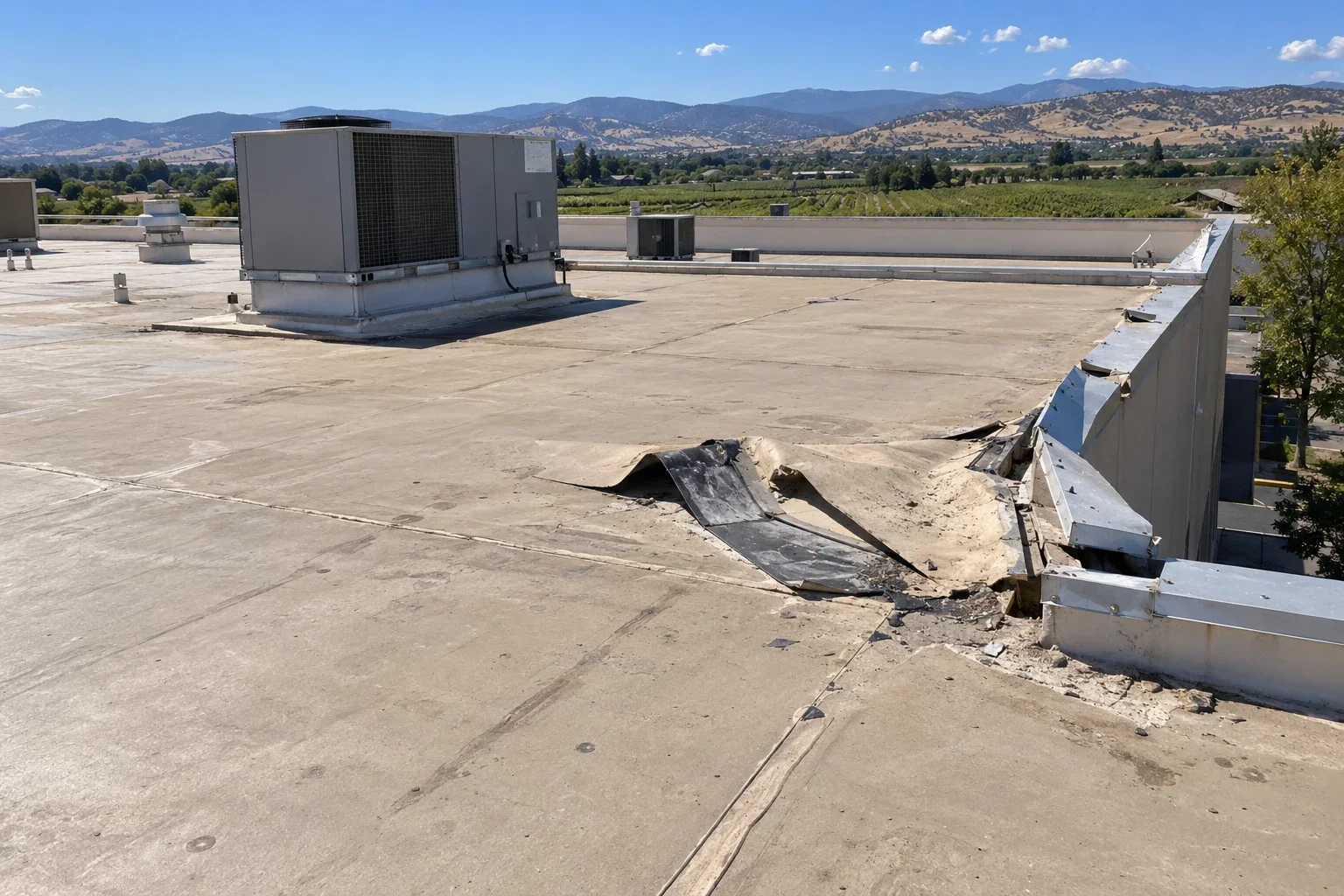
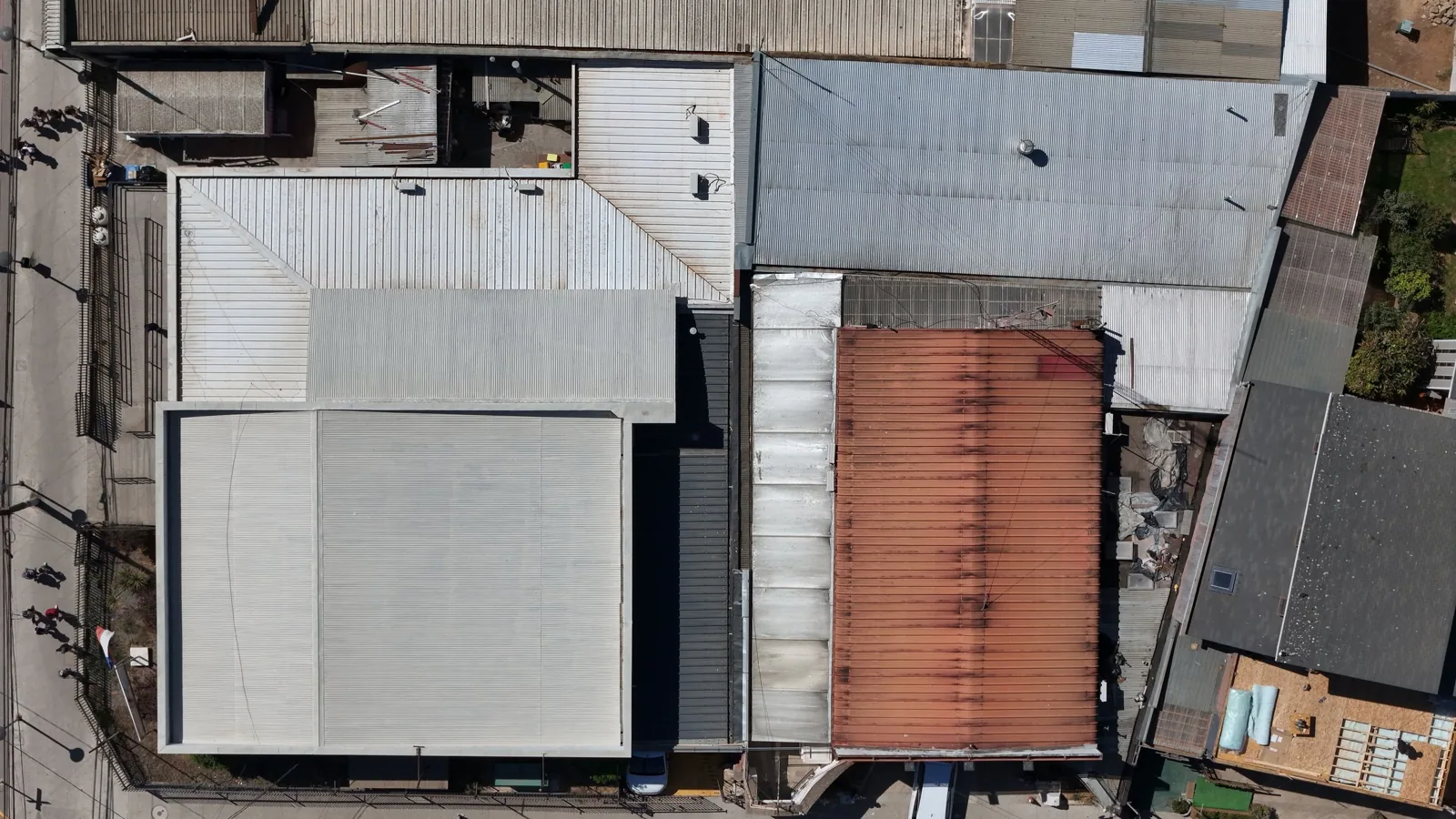
Surface appearance misleads in both directions. A chalky, stained white sheet can sit over bone-dry insulation and a sound deck, while a clean-looking gravel or coated roof can hide a saturated board below a single failed flashing. Reflectance loss, ponding at low drains and seams that have crept open are the visible clues, and they only become a decision once the moisture and deck findings are in hand.
Proving the insulation is dry first
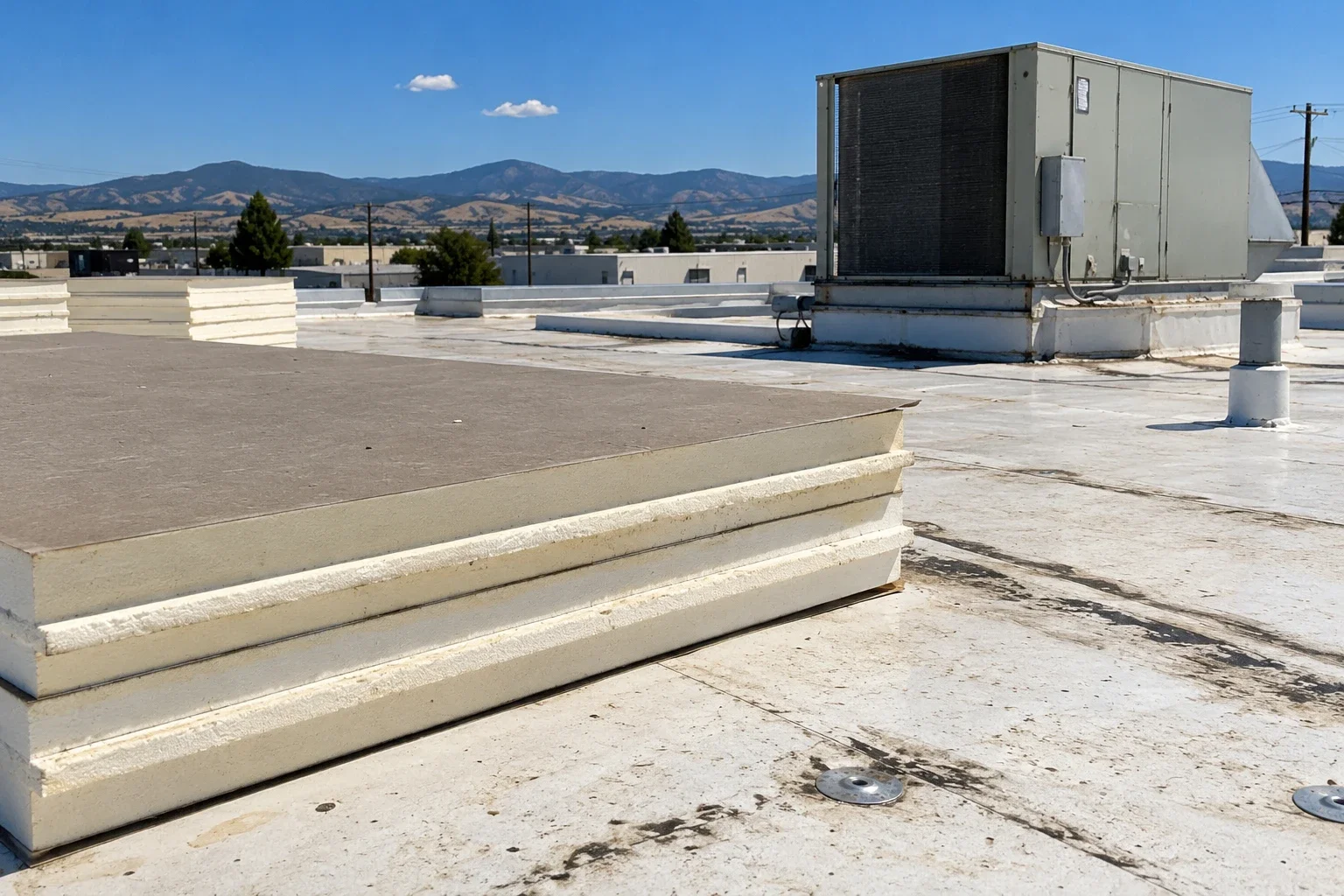
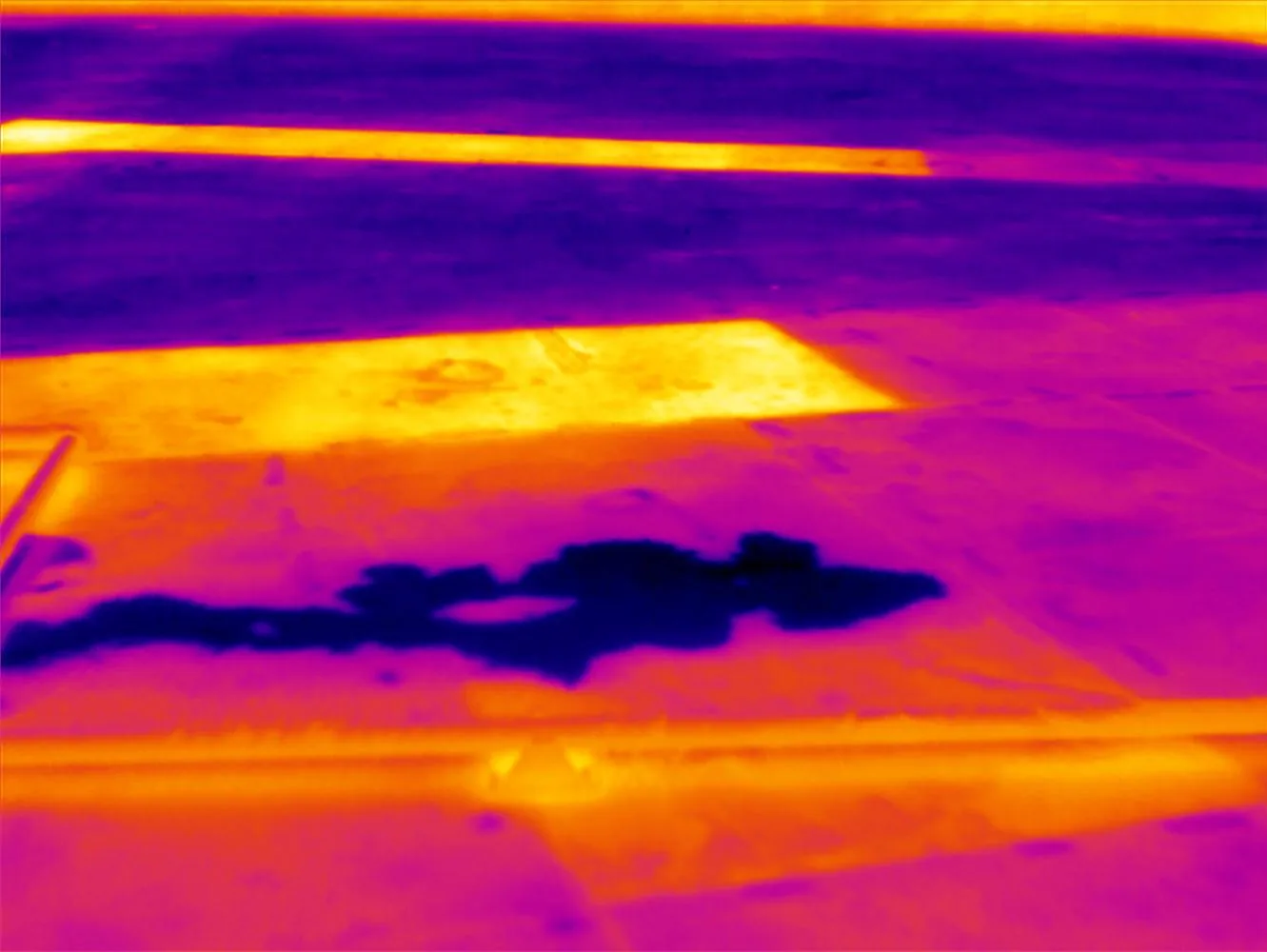
Because Medford gets only about 18.4 inches of precipitation a year, a roof can hold hidden moisture for a long time without showing a ceiling stain. Dry weather hides the problem, and a recover placed over a damp core simply buries it. We run an infrared and core-cut moisture survey across the roof, mark the wet zones on a plan, and cut test cores to confirm what the scan suggests.
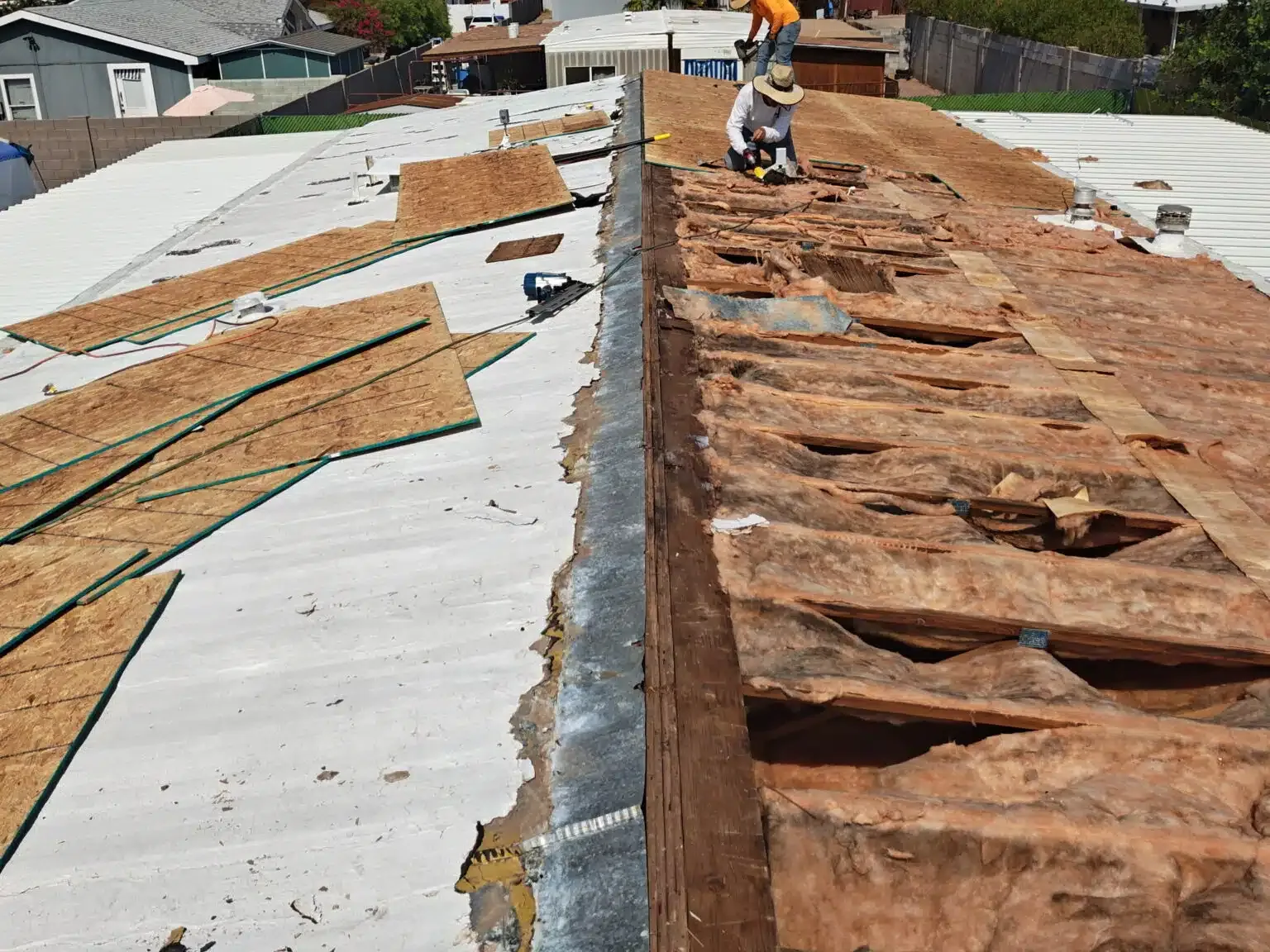
If wet areas are small and isolated, they can be cut out and replaced with new insulation before the overlay goes on. If they run through a large share of the roof, the right recommendation is a full tear-off, and the survey results go into the owner report so the reasoning is on paper.
What goes over the old membrane
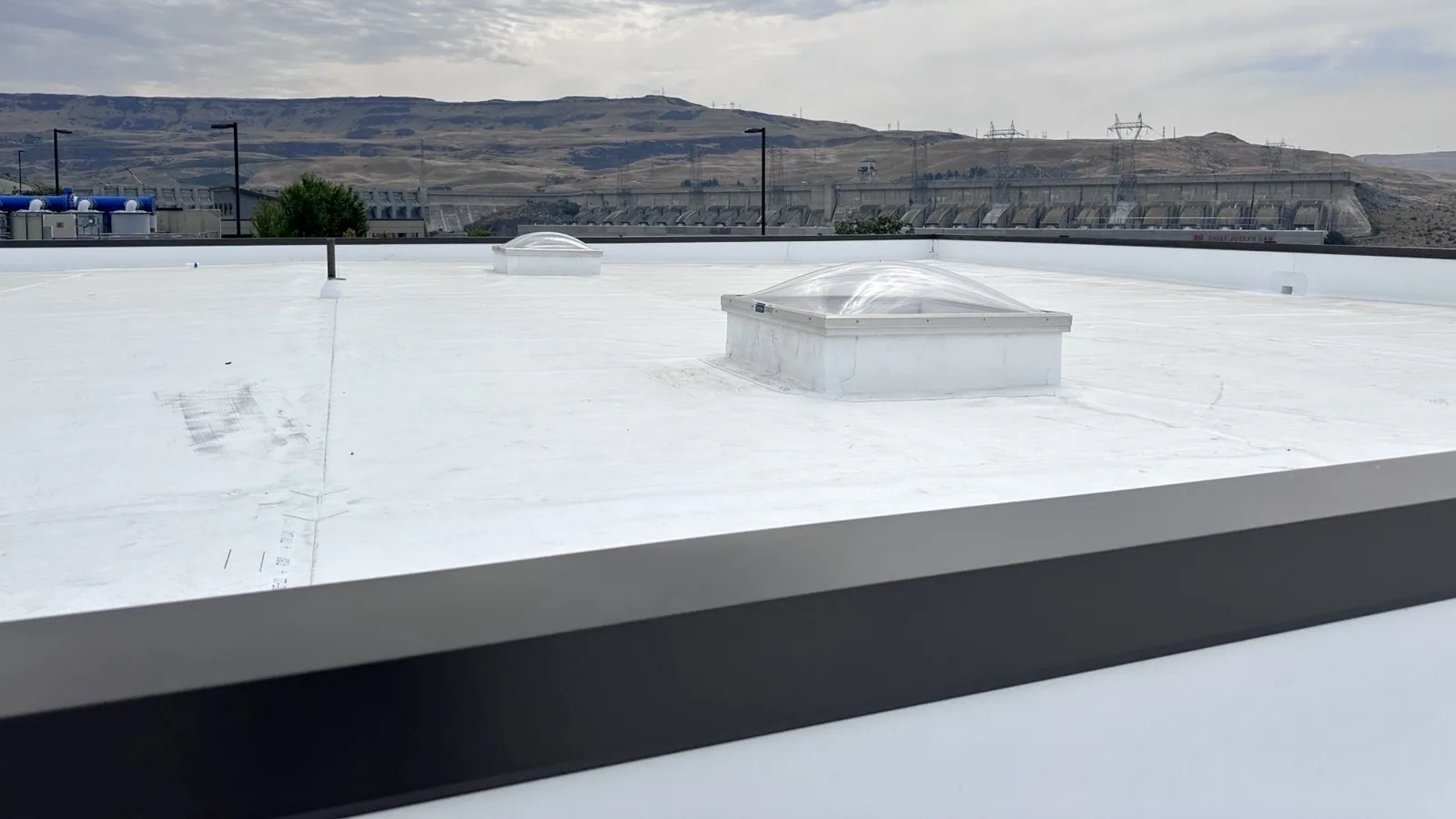
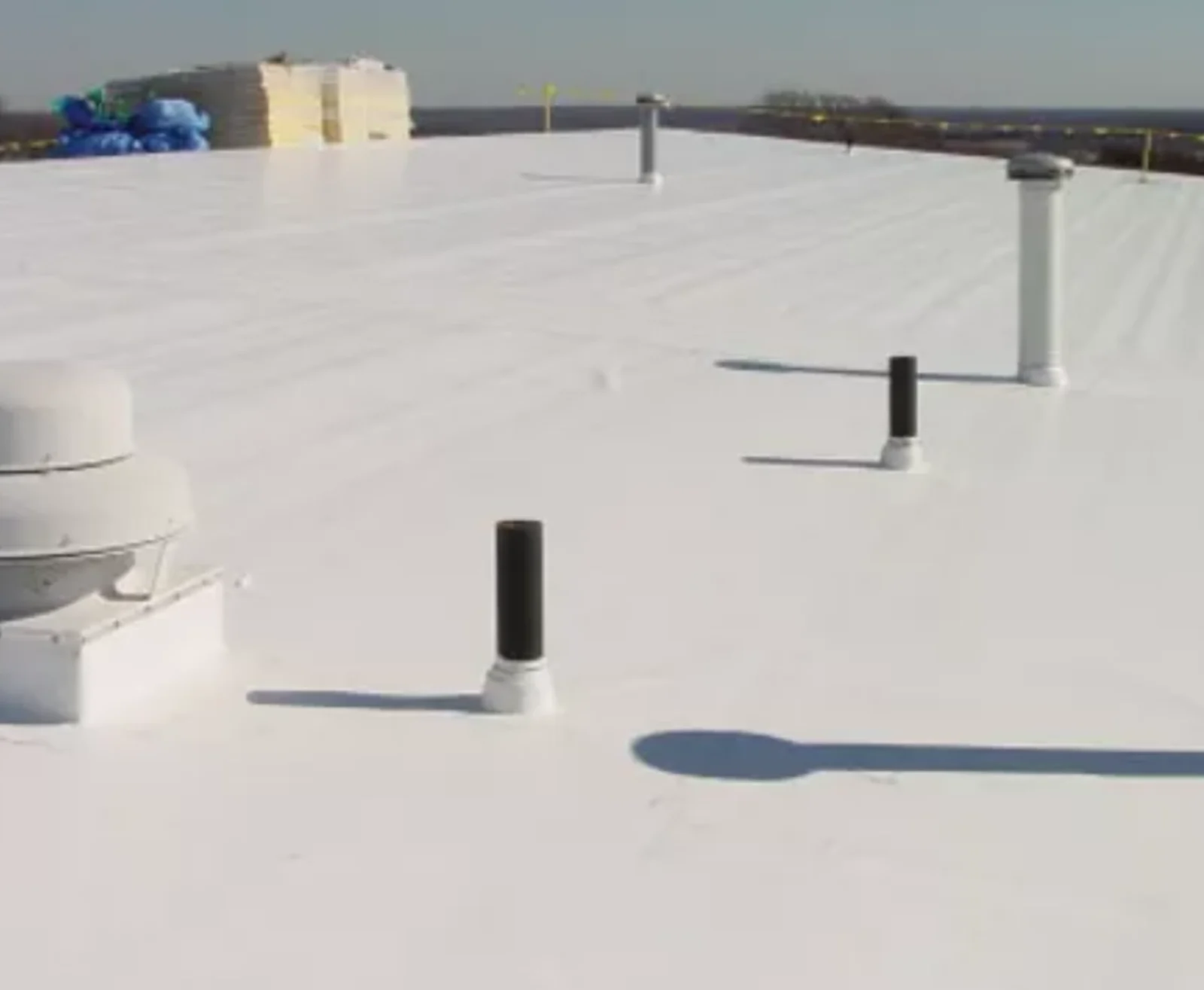
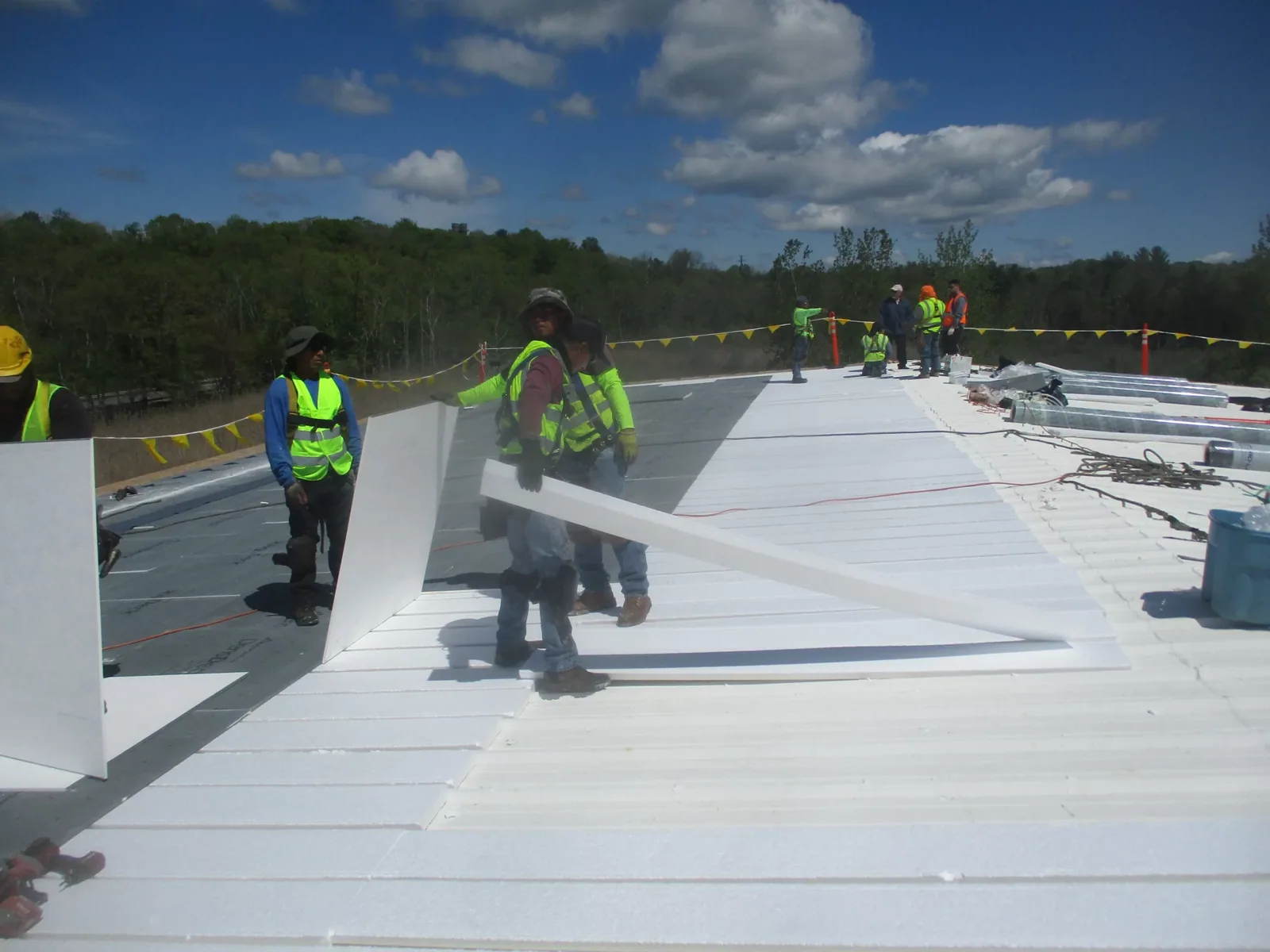
The old surface is cleaned, loose or blistered areas are cut and repaired, and a cover board or separation layer is laid so the new membrane does not react chemically with the old asphalt or coating below. On valley-floor buildings that usually means a white TPO or similar single-ply, either mechanically attached or adhered, chosen for how it handles the triple-digit stretch and the long UV exposure. Where the structure allows it, a light-gauge retrofit metal roof can be framed over an old low-slope roof and carries heat away from the old surface rather than sealing it in.
Edge metal, curbs and penetration flashings are detailed new, not lapped over what was there. Those are the spots where the old and new assemblies meet, and they are where recover roofs leak first if the details are rushed.
Attachment is designed for wind, not copied from the old roof. Perimeters and corners see the highest uplift, so fastener density or adhesive coverage goes up there, and the cover board is fastened through to the deck rather than floating on the old surface. A recover that skips this step looks fine for two summers and then begins to flutter at the edges.
Cost drivers and lease-cycle timing
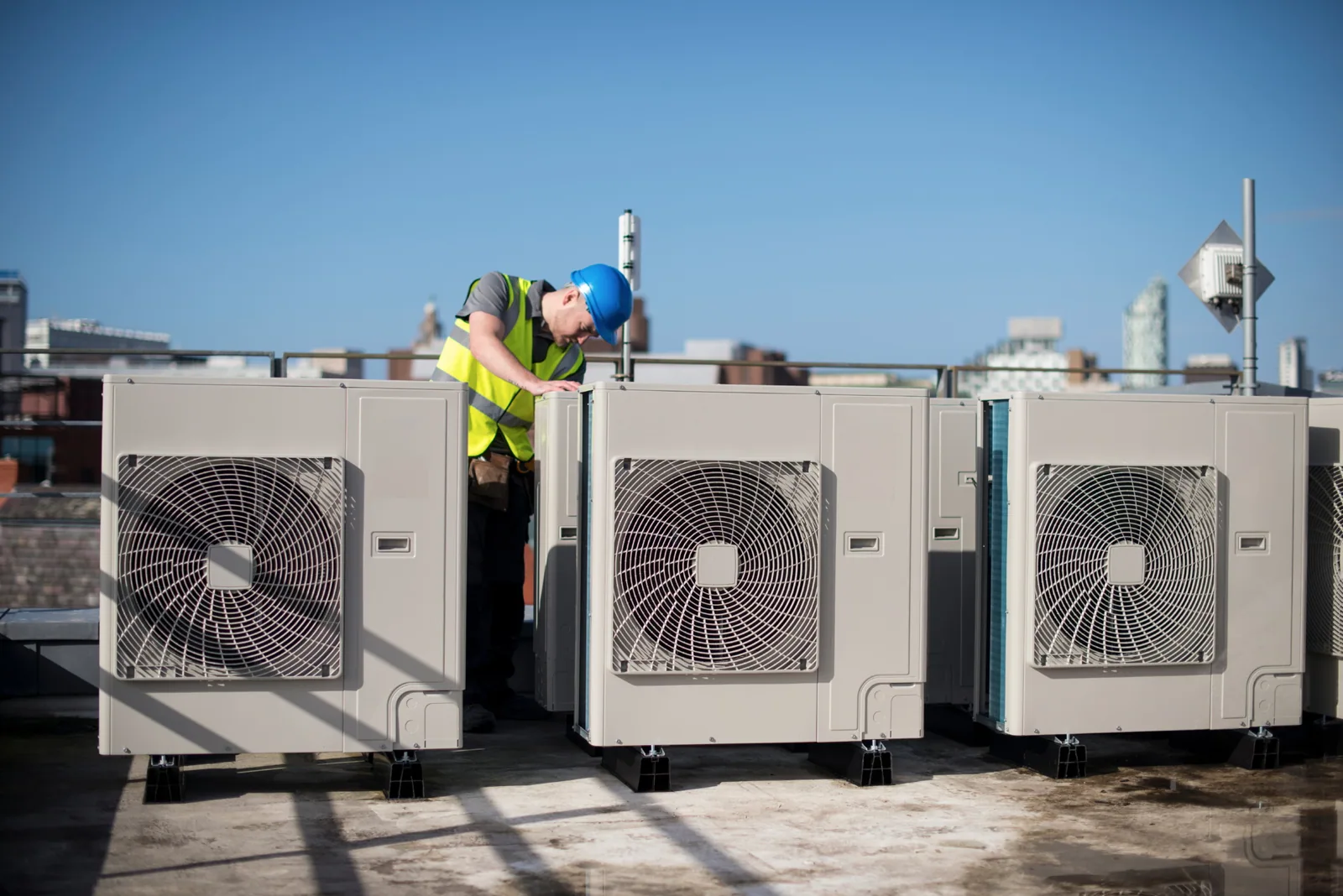
A recover usually costs less than a tear-off because there is nothing to haul away and the crew moves faster, but the savings shrink as repairs to the substrate grow. The cost drivers are the square footage of damp insulation that must be replaced, the amount of cover board and attachment the wind design demands, and the number of rooftop units that must be disconnected, raised or reflashed. A recover permitted now is reviewed against Oregon's 2025 Structural Specialty Code, the same edition that governs a replacement.
For a tenant on a short lease or an owner planning a sale, a recover can buy a defined span of useful life at a lower carrying cost, with the full replacement scheduled for the next cycle. That trade only makes sense if the owner report states how long the overlay is expected to serve and what the next step will be.
Where recovers fit in the valley
Warehouse and light-industrial buildings are the natural candidates, including the kind of buildings found in the rail-served Phoenix Industrial Park and the White City Industrial Park, since large uninterrupted roof areas make overlays efficient and tenants in such buildings often cannot afford a long shutdown. The same logic holds for flex industrial buildings with a mix of office and storage use.
Hospitals, schools and historic masonry downtown are less often recover candidates, since an overlay adds weight and sometimes conflicts with the way the original roof is drained. Each building gets its own call, and we put the reasoning in writing. Historic properties in Ashland, where Southern Oregon University and a number of listed buildings sit, add review steps that can change the answer entirely.
Send the roof ages for a recover review
Related Roofing Pages

Questions About Roof Recover and Overlay
Is there a limit to the layers a Medford roof can carry?
The building code caps the number of stacked assemblies, and the structure must carry the extra weight. If the roof already has a recover on it, the next step is almost always a tear-off, and an engineer confirms the deck.
Does a recover void an existing roof warranty?
It can. Manufacturer warranties often end when another system is installed over the original, or they require that manufacturer's approval. Read the paperwork before work is scheduled, and the owner report will note the decision.
Is a recover quieter and cleaner for tenants?
Generally yes. With no tear-off there is much less debris, dust and open deck, so interior spaces stay protected and most work happens above the ceiling line without disturbing occupants. Crews still work on the roof, so rooftop access, equipment shutdowns and parking for materials are coordinated in advance.
What is the downside of covering a roof that is almost done?
Problems buried underneath stay buried. A recover that hides waterlogged insulation or a rusting deck can fail early and cost more than a tear-off would have, which is why the moisture survey comes first.
Can I recover now and replace in a few years?
Yes, as a planned two-step. The overlay buys a defined number of service years, and the replacement goes into the reserve schedule for later, with the recover noted so the later tear-off can be priced fairly. Owners who plan it this way usually pair it with a yearly condition grade, so the overlay is watched rather than forgotten.