
Modified Bitumen Roofing in Medford, OR
Modified bitumen roofing in Medford, OR: how SBS and APP sheets handle triple-digit afternoons, granule loss and wildfire-season hot-work limits.
Overview
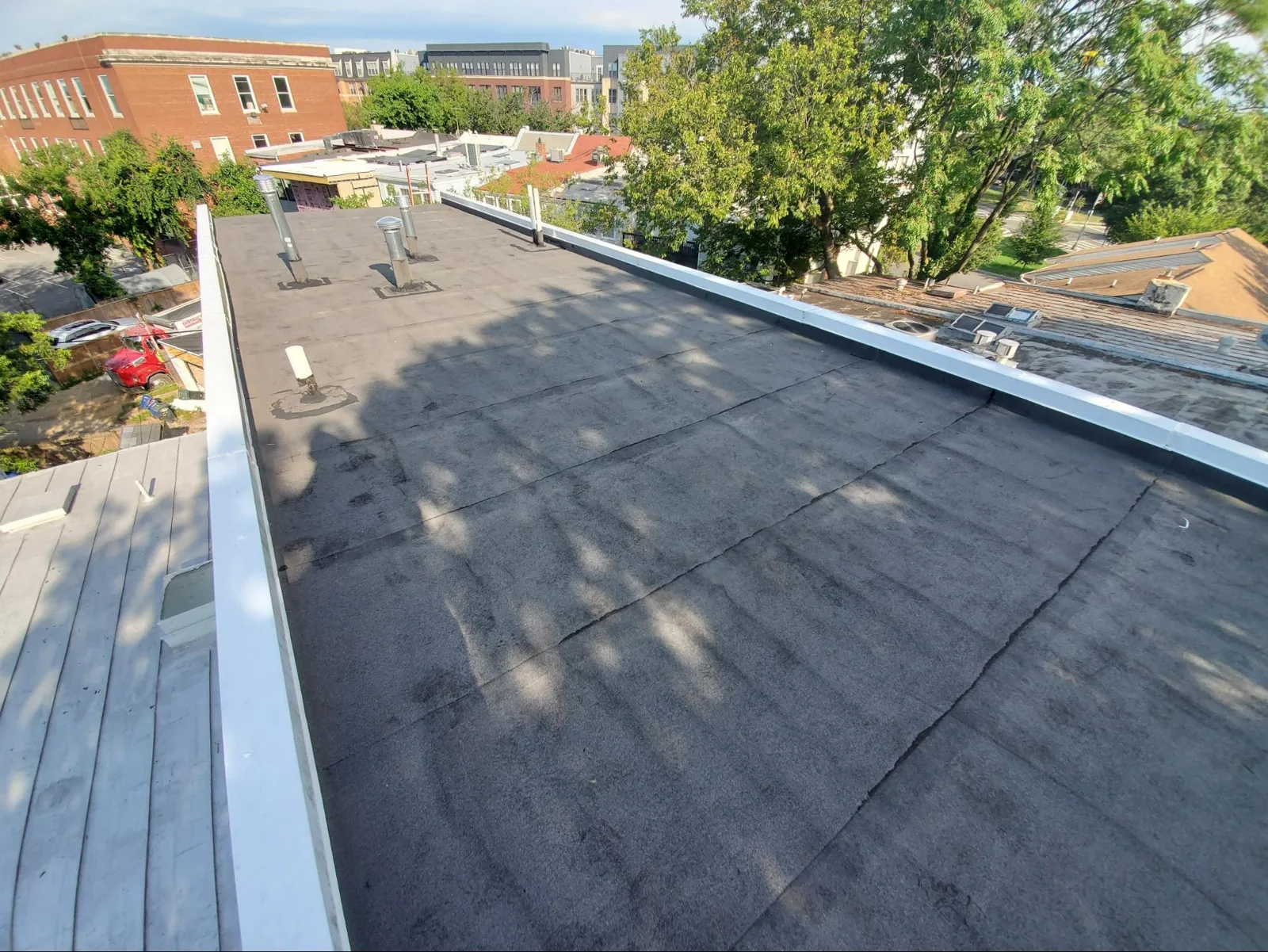
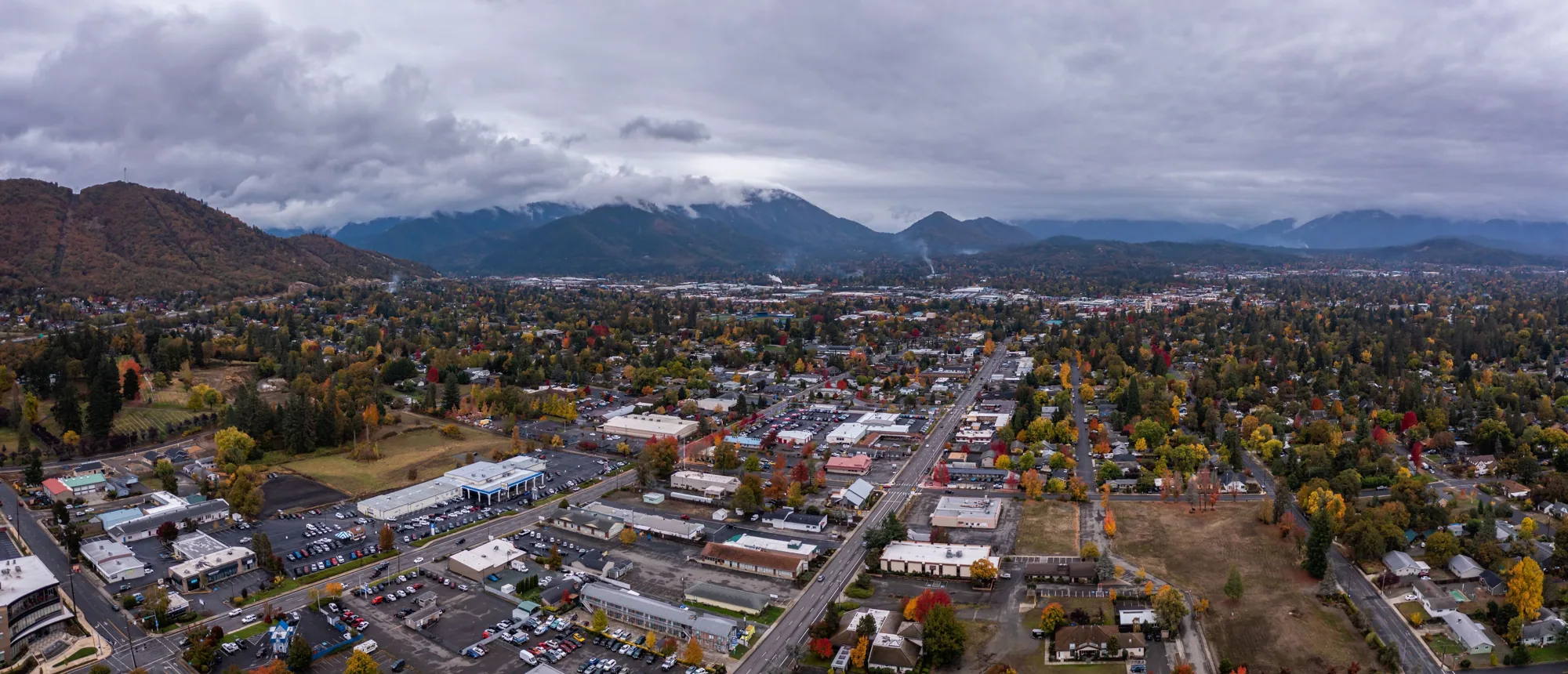
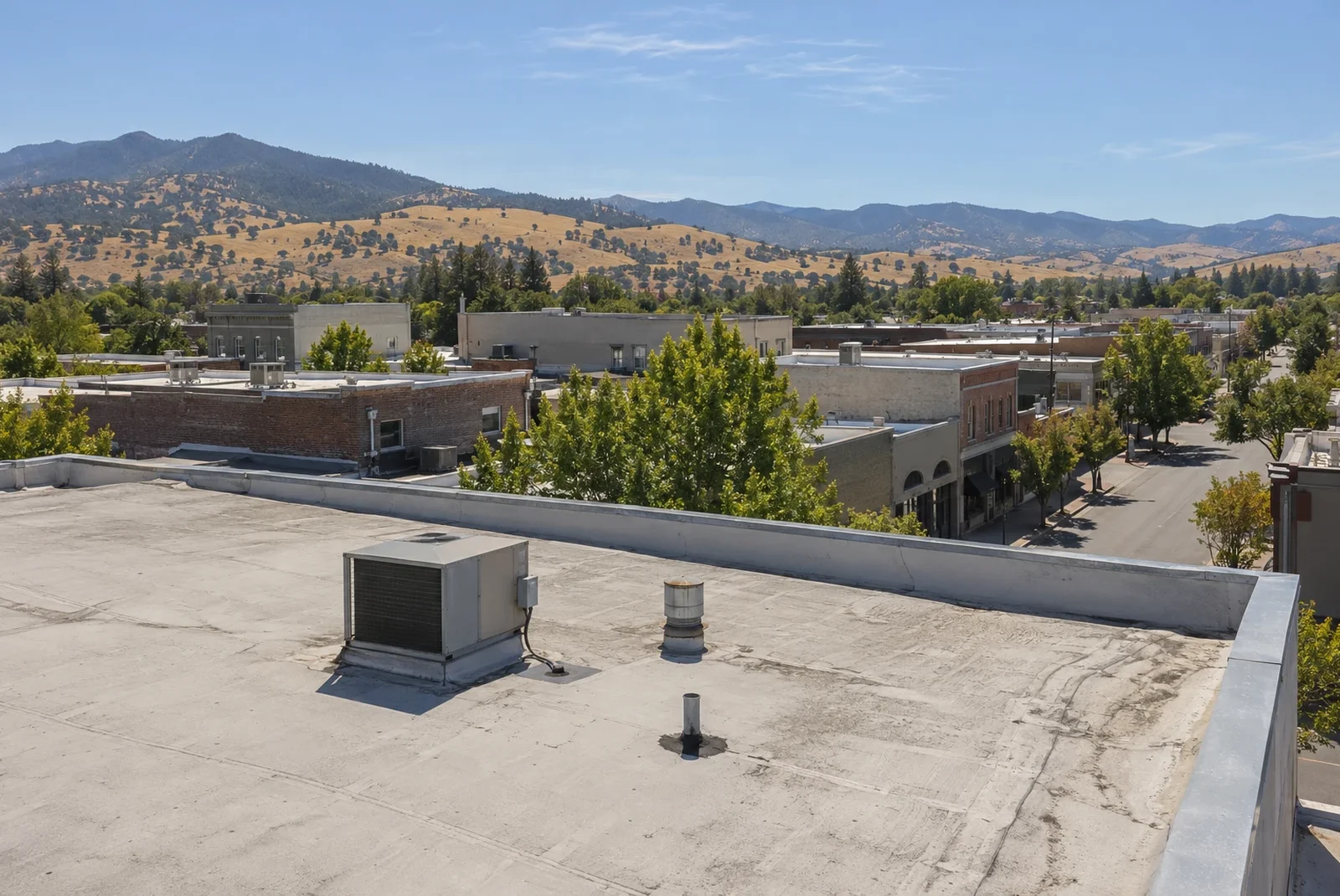
A granule-surfaced cap sheet on a Medford, OR roof tells its own story by August. On a 100 F afternoon the asphalt softens, the surface runs far above the air temperature, and granules that have worn thin expose the asphalt beneath to sun that the valley delivers with little cloud. In this region 61 afternoons past 90 F and 11 past 100 F, and 115 F stands as the record. Modified bitumen is built to take that, with two plies and a mineral surface, and it is still one of the most heat-aware systems in the reserve schedule.
The property manager's question is how much surface the cap sheet has left and when granule loss moves the replacement date.
SBS, APP and the layered system
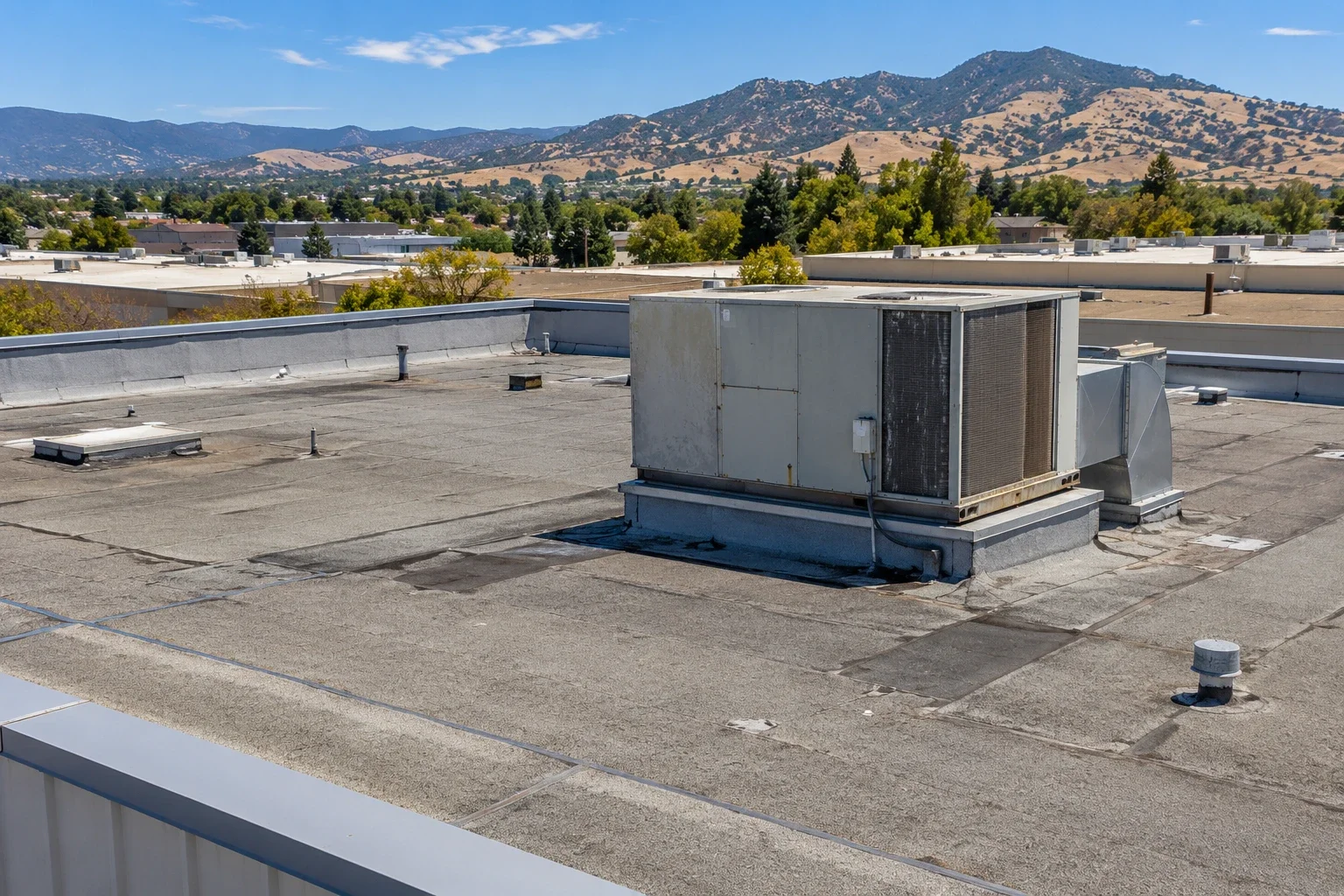
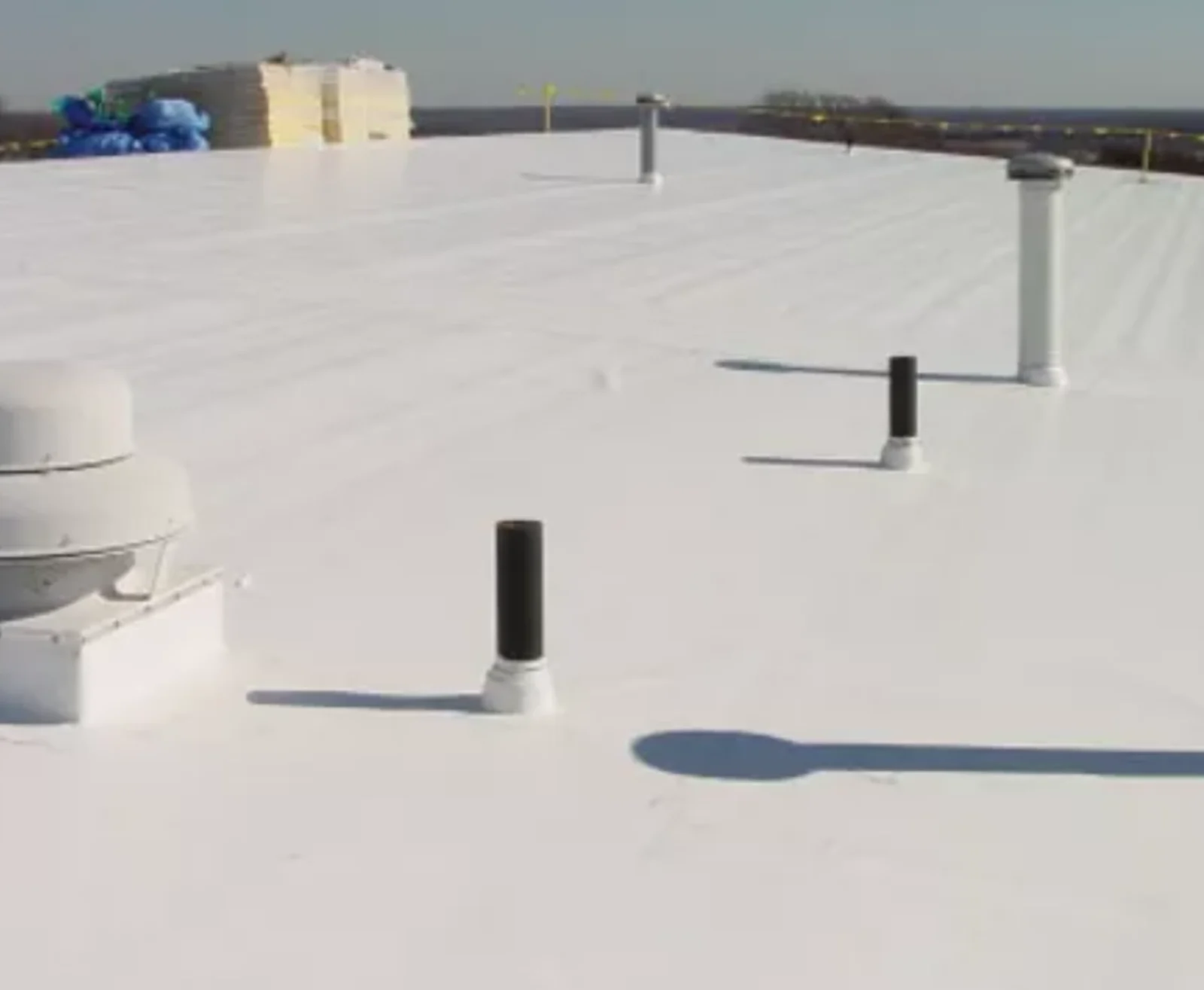
Modified bitumen is asphalt blended with a polymer and reinforced with fabric. SBS-modified sheets are rubber-like and flexible, good through the cold nights and the roughly 64 freezing mornings the valley sees. APP-modified sheets are plastic-like and hold up well in heat, which is why they appear on valley roofs where afternoons run hot. Most commercial roofs use two plies, a base sheet and a granule-surfaced cap, laid by torch, hot asphalt, cold adhesive or self-adhesion.
The layers give redundancy. A puncture in the cap is backed by the base sheet, and a leak must cross both to reach the deck. That is why the system suits roofs that are walked often, mechanical roofs and buildings held for the long term. Where a single-ply such as TPO goes down faster, this goes down slower and takes more abuse. The tradeoff is labor, since each ply is laid, lapped and sealed in sequence.
Heat, granule loss and UV budget
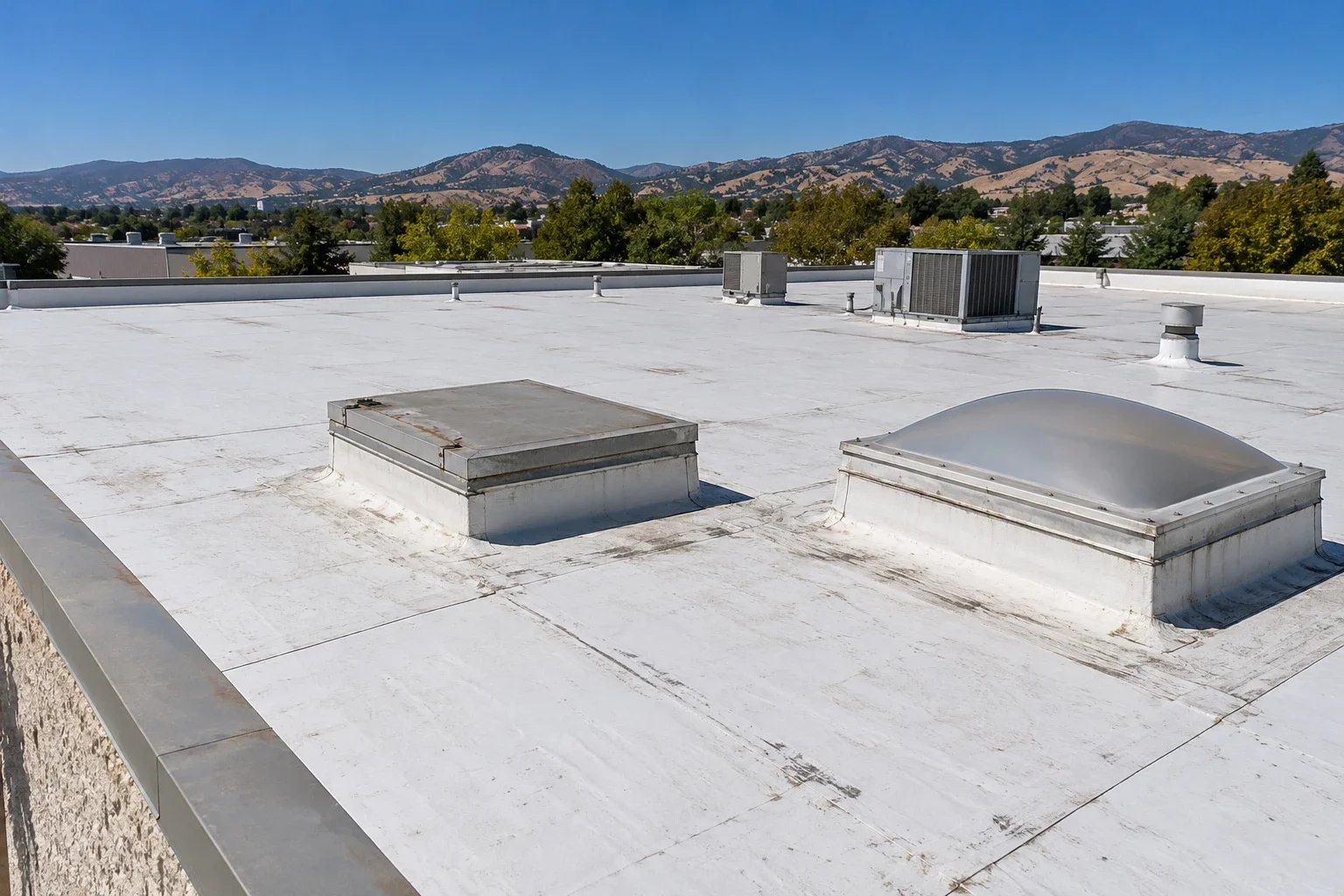
The mineral granules on a cap sheet shield the asphalt from ultraviolet light, and when they wash or wear away the asphalt oxidizes, cracks and loses its waterproofing. Triple-digit heat accelerates the loss, and the valley's few rains do little to wash out debris. We grade the cap sheet on granule coverage, blistering, ridging and lap condition each spring, and the remaining service life follows.
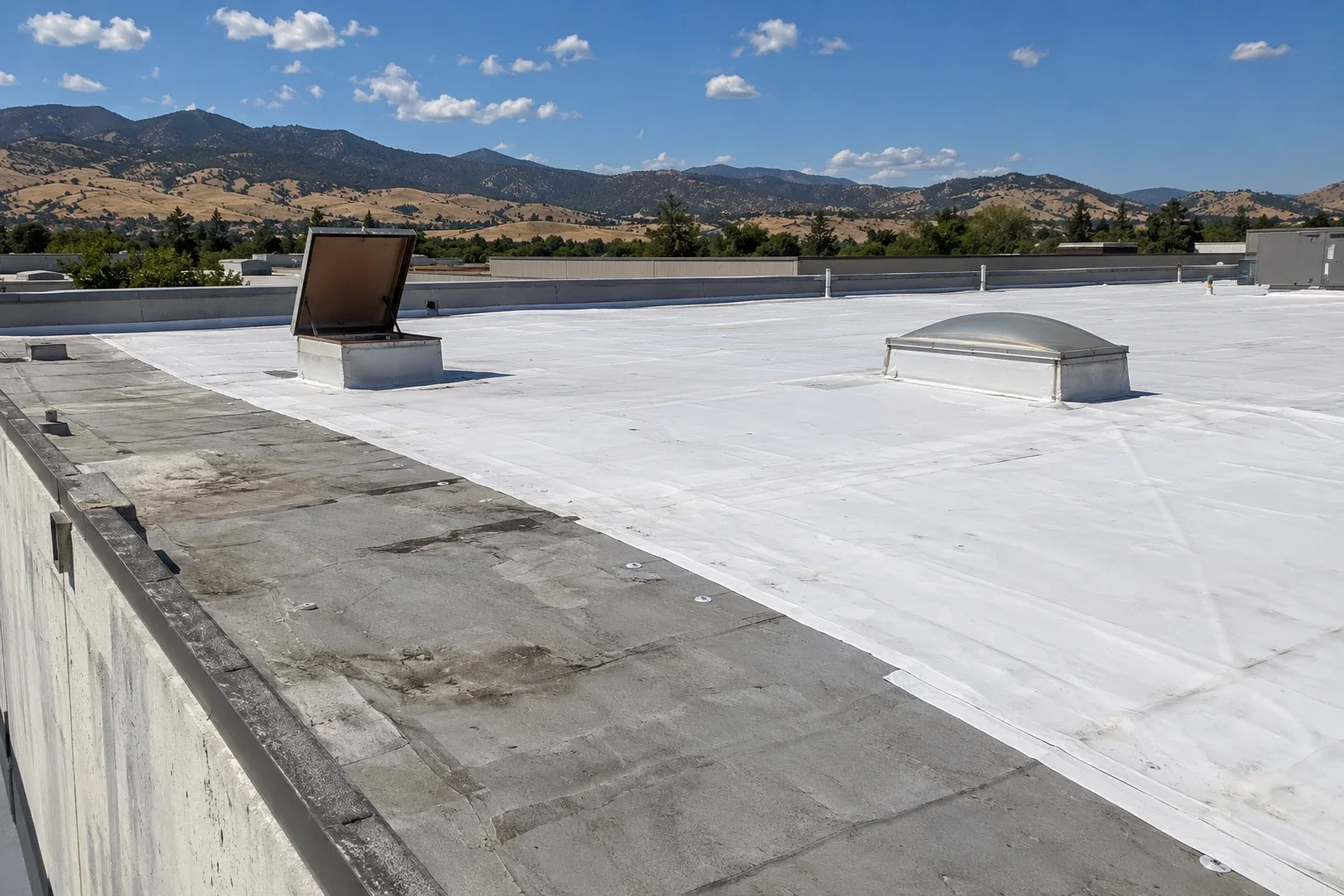
Surface condition also decides the repair or restore call. A cap sheet with granules mostly intact can take a reflective coating that restores reflectance and extends life. A sheet with bare spots over most of the field is a replacement candidate, and the roof register records the grade so the owner can plan the date. Reflectance loss from soot and ash is a smaller factor on a dark surface, but heat load on the building still rises.
Blistering and ridging deserve a note. Blisters appear where moisture or air caught between plies swells in the afternoon sun, and ridges follow insulation joints as the roof moves. Both are cosmetic at first and become leak sources as the surface cracks. We list each one in the condition grade and mark which are patches and which signal a larger problem, so the property manager sees the difference.
Wildfire season, hot work and ember exposure
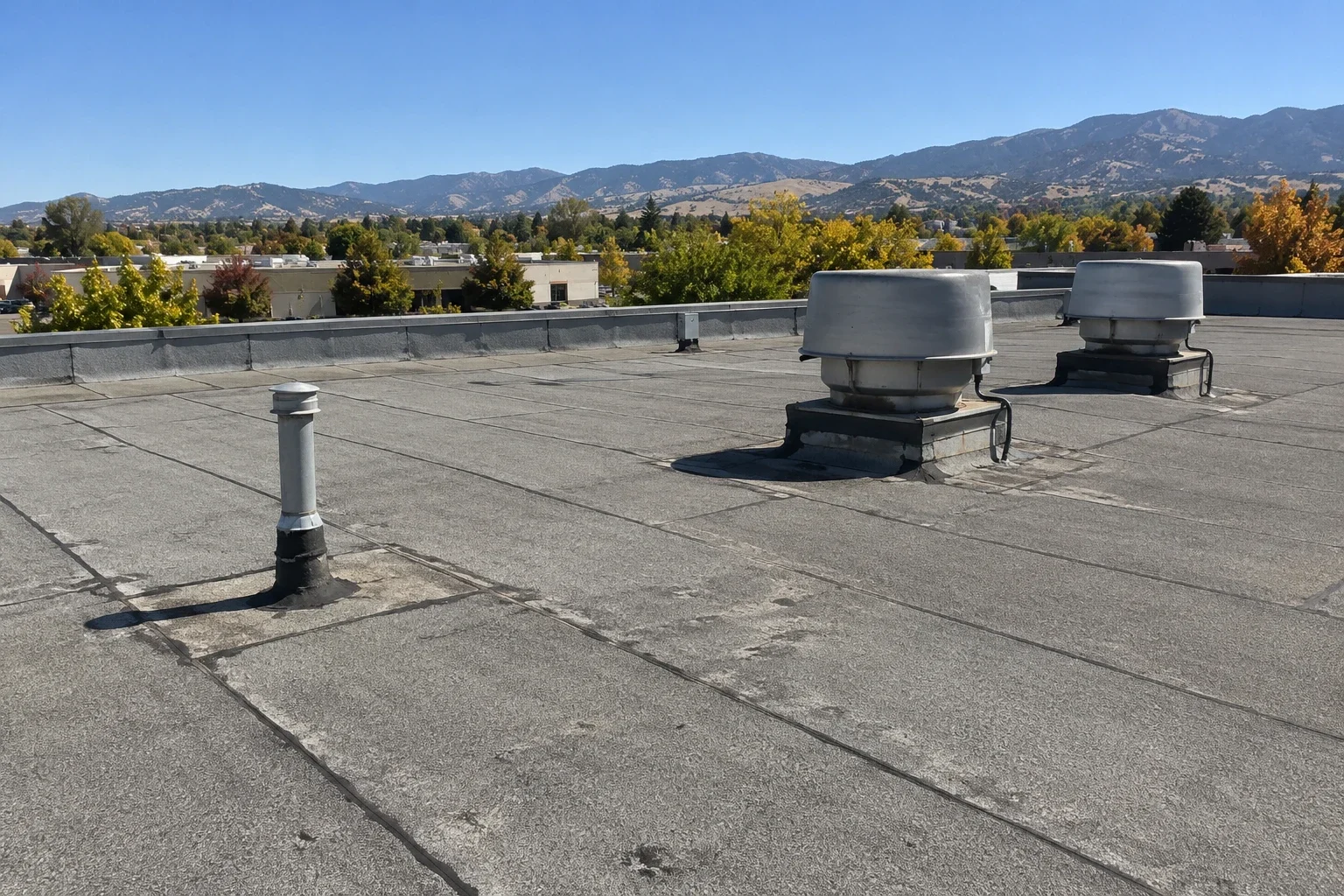
Wildfire put 26 smoke days on Medford's 2021 calendar, following the 2020 fires that destroyed about 2,600 homes in the county. Torch-applied roofing is open-flame work, and in the dry season it needs a hot-work plan: a fire watch that outlasts the last flame, extinguishers on the roof and a post-work check. Some insurers and owners prohibit torches in fire season altogether, so we ask for the policy language before pricing.
Cold-applied and self-adhered systems avoid the flame and are the practical answer where torch work is barred. They take longer and need moderate temperatures to cure and bond. A granule surface is mineral and does not burn, which helps against embers, but edges, penetrations and loose debris still need attention. After smoke events we inspect for ember damage and ash in drains.
The property manager should hold the fire plan as part of the contract. It names the fire watch, the extinguisher count, the stop-work temperature and wind limits and the check after the last flame. A plan on paper costs nothing and avoids an argument with the insurer if smoke is seen from the road.
Where modified bitumen fits the valley
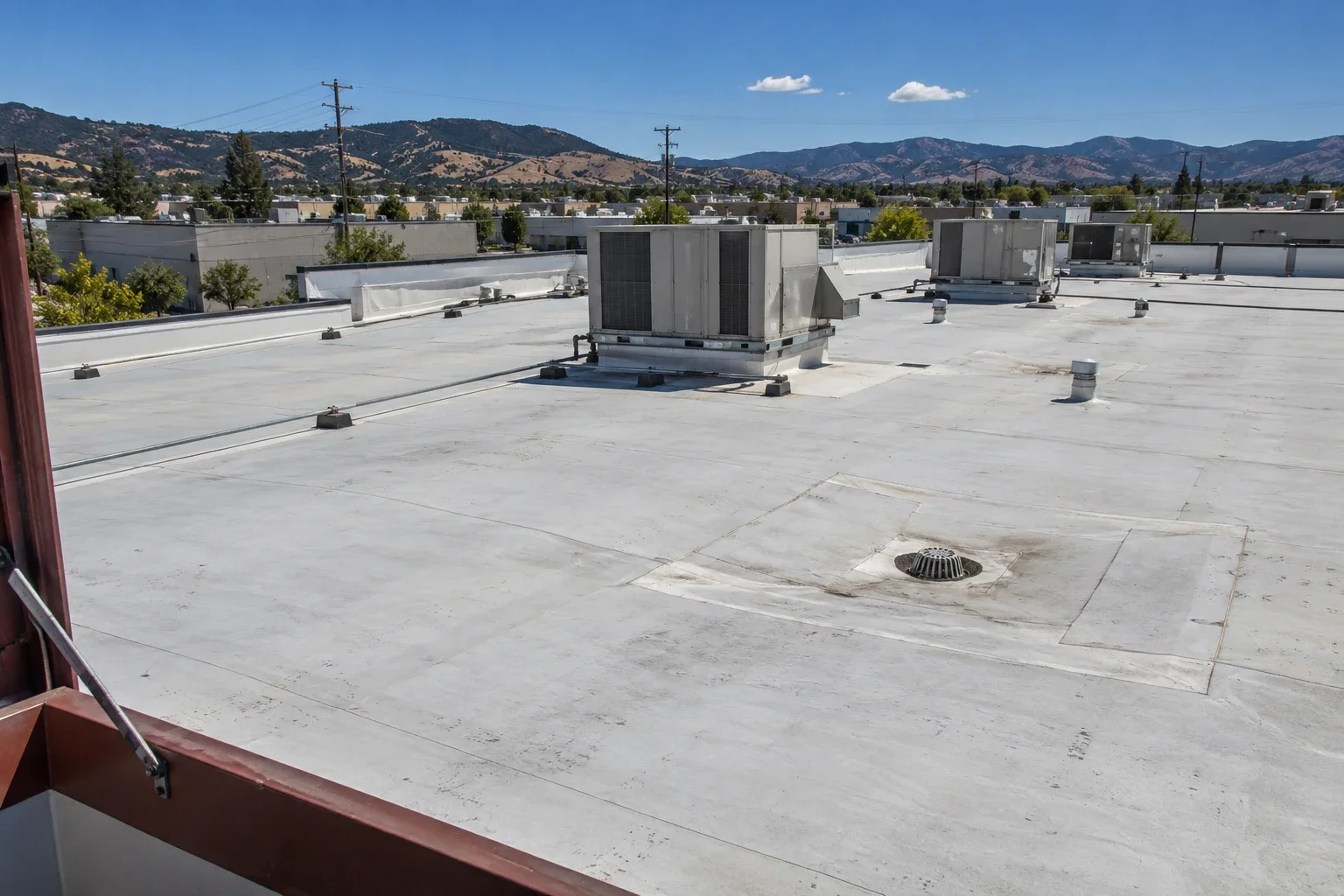
Mechanical-heavy and high-traffic roofs suit the system. Healthcare campuses carry equipment that demands durable surfaces and clear service paths, and the two hospital systems, Asante Rogue Regional Medical Center and Providence Medford Medical Center, together employ over 2,000 people. In White City, the VA Southern Oregon Rehabilitation Center and Clinics occupies a campus that descends from WWII Camp White, with HVAC and exterior upgrades in design.
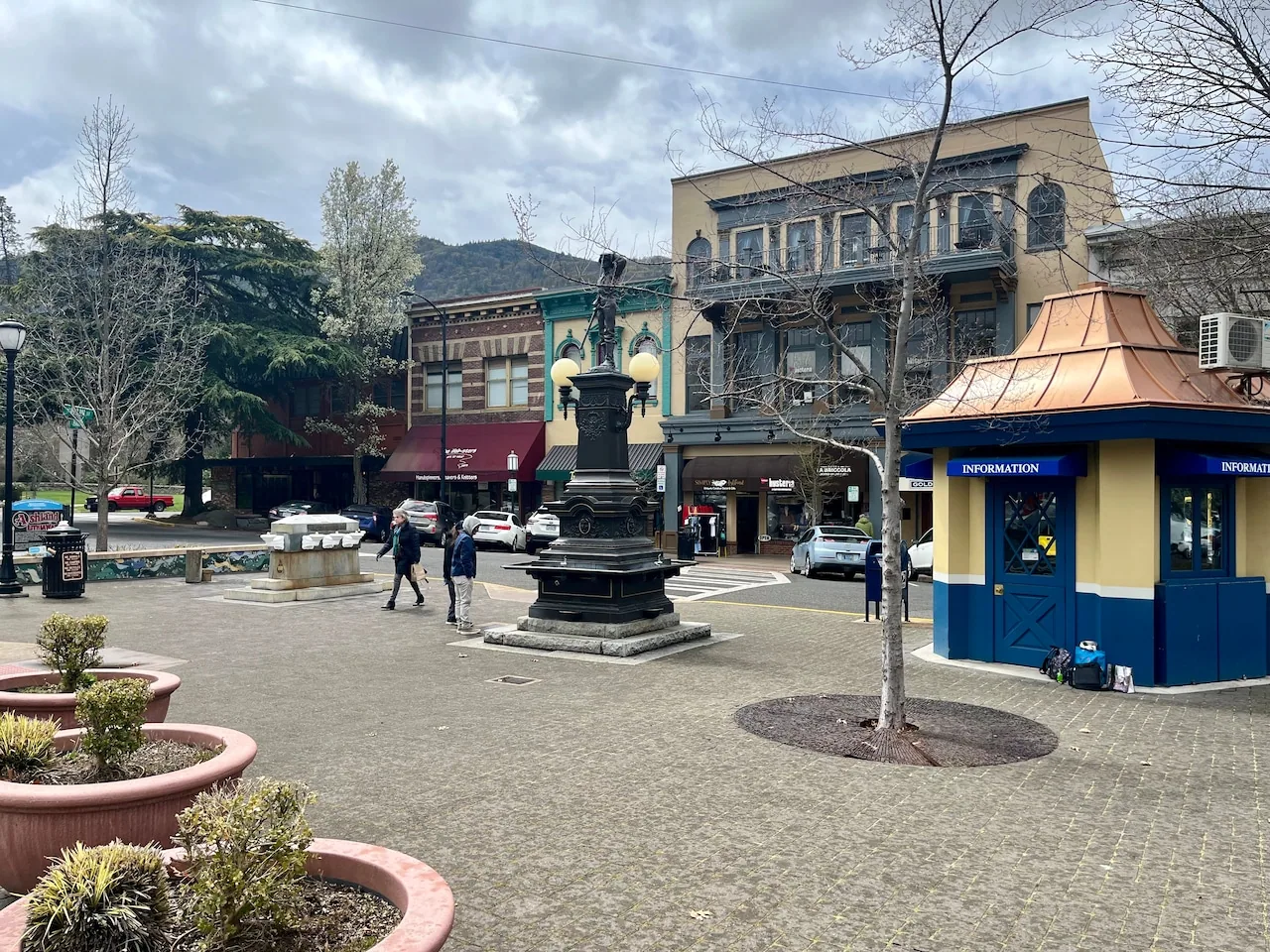
Historic and older stock is another case. Ashland holds 59 individually listed historic structures and four National Register districts, and Jacksonville's National Historic Landmark district covers over 100 commercial and residential buildings, so roof work in either place often has appearance and approval rules. A redundant roof beneath a code-compliant surface can satisfy both. We review the rules before recommending a system.
Cost, reserve schedule and lease timing
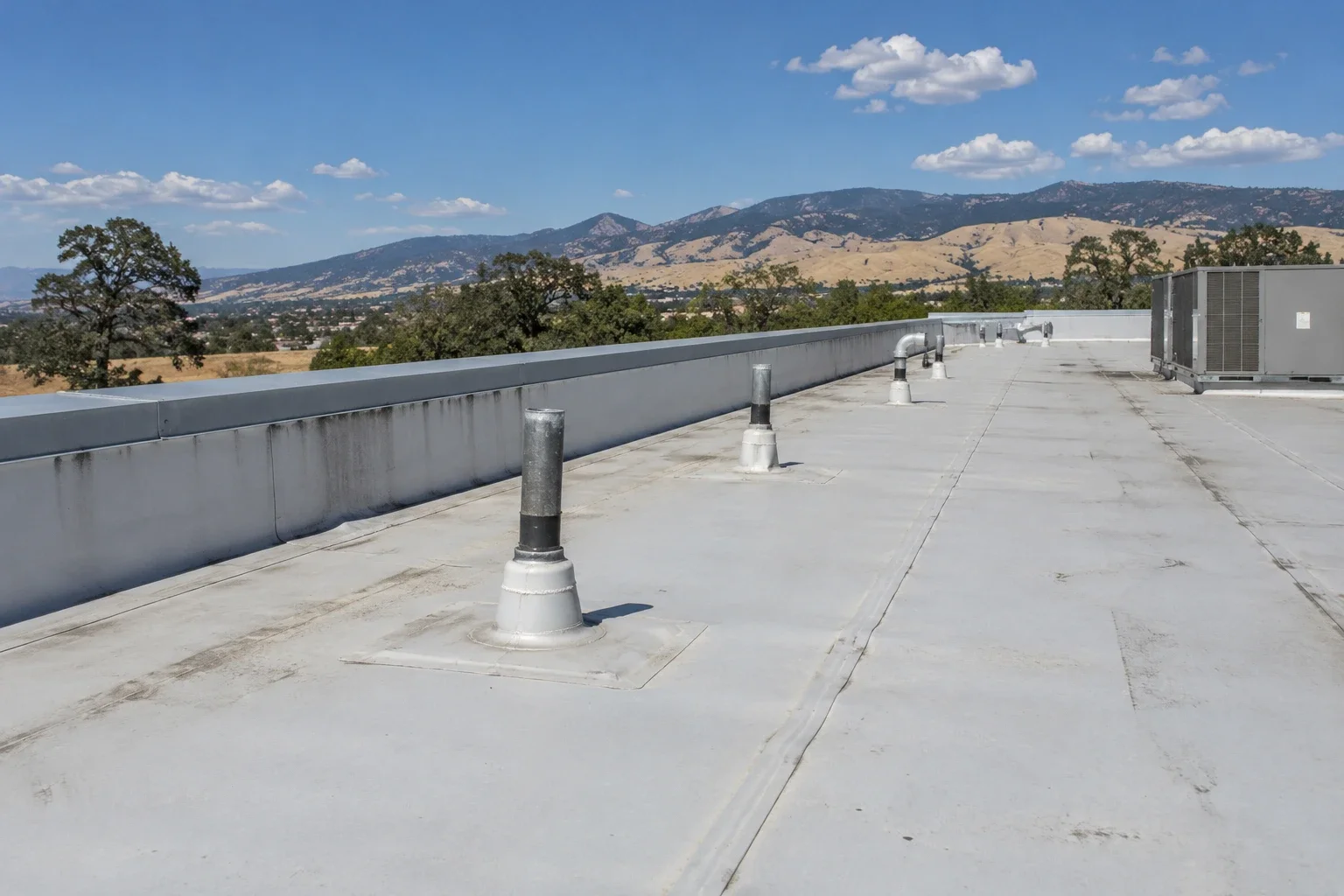
Modified bitumen costs more in labor than a rolled single-ply, and the bid lists the number of plies, the install method, insulation, cover board, flashing and hot-work controls as separate lines. Torch application is fastest, cold-applied and self-adhered methods cost more in time. A coating can extend a sound cap sheet at a fraction of replacement cost, and a recover adds a layer over a dry roof.
Each roof is given a date and a cost range in the reserve schedule. Lease turnover is a natural trigger, since a roof replaced before a new tenant moves in avoids the disruption of working over an occupied space. Since April 1, 2026 each modified bitumen scope has been checked against Oregon's 2025 Structural Specialty Code, which took effect October 1, 2025.
Insulation and cover board sit under the plies, and a rigid board gives the base sheet a flat, durable surface. We show the board as a priced line, with an upgrade for roofs that take foot traffic, and we check parapet and flashing heights against the thicker assembly before the bid is final.
Installation and the spring work window
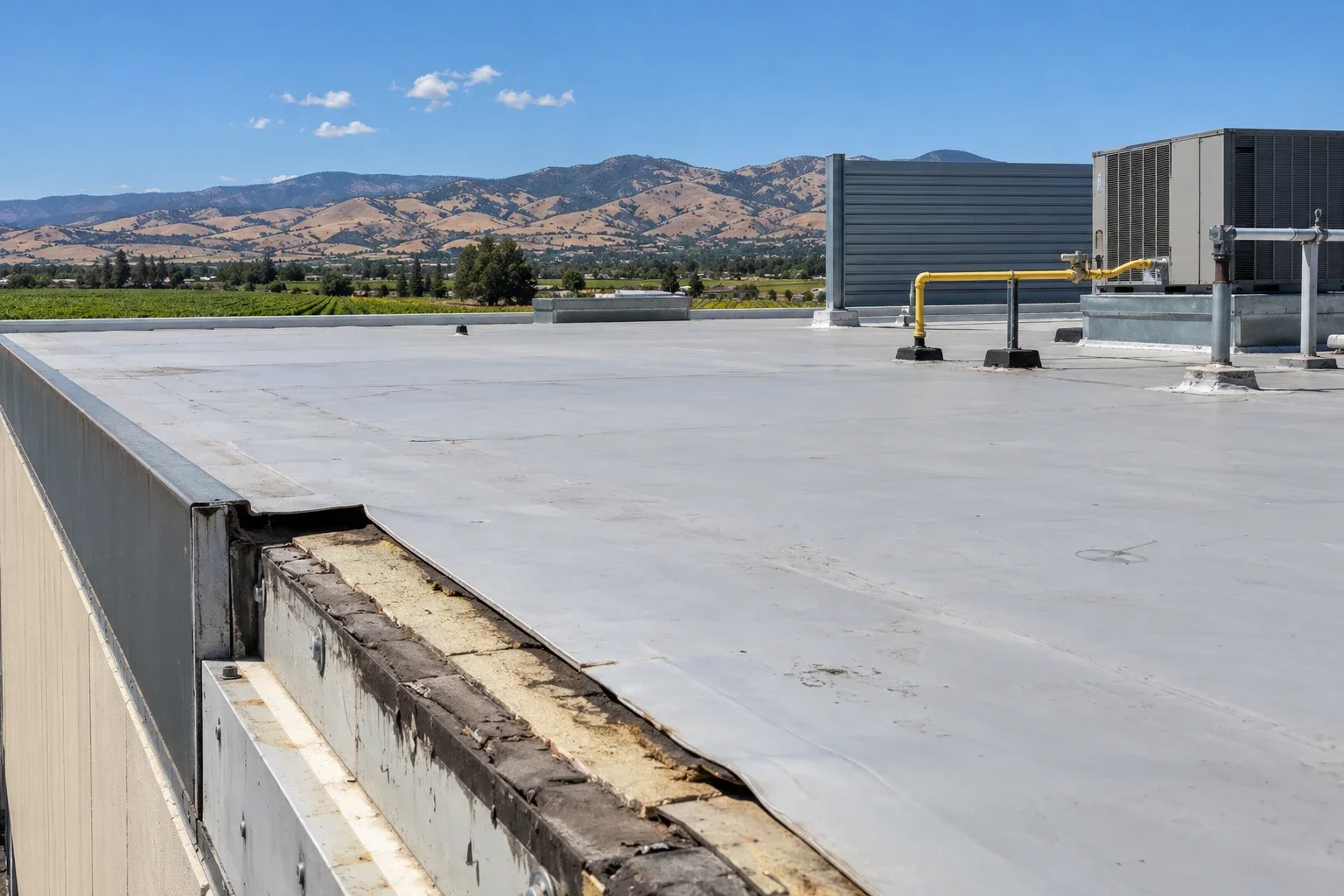
The spring work window gives the best bond for cold-applied and self-adhered sheets and the safest conditions for torch work before fire restrictions begin. Rolls are stored in shade and brought to the roof warm, since stiff material cracks when unrolled. In summer, crews start early and avoid the afternoon, when softened asphalt and hot decks make laps harder to control.
Hold points keep a layered roof honest: the base sheet is inspected before the cap goes on, laps are checked before granules are embedded and the finished roof is walked with the property manager. Photographs of every flashing and drain go into the roof register, along with the warranty application and the fire watch log if a torch was used.
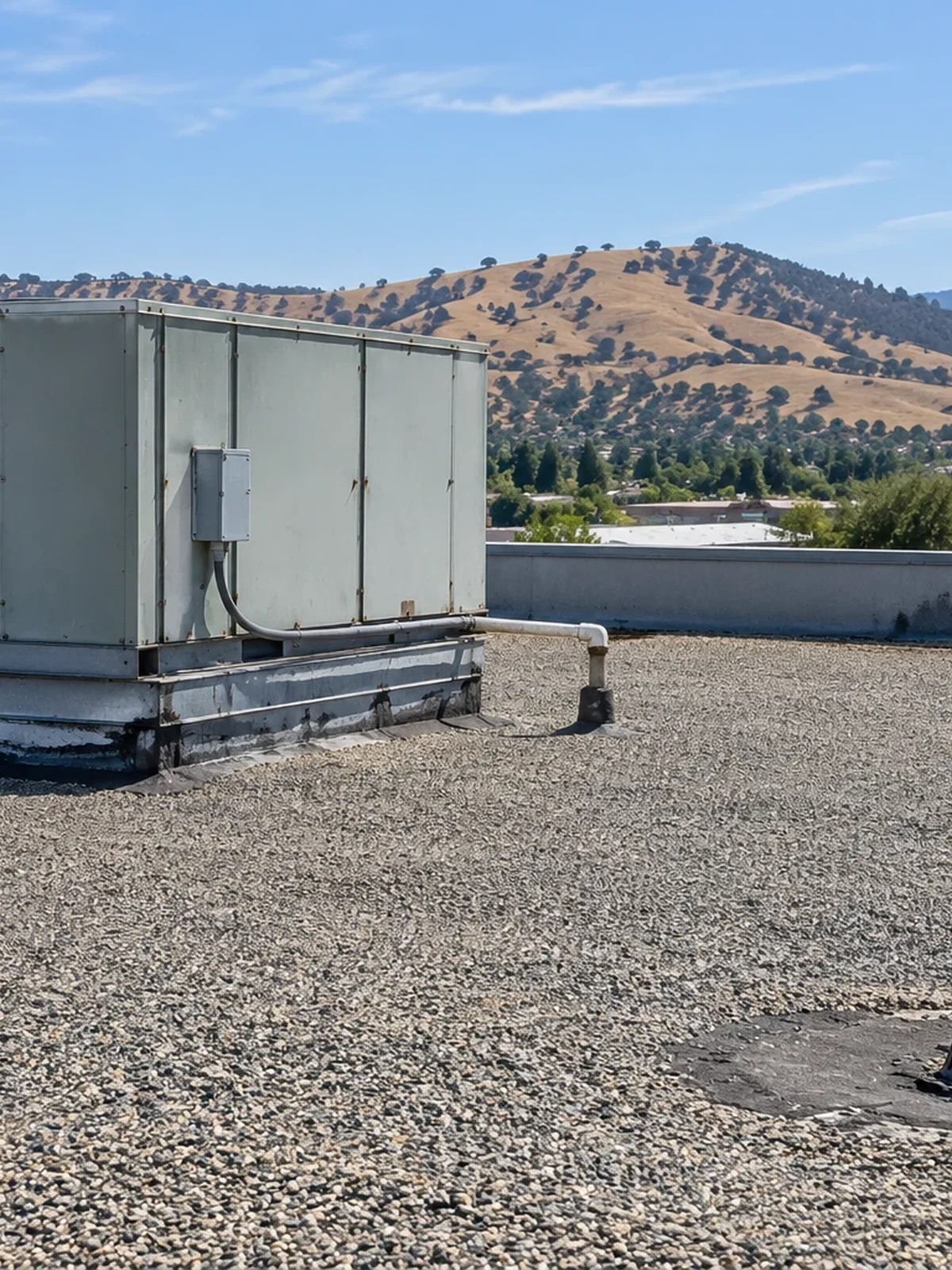
A built-up roof is the older layered cousin, and built-up roofing remains an option where weight and a gravel surface are acceptable. The property manager sees the two priced together, with the carrying cost of each over the holding period, so the choice rests on the building and not on habit.
Send the roof ages and leak tickets
Related Roofing Pages

Questions About Modified Bitumen Roofing
Is a torch required for modified bitumen?
No. Cold-applied and self-adhered sheets avoid the flame and are the usual choice in fire season.
SBS or APP for Medford?
APP holds heat well and SBS stays flexible in cold. Both are used. We choose by roof exposure.
Can a worn cap sheet be coated?
If granule coverage is mostly intact and the insulation is dry. We scan and core first.
Does the system suit a historic building?
Often, with appearance rules reviewed first. We check the district requirements before recommending it.
What does smoke do to the cap sheet?
Soot dulls the surface. Ash in drains is the larger concern, so we clear drains after each event.