
Infrared Moisture Survey in Medford, OR
Infrared scans and core cuts that map trapped moisture under Medford, OR commercial roofs, so owners repair, recover or replace based on evidence.
Overview
Only about 18.4 inches of precipitation falls on Medford, OR in a typical year, which means a corner of saturated insulation can sit under a roof for seasons without producing a single ceiling stain. The owner sees nothing, the reserve schedule shows a roof with years left, and the damp material below is quietly adding weight, corroding fasteners and softening the deck. By the time water finally shows inside, the repair has grown from one detail to a large portion of the roof.
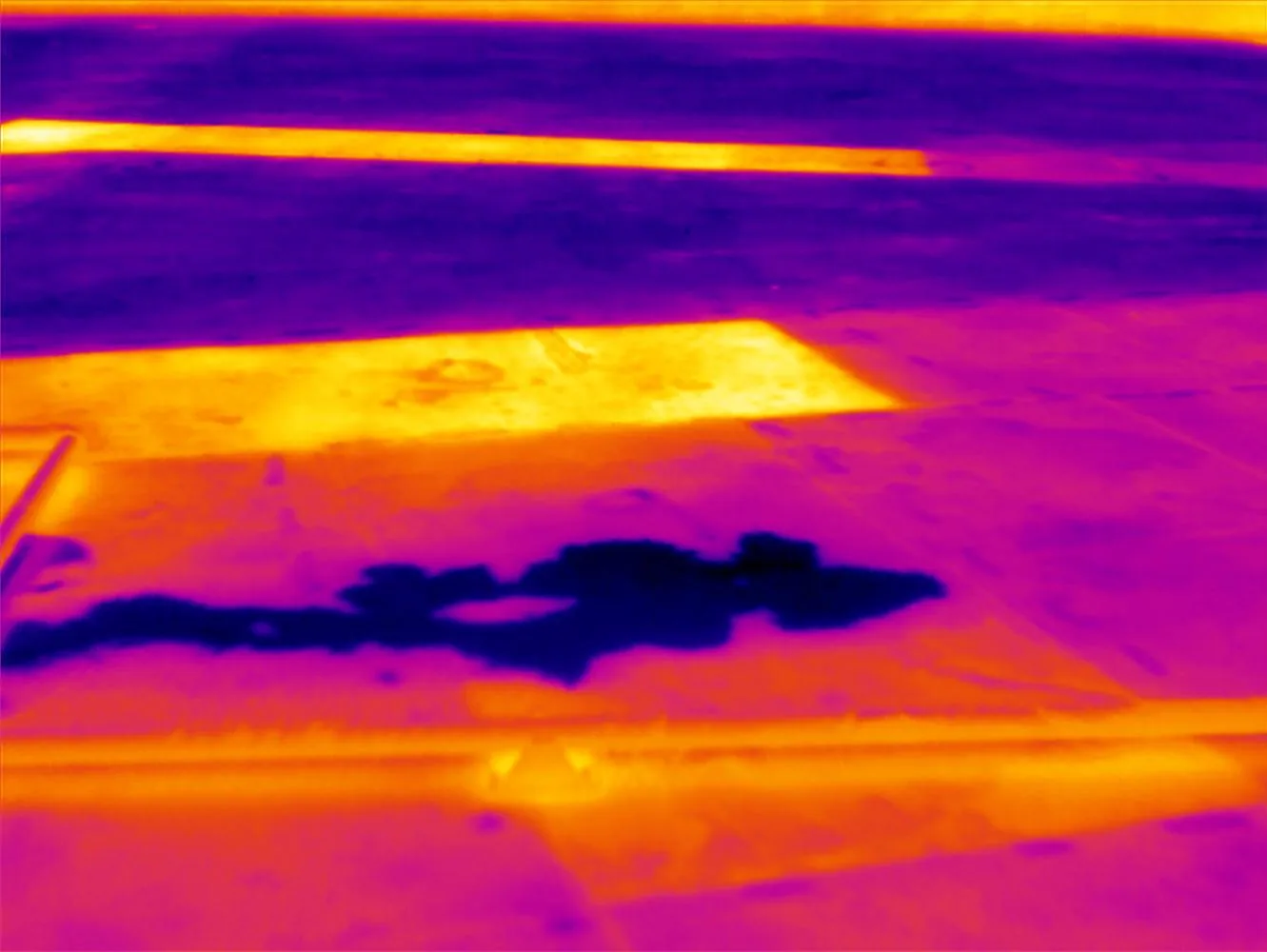
An infrared survey finds that hidden water before it announces itself. We scan the roof surface after a hot day, map the areas that hold heat differently, then cut cores to confirm what the scan suggests. The result is a plan of wet and dry zones that tells the owner whether to patch, recover or replace, with the evidence on paper.
How the scan finds water
Water holds heat longer than dry insulation does. On a sunny day the roof warms up, and after sunset the surface over saturated insulation stays warmer while the dry areas cool down. An infrared camera reads those temperature differences and shows them as patterns. Valley summers are ideal for this, since Medford averages about 61 afternoons above 90 F, which charges the roof with plenty of heat for an evening scan.
The best scans happen on clear, calm evenings after a dry spell. Wind, recent rain or heavy cloud confuse the picture, so we choose the night carefully and often scan twice. A survey also starts with a dry-day look at the roof, noting ponding, patches and equipment, because each of those can mimic or hide a moisture pattern. Winter inversion fog and cold mornings rule out most of the cold season, which is one reason surveys cluster in late spring through early autumn.
Smoke can interfere as well. Heavy smoke reduces solar loading and softens the contrast, and soot on a surface changes how it absorbs and releases heat, so a scan during a smoky week may be postponed for a clearer evening rather than interpreted with caution.
Core cuts that confirm the picture
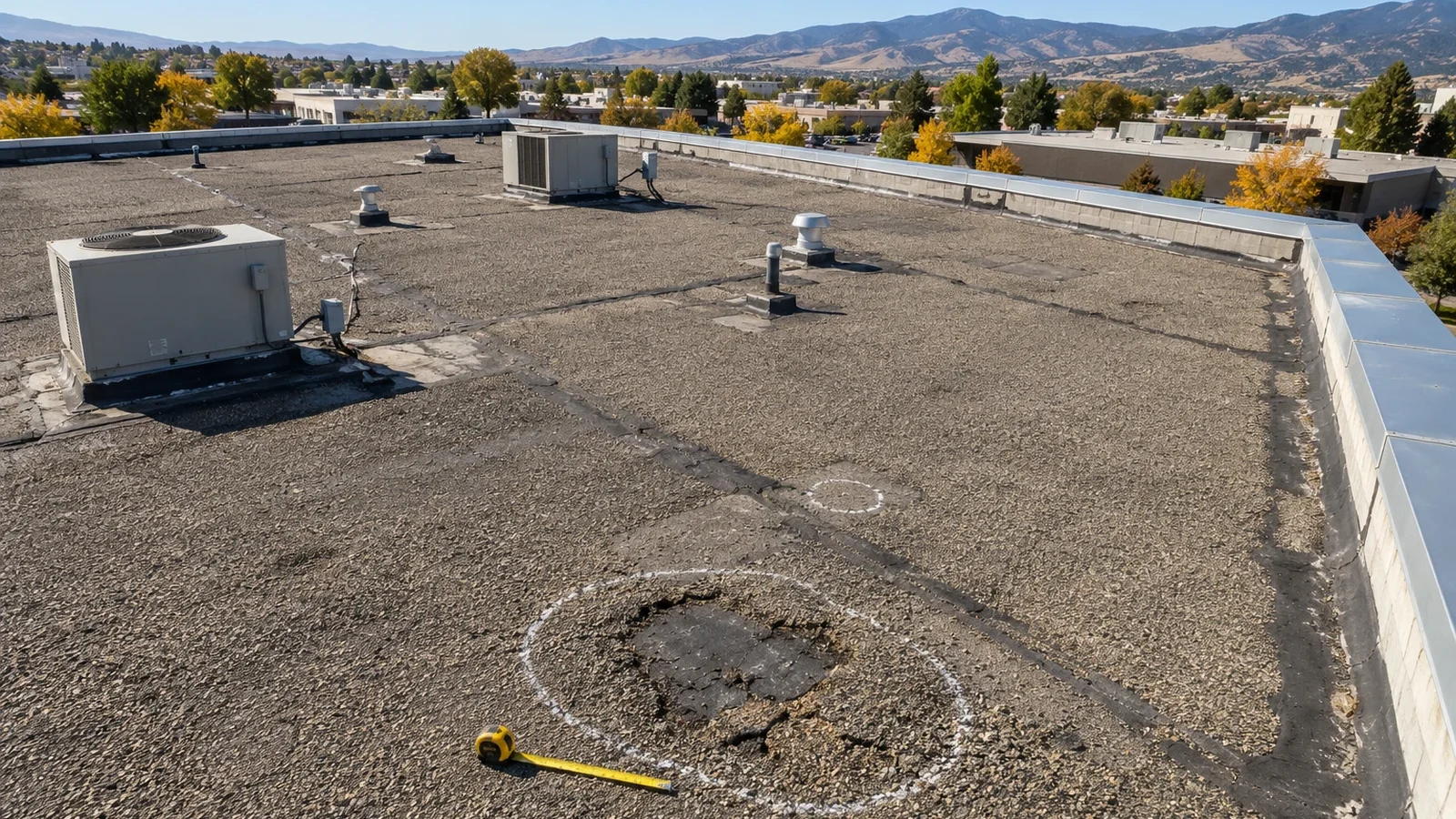
A thermal image shows where something is different, not why. A warm patch might be saturated insulation, a thicker area of the roof, a ballast stack or a patch of dark coating. So we mark candidate areas and cut small test cores through the membrane and insulation, check the layers for moisture and condition, and patch each cut the same day with compatible material.
The cores give us the roof's makeup, too: membrane type, thickness, number of layers, insulation type and deck condition. That information goes into the owner report and is useful far beyond the survey, since a replacement or recovery design depends on what is actually under the surface, not on what the drawings say.
What the moisture map decides
The map turns a vague worry into a scope. If damp areas are small and tied to specific details such as a curb or a drain, they can be cut out and replaced, and the rest of the roof keeps its life. If the damp areas are large, or sit across the roof in a pattern that points to failed membrane, replacement is usually the sensible answer.
For roofs that are mostly dry, the survey is also a green light, and it records a baseline that later scans can be compared against. It shows that a recover over the existing roof is possible, and it protects the owner from covering a problem that would resurface in a few years. This is where the survey saves the most money: by preventing the wrong spend, whether that is a tear-off that was not needed or a recover that should not have gone on.
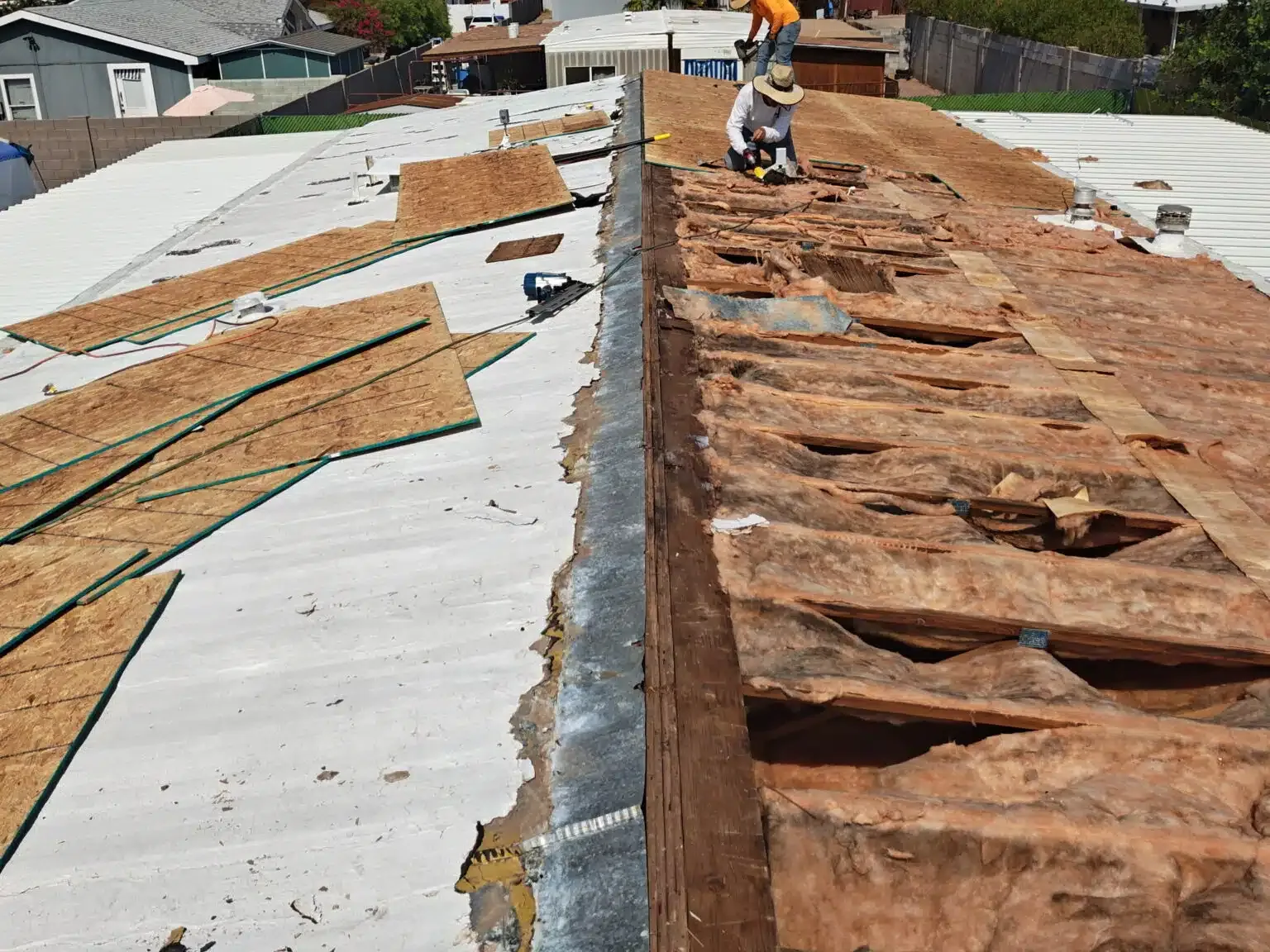
Partial results are common and useful. A roof with two small damp areas around a curb and a drain can be repaired locally, with the survey plan serving as the cut-out map. The insulation removed is replaced with matching material at the same thickness, the membrane is welded or bonded back, and the repair is photographed and logged in the roof register so the same zones can be rescanned the next season.
Sales, refinancing and lease turnover
Moisture findings carry real weight in a transaction. A buyer doing due diligence on a roof wants to know whether the insulation is sound, and a lender may ask for the same. The survey plan, with core logs and photographs, can be handed over as a document the buyer's own consultant can check against the roof, and it carries the date of the scan so everyone knows how current it is. A survey done ahead of time gives the seller a documented position instead of a negotiation based on a visual impression.
The timing also matters for lease-cycle decisions. A landlord who knows the moisture extent can budget the work ahead of a renewal instead of discovering it mid-lease. For owners of buildings in the rail-served White City Industrial Park and the Phoenix Industrial Park, a current survey keeps the roof from becoming the sticking point whenever a space turns over.
Limits and the right pairing
Infrared works best on low-slope roofs with insulation under a membrane. It is less reliable on ballasted roofs, heavily coated surfaces, reflective membranes in some conditions, and metal panel roofs where thermal behavior is different. On those roofs we use other methods such as electrical-impedance scans and cores alone, and the report states which method each conclusion rests on. Foam and some coated roofs also hide trapped moisture differently, so their results are read with extra care.
The survey is a companion to a hands-on inspection, not a substitute. The inspection finds the visible defects and the survey finds what is hidden. Neither replaces the owner's own records of past leaks and repairs, which tell us where to look first. Multi-building sites, such as Harry and David's Medford site with its mix of manufacturing and distribution buildings, are efficient to survey one roof at a time, and a drone pass can help plan the scan.
Send the roof details for a survey plan
Related Roofing Pages
Questions About Infrared Moisture Survey
Does the scan need the building to be empty?
No. The scan is done from the roof surface in the evening, and the tenants are rarely affected. Core cuts are small and patched immediately, so interiors stay undisturbed.
Can the survey tell me how much of the insulation is wet?
It outlines the areas and gives a reasonable estimate of the extent. Cores confirm the boundaries at selected points, and the plan can be refined as repairs open the roof. Where a boundary is uncertain, we add cores rather than guess, since an extra cut costs little next to replacing dry insulation.
What does the report look like?
A roof plan showing wet and dry zones, thermal and daylight photos side by side, core locations and findings, and a recommendation for each area. It slots into the roof register without rework.
Is a survey worth it on a roof I plan to replace anyway?
Often, yes. It shows whether only part of the insulation needs to be removed, and it lets the price reflect the real scope rather than a worst-case guess.
How long are survey results good for?
Until the roof changes, either through a new leak or a repair. A dry roof stays dry for years if the membrane holds, and a yearly spring check shows whether that is still true.