KEE Roofing in Medford, OR
KEE roofing in Medford, OR: where a PVC-alloy membrane that keeps its flexibility earns its price under triple-digit heat, exhaust and smoke-season soot.
Overview
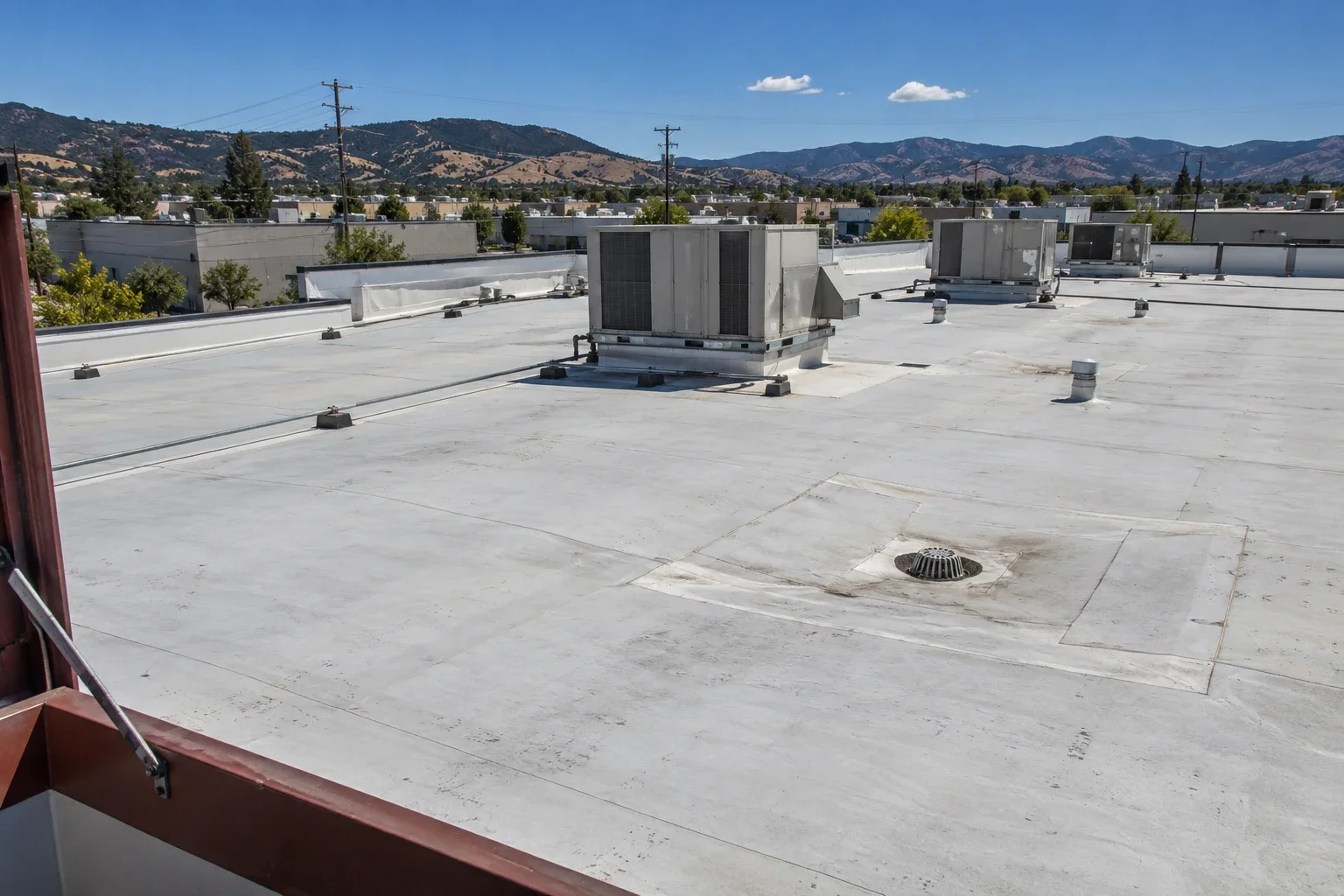
The roofs that worry a property manager most in Medford, OR are the ones where sun, exhaust and age all push on the same sheet. With 61 afternoons past 90 F and a 115 F record behind it, a roof over a processing line or a hospital kitchen takes hot, greasy discharge on top of the sun. Standard membranes stiffen under the combination, and the stiffness turns into cracked welds and a replacement that arrives years ahead of the reserve schedule. KEE is the PVC-alloy sheet built to resist exactly that drift, and it belongs on a short list of roofs.
We grade the exposure first and recommend KEE only where the carrying cost pays back in remaining service life.

What makes KEE a different sheet
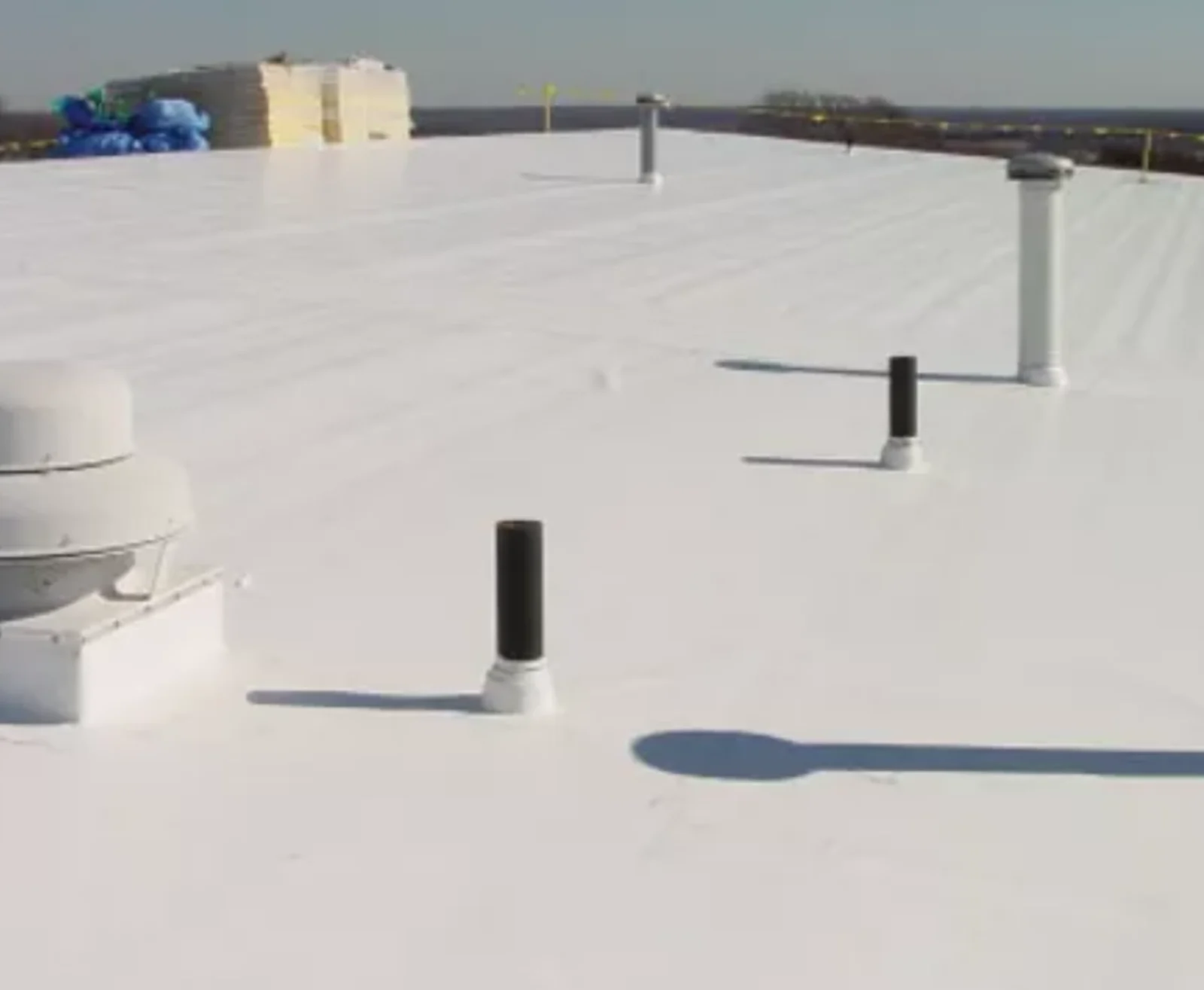
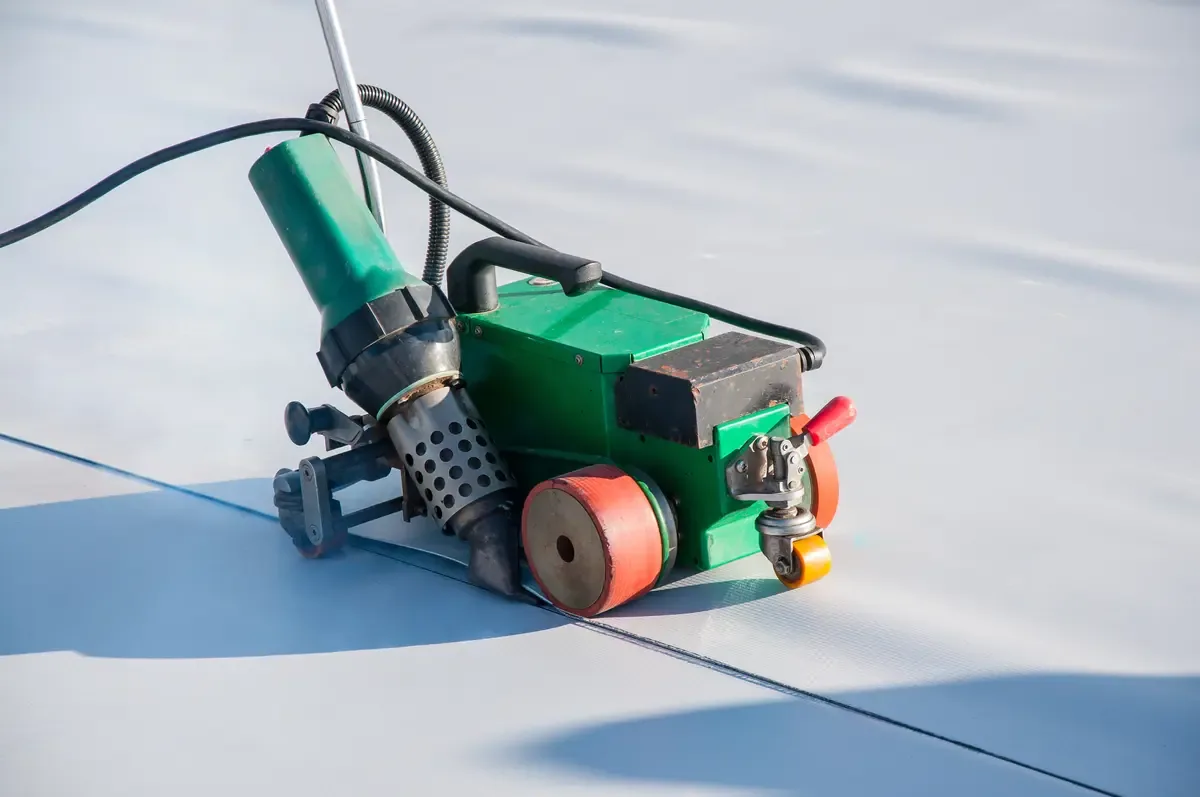
KEE is a PVC-based membrane blended with a ketone ethylene ester, a plasticizer designed to stay in the sheet instead of migrating out under heat and chemical exposure. The result is a membrane that keeps its flexibility longer, resists fats, oils and many rooftop chemicals and welds with hot air like PVC into one continuous layer.
Flexibility is the point. A sheet that stays supple handles the daily expansion and contraction of a triple-digit afternoon followed by a cool night, and it tolerates the occasional winter freeze that brings about 64 freezing mornings a year. The cost is a higher price per square foot than TPO and a premium over standard PVC, which is why we show KEE as an alternate and let the roof register carry the arithmetic.
Fire performance is part of the appeal. PVC-based sheets resist flame better than many alternatives, which matters on a roof with hot work, kitchen exhaust or electrical gear. The fire rating still belongs to the assembly, and we check it before ordering.
Heat, UV budget and remaining service life
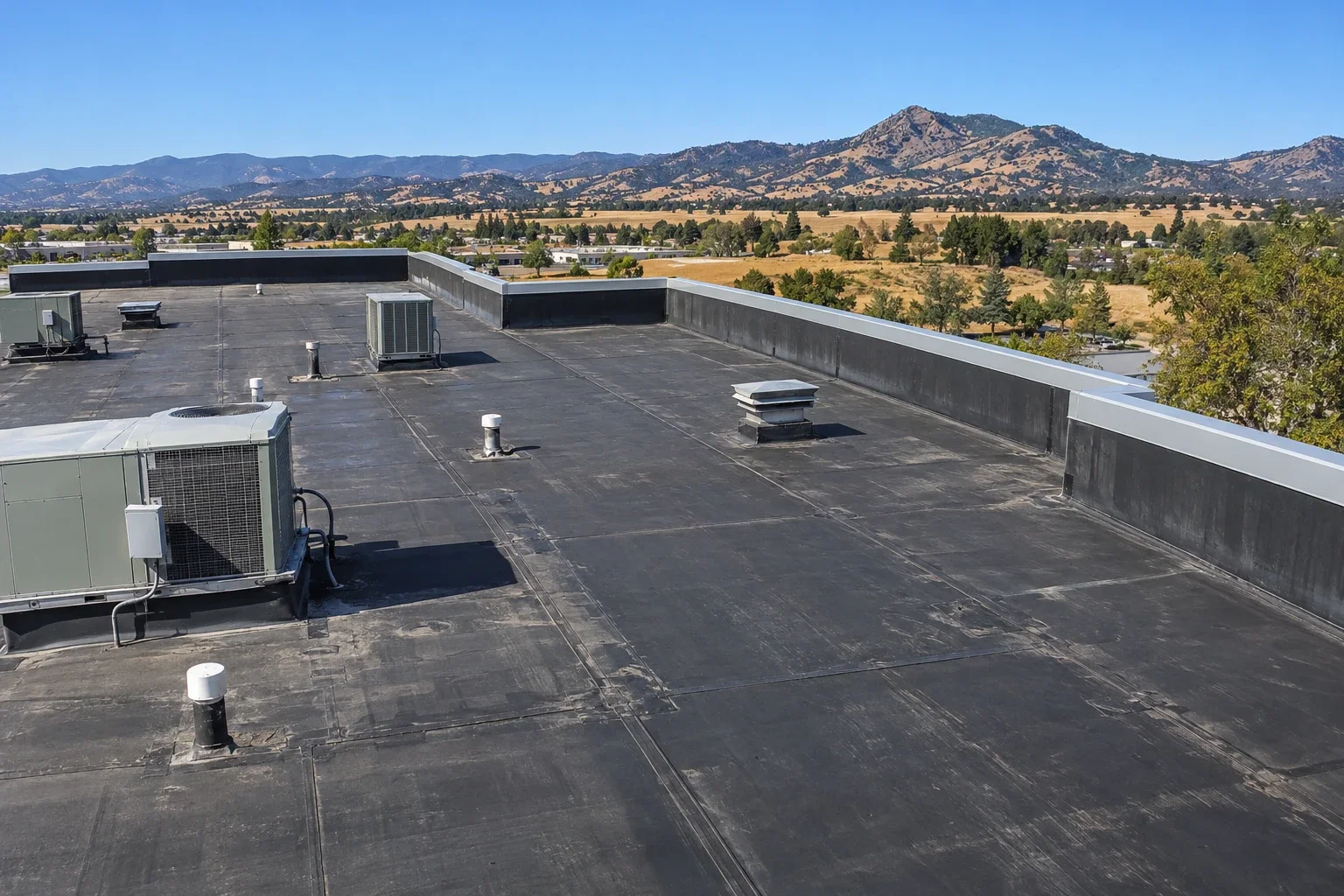
A rain shadow with 18.4 inches of annual precipitation spends a membrane's UV budget on clear days, with few storms to wash the surface. KEE slows one part of that aging, the loss of plasticizer, which is the quiet cause of stiffness in many older single-ply roofs. Reflectance loss still happens as dust and ash settle, so cleaning belongs on the maintenance plan.
The condition grade for a KEE roof records gauge, color change, weld condition and flexibility at a test patch. Remaining service life is then estimated from the grade, not from age alone, because a ten-year-old roof that has been cleaned and maintained can outrun a six-year-old one that has not. The owner report shows both numbers beside the reserve schedule date.
Where KEE fits across the valley
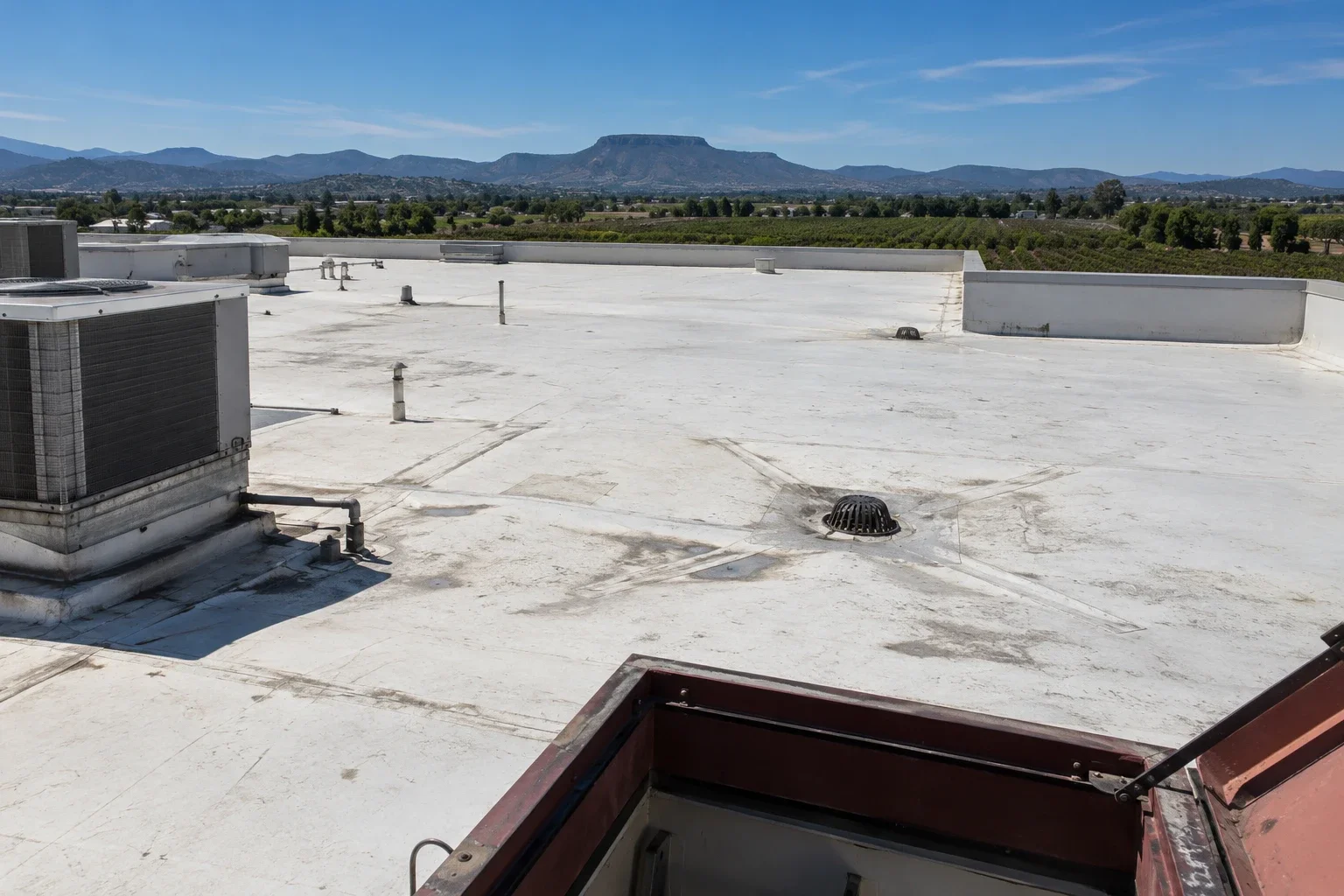
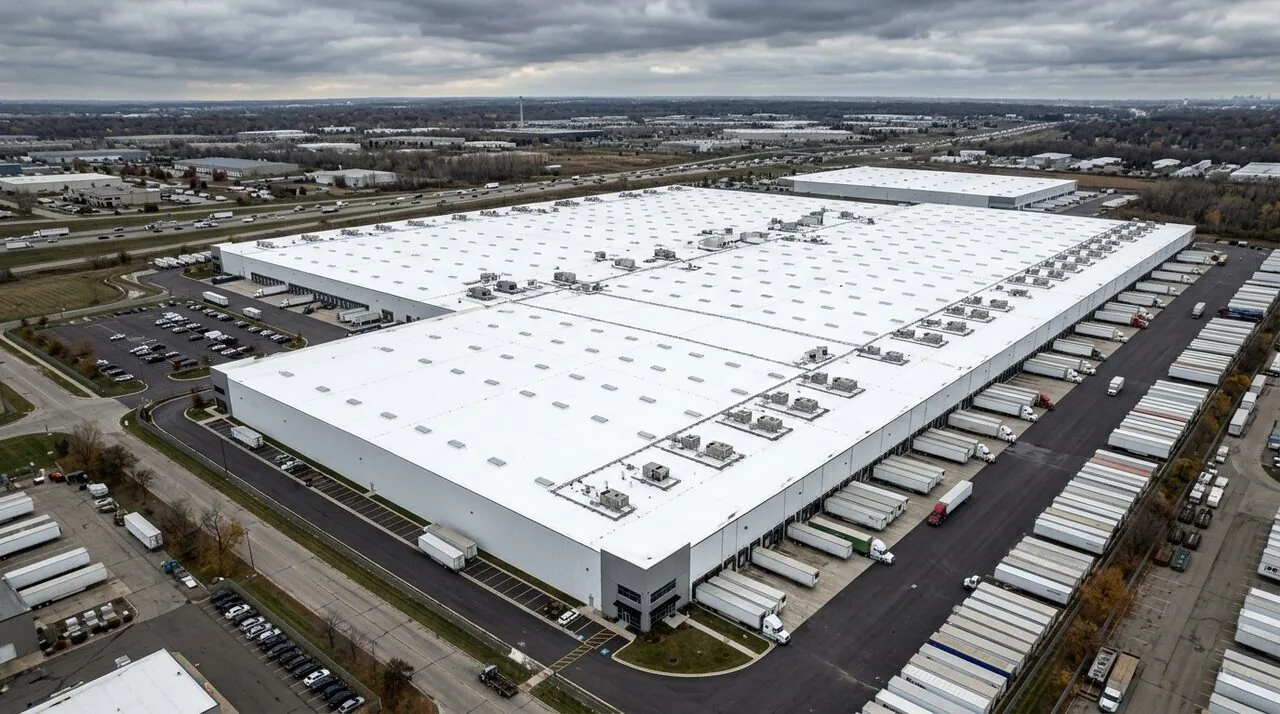
The strongest cases are roofs under heavy exhaust. At Harry and David's Medford site, where orchards, manufacturing and distribution buildings share the property and about 1,700 year-round and 6,700 seasonal workers are employed, any manufacturing exhaust that reaches a roof is the exposure a chemical-resistant membrane is for. Hospital roofs, at Asante Rogue Regional Medical Center and Providence Medford Medical Center among others, carry exhaust and mechanical loads and cannot afford early failure.
Auto retail is a third group to check. Lithia Motors, a Fortune 500 company, has been headquartered in Medford since 1970, and any dealership roof over service bays may carry exhaust and oils. The Phoenix Industrial Park and White City Industrial Park hold rail-served industrial roofs of the same character. We walk each one before recommending a sheet.
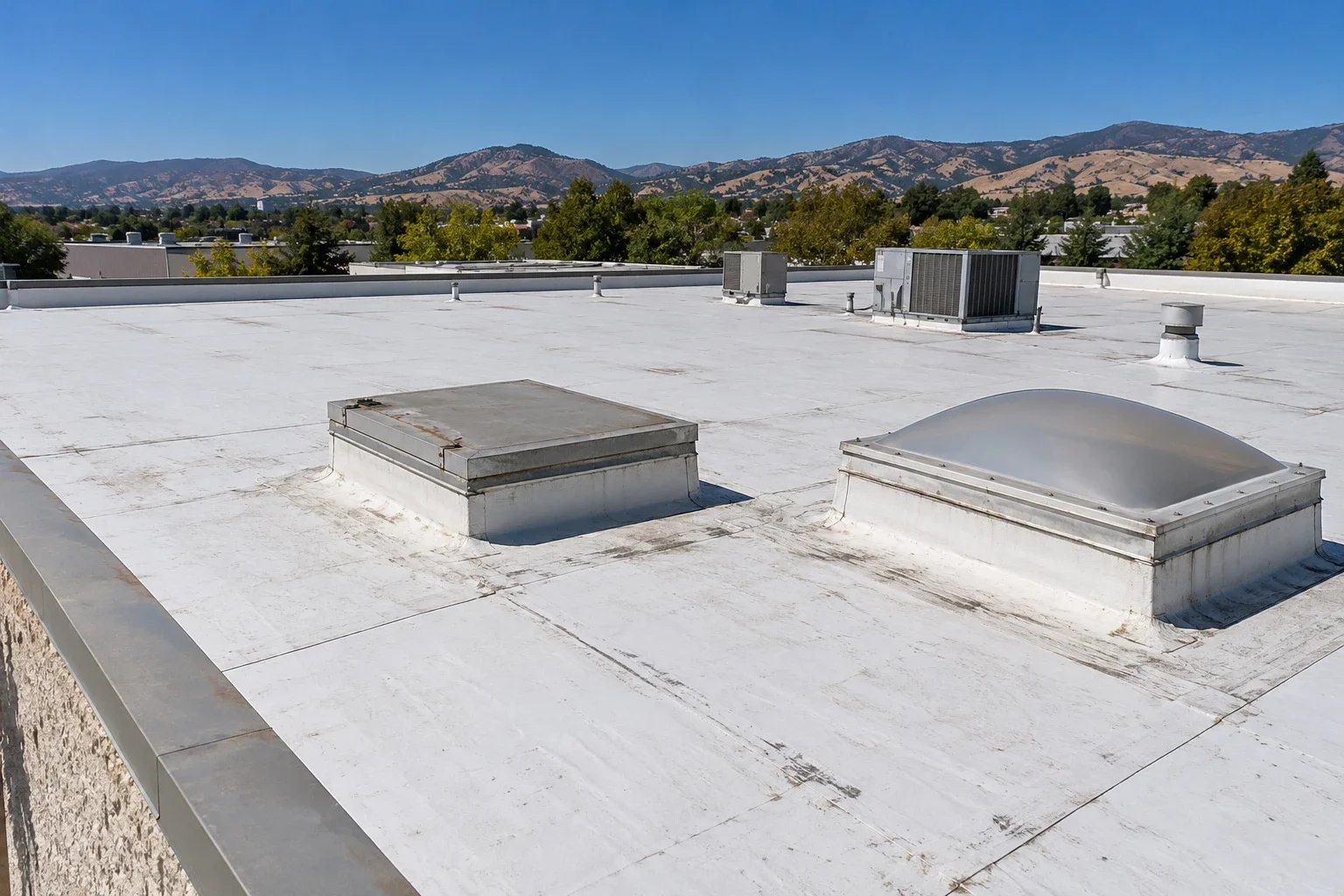
Smoke season and fire exposure
Medford's 26 smoke days in 2021 followed the Almeda and Obenchain fires of 2020, which cost the county roughly 2,600 homes. After a smoke event, soot dulls the surface, ash collects in drains and embers can lodge at edges and equipment. Flame resistance is built into KEE and PVC sheets, yet the fire classification belongs to the whole assembly, so the plans are checked before anything is ordered.
The maintenance response is practical: clean the surface, clear drains and strainers, check edges and penetrations and replace rooftop intake filters that soot has loaded. The owner report records the event, the work and the date. For a roof near a foothill edge or a wildland boundary, we also look at clearing combustible debris and sealing gaps where embers could find a path.
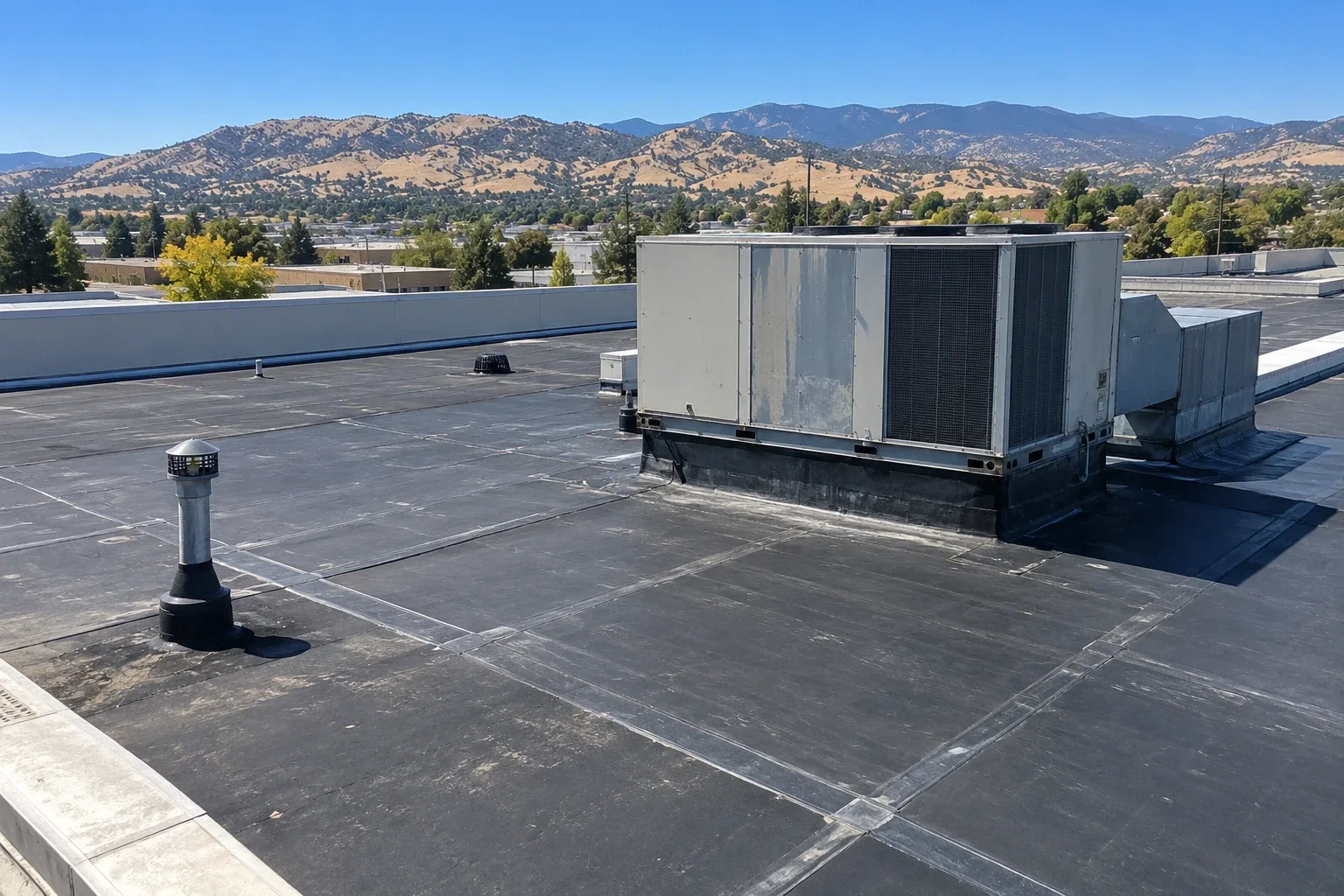
Maintenance, cleaning and repair
A KEE roof earns its premium through maintenance as much as chemistry. Grease build-up around exhaust curbs shortens the life of any membrane, so we set a cleaning schedule with the building manager and leave replaceable grease pads at discharge points. Quarterly checks of those areas cost little and keep the sheet clean where it works hardest, and the dates go into the roof register.
Repairs follow the usual order. Welds are probed, details pressed and the surface near discharge examined, and every item goes on the list as a patch or a fix with a price. Hot-air welded patches in compatible material are the standard repair, made in the cooler morning hours of a triple-digit week. Our roof coating restoration options are available when the sheet is sound but its surface is tired.
Cores answer the larger question. When a few cuts show saturated insulation under a failing weld, the recommendation moves from repair to replacement, and the owner report carries the finding with the date and the photographs.
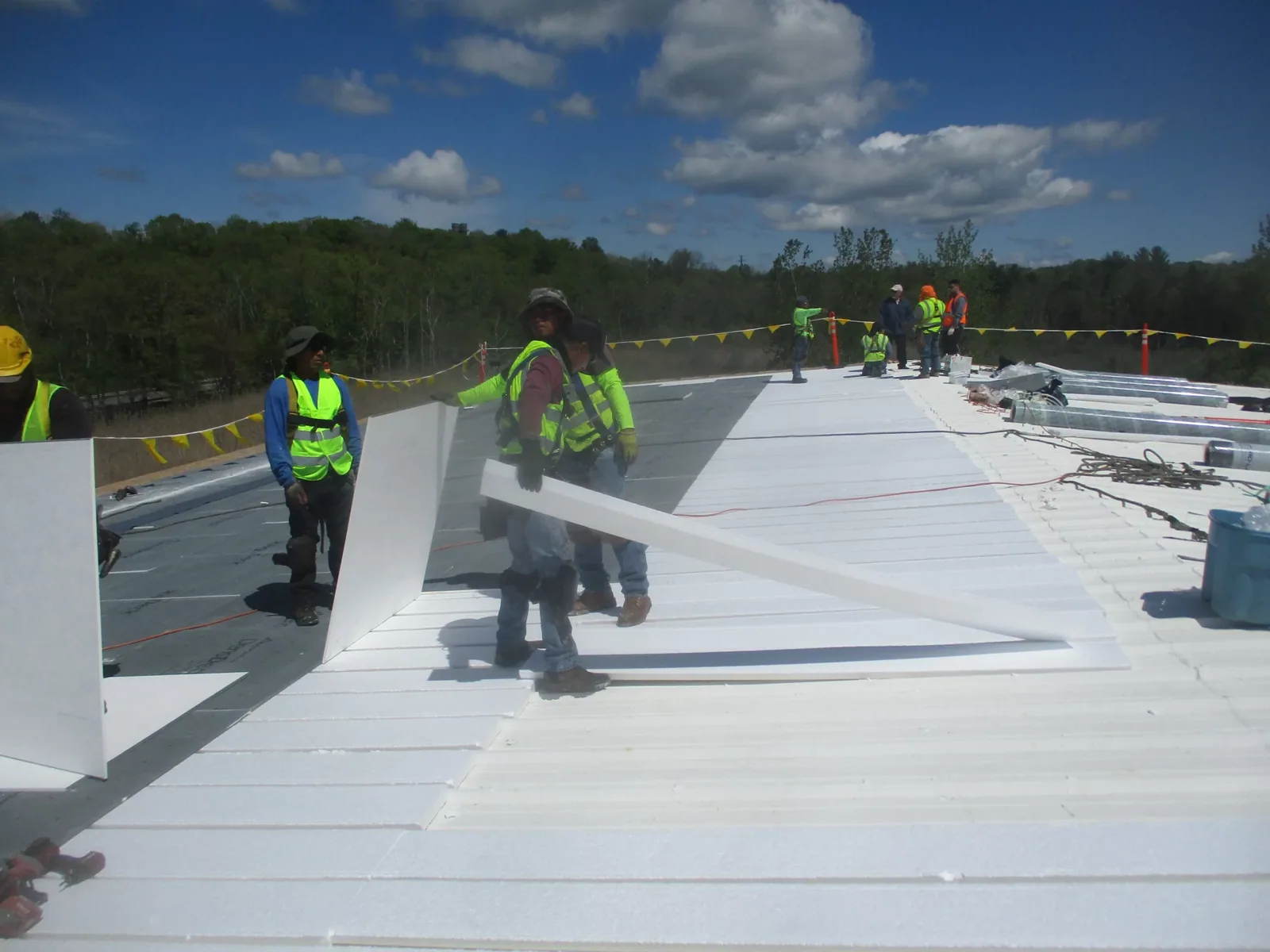
Cost, reserve schedule and code timing
KEE is priced in the same lines as any single-ply: membrane, prefabricated details, insulation, cover board, edge metal, drains and tear-off. The premium sits in the membrane and the details, and it is justified only when the exposure shortens the life of a cheaper sheet. We show the alternate beside a TPO or PVC option so the property manager sees the difference in carrying cost over the holding period.
Oregon's 2025 code edition, drawn from the 2024 International Building Code, has been mandatory since April 1, 2026. A replacement planned across that date should be checked against it. For a roof with dry insulation, a recover can avoid the tear-off, and we confirm dryness with an infrared scan and cores before recommending one.
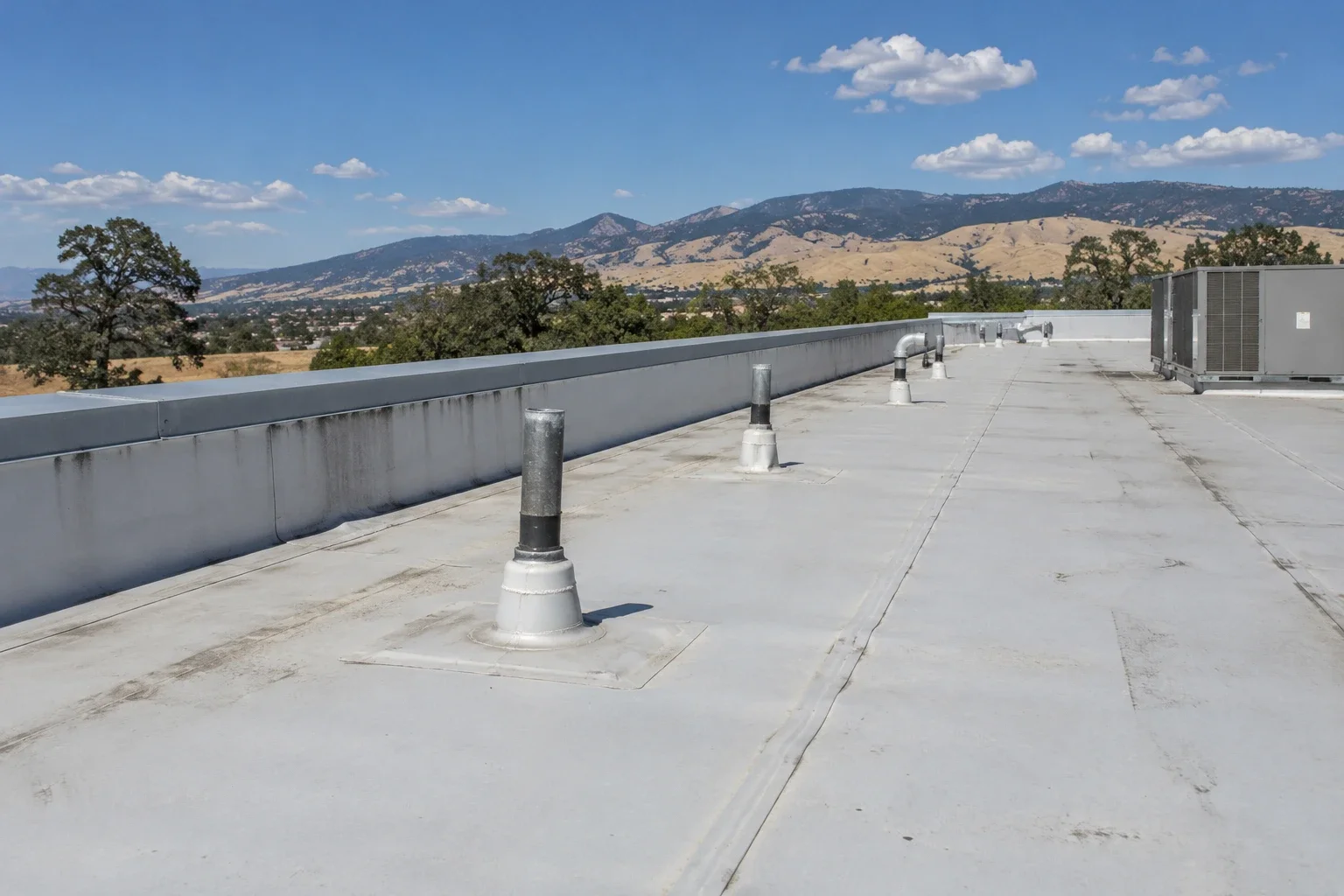
Installation and tenant impact
KEE welds like PVC and benefits from the same prefabricated corners and boots. The spring work window is the most forgiving, with moderate temperatures and a dry deck. Summer work starts at dawn and stops when the deck climbs out of range. Each shift begins with test welds that are cut and pulled, and every seam is probed after it cools.
On occupied buildings, work is phased by section and closed each day. Hospital roofs follow the facility's rules for noise, dust and air quality, and plants coordinate around production. Our occupied building reroofing plan lists the protection lines separately. Closeout includes photographs of every detail, the warranty application and an entry in the roof register.
Send the exhaust list and building list
Related Roofing Pages
Questions About KEE Roofing
Is KEE worth it over PVC?
On heavy or mixed exposure, yes. On ordinary roofs, PVC or TPO is enough. We price them side by side.
Does KEE handle triple-digit heat?
Its flexibility holds up better than standard sheets. We still grade it each spring and record the result.
Can KEE go over an old roof?
If the old roof is dry and a separation layer goes between the two. We scan and core first.
What about smoke and soot?
Soot is cleaned from the surface. Drains and intake filters get the same attention.
How do I know if my exhaust qualifies?
Send the equipment list. If it is unclear, we price KEE and a standard sheet and note the exposure risk.