
Commercial Roof Replacement in Medford, OR
Full tear-off and replacement for Medford, OR commercial roofs, timed to the spring work window, tenant needs and the owner's reserve schedule.
Overview
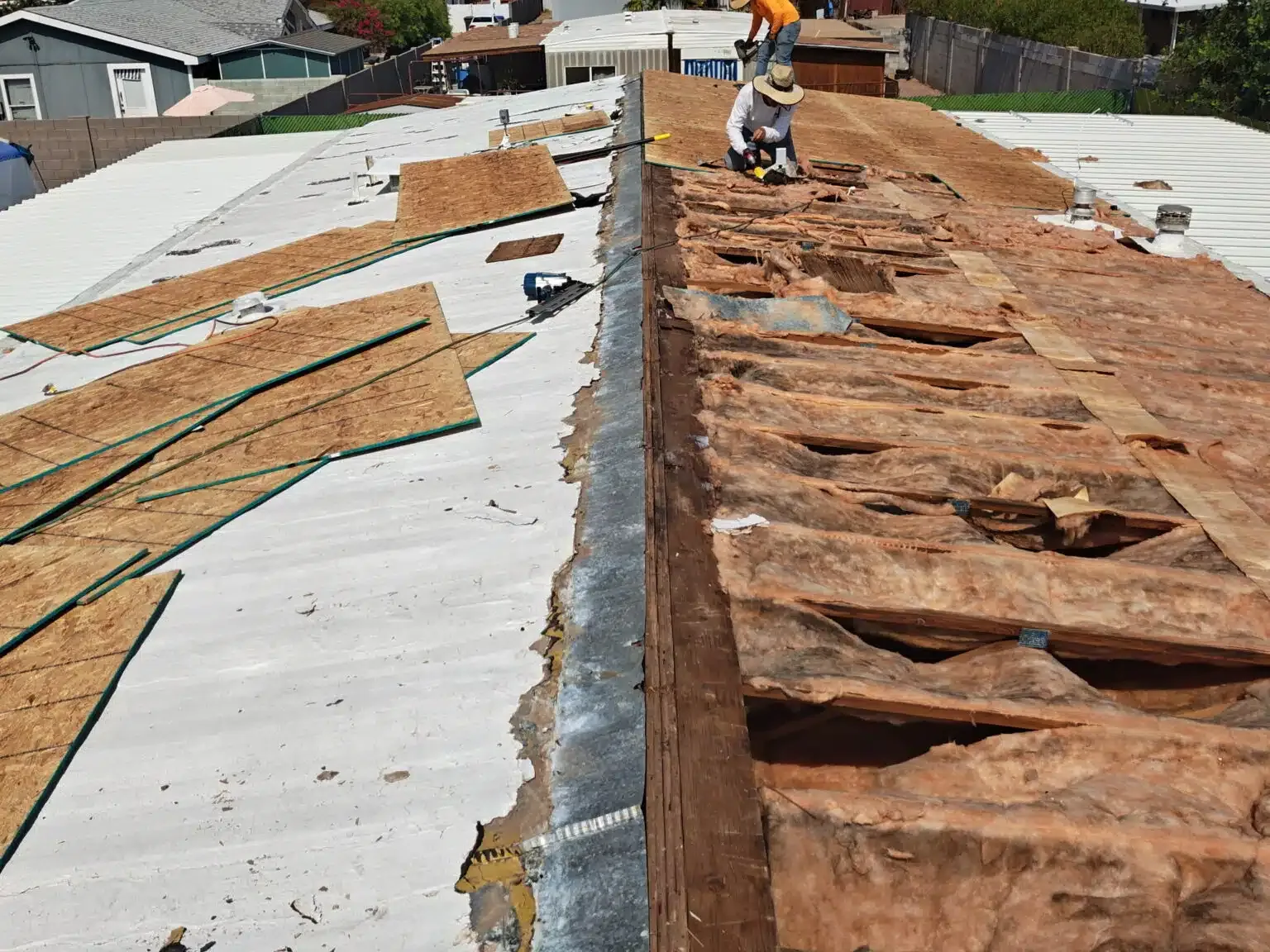
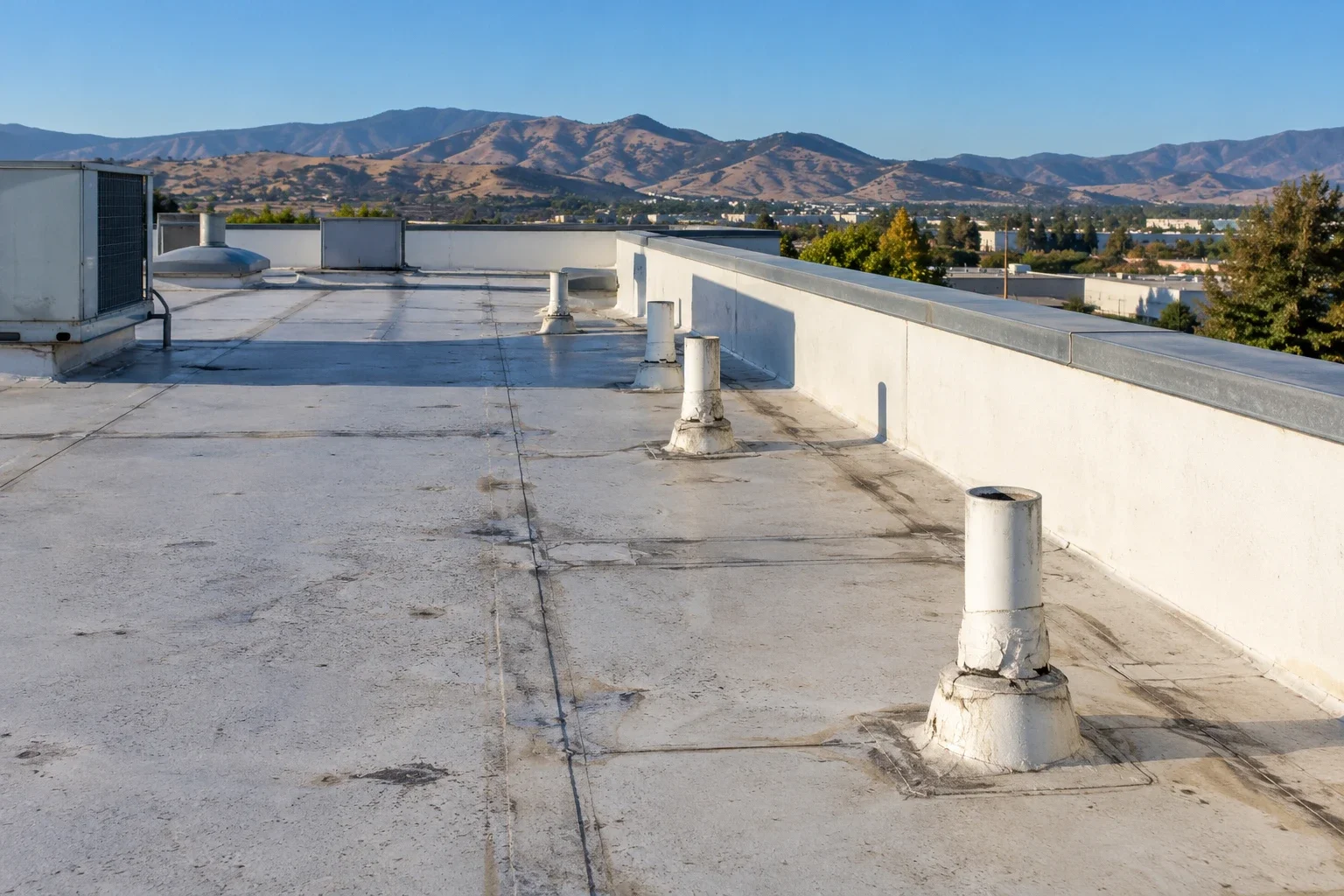
One Medford, OR summer of triple-digit stretches and weeks of smoke settles into a membrane in ways nobody photographs, and a few summers on, the reserve schedule line for replacement stops being a forecast and becomes a decision. A full tear-off is the point where the owner stops buying time and buys a new roof with a fresh remaining service life. The valley floor gets very little rain, so the usual signal, a ceiling stain, often arrives late or not at all, while the membrane has been quietly losing reflectance for years.
That is why replacement here is more often a condition-and-ledger call than an emergency. We strip the old system down to the deck, judge what the deck and insulation can still carry, and install a new assembly that matches how the building is used. The work is planned around tenants, rooftop equipment and the spring work window, not around a crisis.
What the valley sun has already done
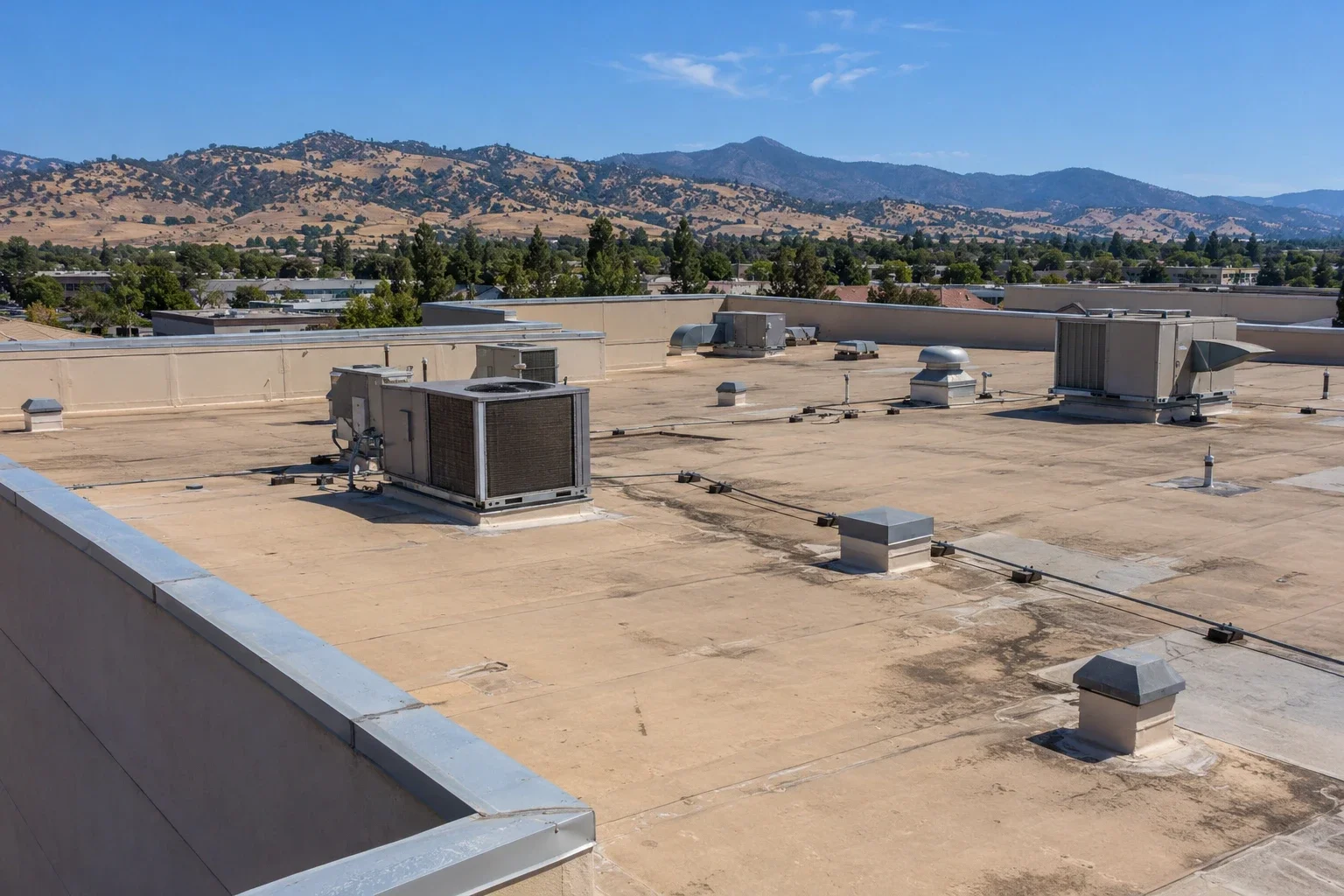
Medford sits in the rain shadow of the Cascades and the Siskiyou Mountains, and a typical year delivers 61 afternoons past 90 F, and 11 past 100 F, with 115 F on record. Sunlight is the dominant stress, not water. Heat softens asphalt-based systems, pulls plasticizer out of aging single-ply sheets, and bakes adhesives at the edges where the roof is hottest and most flexed. By the time the roof is replaced, its surface has usually been chalking and cracking for several seasons.
Smoke adds its own charge. Medford logged 26 smoke days in 2021, and soot that lands on a white surface raises its temperature and speeds up the same aging. A tear-off gives the owner a clean break from all of that: a new membrane at full reflectance, and a deck and insulation base that has been looked at instead of assumed.
Condition grade and the replace-or-recover call
Before anyone commits to a tear-off, each roof gets a condition grade: membrane surface, seam and flashing state, deck feel underfoot, drainage, and a moisture check of the insulation below. Replacement is the right answer when the insulation is saturated across large areas, when the deck has lost its fastener hold, when a previous recover already sits on top of the original roof, or when the membrane is past patching and a repair budget would simply keep paying carrying cost on a failing asset.
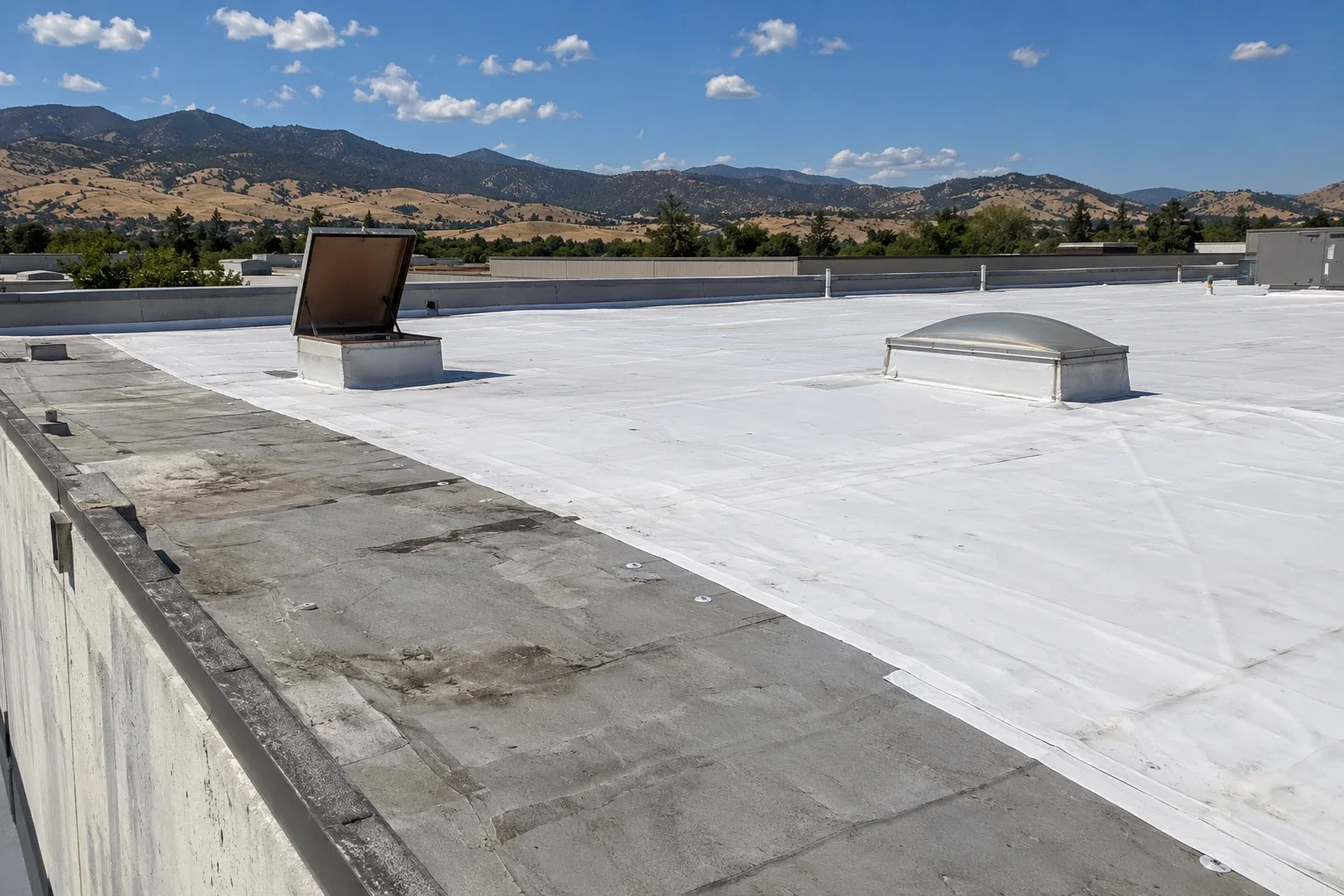
When the existing assembly is dry and sound, a recover over the existing roof may cost less and disturb the building less, and we say so. The grade is written down in the owner report so the choice is on paper, with the reasoning, for the next person who inherits the roof register.
The deck deserves as much attention as the membrane. Once the old system is lifted we walk the deck, replace panels that are rotted, corroded or no longer holding fasteners, and check that slope toward the drains is what the plans say. Insulation is then laid in staggered layers with joints offset, and a cover board goes over it where the membrane type calls for one, so the new sheet is not stressed by a soft or uneven base.
Choosing the replacement membrane for valley heat
For most low-slope buildings in the valley the shortlist is a white TPO membrane or a PVC membrane. Both reflect sunlight and hold up to long exposure, and PVC earns its place on roofs that see grease, exhaust or chemical fallout from the building below. Where a building already has many penetrations, a built-up or modified bitumen system can still be the practical call.
Wind uplift, insulation thickness and drainage get designed at the same time. A replacement permitted today is reviewed against the 2025 Oregon Structural Specialty Code, which became mandatory on April 1, 2026. Insulation value and attachment are part of that review, which is why a roof designed in the spring should be built to what the code requires at submittal, not to what the old roof happened to have.
Spring work window and tenant impact
The best weather for a tear-off in the Rogue Valley runs from spring into early summer, before the triple-digit stretch makes adhesives and hot-applied materials harder to control and crews harder to keep safe on a black deck. Winter inversion weeks bring fog and damp mornings that slow some adhesives, so we schedule the tear-off for dry, moderate days and keep a tarp-and-dry-in plan ready for anything that blows in.
Hospitals and medical office buildings, such as Asante Rogue Regional and Providence Medford, cannot tolerate noise, dust or odor near sensitive spaces, so the work is staged in sections with air-intake protection and agreed hours. Retail roofs along North Riverside Avenue get a sequence that keeps entrances and loading areas usable. The same section-by-section approach is detailed for occupied buildings that stay open throughout.
Reserve schedule and lease-cycle timing
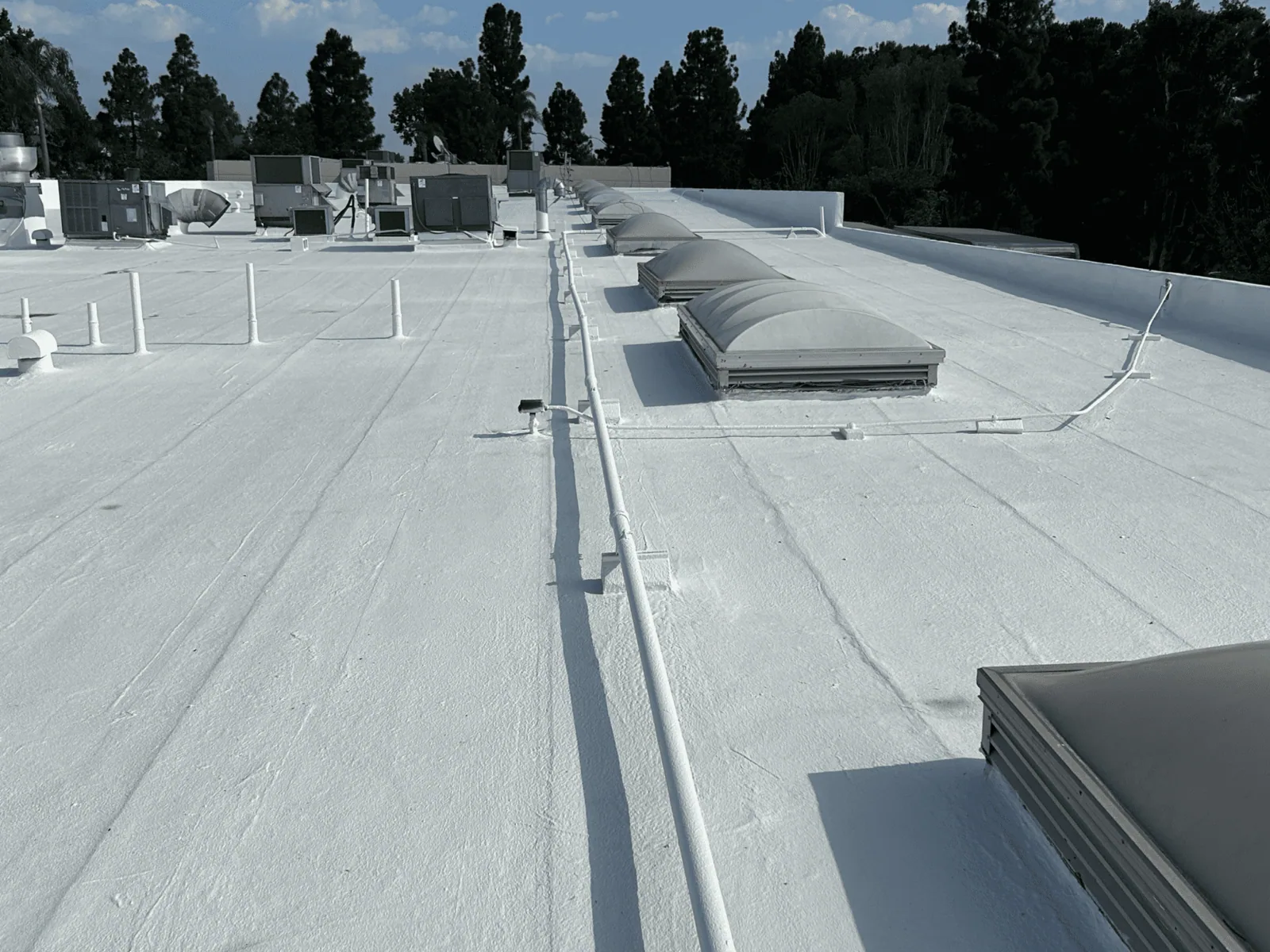
A replacement is a capital line, and the timing matters to the owner as much as the membrane does. Replacing a roof just before a sale, a refinance or a lease renewal changes what a buyer or lender sees in the owner report. Replacing it years late means carrying leak tickets, interior repairs and an insurance conversation, with every extra year of patching buying no new service life. A plan built with roof capital planning puts the tear-off in the year that makes the carrying cost smallest, not the year the roof finally fails.
For owners of industrial space along Table Rock Road in Central Point and in the Phoenix and White City industrial parks, that often means grading every roof on the property at once and replacing the worst first. We send back a building list with roof age, condition grade and an estimated remaining service life for each, so the next owner report writes itself. The same list shows the owner which roofs can wait a year without added risk, so the order of work follows condition and not habit.
Send the building list for a replacement grade

Related Roofing Pages

Questions About Commercial Roof Replacement
How do I know a Medford roof has reached tear-off and not another repair?
Look at what keeps recurring. Repeated leaks in different areas, saturated insulation found by moisture survey, a membrane that cracks when flexed, and fasteners that no longer hold the deck all point to replacement. One failed flashing on an otherwise sound sheet points to repair.
Does replacement stop my tenants from using the building?
Normally it does not. We stage the tear-off in sections so each area is dried in before the next opens, protect air intakes, and agree noisy hours with each tenant. Spaces directly under active work may need a short, scheduled notice.
Will the smoke season change how a new roof is installed?
Mostly the schedule. Heavy smoke days limit crew exposure and can delay work, and soot gets rinsed from a new white surface to keep reflectance high. Material choice rarely changes, though ember-exposed edges and rooftop intakes get extra attention.
Can part of the roof be replaced and the rest left alone?
Yes, when the sections are separate roof areas with their own drainage and age. Partial replacement works well on buildings with additions of different ages. Tying new membrane to old needs proper terminations, so the transition is detailed rather than lapped.
What should be in the owner report after a replacement?
The report lists the new system, thickness and attachment, photos of the deck and insulation as found, and the date the roof enters the register. It is the document a lender or buyer asks for first.