
Rooftop Equipment Curbs and Supports in Medford, OR
Curbs, equipment rails and pipe supports for rooftop HVAC in Medford, OR, flashed and spaced to survive valley heat, smoke filters and service traffic.
Overview
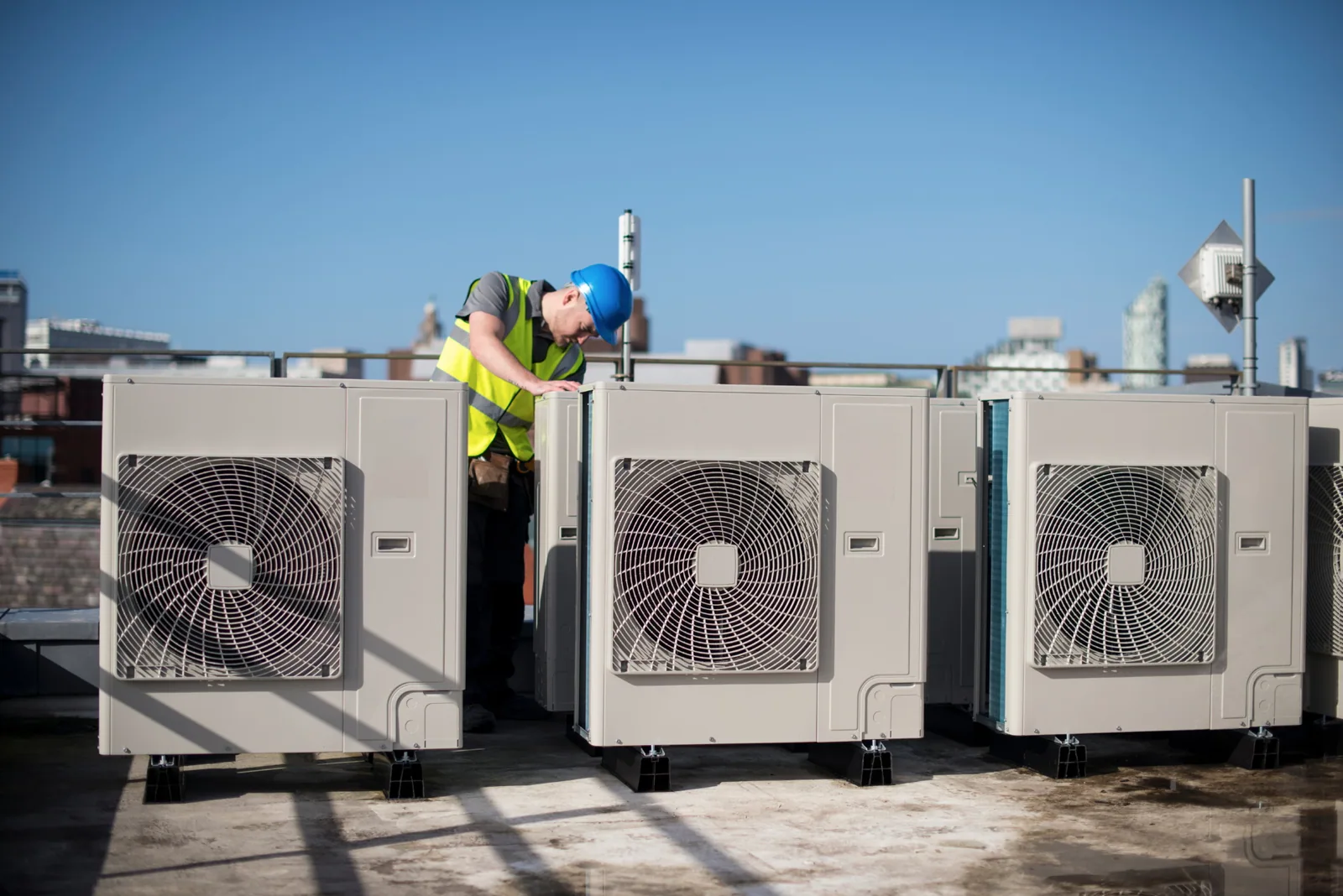
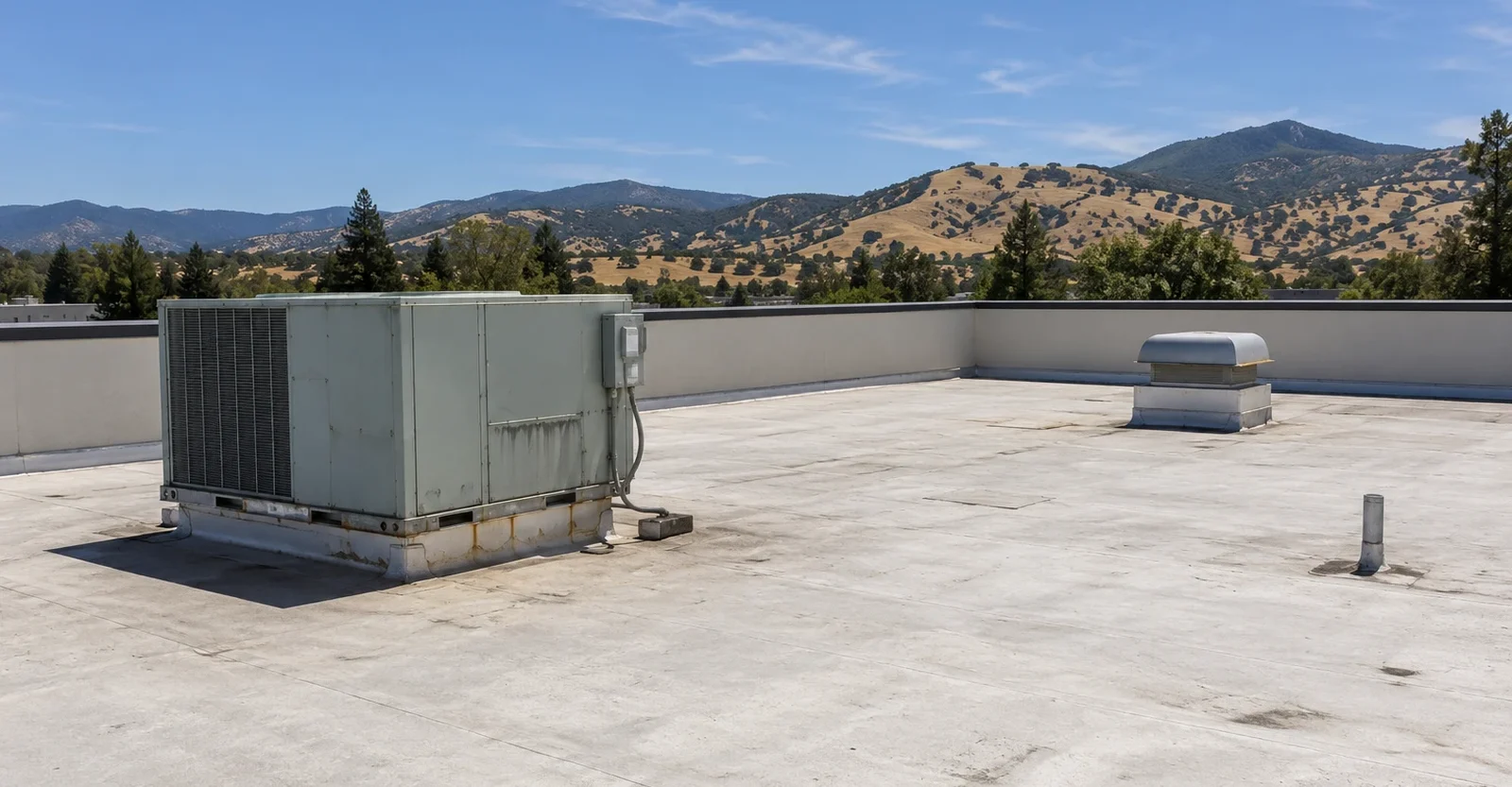
A rooftop unit is the heaviest thing on most Medford, OR roofs and the one that sees the most foot traffic, and in a valley that logs about 61 afternoons above 90 F, the unit runs hard exactly when the membrane around it is softest. Technicians cross the same path every month to change filters, and each crossing presses a boot into a roof that is hot enough to take the print. Curbs and supports are the roof's answer to that load, and when they are built well, the unit sits above the membrane on a flashed frame, with routine maintenance visits keeping the seals tight; when they are built poorly, the membrane carries the weight and the connection leaks.
The consequence is a line in the reserve schedule that moves faster than the membrane's age would suggest: a roof can age well beyond its years if its equipment details have been neglected. This work is about keeping those details from setting the roof's calendar.
How a curb should be built
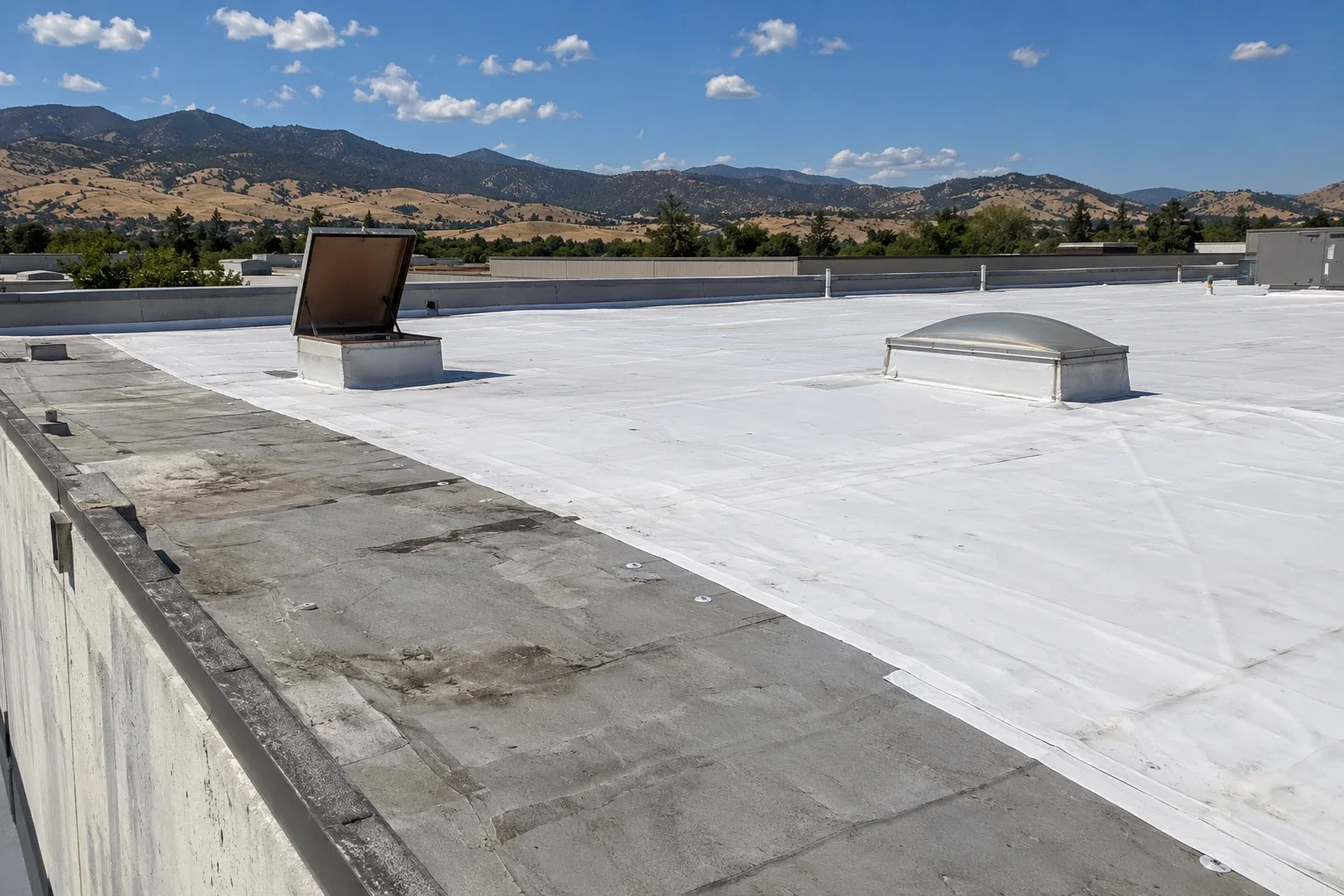
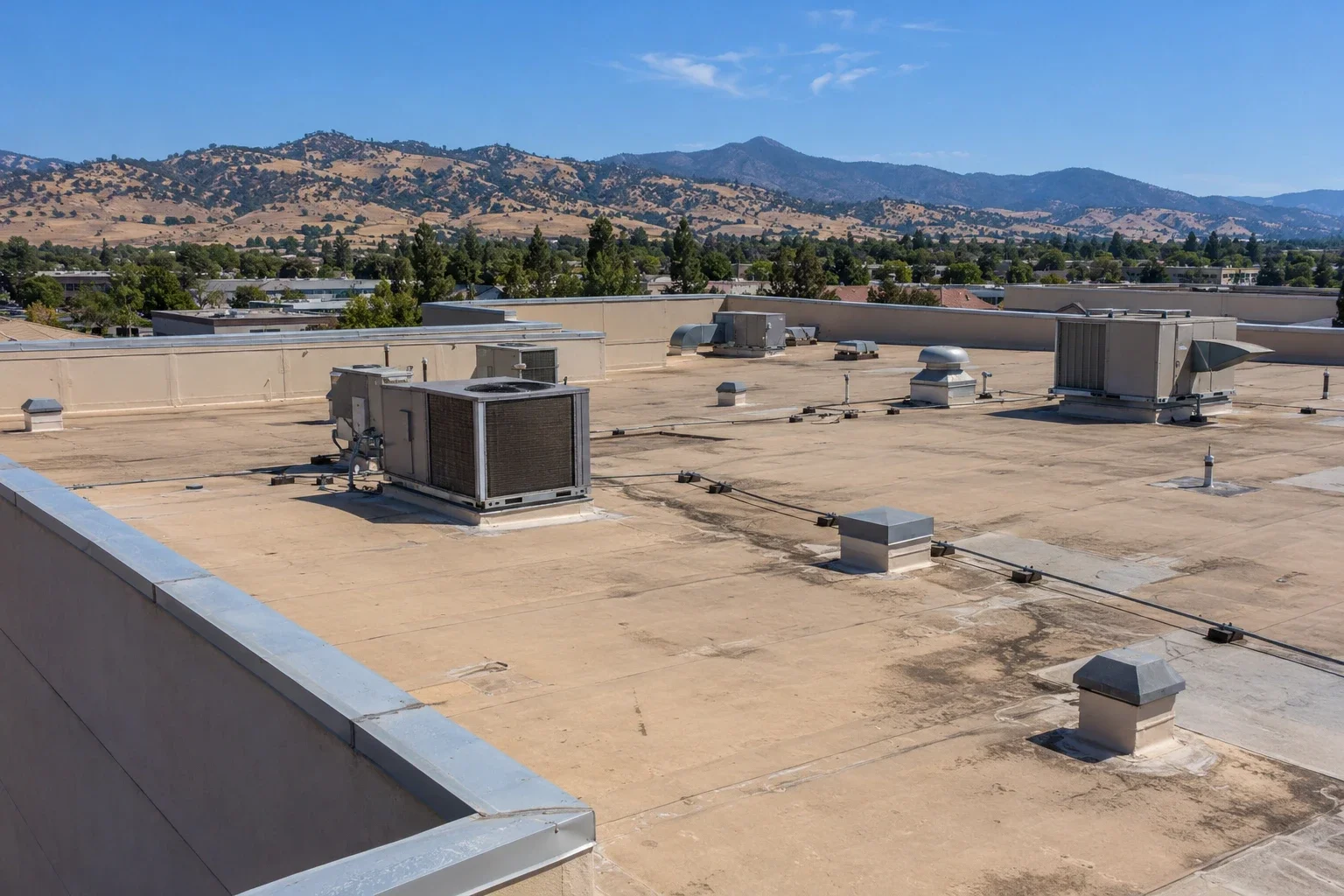
A curb is a raised frame, usually of metal or treated wood, that supports a rooftop unit and lifts its base above the water on the roof. The membrane runs up the outside of the curb, ending in a termination under counterflashing at a height that keeps ponding from reaching it. The height matters: a low curb on a roof that ponds invites water over the top of the flashing, while a tall one adds weight and wind exposure.
We check that the curb is attached to the structure and not just to the deck, that the corners are fully flashed with no cut seams, and that the counterflashing overlaps the termination with a sealed joint. Where a curb has been added after the original installation, the weakness is usually at the corner, where a field-cut membrane meets a hand-built curb with a bead of sealant doing the work of a continuous detail.
Material matters at the curb as well. Wood curbs rot when water finds the cut ends, and metal curbs that were never insulated can sweat on the underside. We inspect both and report which ones are sound enough to keep, which need only a new termination, and which have to be rebuilt before the next unit swap.
Rails, pipe supports and conduit stands
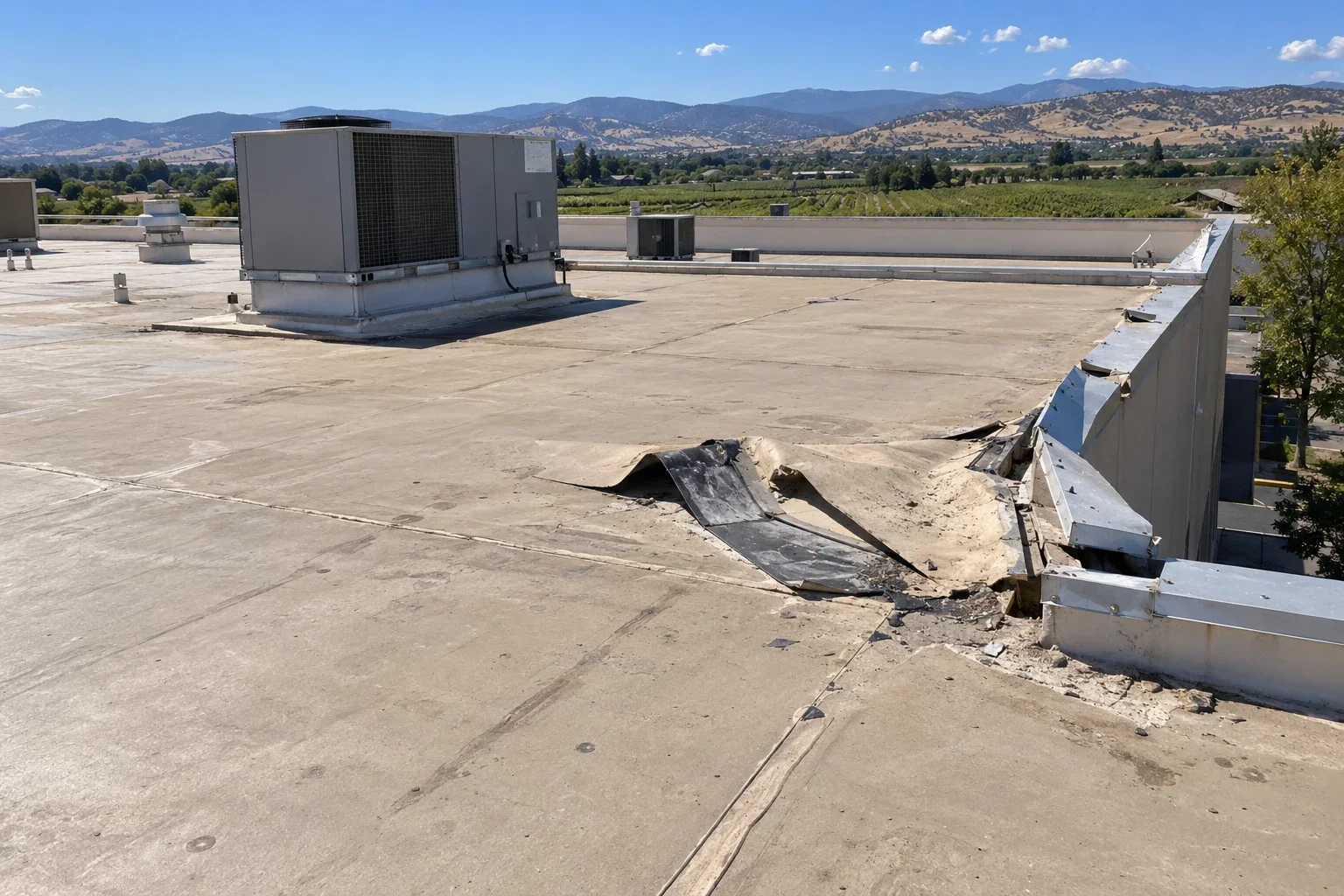
Not every piece of equipment sits on a curb. Smaller units, condensers and exhaust fans often sit on rails or sleepers, and refrigerant lines, gas piping and conduit run across the roof on supports of varying quality. Wooden blocks set directly on a membrane crush it, trap water and hold heat. Adjustable stands on protective pads spread the load and let water pass beneath, and a single-ply surface such as TPO tolerates them far better than it tolerates crushed lumber.
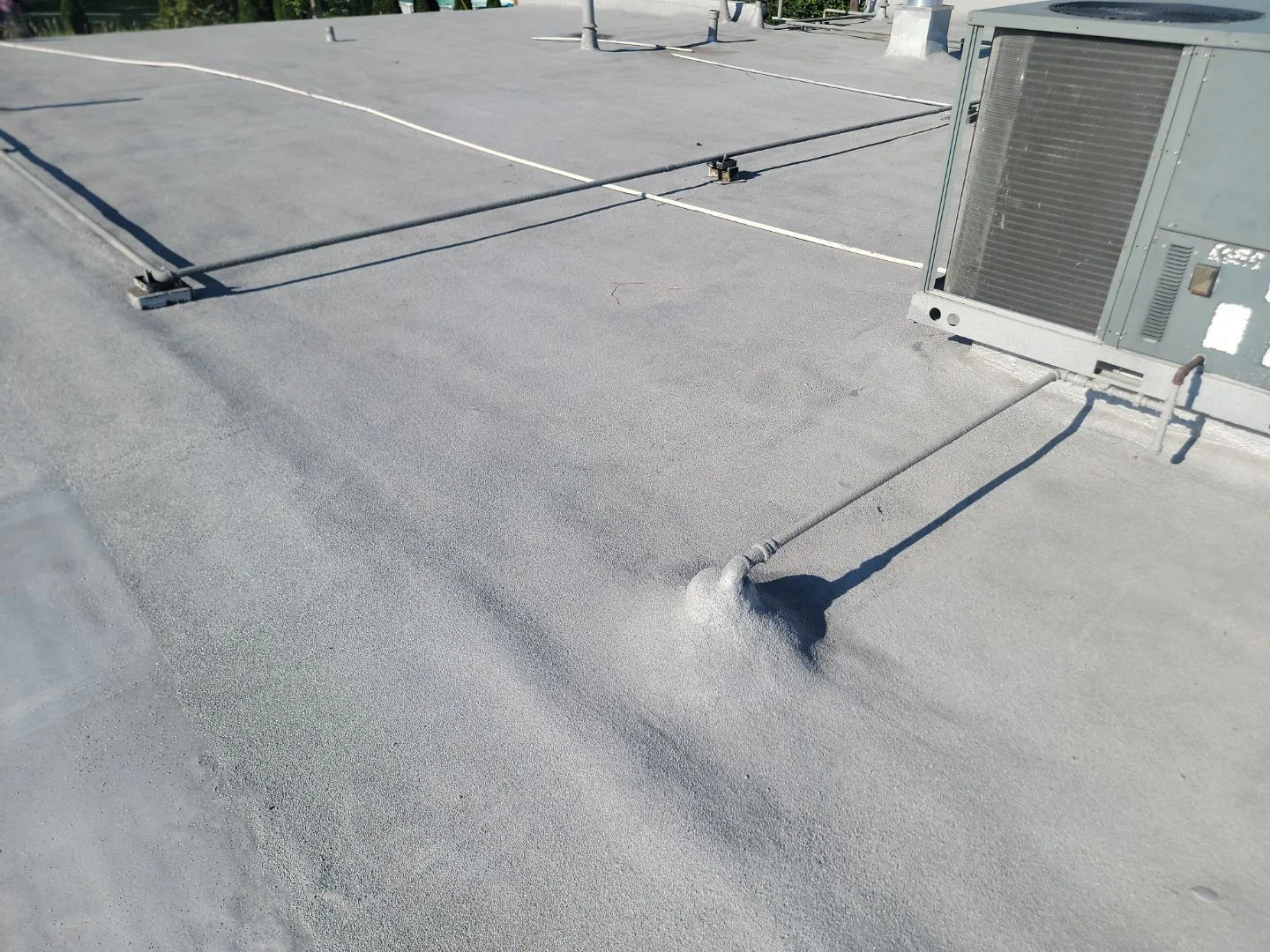
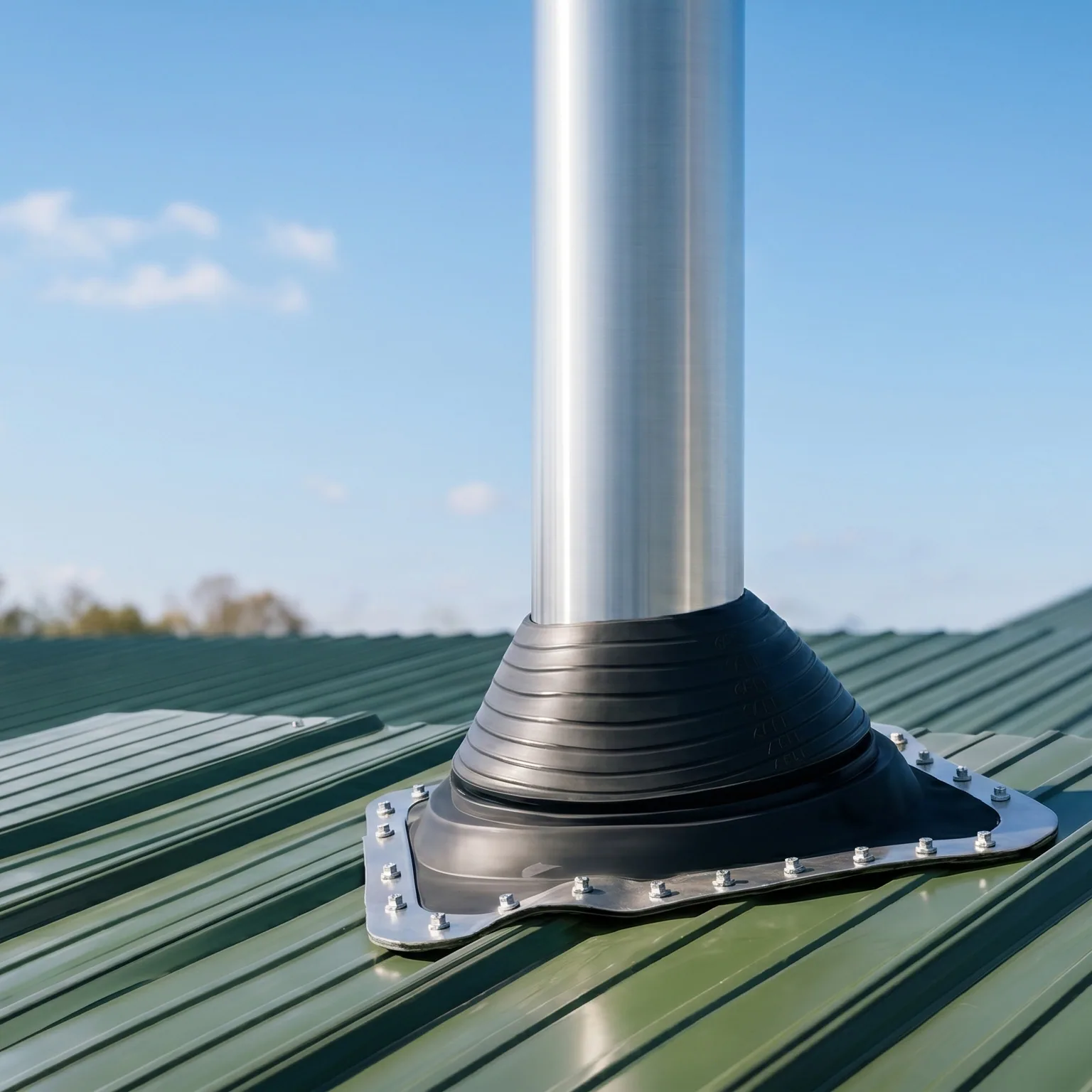
We replace failing blocks with engineered supports that carry the piping at the right spacing, with protective pads and walk strips where the route crosses a path. Pipe supports are tested for movement, since a line that expands and contracts across a hot afternoon will drag a poorly set stand across the membrane. Where utilities enter the building, the penetration is rebuilt with a flashing that is part of the roof system rather than an add-on, in the same way we handle skylights and other penetrations.
Service traffic and the walk path
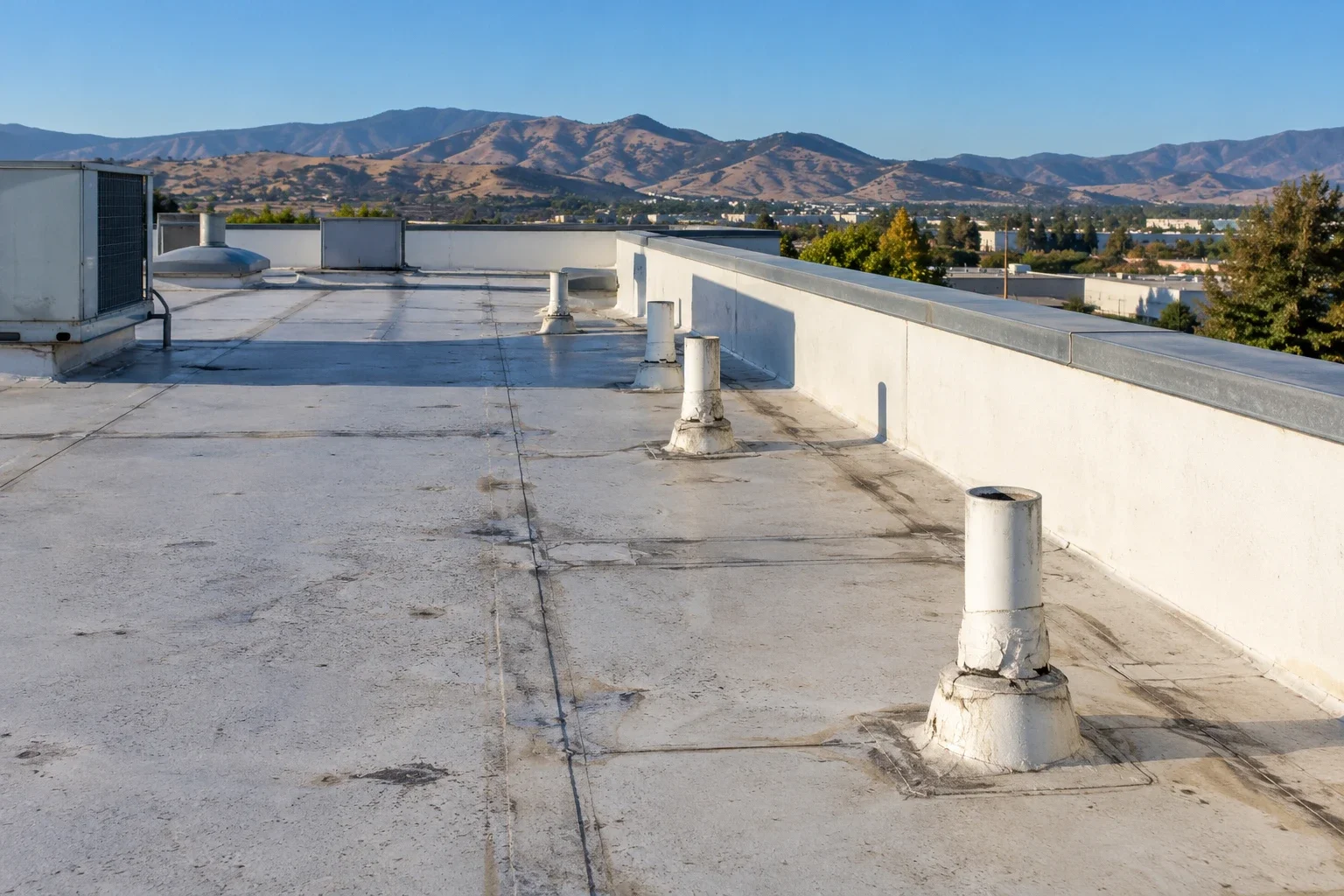
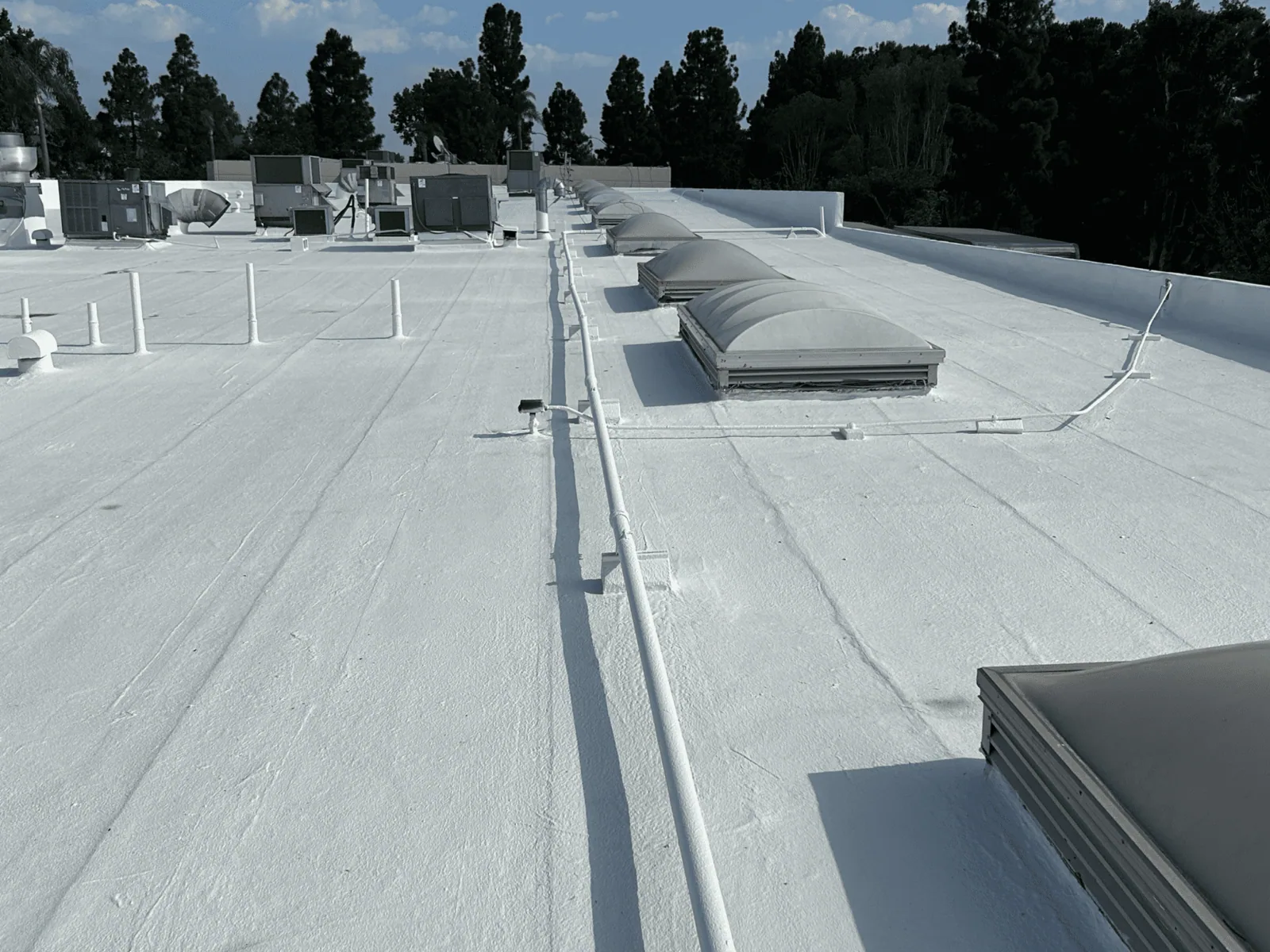
Unit access is a recurring cost to the roof. Filter changes, coil cleaning and belt service all mean boots on the membrane, and the area around a unit shows scuffing, punctures and dropped tools long before the field of the roof shows any sign of age. We add walkway pads along each service route and around each access panel, and we place them so the path to every unit stays covered without blocking drainage.
After a smoke season, filters on rooftop intake loads quickly, so service frequency goes up and so does traffic. Medford had 26 smoke days in 2021, and the 2020 fires made smoke part of the planning calendar. An owner who sees a spike in filter service can expect a matching rise in wear at the unit, and the walk path is where that wear is absorbed. Those weeks are the right time to check that pads are bonded and that nothing sharp has been left behind.
Where roofs carry a reflective surface, scuffs show quickly, and a worn path darkens and heats. Replacing a damaged pad is a small job, and leaving it undone invites a puncture that costs far more to repair.
New and replacement units
A unit replacement is the moment curbs get tested. The new equipment may differ in size or weight, and an adapter curb may be required to bridge the old and new footprint. Roofers and mechanical contractors need to agree on curb height, clearance for service and the sequence of disconnects before the crane lift. A roof that is hurried through that step gets a new unit sitting on an old flashing, and the leak that follows is blamed on the wrong trade.
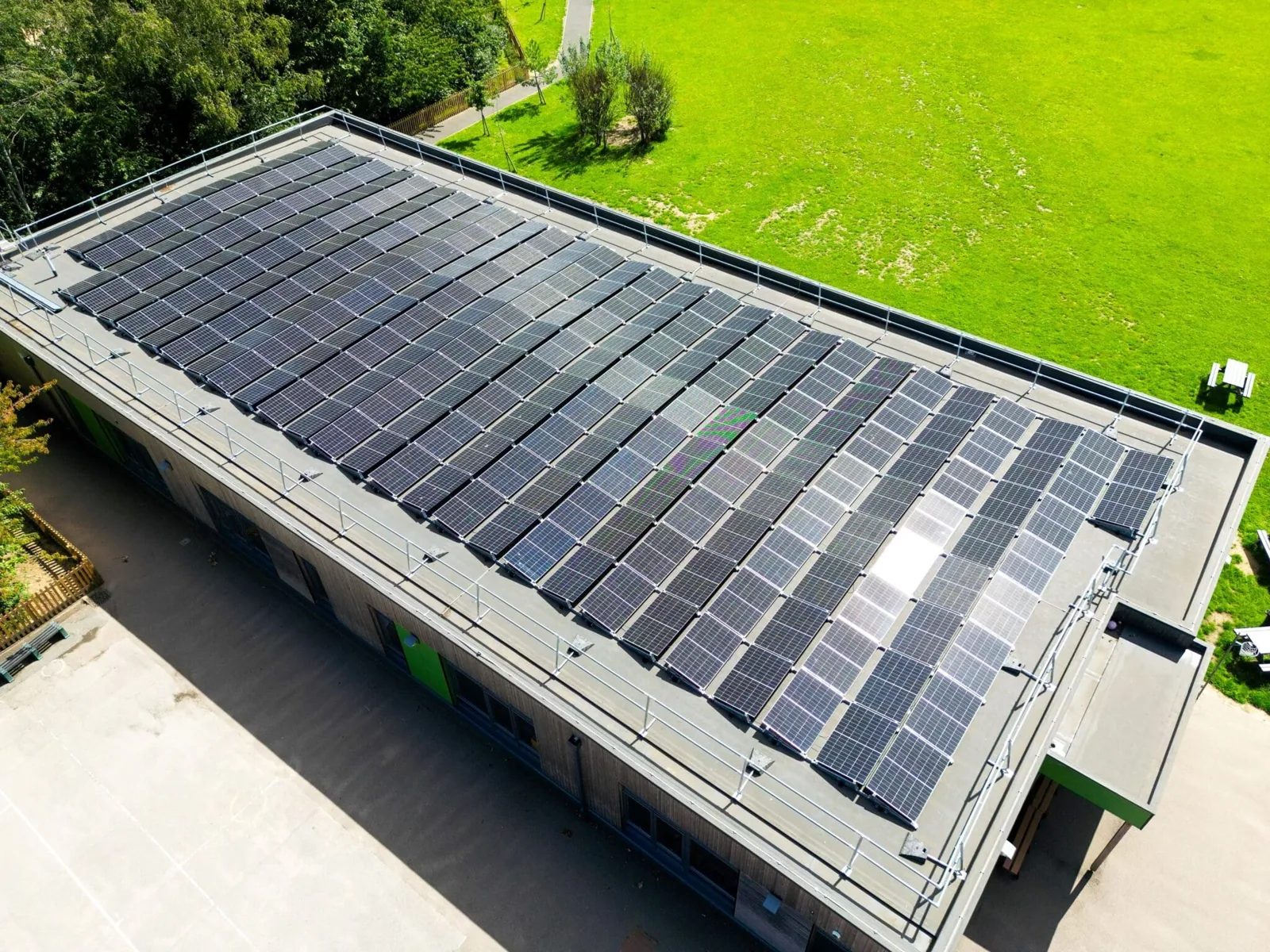
We coordinate with the mechanical contractor, mark crane paths, protect the membrane with temporary boards and recheck every curb termination after the unit is set. If the roof is near the end of its life, we advise whether to replace the membrane first so the new equipment is not set on a roof that will need to be lifted again. Where panels or racking are planned for the same roof, the layout is set alongside solar-ready roofing so supports do not collide.
The paperwork matters here too. A unit swap changes the roof's load and its penetrations, so we add the new equipment to the roof register with its location, curb type and flashing material. That entry tells the next manager what is up there without anyone climbing a ladder to find out.
Where equipment density runs high
Medical offices and hospitals carry the densest mix: air handlers, exhaust fans and other building systems share a roof, so medical office roofing depends on tidy, labeled supports and clear service paths. Retail in the North Riverside corridor and warehouse or big-box space in Central Point, where Costco is among the larger employers, can add condensers and makeup air units, each with line sets that cross the roof.
On older buildings, such as those downtown, equipment added over several decades can leave abandoned curbs and capped lines behind. Removing what no longer serves a purpose lowers the leak count and makes every future inspection simpler.
Spacing matters across every building type. Units set too close to a parapet or to one another leave no room to flash or service the curb, and those cramped details are the ones we flag first for relocation during a reroof.

Send the equipment list with the roof plan

Related Roofing Pages

Questions About Rooftop Equipment Curbs and Supports
Who is responsible when a unit curb leaks, the roofer or the mechanical contractor?
The leak is at the flashing, which belongs to the roof system, though a curb that was built wrong or moved during a unit swap can come from either trade. We trace the opening and repair it, then document what caused it.
Can curbs be raised on a roof that ponds?
Yes, when the structure allows it. A taller curb with extended flashing keeps water below the termination, though drainage correction near the curb often does more good than height alone.
What are walkway pads for?
They take the foot traffic that would otherwise wear the membrane. Placed along service routes and at access panels, they cost little against the repairs that unprotected paths produce.
How do I find out if supports are damaging my roof?
Look for dents, shiny worn patches and pooled water under blocks, pipe stands and conduit. A maintenance visit records each of those and prices replacement supports before the membrane tears.
Does a new rooftop unit require a new roof?
Not necessarily. A sound membrane can take a new unit with a rebuilt curb and fresh flashing. A roof close to the end of its life is better replaced first so the unit is set only once.