
Drone Roof Inspection in Medford, OR
Drone imaging for large or hard-to-reach commercial roofs in Medford, OR, with mapped photos and findings that feed condition grades and reserve planning.
Overview
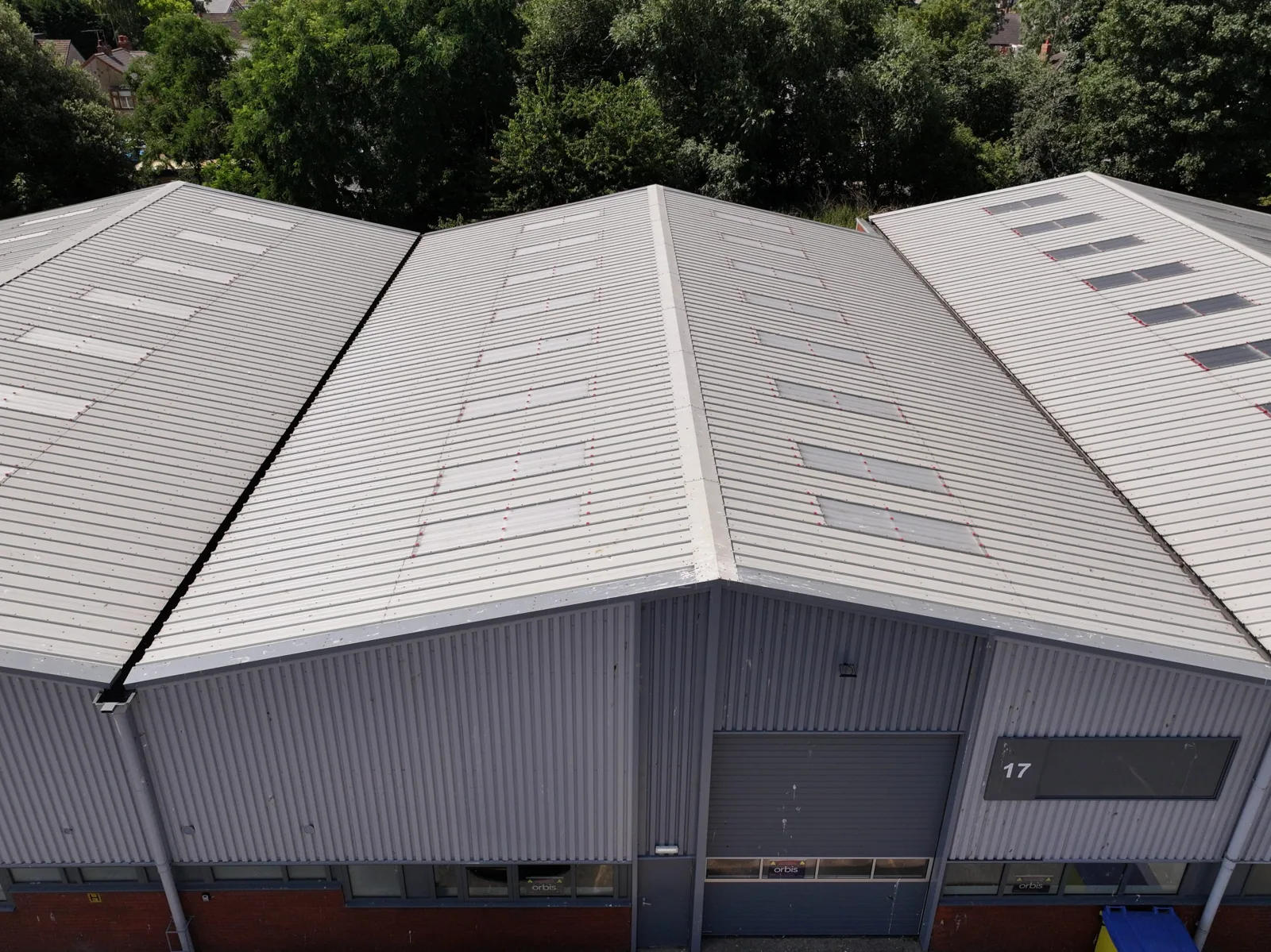
By mid-afternoon in a Medford, OR heat wave, a dark roof surface runs well above the air temperature, and a crew sent across a large membrane to look for small defects spends much of the visit managing the heat. A drone changes that trade. It covers the whole roof in a fraction of the time, brings back overlapping photographs of every square yard, and lets the people who will decide on the roof see its condition without anyone stepping on it. For an owner tracking remaining service life across several buildings, that speed turns into a cleaner reserve schedule.
We use drone imaging where it adds something: very large roofs, steep or fragile surfaces, tall buildings, and roofs where access is difficult or restricted. It is a tool for gathering evidence, and the conclusions still come from a trained eye and, where needed, a hands-on check.
Safety is half the reason. Falls through skylights and off unprotected edges are the main hazards of roof work, and a drone puts no one near either. On a building with fragile roof lights, a rusted deck or a recent fire, the first look is from the air, and the crew goes up only after the images show where it is safe to stand. That sequence protects the crew and avoids foot traffic on surfaces that are already near the end of their life.
Roofs that suit aerial imaging
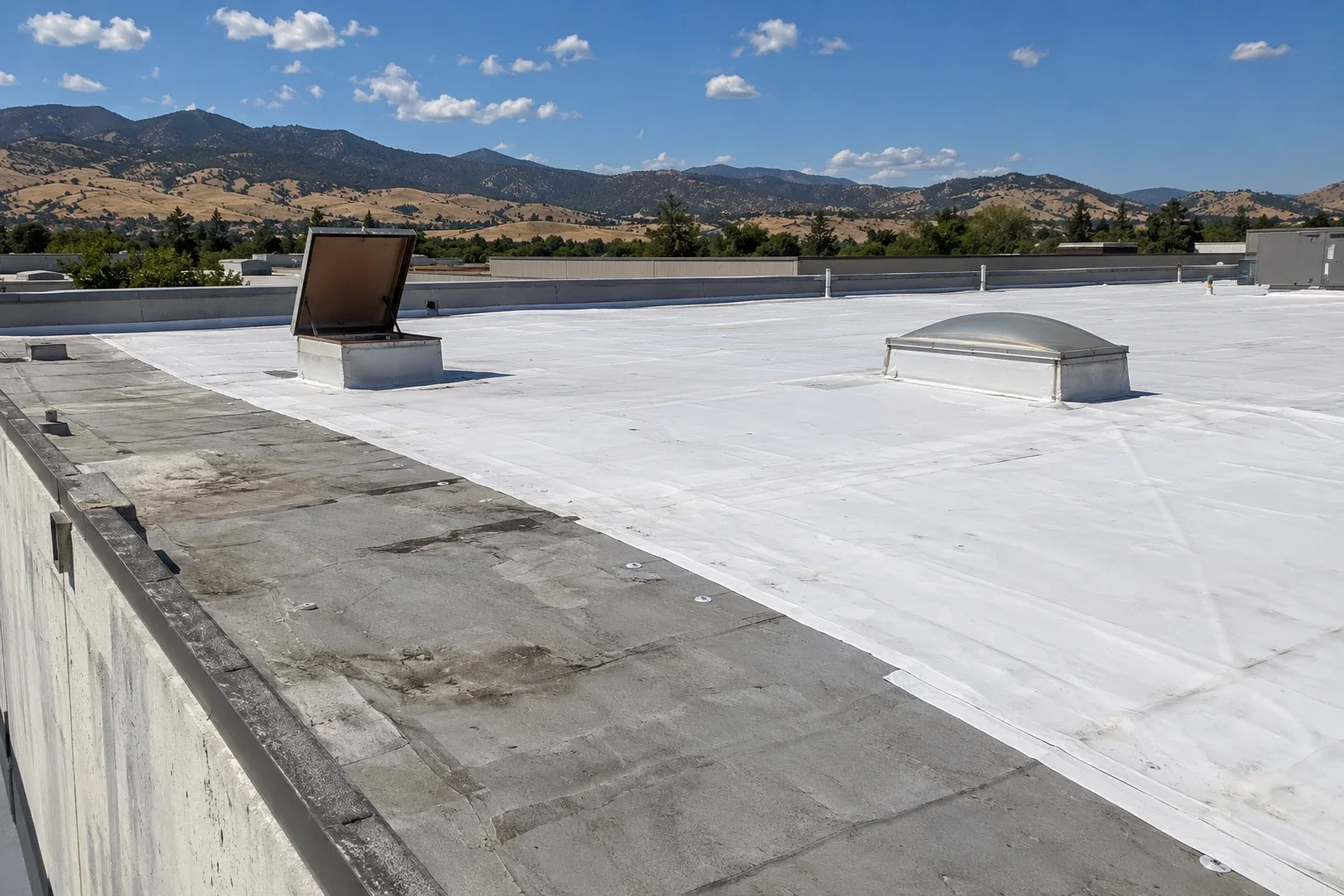
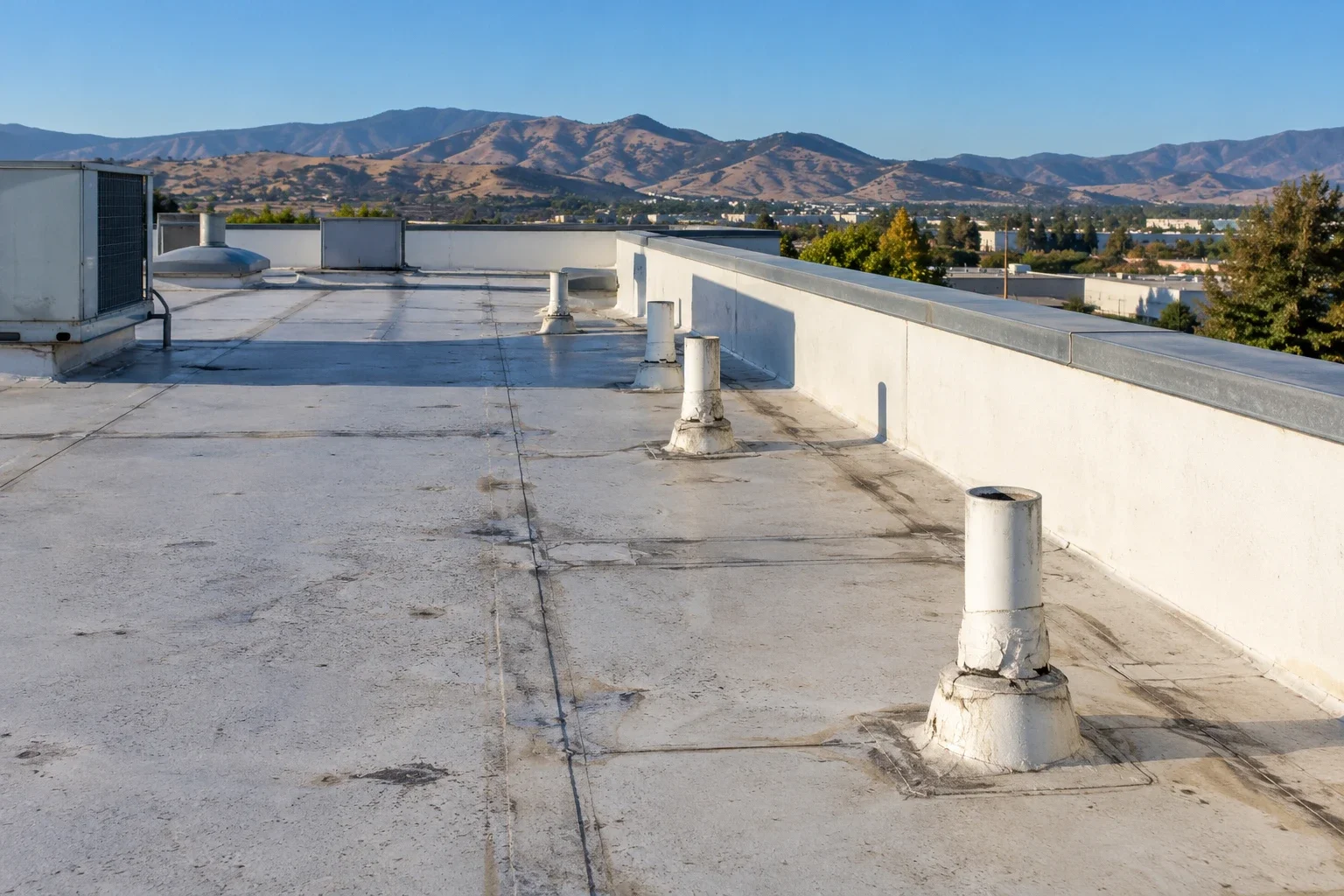
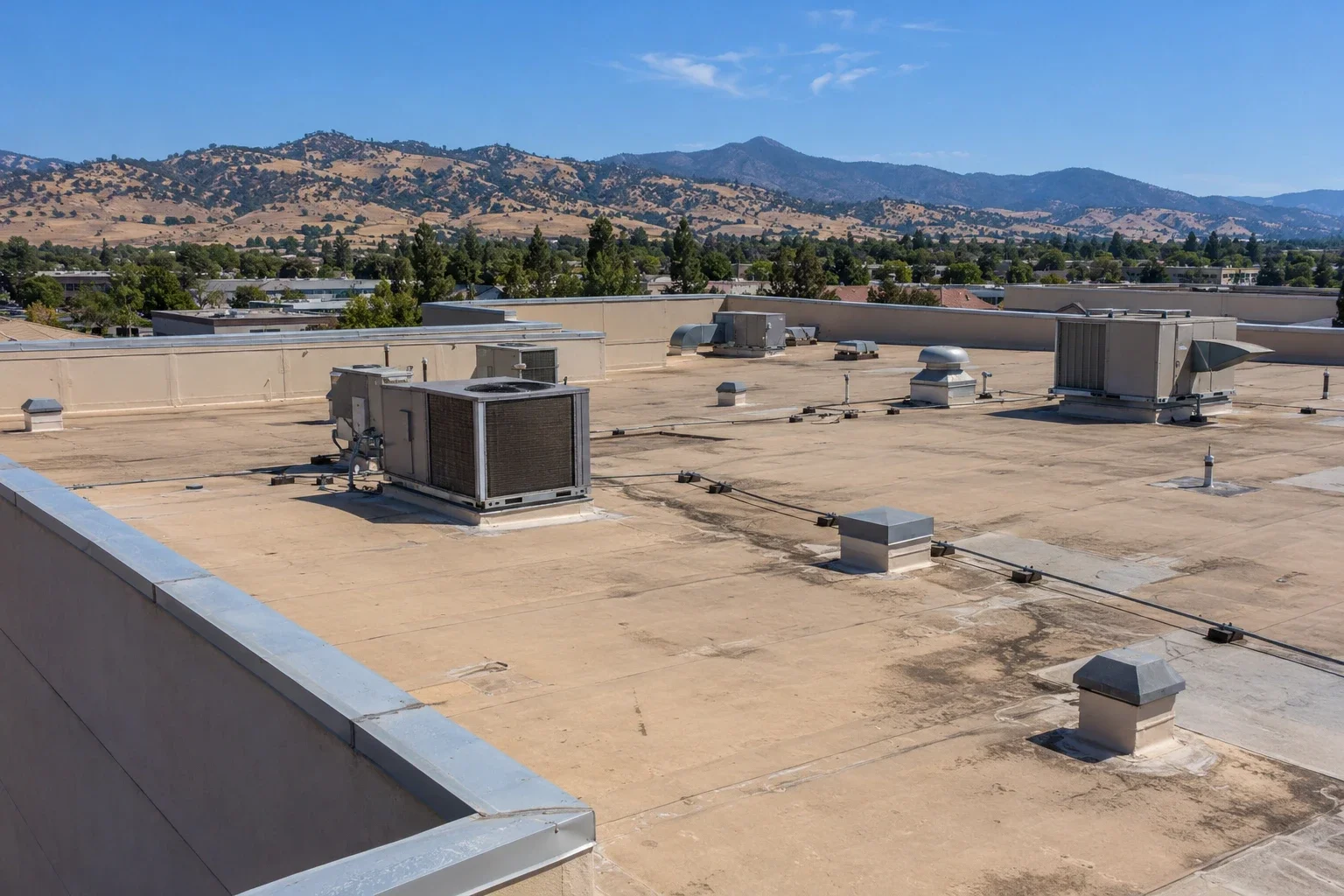
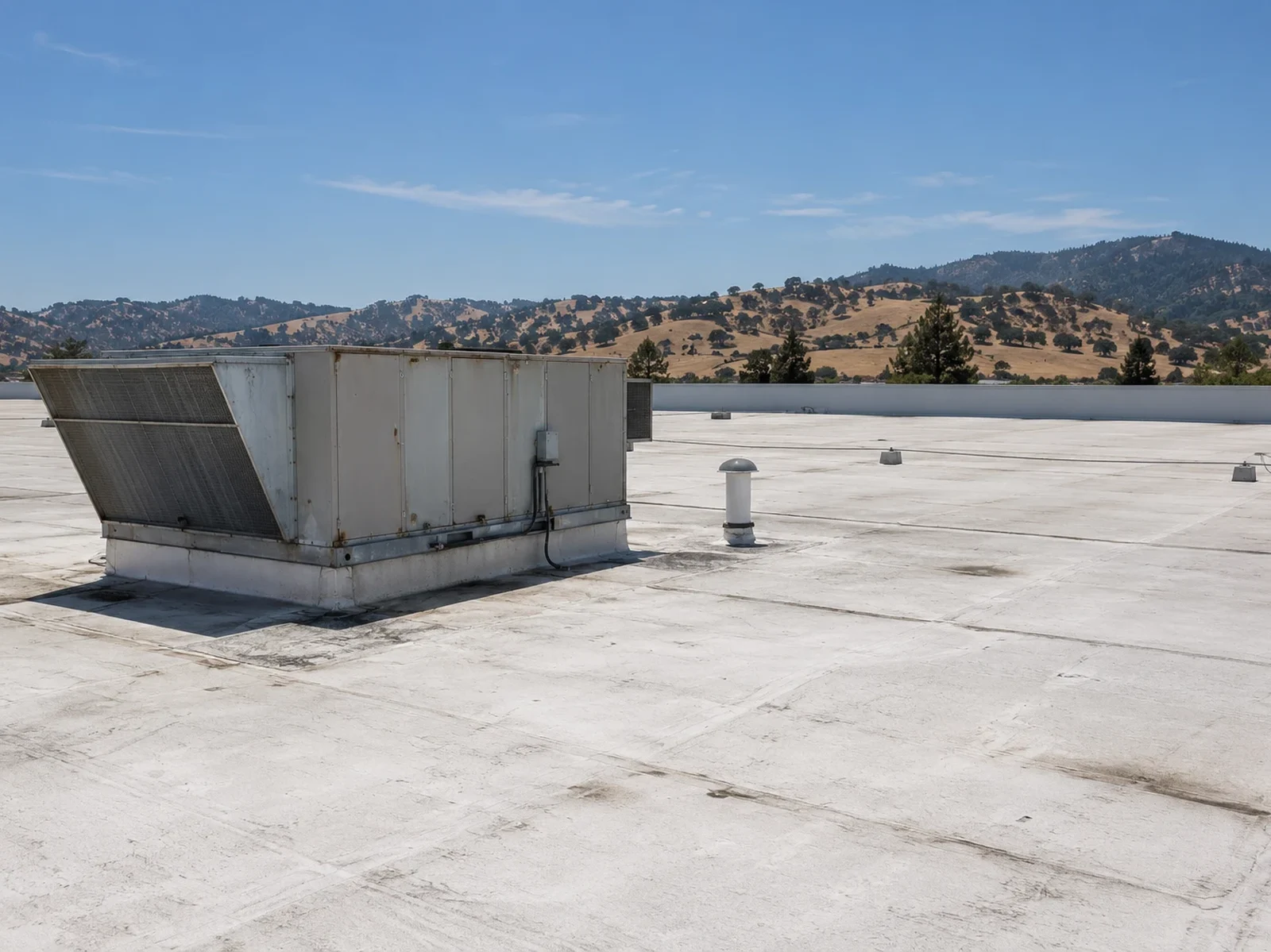
Wide, low-slope roofs on distribution and light-industrial buildings are the clearest case. Along Table Rock Road, between Interstate 5 and the airport, a Costco, a FedEx facility and Amazon's ground-distribution warehouse share the corridor, and in the rail-served Phoenix Industrial Park one aerial pass shows ponding, patching patterns and equipment layout across a whole roof at once.
Big-box retail, hangars and long manufacturing buildings fit the same pattern, as do roofs with delicate surfaces such as aged coatings, old tile or fragile skylight domes. Winery and farm buildings, the main commercial roof stock in the Applegate Valley, sit on rural parcels where one aerial pass saves a long walk between structures. A distribution center manager can get a full picture without stopping dock operations.
Hangars and broadcast buildings add their own reasons. Central Point is home to Erickson Air Crane and Talk Radio Network, and an aircraft hangar roof is the kind of surface where a person on foot sees one seam at a time while an aerial map shows how the whole roof is behaving. Rooftop antennas and mounts are photographed from every side without anyone working near them, and the images show how flashing and sealant around each mount are holding up under the valley sun.
What the images reveal
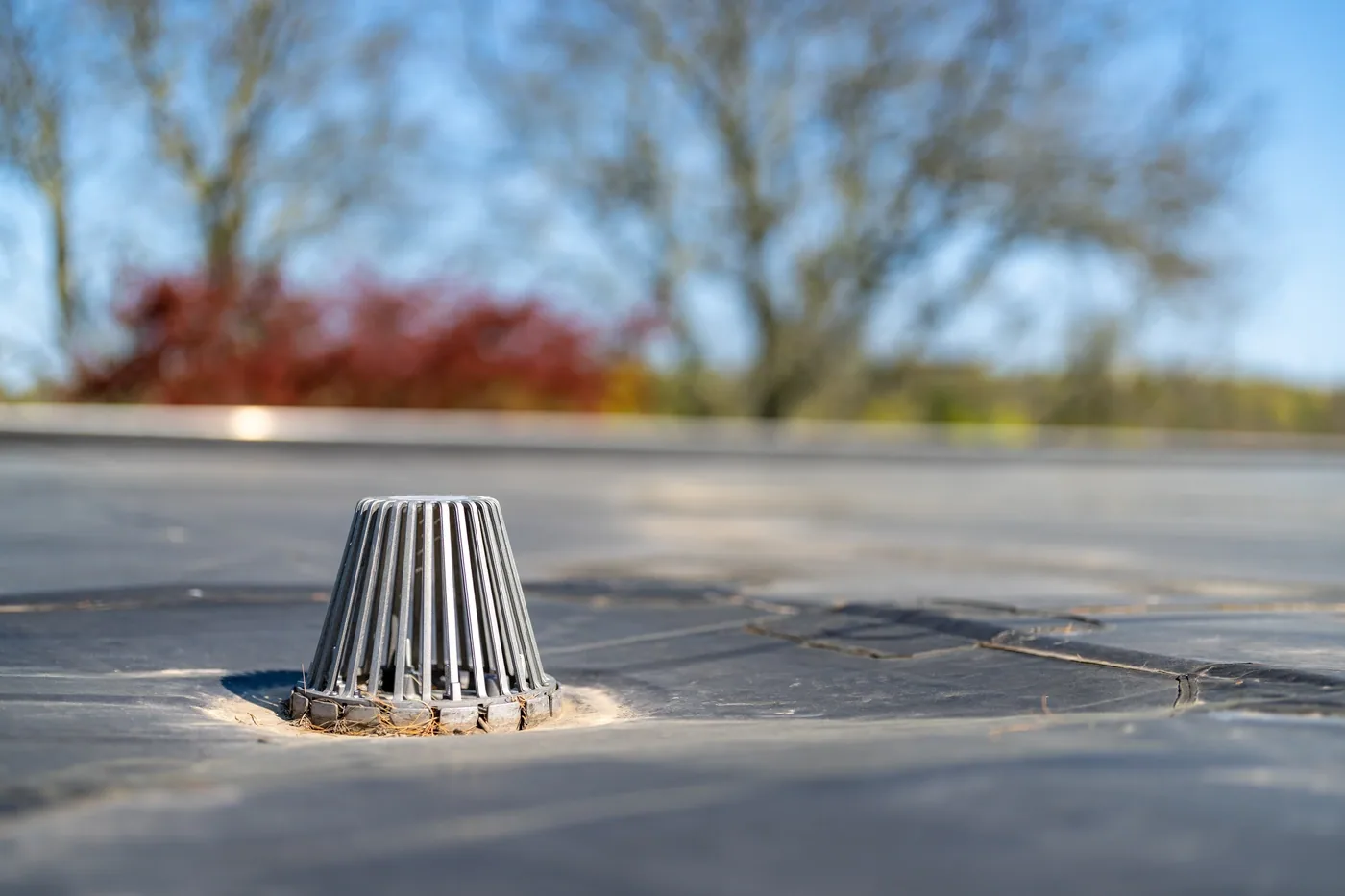
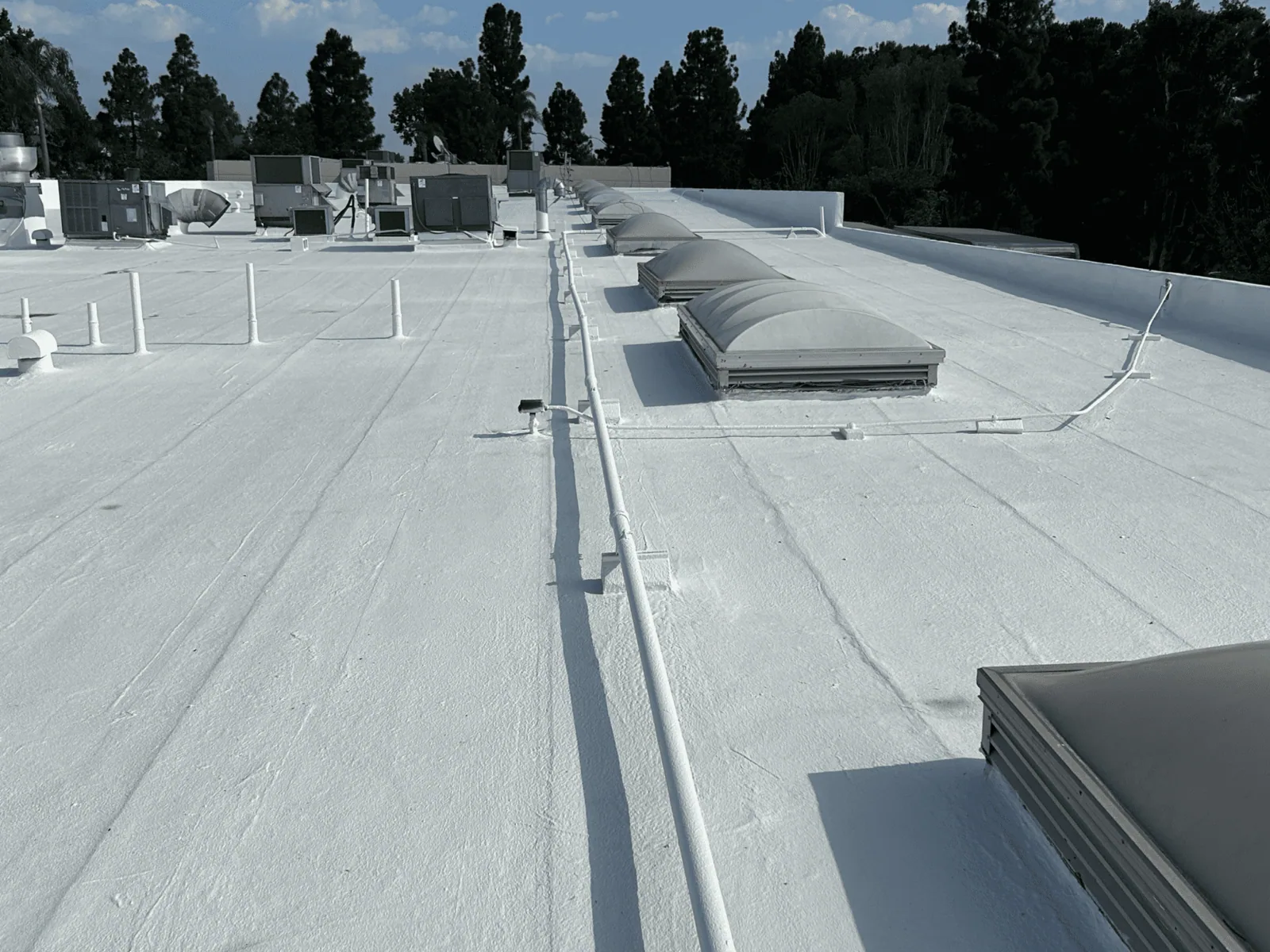
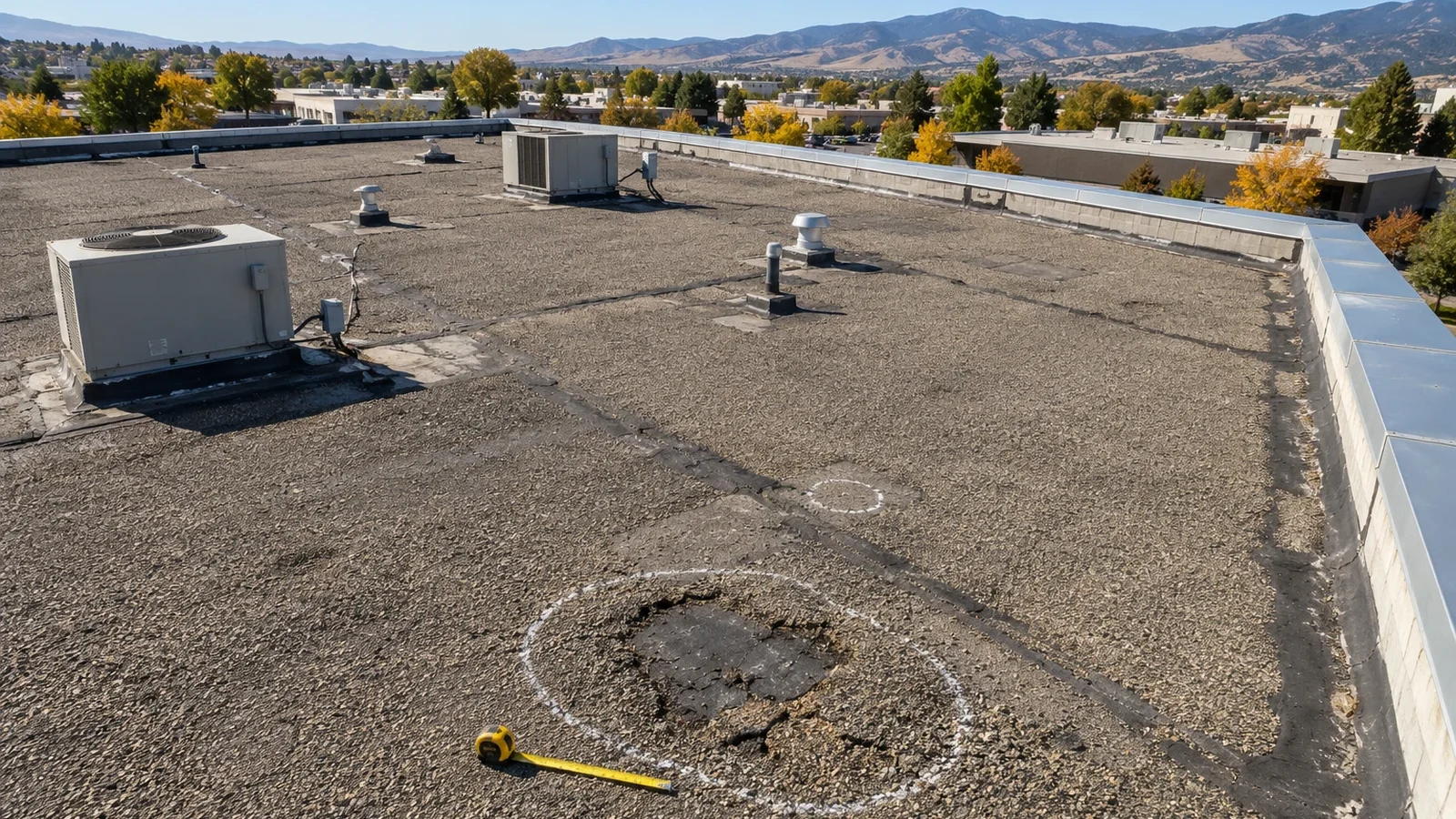
High-resolution photographs show membrane wrinkling, seam lifting, open laps, displaced flashing, debris, clogged drains, standing water lines and discoloration. Overlapping frames are stitched into a map, so each defect can be located on a roof plan and compared year to year. Close-up passes pick out hairline cracks at penetrations and fastener back-out on metal panels.
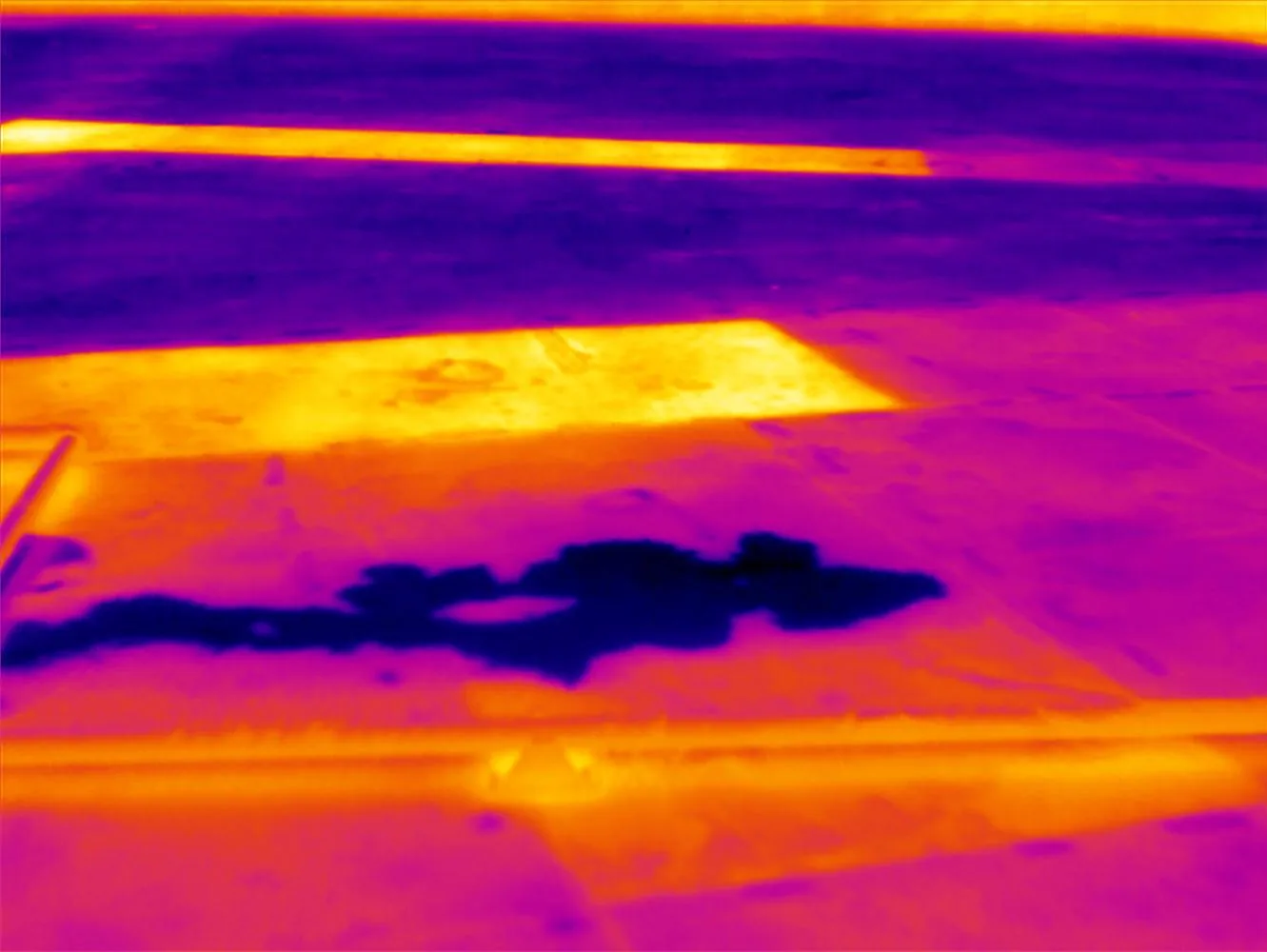
When the aircraft carries a thermal camera, temperature differences can hint at trapped moisture. We treat that as a lead, not a finding. A thermal image taken at the wrong hour or in the wrong weather can mislead, so suspect areas are confirmed with an infrared moisture survey and core samples before anything is cut or replaced.
Soot, scorch and sun damage from above
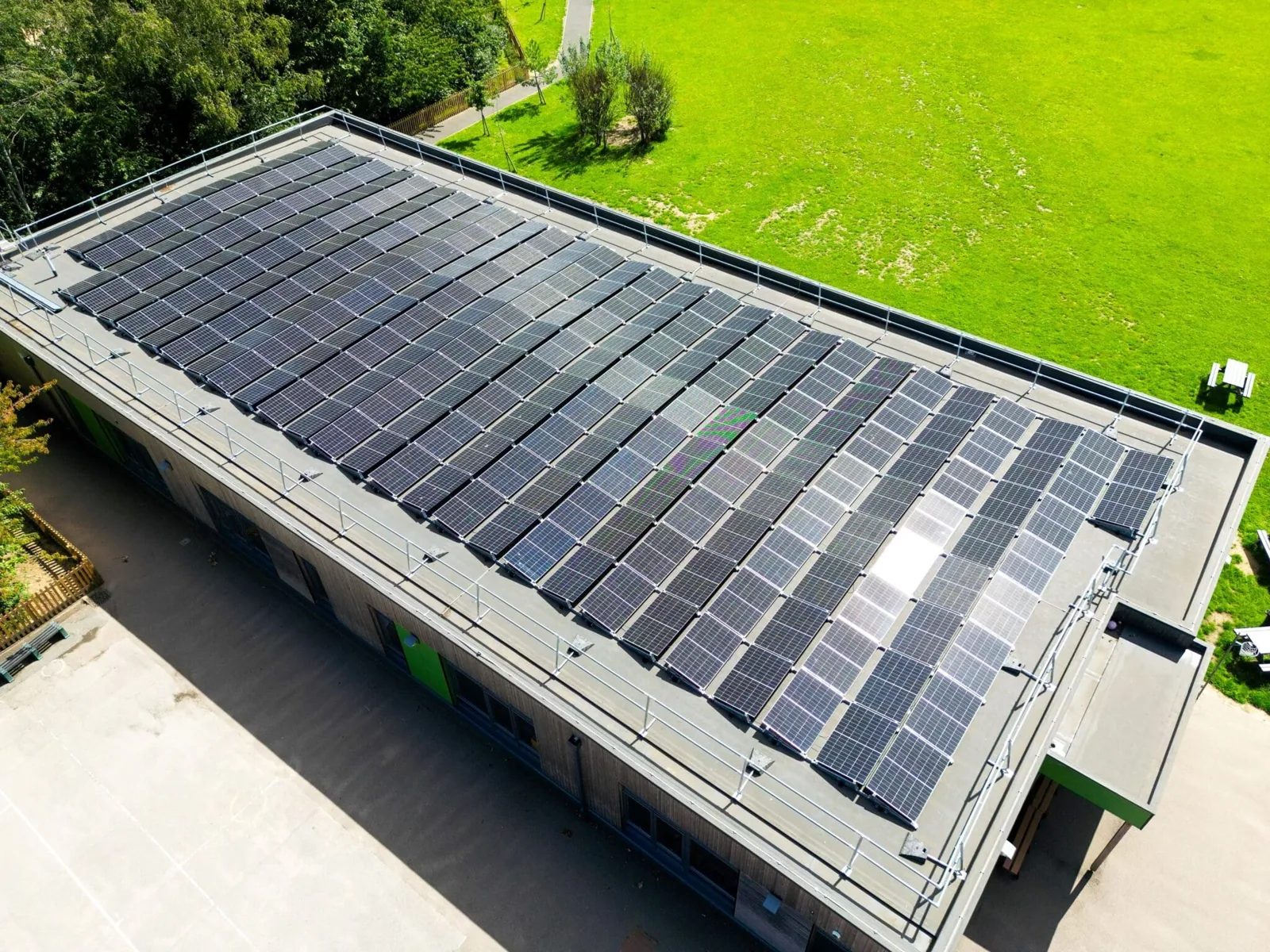
Aerial views suit the two stresses that matter most here. Heat leaves a pattern: faded or chalky areas where reflectance has dropped, with seams and laps showing as pale or dark lines. Smoke leaves soot, which shows as a gray film that is thicker in low spots and near equipment. Medford logged 26 smoke days in 2021, and a year-to-year series of images shows how fast a given roof darkens and whether cleaning restores it.
After a fire in the region, such as the Almeda and Obenchain fires of 2020, imagery is a quick way to check edges, vents and intakes for scorch marks and embers lodged in corners. For insurance purposes, dated aerial photographs of a roof before and after an event are strong documentation, which supports a claim if one is made.
Airspace, wind and scheduling
Flying near an airport is regulated. Rogue Valley International-Medford Airport sits three miles north of downtown, and its long runway and Forest Service air tanker base put the field under active control, so roofs on the Table Rock Road side may sit inside controlled airspace. Flights near the airport require authorization from the FAA before the aircraft goes up, and we plan the schedule around that approval.
Weather matters as well. Gusty afternoons and heavy smoke days ground the aircraft or degrade the images, and low winter fog does the same. The best flying days in the valley are clear, calm mornings in spring and autumn, when light is even and shadows are short. Midday summer glare washes out white membranes, so we avoid it, and we keep a backup date for every flight. Flights over occupied properties are announced to site staff in advance.
From images to a roof register entry
The deliverable is an organized set of annotated images, a stitched roof map where the building allows it, and a list of findings ranked by urgency. The same items feed the condition grade and remaining-service-life estimate in the roof condition report, and the dated imagery goes into the roof register for the next comparison.
Drone imaging does not replace a hands-on inspection. It tells us where to look and gives the owner a visual record. Probing a soft spot, testing a seam or cutting a core still requires boots on the roof, and the report shows which findings come from which method.
Repeat flights are where the value compounds. The same flight path, flown each spring at a similar hour, produces images that line up from year to year, so a spreading discoloration, a growing pond or a seam that has opened further is visible at a glance. For an owner with several buildings, a set of such comparisons gives the reserve schedule real evidence about which roofs are changing fastest and which are holding steady.
Send the building list and roof sizes

Related Roofing Pages


Questions About Drone Roof Inspection
Does a drone flight disturb tenants?
Very little. The aircraft is quiet at height, stays over the roof and does not enter the building. We notify site staff and keep clear of people and vehicles.
Can a drone find a leak?
It can show where one probably is, such as ponding, a torn flashing or a lifted seam. Confirming the exact opening usually takes a hands-on check or a water test.
Are the pictures good enough for an insurance file?
Dated, geotagged images of the roof before and after an event are the kind of record adjusters ask for. We label them by area so each photo ties to a location on the roof plan. The same set also gives a carrier a clear view of conditions that existed before a storm or fire, which keeps the discussion about what changed rather than what was already worn.
How large a roof makes a drone worth using?
The benefit grows with size and difficulty. A big warehouse, a steep metal roof or a fragile surface gains the most, while a small flat roof is quicker to check in person.
Who owns the images?
The owner receives them with the report and can keep them in the roof register. They are most useful when kept in date order, so changes between years are easy to see.