About Commercial Roofing Medford
Condition grades, remaining service life and reserve-ready reports for commercial roofs in Medford and across the Rogue Valley.

Overview
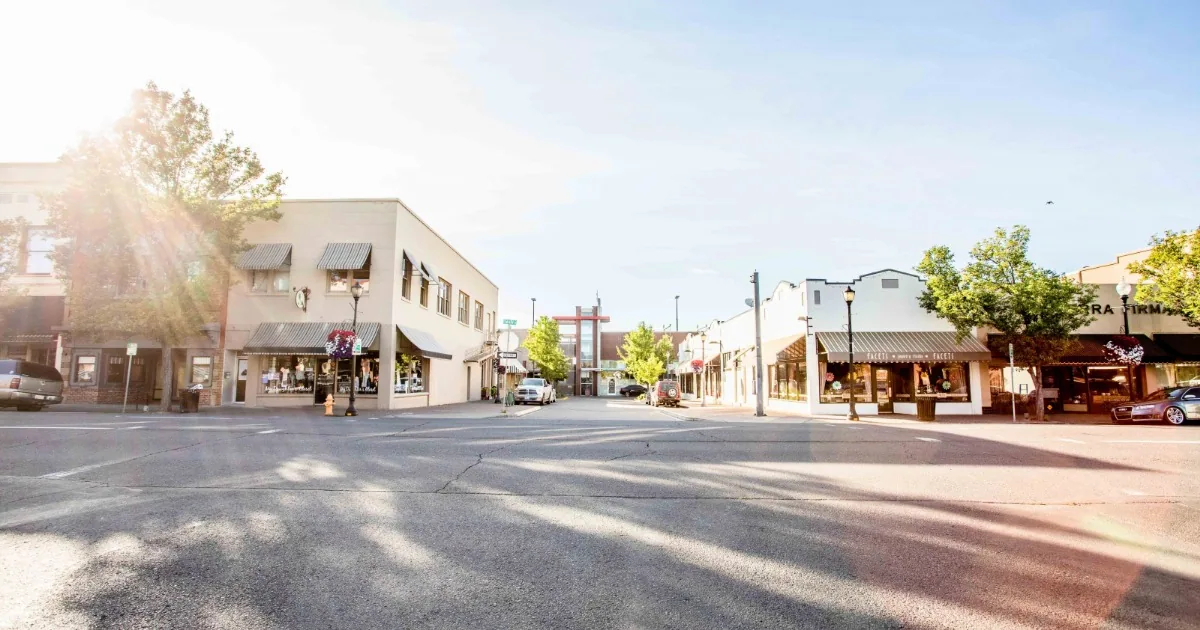
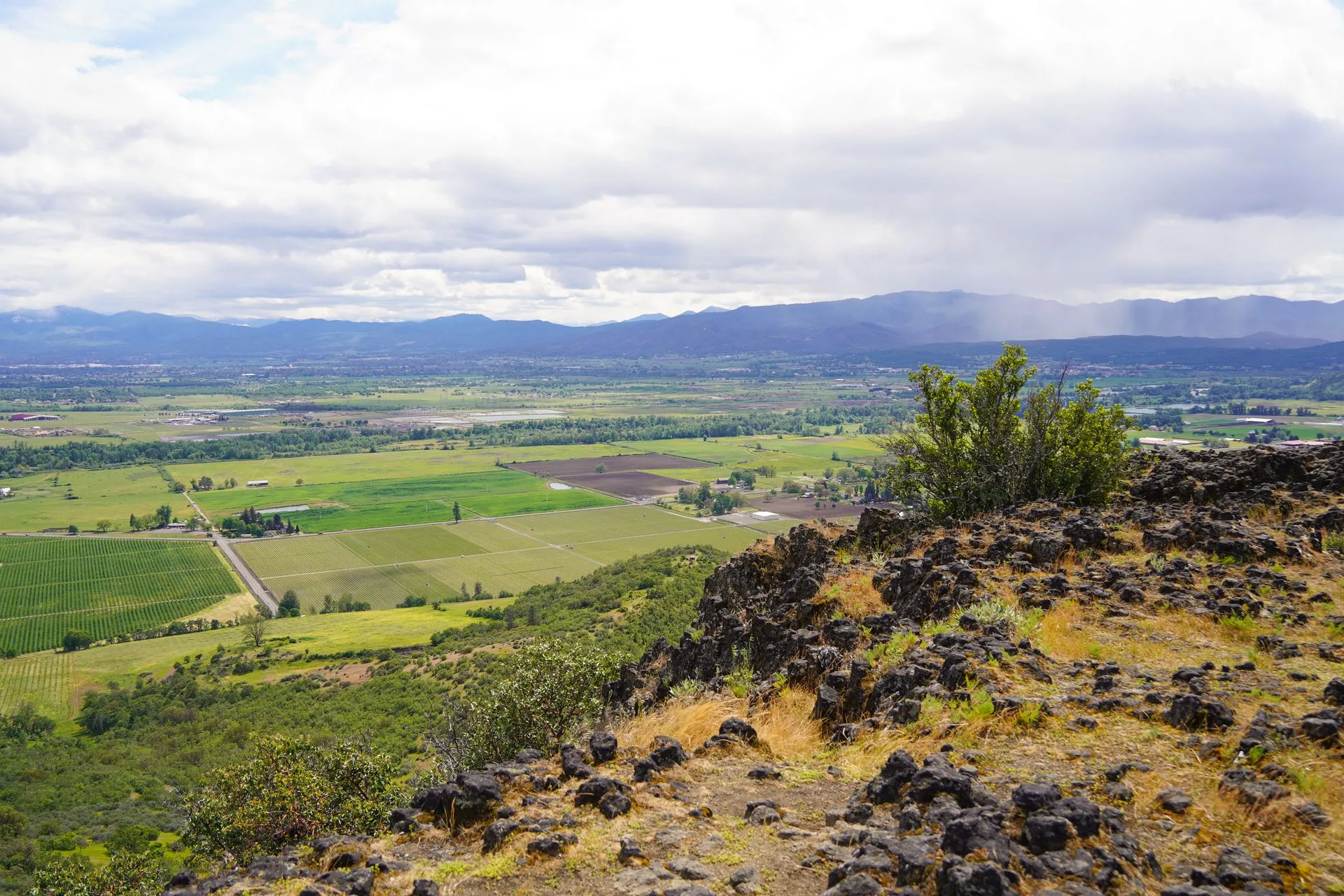
Commercial Roofing Medford works on commercial buildings in Medford, OR and across the Rogue Valley, covering repair, replacement, recover, coating and upkeep of low-slope and metal roofs. The company begins from a plain fact about the valley: the rain shadow between the Cascades and the Siskiyous leaves Medford with only about 18.4 inches of precipitation, a record high of 115 F and a summer that logs 61 afternoons over 90 F. Sun and heat, not rain, spend a roof's service life here, and the work is built on measuring that spend.
The readers of our reports are property managers, owners, facility directors and investors. They keep a reserve schedule, answer to a lender or a board, and need to know which roofs will need money in which year. Each roof receives a condition grade and a remaining-service-life estimate, set down so that it drops straight into an owner report.
What the Company Does
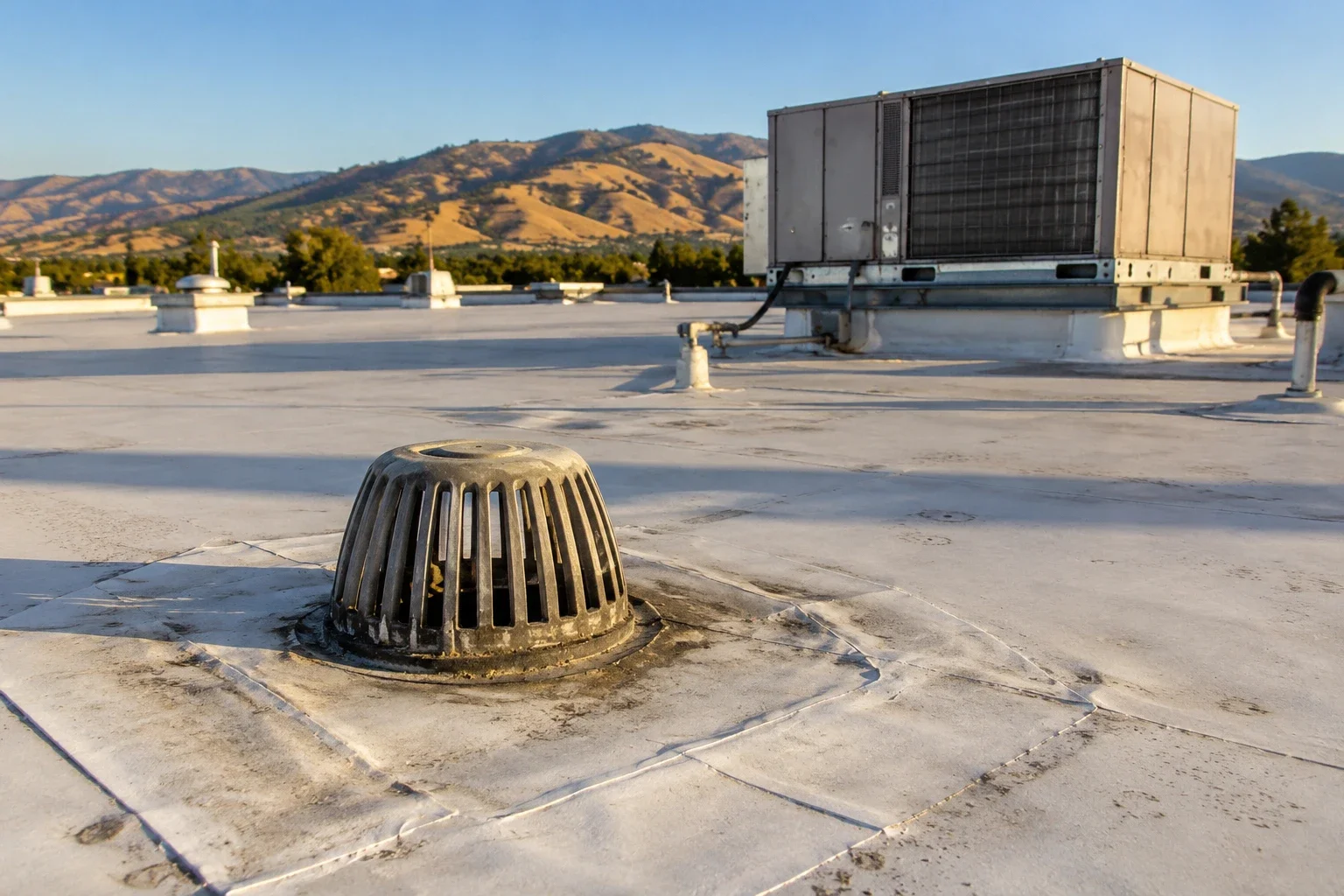
The work spans the full life of a commercial roof. It begins with hands-on inspection, supported where useful by drone coverage and infrared moisture surveys, and written up in condition reports with photographs. It continues with preventive maintenance programs that clear drains, renew sealants and remove soot ahead of the hottest weeks, and with insurance claim documentation after a loss.
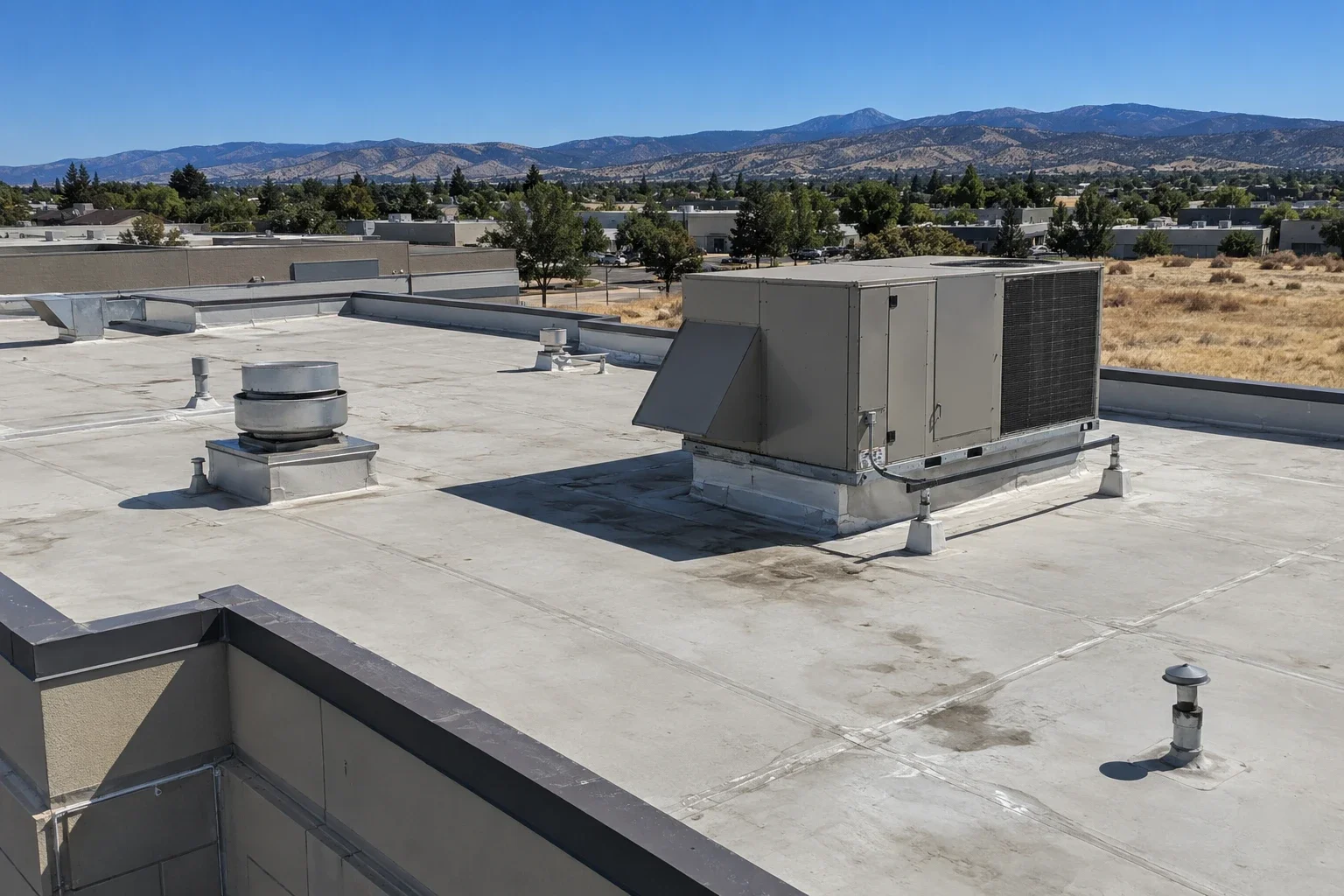
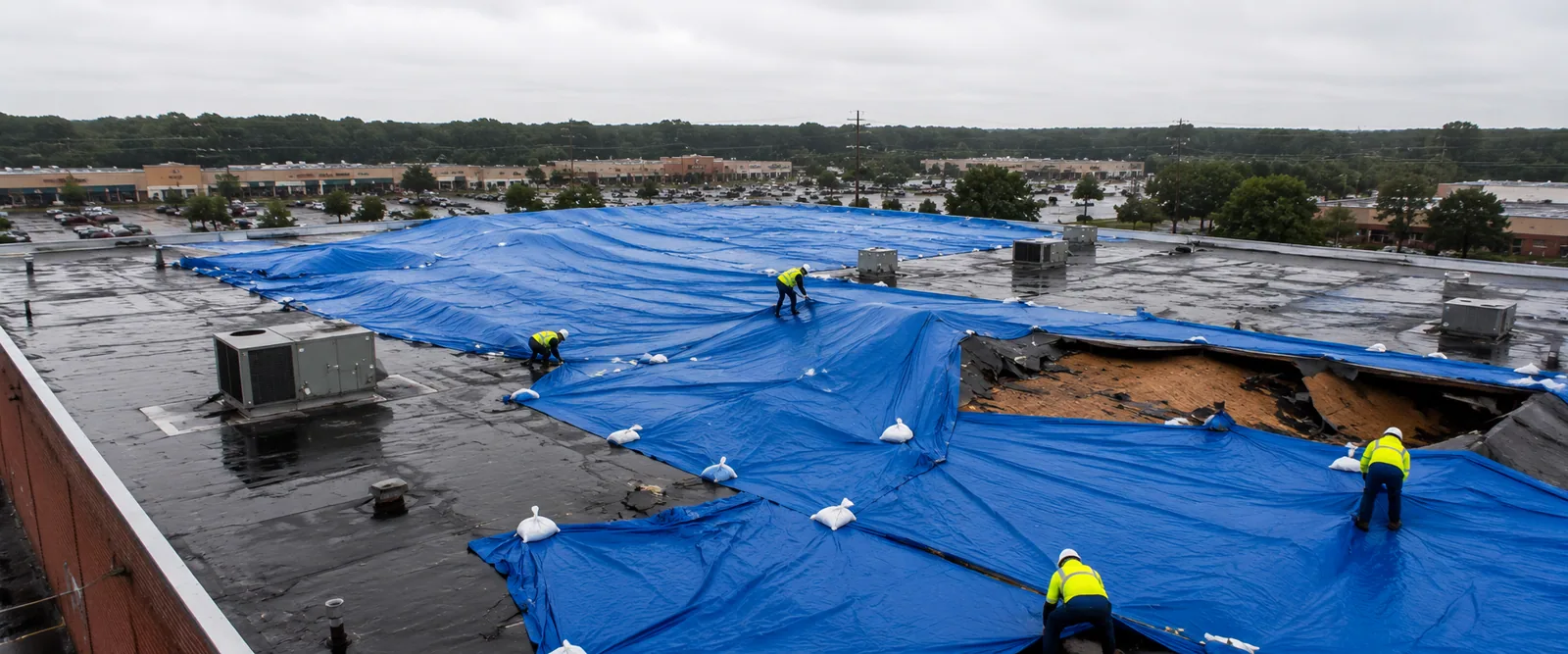
When a roof needs more than maintenance, the company installs and repairs TPO, PVC, EPDM, KEE, modified bitumen, built-up, standing seam and retrofit metal, spray foam, and silicone and acrylic coating systems. Whether a roof gets a repair, a coating, a recover or a replacement follows from its grade, and the report lays those options next to one another with the cost drivers named. When water is coming in, the phones are answered at any hour of any day, holidays among them, and the first job of the crew is to stop the leak.
How the Work Runs
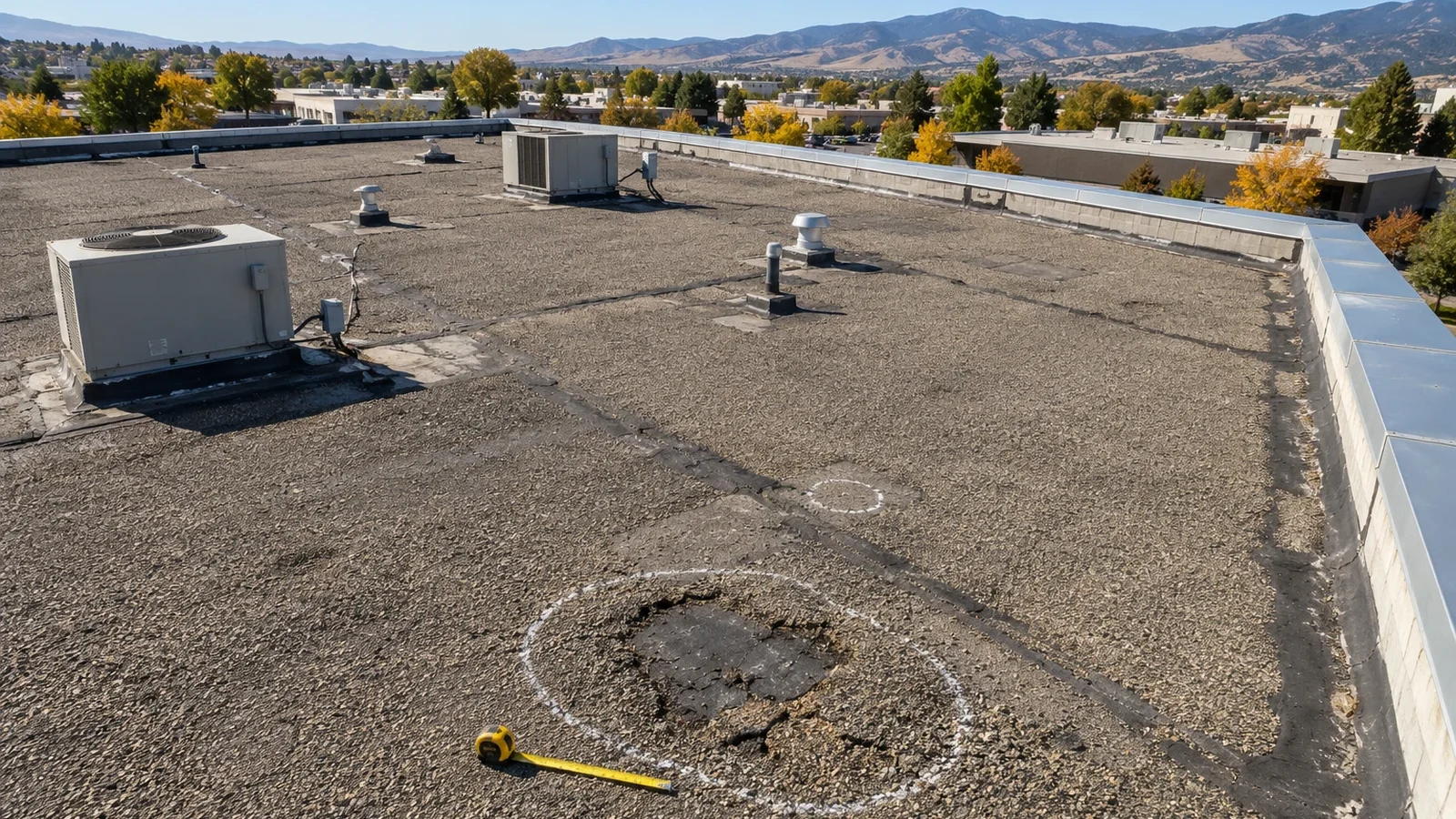
A first visit takes a roof from unknown to graded. The crew records the system and its attachment, examines surface, seams, flashings, drains and penetrations, photographs each detail with a date and a location, and takes moisture readings where the scan calls for them. What comes back to the owner is a written report: a grade for each roof section, a remaining-service-life range, actions in ranked order, and the cost drivers behind every one, which are area, access, insulation depth, penetrations, tear-off and the phasing a running building needs.
Findings go into a roof register that updates with every visit, so history accumulates and the next inspection starts from a known baseline. For an owner with several buildings, a roof register turns the roofs into a set that can be compared, and a capital plan staggers replacements so no single year absorbs three at once.
The Buildings and Owners Served
Institutional roofs in Medford belong mostly to hospitals, namely Asante Rogue Regional Medical Center and Providence Medford Medical Center, which have a combined staff above 2,000, and the main VA hospital for southern Oregon, which stands in White City. Retail roofs line North Riverside Avenue, where Rogue Valley Mall opened in 1986 and has been under new management since February 2024. Industrial and distribution roofs run along Table Rock Road and the airport, and Phoenix and White City hold rail-served industrial parks.
Harry and David, the largest employer in Southern Oregon, combines orchards, manufacturing and distribution in Medford. Ashland adds the 175-acre Southern Oregon University campus and 59 individually listed historic structures, which brings historic-building roofing rules into the picture. Across these buildings, the owners vary: property management companies, investors, health systems, school districts, manufacturers, logistics operators and public agencies. Each receives the same grade, written for the reader who has to act.
Climate, Smoke and Code
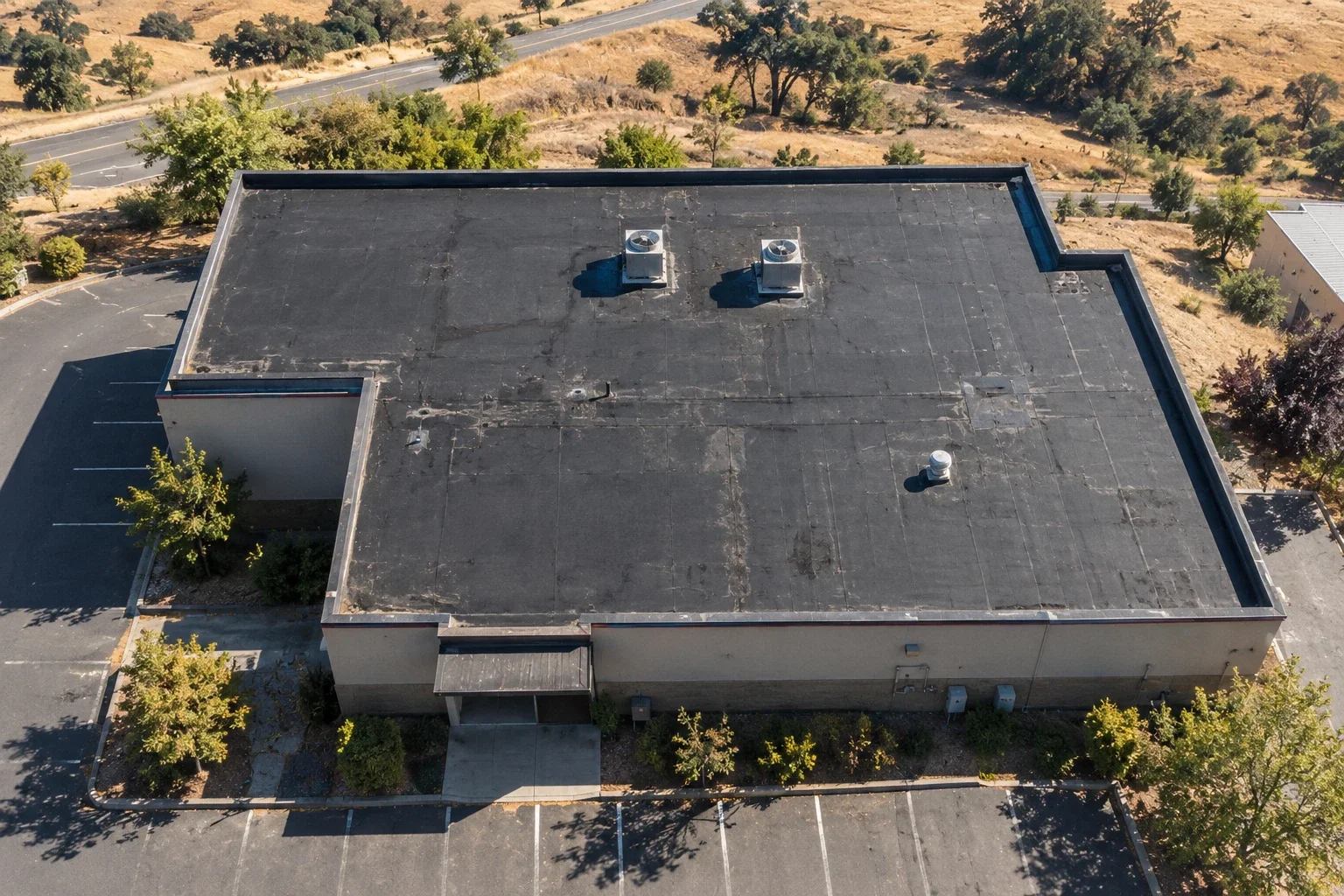
Heat and UV set the pace, and reflectance loss is the first measurable change on a white surface. Wildfire adds a second charge to the account. Medford counted 26 smoke days in 2021. A year before, the Almeda and Obenchain fires had taken about 2,600 homes in Jackson County, 561 of them in Phoenix and roughly a third of Talent. A light surface dusted with soot runs hotter, so the maintenance calendar carries soot cleaning along with ember checks at edges and penetrations.
Oregon's 2025 Structural Specialty Code, which grew out of the 2024 International Building Code, was phased in from October 1, 2025 and has been mandatory since April 1, 2026. Reroof scopes follow the edition in force at permit, so the report lists insulation and attachment items the code may add. Foothill sites such as Prospect, which averages about 20.9 inches of snow, get separate load thinking.
Work Windows and Tenant Impact
Membrane work goes best from spring into early summer, ahead of the triple-digit weeks that are hard on crews and on material. Winter approvals let material be staged by March. Each plan names the month by which an owner decision is needed, since that is the date most likely to slip.
Occupied buildings are routine. The crew plans around tenants, deliveries and operations, divides the roof into sections that can be opened and closed in a day, and schedules noisy work for the hours that cost the least. A clinic roof is visited when the manager picks. A restaurant roof is cleared before the lunch rush. A warehouse roof is worked around dock traffic.
Reporting for Owners, Lenders and Insurers
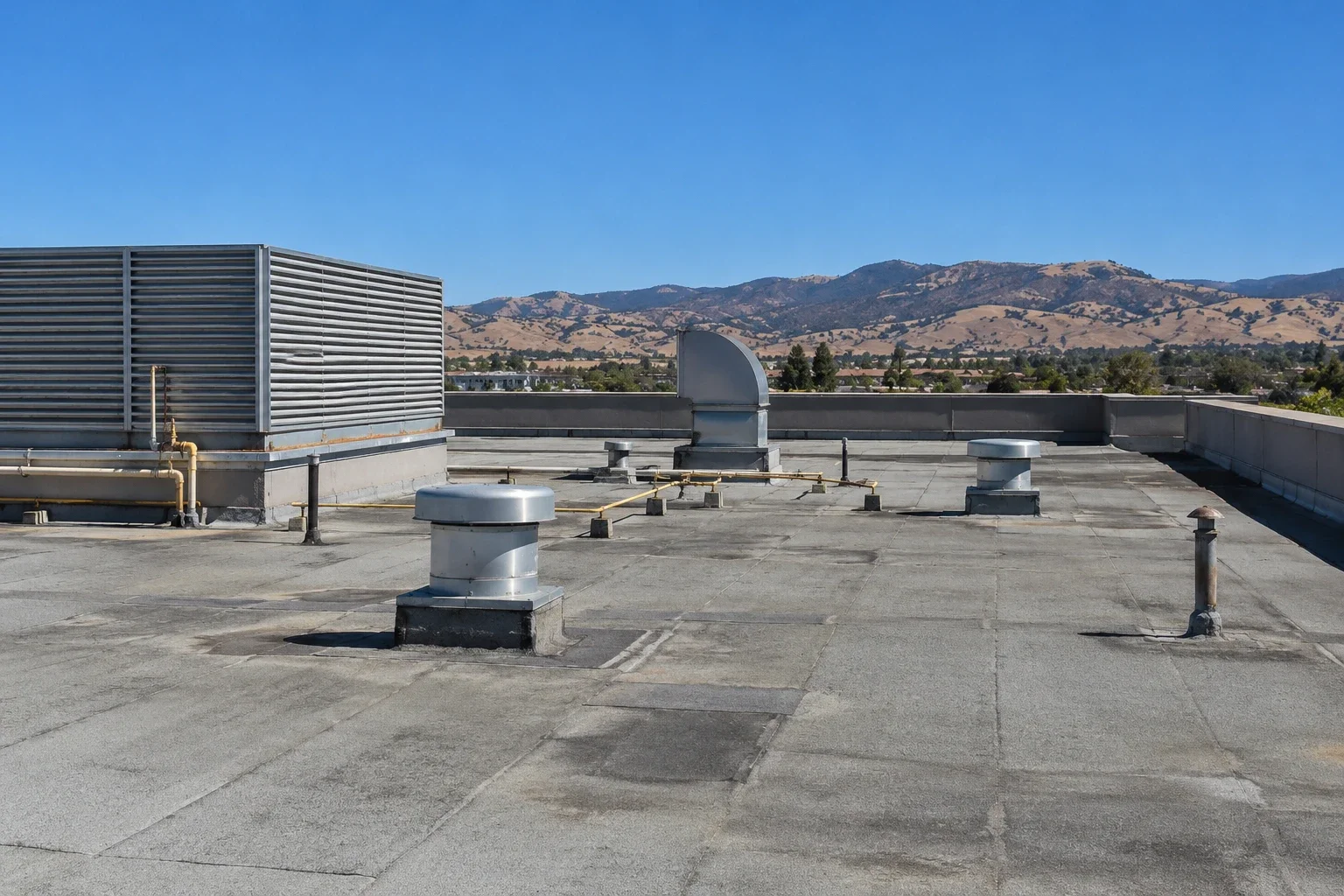
The owner report is the product. Page one runs down the buildings with a grade for each, the change since the last report, the remaining-service-life range and the budget line that change moves. Pages behind it hold per-building detail, photographs, moisture maps and the cost drivers for each recommended action. A manager briefing an owner can stop at page one. A manager building a budget reads the pages behind it.
The same evidence serves other readers. A lender looks for condition and deferred maintenance. A buyer's engineer compares the report with what the survey found. An insurer wants dated photographs and a clear record of repairs. Writing for all three at once saves the owner from commissioning three documents, and keeping the conclusion first lets each reader stop when they have what they need. Claims are supported with the register, which shows the condition before a loss and the scope that matches it afterward.

Where to Start
Send the building list, roof ages if known and any past leak tickets. Every roof returns with a condition grade and a remaining-service-life estimate sized for the next owner report. Owners who are buying or refinancing can add a due-diligence survey, and those who hold manufacturer coverage can keep a warranty file beside the register. The company serves Central Point, White City, Ashland, Grants Pass and the foothill communities around the valley, with every service area graded on the same scale.
Send Us the Building and We Will Walk the Roof