
Commercial Roofing in Sams Valley, OR
Commercial roofing in Sams Valley, OR along Route 234: condition grades, heat and smoke-season upkeep and remaining-life reports for outlying buildings.
Overview
A commercial roof in Sams Valley, OR gets graded the way any Rogue Valley roof does, by what a long dry summer has done to the surface and the seams. Oregon Route 234 runs through the community, northeast of Gold Hill at about 1,273 feet, and the climate around it is the one Medford records: 61 afternoons beyond 90 F in a typical year, plus a 115 F record. A membrane with no shade and no neighbor to block the afternoon sun spends its UV budget at the fast end of that range, and the reserve schedule feels the result years before a tenant notices a stain.
Our work here starts with a condition grade for each roof and a remaining-service-life estimate, written for the owner who has to decide between a repair, a coating and a replacement. The sections below describe what we check, what the valley's heat and smoke do to each material, and how visits to an outlying site are planned so the owner gets a report that can sit next to the rest of a portfolio.
What Gets Graded on a Route 234 Building
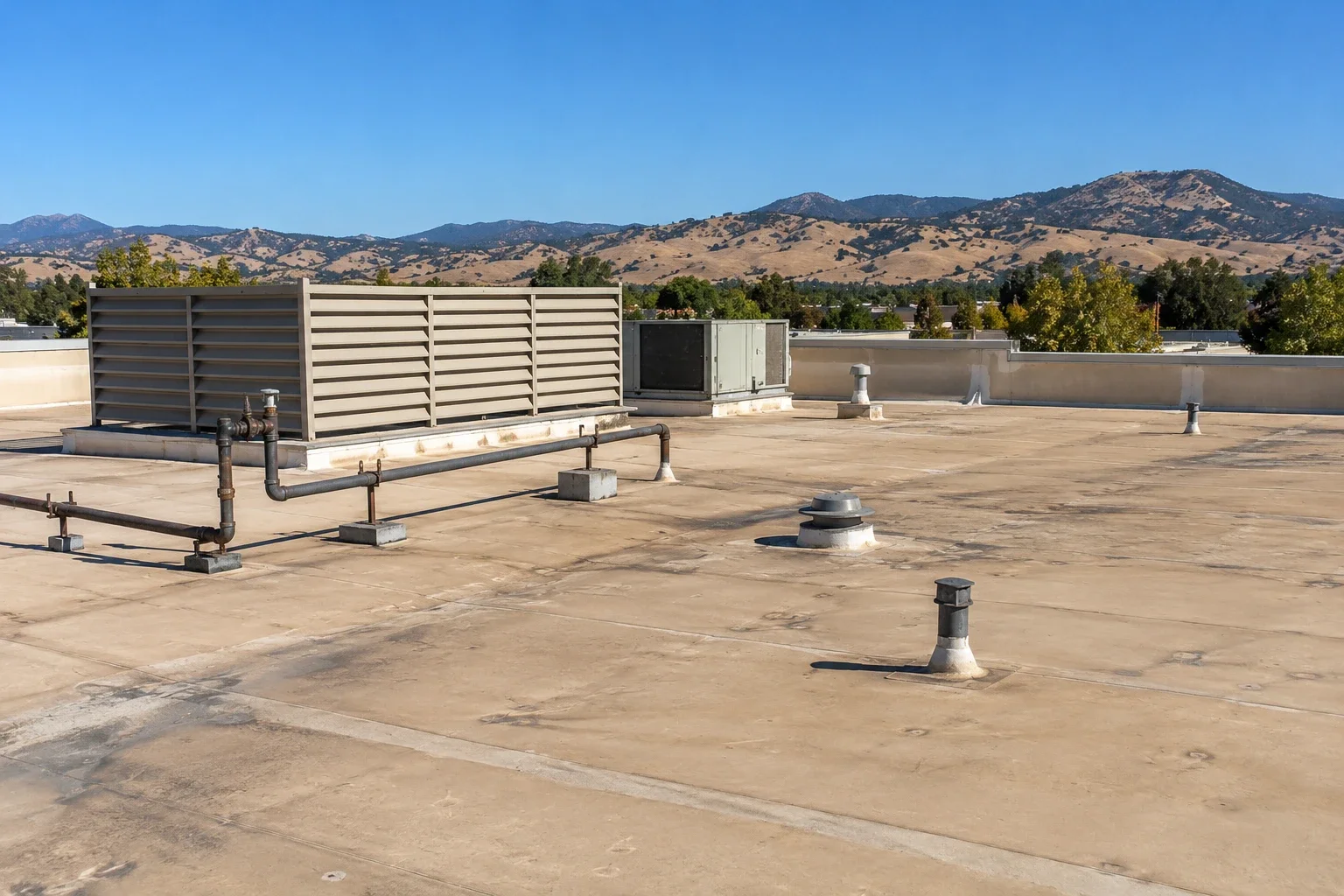
We grade covering, seams or laps, flashings, drainage, penetrations and moisture, in that order, and each item receives its own note before the roof receives a single grade. A building along a rural highway often carries additions made over several years, so one address can hold a membrane section, a metal section and a small flat patch over an office, each with a different age and a different problem. We write them up separately because they fail separately.
Photographs go into the file with the date and the location on the roof. A seam with a hairline gap, a fastener backing out of a metal panel, a sealant joint that has chalked and split: each is documented, so that the next visit can show whether the defect grew. That record is what lets an owner defer a repair with confidence in the first year and act on it in the third.
Open Ground and the Sun Budget
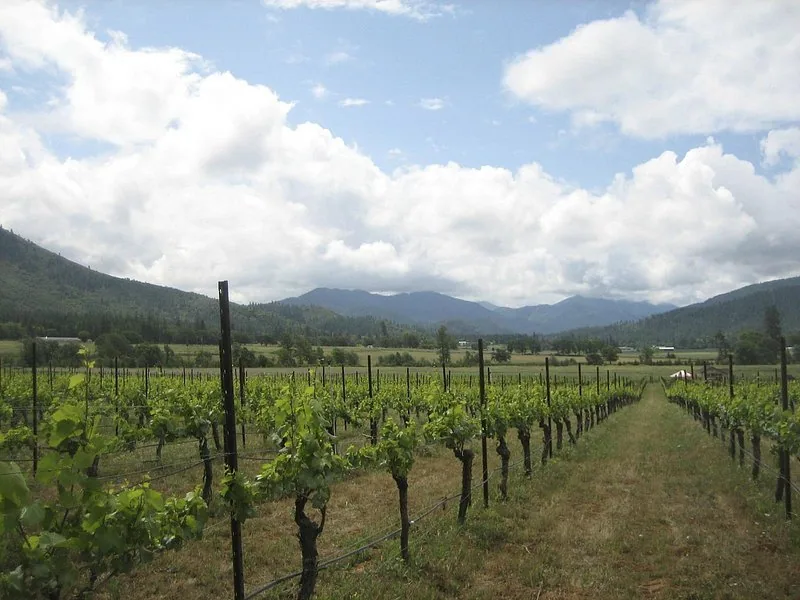
Medford's record averages 18.4 inches of precipitation a year and only 3.4 inches of snow, so the dominant stress on a roof nearby is sun and heat, not water. A roof on open ground meets every one of those triple-digit afternoons at full intensity. Dark membranes run hotter than white ones, and any surface loses reflectance as dust and soot settle on it. When reflectance falls, the roof absorbs more heat, the membrane stiffens faster and the seams carry more stress at each daily cycle.
The practical check is simple: how much of the original surface character remains, whether the roof chalks when touched, and whether the laps still lie flat. Those three observations move the remaining-life estimate more than the installation date does, and they tell the owner whether a restoration coating is a realistic option.
Metal, Membrane and Coating Choices
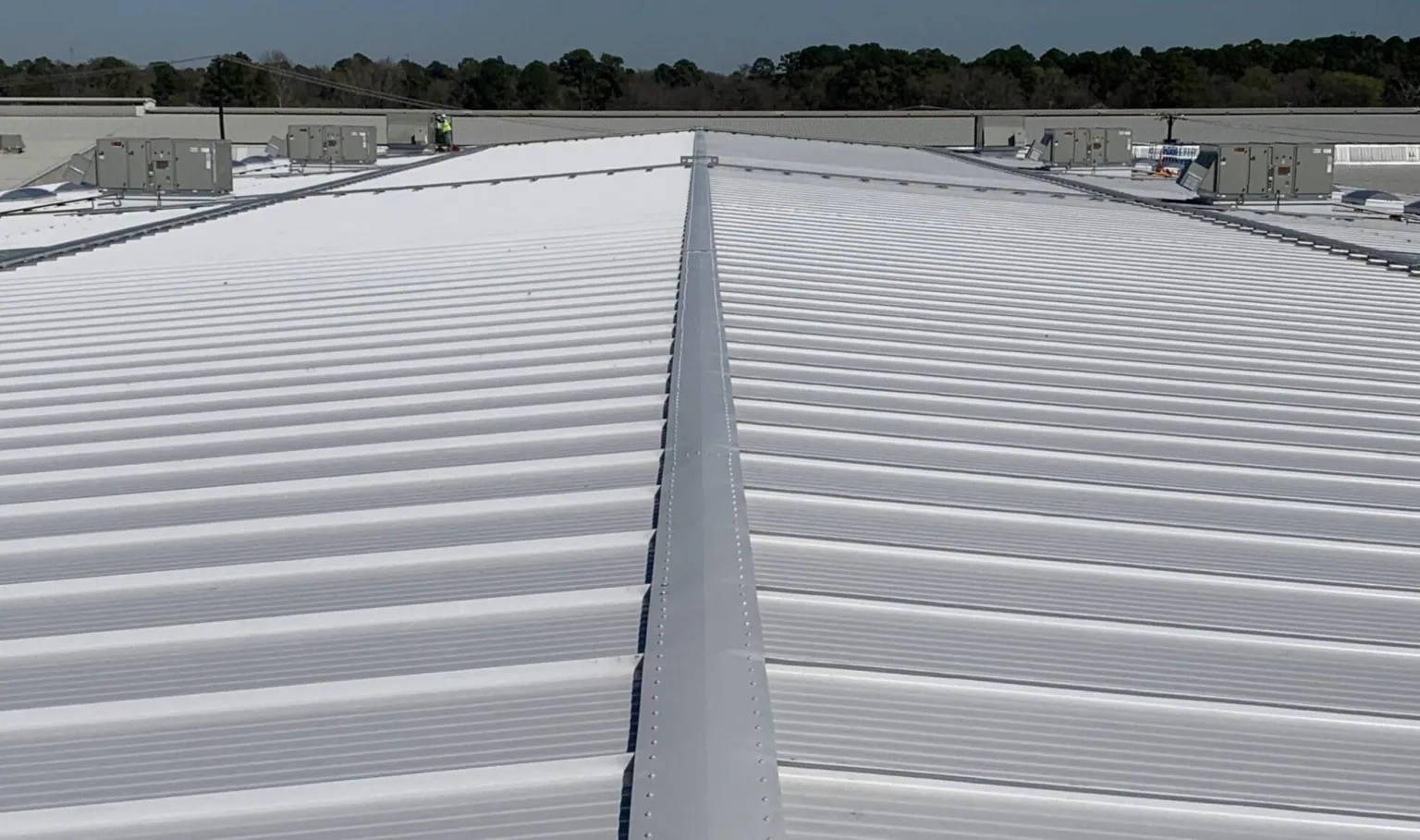
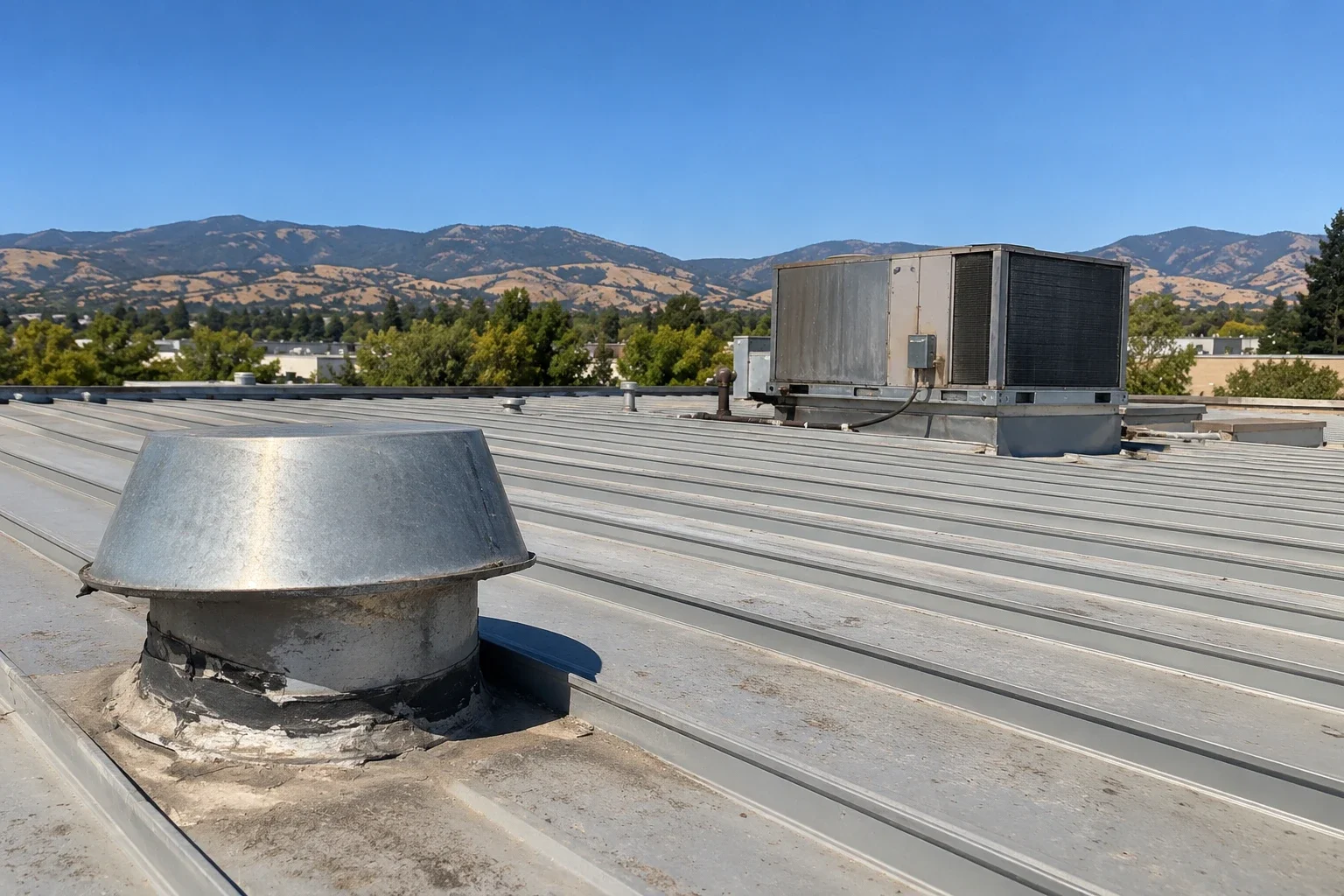
Outlying commercial buildings in the valley often use metal panels, low-slope membranes or a mix. Exposed-fastener metal leaks at fastener holes as the panels flex through heat cycles, and the fix is usually re-fastening with larger screws and fresh sealant at the laps, followed by a coating if the surface warrants it. A well-kept standing seam metal roof hides its fasteners and sheds heat better, but its clips and trim still need an annual look.
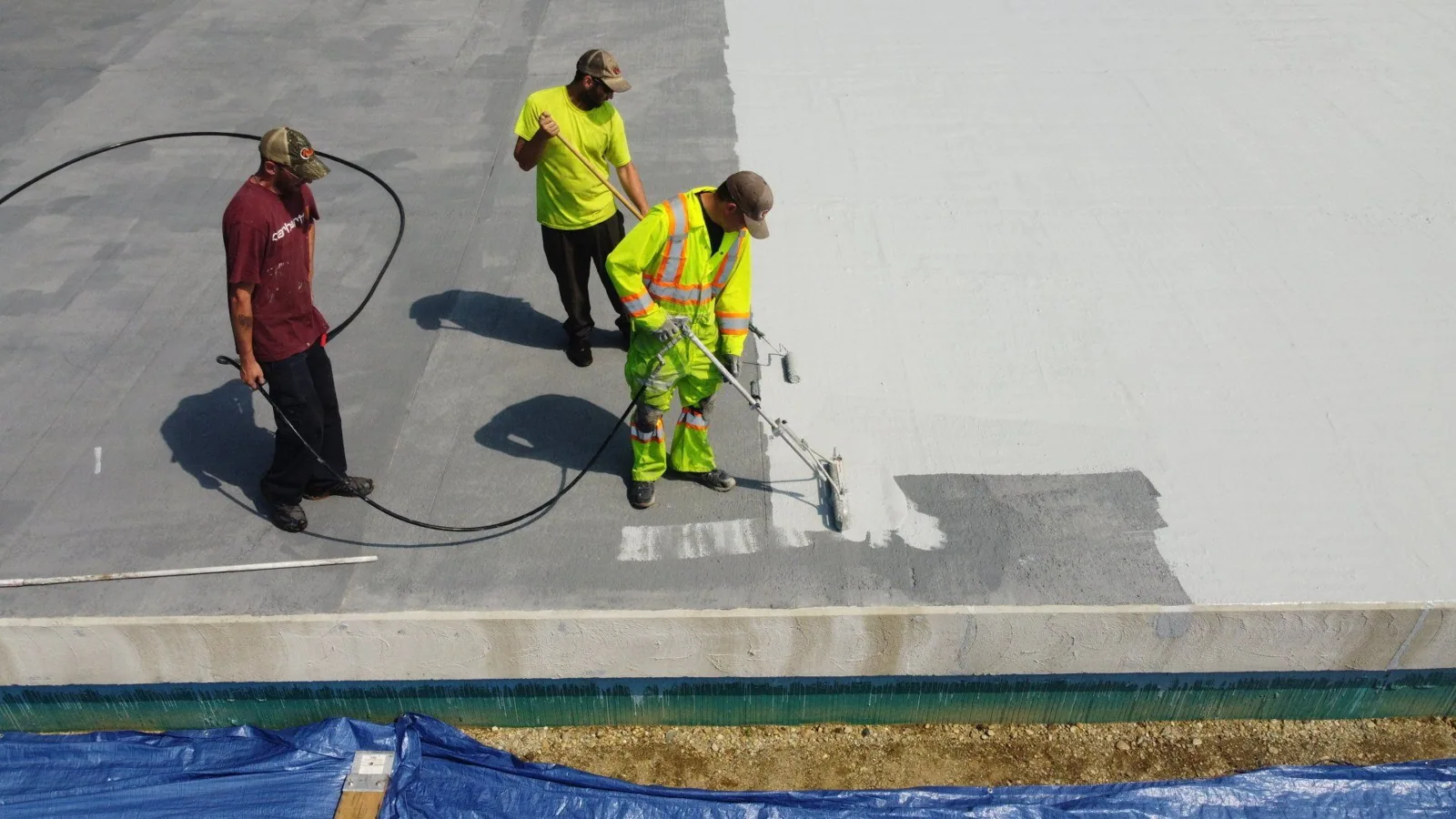
Single-ply membranes and built-up roofs have their own tells. We look for ridges over seams, blisters, surface cracking and ponding at low spots. Where the insulation is dry and the seams are sound, a restoration coating resets the surface and adds years at a fraction of a replacement. Where moisture has reached the insulation, the answer is a different conversation, and the infrared survey settles it.
Smoke Season and Ember Exposure
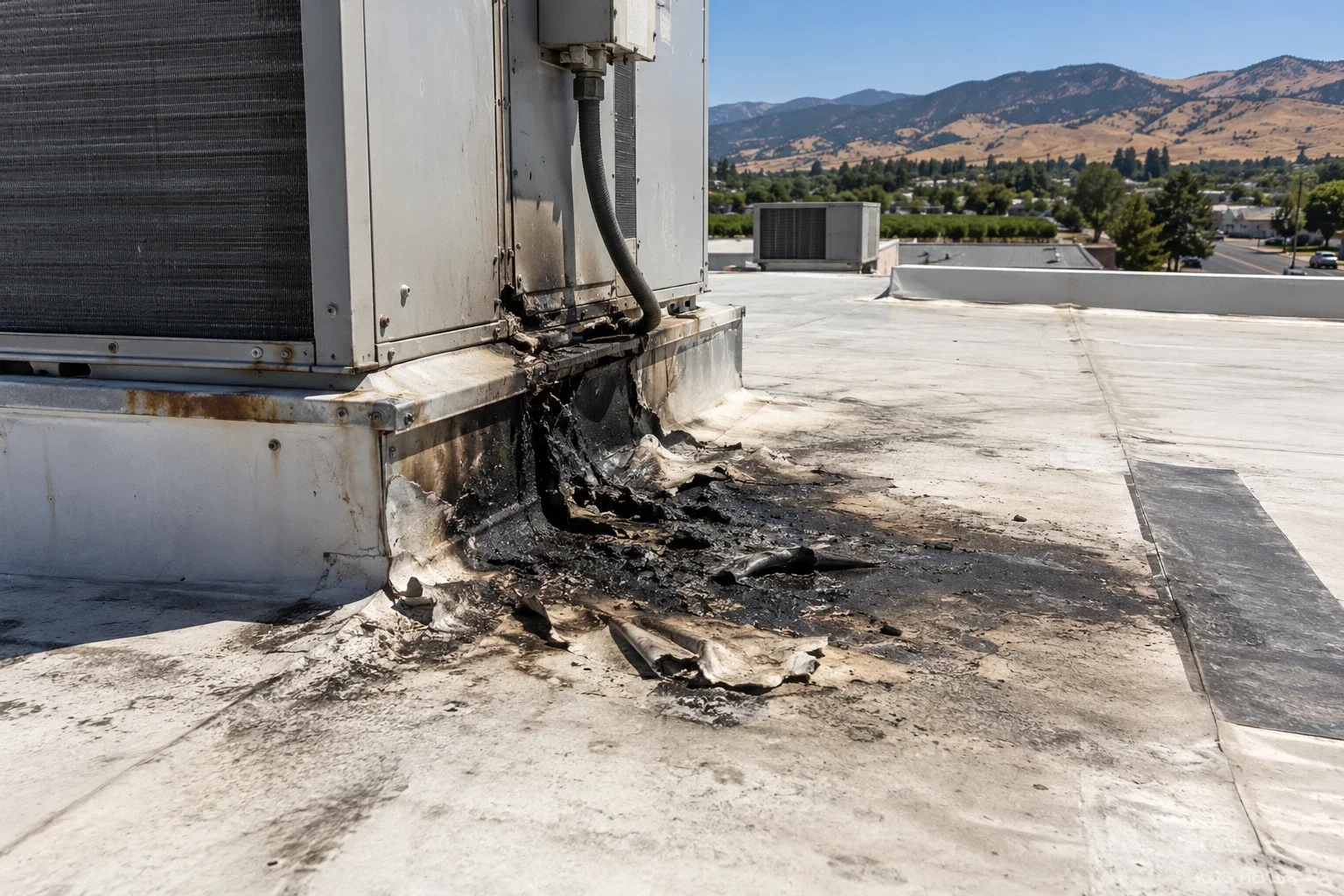
Wildfire is the second stress. Twenty-six smoke days in Medford in 2021 followed the 2020 Almeda and Obenchain fires, which destroyed about 2,600 Jackson County homes. For a roof in the open country northeast of Gold Hill, the lesson is practical: keep the roof clean, keep the edges tight and keep the drains open. Soot on a light surface raises its temperature and shortens its remaining life, and leaves or needles collected against a parapet or curb give embers a place to rest.
We check edge metal, curb ends, vent openings and any gap where embers could enter, and we note the condition of rooftop air intakes that a smoke week can clog. These are small items, and they go into the report as separate lines so the owner can fund them without waiting for a larger project. Left alone, soot and sun feed each other, and the resulting heat and UV damage shows up first at seams and sealants, where the surface is thinnest.
Cleaning is cheap compared with the life it protects. A wash and a drain clearing in late spring, recorded in the register, keep the surface reflective through the hottest weeks and give the next inspection a clean baseline to measure against.
Beagle, Antioch and Table Rock Within the Same Service Area
Beagle, Antioch and Table Rock are considered part of the Sams Valley area, and we treat them as one service territory for scheduling. A visit that covers a building in Beagle and another in Table Rock uses a single trip from Route 234, which keeps travel time out of the owner's cost. The owner of two buildings in the area receives one report with two entries, graded on the same scale.
Neighboring Gold Hill sits to the southwest along the same route, and owners with buildings in both places can fold them into a single visit calendar. Where an owner holds a building in each place, one visit day and one report cover both, and the grades line up on the same scale so that a roof near Route 234 can be compared with a roof near the Rogue River without translation.
Visits, Reports and the Owner's Next Decision
A first visit takes the roof from unknown to graded. After it, the owner holds a written report with photographs, a moisture finding if one was run, and a ranked list of actions with the cost drivers named: area, access, insulation depth, penetrations and phasing. The report is built to drop into a roof register and a reserve schedule, which means the next owner, lender or insurer can read it without help.
If the roof needs only maintenance, the visit schedule sets a spring date before the first triple-digit week. If it needs repair, the report says which items come first. If it needs replacement, the report puts a year on it and notes what a full commercial roof inspection would add to the picture.

Send the building list, roof ages and leak tickets

Related Roofing Pages

Questions About Sams Valley
Does Sams Valley need a different roof system than Medford?
The climate stress is the same kind, sun and heat first, so the choice follows the building: its slope, its deck, its equipment and what the owner wants from the next fifteen years.
How do you reach a roof with no paved access?
We confirm access, ladders or lifts and safe parking before the visit, and the report lists any access limits so a repair crew arrives prepared.
When is the best time of year to inspect?
Spring, ahead of the first stretch above 100 F, so repairs and cleaning are finished before the surface runs hottest.
What if the building has no roof records at all?
Core cuts and lap details place the system within a range. The report states the range as an estimate and updates it if paperwork turns up.
Can a coating wait another year?
Sometimes. If seams are sound and insulation is dry, the report shows how much surface is left and what a one-year delay does to the coating option.