Heat and UV Roof Damage Repair in Medford, OR
Repair of sun-aged membranes in Medford, OR: crazing, shrinkage, chalking and brittle seams from triple-digit summers, with options to slow the next decade.
Overview
Nobody sees the UV budget being spent. A Medford, OR roof sits under 61 afternoons past 90 F in a typical year, 11 of them past 100 F, and none of that arrives as an event. The membrane just gets stiffer. Plasticizers leave the sheet, surface granules loosen, white turns to chalk, and the first sign the owner meets is a seam that no longer flexes or a crack that runs where the roof moves most. By then, the roof has already spent a good part of its remaining service life, and the reserve schedule has been quietly overstating what is left.
Heat and UV damage is the most common kind of aging on valley roofs, and the one most often mistaken for something else. Reading it correctly separates the roofs that need a repair from the roofs that need a plan.
Surface temperature is the invisible variable. A dark membrane in July can run far hotter than the air, and the difference between a cool and a hot surface is the difference between a sheet that keeps its flexibility and one that does not.
What sun aging looks like
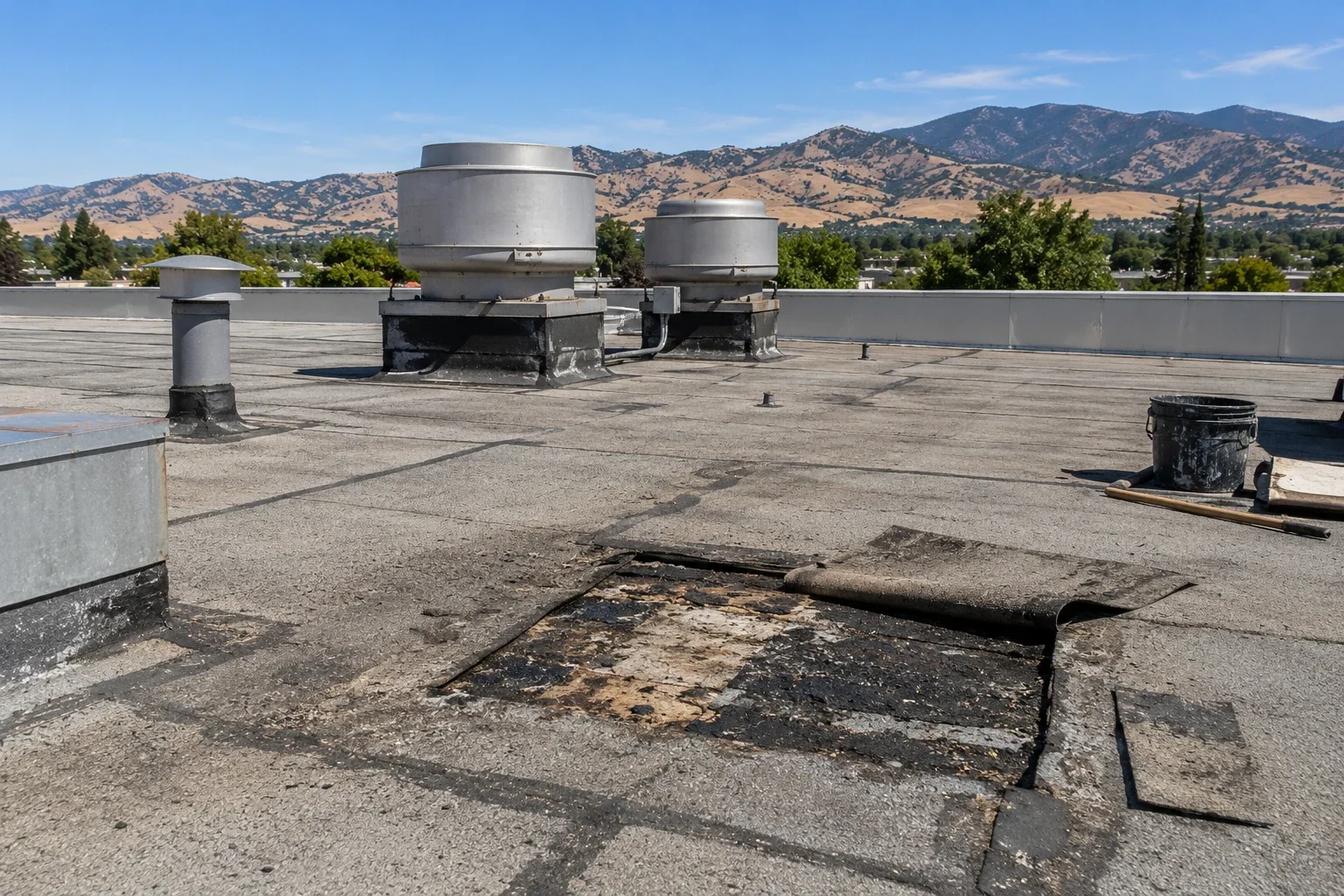
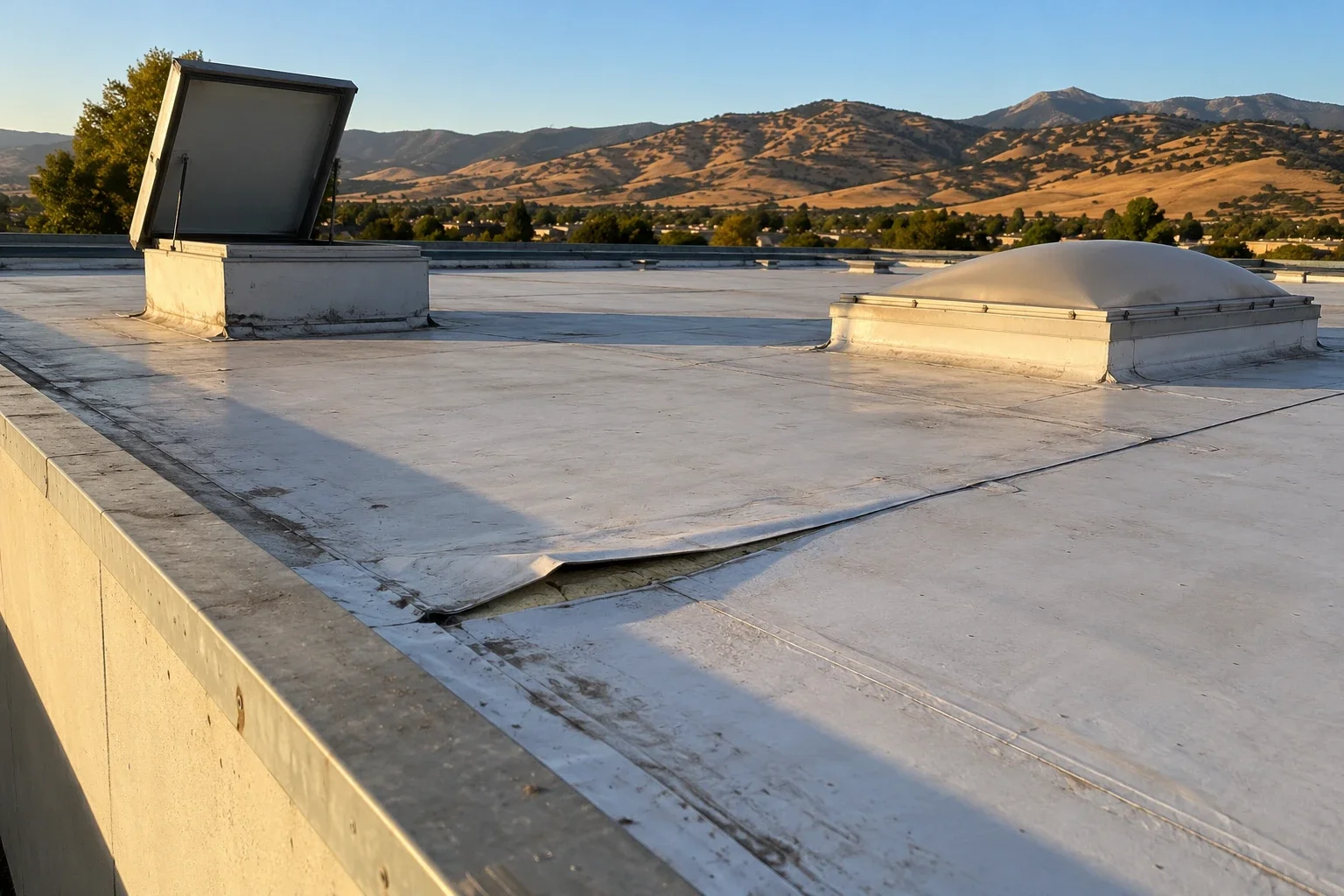
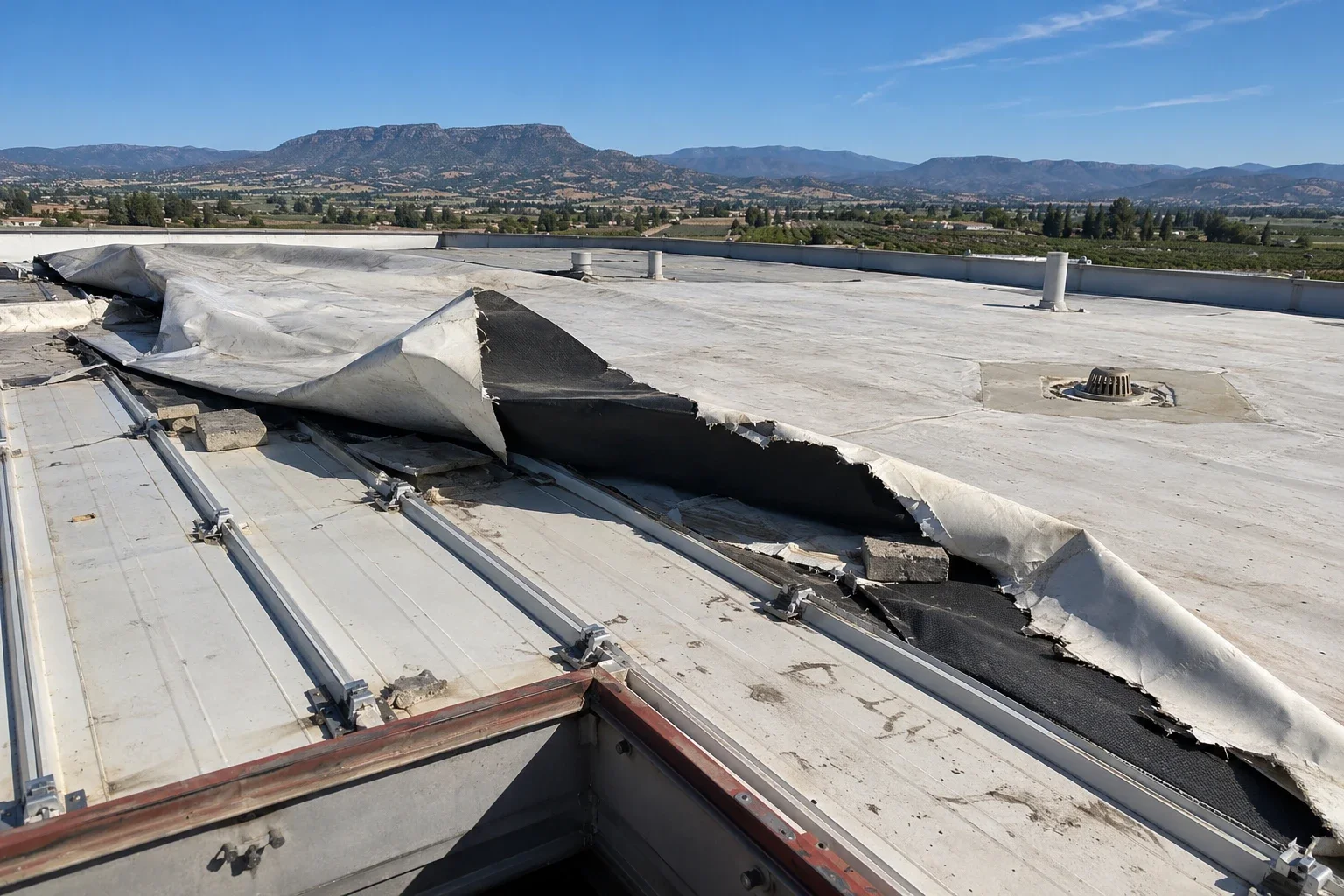
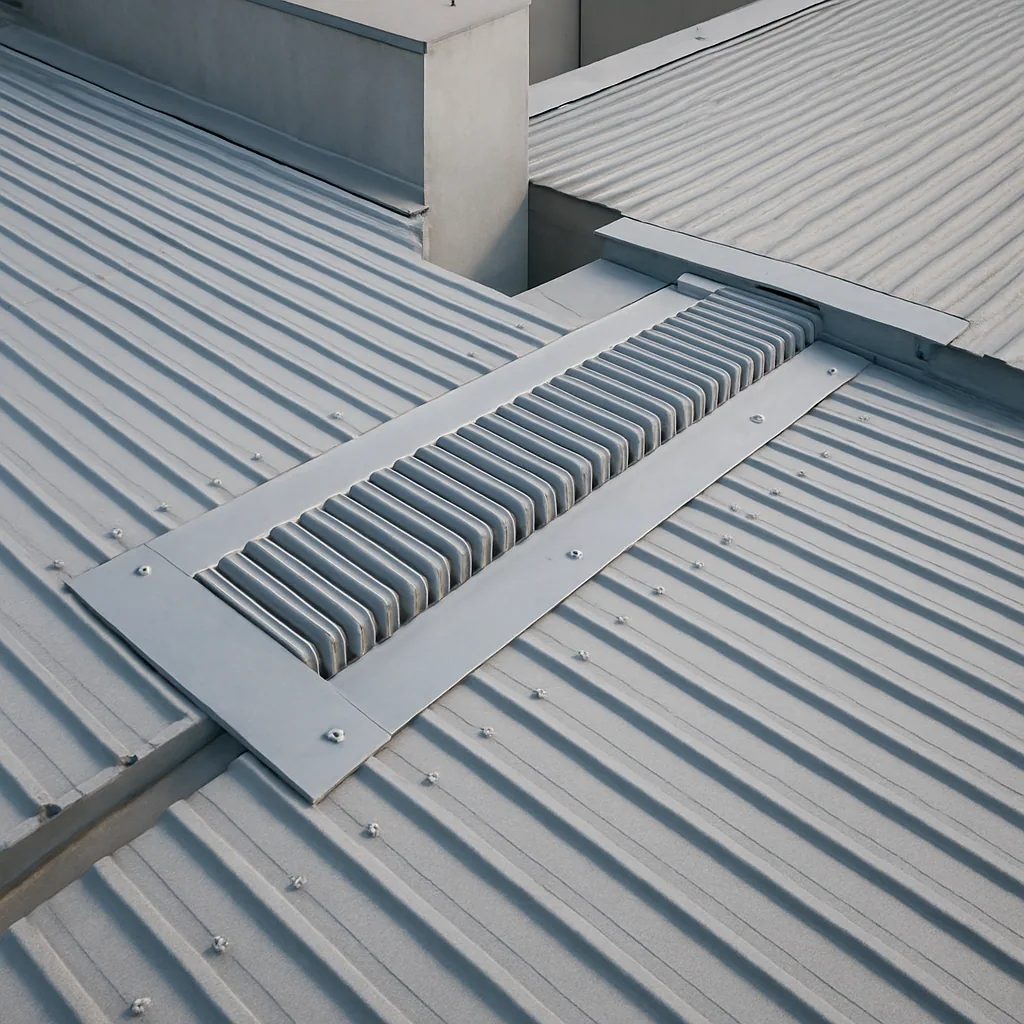
On single-ply membranes, early signs are chalking on light surfaces, loss of gloss and a slight stiffening you can feel when pressing a corner. Later signs are crazing, a web of fine cracks, followed by cracks at seams and flashings where movement concentrates. On modified bitumen and built-up roofs, granules wear off and expose the asphalt beneath, which oxidizes and hardens. On coated roofs, the coating chalks, thins and loses adhesion. Metal panels fade, their sealant dries and fasteners loosen with repeated expansion.
Shrinkage is a second sign. A membrane pulls away from walls and curbs and tents over inside corners, and the flashing that was installed with slack in it ends up tight. In every case, the surface tells the story long before water enters. We photograph each stage of wear and record it in the roof register so owners can see the trend and not just a single snapshot.
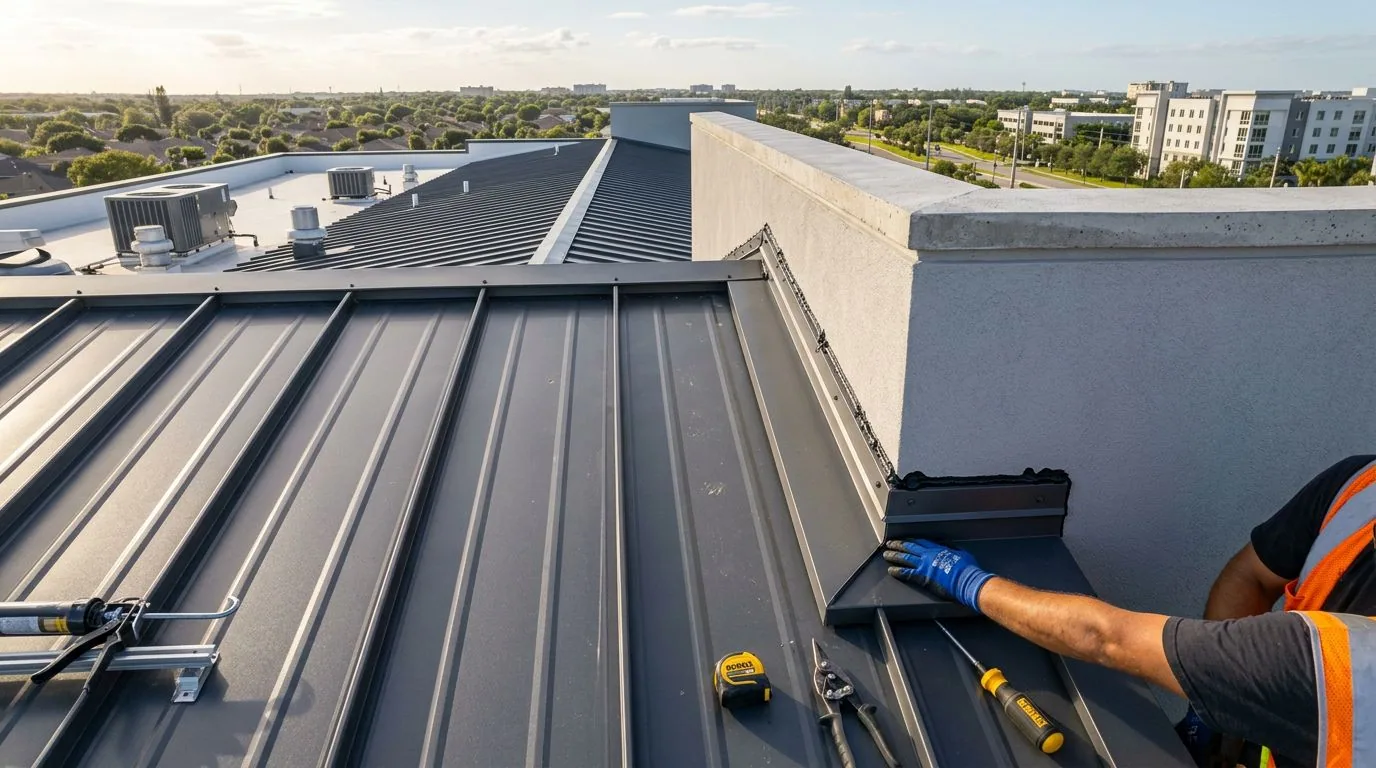
Edges and corners age first. Metal trim fades and its sealant hardens, flashings pull tight and the laps that join them open, the early form of what becomes seam failure. Those are the places we probe at each visit, because they show the aging months before the field does.
Why the valley is hard on membranes
Medford sits in a rain shadow, so the sun is not softened by long wet seasons. The roof is dry for months and takes direct radiation, with temperatures on a dark surface far above the air. Then a winter of fog and about 64 freezing mornings a year adds contraction cycles to the expansion cycles of summer. Smoke seasons add another layer, because soot on a light surface raises its temperature and speeds heat aging; Medford counted 26 smoke days in 2021.
The hot-summer pattern extends to nearby towns. Phoenix recorded 115 F on June 27, 2021, Grants Pass hit 115 F in 2022, and summers in Eagle Point are getting hotter and drier. A roof in any of them lives in the same sun, and the grade we assign adjusts for roof type and exposure rather than a single valley average.
Our grade accounts for the history as well. A roof that went through the 2020 fire season with ash and soot on its surface, and then a summer of 26 smoke days the next year, has had a heavier load than one that stayed clear, and the remaining-life estimate reflects it.
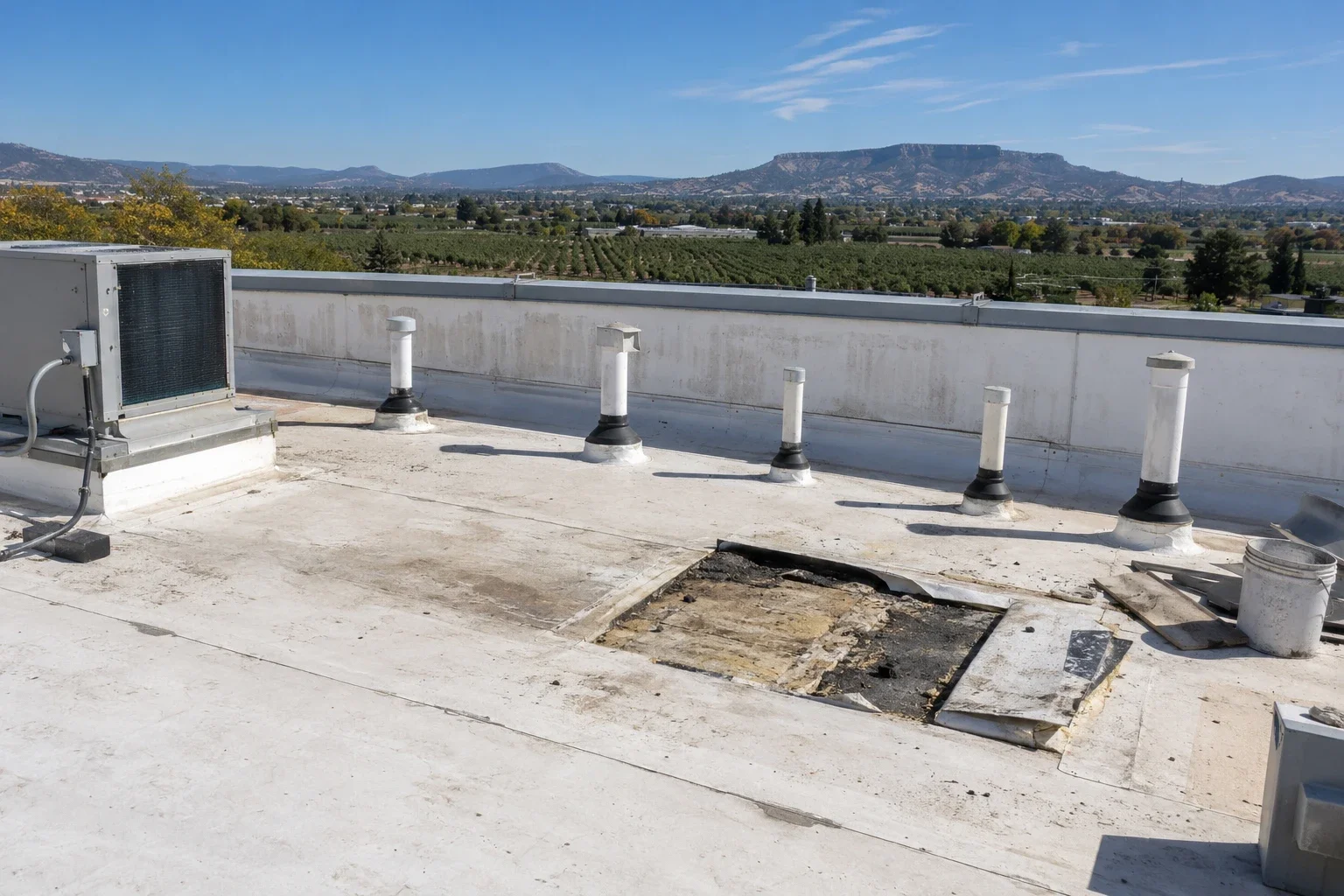
What can be repaired and what cannot
Local damage is repairable. Cracked sealant is stripped and replaced, brittle flashings are cut out and rebuilt, and seams that have opened are resealed or capped. Crazed areas that remain flexible can be coated. We prepare the surface, test for adhesion and apply a compatible repair, whether that is a welded patch, a liquid-applied flashing resin or a cap strip.
Widespread damage is a different conversation. When a membrane has lost its flexibility across the whole field, small repairs hold only until the next movement cycle, and the owner is better served by a restoration coating, or by a recover or replacement. We provide a plain comparison: the cost of repairing now, the years it returns, and the cost of waiting. If the substrate is dry, a coating can add several years at a modest price; if the insulation is saturated, replacement is the right spend.
Records make the difference between a repair and a guess. Each repair goes into the register with a photograph, the material used and the condition around it, so a second repair in the same place is recognized as a pattern, not a surprise.
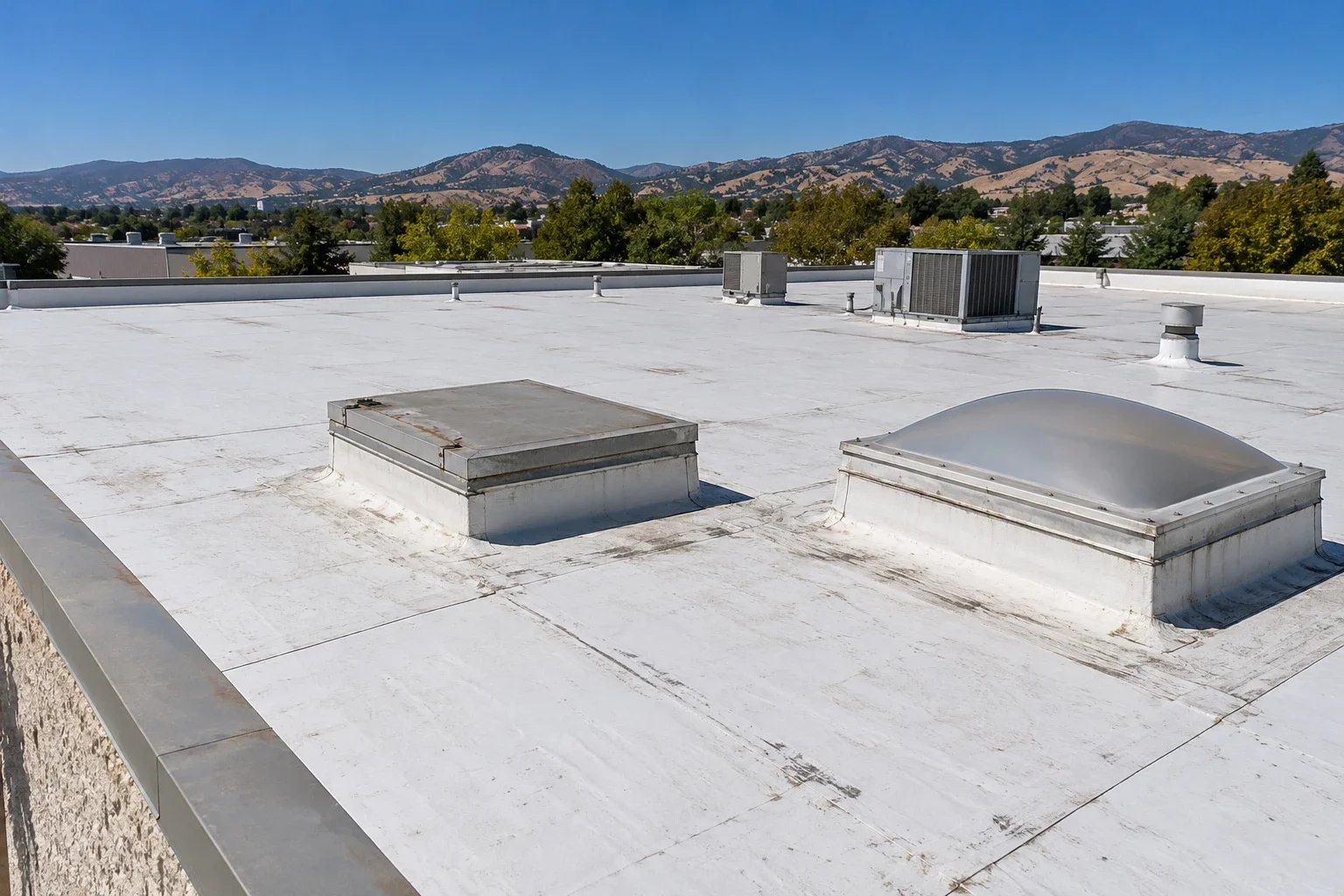
Slowing the next decade of sun
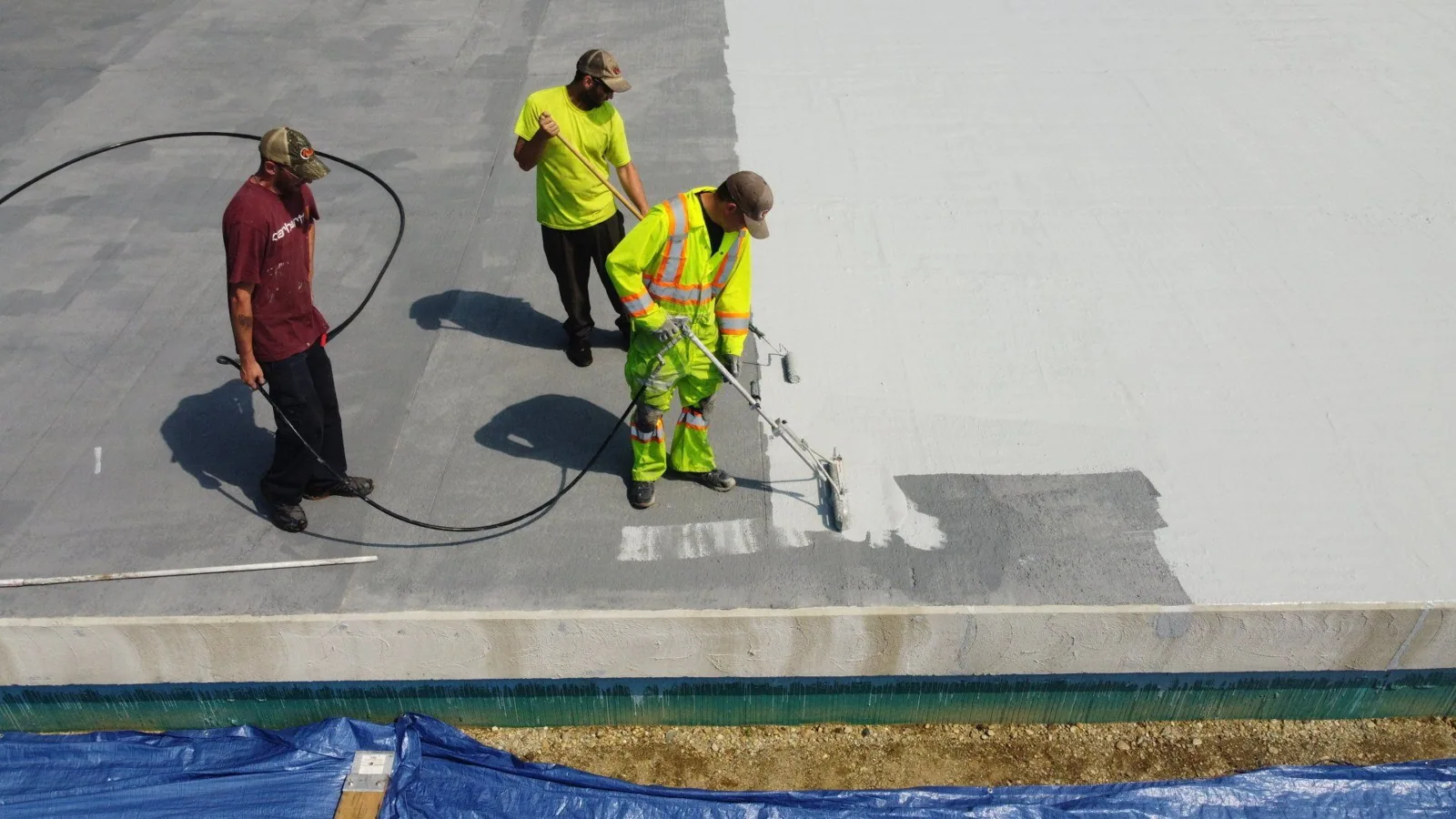
Once the damage is addressed, the aim is to slow its return. A reflective surface lowers membrane temperature and extends life, which is the logic behind a cool roof installation. Washing after smoke season keeps reflectance up. Shading from rooftop equipment or solar arrays changes exposure and should be factored into expectations. Details that move most, such as flashings and seams, are inspected more often than the field.
The best protection is a schedule. A spring and fall maintenance visit with a recorded condition grade shows how fast the sun is working on a given roof, and the remaining-service-life estimate is updated each time. When the line on the register slopes down faster than the reserve schedule assumed, the owner knows early enough to act.
For owners with a long list of buildings, the sun-damage grade is a good ordering tool. Roofs with the steepest decline between visits move to the front of the capital list, and those holding steady can wait, which keeps the spending aligned with what the sun is actually doing.
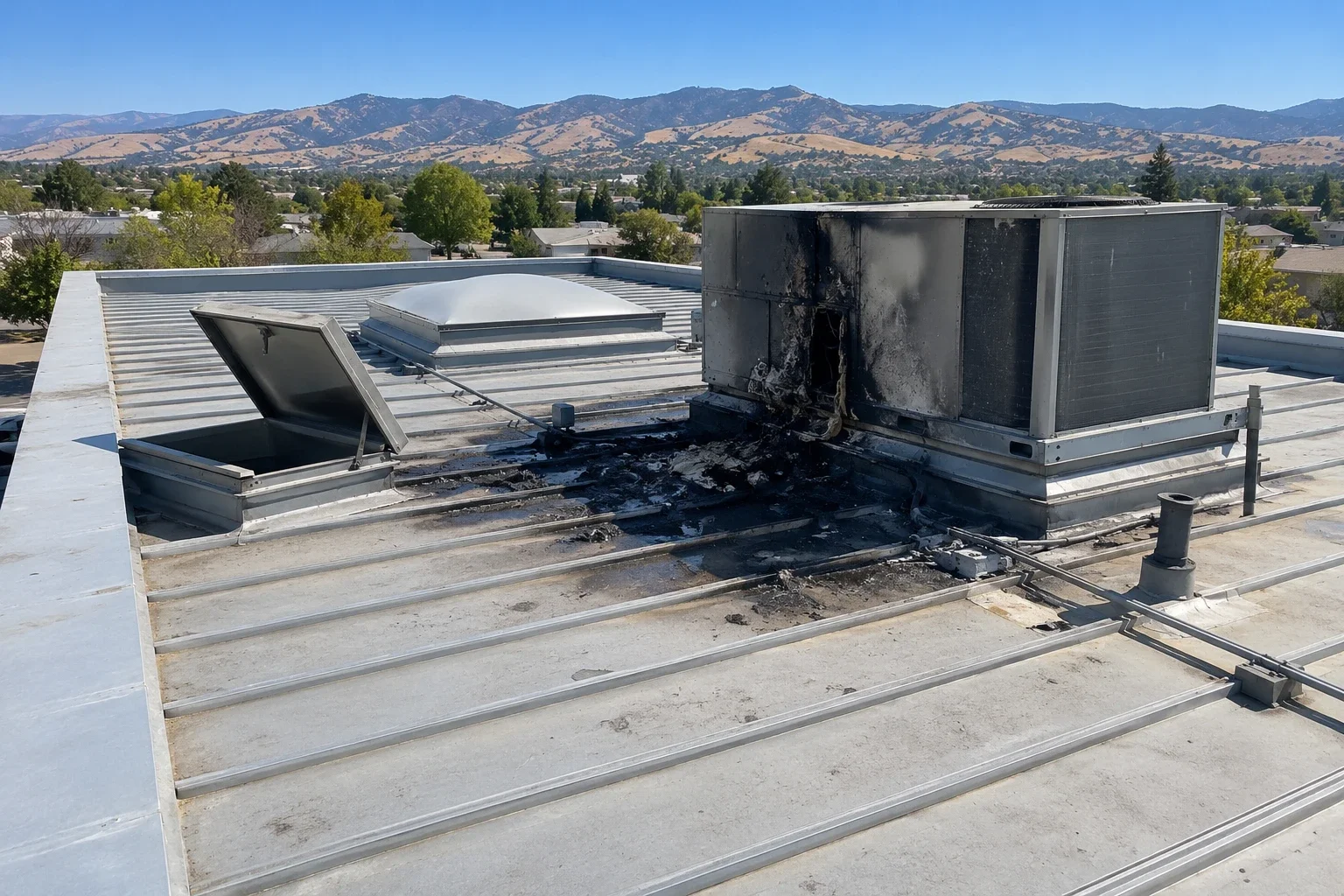
Roof systems and their response to heat
Each system ages differently. TPO resists heat well when formulated for it, though lower-grade sheets can chalk and craze early. EPDM is flexible but absorbs heat in black form, and tends to shrink at walls. Built-up and modified bitumen roofs shed granules and oxidize on the surface, while metal roofs resist heat but lose sealants. We inspect each according to its pattern and recommend repairs or upgrades suited to the sheet in place.
Elevation changes the picture. Foothill communities like Prospect, which averages about 20.9 inches of snow a year, add snow load and deeper cold, so freeze cycling joins the sun as an aging mechanism. The assessment reflects where the building sits.
Coated roofs and metal roofs get the same discipline: a thickness check on the coating, a fastener check on the panels and a look at every sealant joint. A small crack caught in spring costs a bead of sealant; the same crack caught in October costs an interior repair.
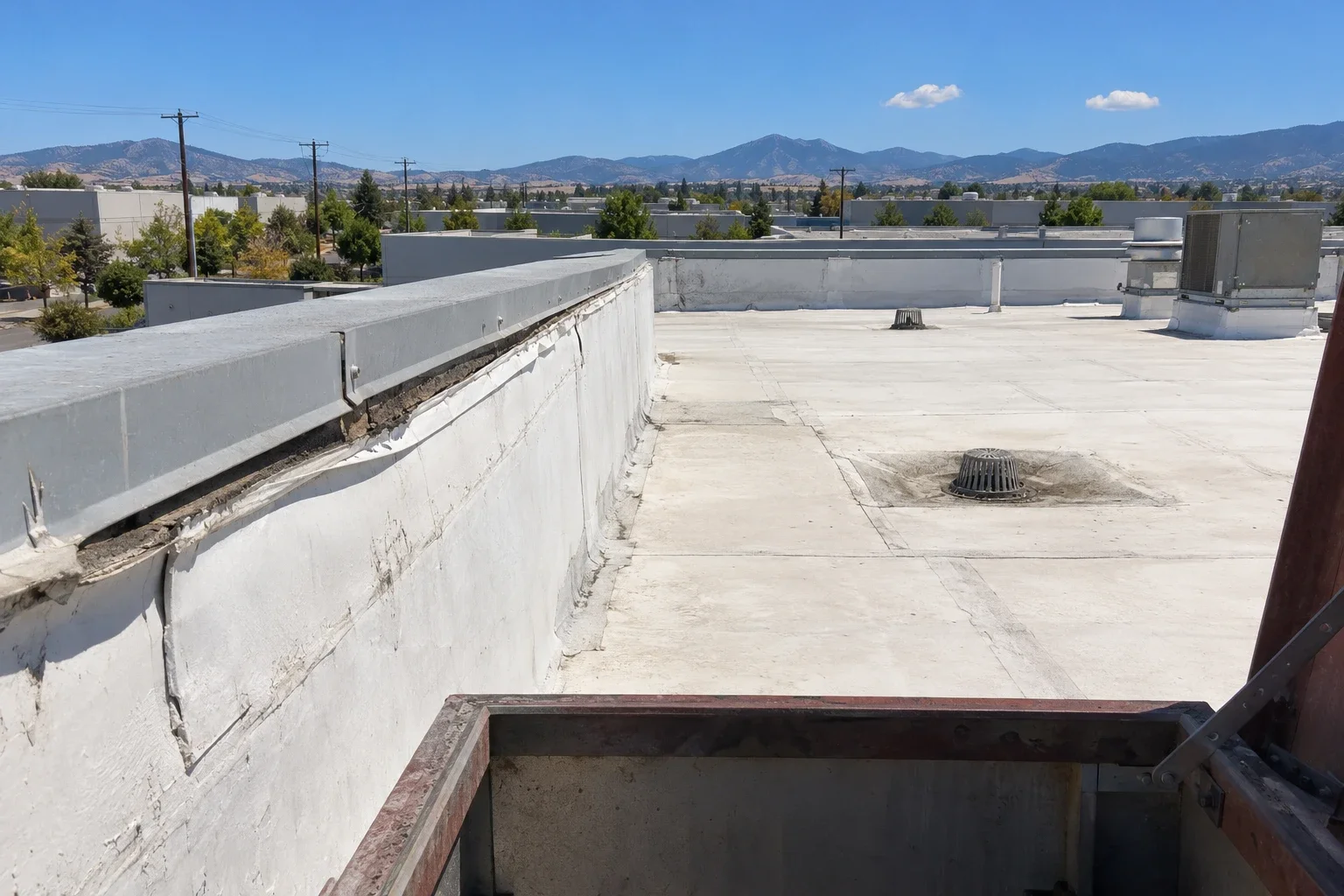
Send the roof age and last repair date
Related Roofing Pages

Questions About Heat and UV Roof Damage Repair
How can I tell sun damage from storm damage?
Sun damage is even across exposed surfaces and builds slowly, while storm damage is localized and follows direction. We photograph both and mark the pattern on the roof plan.
Does a white roof avoid heat damage?
It slows it, since a lighter surface runs cooler. Chalking and soot still occur, so washing and inspection remain part of the plan.
Can a coating reverse crazing?
A coating can seal fine cracks and add protection over a sound, dry roof. It does not restore lost flexibility in the sheet beneath, so deep cracking points toward replacement.
Why do the oldest seams fail first?
They have gone through the most expansion cycles, and welds or adhesives lose strength with age. The same is true at flashings and corners.
What should an owner do before the hottest weeks?
Get the spring visit done: clear drains, reseal the details that have opened, and grade the roof. Repairs made in May hold through July better than repairs made during it.