
Roof Asset Management in Medford, OR
Roof asset management in Medford, OR: a roof register, condition grades and remaining service life for every building, tied to heat, smoke and reserves.

Overview
Every Medford, OR summer draws down a roof's UV budget, and no invoice records the withdrawal. With 61 afternoons past 90 F in a normal year, a white membrane that was bright at installation carries measurable reflectance loss a few seasons later, and the seams beneath it have gone through hundreds of expansion cycles. That cost arrives in the reserve schedule as a surprise, usually in the year a tenant calls about a stain, rather than as a line somebody planned for. Roof asset management is the practice of writing the withdrawals down as they happen so the reserve moves before the roof does.
The tool is simple: one register, one grade per roof, one estimate of remaining service life, refreshed on a fixed schedule. What makes it useful is that the entries come from someone standing on the membrane with a moisture meter, not from a spreadsheet filled in from memory. An owner or property manager who holds that register can answer a lender, a buyer or an insurer in an afternoon instead of a month.

The Roof Register
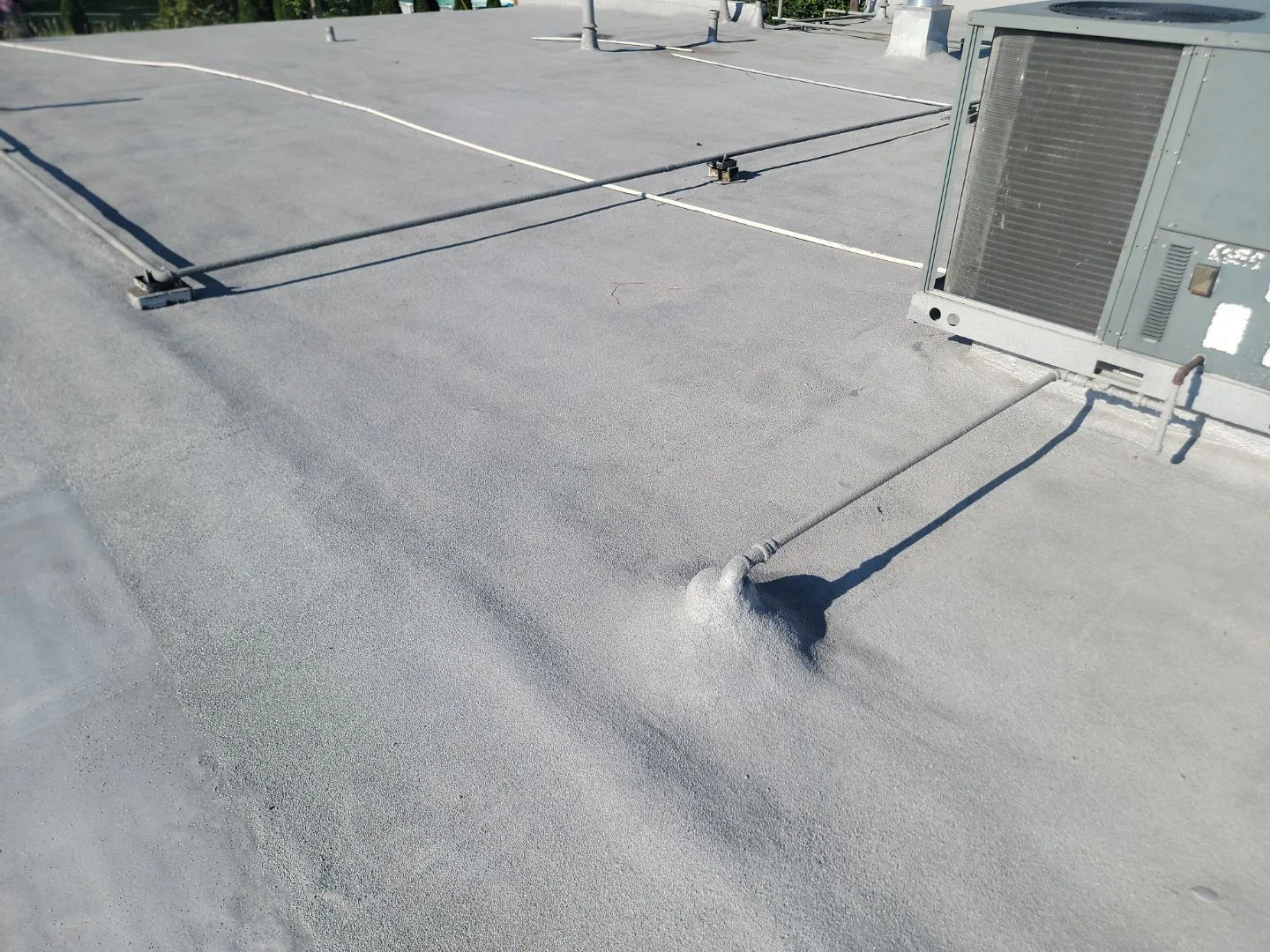
A register starts with the facts that never change: building address, roof area by section, system type, deck type, insulation type, installation year where records exist, and the manufacturer on the membrane. Each year adds what changes: leak tickets, repair dates, drain condition, the state of seams and flashings, rooftop equipment added since the last visit, and a dated photo set like the one in a condition report with photos. Each roof section gets its own line, because a single building often carries a newer addition beside an original section that is twenty years older.
For a managed retail center along North Riverside Avenue, the register might hold a dozen sections under one address, each with its own grade. For a medical office, it might hold two. The point is not the size of the file. The point is that the next person to open it, whether a new property manager or a buyer's engineer, sees the same story the current manager sees.

Condition Grades and Remaining Service Life
We grade each section on a short scale tied to what the roof is doing, not to its age. A grade reflects membrane surface, seam integrity, flashing and edge condition, drainage, and any moisture found in the insulation by infrared or core sampling. A ten-year-old roof that shows chalking, open laps and scuffed drain sumps may grade lower than a fifteen-year-old roof that was coated early and kept clean. Age informs the estimate. Condition decides it.
Remaining service life then comes with a range, not a single year. A section graded in the middle of the scale might carry three to six more years with maintenance, or one to two without it, and the register says which assumption the number rests on. That range is what a reserve schedule needs: an earliest plausible year and a latest, so the capital plan can be built on the earlier one and relieved if the roof outperforms it.

Valley Floor Versus Foothill Sites
Roofs inside the same register do not age at the same speed. Rain-shadow geography gives Medford about 18.4 inches of precipitation and 3.4 inches of snow, which makes the valley floor a sun problem first. A foothill site is different: Prospect, on Oregon Route 62, sees about 20.9 inches of snow in a year and has hit minus 12 F, which calls for separate load thinking and a different freeze-thaw allowance. About 64 freezing mornings a year reach the valley floor, which is enough for moderate thermal cycling at flashings and laps, but nothing like a mountain winter.
An owner with buildings in Medford, Ashland and White City holds three micro-climates in one file. Ashland adds historic structures and campus roofs, White City adds a rail-served industrial park and a VA campus that descends from a World War II Army camp, and downtown Medford adds older masonry buildings. The register notes these differences so that a grade means the same thing in each place.

Smoke Season and Fire Exposure
Wildfire is the second stress on the account. Soot loading and ember exposure belong in every roof record, since the valley sat in smoke for 26 days in 2021 and the 2020 wildfires cost Jackson County some 2,600 homes. Soot on a reflective surface raises surface temperature and shortens remaining service life, which is why the register notes the date of the last cleaning and whether the roof was washed before the next hot stretch.
Edges and penetrations are where embers find a way in: loose edge metal, open-ended curbs, gaps around vents, and debris collected behind parapets. Rooftop intake filters on mechanical units clog faster after a smoke week and shift maintenance for the HVAC contractor onto the roof. The register carries those items as inspection points, with a short note on whether a roof near Phoenix or Talent, where the Almeda fire destroyed homes, has been checked since the event.

Lease Cycles and the Owner Report
Roof cycles and lease cycles seldom line up, and the register is where the two meet. A tenant renewal five years out may be the best moment to replace a roof, since a new membrane supports a longer lease and a higher rent. A tenant leaving in eighteen months may argue for a repair now and a replacement left to the next occupant. The register records each lease date beside each roof, so these tradeoffs are visible when the decision is made.
The same file produces the owner report. Once a year, or each spring, the manager receives a one-page summary: grades by building, changes since last year, the budget lines each change affects, and the roofs that moved faster than the schedule expected. Hospitals show why a documented roof matters, and Asante Rogue Regional Medical Center and Providence Medford Medical Center, which employ over 2,000 people together, are the local examples: any institution with a facilities committee wants to see the paper, and wants the paper to match the building.

Work Windows and Tenant Impact
Condition grades also sort work into windows. Roofs that need only preventive maintenance go into the spring cycle, before the first triple-digit stretch, when drains can be cleared and sealant renewed. Roofs that need coating work go into the dry months, when surface temperature allows proper cure. Roofs that need replacement are scheduled around the reserve and the lease, and usually begin as a commercial roof inspection that confirms the grade.
Tenant impact enters the register as a tag: a restaurant with a rooftop hood, a clinic with sensitive equipment, a warehouse with a dock schedule. Those tags do not change the grade, but they change the work order. A preventive visit to a clinic roof happens at the hour the manager picks, and a drain clearing above a restaurant happens before the lunch rush.


Related Roofing Pages

Questions About Roof Asset Management
How many roofs does a register need to be worth the effort?
One building is enough to start. The register earns its keep the first time a lender or buyer asks for roof records and the file already exists.
Who updates the register after the first visit?
We refresh it on a set schedule, usually each spring, and after any leak ticket or storm. The manager receives a short list of what changed.
Does a grade change when a roof is cleaned?
Surface cleaning can restore some reflectance and lift the surface grade, but seams, flashings and moisture findings carry their own scores and stay where they are.
What if a roof has no installation record?
Cores, laps and flashing details date a roof within a range. The register notes the range as an estimate and updates it when paperwork turns up.
Can the register support a warranty claim?
Dated photos, repair logs and inspection notes are the documents a manufacturer asks for, and the register keeps them in one place with the roof they describe.