
Standing Seam Metal Roofing in Medford, OR
Standing seam metal roofing in Medford, OR: how panels handle triple-digit expansion, ember exposure and foothill snow, and what it means for the reserve.
Overview
A standing seam panel on a Medford, OR roof moves every day. At 7 a.m. in July the steel is cool, and by 4 p.m. on one of the 11 afternoons above 100 F it has grown against its clips, and by midnight it has pulled back. The valley averages 61 afternoons above 90 F, the record is 115 F, and a long panel run accumulates that motion over decades. Metal survives the sun better than almost any other roof, and the clips, trim and fasteners decide whether it survives the cycling.
For a property manager, the useful numbers are the clip condition, the finish condition and the remaining service life of the coating, because the finish usually ages before the steel does.
What standing seam is and why owners choose it
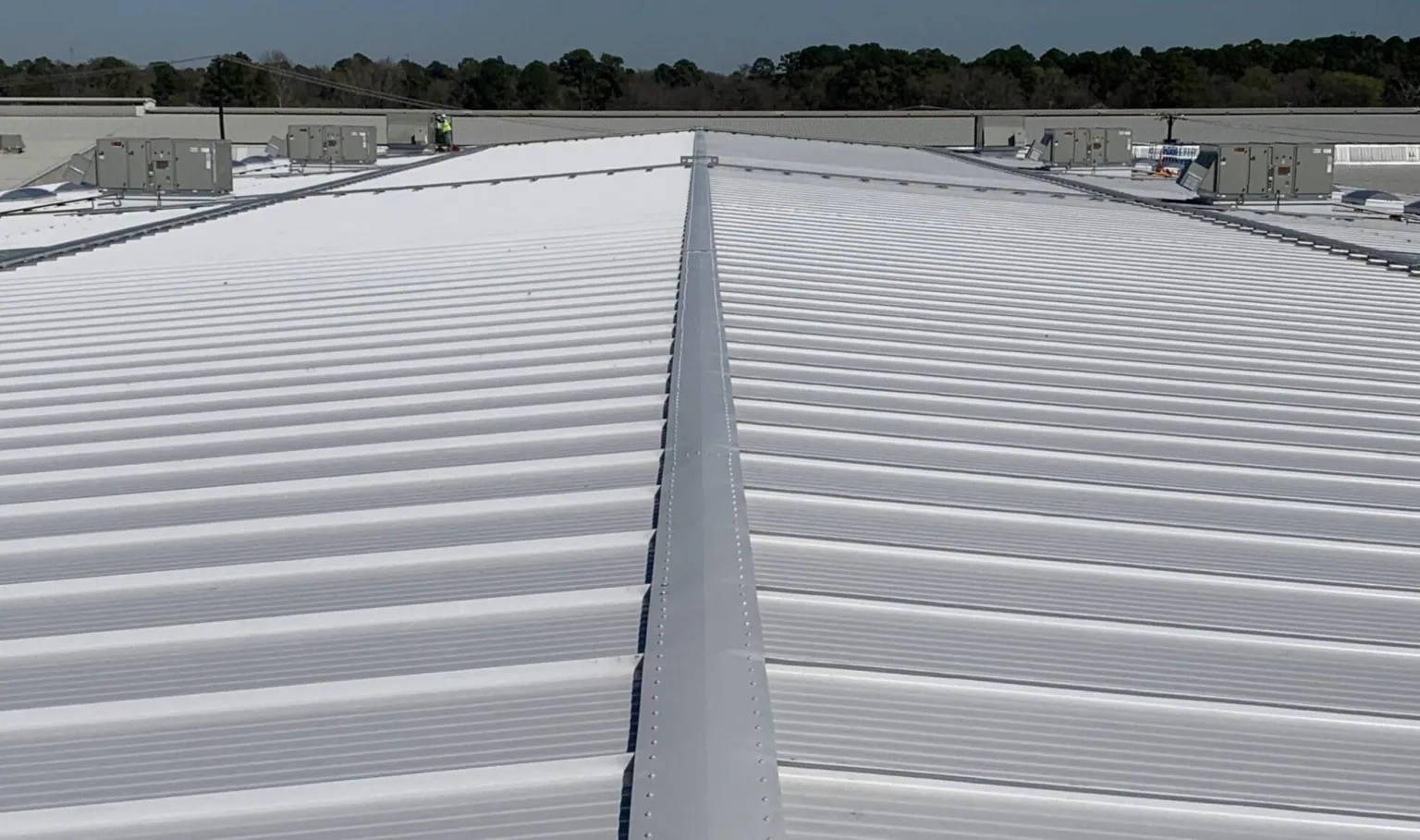
Standing seam is a metal roof of interlocking panels with raised seams, fastened by concealed clips that let each panel slide as it heats and cools. There are no exposed screws to back out, and the seams are mechanically locked or sealed. It suits roofs with real slope and carries a long service life with a finish that can be selected for reflectance.
That combination fits the valley. A light-colored, reflective finish reduces heat gain, the steel does not burn, and the assembly can be rated for exterior fire exposure with the right underlayment. It also fits buildings with long holding periods, since the first cost spreads across decades. The tradeoffs are price, the need for slope and the labor of hand-formed trim.
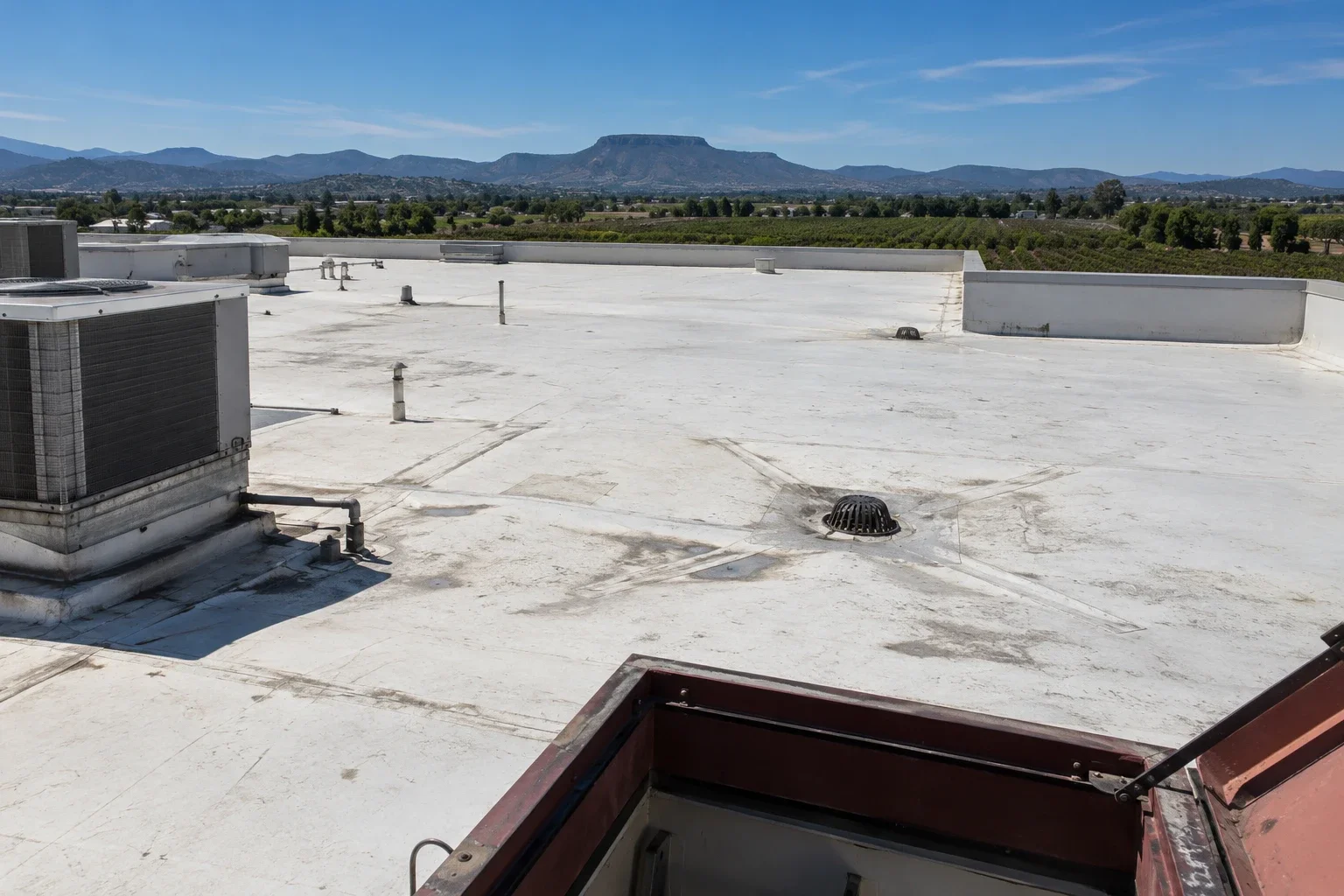
Compare it with the membrane alternatives on the same plans. A pitched roof can take standing seam or a membrane, and the membrane usually costs less at first, with a shorter finish life. A flat roof cannot take it at all. We price TPO beside it where the slope allows both, and the reserve schedule shows the difference in carrying cost over the holding period.
Thermal movement, finish life and UV budget
The clips are the quiet component. A clip that restricts movement buckles a panel, and one that has backed out lets a panel creep. In a valley with a triple-digit summer and freezing winter mornings, around 64 a year, clip travel must match the panel length, and we specify it for each run. Long panels are never fixed at both ends.
The finish is the part of the roof most exposed to the UV budget. A coating that chalks or fades loses reflectance and protection, and the metal underneath is next. We grade finish condition, seam tightness, fastener back-out on trim and sealant condition each spring. Remaining service life is estimated from the finish and the seams, not from age alone, and the roof register carries the grade.
Fasteners at the trim need regular attention. Screws at eaves, rakes and walls loosen with thermal cycling, and the rubber washers beneath them dry out under UV. A spring pass with a driver and fresh sealant at suspect points costs little and prevents the first leaks. The record notes the date and the count.
Embers, smoke and fire exposure
Both the 26 smoke days of 2021 and the 2020 fires that destroyed about 2,600 Jackson County homes matter to a metal roof. Steel does not ignite, and a standing seam assembly with the right underlayment is a strong answer to ember exposure on the roof surface. The weak points are elsewhere: ridge vents, eave openings, gutters full of needles and penetrations where embers can lodge.
We look at those details on every metal roof and recommend closures, screens and clearing schedules. Soot on a metal finish washes off more easily than on a membrane, but ash in gutters and valleys holds moisture and corrodes fasteners, so cleaning after smoke events belongs in the plan. Rooftop intake filters are on the same list, since soot reaches the building as well as the roof.
Gutters and valleys deserve a separate line. Needles, leaves and ash collect there and burn or smolder if embers land, so clearing before fire season belongs in the maintenance plan and in the owner report.
Where standing seam fits across Rogue Valley
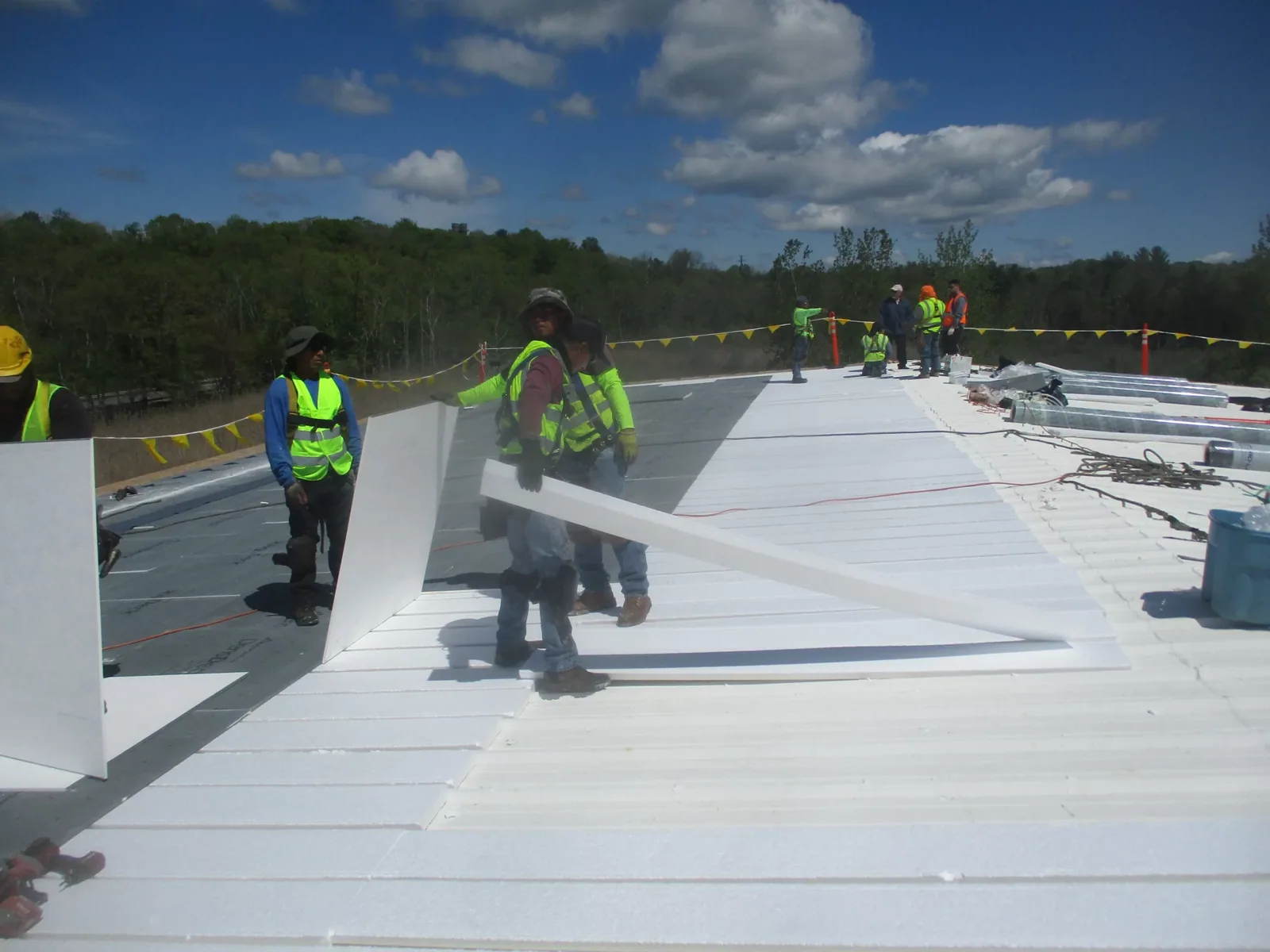
Slope decides it. Aviation and industrial buildings with span and pitch are natural candidates: Erickson Air Crane is based in Central Point, adding hangar roofs, and Rogue Valley International-Medford Airport adds long-span aviation buildings of its own, and its Forest Service air tanker base sits on the field. Along the Table Rock Road and airport corridor, distribution and aviation roofs run large, and a pitched one can be a metal candidate.
Applegate Valley winery and tasting-room buildings, set in an AVA of 275,000 acres and 16 wineries, are another market, and foothill sites like Prospect, which sees about 20.9 inches of snow a year, need snow retention and separate load thinking. In Ashland and Jacksonville, historic districts may require specific appearances, and a standing seam finish can sometimes satisfy them.
Cost, reserve schedule and code timing
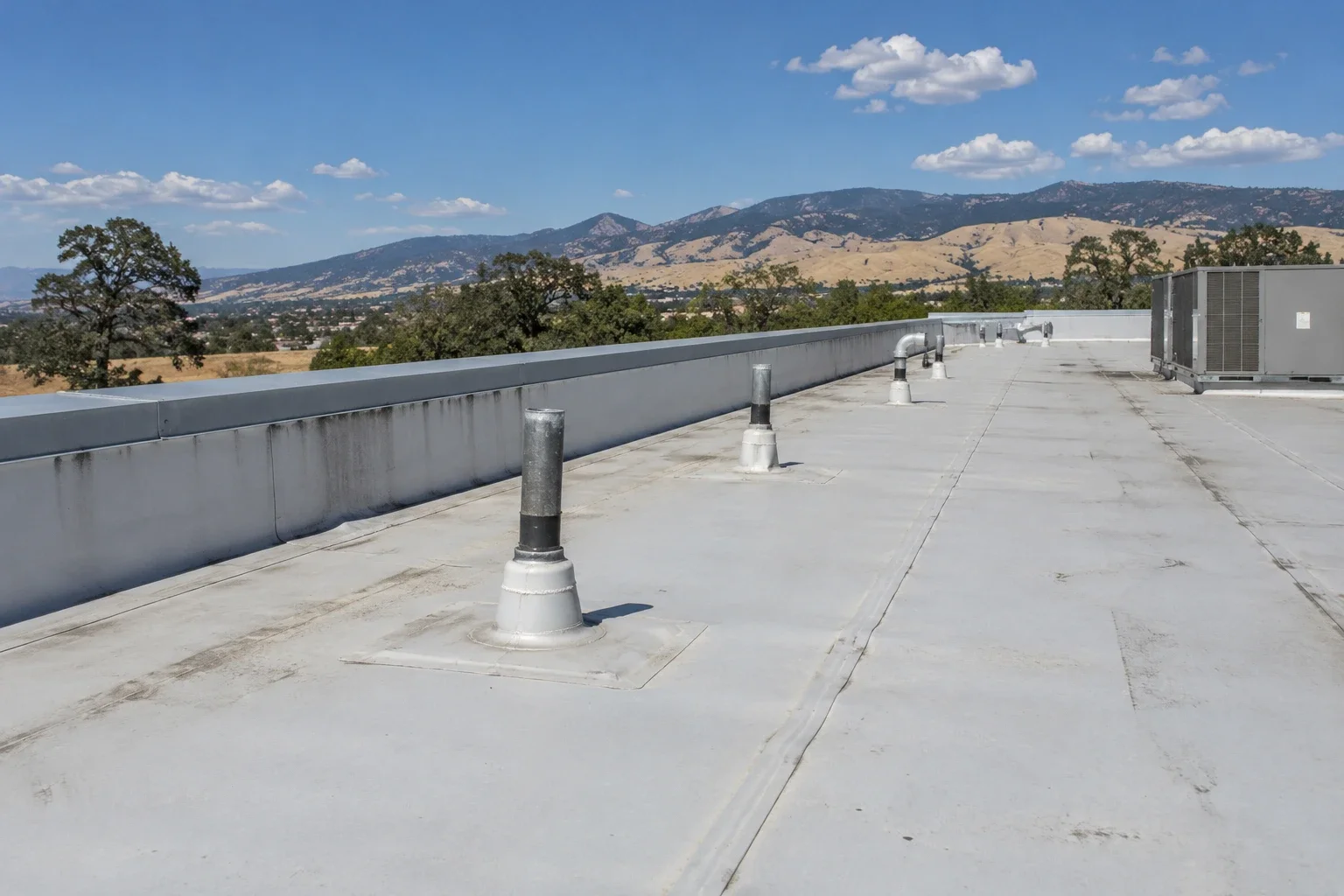
Five lines carry the bid: panel gauge and finish, clip type and spacing, underlayment, trim and flashing, and, on foothill sites, snow retention. Panels are ordered after field measurement, since a wrong length is a week lost. A retrofit over an existing metal roof can avoid tear-off when the structure allows it.
Panel and clip schedules are checked against Oregon's 2025 Structural Specialty Code, in force since April 1, 2026. The reserve line carries a date, a cost range and a finish warranty term. Lease timing favors work before tenant turnover, and the spring work window gives the safest conditions for installation.
A tired finish does not always mean a new roof. A finish that has chalked but kept its metal sound can take a recoat or a silicone coating, which extends the roof at a fraction of the replacement price. We test adhesion on a patch first, since a coating that does not bond peels, and we record the result with the date.
Installation, safety and heat
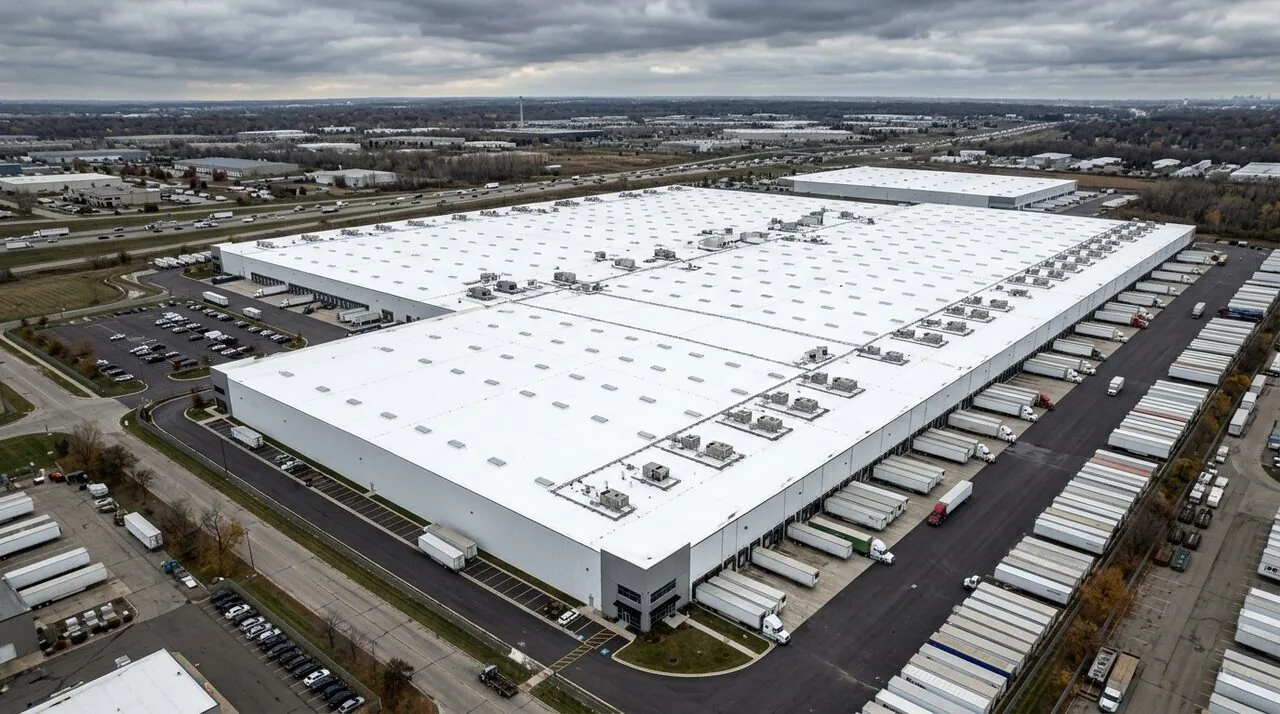
Metal surfaces in July burn skin through gloves, and slick morning dew makes them unsafe. Crews start at dawn, break in the afternoon heat and keep fall protection in place on every shift. Panels are staged in shade and handled with care, since finish scratches show for years.
The roof is closed each day with underlayment in place. At closeout we walk the finished roof with the property manager, photograph clips, seams and trim, and file the finish and panel warranties. The roof register records panel gauge, finish, clip type and install date, so later repairs can match the system.
Occupied buildings need quiet hours, protected entrances and a plan for noise, since metal installation is loud. The occupied building reroofing plan sets those lines apart from the panel price, and the schedule follows the tenants' calendar.
Send the building list and slopes

Related Roofing Pages
Questions About Standing Seam Metal Roofing
Does a metal roof make a building hotter?
A dark one can. A reflective finish reduces heat gain. We show finish options with their reflectance.
Do I need snow guards in Medford?
On the valley floor, rarely. In foothill sites like Prospect, usually yes.
Will embers harm a metal roof?
The steel does not ignite. Vents, gutters and penetrations are where embers find a way in.
How long does the finish last?
It depends on the coating and the exposure. We grade it each spring and estimate remaining life.
Can metal go over my old roof?
Sometimes, with retrofit framing. The structure and the old roof's dryness decide.