
Restaurant Roofing in Medford, OR
Restaurant roof grading and replacement in Medford, OR, where grease, hood exhaust and heat wear roofs fast, with the service-hour plan included.
Overview
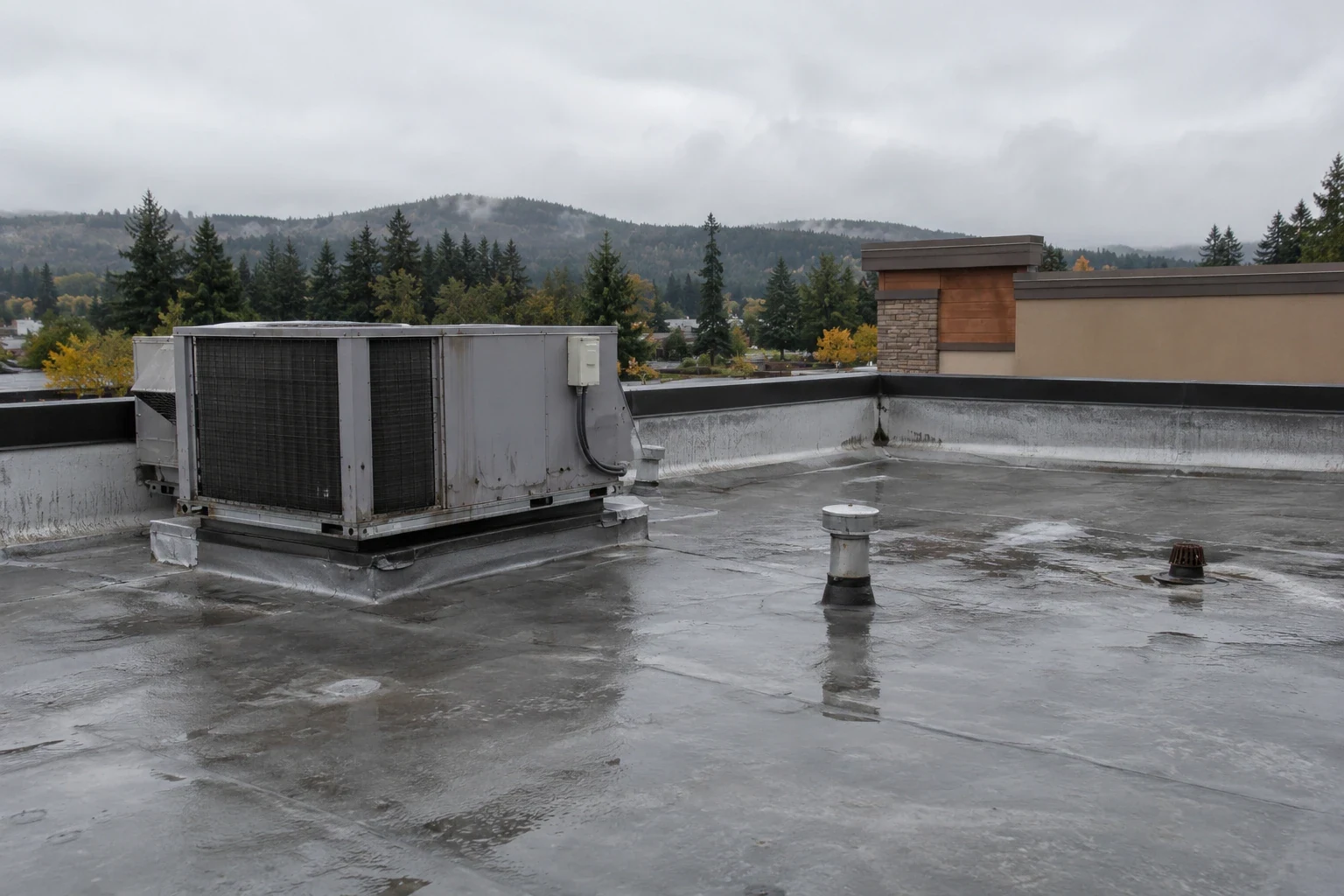
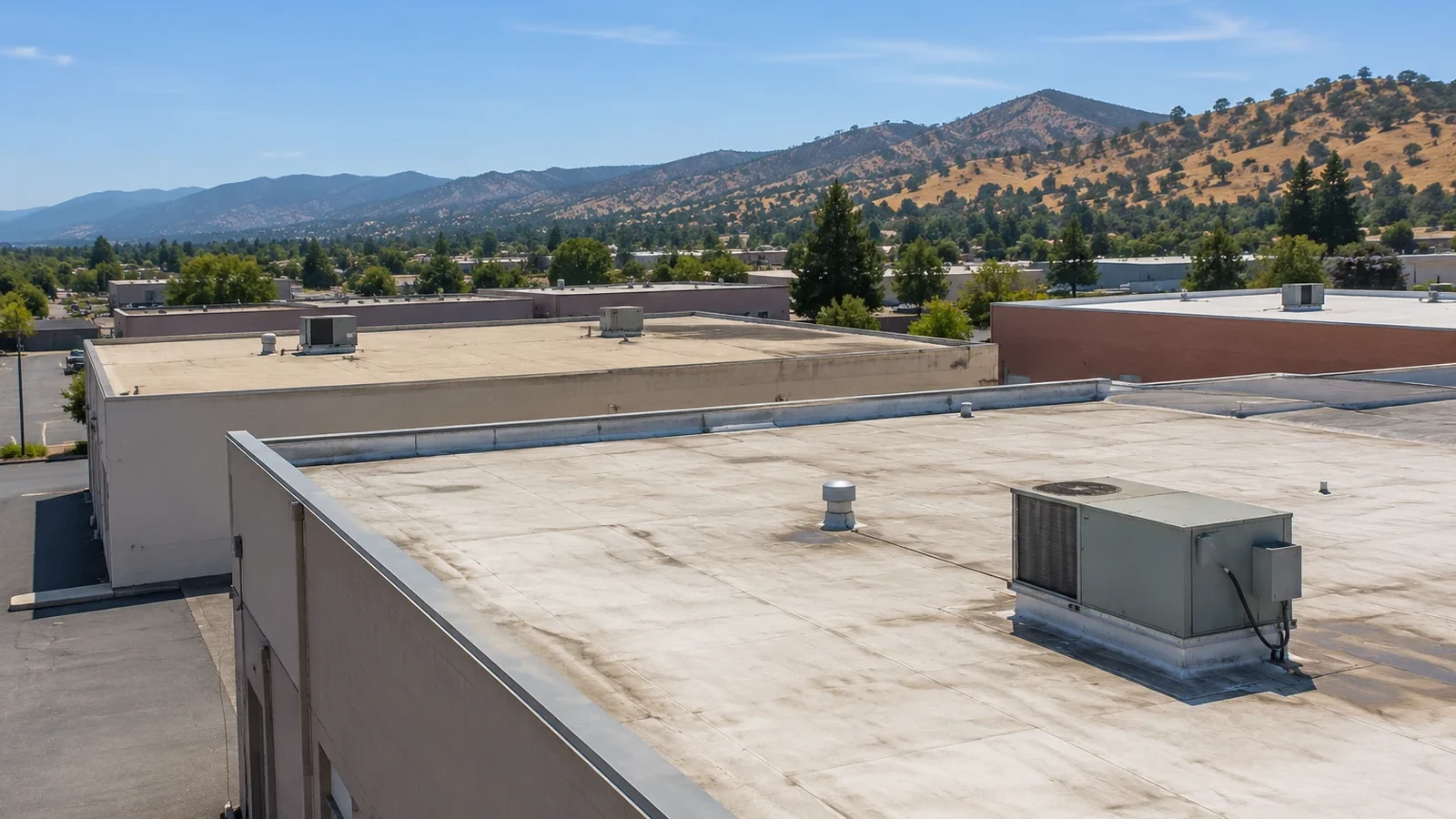
A restaurant roof in Medford, OR is cooked from both sides, by a valley sun that reaches 100 F on about 11 afternoons a year and by a kitchen that vents fat, steam and heat through the roof every hour it is open. The membrane near the hood exhaust loses reflectance, softens and chalks well ahead of the field, and the remaining service life in the reserve schedule shrinks in the part of the roof where leaks hurt most, right above the cook line.
Operators and landlords can discover this late, from a stain on a kitchen ceiling or a slippery patch beside a fan. We grade the roof by zone, give the exhaust zone its own number and tell the owner when a section is aging faster than the rest. Each grade carries a remaining-life estimate, a recommended action and a cost range, since a restaurant lease rarely leaves the tenant time to wait.

Sun on the field, grease at the fan
With about 18.4 inches of precipitation a year in the rain shadow, little rain falls to rinse a roof. On a restaurant the effect is worse near the exhaust, where grease aerosol settles on the membrane and holds dust against it. That film darkens a white sheet, raises its temperature and attacks some materials chemically. A seam welded in a clean zone may be sound for many years, and the same seam beside a hood fan may soften within a few.
Heat shapes the material response in a second way, and the kitchen adds a third. Steam and warm air rising from the cook line meet the cooler deck at night and condense, which is why insulation under the exhaust zone is often wetter than anywhere else on the roof. Sealants at fan curbs and pipe boots harden, adhesives at edges lose strength, and walkway routes to the fans wear through the surface. The survey records each of these by location, so the owner sees where the sun alone is at work and where the kitchen has added its share.
Zone grades, remaining life and the exhaust curb
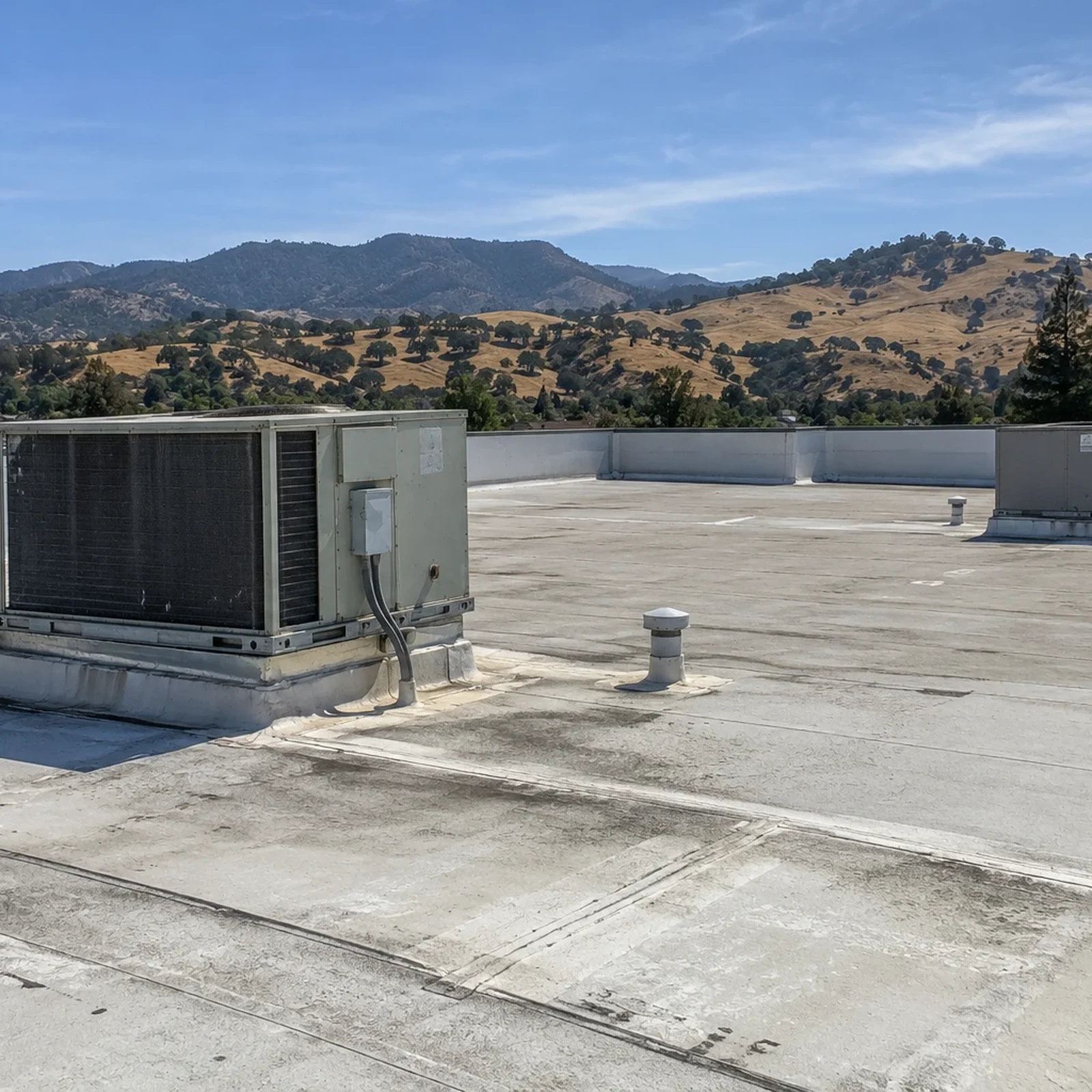
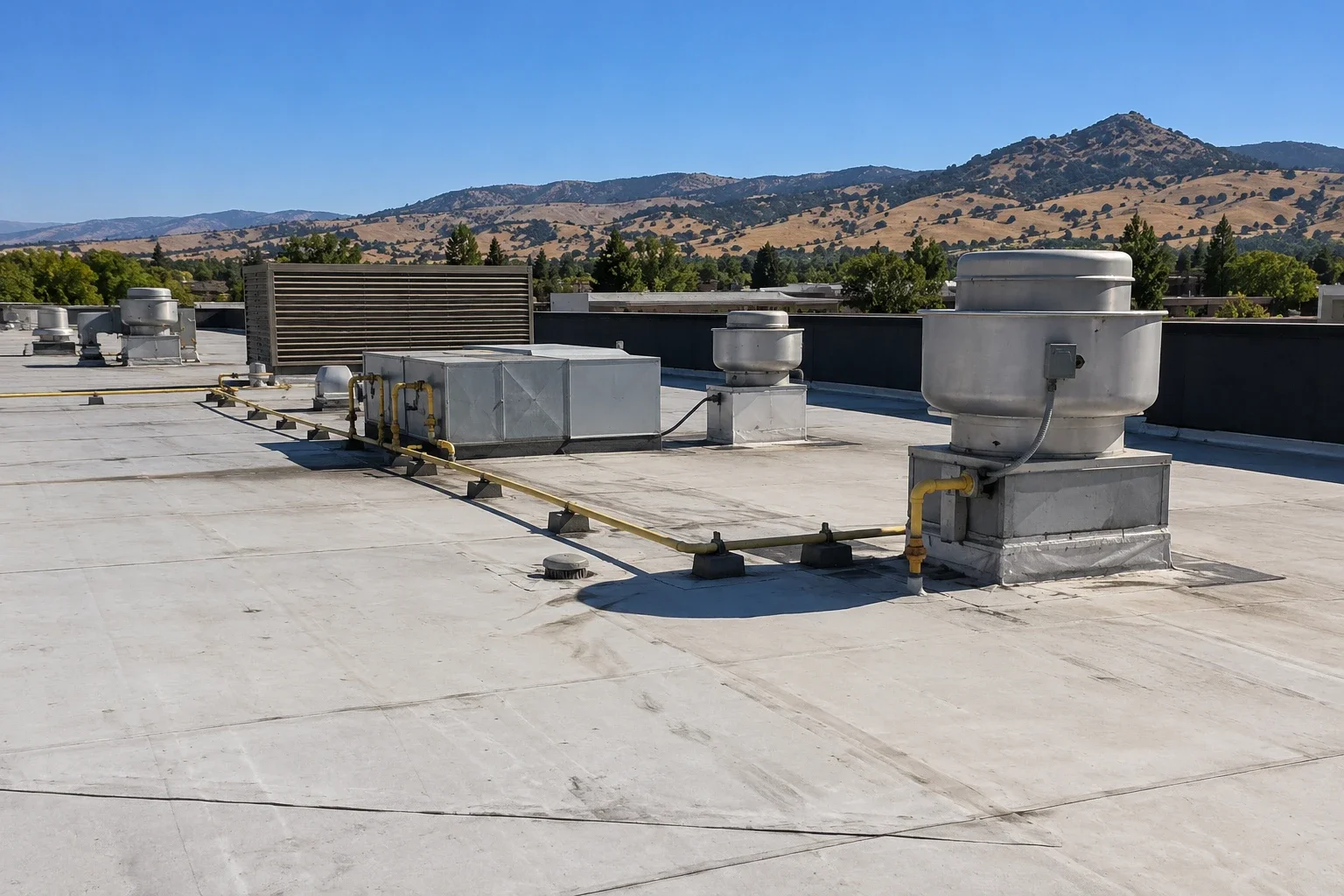
We split the roof into the field, the exhaust zone, the equipment zone and the edges, and we grade each. An infrared scan finds moisture in the insulation, which in a kitchen zone is often steam condensing at the deck. The report states what we found, what it means for remaining life and what the repair or replacement would cost.
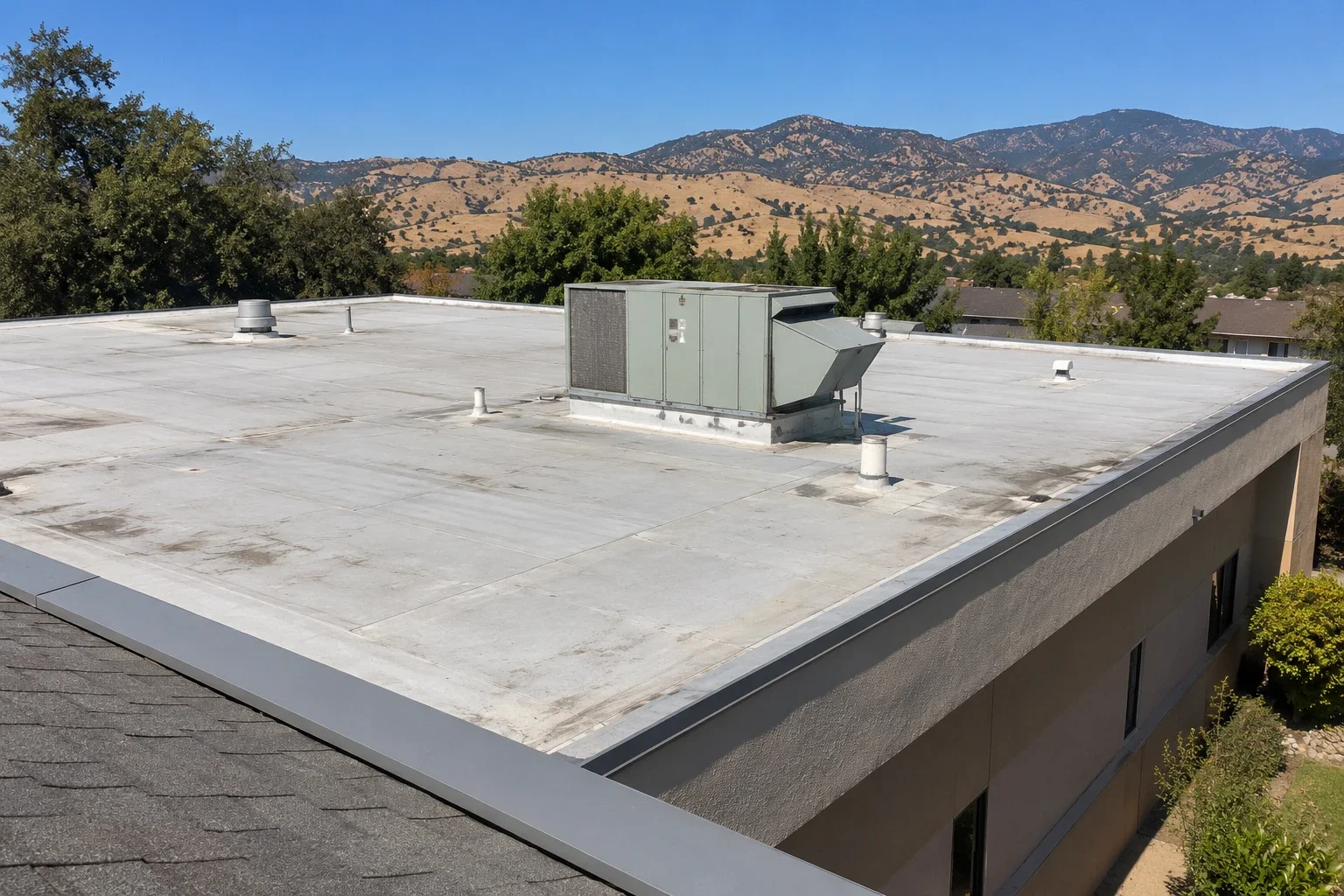
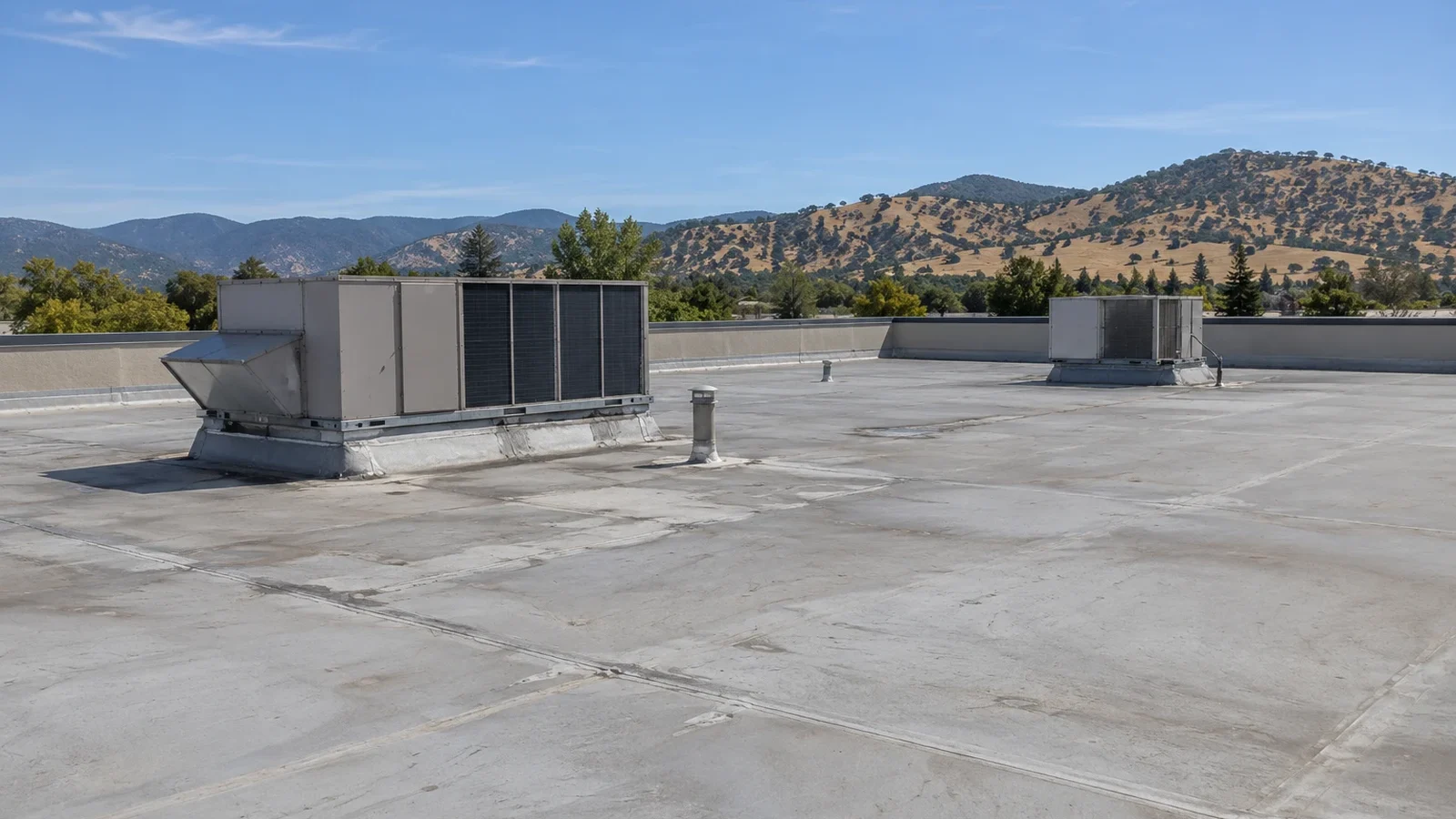
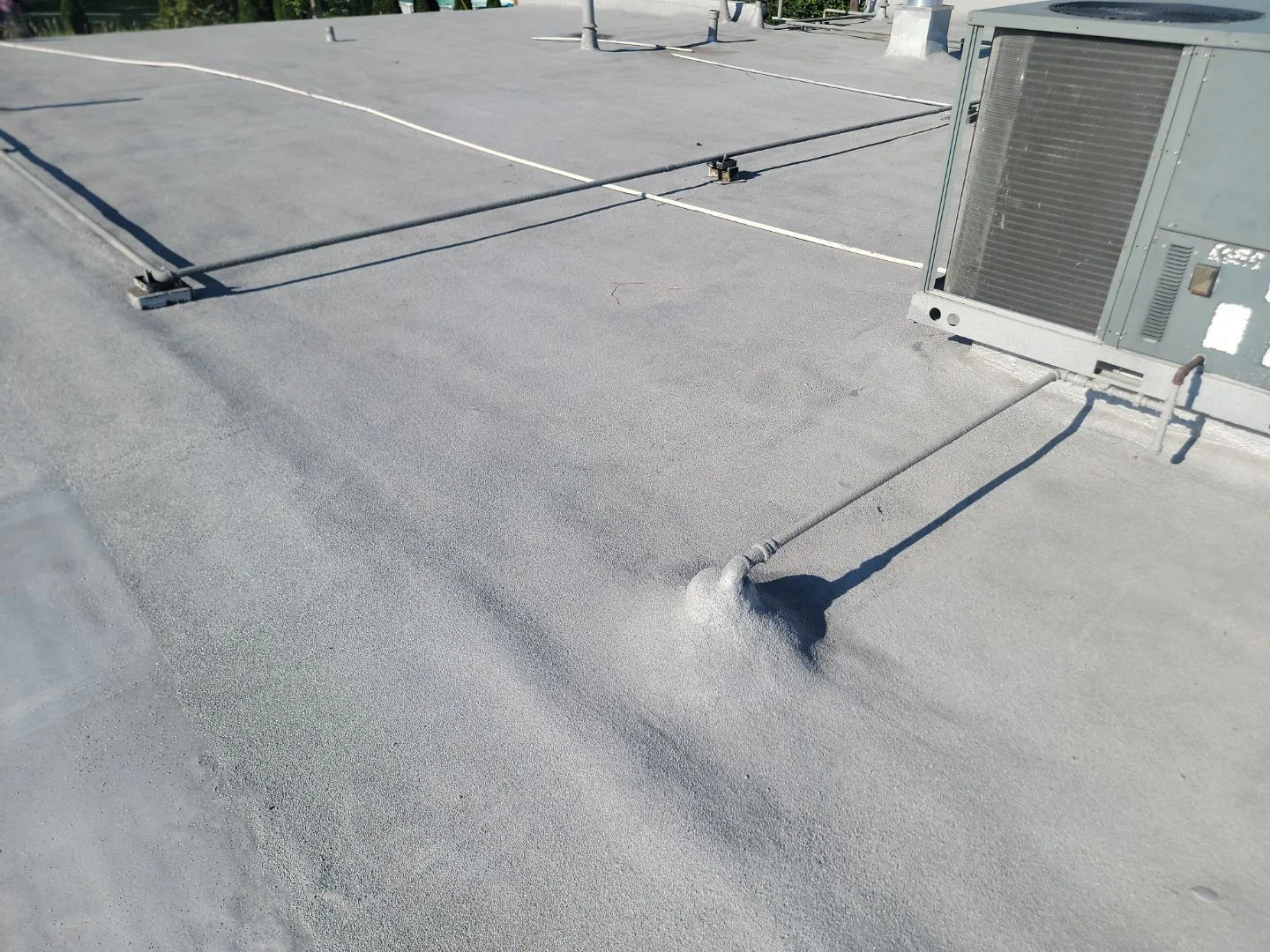
Exhaust curbs get a specific look. A fan that was reset during a past repair may sit on flashing that no longer matches the curb, and a cracked sealant bead is a path for water into the ceiling over the line. The report lists each curb with a photo and a grade, which lets a landlord and a tenant agree on who handles what before a leak settles the question. A fan that is due for replacement anyway is the best moment to rebuild its curb, since the crane day is already paid for and the new flashing can be matched to the new unit instead of patched around the old one.
Lease terms, reserve timing and who pays
Restaurant leases split roof responsibility in different ways, and the split decides the timing. A tenant on a triple-net lease may owe maintenance but not replacement. A landlord may own the structure and the field but not the equipment curbs. We read the clause with the owner and write the report so that each party sees the lines that belong to them, with a cost and a date.
The number that settles the question is the carrying cost. A kitchen ceiling leak means closed tables, lost product and a health inspection, and the cost of one bad weekend can exceed the roof work that would have prevented it. The report sets that cost beside the repair, and the landlord and tenant can weigh acting in the slow season against the risk of waiting for the busy one.
Service hours, fire rules and the work window
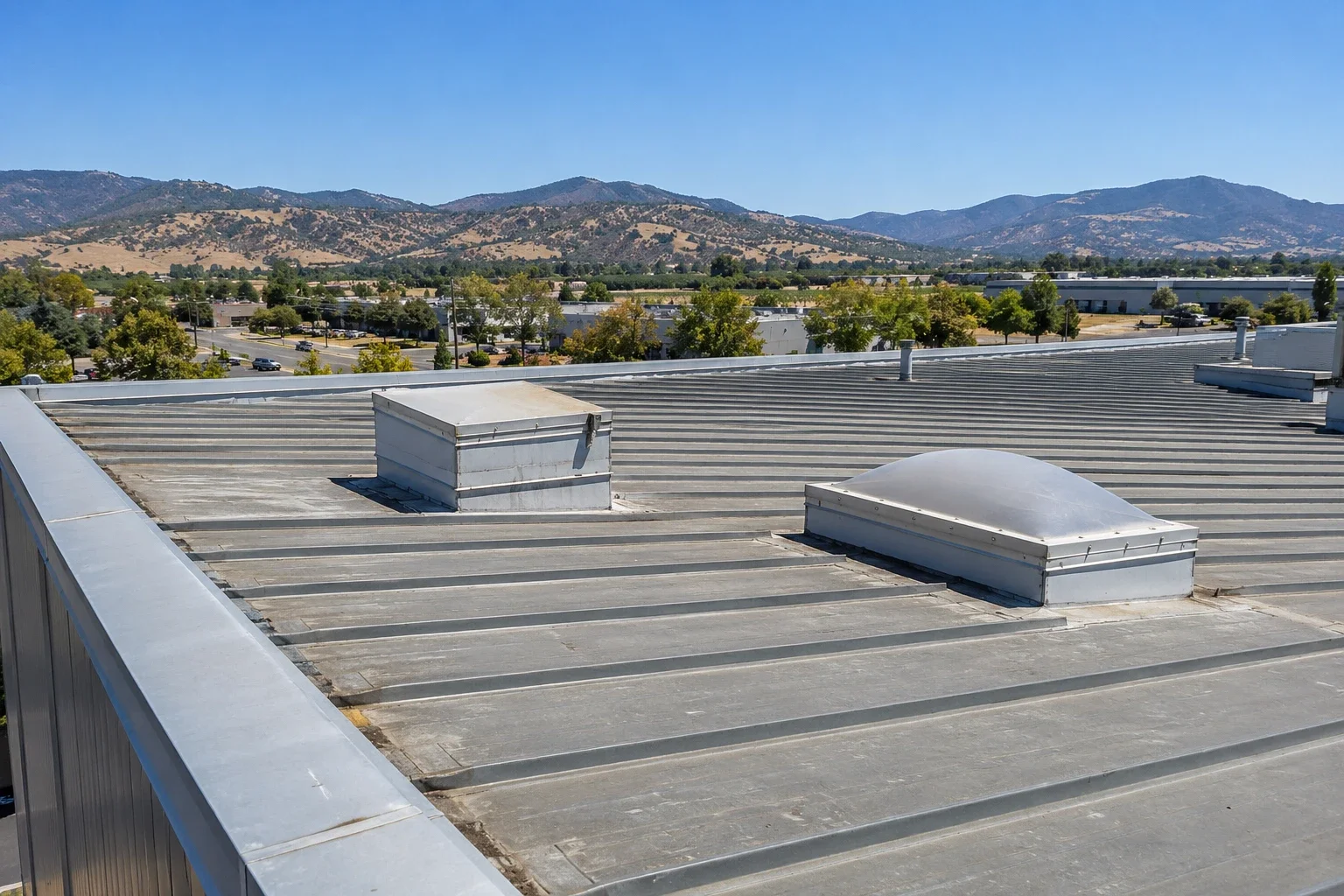
The work window for a restaurant is the hours between lunch and dinner and the days when it is closed. We plan early starts, since the morning cool helps the crew and the kitchen is not yet at full heat. Fans are shut off by arrangement while their curbs are worked, and they are restarted before service. Torch work stays off any roof with grease deposits, and where heat cannot be avoided we run a fire watch.
Tourism and wine bring visitors to the Rogue Valley, and Jackson County lists tourism among its principal industries, so a dining room in the valley can see seasonal peaks in the same months the roof is working hardest. We schedule around those peaks and propose the spring window and the winter shoulder for larger jobs, with a buffer for smoke days that can pause adhesive work.
Smoke weeks, ash and ember exposure at the edges
In 2021 Medford counted 26 smoke days, a year after the Almeda and Obenchain fires destroyed about 2,600 homes across Jackson County. Ash and soot on a restaurant roof add to the grease film, and a roof that carries both needs cleaning on a schedule. Cleaning a grease-filmed membrane is not the same as washing a clean one, and we match the cleaner to the material, because the wrong product can attack the sheet it was meant to rescue. After a heavy smoke month we wash the membrane and replace the rooftop filters, and we log the work in the register.
Edges collect fuel. Gutters, vents and parapet caps hold leaf litter that can ignite in an ember event, and a pre-season clean costs little. Grease deposits near a fan are a fire load of their own, so we recommend containment trays and a cleaning calendar that matches the hood cleaning schedule. The owner report notes the covering's fire rating for the insurer, together with the date of the last grease cleaning on the roof, so the file shows both the material and the upkeep.
The owner report and the roof register
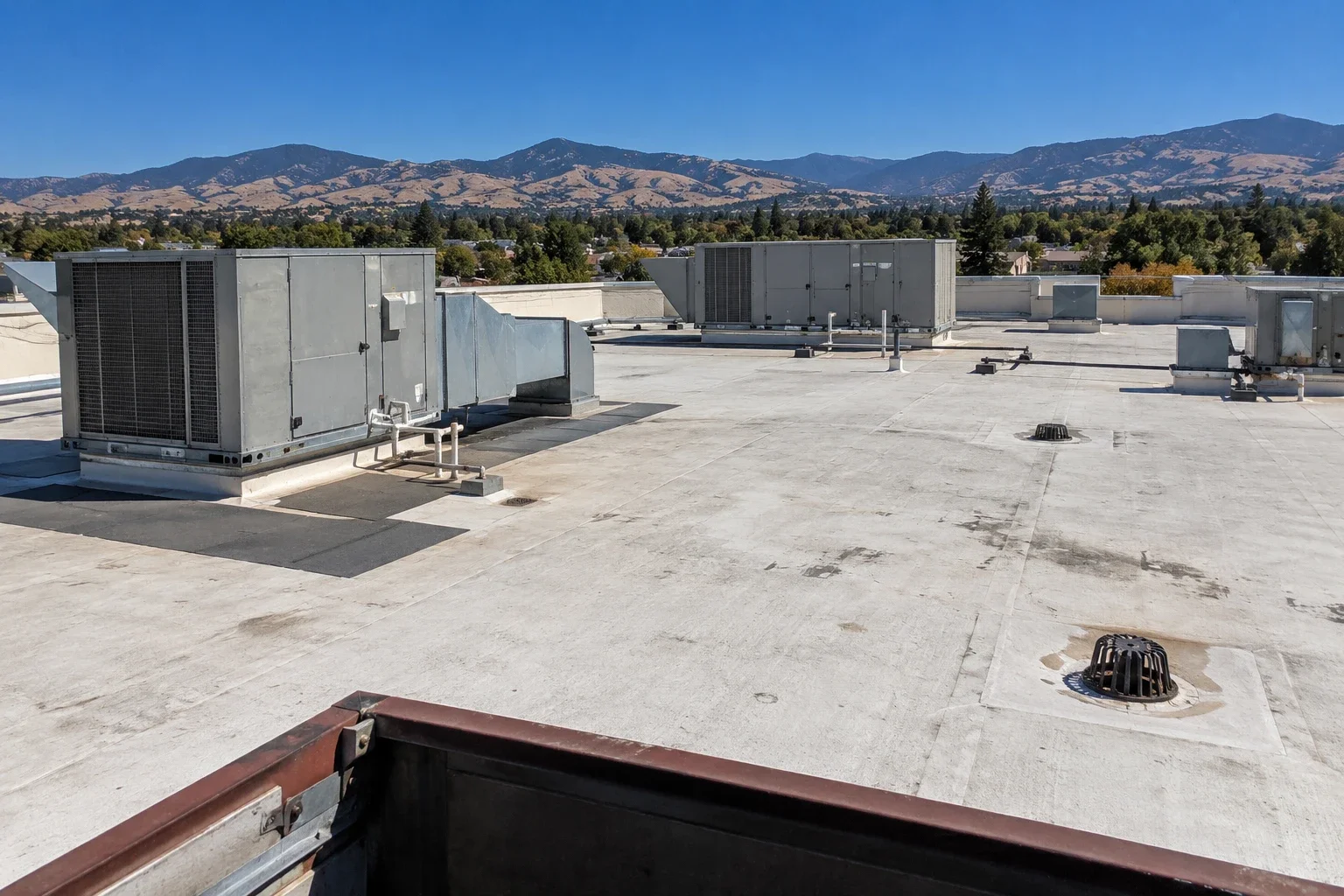
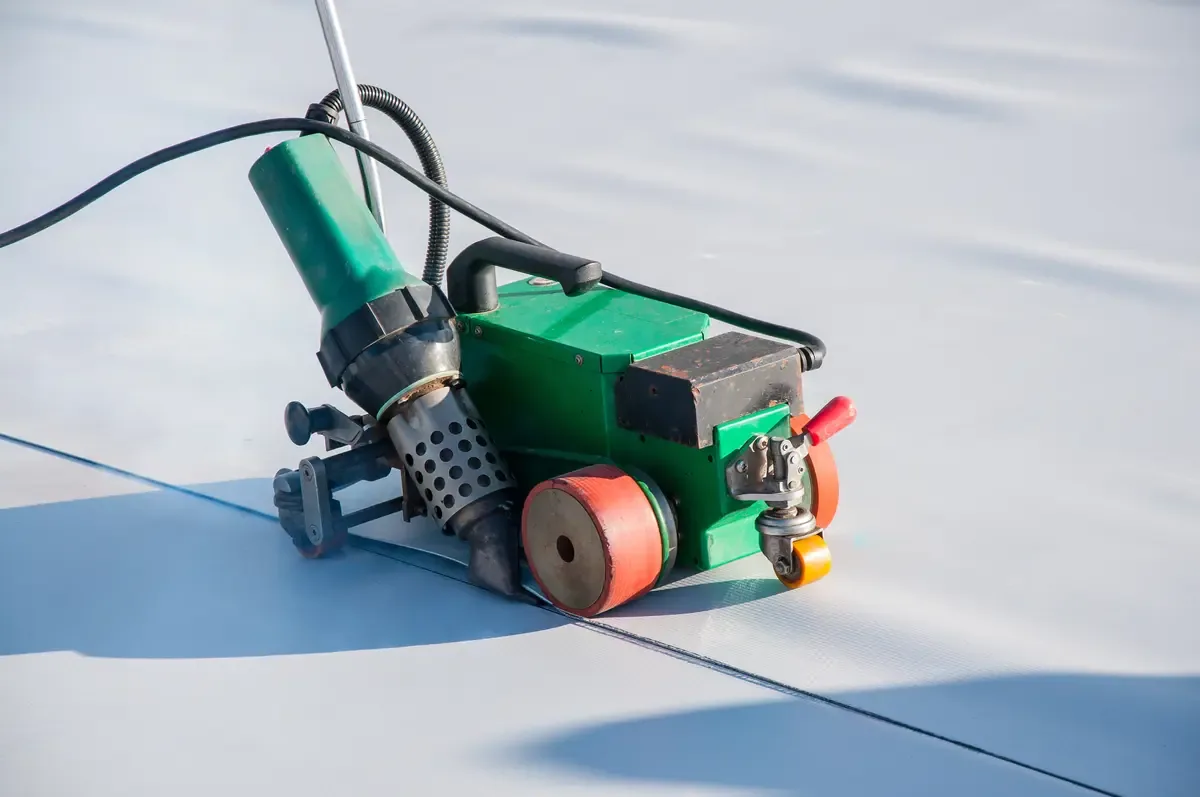
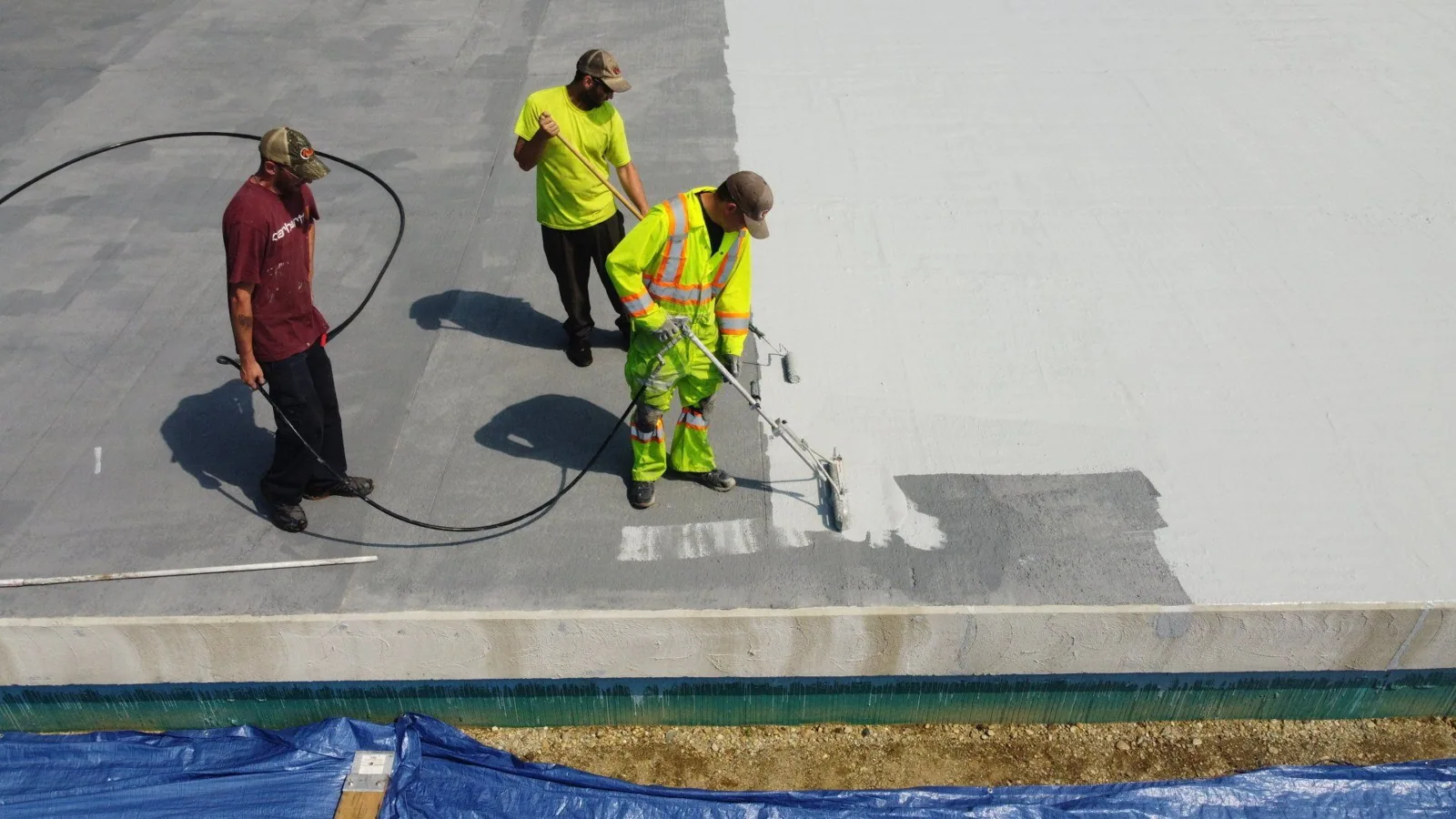
Each restaurant leaves with a roof register entry: zone grades, photos, curb list, drain map, warranty and the next check date. The entries suit a single landlord and a chain alike. PVC roofing is the usual system near exhaust, and a roof coating restoration can extend a sound roof. A preventive roof maintenance visit lines up with the hood cleaning calendar. The restaurant chains with many sites can use a multi-site roof program, and pad sites near retail follow shopping center roofing and share exhaust details with grocery store roofing. Restaurants in Ashland and Jacksonville follow the same steps.
Send the lease roof clause, roof age and leak tickets
Related Roofing Pages

Questions About Restaurant Roofing
Why does the roof near the hood fail first?
Grease film darkens and softens the membrane, and steam condenses in the insulation below it. The exhaust zone ages faster than the field.
Which membrane resists kitchen grease?
PVC is the common choice near exhaust. We confirm after we see the fan layout and the grease load.
Does the kitchen have to close for roof work?
Only briefly when a fan is shut off and its curb is worked. The rest runs around service hours.
Who pays for the roof in a restaurant lease?
The lease decides. We read the clause and write each party's lines separately.
Do grease trays help?
They catch what the fan throws before it reaches the sheet, and they are easier to clean than the membrane.