
Shopping Center Roofing in Medford, OR
Shopping center and strip retail roofing in Medford, OR, graded for sun, heat and smoke, with pass-through, lease timing and owner reports handled up front.

Overview
A strip center roof is paid for by its tenants and judged by its landlord, and in Medford, OR the sun makes that arrangement expensive sooner than the lease models assume. Over a typical year of 61 afternoons past 90 F, a reflective membrane above a row of storefronts loses reflectance, and the cooling load that follows lands on tenants whose leases pass the roof through as a common-area charge. The line that moves is remaining service life, and the lease-cycle timing that depends on it moves right behind it.
We approach a center the way a property manager reads it: tenant by tenant, bay by bay, with a ledger underneath. Each roof section earns a condition grade, a remaining-life estimate and a recommended action, and the owner report shows how the numbers feed the common-area budget and the reserve schedule. The membrane is only one of the lines.

Reflectance loss and the cooling bill under the storefronts
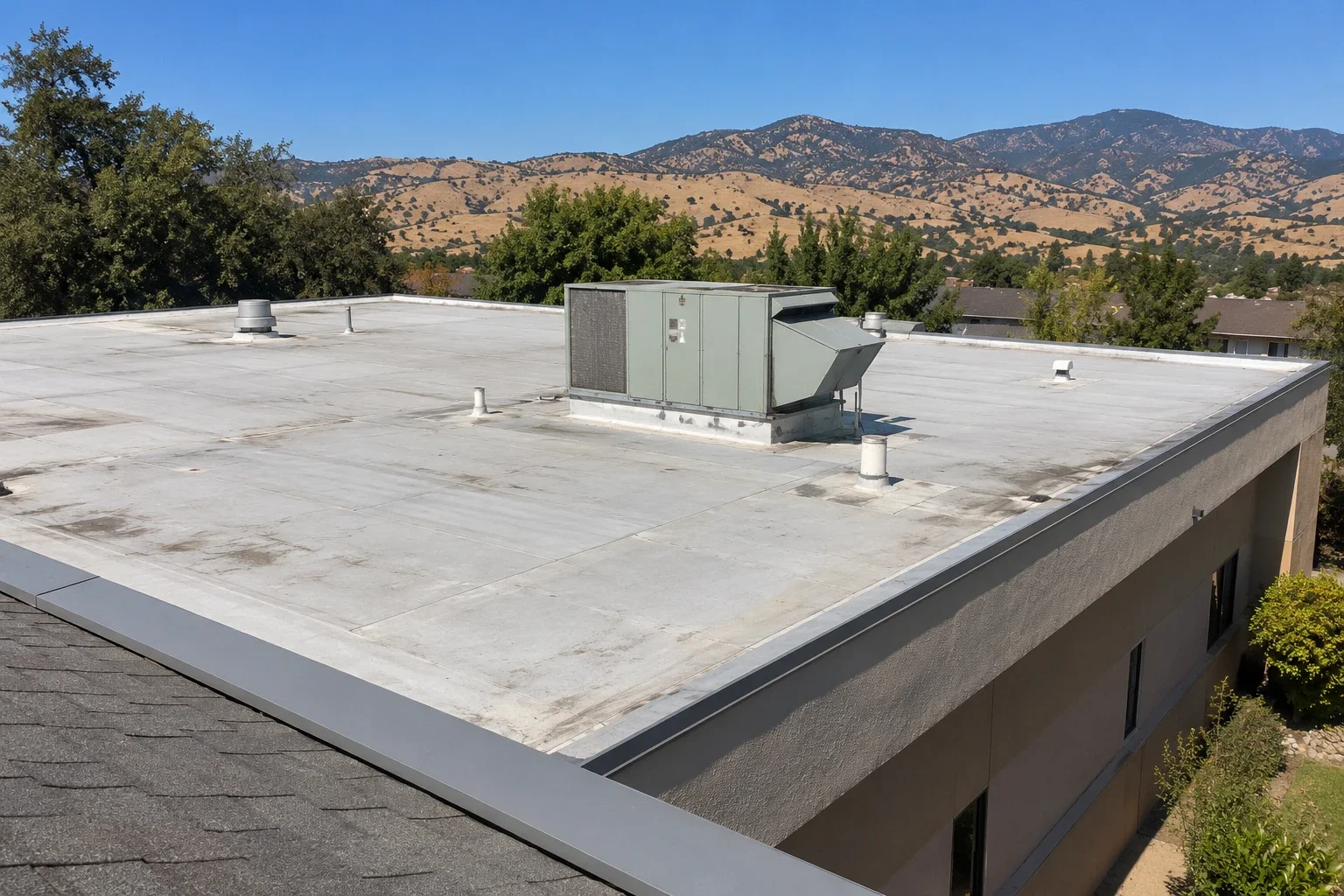
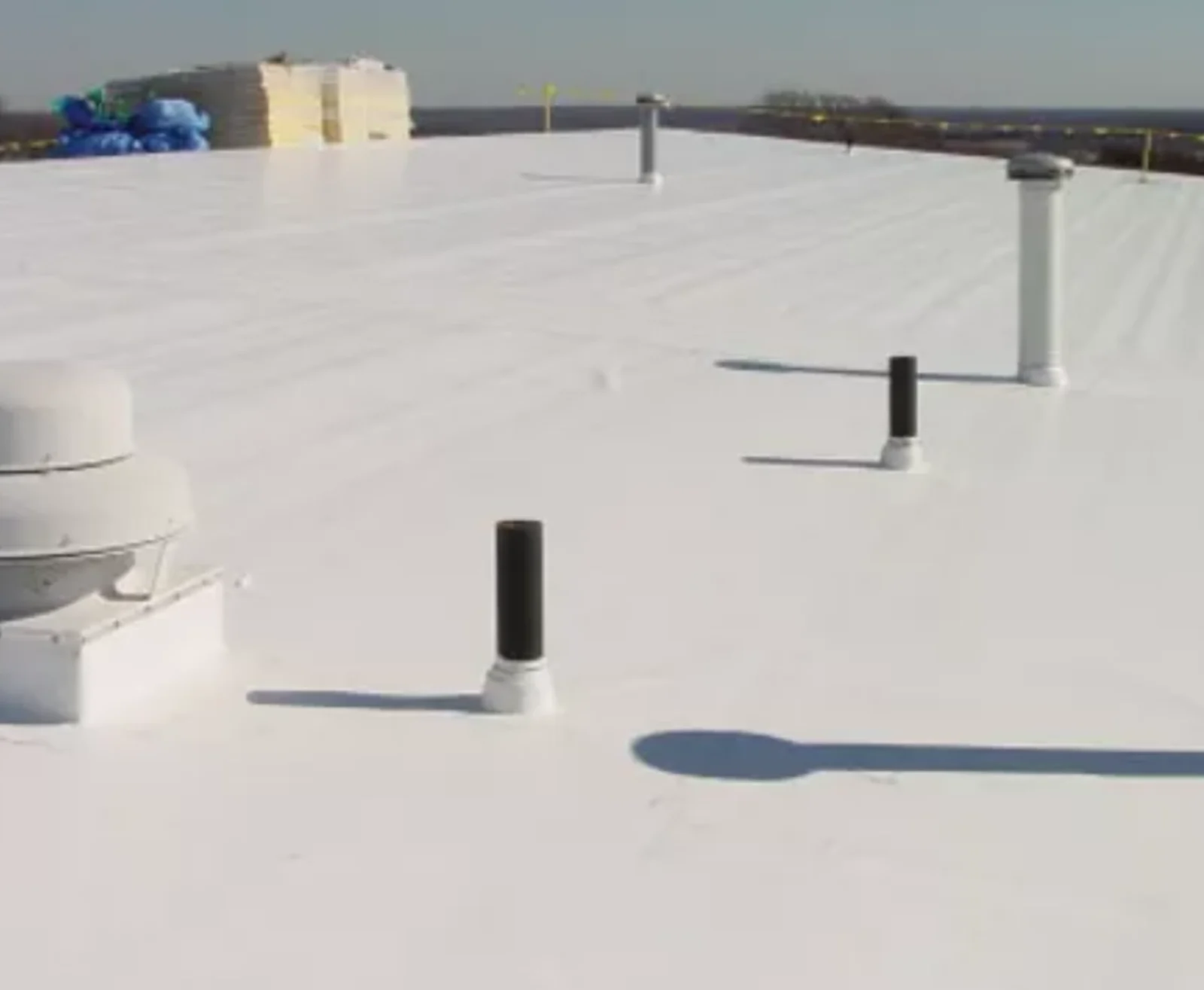
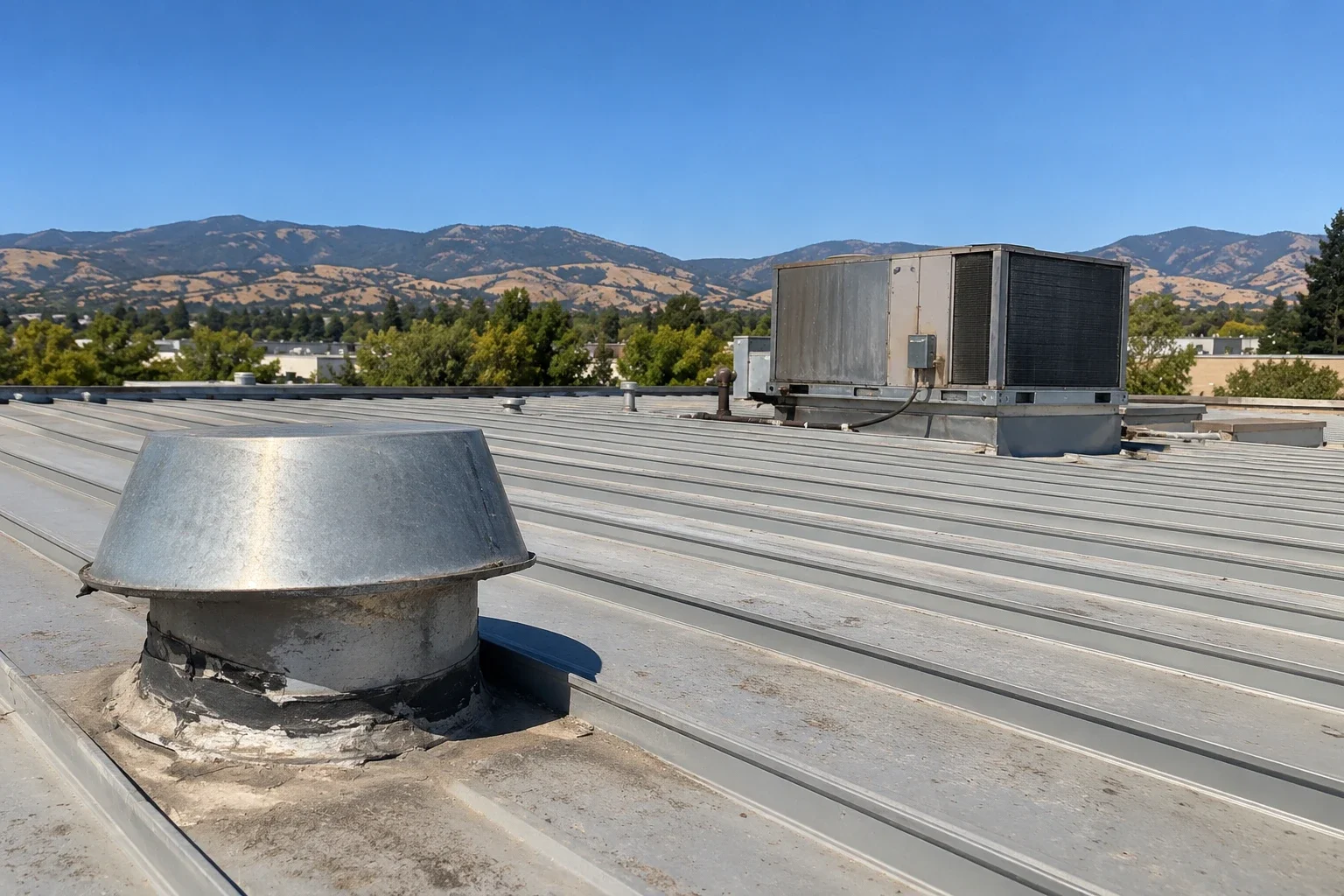
A white single-ply roof is bright on the day it is installed and dimmer every summer after. Rain is scarce, about 18.4 inches of precipitation in a year, so the membrane is washed little, and dust, pollen and soot sit on the surface and warm it further. The result is higher roof surface temperature, more load on the rooftop units below and an electric bill that tenants notice before anyone mentions the roof.
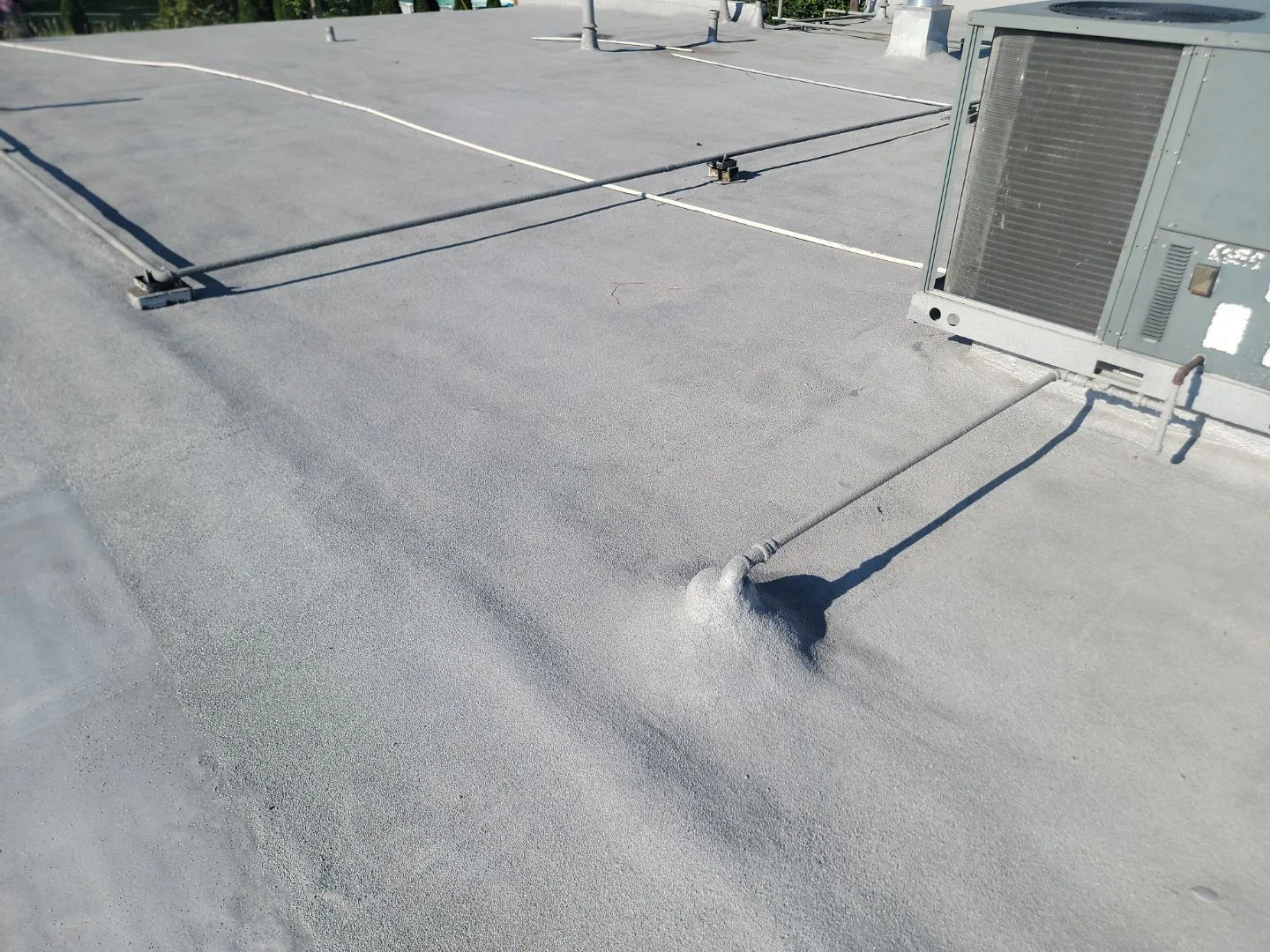
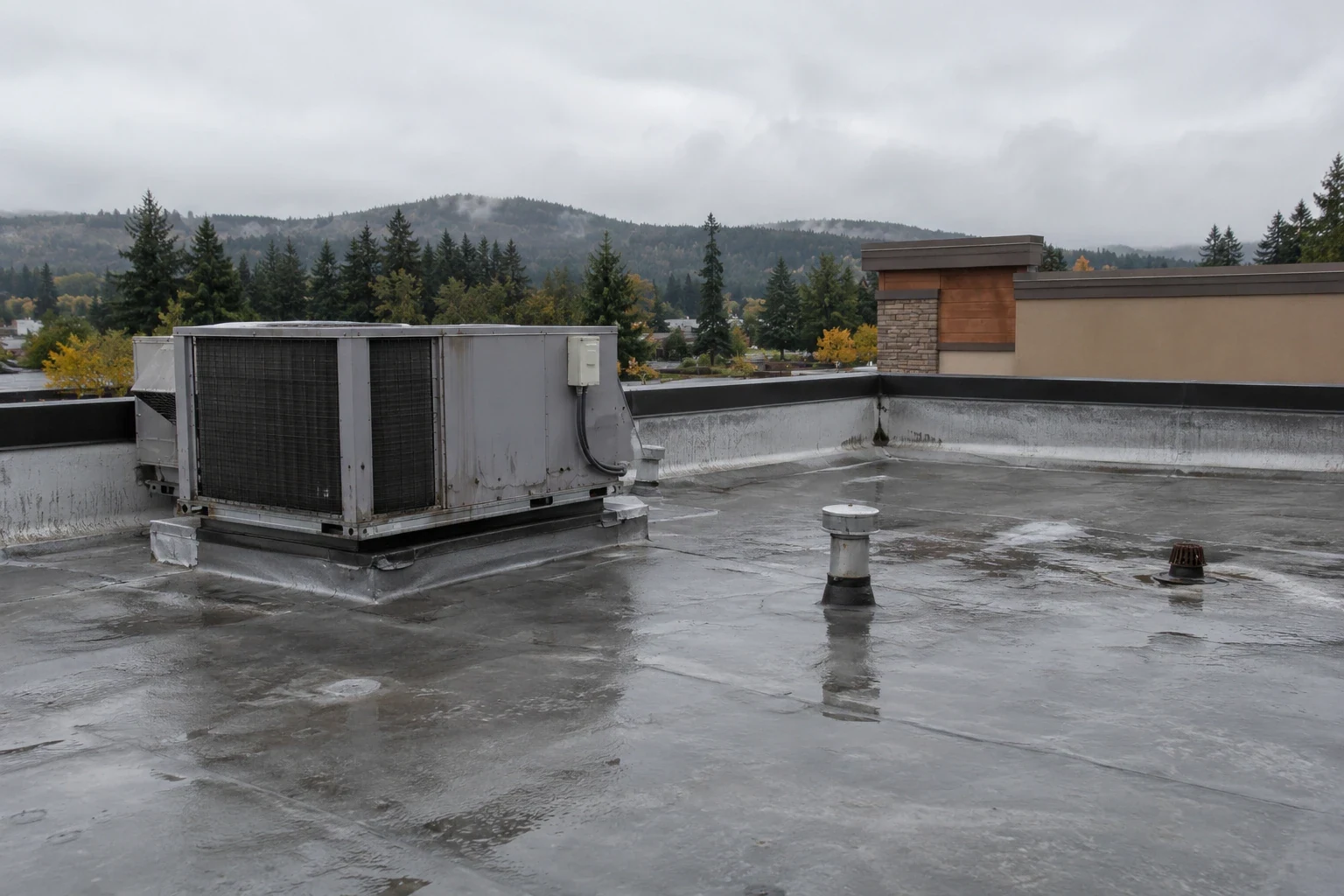
Heat also works on the details. Sealants at curbs and walls harden, edge metal expands and contracts, and fasteners back out a little each cycle. A roof section above a restaurant bay, where exhaust and heat add to the sun, ages faster than the section above a quiet office suite. A grading survey records that difference so the plan treats the bays unequally where the roof does.

Condition grades by bay and remaining service life
The survey walks every section of roof and scores membrane, seams, flashings, drains and the condition of each rooftop unit curb. An infrared scan, run at the right time of day, shows moisture trapped in the insulation that the surface hides. Each section ends with a grade and a remaining-life estimate, tied to the tenant bays beneath it.
That mapping is useful in two ways. When a leak ticket arrives, the manager can see which section it belongs to and what the grade says about its history. When a tenant renegotiates, the manager can show what the roof will need over the lease term. A roof section with eight years of life left and a lease with five remaining is a different conversation from one with two years left and a lease with ten. The first leaves the landlord room to wait. The second means the tenant will live through a replacement, and the lease should say who pays for what when it happens. The register gives the manager the data for that clause before the lease is signed.

Reserve schedule, pass-through and lease-cycle timing
Most centers fund roofs from a common-area reserve built from tenant charges, and the schedule must keep pace with the roof's real age. Charging too little builds a gap that surfaces as a special assessment, which tenants resist. Charging too much draws complaints at renewal. The owner report gives the manager defensible numbers, which matters when a tenant's accountant reviews the common-area statement line by line: the grade, the years left and the cost range for each action, so the reserve line can be set with evidence.
Timing against leases matters as much as the dollars. Replacing a roof just before a major tenant renews can be a selling point. Replacing it just after a tenant has left can be a missed chance. The figure that tips the decision is carrying cost, meaning repairs, interior damage and lost rent from a bay that cannot be used, and it is shown beside the replacement price.

North Riverside and the enclosed-mall roof
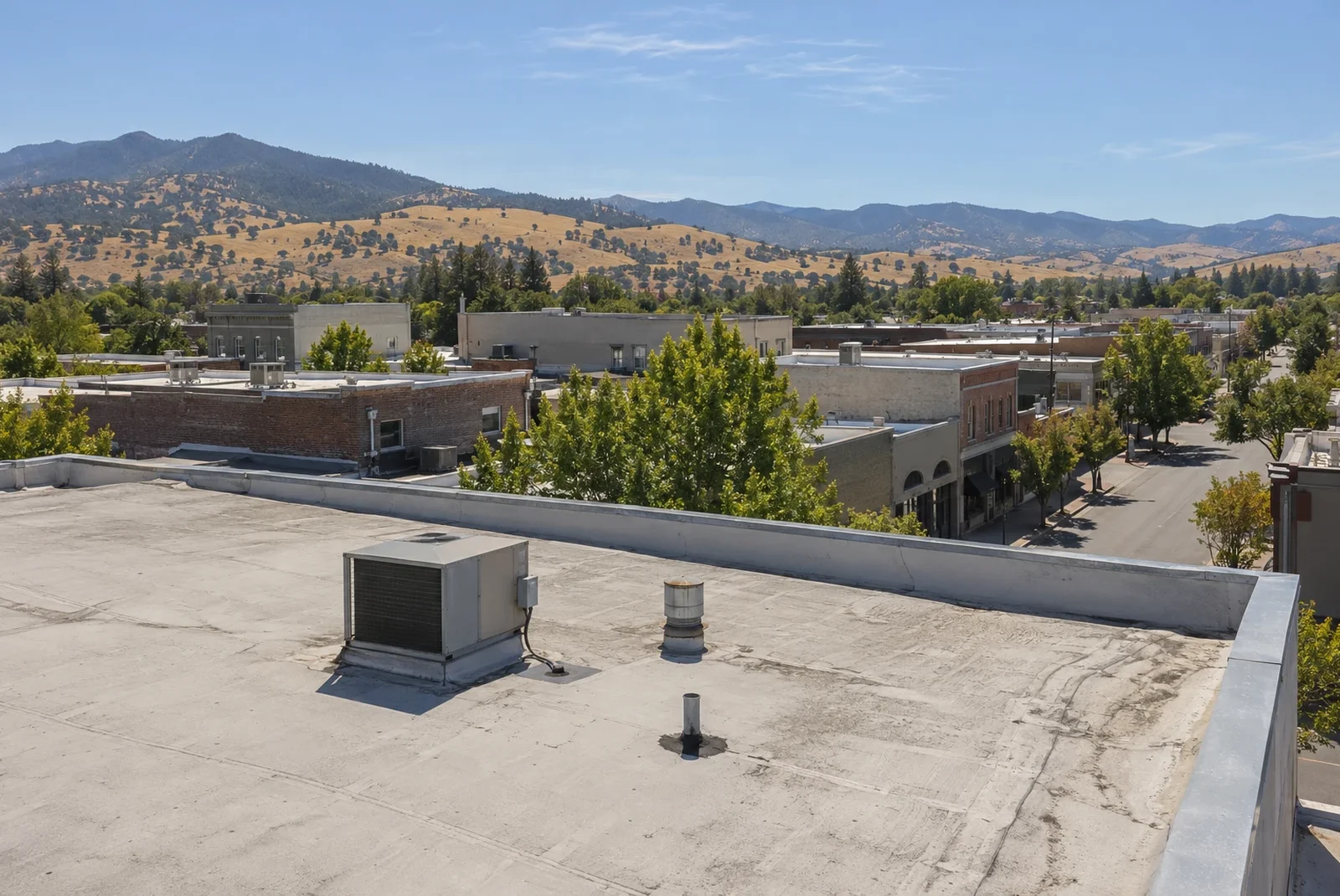
North Riverside Avenue is Medford's main retail address, and Rogue Valley Mall there is an enclosed complex of roughly 640,000 to 847,000 square feet. On an enclosed complex we look for the details that matter on any large retail roof: skylights over common areas, rooftop mechanical systems, tall walls and the drains that serve them. Strips and pad sites along the same corridor get their own survey and their own grades.
The corridor draws traffic from Interstate 5, and the supply route for roofing materials runs the same way. We schedule deliveries outside peak shopping hours, stage on the side away from customer entrances and keep a flagger at shared drives. Work over a tenant that depends on foot traffic takes place early in the morning or on weekdays, whichever the lease allows. A tenant with a grand opening or a seasonal sale gets a blackout date written into the schedule, and the manager receives a one-page notice for every tenant that the work could touch. The notice names the day, the hours and the phone number that will be answered.

Smoke weeks, soot loading and ember exposure
Smoke affects retail twice. It dirties the roof, and it empties the parking lot. The fire risk for retail roofs here is set by 26 smoke days in Medford in 2021 and the roughly 2,600 Jackson County homes the 2020 fires destroyed. After a heavy smoke month a center roof carries a layer of soot that raises surface temperature and loads the filters on rooftop units. A post-smoke check that clears debris and replaces filters protects both the roof and the tenants' air.
Edges matter for ember exposure. Gutters, parapet caps and vents collect leaf litter that can ignite, and a pre-season clean costs little. We list the fire rating of the covering on each section in the owner report, because an insurer reviewing a property in wildfire country may ask for it. That rating, the roof's age and the date of the last edge cleaning fit on one page, and a manager who has them there can answer in minutes.

The owner report and the roof register
A roof register record goes with each section of roof: grade, photos, drains, penetrations, warranty and the date of the next check. The manager can hand the register to a lender, a buyer or an insurer. A preventive roof maintenance visit each spring keeps it current. Centers with a large box store at one end can read big-box retail roofing, and a pad-site eatery follows restaurant roofing. A TPO roofing system suits many strips, and centers along the North Riverside corridor and in Central Point follow the same plan. Because the register follows each bay, a manager can answer a tenant's roof question from the same page a lender sees, with no second report to build.
Send the tenant list, roof ages and leak tickets

Related Roofing Pages

Questions About Shopping Center Roofing
How does the roof reserve work in a strip center?
Tenants fund it through common-area charges. The grade and remaining-life estimate set the annual amount so it matches the roof's real age.
Can a section above a restaurant bay be graded separately?
Yes. Exhaust and heat age that section faster, and the survey records the difference.
When is the best time to replace relative to lease renewals?
Before a major renewal, when the new roof strengthens the offer. The owner report shows the timing options.
Does smoke season change roof maintenance?
It adds a post-smoke check that clears soot and debris and replaces rooftop filters.
How do you work around customers?
Early starts, deliveries outside peak hours and a flagger at shared drives. Entrances stay open.