
Solar-Ready Roofing in Medford, OR
Prepare Medford, OR commercial roofs for solar arrays, or work around panels already installed, with membrane life, penetrations and access planned first.
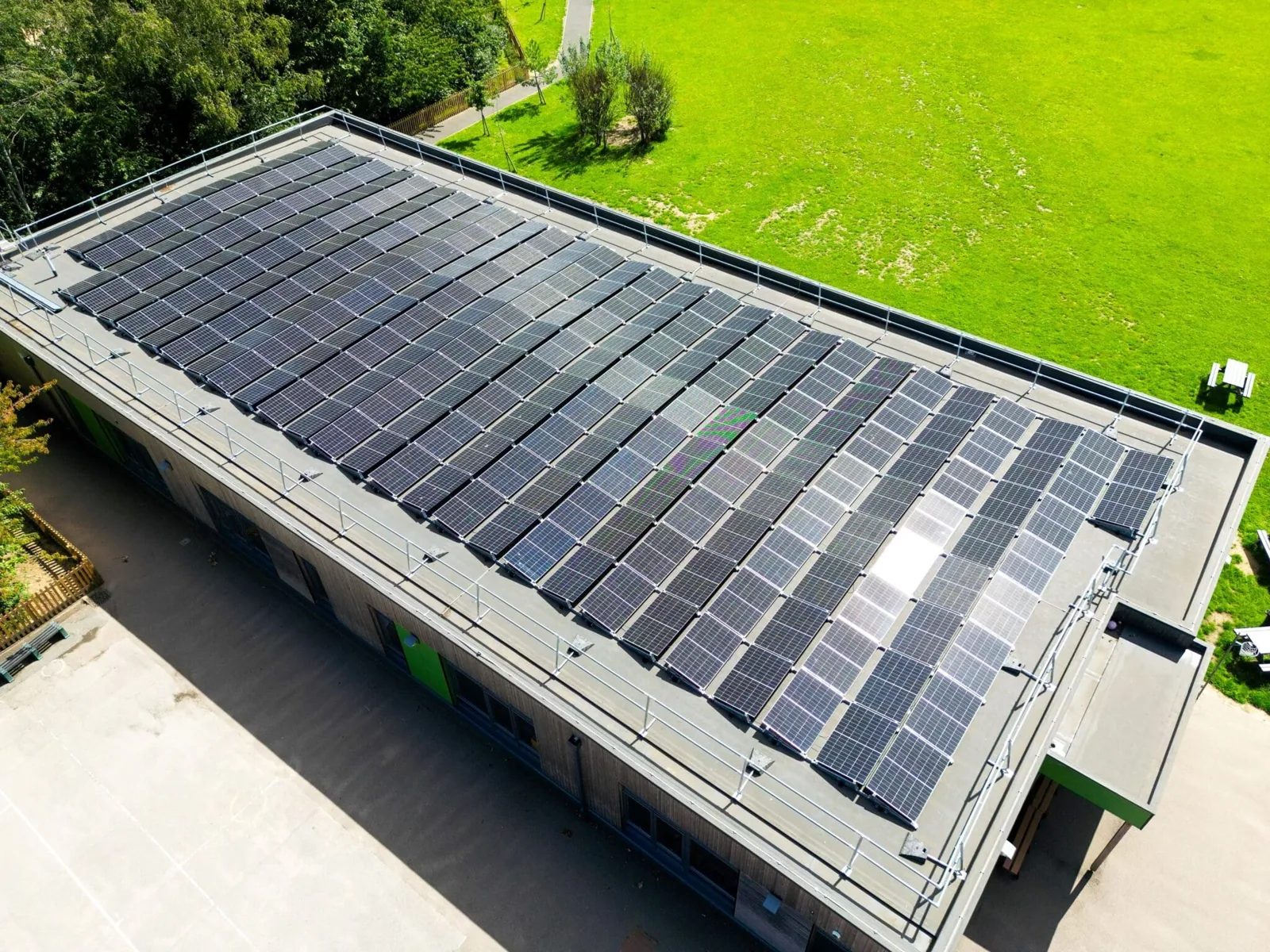
Overview
A solar array is expected to last for decades, and the roof under it is expected to last just as long, yet the two are usually bought on different calendars. In Medford, OR, where summers deliver about 61 afternoons above 90 F, a membrane that is well into its service life can be asked to carry panels that will outlast it by a wide margin. That mismatch is the main reason solar projects produce roof problems: the array goes up, the membrane wears out beneath it, and the owner pays twice, once to remove and reinstall the panels and once for the roof.
Solar-ready roofing treats the roof as the foundation. The question for the reserve schedule is whether the membrane has enough remaining service life to sit under panels, or whether replacement should come first.
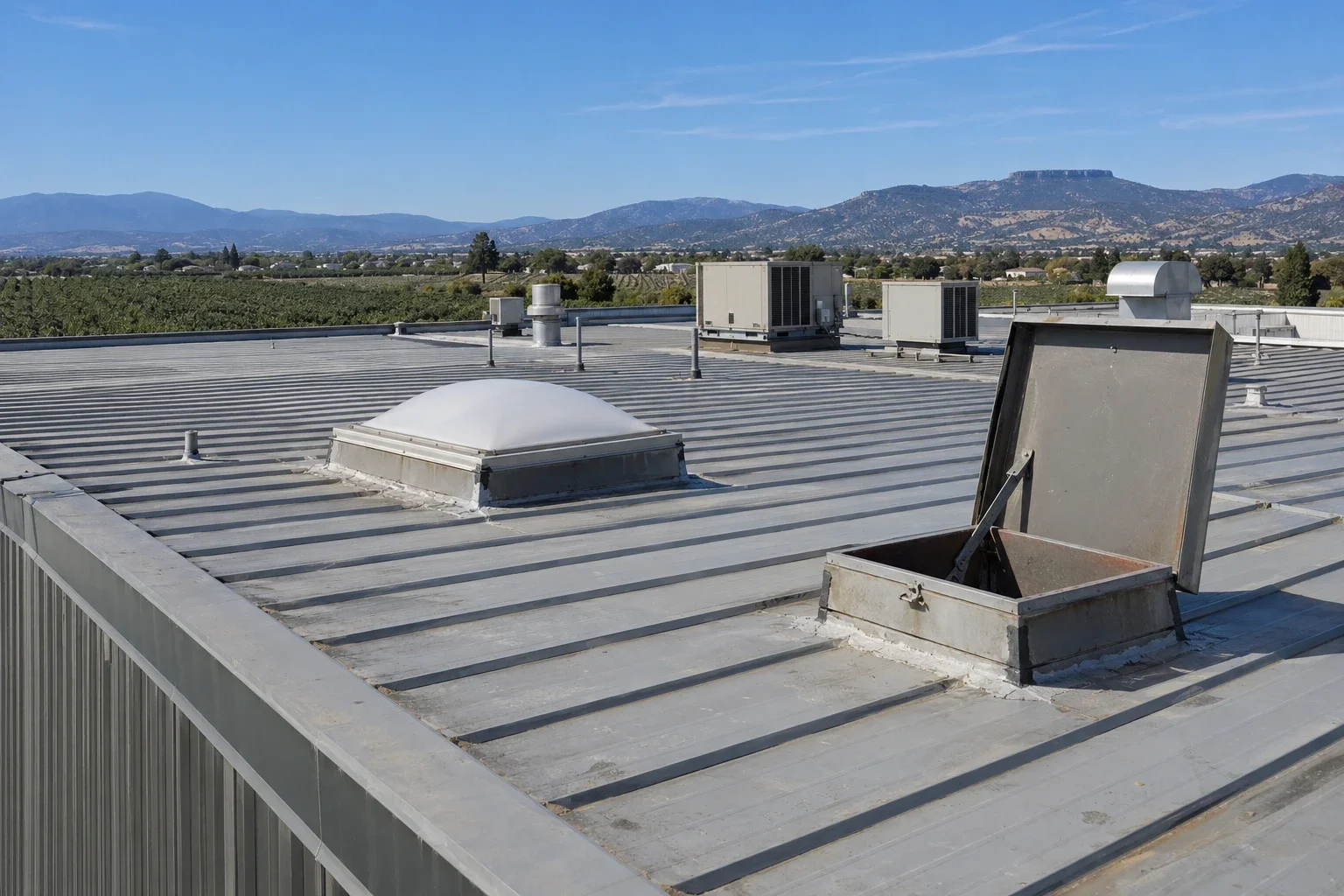
Matching roof life to array life
The simplest rule is that the roof should have at least as many good years left as the owner expects from the array. We grade the membrane, the insulation and the drainage and estimate how much service life each has remaining. If the numbers do not line up, we recommend replacing or restoring the roof before the array goes on, often with a higher-grade membrane than the building would otherwise have received.
Roofs that are beyond their best are candidates for full replacement ahead of installation. Roofs in the middle of their life may take a coating or targeted repairs to buy time. Either way, the roof condition is documented in a report the solar contractor can use to confirm the roof is suitable. For owners weighing the spend over several buildings, the order of work across the whole building list becomes a roof capital planning question.
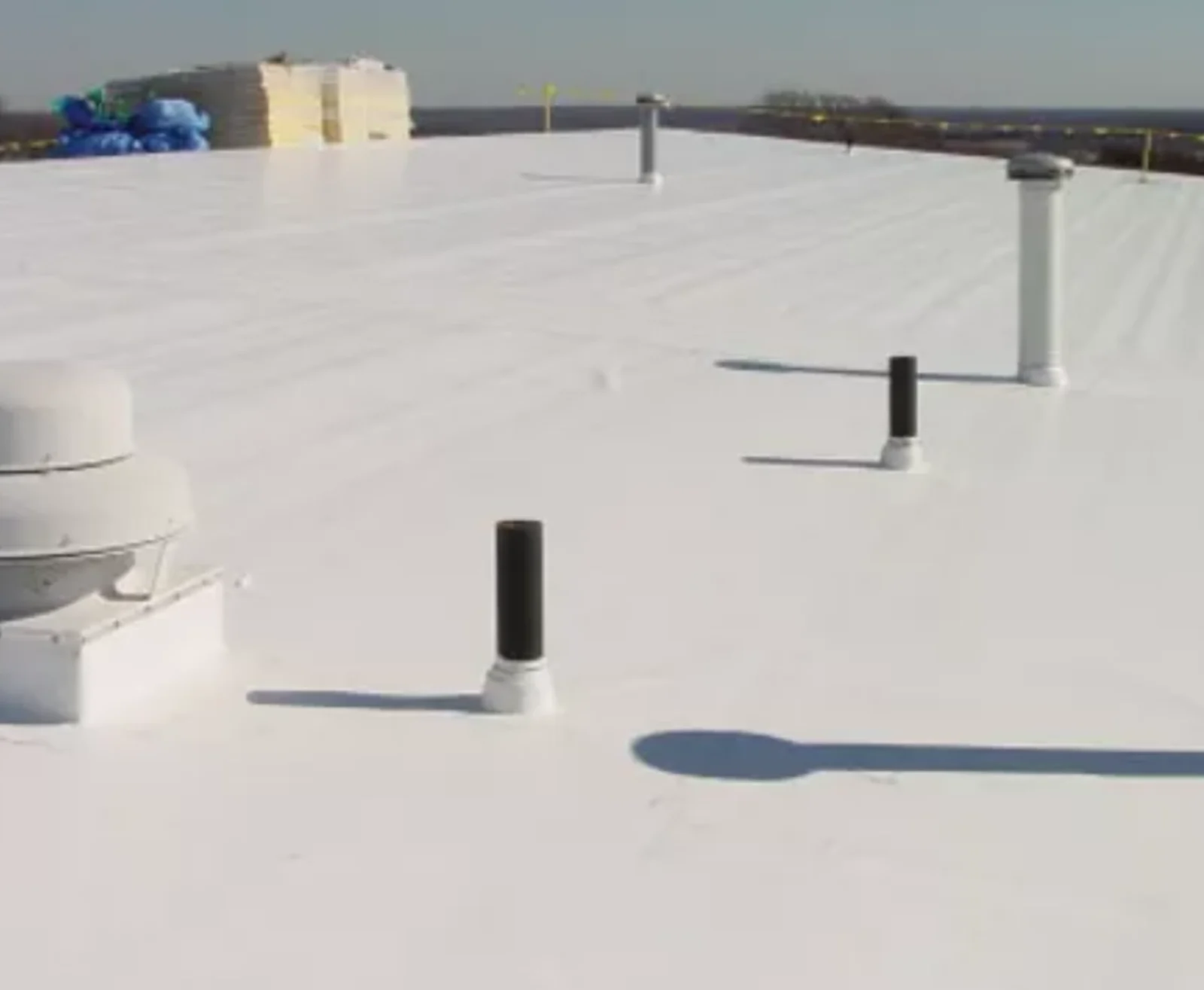
A reflective roof under a future array is worth considering together with the panels. A cool roof installation lowers membrane temperature in the gaps and margins, and panels placed on a clean, bright surface can pick up a little reflected light. We advise owners on the sequence so the reflective layer, the insulation and the racking footprint are decided in one conversation.
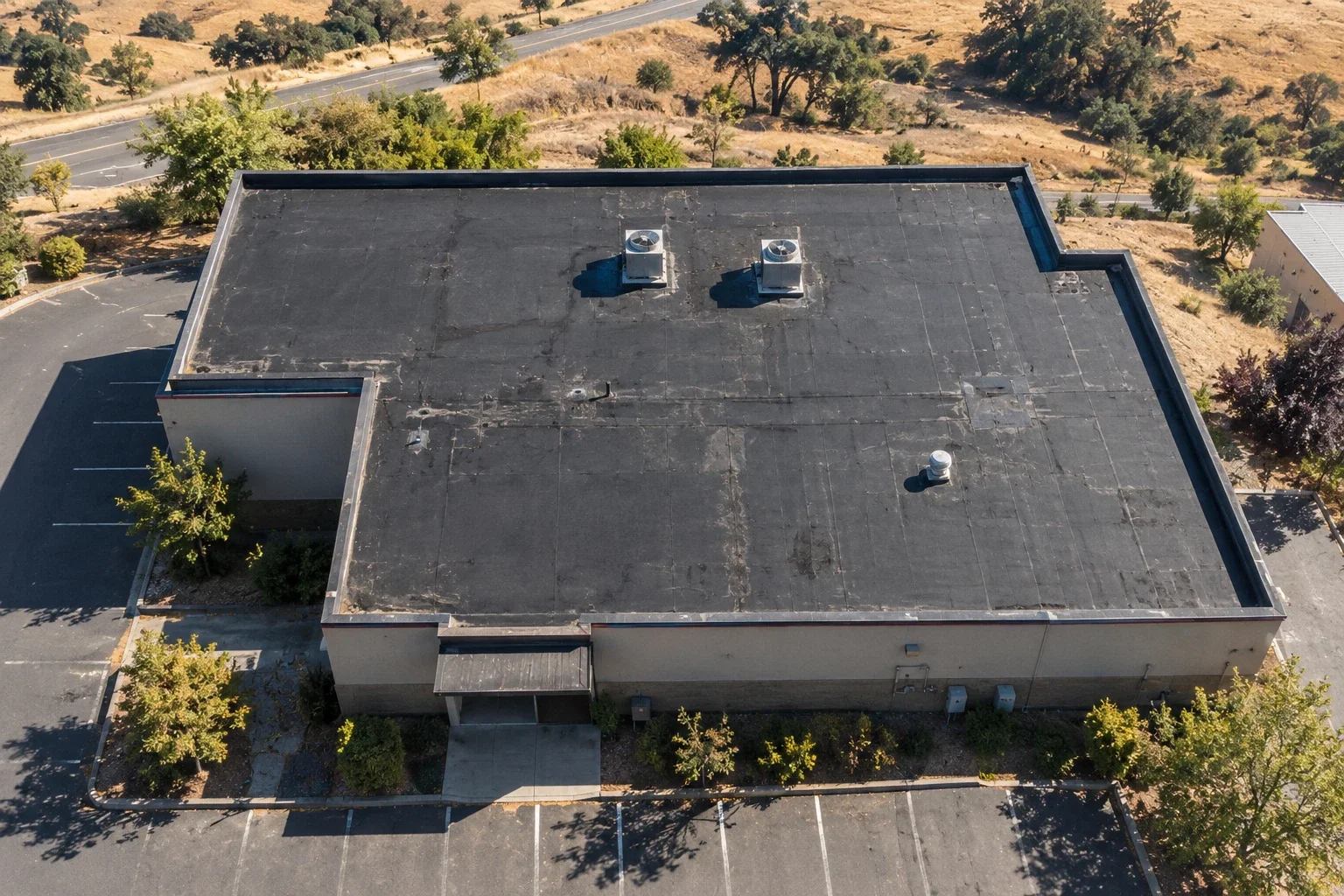
Load, attachment and penetrations
Panels add weight, wind load and attachment points. Ballasted systems rest on the membrane with concrete blocks and limit penetrations, but they add substantial dead load and require protective pads. Mechanically attached racking goes through the membrane into the deck or structure and creates penetrations that must be flashed carefully. Either approach calls for a structural review by an engineer, which is outside our scope, and we coordinate our work with theirs.
Every attachment is a hole in the roof, so the flashing details are the weakest point of a rooftop array. We use pre-formed flashings or sealed pedestals matched to the membrane, and we document each location on a roof plan. That plan lets a later contractor find any penetration, inspect it and repair it without guessing. Details that look similar from above can be very different underneath, which is why a map matters.
Setbacks matter as well. Fire access paths along edges and around skylights keep arrays back from perimeters, which also keeps the zone of highest wind uplift clear of mounts. We lay out those margins with the solar designer so the roof plan and the electrical plan agree before the first post is set.
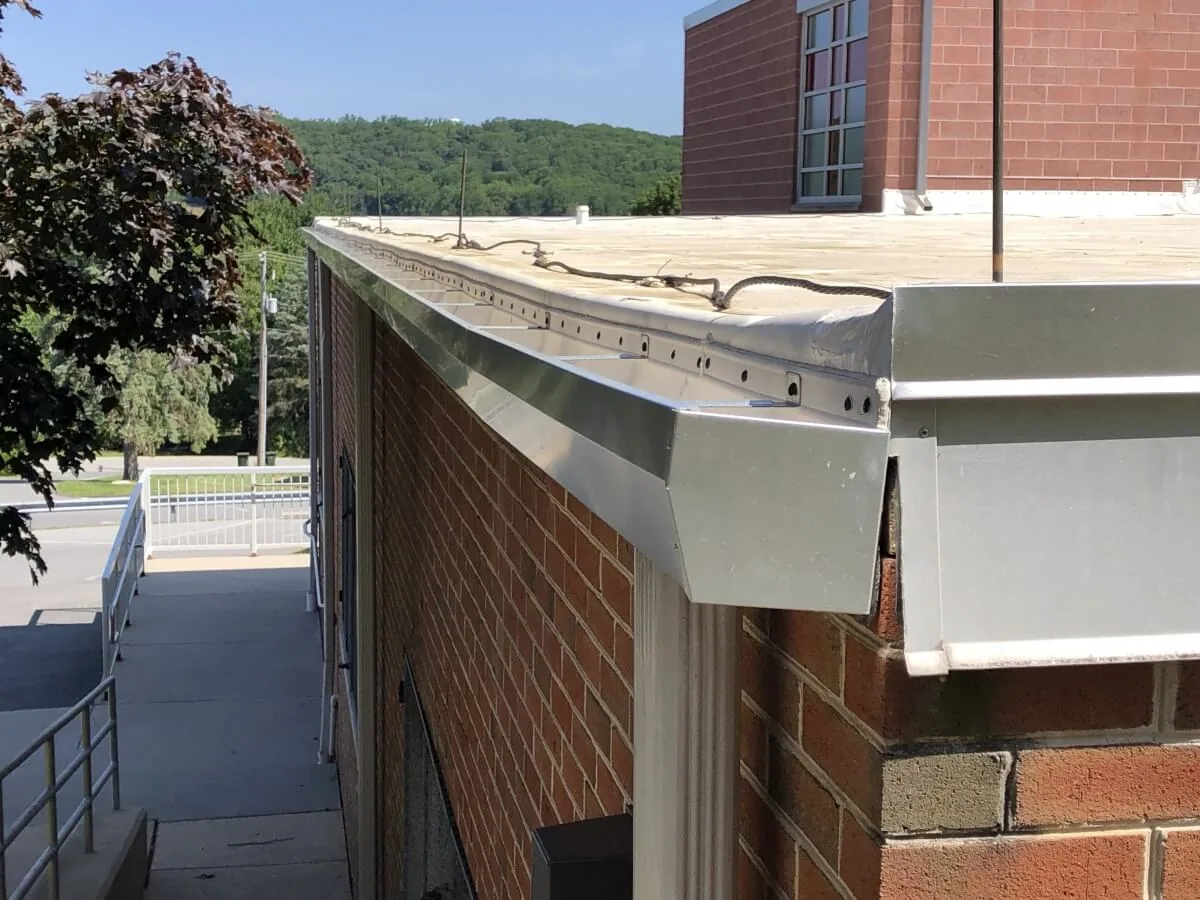
Heat, shade and what panels do to a membrane
Panels shade the roof beneath them and trap heat in the gap between panel and membrane. The shaded membrane stays cooler than an exposed one, which slows aging in the covered area, while the edges and gaps between rows see more intense exposure. The result is uneven wear across the roof, with exposed margins aging faster than the covered middle.
Smoke and ash also matter. Medford had 26 smoke days in 2021, and soot settles on panels and on the roof around them. Panel output suffers and so does the membrane's reflectance. Cleaning the roof and the array on the same visit keeps both in service, and we plan walkways between rows so cleaning crews can reach the membrane without stepping on it. Maintenance of the surrounding roof follows the same preventive maintenance rhythm as any other.
Inversion weeks in winter bring fog and damp that can keep membrane wet beneath panels longer than on an open roof. We check the drainage paths between rows, since water that cannot find a way out sits against seams and speeds their aging.
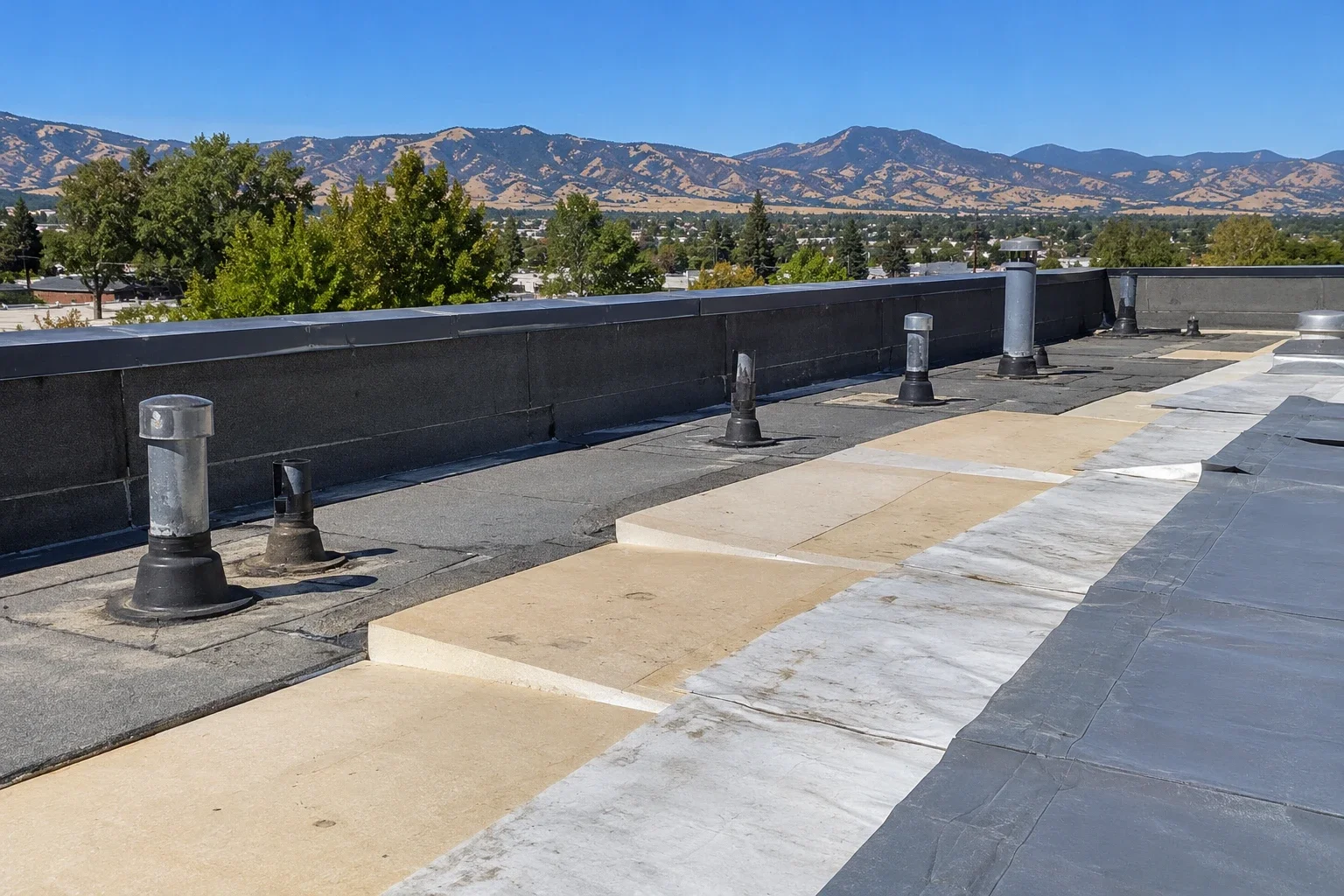
Working around panels already in place
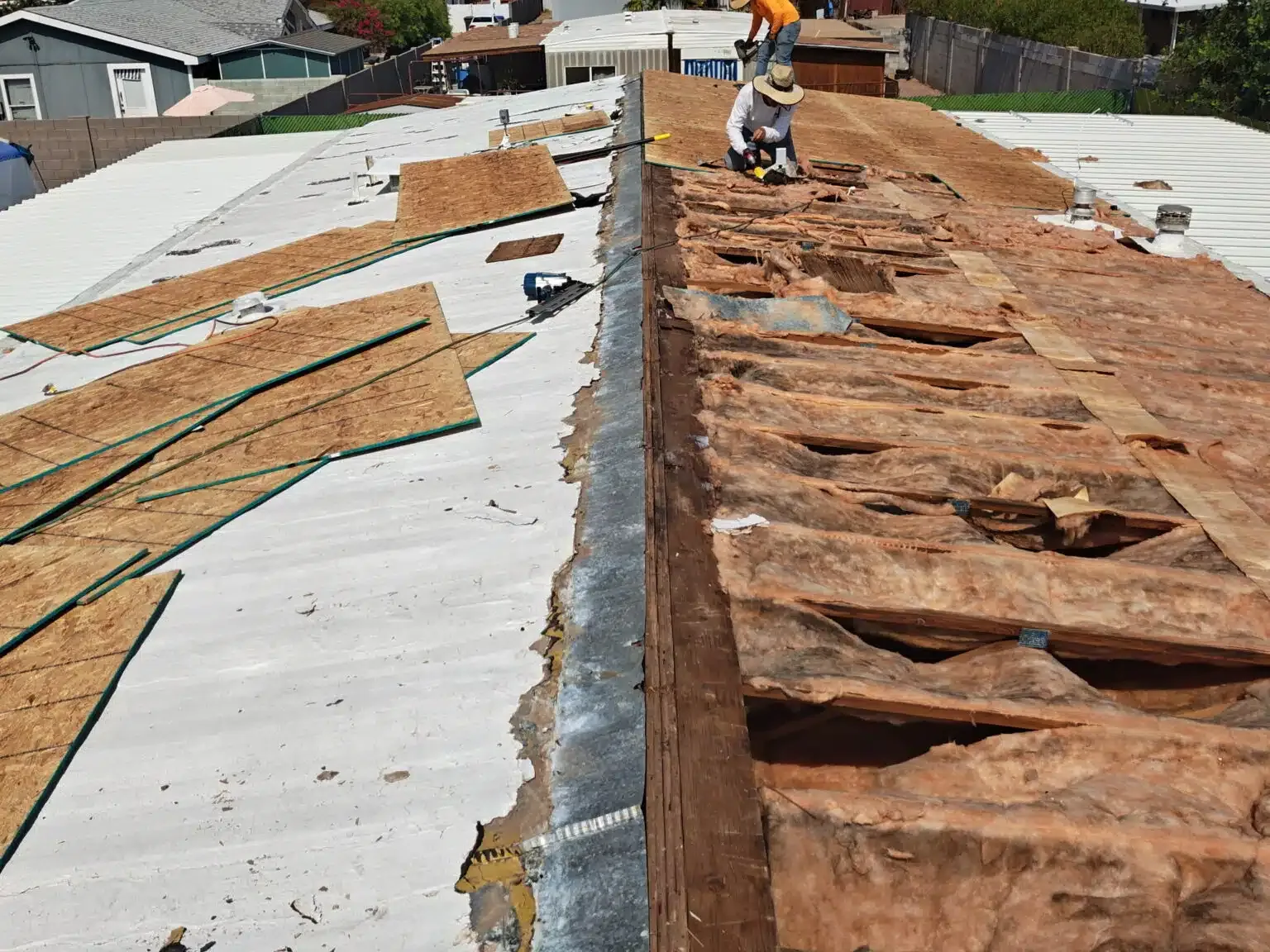
Many buildings already carry solar, and roofing repairs under or beside it require sequencing. Panels may need to be lifted, racked up or removed entirely before work can proceed. That is a coordinated job between the roofer, the solar contractor and sometimes an electrician who disconnects and recommissions the system.
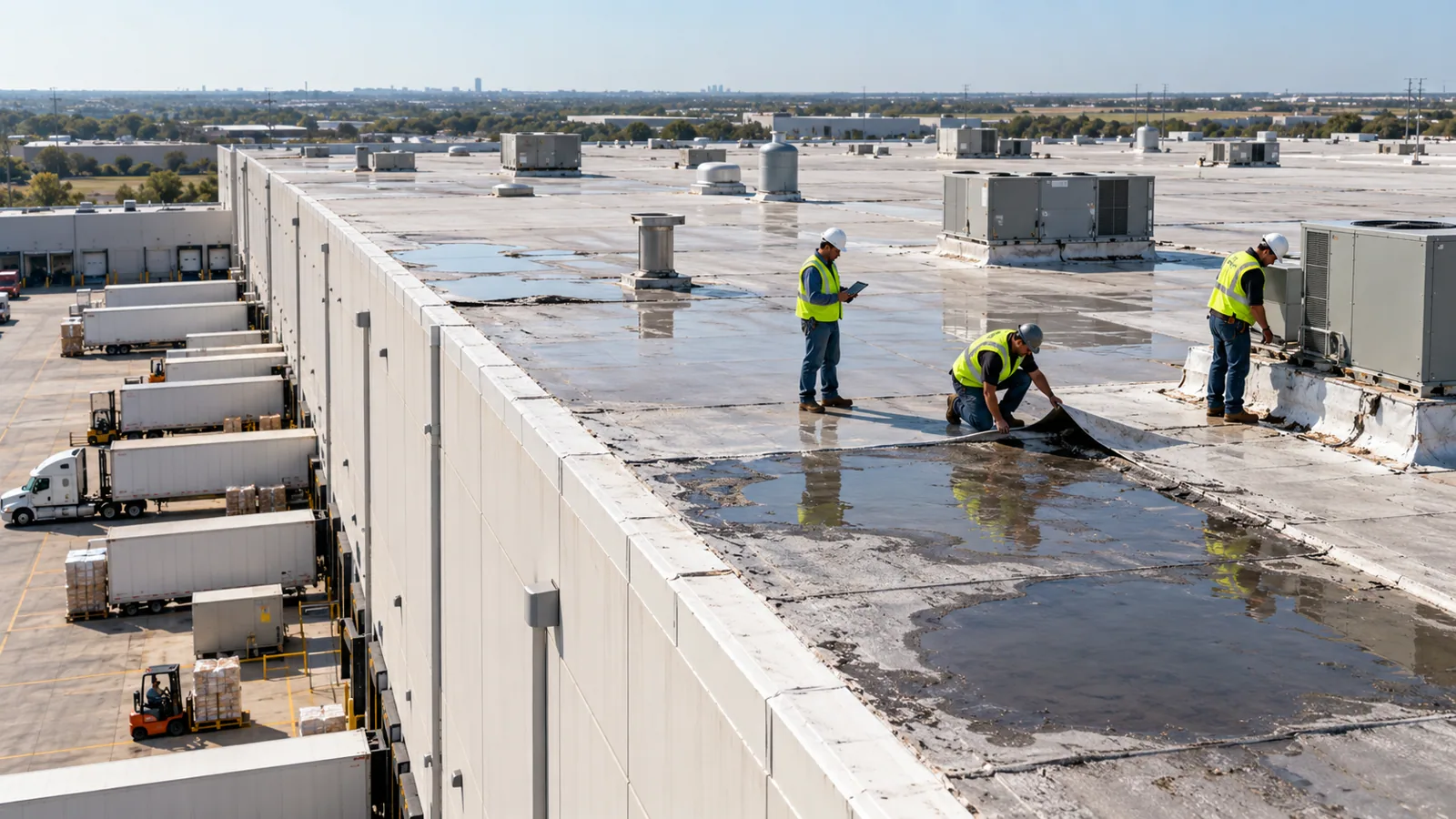
When a leak develops under an array, finding it is harder because the panels block the view and shield the membrane from drainage. We follow the route the water takes with moisture mapping and remove only the panels that must come off. Temporary protection goes under the repair, and we document panel positions so the system returns to its layout exactly. The cost of lifting and resetting panels is a real line in the estimate, and we state it separately so the owner sees it plainly.
Documentation is the safeguard for all of it. Before any work near an array, we photograph panel positions and conduit runs, mark them on the roof plan and keep a log of what was moved, so the solar contractor can verify the system returns as it was and the owner has one record covering both trades.
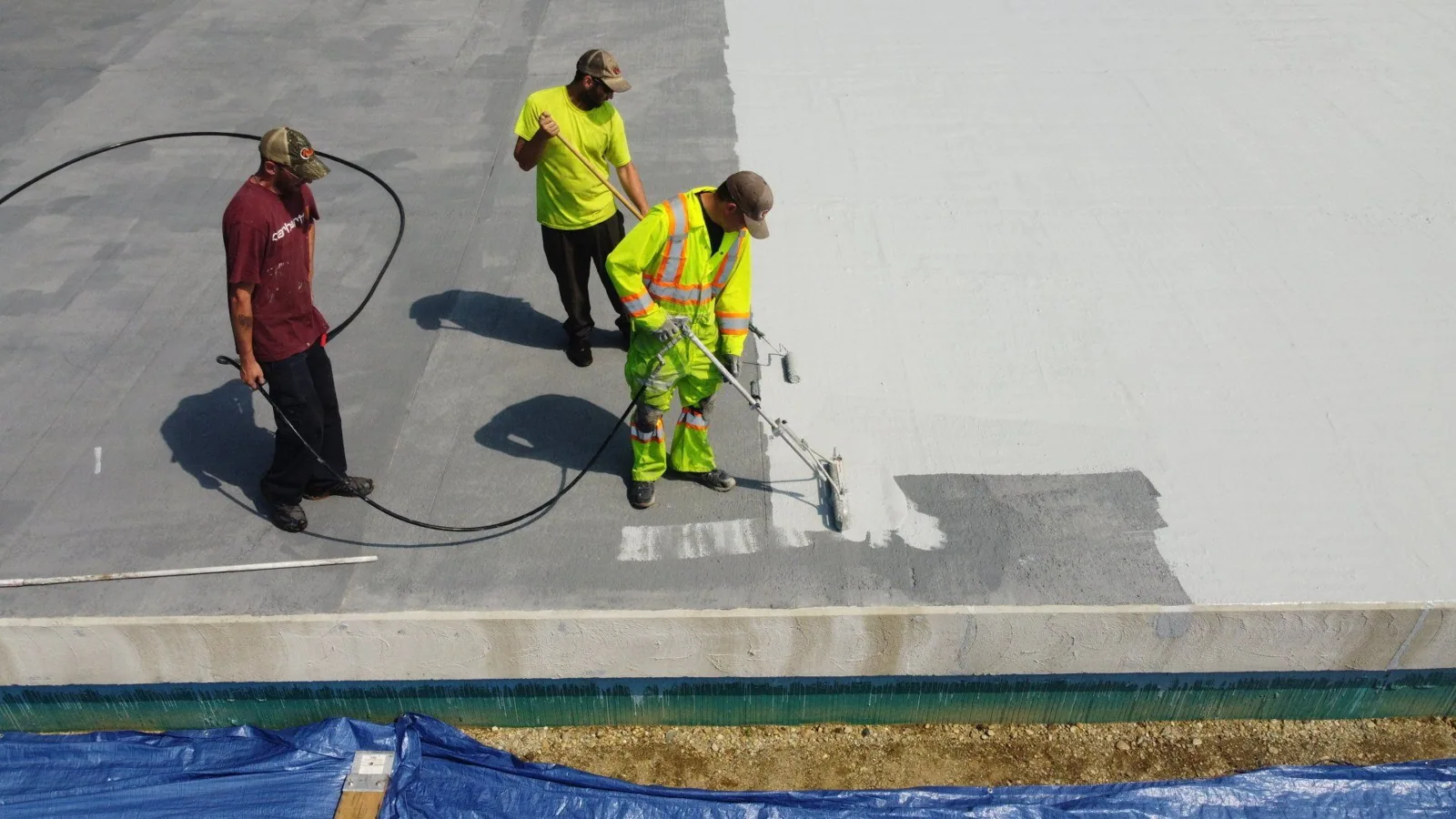
Which membranes suit an array
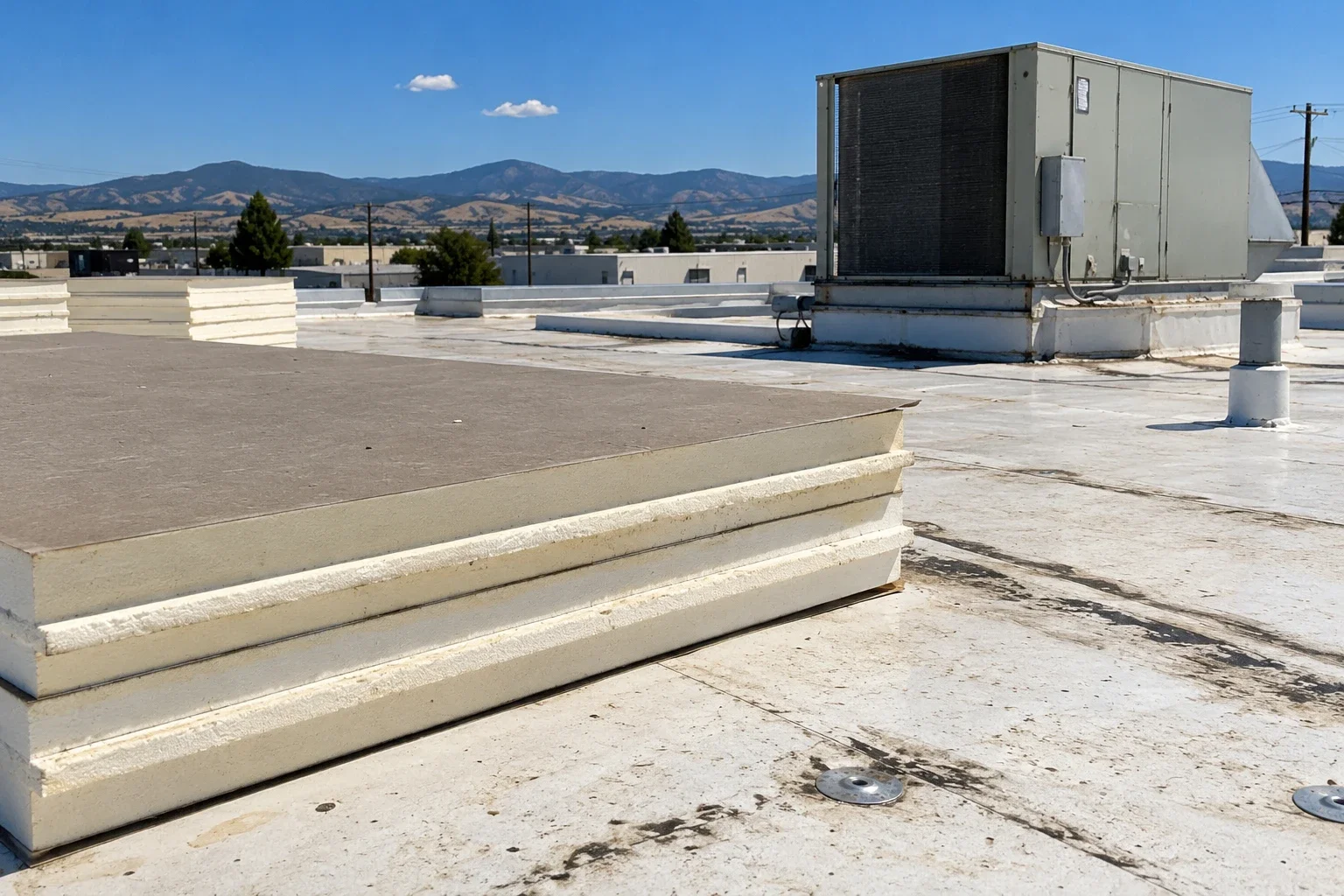
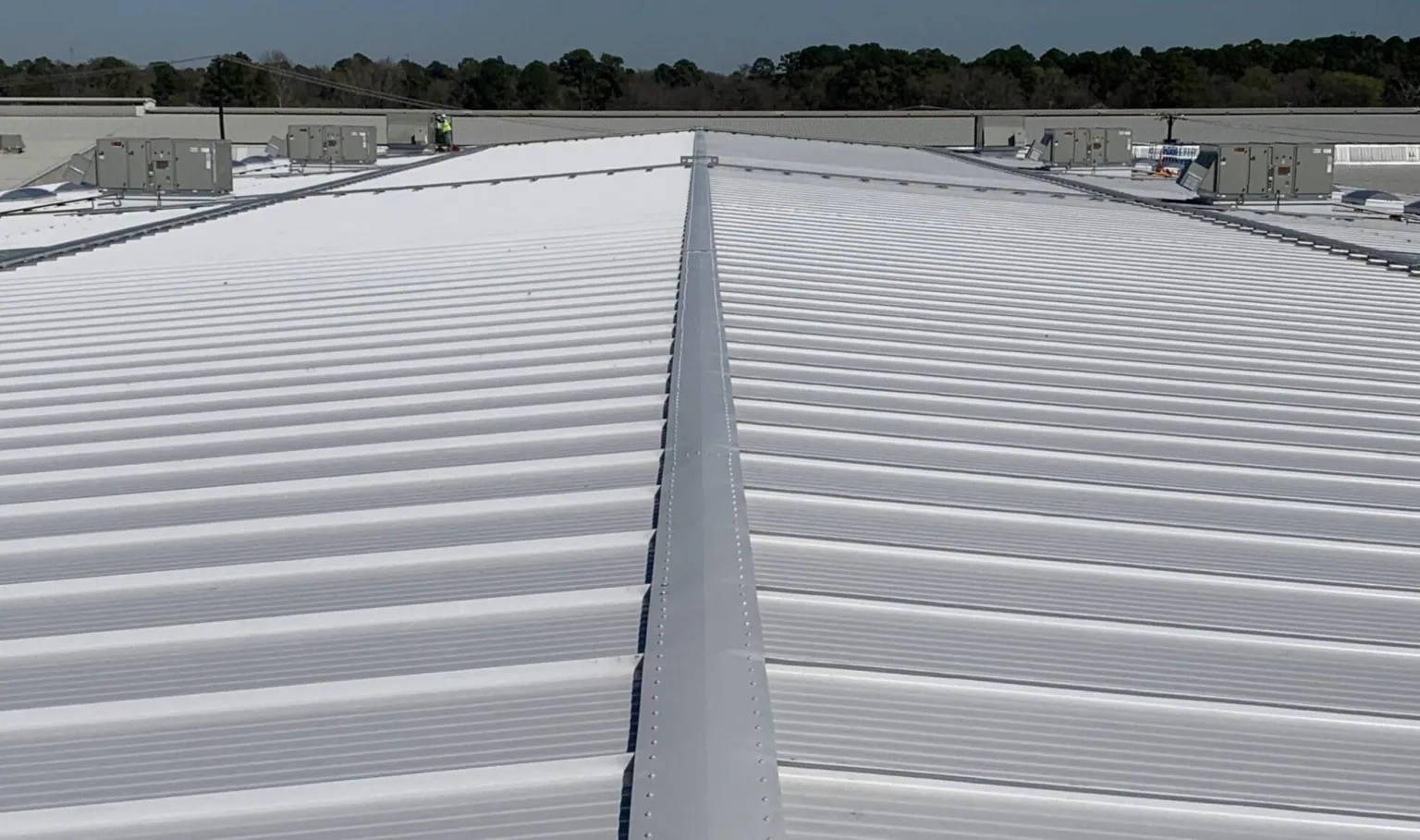
Standing seam metal suits arrays well because clamps attach to the seams without penetrating the panels, which preserves the roof's waterproofing. A standing seam metal roof also has a long service life that can match the array. Among single-ply options, TPO and PVC with a thicker, reinforced sheet and a cover board resist the point loading of ballast and foot traffic. Coordination with equipment curbs and supports keeps arrays clear of mechanical units and their service paths.
Fastening metal clamps to standing seams is also a matter of seam profile and panel gauge, so we pass the roof details to the racking supplier early.
Buildings where solar and roofing meet
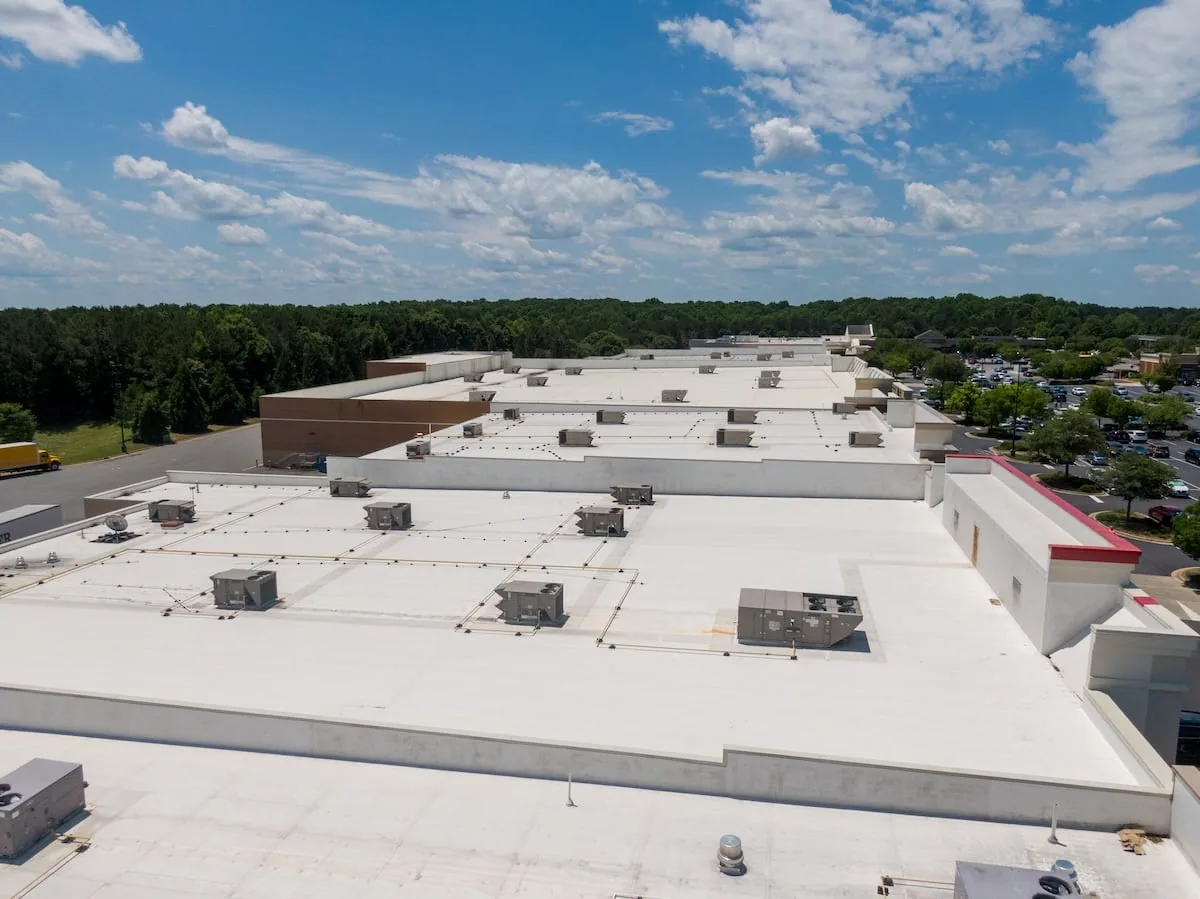
Warehouse and distribution roofs have the open area arrays favor. Table Rock Road in Central Point and Medford, with its Costco, FedEx facility and the Amazon ground-distribution warehouse, is a corridor of broad roofs where solar is a natural question. Industrial space in White City and the rail-served buildings at Phoenix Industrial Park raise the same question. In each case, the building's current roof age decides whether panels go first or the roof does.
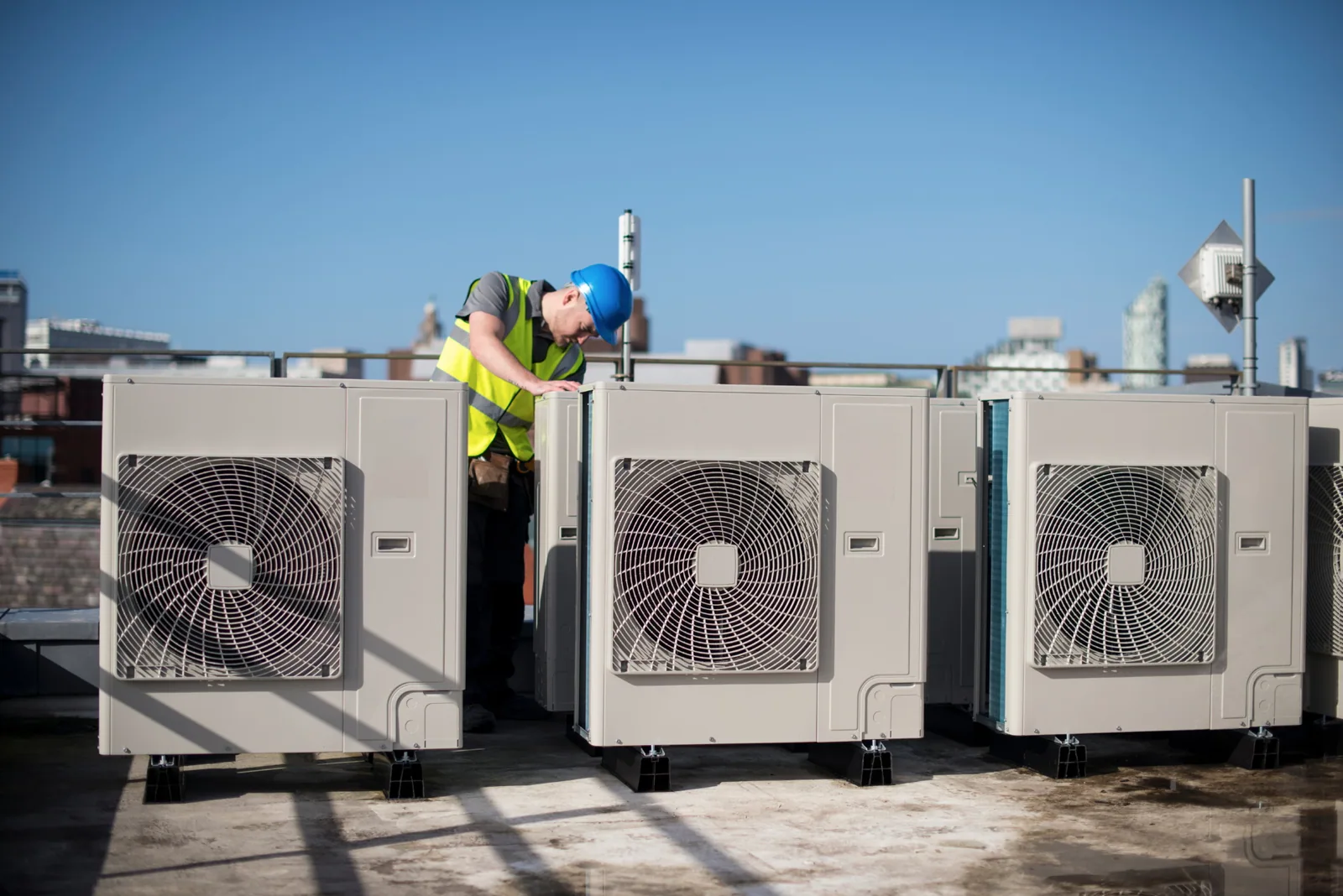
Share the roof age before the solar proposal

Related Roofing Pages
Questions About Solar-Ready Roofing
Should the roof be replaced before solar goes on?
If the membrane has fewer good years than the array is expected to run, yes. A roof in the middle of its life may be restored instead, and the choice is made after a condition grade.
Do solar panels void a roof warranty?
They can, if the installation violates warranty terms or penetrates without approved details. We read the warranty first and coordinate with the manufacturer where it requires sign-off.
Can you repair a leak under an existing array?
Usually, after mapping the moisture and lifting only the panels that block access. The panel work is coordinated with the solar installer and priced as its own line.
Are ballasted arrays safer for the roof than attached ones?
Ballast avoids penetrations but adds heavy load and can crush a membrane without protective pads. Attached systems carry less weight but need flashing at every post. An engineer decides which fits.
Does soot from wildfire smoke hurt the roof under panels?
It collects on the membrane and around the array, holding heat and moisture. We include the roof in cleanings so the edges and the drains stay clear.