Commercial Roofing in White City, OR
Commercial roofing in White City, OR: industrial park, health-care and federal-campus roof work, graded for Rogue Valley heat, smoke and access planning.
Overview
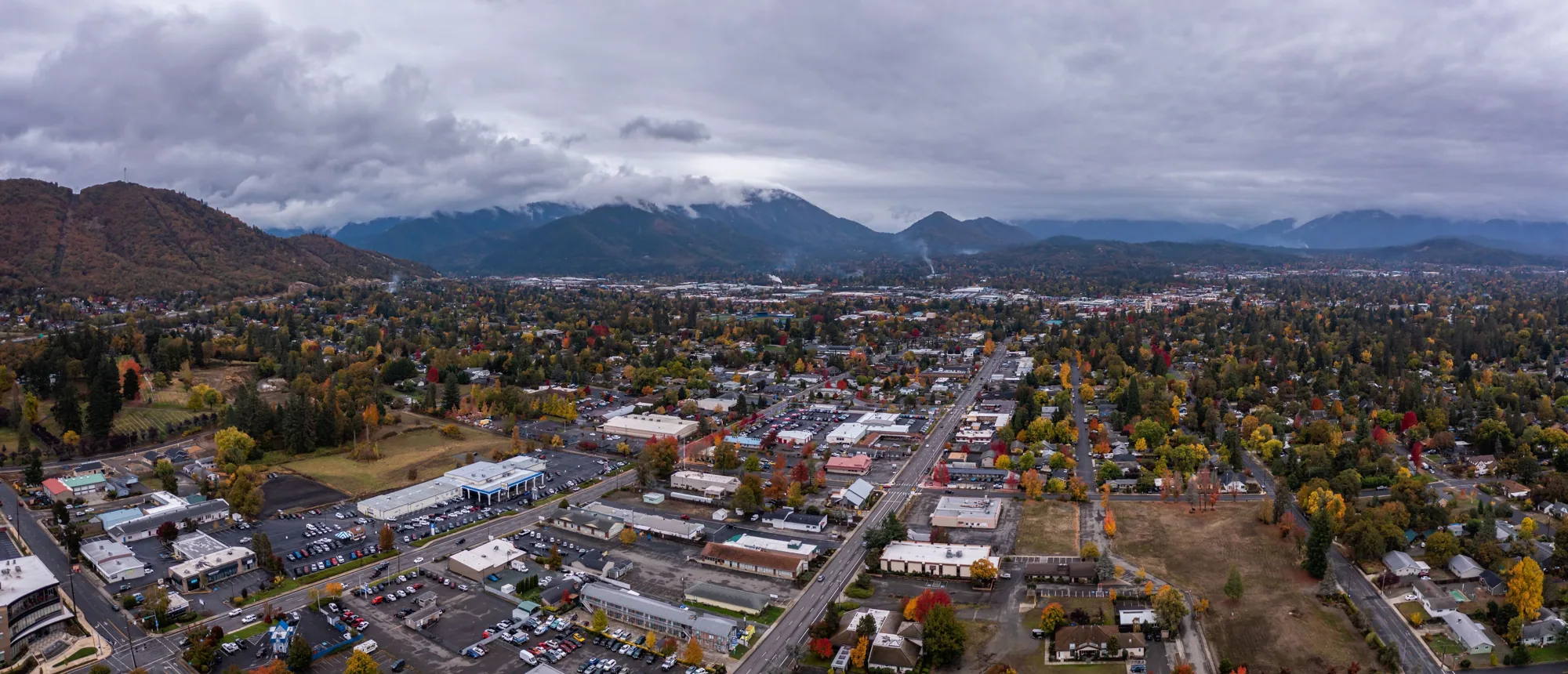
Freight-rail industrial buildings and a veterans' hospital campus define the commercial work in White City, OR, a census-designated place of 9,090 residents roughly nine miles north of Medford, where Oregon Routes 62 and 140 meet. The White City Industrial Park takes freight service from the Rogue Valley Terminal Railroad, and the Department of Veterans Affairs runs the main hospital serving southern Oregon here. We repair, replace, recover, coat and maintain low-slope and metal roofs in that mix, and each roof is graded so the owner report can state its remaining service life in years.
The climate numbers belong to Medford, which shares the valley: 61 afternoons hotter than 90 F and a 115 F high on record. White City roofs live under the same sun and take the same smoke.

A town that grew out of a training base
White City grew from Camp White, a World War II Army training base dedicated in 1942 that covered nearly 50,000 acres of the Agate Desert. The surrounding industrial land was once part of that base. The origin matters to a roofer for one reason: buildings on a site with that history may span many construction types and owners, and a roof's age or system cannot be assumed from the address. Every roof gets identified on the first walk, and the register records what we find.
Any building that has changed hands over the years may carry repair histories from several roofers. We map previous patches, flag incompatible materials and mark areas where moisture has spread into insulation. The result is a document that lets an owner decide section by section whether to repair, recover or replace, rather than treating the whole roof with one blanket answer.
That identification step also settles code questions. A roof built under an earlier edition may need only repair, while a tear-off triggers current requirements, and the owner is better served knowing which side of that line a scope falls on before approving a budget.
Rail-served industrial roofs and equipment traffic
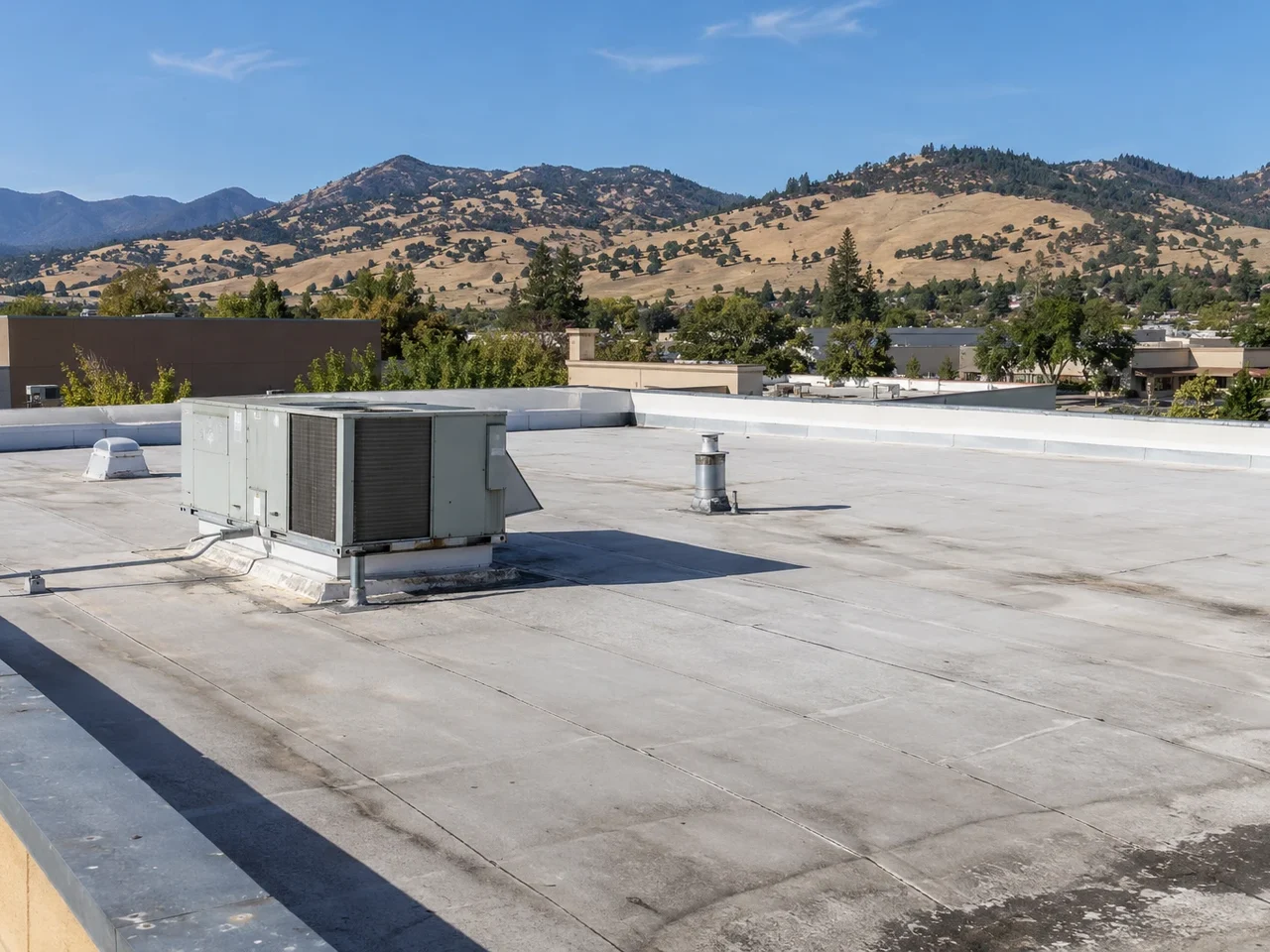
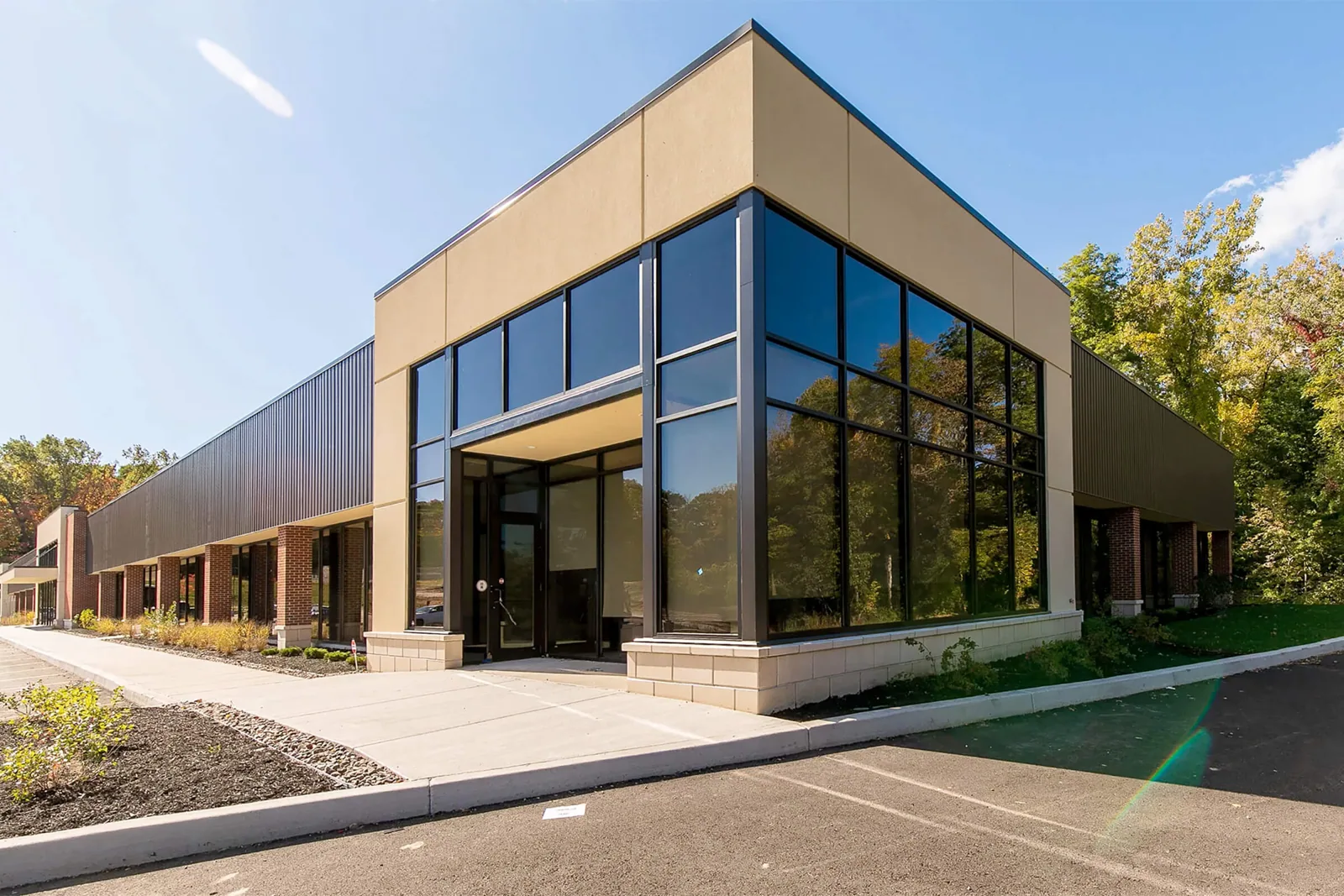
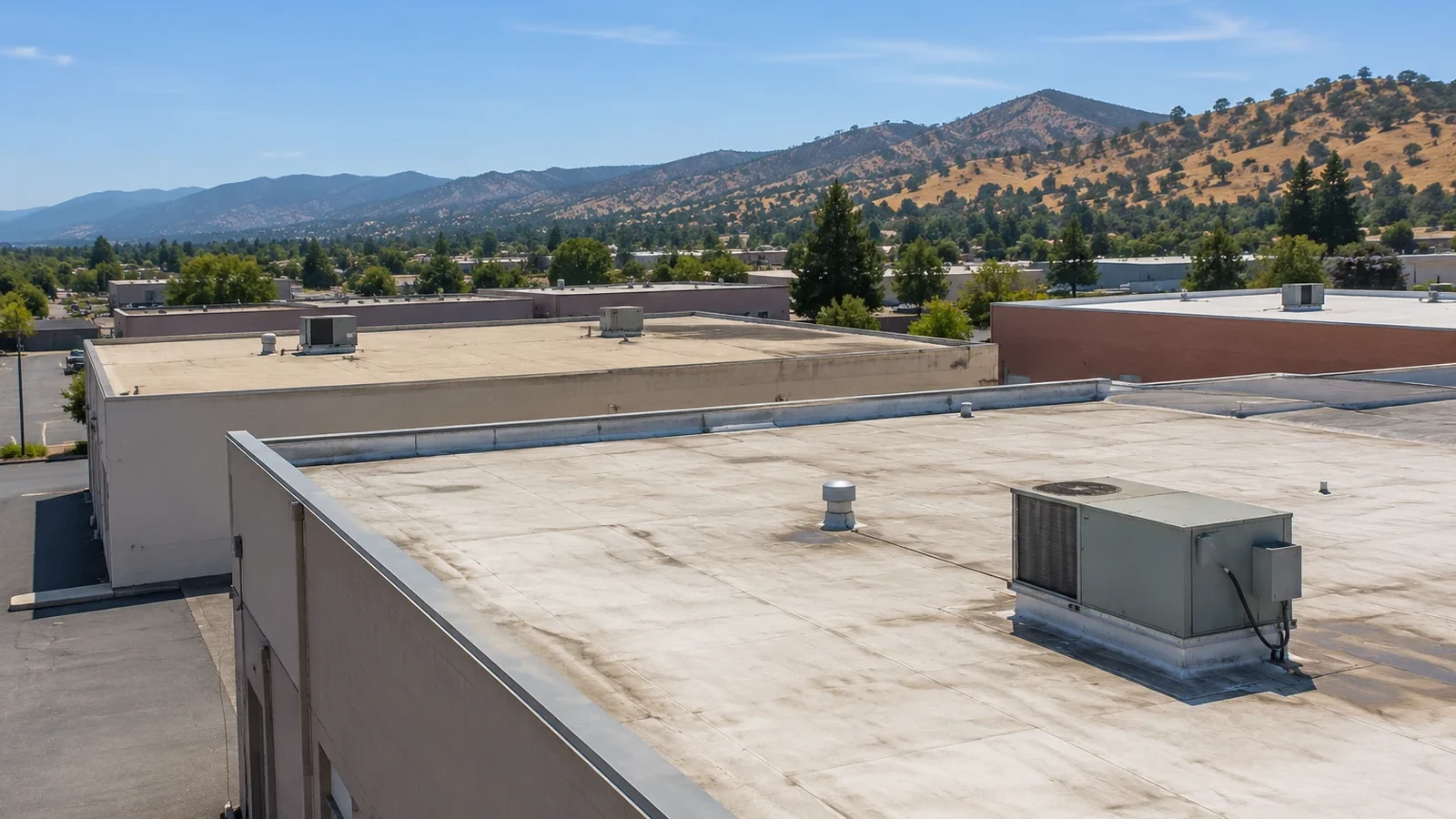
The White City Industrial Park sits where Oregon Routes 62 and 140 meet, and its rail service from the Rogue Valley Terminal Railroad ties it to freight movement. Which roof systems stand in the park is a question the first walk answers, since a business park listing says nothing about roof type. What holds true generally is how industrial roofs behave under valley sun, which is that service traffic and rooftop equipment wear the surface long before the sheet itself fails.
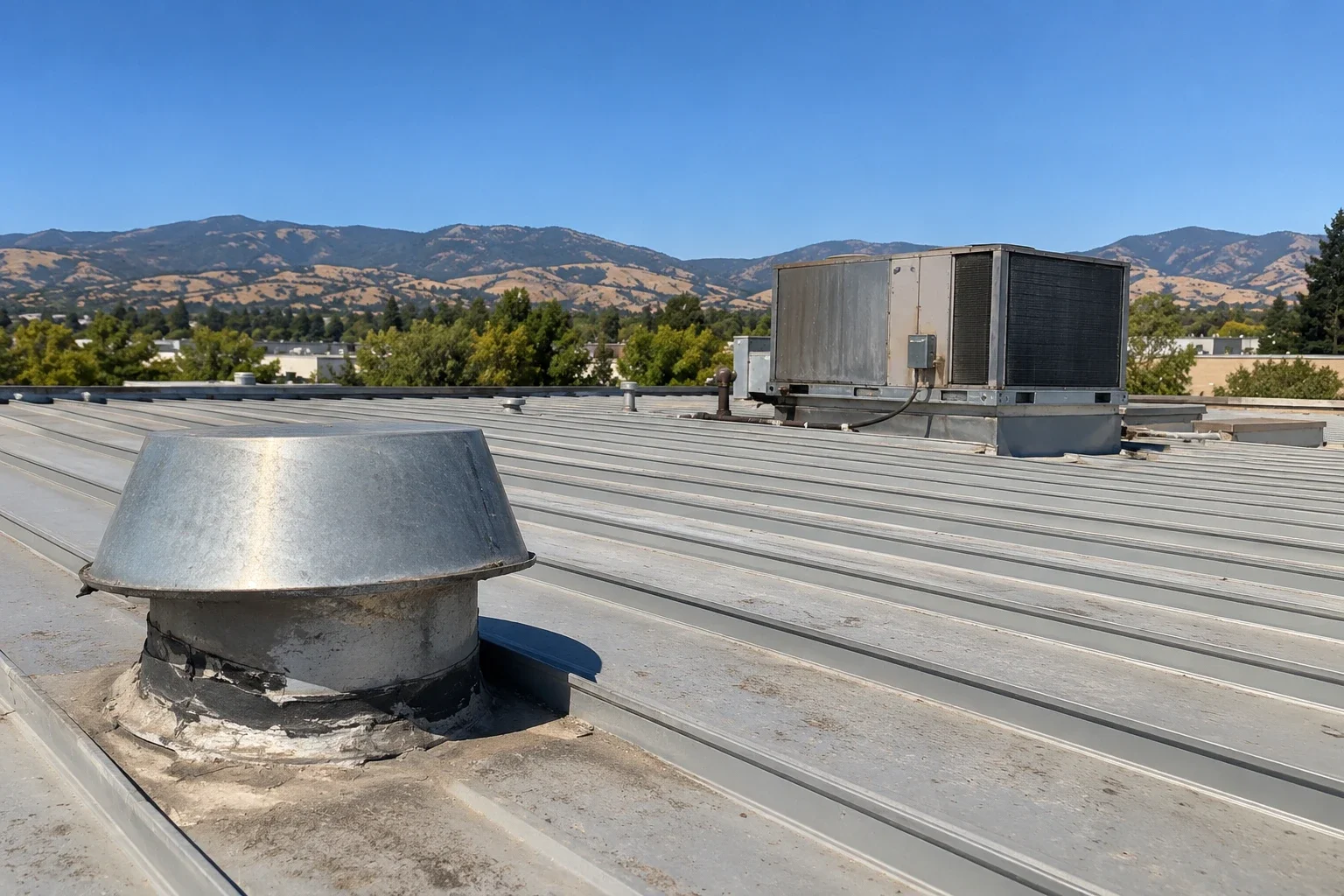
On a first walk we look at walk paths, curb flashings, drainage near equipment and any area where oil, grease or process exhaust reaches the membrane. Protection pads at high-traffic spots, tidy cable and pipe supports and clearly marked access routes prevent most of the punctures that otherwise accumulate. The same inspection logic applies to flex industrial buildings of any size.
Federal health-care work and how access shapes the schedule
White City hosts the main Department of Veterans Affairs hospital serving southern Oregon, and the campus descends from Camp White and houses the Camp White Military Museum. The VA campus is renovating buildings 217A and 218A for inpatient mental health, with HVAC, exterior and security upgrades also being designed. Roofing near a campus like this runs under general rules: escorted access, badging, scheduling around clinical operations and work built to the Unified Facilities Criteria for roofing where those apply.
We describe the process so owners and contractors know what to expect. For neighboring private owners, the lesson is practical: a roof near sensitive operations needs dust control, noise limits and clear staging lanes, and planning those elements early shortens the project. The checklist we use for military installation roofing applies to any controlled site.
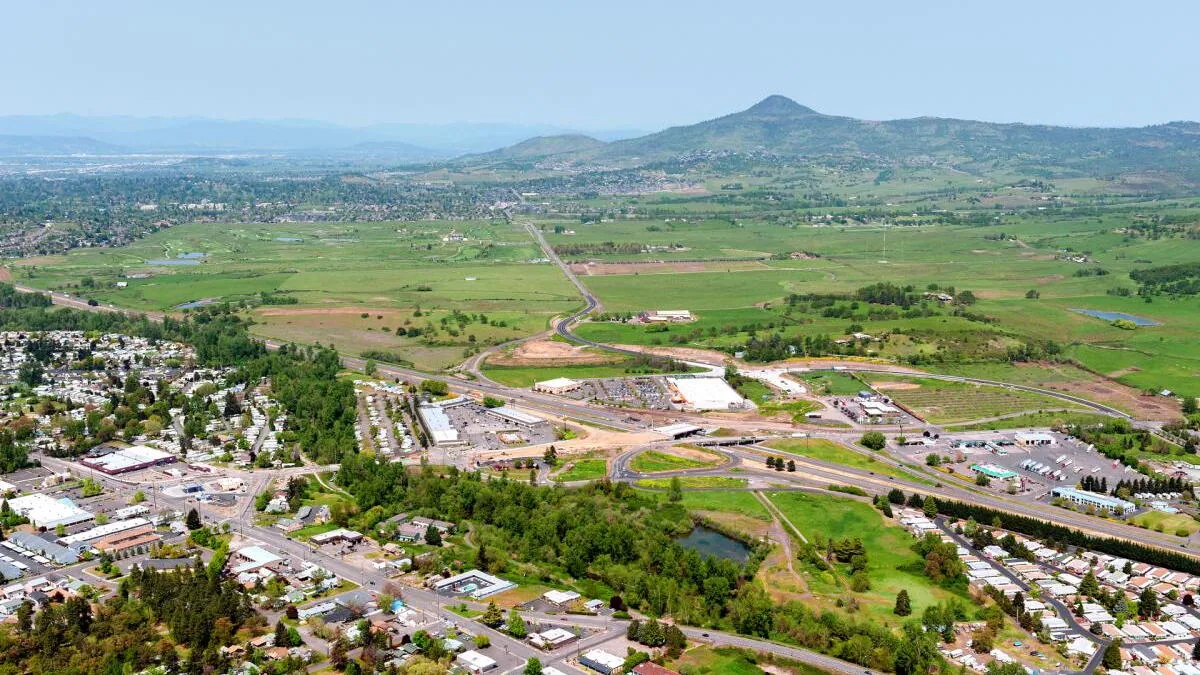
Smoke, soot and ember edges on the valley floor
Smoke came to the valley for 26 days in 2021, a season that followed the fires that destroyed about 2,600 homes across Jackson County. The valley's smoke does not stop at the Medford city line. Soot dulls reflective membranes and raises their temperature, ash fills drains and scuppers, and rooftop air intakes load filters faster.
After a smoke week we wash the surface, clear drains and parapet corners, and update the condition grade. Debris near equipment is also where embers lodge, so we remove it. Winter inversions can hold fog and poor air for extended periods, and about 64 freezing mornings a year, as recorded in Medford, add moderate thermal cycling. Autumn is when we replace cracked sealants before that cycle starts.
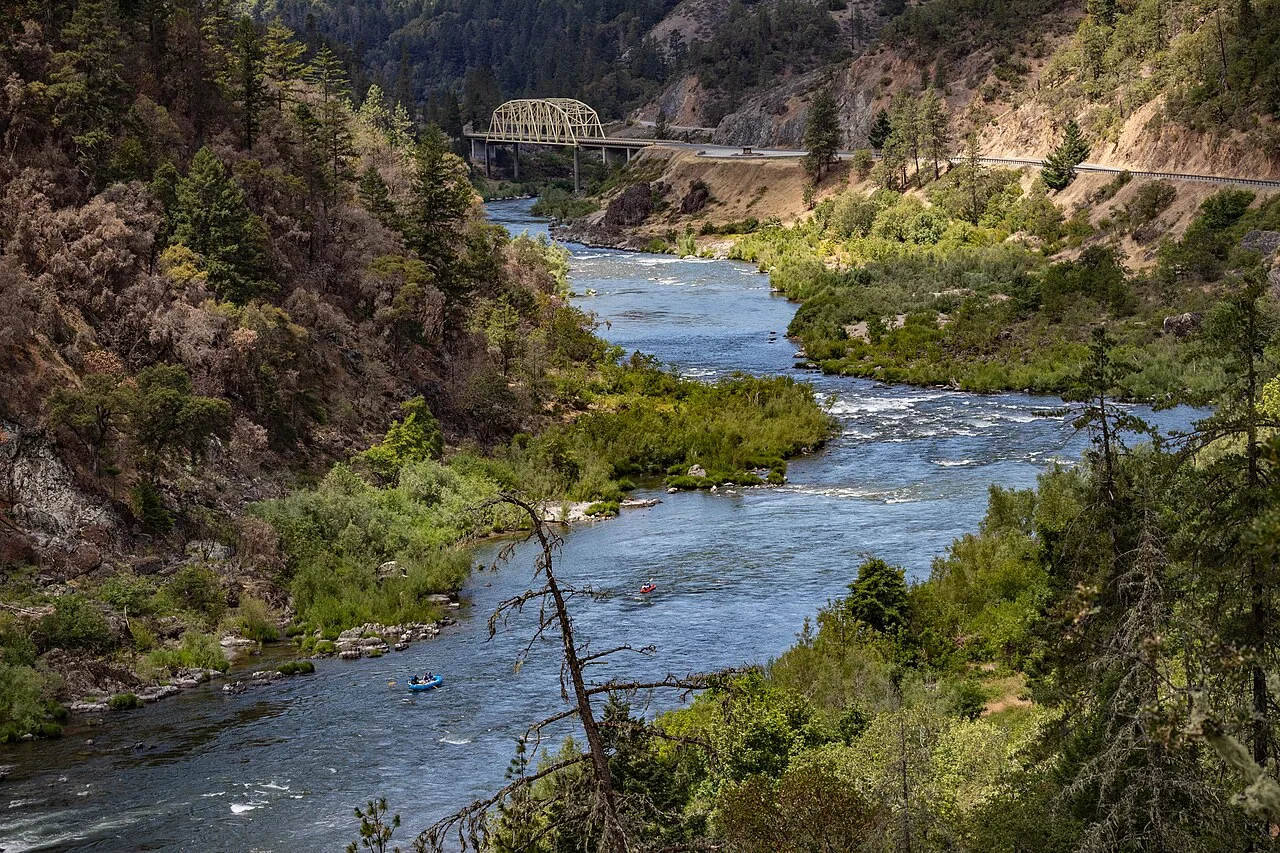
The Route 62 and 140 junction as a work-access question
A site at a highway junction is easy to reach and still hard to stage. Delivery trucks, a crane or a lift need room to set up, and the neighbors on a shared access road deserve notice before a lane closes. We scout the approach on the first visit, note overhead lines, tight turns and loading constraints, and write a staging plan before any material is ordered. On any open, unshielded lot the roof edge takes wind first, so perimeter fastening and edge metal get a close look before anything else is priced.
Freight rail adds its own rhythm. Delivery windows tied to train service can shift, so schedules for the roof work carry buffer time and a fallback day. Where operations cannot pause, we phase the roof into sections and complete each before opening the next, so the interior stays dry through every phase. Emergency tarping is on call at any hour if weather or an unexpected opening interrupts the plan.
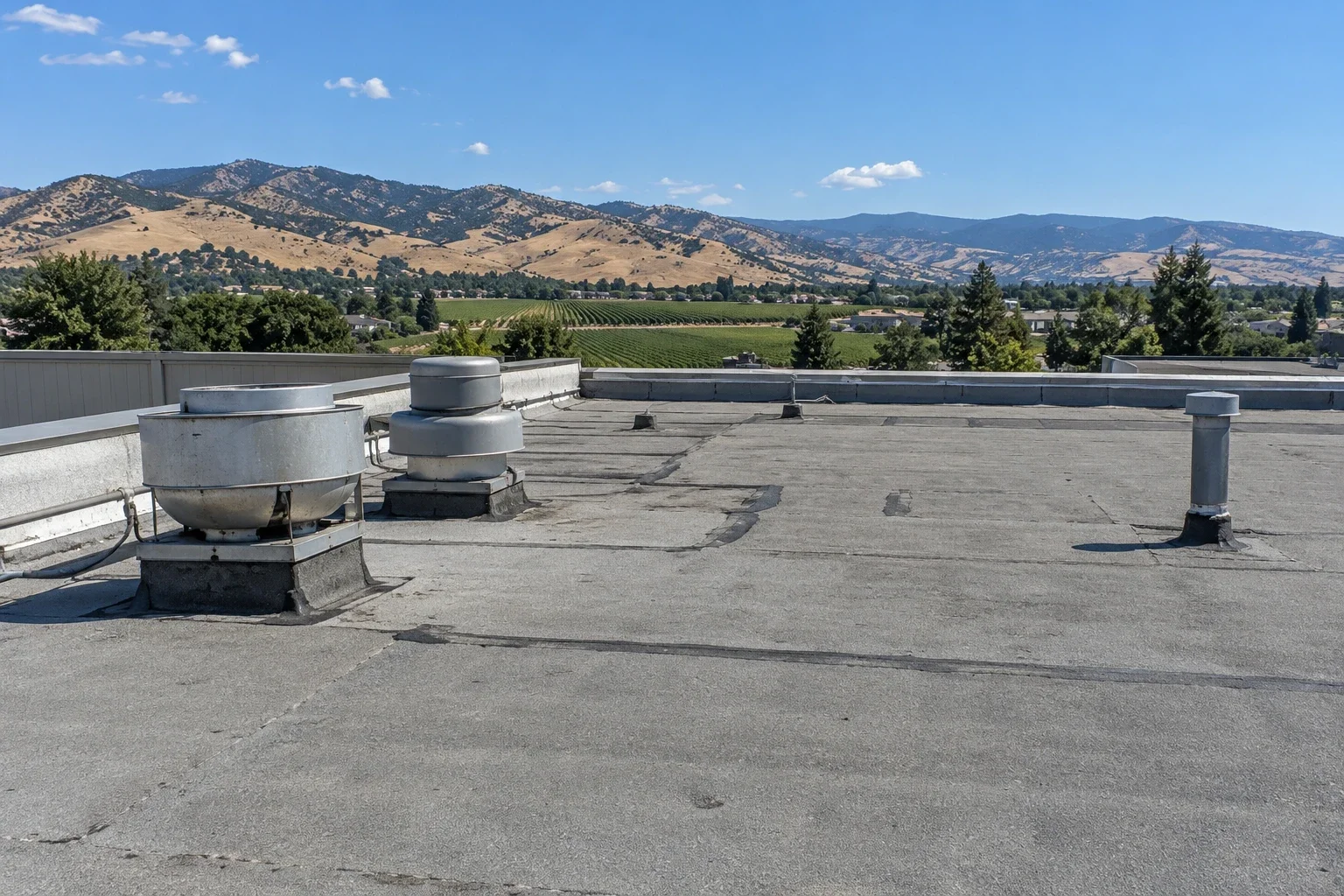
A repair, recover or replacement plan with dated reserves
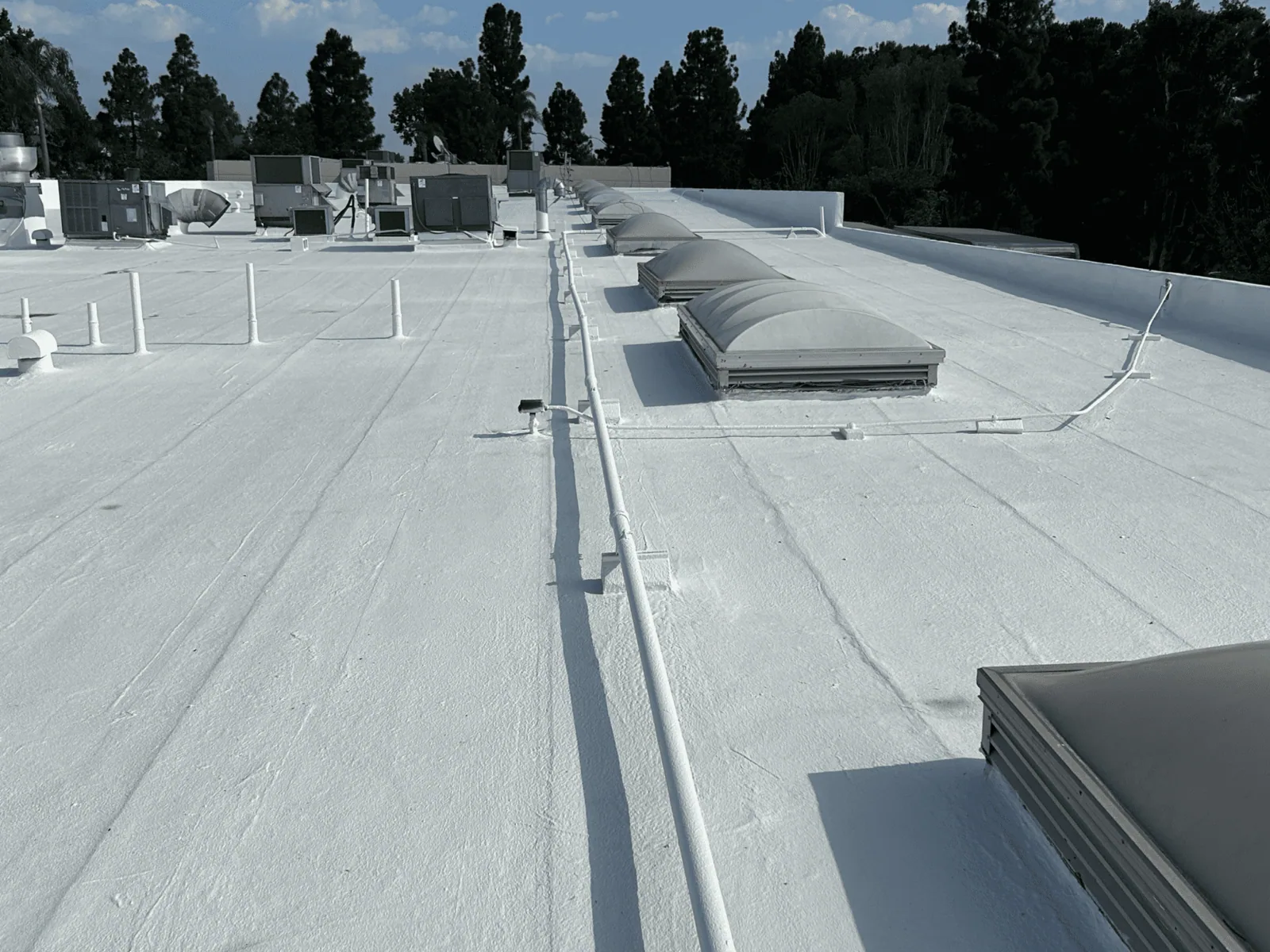
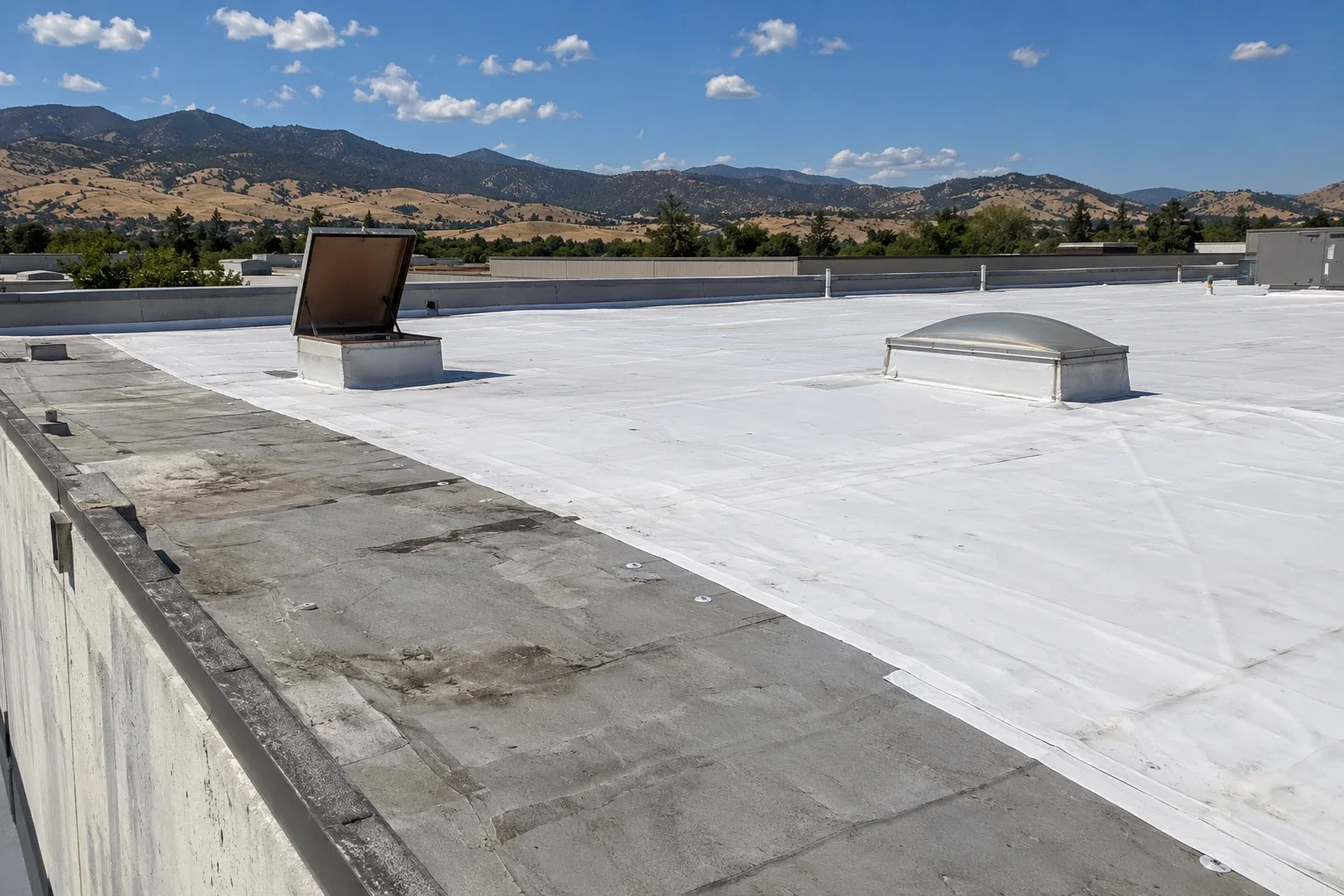
For each building we compare the three options and name the cost drivers: tear-off depth, insulation condition, access and lift needs, tenant or operations impact, and weather window. A recover overlay may suit a roof with dry, attached insulation and a sound deck, while a replacement fits one with spread moisture. Coatings are considered where the substrate is dry and the surface has aged.
The written plan carries a date for each action, so the reserve schedule reflects real timing. Insulation and uplift requirements on a larger scope may change under Oregon's new structural code, which follows the 2024 International Building Code and has been mandatory since April 1, 2026, and we confirm the edition with the building department first. For several buildings, a multi-site program sequences work by condition grade.
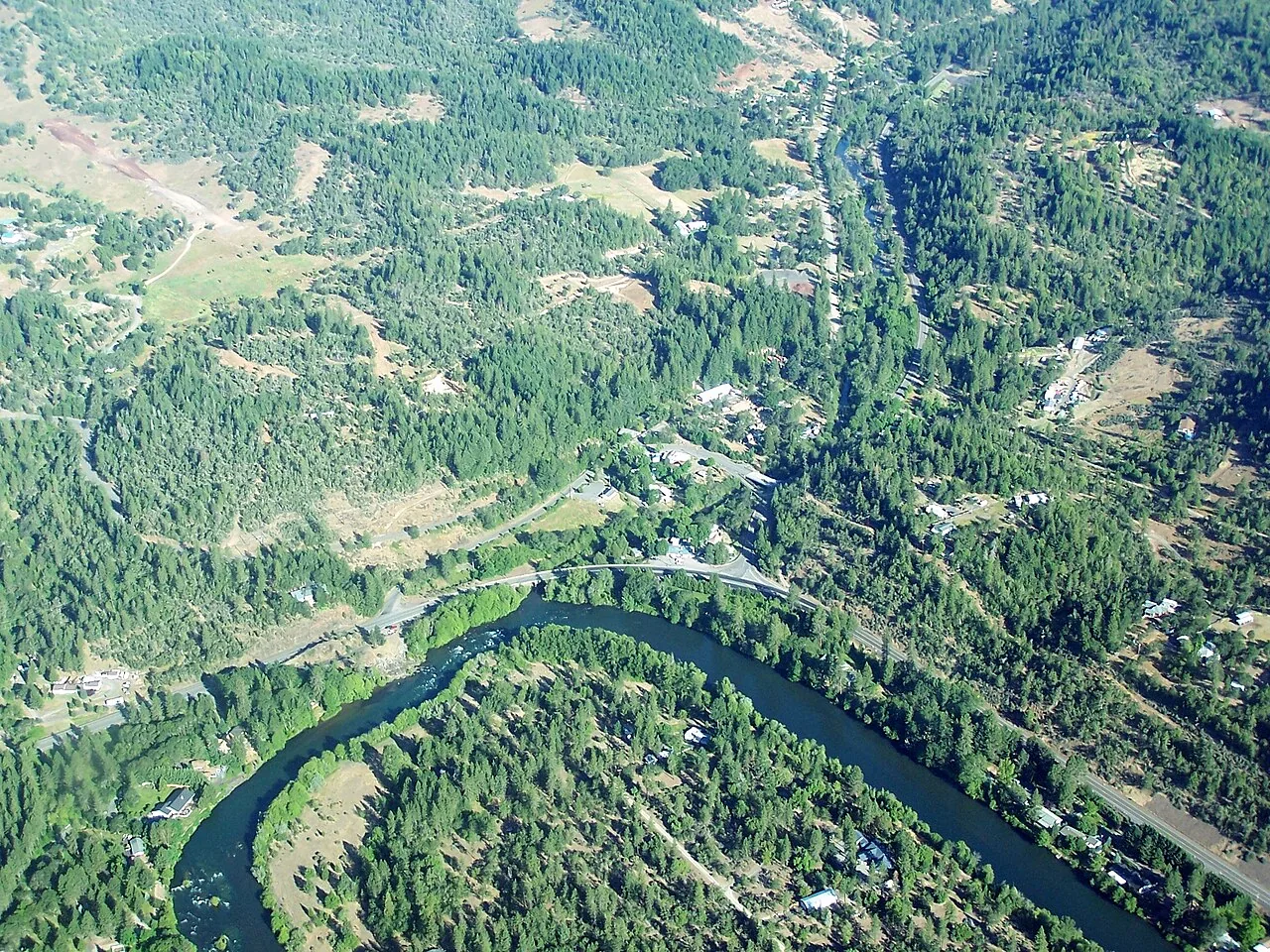
Nearby areas and shared access
White City work frequently coordinates with the industrial park, Medford and the airport corridor, all of which share the same grading method and the same emergency response at any hour.
Send the White City building list
Related Roofing Pages
Questions About White City
How does the railroad affect roof planning?
Freight operations set delivery and shift rhythms, so we plan lifts and staging around them.
What changes when a roof sits near a federal health-care campus?
Access, badging, noise and dust rules tighten, and the schedule follows operations. We outline those steps before mobilizing so the owner can plan staffing and parking.
Does the age of White City buildings matter?
It matters only once we know it. Construction dates are not assumed from the area's history, so the first walk identifies the system, the attachment and the repair history.
Can an industrial roof be coated instead of replaced?
Yes, if insulation is dry and attached. We confirm that with an infrared survey, then price the coating beside replacement.
What should be on hand before the first visit?
A building list, roof ages if known and past leak tickets. From those we set a visit order and prepare the condition grades.
Why does edge metal matter more at an open junction site?
Perimeters take wind first, and a loose coping or open sealant joint lets water under the membrane. We fasten and seal the edge before anything else and log its condition.