
Warehouse Roofing in Medford, OR
Warehouse roofing in Medford, OR: how a large flat roof ages under triple-digit sun and smoke season, and how a condition grade feeds the reserve schedule.
Overview
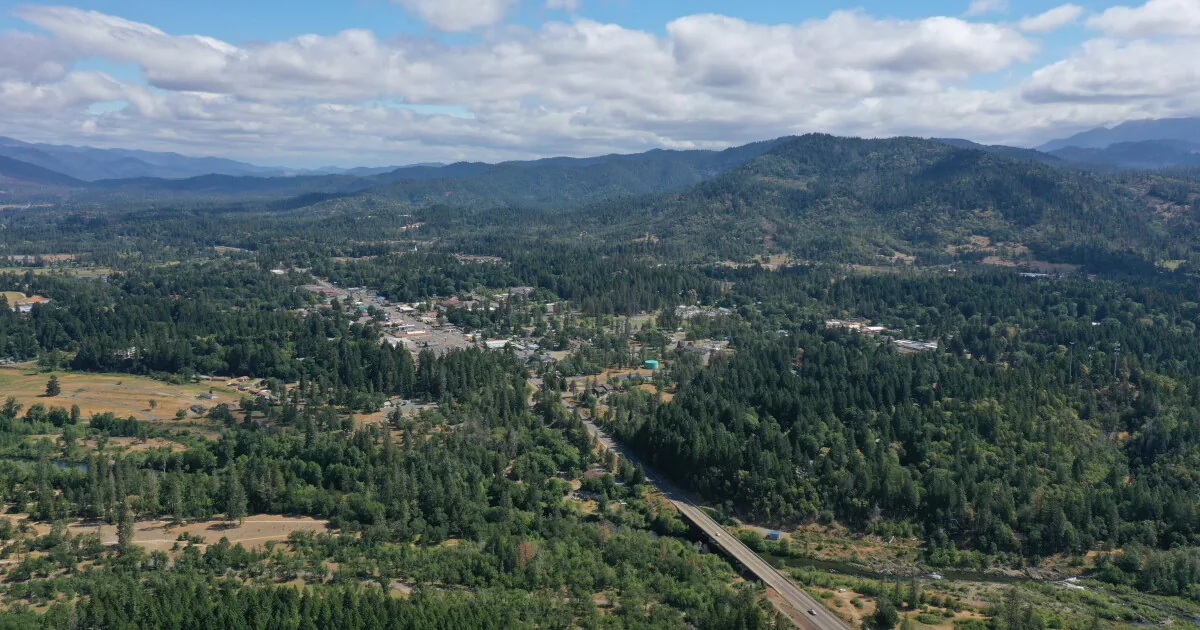
A warehouse roof in Medford, OR is mostly one thing: a very large surface that sits in the sun. The valley averages 61 afternoons exceeding 90 F, 11 exceeding 100 F, the record is 115 F, and a roof of that size collects every degree. Fewer penetrations than a hospital and no occupants beneath it mean the damage is quiet, spread across the field as reflectance loss, stiffened seams and slowly lifting laps. The reserve schedule carries one line for the whole roof, and that line is the one the valley moves.
For a property manager, the warehouse roof is a large asset with a thin margin for surprise, and a yearly condition grade is the cheapest way to keep it that way.

The building and its roof
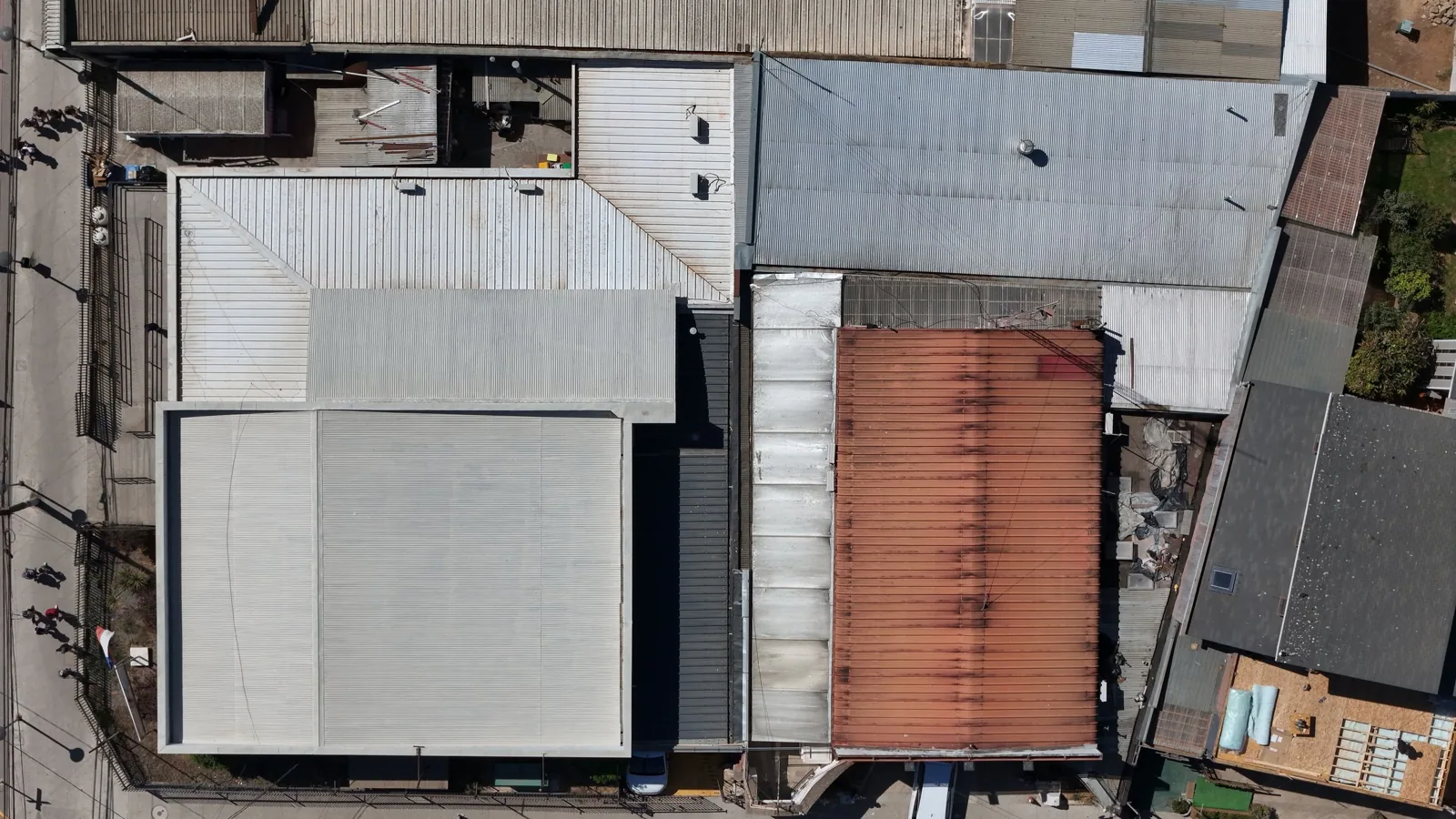
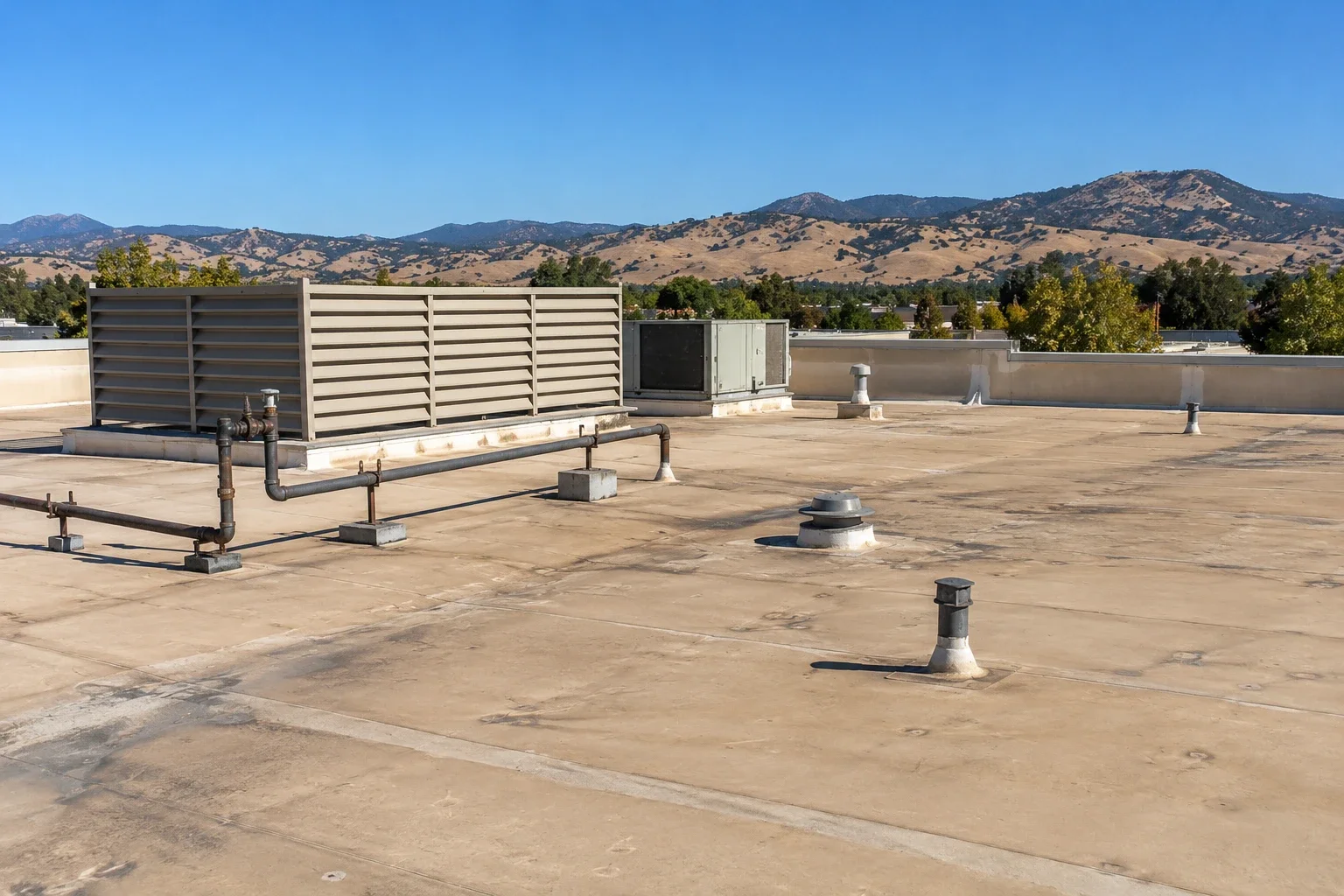
Warehouse roofs in the valley range from simple single-ply over insulated steel deck to older built-up and modified bitumen systems on concrete or tilt-up shells. Low slope, few penetrations and large unbroken areas define the type. The Phoenix Industrial Park, a 26-acre heavy-industrial parcel on Highway 99 with rail service from the Central Oregon and Pacific Railroad, and the White City Industrial Park, served by the Rogue Valley Terminal Railroad, are typical of the setting.
We do not assume the system on any specific building. A first visit identifies the membrane, counts layers, locates the drains and measures the slope. Those facts decide whether the roof is a candidate for repair, restoration or replacement, and they set the roof register's starting entry.
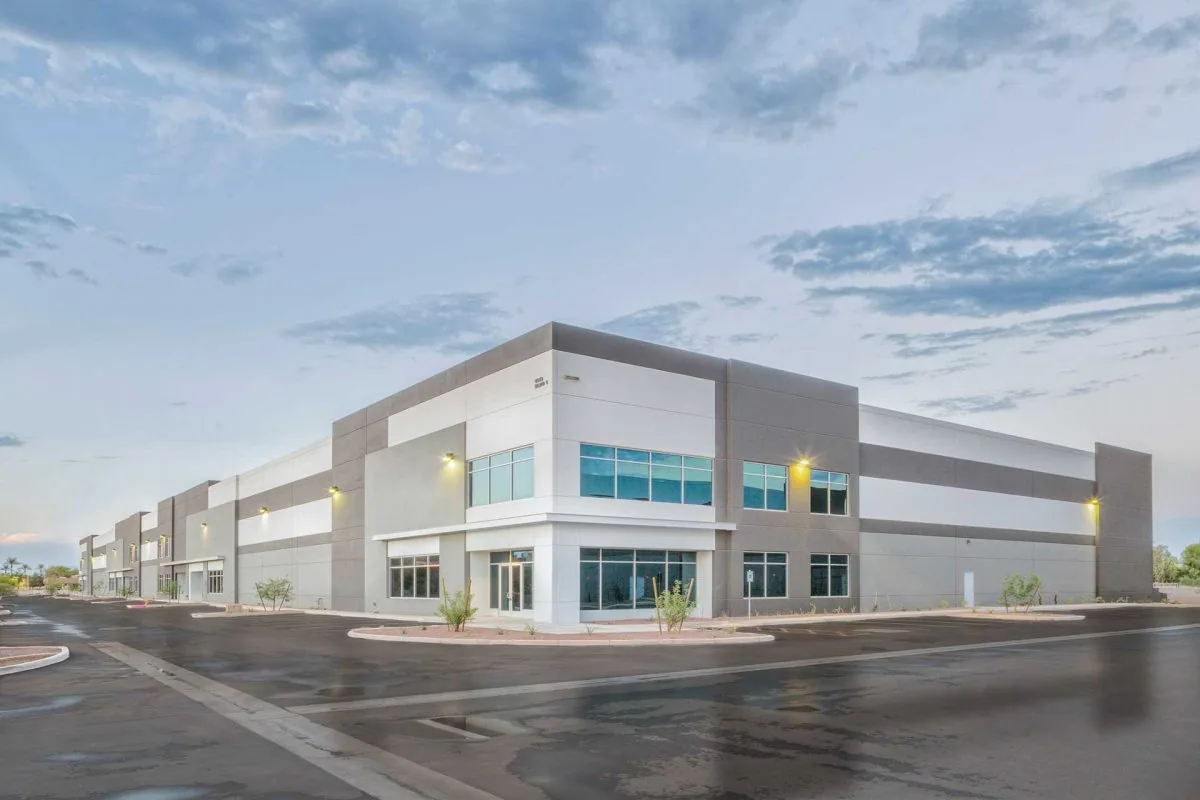
Distribution is the near neighbor of the type: an 87,750 square foot ground-distribution warehouse sits on Table Rock Road in Central Point, and the Table Rock Road corridor carries a Costco and a FedEx facility. Roofs of that scale and use get the same grading method, whether the building is a plain warehouse, a distribution center or a manufacturing plant.

Heat, UV budget and reflectance
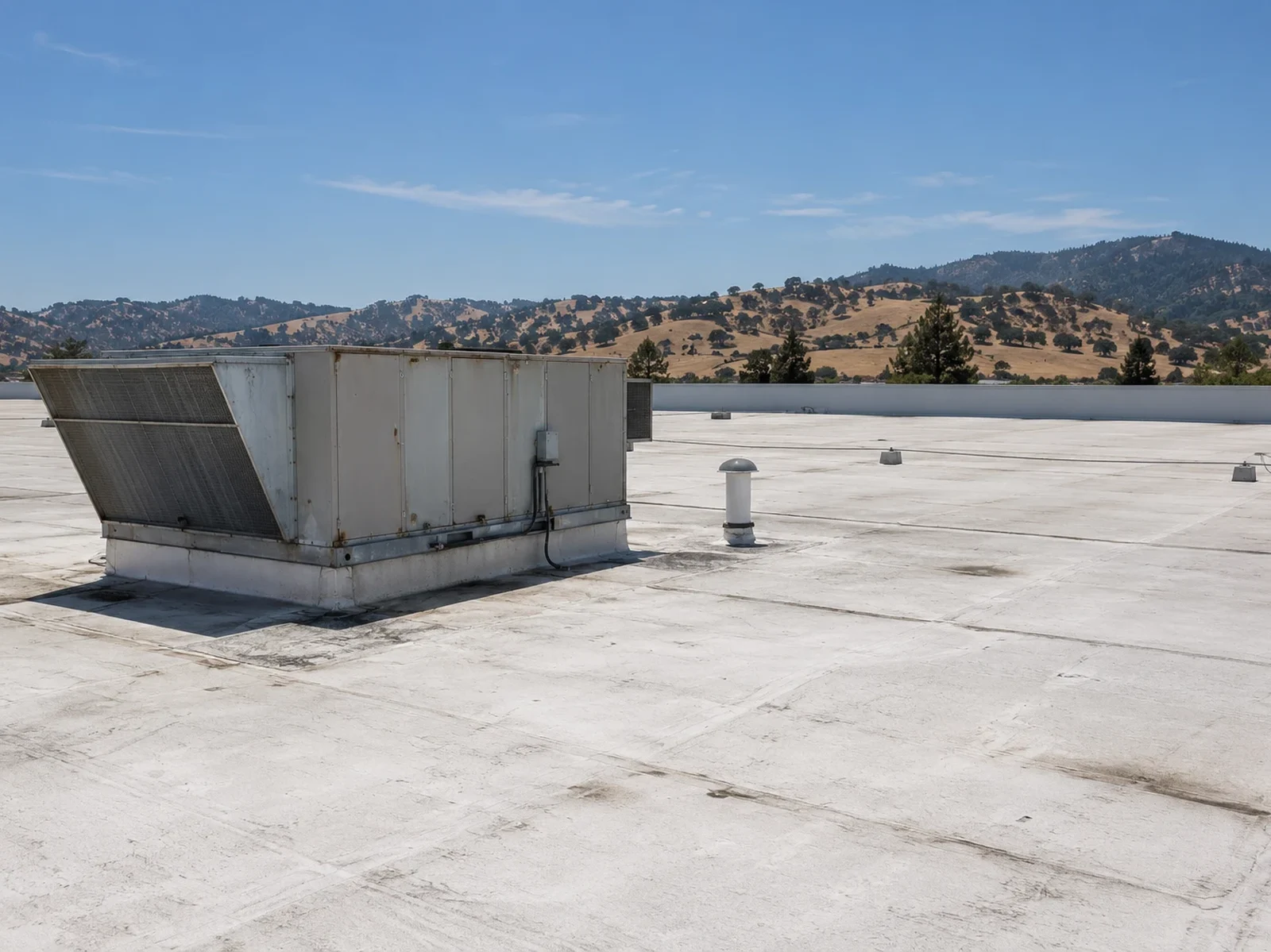
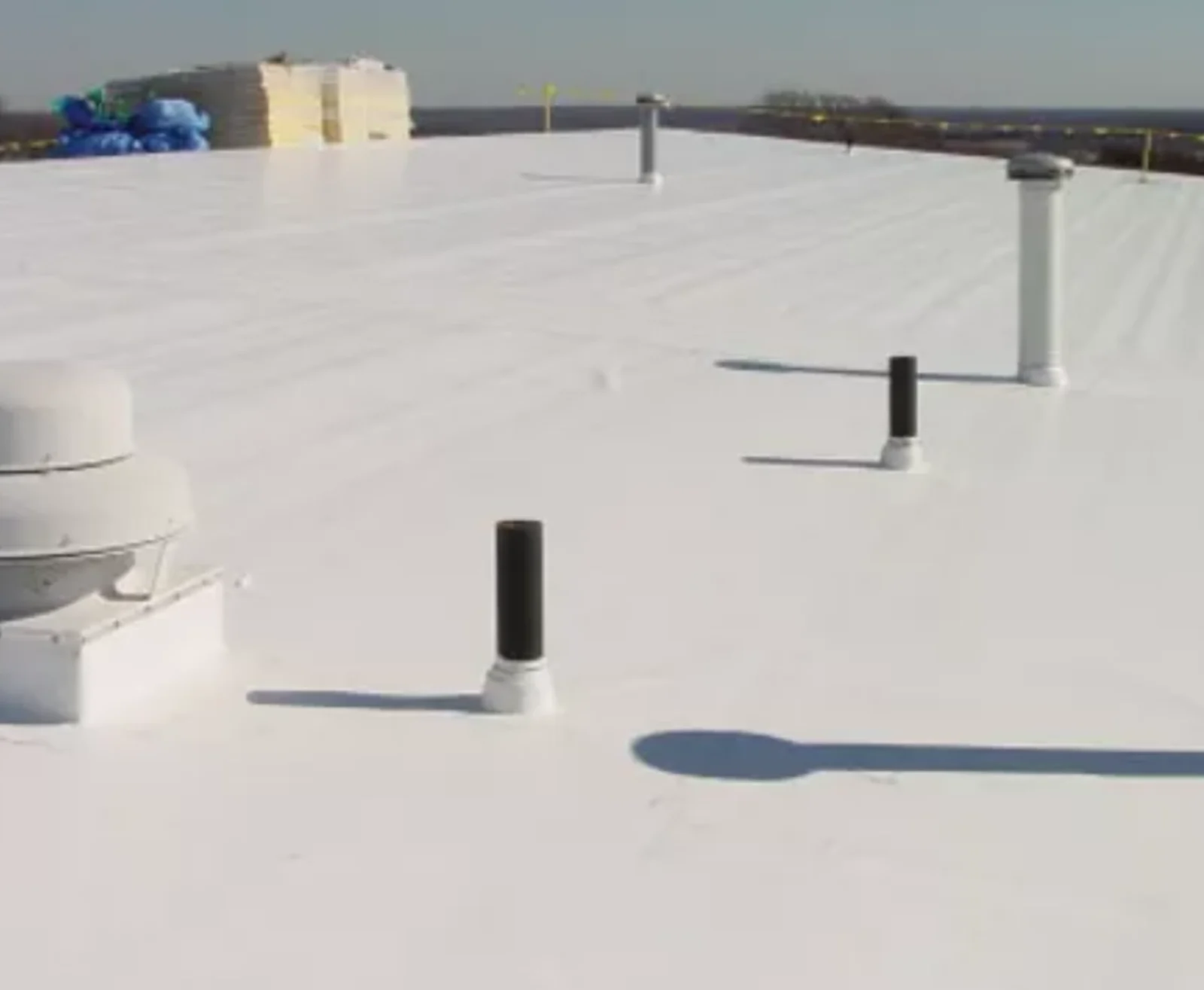
A large white roof cools the building beneath it and trims the load on rooftop units. A large dirty one does the opposite. A warehouse roof is easy to leave uncleaned, so ash, dust and soot accumulate through the dry season, and reflectance loss compounds. Over several summers, a roof that started white can read gray from the ground.
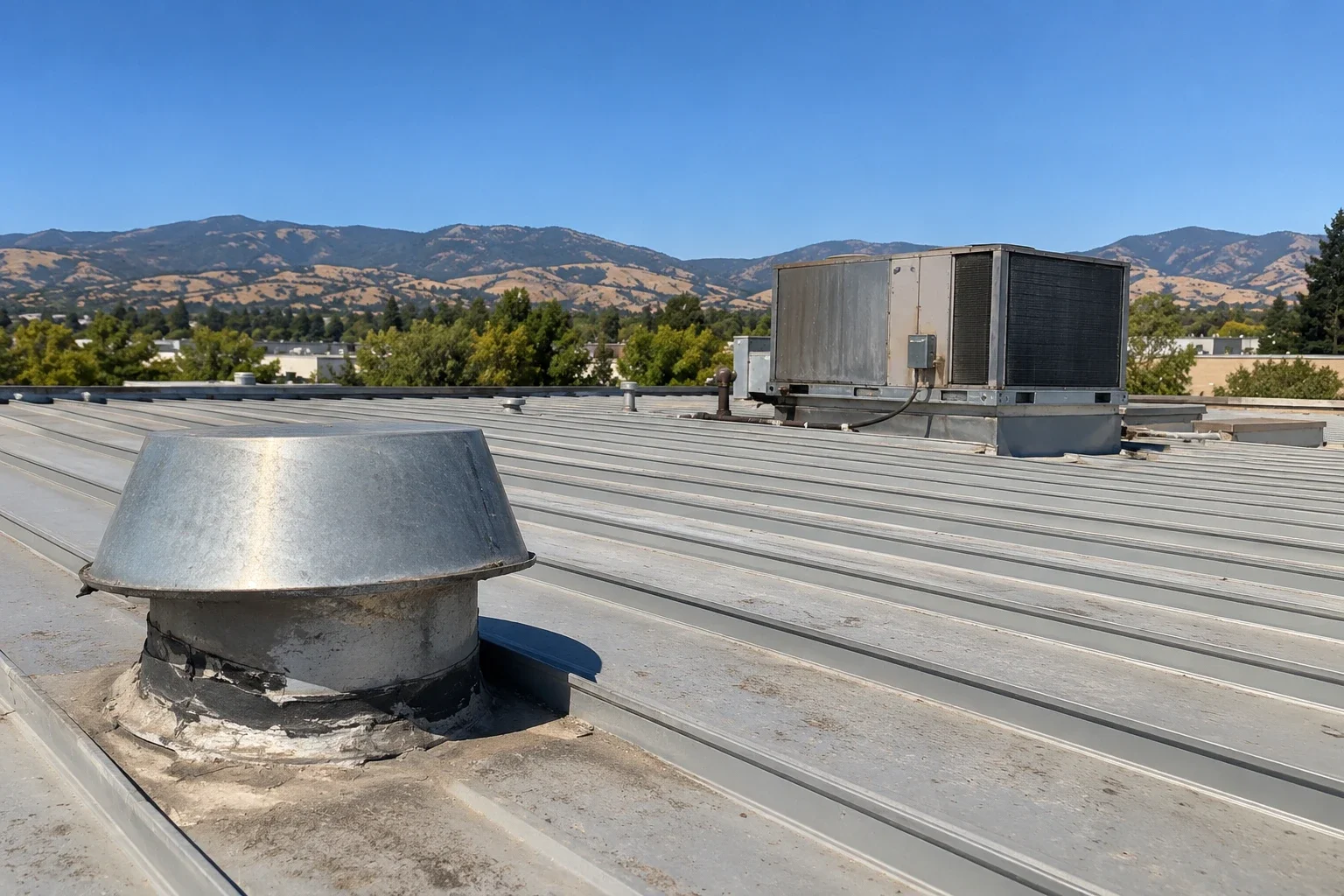
Heat also changes the membrane. Seams stiffen, laps lift at the edge, sealants harden and fasteners work loose as the deck expands and contracts. The condition grade records each of these, and the remaining service life follows. A warehouse roof with a sound field but aging seams is a repair or restoration candidate. One with widespread seam failure and dark, brittle membrane is heading for the reserve line.
Drains deserve a yearly look. On a large roof, a few clogged outlets hold water over the field, and ash makes strainers fill faster than leaves do. We clear and photograph each drain, and the record shows which outlets clog first, which tells us where to add capacity.

Smoke season and fire exposure
Wildfires in 2020 burned about 2,600 Jackson County homes, and 26 smoke days followed in Medford in 2021. A warehouse full of goods is a concentrated asset, and an insurer may ask about roof condition, debris and ember exposure. Dry leaves and needles on a roof, in valleys and against parapets, are fuel.
After a smoke event we clear debris, wash soot, check drains and inspect edges and penetrations. Before fire season we walk the roof for loose material, open gaps and damaged flashing where embers could lodge. The owner report records the work, and the roof register shows dates, which can matter to an insurer. Intake filters on rooftop units go on the same checklist.

Valley floor versus foothill
Industrial roofs in the region include those at the Phoenix Industrial Park and the White City Industrial Park, two rail-served parks that frame the warehouse setting. White City sits at the junction of Oregon Routes 62 and 140 and grew from Camp White, a WWII Army training base that covered nearly 50,000 acres on the Agate Desert.
Foothill sites change the load thinking. Prospect, with about 20.9 inches of snow a year and a record low of minus 12 F, is far heavier than the valley floor, where snowfall averages just 3.4 inches. A warehouse at foothill elevation needs separate attention to snow load, drift pockets and drain freezing. We note the elevation on the register and set the checklist to match.

System choice for a large flat roof
Large, simple roofs favor a welded TPO or a rubber EPDM, depending on cooling load, budget and ownership horizon. Sound, dry roofs may take a silicone coating that adds years without a tear-off. Roofs with heavy exhaust do better in PVC. We show the alternates with the carrying cost, and the property manager chooses with the reserve schedule in view.
Insulation and cover board are part of the choice. A thicker assembly meets energy requirements and protects the deck, and a cover board shields the insulation from foot traffic. Both raise the height of every flashing, which we check before pricing.

Reserve schedule, code and lease timing
The roof is typically the largest single capital item on a warehouse, and its date should appear in the reserve schedule with a cost range and a condition grade. Replacement is best timed to a vacancy or a lease turnover, when the building is quiet and tenants are not exposed to dust and noise. A recover over a dry roof, or a coating, can defer the date at lower cost.
Oregon's 2025 Structural Specialty Code took effect on October 1, 2025 and has been mandatory since April 1, 2026. A replacement across that date should be checked against it. We note the edition in each scope and in the owner report, and we confirm insulation and fastening requirements with the building department.

Work window and tenant impact
The spring work window is best for installation, with moderate temperatures and dry decks. Summer work starts at dawn and stops when the roof gets too hot to weld or bond. Warehouses with inventory below need protection: tarps, catch layers where the deck is open to the interior and daily dry-in. Dock operations continue, so lifts and dumpsters are placed away from truck courts.
The owner report closes the job: photographs of drains, seams and flashings, the warranty file and a new condition grade. Our commercial roof inspection program then repeats the grade each spring, so the register shows the trend.
Large roofs invite phasing: the tear-off follows the dry-in, section by section, with materials staged on the roof and lifts away from dock doors. Daily progress is logged, and the roof register records each section's completion date, so the warranty file matches the building.

Send the building list and roof ages

Related Roofing Pages
Questions About Warehouse Roofing
How long does a warehouse roof last in Medford?
It depends on system, installation and care. The condition grade and remaining service life say more than age.
Can a warehouse stay open during a reroof?
Yes, with sectioned work, daily dry-in and protection over inventory.
Is a coating worth it on a warehouse?
On a dry, sound roof, yes. It defers replacement. We scan and core first.
What does smoke do to my roof?
Soot darkens it and ash clogs drains. We clean and record after each event.
When should I replace before a lease turnover?
Before the new tenant moves in, when the building is quiet and the schedule is open.