
Roof Capital Planning in Medford, OR
Roof capital planning in Medford, OR: reserve schedules, replacement timing and spring work windows built on heat, smoke and lease-cycle realities.
Overview
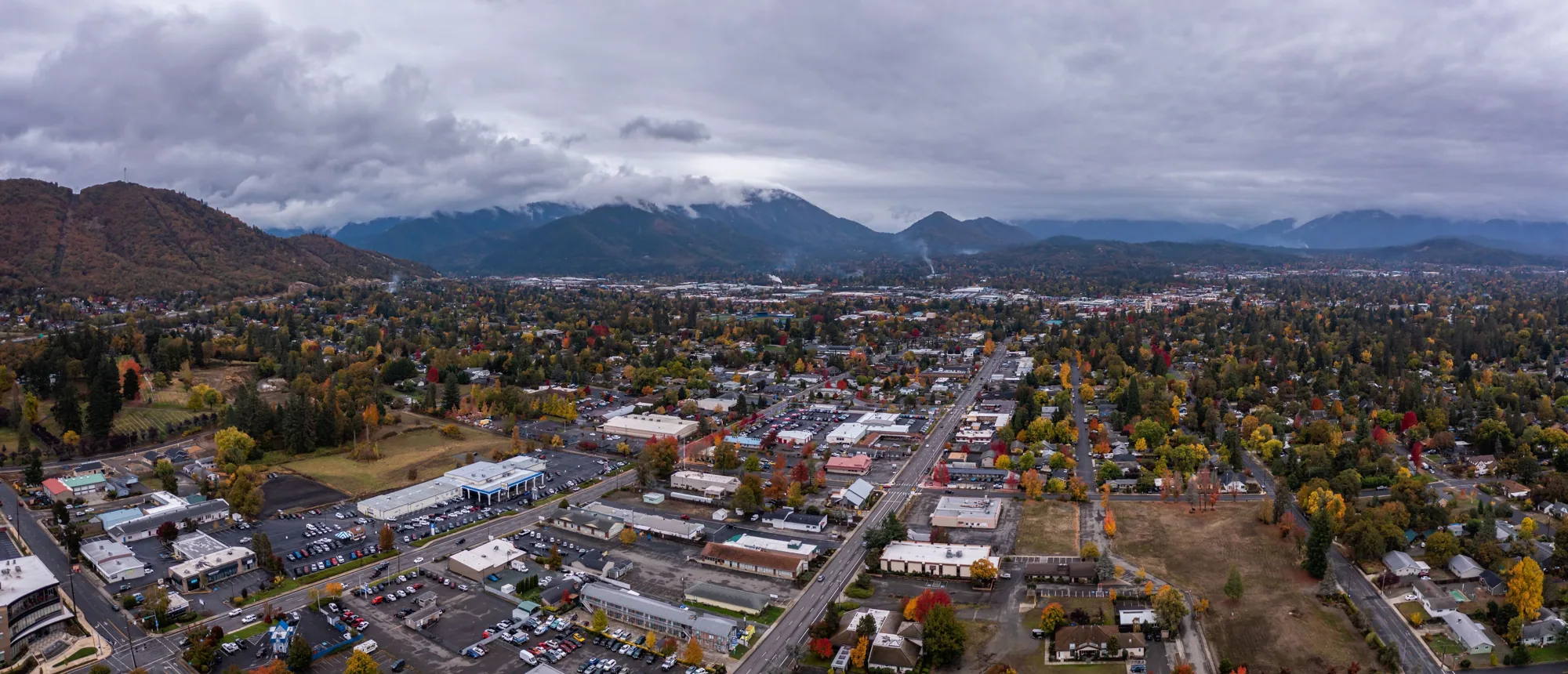
A reserve schedule that treats every roof as a twenty-year asset will be wrong in Medford, OR, because the valley does not spend a roof's life evenly. Summers here run to 61 afternoons over 90 F, 11 of them over 100 F, with a 115 F record on the books, and that heat uses up membrane faster than the calendar suggests while winters stay mild enough that the damage goes unnoticed until the first long dry spell and the first leak. The result is a plan that looks sound on paper and fails in the field, usually in a year when the owner had other uses for the money.
Capital planning for roofs corrects that by tying each building to a condition grade, a remaining-service-life range and a dated action. The schedule that comes out names the year each roof is repaired, coated or replaced, the order of magnitude of each cost driver, and the lease or sale event that makes the timing sensible. It becomes a document the owner can defend to a lender, a partner or a board.

Reserve Schedule Logic
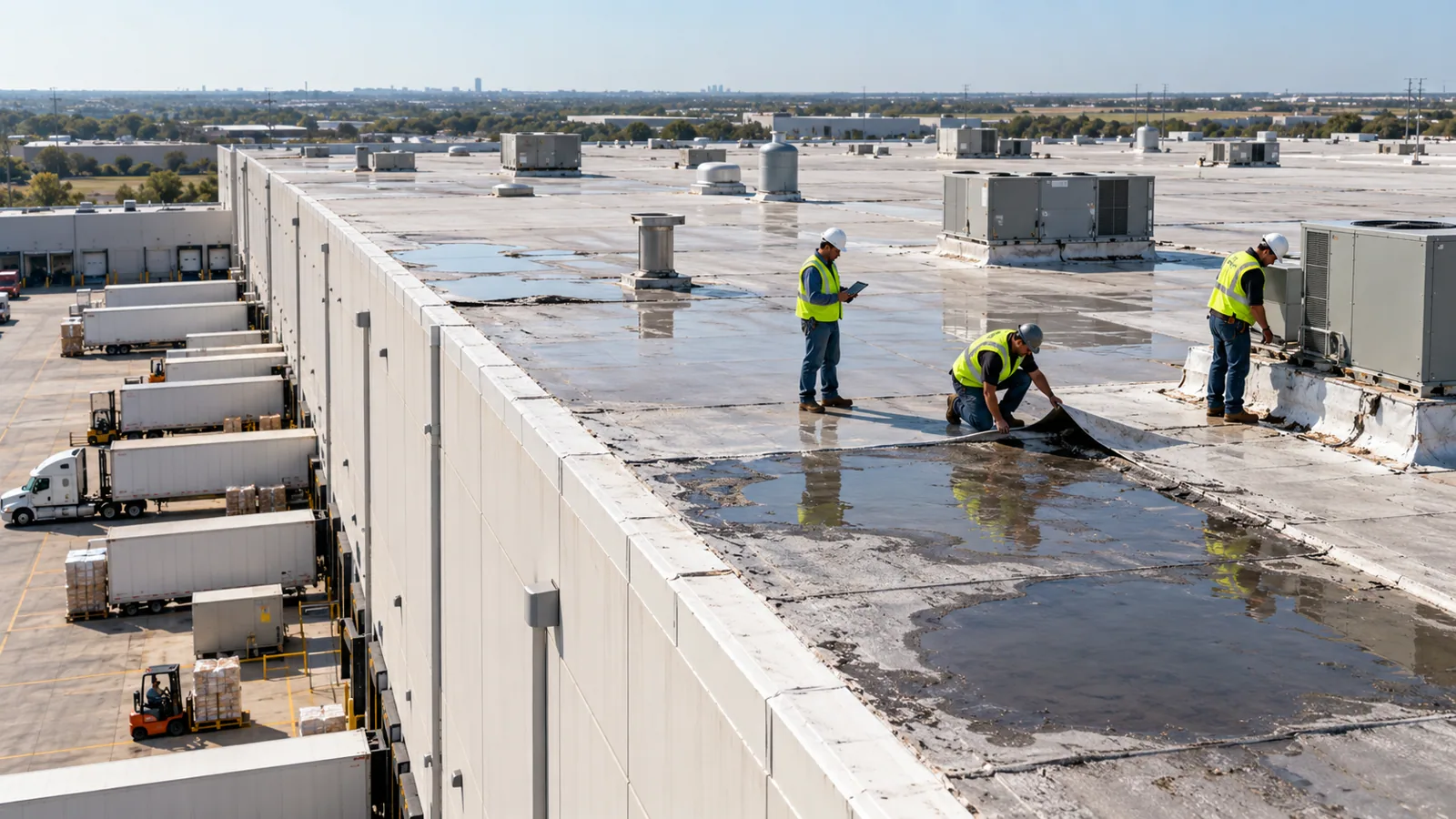
The schedule starts with what each roof is doing now. A roof register supplies the condition grade, the system type and the leak history, and a recent moisture survey, written up in condition reports with photographs, tells us whether the insulation is still dry. Roofs with dry insulation and a sound membrane are candidates for coating or targeted repair, which pushes the capital event out. Roofs with saturated insulation or failed seams move to the near horizon, because carrying cost rises every month water enters the assembly.
We then sort the file into three bands: the next eighteen months, years two through five, and years six through ten. Near-band entries carry firm prices from measured scopes. Middle-band entries carry ranges. Far-band entries carry allowances that tighten as the years close. The owner sees all three bands on one page, which makes it easy to see where one large event may collide with another.

Repair, Coat or Replace
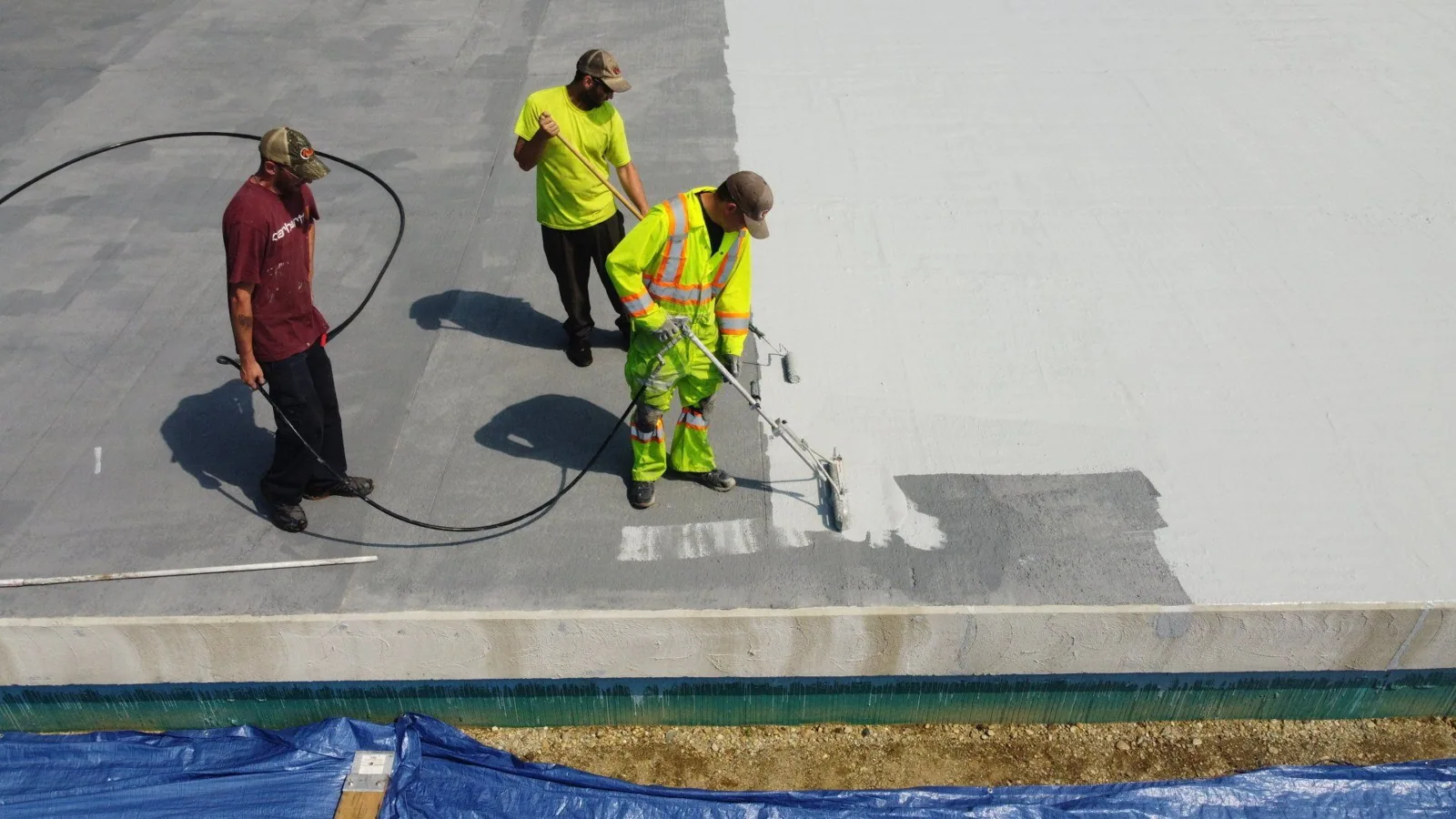
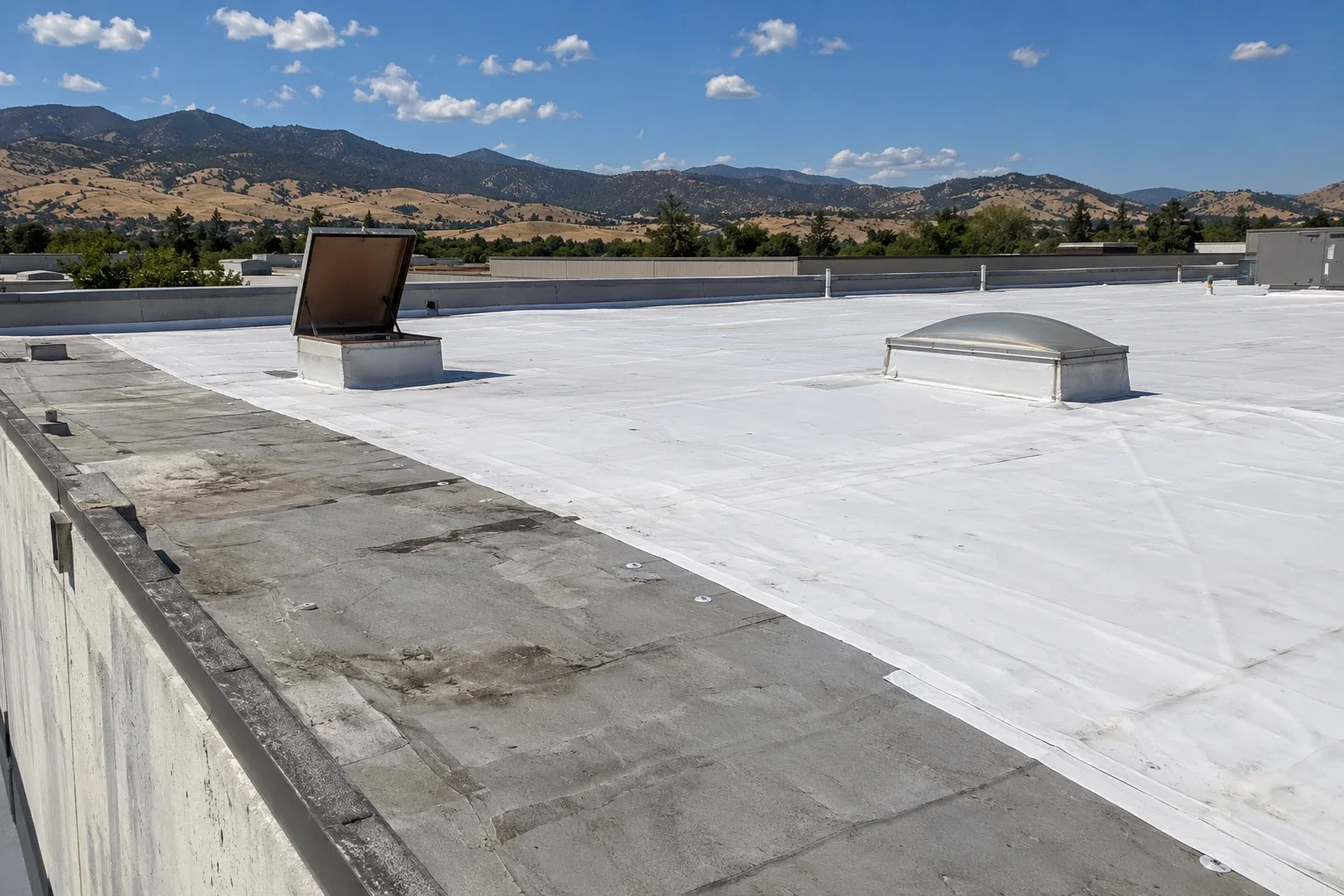
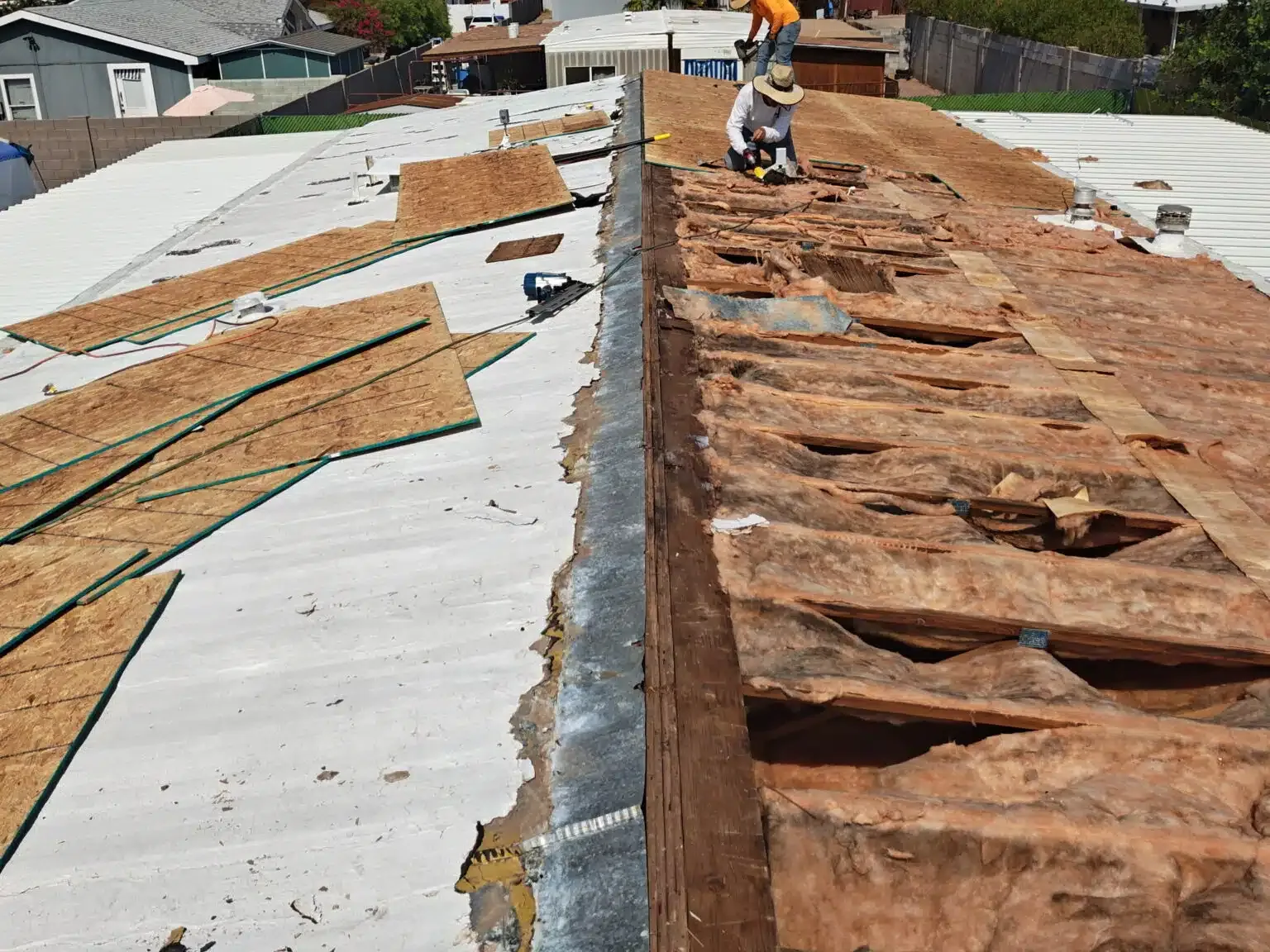
Each roof carries a decision, and the schedule shows the logic behind it. A white membrane that has lost reflectance but still has sound seams and dry insulation can often take a restoration coating, which restores reflectivity, seals small defects and resets the clock on the surface. A roof with a sound deck and a failing membrane may take a recover over the old system, if the insulation is dry and the structure can carry the added layer. A roof with moisture trapped in the assembly needs full replacement, and putting a coating on it is a way to spend money twice.
The point is not to push owners toward the largest scope. The point is to put the three options side by side with the tradeoffs in plain terms, so the decision lands on the option the roof can actually support, not the one that happened to be cheapest on the first call.

Cost Drivers Without a Number
We do not publish prices in a plan before the roof has been measured, but the drivers are knowable. Roof area and access set the labor. Insulation depth and cover board set material quantity. The number of penetrations, curbs and drains sets the detail work, and rooftop equipment can double the time on a small roof. Tear-off adds disposal. Occupied buildings add phasing. On a hospital campus in Medford, where Asante Rogue Regional Medical Center and Providence Medford Medical Center are two of the larger employers, air intakes, infection control and noise limits shape every day on the roof, so the schedule moves more than the square footage would suggest.
Oregon's 2025 Structural Specialty Code, adapted from the 2024 International Building Code, took effect on October 1, 2025 and became mandatory on April 1, 2026 after a phase-in. Replacement scopes that open the roof now follow that code, so the plan flags insulation and attachment details that a work order written under the old edition would have missed.

Lease Cycles and Ownership Events
Retail centers show the pattern clearly. Rogue Valley Mall opened in October 1986, and Spinoso Real Estate Group took over management in February 2024, so a large flat-roof retail property is being repositioned. A repositioned center asks a roof question at every major-tenant renewal: does the roof support the next ten years of lease, or does the new tenant inherit a replacement? The plan answers it with a date. Smaller shopping center roofs face the same question on a smaller scale, one suite at a time.
Sales and refinancing events work the same way. A buyer's engineer will find a roof's remaining life in a day, so the owner's plan should already say what the number is and what cost it carries. An owner who leads with the schedule controls the conversation. An owner who waits for the buyer's report negotiates from behind.

Smoke, Fire and Contingency Lines
Wildfire adds a contingency line that a coastal or desert plan would not carry. Smoke lingered through 26 days of 2021, and the 2020 wildfires that levelled roughly 2,600 homes in the county explain the line. Soot accumulates on reflective surfaces and raises surface temperature, so washing and recoating intervals shorten after heavy smoke seasons. Ember exposure at edges and penetrations argues for periodic inspection and for keeping debris off the roof.
The plan also lists non-roof dependencies. Warehouses in the Phoenix Industrial Park, a 26-acre heavy-industrial site served by rail, and distribution buildings along the Table Rock Road corridor near the airport, each run on schedules that a roof crew must respect. Dock hours, truck routes and fire lanes become part of the project calendar.

Spring Work Window and Procurement Lead Time
The best working weather in the valley runs from spring through early summer, before the triple-digit stretch that makes membrane work harder on both crew and material. Approvals that come in winter can be ordered and staged by March. Approvals that arrive in June compete with every other owner's schedule and run into July heat. The plan therefore puts decision dates ahead of work dates, and names the month by which each owner action is needed.
Material lead times add a second constraint. Insulation, membrane and metal edge components each have their own ordering windows, and a plan that says the roof will be replaced in a given spring has to say when the order is placed. We include that date, since it is the one that tends to slip. A roof that misses its order date does not wait politely for the next spring. It waits through a summer of heat and, in a bad smoke year, through a fall of soot, and the carrying cost of that extra season lands on whichever budget line was meant to be closed.
Owners with several buildings can stagger the dates so that crews, material and tenant disruption never pile up in the same month. A plan that places one replacement in each of three springs costs less to manage than one that tries to do three at once.

Related Roofing Pages



Questions About Roof Capital Planning
How many years should a roof plan cover?
Ten years gives a useful horizon. The first eighteen months carry firm numbers, and everything beyond carries ranges that tighten each annual update.
What does the plan need from a property manager?
The building list, any known roof ages, leak tickets, and the next lease expirations. Missing dates become inspection items.
Can a plan include coating instead of replacement?
Yes, when the insulation is dry and the seams are sound. The plan shows the coating year and the later replacement year beside each other.
How does the new state code affect timing?
Any roof opened after the mandatory date follows the updated code, so we flag insulation and attachment items before the order is placed.
What happens when a roof fails earlier than planned?
It moves up in the schedule, and the plan shows which other roof can slide back to absorb the cost.