
Government Building Roofing in Medford, OR
Municipal and county building roofing in Medford, OR: condition grades, public-bid-ready scopes and reserve schedules for facilities teams.
Overview
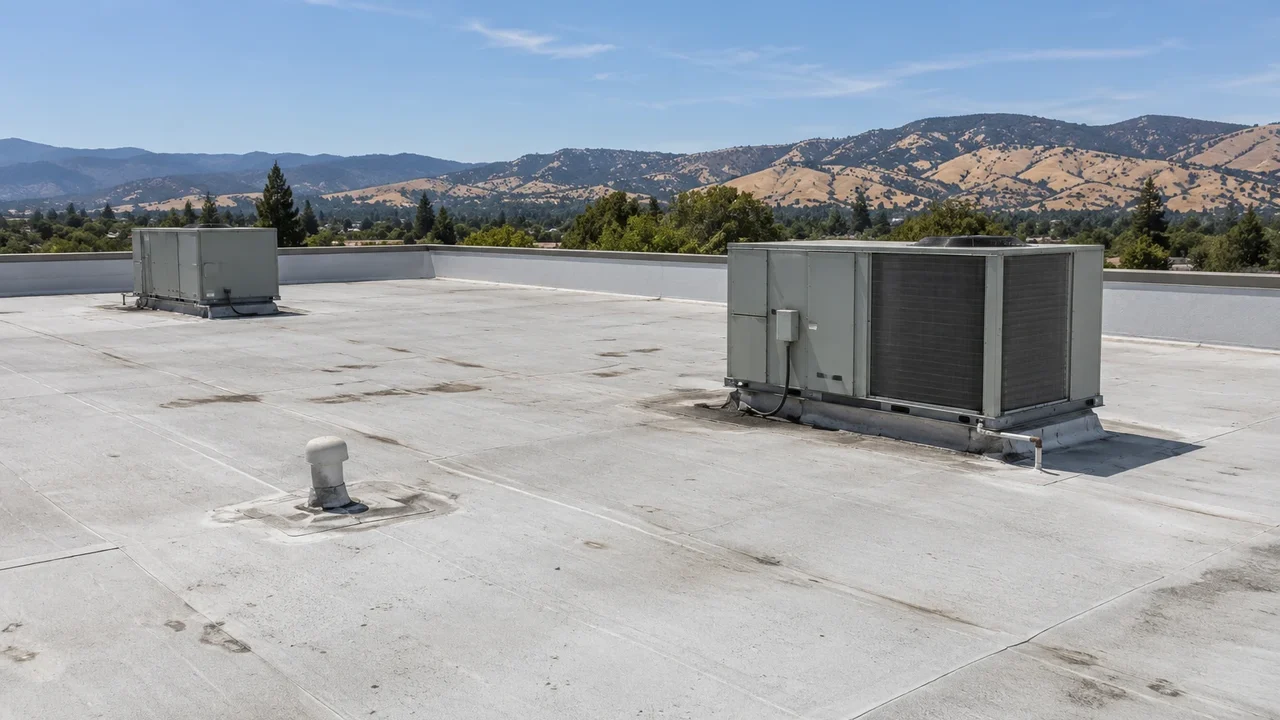
A public building cannot close for a roof, and in Medford, OR the sun makes the roof harder to ignore every summer. In a typical year the valley sees 61 afternoons over 90 F, 11 of them over 100 F, with 115 F on record, and a membrane over a city office, a library or a county service building loses reflectance and service life in the same weeks the public needs the air conditioning most. The line in the capital plan that moves is remaining service life, and it moves sooner than the adopted schedule often shows.
Facilities managers in the public sector answer to a council or a commission, an auditor and a procurement office, and the roof report has to serve all three. Each building is scored for condition, given years remaining and paired with a recommended action and a cost range, in a layout a staff report can carry to a budget hearing without rewriting.

Valley sun on civic buildings with long service lives
Civic buildings stay in service for decades, and their roofs are asked to last as long as the budget allows. Rain seldom washes a roof in a valley with about 18.4 inches of precipitation a year, so dust, pollen and soot sit on the surface and warm it. A white single-ply sheet that tested bright when new reads dimmer after a few triple-digit summers, seams stiffen and flashings at walls and units begin to pull.
The effect is slow, and slow effects are easy to defer in a tight budget year. A survey that grades each roof and records the evidence makes the drift visible. A building at grade three of five with six years left is a different line in the plan from one at grade two with two years left, and the report puts each in its place with photos and a date. When the council asks why a roof at grade three is funded before one at grade two, the exposure column answers: the first sits over a public counter and the second over a storage bay.

Condition grade, remaining life and the building inventory
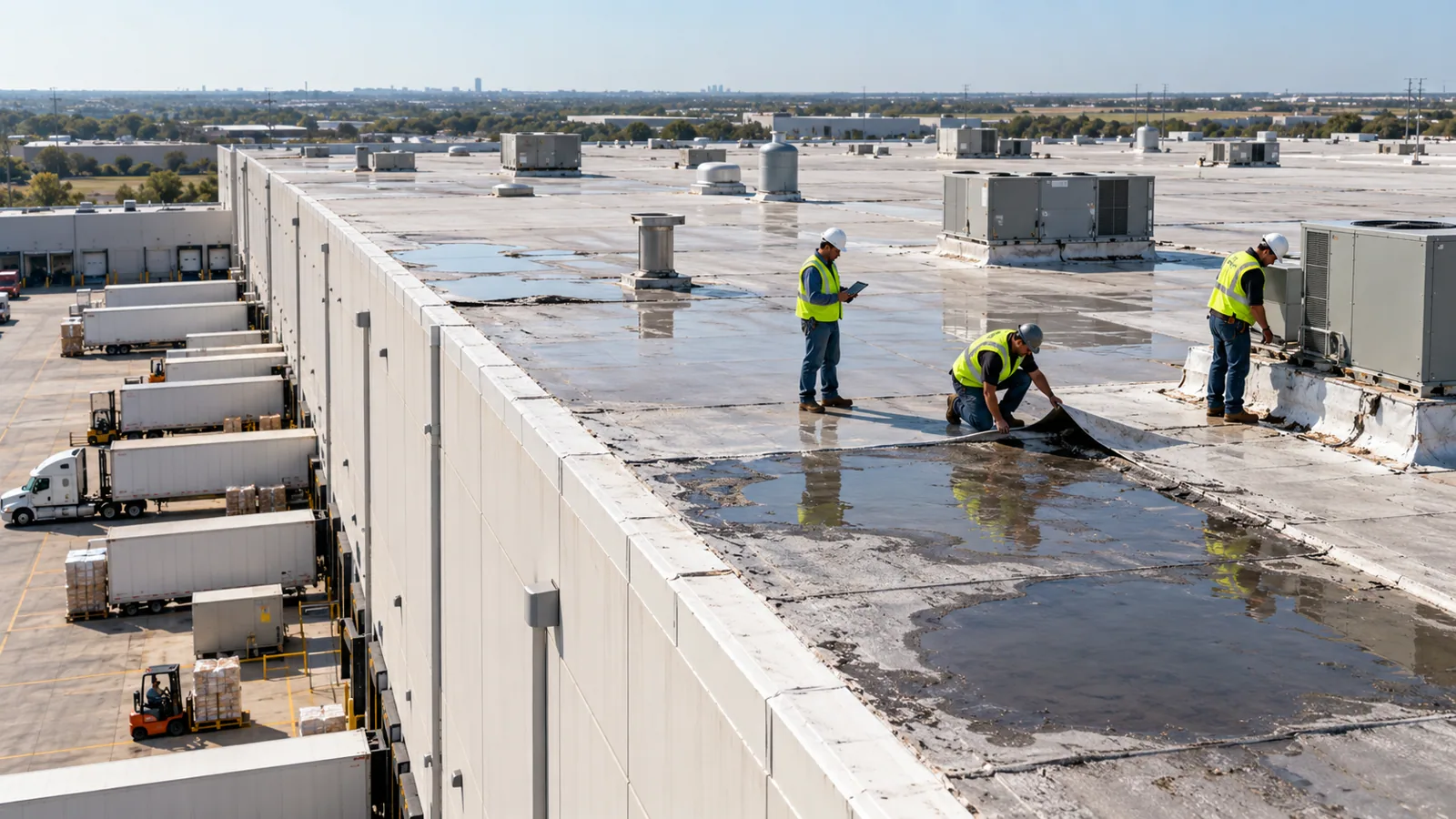
A public owner may hold a long list of buildings acquired over many decades, such as offices, libraries, maintenance yards and community centers. We grade every roof on the same scale so the inventory can be compared. Scoring covers membrane or covering, seams and laps, flashings, drainage and the moisture an infrared scan reads, and each building ends with a grade and a remaining-life estimate.
The inventory becomes a ranked list. The roofs most likely to leak into occupied space come first, followed by the roofs with the longest lead times, then the roofs that can be coated or repaired for a modest sum. A staff report can show the ranked list to a council and recommend a funded first phase, with the later phases dated and priced for the next budget cycles.

Capital plan, procurement and the cost of waiting
Public bodies buy roofs through procurement rules that favor clear scopes and comparable bids. We write the scope with a base bid and numbered alternates, so a procurement officer can compare responses on equal terms and a commission can award a clear package. Specification details, such as membrane type, insulation depth, fastening and warranty terms, are stated so bidders price the same roof. A scope that leaves the insulation depth open invites low bids that change later by order, and the change orders land on the agency. We state the depth, the cover board and the edge detail, and we name the alternates that the agency may take or leave.
The carrying cost of waiting is the number that makes the case. Each year of delay on a failing roof adds repair calls, interior damage, a larger final replacement and the risk of closing a counter or a meeting room. The report sets those costs beside the replacement price, so a council can see that a planned replacement in the spring work window costs less than a string of emergencies. Each phase also gets a decision date, because membrane and insulation lead times mean a spring start requires an order placed months earlier, and a board that meets only monthly needs to know which meeting is the last useful one.

Medford, Jackson County and the roads between
Public facilities in the Rogue Valley are spread along the corridors. Interstate 5 passes over Bear Creek and downtown Medford on a 3,229-foot viaduct, Oregon Route 99 crosses the center, Route 62 serves the north, and Route 238 leads northwest to Jacksonville, Applegate and Grants Pass. A county that owns buildings from the valley floor to the foothills owns different climates, and a white membrane that suits a courthouse flat roof on the valley floor may not be the right answer where snow and ice collect for weeks.
On the valley floor snowfall averages about 3.4 inches a year. A public building at Prospect, up Route 62, faces about 20.9 inches of snow in an average year and a record low of minus 12 F, which calls for separate thinking about load and ice. Each building is graded against its own site, and new work follows Oregon's 2025 Structural Specialty Code, which has been mandatory since April 1, 2026.

Public hours, secure areas and smoke-season continuity
Public buildings keep hours, and some keep secure areas. We map the roof to the floor plan and work out entrances, parking and staff routes with the facilities office. Court rooms, records vaults, dispatch rooms and server rooms each have rules, and the schedule respects them. Hold points after each phase let the department confirm the interior is dry before the next section opens. Escorts for secure areas are arranged in advance and the crew's identification is submitted ahead of the start, so a badge request never holds up a morning. Where a records room cannot be entered, the plan keeps the work above it to the quietest and driest methods.
Smoke season adds a continuity question. Medford counted 26 smoke days in 2021, after fires in 2020 cost the county about 2,600 homes. Buildings that serve as cooling centers or clean-air shelters in a smoke event need their roofs and rooftop filters in order before the season starts. We include a pre-season check and a post-smoke visit in the maintenance plan and log both in the register.

Reporting to the commission and the auditor
Each building leaves with a roof register entry: grade, photos, drain map, penetrations, warranty and the next check date. The register answers an auditor's question and a successor's. A public agency can start with a roof condition report and move to a roof capital plan. Preventive roof maintenance keeps grades current. Related buildings include schools and National Guard armories, and agencies in Medford and Jacksonville follow the same plan.

Send the building inventory, roof ages and leak tickets

Related Roofing Pages


Questions About Government Building Roofing
How do you write scopes for public bids?
A base bid with numbered alternates and stated specifications, so bidders price the same roof.
Can a building with public hours stay open?
Yes, with entrances kept clear, secure areas protected and a hold point after each phase.
What does a council need to see?
A ranked inventory, a cost range for each action and the carrying cost of waiting.
Does the new state code apply?
It governs new work. We confirm the edition and loads for each building before pricing.
What about buildings used as cooling centers?
We check roofs and rooftop filters before the season and again after smoke.