
Roof Condition Reports in Medford, OR
Written roof condition reports with photos in Medford, OR: grades, moisture findings and remaining life, ready for an owner report, lender or buyer.

Overview
The first photograph in a Medford, OR condition report is usually a seam, because a seam is where a summer of triple-digit afternoons leaves its signature. A membrane swells in the afternoon and shrinks overnight, and after enough of those cycles a lap that looked tight on the day it was installed opens to a hairline gap or a lifted edge. That photograph, dated and labeled, carries more weight in a reserve discussion than any opinion about age, since it shows the exact place where remaining service life is being spent.
A written condition report puts that kind of evidence in a form a property manager can hand to an owner, a lender or a buyer. It describes each roof section, grades it, records what was found and what was measured, and states what the roof needs in the near term and the long term. It is the document that turns a roof from a concern into a line on a schedule, and it is the raw material for every other planning step.

What the Site Visit Records
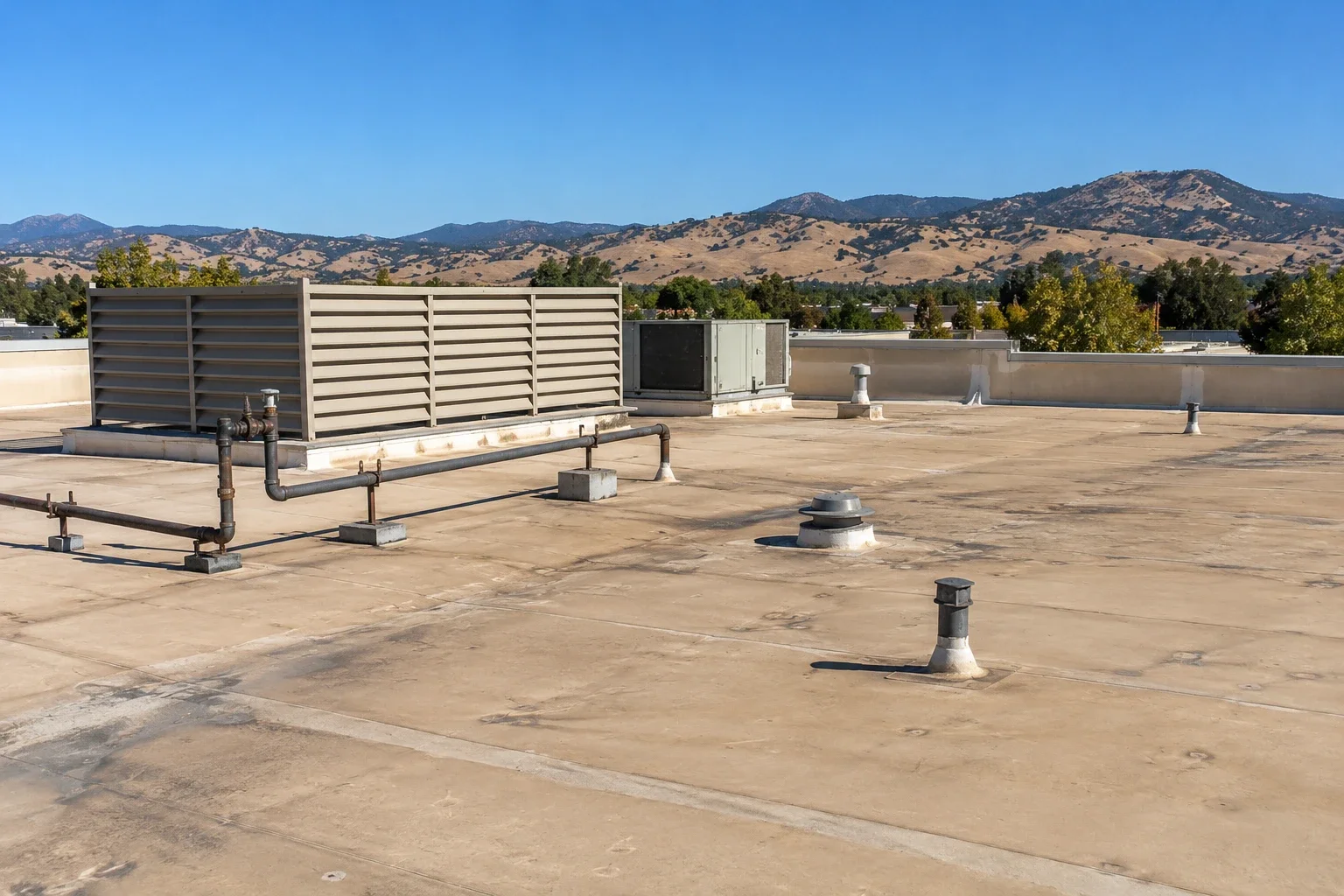
Each report begins with a site visit by someone who handles membrane, flashing and drains daily. We record the roof system and its attachment, the deck where it can be seen, the insulation type if known, the age if records exist, and the access route. We note rooftop equipment, curbs, skylights, vents and any additions made since the original installation, since each of those is a place where water tends to enter.
Condition observations are specific and located. Instead of writing that seams are in fair condition, the report says which seams, how long the open stretch is, and whether the lap shows a hairline split, a lifted edge or a sealant failure. Drains get their own entry: clear, partly blocked or ponding, with a note on whether sediment or smoke-season soot has collected in the sump. Edge metal, coping and parapet caps are checked for movement, fastener backout and open joints.
Photographs That Hold Up
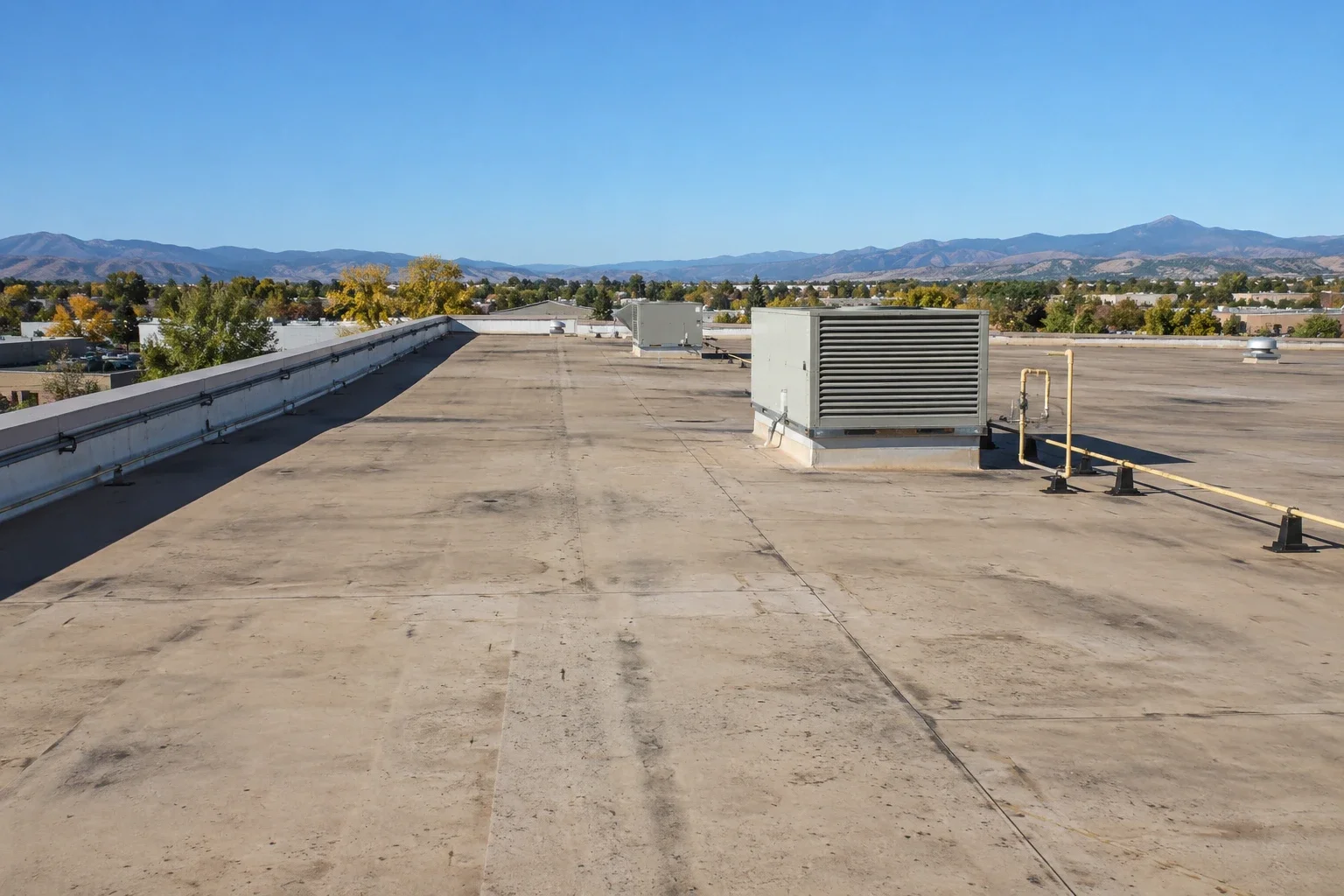
Photographs are labeled by building, roof section and detail, and dated on the day of the visit. A good set includes wide views that orient the reader, close views that show the defect, and scale references where size matters. For large or hard-to-reach roofs, drone photography covers areas that foot access would miss, and shows ponding patterns and surface staining from above.
Photo sets earn their place when a question comes up later. An insurer asking about a loss, a manufacturer reviewing a warranty claim and a buyer's engineer comparing conditions all want the same thing: a dated record of how the roof looked before the event. A set taken in spring, before the hot stretch, is the baseline that every later set is compared against.
Moisture Findings
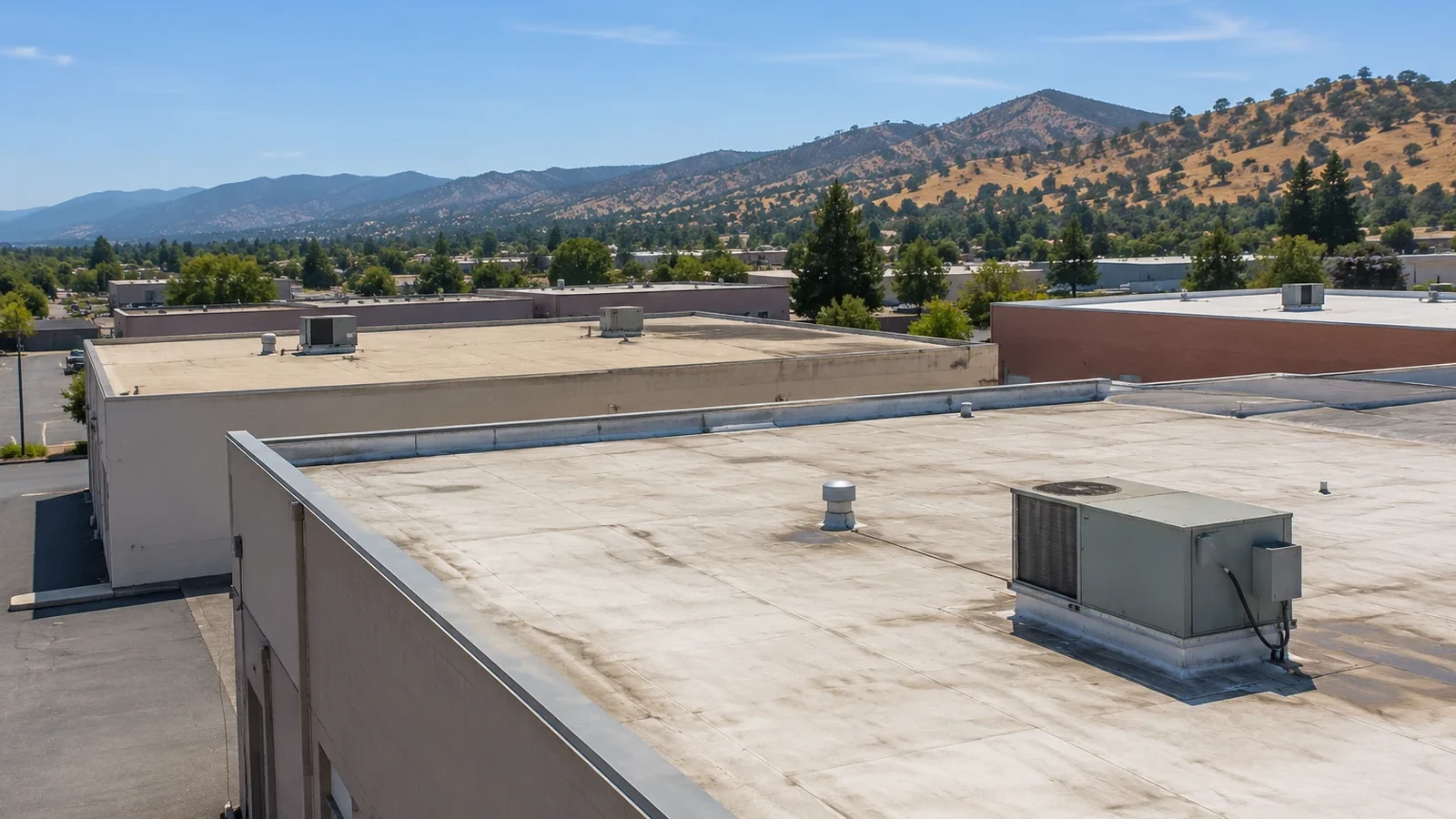
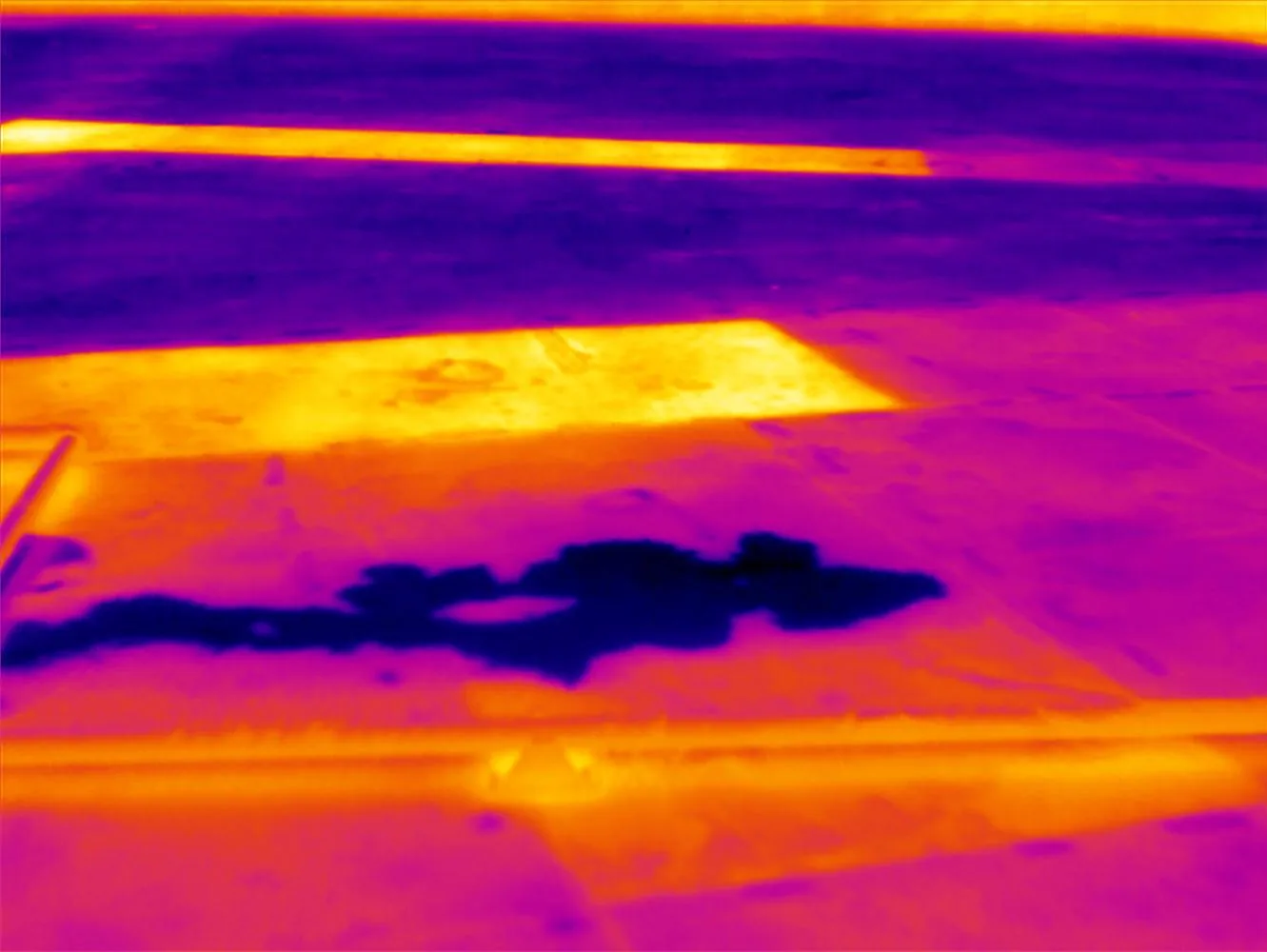
Roof failures in a dry valley often develop slowly, with small amounts of water entering through minor defects and spreading through the insulation long before a stain appears. An infrared moisture survey finds those areas by reading heat patterns after sunset, when damp insulation releases its stored warmth differently from dry material. The map that results shows where the insulation is compromised, and where it is not, which is the information a repair-or-replace decision turns on.
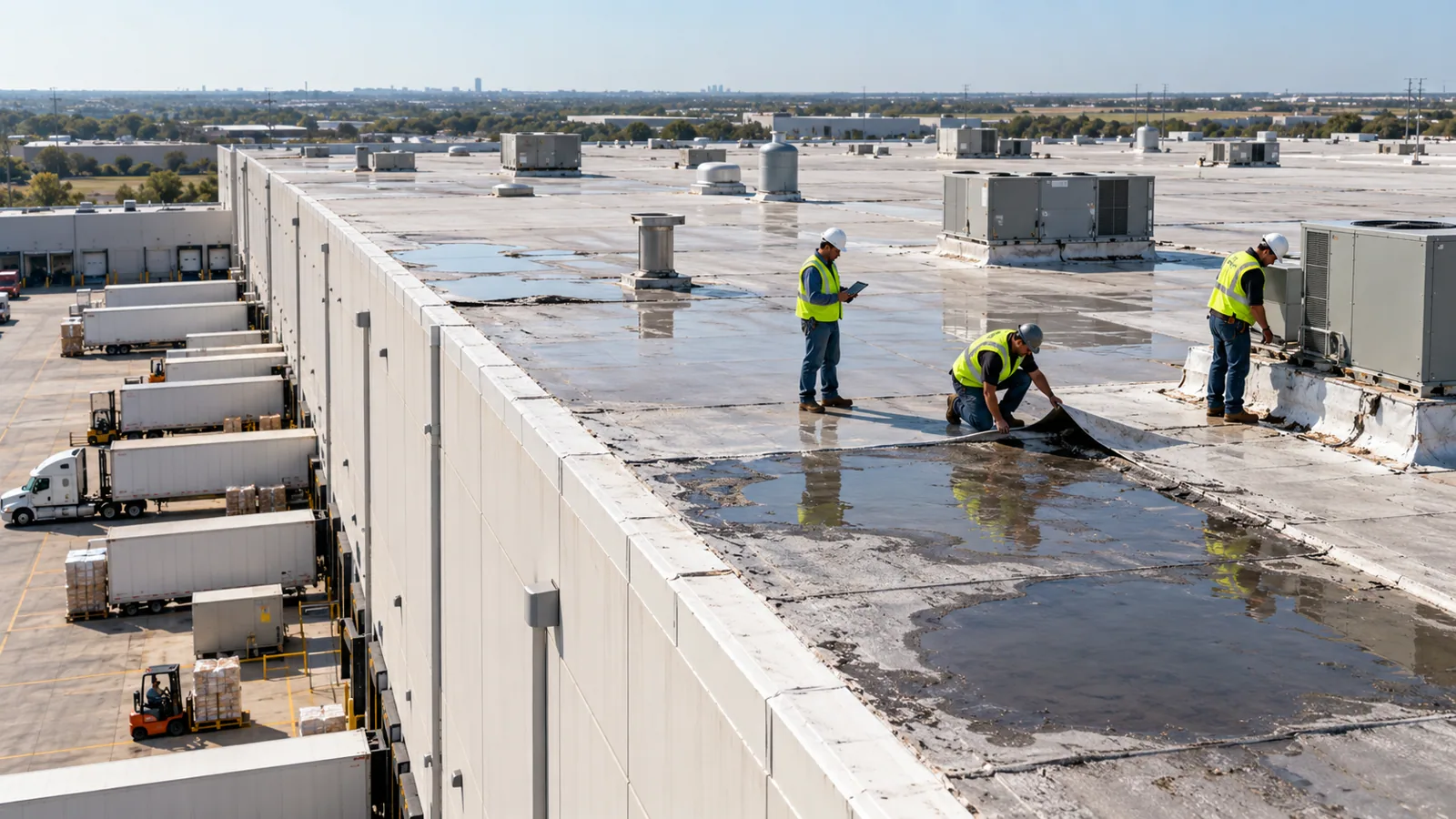
Infrared readings are confirmed with core cuts or probe checks at selected locations. The report records the findings on a plan view with the readings noted, and states how much of the roof is affected. A roof with one small damp patch around a single curb is a repair candidate. A roof with damp insulation spread across several bays is usually a replacement candidate, and the report says which side of that line each section falls on.
Smoke Season and Ember Exposure
Wildfire now belongs in every Medford condition report. Smoke hung over the valley for 26 days in 2021. The Almeda and Obenchain fires, a year earlier, destroyed about 2,600 homes in the county, with Phoenix accounting for 561. The report notes soot loading on reflective surfaces, since soot raises surface temperature and shortens remaining service life, and it records the condition of any rooftop intake filters that a smoke week has clogged.
Edges get a second look for ember exposure: loose metal, open curb ends, gaps at vents and debris collected behind parapets. These are small items on a drawing and decisive ones in a fire season, and the report lists them as separate lines so that a manager can approve the inexpensive fixes without waiting for a larger project.

Grades, Ranges and Cost Drivers
The report assigns each section a condition grade and a remaining-service-life range, and explains the reasoning in a short paragraph. The ranges carry assumptions: with maintenance, the roof may reach the upper number, and without it, the lower. The report then lists recommended actions in order of urgency, with cost drivers named for each one: area, access, penetrations, insulation depth and the need for phasing around tenants.
We keep prices out of the condition narrative until the scope is measured, but we do give order-of-magnitude guidance where it helps a budget conversation. A repair is a small item, a coating restoration a mid-sized one and a replacement the largest, and the report states where the roof sits among those three. That guidance flows into a roof register and into the next reserve discussion, so the work done once serves several decisions.

Reports for Hospitals, Veterans Facilities and Historic Sites
The same report format adapts to different owners. At the VA campus in White City, a roof report supports the facility planning behind the renovation of buildings 217A and 218A for inpatient mental health and the design of HVAC, exterior and security upgrades. Hospital owners in Medford read for access, penetrations and rooftop equipment loads. A veterans medical center report also considers the way roofing work on a government campus is scheduled and escorted.
In Ashland, a 175-acre Southern Oregon University campus sits among 59 individually listed historic structures and four National Register historic districts, so a roof report there also records whether a building falls under historic-building roofing rules, because that affects the repair options on offer.

Delivery and Follow-Through
A finished report arrives as a document with a summary page, per-roof entries, photographs, moisture maps and a ranked action list. The summary is written for the person who signs the budget. The entries are written for the person who executes the work. Both read from the same findings, so nobody is working from a different set of facts.
The report is a first step, not an end. Owners who want a firmer scope can move to a full commercial roof inspection or a survey for an acquisition, and those who need a purchase review can request a due-diligence survey built on the same evidence.


Related Roofing Pages

Questions About Roof Condition Reports
How long is a typical condition report?
A single building runs a few pages of narrative plus photo plates. A campus or multi-building property runs longer, with a summary page up front.
Can the report be used for a lender?
Yes. We structure findings, grades and cost drivers in the order lenders usually read them, and we supply photographs on request.
When is the best time of year for the site visit?
Spring is best, before the first triple-digit week. Surfaces are clean, the baseline photos are fresh and repairs can be scheduled in the dry months.
Does the report include prices?
It includes cost drivers and order-of-magnitude guidance. Firm prices follow a measured scope.
How does the report treat smoke damage?
It records soot on reflective surfaces, clogged drain screens and any ember scorching at edges, with photographs and dates.