
Roofing for Cities, Counties and Public Agencies in Medford, OR
Roof inspection, planning and repair for city, county and public agency buildings around Medford, OR, with records suited to budget review and audit.

Overview
Public buildings are paid for with appropriations, and a roof that fails between budget cycles has no easy line to draw from. A city hall, a county office, a library, a maintenance yard or a community center in the Medford, OR area faces the same sun as a private warehouse, about 61 afternoons above 90 F a year and smoke in a bad season, but its roof decisions move through public process: a request, a ranking, a vote and sometimes a procurement. The facilities manager who shows up with a graded inventory and a remaining-life estimate for each roof is the one whose request survives the ranking.
Our work for public agencies supplies that inventory. Each roof receives a condition grade, photographs and a cost range, and the findings are written so a budget analyst, an elected board and an auditor can each read them without translation.
School boards face a version of the same process, and the approach described for school districts applies to any elected body that funds buildings through a public vote.
The public building stock of the valley
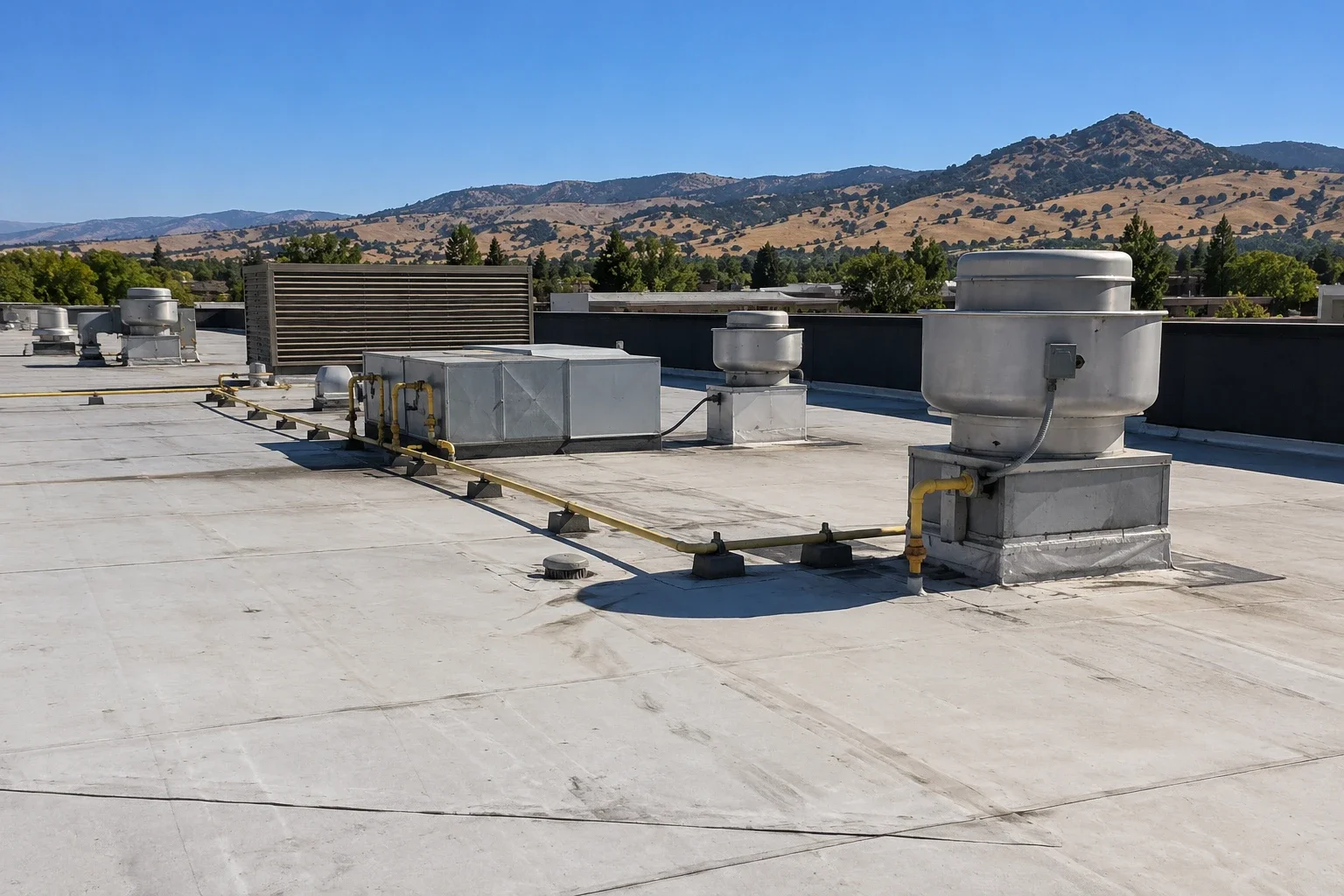
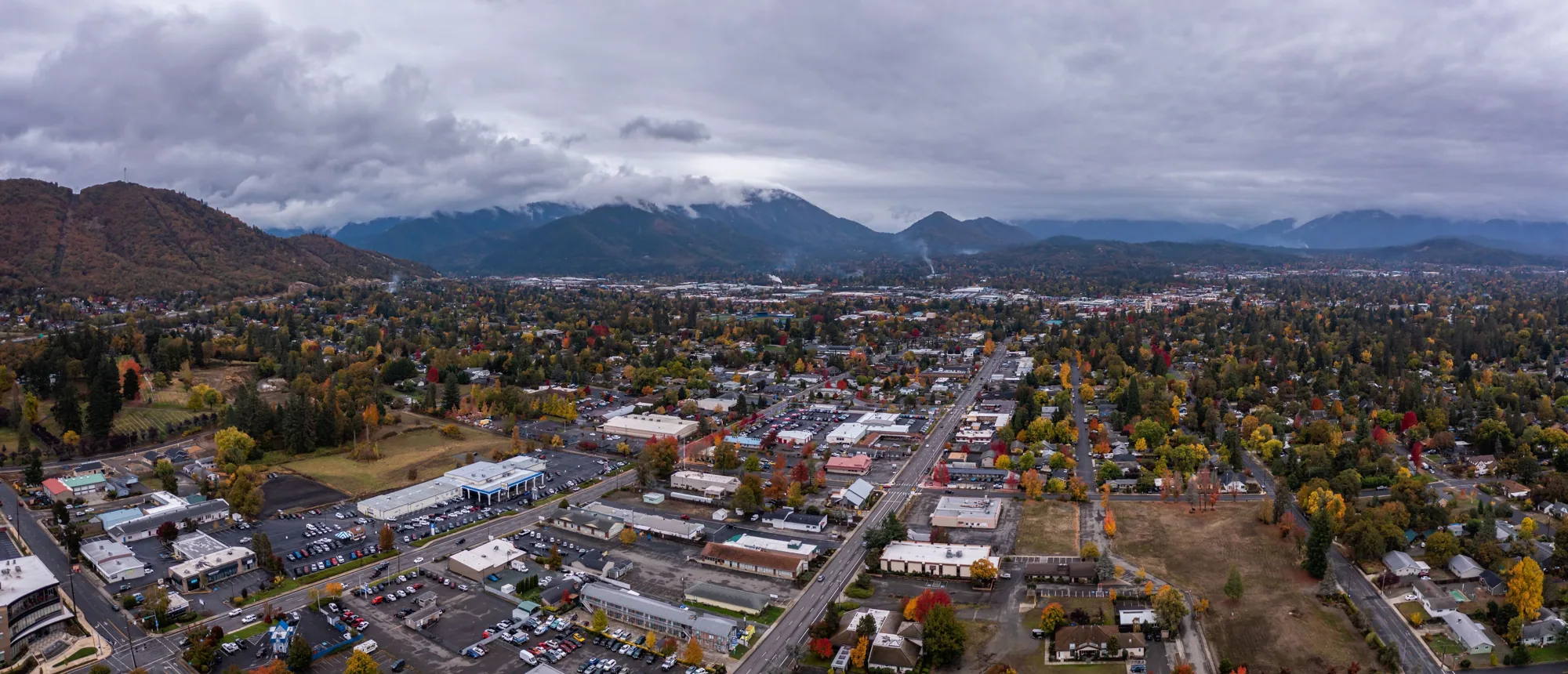
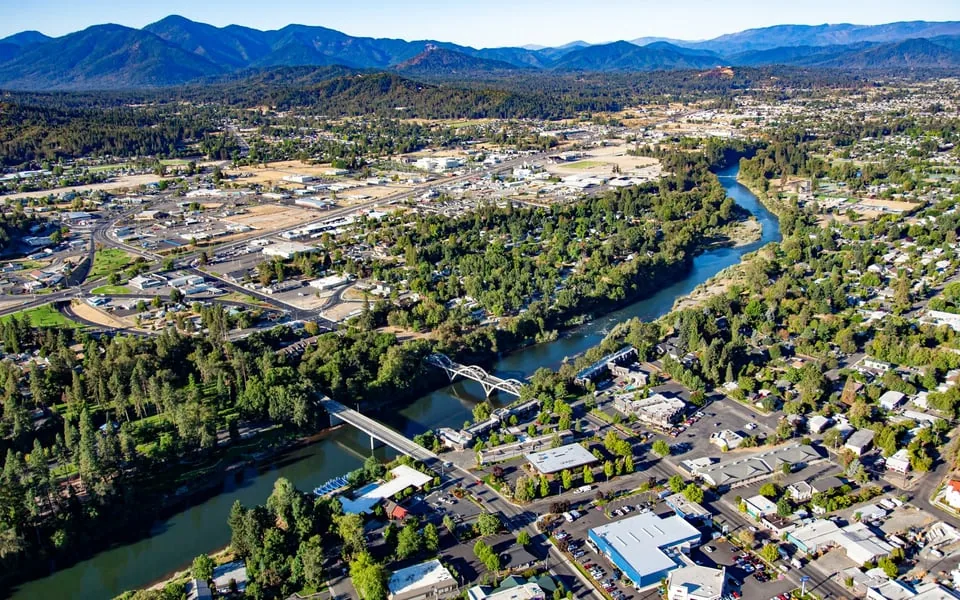
Medford is the Jackson County seat and Southern Oregon's commercial hub, and Grants Pass holds the same role for Josephine County. Public buildings in the region run from municipal offices and libraries to cultural facilities and event venues. In Downtown Medford, Vogel Plaza and the new home of the Children's Museum of Southern Oregon share the district with the old Carnegie library, closed in 2004 after 92 years, which shows how much aged masonry stands in the city center. Up the Rogue River, Shady Cove has a county-run Riverhouse event venue that is rented year-round.
These buildings carry different roofs and different obligations. A library shelters irreplaceable collections, a recreation center holds crowds and pools, a public works yard holds equipment, and an event hall faces repeated wear. Each is graded for what is beneath it.
Condition, not ownership, decides the order of work. A recreation center with a failing membrane over a pool deck ranks above an office wing with a minor stain, and a records storage room ranks above both if documents are at risk. We rank by consequence first and cost second.
Public buildings also tend to be used for decades, so durability usually outweighs first cost. Where a roof will serve long past a typical private hold, we compare membranes and coatings on service life and maintenance burden rather than on price alone.

Documents that stand up to procurement and audit
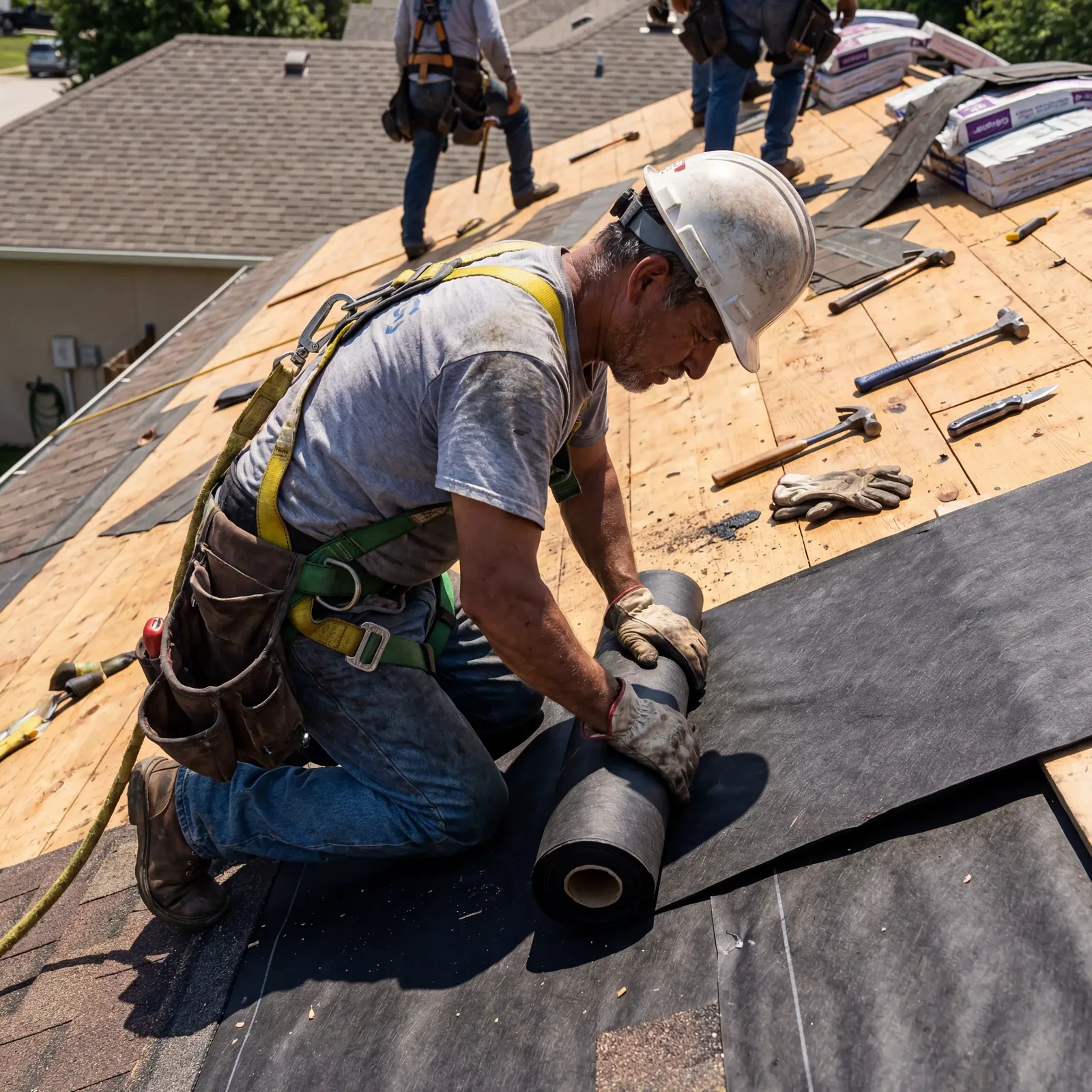
Public work is documented differently from private work. Scopes are written so they can be bid, quantities are measurable, and substitutions are controlled. We prepare condition reports and scopes of work that a purchasing office can use, with defined materials, performance standards and photographs of existing conditions. When the agency issues an invitation to bid, those documents become the basis for fair comparison.
We also keep the field record auditors look for: dated daily logs, material delivery tickets, inspection notes and photographs of hidden conditions before they are covered. If a change order arises because decking proves rotted or insulation proves saturated, the record shows what was found and when, which keeps the change defensible in an audit.
Insurance and risk pools often want evidence of maintenance. A dated inspection with photographs and a record of repairs shows that the agency has managed the building, and it helps if a loss ever needs to be explained to the pool's adjusters.
Where a loss occurs, the agency's carrier and any restoration contractor work from the same photographs and moisture readings, so the claim and the repair rest on one set of facts rather than two competing accounts.

Building a roof inventory the board can use
An agency may hold a list of roofs with little data behind it. We build or refresh the inventory with age, type, area, condition grade, known leaks and recommended action, then rank the buildings by consequence and cost. A public works manager can then show the board that three roofs account for most of the risk and that a modest spend on two others buys several years.
The same inventory feeds roof capital planning for the multi-year budget. When a smoke season or a run of triple-digit weeks moves a date, the register shows it, and the agency can adjust rather than discover a failed roof during a storm.
We use infrared surveys on roofs where leaks have been reported but the source is unclear. A single scan can save a repair crew many return trips, and the map is a clear exhibit for a budget hearing: the wet area is outlined, measured and priced.
Priority also depends on use. An emergency operations center, a records vault and a public works dispatch room cannot tolerate water, so their roofs are graded with extra weight. We state the weighting plainly in the report, so a board member can see why a smaller building ranks above a larger one.

Keeping public services open during the work
Public buildings rarely close for a roof. Permit counters, courts, libraries and recreation centers serve the public daily, and emergency facilities cannot close at all. We phase work in sections, keep entrances protected and schedule noisy or odorous steps for off-peak hours. Notices are written for staff and visitors so that surprises are rare.
Where the building is a government building with security screening, access paths are coordinated in advance, and tools and materials are controlled. The approach mirrors our occupied building reroofing method, with the added discipline of public accountability.
Emergency repairs are part of the agency relationship. A storm or smoke event can open a roof on a weekend, and our line is staffed around the clock; we dry in the building, record the damage and report to the facilities manager in language that can be forwarded to the finance office.

Armories, clinics and the federal edge
Some public property carries its own rules. The Oregon Military Department lists armories in Medford, Ashland and Grants Pass, and the VA runs the main hospital for southern Oregon in White City. Roofing on those sites follows the access, escort and criteria procedures that govern military installation roofing. State and federal facilities add layers of review that local agencies do not face, and we plan the schedule for them.
Because public work moves slowly, we keep our estimates open to clarification and update the register at each step, so a project that spends a year in review is not working from stale numbers.
Send the facilities list and the budget calendar
Related Roofing Pages
Questions About Cities, Counties and Public Agencies
Can you help prepare a roof request for the budget process?
We supply the condition grade, photographs, repair options and cost ranges that a request needs. The agency's staff assembles the formal packet and the argument.
How do you handle prevailing wage and bonding rules?
Public contracts carry their own requirements, and we follow whichever apply to the project, including payroll records in the required form. The agency's contract documents set the specifics.
What if hidden damage appears after the contract is signed?
We stop, photograph and document the condition, then submit a priced change request with the evidence. Nothing proceeds on that item until the agency approves.
Are historic public buildings treated differently?
Often. Downtown Medford and Ashland hold older masonry and listed structures where profiles, colors and methods may be restricted, and we check those limits during the survey.
Do you work on small rural facilities?
Yes, including river venues and small offices outside the valley floor. Travel is a separate line in the estimate so the agency sees it clearly.