Commercial Roofing in Downtown Medford, OR
Commercial roof repair and upkeep in downtown Medford, OR, where older masonry, civic buildings and freeway visibility meet valley heat and smoke.
Overview
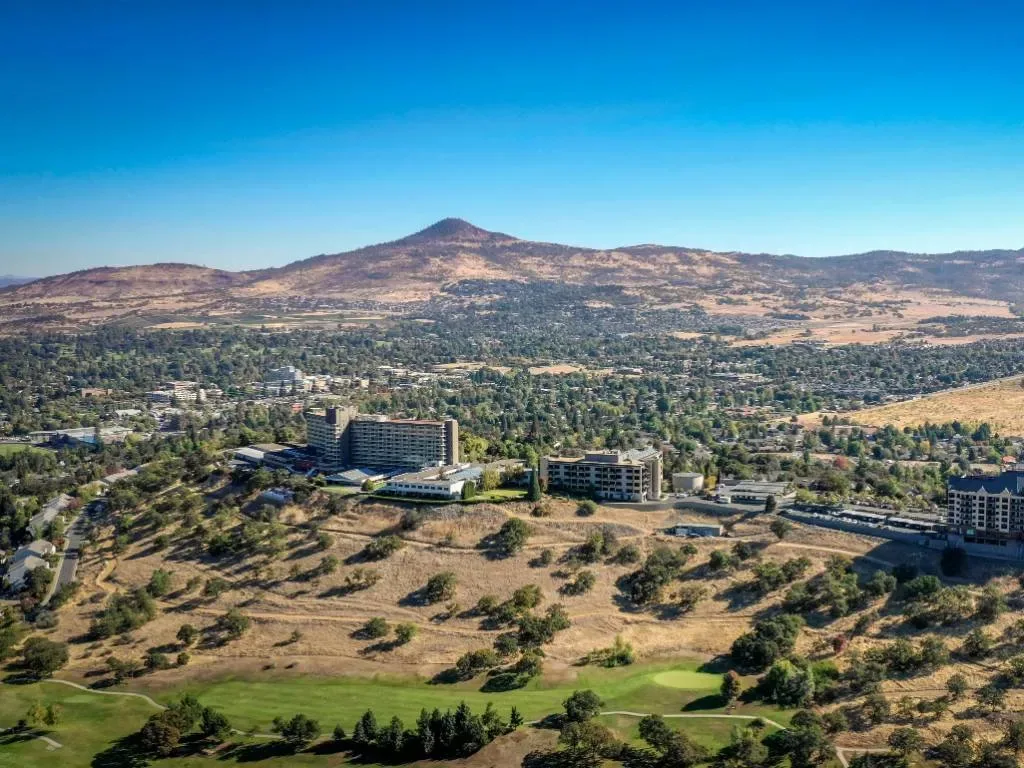
Older masonry, civic sites and storefront rows set the roofing questions in downtown Medford, OR, where Interstate 5 crosses Bear Creek and the city on a 3,229-foot viaduct and Oregon Route 99 runs through the center of town. A roof here is seen from the freeway as well as the street, so its condition shows in more ways than a leak. Downtown roofs get repair, replacement, recover, coating and maintenance work, low-slope and metal alike, and each one receives a condition grade showing the property manager how much service life the valley's sun has already spent.
Medford counts around sixty-one afternoons above 90 F and eleven above 100 F, with a 115 F high on record, and a roof in the middle of the valley takes that heat straight off the sky.

Aged masonry stock and what sits above it
The older Carnegie library building served the city for 92 years before it closed in 2004, which is a sign of the aged masonry stock downtown. That fact tells us to expect parapets, copings and brick or stone walls on many older buildings, but it does not tell us the roof type on any single one. A masonry building may well carry a parapet with a scupper or interior drain, and that arrangement concentrates risk at the wall-to-roof joint.
On a first walk we check parapet height, coping condition, mortar at the wall cap, counterflashing and the drain path. A failed coping or open mortar joint admits water behind the membrane even when the field of the roof is sound. Repairs here are usually modest in size and high in value, and they protect interior finishes that cost far more than the flashing work.

Civic and cultural sites in the district
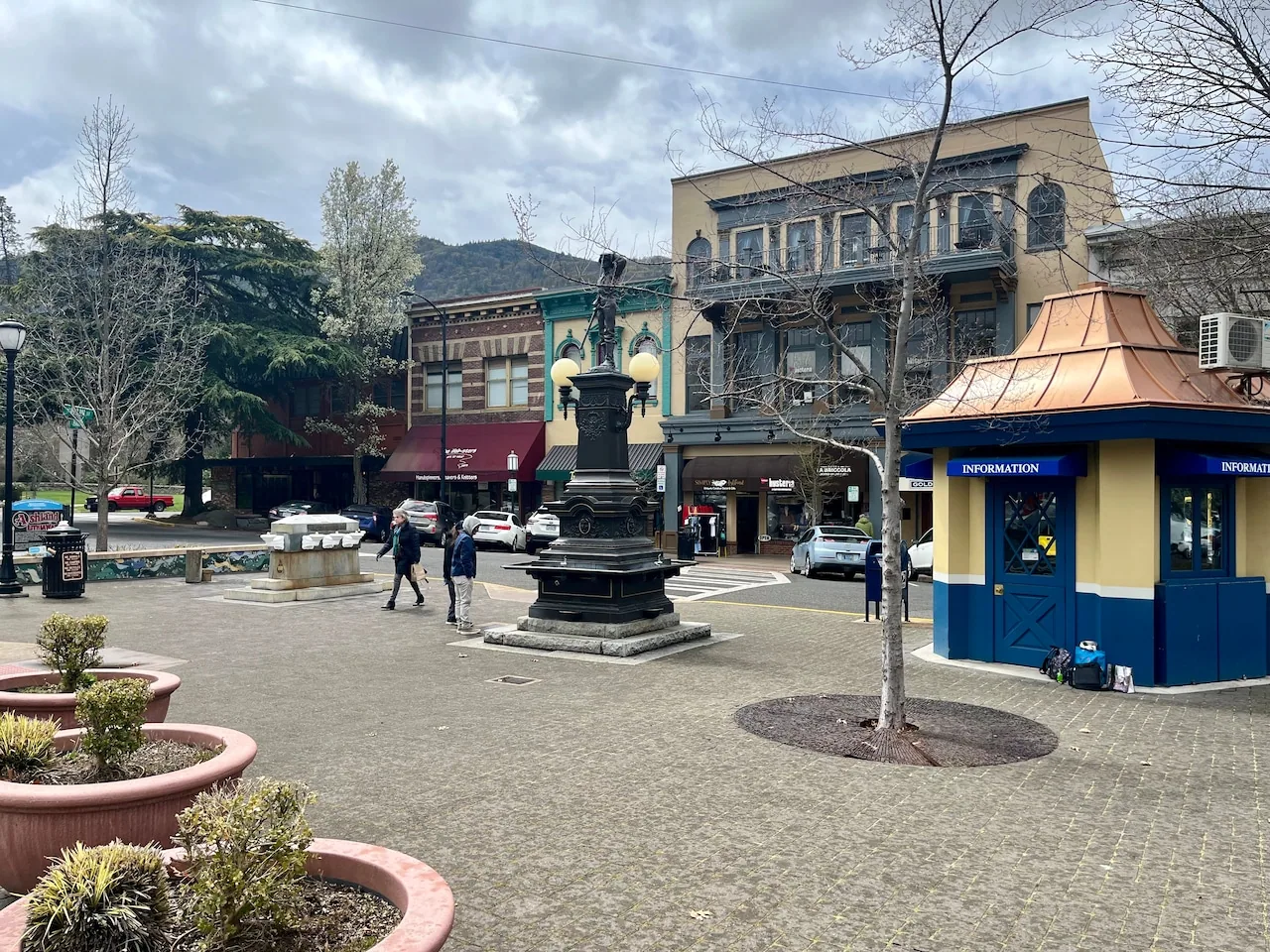
Among the civic and cultural sites downtown are Vogel Plaza and the Children's Museum of Southern Oregon, which relocated to a new downtown home in 2022. A district that hosts public events and family visitors puts a premium on safe sidewalks and clean staging. When we work on or near buildings that draw foot traffic, we set up protected walkways, schedule deliveries outside event hours and keep dust and debris away from entrances.
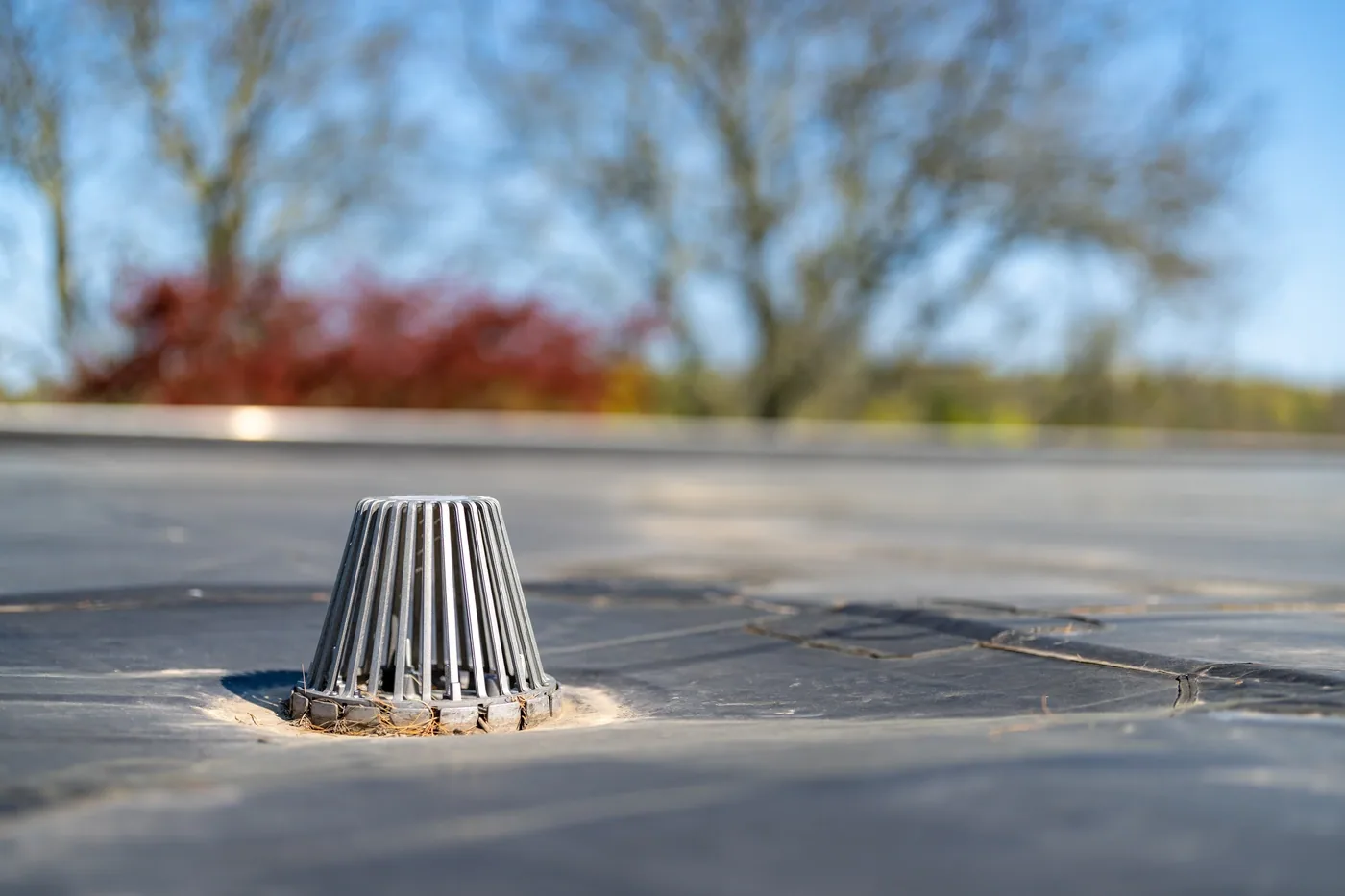
The same attention applies to roof drainage. Water that overflows a failed scupper onto a public sidewalk becomes a safety complaint within an hour, so we verify scupper capacity and overflow routes as part of every walk. Drain and gutter work in older districts also needs care around historic downspouts and shared walls, which we check with roof drain and scupper inspections.
Freeway visibility and the condition of the roof
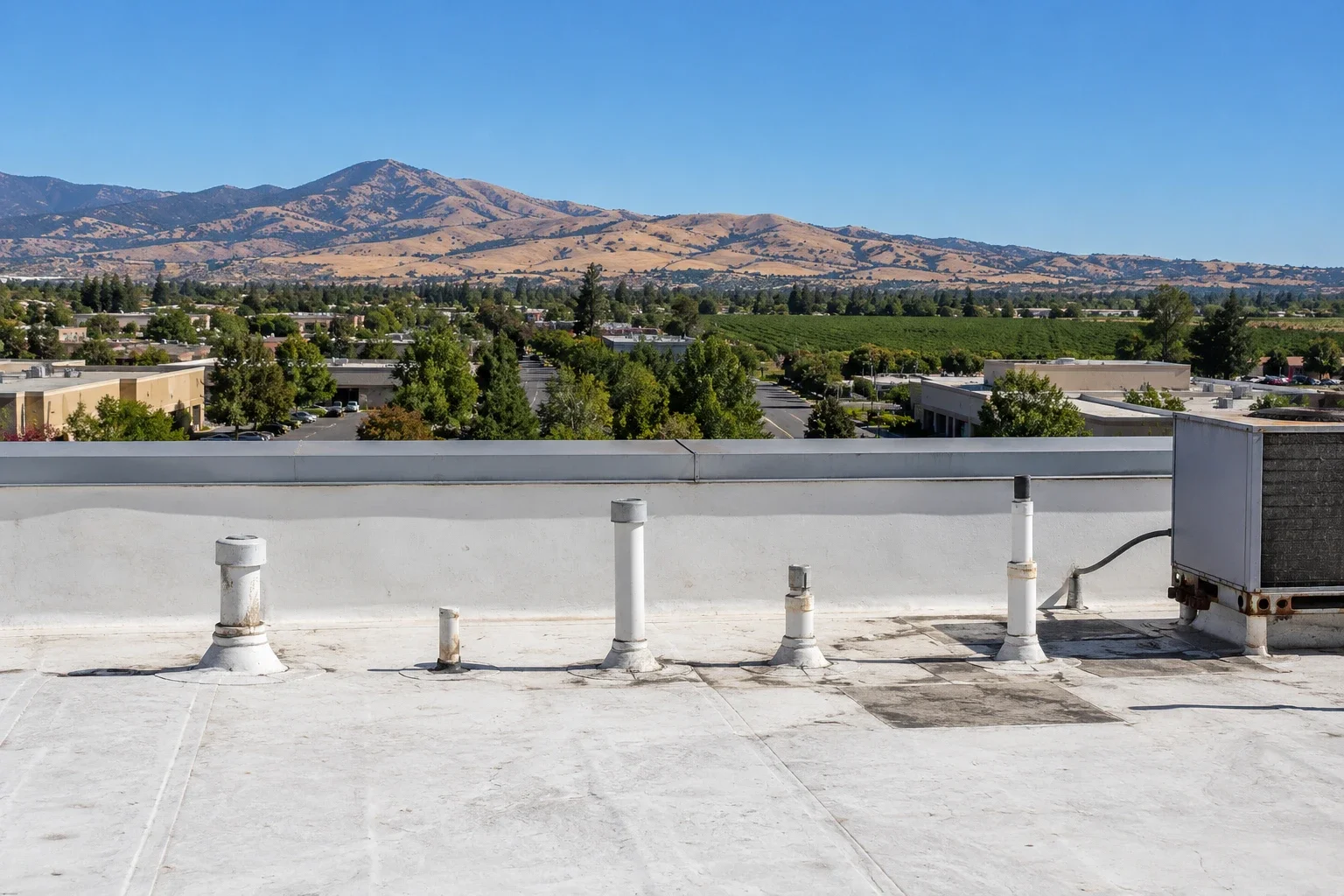
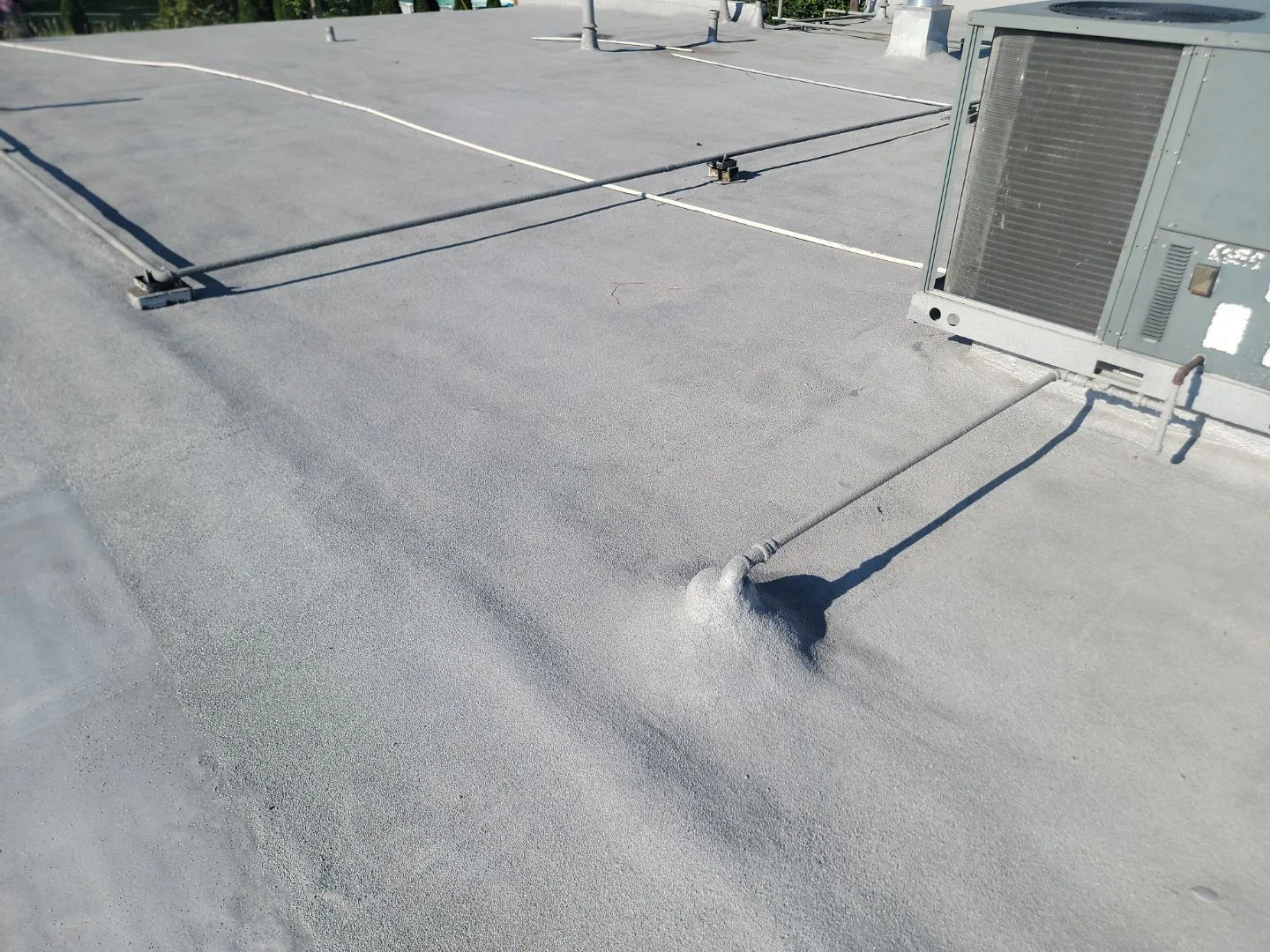
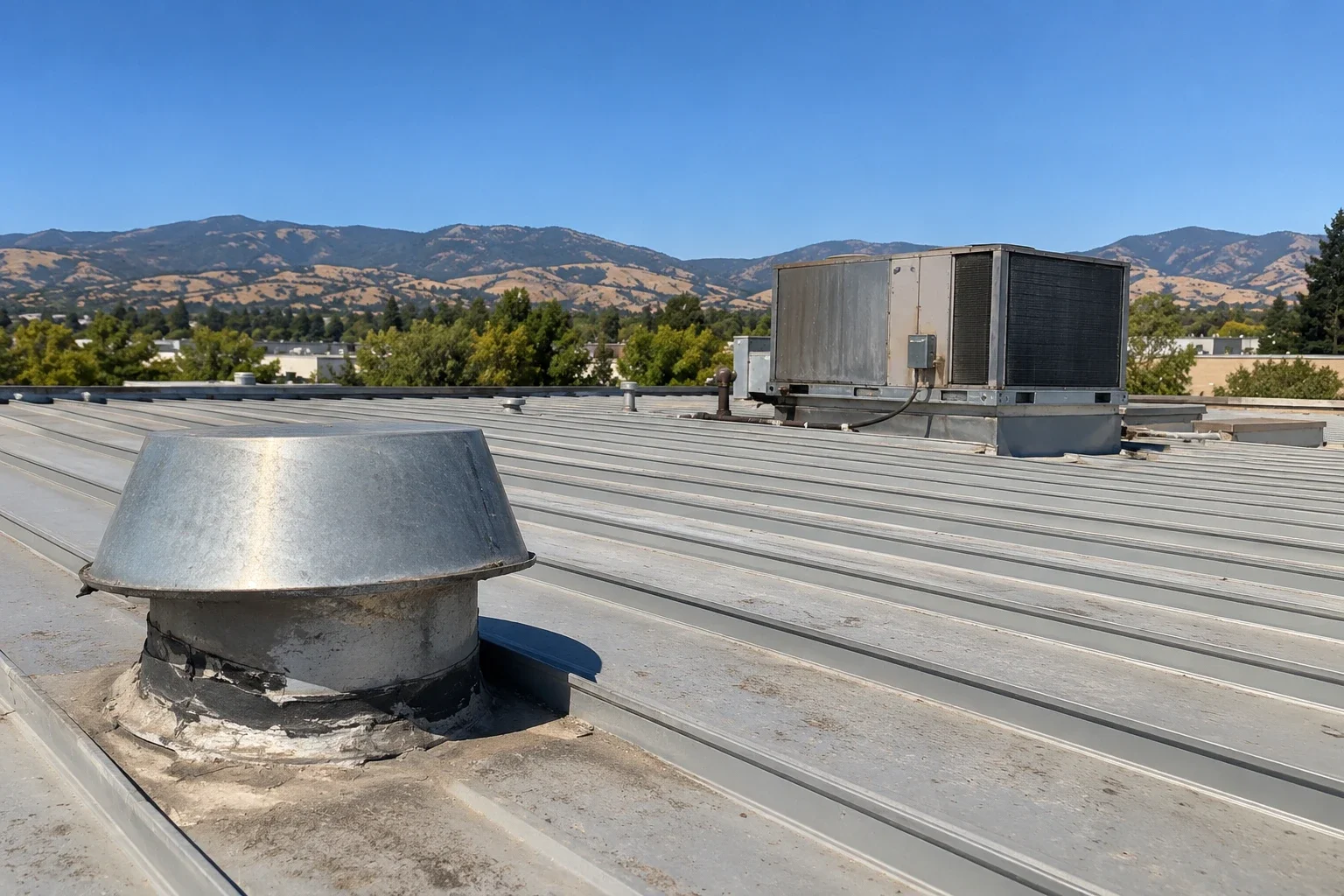
The viaduct makes downtown highly visible from the freeway, so a stained, patched or ponded roof reads as neglect to passing traffic and to prospective tenants. Appearance is not the only issue; ponding water and heavy staining often point to drainage problems that also shorten service life. A clean, even surface suggests a roof that has been maintained.
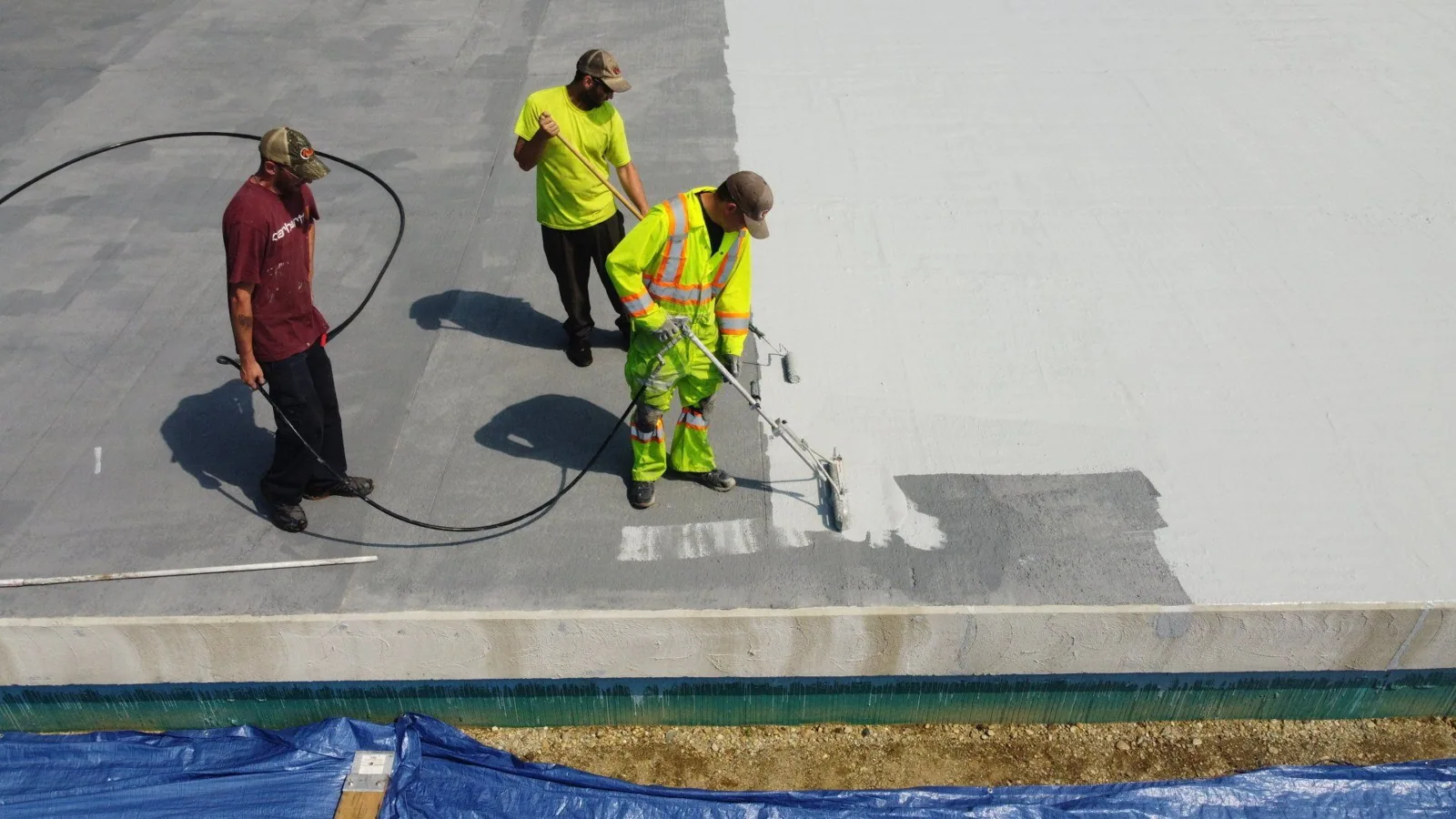
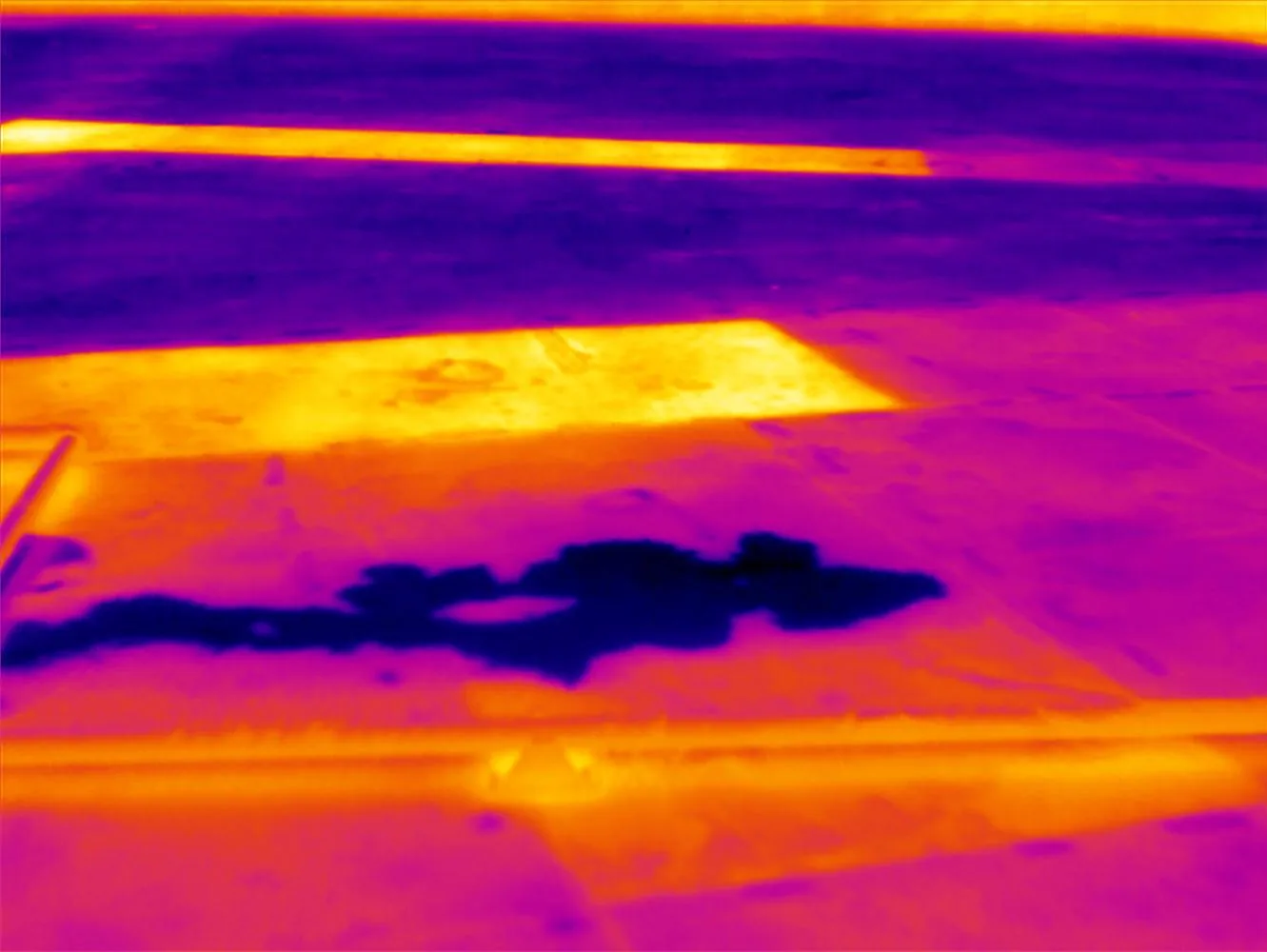
For owners considering a refresh, a coating can restore a uniform color and reflectance when the substrate is dry and attached, and roof coating restoration is the usual route. Where moisture has spread into the insulation, an infrared survey marks the affected areas so those sections are replaced before any coating goes down. We record before and after photographs in the roof register for the owner report.

Scoping a downtown roof from the walls inward
A downtown roof job tends to be won or lost at the walls. We start with the vertical surfaces that meet the roof: parapet cap, counterflashing, wall mortar, and the termination of the membrane at each upturn. If any of those has failed, the best membrane in the market will still leak at its edge. Only after the perimeter is understood do we move inward to seams, penetrations and drains.
Moisture mapping follows. An infrared moisture survey separates saturated insulation from dry, so the owner pays to replace only what has failed. On older buildings, we also look at the deck from below where the owner allows access, because stains on the underside show how long the leak has run. All of this feeds the written comparison of repair, recover and replacement, with a cost driver beside each option: depth of tear-off, wall work, staging, street permits and phasing around tenants.
For owners who hold several downtown properties, that comparison becomes a ranking. The roof with the worst grade and the highest consequence goes first, and the rest follow lease dates and budget cycles.

Smoke, ash and the downtown roof surface
Smoke hung over the valley for 26 days in 2021, and the Almeda and Obenchain fires had already burned about 2,600 homes in the county the year before. Wherever buildings stand close together, ash settles in low spots and behind parapets and does not wash off without rain. Soot also darkens reflective surfaces and raises their temperature.
After heavy smoke we wash the roof, clear drains and corners and update the condition grade. The same sealants and joints take moderate thermal cycling on about 64 freezing mornings a year, and winter inversions can hold fog and poor air over the district, so fall is when cracked sealant gets replaced. Our preventive maintenance visits follow that seasonal rhythm.

Work windows, tenants and street access
Downtown work faces constraints that suburban sites avoid: limited staging space, street and sidewalk permits, shared walls and tenants who occupy the building throughout. We plan lifts and material drops for early hours, coordinate with neighbors on shared access and phase the roof so occupants stay dry and operational. Tenants in storefront and office space receive notice of noisy tasks in advance.
Tear-off and recover work fit best into the spring window before the heat and the autumn weeks after it, with temporary repairs holding any gap. A larger scope may meet new insulation or uplift requirements under Oregon's structural code, which has been mandatory since April 1, 2026, and the building department confirms what applies before pricing.
Documentation closes the loop. Before and after photographs, a drain map and the final condition grade go into the roof register, so a property manager who later sells or refinances can show a buyer or lender what was done and what remains. Reports are written in plain terms for owners who are not roofers.

Adjacent districts
Downtown work is often scheduled alongside the North Riverside corridor and the rest of Medford, using one grading method across all of them.

Send the downtown building list
Related Roofing Pages
Questions About Downtown Medford
What is the first thing to check on an older downtown masonry building?
The parapet and coping. Open mortar, cracked caps and failed counterflashing are the common entry points, and they are cheaper to correct before water reaches interior finishes.
Can you work near public plazas without disrupting events?
Yes. We schedule deliveries and noisy tasks outside event hours, protect walkways and stage materials away from public areas.
Does a visible roof need cosmetic work or structural work?
Often both can be separated. Staining and ponding point to drainage and reflectance, which a cleaning or coating can address, while open seams and damp insulation need structural repair.
How do you handle shared walls with neighboring buildings?
We inspect the wall flashing from both sides where access allows, coordinate with the neighbor and document the joint so responsibility for any repair is clear.
How soon can a downtown leak be stopped?
Emergency crews respond at any hour. A temporary repair or tarp goes on first, and permanent work is scheduled after the cause is found.
What does a viaduct-visible roof need that a hidden one does not?
A consistent surface. We pay attention to staining, ponding marks and patch outlines, since those are what passing traffic and prospective tenants see, and a cleaning or coating can even them out.