
Commercial Roofing in White City Industrial Park, White City, OR
Industrial roof grading and replacement planning at White City Industrial Park, White City, OR, with rail, heat and smoke-season upkeep in the owner report.
Overview
A roof with nothing shading it takes the valley sun at full strength, and the industrial roofs in White City are graded with that in mind. Freight service from the Rogue Valley Terminal Railroad reaches the White City Industrial Park, which sits in White City about 9 miles north of Medford, where Oregon Routes 62 and 140 join. Medford sees 61 afternoons past 90 F in a typical year, and a membrane over a warehouse or a light-industrial building in the park spends its ultraviolet budget on every one of them, with 115 F as the record.
Remaining service life is the reserve schedule line that moves, and for an industrial owner it moves quietly. A roof looks the same in April as it did the previous April, until the first fall rain finds a seam that heat has stiffened. We grade each roof, estimate the years left and recommend an action with a cost range, so the owner report shows which buildings are aging on plan and which ones the triple-digit stretch has moved forward.

The Agate Desert ground and the Camp White past
The surrounding Agate Desert land was once part of Camp White, built in 1942 for World War II Army training. Whether any building in the park dates to that period or carries any particular roof is a question for the first walk, and each building is surveyed on its own. The layers, the details and the age come from what we find on the deck, not from the district's past.
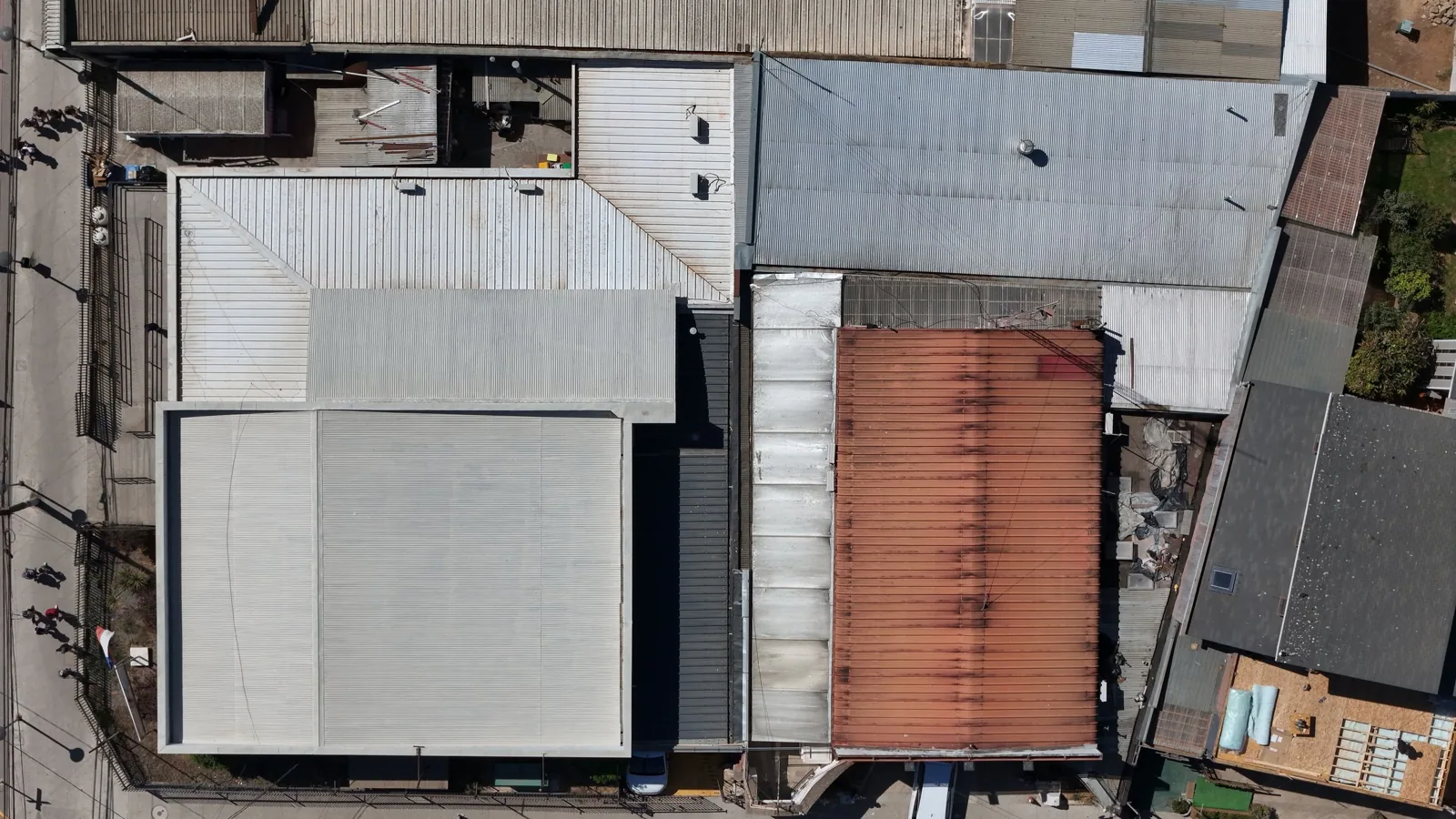
What we check on a park like this is exposure. A roof with no tree or taller neighbor to shade it gets the full sun the climate offers, dust settles through the dry months, and wind meets the edge without a break. The survey notes the exposure of each roof in the grade, so the owner can see which buildings are taking the most.
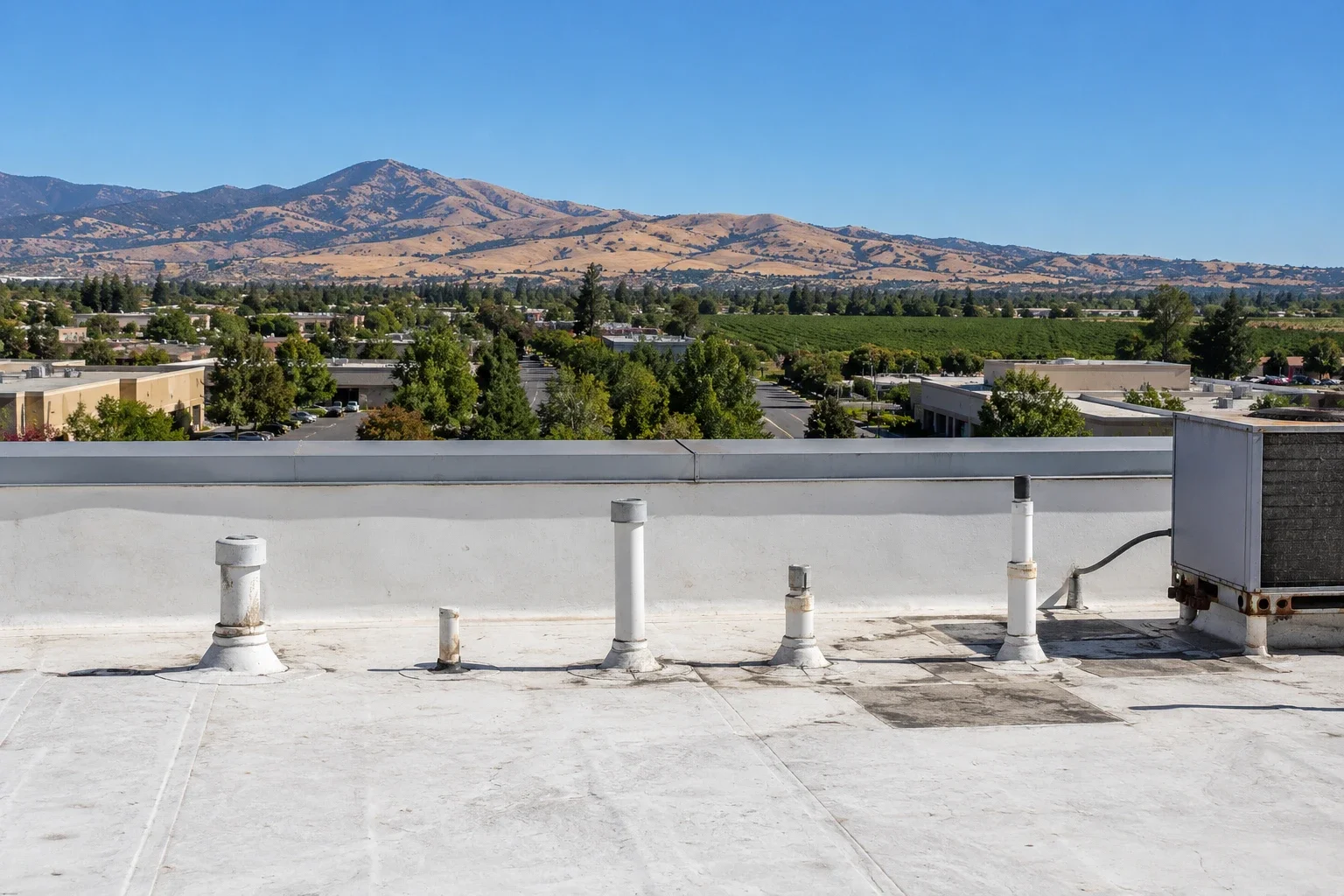
Sun, dust and rail on a long industrial roof
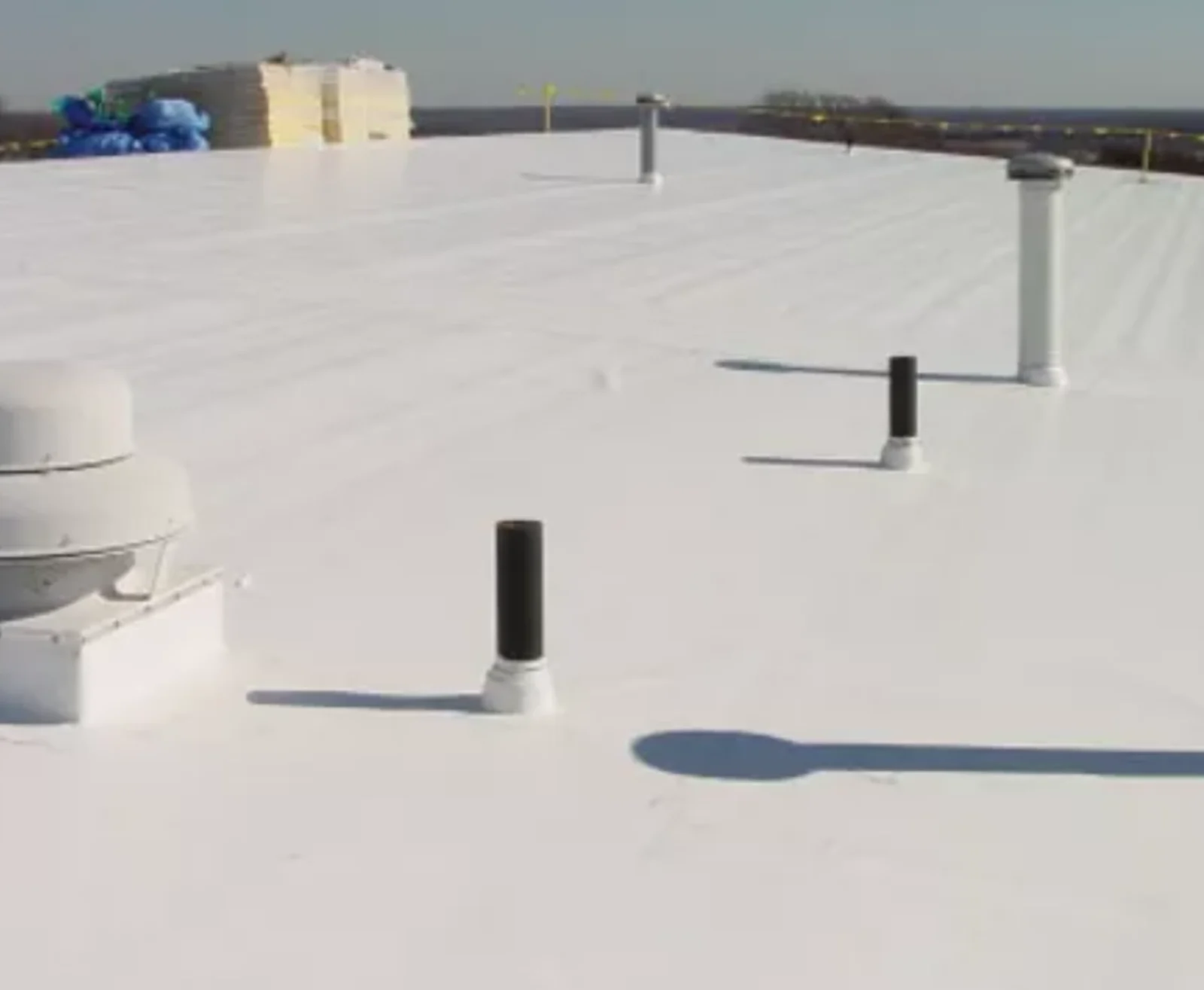
With about 18.4 inches of precipitation a year across the valley, roofs go long stretches between rinses. A white membrane dims as dust and soot settle on it, a dimmer roof runs hotter, and the building beneath works harder to cool. For a warehouse with offices, the offices feel it first; for a building with refrigerated storage, the compressors pay for it. Both show up in an energy bill that creeps and a roof that looks fine. Seams stiffen, sealants chalk, and flashings at curbs and walls pull as the materials expand each afternoon.
Rail traffic adds its own layer. A freight line brings vibration and, on dry days, dust that settles on nearby roofs. Buildings close to the line collect more of it, and a post-dust wash restores some of the surface. We note proximity to the line in the grade and in the maintenance plan.

Condition grades and remaining life across the park
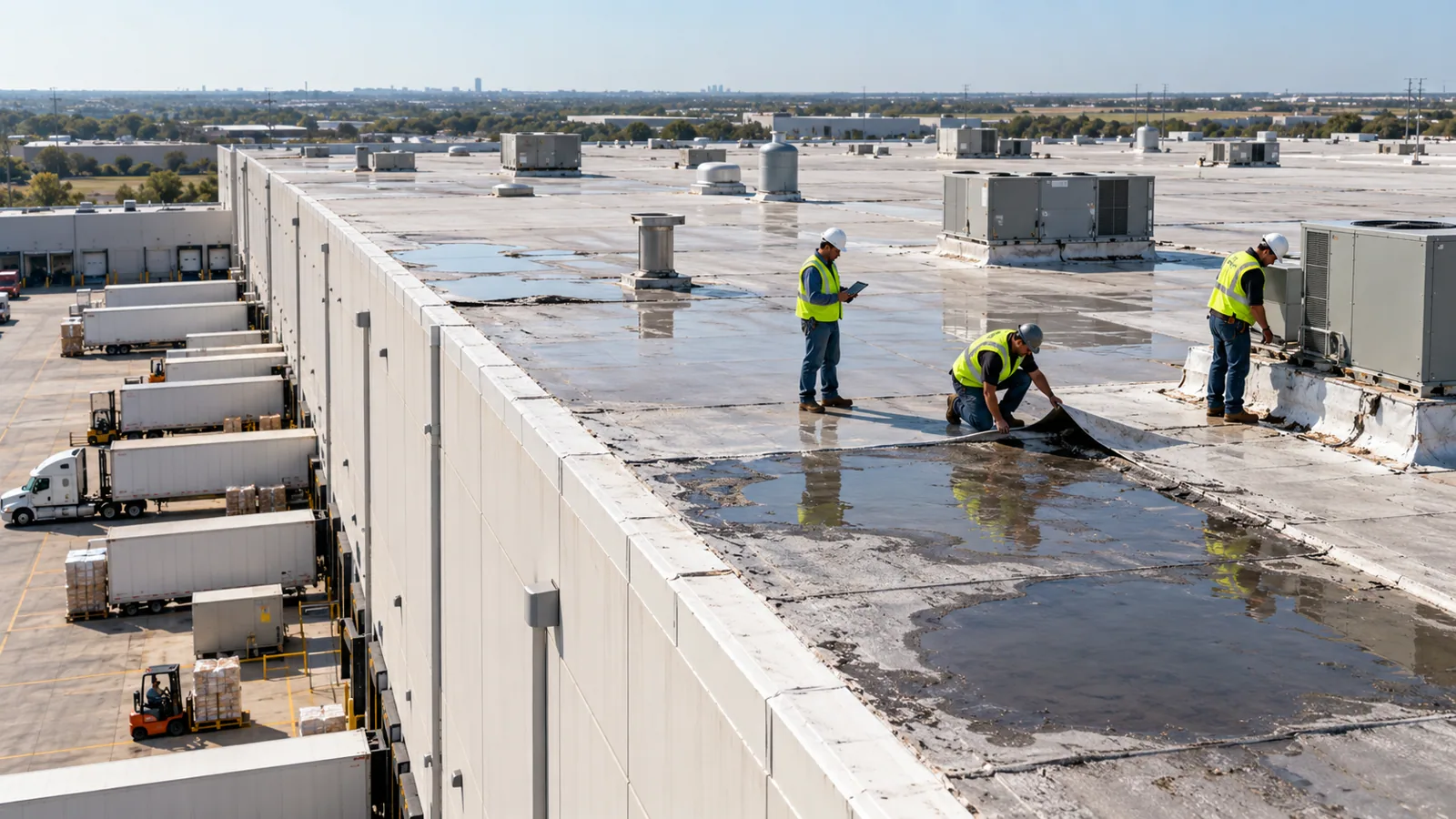
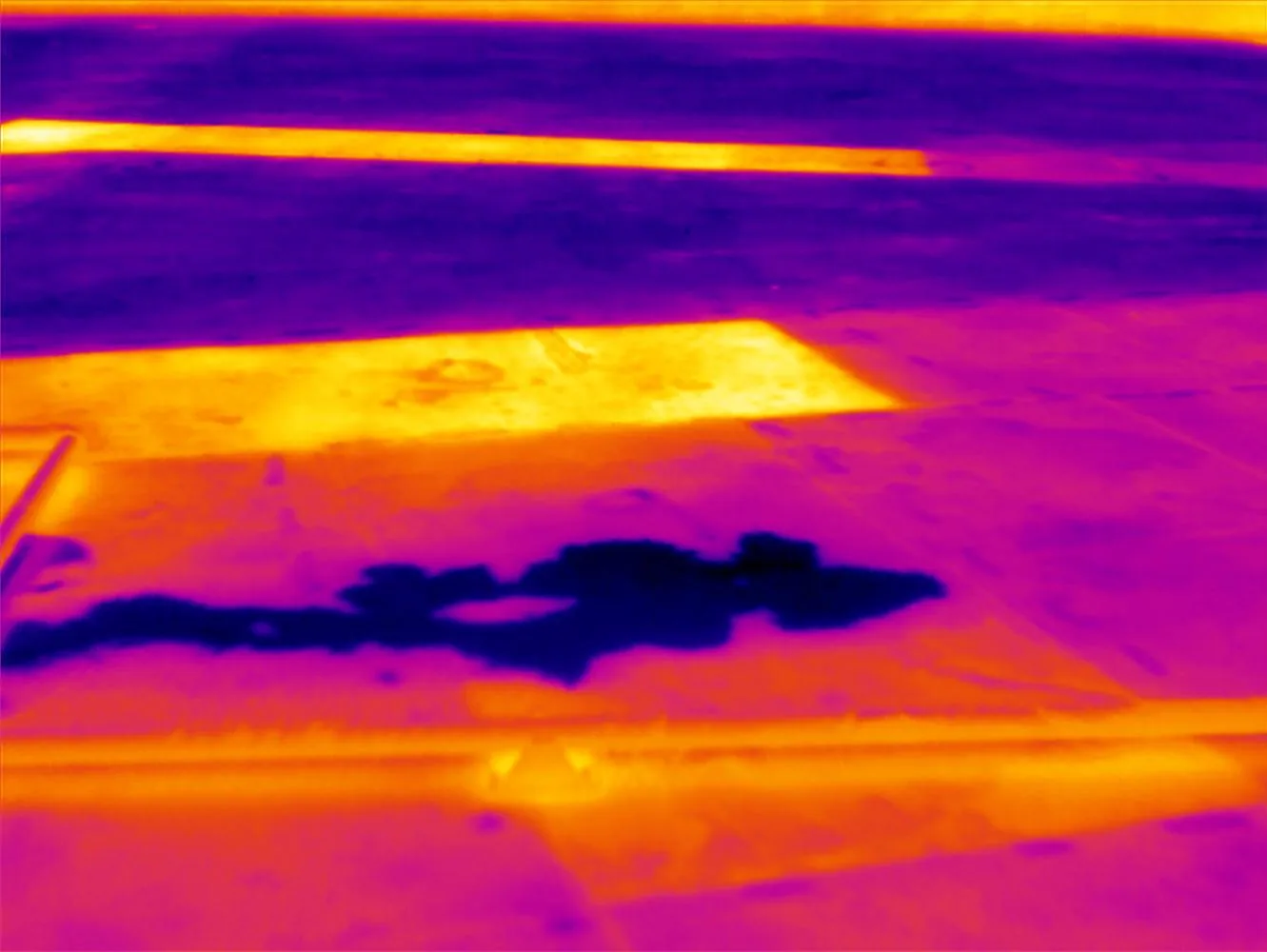
The grade for each roof draws on the covering, the seams or laps, the flashings, the drainage, the penetrations and any moisture an infrared scan finds in the insulation. Each building receives a remaining-life estimate and a recommended action, with photos. We take the same views on every building, from the same corners, so next year's photos can be laid beside this year's and a change in a seam or a curb is plain to see. The report lists buildings in the order the grades and the exposure suggest, and it states why.
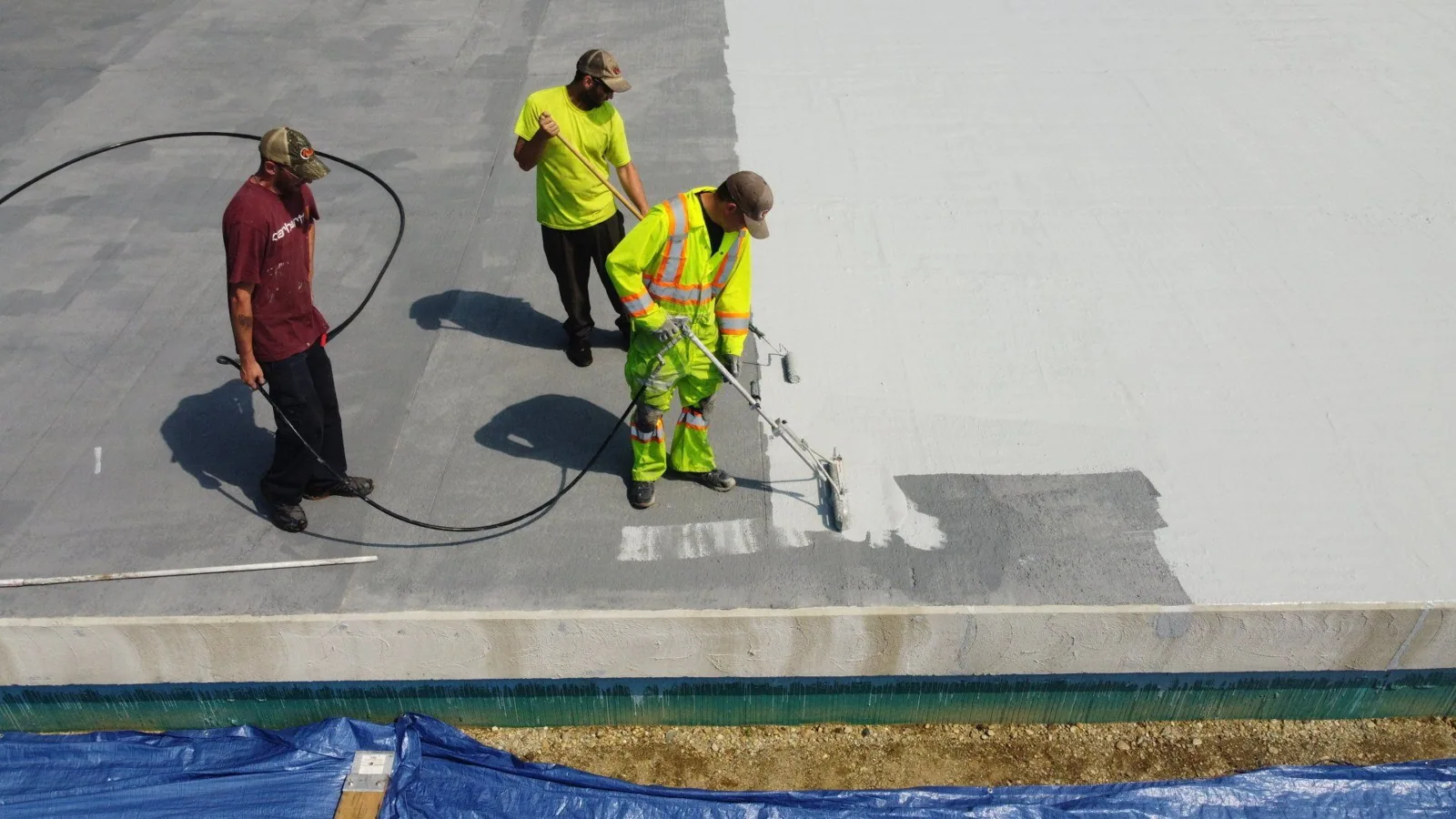
An owner with several buildings in the park can see the shape of the next few years at a glance. A roof with dry insulation and a sound surface is a candidate for a restoration coating. Roofs with saturated insulation move to replacement. Roofs with a few failed details move to repair. The columns become the budget, and the owner funds them in sequence instead of all at once. A landlord who sees two roofs due in the same year and four due three years later can arrange a loan, a reserve draw or a lease extension to match, and the report supplies the dates to plan from.
Reserve schedule, tenant changes and lease timing
Industrial tenants change their buildings, and the roof records the changes. A new exhaust fan, a new compressor vent or a rooftop unit added for a process line is a penetration that needs a curb and a flashing. The owner report tracks those with dates and photos, which matters at turnover, when a landlord decides which penetrations to keep and which to remove.
Lease cycles set the timing. A mid-lease replacement needs the tenant's cooperation, and one between tenants is the cleanest. A vacant building is the best chance to work, because the crew can open a large section of roof with no product underneath. The report flags any vacancy so the owner can use it. Repair visits, interior damage and lost production or rent add up to the carrying cost, which is the figure that tips the decision. The report puts it beside the replacement price, so the owner can see why a planned spring replacement costs less than a string of repairs. Material lead times matter as well: a membrane and insulation order placed in winter keeps a spring start, and one placed in May can slip into the first smoke weeks.

Smoke weeks, ember exposure and the dry grass around the buildings
Smoke and fire are part of the valley's risk profile. Twenty-six smoke days fell on Medford in 2021, and fires in 2020 destroyed roughly 2,600 Jackson County homes. Soot lands on industrial roofs and raises their temperature, and gutters, vents and eaves collect debris that can ignite. An edge clean before the season removes fuel, and after smoke a visit washes the roof and swaps the rooftop filters. Early starts and shaded storage keep the crew and the membrane cool on triple-digit days, and the work is scheduled in the spring window, when the sun is gentler and the smoke has not yet arrived.
Dry grass along a rail right-of-way or a road shoulder can carry a spark, and a building beside either one should keep the strip clear. Each covering's fire rating and the date of the last edge clean are recorded in the owner report, and the manager can use it to ask tenants to keep pallets and packaging away from the walls.

Reporting for owners, brokers and lenders
A register entry per building carries the grade, the photos, the curb list, the drain map, the warranty and the next check date. A roof capital plan orders the grades into a schedule, with infrared moisture surveys behind them. A roof coating restoration extends a sound roof, and TPO roofing is a common choice. Related buildings include warehouse roofing and self-storage roofing. Neighbors include White City and Phoenix Industrial Park, and the Table Rock Road corridor shares the same plan.

Send the building list, roof ages and leak tickets
Related Roofing Pages

Questions About White City Industrial Park, White City
Does exposure change roof wear?
A roof with no shade or taller neighbors gets full sun and open wind. We note exposure in the grade and the maintenance plan.
How does rail traffic affect roofs?
Dust and vibration. A post-dust wash restores some of the surface, and we note proximity to the line.
Can a coating extend a sound industrial roof?
When the membrane is sound and a scan shows the insulation dry.
How do you track tenant roof changes?
Each penetration is entered in the register with its date and a photo.
What does an edge clean involve?
Clearing gutters, vents and eaves of debris before the dry season, and logging the date.