
Church Roofing in Medford, OR
Church and house-of-worship roofing in Medford, OR, with condition grades, board-ready budgets and work windows that keep services on schedule.
Overview
A church roof in Medford, OR is funded by a congregation, approved by a council and judged by a sanctuary ceiling, and the order of those three decides how fast a repair happens. Under 61 afternoons past 90 F a year, 11 of them past 100 F, a roof that has spent decades in the sun reaches the stage where a leak is not a surprise but a date. Remaining service life is the figure that shifts in the reserve schedule, and a congregation that sees it in time can fund the work through a campaign instead of an emergency.
We write church roof reports for the people who actually read them: a pastor, a trustee, a facilities volunteer and a finance committee. Each section of roof receives a condition grade and an estimate of years remaining, and each recommended action comes with a cost range and a timing note that respects the liturgical calendar.

Sun and heat on a sanctuary, a hall and a steeple
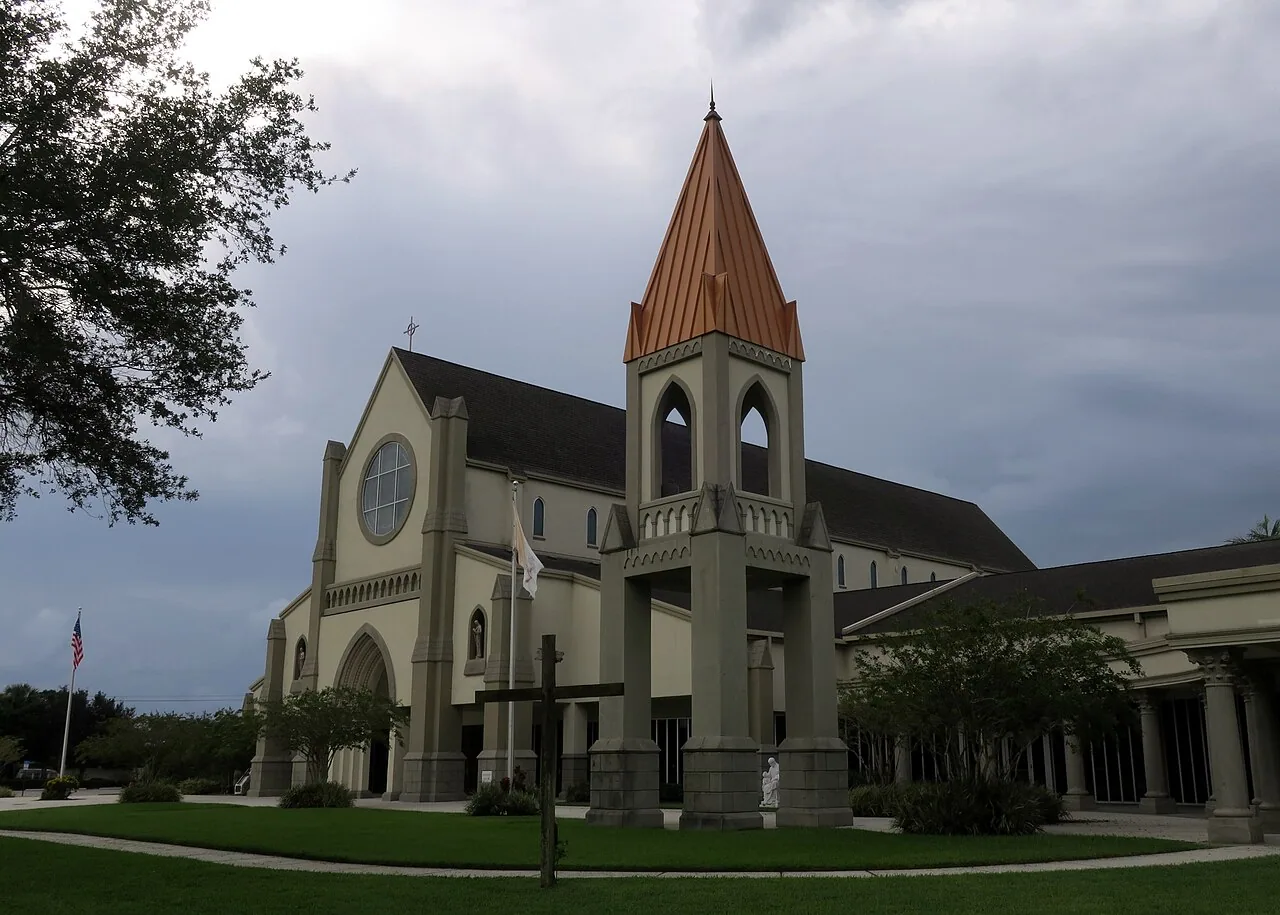
Church campuses mix roofs. A sanctuary may have a steep-slope covering or a low-slope section behind a parapet, a fellowship hall often has its own flat roof, and a steeple or bell tower adds flashings at a height that is hard to reach. A rain shadow that allows about 18.4 inches of precipitation a year leaves every one of them unwashed through the dry months, and ultraviolet exposure ages each surface in its own way.
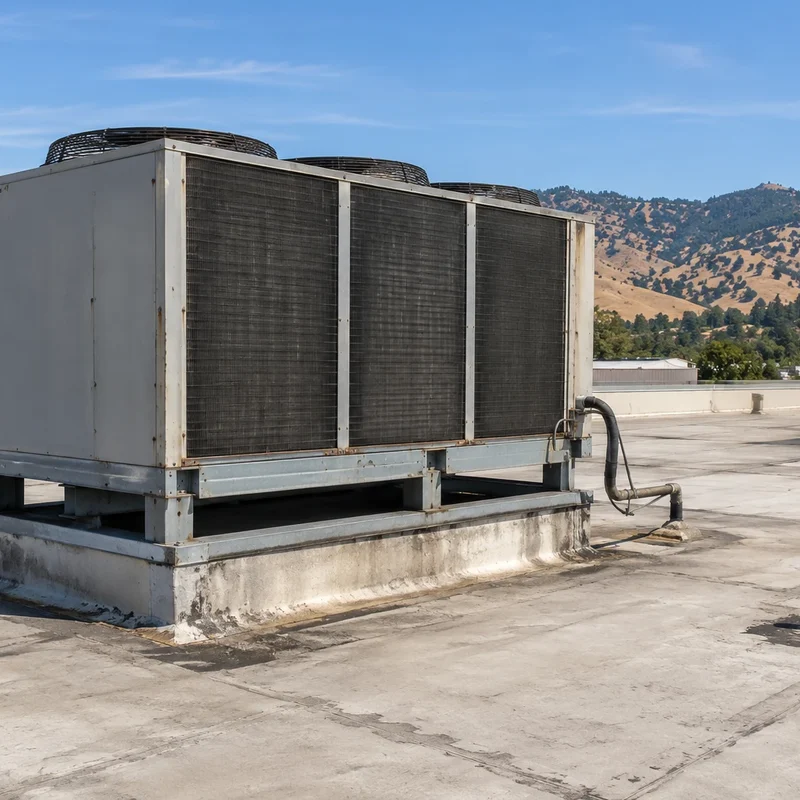
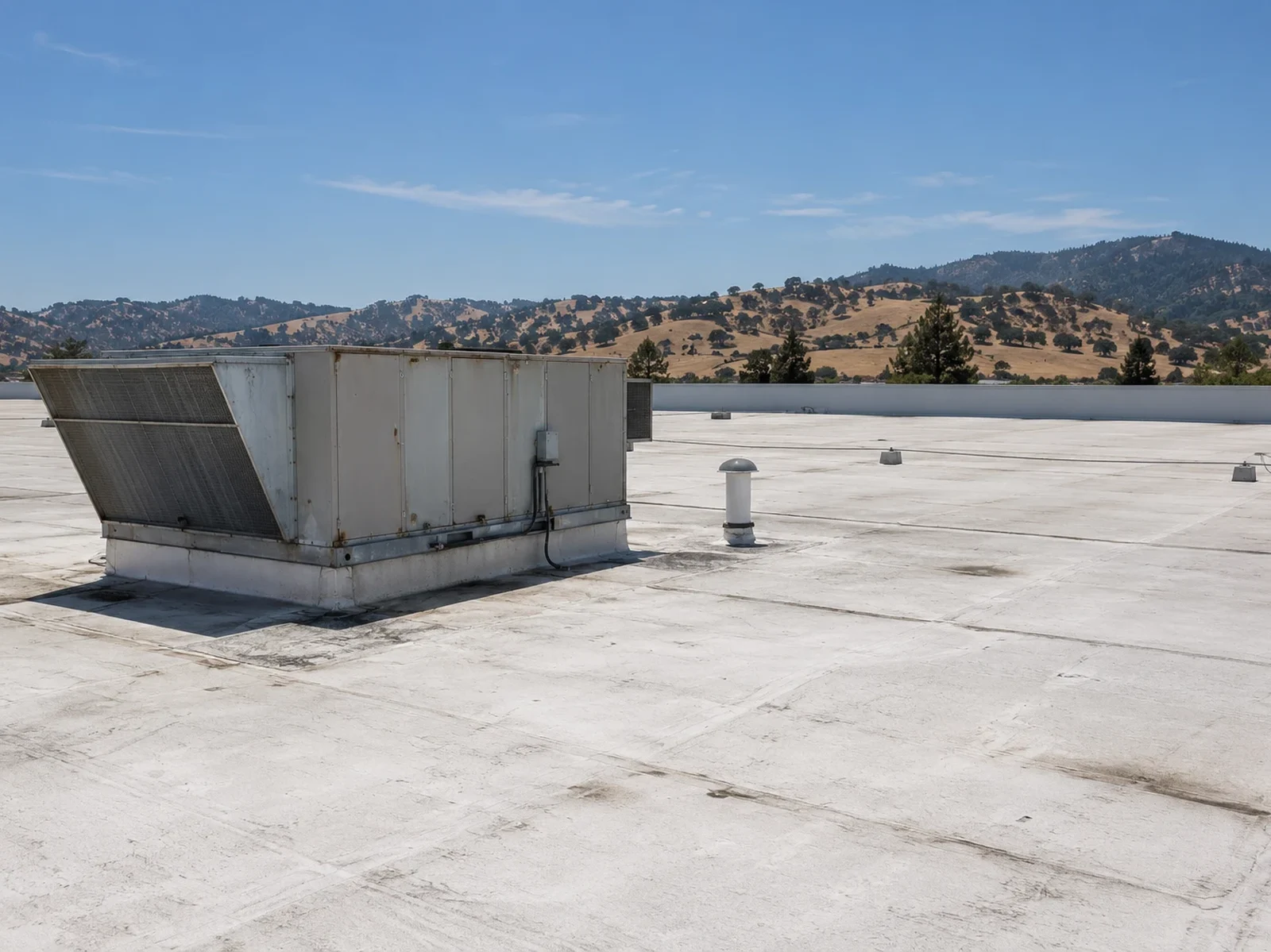
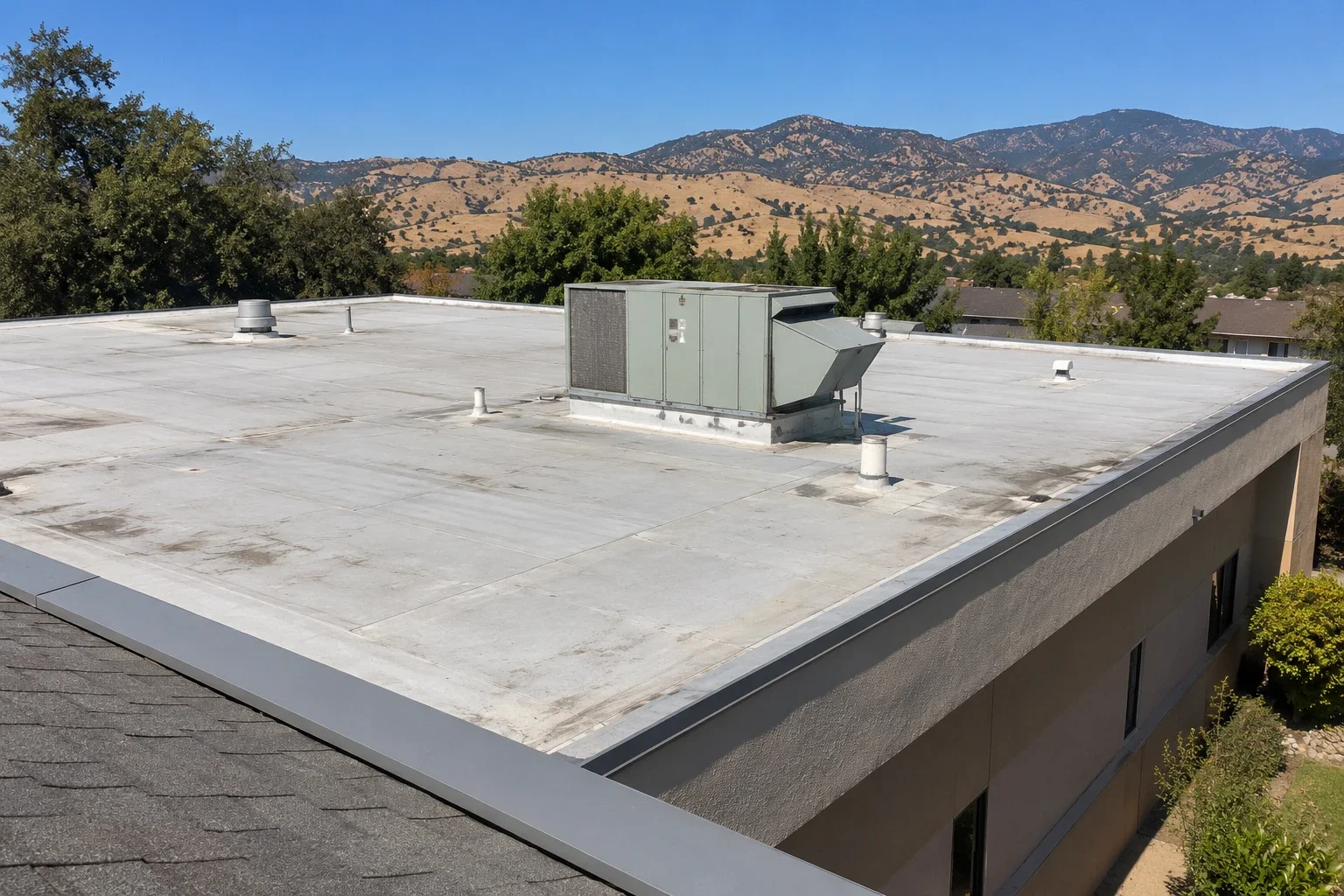
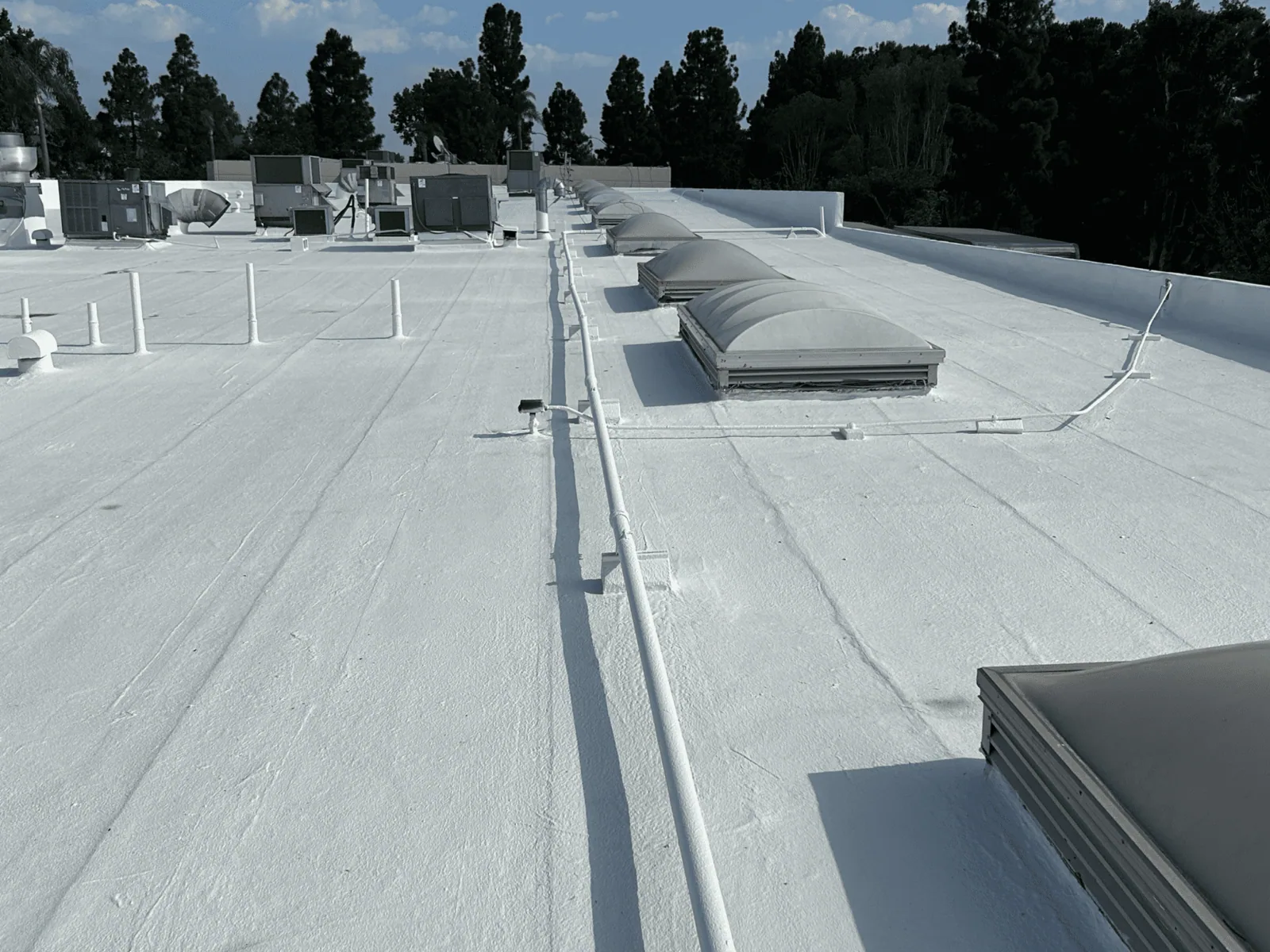
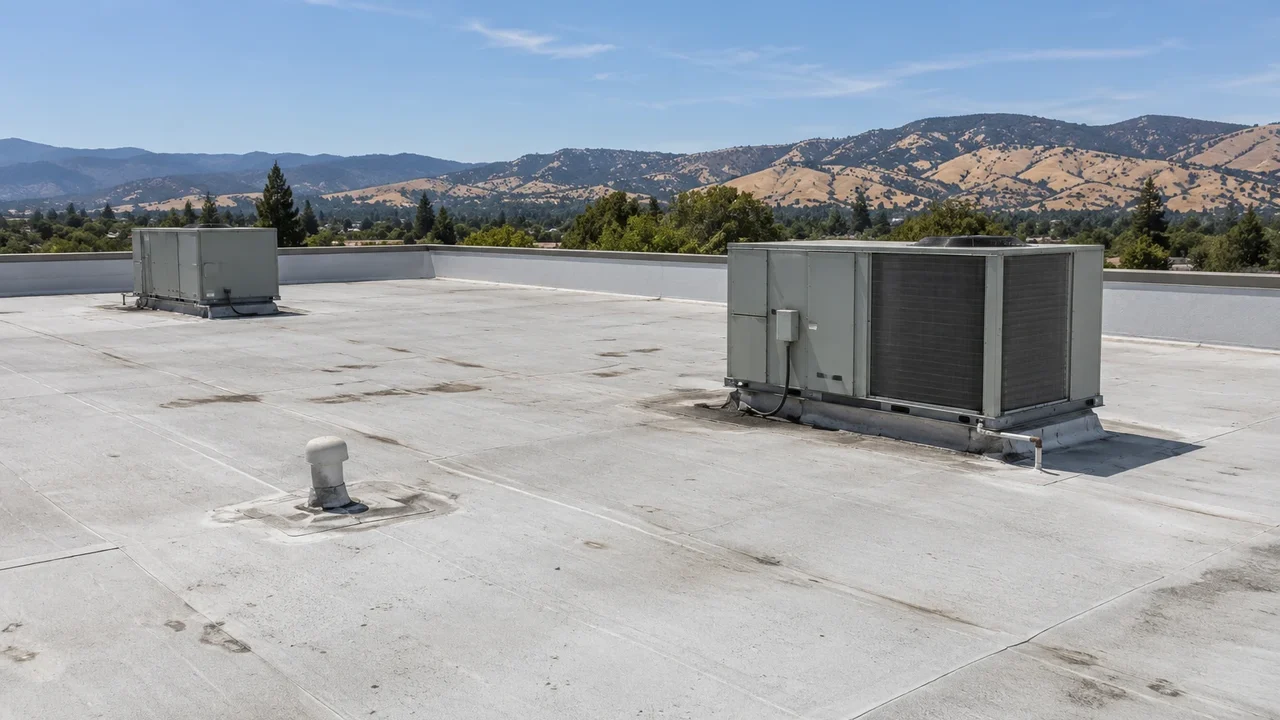
Flat sections show the effects first. A membrane over a hall loses reflectance, seams stiffen and flashings at walls and units pull. Steep-slope coverings lose granules or coating and open at laps. Heat also reaches the sanctuary ceiling, and a church that cooled well when new may now struggle. The survey records all of these in place and ranks them by exposure.

Condition grades a council can read
A volunteer building committee needs a report in plain language with photos. We grade each roof section on a simple scale and attach a sentence that explains it: what we saw, what it means and what it will cost to act now or wait. An infrared scan on flat sections shows moisture in the insulation that the surface hides.
The grades turn a worry into a list. A sanctuary roof that grades fair with four years left is a candidate for repair and monitoring. A hall roof that grades poor with one year left moves to the top of the funding list. The congregation can then ask the right question, which is not whether the roof is bad but which section to fund this year, and the report answers it with evidence. Volunteers who have patched a roof for years often know where it leaks, and we ask them: the stain they remember over the nursery is a data point, and we match it to what the survey finds.
Capital campaigns, reserves and the carrying cost of waiting
Most congregations pay for a roof through a reserve, a special offering, a loan or a capital campaign, and each source has its own calendar. A campaign needs months of notice, a clear figure and a story that members can understand. The owner report supplies the figure and the story: the grade, the years left and the cost of the plan with its alternates.
Carrying cost is the number that moves a council. Every year a failing roof is left alone adds repair visits, damage to plaster, wood and other finishes that are costly to replace, and the risk of a closure on a service weekend. Plaster, carved wood and organ pipes do not tolerate water, and the cost of restoring them can exceed the cost of the roof by a wide margin. That is the ledger entry a finance committee tends to miss, and it belongs on the page. The report sets those costs beside the replacement price, and a council can see why funding the work in a planned year protects both the building and the budget.
Services, funerals and the work calendar
A church has fixed days, and a roofing schedule has to respect them. Work stops on service days, and we avoid weddings, funerals and major holidays. The best windows are the spring work window and the shoulder weeks of fall, when the sun is gentler and the calendar is lighter. We agree on blackout dates with the pastor or the office before the start, and write them into the schedule.
The crew starts at first light on triple-digit days and keeps materials in shade until they are laid. A crew that finishes loud work before ten leaves the afternoon free for office staff, choir practice or a food pantry that uses the hall. Entrances stay open, parking is protected, and the crew keeps noise away from the office hours that matter. Each section is dried in before the crew leaves, so a sanctuary ceiling is not exposed to a late-summer thunderstorm. Where a steeple needs work, we plan access and fall protection with care and price it as its own line. Metal flashings at that height see the strongest sun and wind on the building, and a small gap there lets water into a space that few people ever inspect. We photograph the steeple from a lift or a drone, and the grade includes it.
Smoke weeks, ash and ember exposure
Wildfire smoke now reaches the valley regularly. Medford's 26 smoke days in 2021 came after the Almeda and Obenchain fires of 2020, which took about 2,600 Jackson County homes. Ash and soot settle on a church roof, and gutters and valleys collect debris that can ignite in an ember event. A pre-season clean of the edges is cheap and effective, and a post-smoke wash restores some of the surface. Church campuses with mature trees and shrubs near the walls collect more debris, and a volunteer day can clear the ground-level debris, with the roof and gutter work left to a trained crew.
A building that opens its doors to the community needs a sound roof when people arrive. We list the fire rating of the covering on each building in the report, which lets a trustee answer an insurer's question without climbing a ladder.

Records for trustees and the next building committee
Each building leaves with a roof register entry: grades, photos, drain locations, flashing details, warranty and the next check date. The next committee can read it in an evening. A commercial roof repair handles an early leak, and a roof coating restoration can extend a sound flat roof. A full commercial roof replacement resets the clock, and a roof condition report supports a campaign. A school wing follows school roofing, a hall that hosts events shares details with government building roofing, and congregations in Jacksonville and Central Point follow the same plan.

Send the building list, roof ages and leak tickets

Related Roofing Pages
Questions About Church Roofing
How do you schedule around services?
Work stops on service days and major events. We agree on blackout dates with the pastor or office first.
Can a steeple be worked safely?
With planned access and fall protection, priced as its own line.
How does a congregation fund a roof?
Through reserves, offerings, loans or campaigns. The report gives the figure and the timing each needs.
What if a leak starts before the campaign?
We repair the leak and protect the interior, then fold the repair into the plan.
Does smoke season matter for a church roof?
Soot dims the surface and debris collects at the edges. A post-smoke wash and an edge clean help.