
Big-Box Retail Roofing in Medford, OR
Big-box retail roof grading and replacement planning in Medford, OR, with heat, reflectance loss and smoke tracked in a roof register for national tenants.

Overview
For a national retailer, the Medford, OR roof is one row in a spreadsheet of hundreds, and the row that matters is how soon the cooling load and the leak history push it up the replacement list. A typical year brings 61 afternoons exceeding 90 F, 11 exceeding 100 F, with 115 F on record, so a membrane over an air-conditioned store works through weather that spends remaining service life every summer. The line in the reserve schedule that moves is the replacement year.
We grade a big-box roof in terms a corporate real estate team can paste into its system: a condition grade, a remaining-life estimate, a list of defects with locations and a recommended action with a cost range. The same report works for an owner, a tenant with a roof obligation or a lender doing diligence, and it comes with photos that prove each line. A regional manager who has never stood on the roof can still see the seam that failed, the drain that ponds and the curb that was flashed too low, and can decide from the desk whether to send a crew or wait for the spring window.
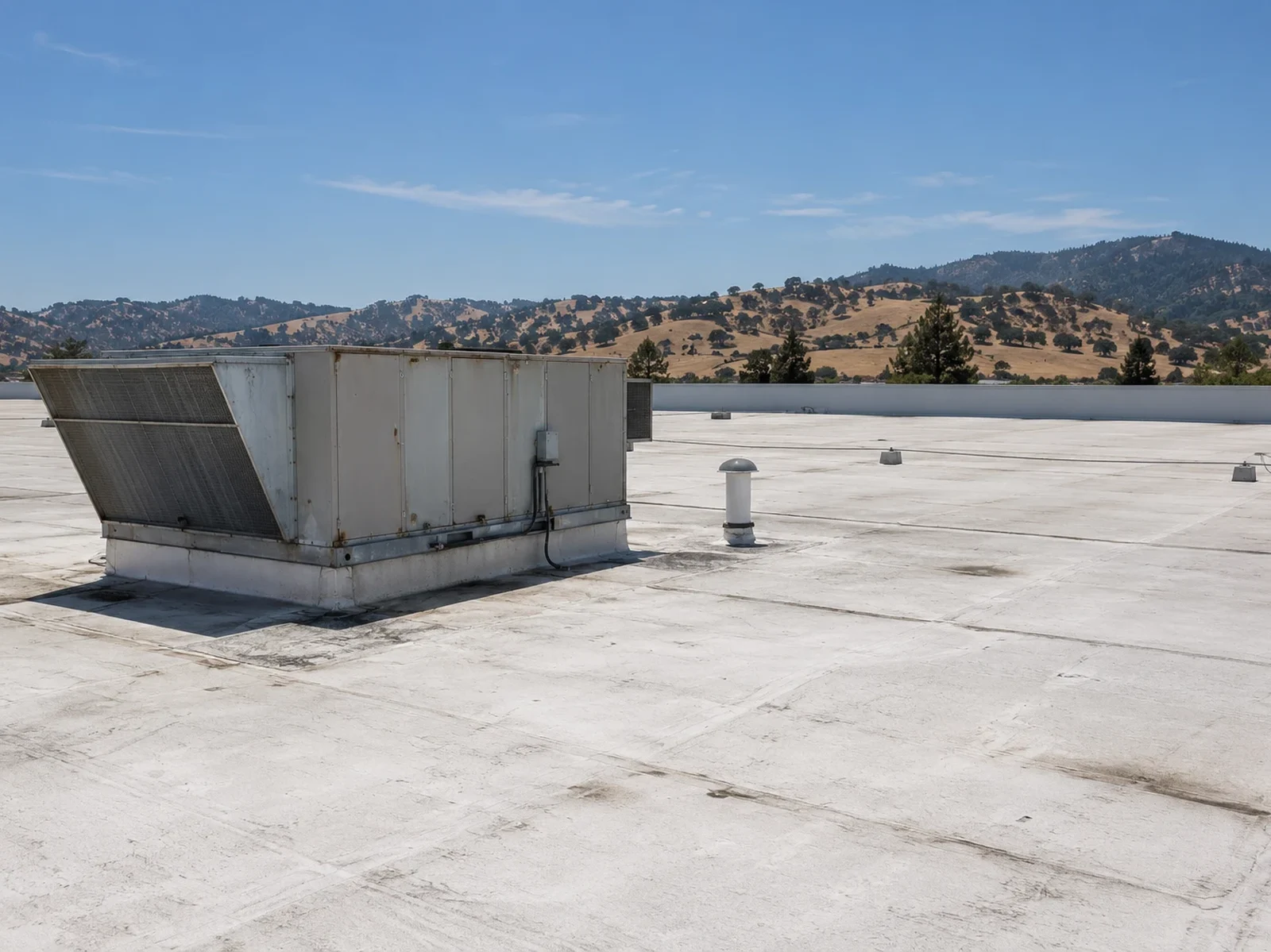
Heat, reflectance and the cooling load on a wide roof
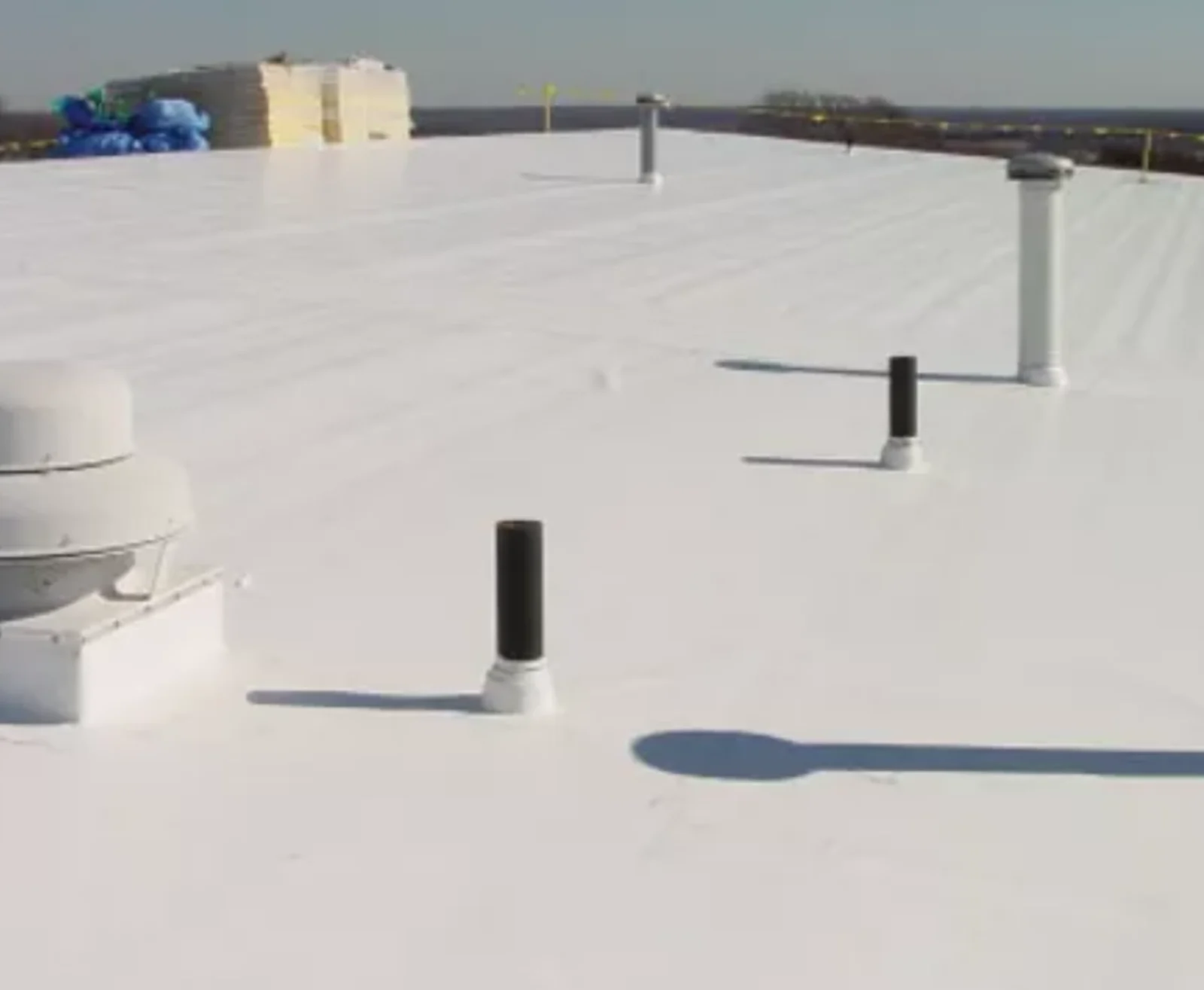
A big-box roof presents a great deal of surface to the sun. Little rain rinses a roof that gets about 18.4 inches of precipitation a year, and a white membrane loses reflectance as dust, pollen and soot settle on it. A dimmer roof absorbs more heat, rooftop units work harder, and the energy bill rises in a way that is rarely traced back to the roof.
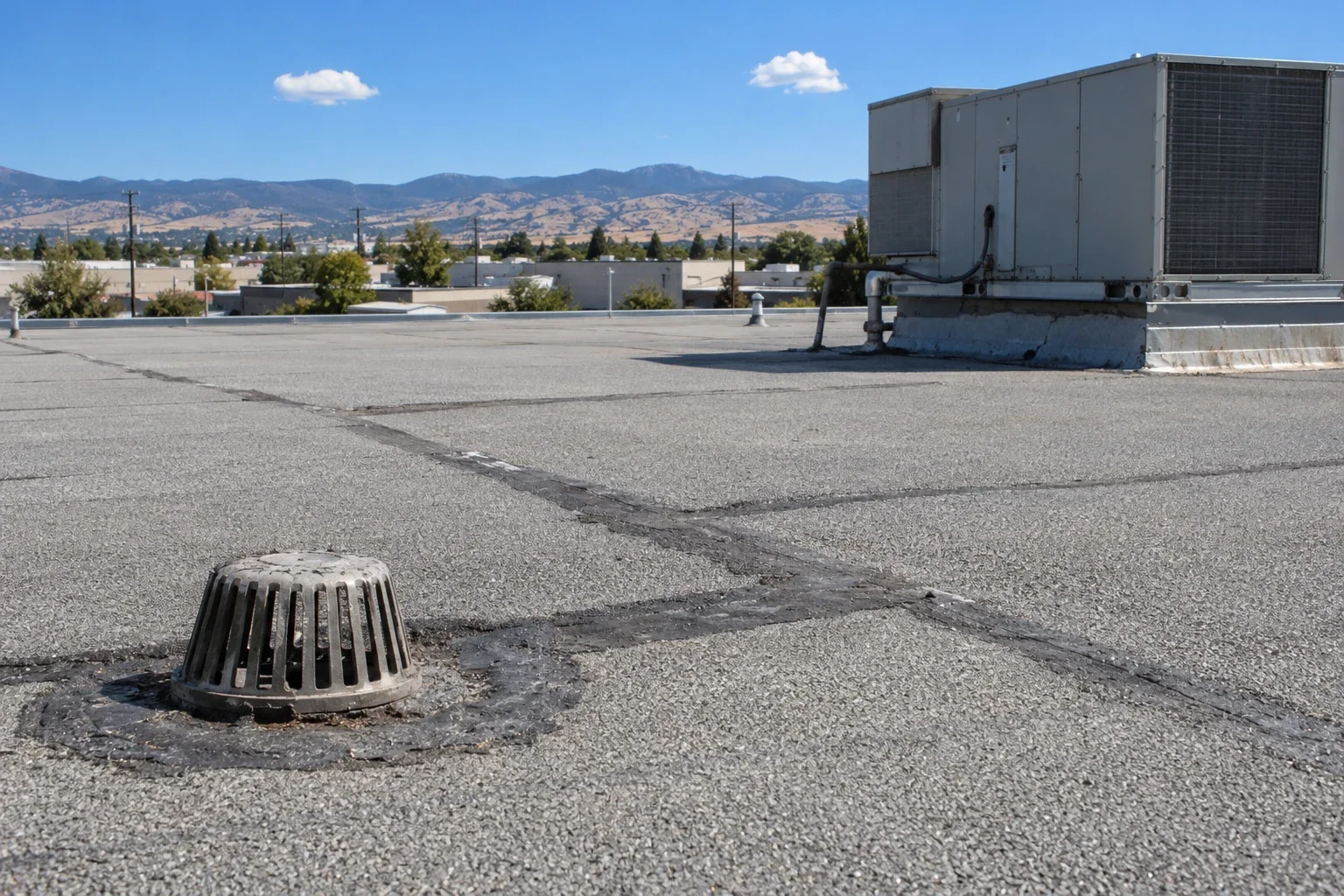
Heat also drives material response. Seams on a thermoplastic sheet stiffen over time, sealants at curbs and penetrations dry out, and adhesive bonds lose strength at the edges. The condition grade captures these slow changes. A roof that grades well in May and shows early seam stress in September is telling the manager that the summer used up more of its budget than the plan assumed. That is the UV budget in practice: the roof is spent in hours of sun and degrees of heat, and the survey is the statement of what remains. We send the September note to the manager the same week, so the reserve line can change before the next quarter.
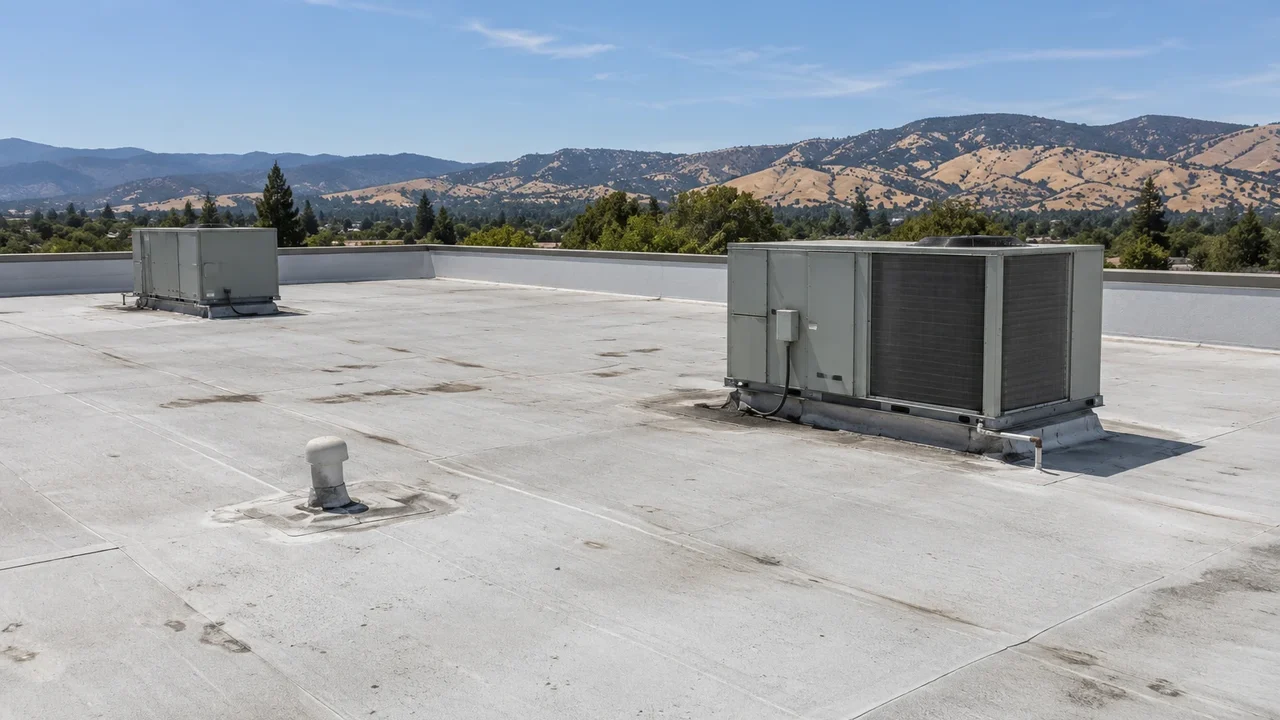
Condition grade, defects and remaining service life
A survey on a wide roof starts with a drone pass to map the surface, then ground inspection of the details the drone cannot judge: seams, flashings, drains, penetrations and rooftop equipment curbs. An infrared scan at the right time of day shows moisture in the insulation. The defects go on a plan with numbers, so a repair crew can find each one and a manager can count them.
The estimate of remaining life is the figure a tenant's lease abstract asks for. A roof with fifteen years left supports a long-term lease. A roof with two years left is a negotiation point. We state the estimate with the reasoning, since a tenant's facilities group will test it, and we update it each spring so the number follows the roof instead of the calendar.

Roof obligations, lease-cycle timing and carrying cost
In a net lease, the roof obligation can sit with the landlord, the tenant or both, and the party who pays decides the timing. We read the roof clause with the manager and structure the report to the answer: a landlord report emphasizes capital timing, a tenant report emphasizes maintenance and defect history. Either way, the carrying cost of waiting is the figure that frames the decision.
Carrying cost includes repair visits, interior damage, lost sales from a closed aisle and the premium paid for a replacement done in a hurry. A roof that fails during the holiday season costs a retailer more than any membrane. Replacing it in the spring work window, with a blackout calendar respected, is cheaper than the emergency and keeps the store open in the weeks that matter. Retailers publish blackout dates for good reasons, and a bid that treats them as fixed walls is a bid the real estate team can accept without a long negotiation. We state the crew size and the number of working days the window allows, and we say what happens if weather or smoke takes one away.

Interstate 5, Table Rock Road and Central Point retail
Big-box retail in the Rogue Valley follows the roads. Interstate 5 crosses central Medford on a 3,229-foot viaduct, Table Rock Road links the freeway to the airport and carries distribution traffic, and Costco is one of the larger employers in Central Point. Stores near those corridors share access advantages for deliveries and a common schedule problem: a crane or a flagger on a busy road needs a permit and a quiet hour.
We plan delivery days around store receiving, stage materials away from customer entrances, and agree on a signal with the receiving lead for each truck. The work is divided into zones that match the sales floor so a manager can see on a plan which section is open and what is happening beneath it. Early starts beat the afternoon heat, and shaded storage keeps rolls from overheating. On a triple-digit day a sheet left in the sun behaves differently from one kept cool, and the crew handles it accordingly. Walkways are protected for the rooftop service techs, who will come and go during the work, and every unit disconnect is marked on the plan before anything is lifted.

Smoke season and rooftop intake filters
Smoke days now shape the retail calendar. Medford had 26 of them in 2021, and about 2,600 Jackson County homes burned in the Almeda and Obenchain fires before that. Soot settles on the roof and loads the filters on rooftop units, so a store's air quality and cooling performance depend on a post-smoke check. We include that check in the maintenance plan and record filter changes in the roof register.
Ember exposure lives at the edges. Gutters, parapet caps and vents collect leaf litter, and a pre-season cleaning removes fuel. We note the fire rating of the covering for each store so a risk manager can cite it. A tenant who wants one standard report across a region can use the same format for every store.

Reporting for corporate real estate teams
A record goes into the roof register for each store: grade, photos, defect plan, drain map, warranty and the next check date. A corporate team that manages many stores can fold the data into its own system, and a multi-site roof program lets it schedule work across a region. A chain in the retail and restaurant category can request a roof condition report for a single store or a set. Neighboring formats include shopping center roofing and grocery store roofing, TPO roofing is the usual membrane, and stores in Central Point follow the same plan.

Send the store list, roof ages and leak tickets

Related Roofing Pages
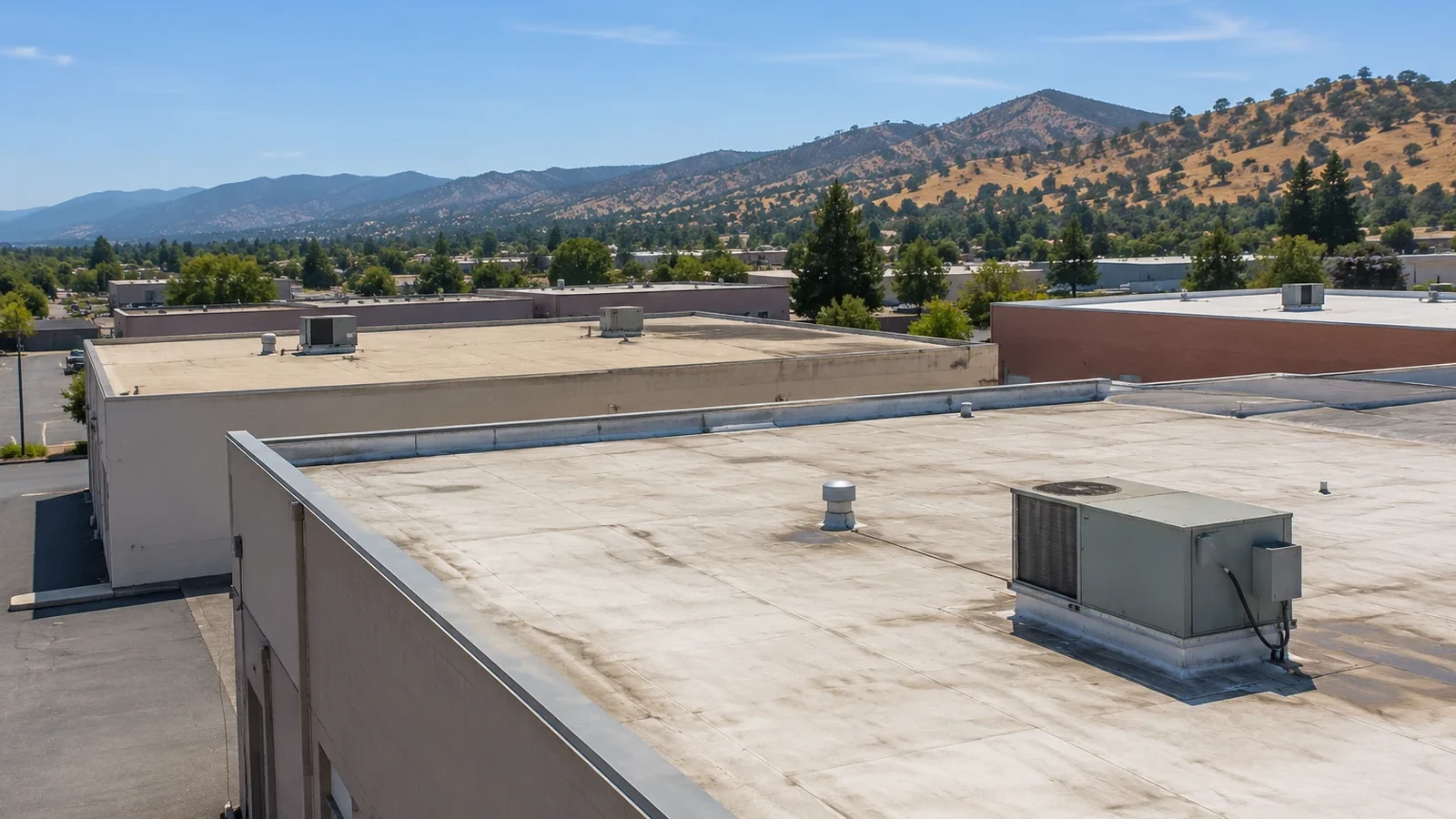
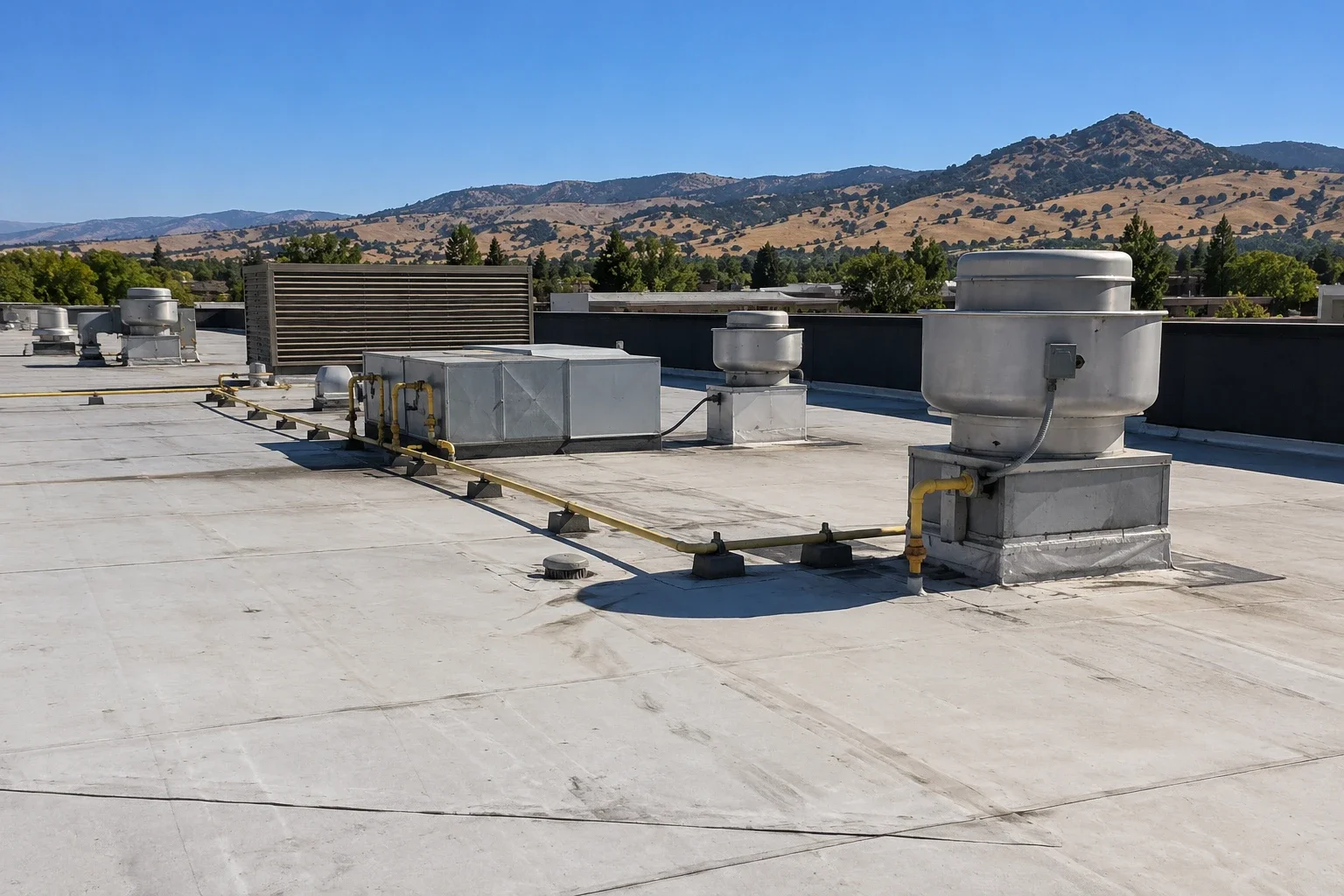


Questions About Big-Box Retail Roofing
What does a big-box roof survey include?
A drone pass, a ground inspection of seams, flashings and drains, and an infrared moisture scan, with defects numbered on a plan.
Who pays for the roof in a net lease?
The lease clause decides. We read it and shape the report for the landlord, the tenant or both.
Can a store stay open during a reroof?
Yes, in zones that match the sales floor, with early starts and a dry-in each day.
Why do rooftop filters matter after smoke?
Soot loads them quickly and cuts cooling performance. We check and change them after a heavy smoke month.
How often is the remaining-life estimate updated?
Each spring, so the number follows the roof and not the calendar.