
Auto Dealership Roofing in Medford, OR
Auto dealership roof grading and replacement in Medford, OR, with showroom, service bay and rooftop-unit details planned around sales hours and valley heat.
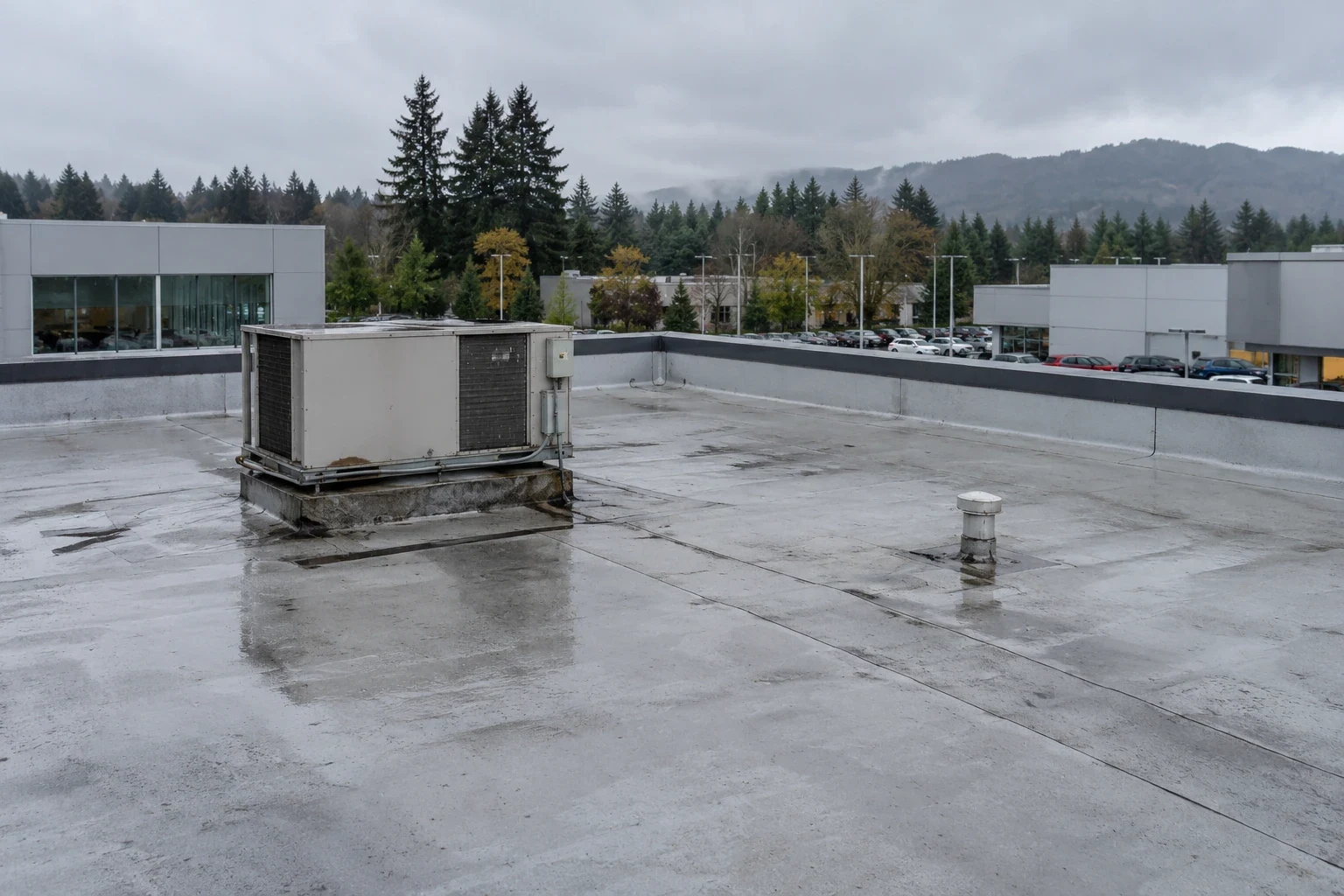
Overview
A dealership roof protects two kinds of inventory, the cars on the floor and the service bays that bring customers back, and a leak into either shows up on the balance sheet. Medford, OR is home to Lithia Motors, a Fortune 500 company headquartered here since 1970, and a dealer in the valley answers to a brand with facility standards of its own. The valley sun, 61 afternoons hotter than 90 F, 11 hotter than 100 F in an ordinary year, keeps its own schedule, and the two calendars have to be reconciled in the reserve plan.
We grade each dealership building in terms a general manager and a facilities director can use. Showroom, service drive, shop and body shop are each graded, given an estimate of years remaining and a recommended action with a cost range. The line that moves in the reserve schedule is remaining service life, and the line in the operating budget that moves with it is cooling cost.
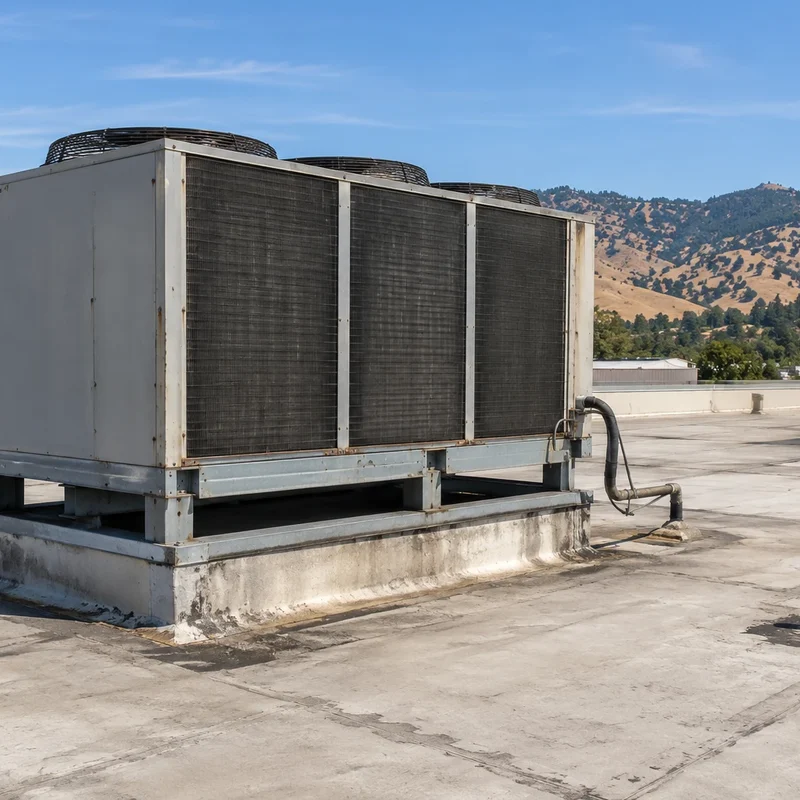
Valley sun on a showroom and a service roof
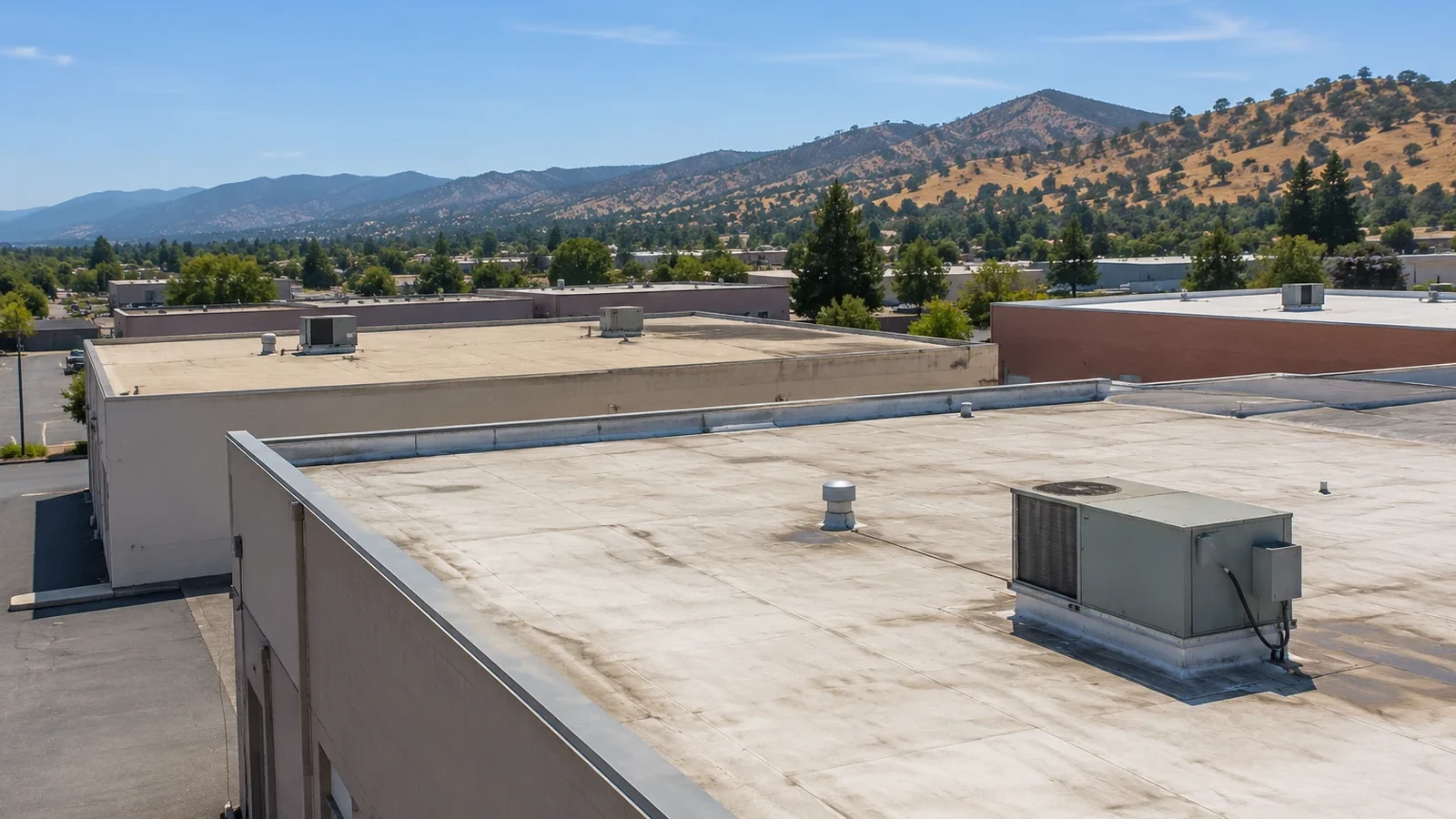
A showroom with large glass and a service shop beside it put air-conditioning load under the roof. Only about 18.4 inches of precipitation a year falls to wash the membrane, so dust, pollen and soot settle and stay. A white roof loses reflectance, a dark one runs hot, and the showroom below, with its large glass and its air conditioning running through the afternoon, pays for both. The difference shows on the electric bill in July. The service bays add rooftop exhaust and make-up air units whose curbs and flashings age under the same sun.
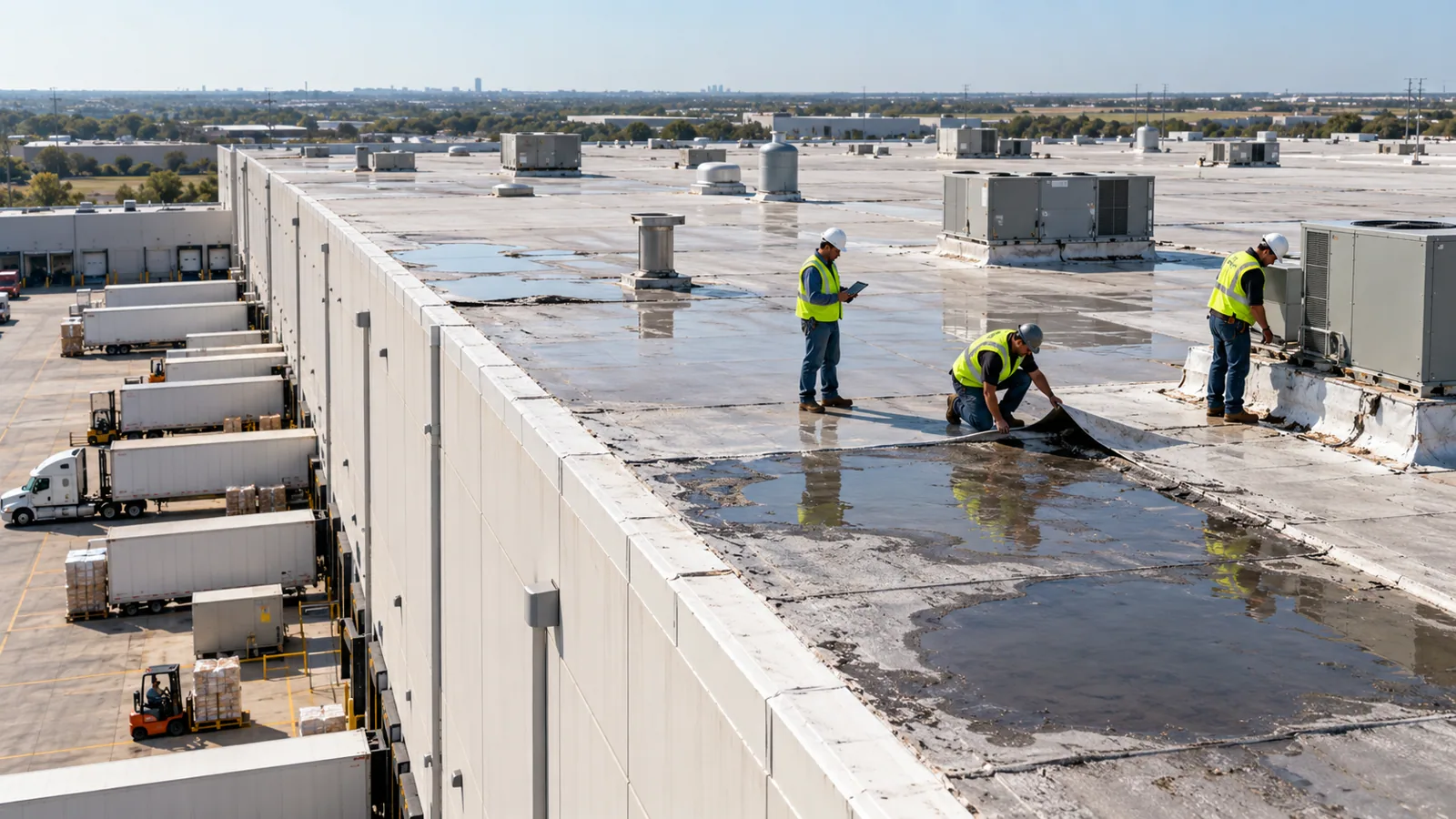
Seams stiffen over a handful of summers, sealants harden and edge metal moves with the heat. The first sign is usually a stain over a service bay or a showroom ceiling tile that drops. A yearly condition grade catches the changes earlier, and the report records where the sun has done most of its work.
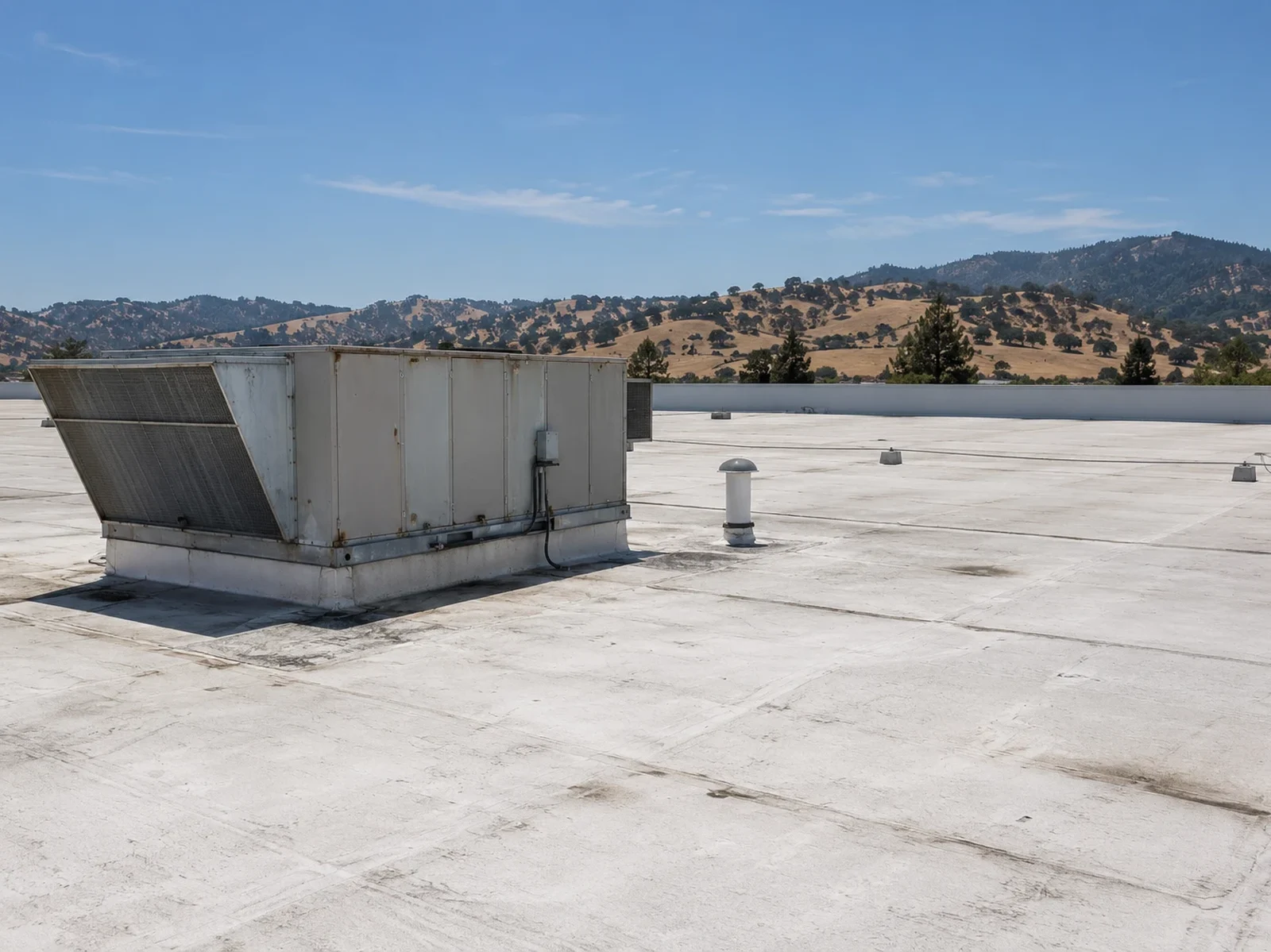
Condition grades by building and remaining life
A dealership campus may include a showroom, a service shop, a body shop, a parts building and a detail bay, built at different times. We grade each roof on membrane or covering, seams, flashings, drainage, exhaust curbs and moisture, with an infrared scan on flat sections. Every building receives a grade and a remaining-life estimate, with photos.
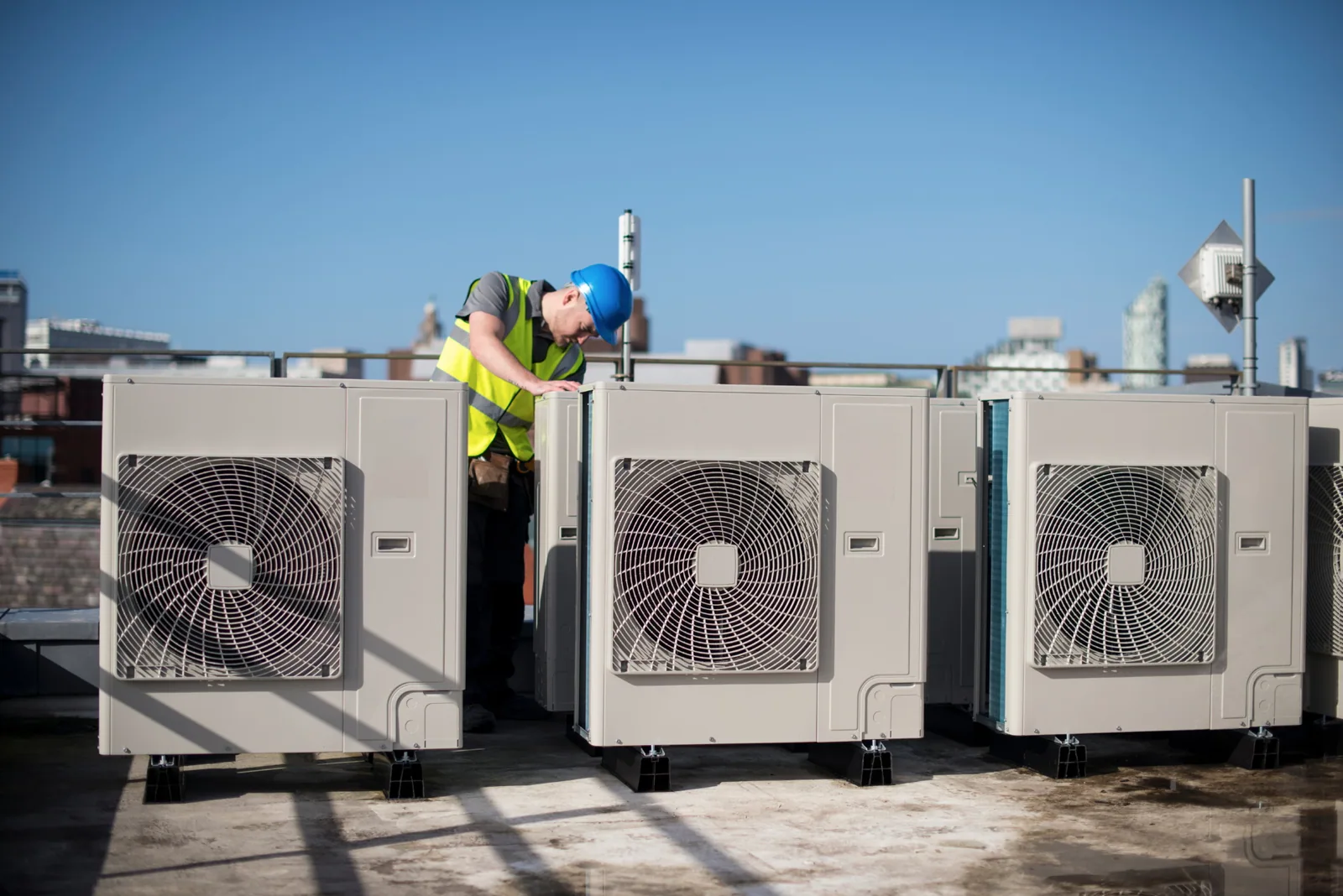
The grades set priorities. A leak into a showroom costs more than a leak into a storage room, so the showroom roof rises in the order even when its grade is similar. A body shop with paint equipment has its own exposure, since moisture and dust near a paint booth cause rework. The report states each exposure beside the grade, so a general manager and an owner can see why the order is what it is. Service drive roofs and shop roofs get a second look at the exhaust and make-up air curbs, because vehicle exhaust, heat and fumes from the shop age those details faster than the field and are the first place a leak into a working bay will start.
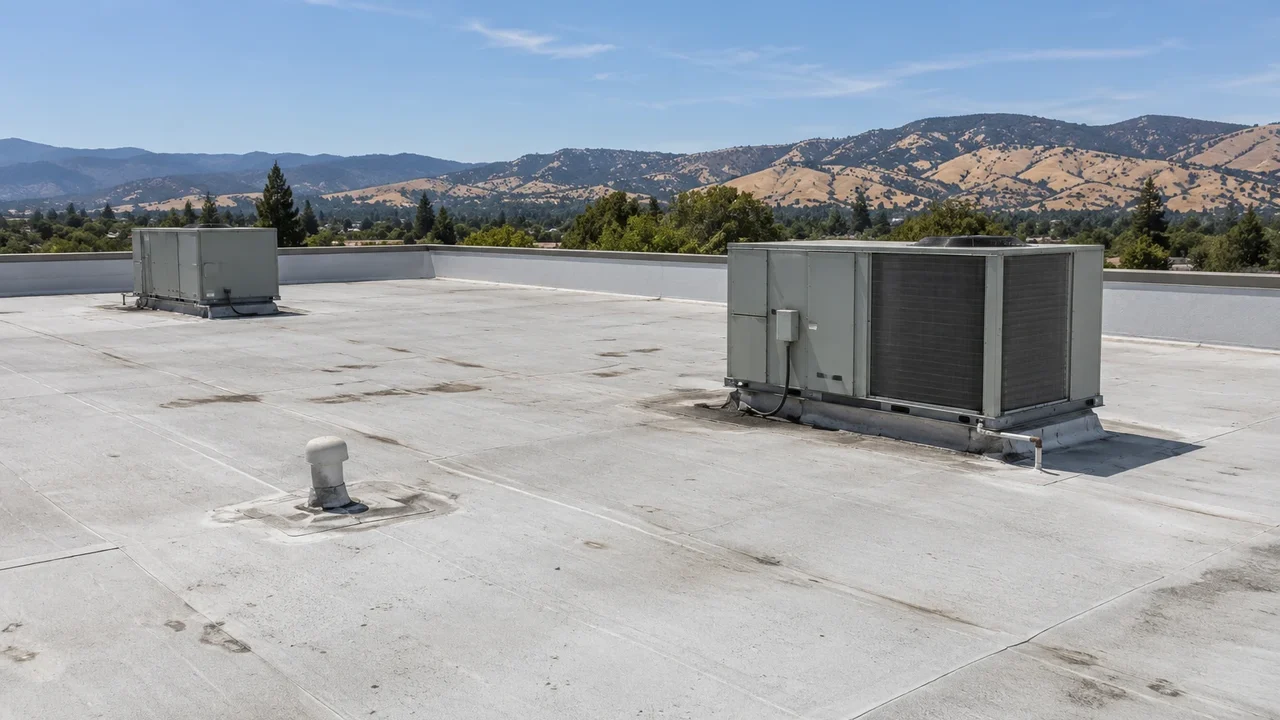
Brand facility cycles, lease timing and the cost of waiting
Dealerships live with facility cycles set by the manufacturer, and a renovation or an image program can arrive on a fixed date. The roof belongs in that plan. A roof replaced just before a showroom renovation can be coordinated with the work; a roof replaced just after it can be wasted when the new ceiling is damaged by a leak that was already coming. The owner report states the grade, the years left and the cost range, which lets the roof work be matched to the facility calendar.
Carrying cost is the figure that makes the case. A leak into a showroom, a service bay or a parts room means damaged finishes, lost shop hours and customers who see a stain. Set beside the replacement price, those costs show an owner why a planned spring replacement runs cheaper than a string of repairs. When a dealership is sold or its franchise changes hands, the register becomes part of the sale file, and a buyer who reads a clean grade and a dated record asks fewer questions about the building.

Sales hours, service drive traffic and the work window
A dealership stays open, and the plan keeps it open. We map the roof to the building, start over the parts of the building that can best absorb noise and keep the service drive clear for customer traffic. Lifts and dumpsters stay away from the front lot and the delivery area, and deliveries arrive outside the morning rush. A flagger directs trucks where the lot is shared.
Starting early gets ahead of the triple-digit afternoon and leaves the showroom quiet when customers arrive. Vehicles parked near the building are moved or covered by arrangement, and loose debris is swept from the lot each evening so no tire is damaged. Every section is dried in before the crew leaves. A general manager receives a one-page schedule that names the day, the area and the phone number. If a customer event is planned, such as a sales weekend or a brand launch, the crew pauses loud work for it, and the schedule carries a buffer so the pause does not push the finish into a smoke week or a heat wave. The day's schedule is posted at the service desk each morning.

Smoke weeks, ash on the lot and ember exposure
Smoke touches a dealership in two ways: ash on the cars and soot on the roof. About 2,600 homes in the county burned in the 2020 fires, and Medford was in smoke for 26 days the next year. Soot dulls the reflective surface and loads rooftop filters, so the post-smoke visit cleans the roof, swaps the filters and logs the work.
Ember exposure lives at the edges: gutters, vents and parapet caps that collect debris. A pre-season clean costs little, and the cars on the lot are the best reason to do it: an ember that lands in a clogged gutter above a row of inventory is a loss that no roof warranty covers. Each building's covering and its fire rating go in the report, so the dealer's insurer works from the same facts as the facilities team.

Reporting for dealer groups and owners
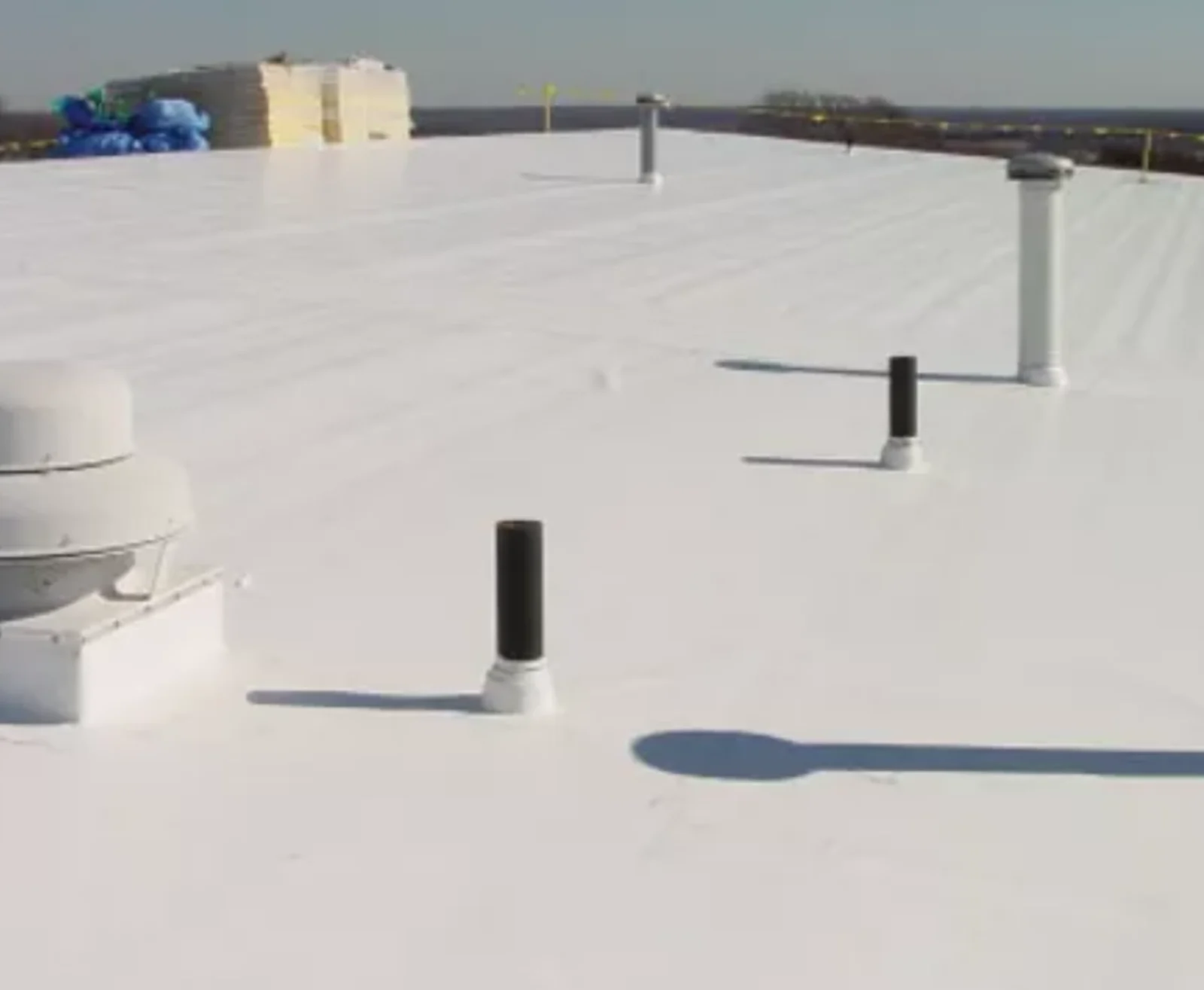
At turnover the dealership holds a roof register entry with grades, photos, a curb list, a drain map, warranty papers and the next check date. A dealer group with several rooftops can bring the entries into a multi-site roof program, and a roof capital plan turns the grades into a schedule. A rooftop equipment curbs and supports review covers the shop exhaust, and TPO roofing suits many dealership roofs. Big-box retail roofing and flex industrial roofing sit close to this type, and dealerships along the North Riverside corridor and in Central Point work the same way.

Send the building list, roof ages and leak tickets

Related Roofing Pages

Questions About Auto Dealership Roofing
Can a dealership stay open during a reroof?
Yes. We keep the service drive and the front lot clear, work in sections and dry in daily.
What happens to cars parked near the building?
They are moved or covered by arrangement, and the lot is swept each evening.
How does the roof fit a brand facility cycle?
The report dates the roof's remaining life so the work lines up with showroom renovations.
Do body shops need special care?
Yes. Moisture and dust near paint equipment cause rework, so those sections get the driest, cleanest methods.
What does a post-smoke visit include?
Cleaning soot from the roof, changing rooftop filters and logging the work.