
Aircraft Hangar Roofing in Medford, OR
Hangar and aviation building roofing in Medford, OR: clear-span roofs, heat, smoke and wildfire-season operations planned into grades and work windows.

Overview
A hangar roof is a long clear span with no walls to break the sun, and in Medford, OR the sun is the first thing that works on it. In a typical year the valley logs 61 afternoons above 90 F with 11 above 100 F, with 115 F on record, and the air under a hangar roof heats until the structure, the paint on the aircraft and the people inside all feel it. What moves in the reserve schedule is remaining service life, and in a hangar that figure tracks the cost of a roof that lets the heat in.
The field itself, Rogue Valley International-Medford Airport, has an 8,800-foot runway and a U.S. Forest Service air tanker base on site, which means a roof schedule near it has to respect the fire calendar as well as the weather. Each hangar and aviation roof gets a condition grade, a remaining-life estimate and a recommended action, set against that calendar, with a work window that stays clear of the weeks when the ramp is busiest.
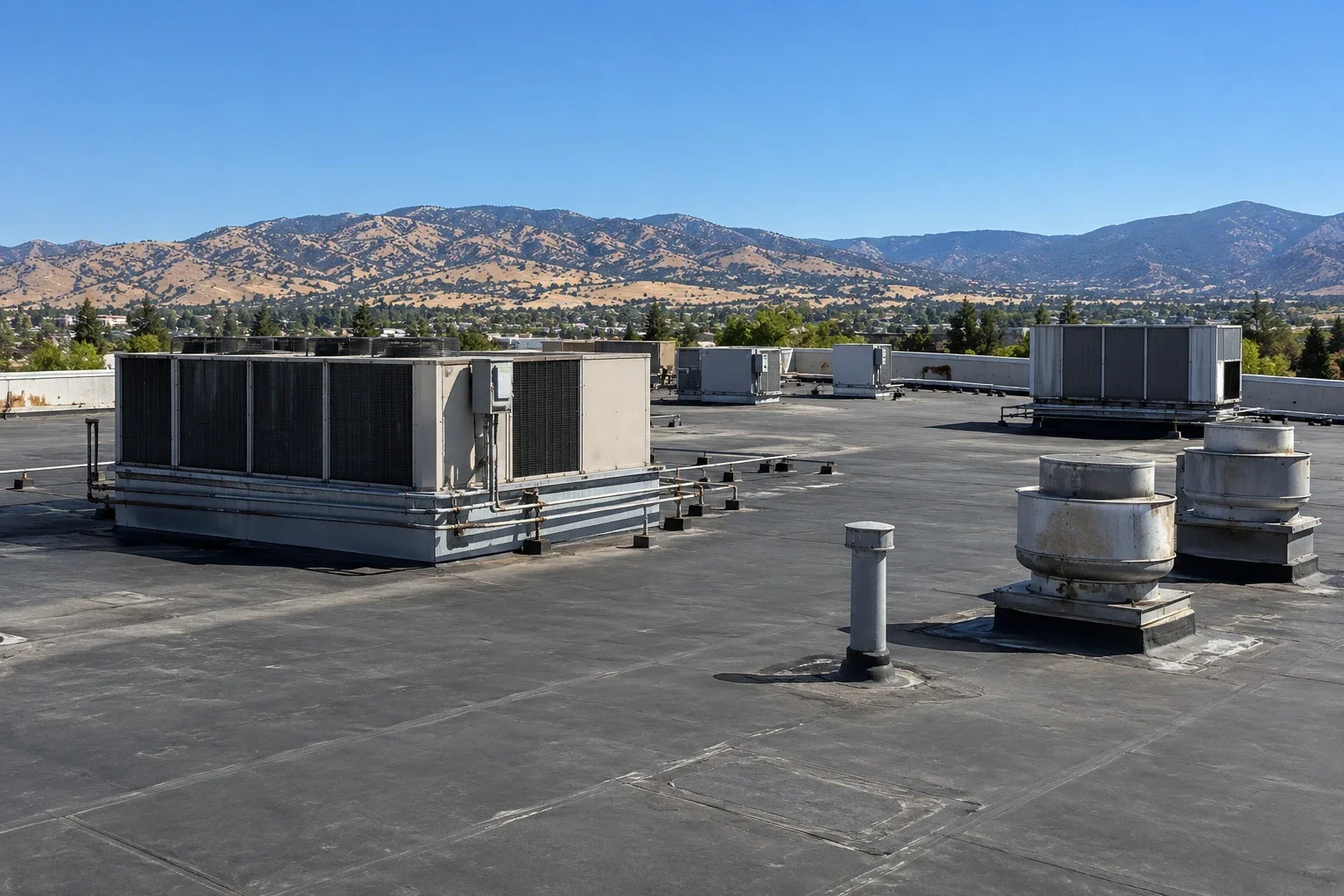
Sun on a clear span and the heat inside the hangar
Hangars are volumes of air under a large surface, and the roof sets the temperature of that volume. With about 18.4 inches of precipitation a year, little rain rinses the surface, and dust and soot sit on it until a reflective membrane or coating goes dim. A dimmer roof is a hotter roof, and the heat reaches the people and the equipment inside. Hangar owners who run air conditioning or evaporative cooling pay for the roof in the electric bill.
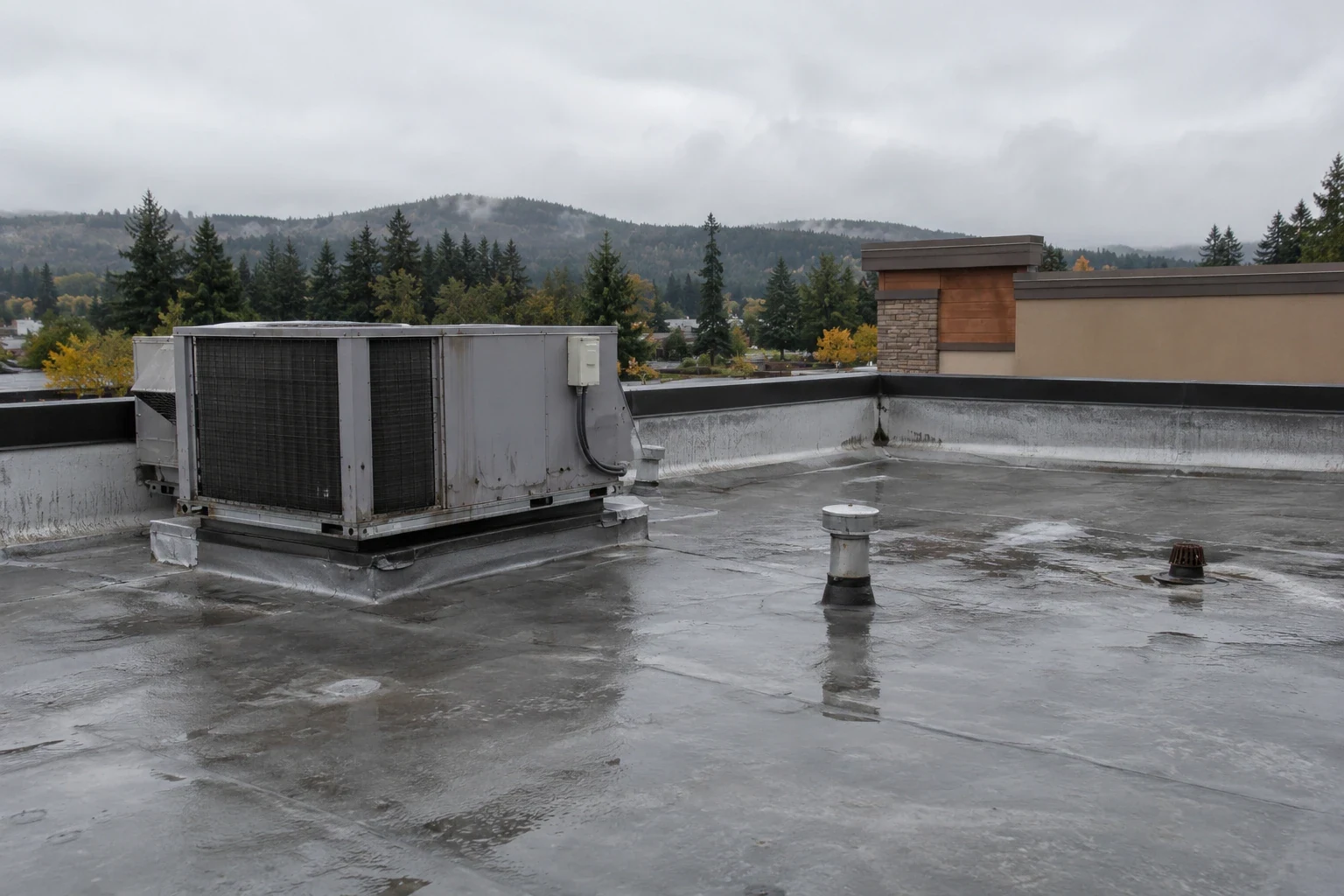
The structure works as well. Long spans expand and contract with the temperature, and the metal panels, sealants and fasteners at laps, ridges and eaves move with them. Ponding is a risk on the low-slope sections that cap offices and shops beside the hangar bay. A survey that records each of these in place gives the owner a map of where the heat has done its work.
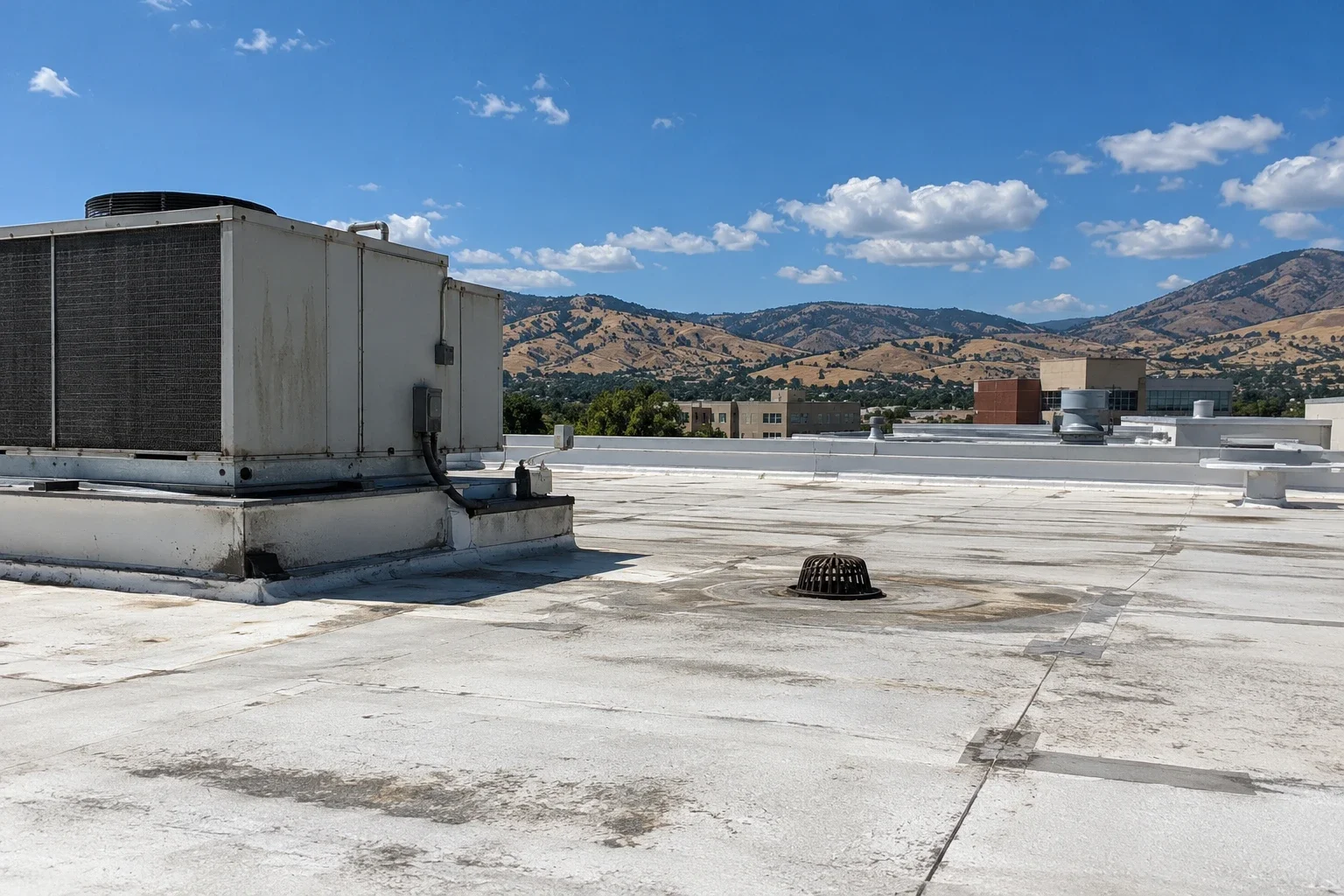
Condition grade and remaining life across hangar, shop and office
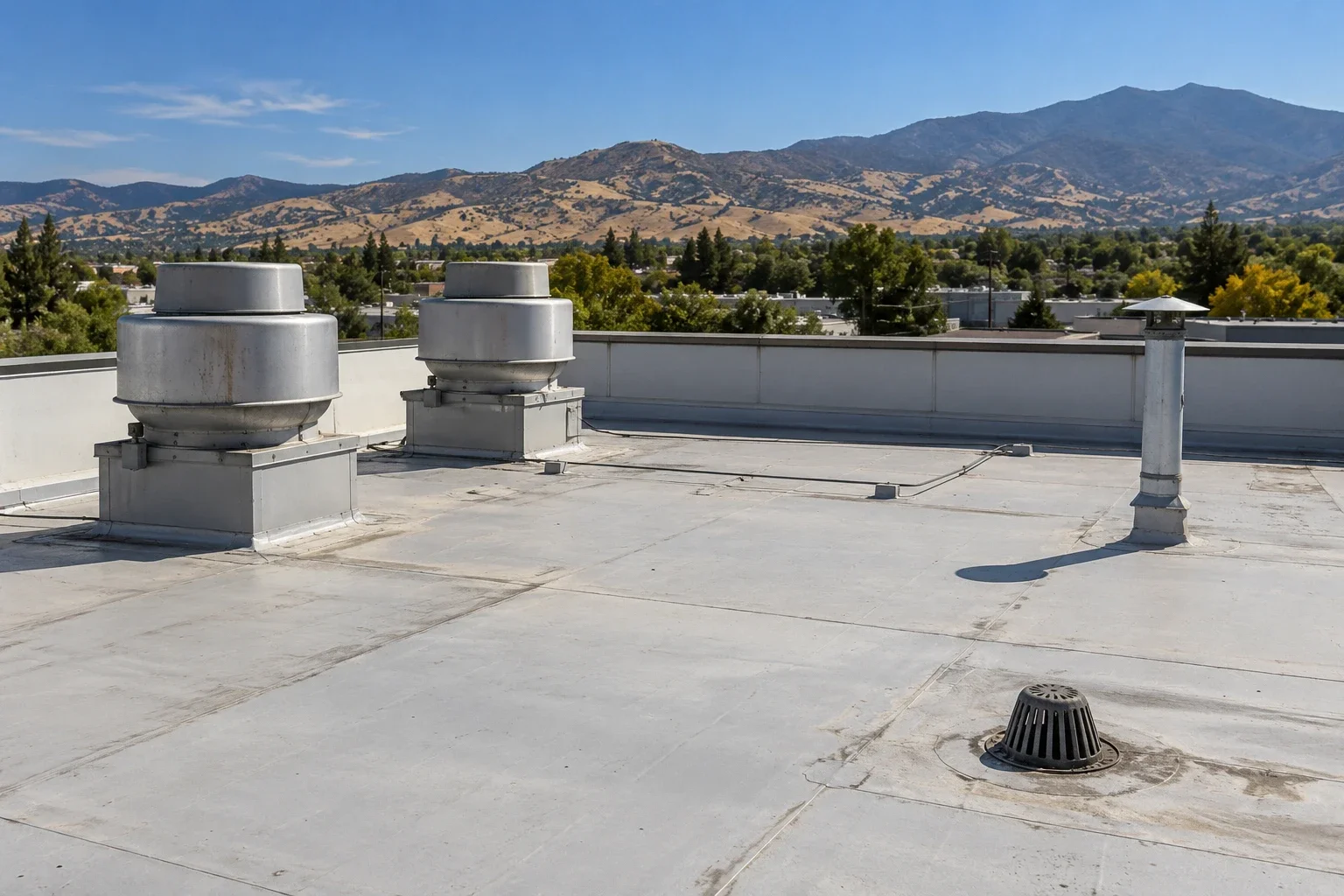
An aviation property often combines a hangar bay, a shop, an office block and a storage building, and the roofs differ. The hangar may carry metal panels or a single-ply membrane over a long deck. The office block may be low-slope. The shop may have rooftop exhaust. We grade each on covering, laps or seams, flashings, drainage and moisture, with an infrared scan on flat sections.
The remaining-life estimate for each section sets the plan, and it is written in years with the evidence beside it so an operator, a lessor and an insurer can all read the same number. A hangar roof with a sound surface and tight fasteners may take a restoration coating that adds years. A roof with saturated insulation or failed laps over an aircraft bay needs replacement, and the report states why. Because a leak over an aircraft is an expensive event, exposure rises in the order even when two grades are similar. A section over a paint area, an avionics shop or a parts room moves up the list for the same reason, and the report says which sections those are.
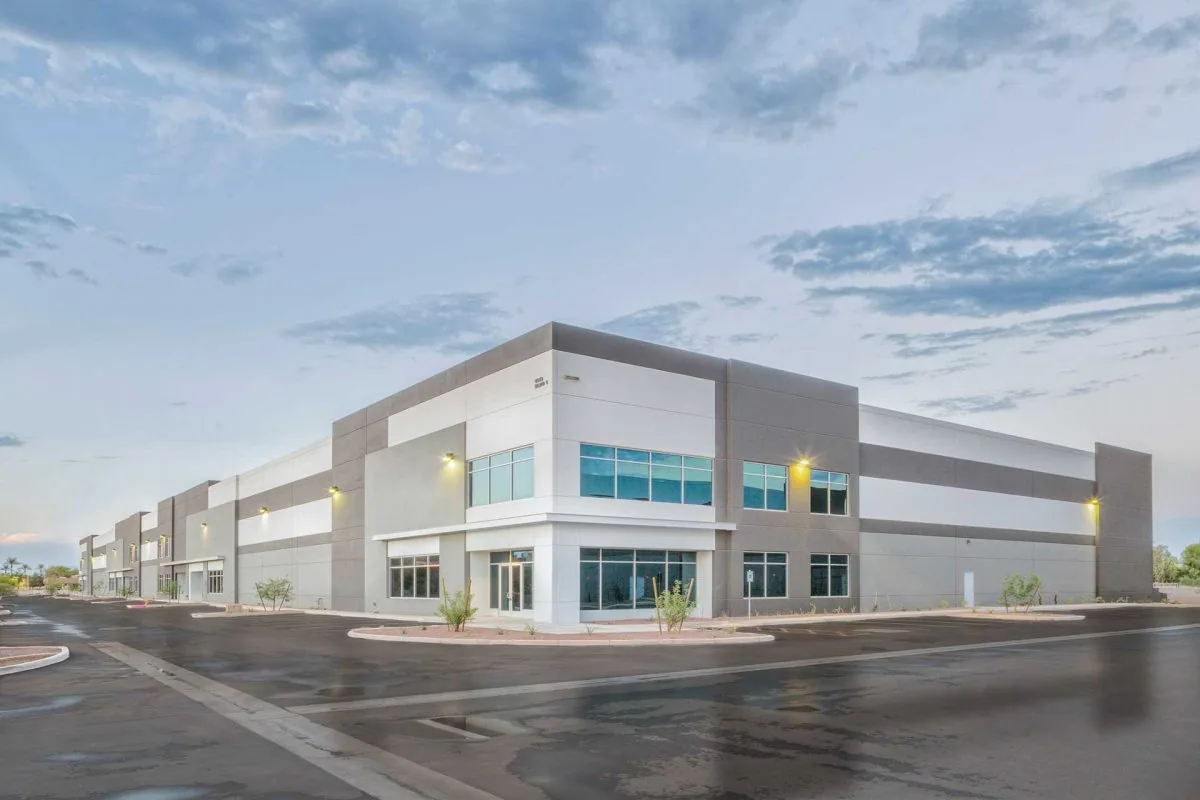
Reserve schedule, lease terms and airport tenancy
Hangar ownership takes many forms: a ground lease with an airport authority, a private owner, a fixed-base operator, a corporate flight department. Each carries its own roof obligation, and the owner report is written to the answer. A tenant on a ground lease may owe maintenance and the cost of replacement, and a lease with a finite term makes the remaining-life estimate a negotiating figure. If five years remain on the lease and the roof has six, the tenant hands back a roof with a year of life, and the authority may ask about it. If the roof has two, the tenant may owe a replacement near the end of the term. The report lets both sides see the arithmetic.
Carrying cost frames the decision. A leak over an aircraft means inspections, potential corrosion claims and downtime, and the cost exceeds the roof work by a wide margin. The report puts both on one page, and an owner can see why a planned replacement in the spring work window beats an emergency repair in the first fall storm.
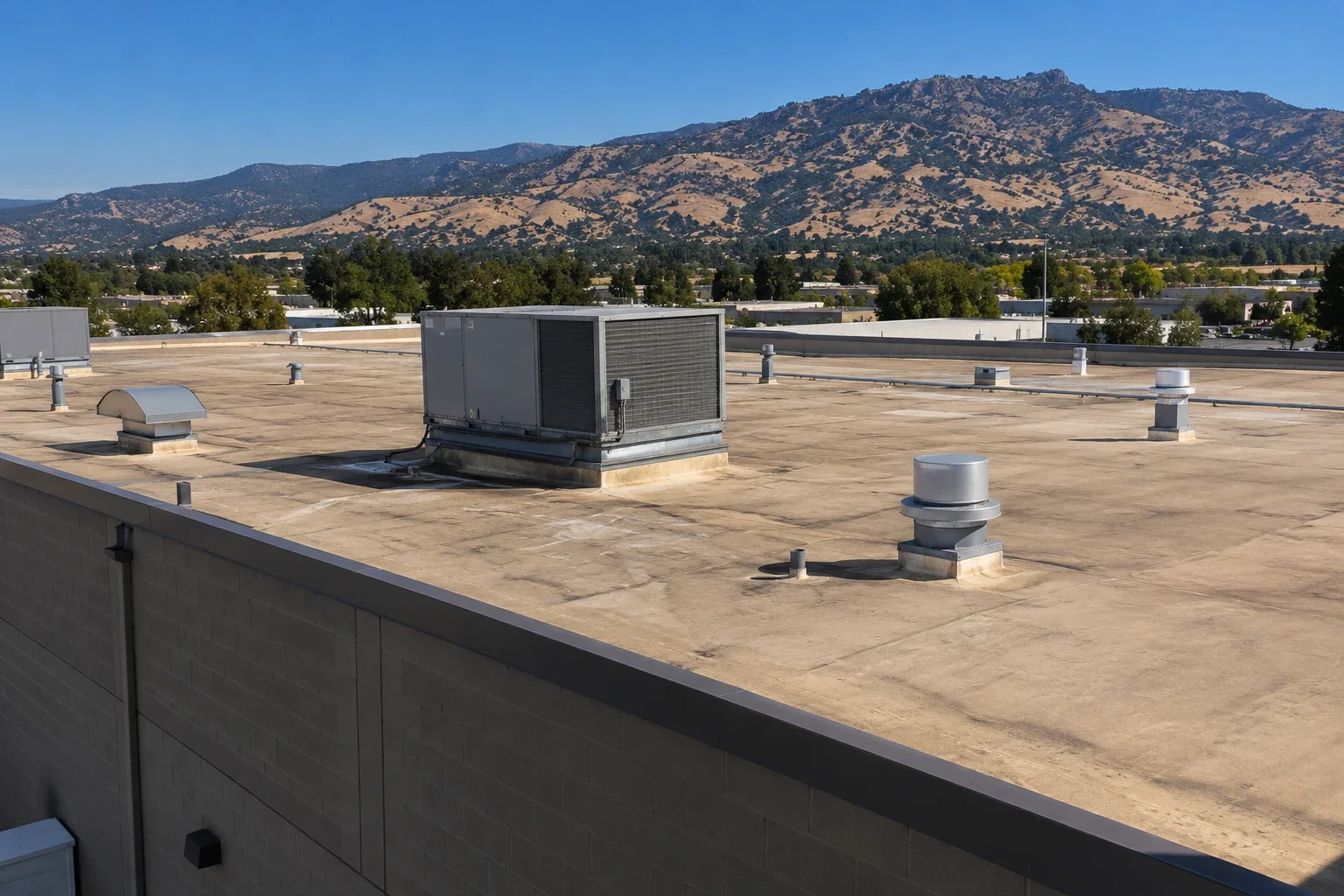
Ramp access, aircraft protection and the work window
Work at an airport follows airport rules. Contractor access, vehicle routes, crane height limits and the movement of aircraft are controlled by the airport authority, and the schedule has to respect them. We ask for the access procedure and the height limits first, and we price the escort and the permit time as their own lines. General practice for airfield work includes badging, designated routes and notice before lifts, and we plan to it.
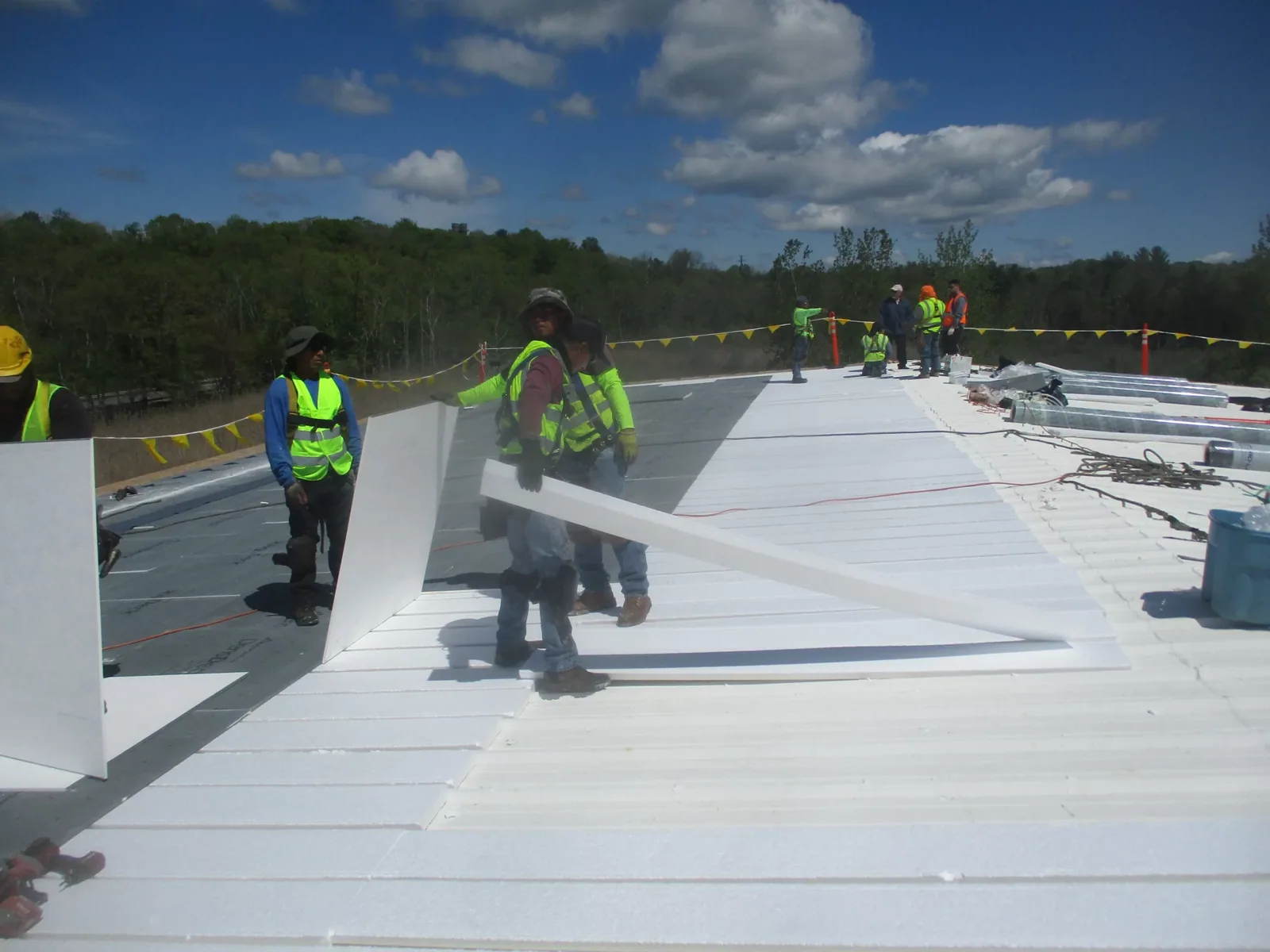
Aircraft stay inside or are moved by arrangement before work begins, and the interior is protected with covers where the deck is open. Early starts avoid the afternoon heat, and shaded storage keeps materials from baking on the apron. Crane work near a runway needs coordinated height approvals, so we confirm the boom height against the airport's limits before a lift is booked, and a lift that cannot happen on the planned day moves without costing the crew a day. The work window sits outside the busiest weeks of fire season, when air tanker operations are at their busiest, and the schedule carries a buffer for smoke days that can limit visibility and pause adhesive work.
Fire season, smoke days and ember exposure at the edges
Smoke and fire shape airport life in the valley. Smoke on 26 days in 2021, after the Almeda and Obenchain fires took about 2,600 Jackson County homes in 2020, set the backdrop for every airfield schedule here. Soot lands on hangar roofs and raises their surface temperature, and gutters, vents and eave edges collect debris that can ignite. A pre-season clean and a post-smoke wash are part of the maintenance plan. Cleaning is done from safe access points with attention to fall protection, since a hangar eave is high and the clearances around it are tight.
Fire protection inside a hangar is a design matter, and the roof must work with it. Penetrations for sprinkler risers, smoke vents and lighting need sound flashing, and we check each. The owner report lists the covering's fire rating so the owner's insurer and fire marshal see the same facts.
Reporting for owners, operators and airport authorities
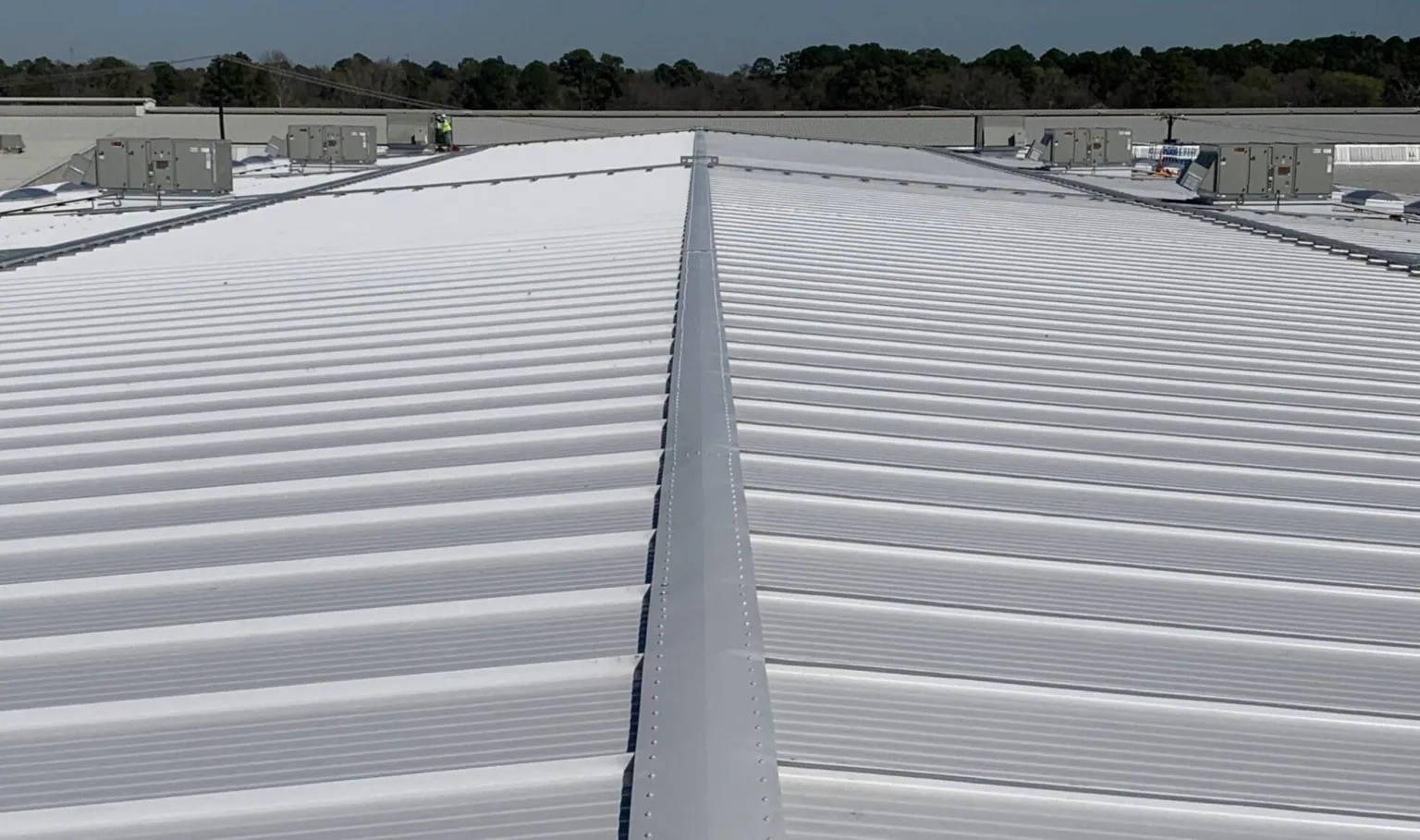
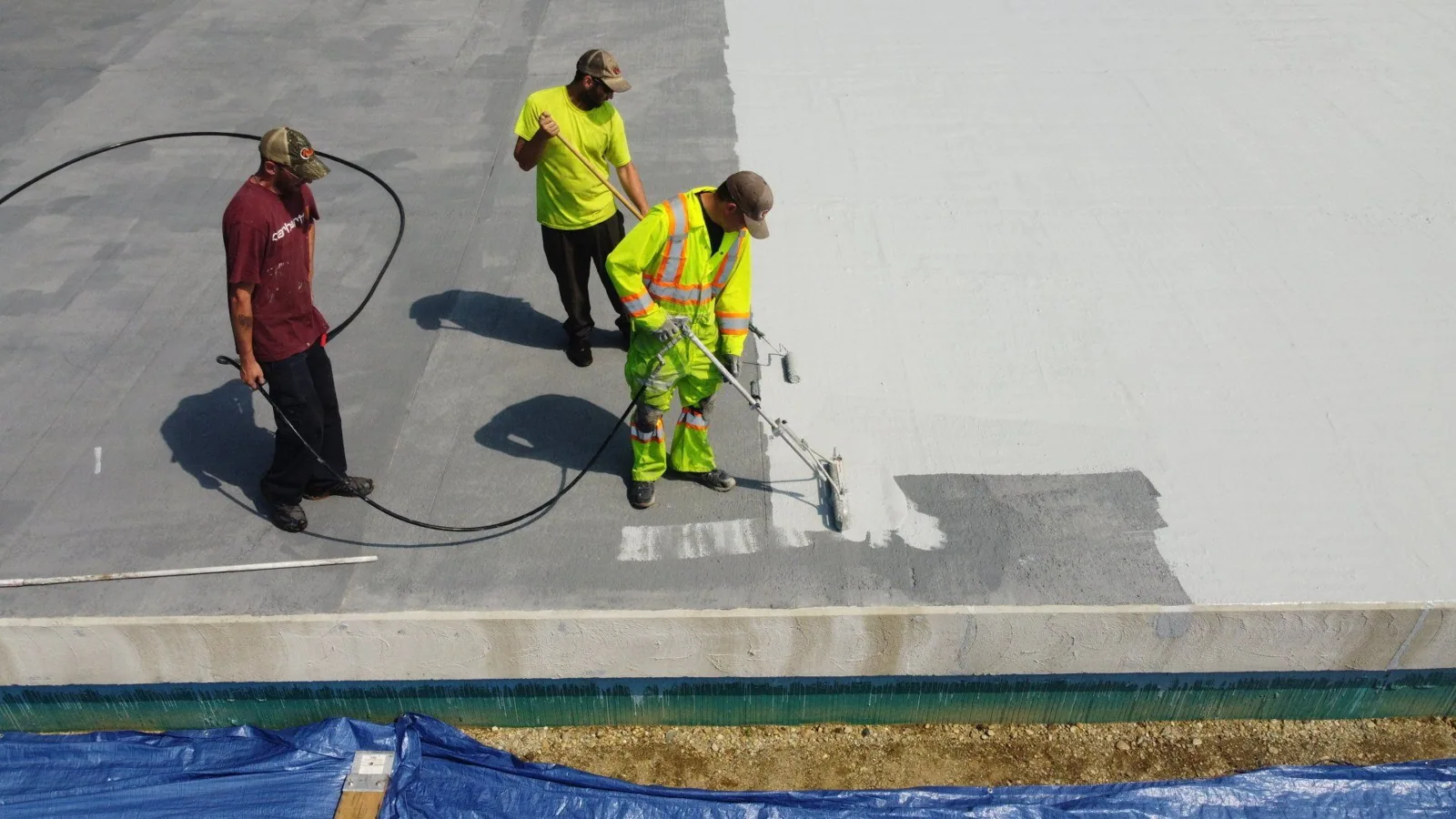
Each building leaves with a roof register entry: grade, photos, penetration list, drain map, warranty and the next check date. A standing seam metal roofing system suits many long spans, and a metal roof retrofit can add life to a sound deck. A roof coating restoration extends a roof with tight fasteners. Related buildings include flex industrial roofing and National Guard armory roofing, and the Table Rock Road and airport corridor and White City follow the same plan.
Send the building list, roof ages and leak tickets
Related Roofing Pages

Questions About Aircraft Hangar Roofing
Can a hangar be reroofed with aircraft inside?
Aircraft are moved or protected by arrangement, and the open deck is covered. The operator signs off on each phase.
Does airport access change the price?
Escort, badging and permit time are separate lines, since the airport authority sets the rules.
Can a coating extend a metal hangar roof?
When the panels are sound and the fasteners hold. A survey confirms it before we quote.
When is the best work window?
Outside the busiest fire-season weeks, with a buffer for smoke days.
Why do ponding offices next to a hangar matter?
Low-slope roofs hold water, which ages the membrane and finds the first weak seam. We note drains and slopes in the grade.