
Wind Damage Roof Repair in Medford, OR
Repair of wind-lifted membranes, torn edges and displaced coping on Medford, OR commercial roofs, with attachment checks that protect the next gust.
Overview
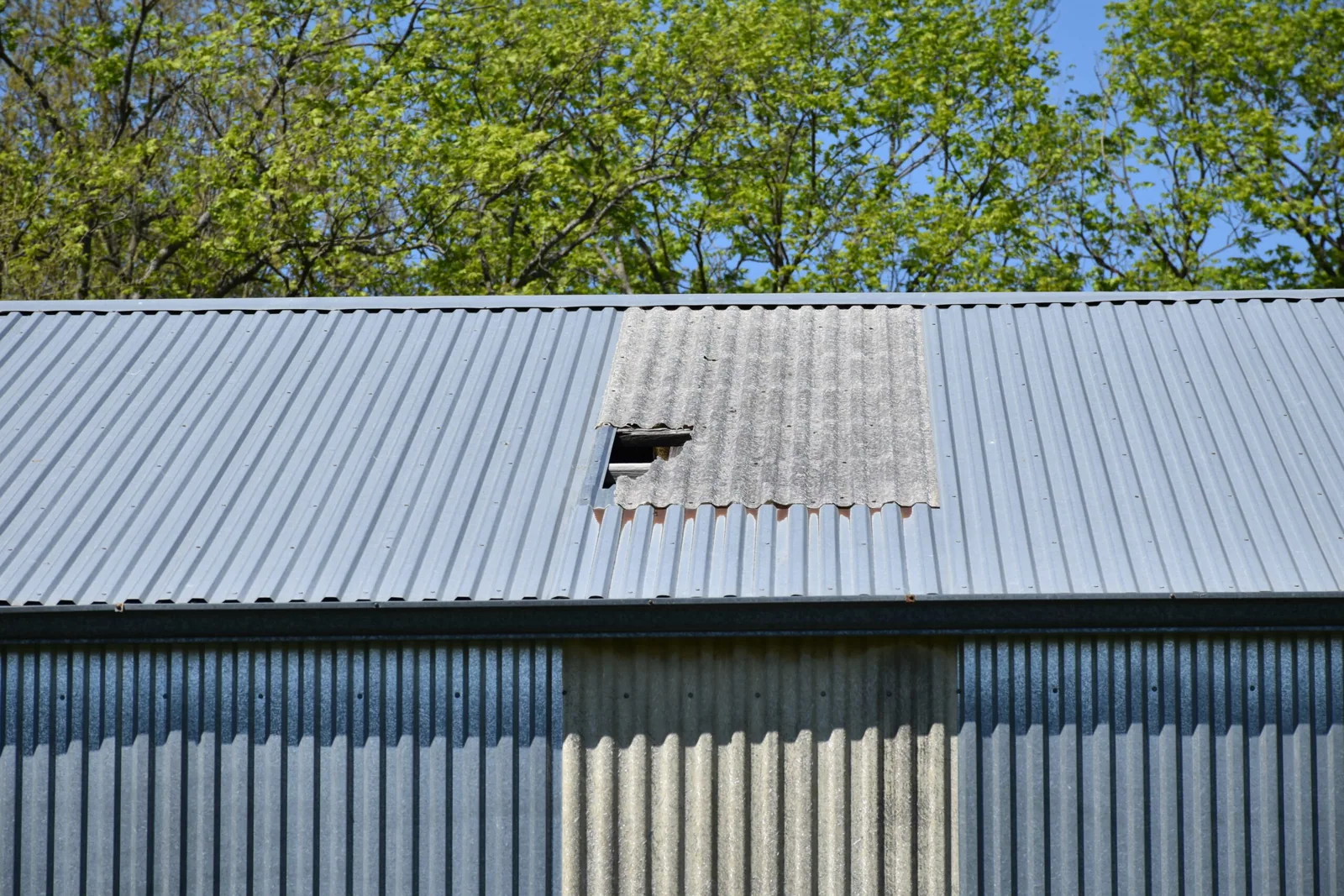
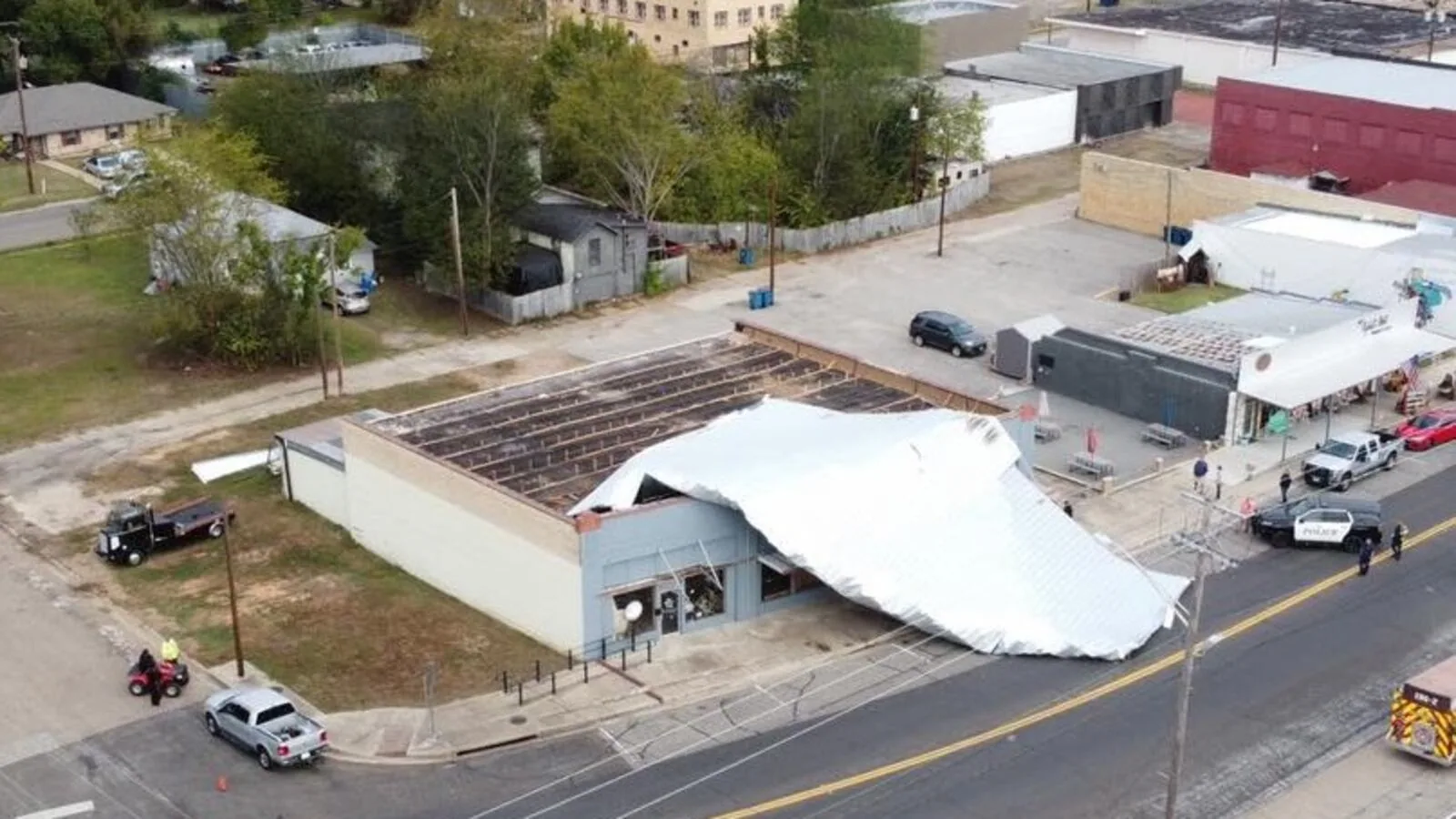
By the time a wind event reaches a Medford, OR roof, the summer has already done half the damage. Months of heat have softened adhesives, dried out sealant and loosened fasteners along the perimeter, so a gust that a young roof would have shrugged off finds a lifted corner, a gapped coping joint or a membrane that has lost its bond. The visible harm is a flapping sheet or a torn edge; the hidden harm is the moisture that enters through every gap the gust opened, and the loss of remaining service life in the area around it.
Wind repair is therefore two jobs. One is to close the openings before the next rain. The other is to restore the attachment so the same gust cannot do it twice, and that second job is the one that shows up on the reserve schedule.
Smaller patches belong to routine commercial roof repair; the work described here is for roofs where an event has opened large areas at once.
How wind actually takes a roof apart
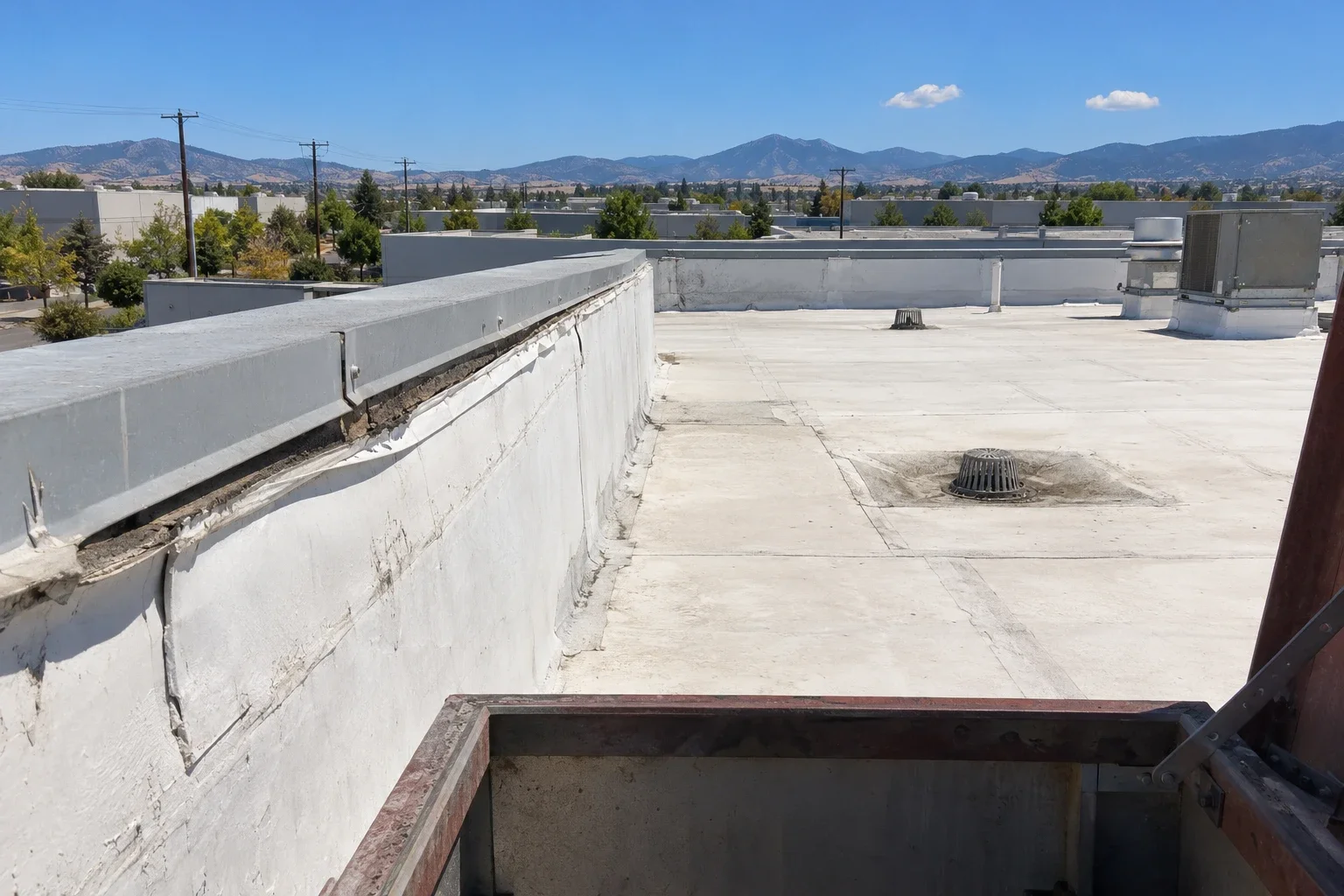
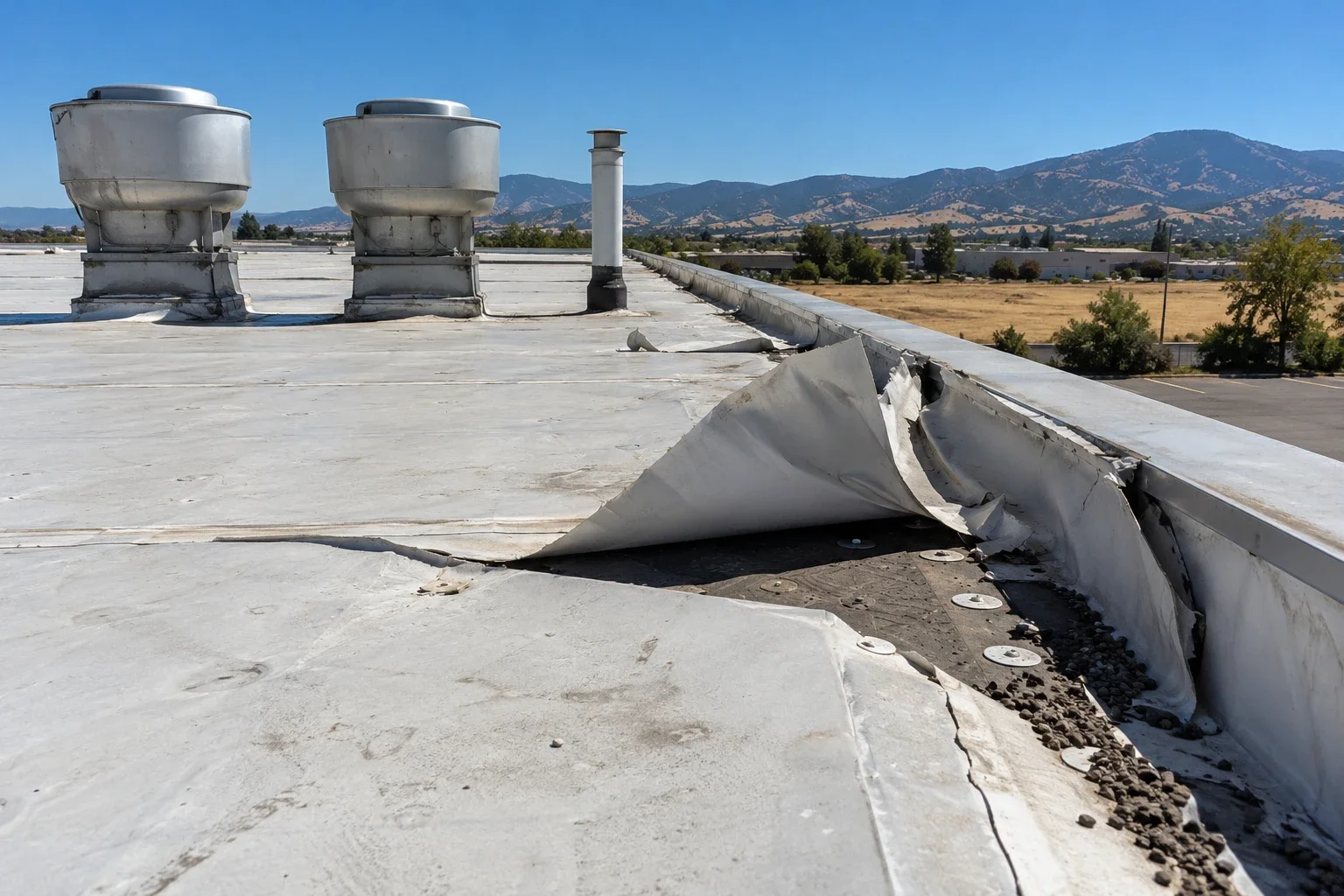
Wind does not push on a flat roof; it pulls. Air accelerating over the edge creates suction, strongest at corners and along perimeters, and that suction tries to lift the membrane, the insulation and the deck connection in turn. The failure usually begins at an edge detail: loose metal, a gapped termination, an open lap, the same weak points that show up in seam failure repair and flashing failure repair. Once air gets under the sheet, pressure builds beneath it and the damage spreads inward in a wave.
Open ground makes this worse, since a roof with little around it to slow the air takes the full suction at its corners, and that is a fair question to ask of any warehouse roof in the White City Industrial Park or along Table Rock Road. We look for the pattern after an event: which corners lifted first, which direction the damage runs, and how far inward it traveled, because the pattern tells us where attachment fell short.
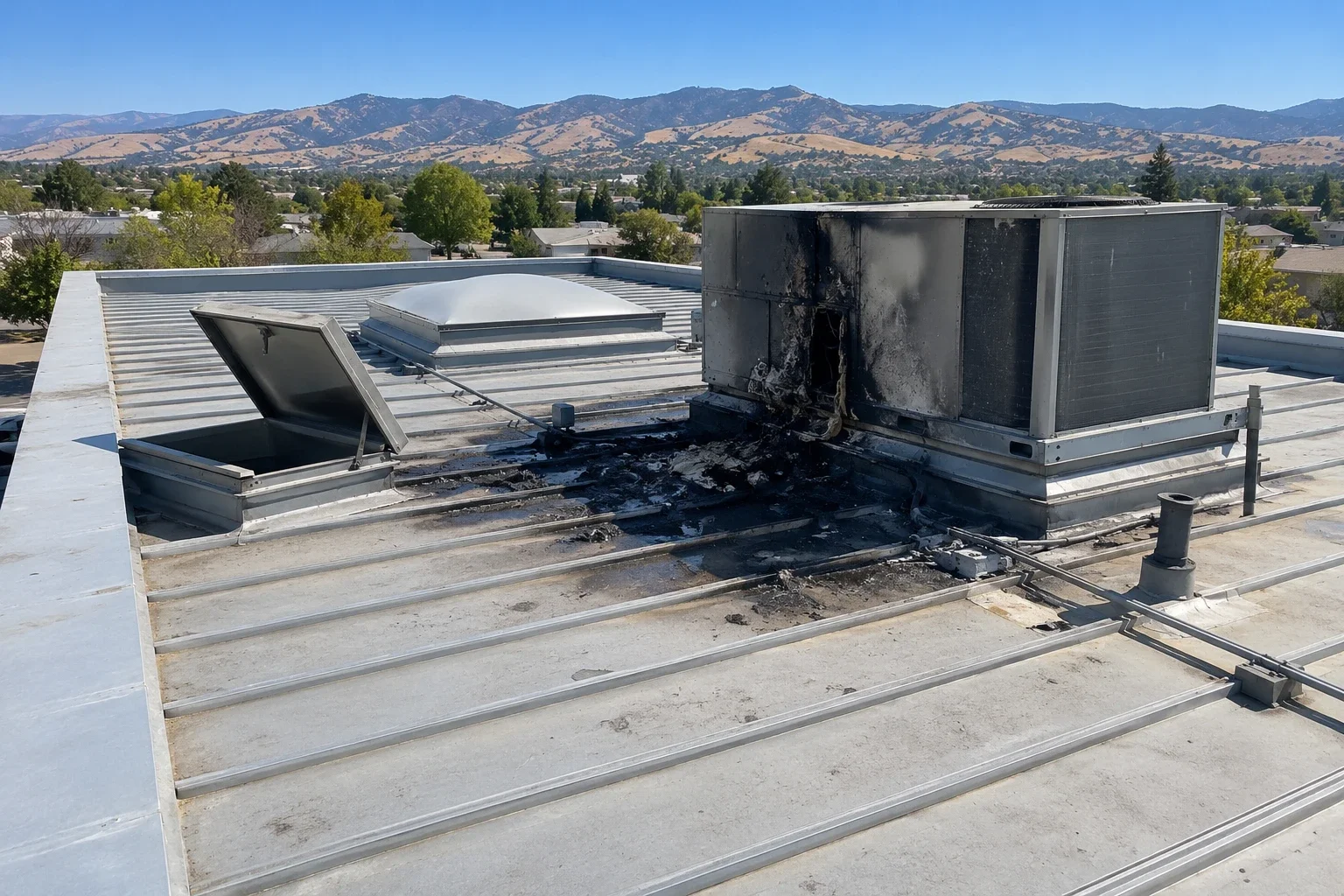
Fire season changes the edge picture too. Where embers from a wildfire have pitted an edge, as they did across Jackson County in 2020 when about 2,600 homes were lost, that edge has less resistance when a gust arrives. We check for both on the same walk.
Walking the damage
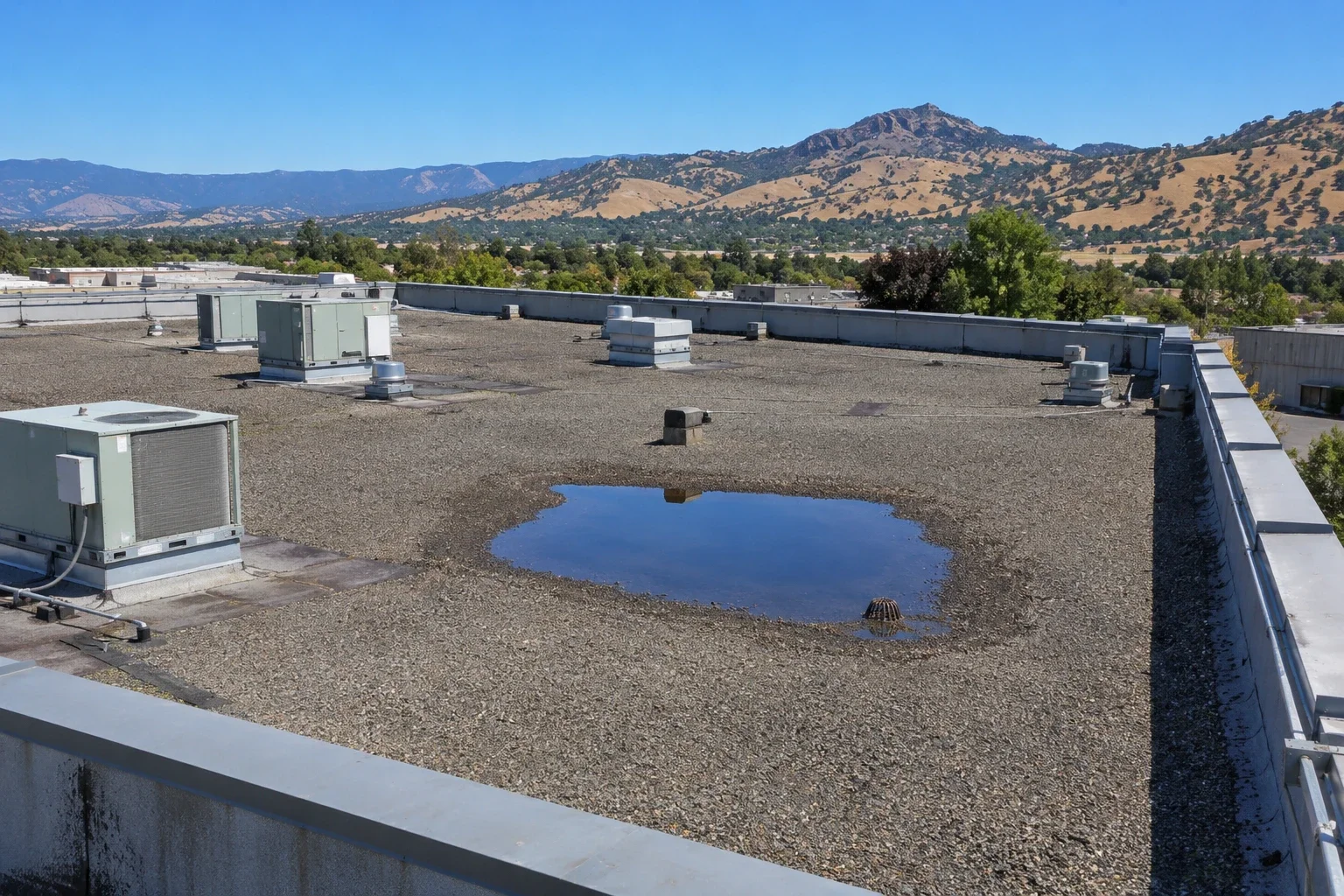
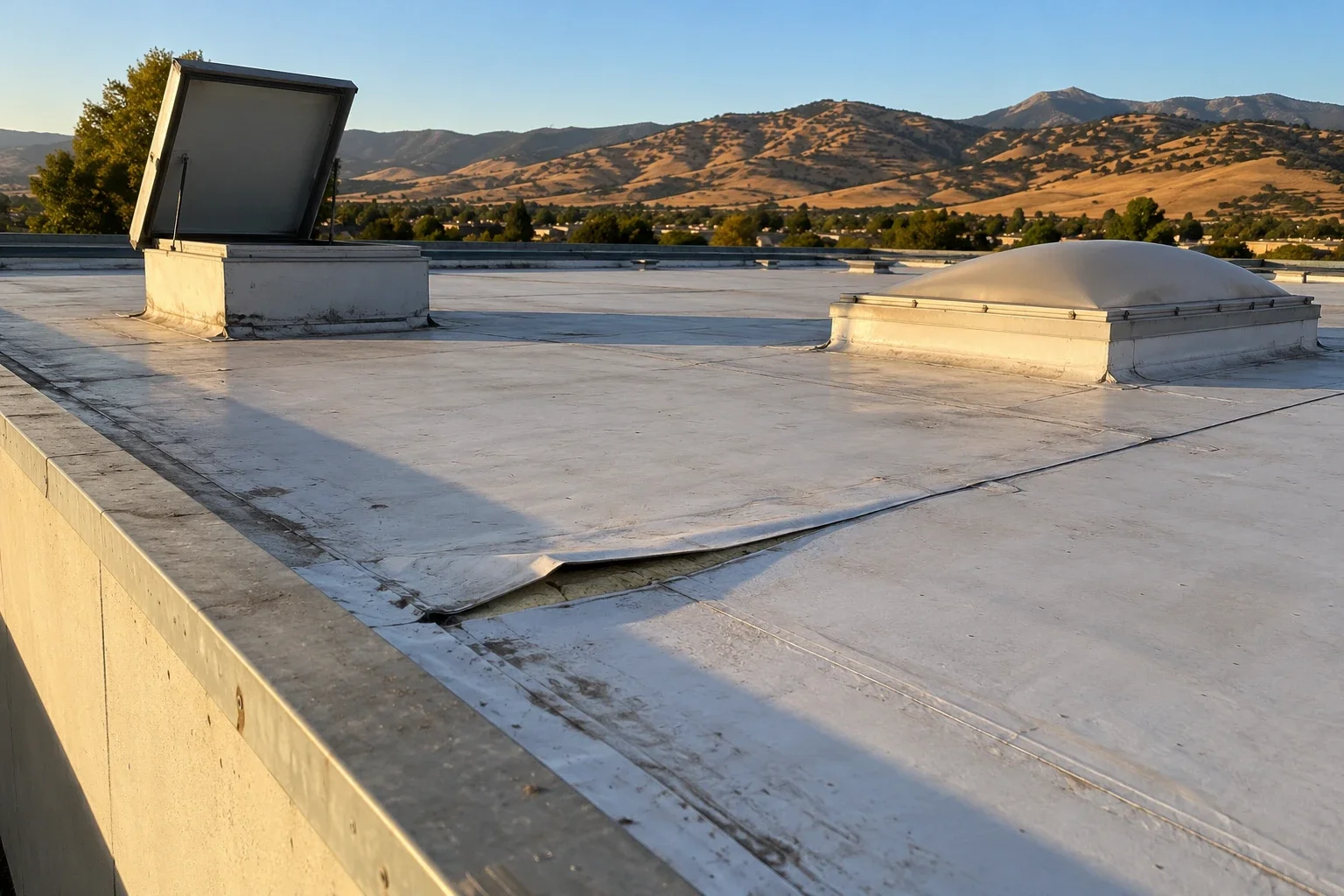
The assessment starts at the perimeter and works inward. We check edge metal for displacement, coping for lifted joints, flashing terminations for tears, and the membrane for billows, creases and fastener pull-through. Mechanically attached sheets show fastener plates sticking up or sheared; adhered sheets show delamination in a blister-like pattern; ballasted roofs show scattered stone and bare patches.
Where water may have entered, we scan with infrared and mark the saturated insulation boundaries, because a lifted membrane that rained on for a night can hold a surprising amount of water in the insulation. The result is a written scope with photographs and locations, and a clear line between emergency dry-in and permanent repair. Our storm damage roof repair process follows the same sequence for any weather event.
Debris is evidence. Branches, loose rooftop items and flying material leave marks that show which direction the wind came from, and we photograph them in place before cleanup. An owner who removes the debris first loses the clearest record of cause.
Closing the roof first
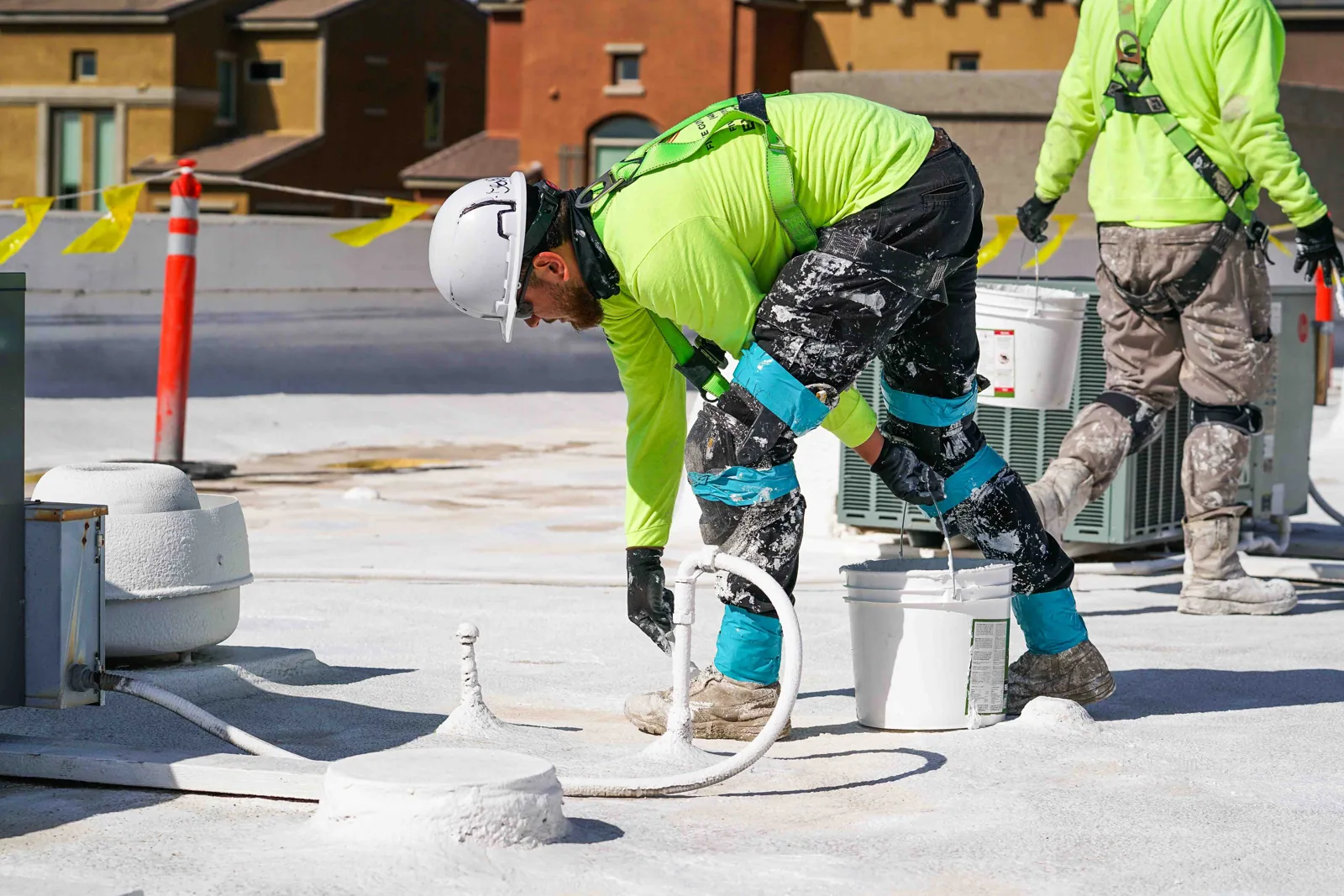
Before any permanent work, the roof has to stop taking water. We secure loose sheet with temporary battens or ballast, tarp exposed insulation, clear drains and set barriers to keep debris from falling. In active wind, work stops until it is safe, and the building is protected as best it can be from the ground side until crews can return.
If the call comes at night or on a holiday, the same steps run through emergency roof repair. The temporary work is photographed and priced separately so it can be documented with the rest of the claim, and we state how long it is intended to last. Valley heat degrades tarps and temporary adhesives within weeks, so the permanent repair needs a date.
Temporary ballast has to be placed with care. Too little leaves the sheet free to flap; too much overloads a deck that is already stressed. We choose battens and weights that hold without adding risk, and we note where each was placed so nothing is forgotten when the permanent repair begins.
Permanent repair and re-attachment
The repair follows the failure. Torn single-ply is patched with heat-welded or adhered pieces extending well past the damaged zone. Lifted adhered membrane is cut back to sound bond and reattached with compatible adhesive. Displaced coping and edge metal are reset with new cleats, fasteners and sealant, as in our edge metal work. Where fastener patterns proved inadequate, we add attachment in the perimeter and corner zones, where wind pressure is highest.
Saturated insulation is removed and replaced, not dried in place, since compressed or saturated board will not recover its thermal value. Roof drains and scuppers are cleared of the debris that wind carried in, and the repair is finished with photographs and an as-built note on any added fasteners. The goal is a roof whose edge is stronger than it was before the event.
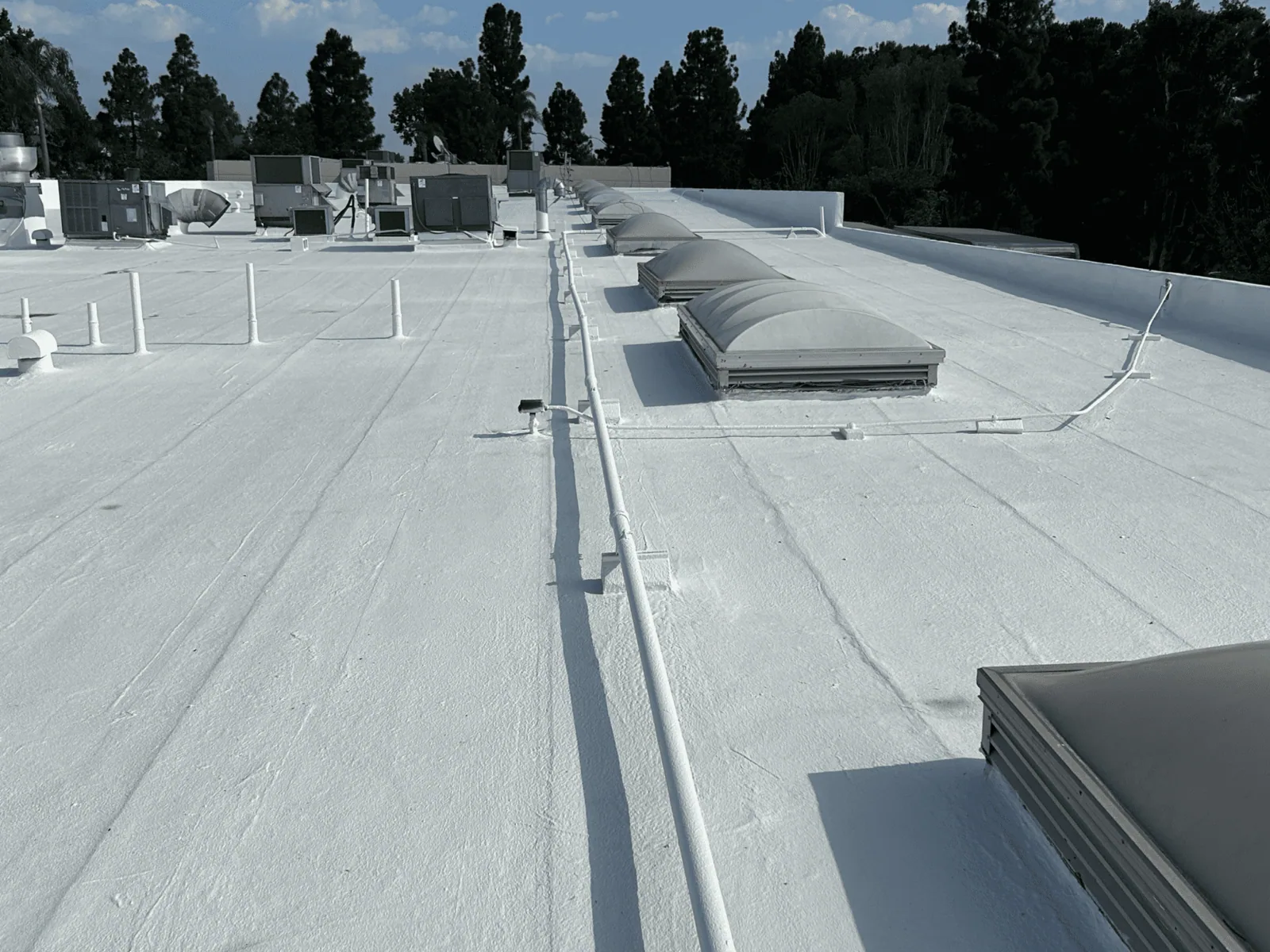
Reroofing is sometimes the better answer. If the membrane has lost its bond across more than a small share of the field, or if the insulation is saturated across a wide area, a recover or replacement costs less over the life of the roof than a patchwork of repairs, and we present both paths with the numbers.
Which roof systems fare best
Fully adhered and well-fastened mechanically attached single-ply roofs resist uplift when edges are right, while ballasted roofs depend on stone weight and can lose it. Standing seam metal roofs resist wind through clip design and seam engineering, though lifted trim and loose fasteners remain common after a blow. Built-up and modified bitumen roofs resist uplift well when well adhered, though aged ones can delaminate at edges.
We do not recommend a system on wind alone; we recommend attachment details that suit the roof already in place. A major repair or reroof may be held to current uplift and edge-securement requirements under the structural code now in force, the 2025 Oregon edition, so we confirm what applies with the building department.
Send the address and what moved

Related Roofing Pages
Questions About Wind Damage Roof Repair
How can I tell if wind has lifted my roof when nothing is leaking?
Look for wrinkles near corners, billows in the membrane, lifted coping or metal that rocks when pressed, and fasteners standing proud. A roof visit confirms what the eye only suggests.
Does the insurance carrier treat wind and age differently?
Yes. Wind damage is an event; loosened fasteners from heat are wear. We photograph both and label them so the file shows which is.
Is it safe to leave a lifted membrane until the weekend?
A lifted sheet can tear further in the next gust and take rain with it. We recommend temporary securing within the day and a permanent repair date set right away.
Why did the same corner fail twice?
Usually because the original repair restored the sheet but not the attachment. We add fasteners or adhesive in perimeter and corner zones and record the new pattern.
Are rural or foothill buildings at more risk?
Exposure differs. Foothill sites such as Prospect see heavier snow and a different load, so the grade reflects where the roof stands.