
Flashing Failure Repair in Medford, OR
Repair of failed base flashing, counterflashing and wall terminations on Medford, OR commercial roofs, where heat movement opens the joints first.
Overview
The membrane in a field of a Medford, OR roof can look sound for years while the strip of material where it turns up a wall is quietly letting go. Flashing is the part of the roof that must bridge two surfaces moving at different rates, and a summer of 61 afternoons above 90 F, with roughly 11 above 100 F, makes that bridge stretch and shrink every day. Sealant dries, laps open, and the vertical face starts to pull the base flashing away from the field. When the first fall rain arrives, it finds the one inch of gap that the heat opened.
For the reserve schedule, flashing failure is the most misleading kind of roof problem, because it produces leaks on roofs that still have most of their service life. Repairing it correctly turns a premature replacement into a repair.
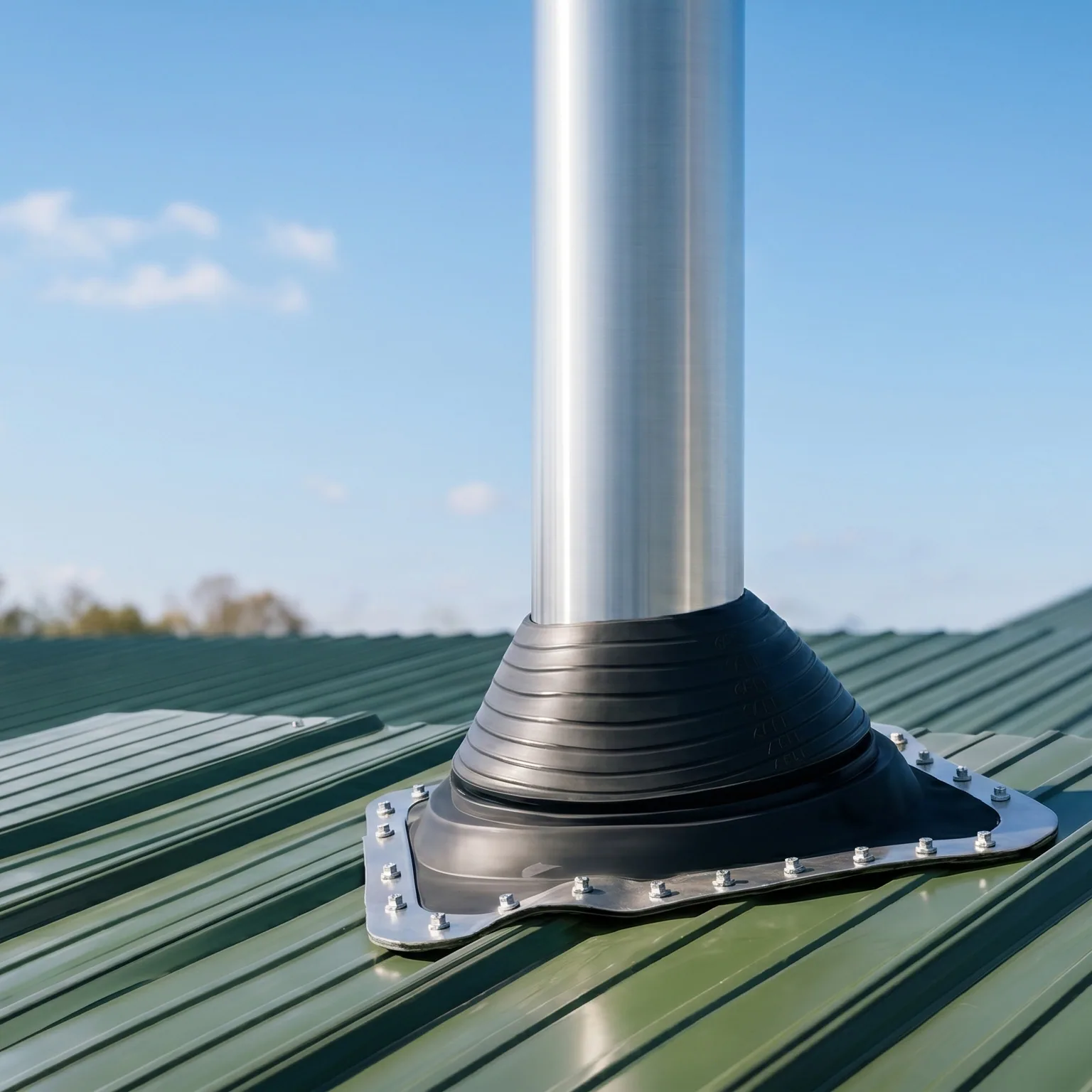
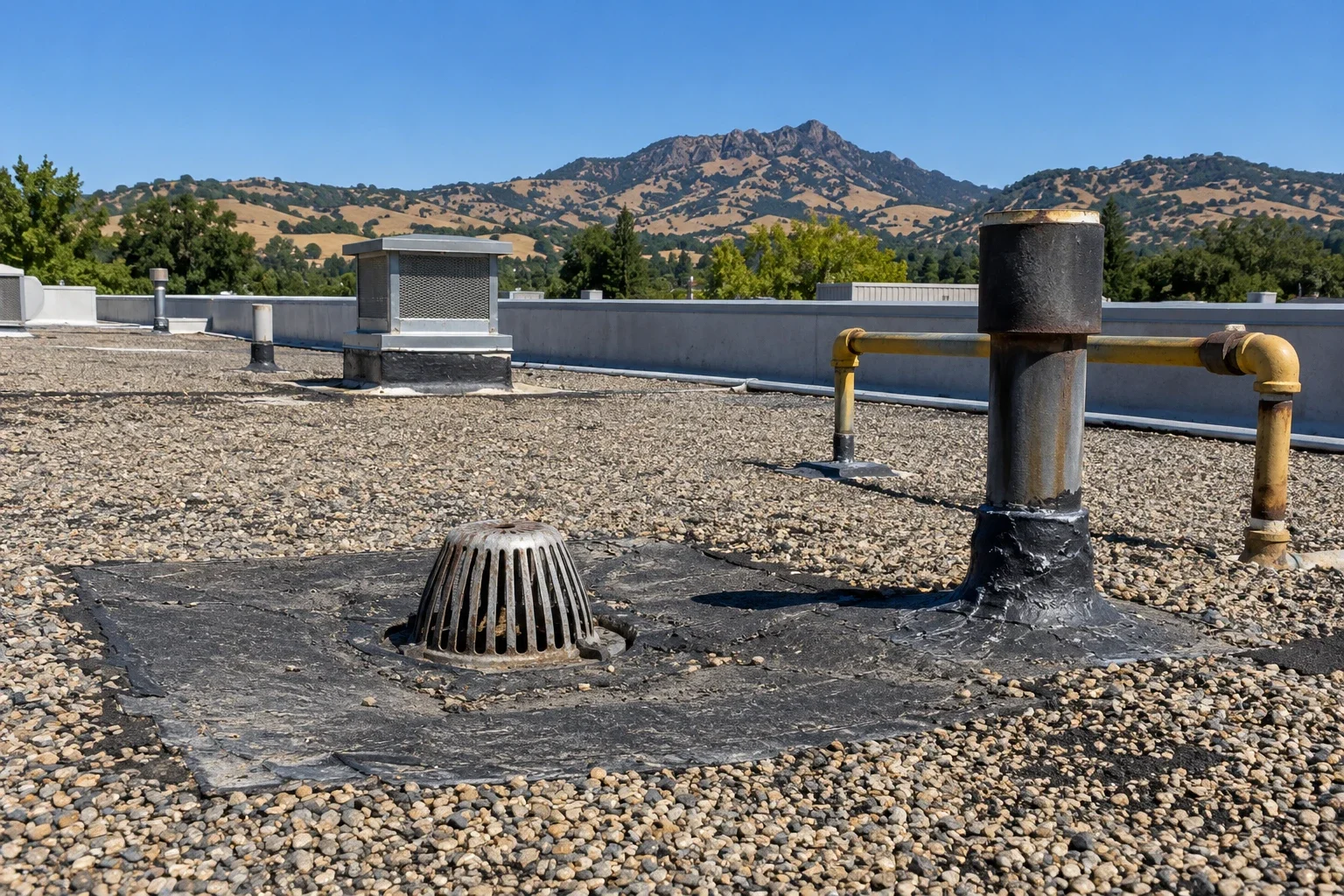
The same weakness runs through skylight and penetration flashing, and the wall-side version is the larger linear exposure on most buildings.
Base, counter and cap: the three layers that fail
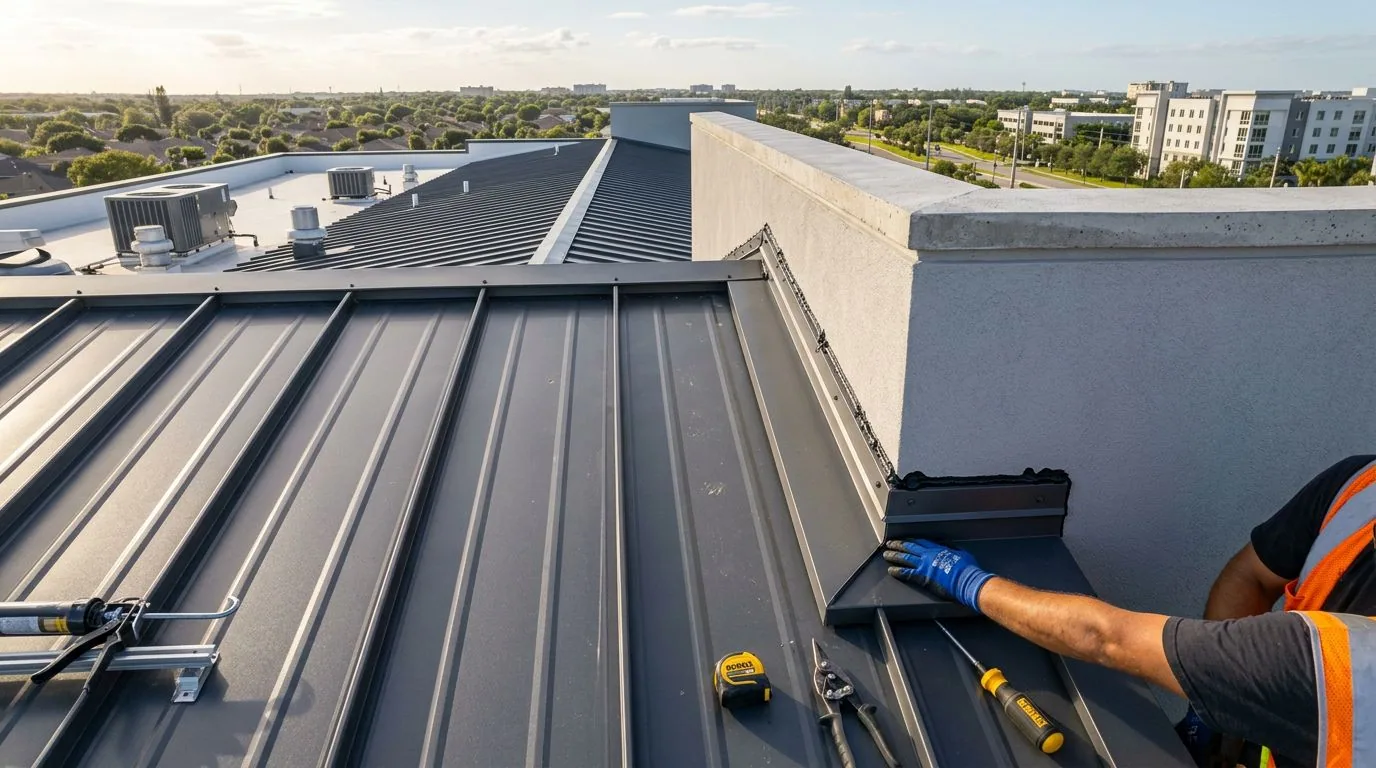
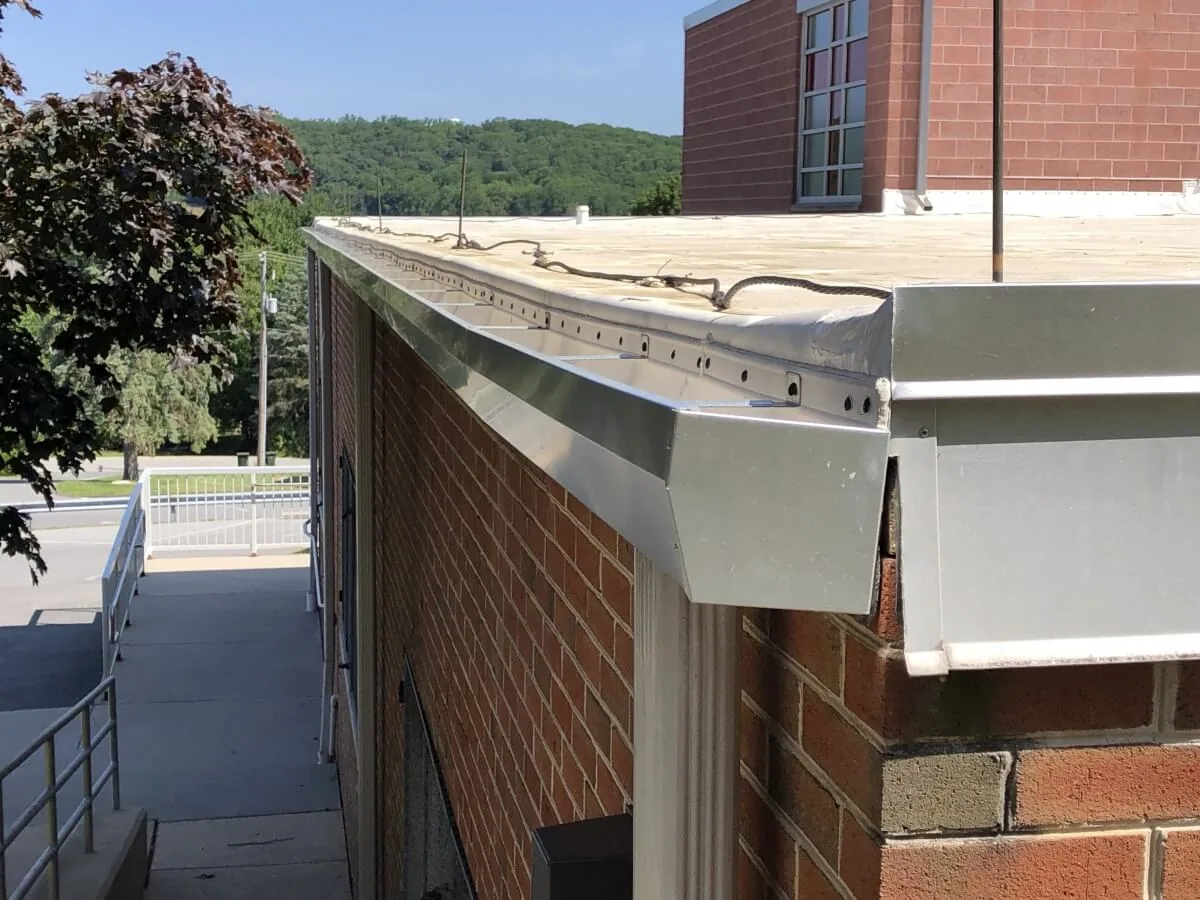
A wall flashing is made of layers. Base flashing is the membrane or a separate sheet that runs from the roof up the wall. Counterflashing, often metal, laps over the top of the base flashing and sheds water away from the joint. A termination bar or cap holds the top edge. Each layer protects the one below, and the sequence matters: water flows down over the counterflashing, onto the base, and away onto the field.
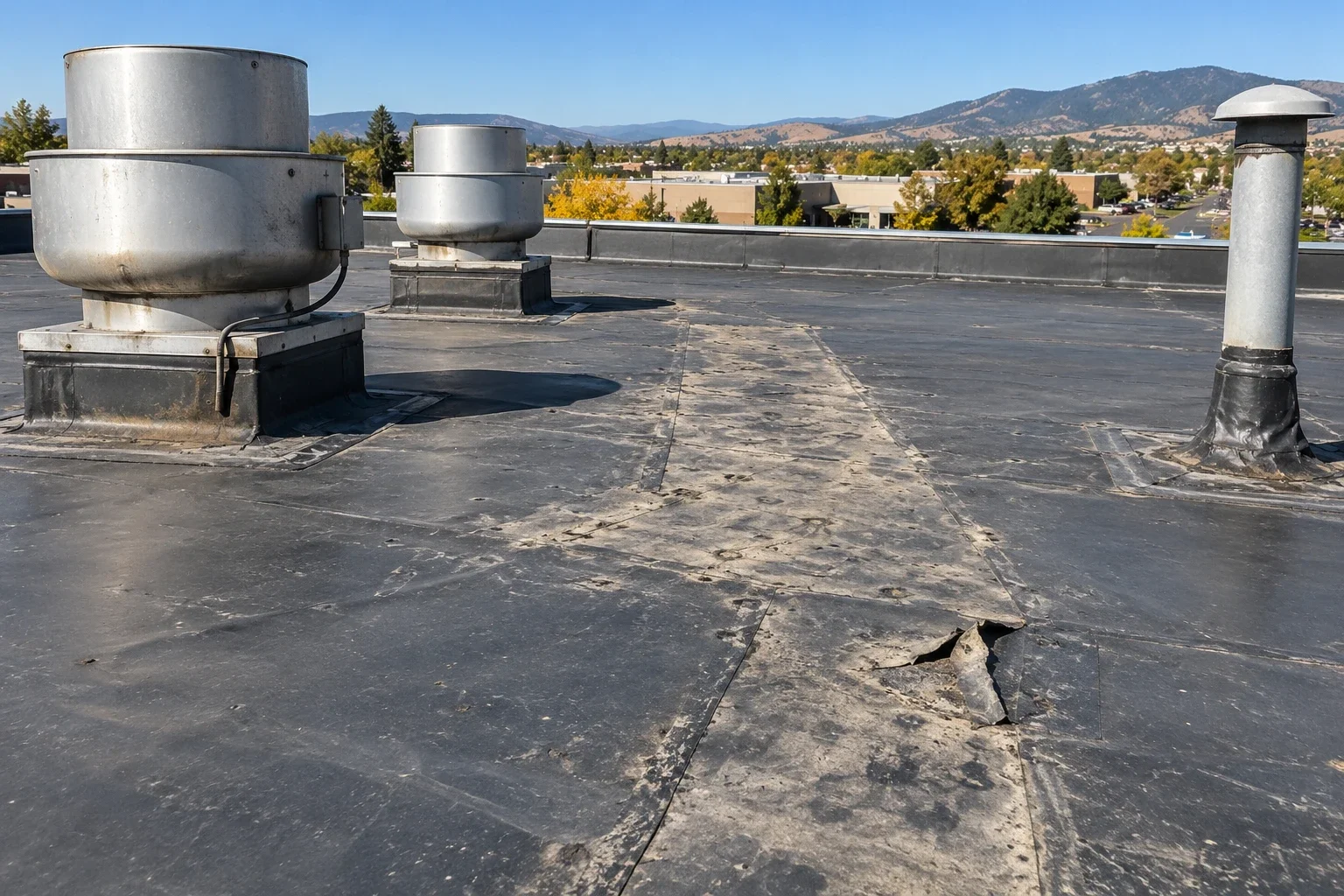
Failure occurs where the sequence breaks. The base flashing shrinks and pulls from the wall. The counterflashing is bent, rusted or missing. A sealant bead is the only barrier at the top edge and it has cracked. Sometimes the wall itself is the problem: masonry that has cracked or mortar that has eroded behind a metal cap. We read all three layers and the wall behind them before choosing a repair.
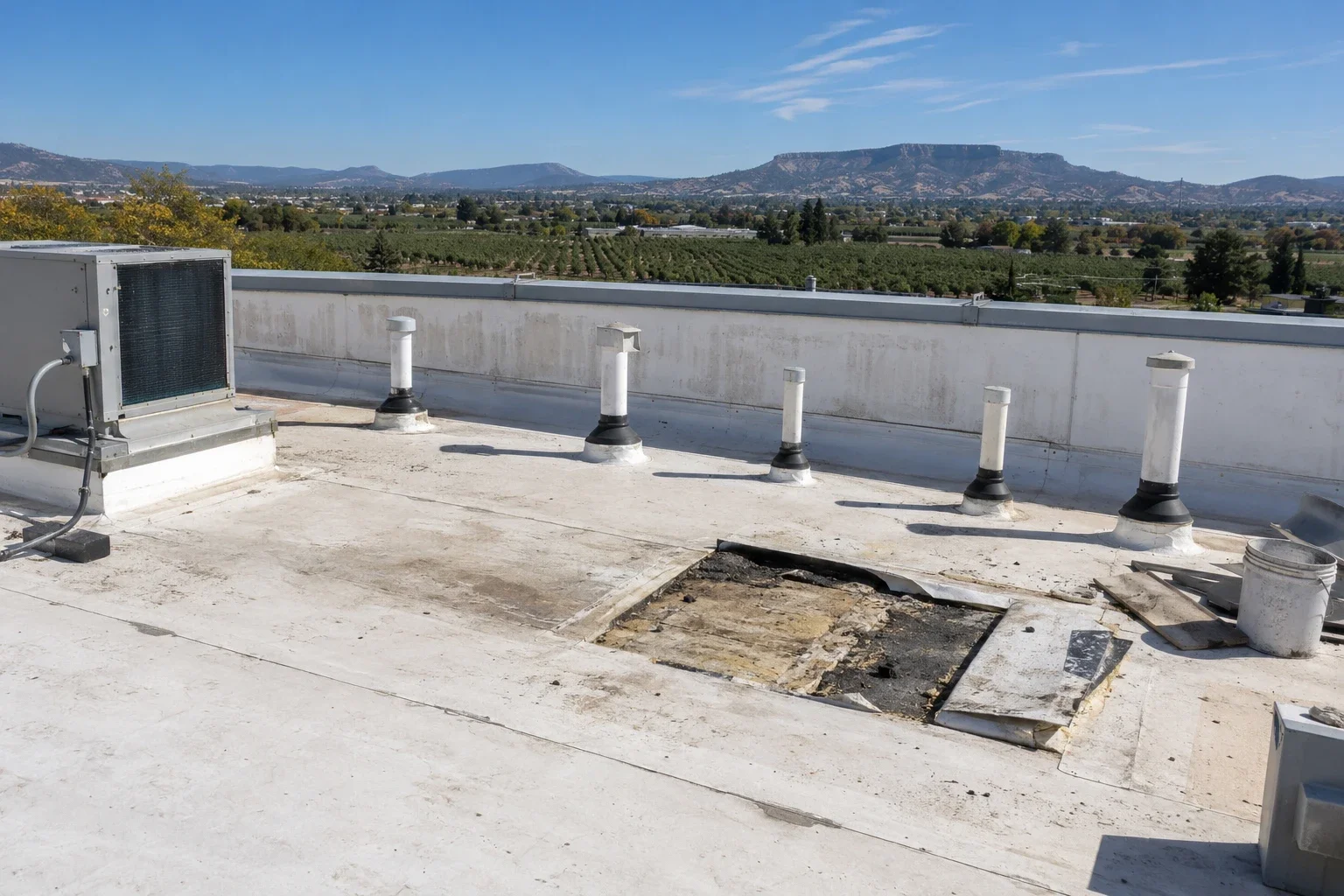
Fastener spacing and termination height are common hidden faults. A termination bar fastened too far apart lets the membrane bridge between screws and open like a mouth, and a termination set too low is within reach of ponding water. Measuring both is part of every survey, and the readings go into the report.
Spotting a flashing failure
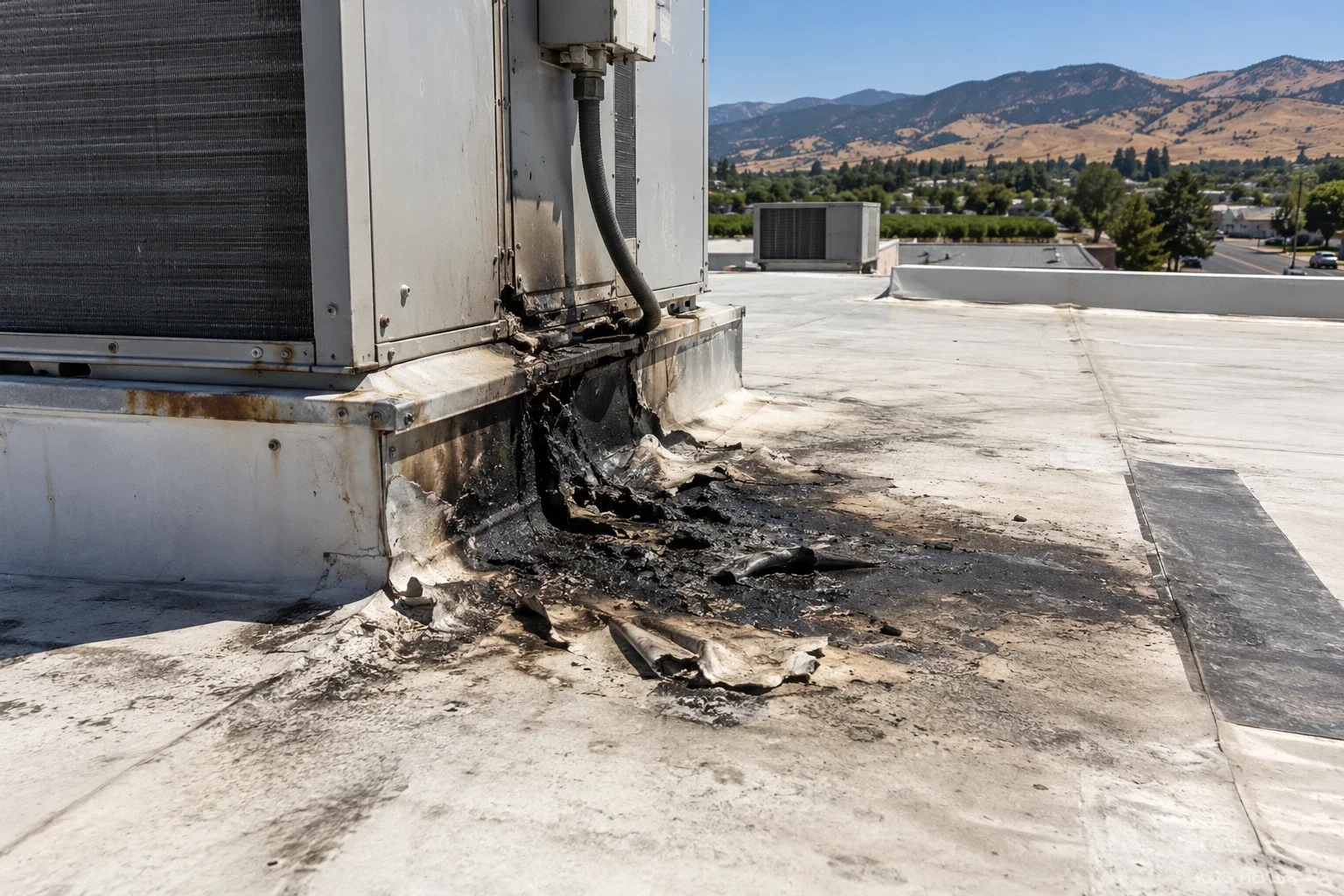
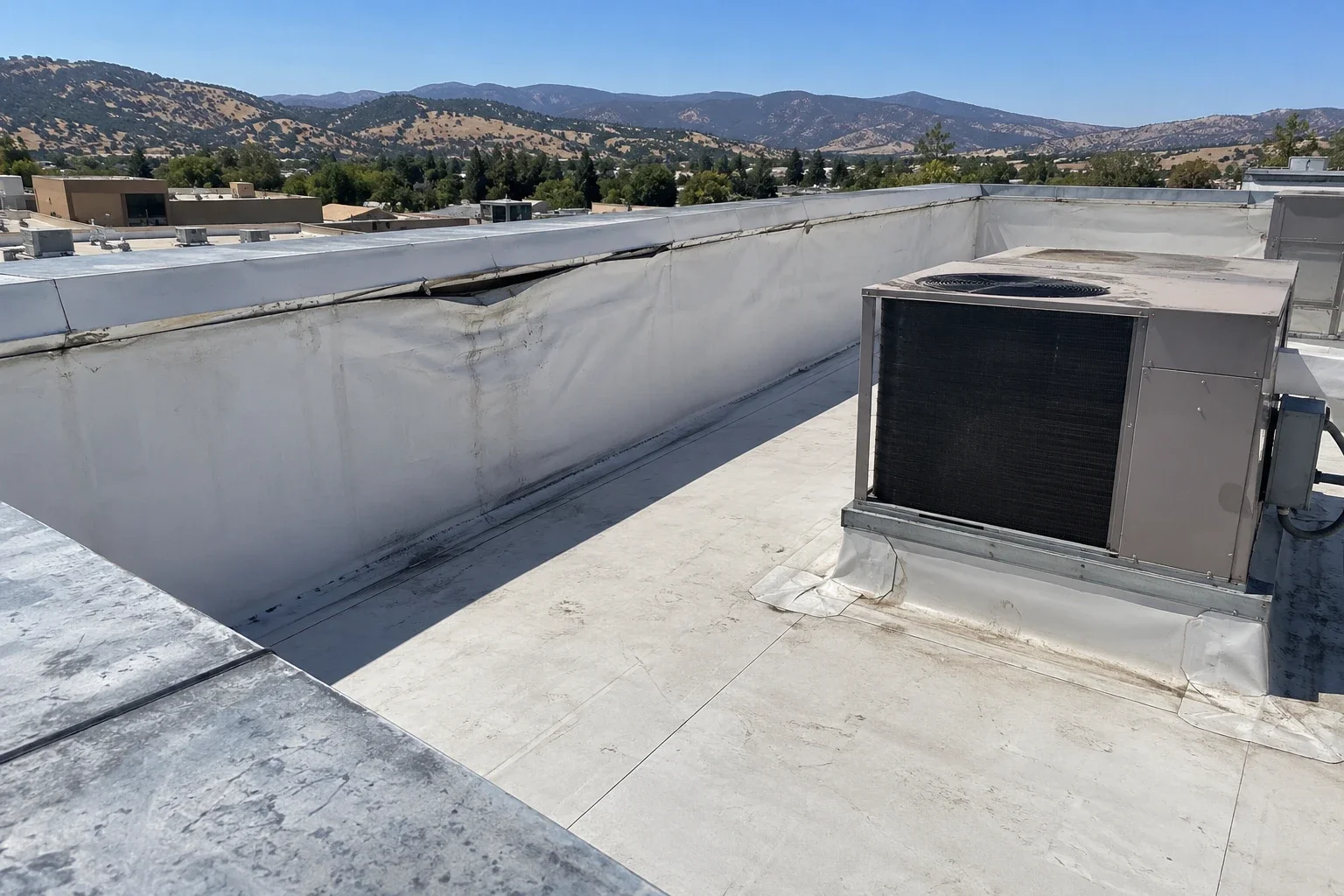
The signs are physical. A bead of sealant that has pulled away from the wall, a base flashing that sags or wrinkles, a counterflashing joint that is gapped, rust streaks on the wall below, and interior stains along the line of the parapet. Leaks that appear only in wind-driven rain are classic flashing symptoms, since water is pushed sideways into joints that would shed it in an ordinary shower.
We trace the opening rather than assuming it. A hose test at the suspected joint, run in stages from low to high, shows which section of the flashing admits water. This matters because a leak that appears at a ceiling can come from a point many feet away, and repairing the wrong section only delays the call. The method complements a standard commercial roof leak repair, and it keeps costs down by limiting the repair to what is actually failing.
After a wind event, the same joints are the first to show distress, so a flashing check belongs in every wind damage roof repair walk. Seams that open nearby, the kind handled in seam failure repair, often point to the same movement.
Repair methods that last in valley heat
Minor failures take new sealant, but sealant alone rarely lasts in this heat, so we use it as backup, not as the primary defense. A durable repair replaces failed sections of base flashing with new material compatible with the membrane, fully adhered and terminated under a reset counterflashing. Metal counterflashing is reglet-set into masonry where possible, with new sealant in the reglet and not on the face.
Where flashing has failed along long stretches, we replace it along the whole wall. Patching a section and leaving the rest invites a second failure at the transition. Inside corners and outside corners receive pre-formed pieces rather than hand-folded ones, and every termination is fastened at a spacing that resists thermal pull. For the cap on top of a parapet, our work on edge metal and coping deals with the wall-top system as a whole.
Material choice follows the membrane. TPO and PVC take heat-welded flashings, EPDM takes tape-adhered or liquid-applied details, and modified bitumen takes torched or cold-applied strips. A mismatched flashing material is a failure waiting for the next hot afternoon, so we verify compatibility before ordering.
Older walls, masonry and historic buildings
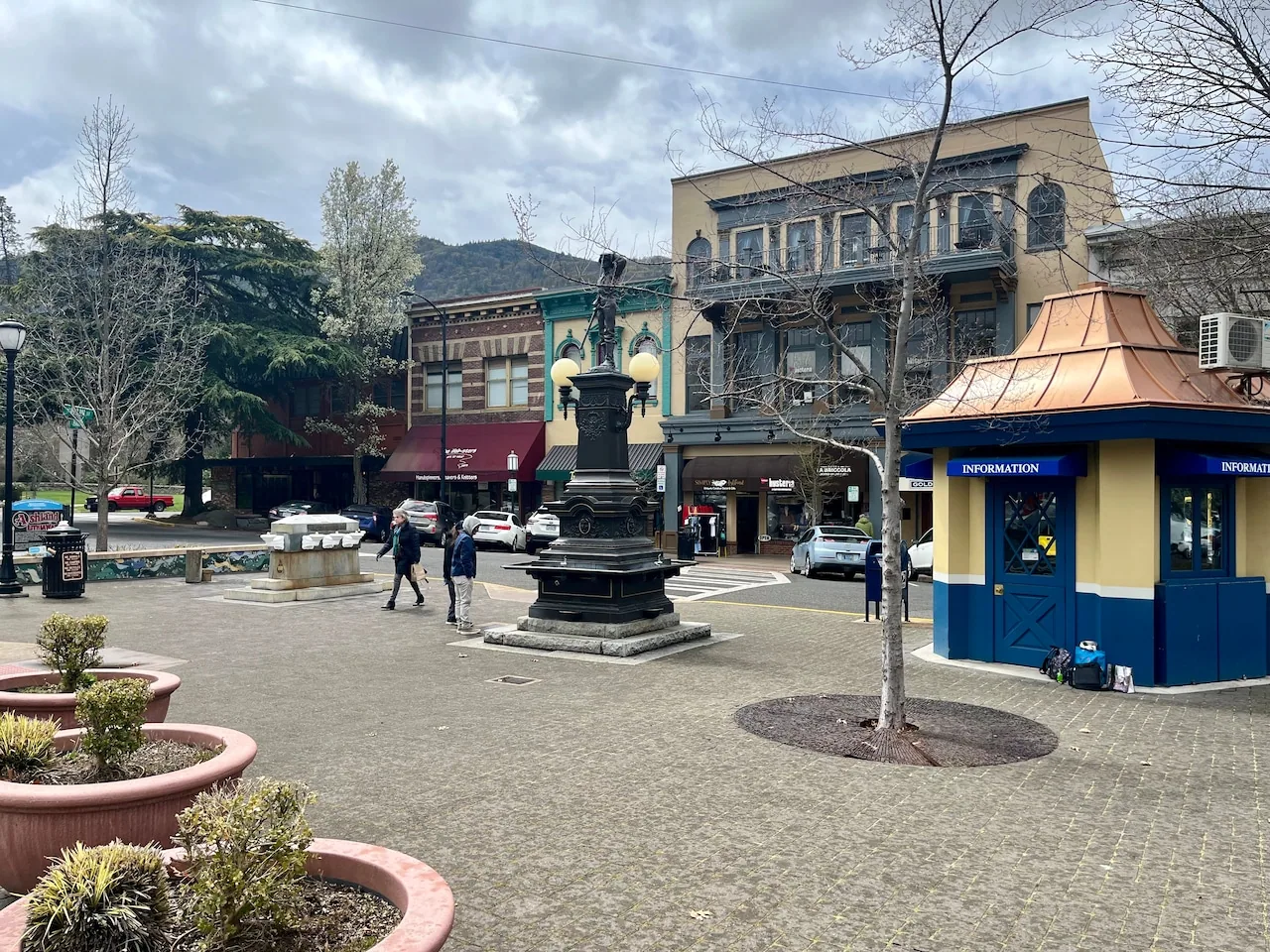
Flashing repair depends on what the wall will accept. Downtown Medford holds aged masonry, of which the old Carnegie library building, in service for 92 years before it closed in 2004, is a reminder, and old mortar can crumble when a reglet is cut, so the work may start with repointing. Ashland has 59 individually listed historic structures, and replacement of visible counterflashing there may require matching profile and finish to satisfy review.
We probe and test the wall before committing to a method, and we document the condition of the masonry in the report. If the wall needs mason work first, we coordinate the sequence so the flashing is not installed on a surface that will move again. The owner sees one plan covering both trades.
Where flashing fails most in the valley
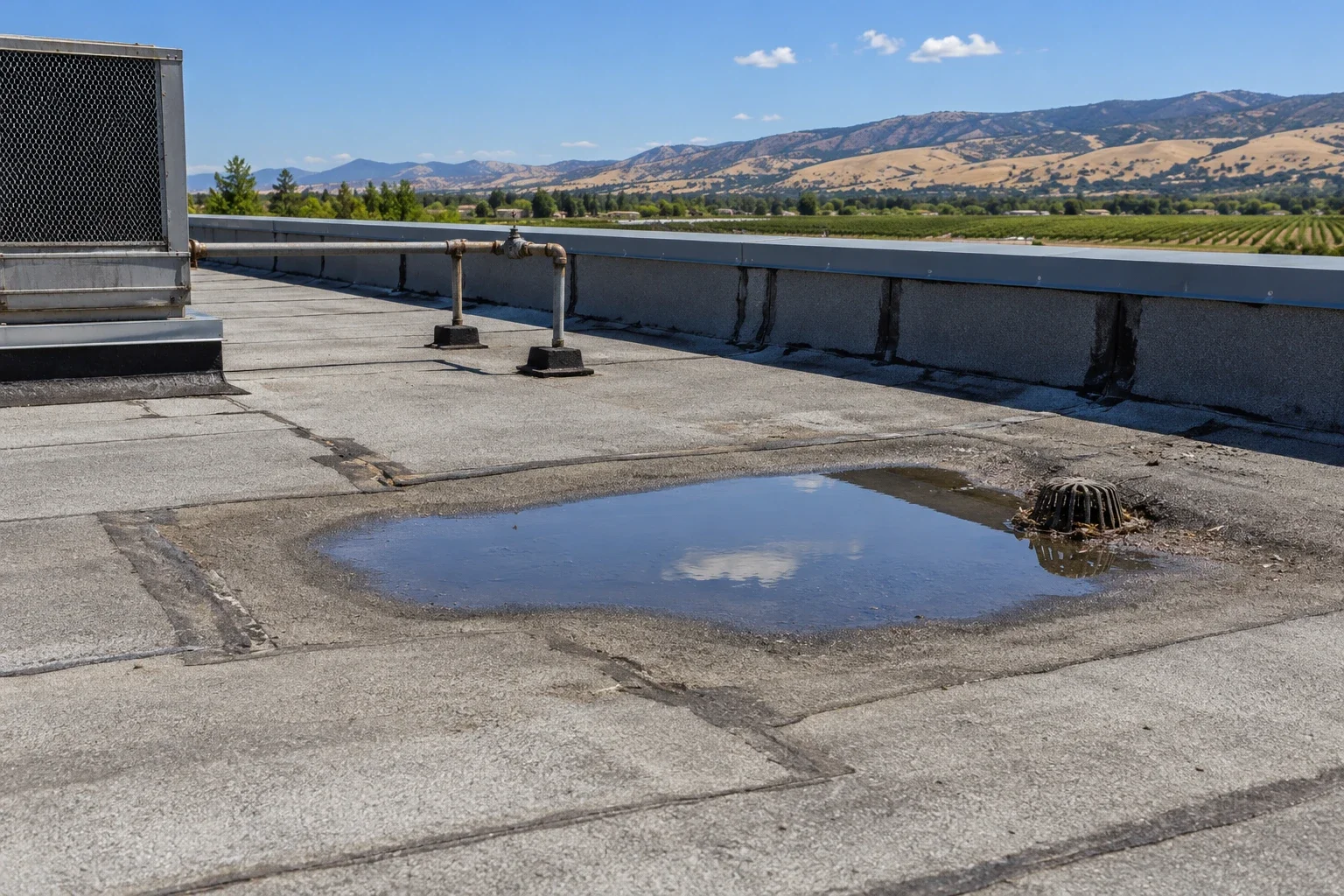
Buildings with many walls rising above the roof have the most flashing to lose. Hospital and medical office roofs often carry stair towers, mechanical enclosures and parapets, which adds linear footage, and a leak there reaches clinical space quickly. Retail and civic roofs in the downtown Medford core and strip centers along North Riverside Avenue may share walls between tenants, so one failed joint can wet more than one lease, a pattern also found on government buildings.
After a smoke season, ash settles along wall bases and holds moisture against flashing, hiding early cracks. We rinse those areas during visits so they can be seen. Where the flashing shows ember pitting from a nearby fire, we replace it instead of patching.
Planning the repair at the right time saves money. A flashing replacement done during a reroof costs a fraction of a stand-alone job, because access, protection and cleanup are already in place. When a roof is near replacement, we repair only what is needed to stay dry and fold the rest into the larger project.
Send photographs of the wall joint and the stain
Related Roofing Pages
Questions About Flashing Failure Repair
Can sealant alone fix a leaking wall flashing?
For a short time, sometimes. In valley heat, sealant cracks again within a season or two, so it works as a backup to a mechanical repair, not as the repair.
Why does the leak appear far from the failed flashing?
Water travels along the deck, insulation and wall before it drops. A hose test at the suspect joint, section by section, finds the real entry point.
Is flashing failure covered by the roof warranty?
Warranty terms may exclude movement-related flashing wear or require the original installer to make the repair. We read the terms first and coordinate if the warranty applies.
How long does a proper flashing repair last?
A fully adhered base flashing under a reset counterflashing can match the remaining life of the field membrane. A sealant-only patch may last a single season.
Do parapet walls need special attention?
They do. The cap, the wall face and the roof side all need to work together, and a gap in any one lets water behind the others.