
Storm Damage Roof Repair in Medford, OR
Storm and weather-event roof repair in Medford, OR: assessing wind, ember, rain and debris damage, with dry-in work and carrier-ready records.
Overview
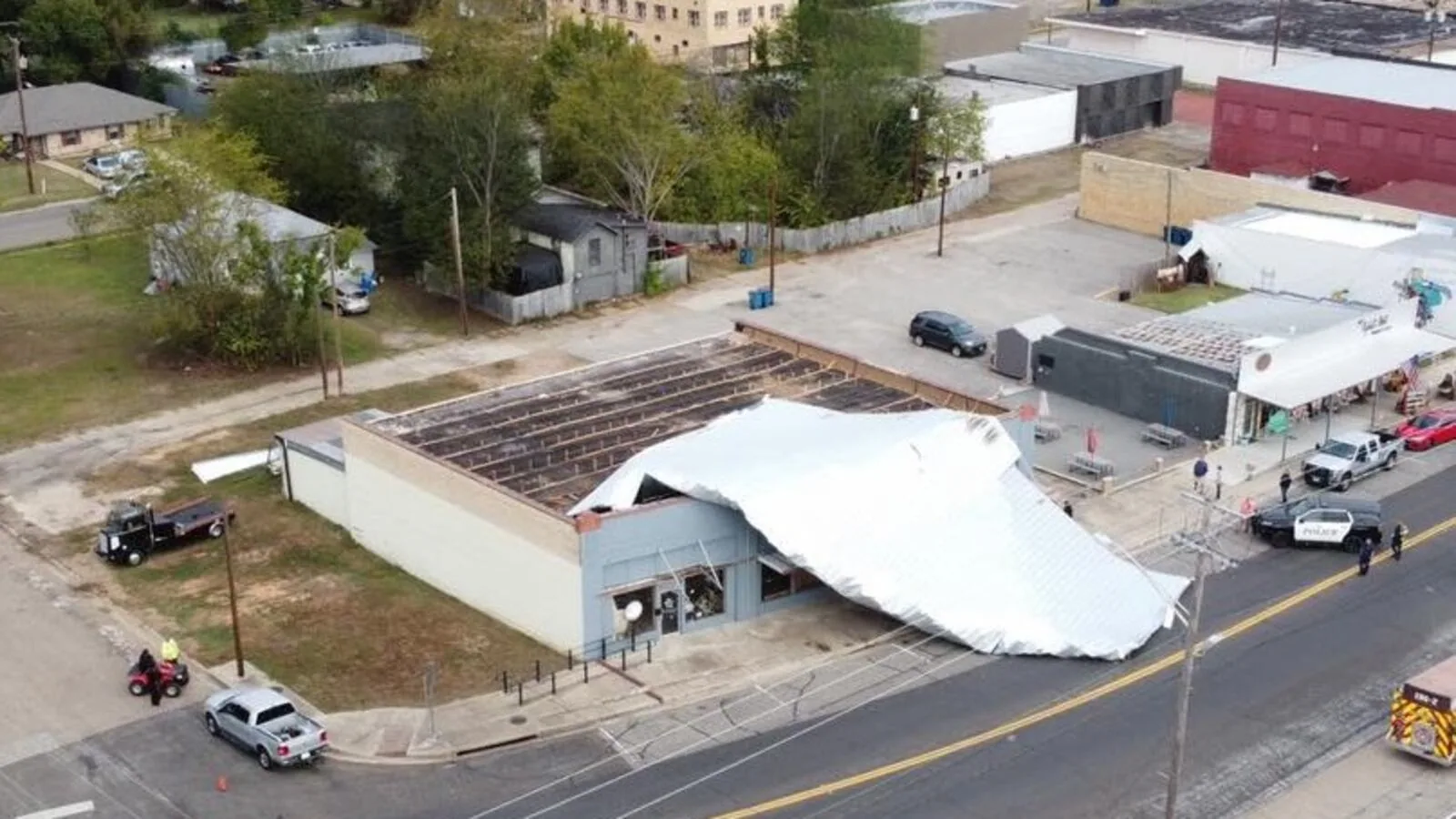
Storms are scarce in a valley that gets about 18.4 inches of precipitation a year, which is exactly why they do outsized harm to a Medford, OR roof. A membrane that has spent months drying and stiffening in the sun meets its first hard rain or wind-driven debris with seams that have already lost some of their give. The damage from one event can be modest on the surface and still move a roof several years closer to replacement in the reserve schedule, so the first task after any weather event is to grade what happened and write it down before it is cleaned up or forgotten.
Our storm work covers assessment, dry-in, permanent repair and the documentation that follows.
What counts as a storm here
In the Rogue Valley the events that hurt roofs are not always rain. A wind that tears a loose edge metal run, a thunderstorm that drops debris and strips gravel, a heat spike that cooks an already weak seam, and a smoke or ember event like the Almeda and Obenchain fires of 2020 all leave marks that look different but are handled with the same discipline. Those fires destroyed about 2,600 homes in the county, and commercial roofs near a burn area face ember pitting, ash loading and clogged drains.
Winter adds fog from inversions and about 64 freezing mornings a year, so the cycle of wet and cold works on openings that summer created. We treat each as a weather event worth recording, whether or not a ceiling has yet shown a stain, because a gap found early is a small repair and a gap found late is an interior claim.
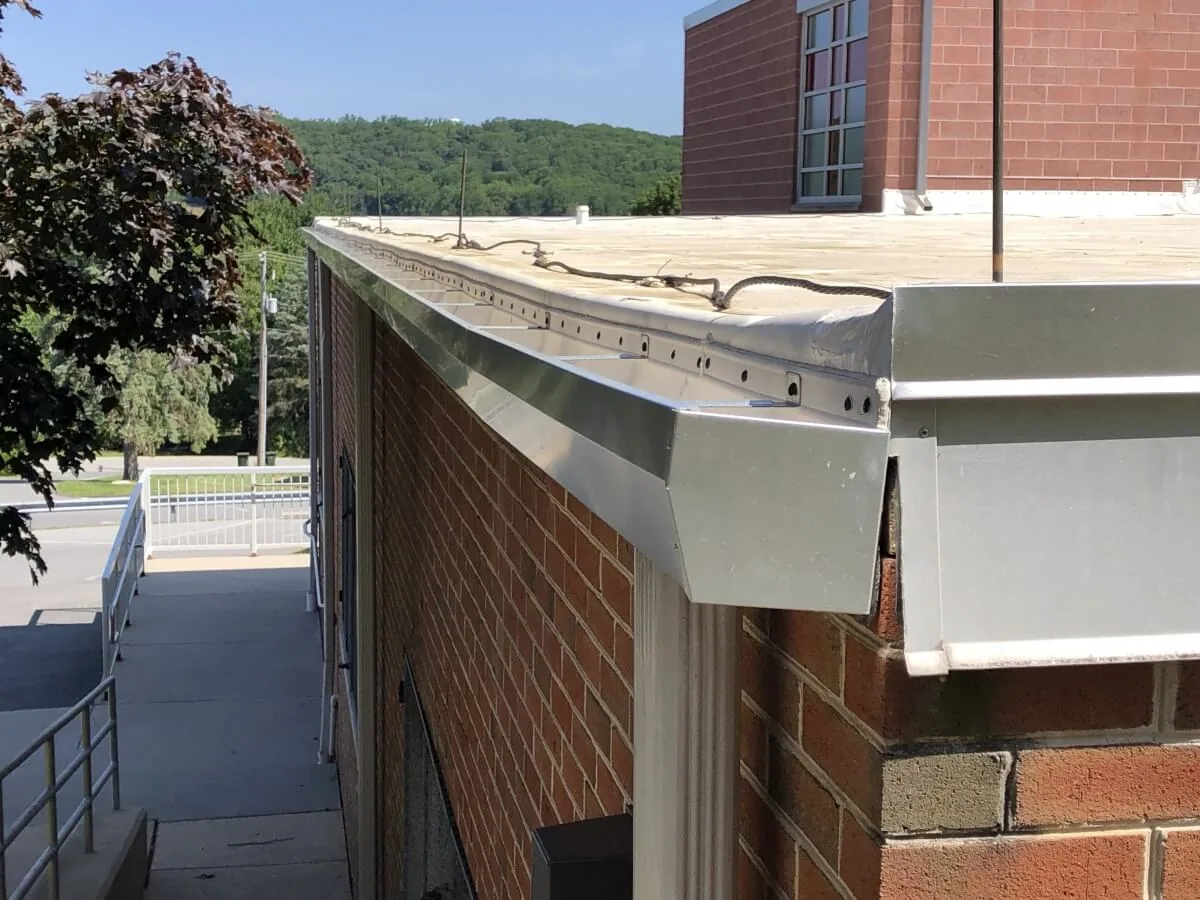
Edges are where a weather event shows first. Perimeter metal, coping and gutter runs take the pull of any strong gust, and fasteners that have worked loose through months of expansion let go together. A roof with sound edge metal rides out an event that would peel a neglected one, which is why the maintenance record is the first thing we read when we arrive.
Assessing the roof after the event
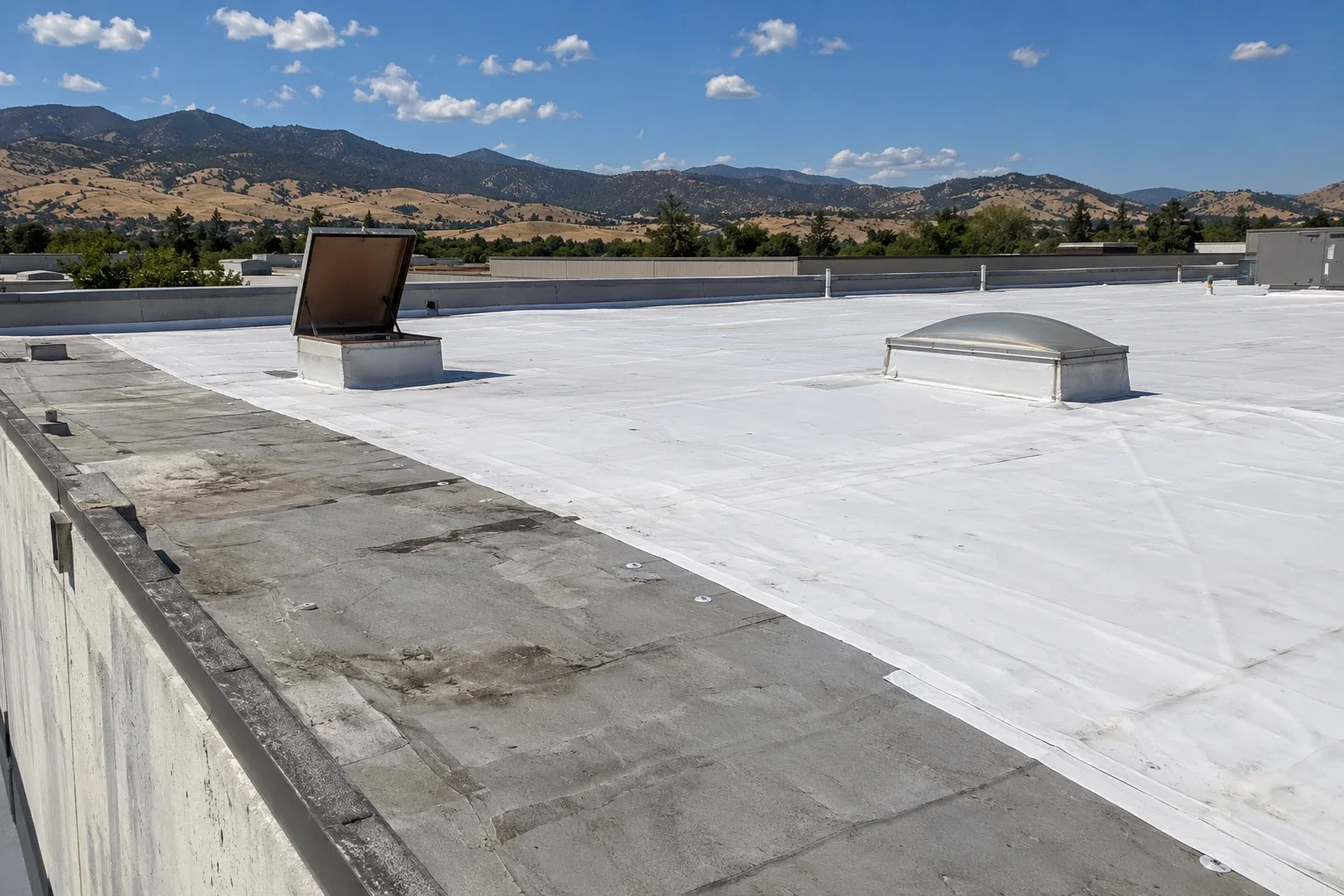
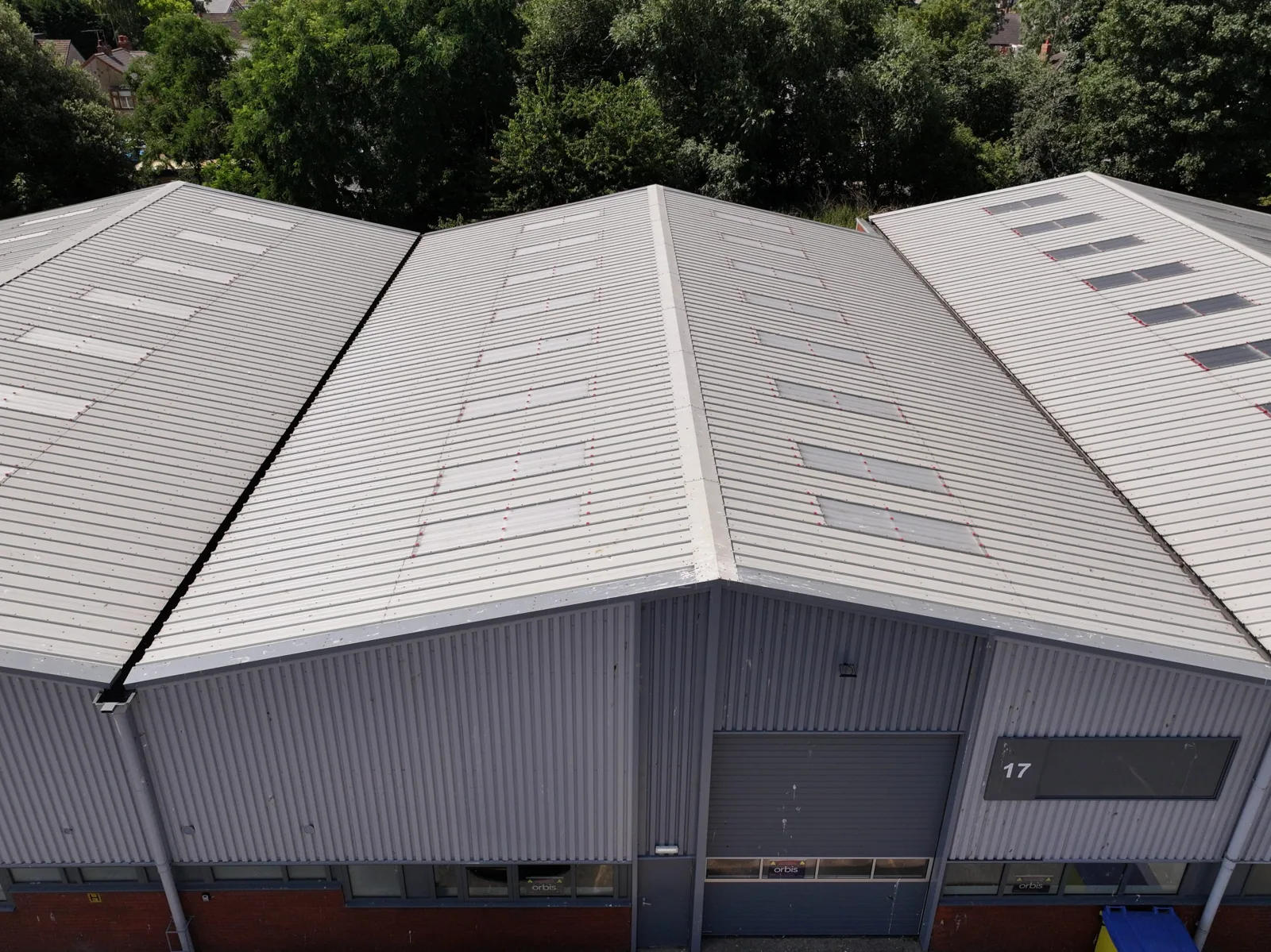
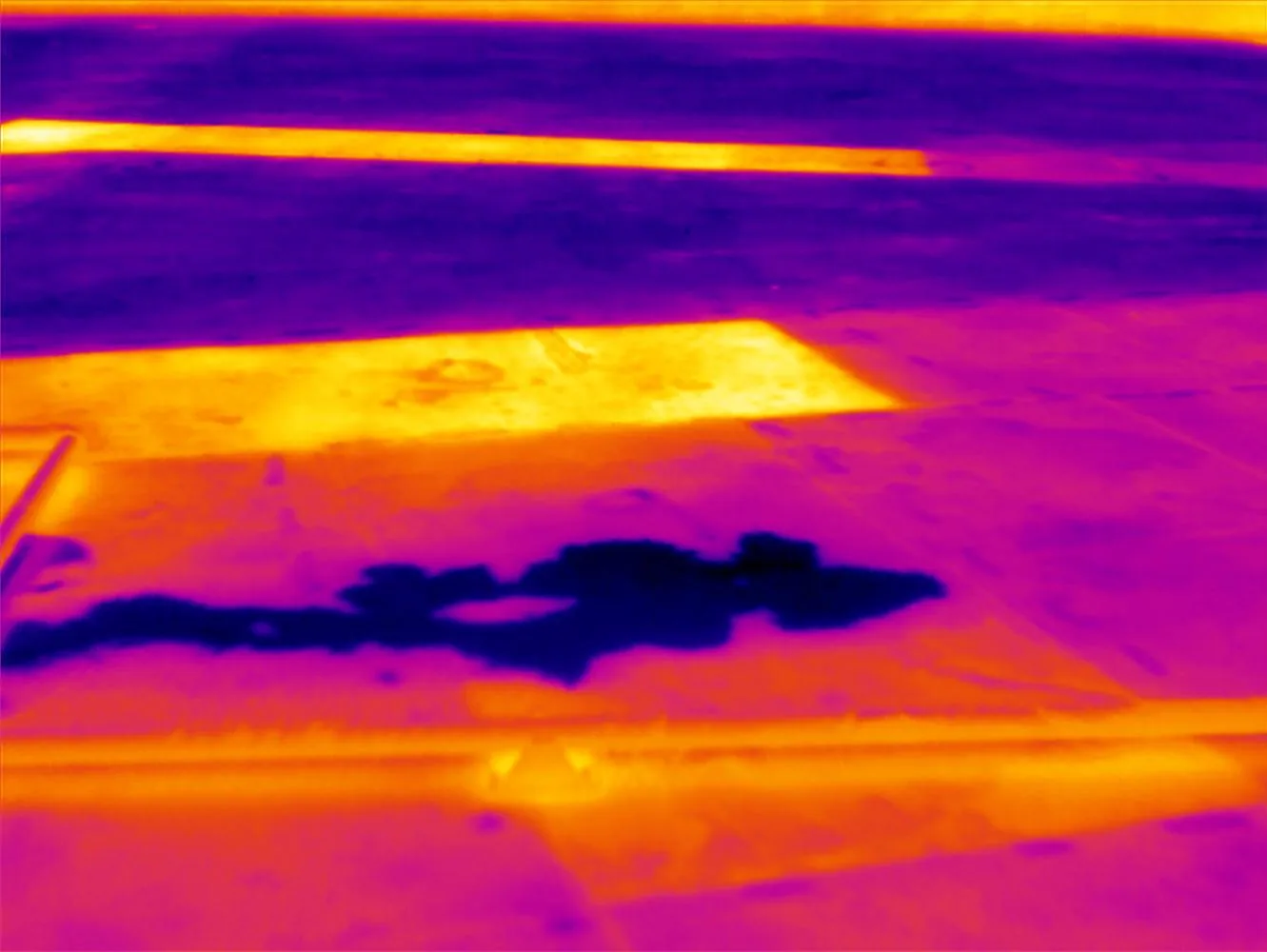
We begin by walking the perimeter and the drainage, looking for displaced edge metal, torn flashings, lifted laps, punctures from flying debris, and ponding that was not there before. Aerial imagery from a drone roof inspection speeds this on large roofs and keeps crews off a deck that may be unsafe. Where water has entered, an infrared moisture survey maps the wet area so the repair can be sized to what is actually damaged rather than to what is visible.
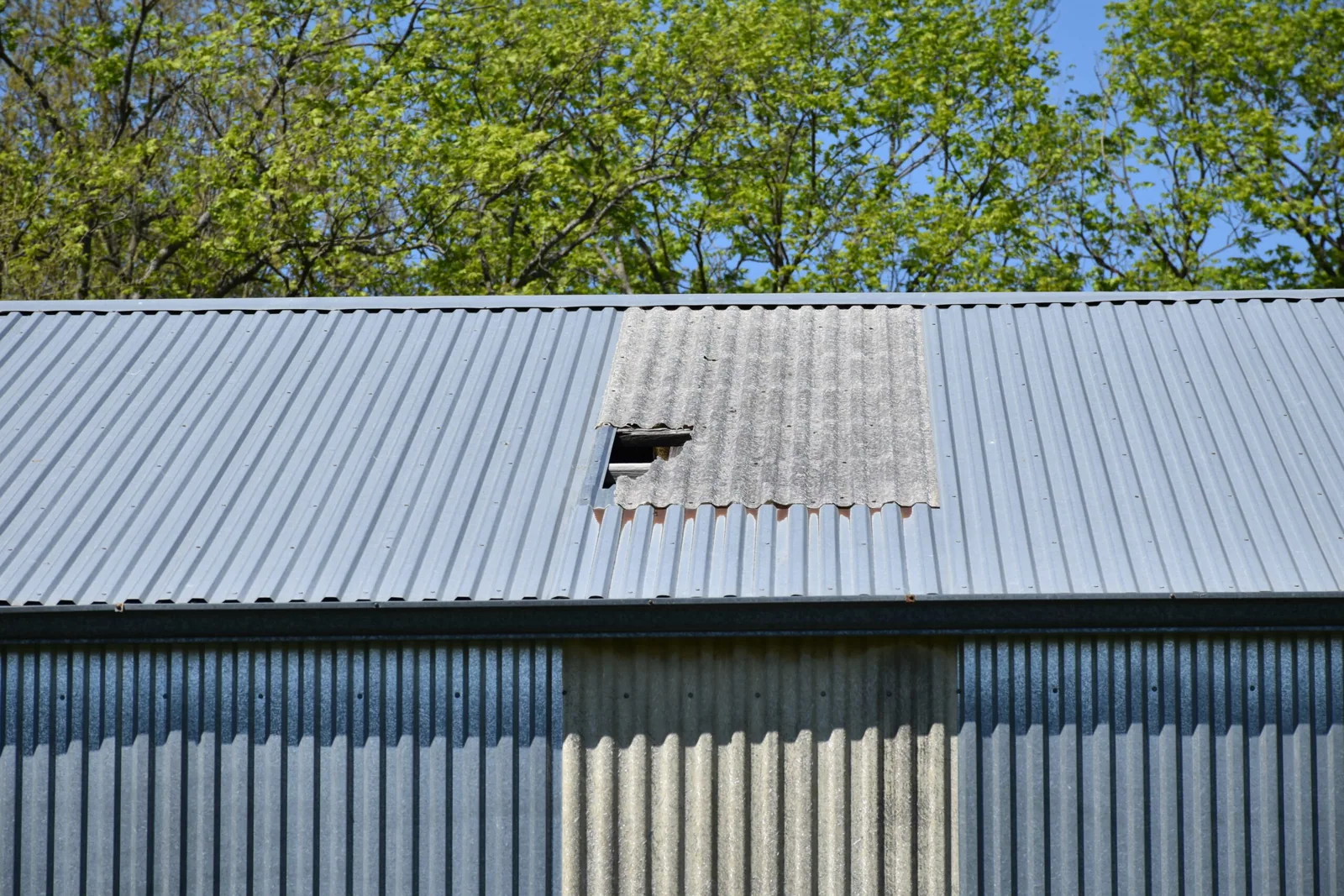
The result is a written scope with photographs, locations and a recommended response for each item, separated into emergency dry-in, repair of the opening, and items that can wait for the next work window. That separation is what lets an owner approve the urgent work immediately and take time on the rest. It also gives a carrier a clear record of what the storm did and what was already worn.
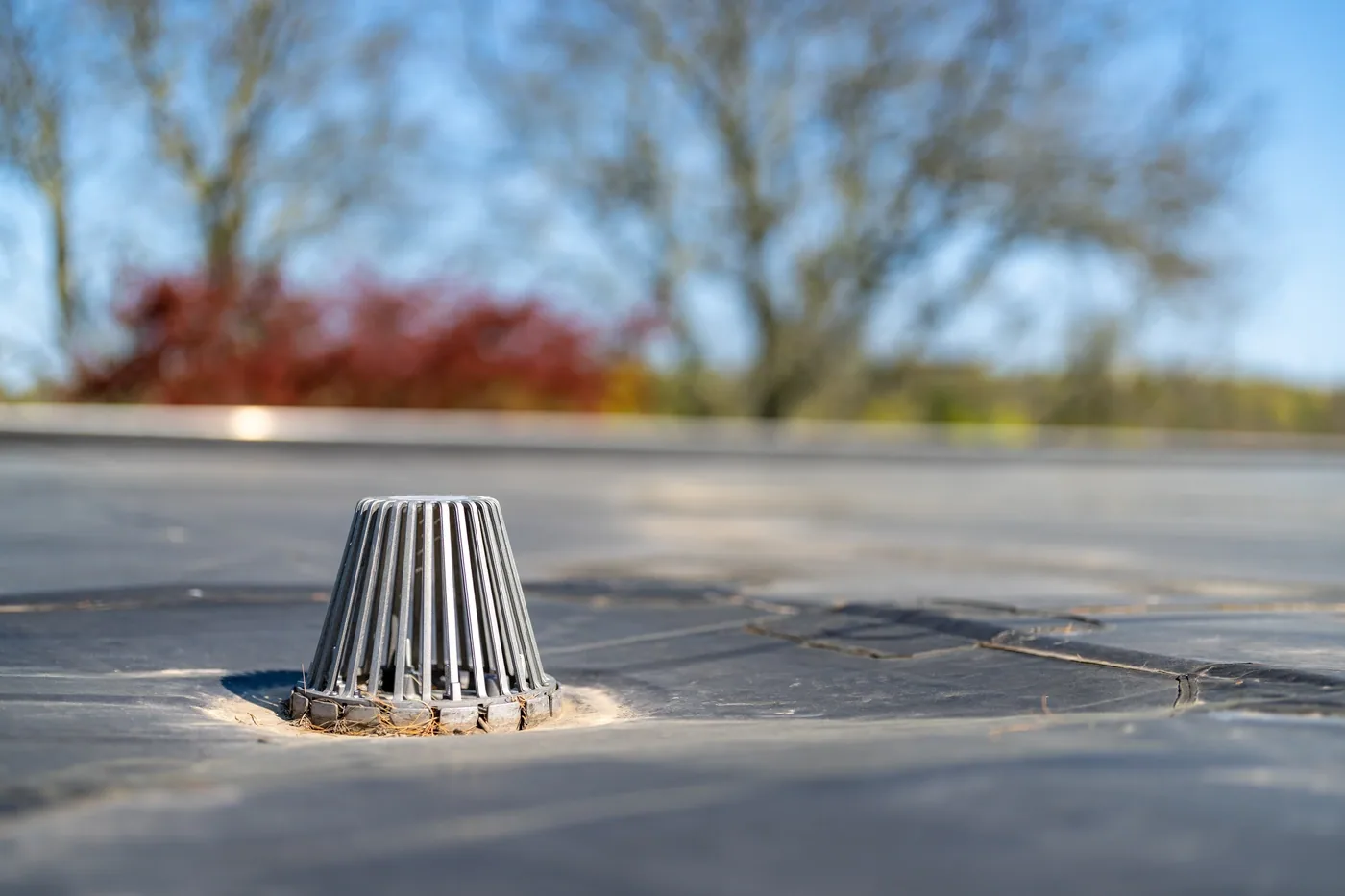
Flat commercial roofs also hide trouble in their drainage. Debris carried by wind collects at scuppers and low drains, and the next ordinary rain then ponds where it never did before. We clear the paths, mark the depth of any standing water, and note whether a wind damage repair or a drainage correction is the proper next step.
Dry-in first, permanent repair second
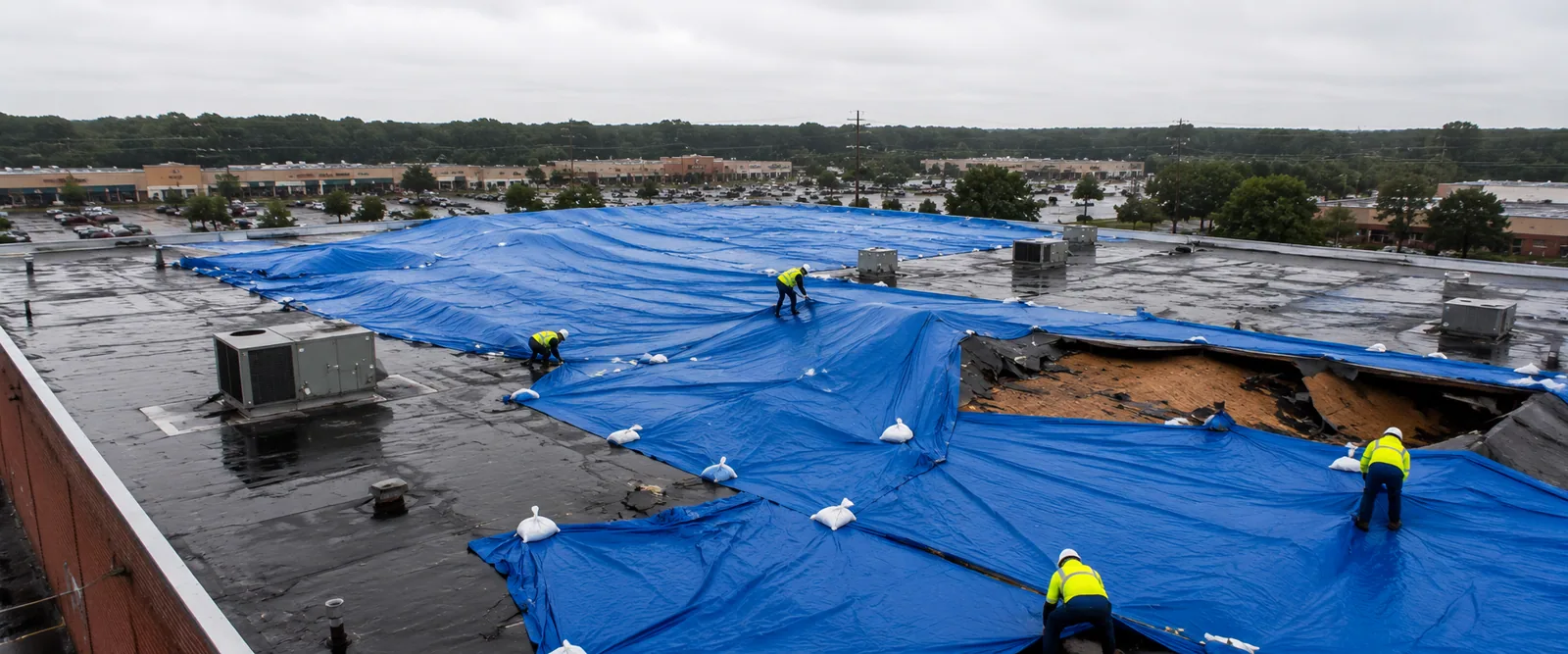
If a roof is open, the first step is a dry-in: tarps secured at the perimeter, temporary patches over punctures, and drains cleared so water leaves. Heat undermines temporary materials in a valley summer, and a tarp that sits through July wears out, so every dry-in comes with a date by which the permanent repair is to be made. When the opening appears at night or on a holiday, the same dry-in is handled through emergency roof repair, since the line stays staffed around the clock.
Permanent work follows the failure. Torn single-ply sheets receive welded or adhered patches sized beyond the damaged area, edge metal is re-fastened and sealed, and displaced coping is reset with fresh anchorage and sealant. Where a section is beyond patching, we cut it out, dry or replace the insulation underneath, and tie new membrane into sound material. Each repair is photographed before, during and after, and the materials used are recorded.
Roofs that take the worst of it
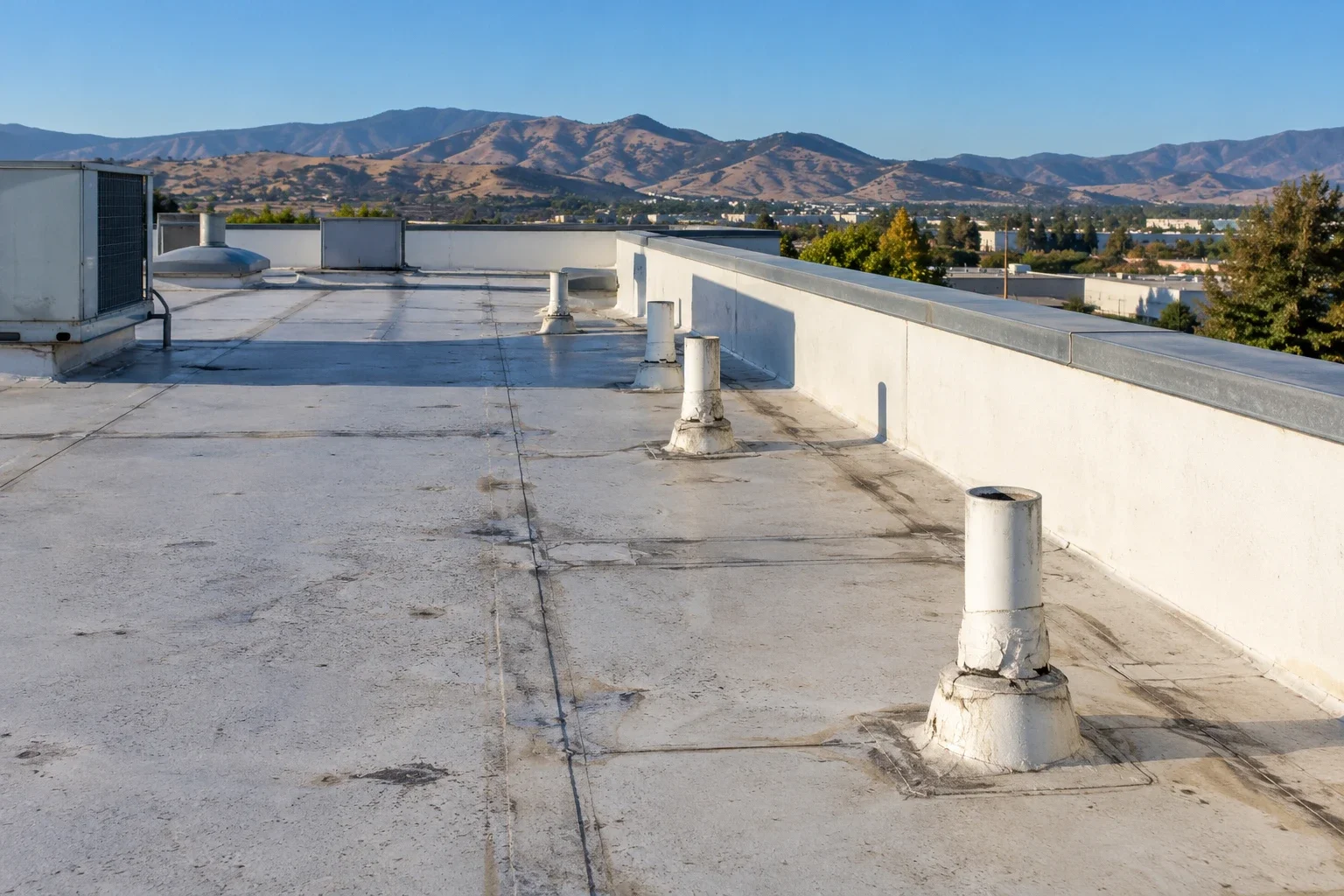
Large, open buildings are the first to show wind damage because their edges are long and their parapets low. Wide-field buildings, such as the distribution and rail-served industrial buildings along Table Rock Road and at Phoenix Industrial Park, can have fields where a loose perimeter unzips a lot of sheet in a gust.
Retail and medical buildings run into a different problem: the interior. A tenant with equipment, patients or inventory under the roof cannot wait for a permanent repair, so dry-in speed and tenant communication become the real measure of the response. We coordinate with the property manager on notices, protect contents where we can reach them, and keep the building's mechanical intakes clear of dust and fumes.
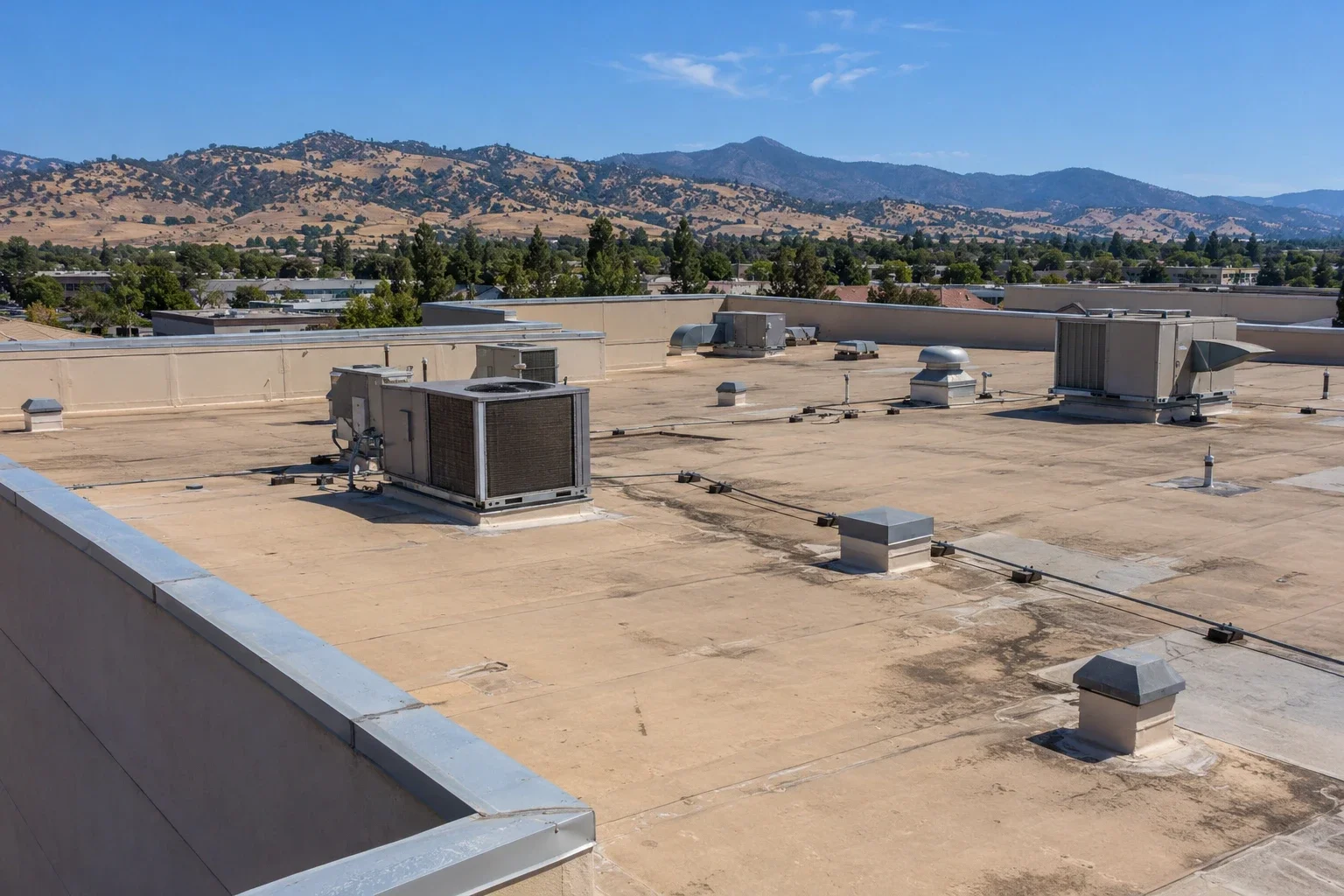
Smaller tenant-occupied retail roofs, such as those in the North Riverside corridor, can carry rooftop units whose curbs and condensate lines catch debris and leak after a blow. We check those penetrations first, because they are the cheapest openings to close and the costliest to miss.
Records for the owner and the carrier
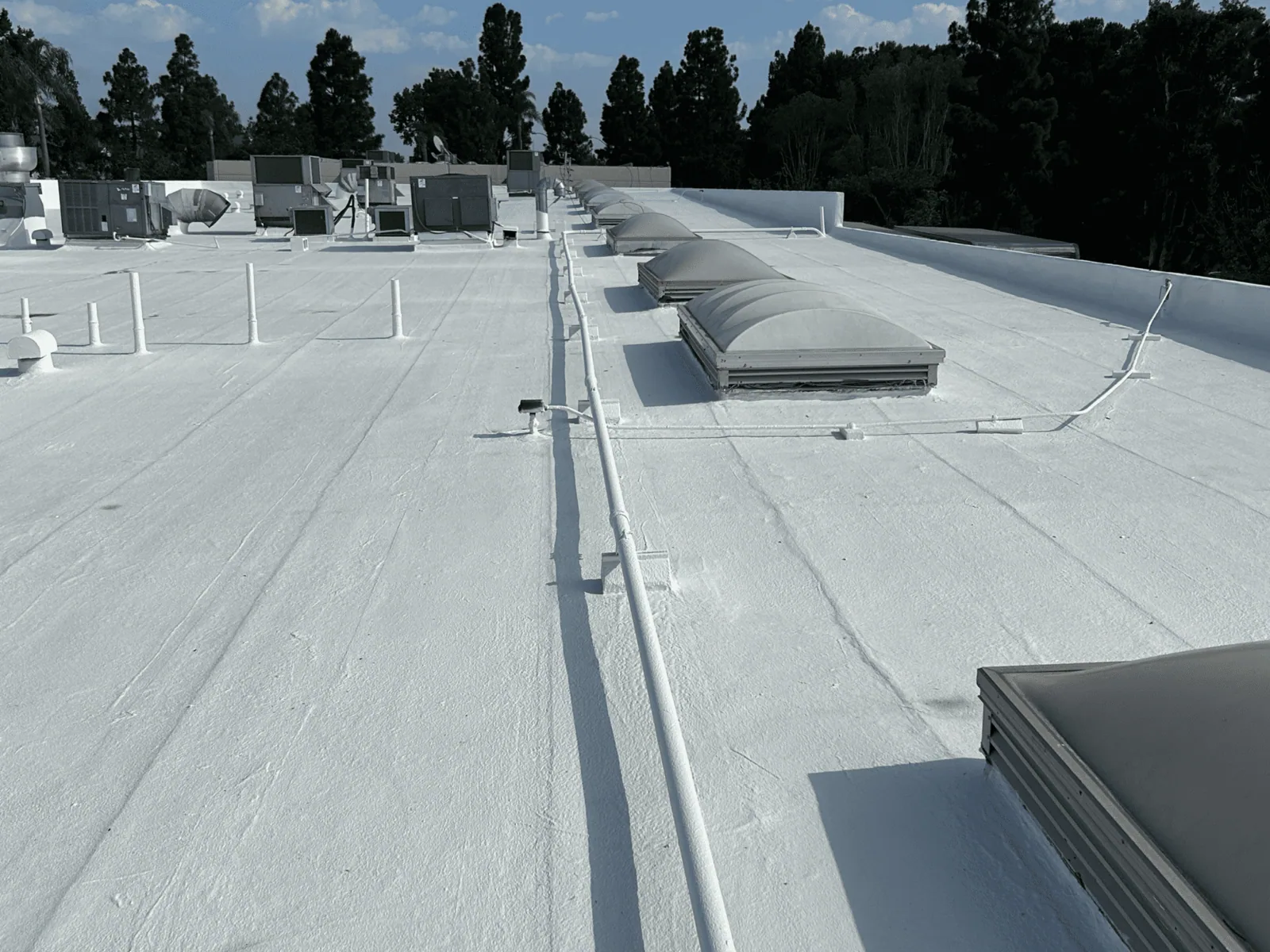
A carrier will ask for dates, causes and photographs, and so will the lender. Our report records when the event occurred, what we found, what temporary work was done, and what permanent work is scheduled, with each item tied to a roof location. We also note conditions that existed before the event, because an insurer separates storm damage from wear, and a clear record protects the owner's claim from being reduced by the older items.
Owners who want help with the claim itself can have us assemble the photographs, dates and scope through roof insurance claim assistance. Meanwhile, the repair proceeds on its own schedule so the building is not left open while paperwork moves. The owner receives a plain summary of cost drivers: extent of damage, access difficulty, moisture removal, and the materials required, so the figure is understood before approval.
Call with the address and what you saw
Related Roofing Pages

Questions About Storm Damage Roof Repair
How soon should a roof be checked after a bad wind or storm?
Within days, and before the next rain if any opening is suspected. Wind damage along edges and flashings often shows only as a faint lift, and the next shower turns it into a leak.
A tarp is on the roof. Is the problem solved?
No, it is a pause. Heat and sun break down tarp fabric and fasteners within weeks, so the permanent repair needs a date, and the tarped area needs a look after any wind.
Will the carrier pay for repairs on an older roof?
Carriers look at wear separately from storm damage, and that split is why photographs of the earlier condition matter. We document both so the claim reflects the part the event caused.
What about ember or ash damage from wildfire smoke?
Embers can pit membranes and ignite debris in corners, and ash clogs drains. After a nearby fire we clear the drainage, inspect edges and penetrations for pitting, and grade the roof for lost reflectance.
Do you repair storm damage on historic or masonry buildings in Ashland or downtown Medford?
Yes, with attention to the finish rules that apply to listed structures, which are common in Ashland. Edge details and flashing profiles are matched carefully so the repair does not alter the look of the building.