
Fire, Ember and Smoke Damage Roof Repair in Medford, OR
Repair of ember pitting, scorch, radiant heat and soot on Medford, OR commercial roofs after wildfire, with moisture checks and records for the carrier.
Overview
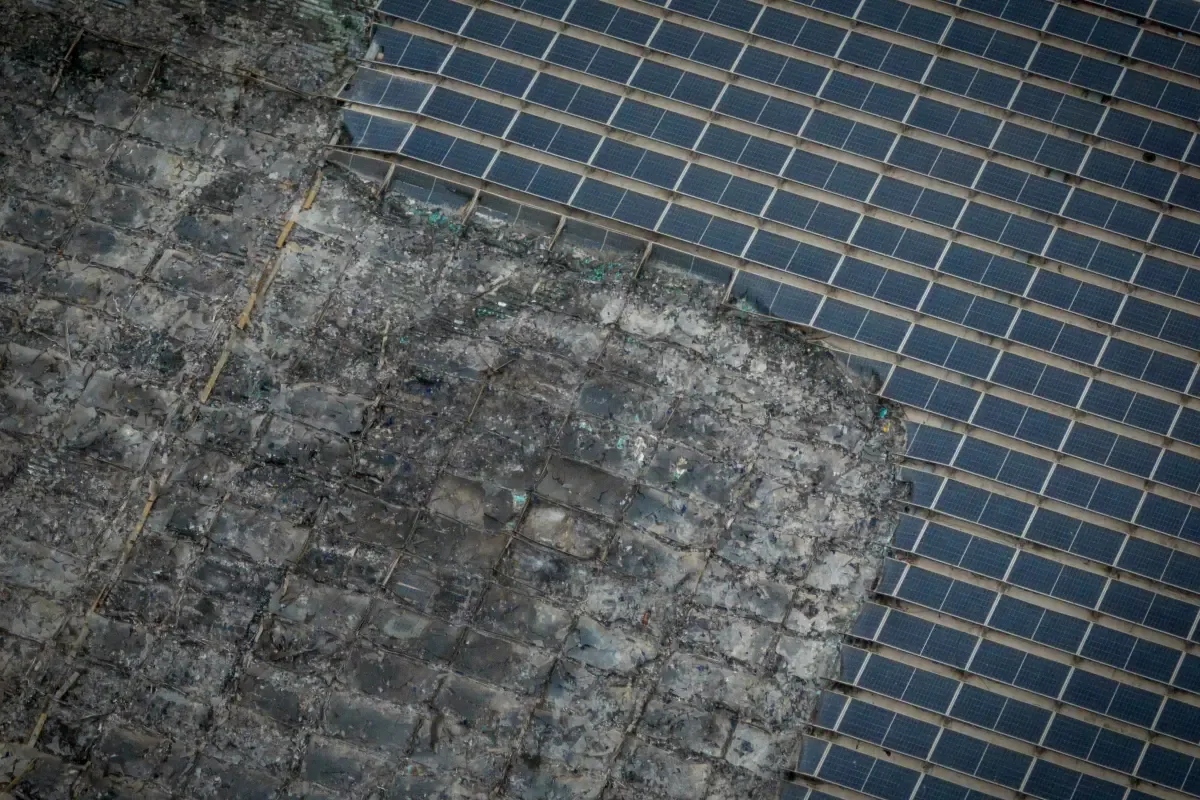
Wildfire is the second climate in the Rogue Valley, and it arrives in a form that a roof inspection from the ground cannot read. September 2020 brought the Almeda and Obenchain fires, which took roughly 2,600 Jackson County homes, and the Almeda smoke topped state air monitors before 2021 added 26 smoke days. A commercial roof that stood through those weeks may carry ember pits no wider than a pencil, a band of blistered coating along a south parapet, scorched edge metal or a film of soot that has changed the surface it reflects.
For a property manager, fire damage is a ledger entry with uncertain size. Some of it is repair today, some is a shortened service life that surfaces over the next two summers, and the record kept now decides how much of it the carrier recognizes.
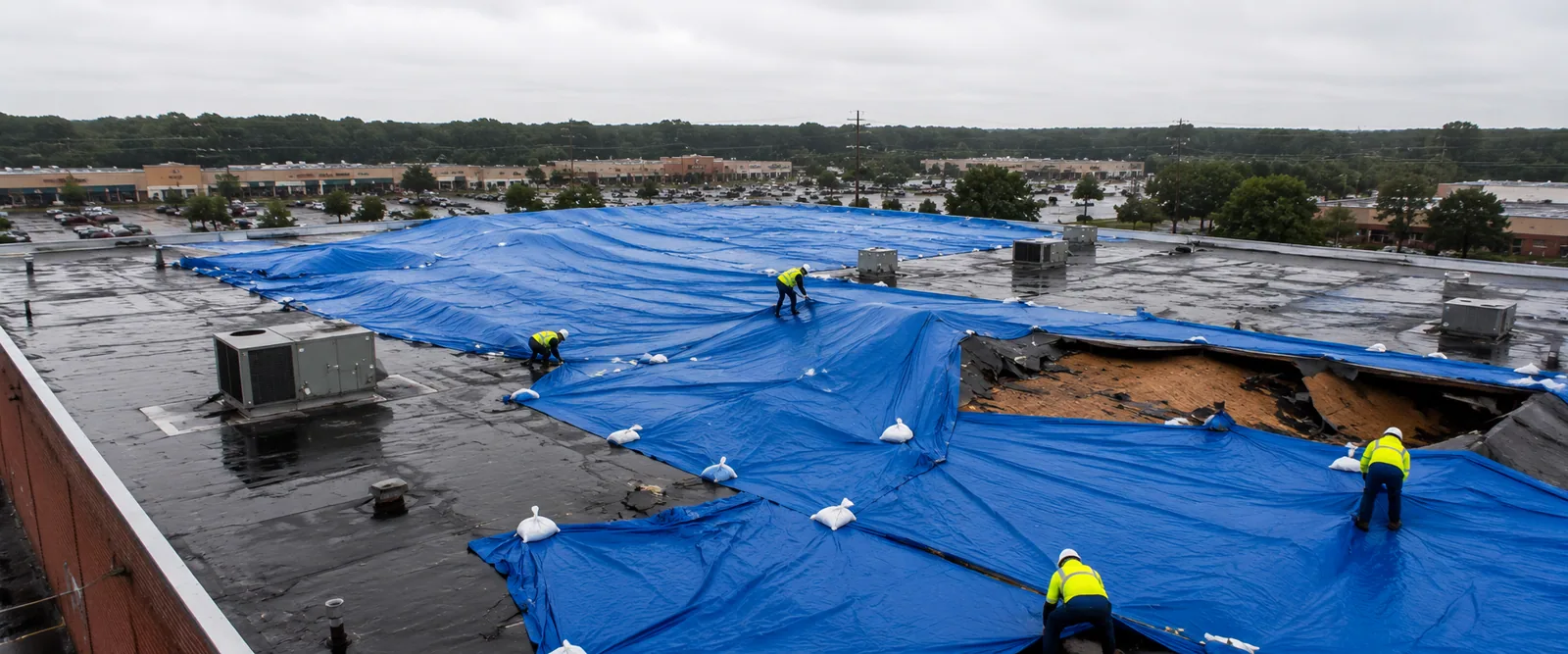
Emergency steps come first when a fire has opened the roof; the emergency roof repair line dries in the building at any hour, and the permanent work follows once the damage has been recorded.
How a fire reaches a roof it did not burn
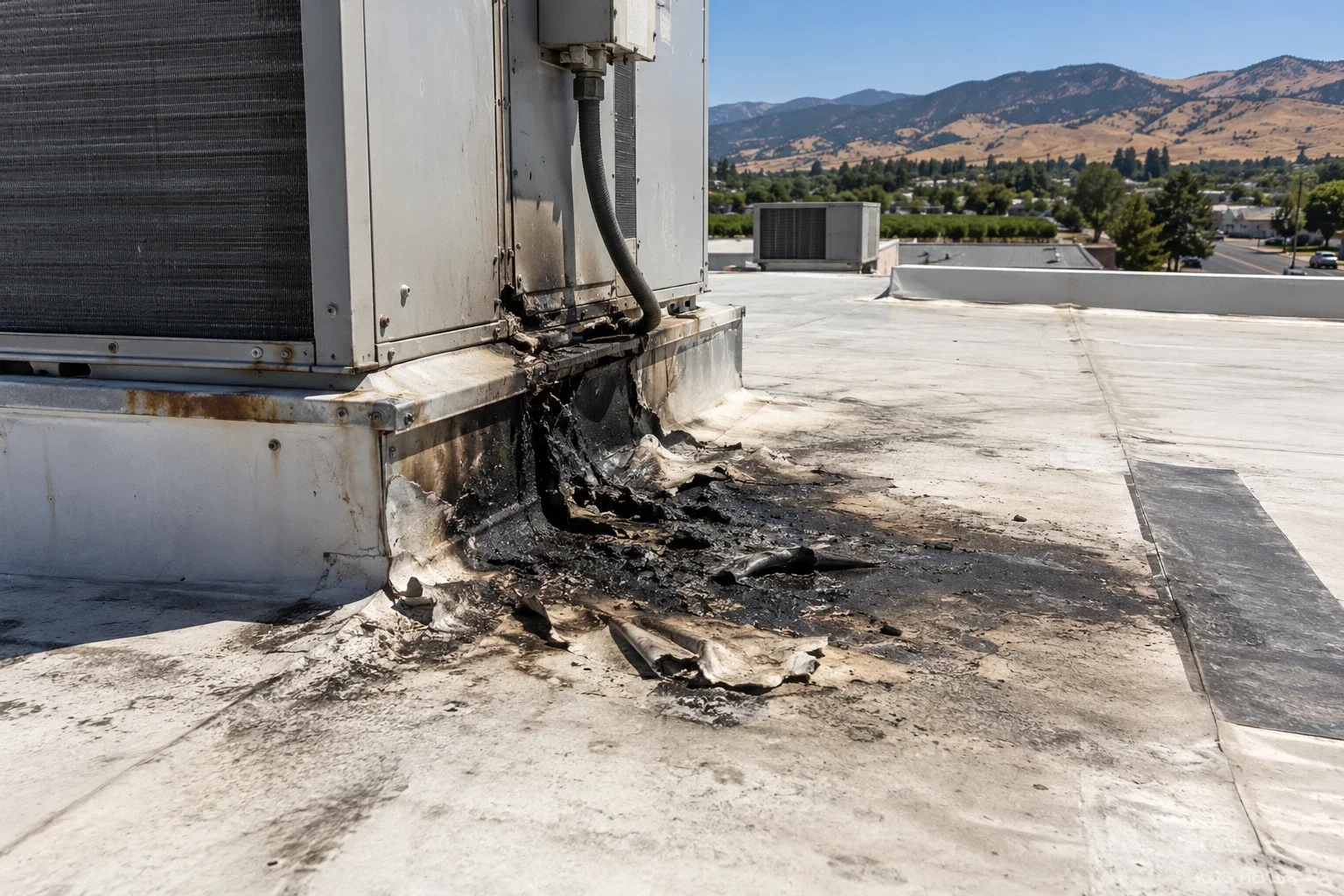
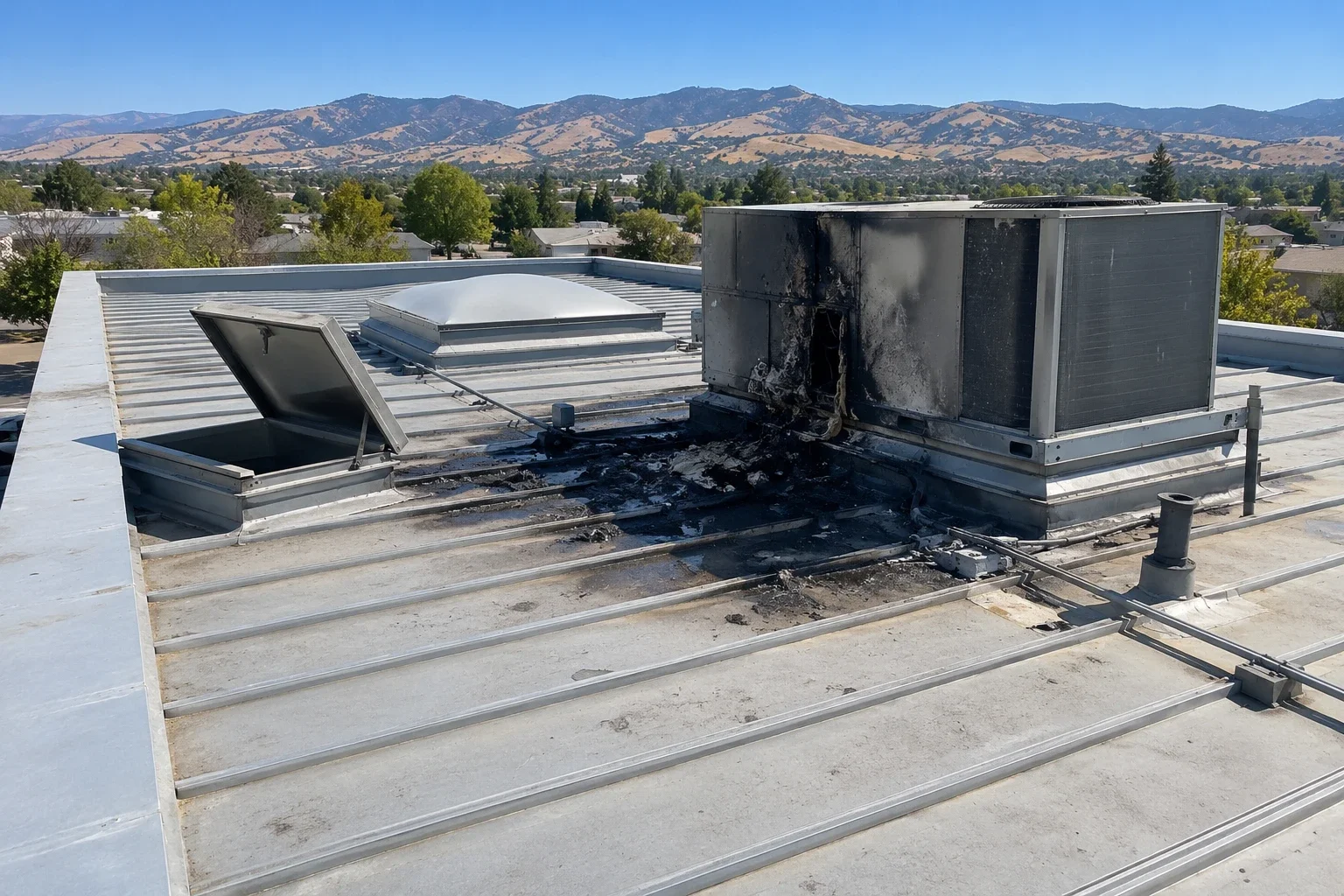
Fire damages roofs through four routes. Embers land and lodge in corners, behind parapets, under equipment and in debris, where they can burn through a membrane or ignite what has collected. Radiant heat from a nearby fire distorts metal, blisters coatings and softens single-ply sheets. Smoke deposits soot and corrosive residues that attack some surfaces and clog filters. Water and chemicals used in firefighting add moisture and contamination.
Each leaves a different mark. Ember damage shows as small burn-through pits and charred spots; radiant heat shows as waviness in metal and shrinkage in the membrane; soot appears as dark film that changes reflectance; and firefighting water shows as saturated insulation or ponding. Some of the damage is cosmetic, but pits and heat distortion are structural to the waterproofing, so they get repaired.
Heat damage that predates the fire complicates the picture. Valley summers already age membranes, and a surface showing heat and UV roof damage may look similar to radiant-heat distortion from a nearby fire. The distinction is made by pattern: fire effects follow the direction of the burn, while sun aging is even across exposed surfaces.
Inspecting a fire-exposed roof
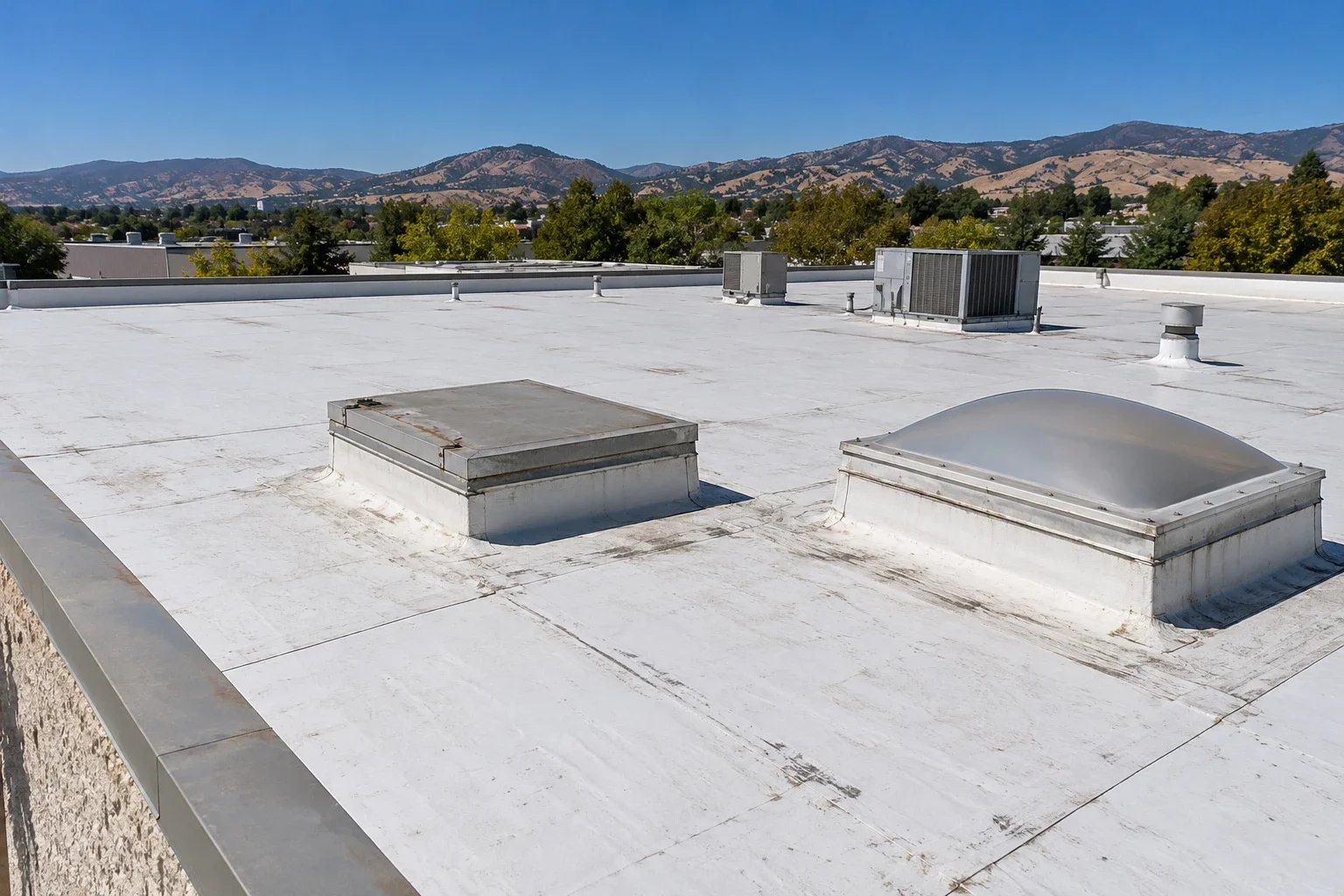
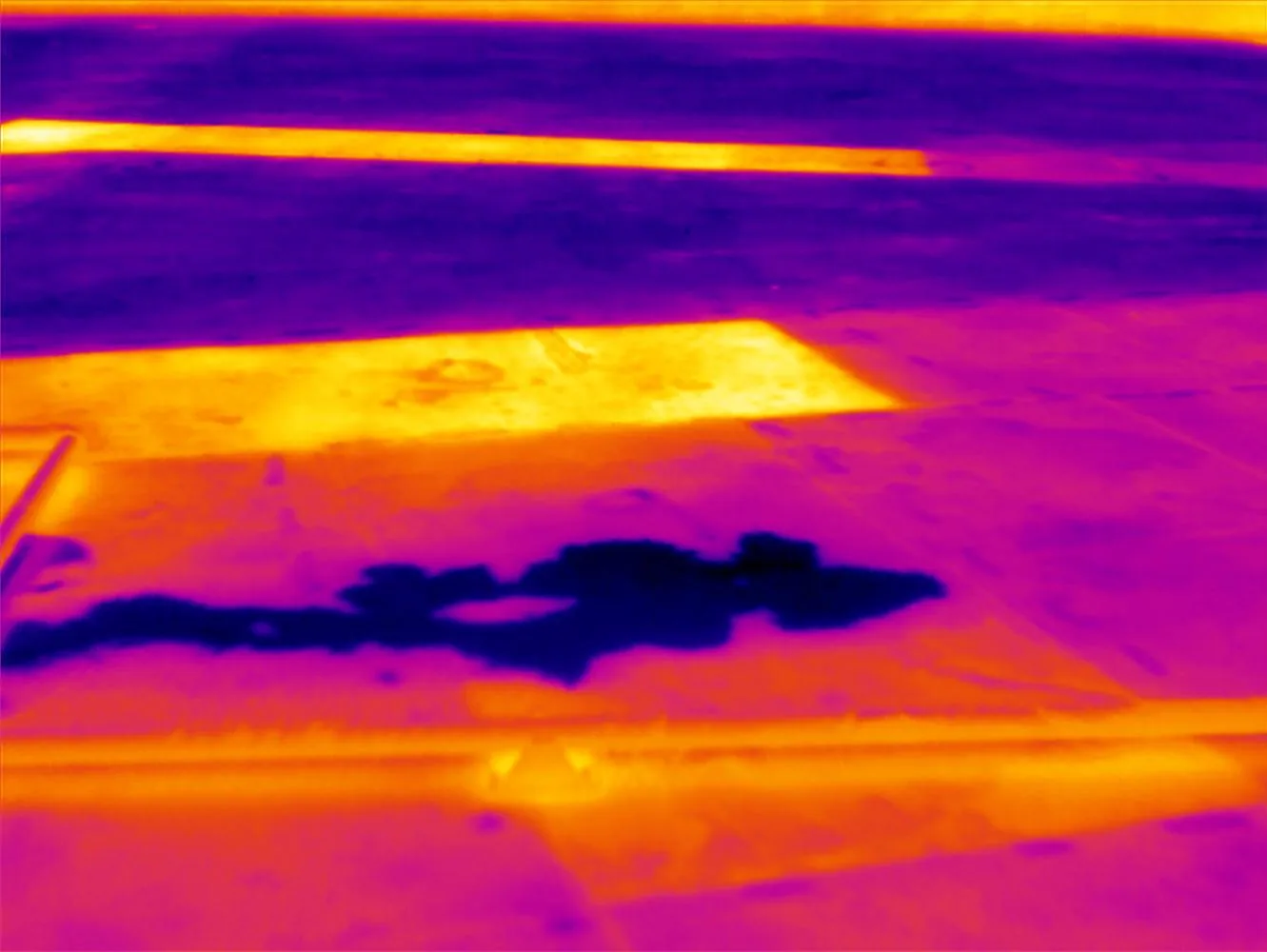
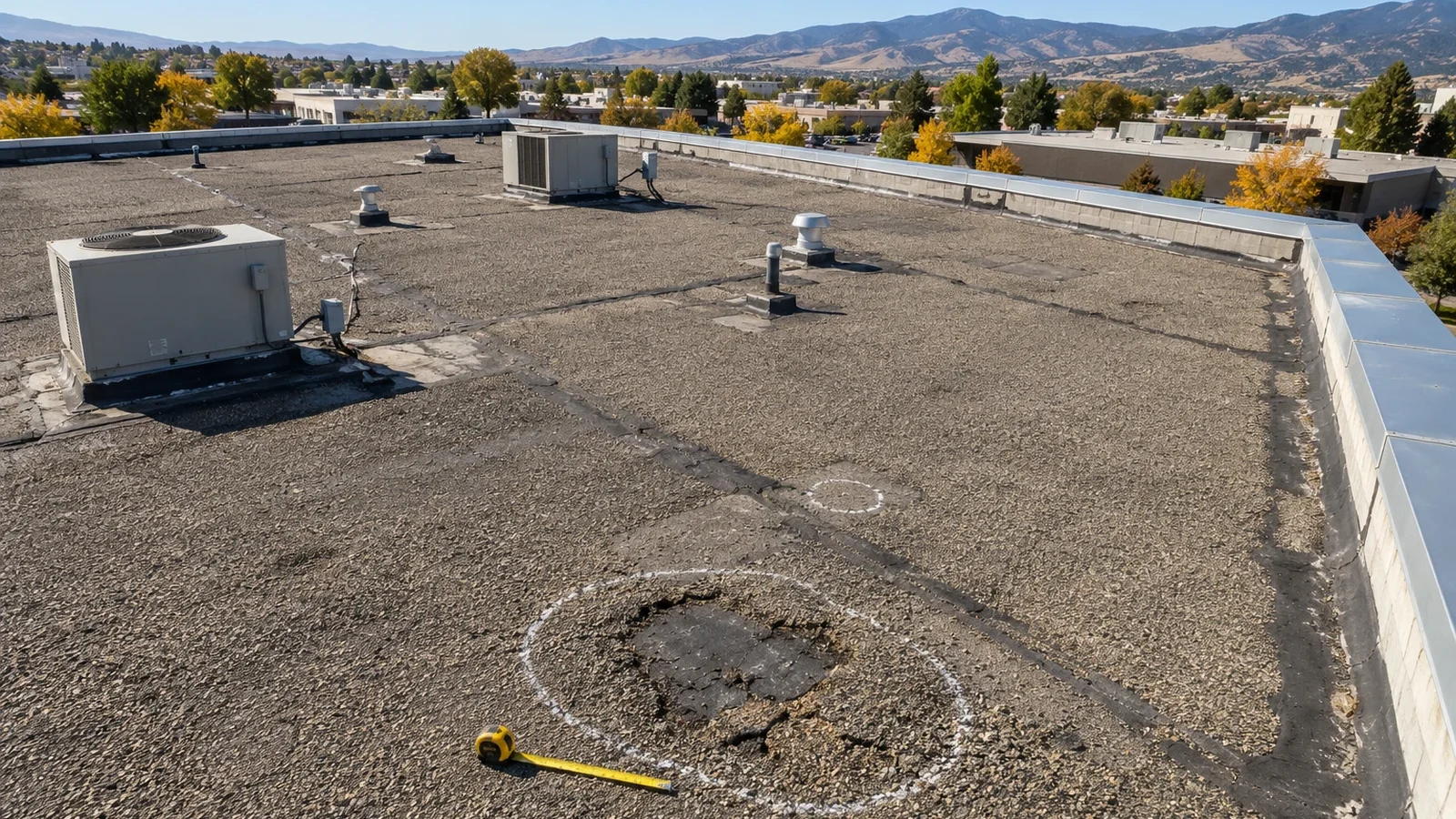
We walk the entire roof and pay special attention to places where embers collect: valleys, wall bases, curb corners, gutters and the lee side of parapets. We probe suspect pits for burn-through, check coatings for blistering and edge metal for warping, and compare the surface to an unexposed area for reflectance loss. Infrared scanning follows to find water that entered through ember holes, since a pit smaller than a pencil eraser can feed a significant wet area.
Photographs are taken with scale references and located on a roof plan. We note which areas the fire could have affected and which were beyond its reach, separating fire damage from the ordinary heat aging that valley summers cause. That separation is the foundation of any claim, and our infrared moisture survey gives the moisture side of it.
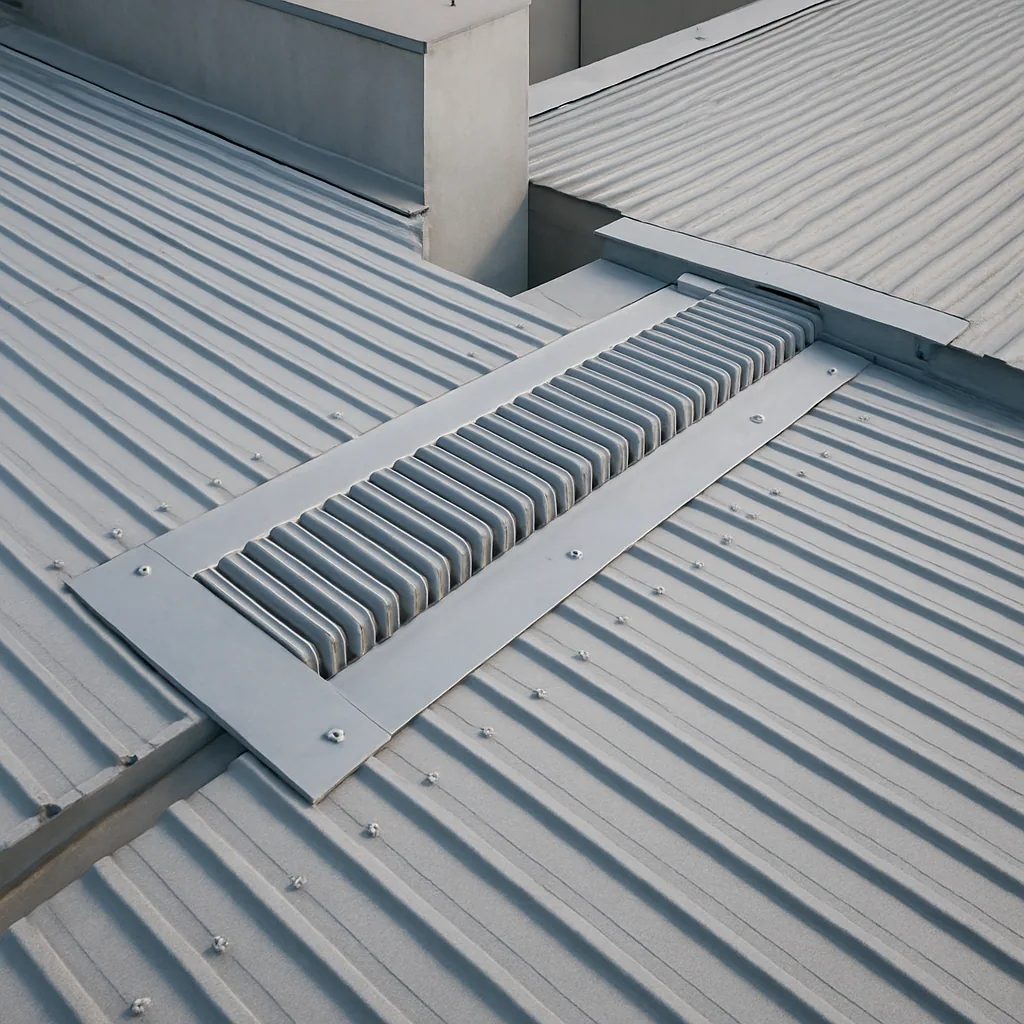
Rooftop equipment deserves its own look. Intake louvers and filters load with ash, condensate lines can be plugged, and wiring or insulation on exposed units can be scorched. We report what we find to the mechanical contractor and note it in the roof file, so the filters are changed and the units checked before cooling season.
Repair, cleaning and re-protection
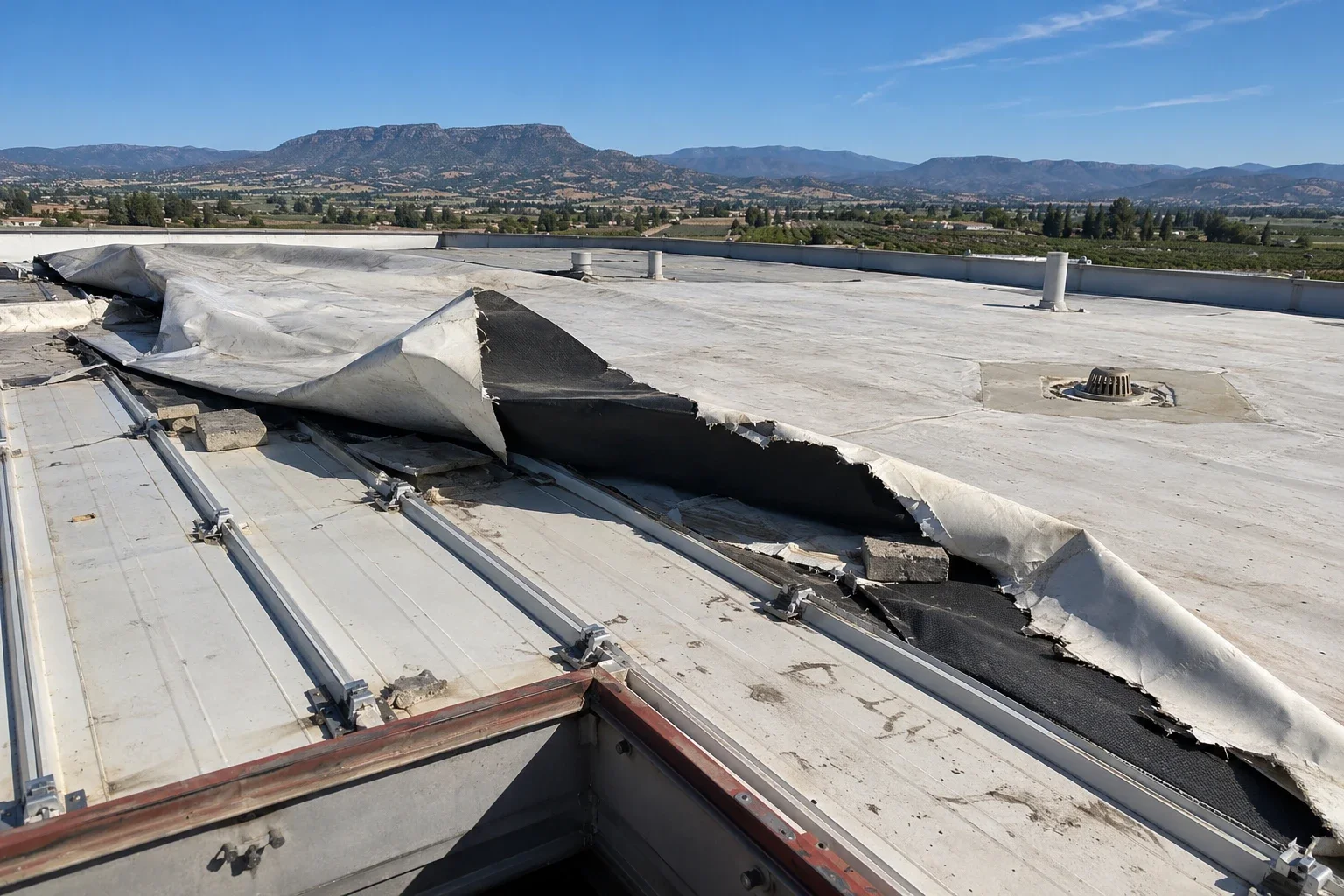
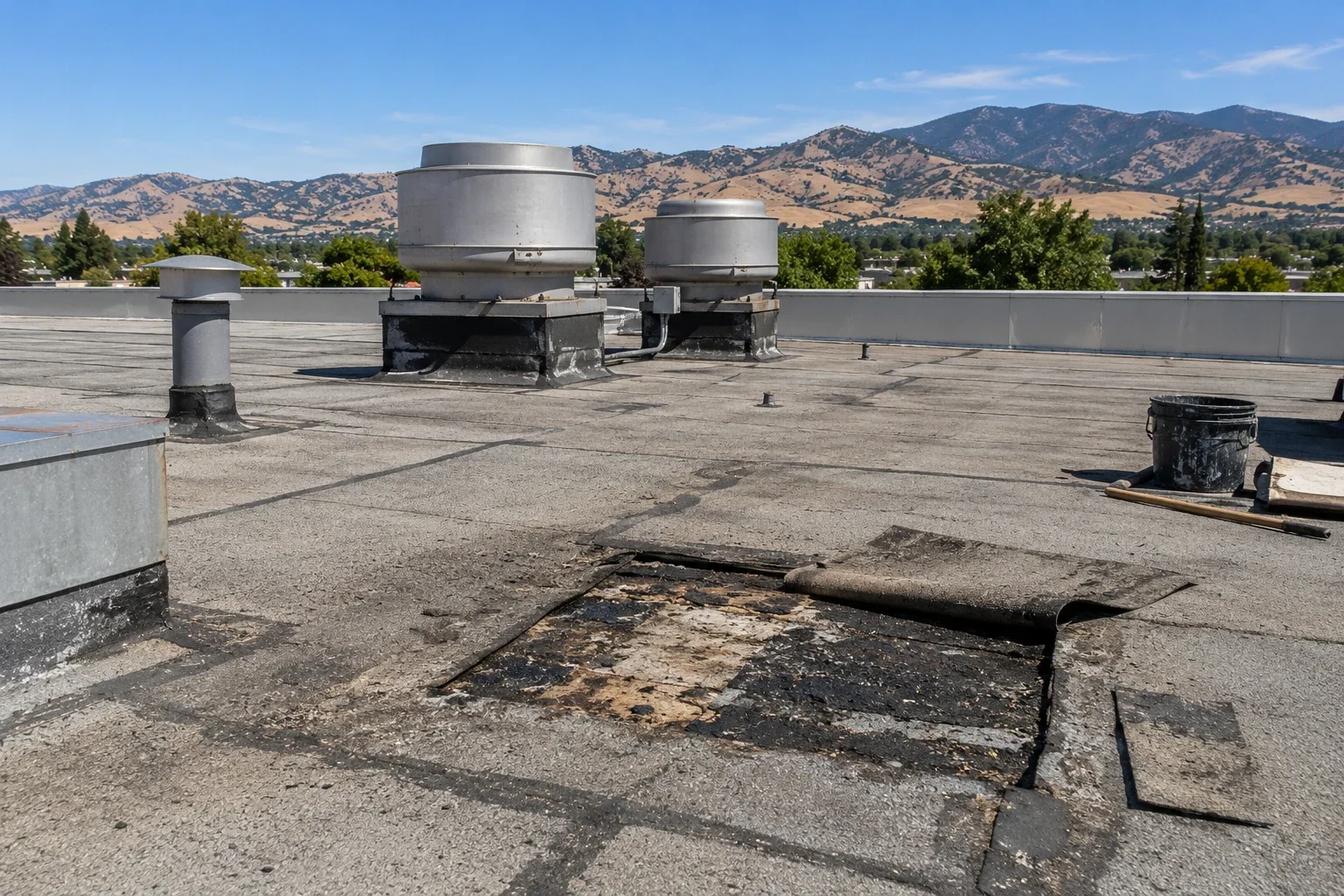
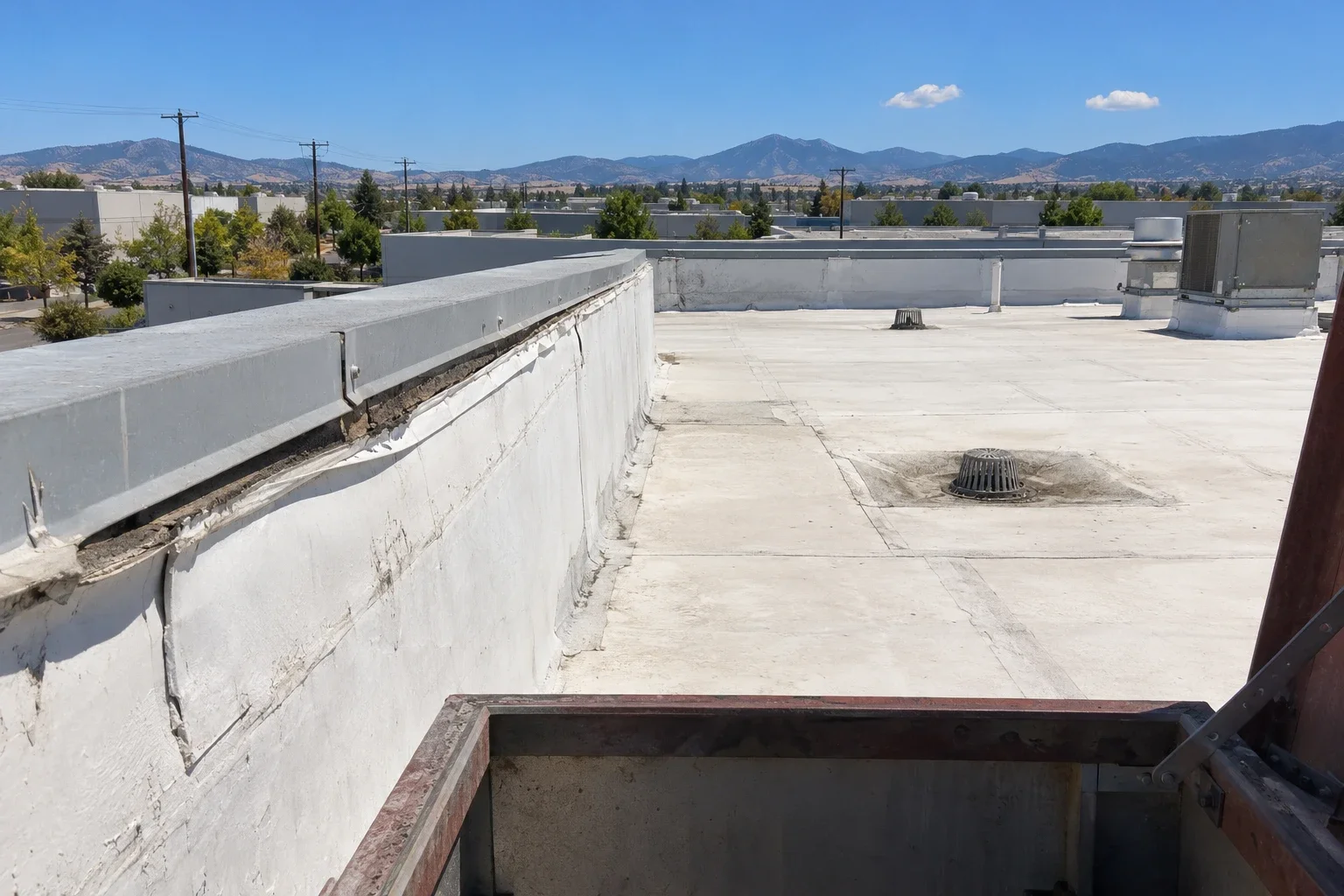
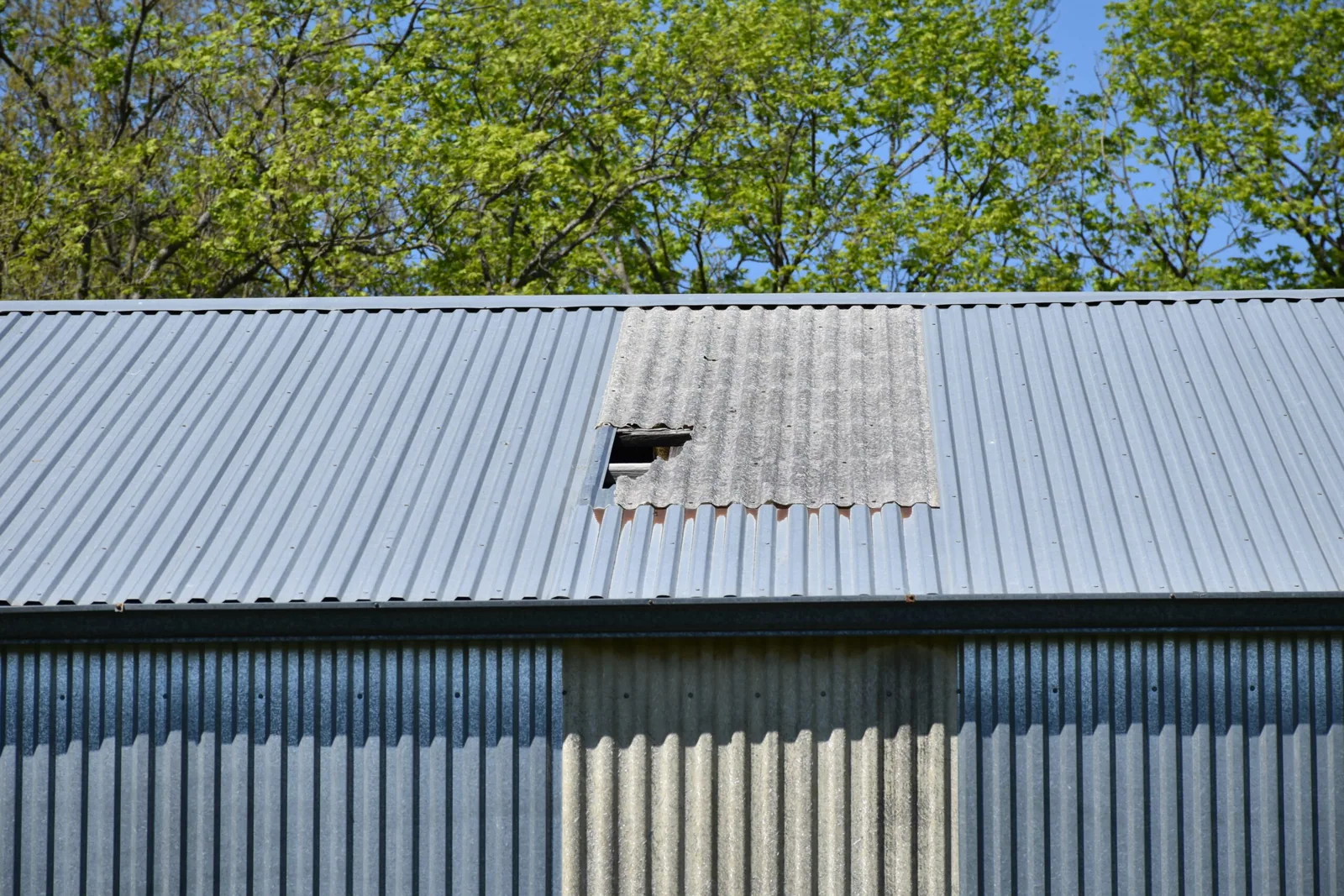
Ember pits are cut out and patched in the membrane's own family, with the area around each pit checked for hidden burn. Scorched or distorted edge metal is replaced instead of straightened, since heat changes metal and the joint will not seal. Edges that fire has lifted are also a wind damage risk until they are reset, so they are secured first. Blistered coating is removed and recoated, or, if the substrate has been damaged, the section is replaced. Insulation that has taken on water or has been charred is removed before the new membrane goes on.
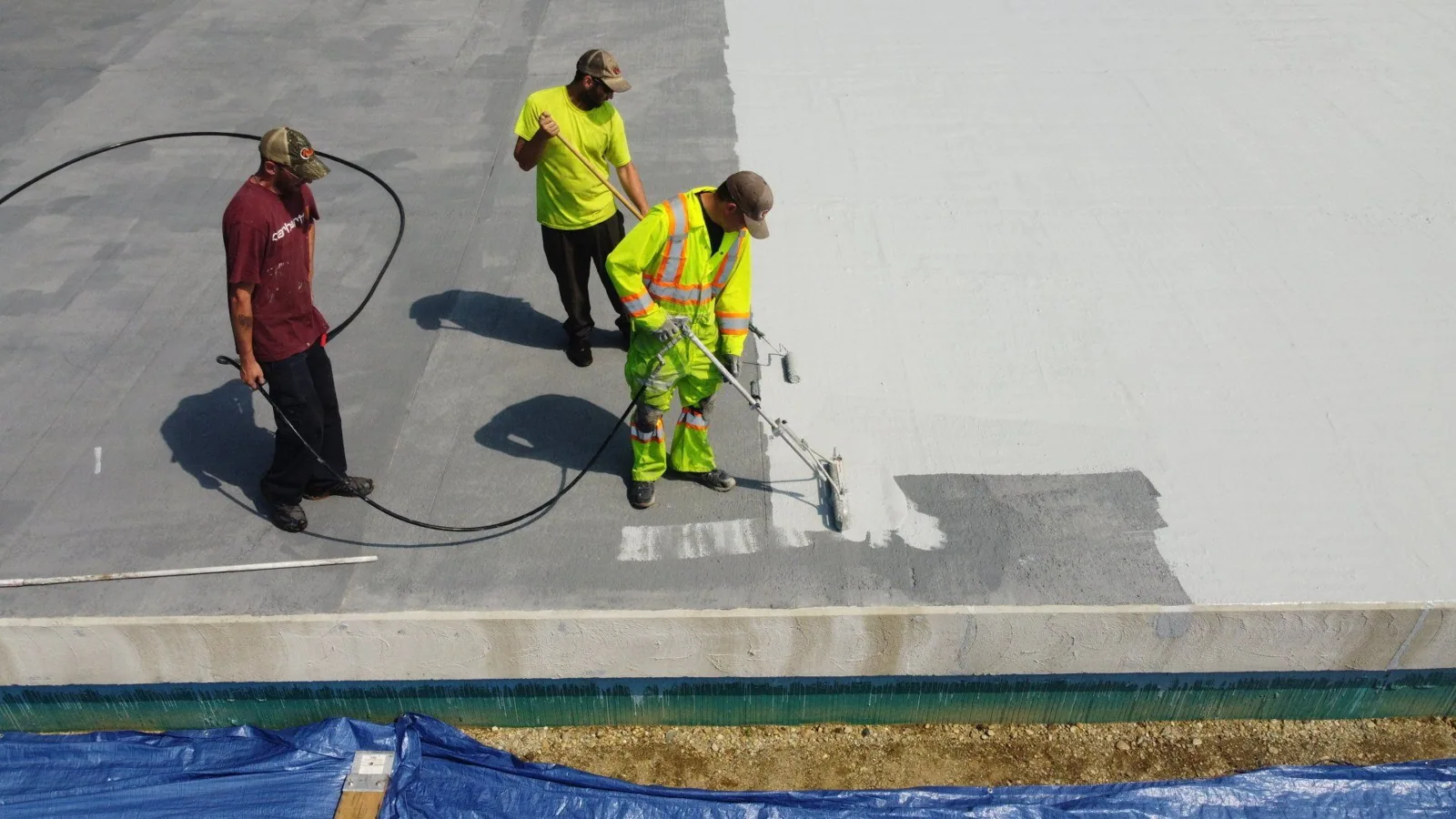
Soot is addressed by washing where the surface allows, and by testing a small area before the whole roof is cleaned. If soot has bonded and reflectance has fallen below what the owner needs, a restoration coating may re-protect the surface. Debris traps are cleared, and drains and gutters are flushed. After repair, the roof is graded again, and the register records the date and the nature of the exposure.
Sequence matters on larger repairs. Interior cleanup, restoration of ceilings and replacement of roof sections all interact, and drying equipment should not run under a roof that is still open. We give the property manager a written status after each stage so that restoration contractors can plan their work.
Records that carriers read
Fire claims turn on documentation, because many effects are subtle. We record the date of exposure, distance and direction from the nearest fire where it is known, the types of damage found and the methods of repair. Our findings are labeled as fire related, heat aging or unclear, and we explain the reasoning.
The same record supports owners who use roof insurance claim assistance and for adjusters or restoration firms who handle many files through insurance and restoration channels. Dated photographs taken before the loss, such as those from maintenance visits, are especially valuable because they show the roof's prior state.
Timing is important to the carrier. Many policies set a period in which damage must be reported, and a roof inspected late loses clarity as soot weathers and ash washes off. An early record, even before repairs are priced, preserves the evidence.
Neighborhoods and corridors touched by the fires
The fires hit specific places. Phoenix lost 561 homes to the Almeda fire and counted about half of them rebuilt and occupied at its last report, while Talent saw roughly a third of the town destroyed, about 100 commercial buildings among them in early counts. Both towns lie along Interstate 5 and Oregon Route 99. We treat each building by its own exposure rather than by a general area, since ember paths are uneven.
Looking ahead, rebuilt and surviving commercial buildings share the same risk. We recommend ember-resistant details: noncombustible cover boards, clean parapet corners, metal edges with tight joints and regular debris clearing, all of which belong in a maintenance program.
Send the address and the date of exposure

Related Roofing Pages
Questions About Fire, Ember and Smoke Damage Roof Repair
How do I know if my roof was affected if the building did not burn?
A close inspection is the only dependable way. Ember pits, heat distortion and soot loading do not show from the ground, and an infrared scan finds water that entered through small holes.
Is soot on a white roof a repair item?
It is a cleaning item first. If washing restores most of the reflectance, no repair is needed. If it does not, a coating is an option to compare with the cost of leaving the roof dark.
Does smoke damage a roof membrane?
Smoke itself is mostly a surface film, though corrosive residues can affect some metals and coatings. The larger effect is on rooftop equipment filters and on reflectance.
Should I wait for the carrier before cleaning the roof?
Photograph first, then clean the debris that blocks drains. Leave pits and damaged sections in place until the adjuster has had the chance to see them, unless water is entering.
How can the roof be made more fire resistant?
Use a noncombustible cover board, keep parapet corners and gutters clear of debris, tighten edge metal and choose membranes with suitable fire ratings. Maintenance matters as much as material.