
Commercial Roofing in Wimer, OR
Commercial roofing in Wimer, OR near Evans Creek: recover or tear-off decisions, insulation and attachment under the new state code, and smoke-season upkeep.

Overview
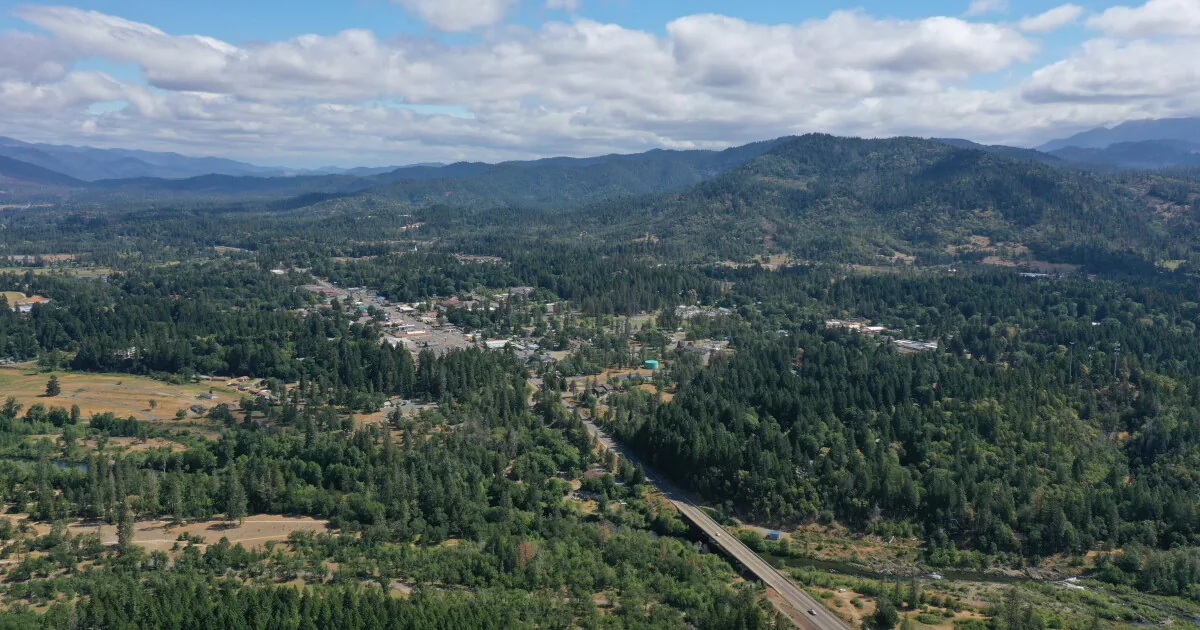
Wimer, OR is a census-designated place of 690 residents on Evans Creek, north of the city of Rogue River, at about 1,194 feet. For a commercial owner there, the roofing question that matters most in the next few years is not a weather question. It is a code question. Oregon's 2025 Structural Specialty Code is based on the 2024 International Building Code, took effect October 1, 2025 and became mandatory April 1, 2026, so a reroof scoped now is written against a new edition, with consequences for insulation, attachment and the details at edges.
The weather question is still there. Medford's record shows 61 afternoons above 90 F, roughly 11 above 100 F and a 115 F high, with 18.4 inches of precipitation in a typical year, and that sun does the aging. We join the two: a condition grade that says what the heat has done to the roof, and a scope that says what a replacement or recover must include to meet the code that governs it.
Reading the Code Edition Before the Scope
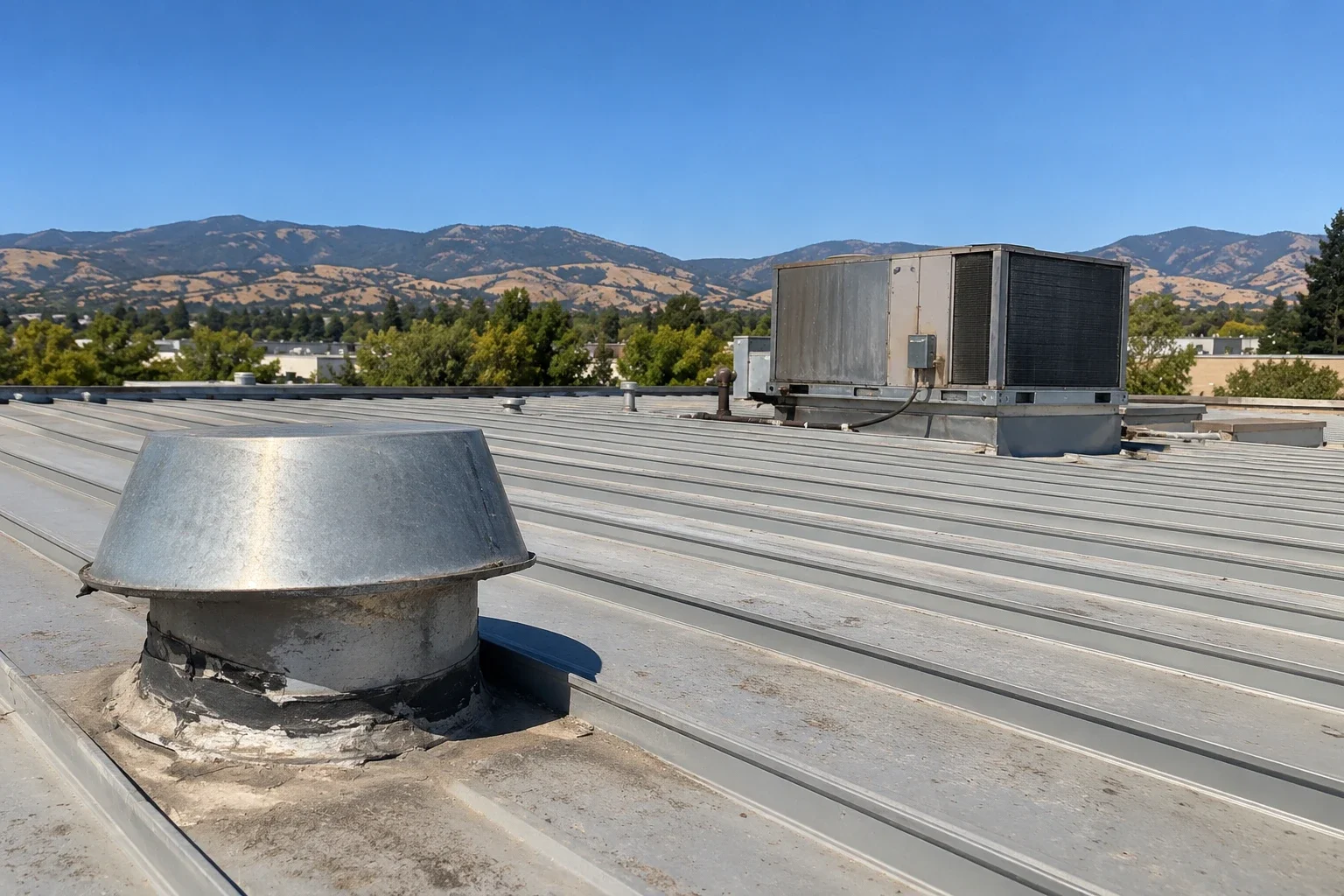
A reroof is not a repair, and code treats it differently. When an owner removes the covering and replaces it, the work typically triggers current requirements for insulation, attachment and sometimes drainage, and the building department reviews them. The edition in force when the permit is issued is the one that applies, so the date of the application matters. We check the requirements for the specific job before pricing so that nothing appears as a change order after the roof is open.
For an owner, the clean way to think about it is that the new code can add line items. More insulation, a stronger attachment pattern or upgraded edge details each add cost, and each is visible in the scope when we show it. An owner who learns about those items at bid time can budget for them. An owner who learns about them on the roof pays for them at a premium.
Recover or Tear-Off
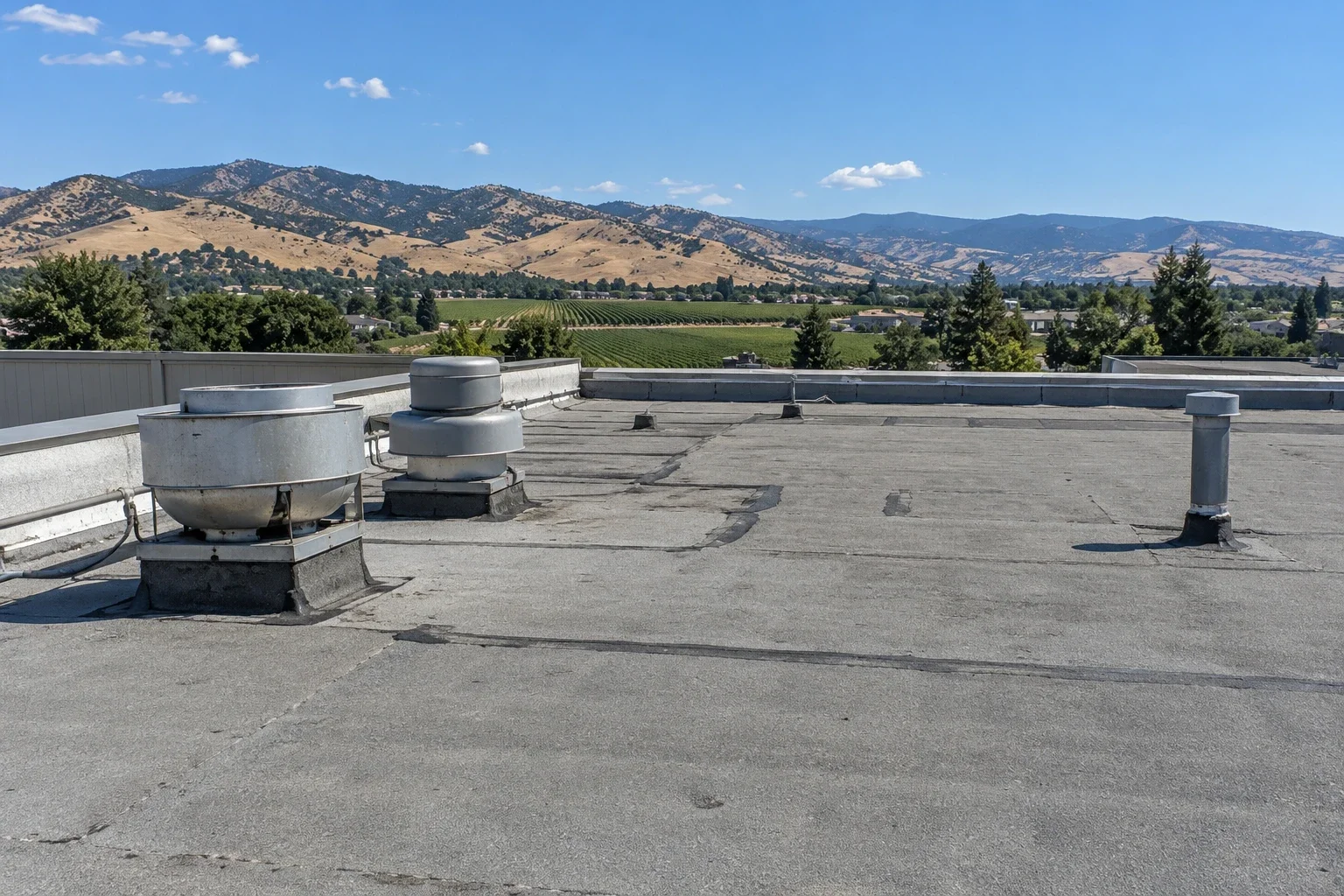
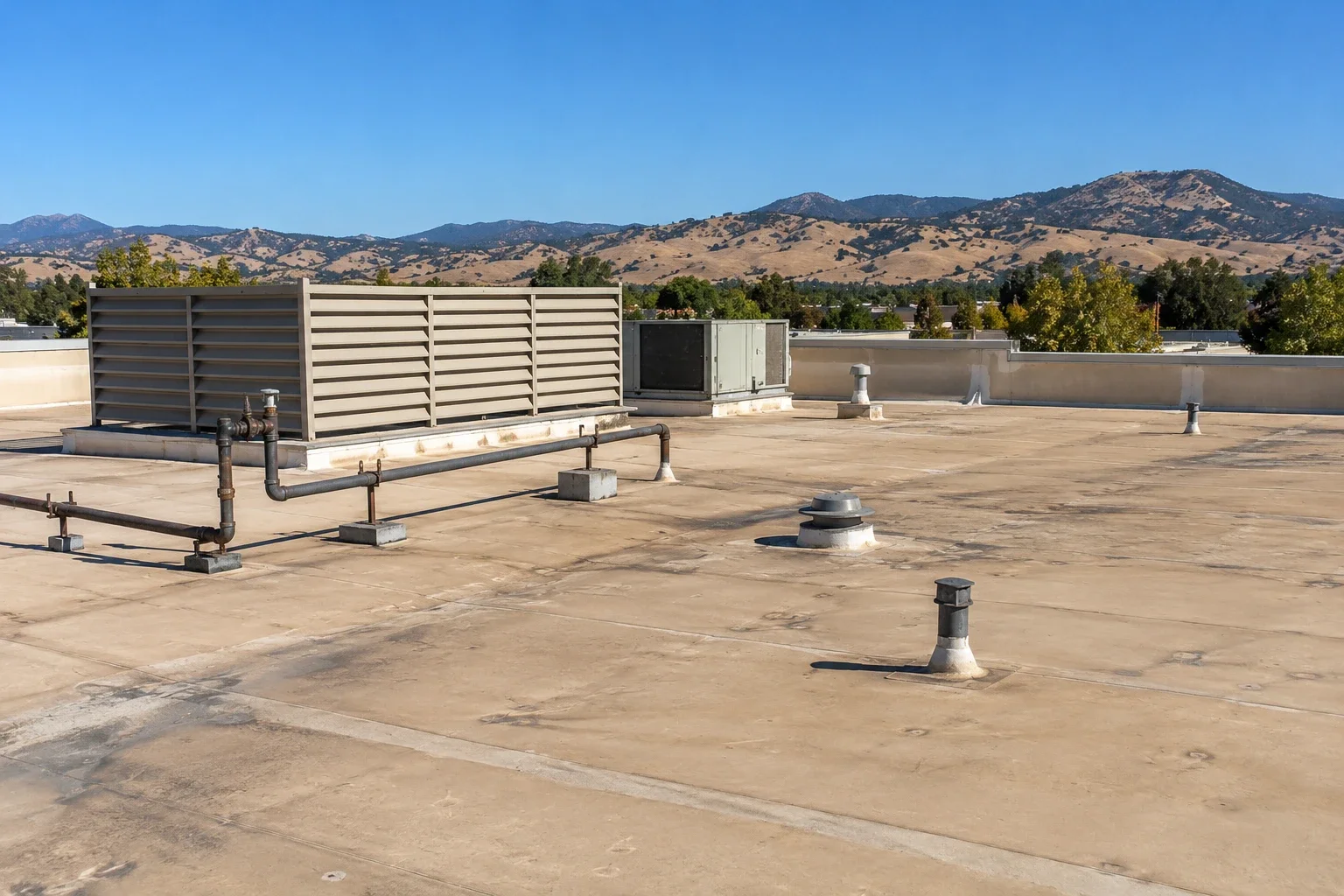
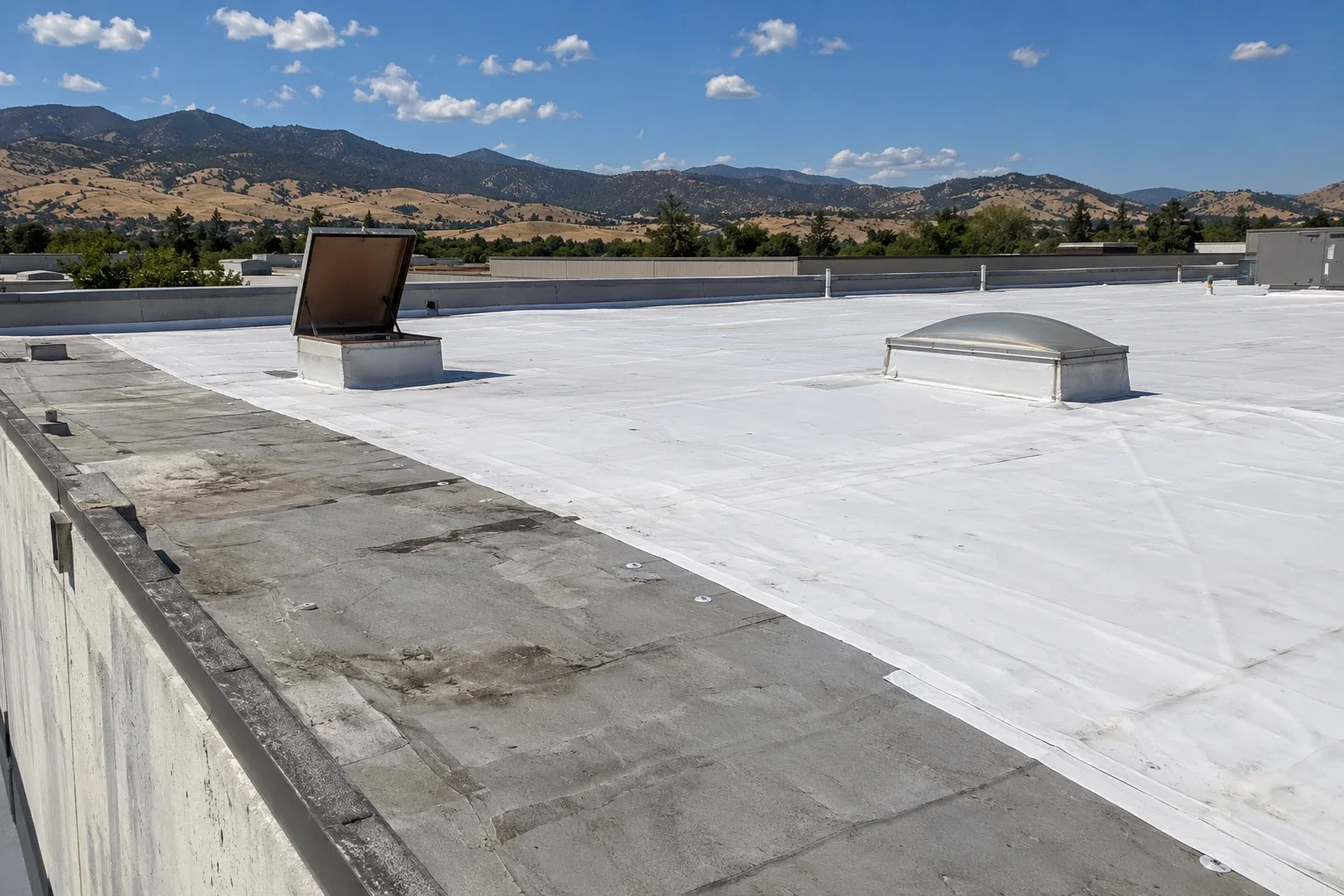
The first decision on any aging low-slope roof is whether to remove it or build over it. A recover system keeps the existing assembly in place, adds a new membrane over a cover board and avoids disposal and exposure of the building. It works when the insulation is dry, the deck is sound and the structure can carry the added weight. It fails when moisture is trapped in the old layers, because the new roof inherits the problem.
A tear-off costs more and takes longer, but it gives access to the deck and lets the owner correct hidden problems. It also resets the code baseline. Which path the roof supports is settled by moisture mapping and core cuts, not by preference, and the report states the finding that drove the recommendation.
Cost sits on both sides of the choice. A recover saves disposal and keeps the building enclosed, but it adds weight and leaves the old layers in place for good. A tear-off pays for disposal and exposure, then returns a clean deck and a roof whose history starts over. For an owner planning to hold the building a long time, the second often wins on carrying cost. For an owner planning to sell within a few years, the first may satisfy a buyer's engineer at a lower price.
Insulation and Cover Board
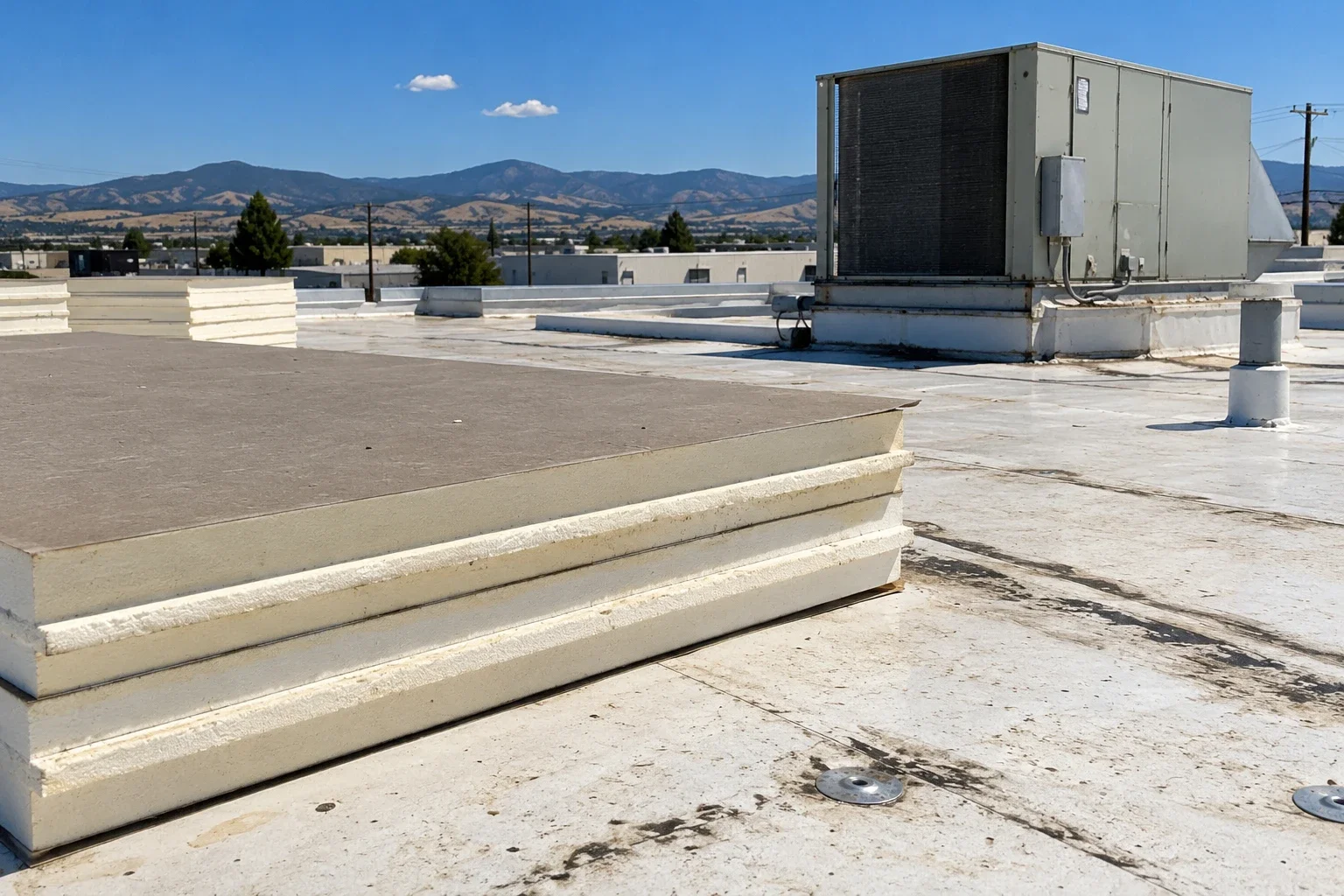
Insulation is where a reroof earns or loses its performance. The board must be dry, correctly sized for the building's needs and fastened or adhered according to the system's requirements. Insulation and cover board choices affect thermal performance, fire resistance, wind uplift and the way the membrane bonds. A cover board adds a durable surface under the membrane and protects the insulation from foot traffic and hail, which matters on roofs with rooftop equipment that is serviced regularly.
Thickness changes more than energy performance. A thicker assembly raises the roof edge, which affects flashing heights, curb details and the drainage path. We reconcile those dimensions on the drawings before ordering material, since a few inches at the edge can change the whole flashing scheme.
Attachment, Edges and Uplift
Wind lifts roofs from the edges and corners first, and code sets higher attachment requirements in those zones. Edge metal that is thin, loosely fastened or poorly sealed is the usual starting point for damage. We review the wind damage history of the roof, inspect existing edge details and specify the attachment pattern the system and the code call for. On fire-prone ground the same edges also matter for embers, so tight metal serves two purposes.
The attachment decision goes into the report with the rationale. If an owner chooses a lighter pattern than we recommend, the choice is documented, and so is the reason. A clean paper trail protects everyone later.
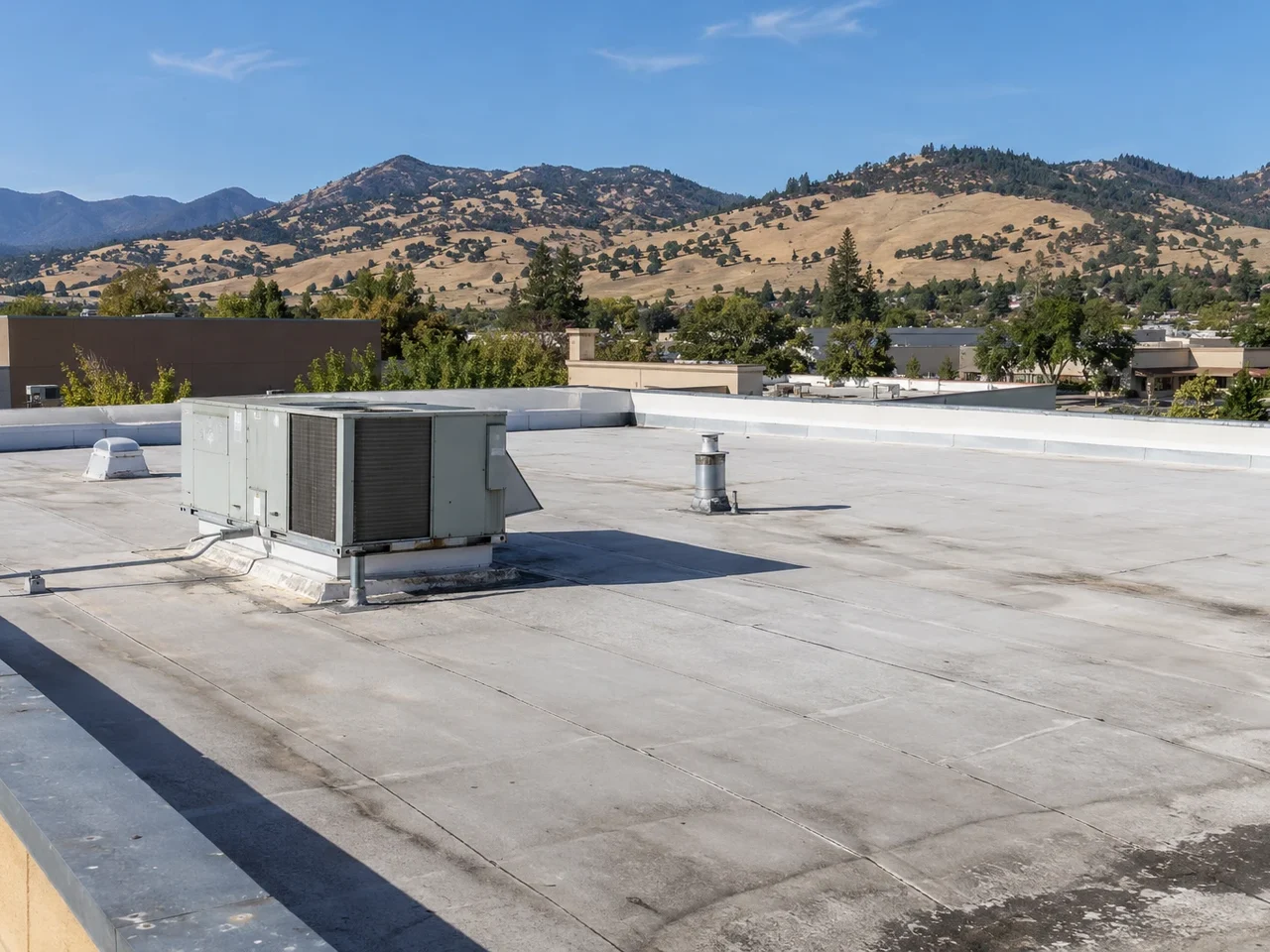
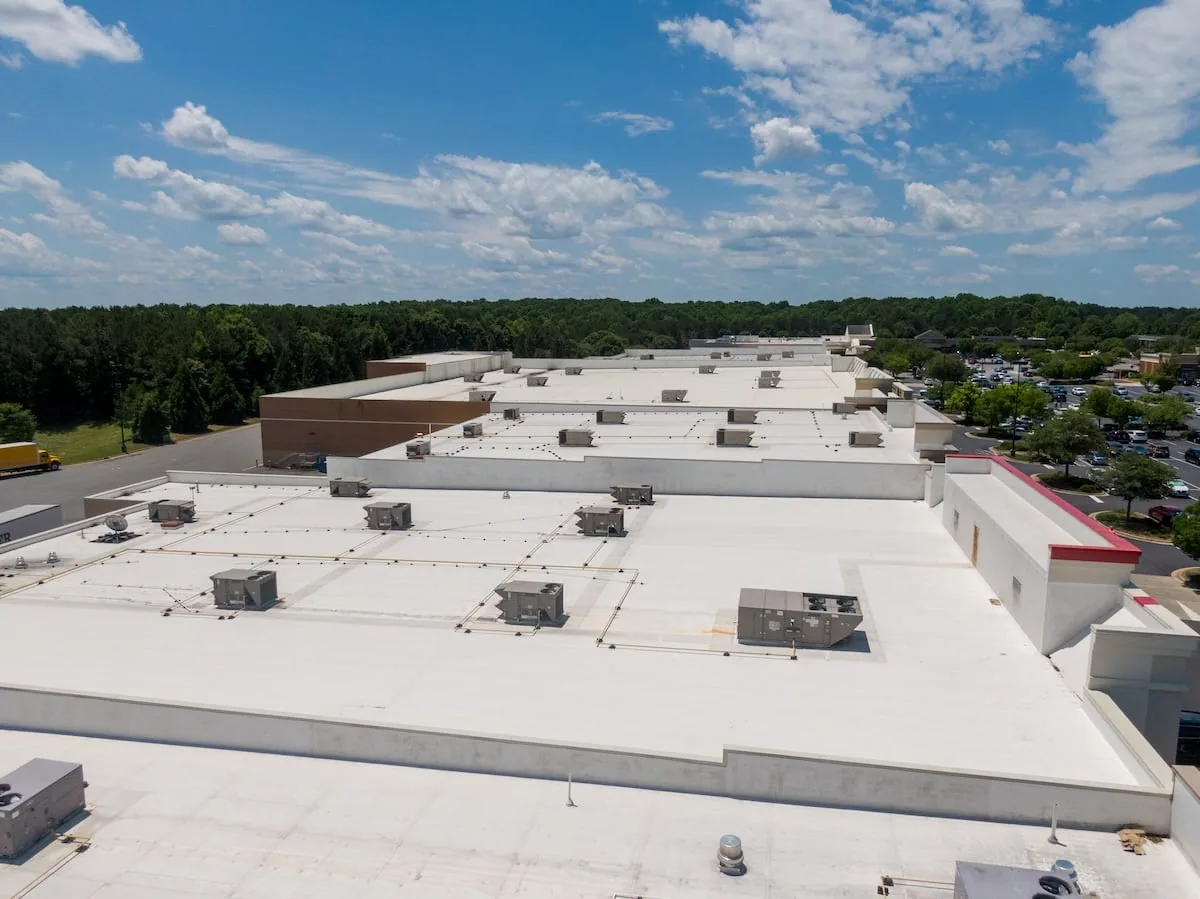
Penetrations and curbs follow the same logic. A rooftop unit that sits on a curb needs the curb flashed to the new roof height, and a unit that was added after the original roof needs its supports checked for load and sealing. We list every curb, vent and pipe, mark the ones that need work and price them individually, since a roof with many penetrations behaves like a different building from one with few.
Heat, Reflectance and Cool-Roof Options
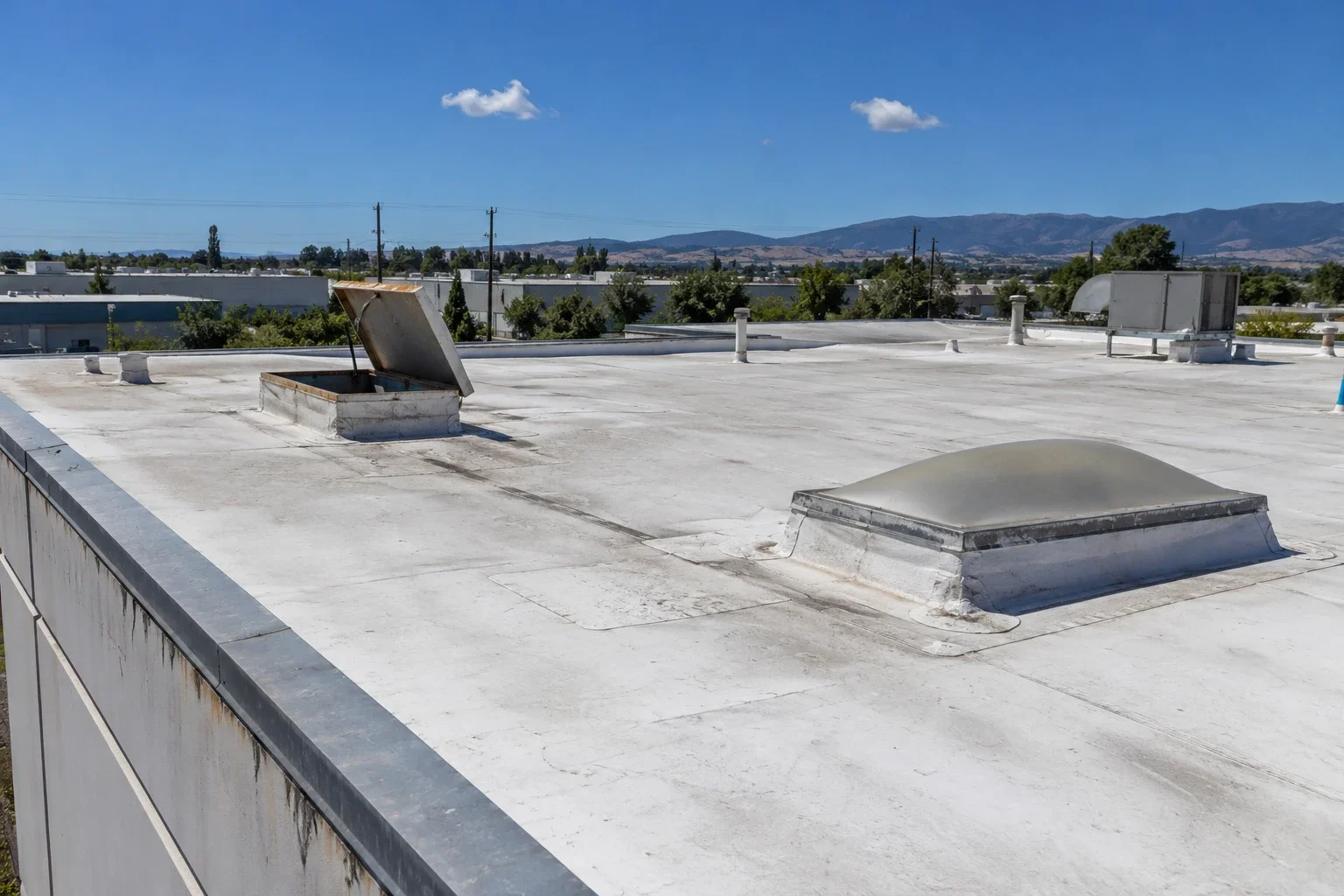
A hot valley rewards light surfaces. A white or reflective membrane keeps the roof surface cooler, reduces thermal cycling at seams and lowers cooling load in the building below. A cool roof installation pairs the membrane choice with insulation and cover board so the whole assembly performs. Reflectance falls as dust and soot accumulate, so the roof needs periodic cleaning, and the register records when it was last done.
Smoke seasons make that cleaning more than cosmetic. Smoke filled 26 days in Medford in 2021, a year after fire destroyed about 2,600 Jackson County homes. Soot raises the temperature of a light surface, and a clean surface at the start of summer is a cheap way to protect a reserve.
Scheduling With Neighboring Places
Wimer lies north of Rogue River, and a visit can share a route with it or with Grants Pass and Gold Hill. A first visit grades the roof, and owners who move to a full commercial roof replacement receive a scope with the code items listed separately.
The first visit is short and its output is a document. It carries the grade for each roof section, the photographs, the moisture findings if a survey was run, a ranked action list and the code items that a reroof would add. An owner who reads it can decide in one sitting whether the roof needs a repair this spring, a coating next year or a funded replacement in the reserve schedule, and can hand the same document to a lender or insurer without rewriting it. Where a building sits on a creek-side parcel, the visit also notes drainage at the base of walls and downspout discharge, since water that leaves the roof cleanly but pools against the foundation becomes a different kind of problem.
Send the building list, roof ages and leak tickets

Related Roofing Pages
Questions About Wimer
Does a repair trigger the new code?
Generally a repair does not, while a reroof usually does. We confirm with the building department for the specific scope before pricing.
Which comes first, the permit or the order?
The permit. The edition in force at issuance governs the work, and the material order follows approval.
Will the code make my roof cost more?
It can add insulation, attachment or edge items. We list them as separate lines so the owner sees what the code adds.
Who submits the permit application?
The owner or the contractor on the owner's behalf. We prepare the drawings and the scope pages the building department asks for, and the owner signs.
How long does a reroof take?
Area, access and phasing set the duration. The written schedule gives a start, a finish and the weather days built in.