Commercial Roofing in Tolo, OR
Commercial roofing in Tolo, OR north of Interstate 5: grading roofs with no records, emergency dry-in and heat, fog and smoke-season upkeep.
Overview
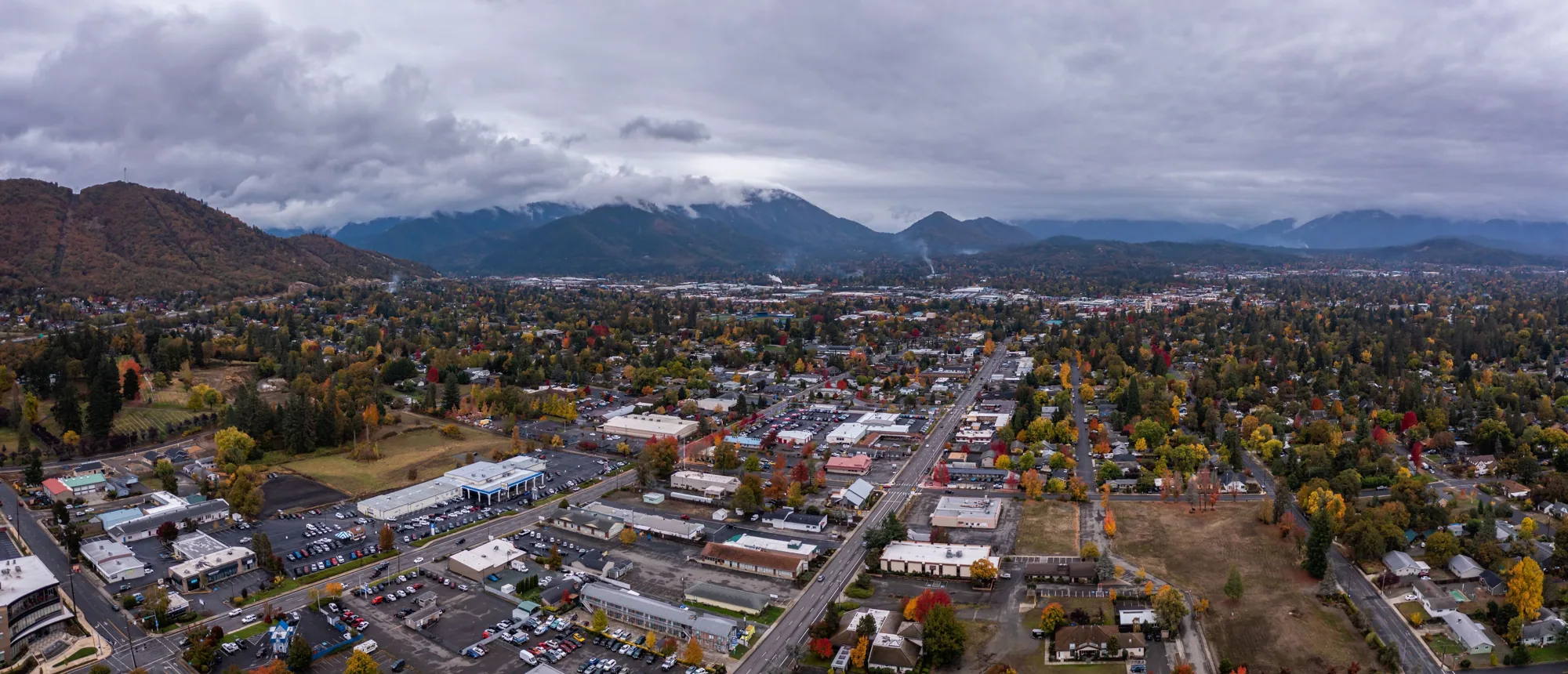
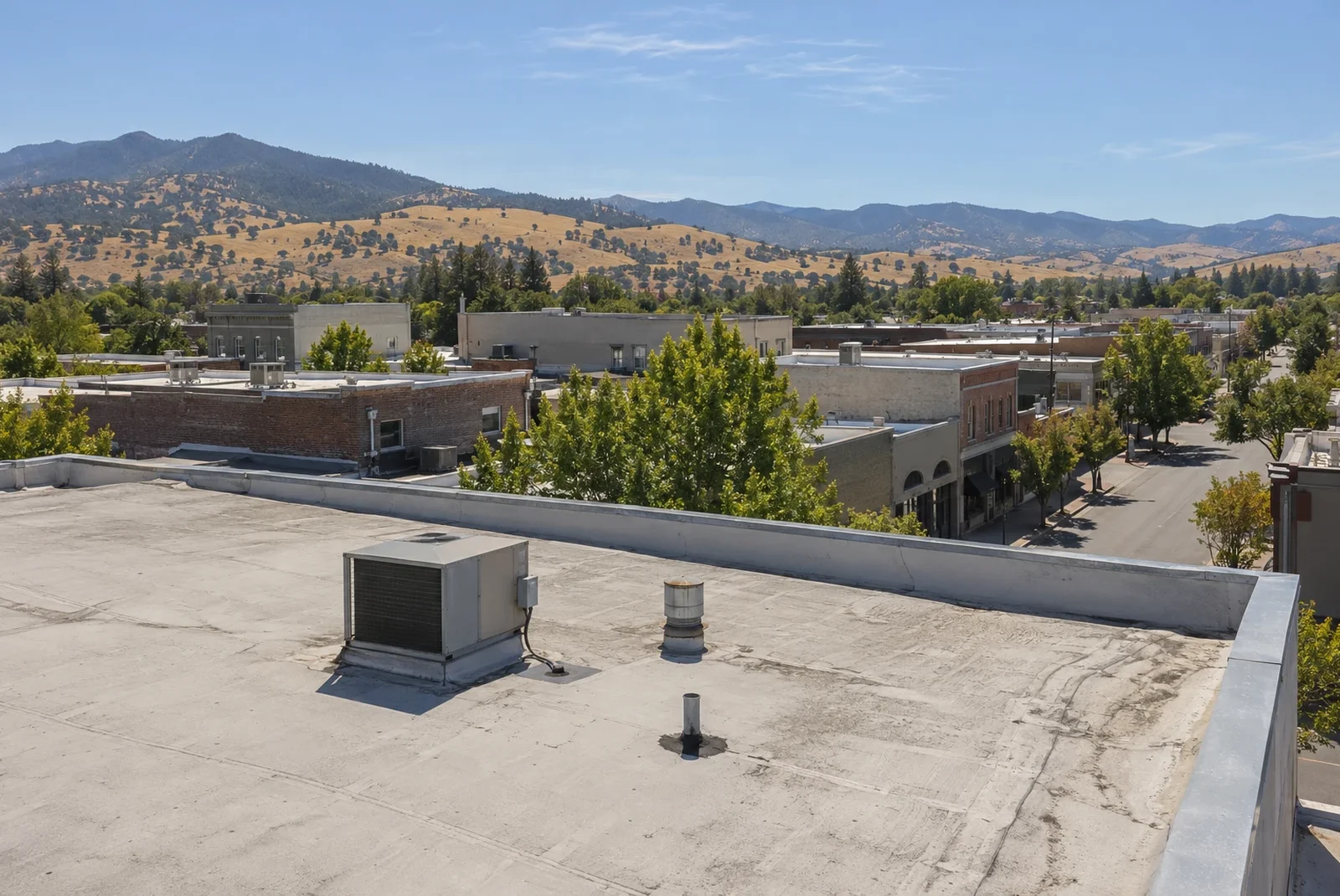
The roofs in Tolo, OR are hard to read from a map. The community lies north of Interstate 5 between Central Point and Gold Hill, south of Sams Valley, at about 1,198 feet, and little is known in advance about the commercial buildings that stand there. That is not a problem for a roofer, since a roof tells its own story once someone is standing on it. What it means for an owner is that the first job is often to establish what is actually up there: the system, the age range, the repairs it has absorbed and the moisture it may be holding.
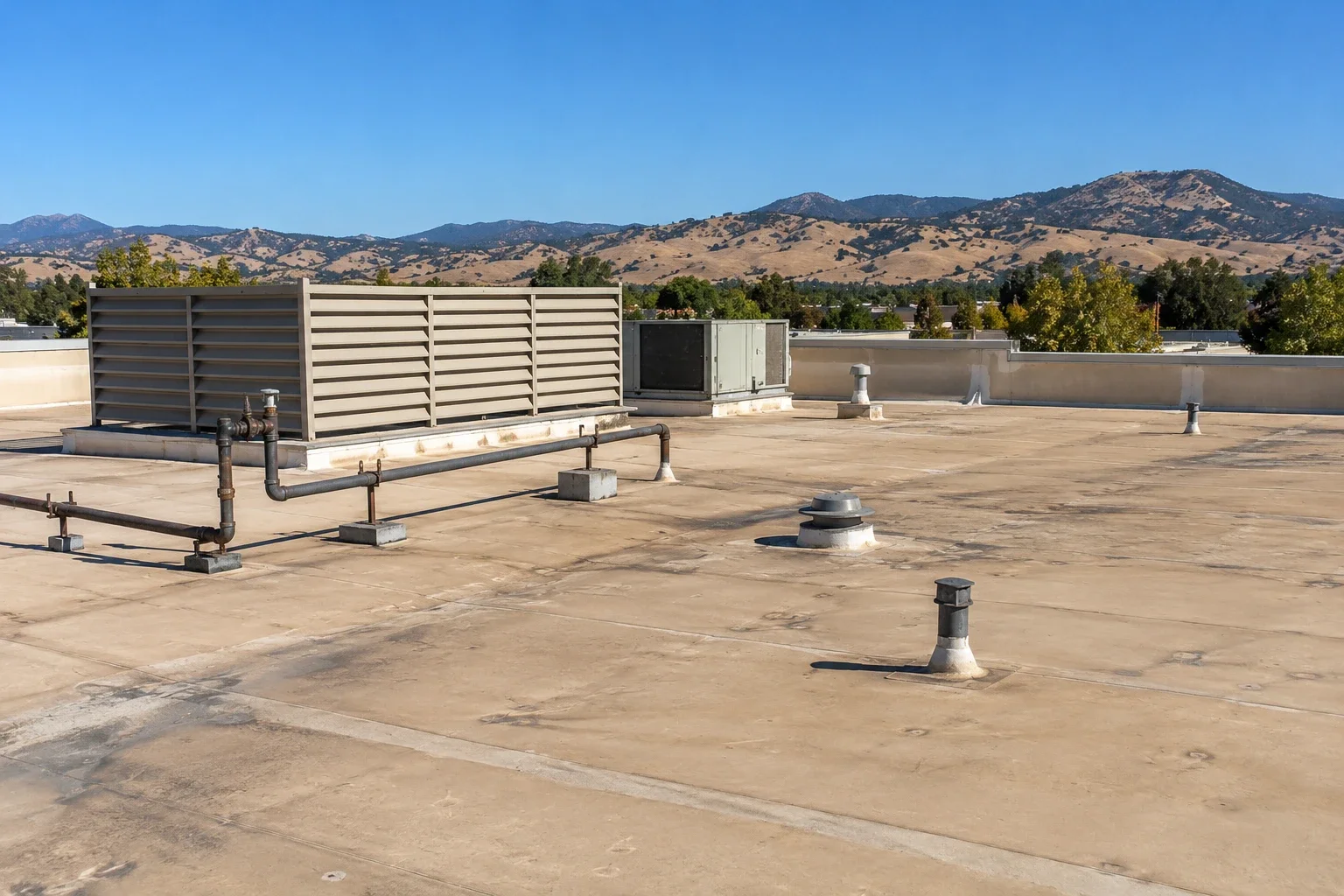
The valley around Tolo follows the climate Medford records: 61 afternoons over 90 F and 11 over 100 F, a 115 F high, only 18.4 inches of precipitation and about 64 freezing mornings a year. Sun and heat do most of the aging. We grade each roof on what that exposure has done, give the owner a remaining-service-life range and set out the repair, coating and replacement options with the cost drivers named.
The Roof Nobody Has Records For
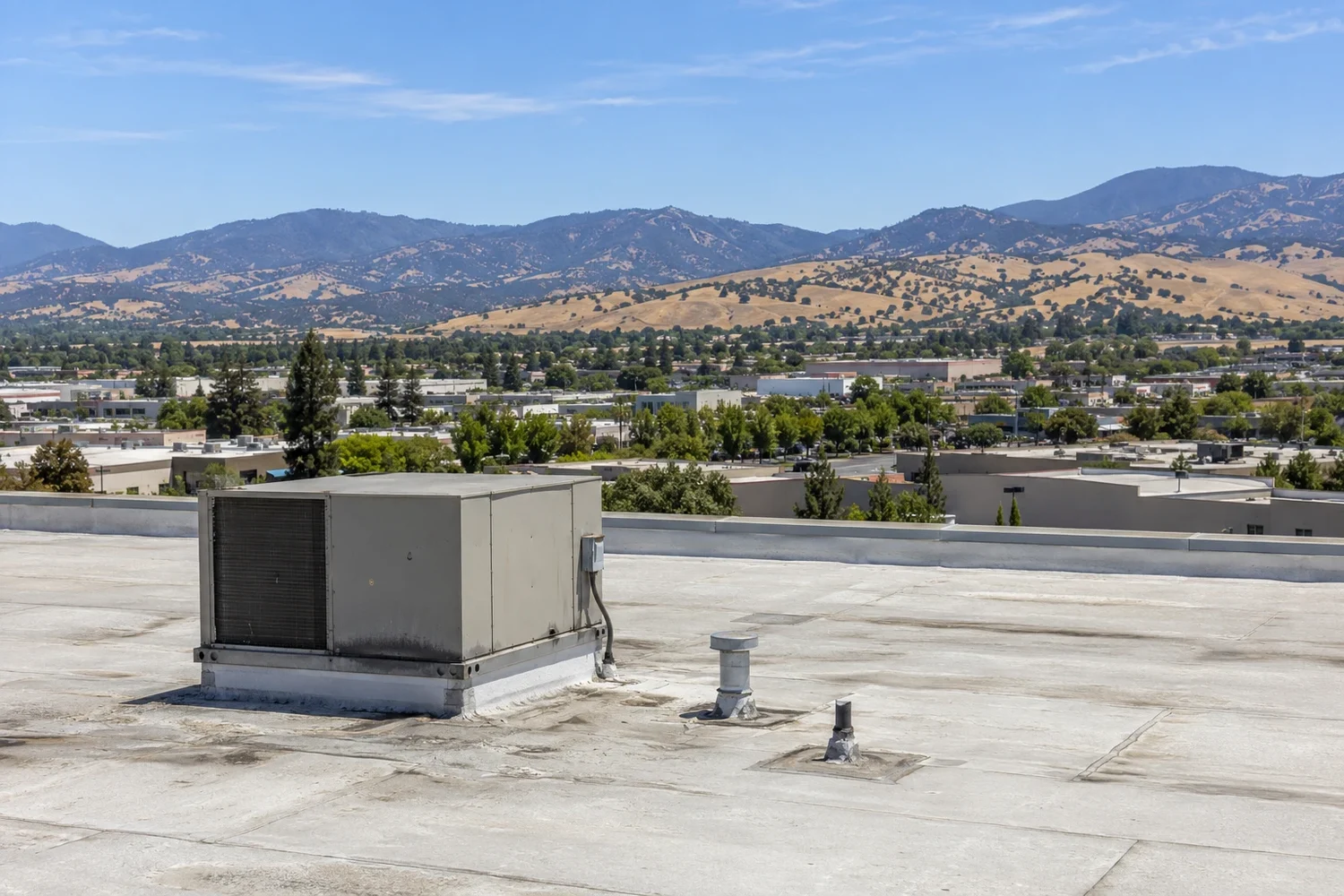
Many outlying commercial buildings change hands with no roofing paperwork: no installation record, no warranty, no repair invoices. A buyer or owner in that position holds a roof of unknown age under an unknown layer of patches. We start by building the record from the roof itself. Core cuts show the layers and their condition. Lap details and flashing styles place the system within an installation era. Fastener types and deck conditions suggest what the original contractor used.
The result is a written estimate with a stated range, not a claim of precision. A report that says a membrane is probably between a certain number of years old, with the evidence listed, is more useful to a lender than a guess. When paperwork does turn up, the register is updated and the range narrows.
Reading Age and Repairs From the Surface
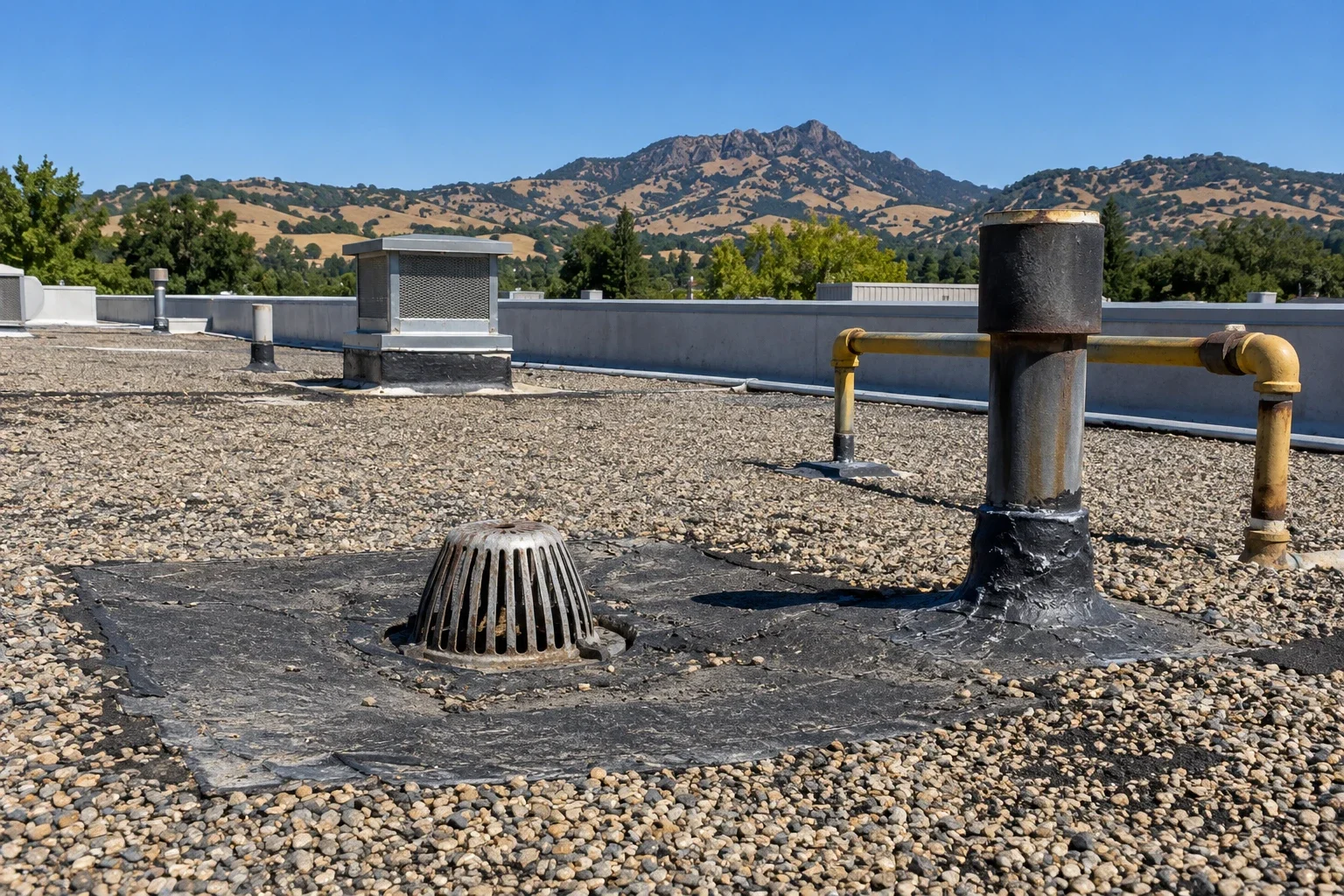
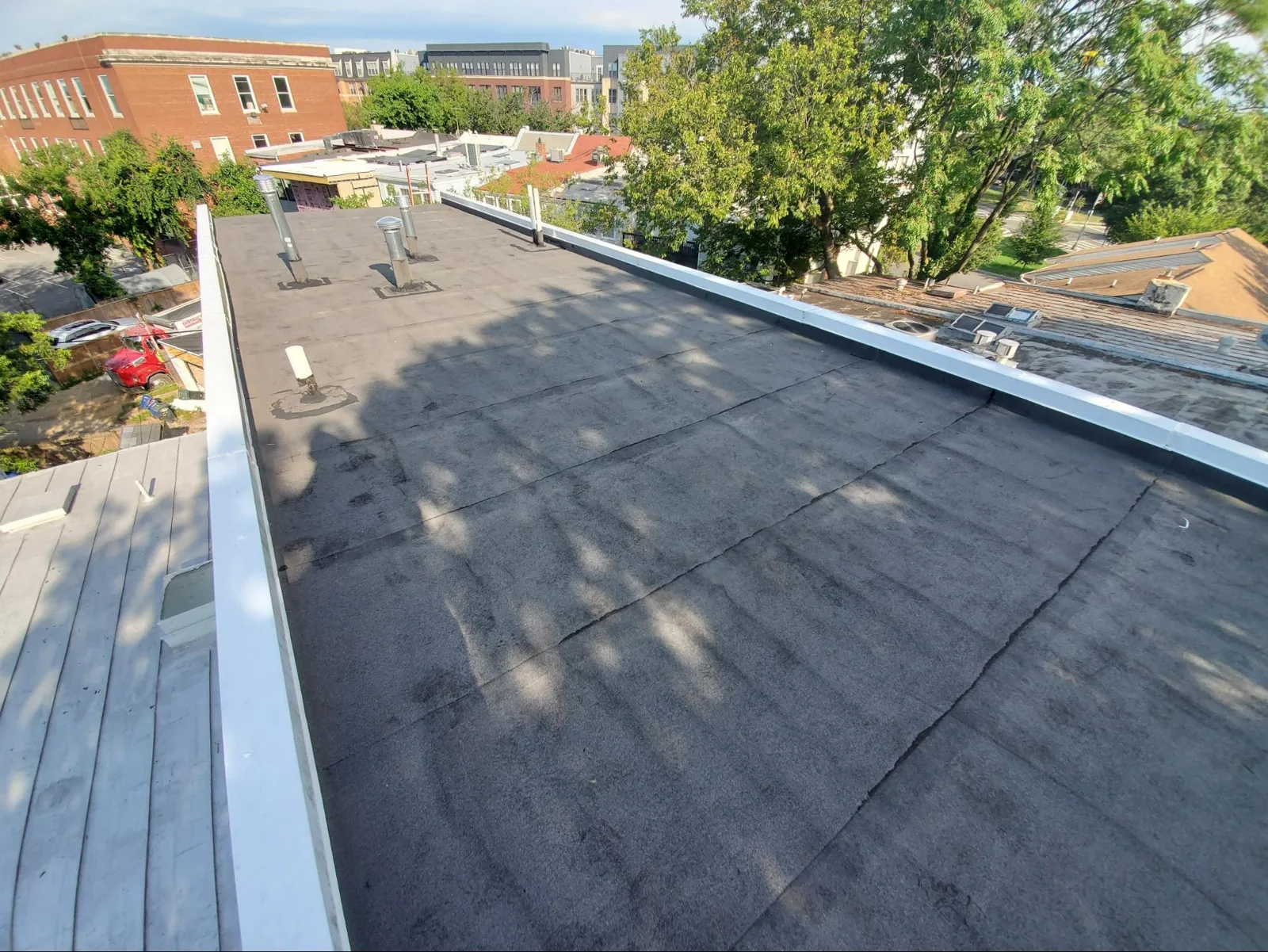
Patches tell a story. A roof with one patch near a curb has a local problem. A roof with a dozen patches spread across the field has a membrane near the end of its life. We map each patch, note the material used and look for signs that earlier repairs were made over saturated insulation, since a patch over trapped moisture lasts only until the next hot week. Layers of old coating, if present, also show how many times the owner chose to restore instead of replace.
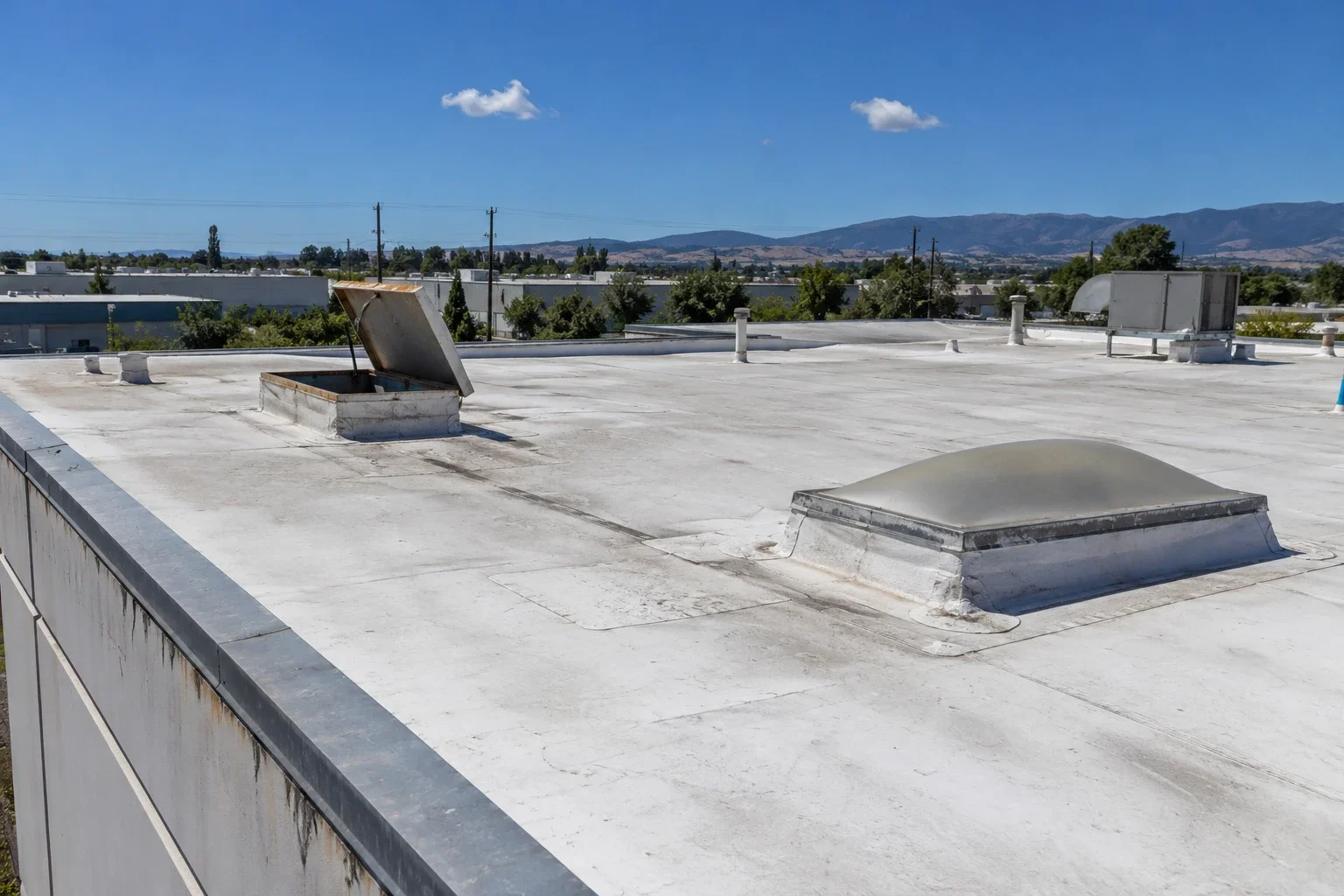
Edges and penetrations come next. Edge metal that has pulled loose, vent flashings that have cracked at the collar and curbs with failed sealant are the details through which water enters in a dry climate. They are also the details that a buyer's engineer will find in a day, so owners do well to find them first.
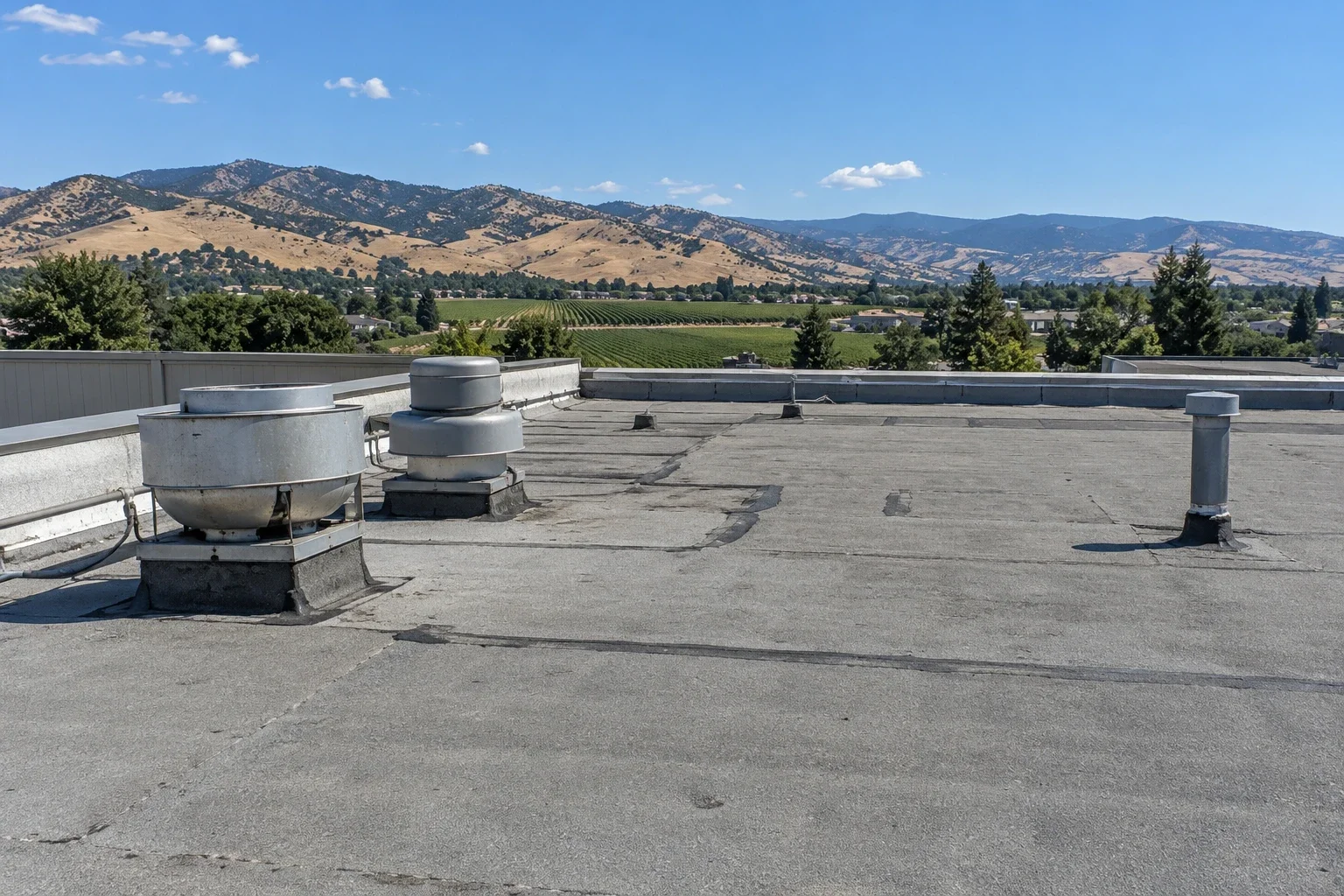
Emergency Response to a Remote Roof
A roof away from town needs a different emergency plan. Emergency response runs around the clock, all week, holidays included, and a call about an opening or a sudden leak in Tolo starts with a few questions: what the roof is made of, where the water is entering, whether the building holds stock or equipment that cannot get wet. A crew arriving at an unfamiliar site needs those answers before it leaves the yard.
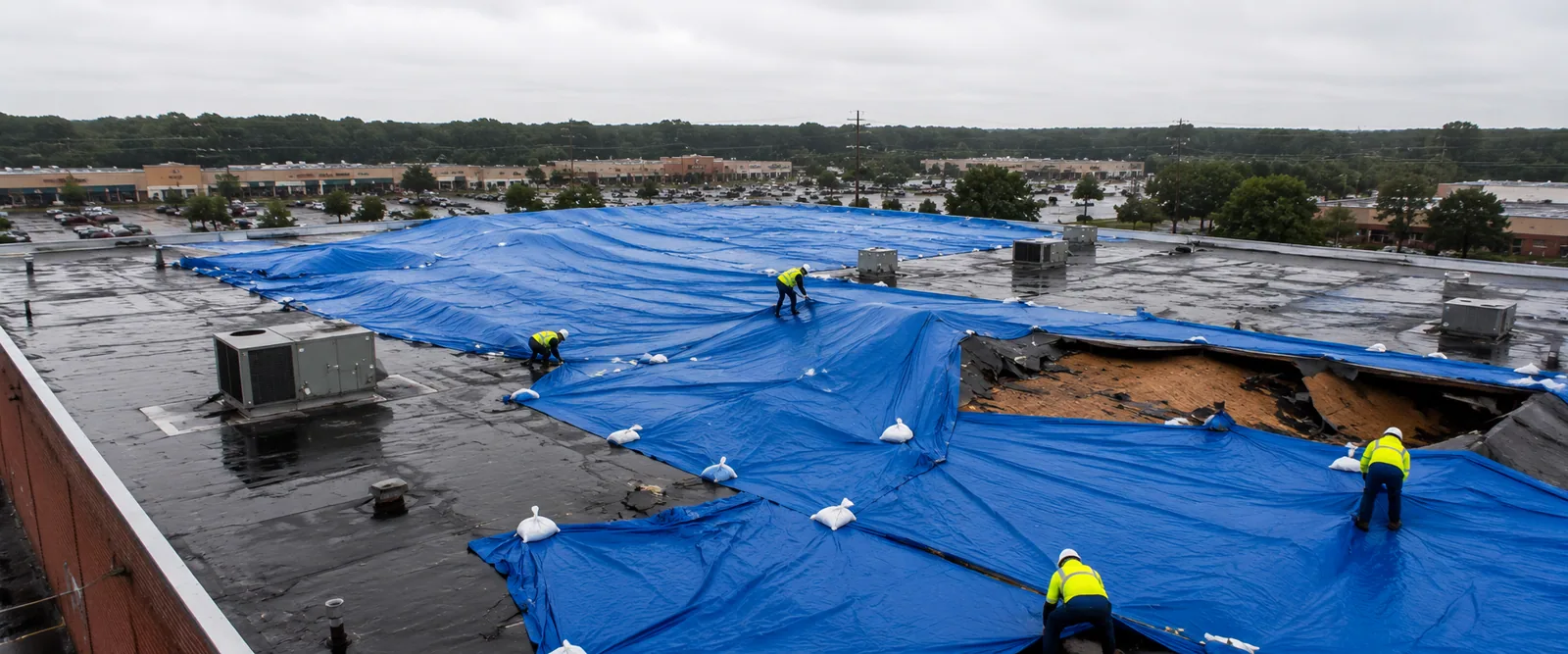
The first goal is to stop water, with tarps, temporary patches or a quick seal at the failed detail. The second is to document the damage with photographs, which supports the owner's insurance and the later repair. Emergency roof repair stops the water and protects the contents. A planned leak repair finds the cause and fixes it for good, and the two are priced as separate lines so a night call never hides inside a larger scope.
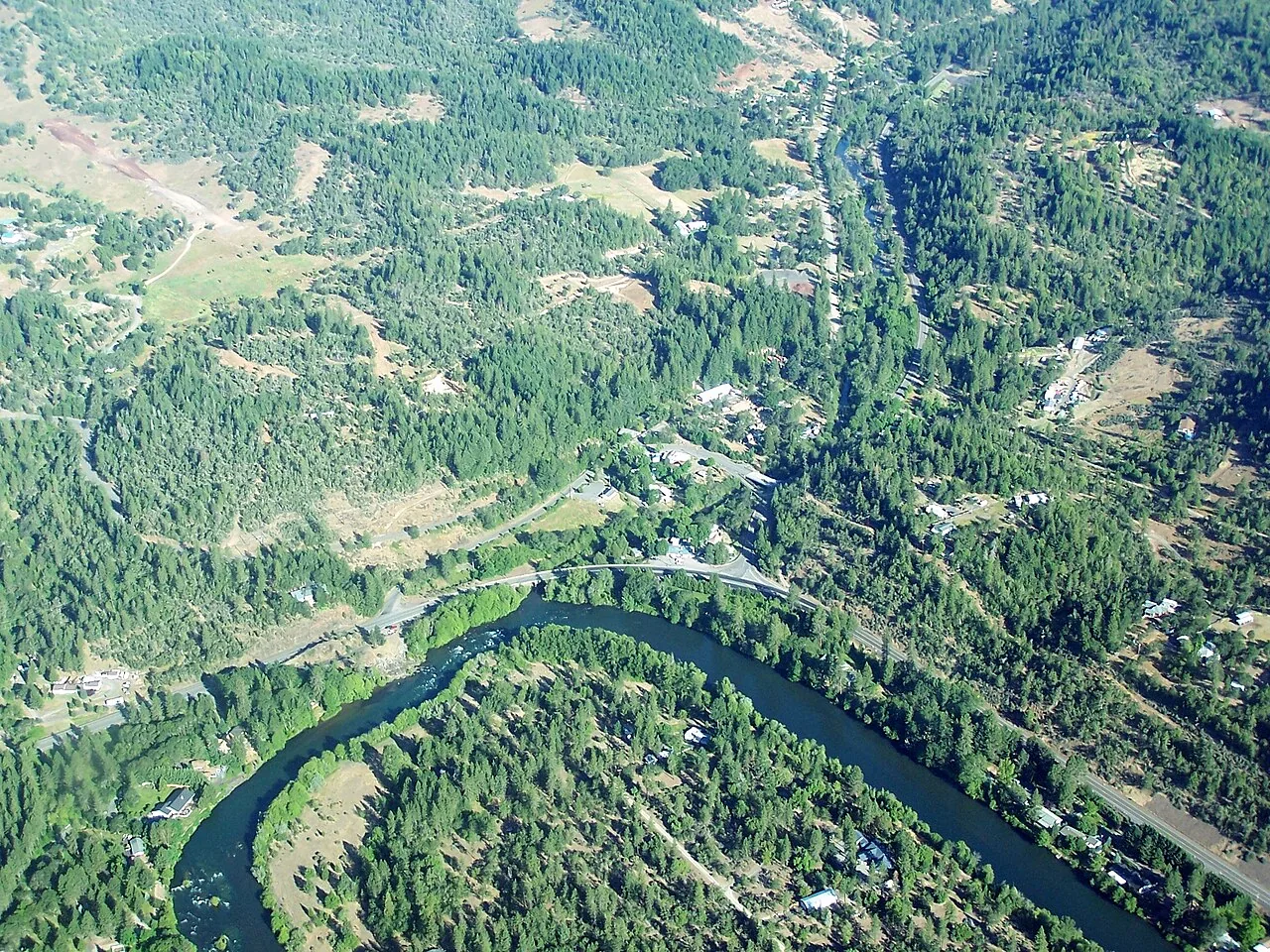
Winter Inversion Weeks and Condensation
The valley's other season is winter. Medford sees about 64 freezing mornings a year and extended temperature inversions that bring fog and poor air quality for days at a time. Fog does not drive rain into a roof, but it does leave moisture on surfaces, and on a roof with failing seams it finds the gaps. Cold mornings also stress sealants and brittle membranes, which crack where they were already tired from summer.
Condensation under a roof is a separate problem, and it appears in buildings with poor ventilation or insulation gaps. We check for it when an owner reports drips in cold weather without a clear leak path. The answer may be a ventilation fix and not a roof repair, and it is better to know that before ordering materials.
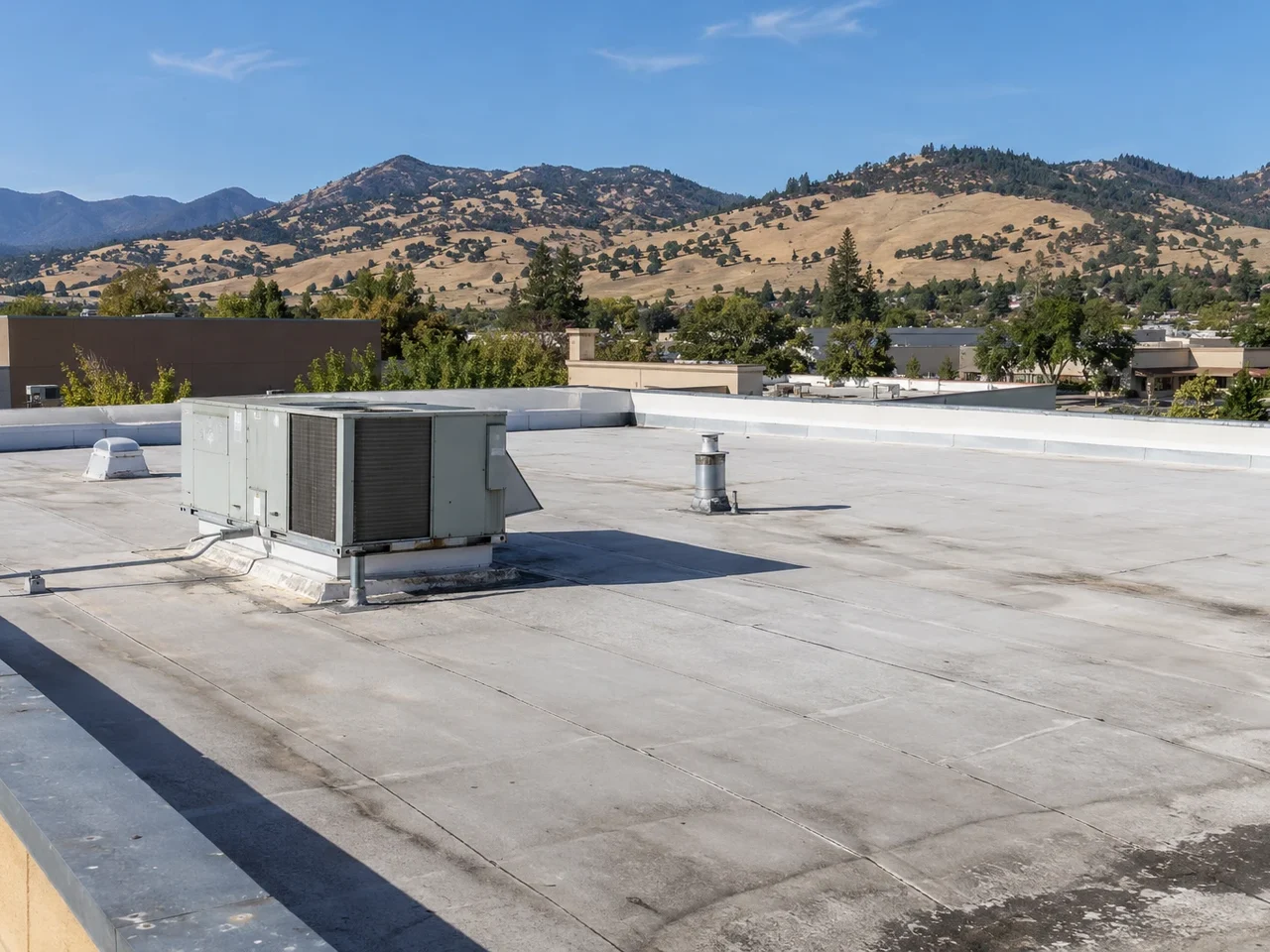
Heat, Seams and Sealants
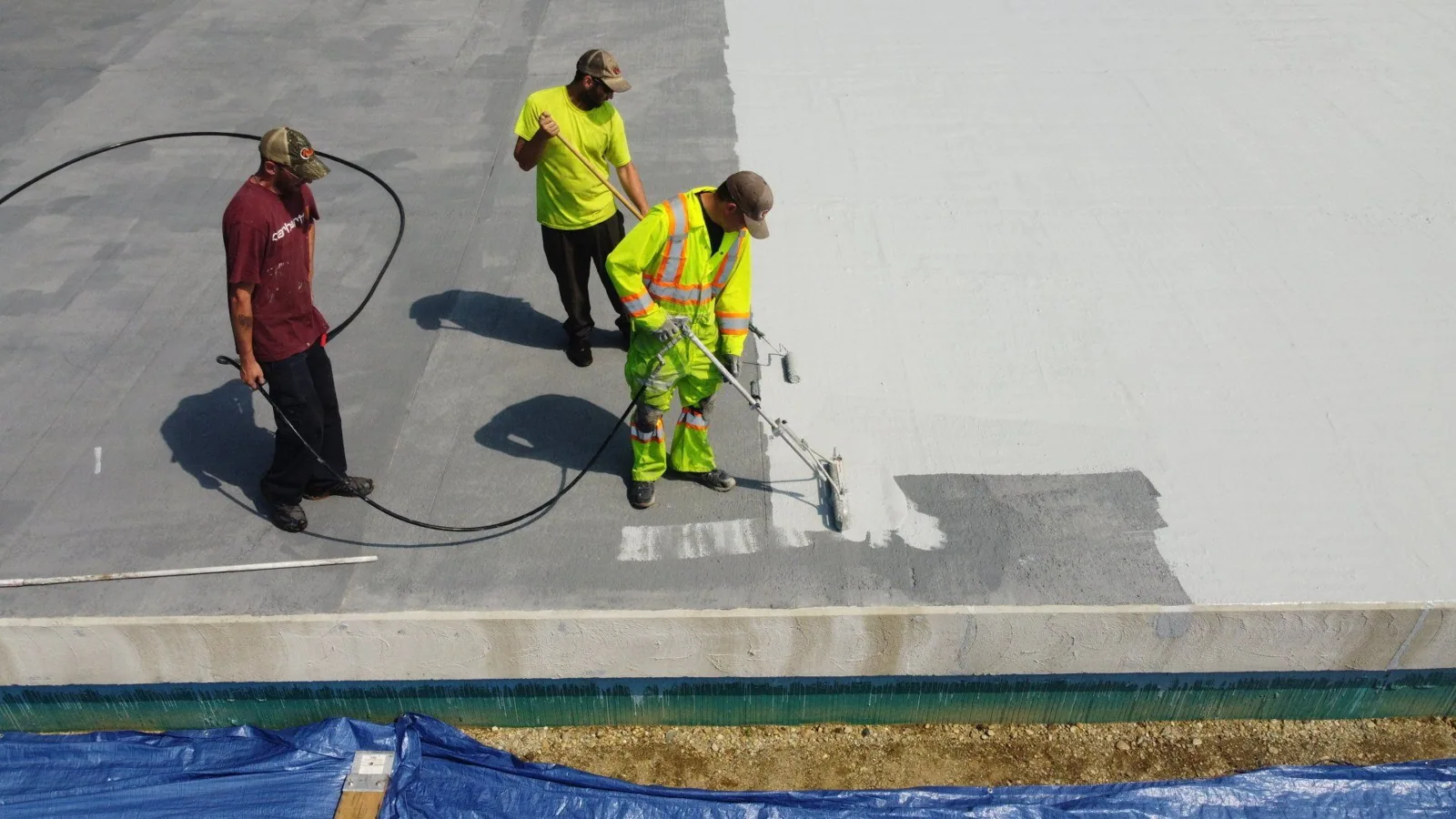
Summer does the structural damage. Hot membrane expands, cool nights pull it back and after enough cycles a lap that looked tight at installation shows a hairline gap. Sealants at flashings and penetrations harden and split. A dark surface runs hotter than a light one, and a light one loses reflectance as dust and soot settle on it. Our restoration coatings reset the surface on roofs with dry insulation and sound seams, and modified bitumen systems offer a layered alternative where foot traffic and equipment service are heavy.
The point of grading is to pick the right path. A coating on the wrong roof wastes money, and a replacement on the right roof is not a waste at all. The grade sets the path.
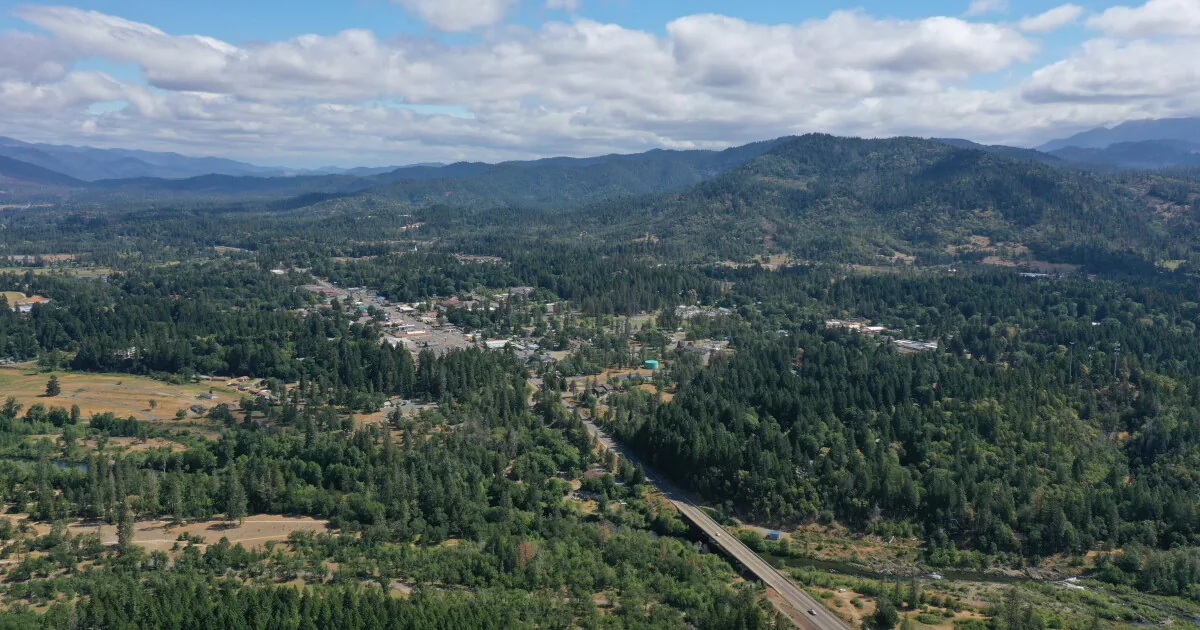
Smoke Season Checks
Wildfire adds another set of items. Wildfire has made smoke a seasonal fact here: 26 smoke days in Medford in 2021, and about 2,600 Jackson County homes destroyed in 2020. On any roof near the freeway corridor between Central Point and Gold Hill, we check for soot loading on reflective surfaces, for debris against parapets and for open gaps at edges and vents where embers could enter. Those checks are brief and inexpensive, and they belong in the spring and again after any heavy smoke week.
Rooftop equipment deserves its own note. A unit that draws outside air pulls smoke into the building through its filters, and the filters sit on the roof. Replacing them is a maintenance task for the mechanical contractor, but it puts a person on the membrane, and the roofer's record of that visit is what separates routine traffic from damage. We keep a short access log with each register entry so the pattern is visible over time.
Options, Cost Drivers and Neighboring Areas
Tolo carries history older than any roof standing there, since Fort Lane went up nearby in 1853 near the Willow Springs mining camp, but the work is about the buildings of today. The owner leaves with three paths and the cost drivers behind each: area, access, insulation depth, penetrations and tenant phasing. A visit to Tolo can share a route with Central Point, Gold Hill and Sams Valley, which keeps travel time low, and an acquisition in the area can add a due-diligence roof survey before closing.
Send the building list, roof ages and leak tickets
Related Roofing Pages

Questions About Tolo
Can you grade a roof with no documents?
Yes. Core cuts, lap details and flashing styles place the system in a range, and the report states what is confirmed and what is estimated.
What happens first on an emergency call?
We ask where water is entering and what is at risk below it, send a crew with temporary materials and photograph the damage before work begins.
Is fog a roofing concern?
Only where seams or flashings are already open. Fog leaves moisture on surfaces, and a tired lap lets it in.
How do you tell condensation from a leak?
Timing and location. Drips on cold mornings with no rain and no stain trail often point to ventilation, and a moisture scan confirms it.
When should repairs be done?
Spring, before the first triple-digit week, so sealants cure and membranes are flexible enough to work.