
Commercial Roofing in Ruch, OR
Commercial roofing in Ruch, OR in the Applegate Valley: tasting-room and winery building roofs, harvest-season scheduling, solar-ready and metal systems.
Overview
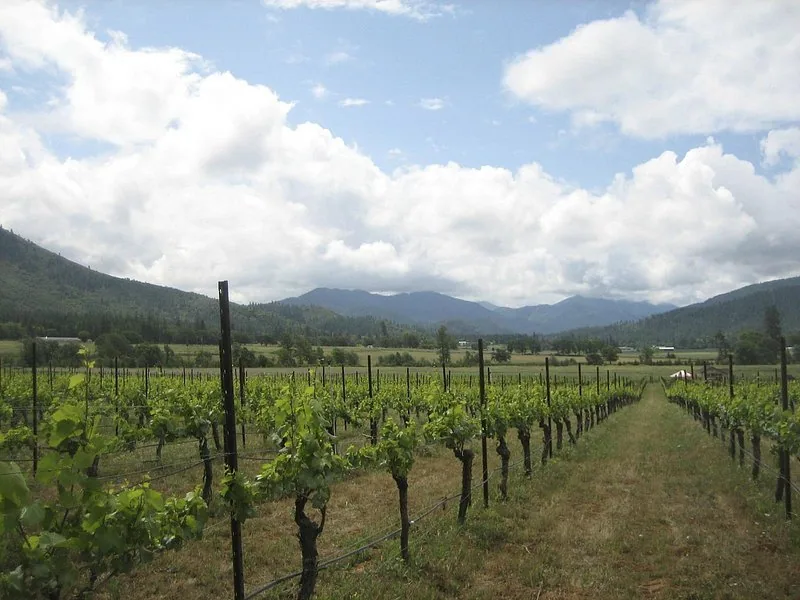
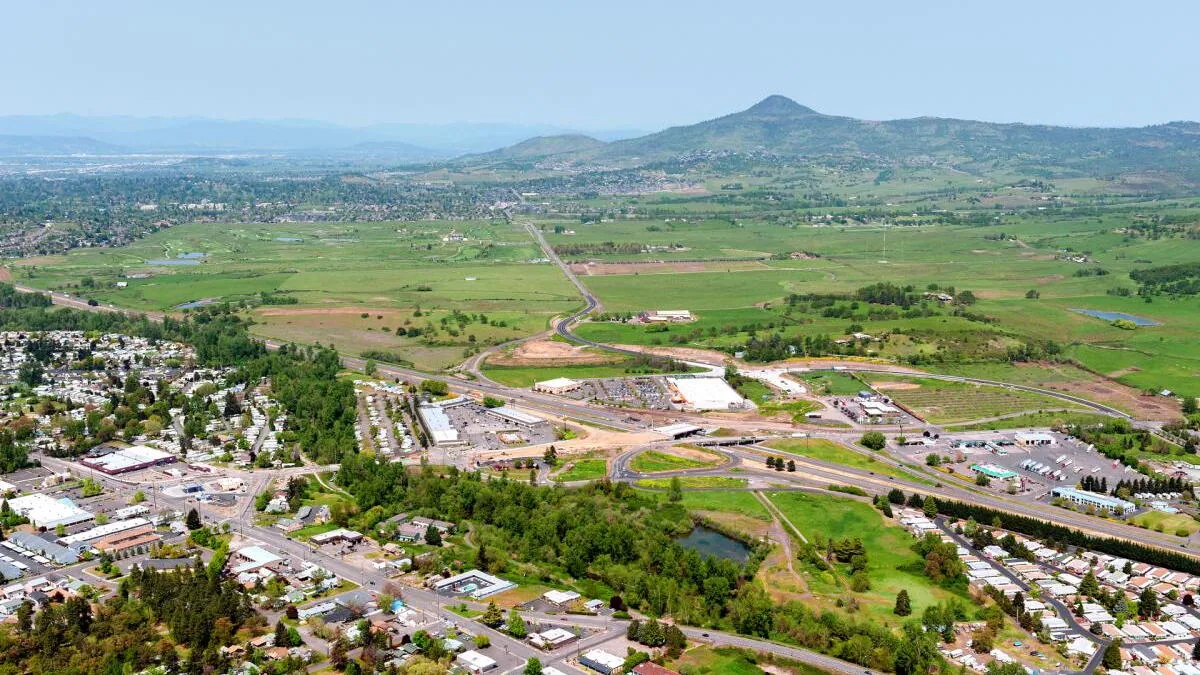
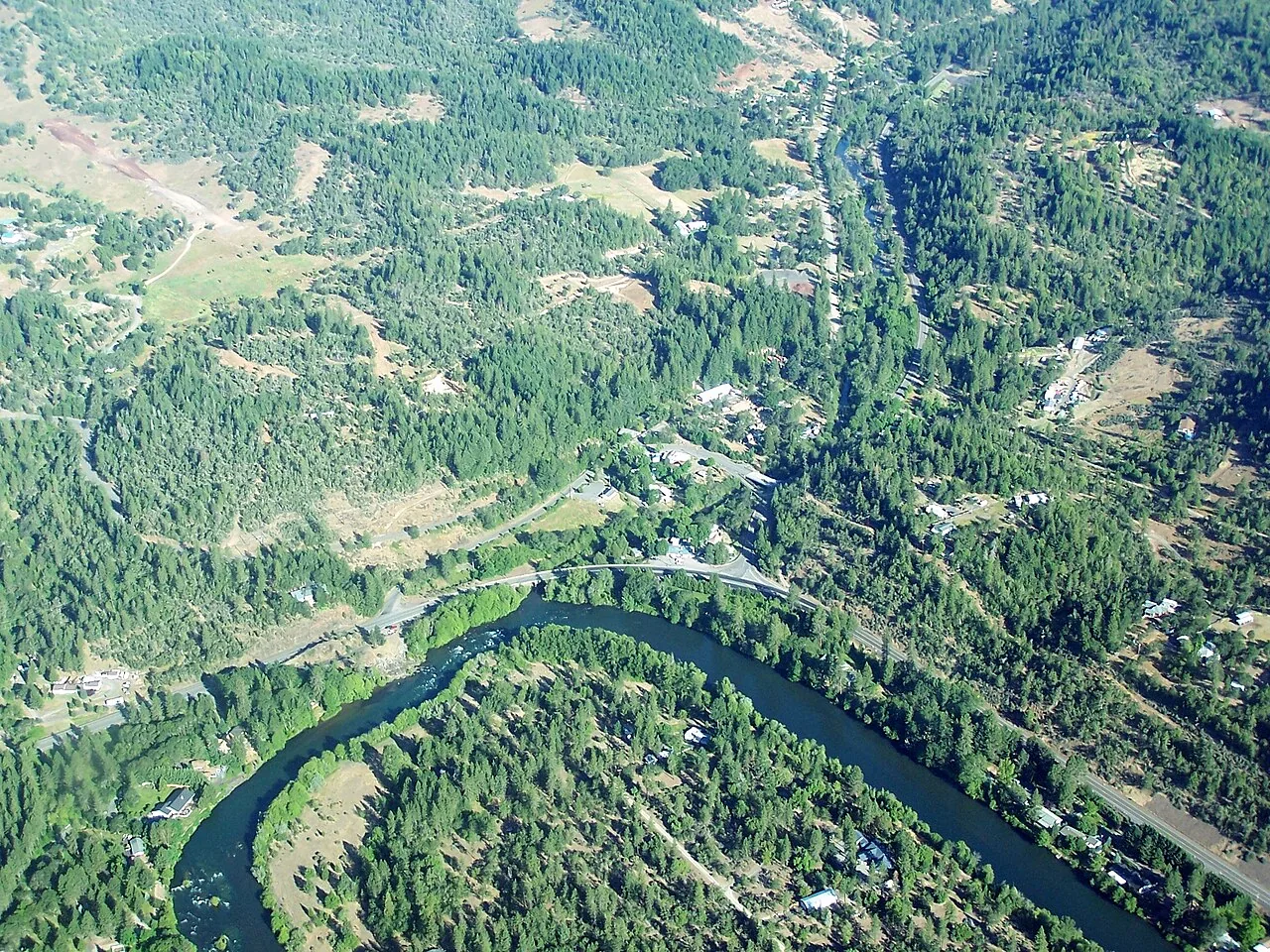
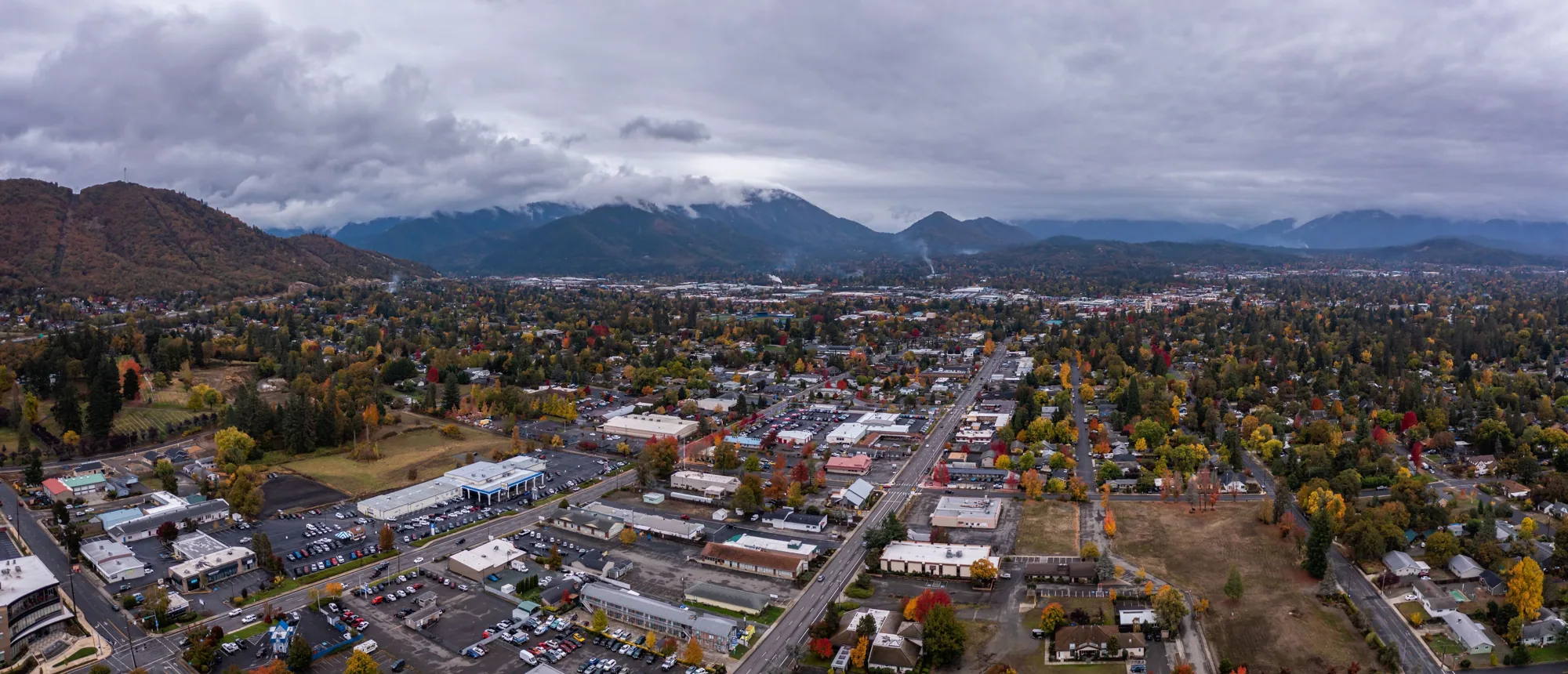
Wineries set the commercial roofing agenda in Ruch, OR. The census-designated place has 819 residents and lies on Oregon Route 238 within the Applegate Valley AVA, where wineries such as Valley View Winery count as agricultural and tasting-room buildings. Those are two kinds of roof, and they ask different things. A production building wants a clear span, durable cover and low maintenance. A tasting room wants an attractive roof, a dry interior and a schedule that stays out of the busy season.
The local climate sits a step wetter than the valley floor, with average annual precipitation of about 27.45 inches and about 5.4 inches of snow, while Medford gets 18.4 inches of precipitation and only 3.4 inches of snow, and 61 afternoons above 90 F. We grade roofs for what that mix does: sun and heat in summer, more water in winter, and smoke in the bad fire years.
Tasting Rooms and Production Buildings
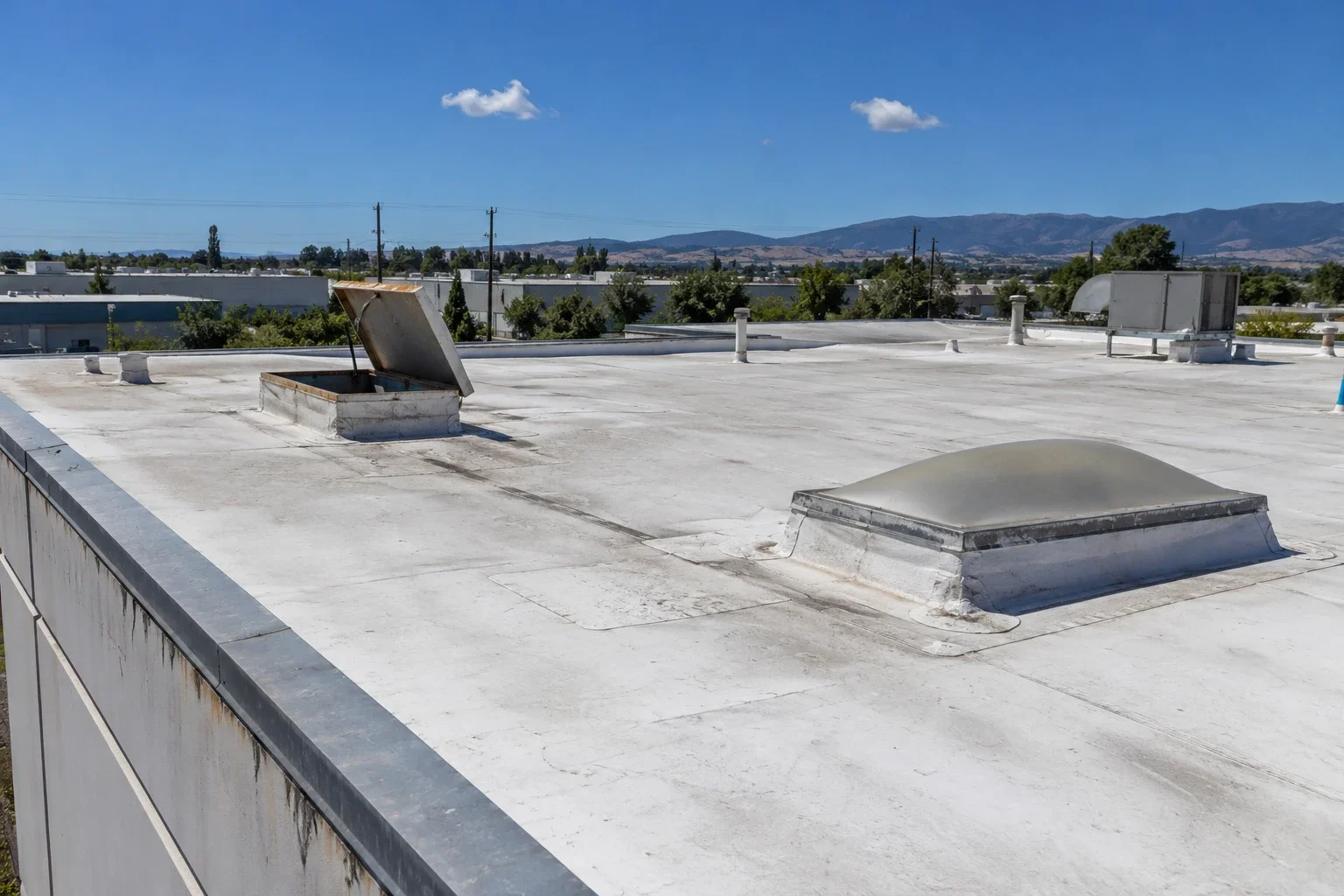
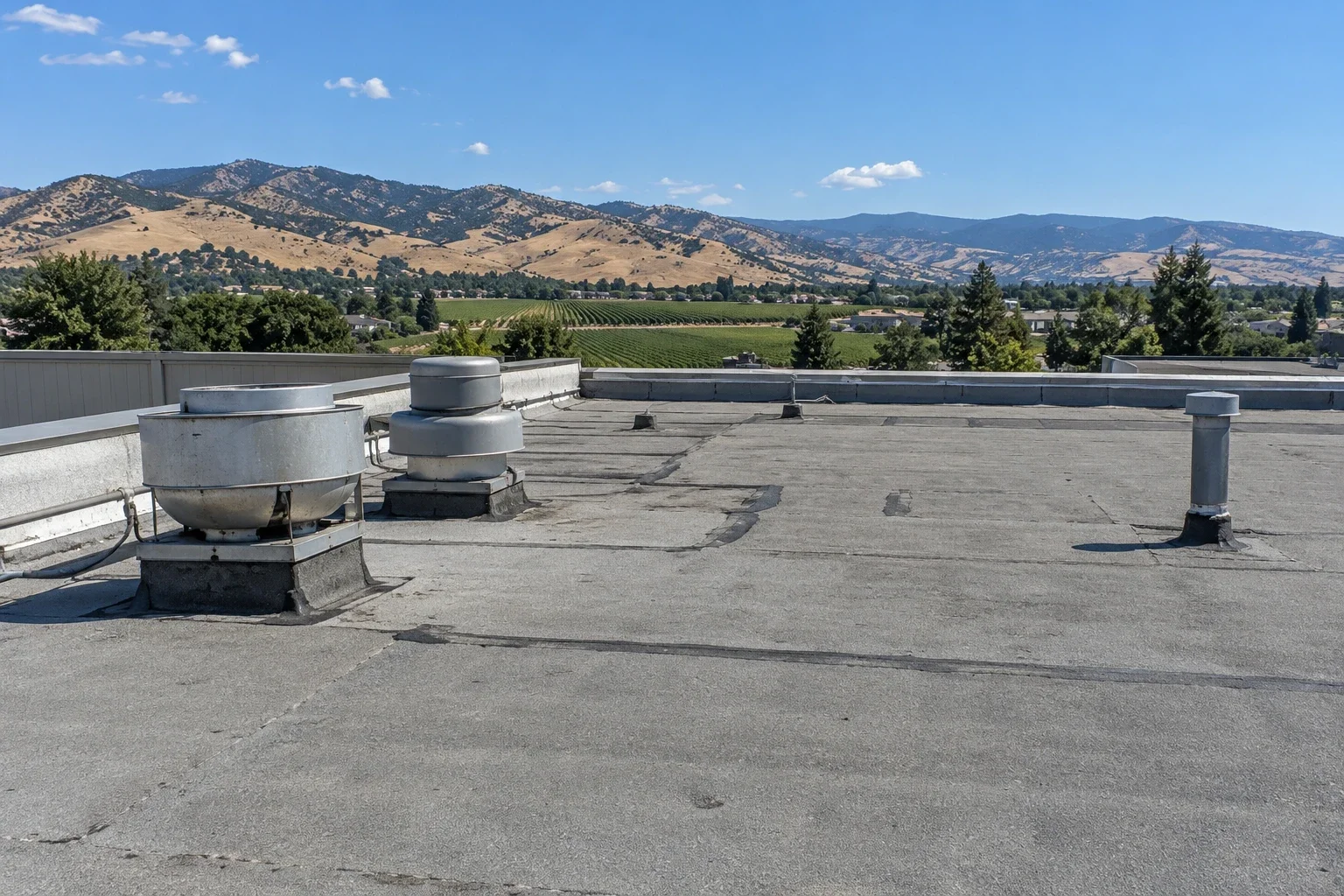
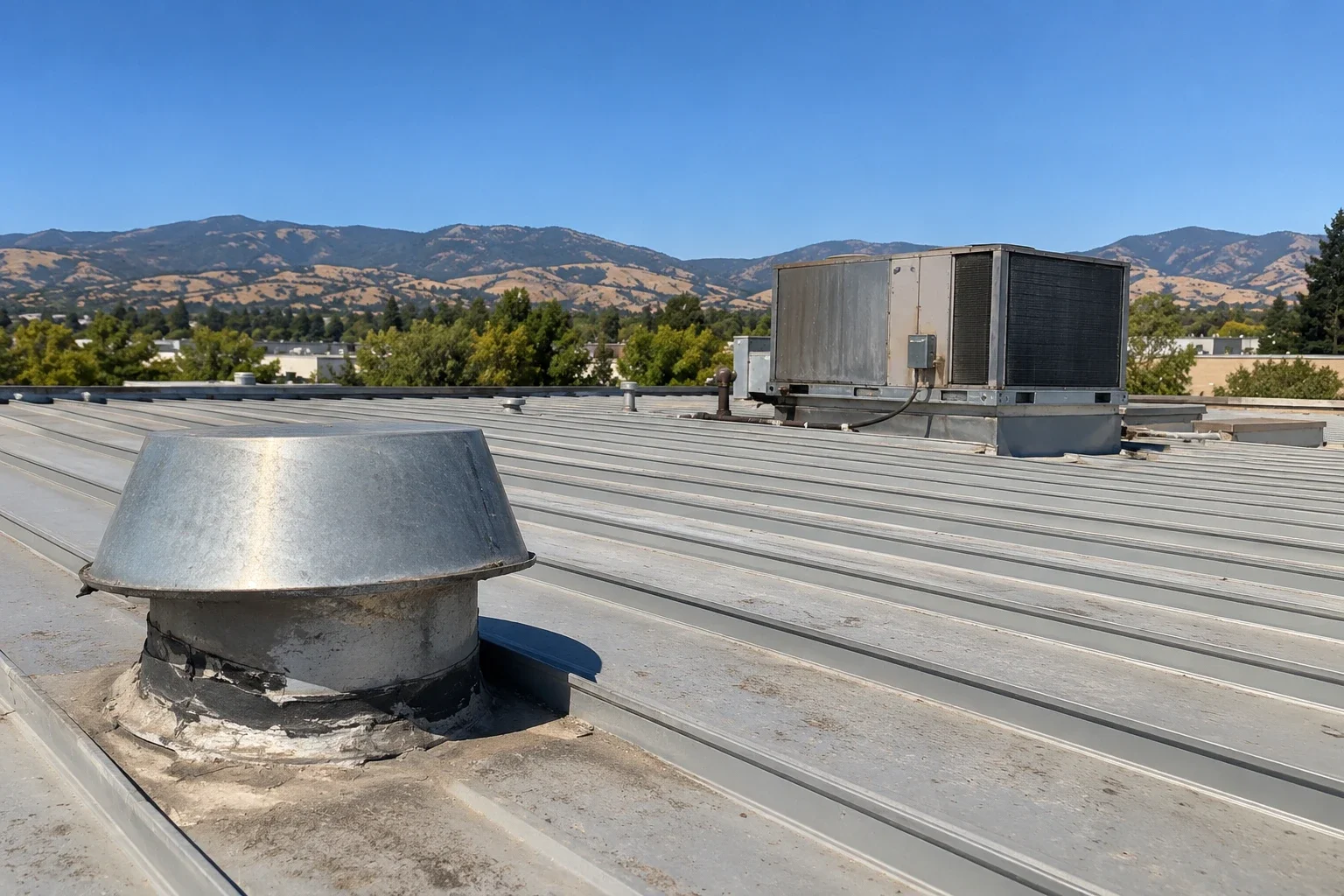
Winery buildings in the area fall into two groups, agricultural and tasting-room structures, and that is the frame we use. Agricultural structures tend to have large roof areas and few penetrations, which makes them good candidates for metal panels or a single-ply membrane. Tasting rooms and hospitality spaces tend to have more details: patios, covered walkways, skylights, vents for kitchens and bars, and rooftop equipment for climate control. Those details carry most of the leak risk.
We grade each building type on its own terms. For a production building, the questions are panel condition, fastener integrity and drainage along the eaves. For a tasting room, they are flashings, curb details and the condition of any roof over occupied space, because a leak above a bar or a seating area interrupts business and damages fixtures. The report ranks actions by consequence so the owner starts where a failure would cost the most.

Harvest Season and the Work Calendar
A winery has a calendar that roofing has to respect. Harvest and crush bring trucks, equipment and crews across the property, and production buildings are in constant use. Late summer and fall are the wrong time for tear-off over a working floor. Spring, before the vines leaf out and tourism ramps up, is usually the better window, and early winter works for buildings that are quiet between pressing and bottling.
We plan around it. The schedule names the weeks to avoid, the weeks that suit each building and the sequence that keeps the tasting room open. A hospitality owner with several buildings can spread the work across two or three seasons so that no single quarter loses revenue. Delivery trucks and equipment get their own route on site, away from guest parking.
Metal Panels and Cool Surfaces
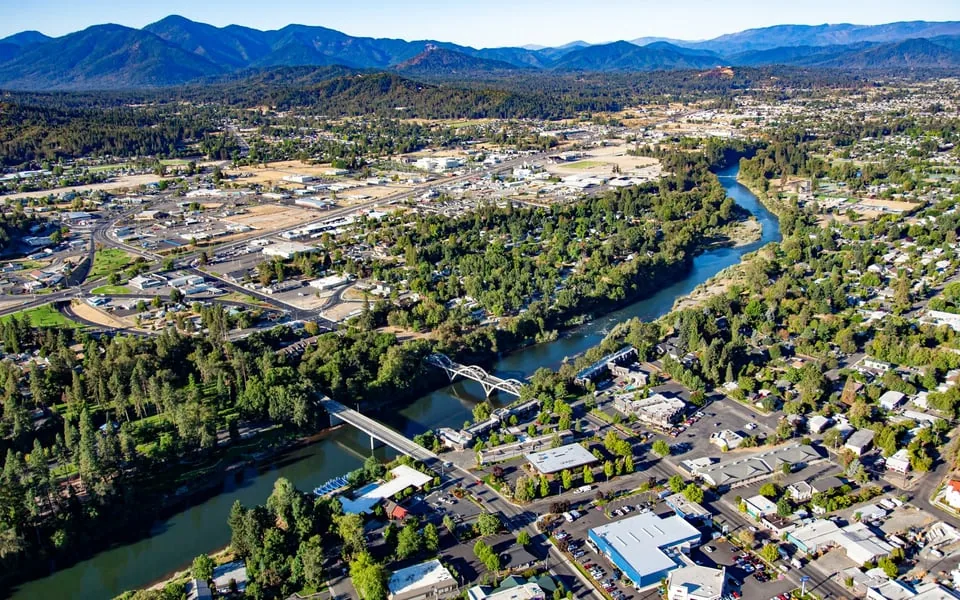
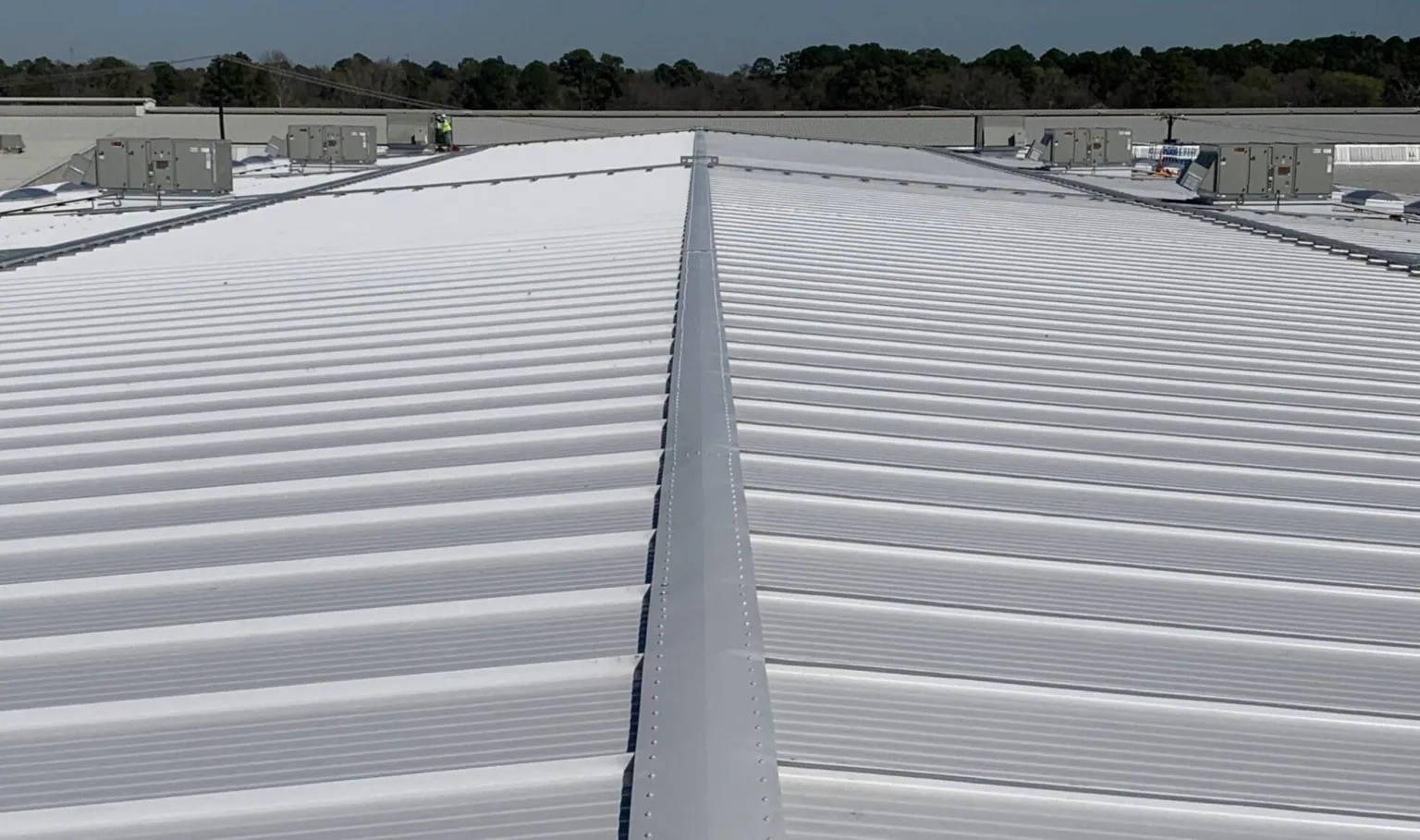
Metal is a natural fit for agricultural buildings. A standing seam panel hides its fasteners, sheds rain and snow and lasts through many seasons of sun. Exposed-fastener panels cost less but need periodic re-fastening and sealant renewal as heat cycles work the screws loose. A light-colored or coated panel reflects heat, which helps keep the building cooler and the roof surface from running as hot.
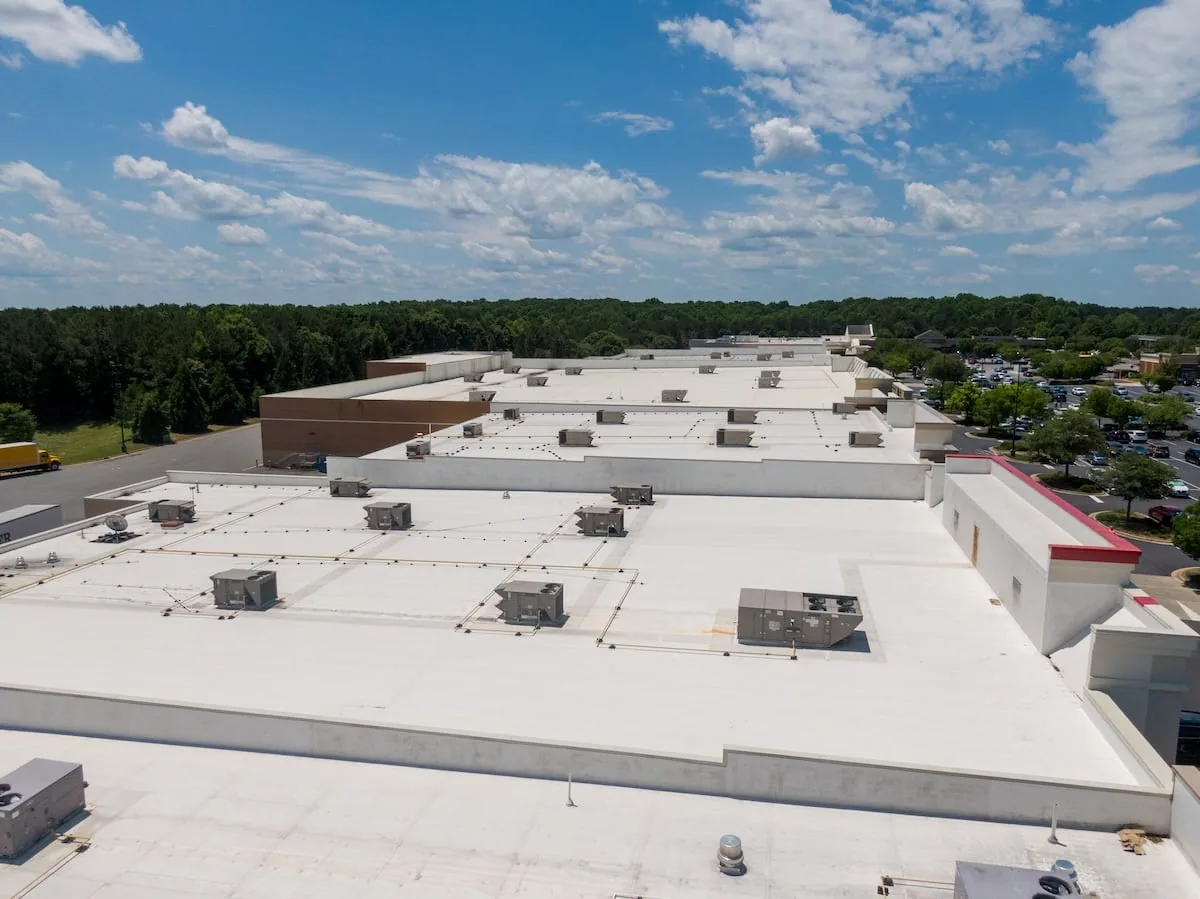
Where a building is a candidate for a reflective upgrade, a cool roof installation pairs a light surface with insulation to lower the load on cooling. The benefit is greatest for buildings that hold temperature-sensitive product or guests, and the report notes which buildings qualify.
Solar-Ready Roofs
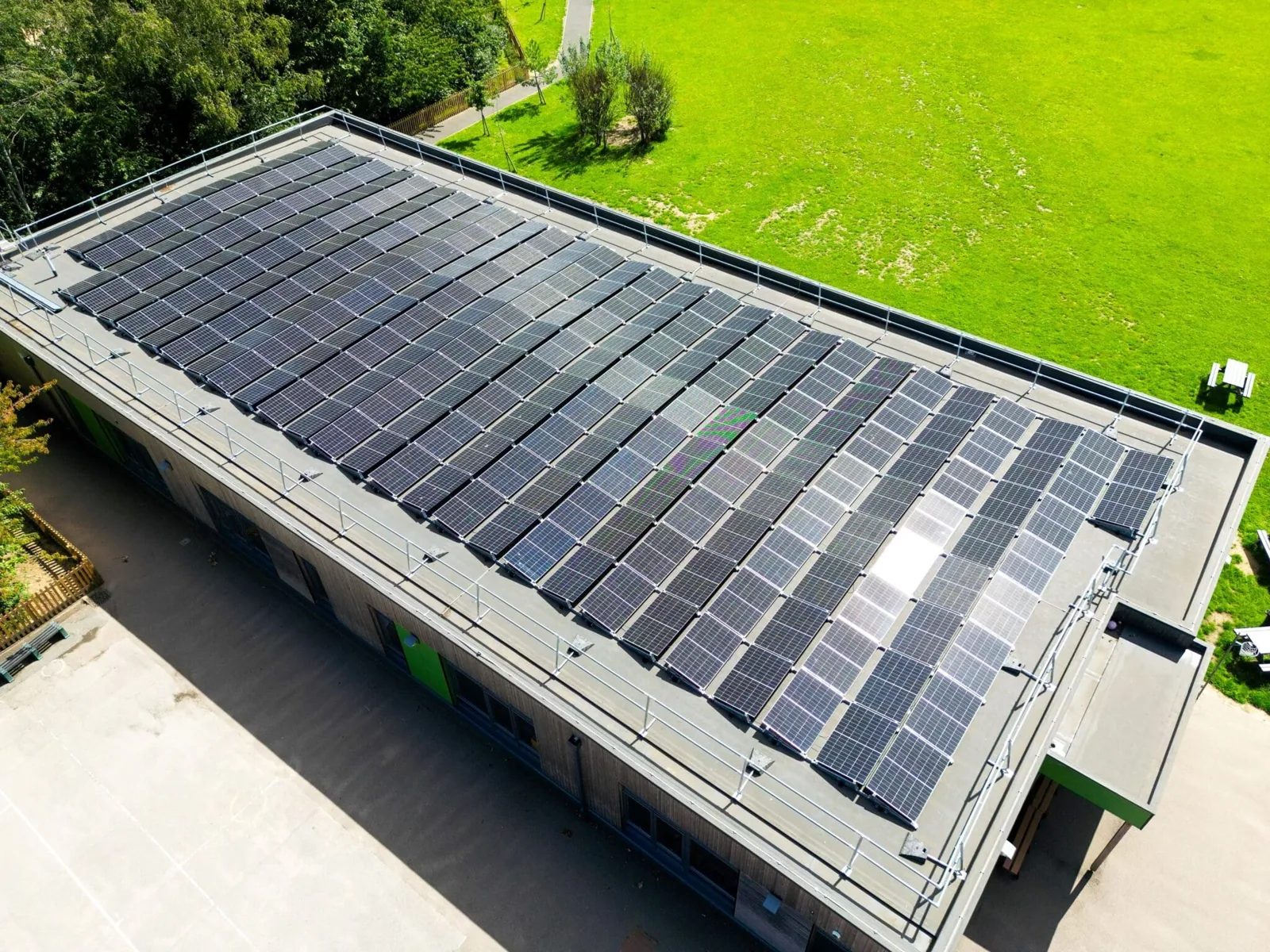
Rural commercial owners often consider solar, and roofs carry the panels for decades. Solar-ready roofing means the roof is in good enough condition to carry an array for its full term, that the structure can support the added load and that attachments are flashed correctly. Installing solar over a roof that will need replacement in five years forces the array to come off, so the roof comes first.
We grade the roof for remaining life against the array's expected term, specify attachments and flashings that avoid penetrations where possible and keep the roof warranty in view. An owner who plans both together saves the cost of removing and reinstalling panels.
Attachment method matters for both the roof and the array. Ballasted systems avoid penetrations but add weight. Mounted systems pierce the roof and need flashing at every post. On a standing seam roof, clamps grip the seams without drilling, which preserves the panel finish and the watertight line. We specify the approach with the solar installer before work starts, and note it in the roof record.
Wetter Winters and Drainage
With about 27.45 inches of precipitation, the winter brings more water than the valley floor sees, and a roof that was adequate in a drier setting may need better drainage. We check gutters, downspouts, scuppers and drain bowls, and we look for ponding on low-slope sections. Water that stands on a membrane speeds fatigue, and water that spills from a clogged gutter onto the ground undermines foundations and paths.
The wet season also tests flashings. Where a roof meets a wall, a chimney or a rooftop unit, the joint must hold against rain driven sideways by wind. A bead of sealant that has aged through several hot summers cracks and lets water behind the flashing. Reflashing with a compatible membrane or metal, and sealing with a material suited to the substrate, fixes it for years. We photograph each flashing before and after, so the register shows what was done and when.
Cost Drivers and Seasonal Timing
Cost follows the usual short list: roof area, access, insulation or underlayment, penetrations, tear-off and disposal. On winery properties, two more matter. Phasing around guests and production adds days, and the lengths of drives between buildings on a spread-out property add travel inside the site. A large agricultural roof with few penetrations is priced mostly by area and by the cost of getting material up. A tasting room with several details is priced mostly by the details.
Timing follows the harvest and the weather. Spring work finishes before the busy season, so the owner enjoys the new roof through summer. Approvals in winter allow material to be ordered and staged by March. A project approved in July competes with every other schedule and runs into the hottest weeks and the crush. The report names the month by which each decision is needed and shows how the cost changes if the work slides to the next window.
Smoke Weeks and Ember Exposure
Smoke covered Medford for 26 days in 2021, and fire destroyed roughly 2,600 homes across Jackson County in 2020, so the habit of checking is worth keeping. Agricultural roofs near dry vegetation get an ember-exposure check on edges, vents and gutters, along with removal of leaves and needles. Visits can share a route with Applegate and Jacksonville, and an owner with several buildings can add a warranty file to the register so the paperwork follows each roof.
Send the building list, roof ages and leak tickets
Related Roofing Pages

Questions About Ruch
Which roof suits a production building?
Usually metal panels or a single-ply membrane, chosen for span, durability and low maintenance. Standing seam hides fasteners and lasts through many seasons.
Can work avoid the harvest weeks?
Yes. The schedule names the weeks to skip and puts the work in spring or early winter.
Should solar go on an older roof?
Only if the roof will outlast the array. Otherwise replace the roof first and install the panels afterward.
Does a tasting room need a different roof from a barn?
It needs more detail work: skylights, vents, covered walks and equipment curbs. The grade weights those details heavily.
What matters most in a wetter winter?
Drainage. Gutters, downspouts and drain bowls must be clear, and low spots on flat sections need to shed water.