
Spray Polyurethane Foam Roofing in Medford, OR
Spray foam roofing in Medford, OR: continuous insulation sprayed in the dry season, the coating that shields it from sun and the fire questions it raises.
Overview
Spray foam suits a Medford, OR summer in one respect and challenges it in another. With 61 afternoons past 90 F and only about 18.4 inches of precipitation a year, the dry, warm season gives foam the weather it needs to expand and bond. The same sun that makes installation easy is the enemy of the finished roof, because foam without a coating breaks down in ultraviolet light within a season or two. In a county that lost some 2,600 homes to the 2020 Almeda and Obenchain fires, a combustible insulation raises a question the owner report must answer.
We grade what the foam roof is made of, how the coating is aging and how the assembly is protected.
What spray foam is and what it offers
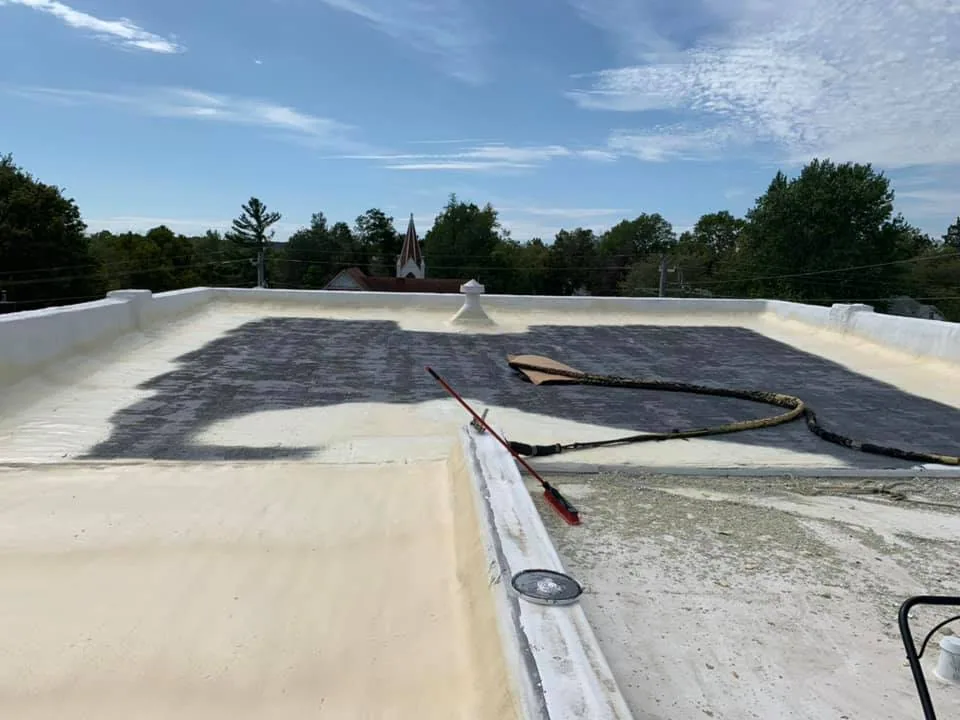
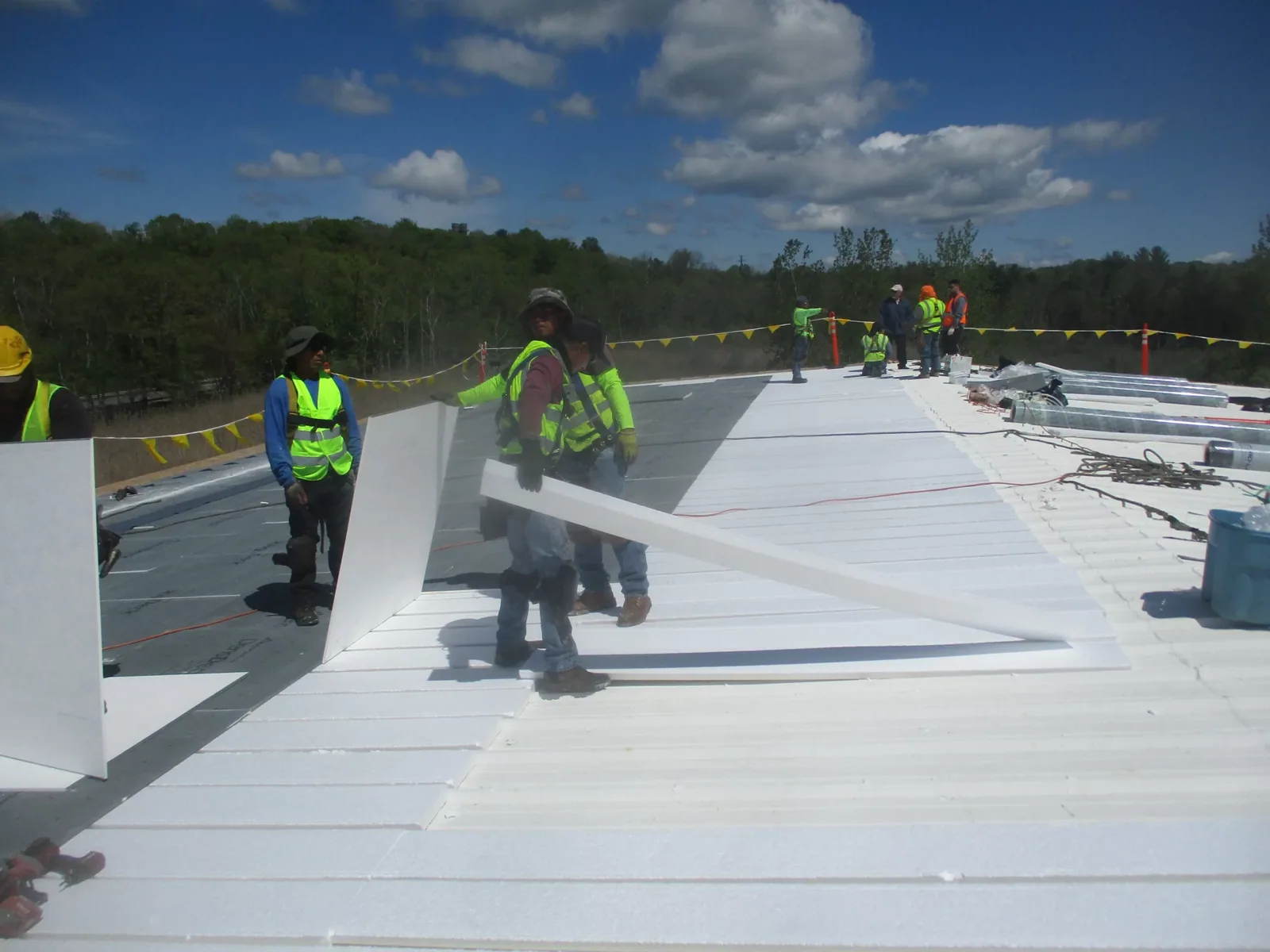
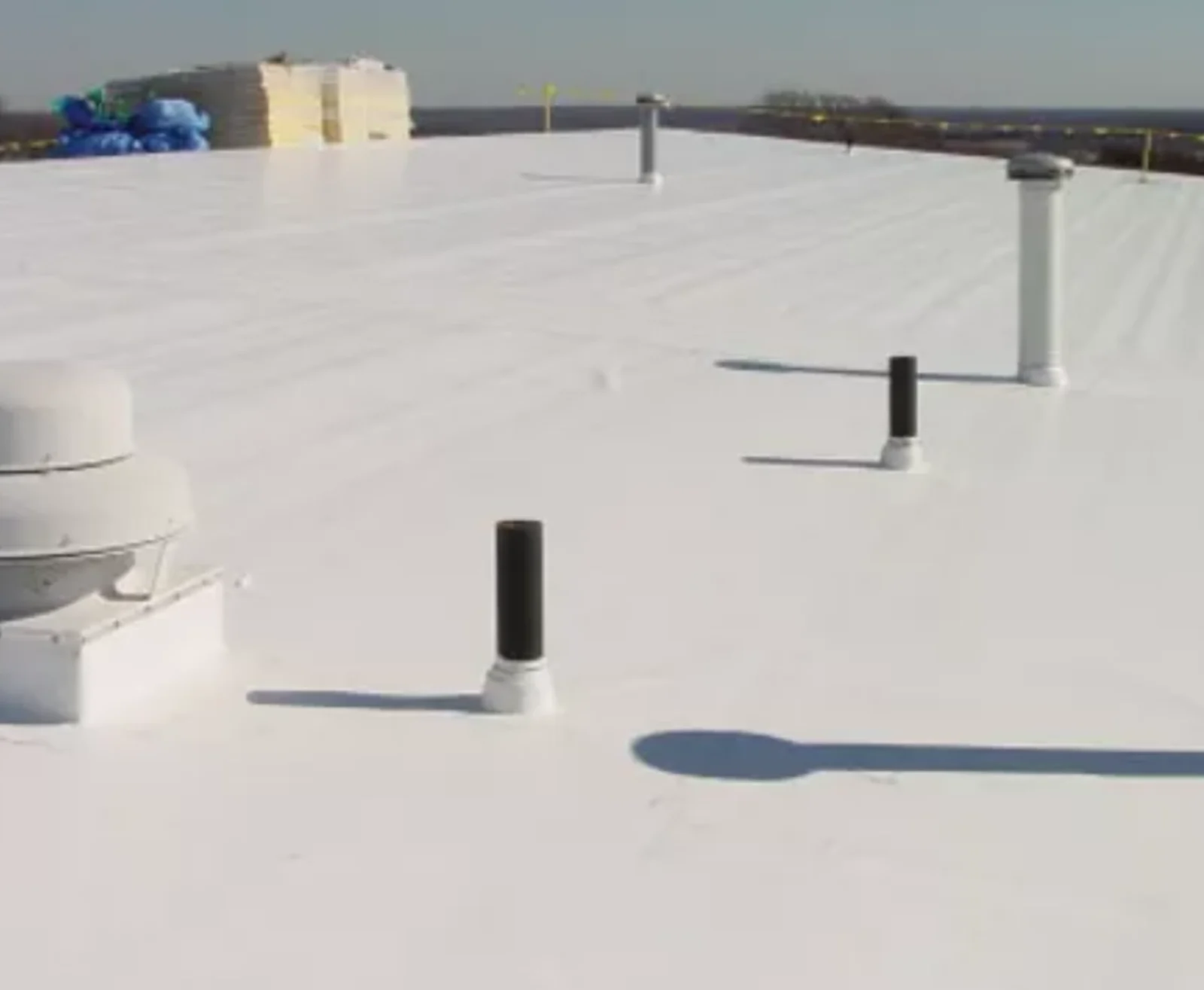
Spray polyurethane foam is a two-part liquid that expands on the roof into a rigid, continuous layer with no seams, then receives a protective coating. It insulates and waterproofs in one pass, builds slope toward drains and wraps around curbs, pipes and odd shapes without the cutting that a sheet needs. On a roof with many penetrations or an uneven deck, those qualities save labor and close gaps.
It makes less sense on roofs with heavy foot traffic, where the coating wears quickly, or over saturated insulation, where foam traps moisture. We scan and core an existing roof first and show a membrane alternate beside the foam price, such as TPO over new board. The choice rests on the roof and the carrying cost over the holding period.
Heat, UV budget and the coating that protects the foam
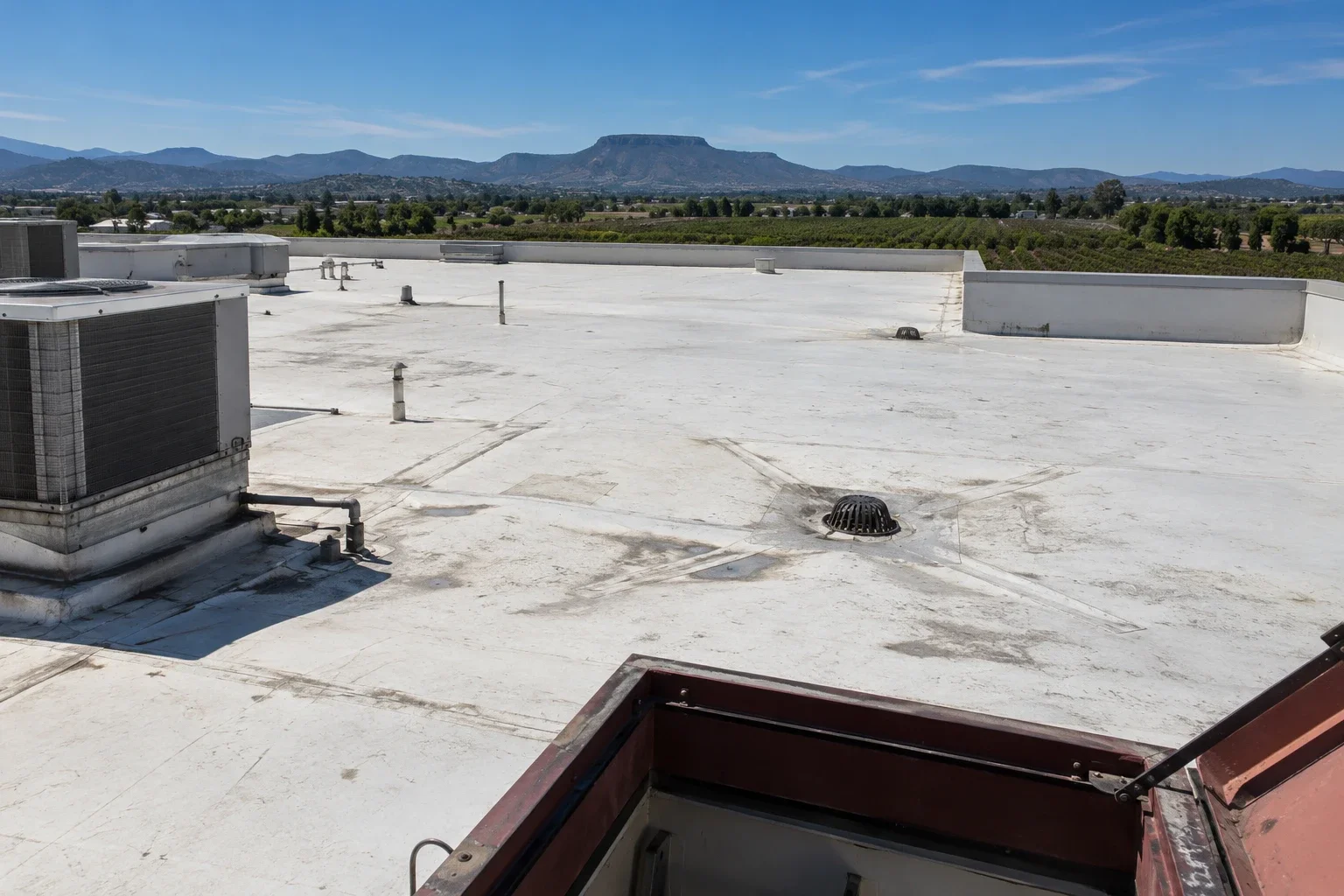
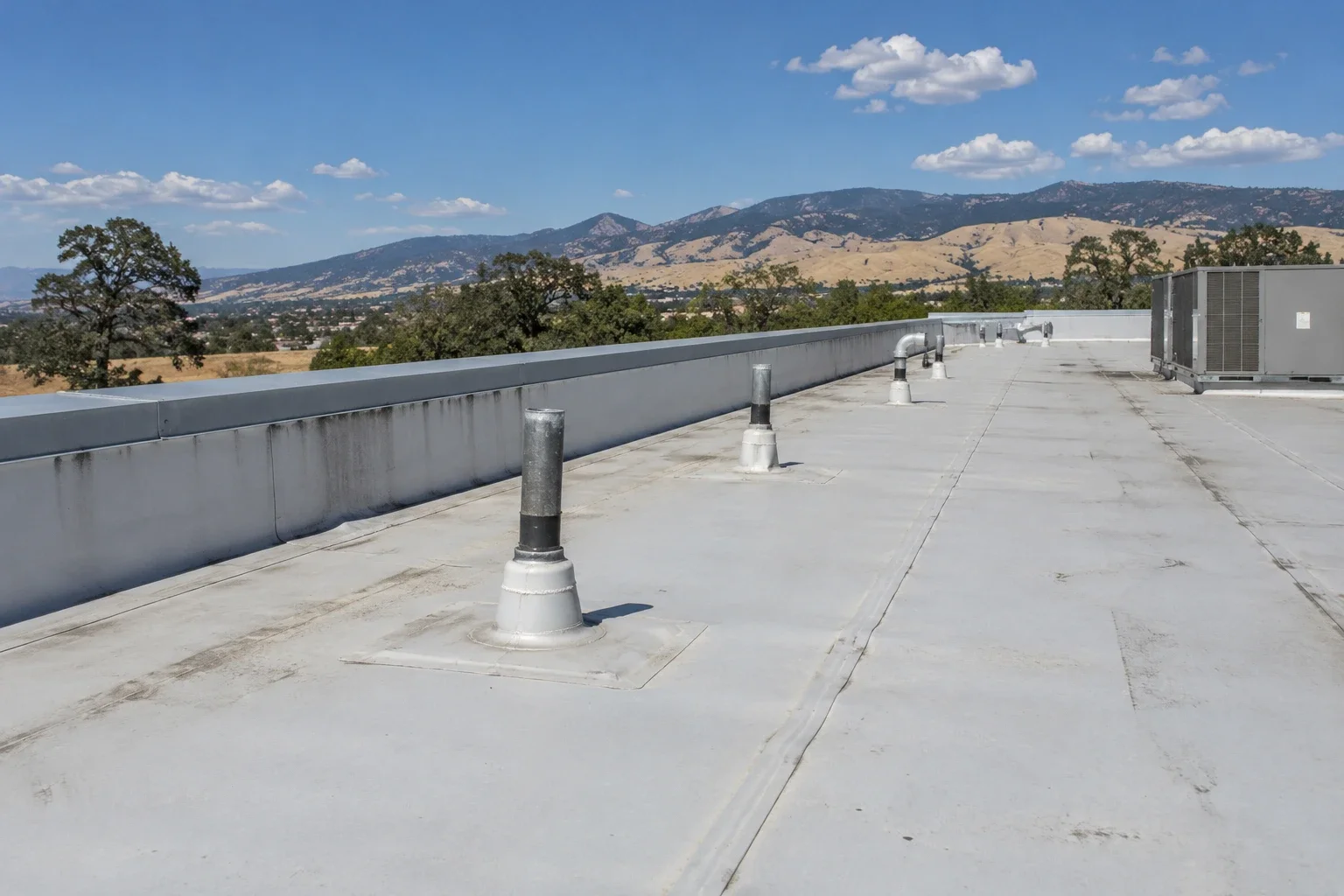
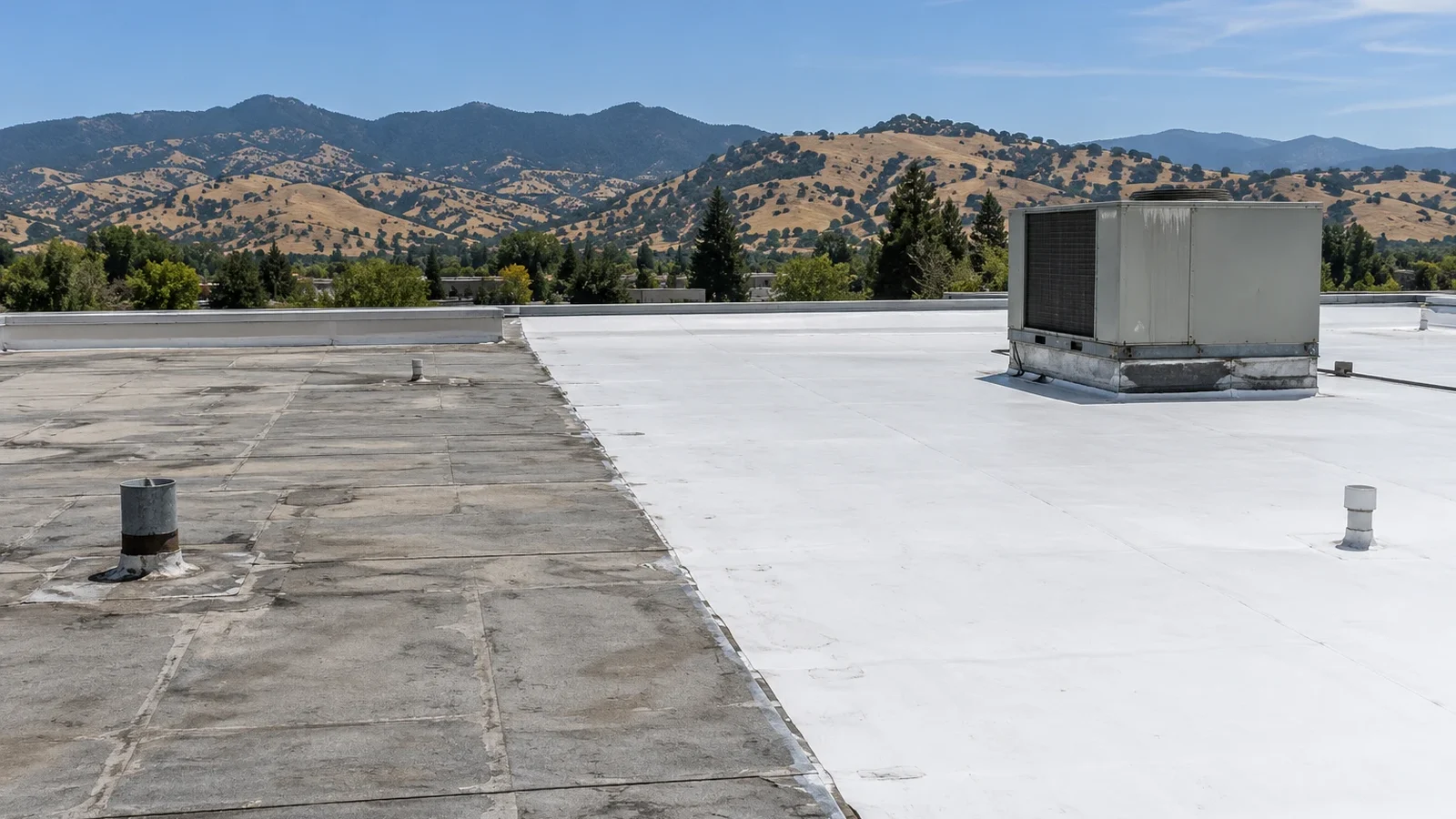
The coating is the roof. Foam is a sacrificial substrate, and a silicone or acrylic layer takes the UV budget, reflects heat and sheds water. In the valley the coating is spent steadily, since clear skies and few washing rains leave dust and ash on the surface. Reflectance loss shows as a gray cast, and thin spots show as chalking or exposed foam.
We grade coating thickness, adhesion, chalking, ponding and damage from birds or traffic each spring. Recoating on the maker's schedule is the cheapest maintenance a foam roof has, and the reserve schedule should carry it as a recurring line. A foam roof whose coating has been kept up can outlast a membrane that was left alone, and the roof register records the dates.
Ponding is the other coating enemy. Standing water softens an acrylic coat and collects dirt on any surface, so low spots get a drain, a cricket or a silicone topcoat. Foam can also be sprayed to build slope, which is one of its quieter advantages on a roof that has settled.
Fire, embers and smoke season
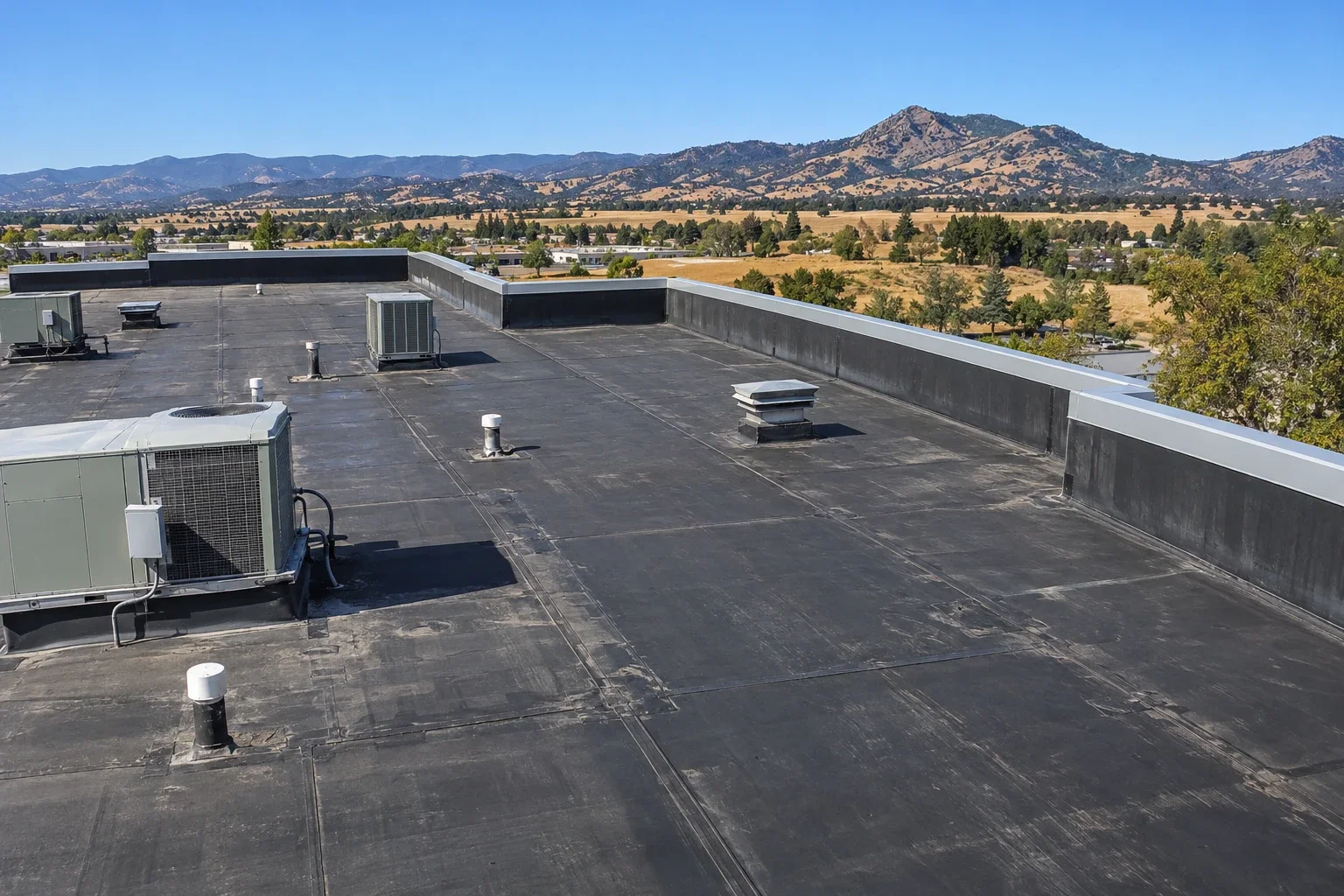
Cured foam is combustible, so the assembly relies on its coating, and sometimes a thermal barrier, for fire performance. Medford had 26 smoke days in 2021, and ember exposure is a design concern on any roof in the valley. We confirm the assembly's fire classification against the plans before ordering, keep hot work away from foam during and after the spray and avoid designs where embers could lodge against exposed foam at edges and penetrations.
After a smoke event we inspect for soot loading, ash in drains and damage to the coating, and we repair breaches promptly, because exposed foam ages and burns faster than coated foam. This is a point where the owner's insurer and the building official may have views, so we raise it at the start and record the answer in the owner report.
Where foam is worth pricing in the valley
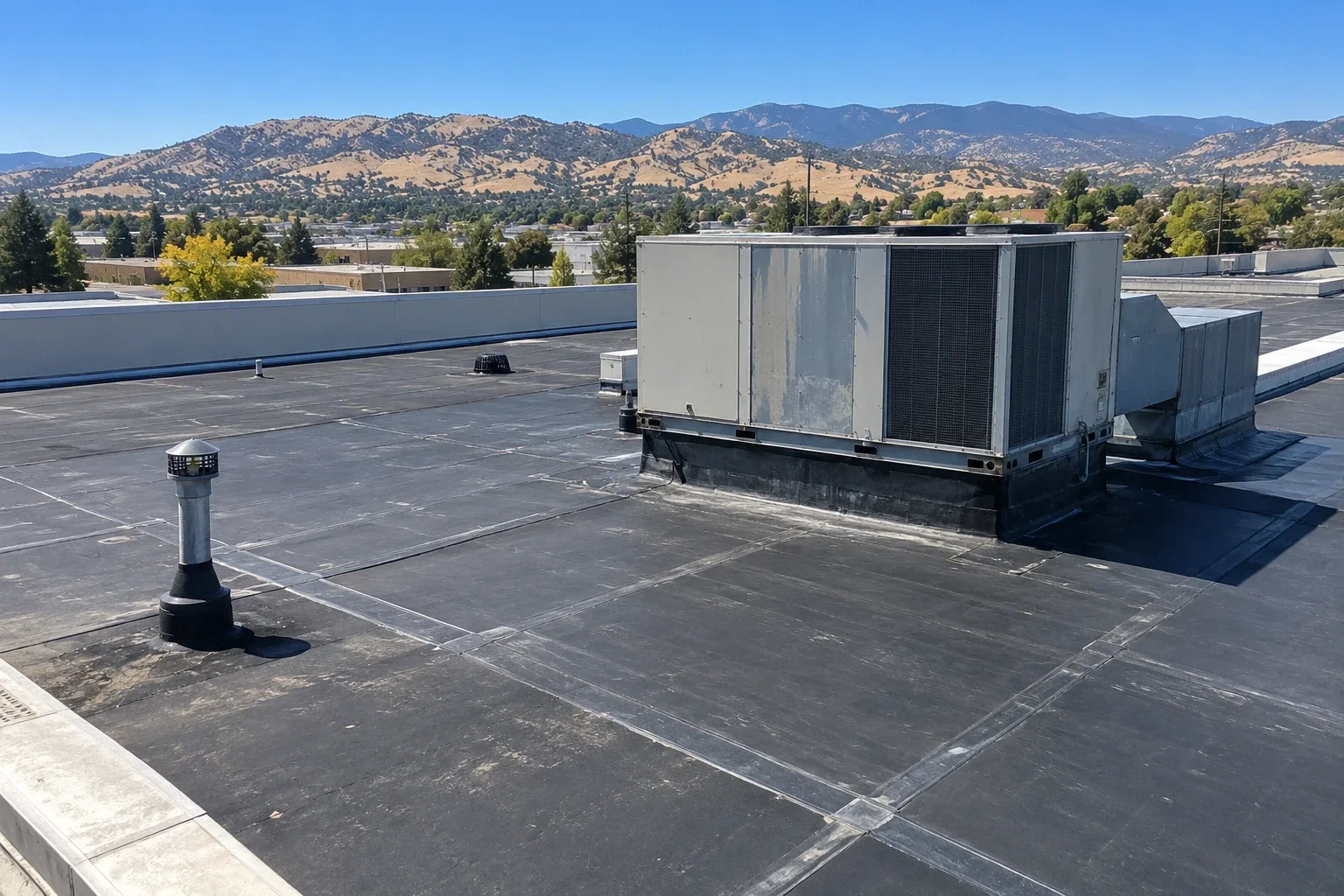
Odd shapes and many penetrations favor foam. Hospital and clinic roofs carry dense mechanical equipment, and Asante Rogue Regional Medical Center and Providence Medford Medical Center, with over 2,000 employees between them, are the local examples. The VA campus in White City, with inpatient wings under renovation and exterior upgrades in design, shows how campus roofs change with the building work.
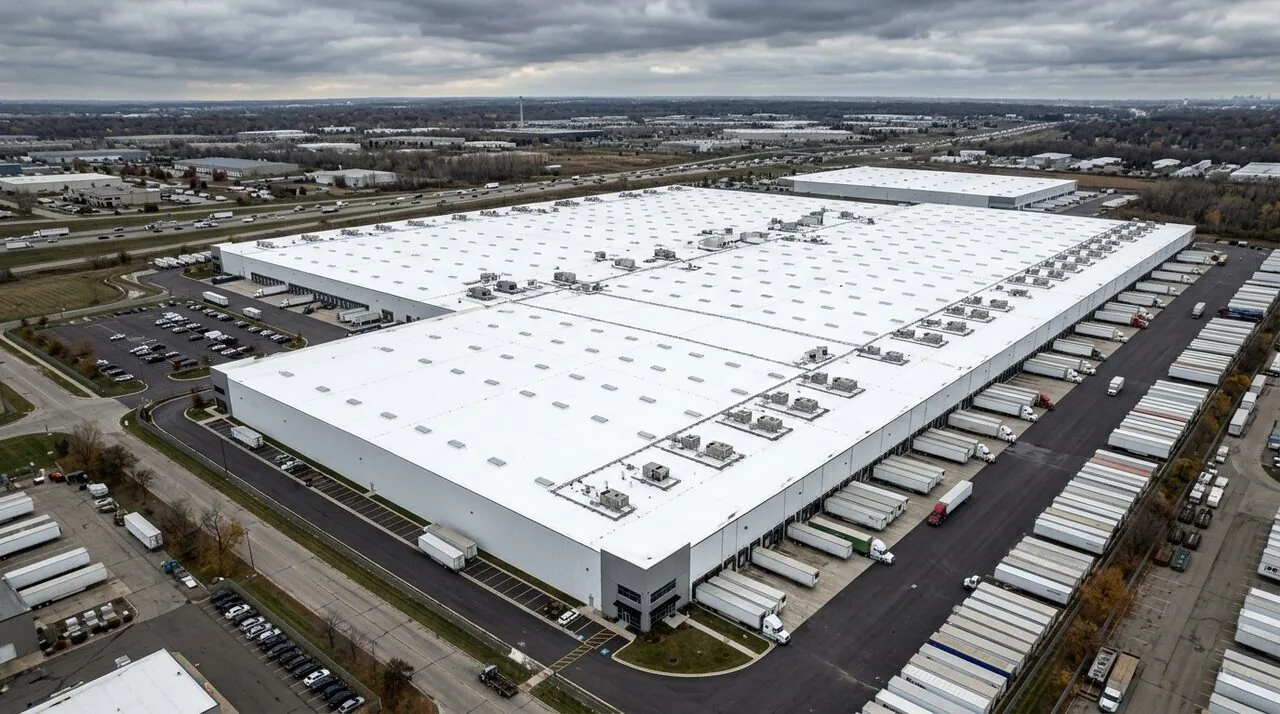
Large retail and industrial roofs usually price better in membranes. Rogue Valley Mall, an enclosed complex with 640,000 to 847,000 square feet of retail space, represents the large flat-roof retail where foam is priced against a sheet, and the Phoenix Industrial Park, with its rail-served industrial buildings, belongs in the same comparison. We show both numbers.
Condition grade and repair of foam roofs
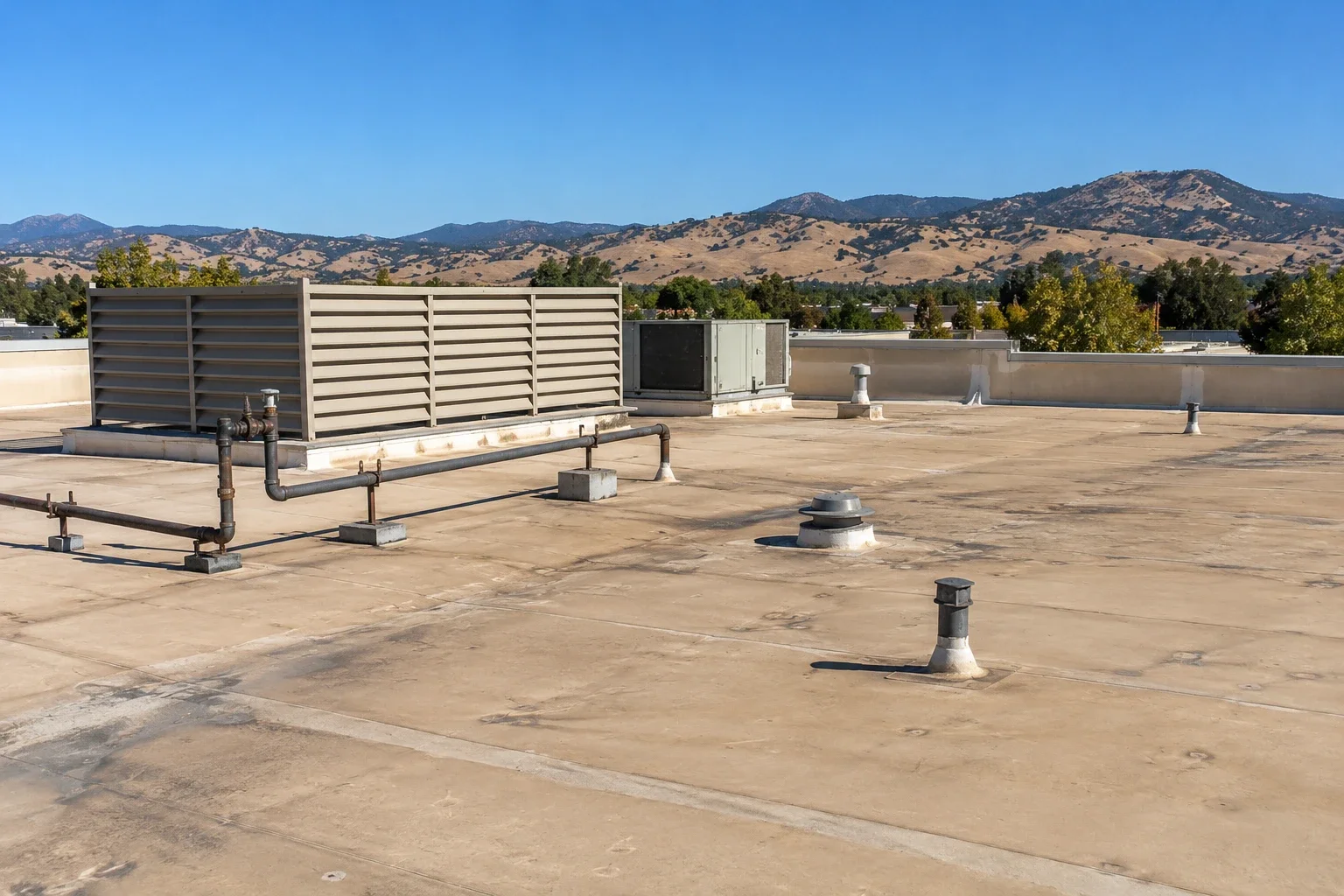
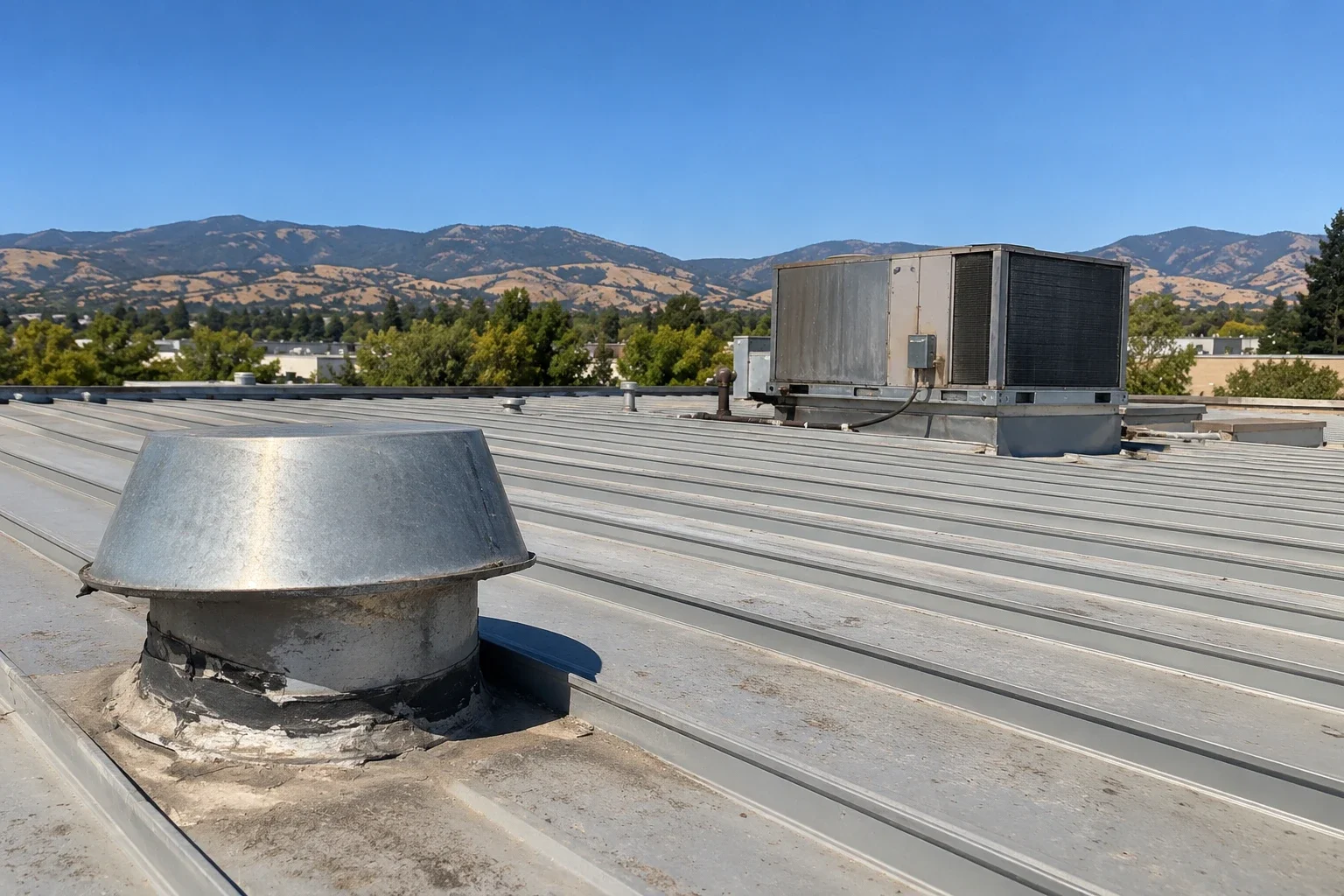
The first symptoms of a foam roof in trouble are on the coating. Chalking, fading and thin spots appear under the sun, birds peck at exposed foam and a dropped tool leaves a dent that holds water. A stone-sized dent still opens the coating. We walk the surface, press suspect areas and probe for soft spots, then mark each finding on the roof plan.
Most repairs are small: a patch of coating over a bruise, a restored edge where foam meets a curb, a replaced section of foam where water has soaked in. Larger areas of saturated foam are cut out and replaced, and the surrounding coating is renewed. Each item is listed as a patch or a fix with a price, and the owner chooses what goes ahead.
The remaining service life depends on the coating, since foam itself ages slowly when it is protected. A roof with sound foam and a worn coating needs a recoat; a roof with saturated foam needs a section replaced. The roof register records which, with photographs and the date of the last coat.
Cost, reserve schedule and lease timing
Three lines carry the cost. The foam, priced by thickness, since each inch adds insulation and expense. The coating, with granules added on traffic areas. And surface preparation, meaning cleaning, repairing and priming the old roof so the foam bonds. Recoating is a recurring line in the reserve schedule, and the roof register shows the dates and the carrying cost.
The energy requirements that apply to a reroof may change the insulation value a foam roof must deliver, and the governing requirements are confirmed with each scope. Lease timing favors work before a tenant moves in, since odor during spray and cure is hard on an occupied floor.
Edge and penetration details are priced by the foot and by the piece, and overspray protection is a line of its own. We would rather show those items than hide them in a lump sum.

Application conditions and the spring work window
Foam needs a dry substrate, moderate air and surface temperatures, low humidity and little wind. A hot deck in July can cause the foam to rise too fast, and morning dew can ruin adhesion. Spring is the best window for foam, and summer jobs start at dawn. We measure surface temperature and dew point and wait when the numbers are close, because a failed spray costs a tear-off.
Overspray is a neighbor and parking-lot problem, so a perimeter plan covers cars, glass and air intakes. On occupied buildings, intakes are shielded and tenants are notified of odor during application. Our occupied building reroofing plan lists those lines apart from the foam price, and closeout includes thickness records and a recoat schedule.
Send the building list and roof photos

Related Roofing Pages

Questions About Spray Polyurethane Foam Roofing
Can foam be left without a coating?
No. Sunlight breaks bare foam down within a season or two. The coating is part of the roof.
Is foam a fire concern in Medford?
It needs a rated assembly and a sound coating. We confirm the classification before ordering.
How often is recoating needed?
On the maker's schedule, tied to coating condition. We grade it each spring.
Can foam go over a wet roof?
No, it traps the moisture. We scan and cut out saturated areas first.
What does foam do to the cooling bill?
It adds insulation and, with a reflective coating, lowers roof heat gain. The saving depends on the building.