
Hotel Roofing in Medford, OR
Hotel roof grading, reserve planning and occupied-building phasing in Medford, OR, where summer heat and smoke weeks bear on guest rooms and room-night revenue.

Overview
A hotel roof in Medford, OR is graded in room-nights as much as in years, because the number that matters to the owner is how many sold rooms a failing roof can take offline. A typical year yields 61 afternoons topping 90 F and 11 topping 100 F, and those afternoons arrive in the same months that fill the rooms. A membrane that has lost reflectance sends more heat into the top floor, the cooling system works harder, and the remaining service life in the reserve schedule drops while guests are checking in.
We approach a hotel as an asset manager does, with a ledger. Every roof section is given a condition grade, a remaining-life estimate and a recommended action, and the report ties each action to the rooms beneath it and to the weeks when those rooms earn the most. The membrane is a line in the ledger. The calendar and the room count are the others.
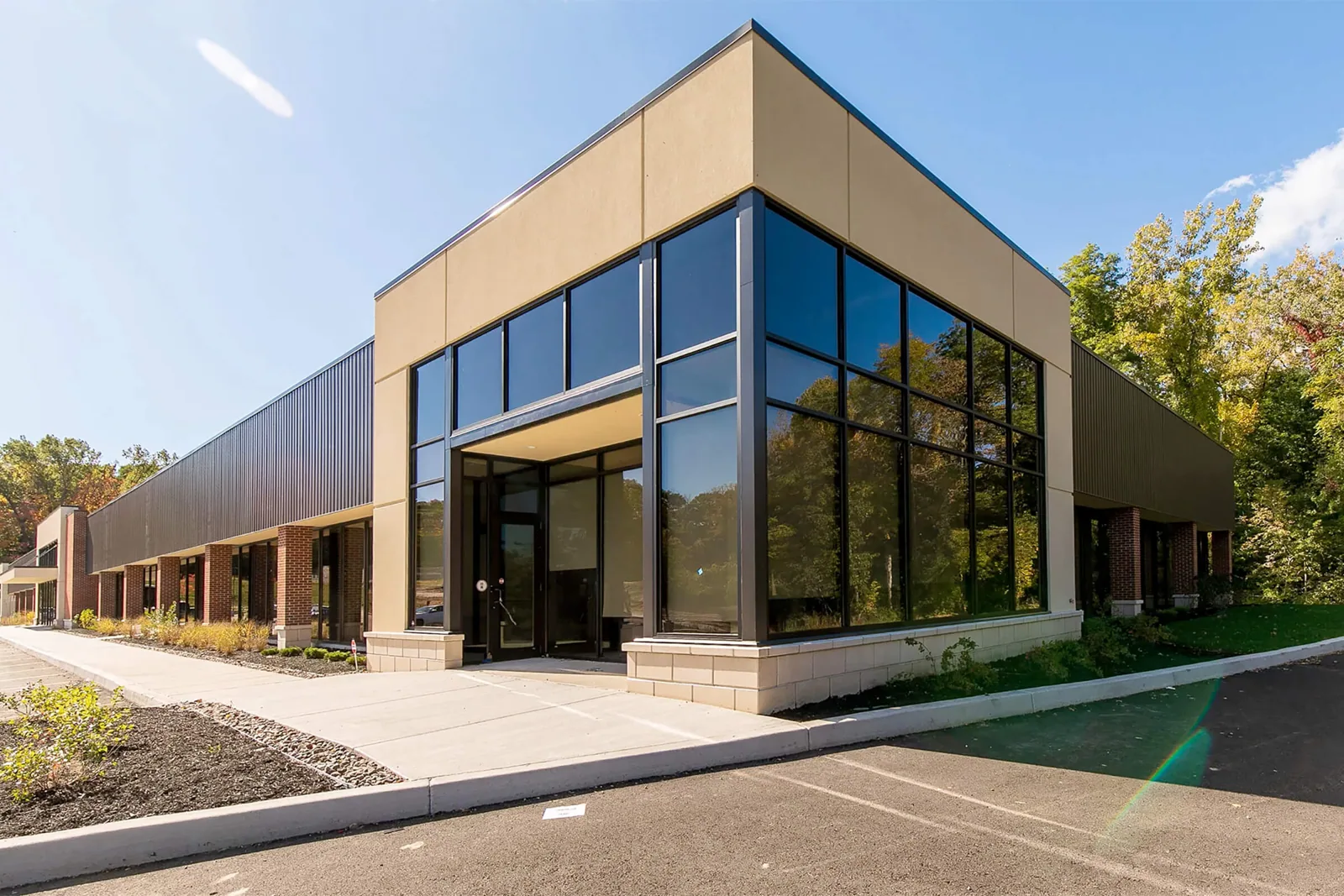
Triple-digit stretches over the top floor
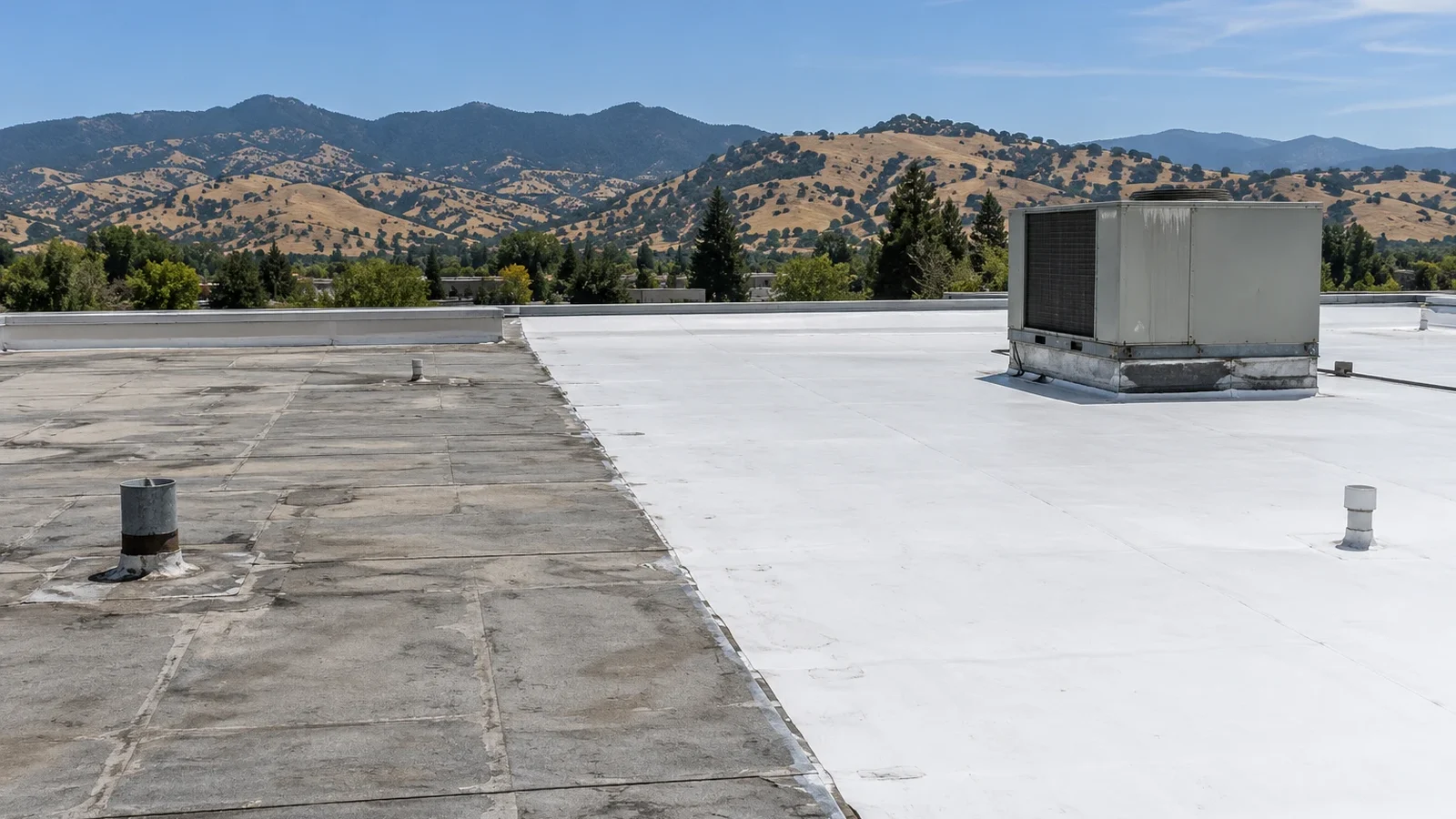
The top floor of a hotel sits directly under the roof, and with only about 18.4 inches of precipitation a year the roof takes the sun with little rain to wash it. A white membrane dims as dust, pollen and soot settle, and a dimmer roof raises the temperature of the deck and the rooms beneath. The guest notices a room that will not cool, and the owner sees a cooling bill that climbs without a clear cause.
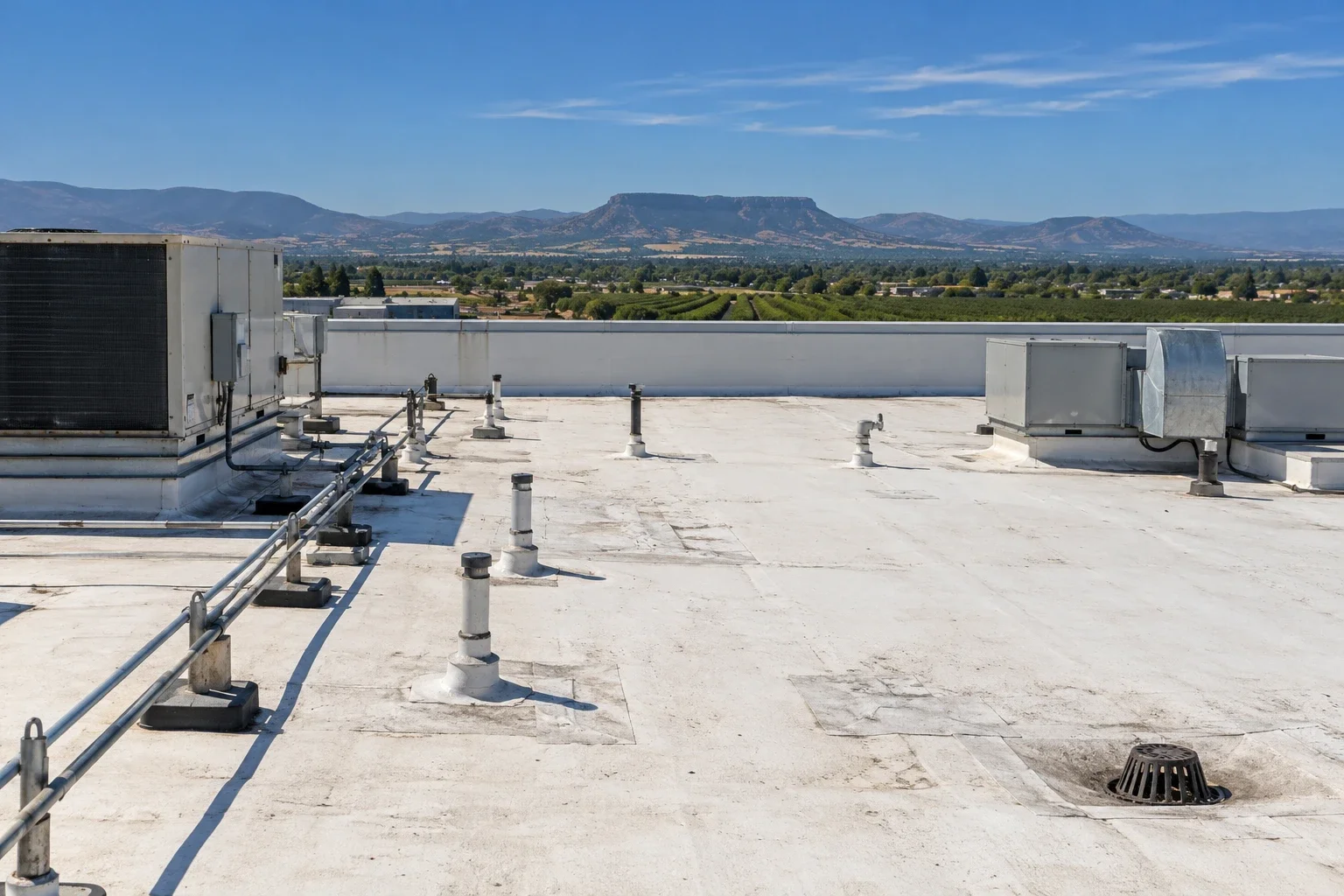
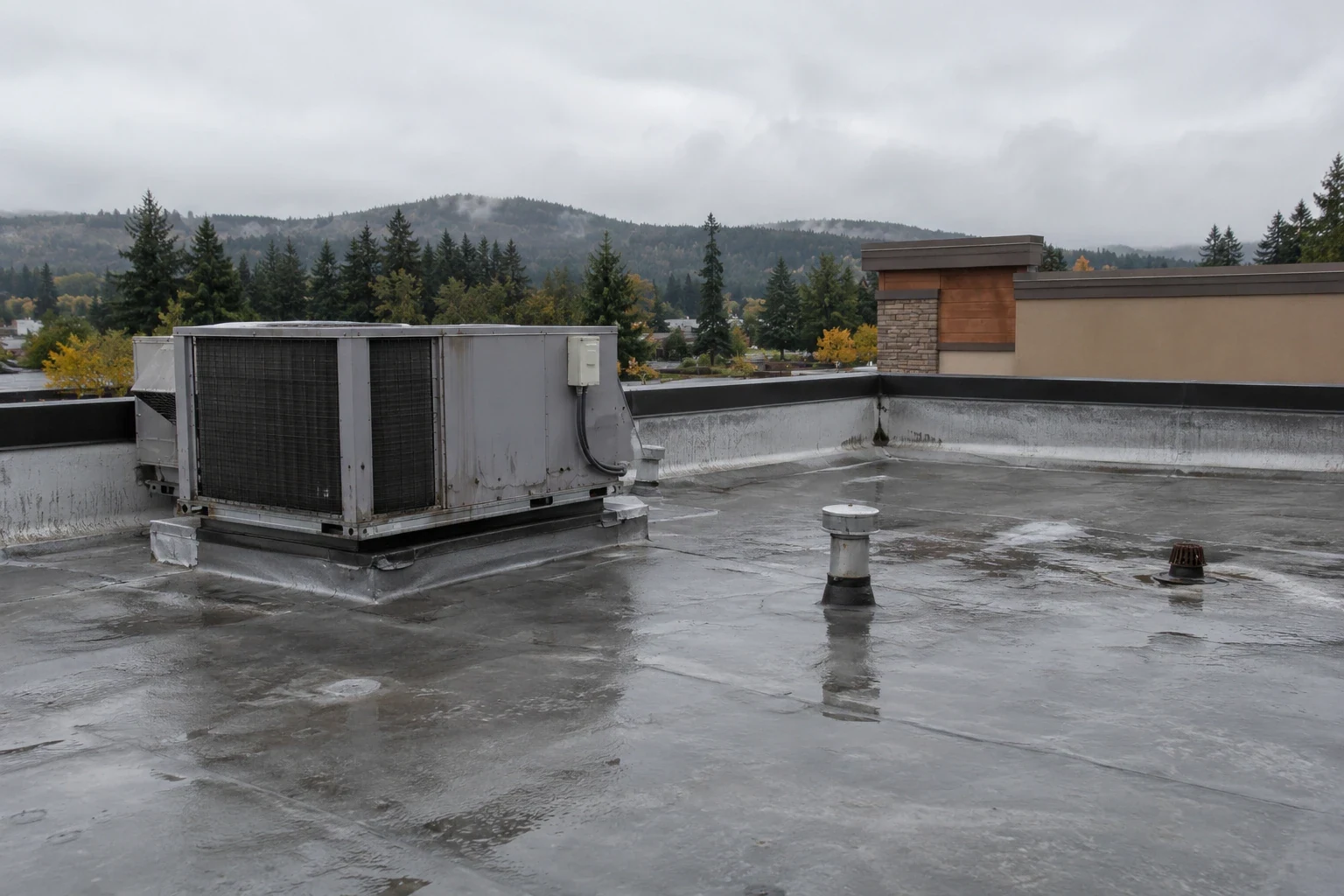
Material response follows the heat. Seams on a single-ply sheet stiffen, sealants at curbs harden, and flashings at stair towers and mechanical penthouses pull. Pools and spas add humid air that works upward into the roof assembly, and the insulation above a pool room can hold moisture that a surface inspection cannot see. The survey includes an infrared scan to find it.
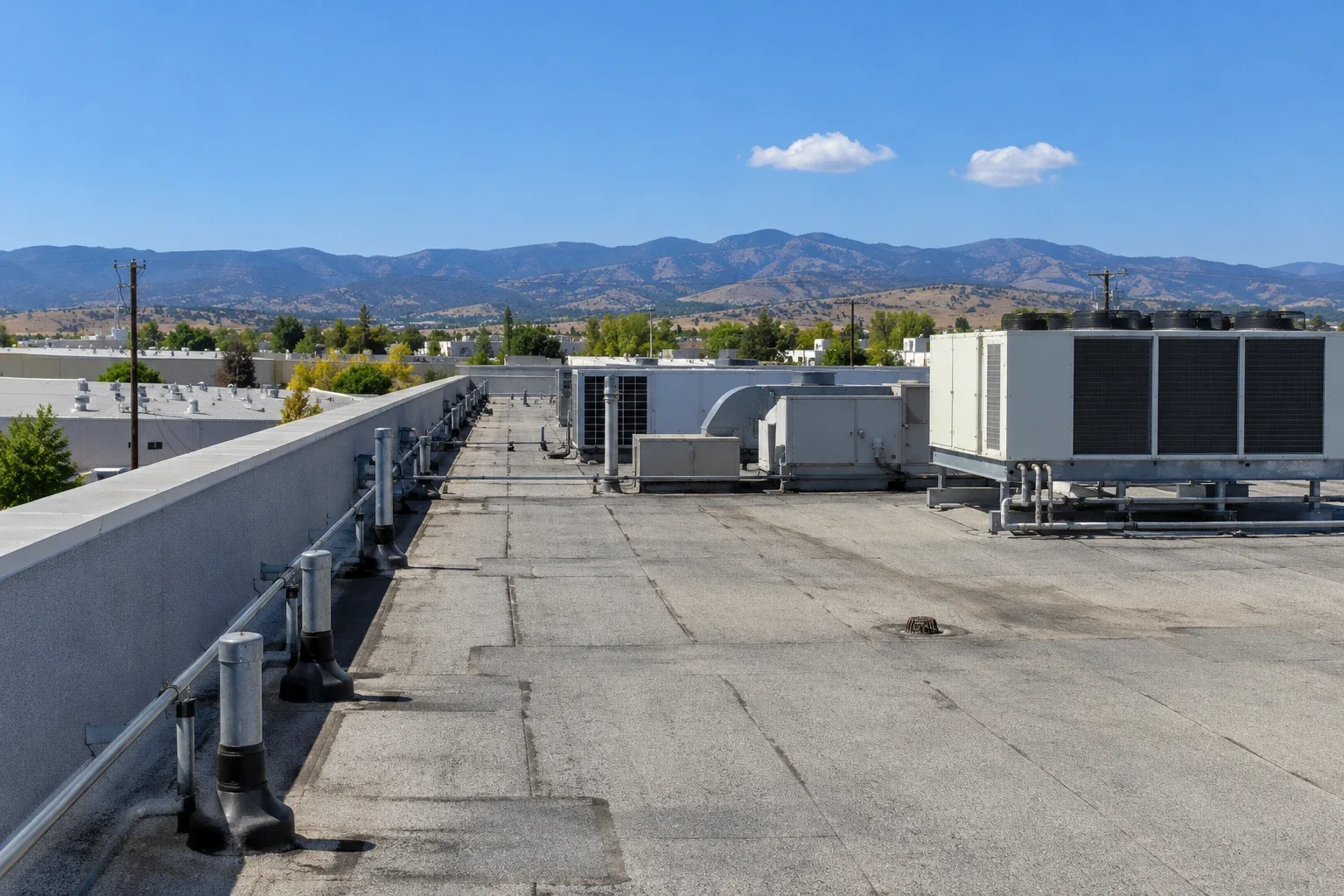
Condition grade and remaining life by wing
Hotels have roofs of different ages, because wings, additions and amenity buildings are built in stages. We grade each section separately: guest wing, lobby, pool and spa, mechanical, kitchen exhaust, porte-cochere and entry canopy. Each grade covers membrane, seams, flashings, drainage and moisture, and each receives a remaining-life estimate in years.
The estimates let the owner and the brand sequence the work. A section above rooms that sell at the highest rate moves earlier in the plan. A section above storage or back of house can wait. The report places each section in a column: repair this season, coat or restore, or replace on a stated date. The columns fit into the brand's renovation cycle and the owner's reserve. A property planning a guest-room renovation can pair the roof work with it, since ceilings are already open and the schedule already assumes disruption. A property with no renovation planned can take the roof alone in the shoulder season and avoid paying for a second mobilization later.
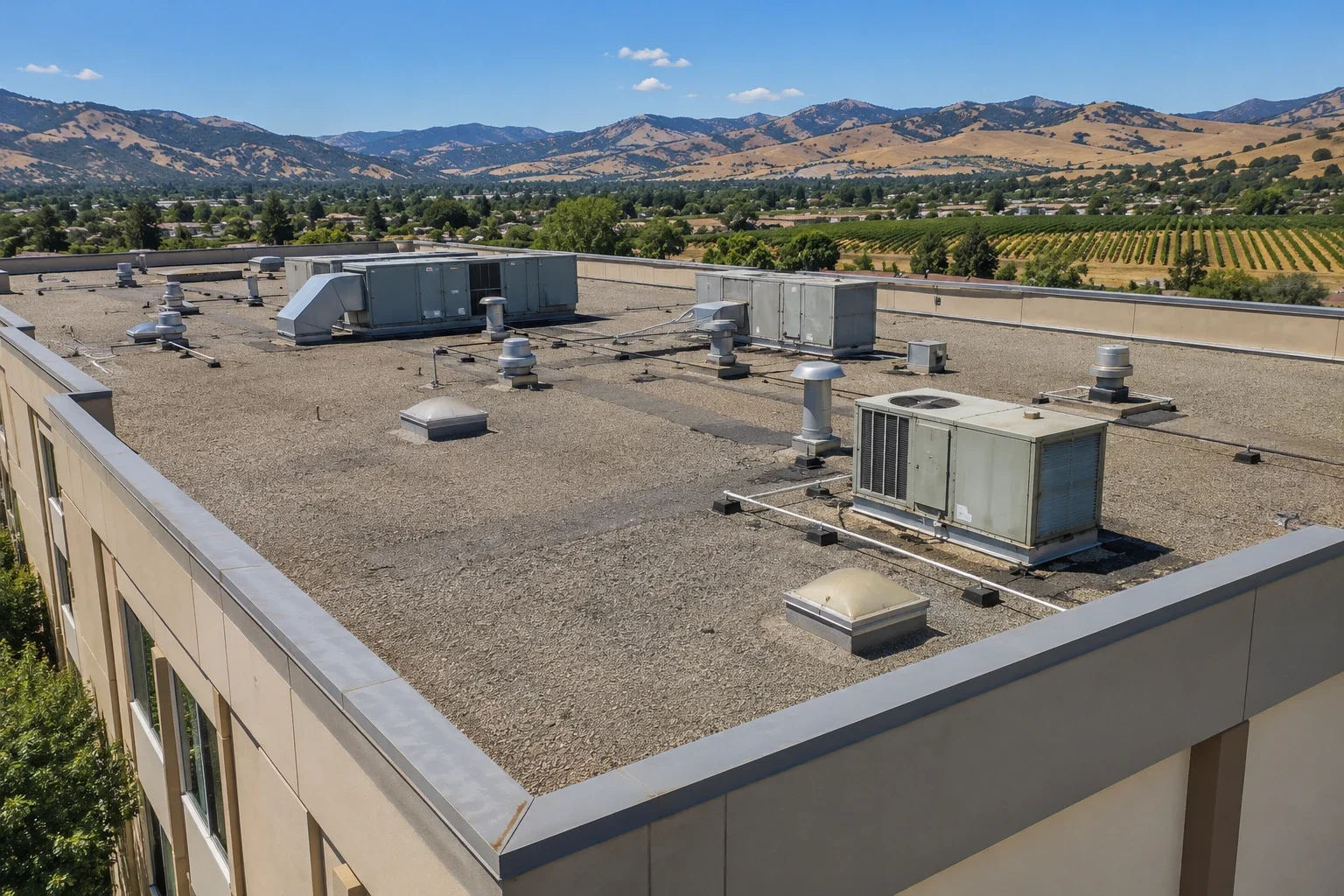
Reserve schedule, brand standards and ownership timing
Hotels run on reserves tied to revenue, and a franchise often sets inspection and replacement expectations on a schedule of its own. The roof report aligns with those requirements: the date of the last inspection, the grade, the remaining life and the planned action. When a property changes hands, the register becomes part of the diligence package, and a clean roof file supports the sale.
Carrying cost is the number that frames the choice. A leak into a guest room takes the room off the sales sheet, triggers a cleanup and risks a review that stays online long after the stain is gone. A planned replacement in the shoulder season costs less than an emergency repair in July, and the report sets the two side by side so the owner can see which path protects revenue. The comparison includes the cost of the rooms lost, using the owner's own rate and occupancy figures, and not ours, because only the owner knows what a room-night is worth in a given month. We supply the count of rooms and nights; the owner supplies the price.
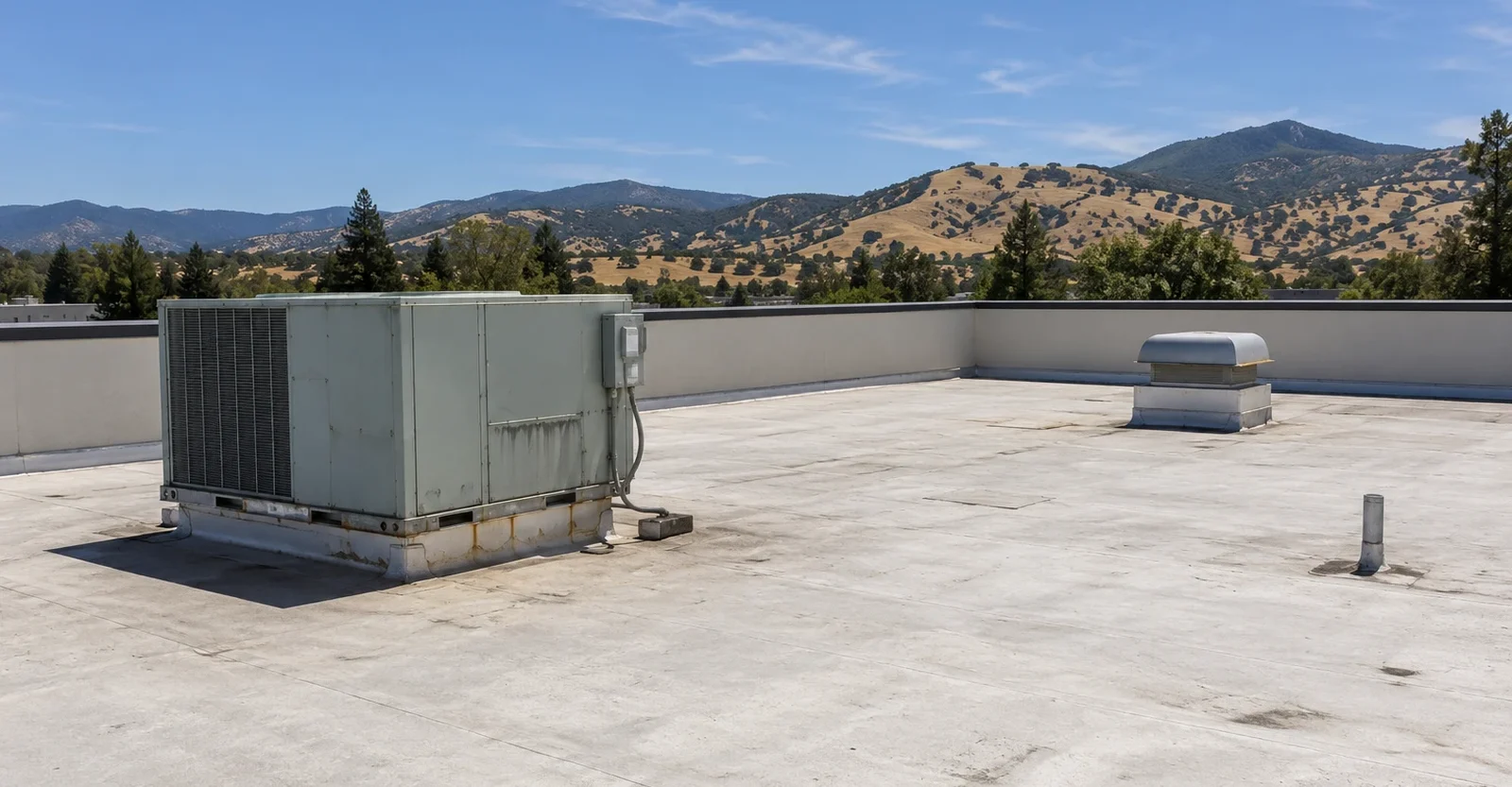
Occupancy, noise windows and the work calendar
The best work window is the shoulder season, after the summer peak and before the holidays, with the spring window as the second choice. We map the roof to the room plan and start over the wings with the lowest forecast occupancy. Loud steps are scheduled for the hours when guests are out, and the front desk receives a daily note that says which rooms may hear work.
Medford sits along Interstate 5, and Rogue Valley International-Medford Airport sits in the same valley, so a hotel near either one has arrival traffic to keep clear. Lifts and deliveries are placed away from the entry and the porte-cochere, and a flagger directs trucks. Early starts avoid the afternoon peak on triple-digit days, and shaded storage keeps materials cool. Each wing is dried in at day's end, and the next morning opens under a closed roof. Housekeeping receives the list of rooms to hold the day before, so no guest is assigned to a room under an open section, and the front desk can offer an upgrade when a hold falls on a booked night. Pool decks and entries are protected with fencing and signs, and we pick up debris from the lot every evening.
Smoke weeks, guest air quality and ember exposure
Smoke affects hotels through the roof and through the guest experience. The smoke tally reached 26 days in Medford in 2021, after the Almeda and Obenchain fires of 2020 cost Jackson County about 2,600 homes. After a heavy smoke month the roof carries soot that raises its temperature, and the rooftop air handlers load their filters quickly. A post-smoke visit cleans the surface and changes the filters, and it protects the air that guests breathe.
Ember exposure lives at the edges of a hotel roof, where gutters, vents and parapet caps collect debris. A pre-season clean costs little compared with the loss of a wing. We also check that the roof drains and scuppers are clear before the first fall storm, since a hotel roof that ponds in November feeds a leak into the busiest rooms of the holiday weekend. The report lists the fire rating of the covering for each section so an insurer can see it without a site visit.
Reporting for owners, operators and brands
Each hotel leaves with a roof register entry: grades, photos, drain map, penetrations, warranty and the next check date. Phasing sits in an occupied building reroofing plan, and a roof asset management program keeps the register current. A hospitality group with several properties can combine entries in a multi-site roof program. Related formats include apartment roofing and restaurant roofing for the on-site kitchen, TPO roofing suits many wings, and properties in Medford and Ashland follow the same plan.

Send the room plan, roof ages and leak tickets

Related Roofing Pages



Questions About Hotel Roofing
How many rooms go offline during a hotel reroof?
Only those under the open section, for the days it is open. We work wing by wing and start over the lowest-occupancy wing.
Why does a pool room need a moisture scan?
Humid air rises into the roof assembly and soaks the insulation, which the surface does not show. An infrared scan finds it.
When is the best time to reroof a hotel?
The shoulder season, after the summer peak and before the holidays, with spring as the second choice.
Does a franchise set roof requirements?
Many brands set inspection and replacement expectations. The report records the dates and grades they ask for.
What happens after a heavy smoke month?
We clean the surface and change rooftop filters, then log the work in the register.