
Data Center Roofing in Medford, OR
Data center roofing in Medford, OR: leak-averse assemblies, heat rejection equipment and smoke-season filtration planned around 115 F extremes and access rules.
Overview
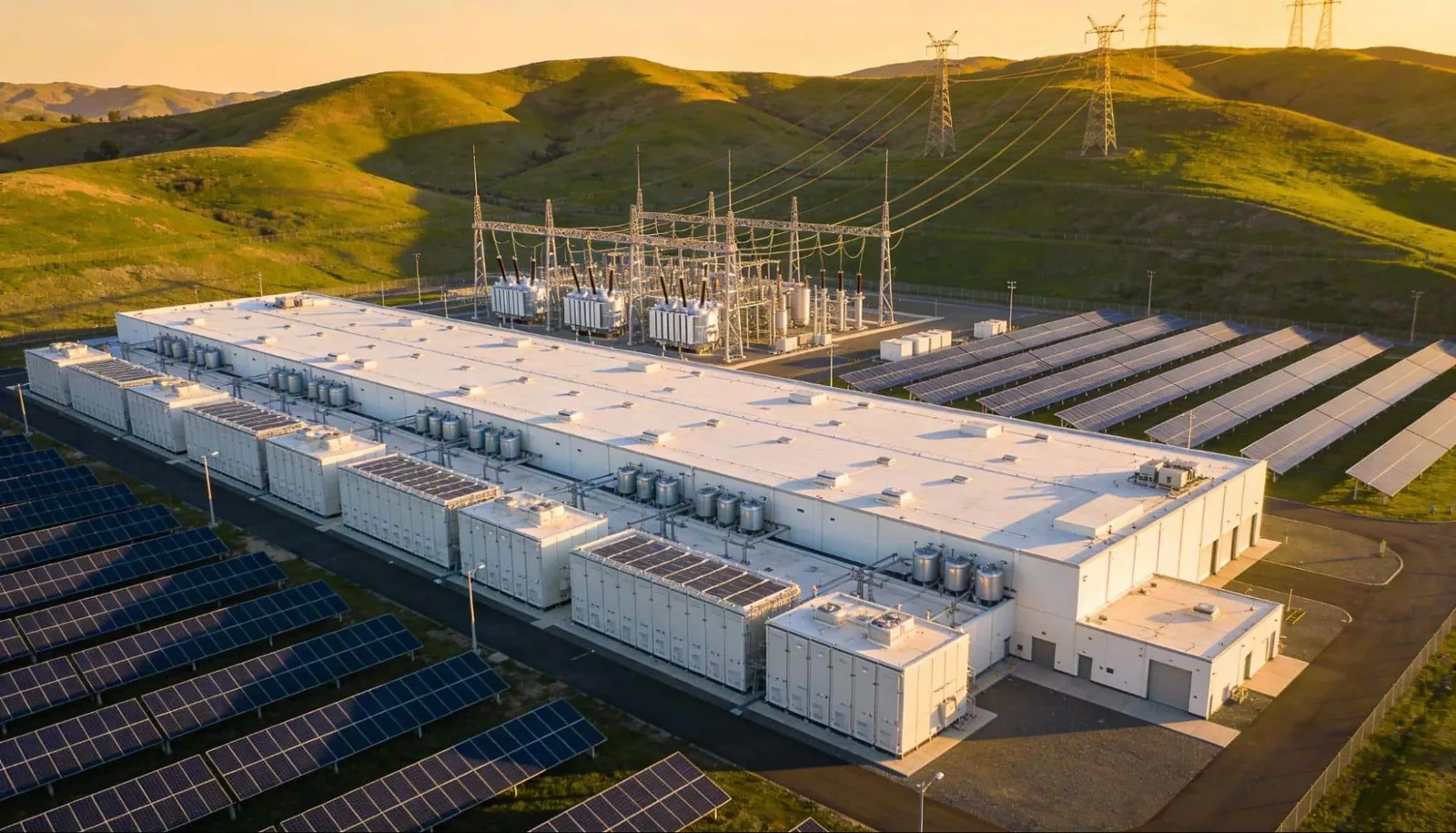
A data room asks the roof above it for something unusual: to do nothing, perfectly, for years. A drip over a rack is not a stain but an outage, and the roof is competing with a climate that works against it. In Medford, OR the thermometer passes 90 F on 61 afternoons and 100 F on 11, and the record high is 115 F. Rooftop heat rejection equipment works hardest on those same afternoons, just when a roof's seams, curbs and flashings carry their heaviest thermal stress. The reserve schedule treats the roof as a routine line item; the building treats it as a risk control.
A condition grade and a remaining-service-life estimate for the roof over critical space turn that risk into a date a property manager can plan around.

The building and its roof
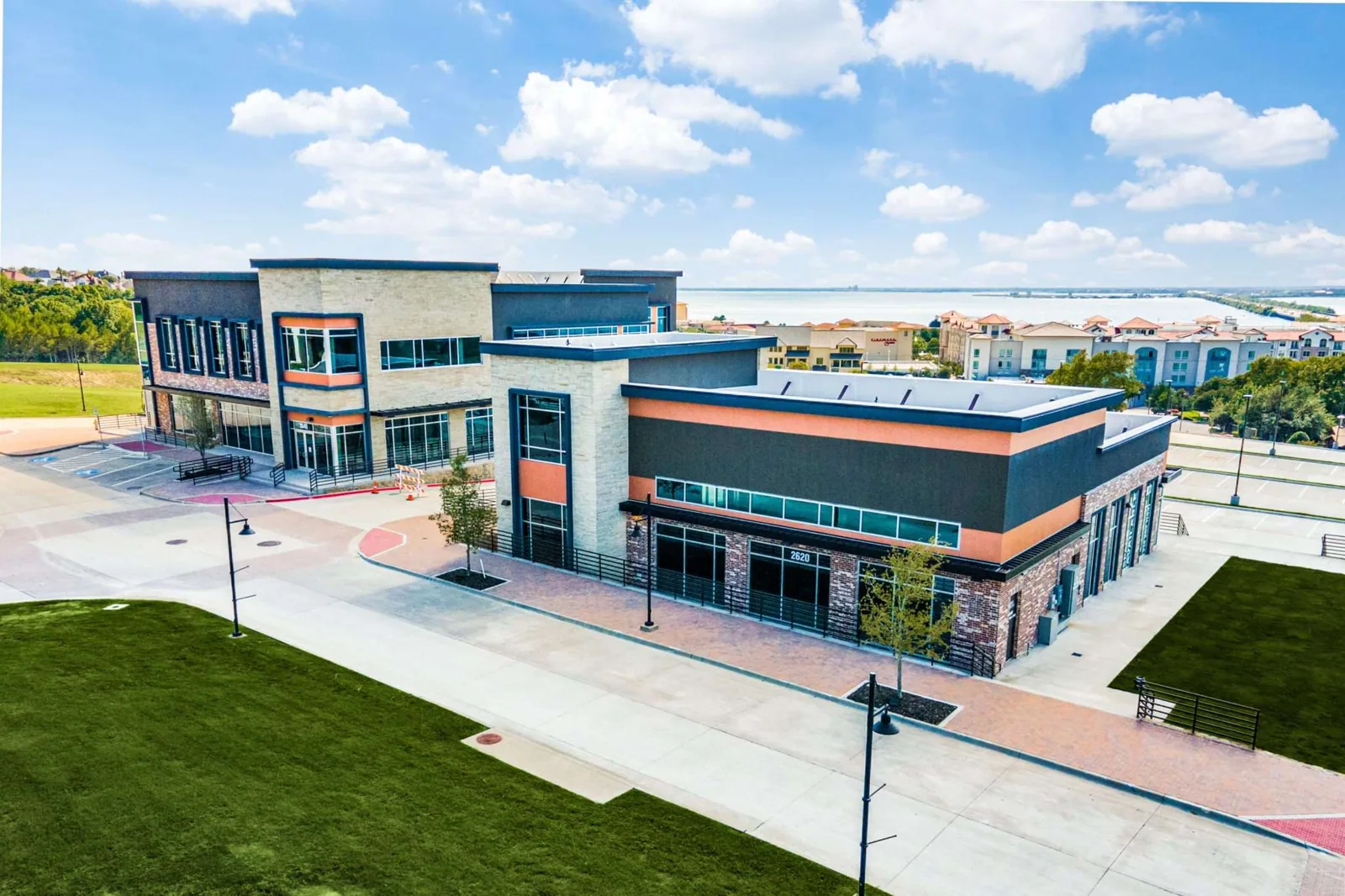
Critical technology space comes in several forms: a stand-alone hall, a server room inside a hospital or corporate office, a telecom room in a public building. Where a hospital such as Asante Rogue Regional Medical Center, the VA campus in White City or a corporate office in Medford has such space, the roof above it is graded the same way and held to a stricter standard than a storage roof. Compare the hospital and office building roofs that usually house it.
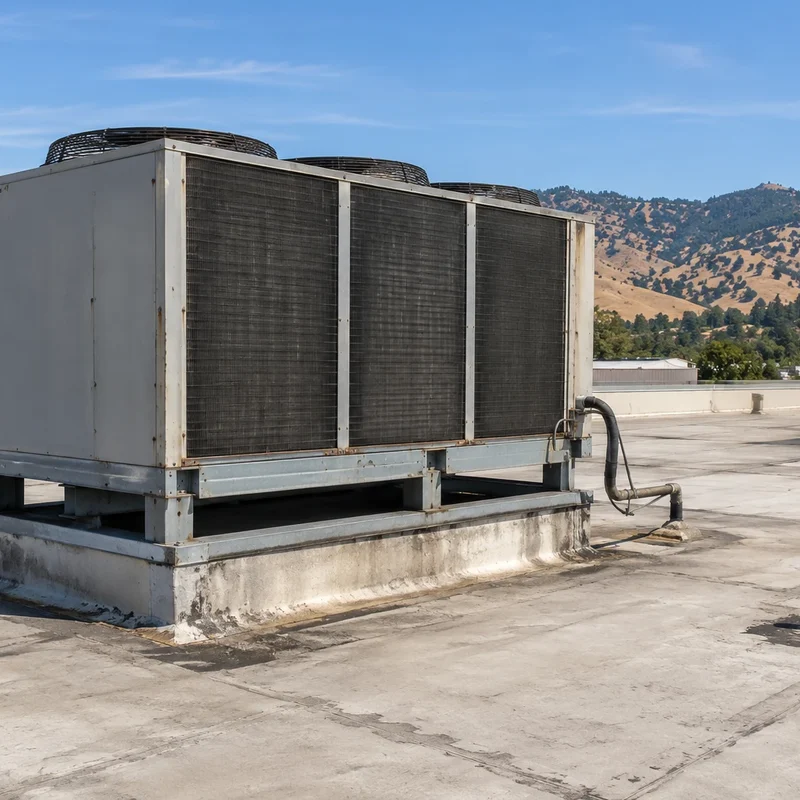
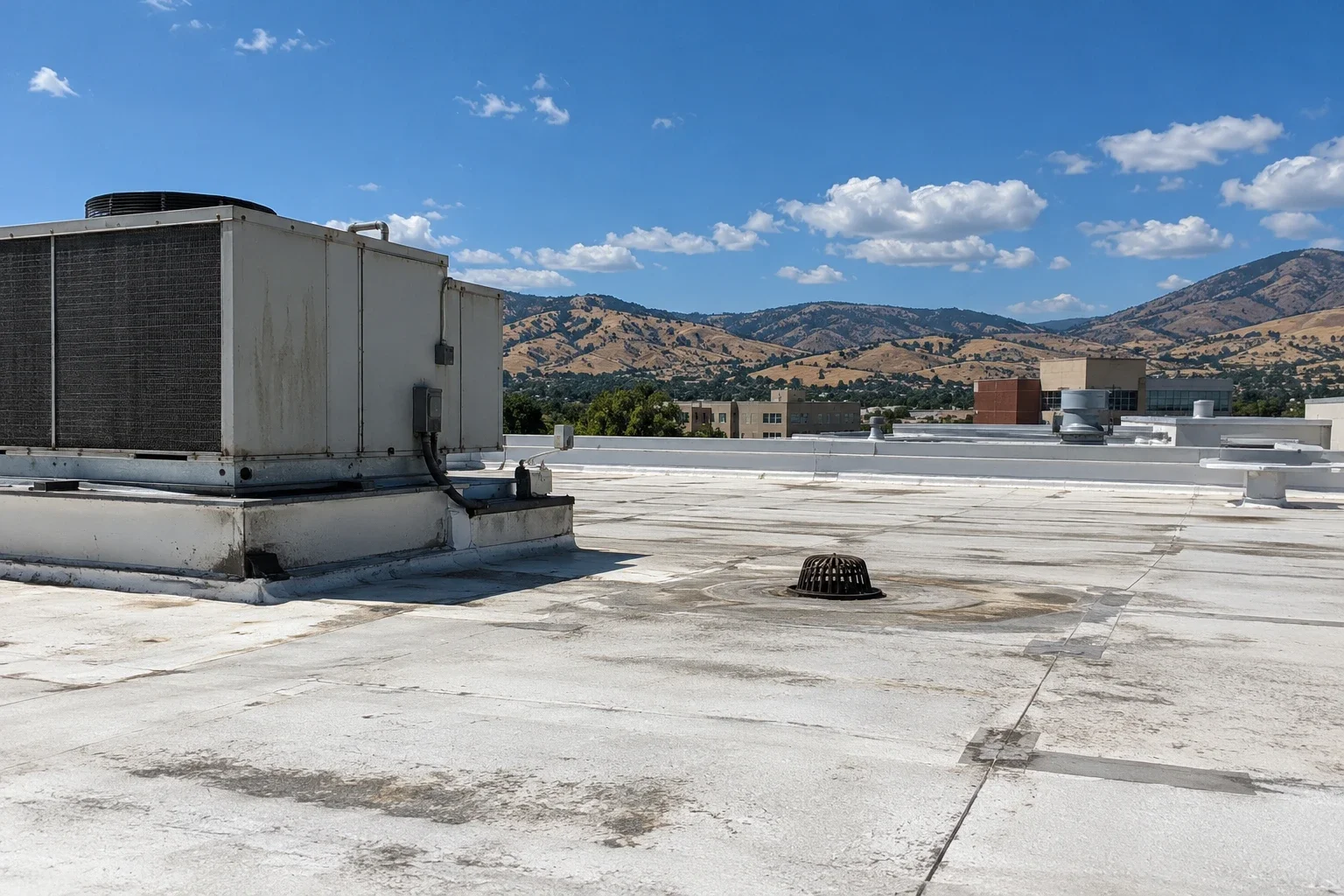
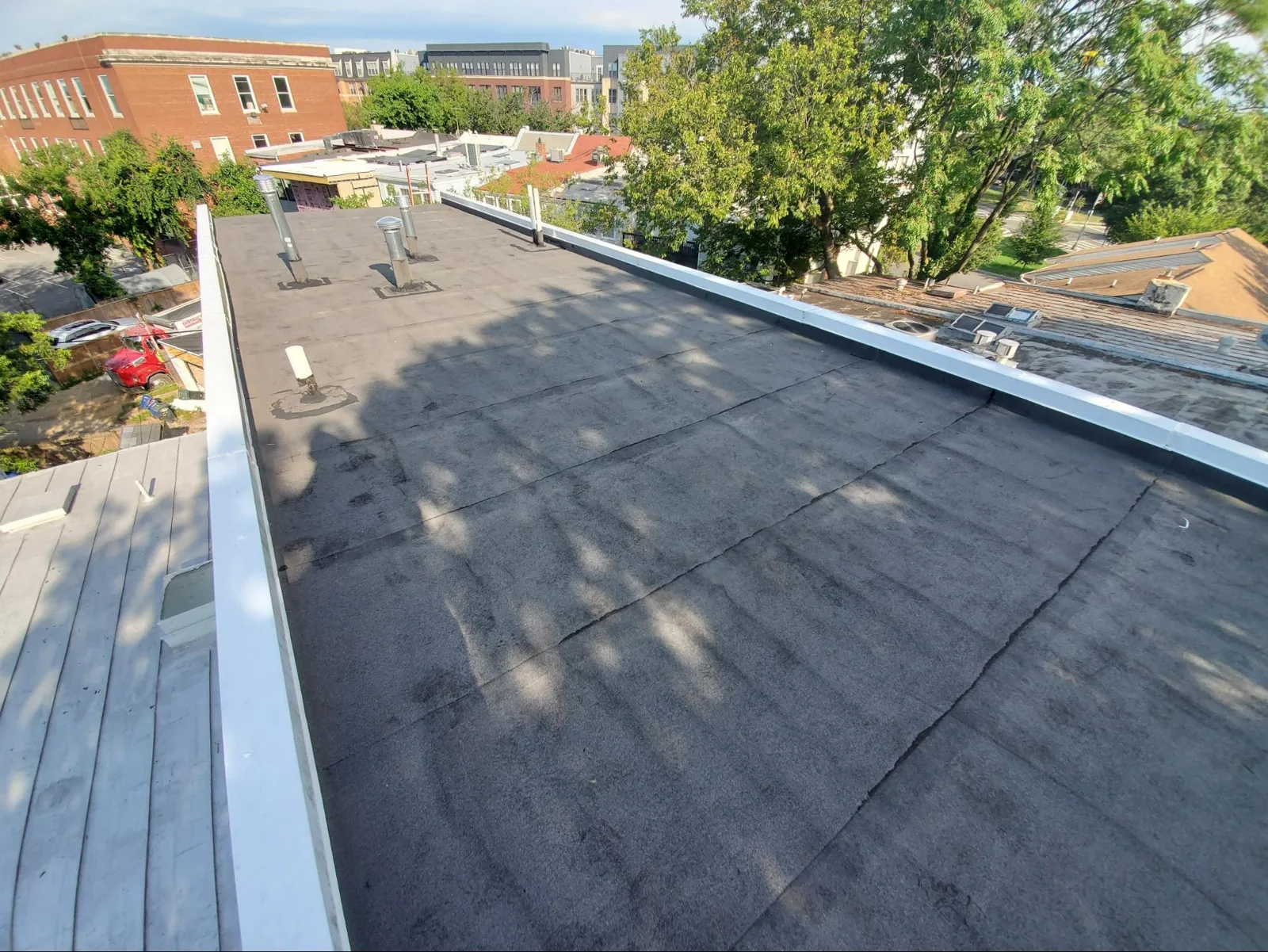
These roofs usually carry chillers, dry coolers, condensers, generator exhaust and conduit runs. Each is a penetration, a curb or a support, and each needs a flashing detail that stays tight through years of vibration and thermal cycling. We map every one on the roof plan, count the penetrations per square foot and record the condition of each flashing.

Heat, UV budget and heat rejection
Surface temperature on a dark membrane runs far above the air on a 100 F afternoon, and a reflective roof reduces that gain and trims the load on mechanical plant. The UV budget of the sheet is spent on the valley's clear days, and reflectance falls as dust, pollen and ash settle. In a data room, reflectance loss costs cooling energy on top of aging the roof.
Equipment adds its own heat. Hot exhaust from dry coolers and generators can soften membrane and degrade sealants near the discharge. We grade the zones around equipment separately, protect them with walkway pads and splash sheets and note any that need a heavier gauge. The condition grade records reflectance, seam condition, flashing condition and drain health.
Condensate and drain discharge from equipment need a plan. Water that runs onto the membrane near a curb leaves a stain at best and a pond at worst, and ponding speeds aging. We direct discharge to drains, add splash pads and check that the roof slopes away from equipment pads.

Redundancy, moisture detection and layered assemblies
The usual answer for critical roofs is redundancy: more than one layer between the weather and the ceiling. A layered modified bitumen or built-up assembly, or a single-ply with a secondary membrane, means a puncture in one layer is backed by another. Cover board protects the insulation, and tapered insulation prevents ponding.
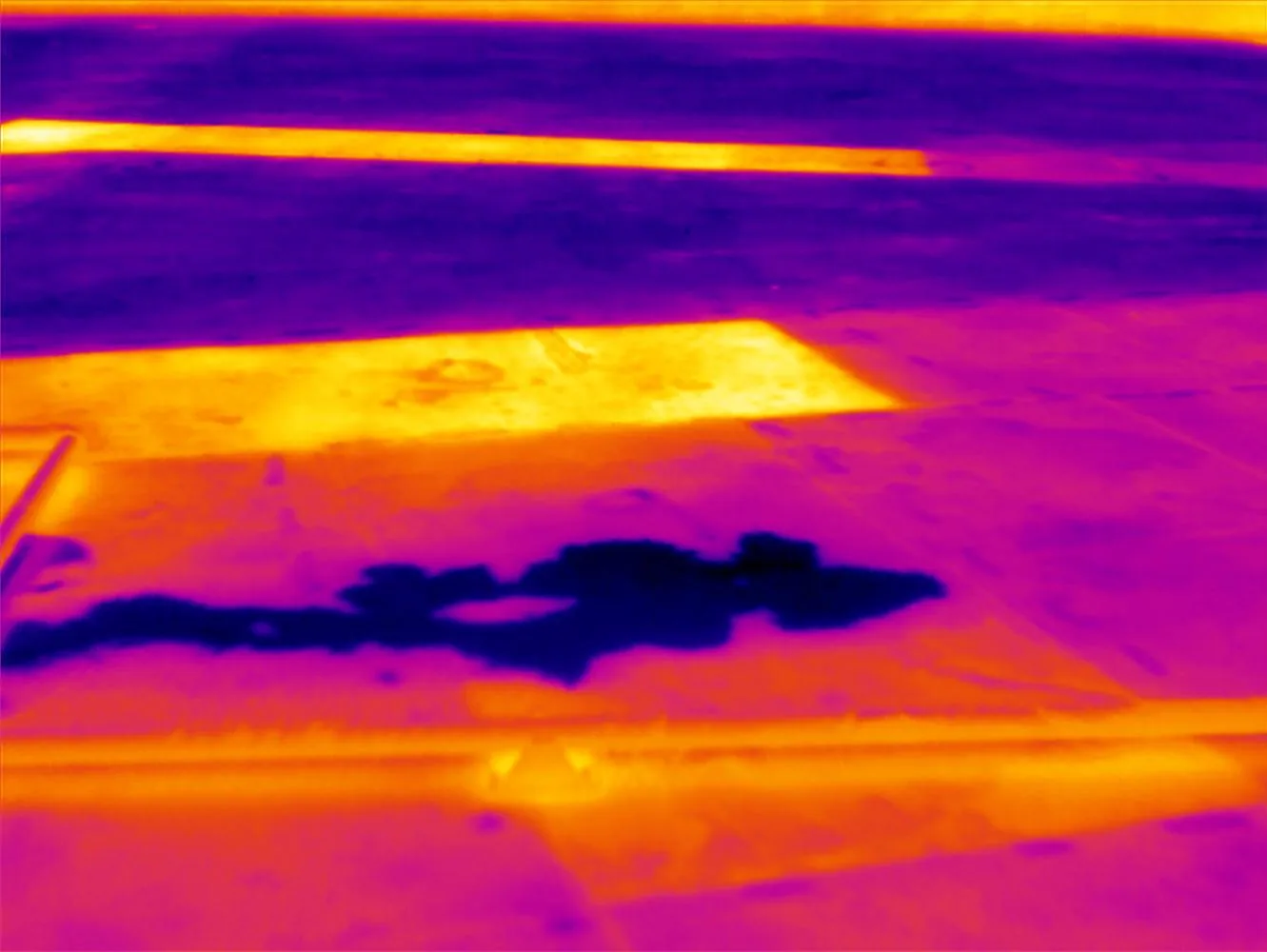
Moisture detection is the other tool. An infrared survey after sunset maps warm patches that signal saturated board, and core cuts confirm them. For high-consequence roofs, a permanent leak-detection grid under the membrane can alert operators to water before it reaches the ceiling. We discuss that option with the owner and price it as an alternate. Our infrared moisture survey is the usual first step.
Penetration discipline is part of the design. The fewer holes in the roof, the fewer leak paths, so we recommend consolidating conduit and pipe runs onto shared supports and capping abandoned penetrations. Each remaining one is flashed to the roof maker's detail and recorded with a photograph.

Smoke season, filtration and ember exposure
State air monitors were topped by the 2020 Almeda fire smoke, and 26 smoke days followed in Medford in 2021. Particulate matters to a data room: air handlers pull outside air through filters, and soot loads them quickly, raising pressure drop and shortening filter life. Roof-mounted intakes and economizers are the exposed points.
After heavy smoke weeks we recommend replacing roof-mounted filters, wash soot from the roof surface and clear drains of ash. Because wildfire destroyed about 2,600 homes across the county in 2020, ember pathways at edges and penetrations belong on the checklist. The owner report records the event and the work, because an outage investigation will ask what was done.

Access rules, permits and quiet work
Critical facilities control who goes on the roof and when. Badging, escorts, hot-work permits and change freezes are routine, and a reroof has to fit inside them. We ask for the access rules at the start, name the crew in advance and plan the work in small sections that close each day.
Noise and vibration can matter below. Torch, grinders and heavy foot traffic travel through a structure, so we use cold-applied or mechanically attached methods near sensitive rooms where practical. Dust control and a clean roof at the end of each shift protect air intakes. We schedule outside windows the operator names, and we hold a make-up week for weather.
Site selection shapes the roof question. A stand-alone facility near the Interstate 5 spine or in an industrial setting such as the Phoenix Industrial Park, zoned heavy industrial and rail-served, has a large roof with few occupants and a lot of plant, while a server room in a downtown office has a small roof and a tight neighbor. We adapt the access plan and the staging to each.
Reserve schedule, code and lease timing
For critical space, the roof is replaced on condition and not on the calendar. A conservative owner swaps it before the remaining service life reaches the point where a leak is likely, and the reserve schedule carries that date. Oregon's 2025 Structural Specialty Code, mandatory since April 1, 2026, applies to a data room reroof, so the scope is checked against it.
A recover is rarely the answer over critical space, because the old roof stays in place and any moisture in it stays too. We scan, core and show the choice with prices, and the owner decides. The roof register carries the grade, the cost range and the cost of waiting.
Work window and closeout
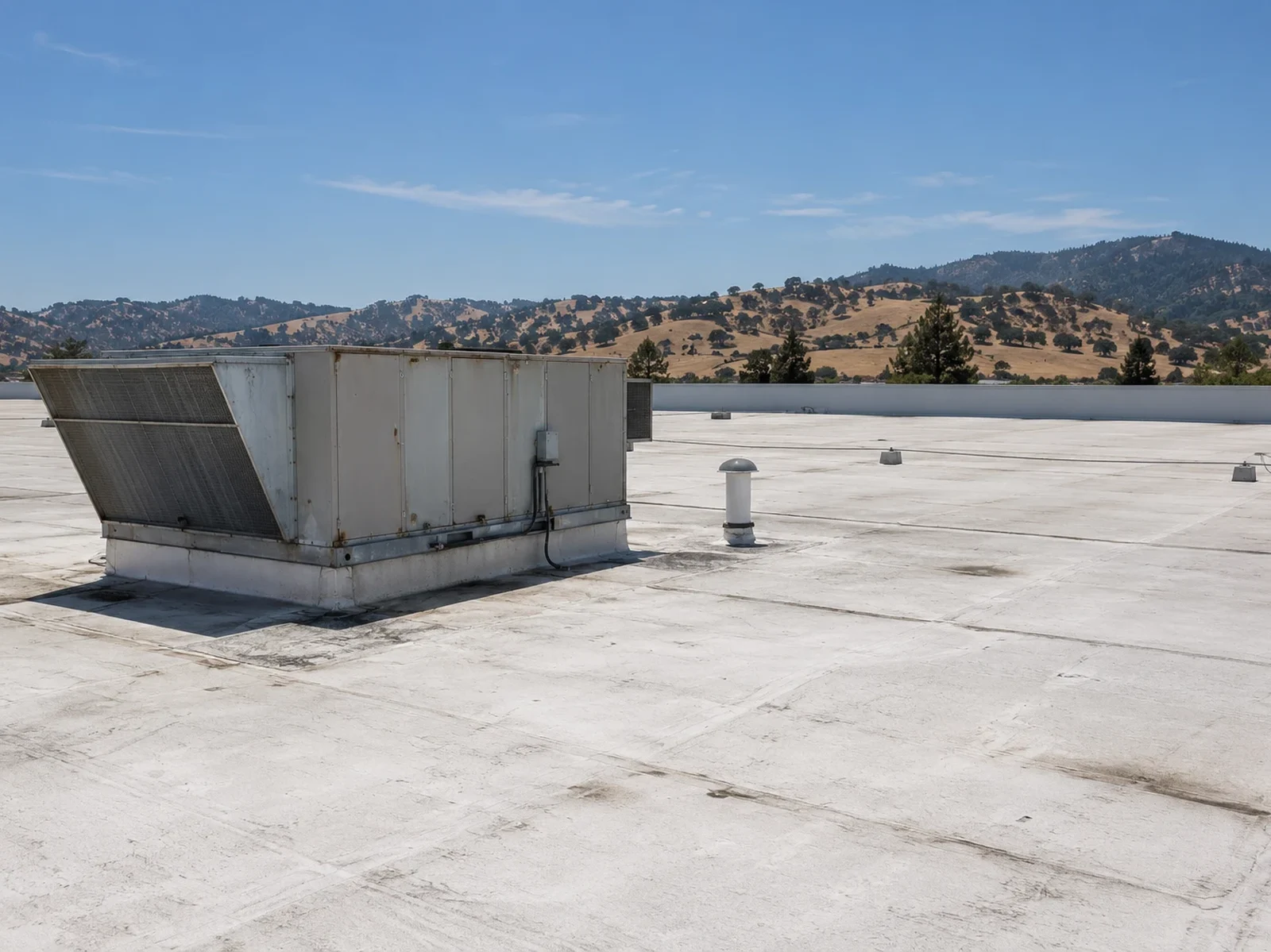
The spring work window gives the best conditions for welding and adhesives, and it avoids the heat of high summer, when mechanical plant is working hardest and the roof is least comfortable to work on. Summer jobs start at dawn. Closeout includes photographs of every curb and flashing, a water test at drains and low spots where the owner asks for it, the warranty file and a new register entry.
Preventive maintenance visits renew the grade each spring and after any smoke event, and the operator's facilities team can ask for the record at any time.
Send the building list and access rules
Related Roofing Pages
Questions About Data Center Roofing
Why do critical roofs use layered assemblies?
One layer's failure is backed by another. A leak must cross both to reach the ceiling.
Is a leak-detection grid worth it?
For high-consequence space, often. We price it as an alternate.
Can torch work happen over a data room?
Usually avoided. Cold-applied and mechanically attached systems are preferred.
Does smoke affect cooling plant?
Soot loads roof-mounted filters. We recommend replacing them after heavy smoke weeks.
How often should the roof be graded?
Every spring, and again after smoke or a storm, with the results entered in the register.