
Office Building Roofing in Medford, OR
Office building roofing in Medford, OR: how sun, smoke and rooftop units age a flat roof, and how a condition grade fits lease cycles and the owner report.
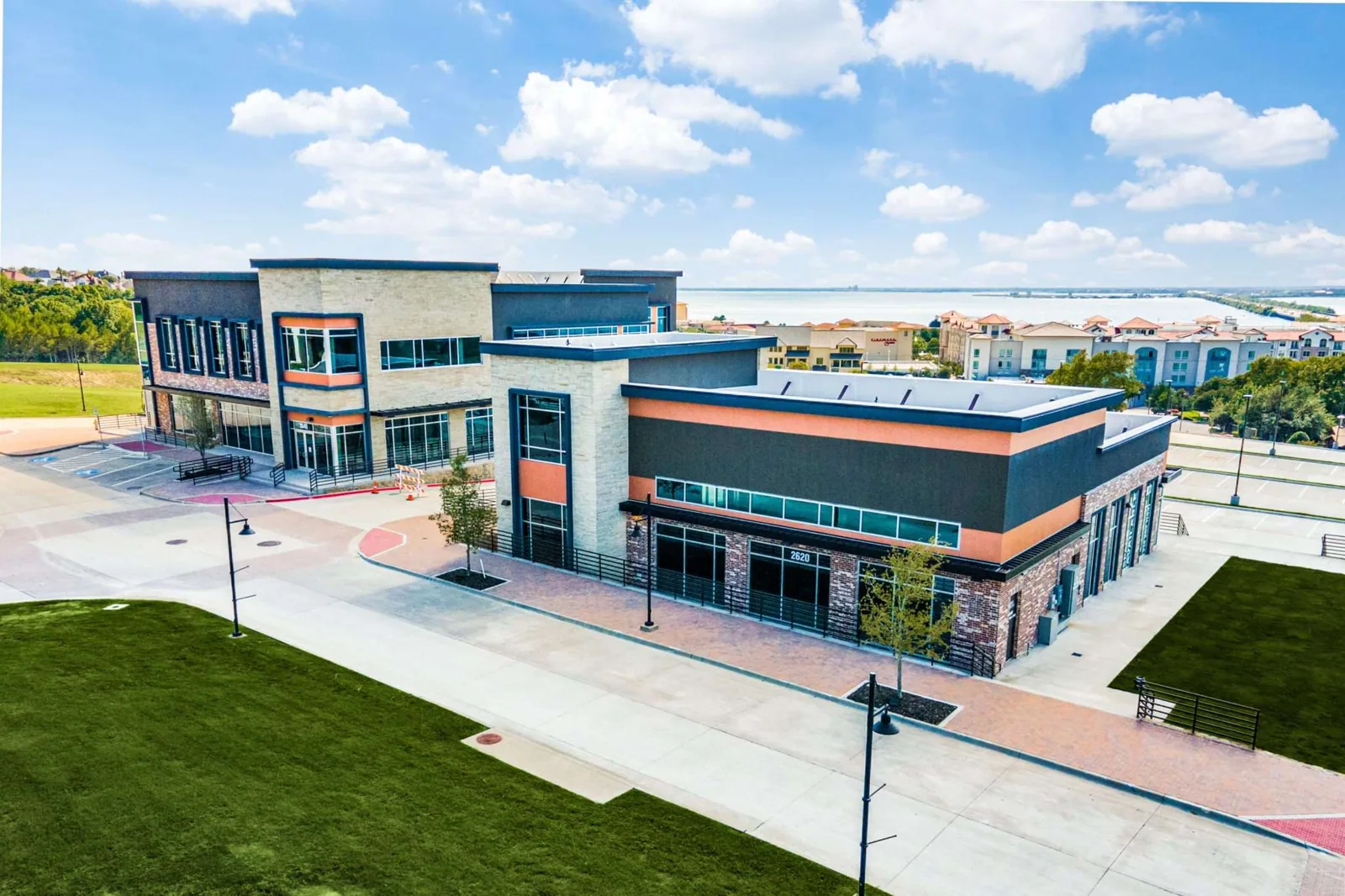
Overview
An office roof in Medford, OR looks small next to a warehouse, and it carries more per square foot. Rooftop units, exhaust fans, roof hatches and antennas crowd a modest area, and each one is a place where sun, heat and foot traffic meet the membrane. Under 61 afternoons in the 90s or hotter, 11 at 100 F or hotter in a typical year, with 115 F on record, the units beneath that sun run hardest on exactly the afternoons the roof is most stressed. Tenants notice a drip faster than they notice anything else the owner does.
For a property manager, the useful output is a condition grade each spring and a remaining-service-life estimate that fits the lease calendar.
The building and its roof
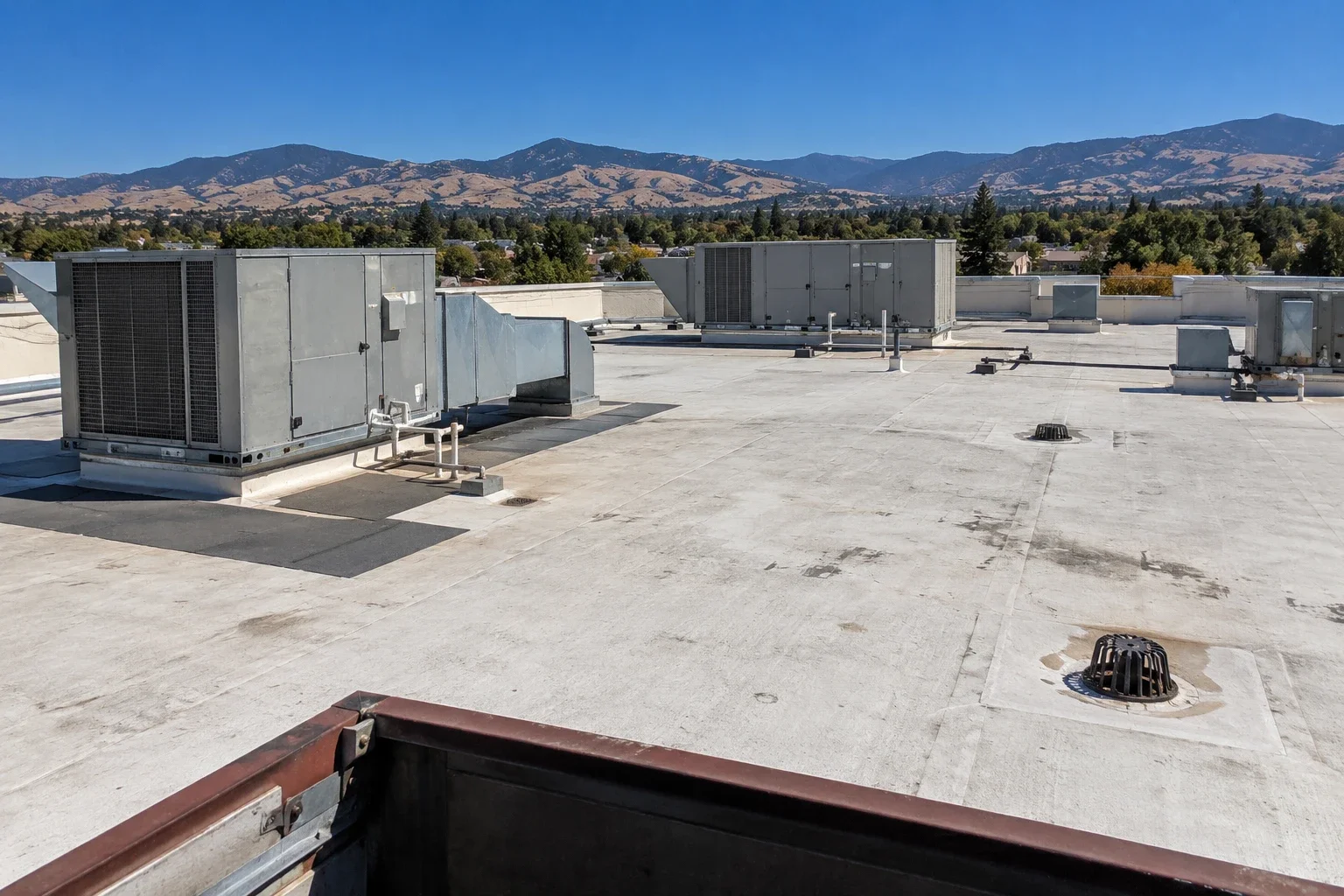
Office roofs in the valley range from single-story professional buildings to multi-story downtown blocks. Lithia Motors, a Fortune 500 auto retailer, has had its headquarters in Medford since 1970, while Rogue Community College and a joint RCC-Southern Oregon University center bring institutional buildings of their own. Civic and cultural sites in downtown Medford include Vogel Plaza and the Children's Museum of Southern Oregon, which moved into a new downtown home in 2022.
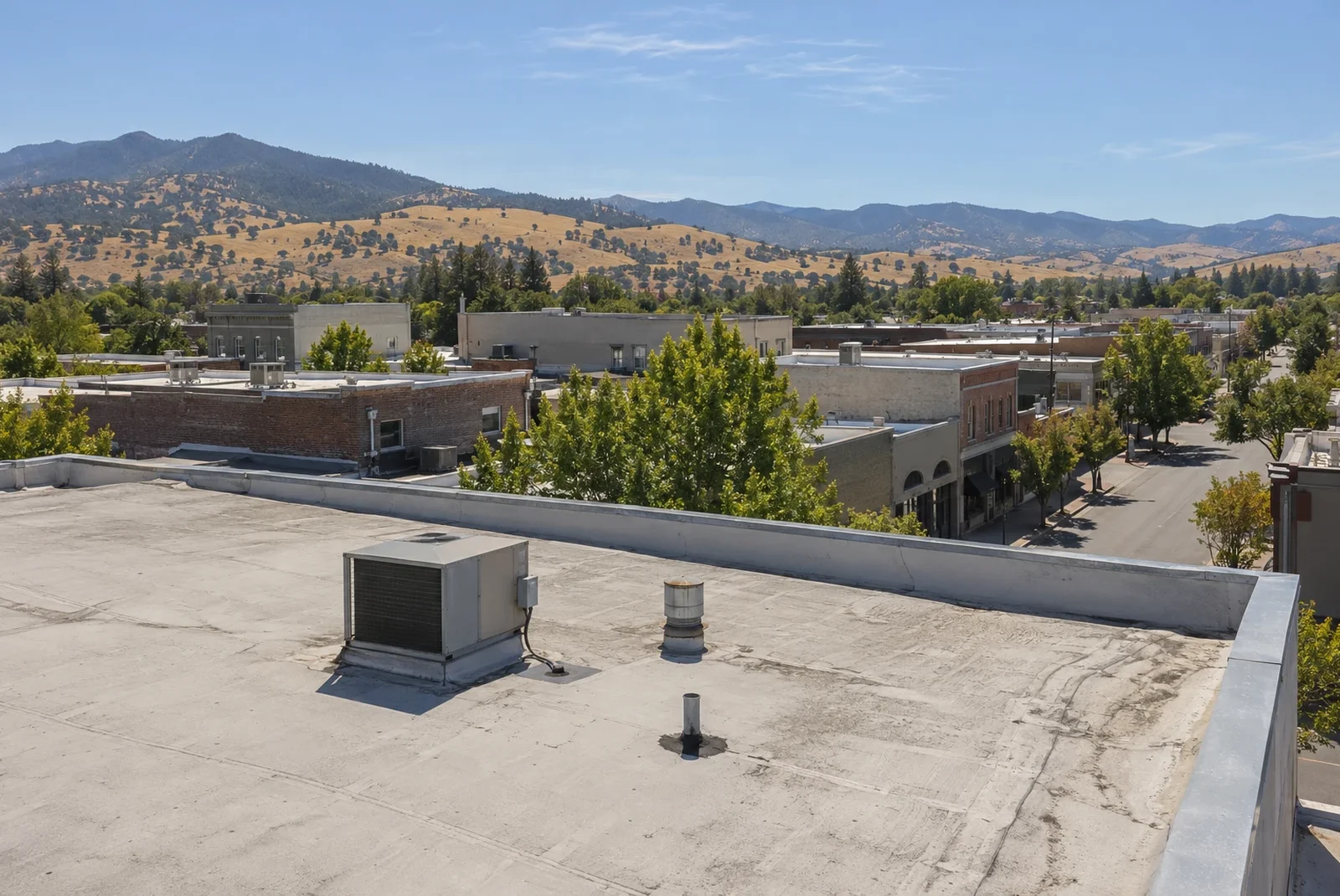
Downtown's aged masonry stock is illustrated by the Carnegie library, which closed in 2004 after 92 years of service to the city. We do not assume a roof's system from the address. The first visit pins down the membrane, the penetration count, the drain locations and the slope, and those findings open the roof register entry.
Multi-story offices have a different edge condition. Parapets are taller, scuppers and internal drains carry more water and wind effects are stronger at the corners. We check parapet flashing, coping and scupper condition first on those buildings.
Heat, UV budget and rooftop units
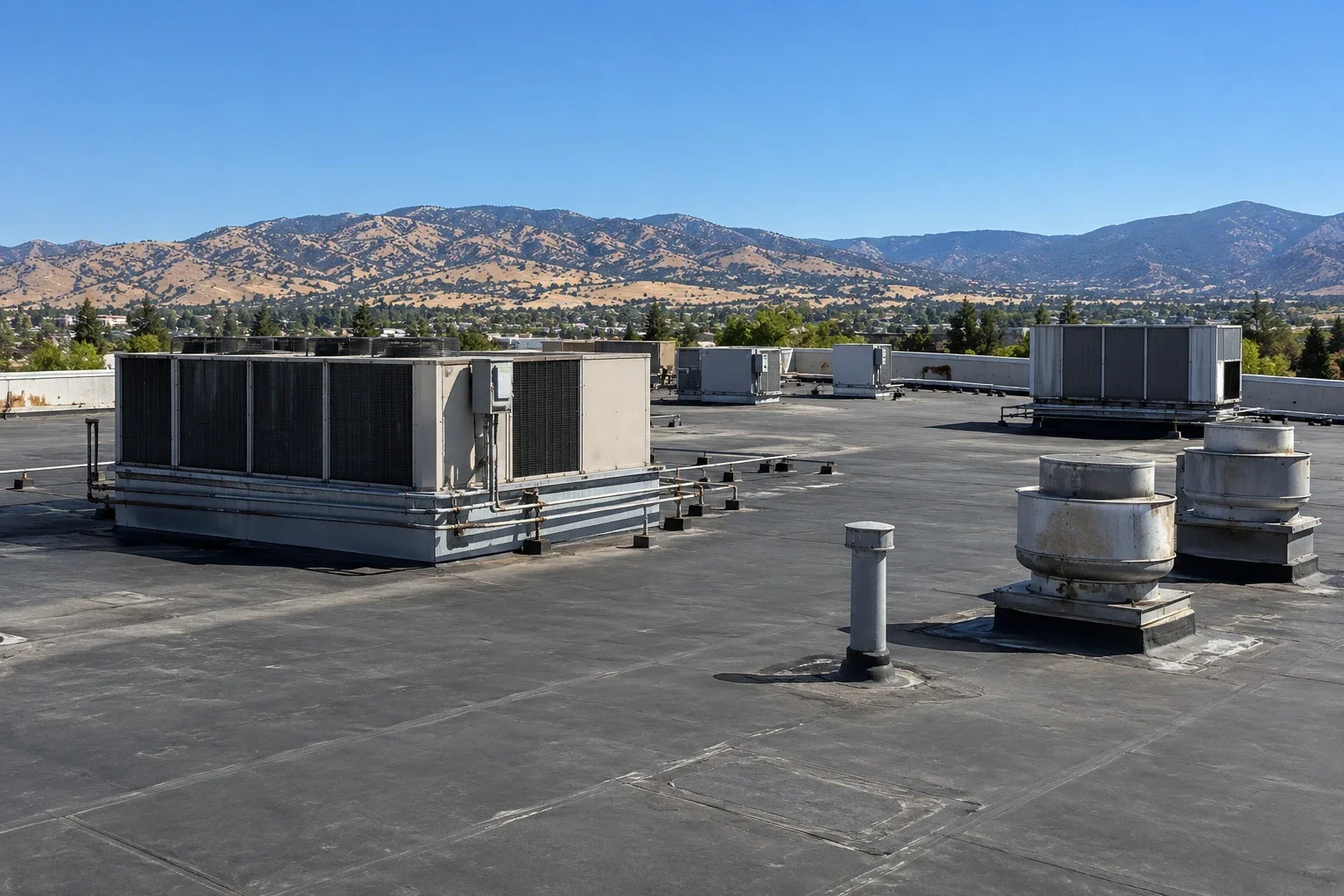
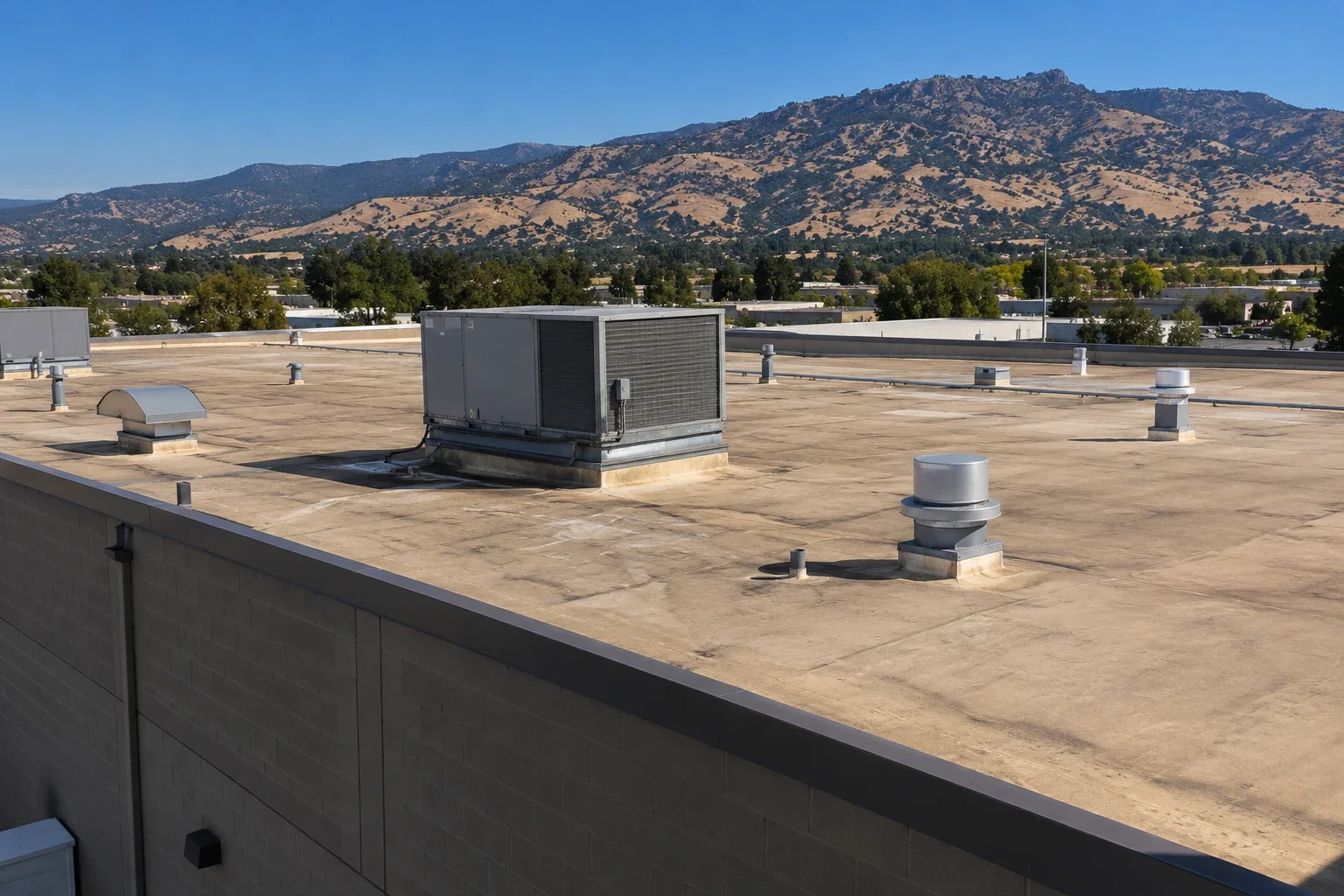
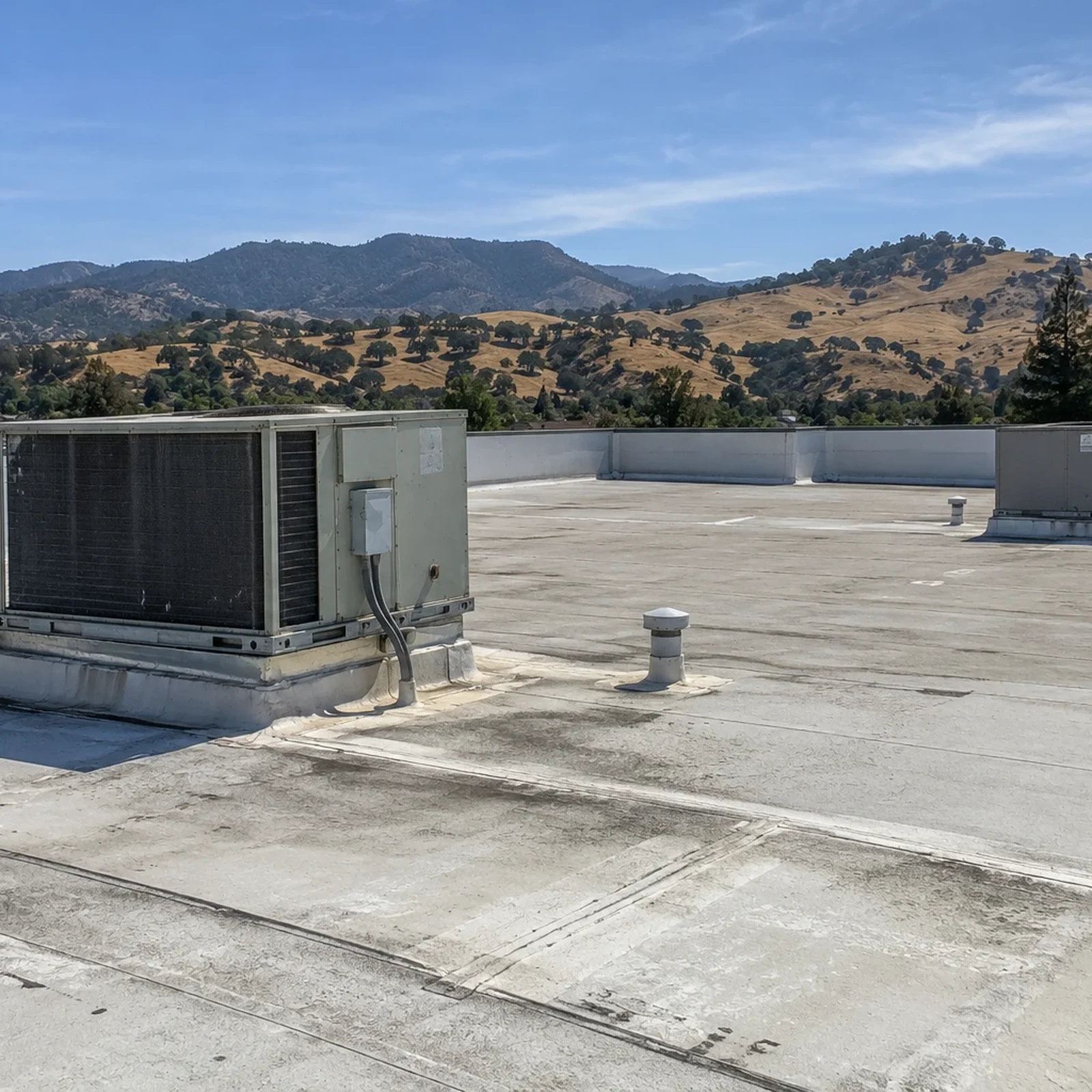
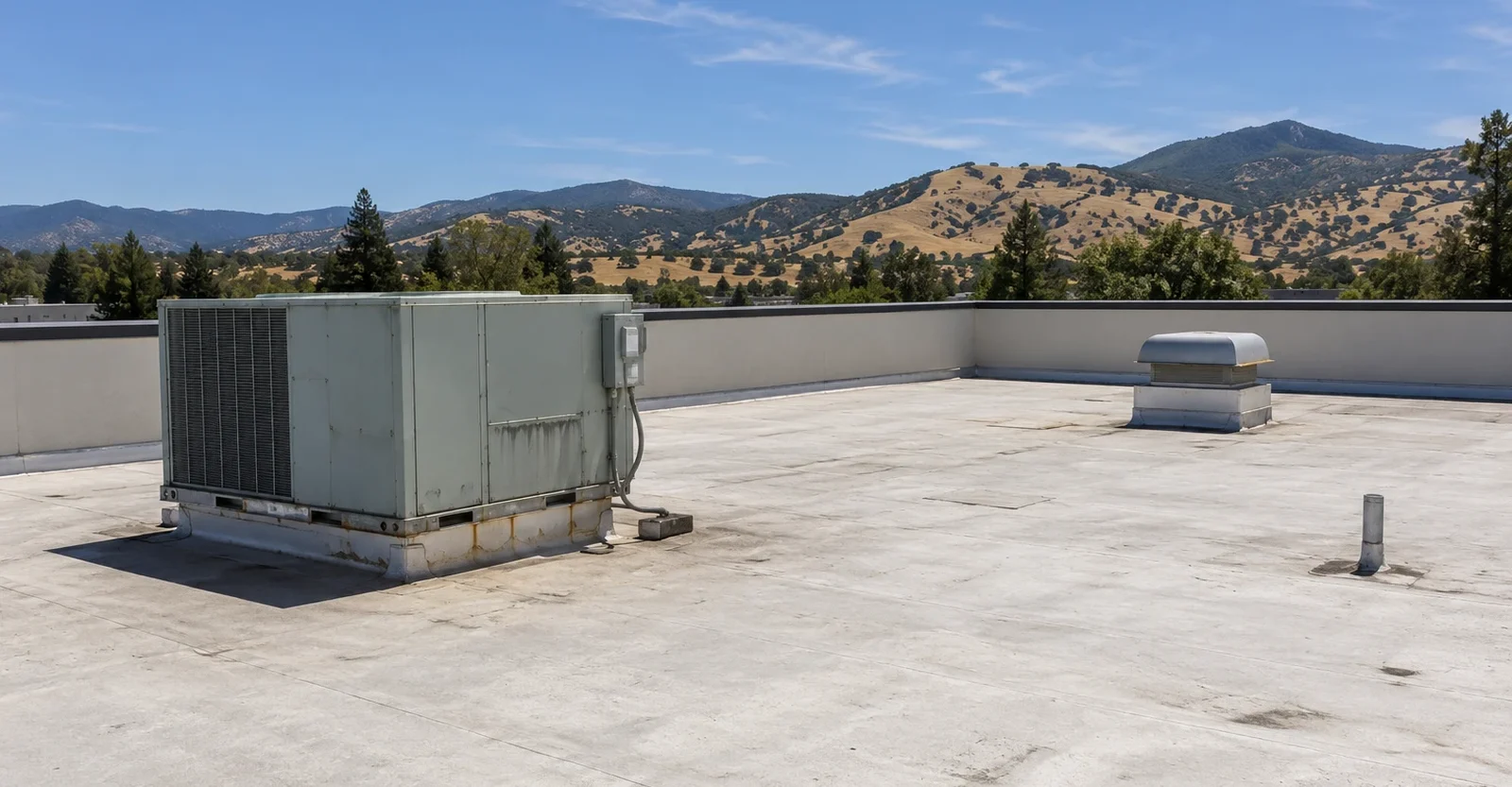
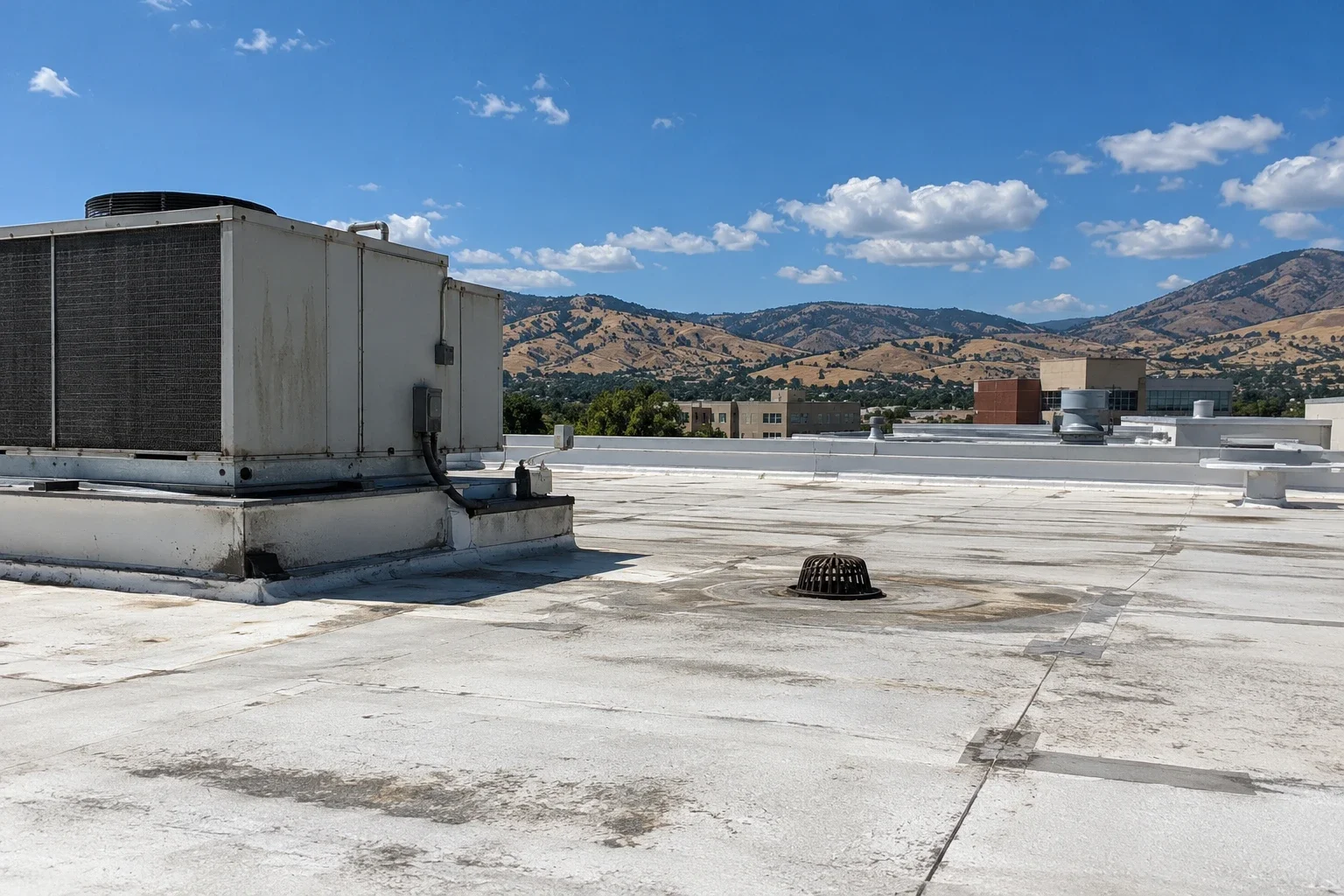
Rooftop units move heat and air, and they leave heat on the roof. Condenser discharge raises the surface temperature around a unit, and service visits wear paths between hatches and equipment. The sun spends the UV budget evenly across the field, and the zones around units age faster. Seams and flashings at curbs are the first to lift or crack.
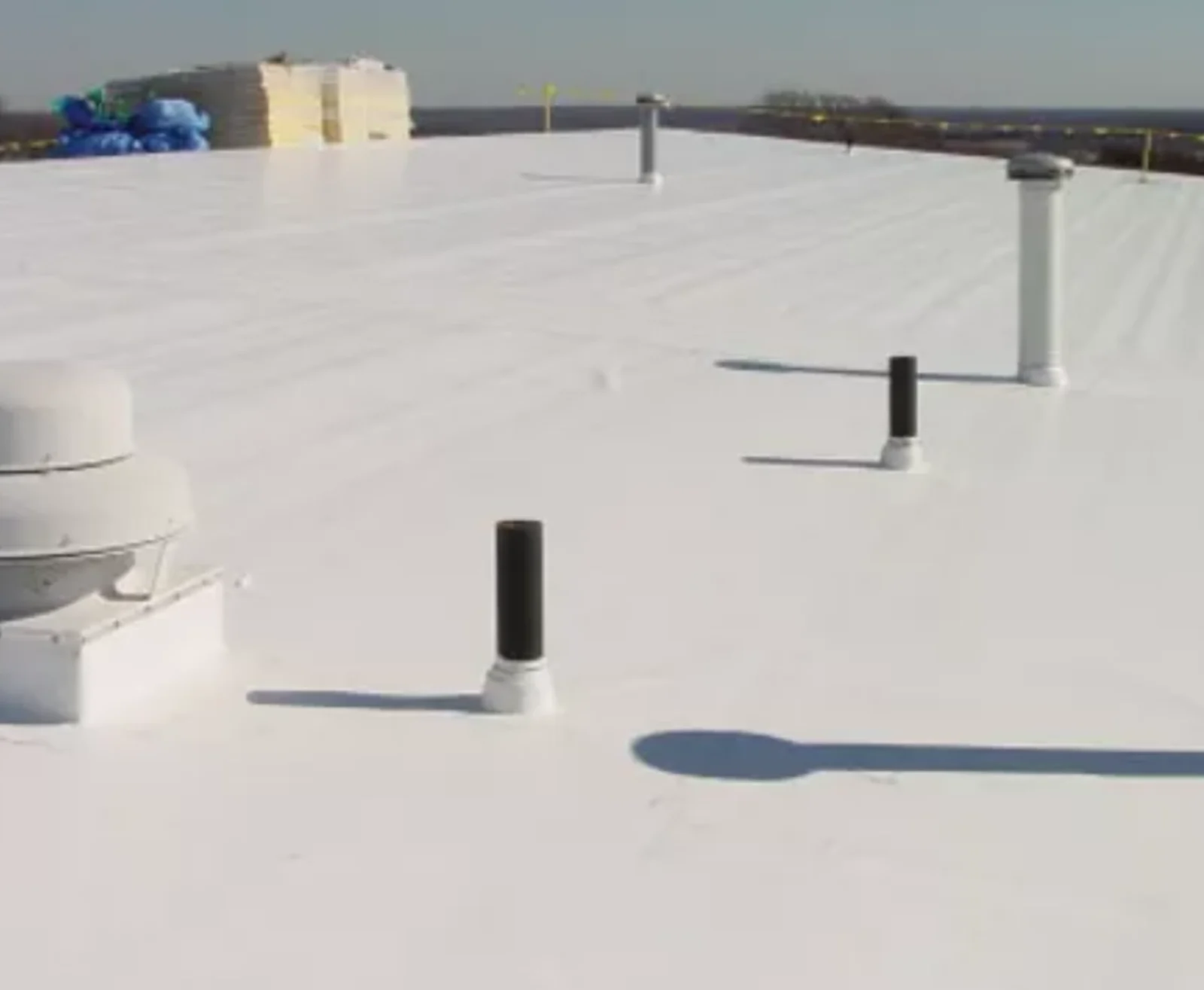
The condition grade maps those zones. We record reflectance, seam condition, curb flashing, walkway wear and drain health, and the remaining service life follows. A reflective roof trims the cooling load on the units beneath it, which matters on a building whose tenants pay by the square foot. Reflectance loss from dust and soot is a cooling cost as well as a roof-aging cost.
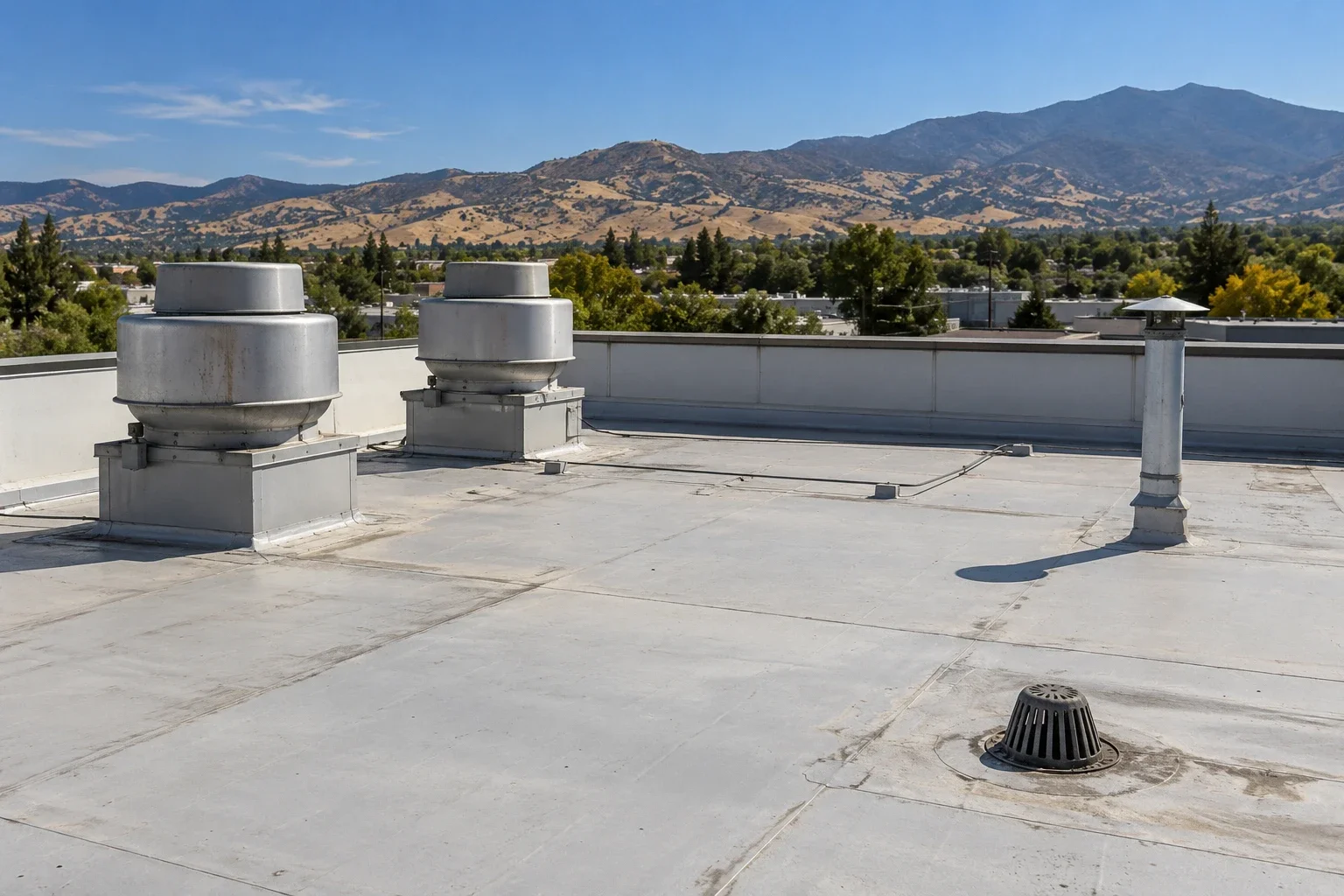
Hatches and ladders deserve a note. A roof that is hard to reach is a roof that is not maintained, so we check access, fall protection tie-off points and the safety of the route, and we list what is missing. A clear route to every unit shortens service visits and protects the membrane.
Smoke season, filters and ember exposure
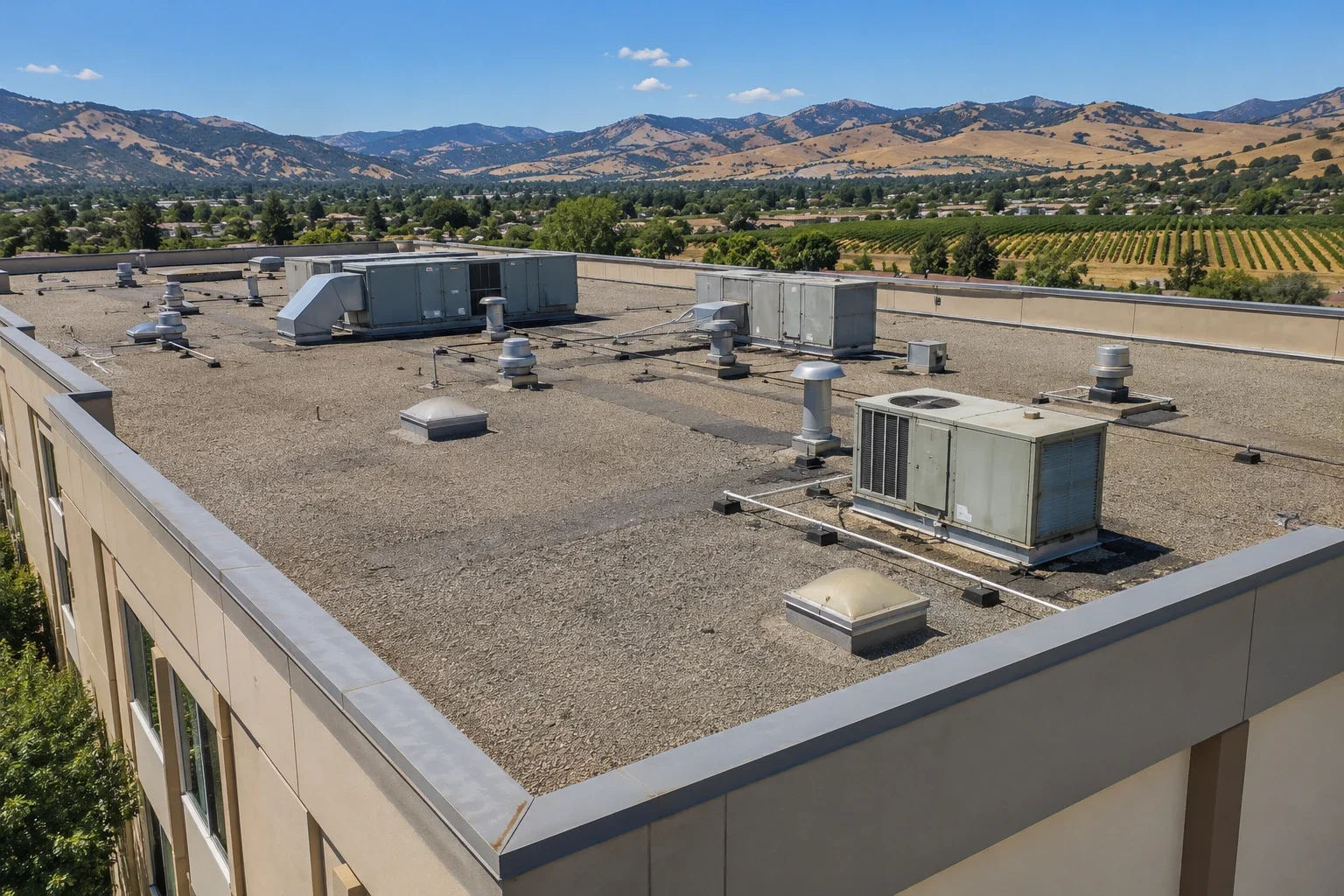
Wildfire left Medford with 26 smoke days in 2021, after about 2,600 homes in the county were destroyed in 2020. For an office, smoke means loaded intake filters, tenant comfort complaints and soot on a white membrane. Ash settles into drains and around curbs, and embers can lodge at edges and in rooftop equipment.
After a heavy smoke week we wash the roof, clear drains, replace roof-mounted filters and inspect edges and penetrations. The owner report carries dates for the event and the work, which answers tenant questions and supports insurance. Before fire season we remove debris and check gaps where embers could find a path. A roof register entry makes the next year's walk faster.
Valley floor, downtown and corridors
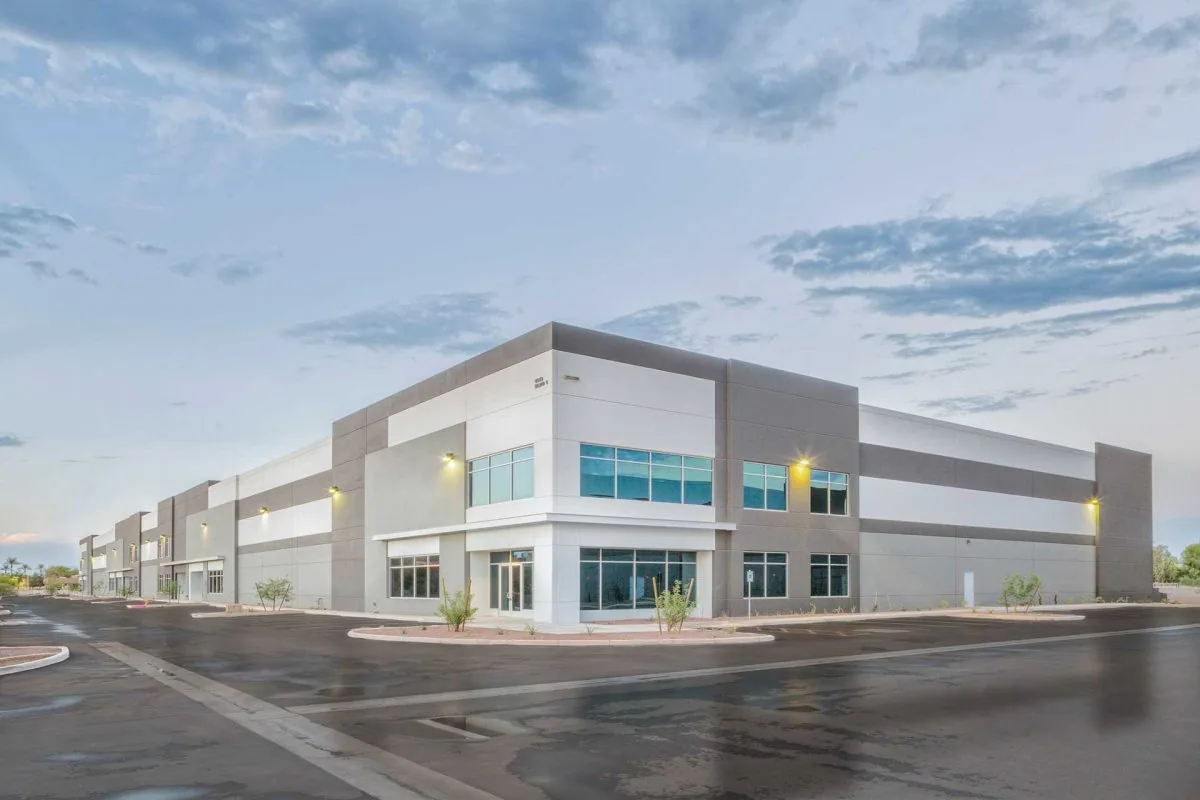
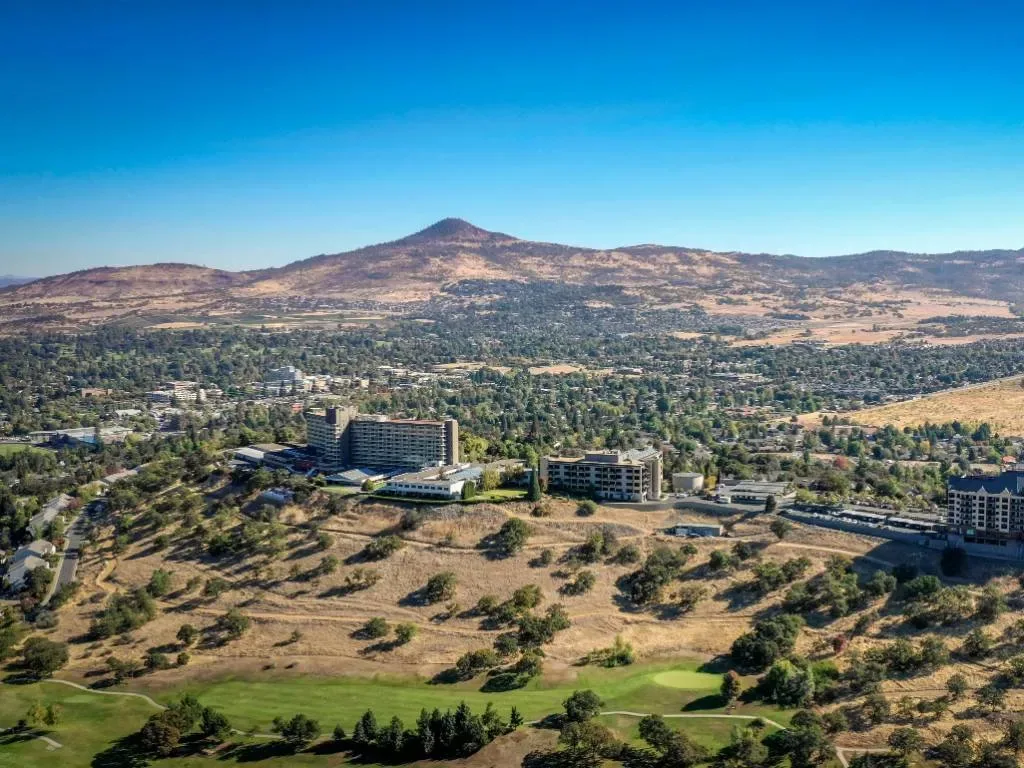
Interstate 5 crosses downtown Medford and Bear Creek on a 3,229-foot viaduct, which makes downtown highly visible from the freeway, and a tidy roof edge and clean parapet help the building present well. North of the center, where Oregon Route 62 carries traffic, sits the North Riverside and Crater Lake Highway corridor, and Oregon Route 99 runs through the middle of Medford.
Health care is central to the Medford economy, and a roof over a medical office adds infection control and quiet hours to the same grading method. Foothill sites change the load thinking, with Prospect averaging about 20.9 inches of snow a year against 3.4 inches on the valley floor, and the register notes elevation.
Hospital campuses sit beside many of the valley's offices, and a roof on a hospital is graded with the same method and held to tighter rules. Where an office sits beside a campus, lifts and cranes need space that has to be arranged with the neighbor ahead of time.
System choice and repair for an office roof
For flat office roofs, TPO welded over insulation and cover board is a common choice, rubber EPDM is the lower-cost alternative, and a layered system suits heavy service traffic. Sound, dry roofs can take an acrylic coating that extends life at lower cost. We show the options with prices and the register shows the carrying cost over the holding period.
Repairs follow the grade. Every list item is tagged as a patch or a fix and priced, and hot-air welded patches in compatible material go in during the cool hours of a triple-digit day. If the list keeps growing, the grade shows it, and the choice moves to coating, recover or replacement, each with its numbers beside it.
Reserve schedule, code and lease-cycle timing
The reserve schedule lists the roof with a date, a cost range and a grade. A vacancy or lease turnover is the best time to replace, since tenants are then spared the noise and dust. A dry roof may take a recover that defers the work, and an infrared scan with a few cores confirms the dryness.
Since April 1, 2026 the 2025 Oregon Structural Specialty Code has governed office reroofs, and the scope is reviewed against it. The edition is named in the scope and in the owner report, with insulation and wind requirements confirmed through the building department.
Insulation and cover board are the quiet lines in an office roof budget. The energy code sets the minimum thickness, a cover board protects the insulation from foot traffic and a thicker assembly raises parapet and flashing heights. We check those heights before pricing and show any added flashing or cap as its own line.
Work window and tenant impact
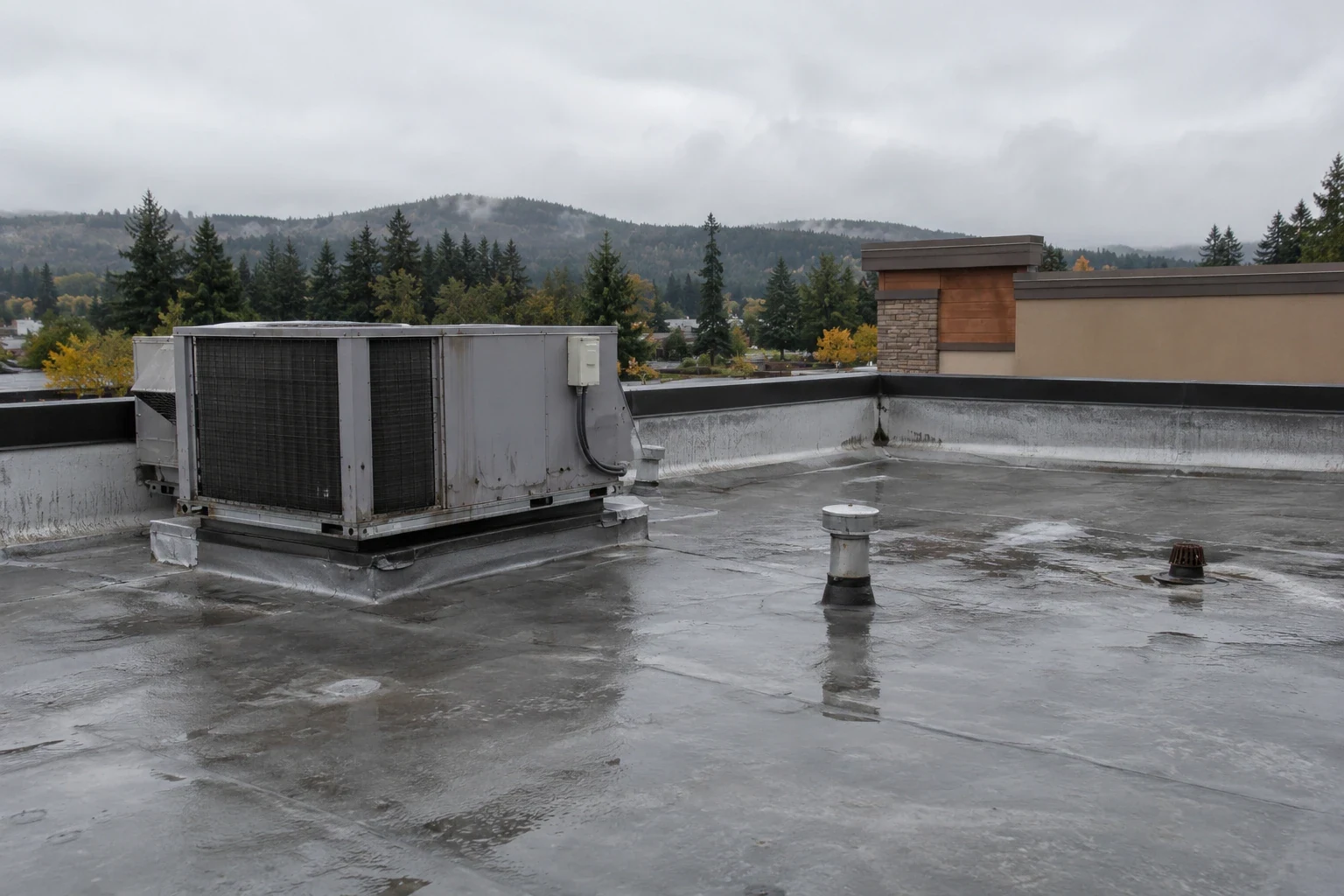
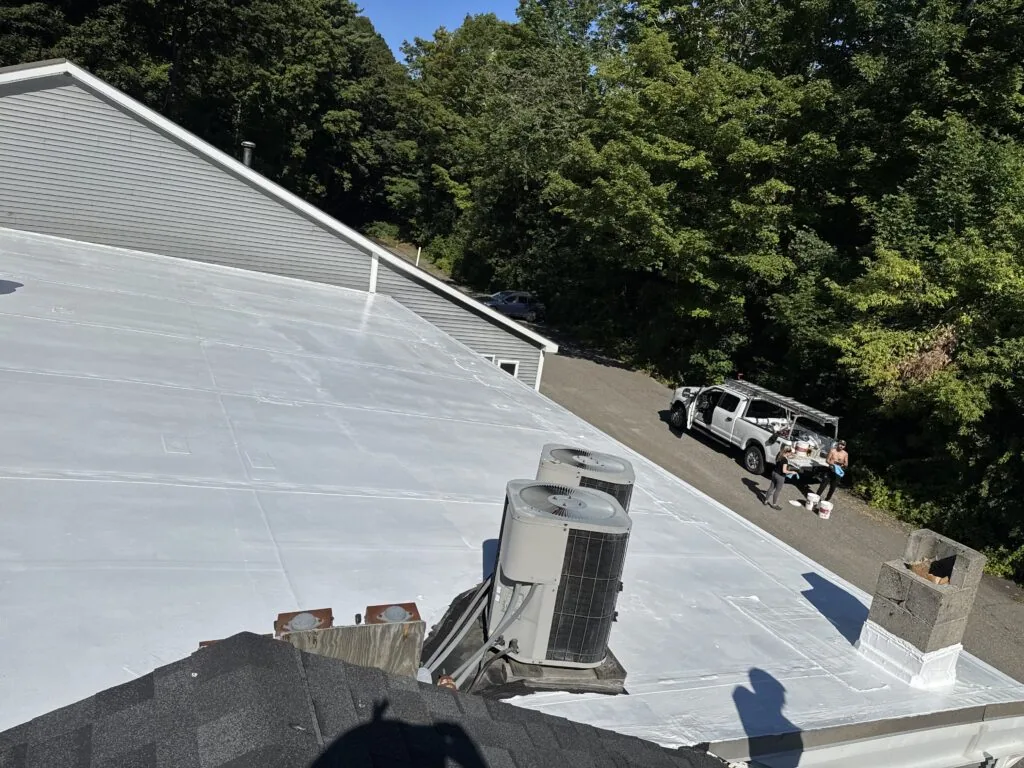
The spring work window gives the best conditions for welds and adhesives. Summer jobs start at dawn, before the tenants arrive, and finish by midmorning when the roof is too hot to weld. Occupied offices need protected entrances, shielded air intakes and a schedule for noise. We section the roof so each day closes watertight, and a one-page notice goes to tenants before the first day.
Closeout brings photographs of each curb, drain and flashing, the warranty file and a fresh register entry. A yearly commercial roof inspection then repeats the grade each spring, so the owner report shows the trend.
Send the building list and lease calendar

Related Roofing Pages
Questions About Office Building Roofing
How long does an office roof last in Medford?
System, installation and care all matter, and the grade and remaining service life say more than the roof's age does.
Can tenants stay during a reroof?
Yes. Sectioned work, daily dry-in, shielded intakes and a notice keep it manageable.
What do rooftop units do to the membrane?
They add heat, traffic and penetrations. We grade the zones around them separately.
Is a coating a good option?
On a dry, sound roof it can be: the coating defers replacement, and a scan with a few cores confirms the roof qualifies.
When should I replace before a lease turnover?
Ahead of the new tenant's move-in, while the schedule is still open.