Cold Storage Roofing in Medford, OR
Cold storage roofing in Medford, OR: a roof between 100 F sun and subfreezing air, with vapor control, insulation and reflectance graded for service life.
Overview
A freezer building in Medford, OR is the hardest test a roof gets in the valley. Above the deck, 61 afternoons above 90 F, roughly 11 above 100 F, with a record of 115 F. Below it, the air sits at or under freezing all year. The insulation between those two climates takes the whole difference, and any moisture that finds its way in meets a cold surface on the way down and stays. A roof leak on a dry building is a stain. A roof leak on a cold store becomes ice in the insulation, and ice does not show on the ceiling.
For a property manager, the useful questions are how much reflectance the roof has kept, how dry the insulation is and what each answer does to the refrigeration load.
The building and its roof
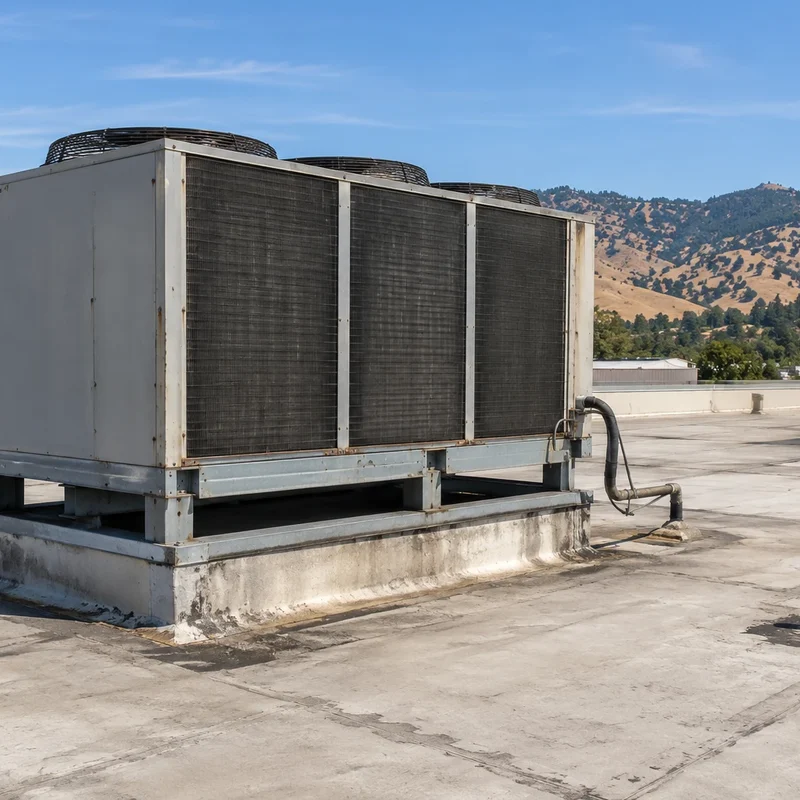
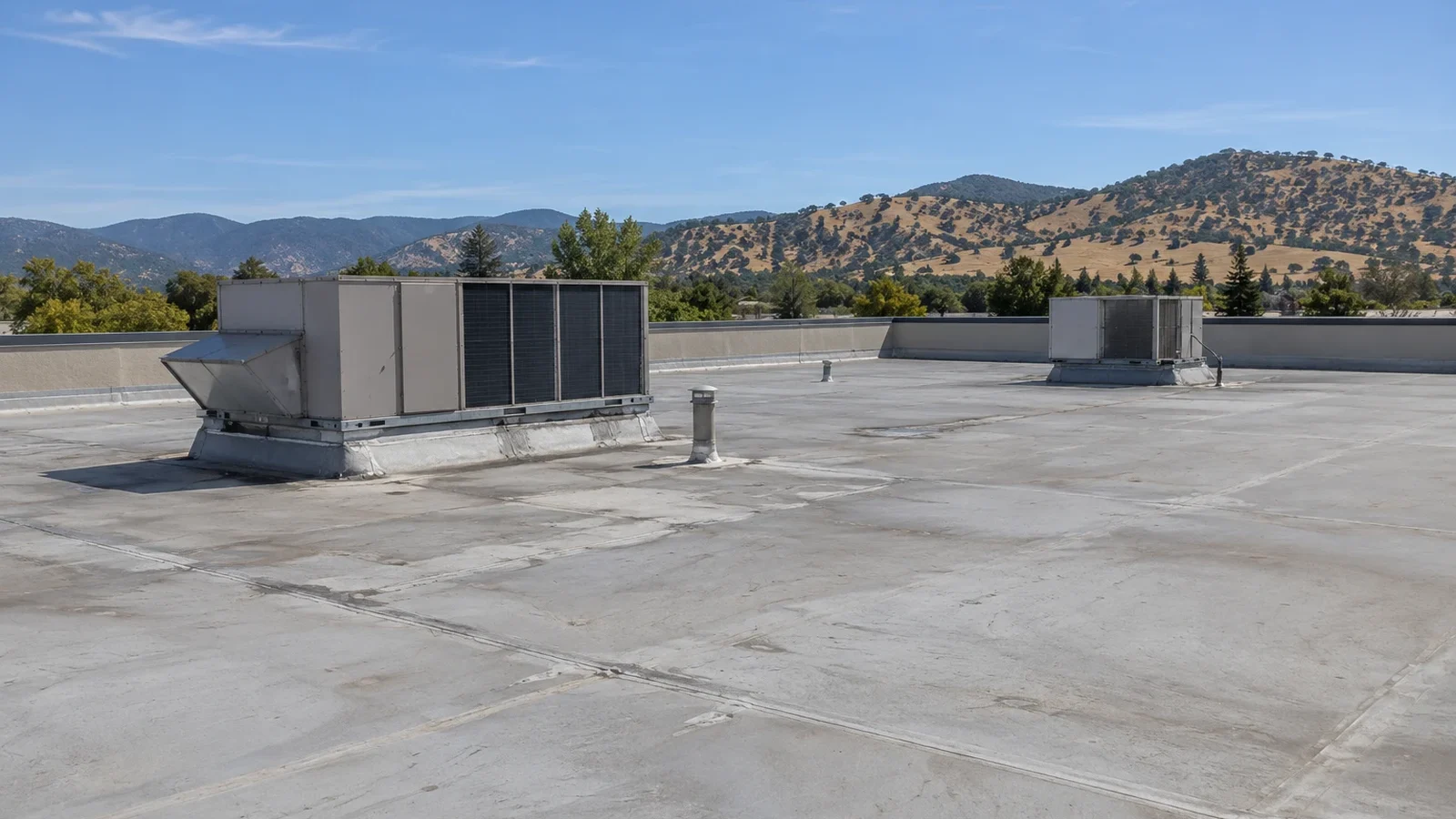
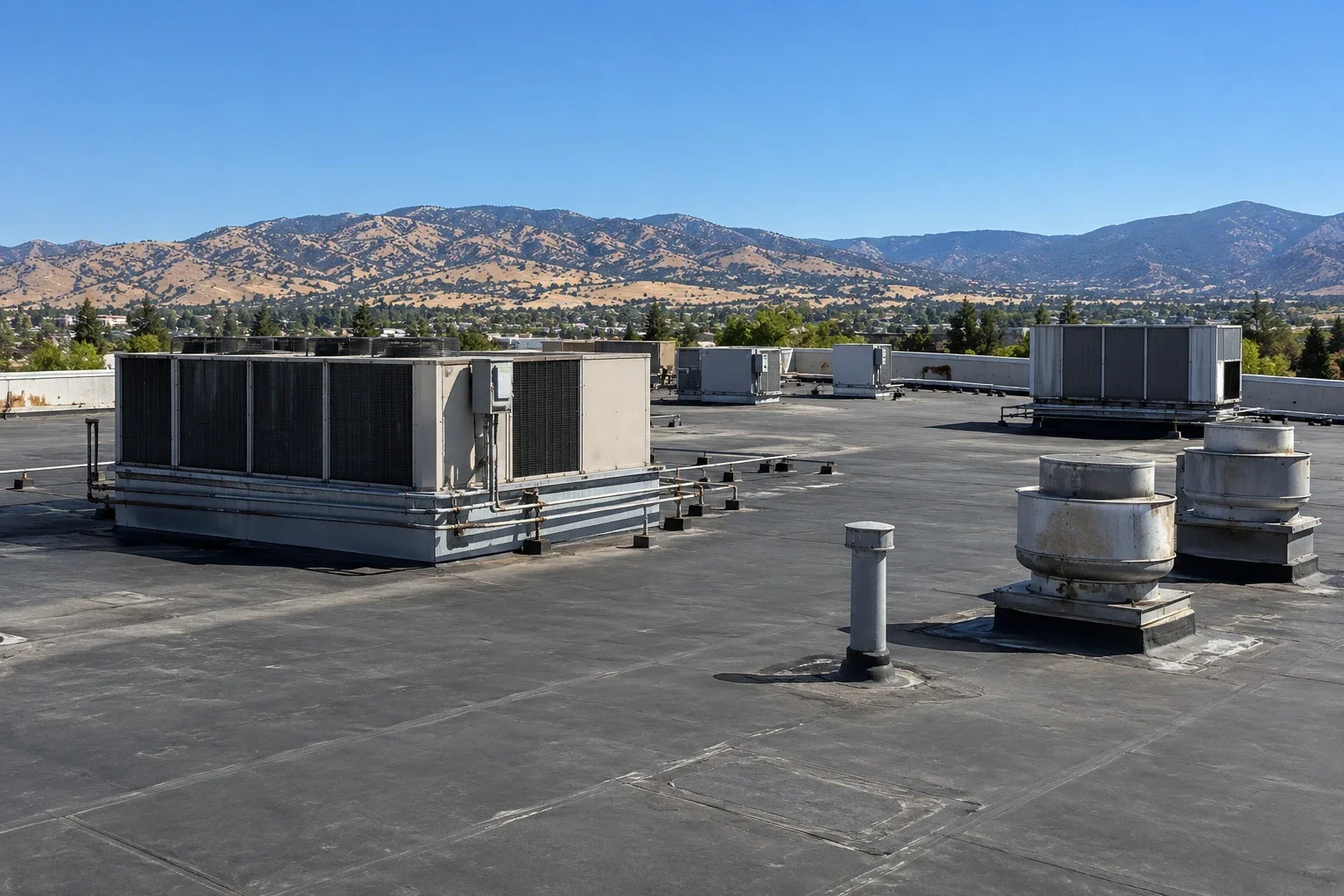
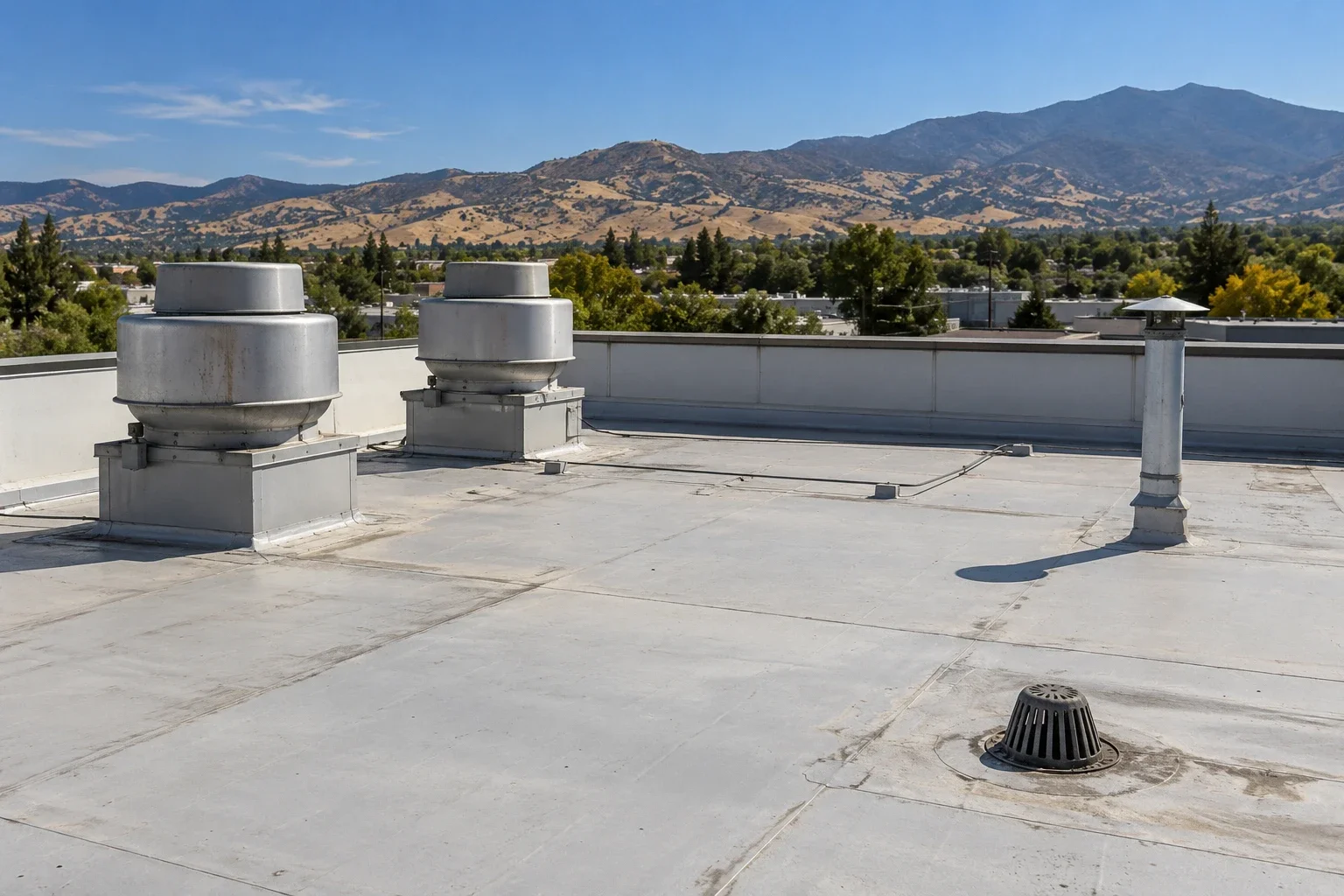
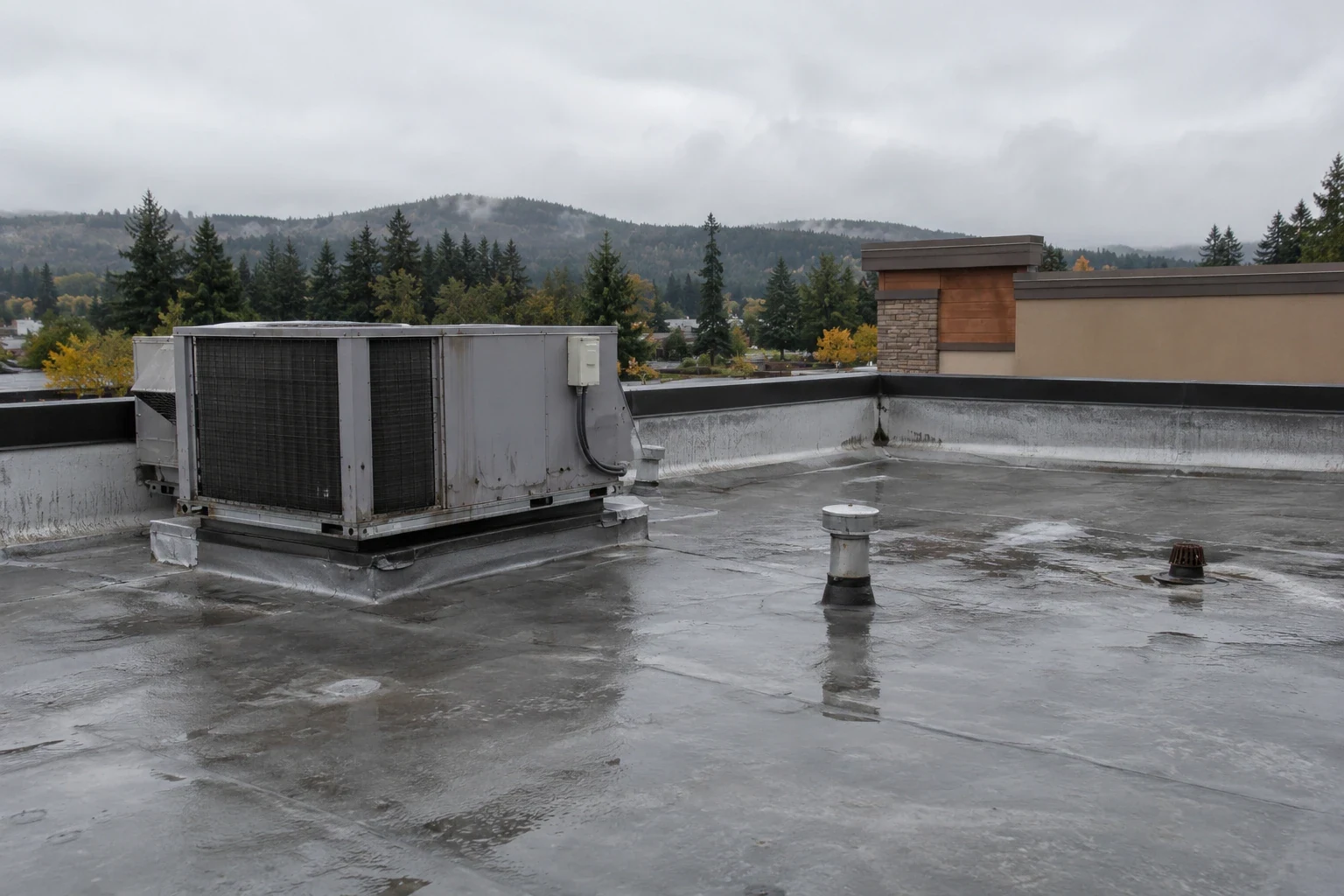
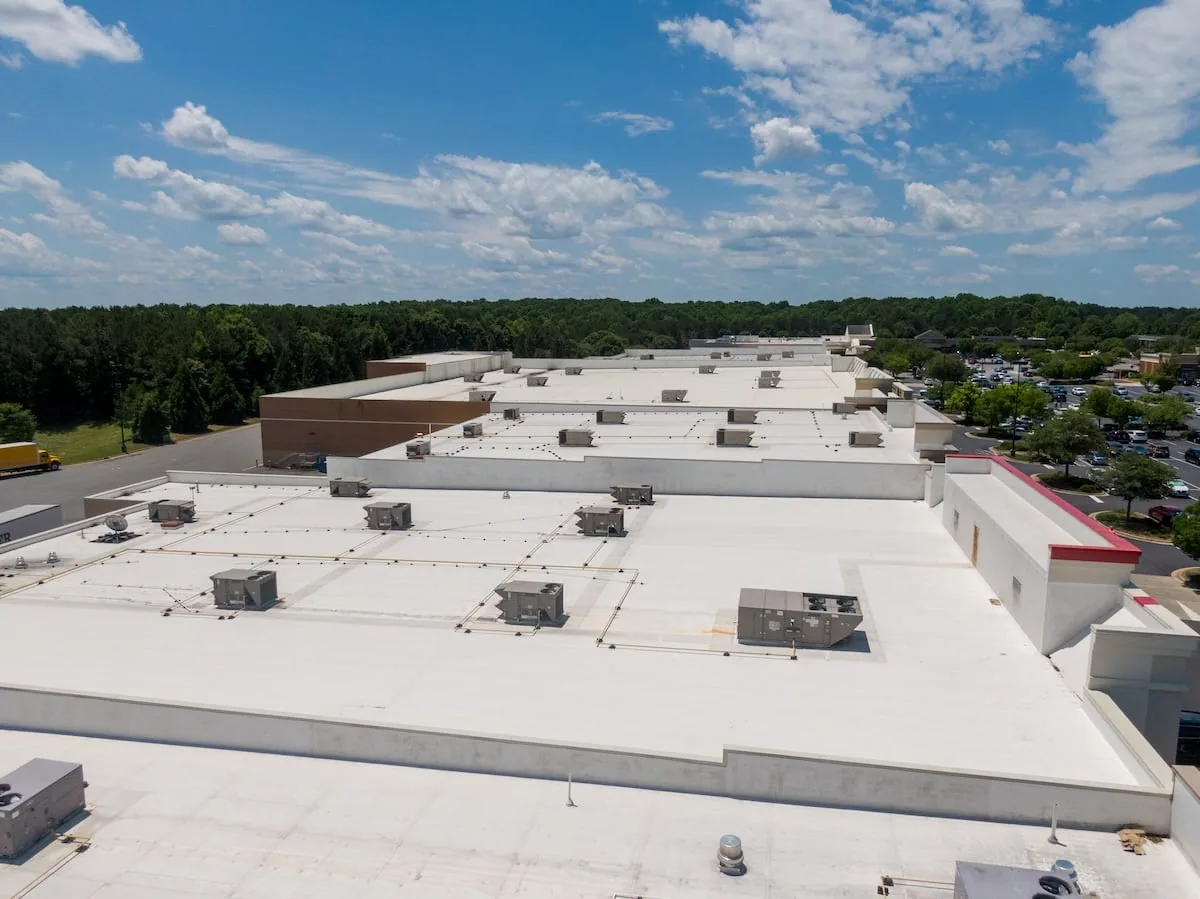
Cold storage roofs sit on thick insulated assemblies with a vapor retarder near the warm side, which in a freezer is the outside. Penetrations are fewer and more critical: refrigeration lines, conduit and structural supports pass through the envelope and are sealed from both sides. Rooftop condensers and compressors add equipment curbs and heat.
The region's agriculture and distribution base is where this building type fits, alongside the neighboring distribution center and warehouse stock. Healthcare, agriculture, lumber, manufacturing and tourism lead Jackson County's economy, and Harry and David's Medford site puts orchards, manufacturing and distribution buildings in one place. We do not assume any roof's construction. We walk it, review the drawings where they exist and identify the vapor retarder, the insulation and the membrane before recommending anything.
Heat load, reflectance and the UV budget
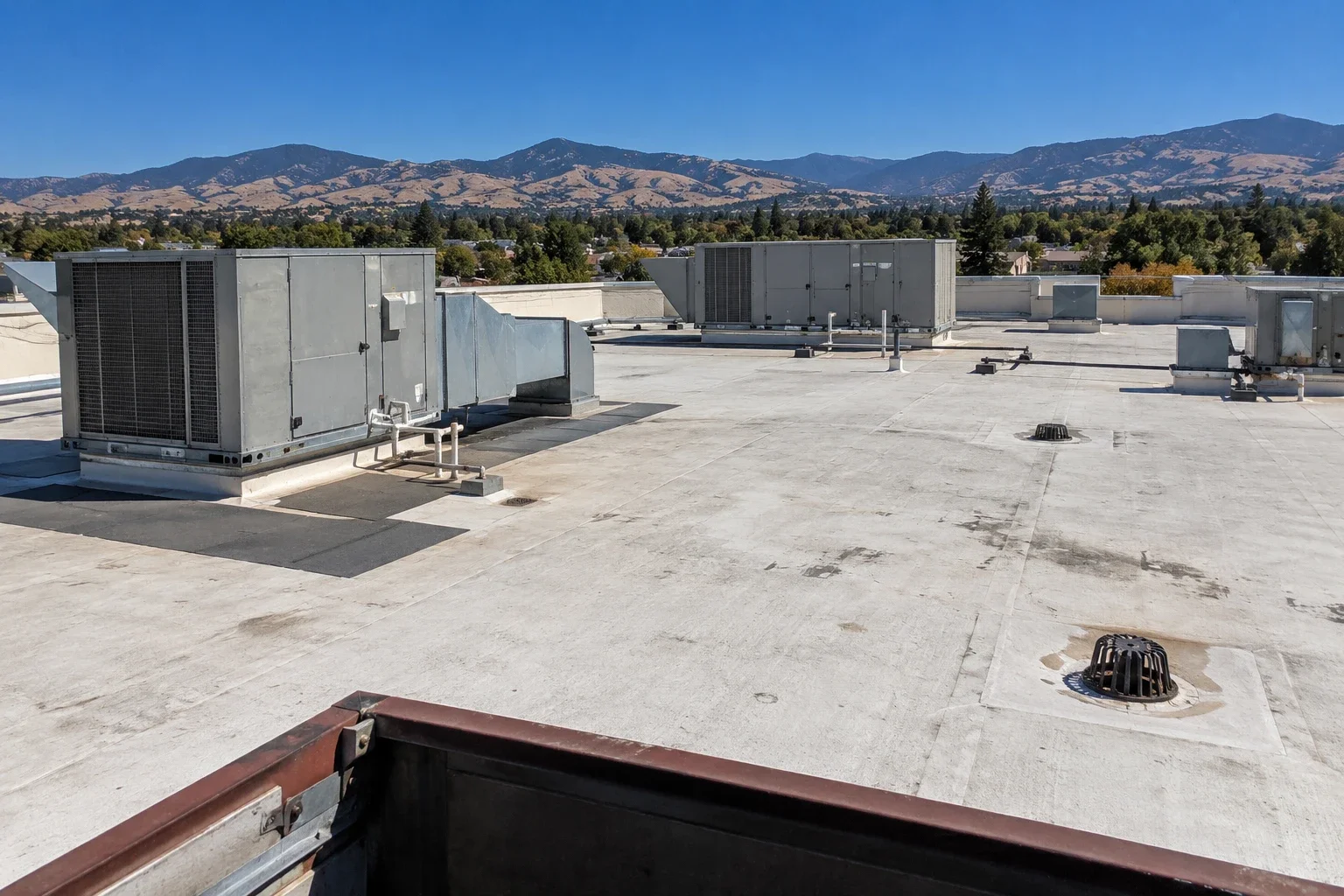
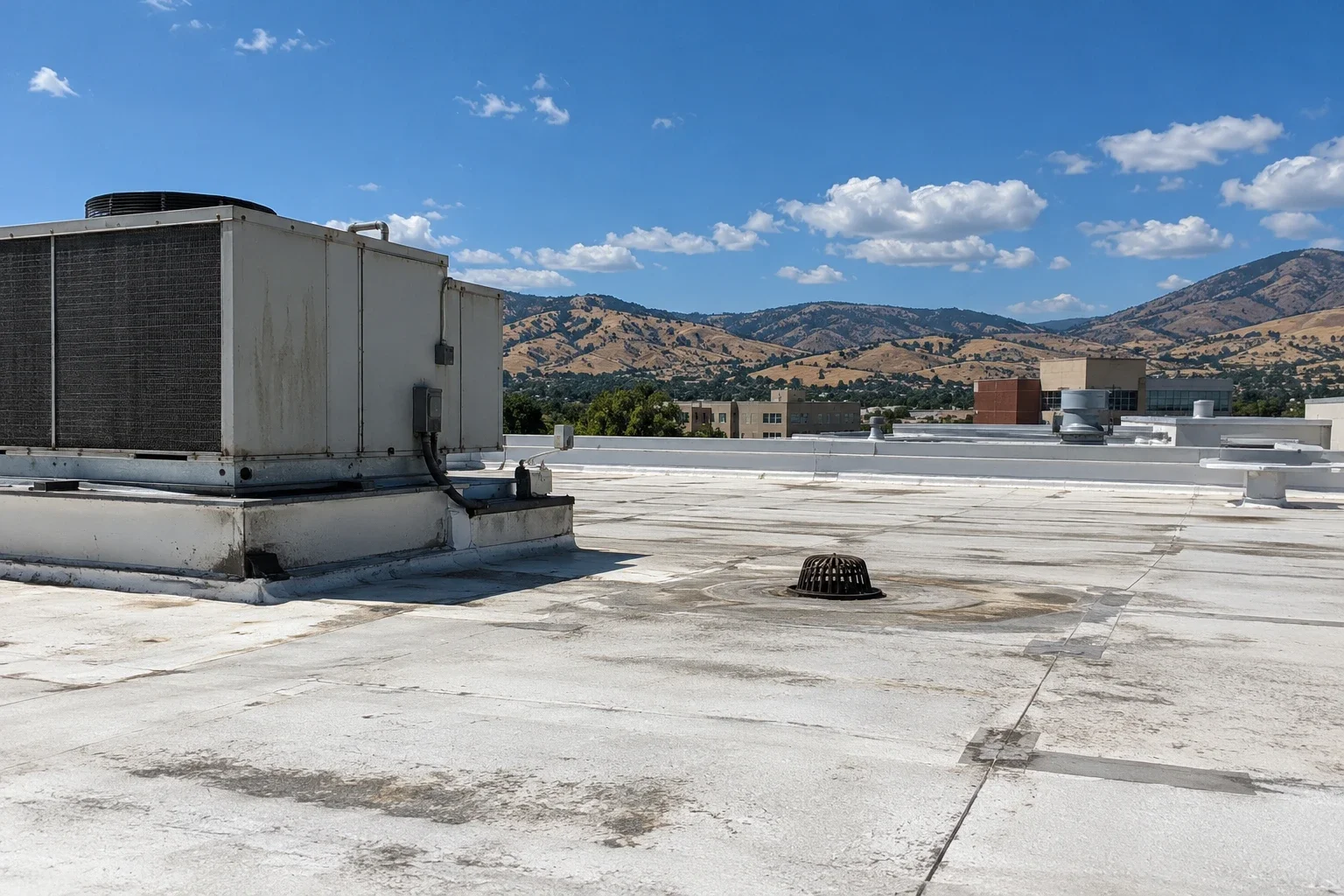
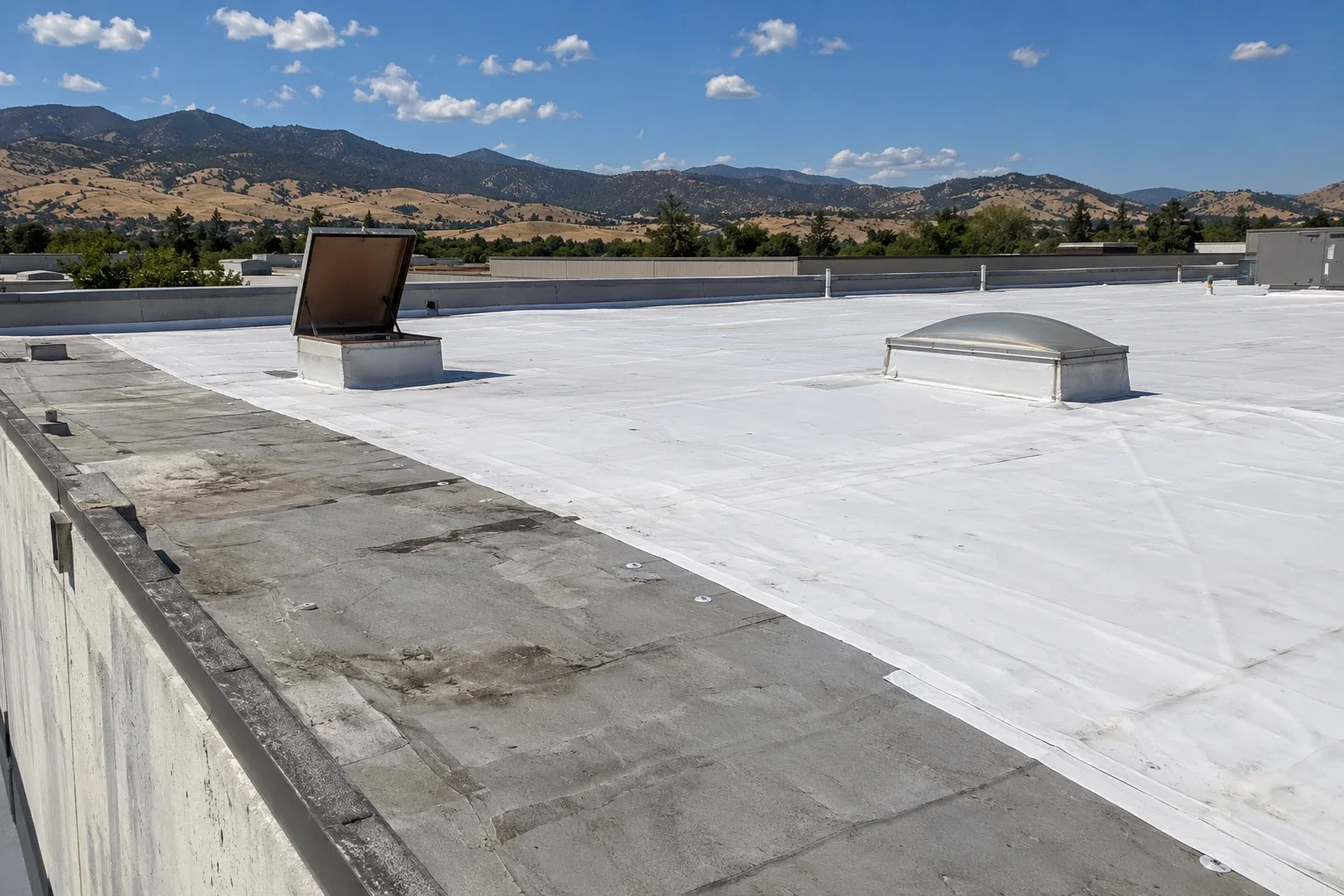
On a cold store, roof heat gain is refrigeration cost. A clean white roof reflects much of the summer sun and cuts the load on compressors, and a dirty one raises it. The valley's clear skies spend the UV budget steadily, and soot and ash from smoke season dull the surface. Reflectance loss is therefore a direct operating cost, and the condition grade records it with the other measures.
We read reflectance each spring, check seam and flashing condition and note ponding, drain health and equipment curbs. Remaining service life is estimated from the grade. A cool roof upgrade or a reflective coating can restore the surface when the membrane is sound, and the reserve schedule shows the carrying cost of leaving it dull.
Insulation thickness raises parapet and flashing heights, so a thicker assembly changes the edge details. We check those heights before pricing a replacement and show any added flashing or cap as a line.
Vapor drive, frozen insulation and moisture control
In a freezer, vapor drive runs downward from the warm, humid outside toward the cold interior, and it can carry moisture into the insulation through any gap in the vapor retarder. Water that gets in freezes, expands and damages the insulation and the deck. Over time the roof loses thermal performance, the refrigeration plant works harder and the structure suffers.
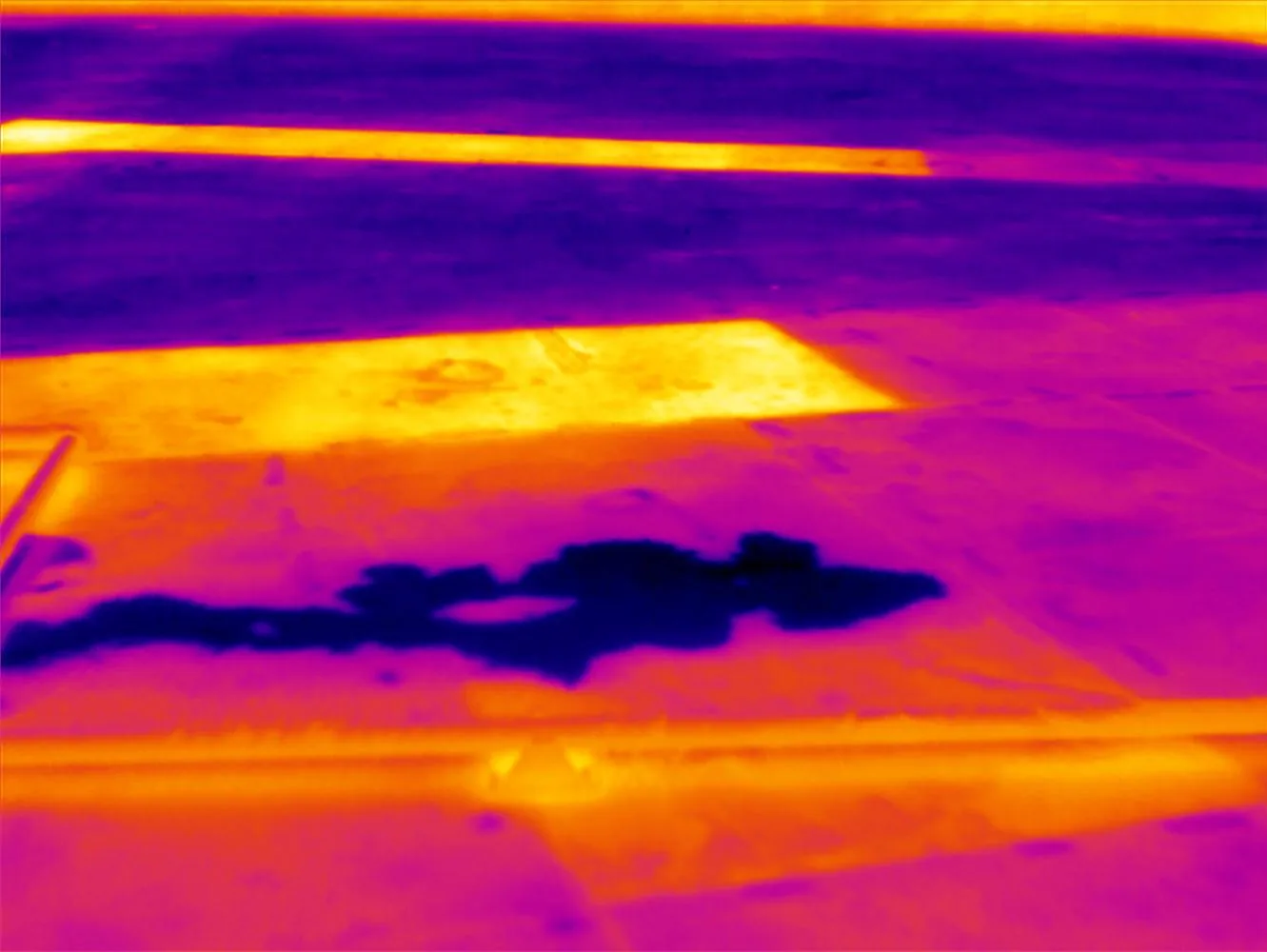
Finding moisture takes more than a scan. An infrared survey can map warm-cold patterns, but frozen insulation behaves differently from saturated insulation in a conditioned building. We combine infrared with core cuts, moisture meters and a review of the vapor retarder and seals. The infrared moisture survey is the first tool, and cores confirm what the scan suggests.
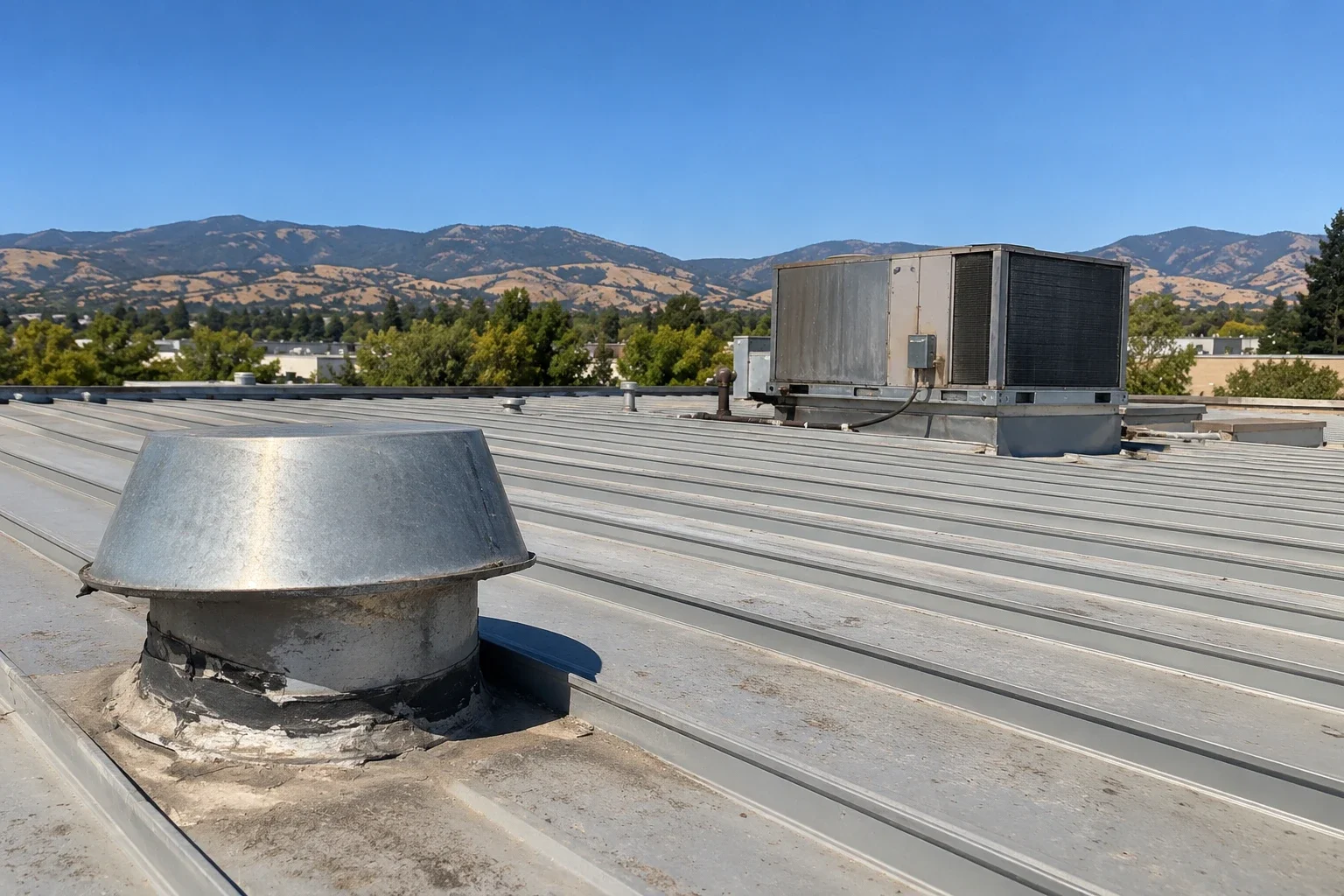
Equipment curbs are the usual entry points. A condenser curb that is not sealed to the vapor retarder lets moist air in, and the ice that forms under it shows up years later as a sagging ceiling panel or a heat loss that nobody can explain. We inspect each curb from above and, where access allows, from below, and we list what we find.
Smoke season, soot and ember exposure
Medford counted 26 smoke days in 2021, the year after fires that burned some 2,600 Jackson County homes. Soot lands on a cold store roof and dulls the reflectance that the refrigeration plant depends on, and ash collects in drains and around condensers. Condenser coils clog with soot and ash, which raises head pressure and energy use.
After a smoke event we wash the roof, clear drains, inspect edges for ember damage and recommend that the refrigeration contractor clean the coils. The owner report records the event and the work. Fire classification of the roof assembly is confirmed against the plans, and insulation selection is reviewed with the people who own that question.
Valley floor, rail and highway
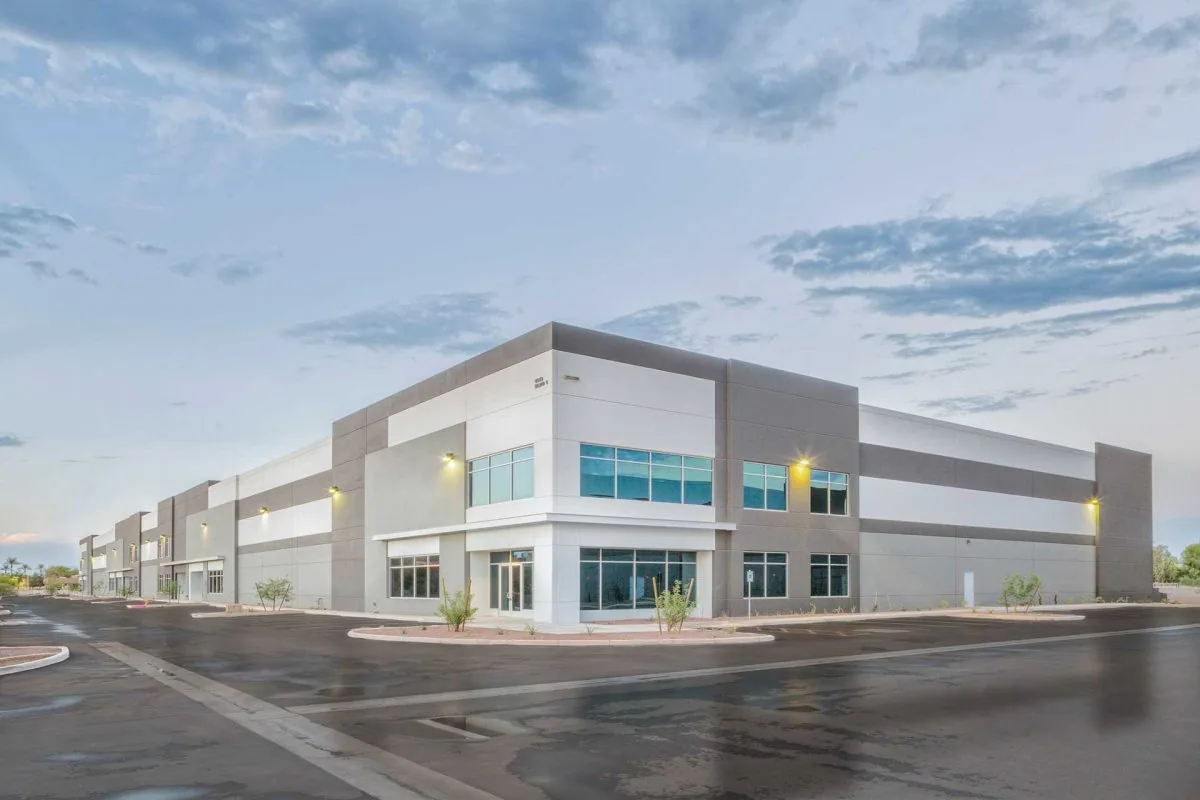
Cold storage clusters where freight moves. Rail serves both the White City Industrial Park, where Oregon Routes 62 and 140 meet and the Rogue Valley Terminal Railroad runs, and the Phoenix Industrial Park, on the Central Oregon and Pacific Railroad, and those rail-served settings suit this building type. Interstate 5, Oregon Route 99 and Oregon Route 62 carry the trucks.
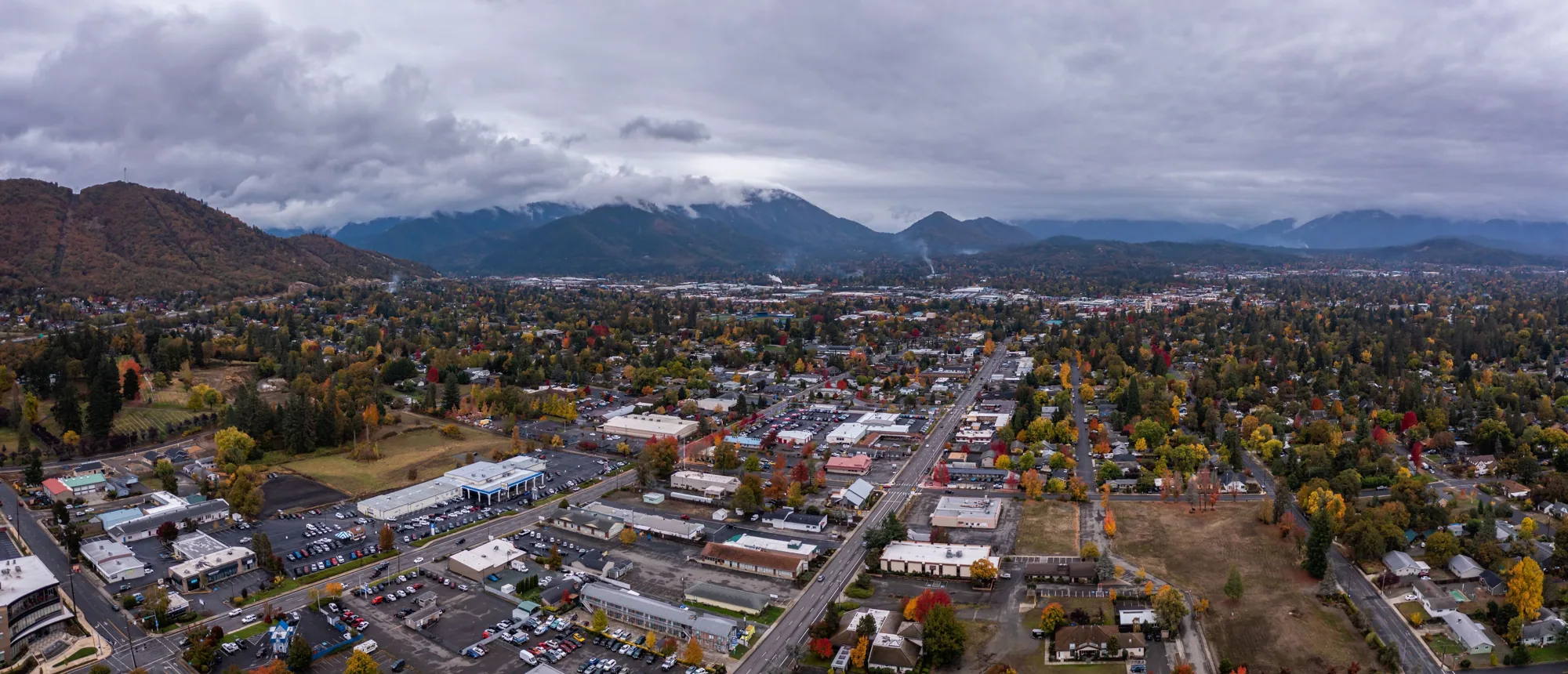
In winter, inversions hold fog and damp over the valley for long stretches, and about 64 freezing mornings a year put moderate thermal cycling on the exterior. Foothill sites such as Prospect, with about 20.9 inches of snow a year, need separate snow load and drift thinking. We note elevation on every register entry.
Reserve schedule, code and operating timing
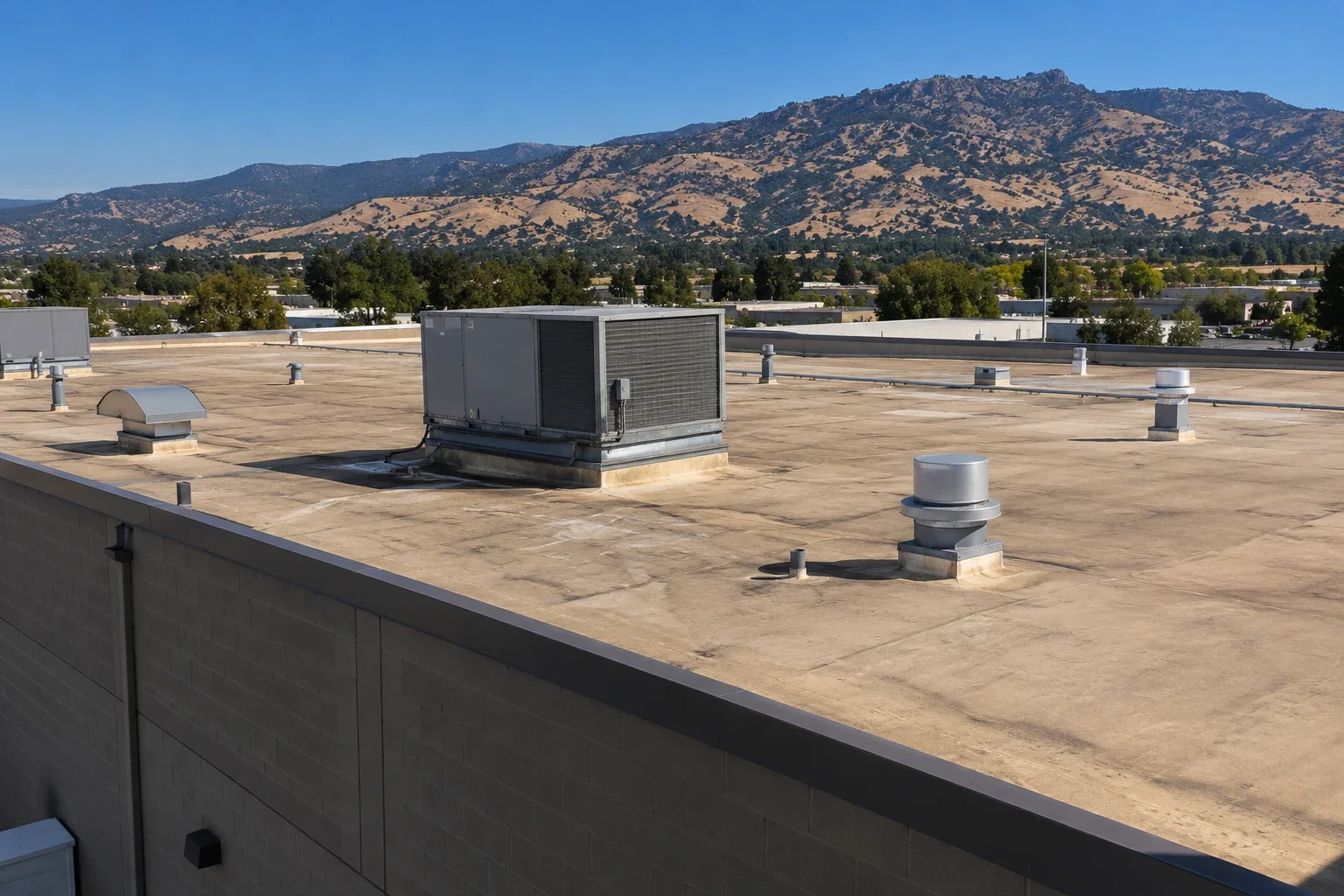
The roof is a large item in the reserve schedule and a larger one in operating cost. Replacement is best timed to a slow period, with product moved or protected, and a phased approach that closes each section the same day. A recover is possible only when the existing insulation is dry and the vapor retarder is sound, and we confirm both before recommending one.
A replacement now falls under Oregon's 2025 Structural Specialty Code, mandatory since April 1, 2026, and the insulation values are checked against it. Each register entry shows the grade, the cost range and the carrying cost of waiting, energy cost of a degraded roof included.
Energy belongs in the arithmetic. A roof that has lost insulation value or reflectance quietly raises the refrigeration bill, and the cost shows up in the operating budget while the roof sits untouched on the reserve schedule. With both numbers side by side, the owner report can show when a replacement pays for itself in saved energy as well as avoided leaks.
Work window and protection of the cold chain
The spring work window gives the safest conditions for welding and adhesives. Summer jobs start at dawn. Product below is protected from dust, falling debris and temperature swings, and every opening in the envelope is closed the same day. Penetrations are resealed from both sides, and the vapor retarder is restored before insulation goes back.
At closeout we test, photograph and document every penetration and edge. The warranty goes into the file, the register gets a new grade and the refrigeration contractor receives the as-built drawings of the roof curbs. Our preventive maintenance visits carry the record forward each spring.
Occupied cold stores run on strict hours, so noise, traffic and rooftop shutdowns are scheduled with the operator. Dock doors stay clear, lifts sit away from truck courts and any rooftop equipment that must be disconnected is reset in a planned order with the refrigeration contractor.
Send the building list and roof drawings
Related Roofing Pages
Questions About Cold Storage Roofing
Why is moisture so serious on a freezer roof?
It freezes inside the insulation and damages it without showing on the ceiling.
Can a cold store stay running during a reroof?
Yes, with sectioned work, protection and same-day closure of any opening.
Does a white roof lower refrigeration cost?
It cuts roof heat gain. A clean one helps more than a dirty one.
Can we recover over an old freezer roof?
Only if the insulation is dry and the vapor retarder is sound. We test first.
What does smoke do to condensers?
Soot clogs coils and raises energy use. Clean them after heavy smoke weeks.