
Johns Manville Roofing Systems in Medford, OR
Johns Manville commercial roof systems in Medford, OR: single-ply membranes, insulation and flashing work, graded for valley sun, smoke and reserve timing.
Overview
Johns Manville is best known to roofing buyers for two things that travel together on a commercial roof: single-ply membranes and the rigid insulation that sits beneath them. In Medford, OR that pairing matters because the valley runs about 61 afternoons over 90 F, with 11 of those over 100 F and a 115 F peak, so the insulation below the sheet works as hard as the membrane above it. When either layer fails, the reserve schedule loses years it had counted on, and the first sign can be a utility bill rather than a leak.
Installation, repair and upkeep of these system types go on in occupied buildings, and each layer's behavior is recorded so the owner report can state remaining service life instead of repeating the original estimate.
Membrane and insulation as one assembly
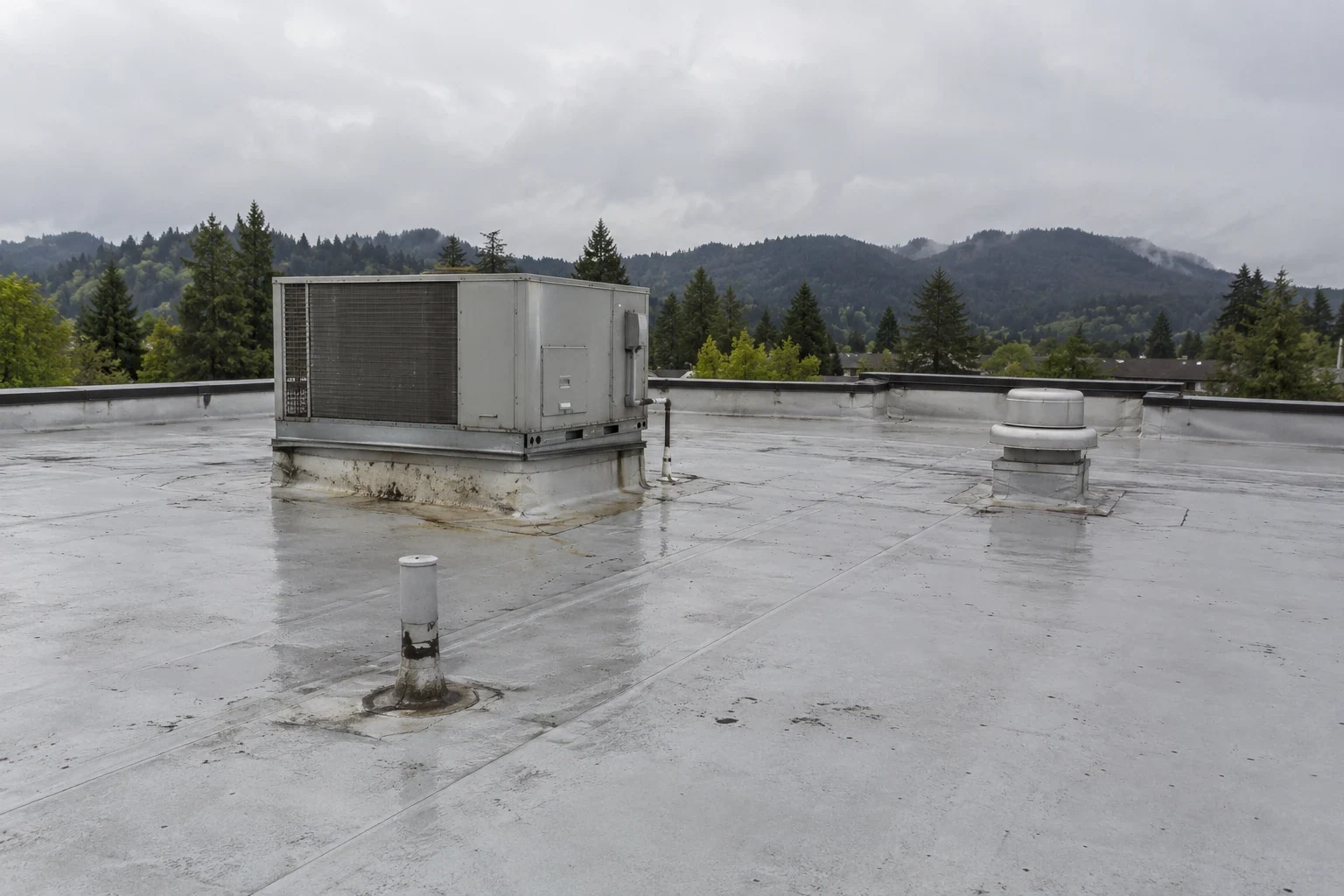
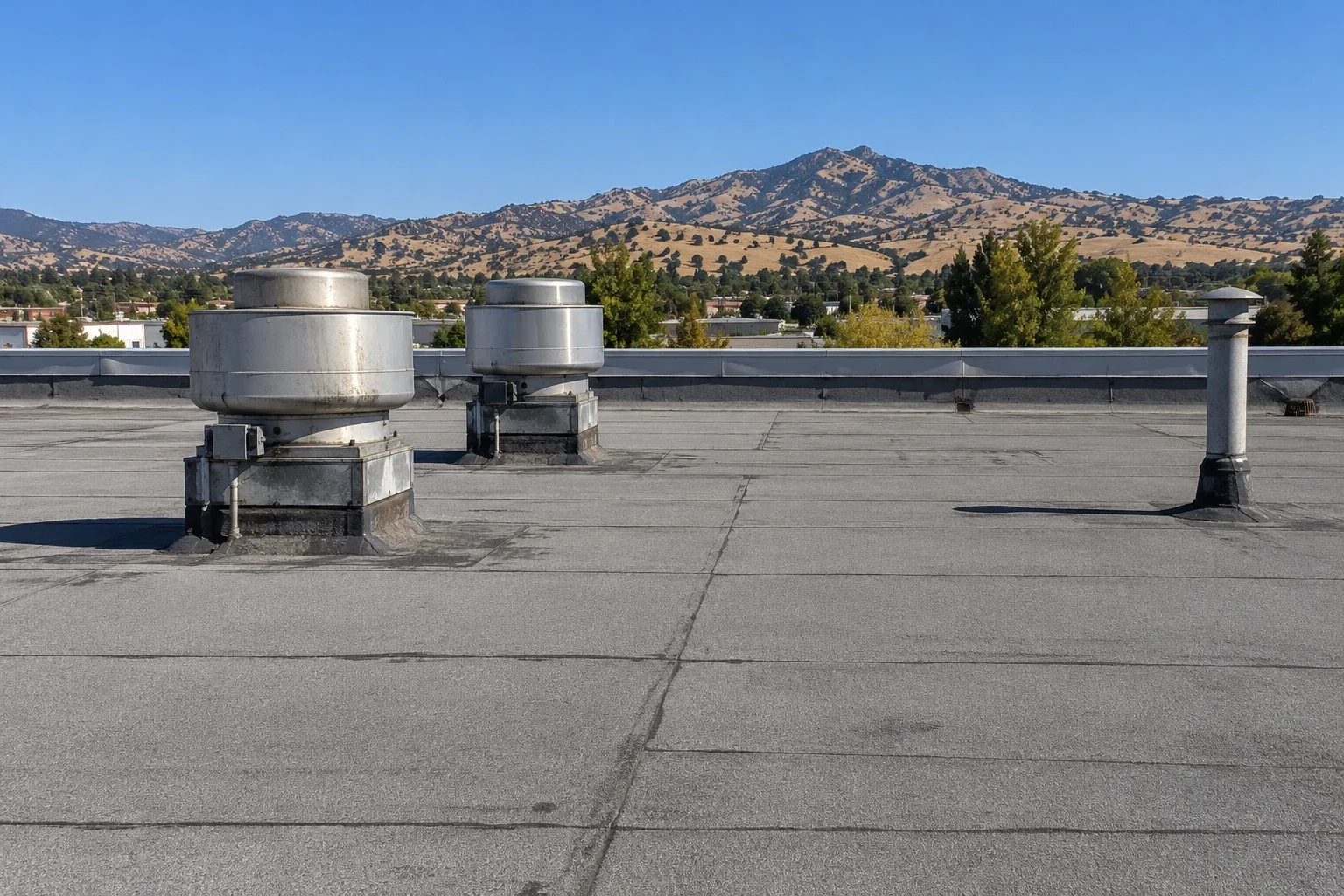
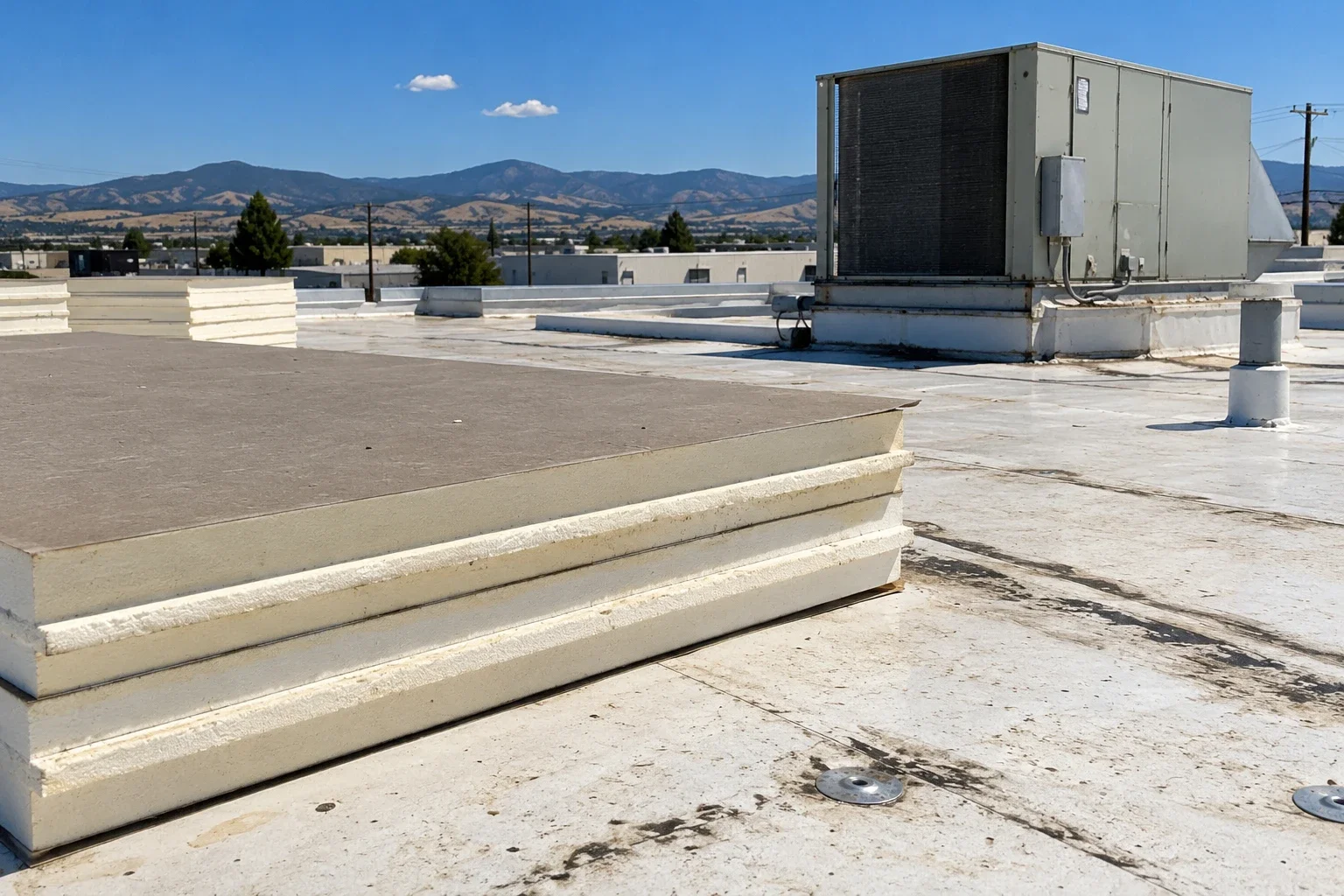
A low-slope roof is a stack: deck, vapor control where needed, polyiso or similar rigid board, a cover board in some assemblies, and the membrane. Thermal resistance is set by the board, and the board's performance depends on staying dry. A wet board loses much of its insulating value, adds weight to the deck and encourages membrane blistering in hot weather.
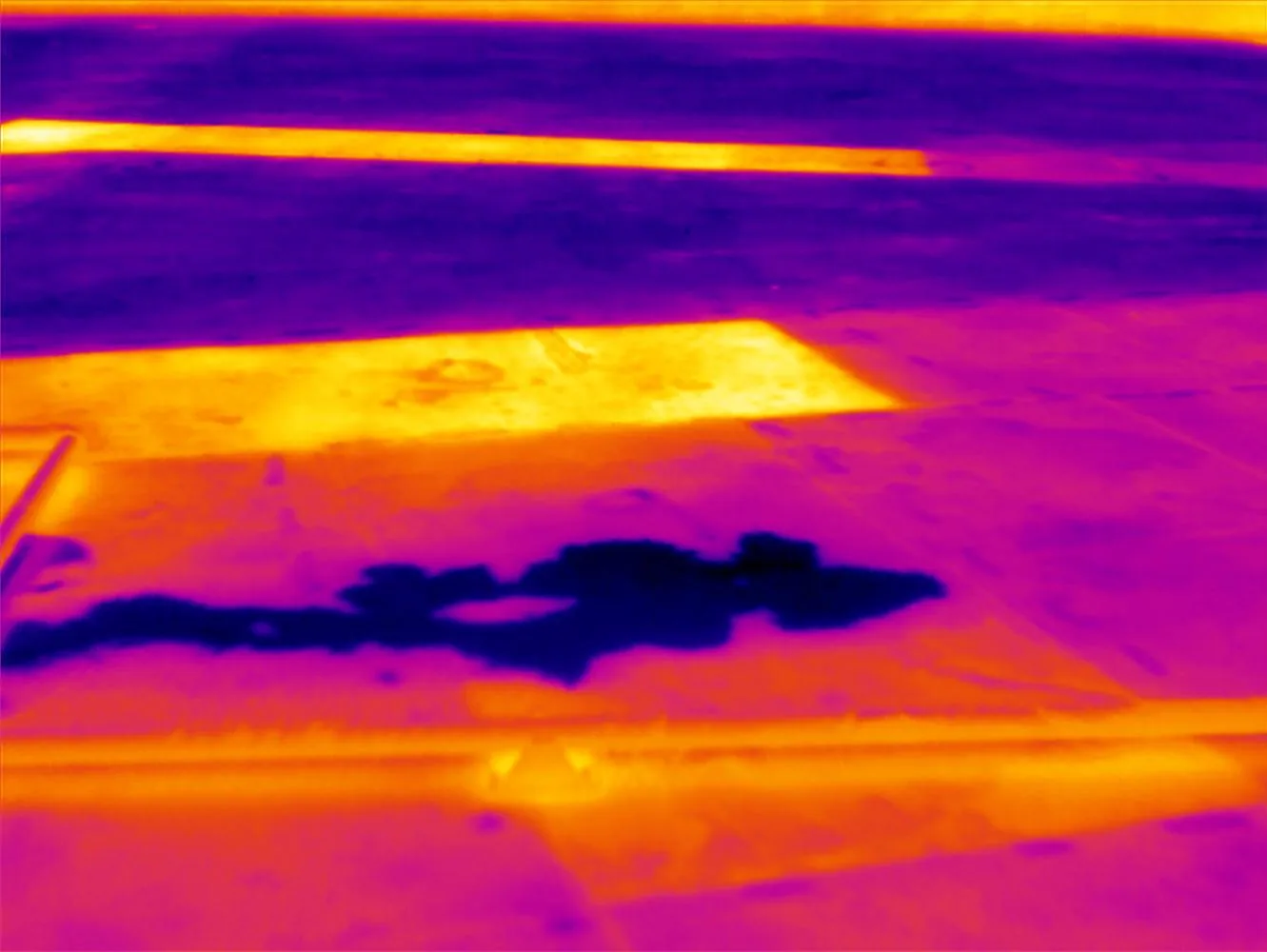
For that reason a hot week is a good time to find trouble, since moisture trapped under a membrane expands into visible blisters. An infrared moisture survey at dusk, when waterlogged insulation releases its stored heat more slowly than dry board, marks the areas for replacement before a coating or a recover hides them. The cover board and insulation decision also bears on hail, foot traffic and fastener pull-through.
On a roof with a long leak history, we often find that the membrane is the smallest part of the problem. Fasteners that pulled through softened board, a cover board that was never installed, or a drain sump that sits above the deck plane are the failures that reappear after every patch. Naming the right layer in the owner report is what keeps the same ticket from coming back next spring.
Single-ply choices for managed buildings
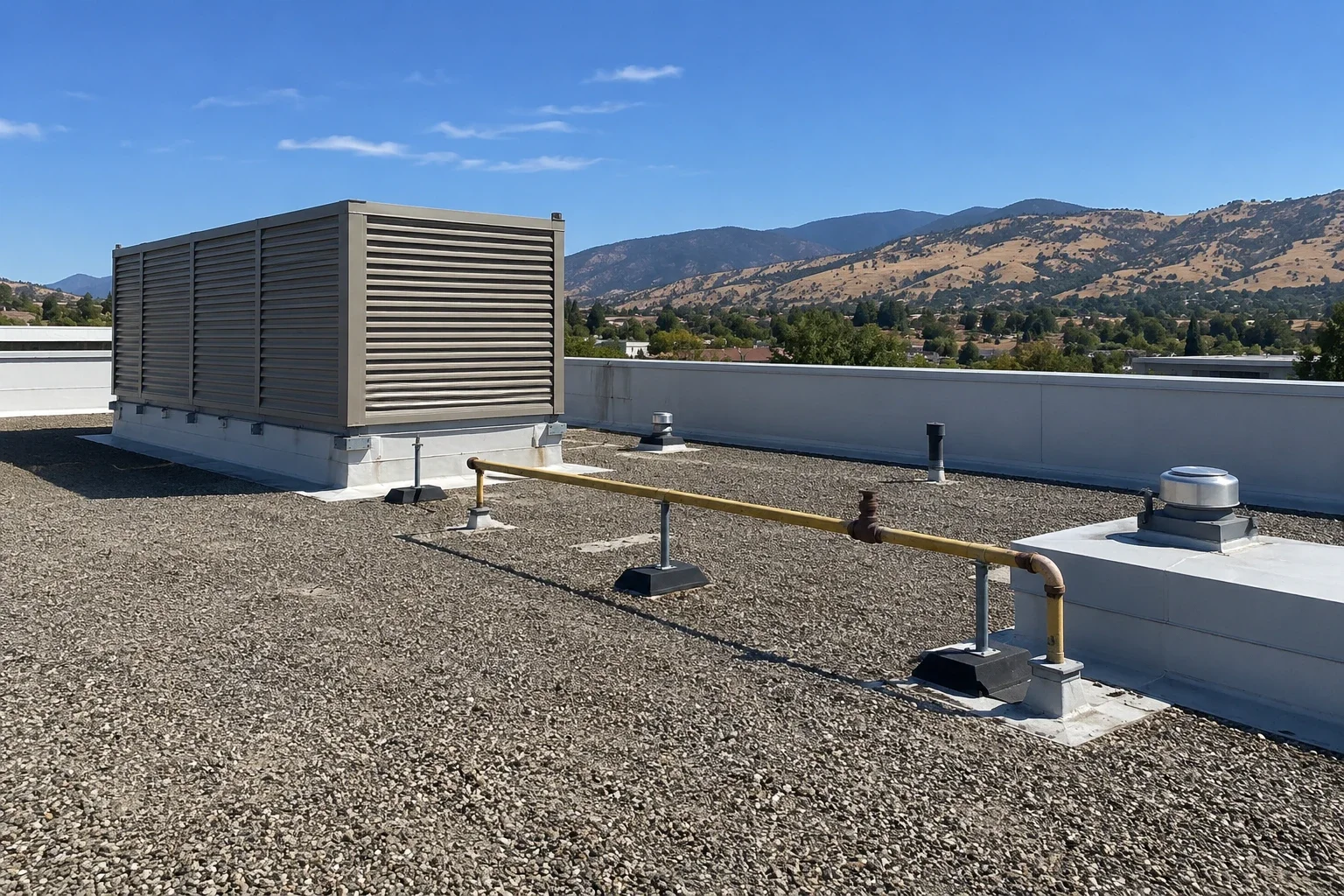
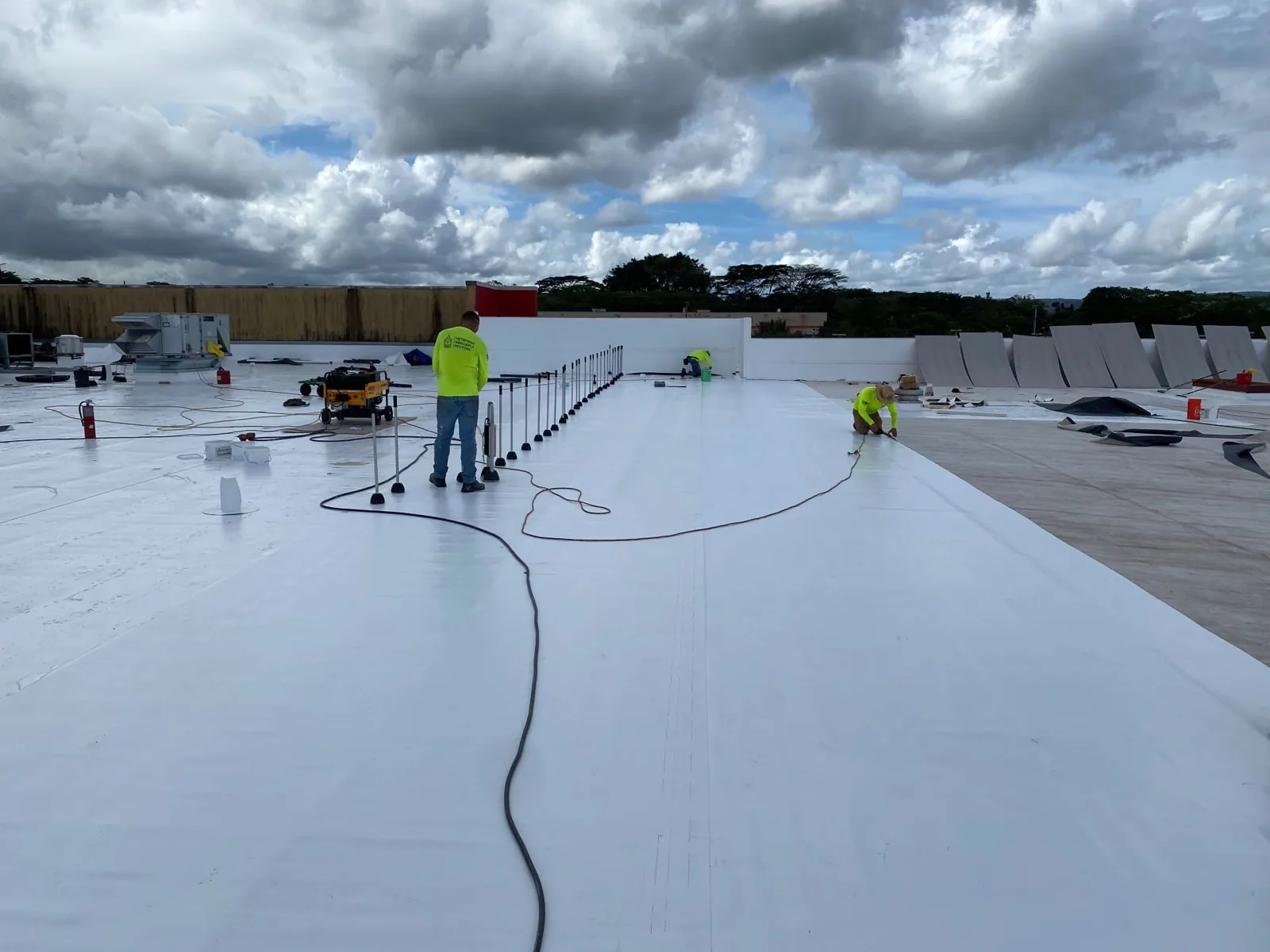
The manufacturer's single-ply range spans the thermoplastic and synthetic-rubber sheets common on commercial low-slope roofs. A white thermoplastic sheet suits conditioned offices and clinics where cooling cost counts. A dark rubber sheet can suit a building with little air conditioning, though in the valley the reflective option usually wins on utility cost.
The decisions that matter most are attachment, seam method and flashing detail rather than the manufacturer logo. Our EPDM and PVC work follows each sheet's published installation requirements, and we carry the seam and flashing observations into the condition grade so that a minor edge defect does not hide inside an overall rating that looks acceptable.
Large employers and long carrying periods
The largest employer in Southern Oregon, Harry and David, runs orchards, manufacturing and distribution buildings in Medford with about 1,700 year-round and 6,700 seasonal workers, and Lithia Motors, a Fortune 500 company, has had its headquarters here since 1970. Where an owner holds buildings for long periods, the roof conversation moves away from first cost and toward carrying cost.
An insulation upgrade can reduce that carrying cost, since each added layer of board lowers the cooling load on the rooftop units. But added thickness also raises parapet and curb flashing heights, so we check termination heights before specifying an upgrade. Where an owner plans a staged program, we sequence buildings by condition grade so the most exposed roof is addressed first.
Owners of Rogue Valley retail and medical buildings follow the same logic on a smaller scale. A tenant renewal or a refinancing date turns the roof into a due-diligence item, and a written roof condition report with photographs and a remaining-life estimate answers the lender's question before it is asked.
Government and VA work in White City
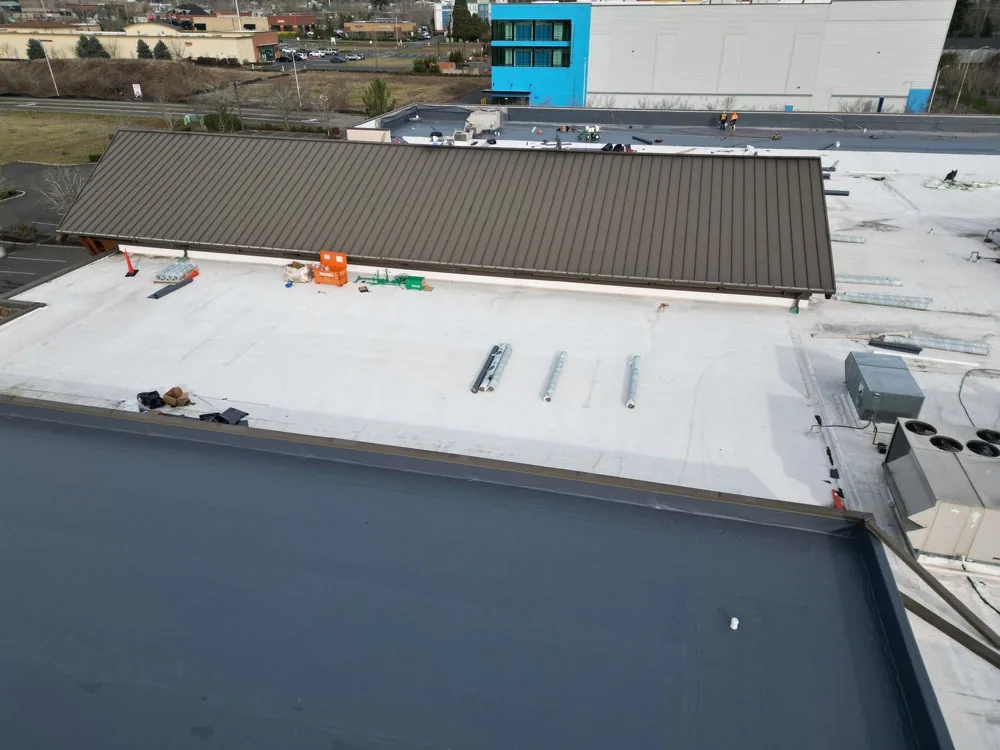
In White City, about nine miles north of Medford, the VA Southern Oregon Rehabilitation Center and Clinics is renovating buildings 217A and 218A for inpatient mental health and designing HVAC, exterior and security upgrades. Roofing on federal property follows access and escort procedures, badging and mission scheduling, and is generally built to the Unified Facilities Criteria for roofing.
For owners with a mix of public and private buildings, the useful fact is that a system with published details and insulation data makes government submittals easier to assemble. The membrane and board specifications carry through a package without invented substitutions.
Scheduling is the other variable. Escorted access limits the hours a crew can be on a roof, so mobilization is planned in days rather than improvised, and material staging is coordinated with the facility before the first sheet is unrolled. An owner who understands that rhythm can budget the project accurately and avoid the change orders that follow a surprise at the gate.
Smoke weeks and rooftop air intakes
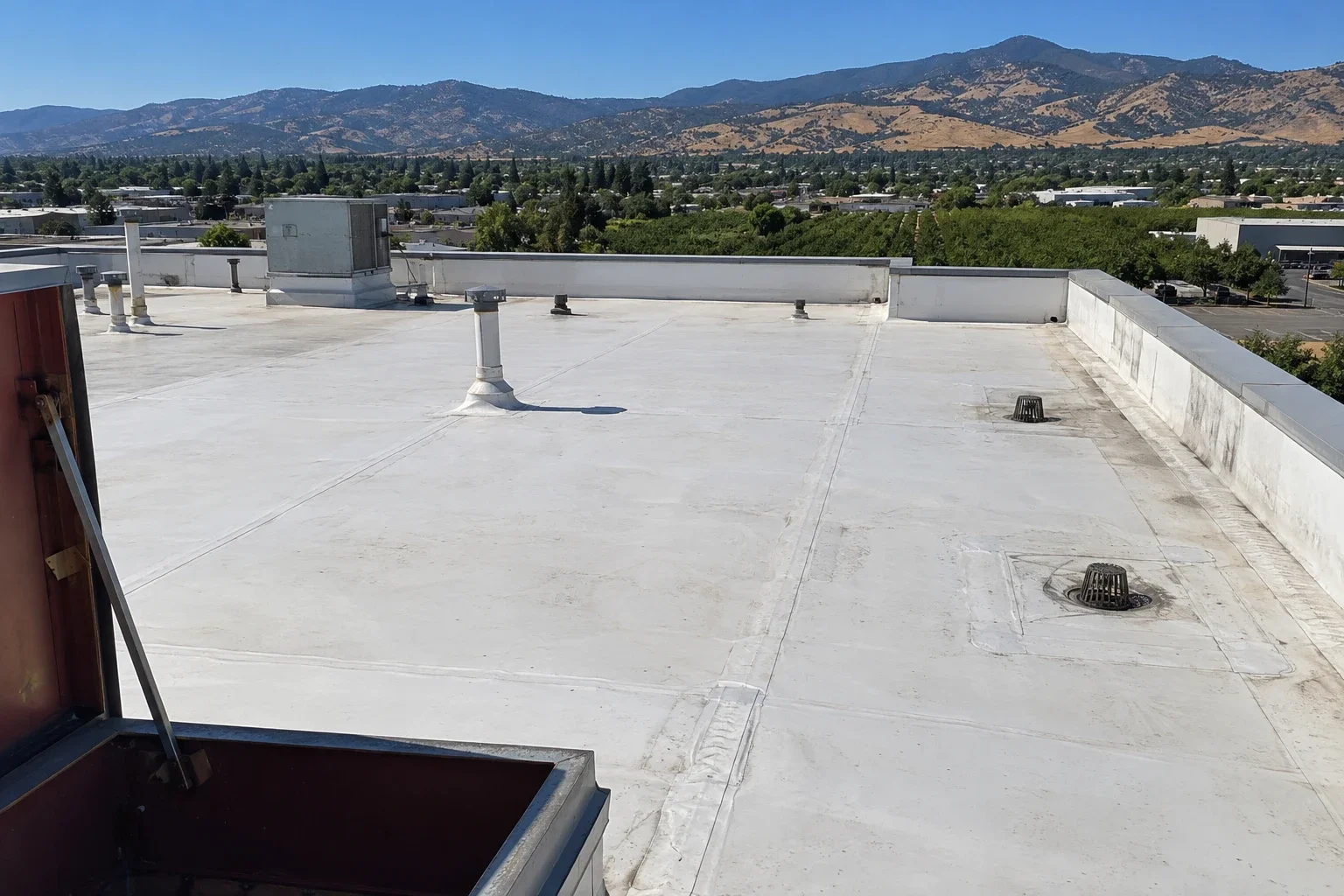
Smoke days reached 26 in 2021, and the fires of 2020 cost Jackson County about 2,600 homes. On a roof, smoke means soot on the membrane, ash in the drains and filters loading up on rooftop units. We check all three, clean what can be cleaned and flag what belongs to the mechanical contractor.
Soot also changes how a white membrane ages. A dark film absorbs heat, which raises the surface temperature on already hot afternoons. The condition grade should therefore be updated after a heavy smoke season, not just on the calendar date. Our preventive maintenance visits include that update so the register stays honest about what the valley has done.
Winter adds its own wrinkle. Winter temperature inversions can park fog and poor air over the valley, and about 64 freezing mornings a year add modest thermal cycling at fasteners and flashing sealants. None of that rivals the summer load, but a sealant that was already cracked in September will not survive January, so the fall visit is where we replace it.
Share the roof list and leak history

Related Roofing Pages


Questions About Johns Manville Roofing Systems
Why does insulation get as much attention as the membrane?
Because wet or compressed board stops insulating and begins to push on the sheet above it. We measure moisture and compression before pricing so the scope replaces the layer that failed.
Do thicker insulation boards require taller flashings?
Yes, in most assemblies. Added thickness raises the surface relative to curbs, parapets and drains, so we confirm termination height and drain elevation before locking a specification.
When is the best time of year to replace insulation and membrane together?
Spring and early summer give the longest dry work window before the triple-digit stretch, and tenants are not yet running cooling at full load. Scheduling in that window also leaves time to correct a punch-list item before the first smoke week.
How should a multi-building owner sequence work?
Start with the roof showing the lowest condition grade and the highest consequence if it leaks, then follow lease cycles. A written ranking lets the owner defend the order to partners.
Does the 2025 code affect insulation choices?
It can. It can. Insulation thickness and uplift details are checked with the building department against the 2025 Structural Specialty Code, the edition mandatory since April 1, 2026, before a scope is final.
Can I compare this manufacturer with others before deciding?
Yes. We set the installation requirements, repair methods and owner duties of GAF, Sika Sarnafil and this maker side by side using the same building data, so the comparison turns on the roof and not on the brochure.