
Membrane Puncture and Foot-Traffic Damage Repair in Medford, OR
Repair of punctures, tears and foot-traffic wear on Medford, OR commercial membranes, with patches sized for hot surfaces and walk pads that stop the next one.
Overview
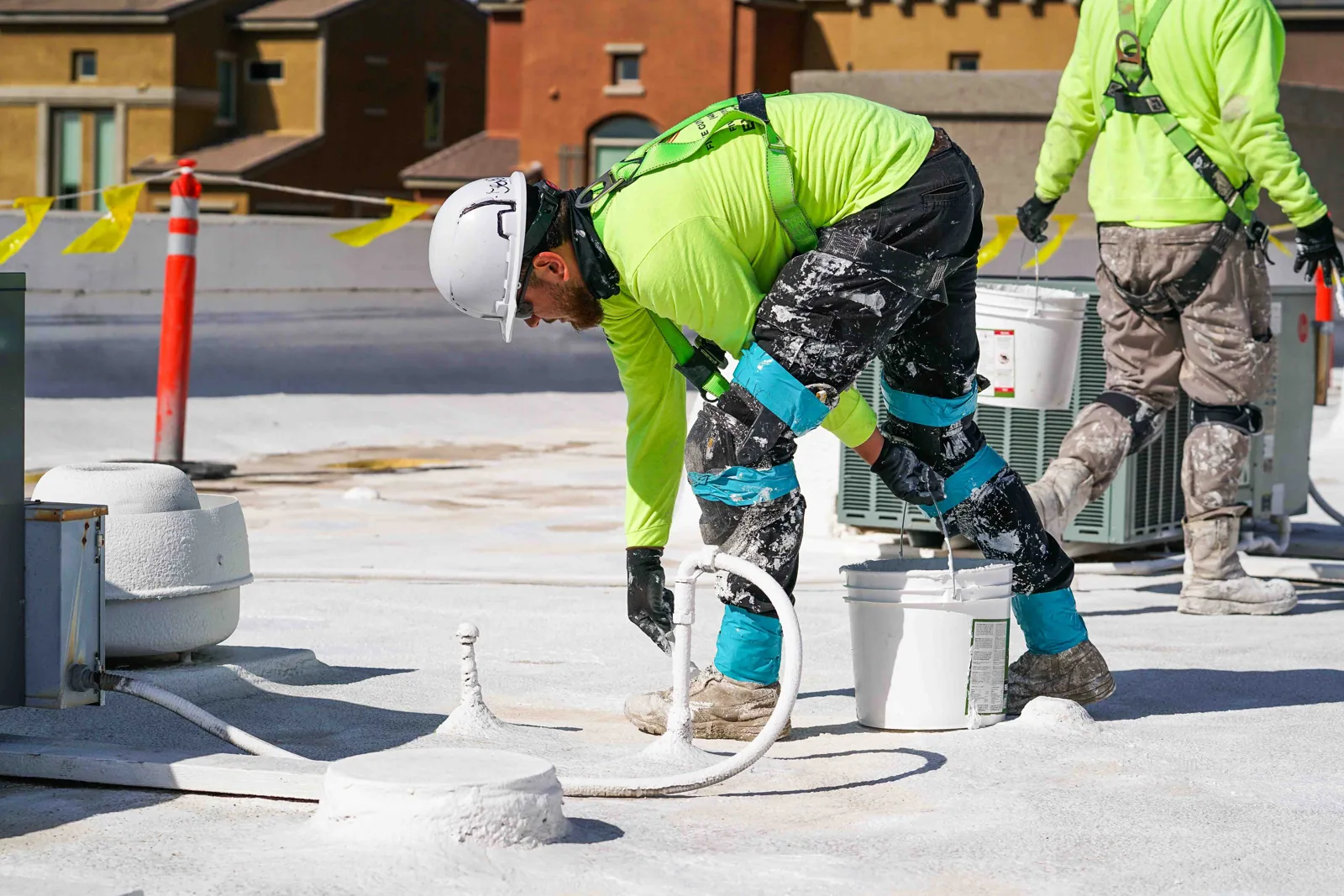
A hot membrane forgives nothing. On a July afternoon in Medford, OR, when the air passes 100 F and the roof surface runs well above it, a dropped screwdriver or a technician's boot heel presses into softened material and leaves a mark that would not have registered in spring. The puncture itself is small, often invisible from a few feet away, and for a while it does nothing. Then the first fall rain finds it, or condensation from an inversion week gathers around it, and a ceiling tile somewhere below turns brown.
Punctures are a maintenance problem more than a storm problem, which makes them one of the most controllable lines in the reserve schedule. A roof that is walked on carefully, and repaired promptly when walked on badly, keeps its remaining service life.
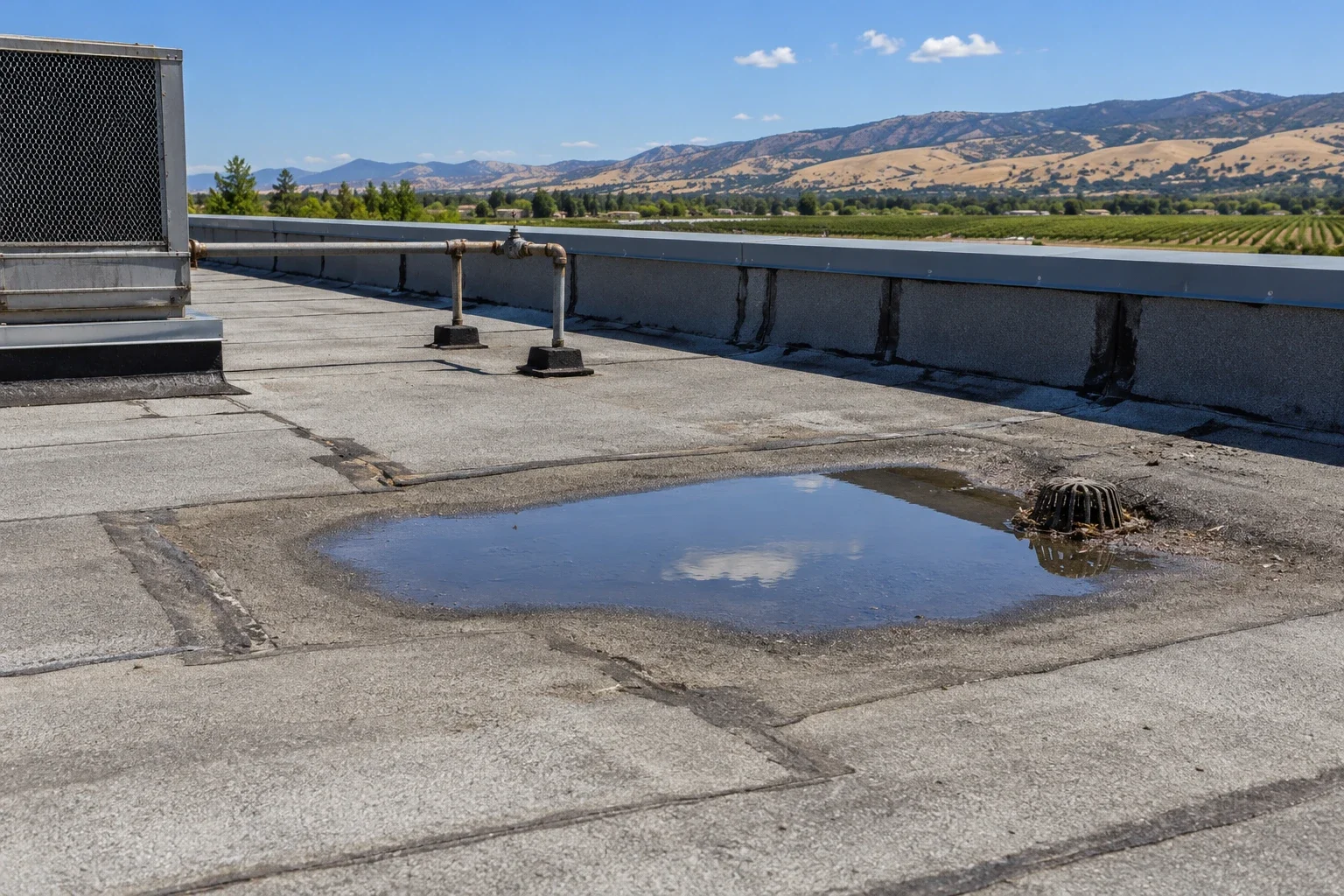
A cut over a low spot is worse. Where a puncture sits in a pond, the leak never stops, which is why ponding water repair and puncture work often go together on the same roof.
Who and what puts holes in a roof
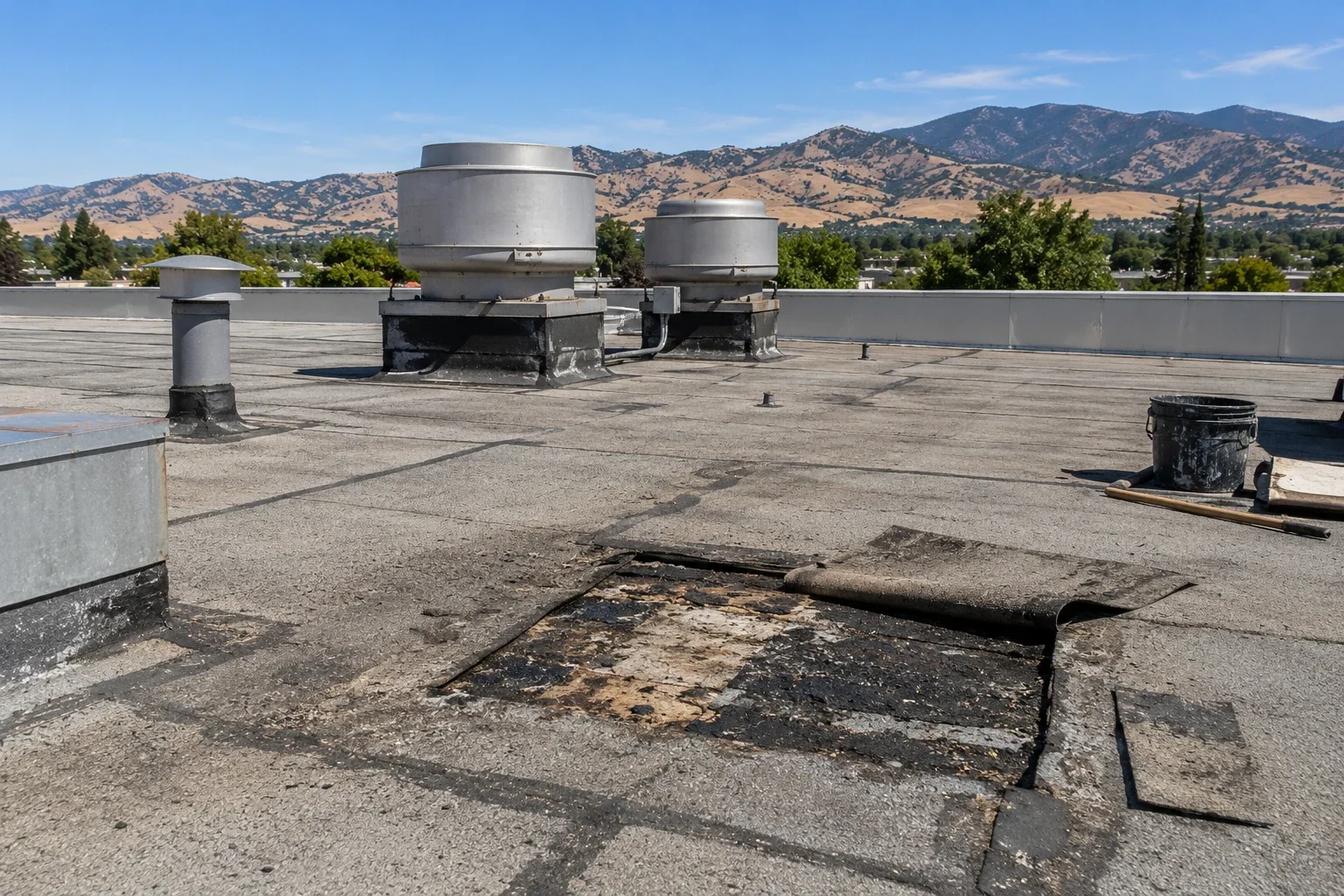
Most punctures come from other trades. HVAC technicians servicing rooftop units, telecom installers running cable, signage crews, window washers and inspectors all cross the membrane, and each can drop a tool, drag a ladder or scuff a seam. Debris from the roof itself does damage too: loose fasteners, bits of metal from edge repairs, branches from nearby trees and wind-carried leaves and woody debris, which is more common where trees or orchard ground sit close to a building.
Foot traffic wears the membrane gradually along the routes that matter, such as the path from the roof hatch to the main unit. Gravel and grit on soles act like sandpaper, and a roof surface softened by heat scuffs faster. Wear shows as a polished band, thin spots in the surfacing or exposed reinforcement, and it is as much a repair item as a hole.
Heat widens the damage. A soft membrane stretches around a point load and keeps the stretch, leaving a thin spot beside the hole. We check the ring around each puncture for thinning and patch the whole zone, not only the visible hole.
Finding the small ones
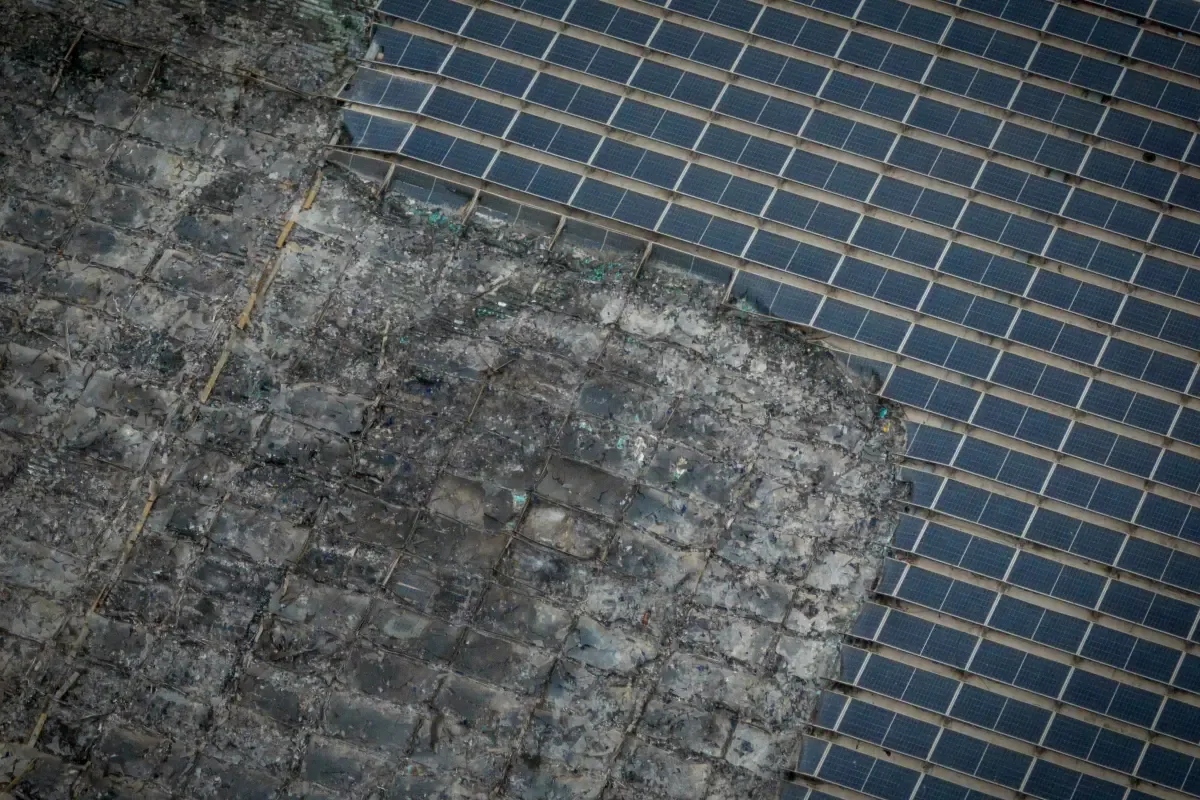
A puncture is easy to miss on a large roof, so we search deliberately. We walk the roof in a grid, concentrating on service routes, equipment areas and the lines under cable runs. We look for shiny scuffs, dents, nicks at fastener heads, cuts at flashing corners and anywhere a trade has recently worked.
When a leak appears below but the roof looks clean, a moisture scan narrows the field. An infrared survey will show saturated insulation under the entry point, and a core cut confirms the water. If an interior stain points to a general area, a flood test or a careful probe can reveal a hole that the eye cannot. We photograph each puncture with a scale and record its coordinates on the roof plan, so the repair log builds a picture of where the roof is most at risk.
Fastener pops are cousins of punctures. A screw that backs out of the deck pushes up against the sheet from below and wears through it in the heat. We find them by running a hand or a straightedge along suspect lines, and we re-seat or replace the fastener before patching.
Patching to match the membrane
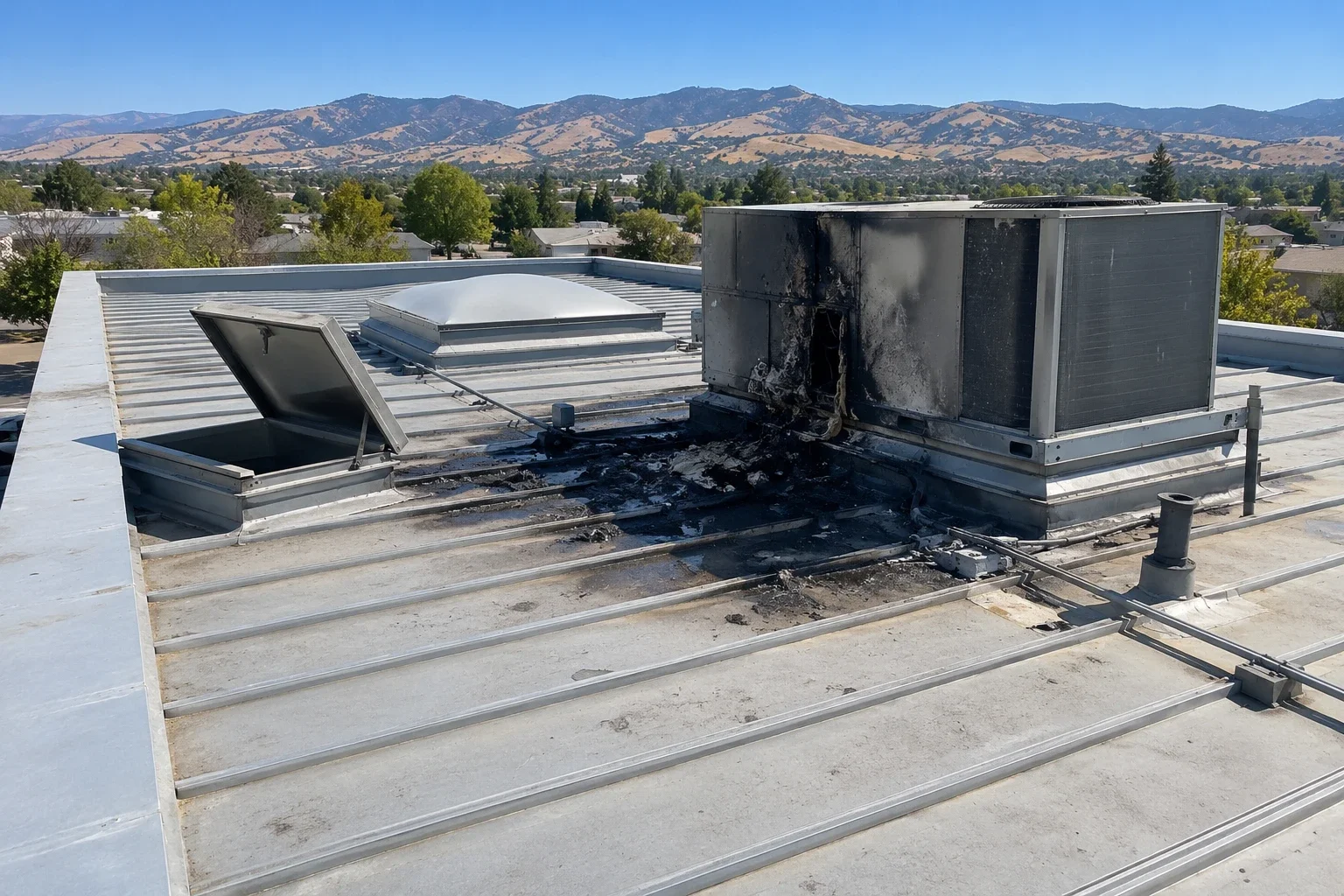
The patch must be made of the same family as the membrane and bonded with a compatible method. On TPO and similar thermoplastics, a hot-air welded patch with rounded corners extends beyond the hole in every direction; on EPDM, a cleaned and primed area takes a cover patch with seam tape; on built-up and modified bitumen roofs, a reinforced patch or cold-applied mastic seals the area. Corners are rounded because sharp corners peel under heat movement.
Surface preparation decides the result. Dirt, oxidation and chalk prevent a good bond, so each area is cleaned and sometimes scrubbed with solvent compatible with the sheet. If water has reached the insulation below, we cut out the wet board, replace it and then patch. A puncture repaired without removing saturated insulation keeps feeding the leak. Our commercial roof leak repair follows the same sequence when the opening has already admitted water.
Seams near a puncture deserve a look as well, since a stressed zone can open next to the patch; the seam failure repair process covers that check. Every patch is photographed and logged with date and location, and the register shows how many patches a roof has accumulated.
Cost drivers are simple: the number of punctures, the access needed, whether insulation below has to be replaced and whether the membrane around the damage is still weldable. Small patches are inexpensive; repeated patching of an aged sheet is the signal to compare it with a coating or recover.
Walk pads, routes and the rule of the path
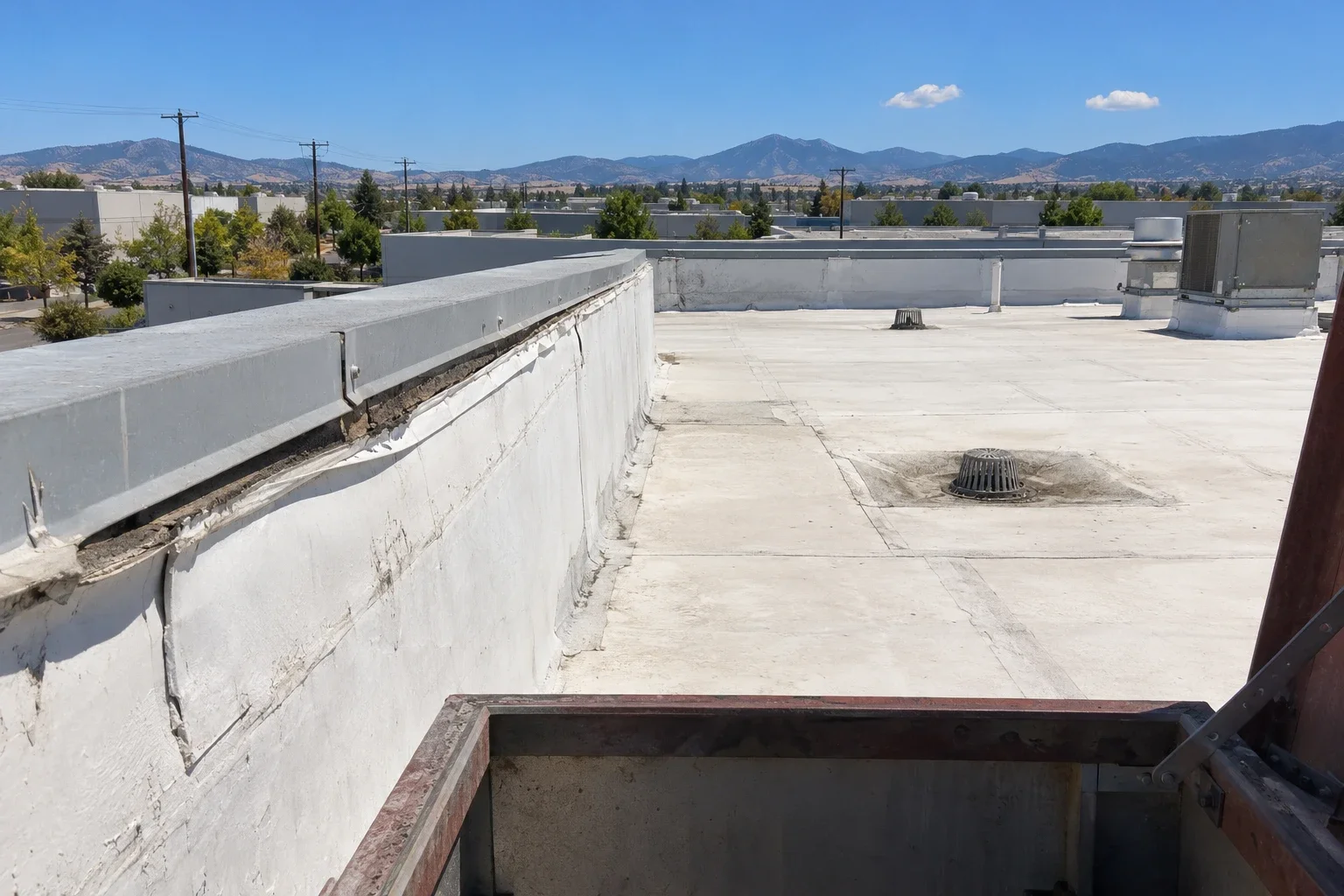
The cheapest fix is a pad. Walkway pads placed along service routes and around equipment take the wear that would otherwise land on the field membrane. We lay them with adhesive or weld, leave gaps for drainage and mark the roof plan so every trade knows where to walk. Around rooftop equipment and supports, pads protect the area that sees the most traffic.
Rules matter as much as materials. We ask property managers to share a short access protocol with trades: sign in, walk the path, carry tools in a bag, no dragging, report any damage. After major trade visits, we inspect and repair at the owner's request, and the log shows who was on the roof and when, which helps resolve responsibility without argument.
Smoke season adds debris and soot that hide small cuts, so a rinse before the walk makes damage easier to find. We time patching for mornings, when the surface is cooler and adhesives and welds behave predictably.
Roofs with heavy foot traffic
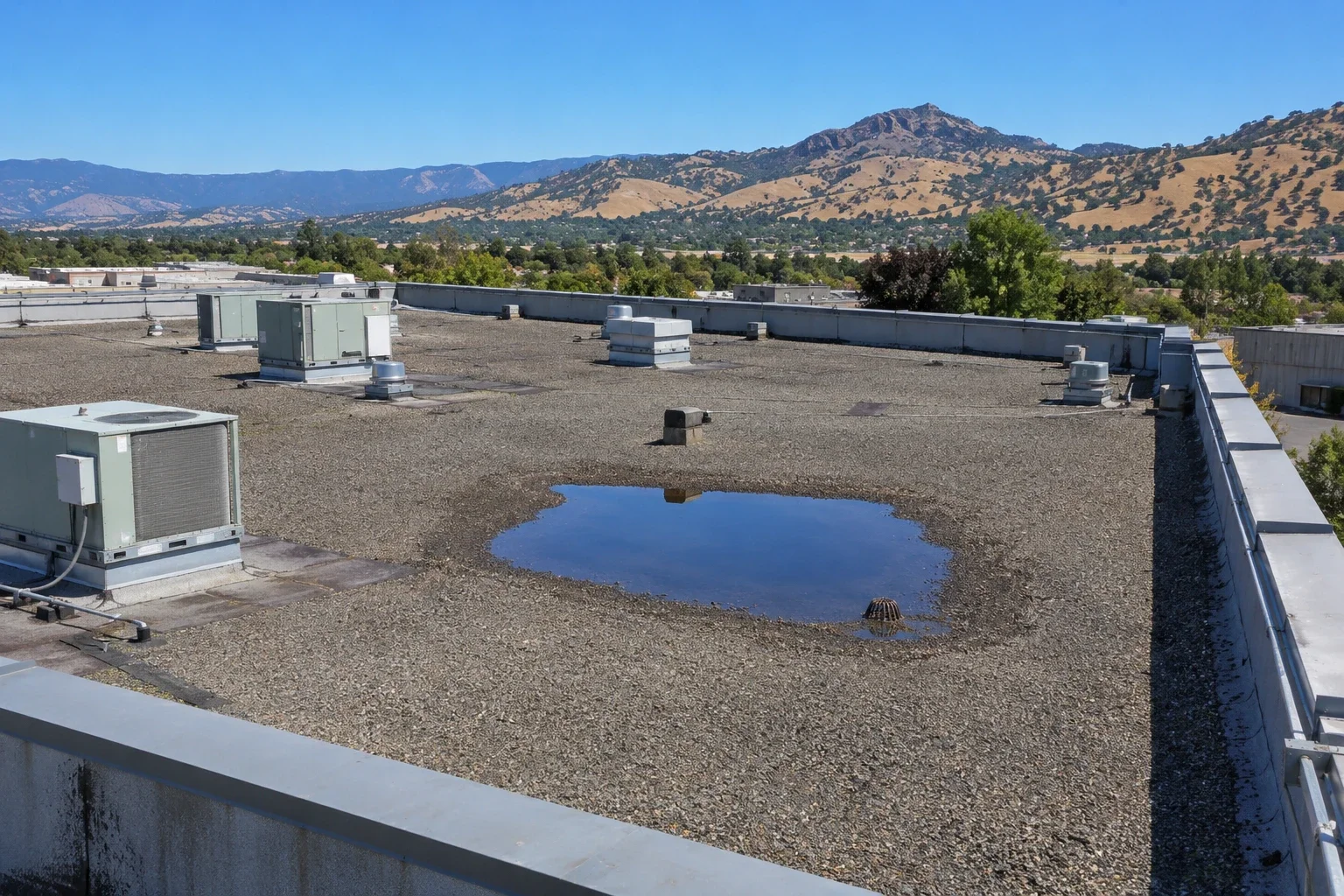
Medical offices and clinics, with frequent mechanical service, see constant visits to their units, and medical office roofs benefit most from pads and clear rules. Retail roofs in the North Riverside corridor carry multiple tenants' equipment and a stream of technicians. On a distribution building, such as those on Table Rock Road, dropped tools and loose fasteners are the likelier hazard.
Preventive checks keep small damage from growing. A scheduled maintenance visit includes a sweep for punctures, a patch of anything found, and a note on any trade damage that needs a conversation.
After a repair, the log is shared with the property manager so that the next trade visit is scheduled with the pads and routes in mind. A hole is rarely an accident when the same hole appears on every spring service call, and a conversation with the trade usually ends it.
Send the leak locations and the trade visit list

Related Roofing Pages

Questions About Membrane Puncture and Foot-Traffic Damage Repair
Is a small puncture worth repairing right away?
Yes, because water finds it in the next rain and travels into insulation, where the damage grows out of sight. A patch costs little compared with replacing wet board.
Who pays when a trade damages the membrane?
The party responsible, in most cases, though contracts differ. Our log of visits and photographs makes the cause clear, and the owner or manager takes it from there.
Will a patch last as long as the roof?
On a clean, flexible membrane, a correctly made patch holds for years. On a brittle, aged sheet, it may be one of many, and repeated patches signal that replacement or coating is near.
Do walk pads change how the roof looks?
They add visible strips, usually in a contrasting color, and they stay clean longer than the surrounding field. Most owners find the trade-off worthwhile.
What if I find a hole at night and it is raining?
Call the emergency line. We can place a temporary patch or cover, then make the permanent repair in dry weather.