
Built-Up Roofing in Medford, OR
Built-up roofing in Medford, OR: how multi-ply gravel roofs shield asphalt from triple-digit sun and embers, and when the layers still earn their place.
Overview
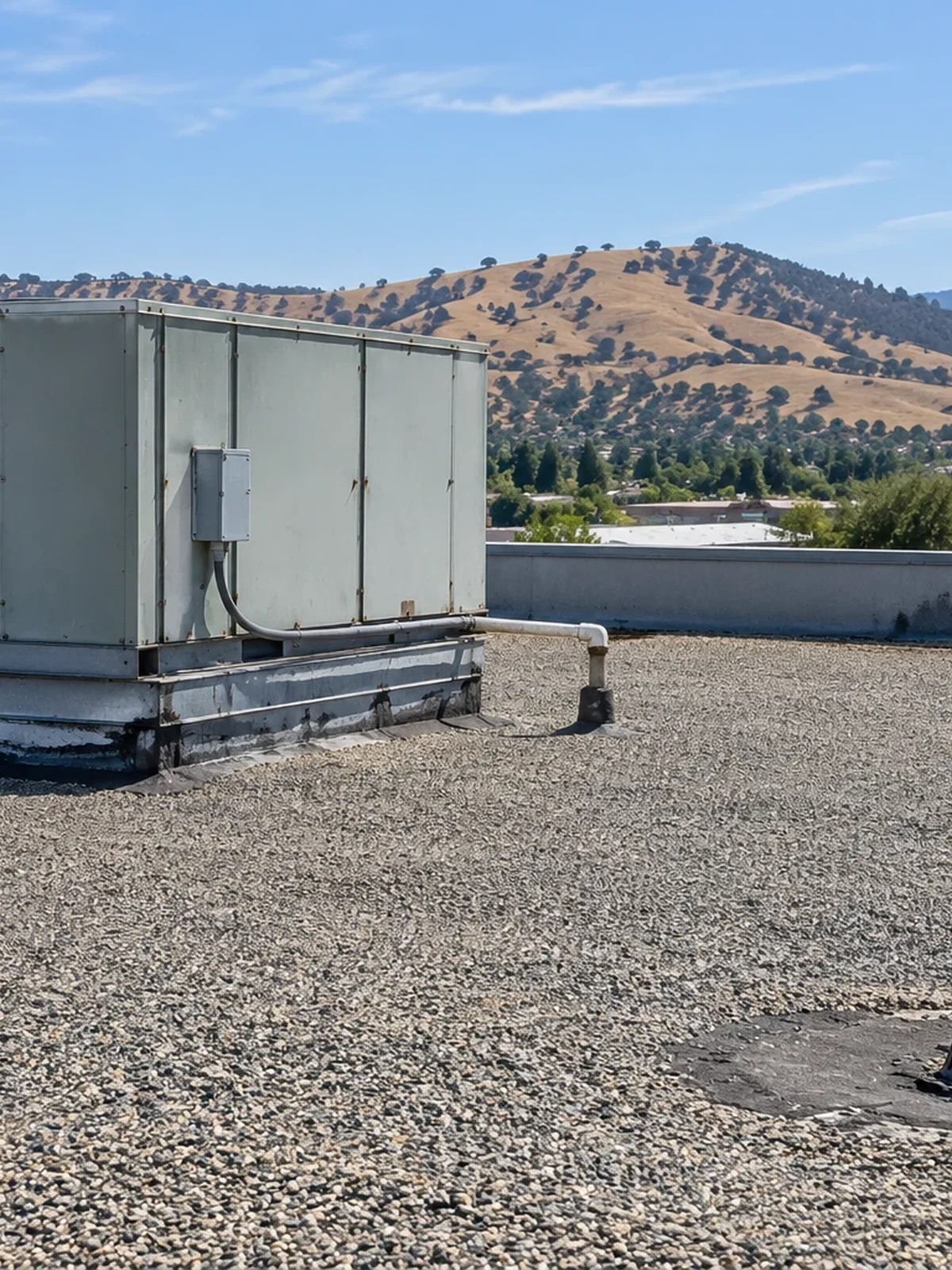
A gravel-surfaced built-up roof is the valley's oldest answer to a valley problem. In Medford, OR a layer of stone over several plies of asphalt and felt shields the waterproofing from ultraviolet light and from the direct heat of the sun, and that matters with 61 afternoons past 90 F and a 115 F record. Gravel also keeps embers from touching the asphalt, a point with more weight since wildfire took about 2,600 Jackson County homes in 2020.
The price of that protection is weight, labor and a surface that hides its own condition. The reserve schedule has to account for all three.
What a built-up roof is made of
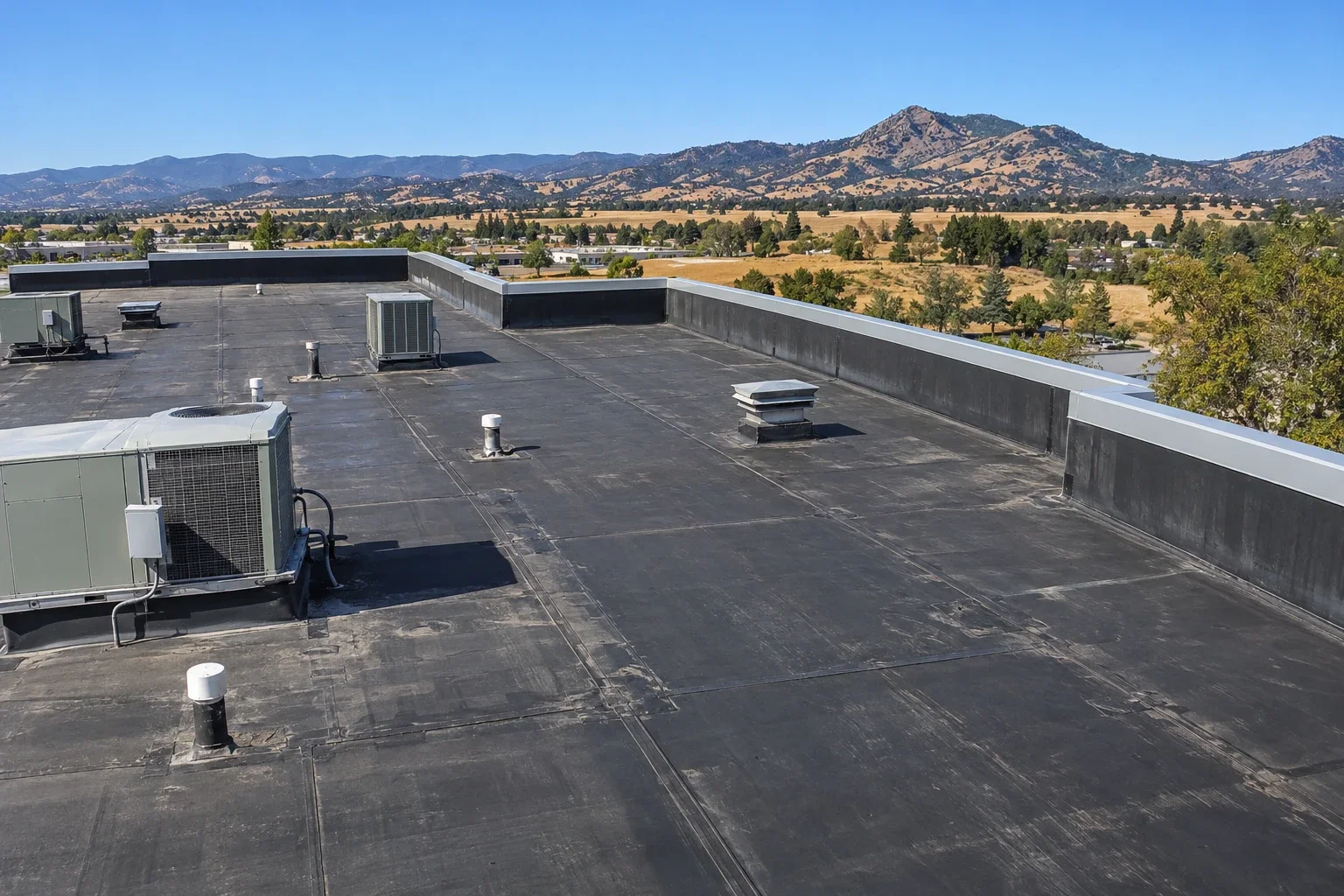
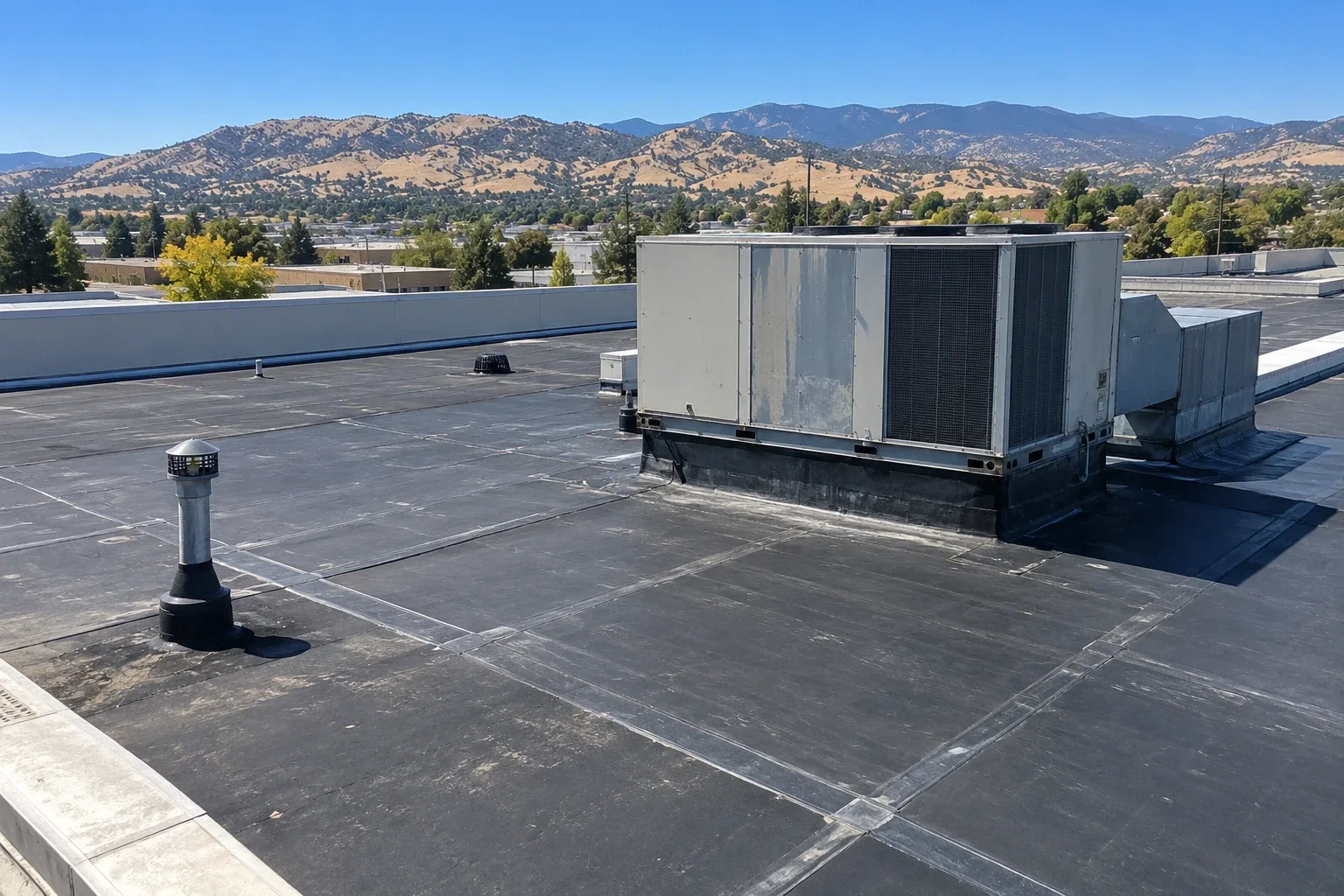
A built-up roof is several plies of reinforcing felt bonded with hot asphalt, finished with embedded gravel or a mineral cap sheet. The layers give redundancy: a flaw in one ply is covered by the next, and water must cross all of them to reach the deck. The system has a record of well over a century on low-slope roofs, and it is still specified where owners want durability and an easy path for repairs.
It is heavier than a single-ply and slower to install. Gravel can weigh several pounds per square foot, and the structure must carry it along with any added load. A cap-sheet surface is lighter and quicker, with less UV shielding than stone. We show both options, with the weight and the carrying cost, and the owner report records the choice.
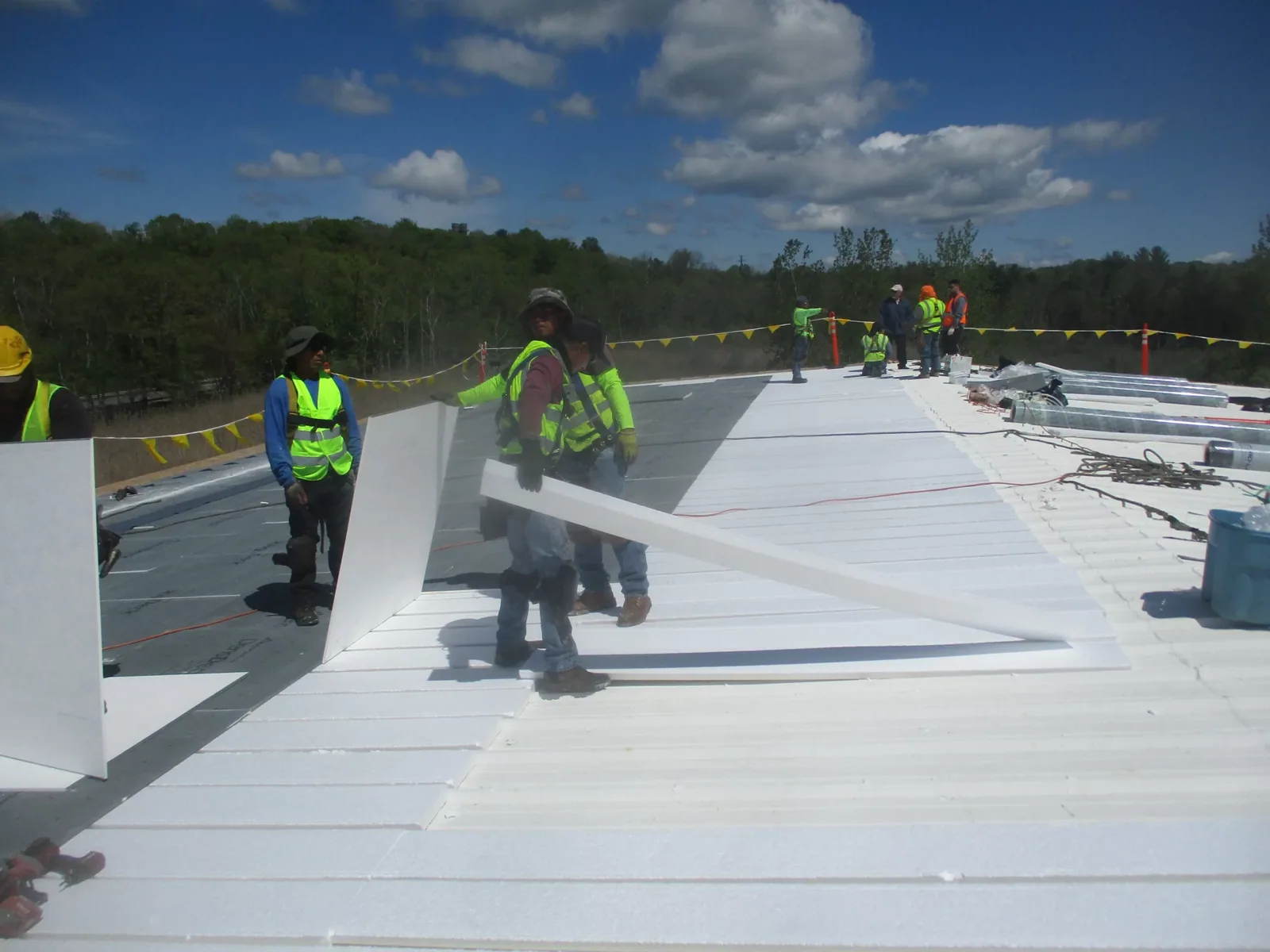
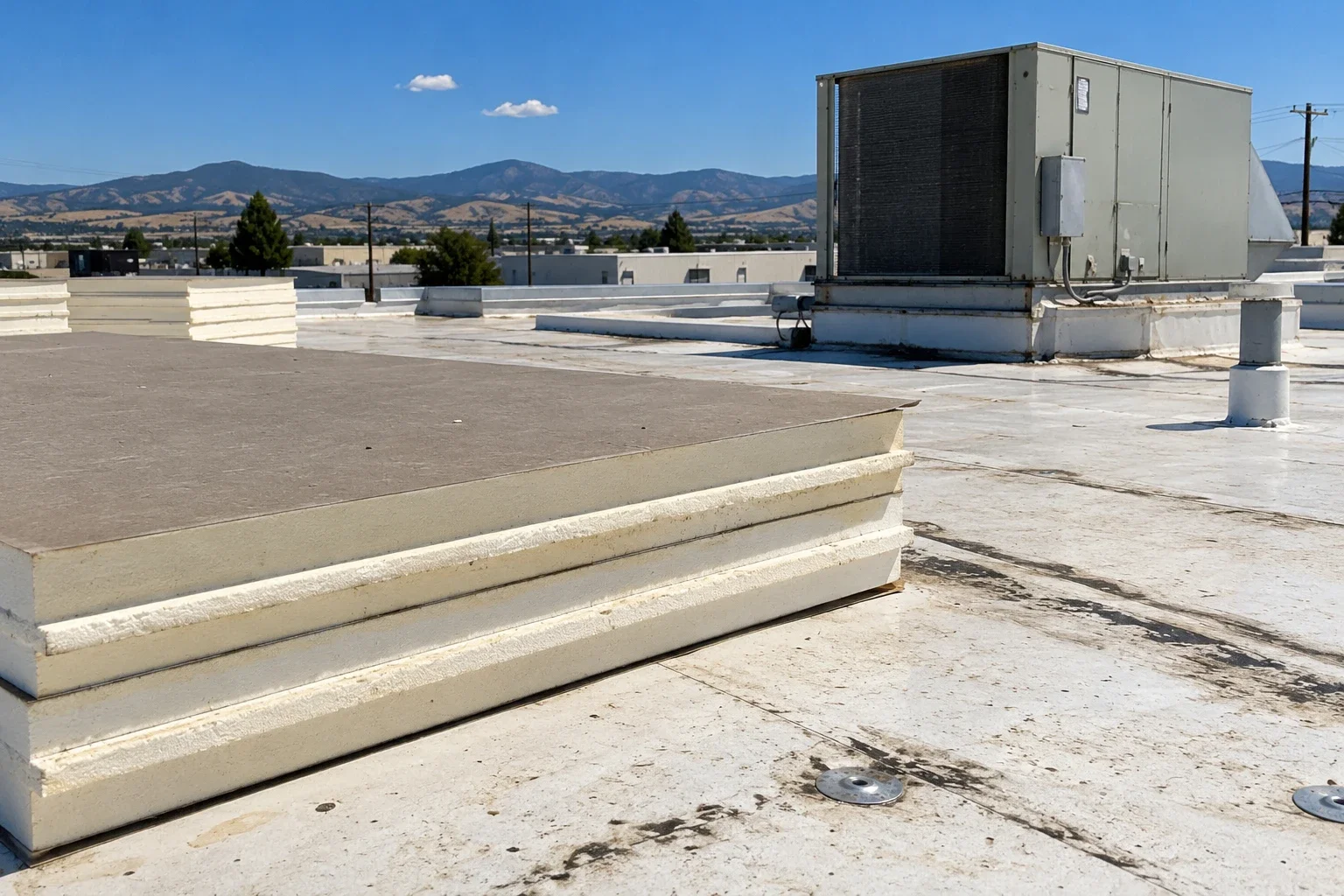
Insulation and cover board sit under the plies. A rigid board gives the base ply a flat, stable bed and spreads loads from foot traffic, and its thickness sets the height of every parapet flashing. We check those heights early, since a thicker assembly can force a taller flashing or a new cap. The insulation and cover board choice appears as its own line in the bid.
Heat, UV budget and what gravel does
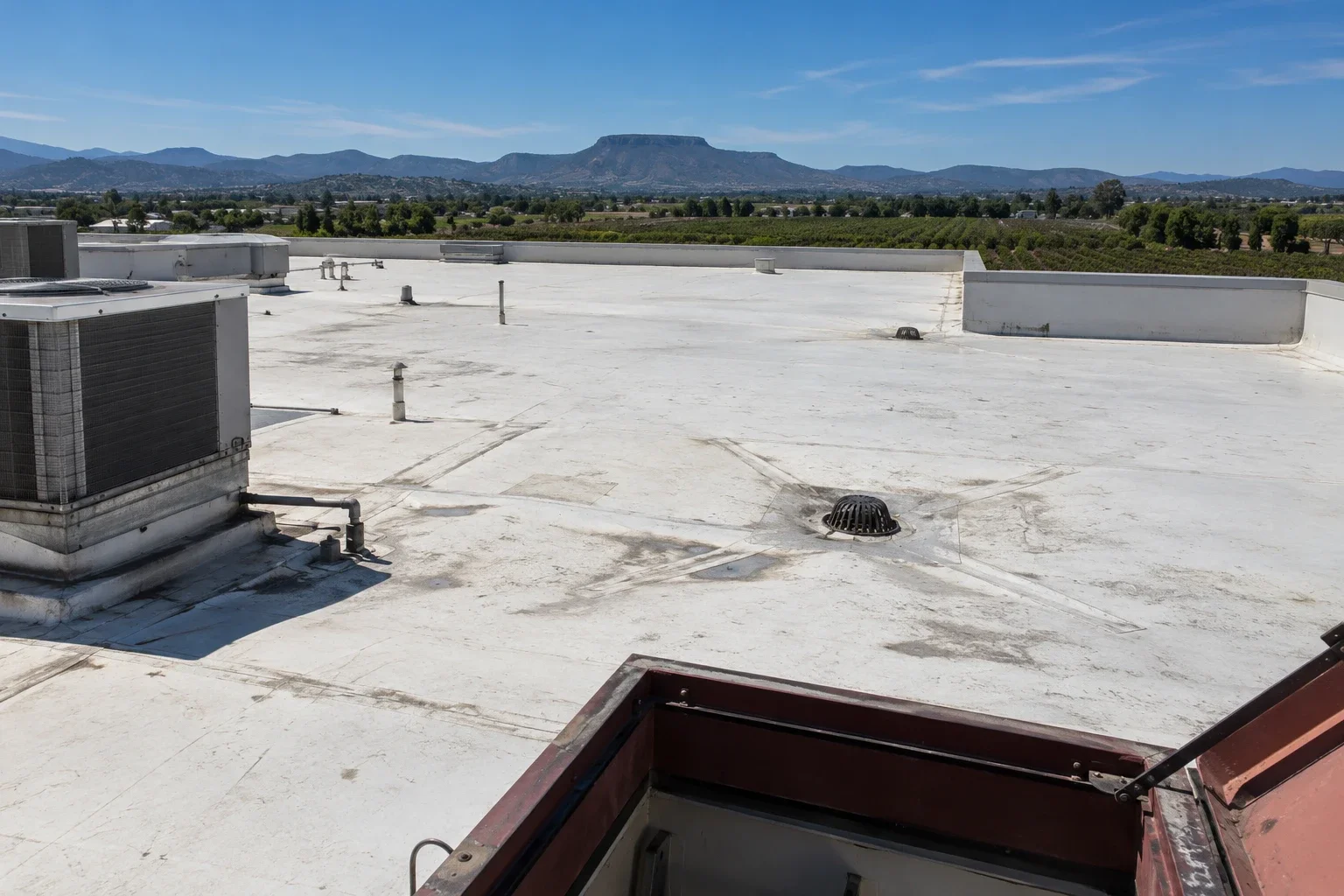
Gravel acts as a sacrificial layer. It takes the sun, reflects part of it and slows the oxidation that cracks bare asphalt. The valley's clear skies spend the UV budget of any exposed membrane quickly, and a gravel surface stretches that budget across decades. The stone also protects from foot traffic and hail.
What gravel hides is condition. Blisters, splits and ponding show poorly under stone, so an inspection means raking back sample areas, cutting cores and, where moisture is suspected, running an infrared survey after sunset. The condition grade records granule or gravel coverage, blistering, splitting and flashing condition, and the remaining service life follows from it.
Blisters are the typical flaw. Air or moisture trapped between plies swells in afternoon sun and lifts the surface, and a blister that splits open turns into a leak. Small blisters in sound roofs can be cut, dried and patched with layered felts. Clusters of them point to moisture in the system, and an infrared scan tells us how far it runs.
Smoke season, soot and hot-work limits
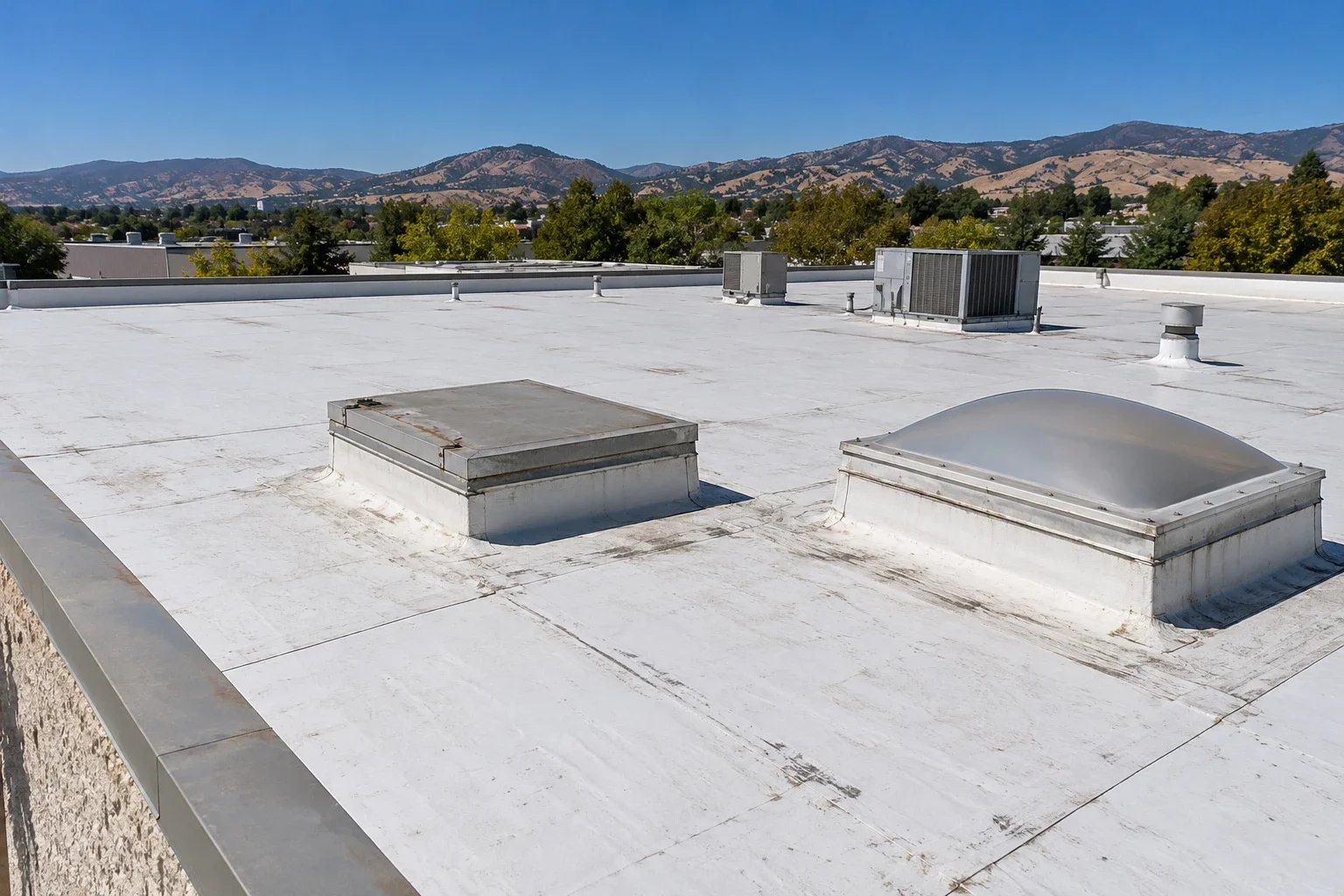
Medford had 26 smoke days in 2021, and soot and ash settle into gravel and drains alike. After a smoke event the stone near drains and scuppers needs raking, and strainers need clearing, because ash packs into the gaps and holds water. Loose gravel at edges is also an ember trap and a wind hazard, so perimeter gravel stops get checked.
Installation uses hot asphalt from a kettle, which is open-flame work in the dry season. A kettle needs a hot-work plan, a fire watch and a placement away from air intakes and neighbors, and some owners and insurers bar it in fire season. Cold-applied and self-adhered alternatives exist for those cases, and we price them beside the hot method with the schedule consequence.
The owner report should name the fire plan for any kettle job. It lists the fire watch, the extinguisher count, the wind and temperature limits and the final check, and it belongs in the file next to the warranty application.
Where built-up roofs still make sense
Older institutional and commercial stock is the natural home. The old Carnegie library in Medford closed in 2004 after 92 years, evidence of the aged masonry stock downtown, and layered systems are commonly found on flat roofs behind masonry parapets. Downtown Medford sits beside the Interstate 5 viaduct, so roofs there are highly visible and tidy edges matter.
Campus roofs follow the same logic. Southern Oregon University holds 175 acres in Ashland, and Rogue Community College operates in the Rogue Valley. Where a building is held for decades and the structure can carry stone, a built-up roof competes well on lifecycle cost against a single-ply such as EPDM or TPO.
Industrial roofs belong to the same conversation. Zoned heavy industrial and rail-served, the 26-acre Phoenix Industrial Park is a natural place for heavy roofs on heavy buildings. We confirm the structure with the engineer before any gravel or recover decision.
Cost, reserve schedule and lease timing
Labor is the largest line. Each ply is mopped or applied in sequence, and gravel has to be hauled and spread. Tear-off of an old gravel roof is slow and heavy, so a recover over a dry, sound roof saves a major line when the structure allows it. We scan and core before recommending one and carry a unit price for any saturated insulation we find.
The reserve schedule gets a date and a cost range, with weight and structural review noted. Oregon's 2025 Structural Specialty Code has been mandatory since April 1, 2026, so a built-up replacement is checked against the new edition. Lease timing favors work before a tenant moves in, since kettle fumes and noise are hard on an occupied floor. The comparison also lists the roof's weight per square foot, because the structure and the budget have to agree before the first ply goes down.
Installation and the work window
Hot asphalt wants dry weather and moderate temperatures, and the spring work window is the best part of the year for it, before fire restrictions tighten. The kettle is placed away from intakes, the fire watch stays after the last flame and the roof is closed each day. Gravel is spread while the top coat is hot, so the schedule moves in one continuous pass per section.
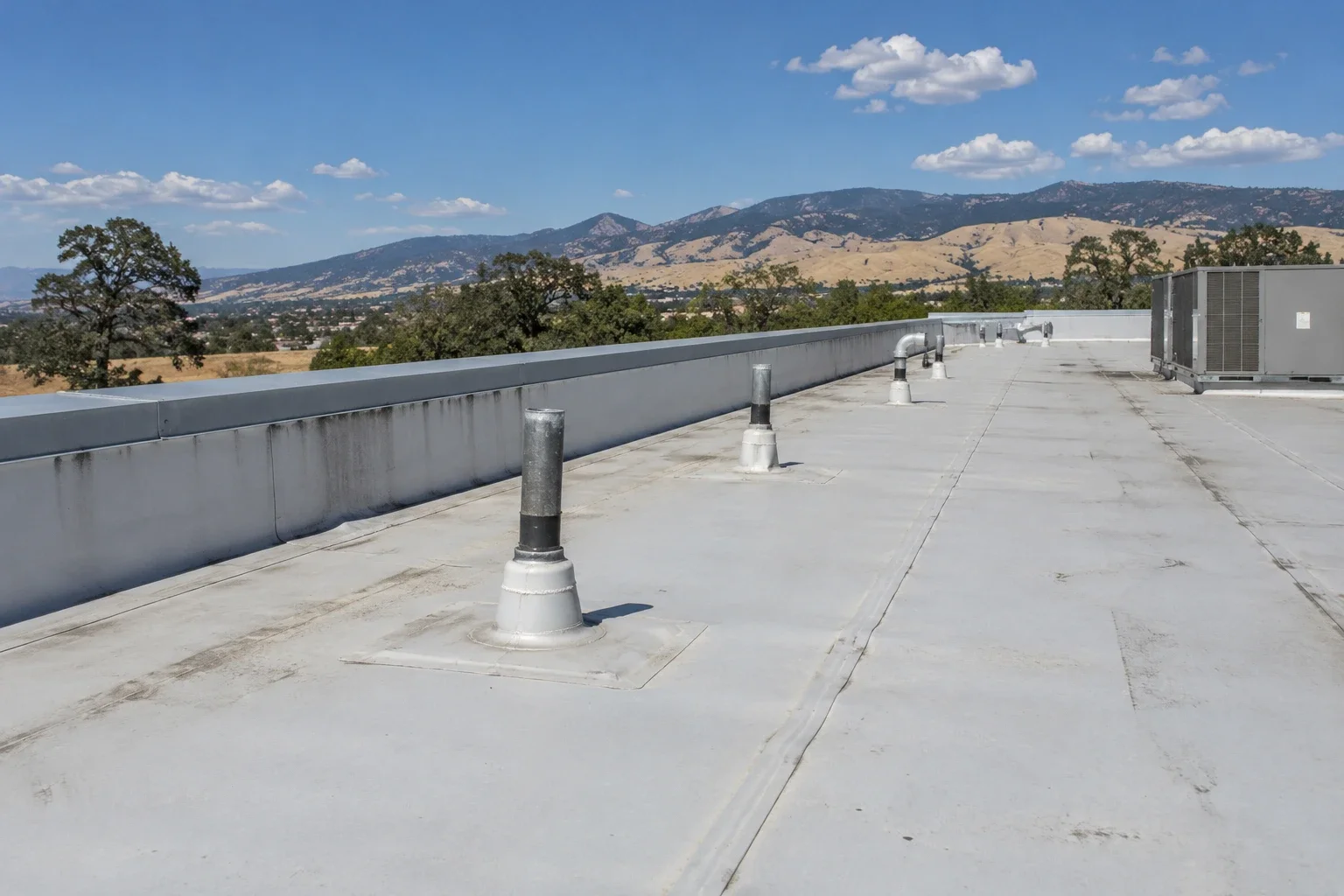
When the job closes out, the property manager walks the roof with us, and edges, drains and flashings are photographed before the warranty application goes in. The roof register gets the plies, the surfacing, the weight and the date, so the next owner report starts from a documented roof.
Repair is part of the case for layers. A built-up roof can be patched ply by ply, and a trained crew can keep an older roof alive long after a thinner sheet would need replacement. Each item on our repair list is tagged as a patch or a fix and priced, which leaves the owner to decide what to carry forward.

Send the roof ages and building list
Related Roofing Pages
Questions About Built-Up Roofing
Does gravel protect against embers?
It helps, since stone does not burn. Edges, penetrations and loose debris still need attention.
Can built-up roofing be installed in fire season?
Hot asphalt is open-flame work and some owners bar it. Cold-applied alternatives exist.
Gravel or cap sheet?
Gravel shields better and weighs more. A cap sheet is lighter and quicker. We price both.
How do you inspect under gravel?
We rake back sample areas, cut cores and run an infrared scan after sunset.
Can we recover over an old built-up roof?
Often, if it is dry and the structure can carry the added weight.