
Senior Living Roofing in Medford, OR
Senior living and retirement community roofing in Medford, OR, graded for heat, UV and smoke, with resident comfort and care schedules driving the work plan.
Overview
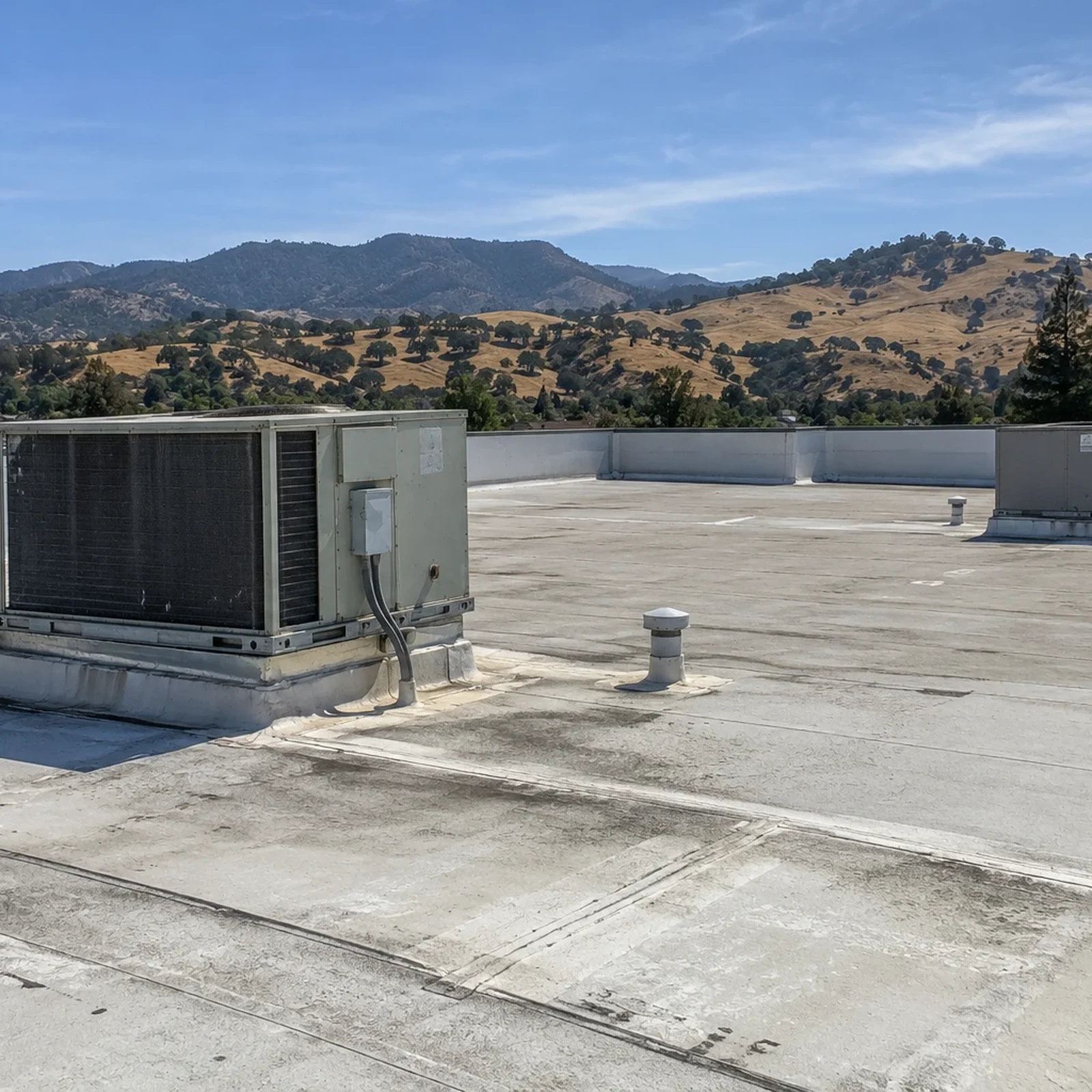
Health care, retirement and senior services are central to the Medford, OR economy, and the roofs over those communities are asked to do something unusual: keep residents cool through the valley's hottest weeks while the building cannot close. With 61 afternoons above 90 F with 11 above 100 F in a typical year, a roof that has lost reflectance sends heat into top-floor apartments where residents are least able to cope with it. Remaining service life moves in the reserve schedule, and cooling cost moves with it in the operations budget.
We grade senior living roofs in terms an executive director and an asset manager can both use. Each section receives a condition grade and a remaining-life estimate, and the report ties the work to resident comfort, care schedules and licensing visits. The membrane is one line. Quiet, safety and timing are the others.
Heat on the top floor and the cost of a failing roof
About 18.4 inches of precipitation a year means roofs go unrinsed through the dry months, and dust and soot dim a reflective surface over a few seasons. A dimmer roof is a hotter roof, and the deck passes that heat to the rooms below. For a resident who is sensitive to heat, a top-floor unit that will not cool is a health question as well as a comfort one, and an operator will hear about it at the front desk before the maintenance log.
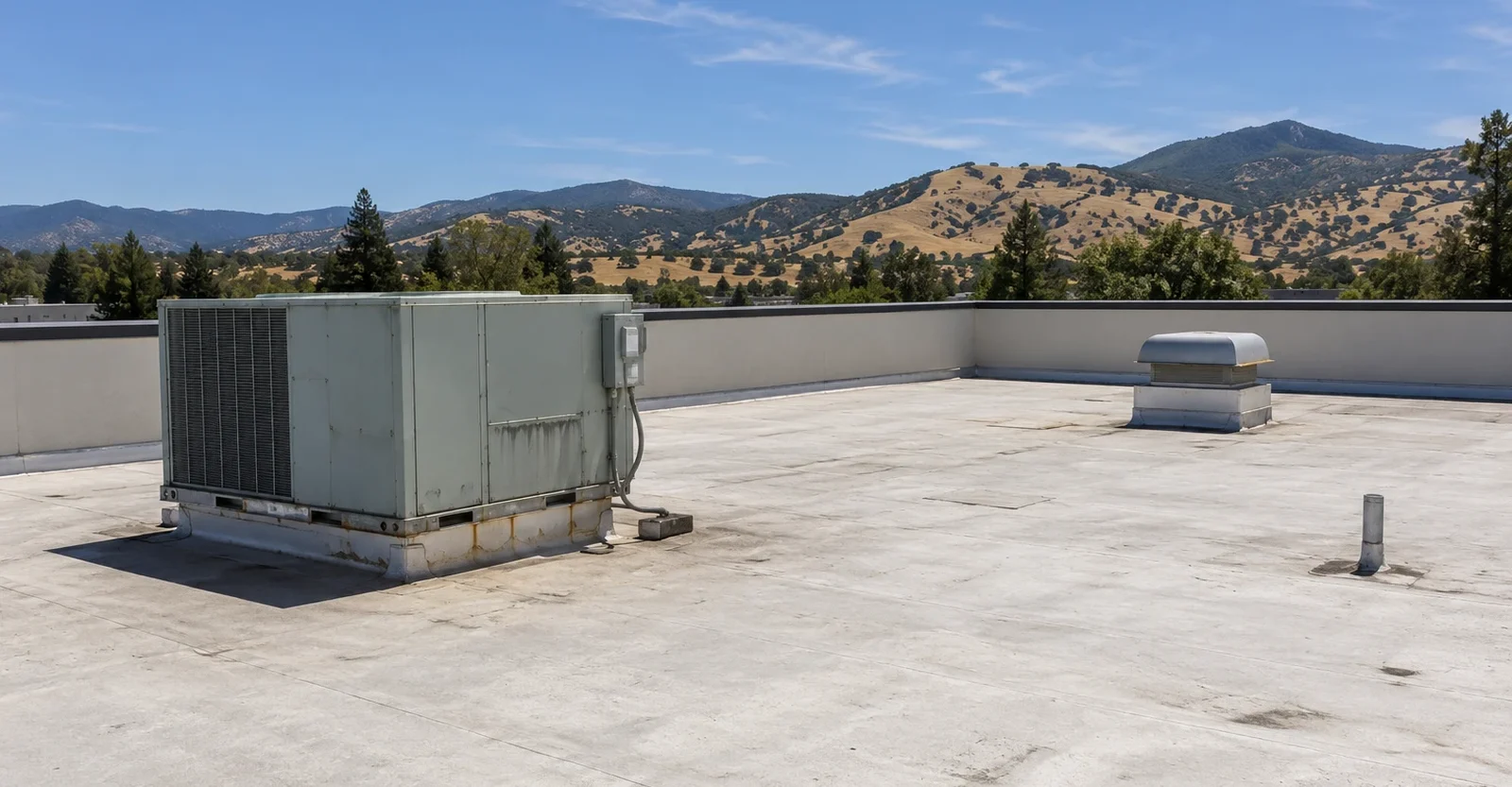
The same heat ages the roof itself. Seams stiffen, sealants chalk, and flashings at stair towers, dormers and mechanical penthouses pull as the materials expand each afternoon. None of this happens overnight, which is why a yearly condition grade is more useful than a call after the first stain. A survey that grades these details building by building tells the owner where the sun is spending the roof's budget, and which sections need attention before a leak reaches a resident's ceiling.

Condition grade and remaining life by wing
Senior communities grow in stages: an independent living wing, assisted living, memory care, a clubhouse, a dining building. Each has its own roof, its own age and its own risk. We grade every section on membrane or covering, seams or laps, flashings, drainage, ventilation and moisture, with an infrared scan on flat roofs, and we record each with photos.
The result is a map of the community. A section over memory care or a skilled nursing area carries a higher exposure than a section over a maintenance shop, so it rises in the repair order even when its grade is similar. The owner report states the exposure beside the grade, so the executive director and the board can see why the plan starts where it does. A roof section that grades only fair but sits over a care area may come ahead of one that grades poor over an empty building, and the report says so openly, so no one is surprised by the order.

Reserve schedule, licensing and ownership timing
Senior housing operates under licenses that depend on a safe, sound building, and a failing roof can trigger findings in an inspection. Owners and operators plan roofs against the reserve schedule, the licensing calendar and, for many communities, a refinancing or sale. The owner report supplies the evidence: grade, years left, recommended action and cost range for each building.
Carrying cost is the number that changes the plan. A leak into a resident room means relocating the resident, repairing the room and documenting the event, and the cost of that sequence exceeds the cost of the repair that would have prevented it. The report puts the two side by side, and an operator can see why a planned replacement in the spring window beats an emergency in the first rain of fall. It also notes the lead time on membrane and insulation, since a spring start depends on an order placed over the winter, and the operator needs the date by which the decision has to be made.
Quiet hours, care schedules and resident safety
Work on a senior living roof follows the rhythm of care. Morning medication, meals, therapy and rest each have a time, and the noisiest steps are scheduled away from them. We ask the director of care for the daily schedule and map the roof to it, so the loudest work lands over rooms that are empty or over the staff areas, and the quietest work lands over memory care. Where a resident is sensitive to vibration or sound, the director of care can ask for a different day, and the schedule carries room for those changes.
Safety shapes the site. Fencing, flaggers and clear signs keep residents, families and visitors away from lifts and debris, and walkways stay clear for wheelchairs and walkers. Fresh-air intakes are covered or shut by arrangement so roofing odors stay outside. Deliveries arrive by road, whether from Interstate 5 or Oregon Route 99, and we pick the hour with the least resident traffic and keep trucks off the drop-off lane that families and ambulances use. A first-light start dodges the afternoon heat on triple-digit days and lets the crew finish the loud work before most residents are up, which is gentler on everyone. Each wing is dried in before the crew leaves.
Smoke weeks, air quality and ember exposure
Smoke is a care issue in the valley. Twenty-six smoke days in Medford in 2021, after fires that took about 2,600 Jackson County homes in 2020, make clean air a care issue here. Rooftop air handlers load their filters quickly in a smoke month, and a clean filter protects the residents' air. A post-smoke visit changes filters, cleans the roof surface of soot and logs the work in the register. Inversion weeks in winter hold poor air over the valley for extended periods too, and the filters load then as well, so the visit calendar has a winter entry beside the summer one.
Ember exposure sits at the edges. Gutters, vents and parapet caps collect debris that can ignite, and a pre-season clean removes it. Each building's covering and fire rating are recorded, so the operator's emergency plan and the insurer's file show the same facts. The same record lists the location of roof hatches, fall-protection points and the safest route to each unit, which helps a maintenance crew and an emergency responder alike.

Reporting for operators, owners and lenders
Each building leaves with a roof register entry: grades, photos, drains, penetrations, ventilation, warranty and the date of the next check. An occupied building reroofing plan sets the phasing, and a roof asset management program keeps the register current. A healthcare system that runs senior housing can combine entries across sites, and due diligence roof surveys help a buyer. Related formats include medical office roofing and apartment roofing, TPO roofing suits many wings, and communities in Medford and Central Point follow the same plan.
Send the wing list, roof ages and leak tickets

Related Roofing Pages


Questions About Senior Living Roofing
Why does roof condition matter for resident comfort?
A roof that has lost reflectance passes more heat into top-floor rooms, and cooling systems work harder.
How do you protect residents during work?
Fencing, flaggers, clear walkways, covered intakes and noise scheduled away from care routines.
Can memory care wings be roofed in the same project?
Yes, with the quietest methods, short phases and hold points agreed with the care director.
What is in a post-smoke visit?
Filter changes, a clean of the roof surface and a log entry in the register.
Does the roof report help at licensing time?
It gives the operator dated photos, grades and repairs to show a sound building.