
Holcim Elevate Roofing Systems in Medford, OR
Holcim Elevate, formerly Firestone Building Products, commercial roof systems in Medford, OR: installation, repair and upkeep tuned to valley sun and smoke.
Overview
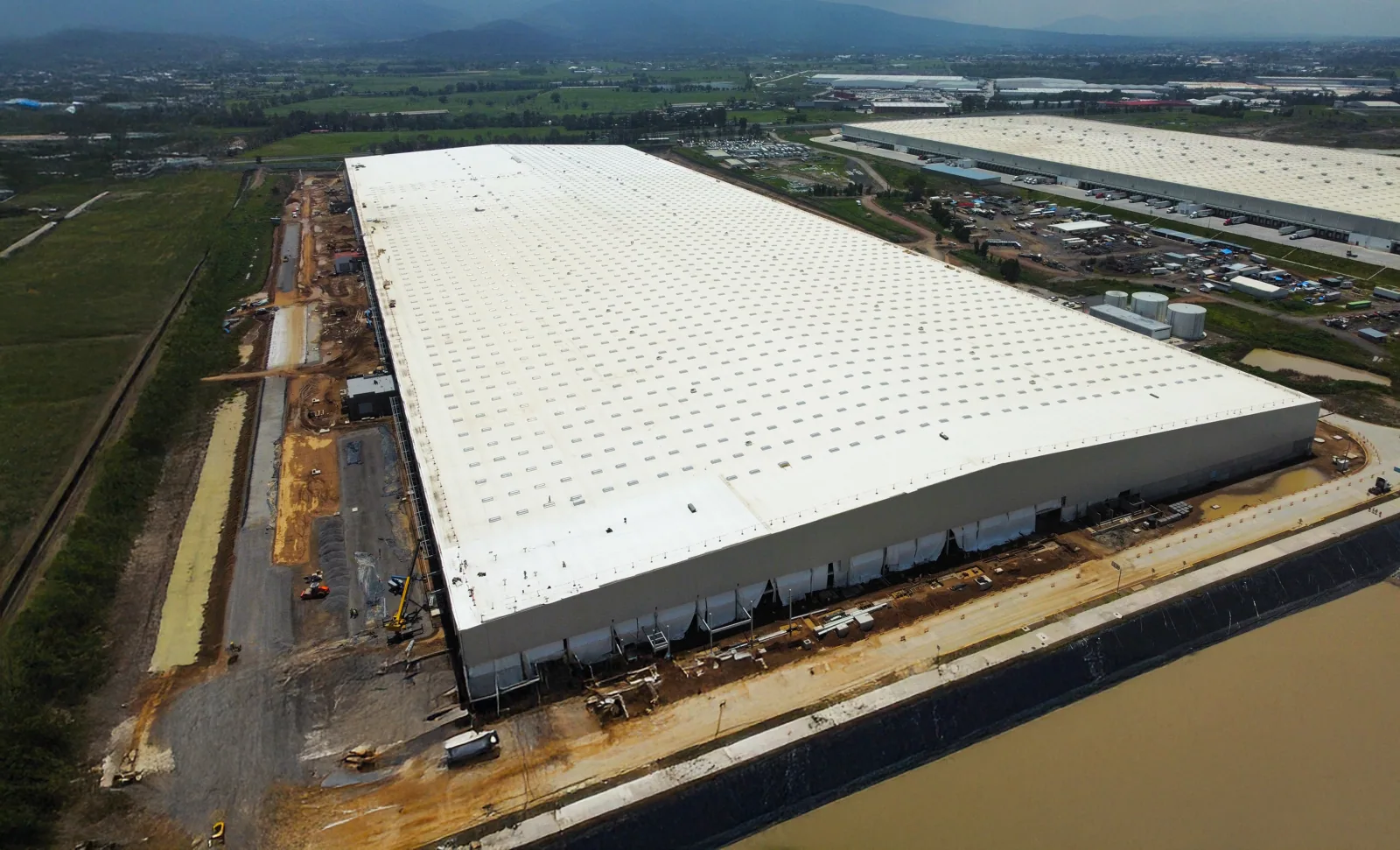
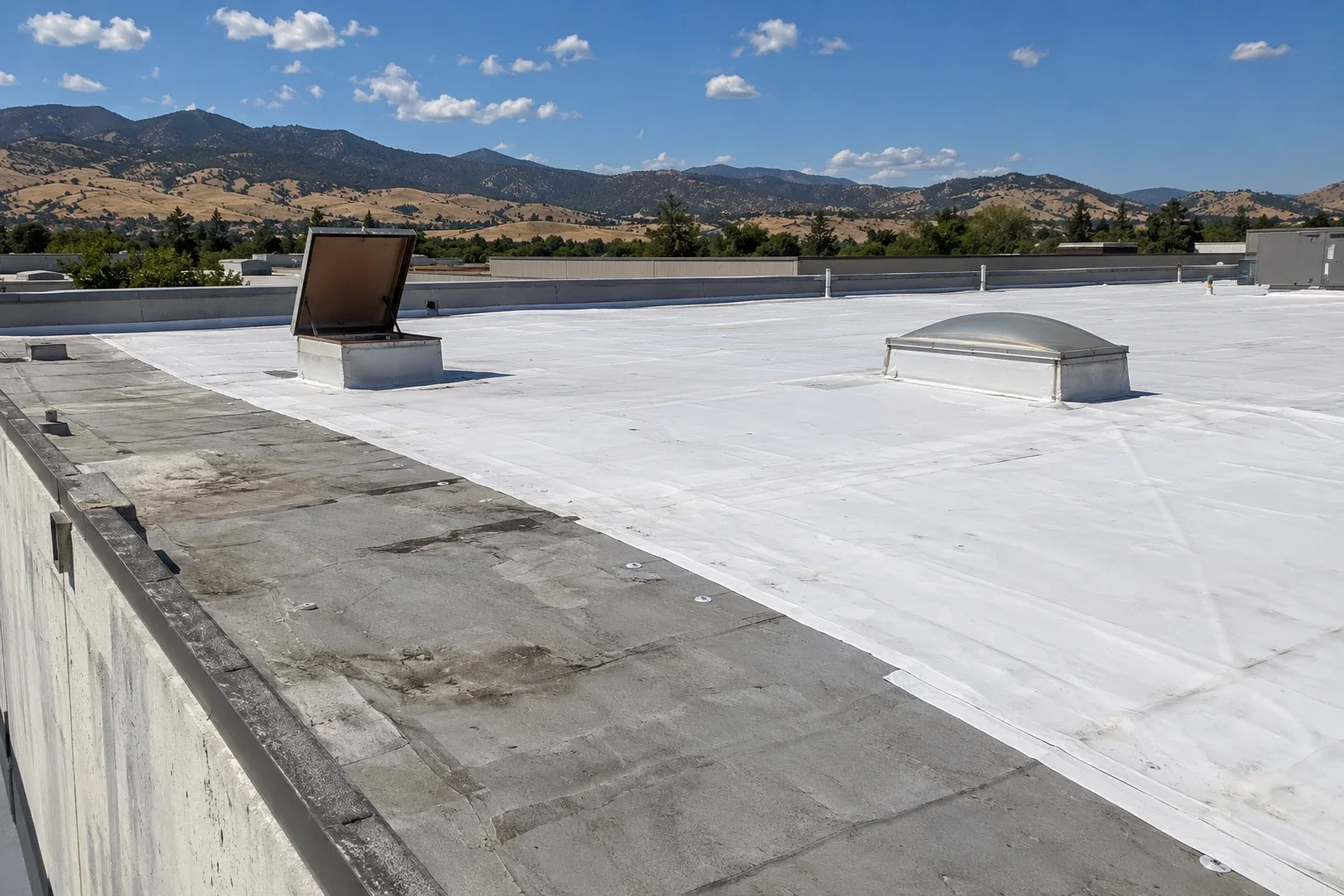
Holcim Elevate, formerly Firestone Building Products, supplies low-slope roofing for Medford, OR buildings: rubber and thermoplastic single-ply sheet, rigid insulation, and the edge metal and accessories that finish the perimeter. The valley is hard on all of it in the same way. Each summer posts around sixty-one afternoons above 90 F and eleven above 100 F, and the high mark is 115 F, so every roof here spends its ultraviolet budget faster than the original reserve schedule usually assumed.
Installation, repair and upkeep of these system types happen on occupied buildings, and each roof finishes with a condition grade and a remaining-service-life estimate that goes into the owner report. When something fails in the middle of a hot week, an emergency crew is available any hour of any day.
Reading the roof already in place
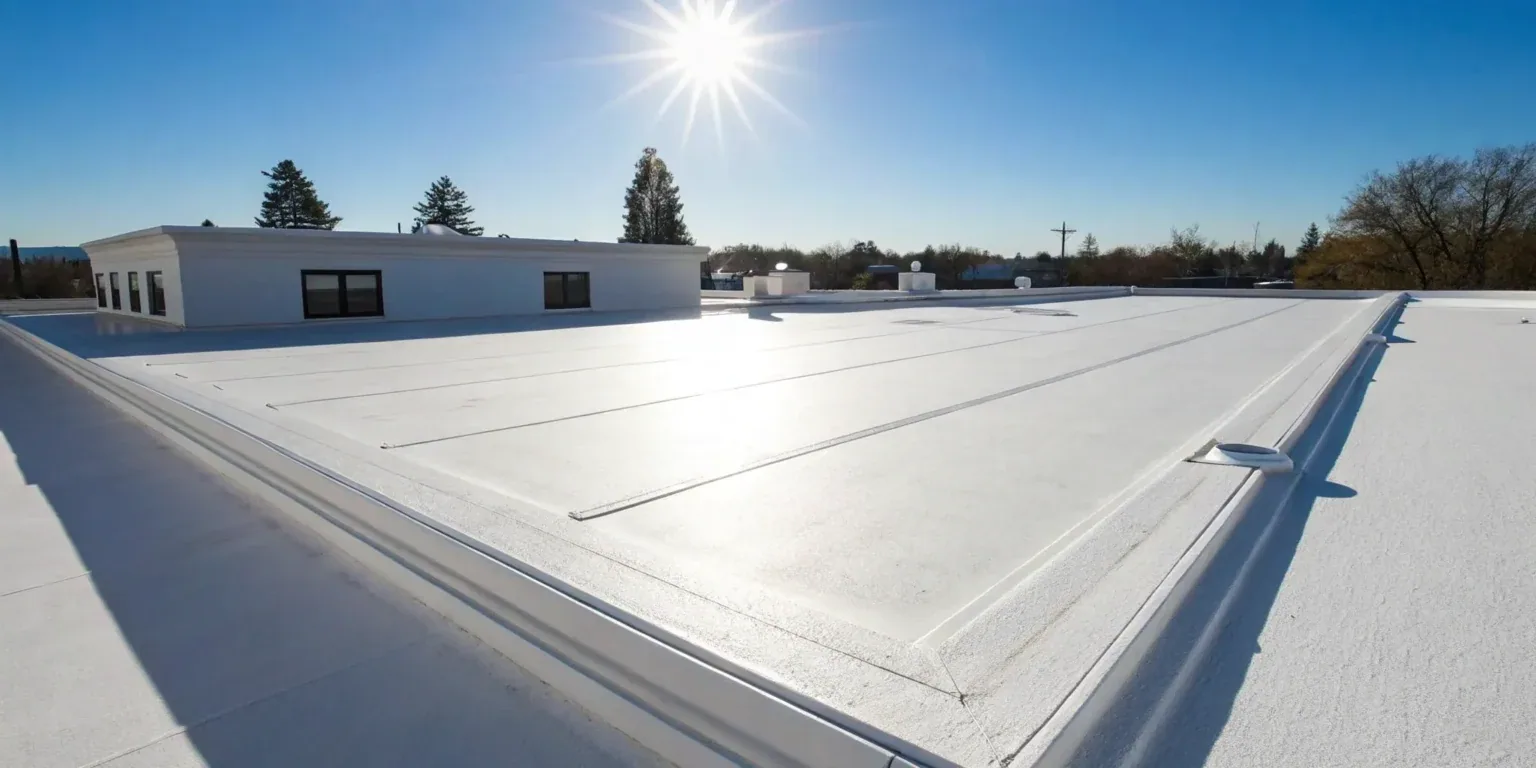
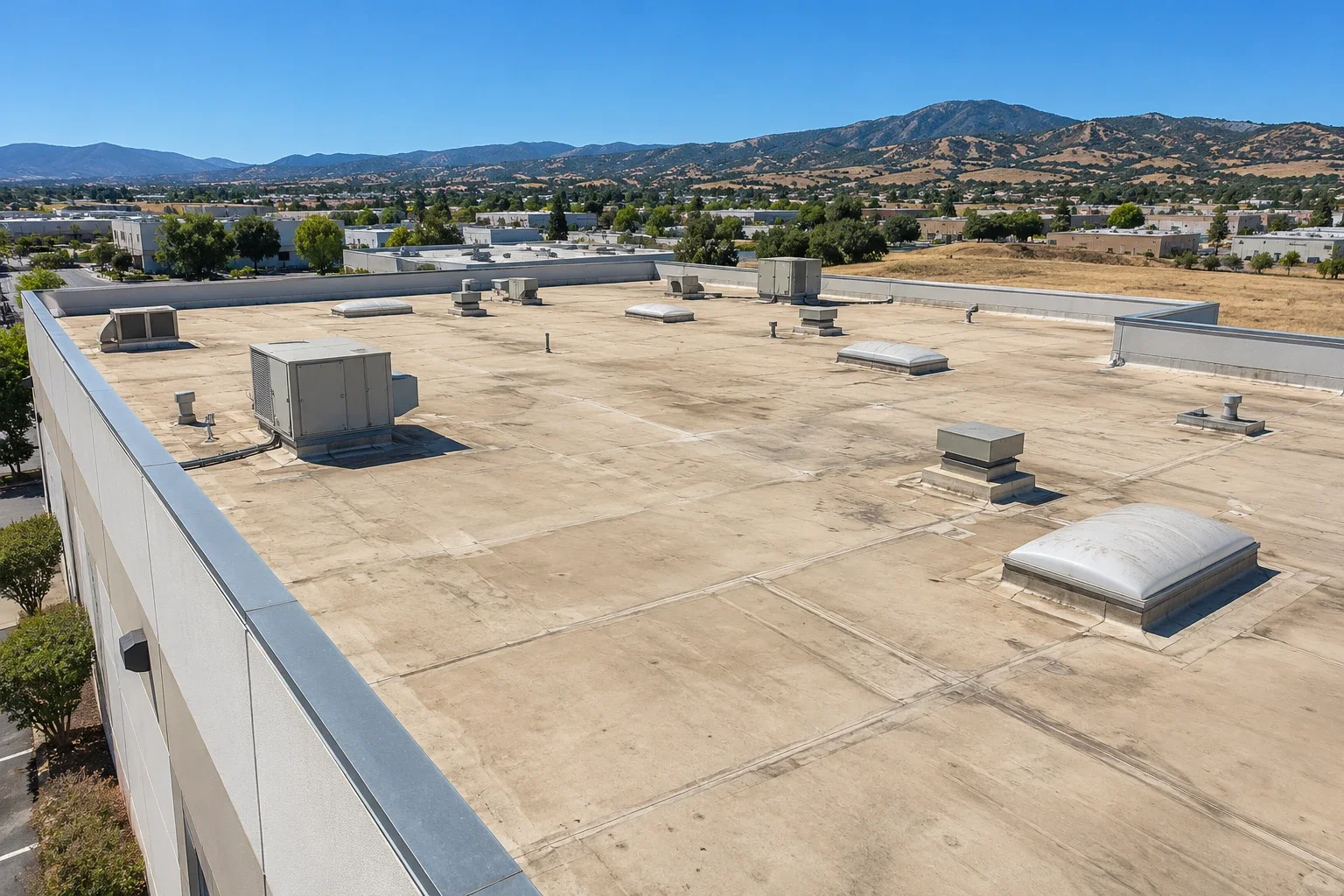
Most owners first meet a manufacturer through a roof they inherited, not one they chose. A first walk therefore starts with identification: what the membrane is, how it is attached, how thick the board beneath it runs, and whether previous repairs used compatible materials. A rubber sheet patched with the wrong adhesive can look sound for a season and then lift at the edges as heat works the joint.
That inventory feeds the roof register. Each section of a building is listed separately because a single building can hold an original sheet, a later addition and a patchwork of curb flashings. Splitting them lets the owner see which parts of the roof are on plan and which have already consumed more of their service life than the reserve schedule anticipated.
Campus and historic buildings in Ashland
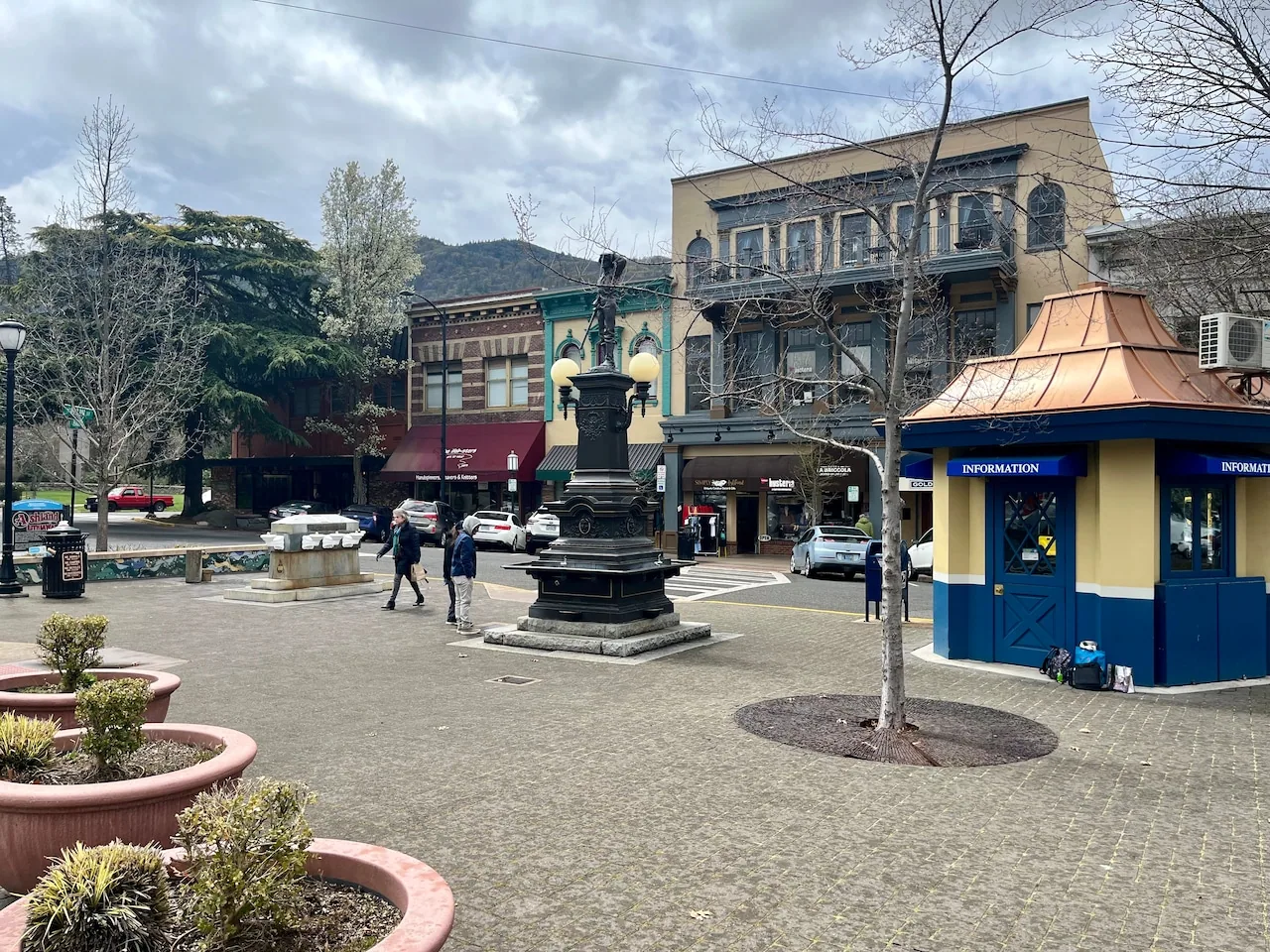
Ashland pairs the 175-acre Southern Oregon University campus with the Oregon Shakespeare Festival, which plays February through October at three theaters, and it holds 59 individually listed historic structures and four National Register historic districts. Roofing in that setting is partly a scheduling problem and partly a rules problem. Work near performance venues needs quiet hours and clean staging, and work on listed structures often needs design review before a membrane or edge metal changes appearance.
A membrane with a documented installation method helps in review because the submittal can show profile, color and reflectance. We prepare those details, flag where review is likely, and build the work window around the festival calendar and the academic year so the schedule holds when the owner needs it to. The Ashland work is planned the same way as any other, only with a longer lead for approvals.
Edge metal, copings and the perimeter
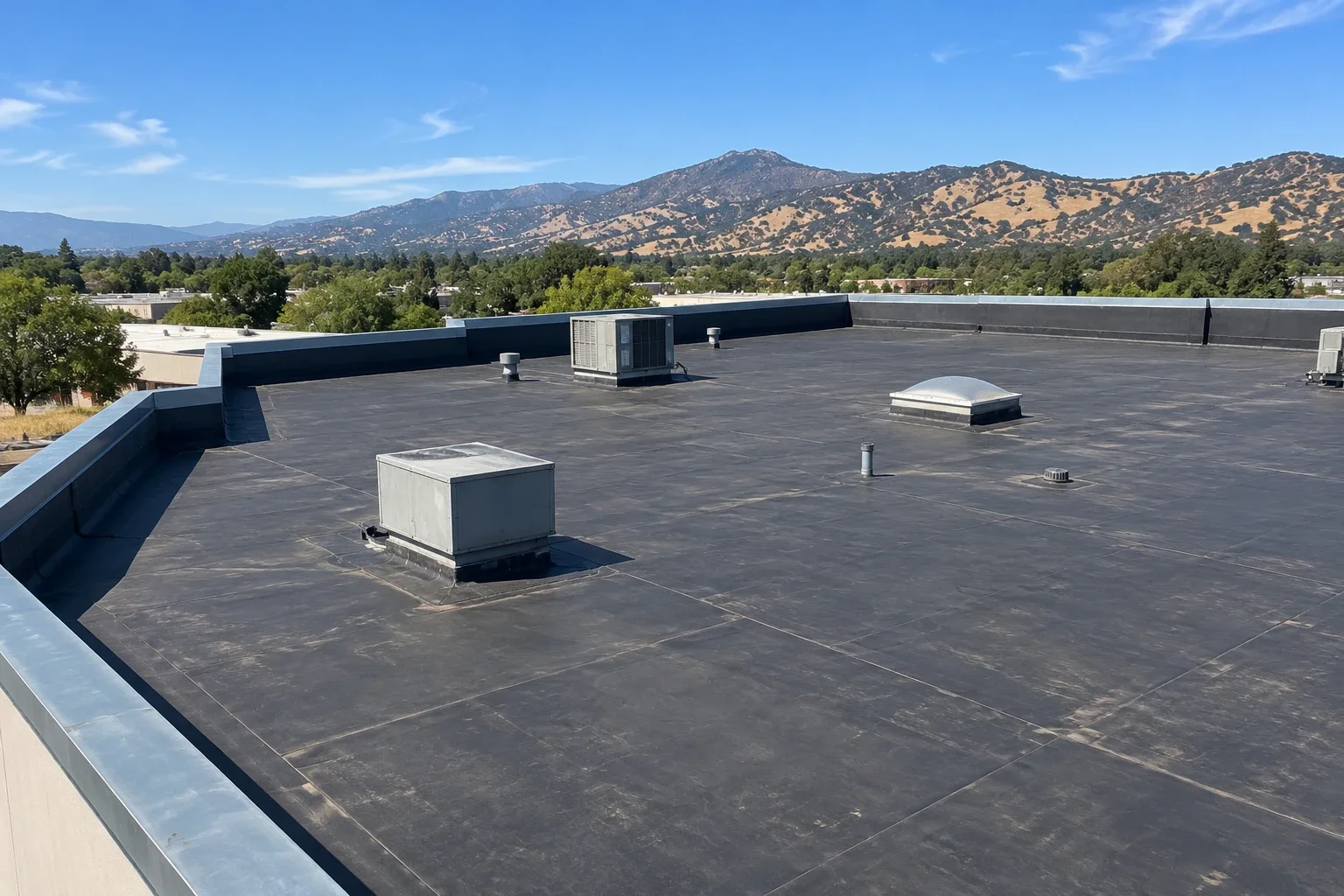
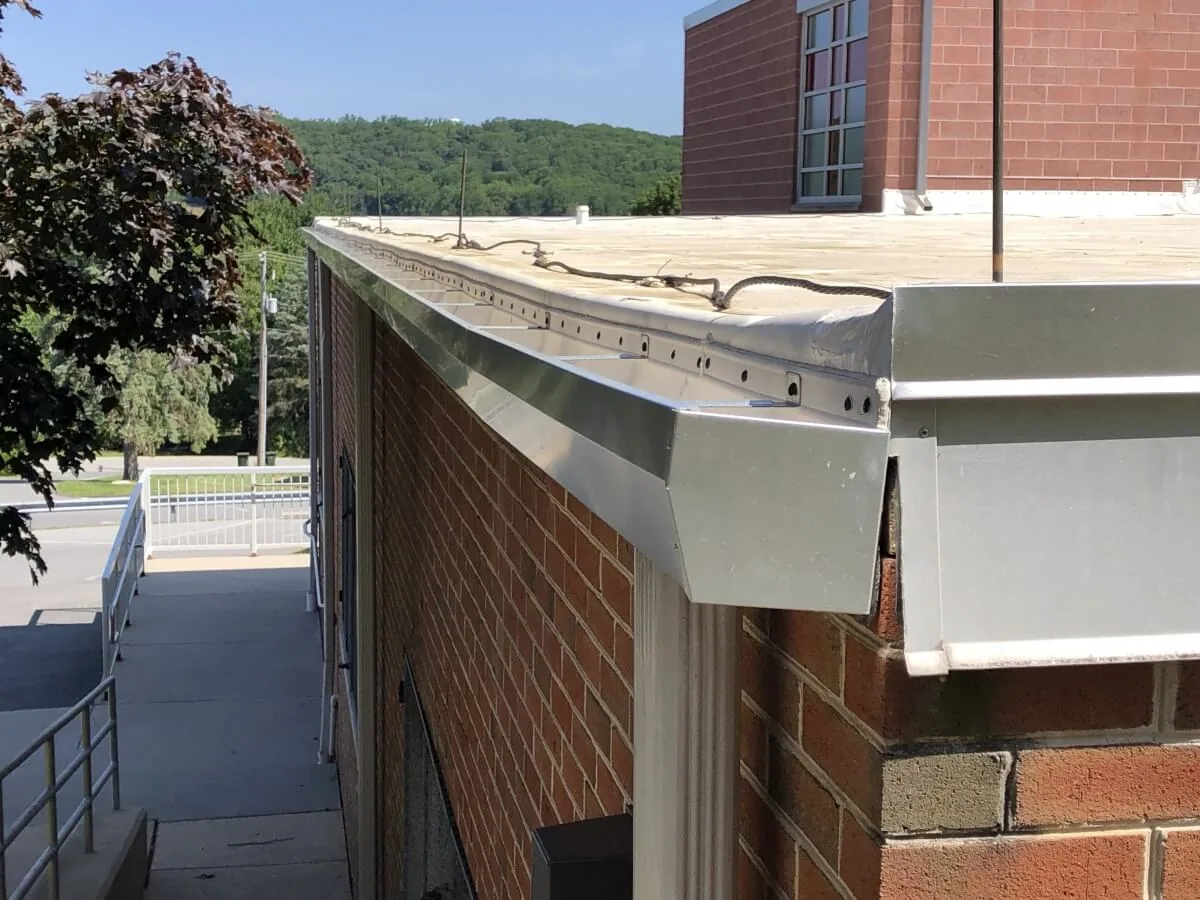
Perimeter metal sits at the exposed corner of every low-slope roof, and it is where wind first finds a loose detail. Edge metal that is too thin, poorly fastened or not matched to the membrane is a repeat repair item. A coping cap that cracks its sealant at an expansion joint will admit water long before the field of the roof shows any wear.
We inspect the perimeter first on every visit and record fastener spacing, sealant condition and joint gaps. The edge metal and coping detail is also a point where manufacturer tested assemblies matter, because a tested edge supports the wind uplift rating the owner may need for insurance, lender or code review under the 2025 Oregon Structural Specialty Code.
Valley logistics buildings and roof loading
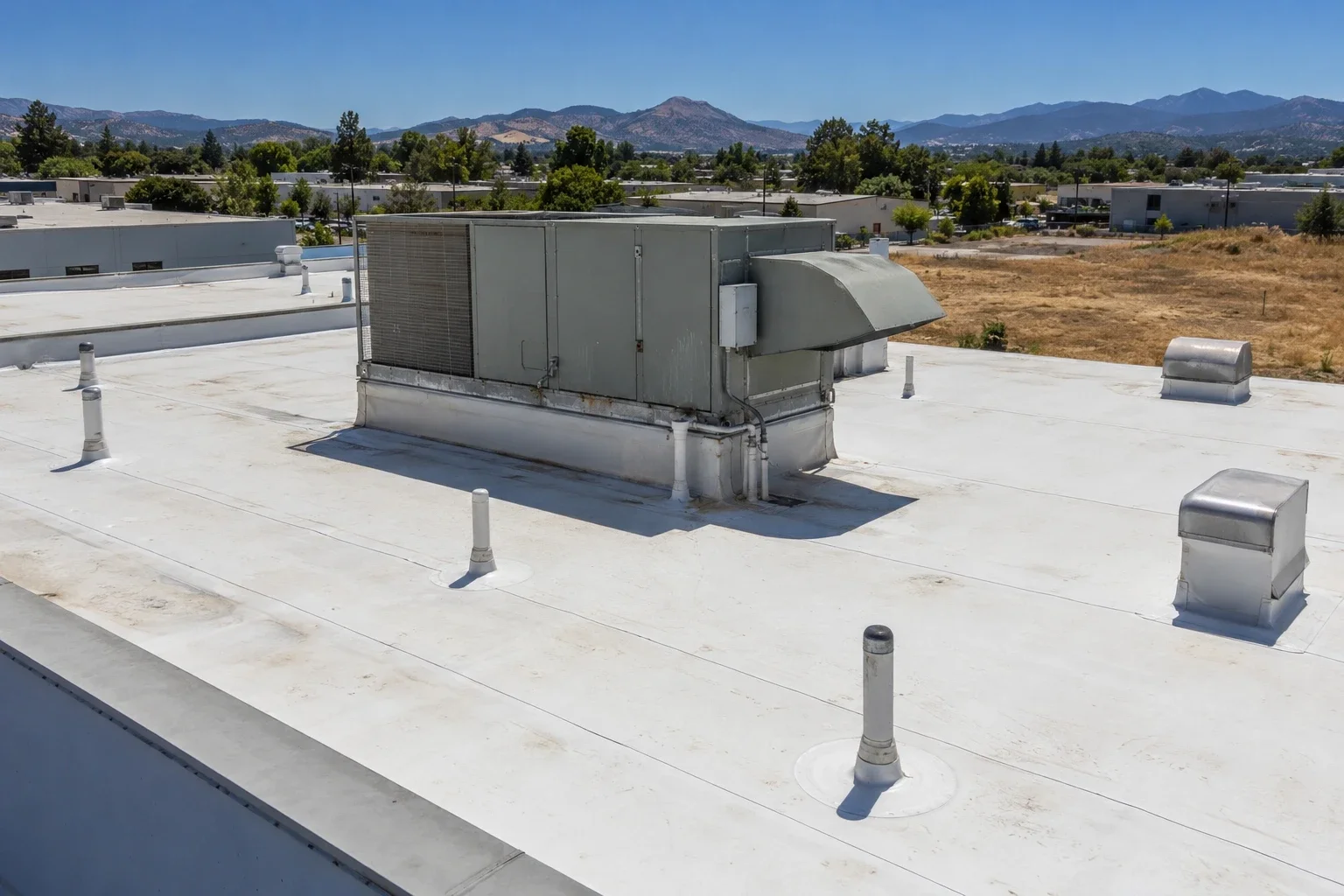
Table Rock Road runs between Interstate 5 and Rogue Valley International-Medford Airport and carries a Costco, a FedEx facility and the new Amazon ground-distribution warehouse, with cargo carriers Ameriflight and Empire Airlines serving the field. Distribution buildings in general run to wide, shallow roofs with heavy rooftop units and curbs concentrated at a few locations, so the roof question becomes where foot traffic and mechanical service concentrate wear.
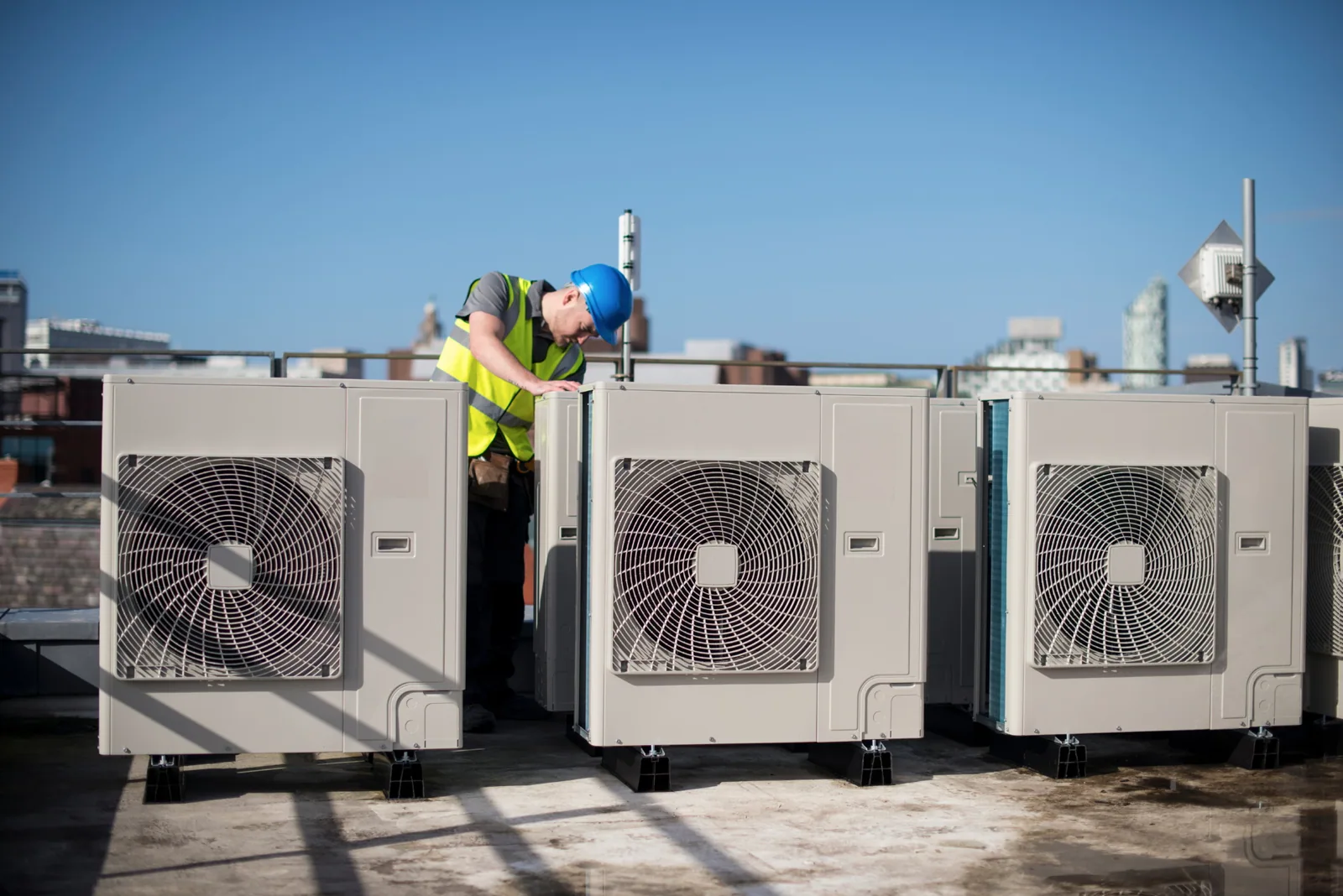
Walk pads, protected paths to each unit and a dated record of every service visit prevent the slow accumulation of punctures that a busy distribution operator rarely notices. We mark those paths on the roof plan and recommend extra layers or protection sheets at the high-traffic spots. When a unit is replaced, the curb and flashing are checked in the same visit, since a new unit on an old curb is one of the commonest sources of a repeat leak ticket.
Soot, debris and the post-smoke clean-up visit
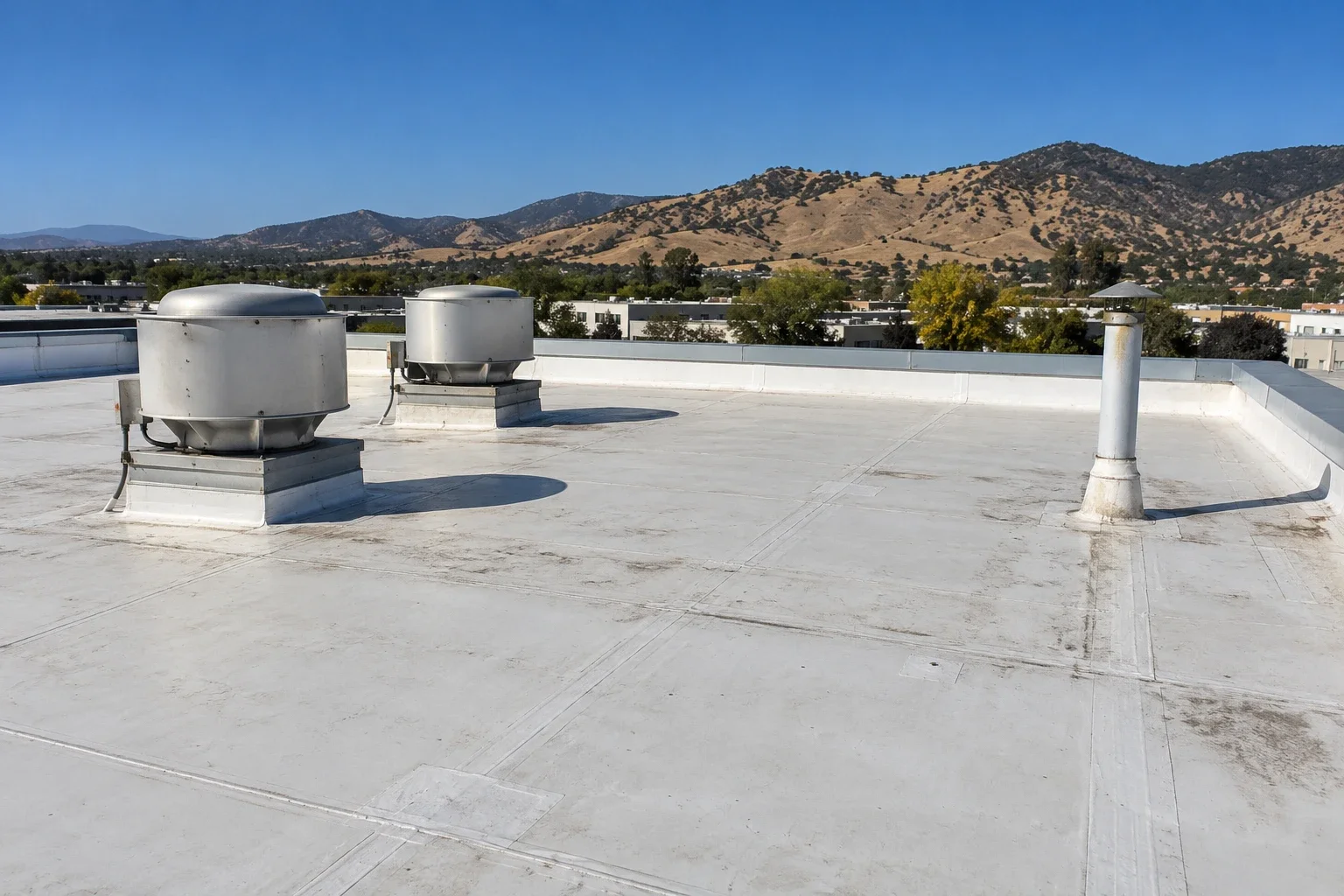
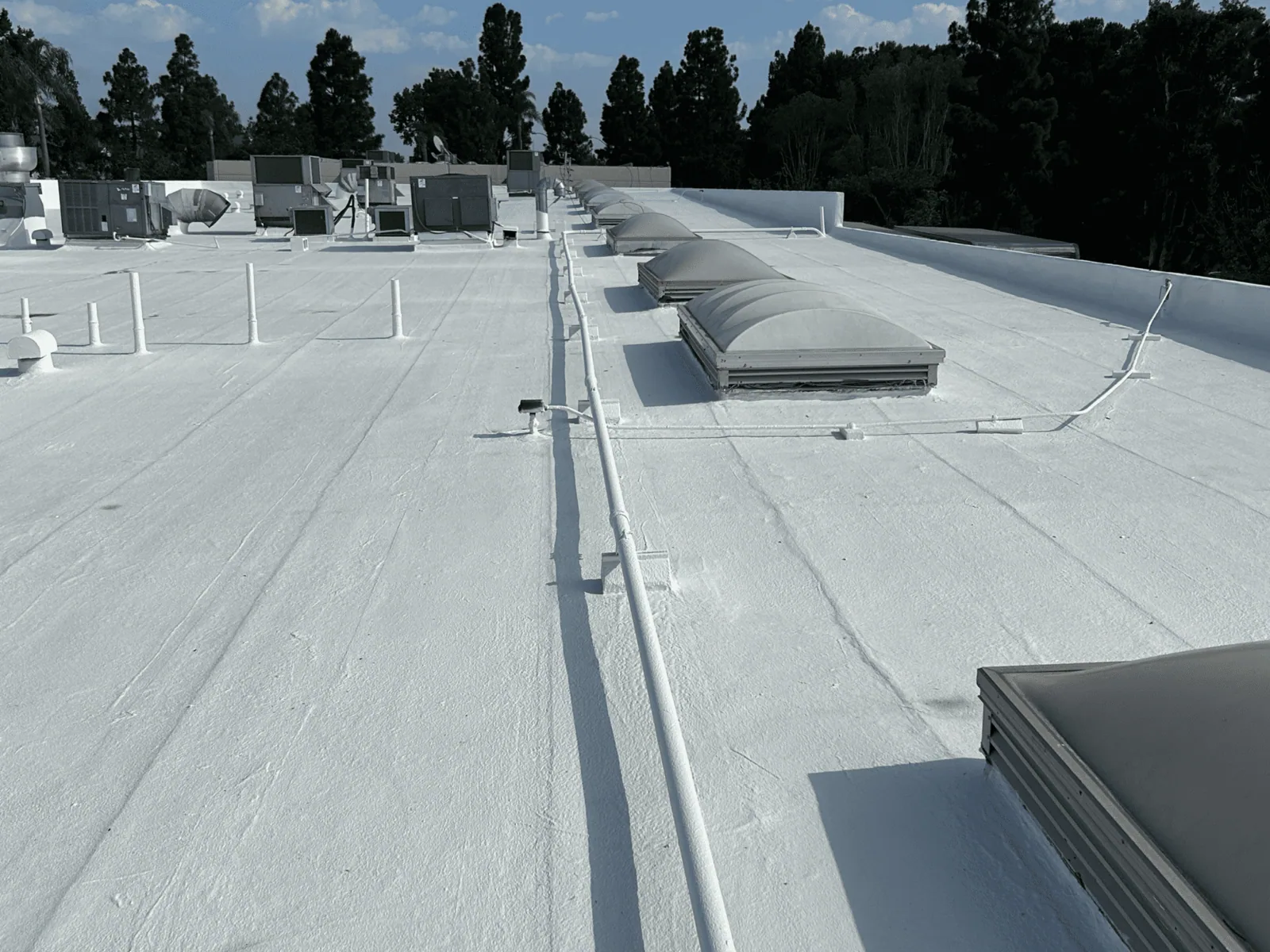
The valley counted 26 smoke days in 2021, one year after two fires took roughly 2,600 county homes. After a smoke season, a roof needs three things: a surface wash that restores reflectance, a debris sweep at drains and parapet corners, and a check of rooftop intake filters that the mechanical contractor may have missed. We carry out the first two and flag the third.
The visit also reveals whether the membrane has chalked, whether ash has settled into a low spot and left a stain, and whether any scuppers need adjustment. We log the results next to the previous year's grade so the owner can see whether the roof is aging at the planned rate. That comparison is the most useful line in the report, because it separates smoke-season damage from ordinary wear.
Repair, recover or replace: the timing test
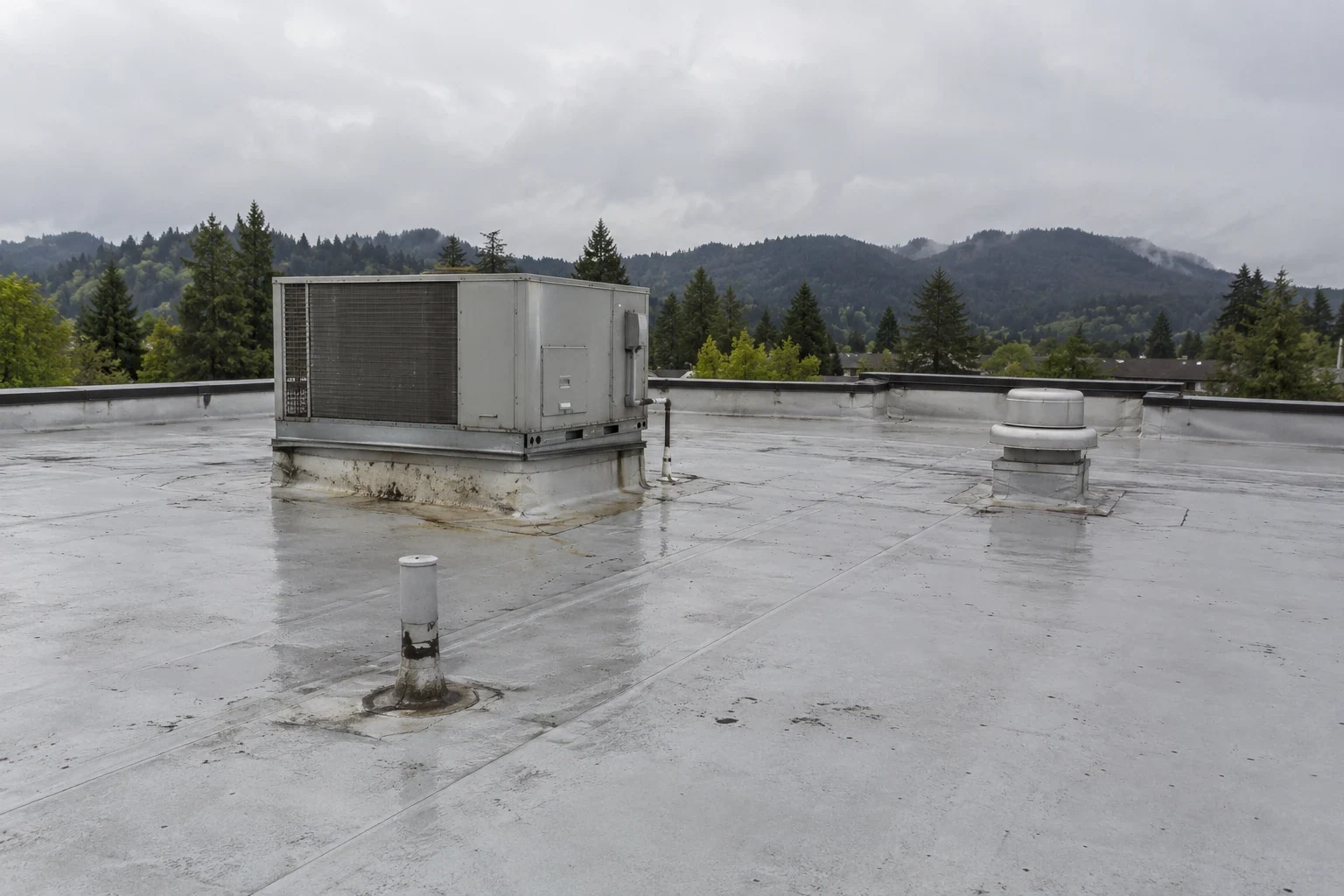
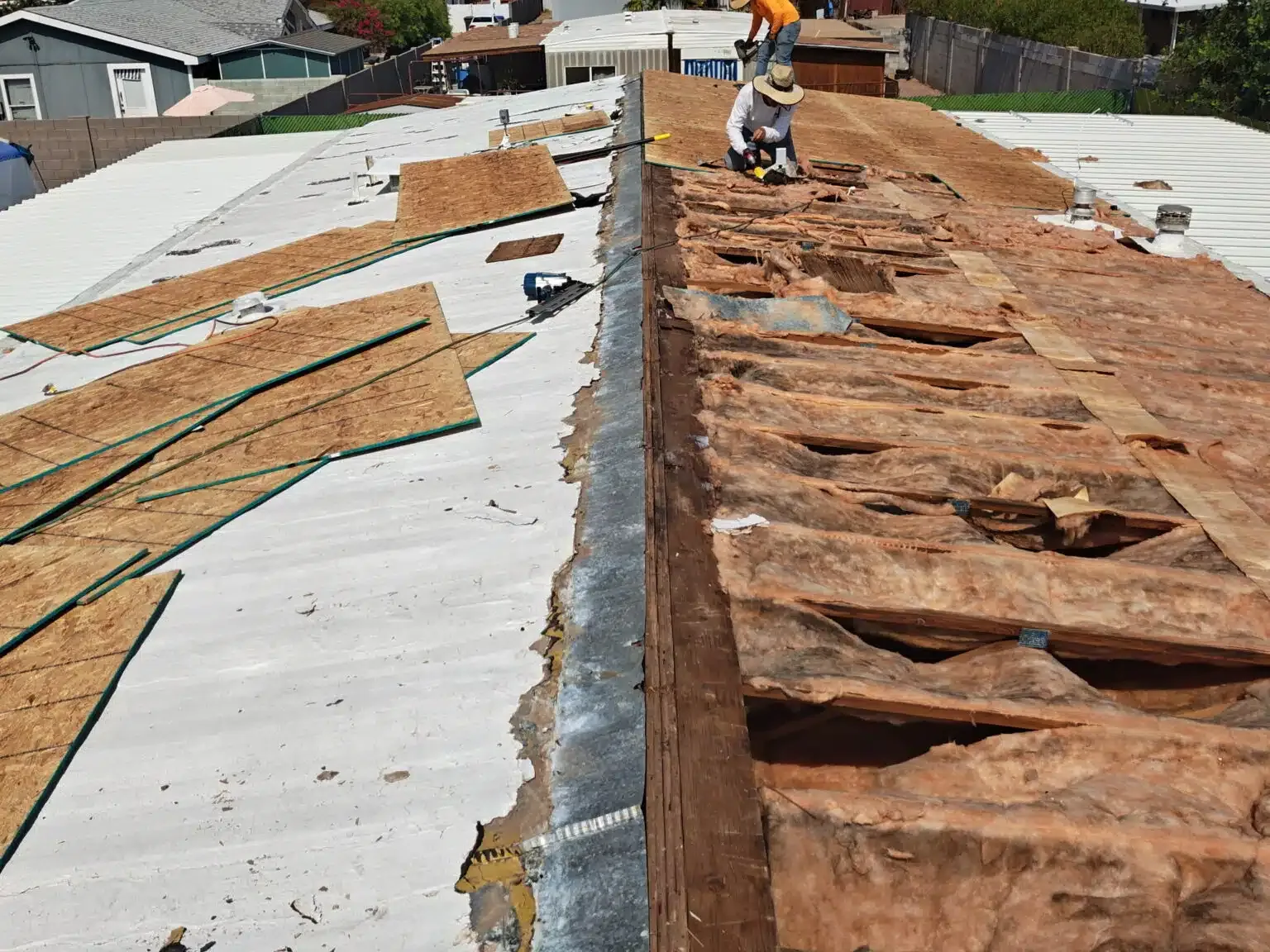
When a roof begins to leak, three options exist. A repair costs the least now and may be right if moisture is limited and the sheet is otherwise sound. A recover adds a new membrane over the old one when the insulation is dry. A replacement removes failed layers and resets the clock. We pick among them with infrared data, core samples and a count of failed seams, not with an assumption.
Owners comparing this manufacturer with Carlisle SynTec or Johns Manville should place the decision inside the lease cycle. A tenant renewal date or a refinancing window is often a better trigger than an arbitrary age. Any warranty comes from the manufacturer under its own terms.
Send the roof list for grading

Related Roofing Pages
Questions About Holcim Elevate Roofing Systems
How can I tell whether my roof is a Holcim Elevate or Firestone product?
The names refer to the same manufacturer, so older paperwork may say Firestone Building Products. We identify the sheet from the underside of a lifted corner, the seam style and any labels on accessories, then record it in the roof register.
Do historic Ashland buildings need a different membrane?
Often they need a different appearance and approval path rather than a different chemistry. Review boards care about profile, color and visibility, so we prepare the submittal details before any material is ordered.
Why inspect edge metal before the field of the roof?
The perimeter takes the first hit from wind and from thermal movement. A loose coping or open sealant joint is cheaper to fix early, and it shows whether the rest of the roof has been maintained.
What is lost if the post-smoke cleaning visit gets skipped?
We do not put a number on it without measurements, but soot raises surface temperature and quickens aging. A cleaning visit and a fresh grade give the owner a documented answer instead of a guess.
Can you work around a festival or school calendar?
Yes. We plan around performance seasons and academic terms, stage materials away from public areas, and sequence noisy tasks into off-hours when the owner asks for them.
How do you keep service traffic from wearing out a new membrane?
We lay protected paths from the access point to each rooftop unit, add walk pads at turning points, and write the route into the roof plan so mechanical vendors follow it. Punctures found at later visits are logged by location.