Carlisle SynTec Roofing in Medford, OR
Carlisle SynTec single-ply roofing in Medford, OR: EPDM, TPO and PVC installation, repair and upkeep tied to valley heat, smoke and owner reporting.
Overview
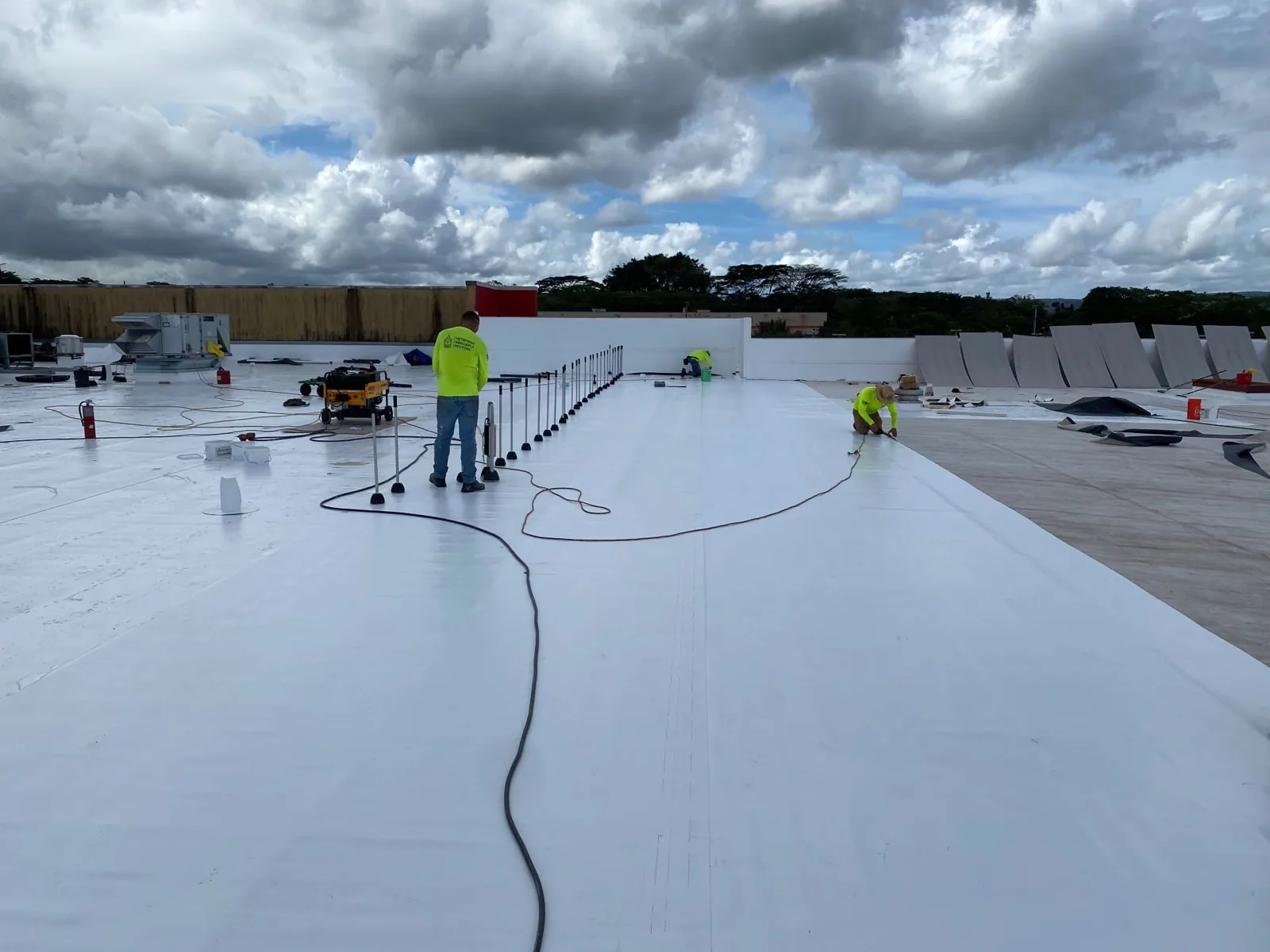
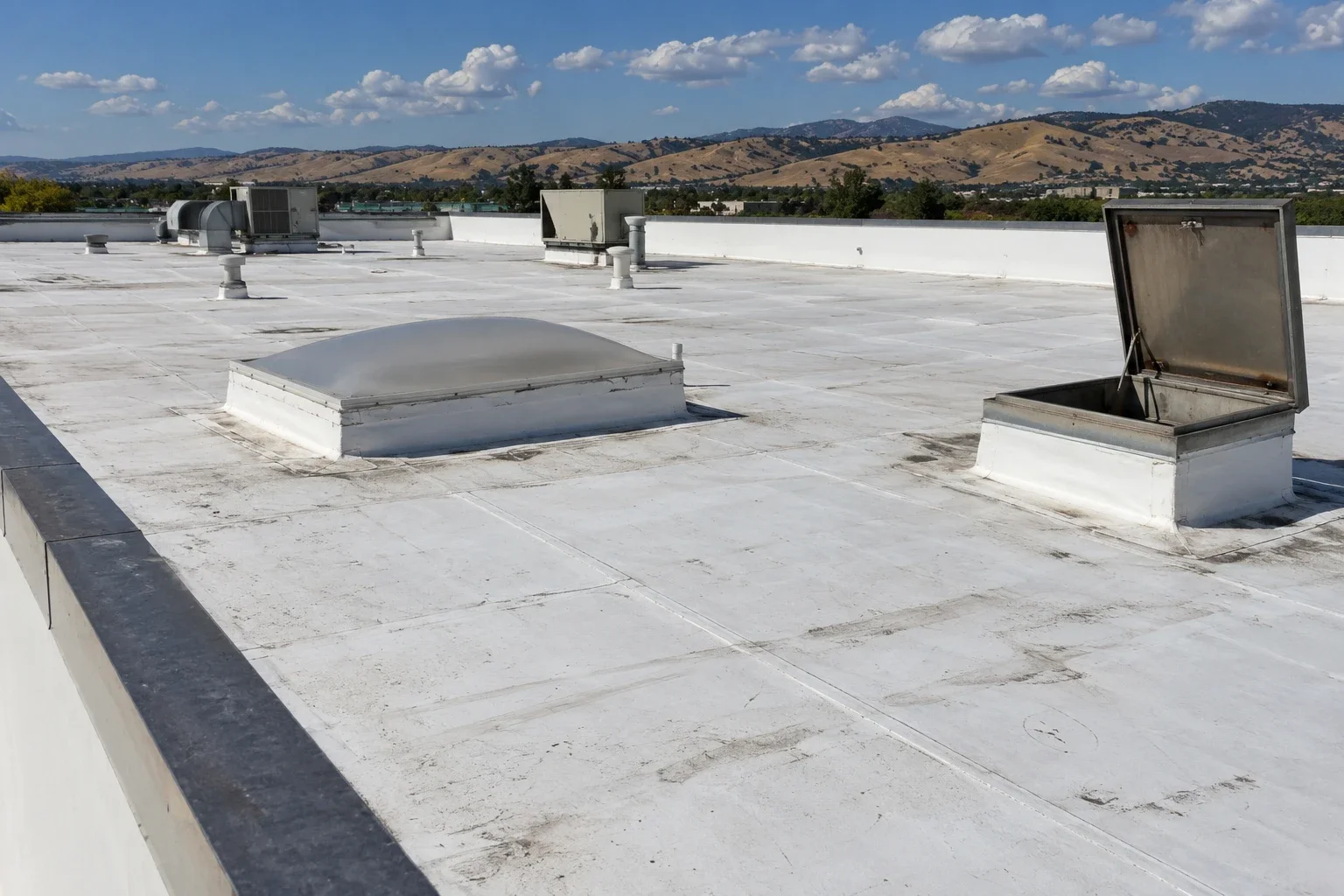
A property manager who inherits a Carlisle SynTec roof in Medford, OR is usually holding a single-ply membrane: synthetic rubber sheet, heat-welded thermoplastic, or a PVC sheet, together with the insulation, fasteners and flashing accessories the manufacturer sells to go with it. The summer record explains why that matters. When the valley stacks up 61 days past 90 F and 11 past 100 F in an ordinary year, a membrane's rated service life becomes a forecast that has to be checked against the actual sun, and the reserve schedule has to follow what the check finds.
We install, repair and maintain these single-ply systems on occupied buildings. Between jobs, the work is recorded so that each roof carries a current condition grade and a remaining-life estimate the owner can put in a report.
Three single-ply families on one roof register
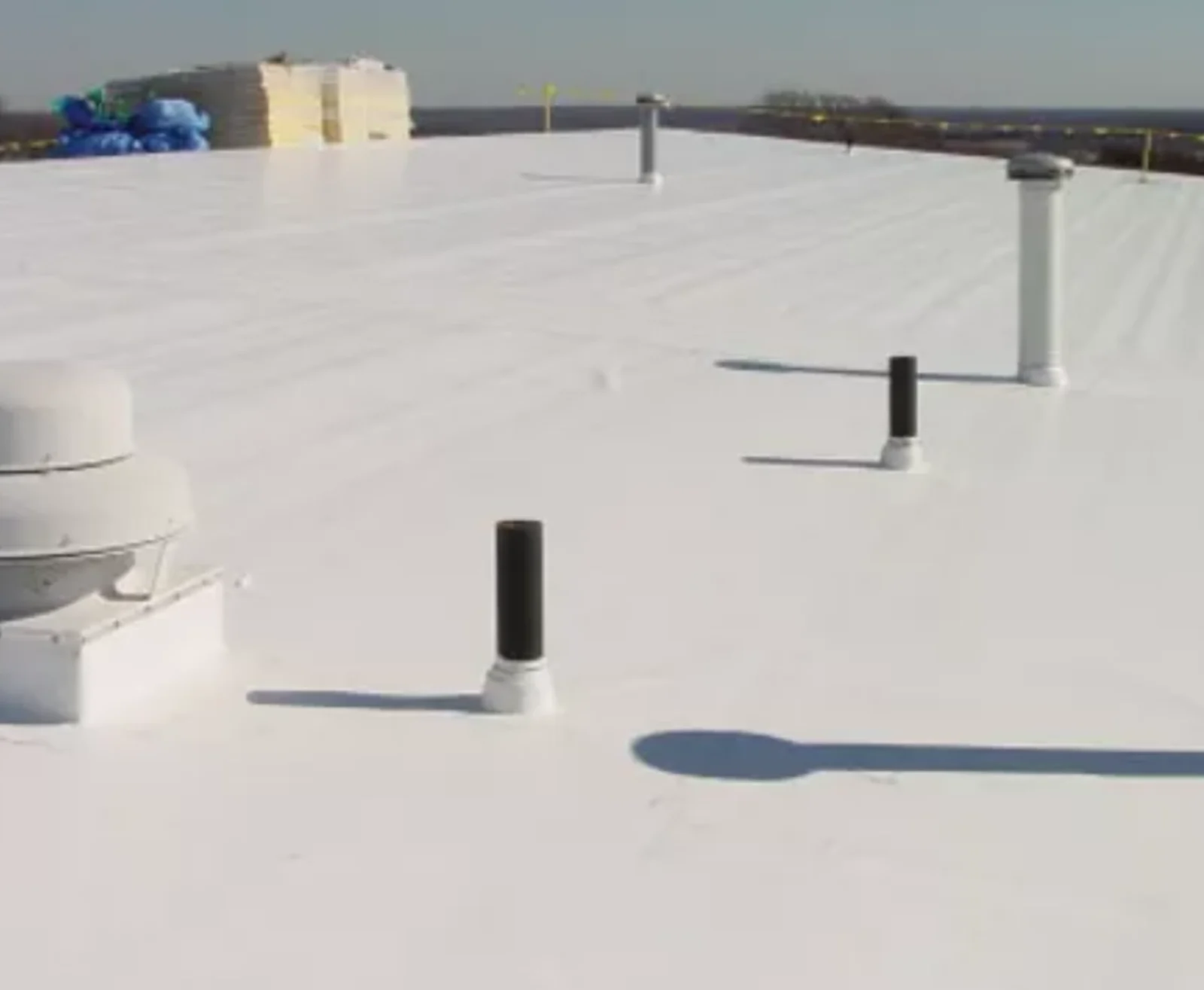
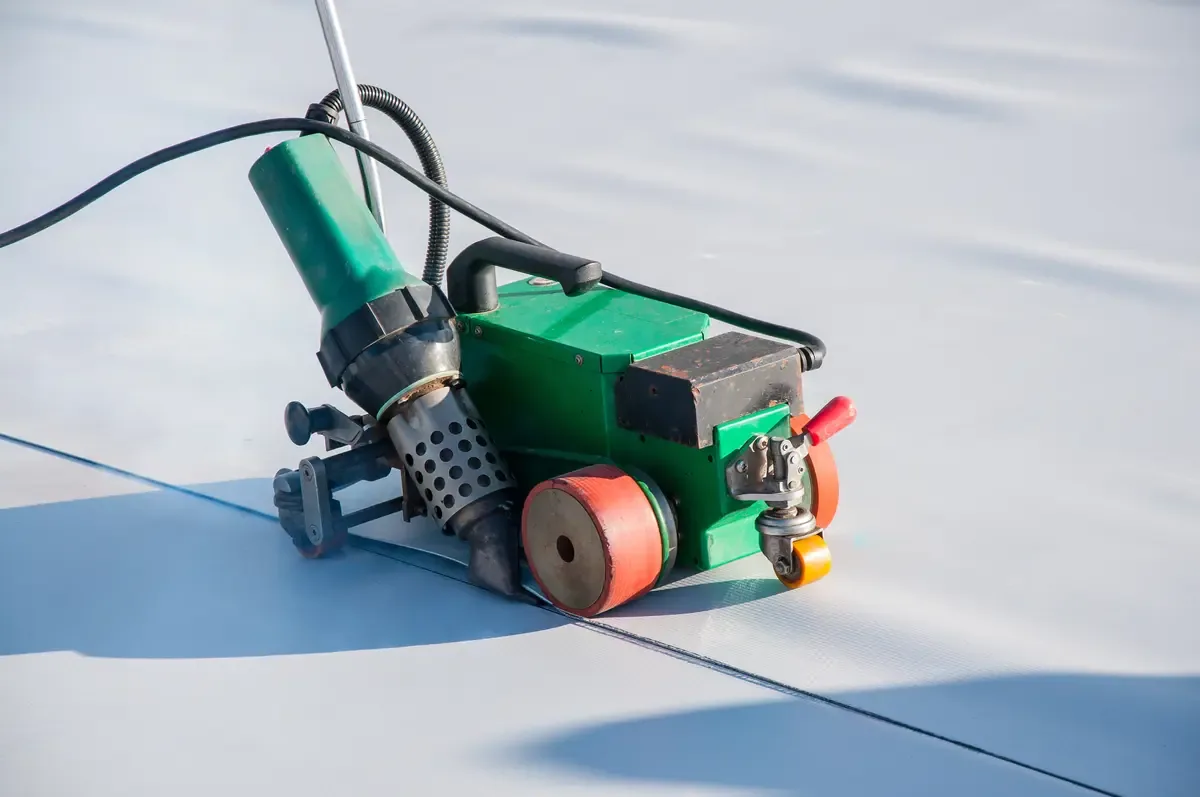
EPDM is a cured rubber sheet that handles thermal movement well and tolerates hot afternoons, though its seams rely on tape or adhesive, and those joints are where age shows first. Thermoplastic polyolefin welds at the seam and reflects heat, which makes TPO a common choice on conditioned buildings. PVC resists grease and chemical exposure better than either, which is why PVC roofing turns up over kitchens and processing areas.
One manufacturer offering all three lets an owner standardize accessories across a portfolio without forcing every building onto the same sheet. We help match the family to the building: a restaurant exhaust zone, a quiet office, or a distribution box with limited rooftop traffic each has a different best fit.
Attachment method and the wind question
Fully adhered, mechanically attached and ballasted installations behave differently in a valley with minor snow and moderate freezing cycles. Medford averages about 64 freezing mornings a year and only 3.4 inches of snowfall, so the dominant load is not ice; it is thermal expansion between a cold dawn and a hot afternoon. Fasteners in a mechanically attached sheet flex at that daily rhythm, and we check them for backing out at seams and perimeters.
Fully adhered sheet moves less but depends on a clean, dry substrate at install. Ballasted systems add weight that a deck must carry, which matters on older buildings where structural capacity has not been confirmed. The state's newest structural code, which follows the 2024 International Building Code and has bound permits since April 1, 2026, is checked against the attachment schedule before a recover or tear-off is priced.
Retail and logistics roofs with equipment loads
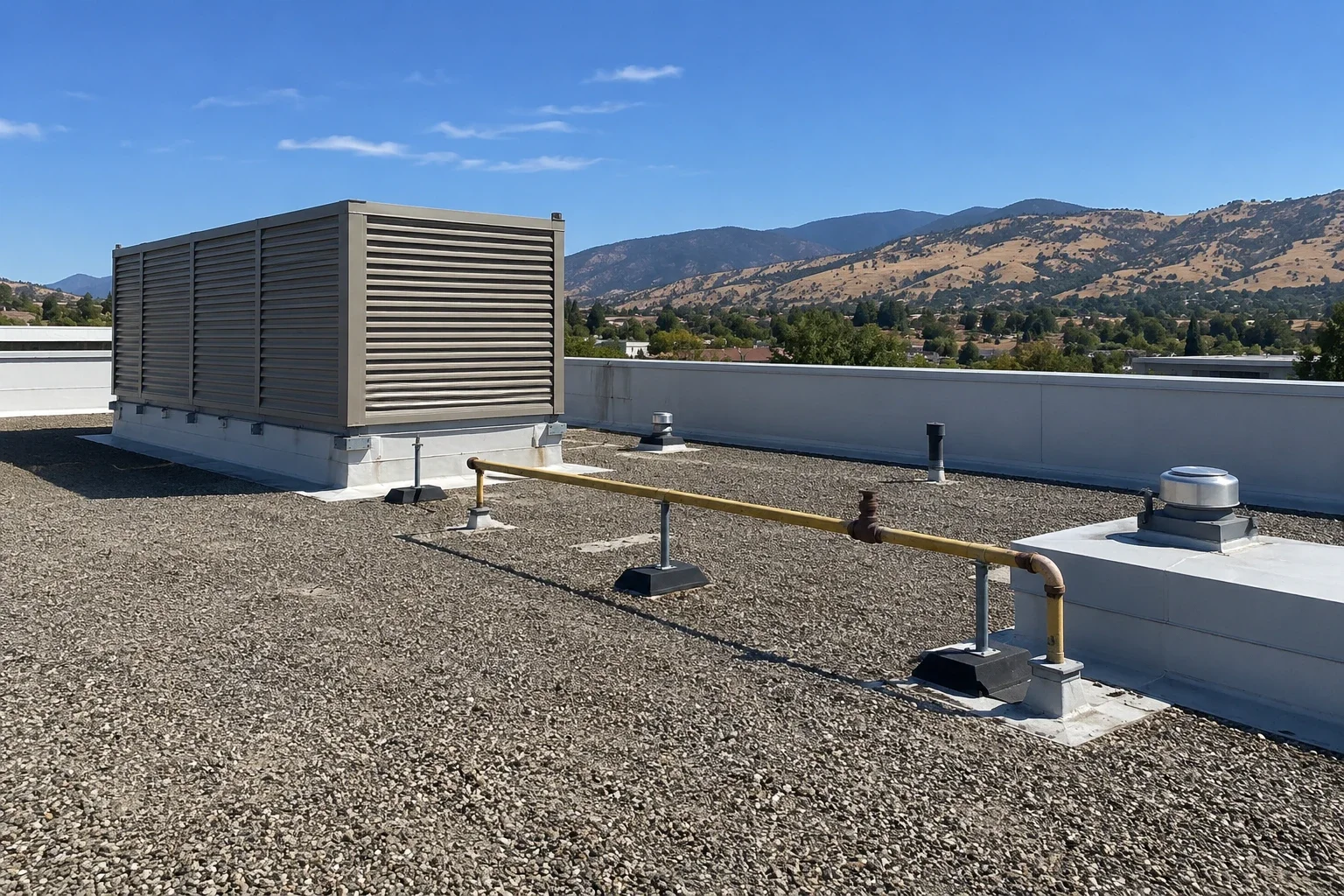
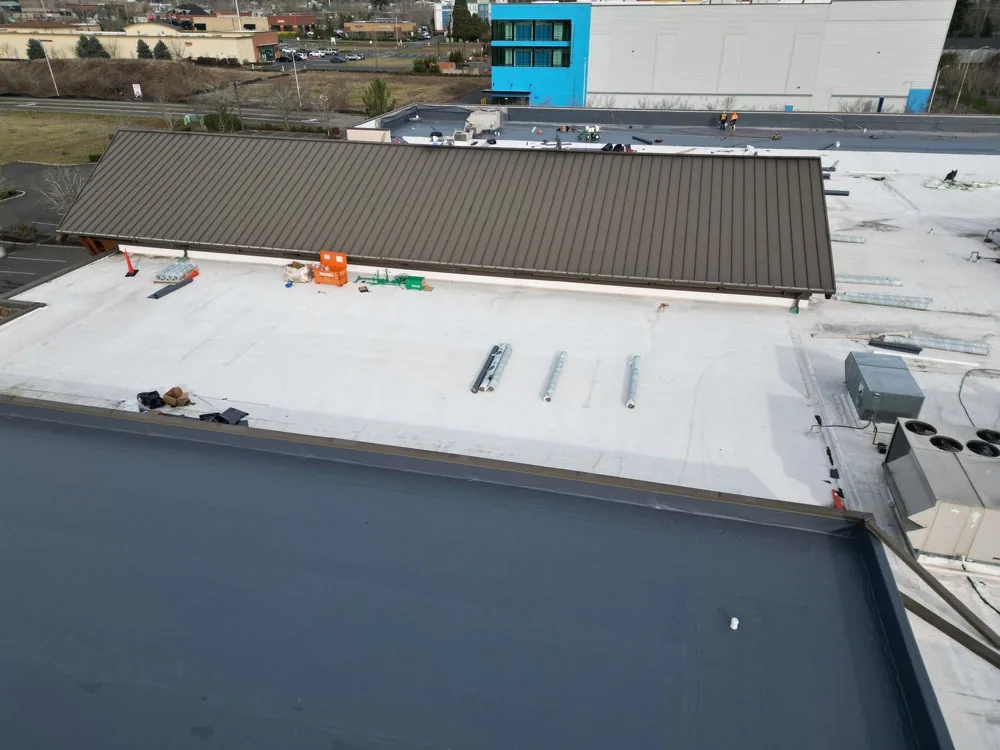
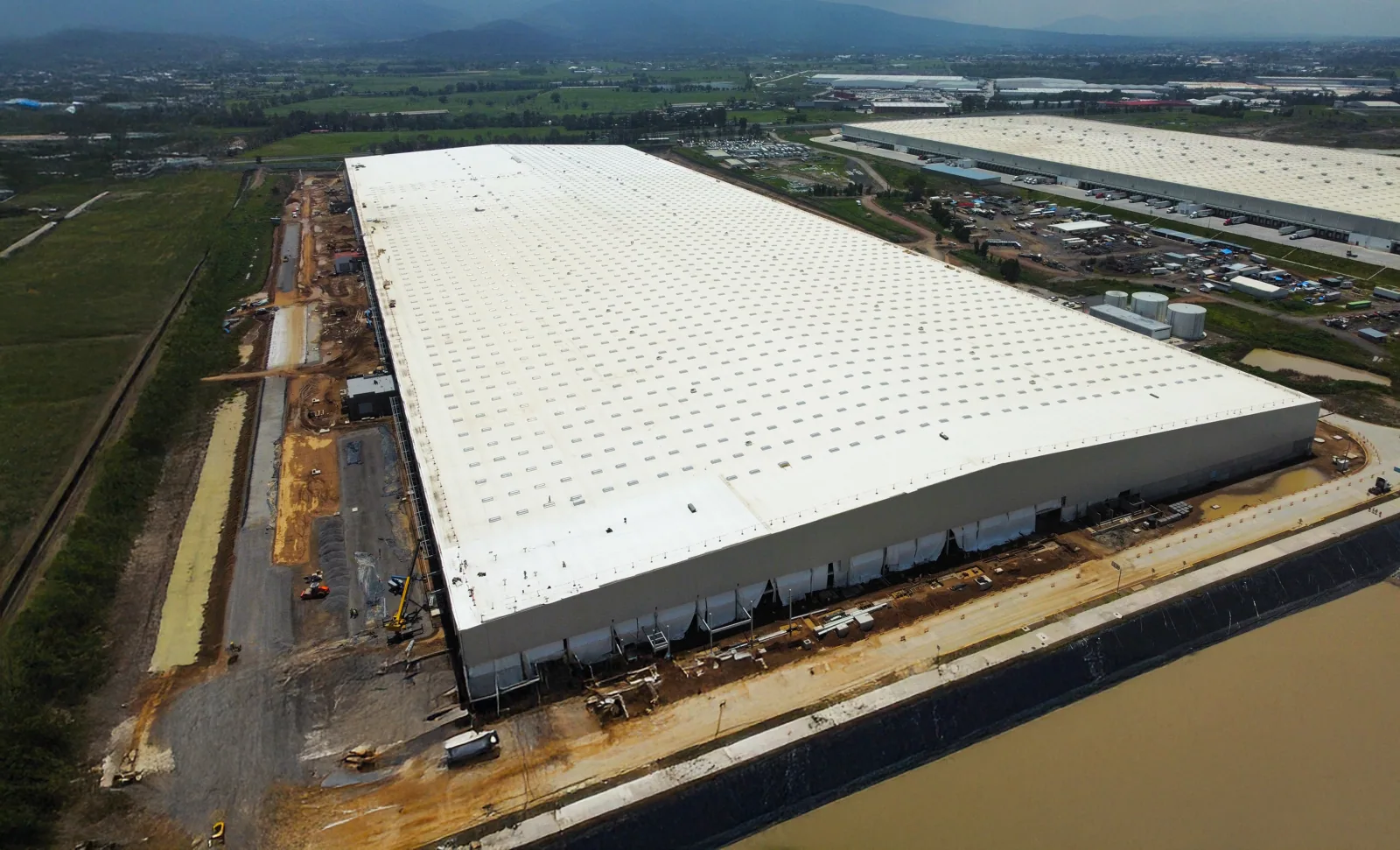
Retail along North Riverside and the Crater Lake Highway, where Rogue Valley Mall has been managed by Spinoso Real Estate Group since February 2024, puts large flat-roof retail space through a change of hands and repositioning, and repositioning tends to mean new rooftop units and new penetrations. Each vent, curb and unit support is a flashing detail the manufacturer publishes a method for, and each one is a point where an aging sheet starts to open. In the Table Rock Road and airport district, where a Costco, a FedEx facility and a new Amazon warehouse sit between the interstate and the field, we look at seam length and drainage first, then at the details.
That is why our inspection reports record the number of penetrations, the age of the sealants, and the condition of curb flashings separately from the field of the roof. The owner sees whether the aging is in the sheet or in the details.
Smoke, soot and surface cleaning
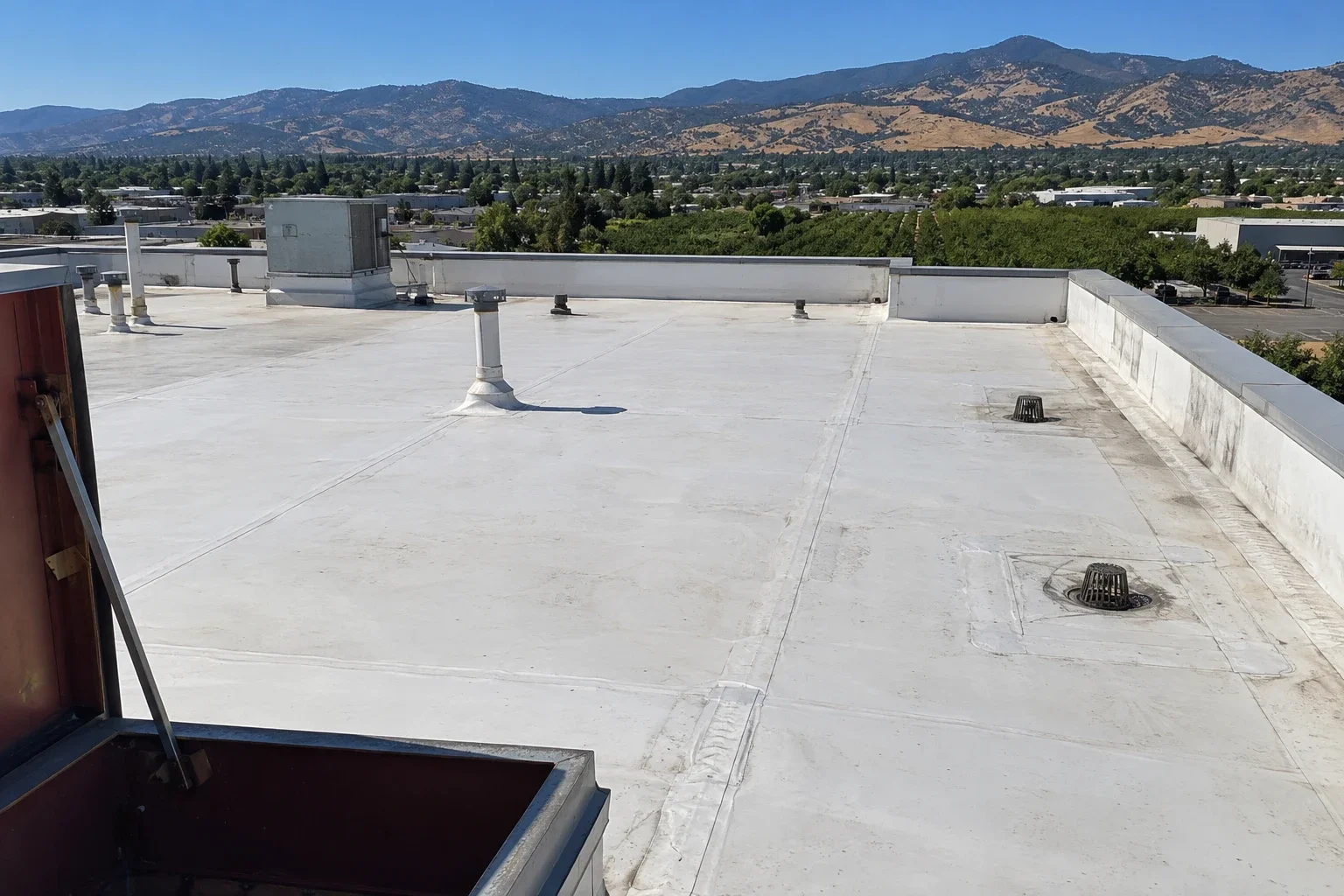
Smoke settled over the valley on 26 days in 2021, a season that followed fires in 2020 which burned about 2,600 Jackson County homes. A white sheet that collected that soot runs hotter and loses reflectance faster, so a cleaning visit after a smoke season belongs in the maintenance plan rather than in the repair budget. Cleaning also exposes cracks, blisters and open laps that dirt had hidden.
We pair the wash with a commercial roof inspection, record any seam or flashing defects, and update the roof register so that the next owner report shows a before and after grade. Where a membrane has aged past cleaning, a coating or a recover is priced alongside replacement.
Repair standards and compatible materials
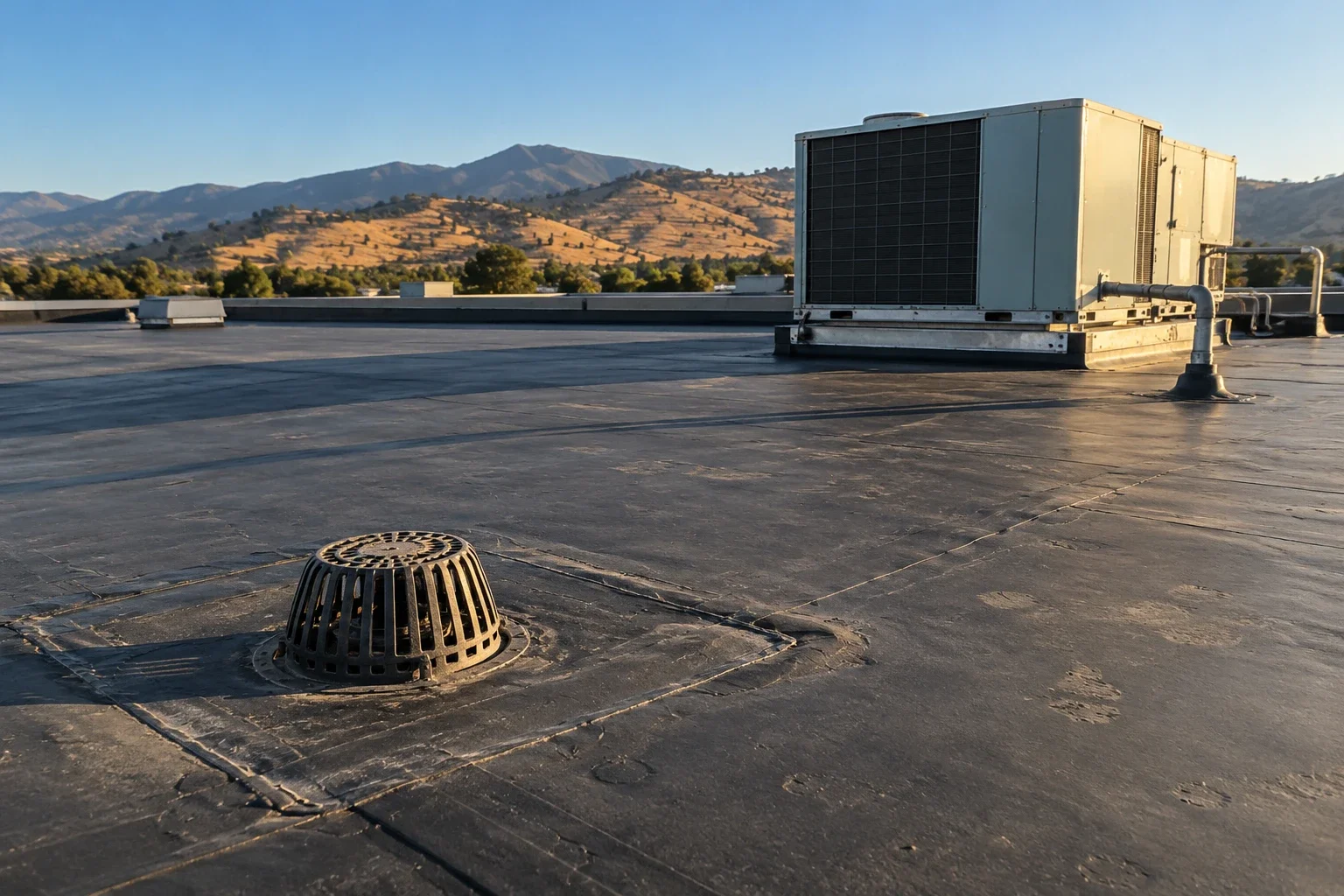
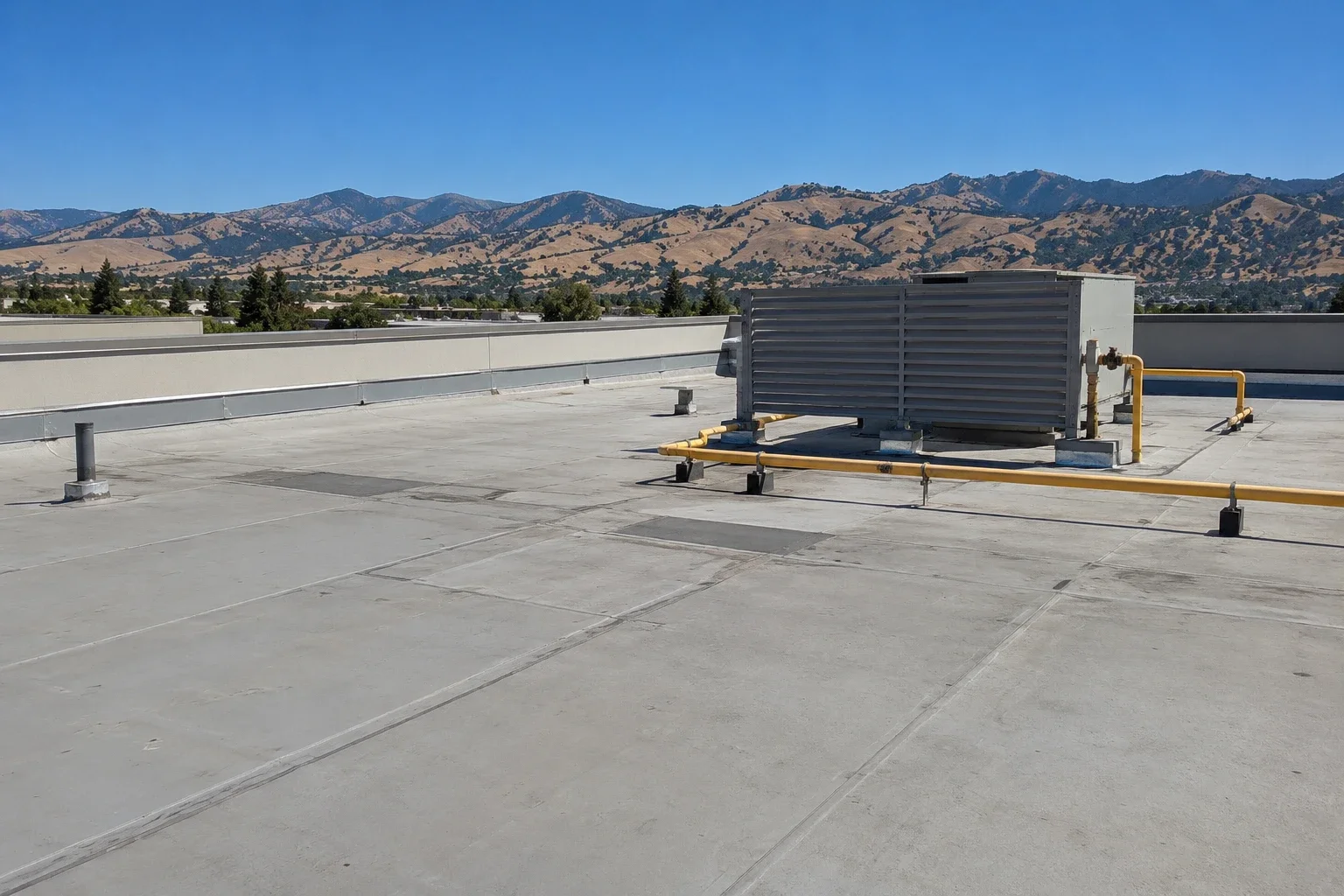
Single-ply repair is a compatibility exercise. A patch must match the sheet chemistry, the adhesive or weld method must suit the age of the membrane, and the cleaning step before the patch decides whether it holds. Old EPDM, for instance, needs a different preparation than new EPDM, and an aged thermoplastic sheet may refuse a clean weld until the surface layer is removed.
We follow the manufacturer's published repair details for the sheet in place and tell the owner when a repair is a stopgap rather than a lasting fix. Questions about commercial roof repair versus replacement come down to moisture in the insulation, the percentage of failed seams, and how many years the owner plans to carry the building.
Comparing single-ply makers at lease time
Owners comparing systems often weigh this manufacturer against Versico, Holcim Elevate or Johns Manville. Our approach does not change with the brand on the roll: we compare detail drawings, installation requirements and maintenance duties, then align the choice with the lease cycle and the sale horizon. Any warranty terms are issued by the manufacturer, and we walk the owner through the obligations before signing.
The comparison also covers what happens after year ten. A sheet that is easy to patch with locally stocked materials keeps carrying cost low when a leak ticket arrives on a Friday afternoon in July. A sheet that needs specialized adhesives or a long lead time can turn a small repair into a week-long exposure. We lay those practical differences beside the first-cost difference, because the first-cost difference is rarely the one that moves the owner report.
Hand over the roof list, receive a grade for each
Related Roofing Pages
Questions About Carlisle SynTec Roofing
Is EPDM or TPO the better fit for a Medford flat roof?
TPO usually wins where cooling cost drives the decision, since its white surface reflects the afternoon heat. EPDM earns a place where thermal movement, flashing complexity and repairability matter more than reflectance.
How do you handle a roof with mixed repairs from several contractors?
We map every patch and every seam type on the roof register, then flag the areas where incompatible materials meet. That map lets the owner decide whether to reconcile them now or hold them to a scheduled replacement.
Will the 2025 code change my scope?
It can. The 2025 Oregon Structural Specialty Code, mandatory from April 1, 2026, may alter insulation thickness and uplift requirements on a tear-off or recover, so we confirm the edition with the building department before pricing.
What does a smoke season do to a single-ply warranty?
Warranty terms come from the manufacturer, not from us, and most require reasonable upkeep. Documented cleaning and inspection after smoke weeks gives the owner a record that supports a claim if one is ever needed.
Why do hospital and medical office roofs get different treatment?
Hospital roofs, the type that dominate Medford's institutional stock alongside Asante Rogue Regional Medical Center and Providence Medford Medical Center, generally carry air handlers and exhaust, so curbs, flashing and intake cleanliness matter more than the open field. We schedule that work around clinical hours and report each unit support separately.
Can one manufacturer cover all my buildings?
Usually, for the common single-ply types, yes. Buildings with grease exposure, heavy foot traffic or unusual geometry may call for a different sheet, and we say so in the condition report.