
Versico Roofing Systems in Medford, OR
Versico single-ply roofing in Medford, OR: installation, repair and upkeep for flat roofs facing valley heat, smoke and tight lease-cycle budgets.
Overview
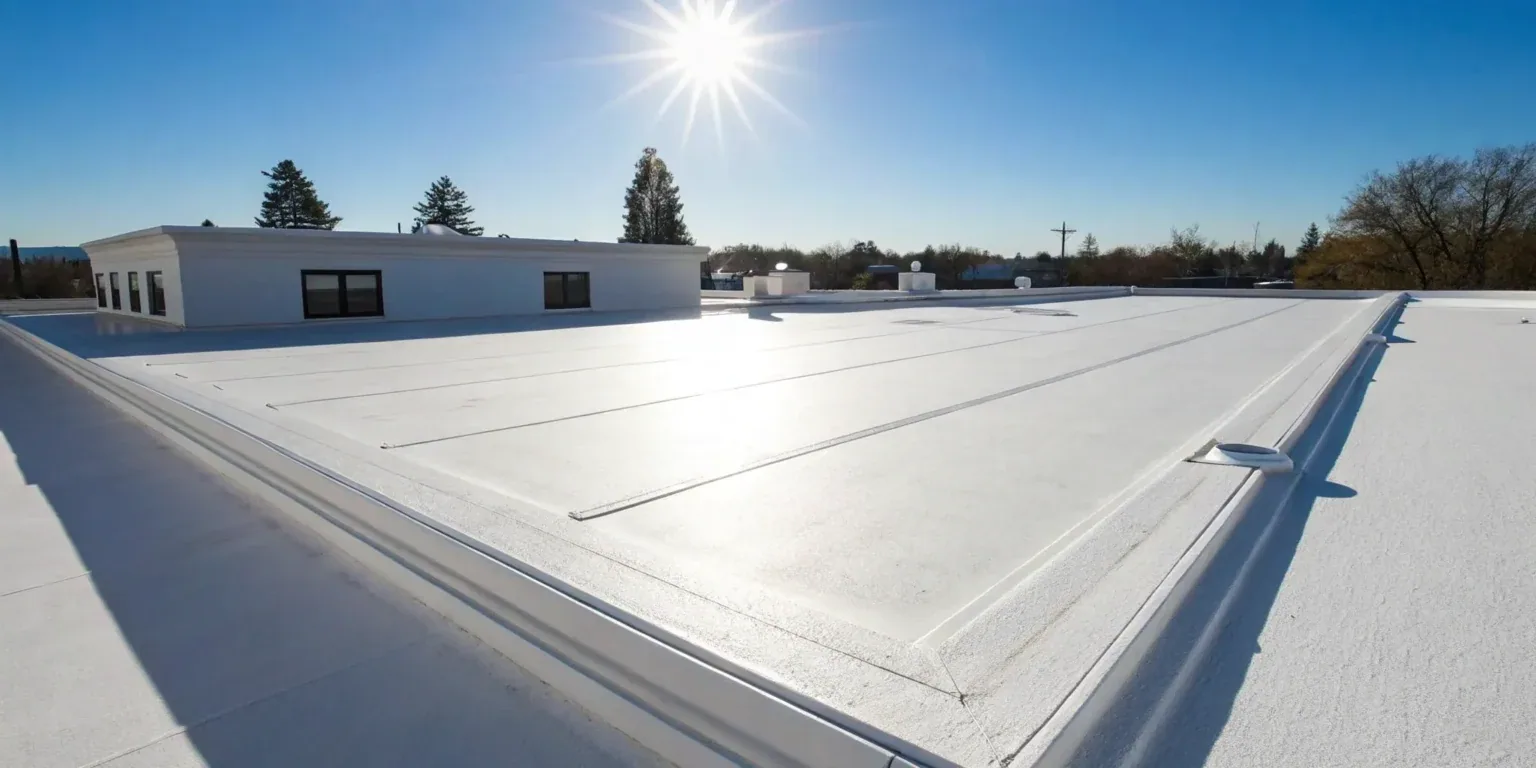
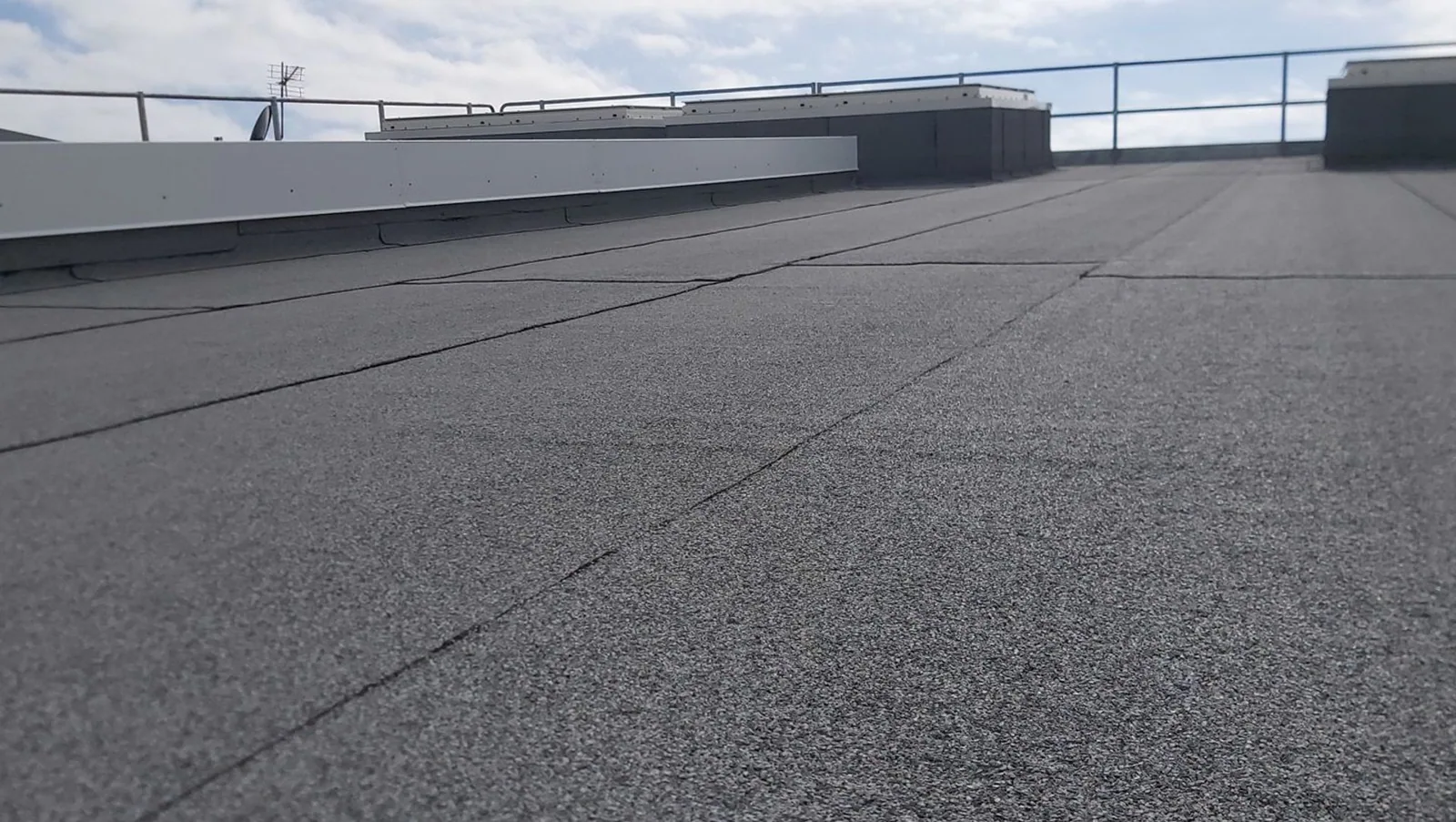
A Versico roof is a single-ply roof, and in Medford, OR that means a sheet spread across a low-slope deck beneath a sky that sends 61 afternoons over 90 F and 11 over 100 F, in an ordinary year. Single-ply systems in the thermoplastic and synthetic-rubber families have a long record on commercial buildings because they install quickly, repair predictably and can be recovered. The valley's contribution is a steady sun load that spends the membrane's life on a schedule the owner can calculate, if someone records the roof's condition each year.
We install, repair and maintain single-ply systems on occupied buildings. Between visits the roof sits in a register with a condition grade, so a manager preparing the next owner report is working from measured aging rather than the age printed on the original paperwork.
Carrying cost across a lease cycle
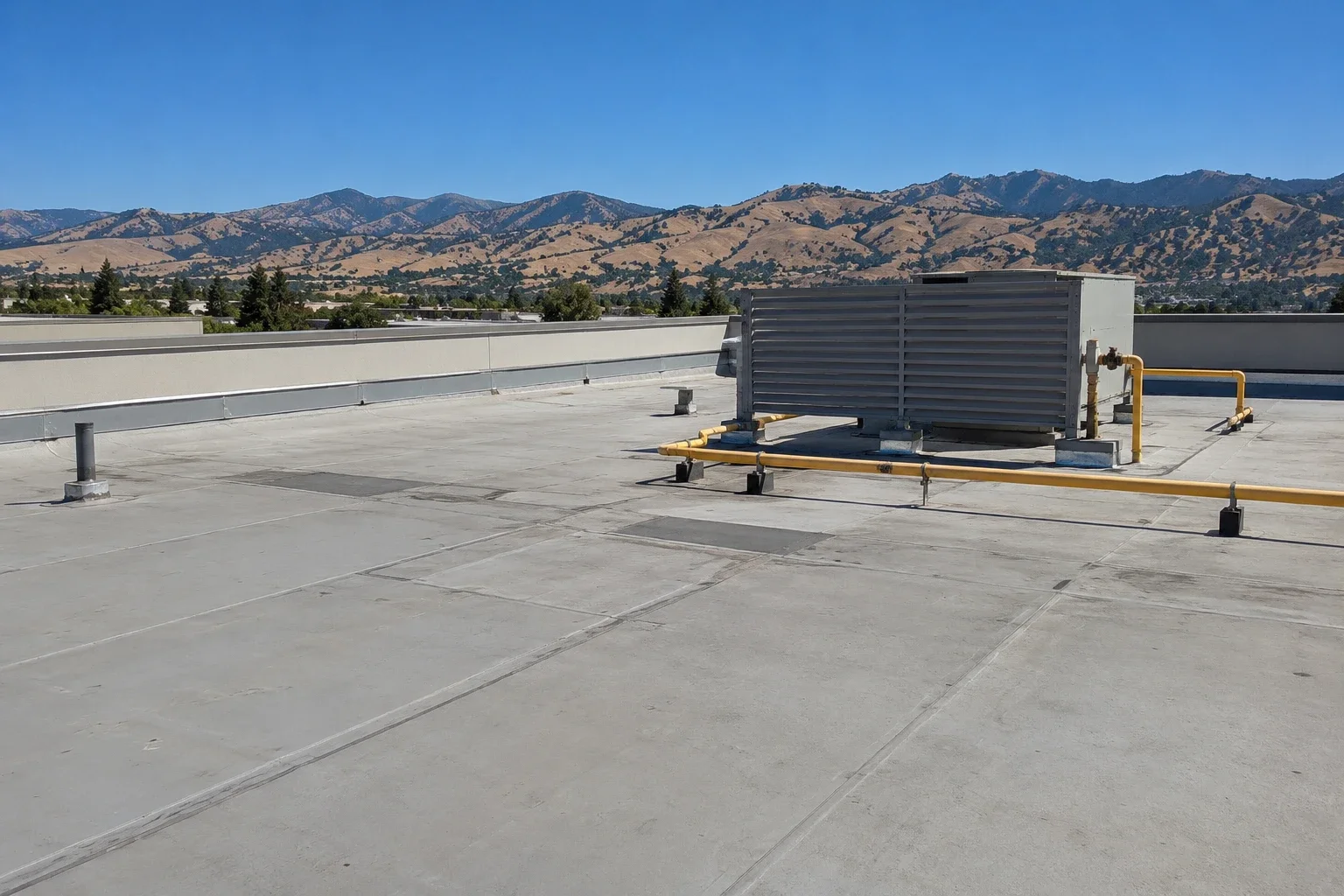
For a managed property, roof cost has two parts: what it costs to buy and what it costs to keep. A single-ply roof with a clean, documented history keeps the second part low. Seams are probed, the surface is cleaned after smoke seasons, and small defects are patched before moisture spreads into insulation. The cost of those visits is small next to the cost of replacing wet board across a roof that was left alone.
Lease timing matters as well. A tenant renewal, a refinancing or a sale is the moment a roof becomes a negotiation item, and a current roof condition report with photographs takes the guesswork out of that conversation. We structure the grade, the remaining-life range and the next action so a lender or buyer can read it without a briefing.
Insurance conversations follow the same logic. After a heavy smoke or heat year, a claim for wind or fire exposure rests on showing what the roof looked like before the event. A dated photo set and a prior grade establish that baseline, and the file is ready if an adjuster requests it.
Employers and warehouses around Central Point
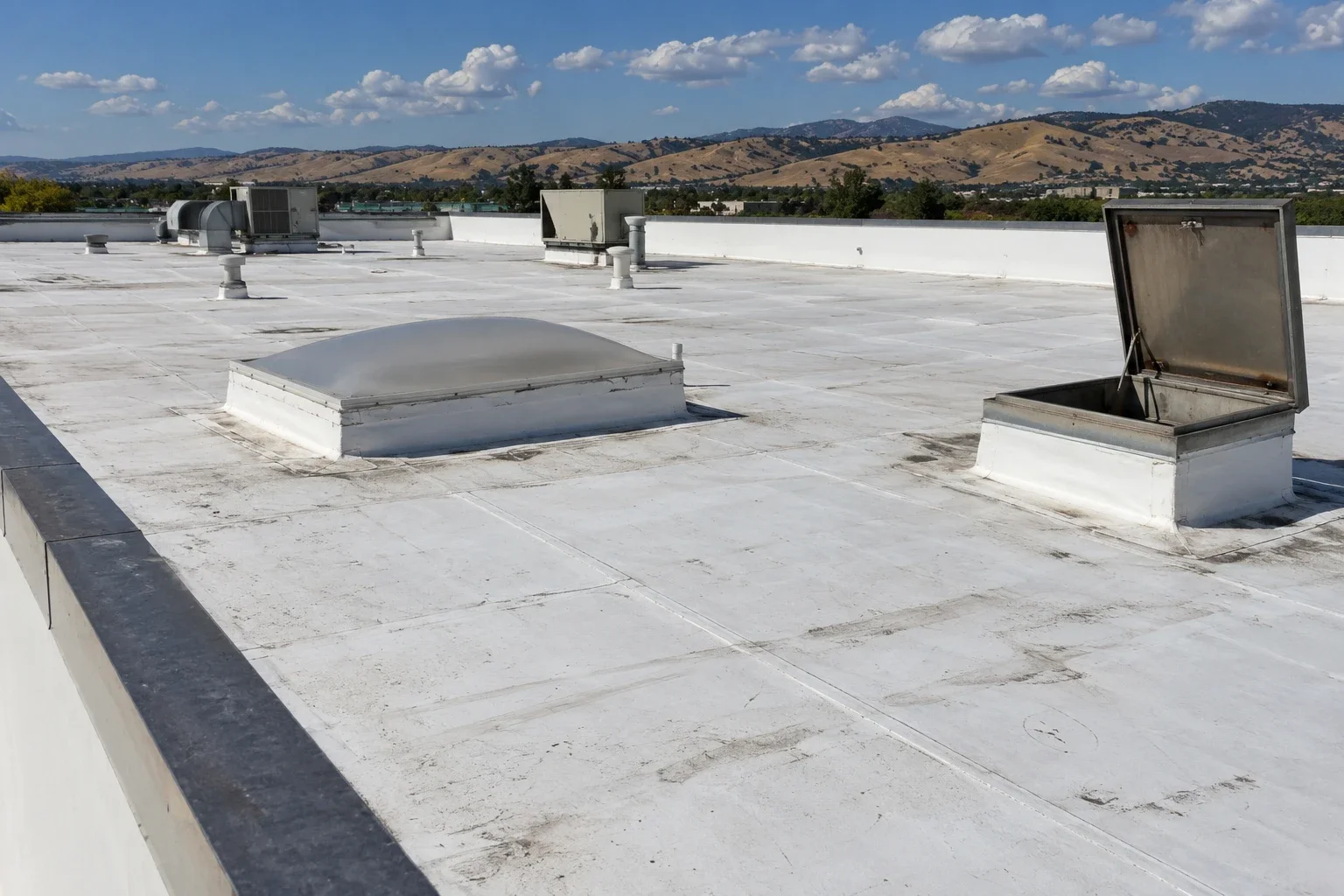
Central Point sits just south of Medford, with Interstate 5 and Oregon Route 99 running through it. Costco, Knife River Materials, Pilot Travel Center, USF Reddaway and Albertsons rank among the largest employers, School District 6 sits beside them, and Erickson Air Crane and Talk Radio Network put hangar and broadcast-facility roofs on the list. Those employers imply a range of roof types from retail and trucking facilities to hangars, and no single sheet suits all of them.
A flexible approach keeps a portfolio manageable: choose the sheet by exposure and use, but keep the accessories, adhesives and repair kits consistent where the system allows. Roof work in Central Point would be sequenced around delivery hours and shift changes, with rooftop access arranged through each operator in advance.
Thermal movement between cold dawns and hot afternoons
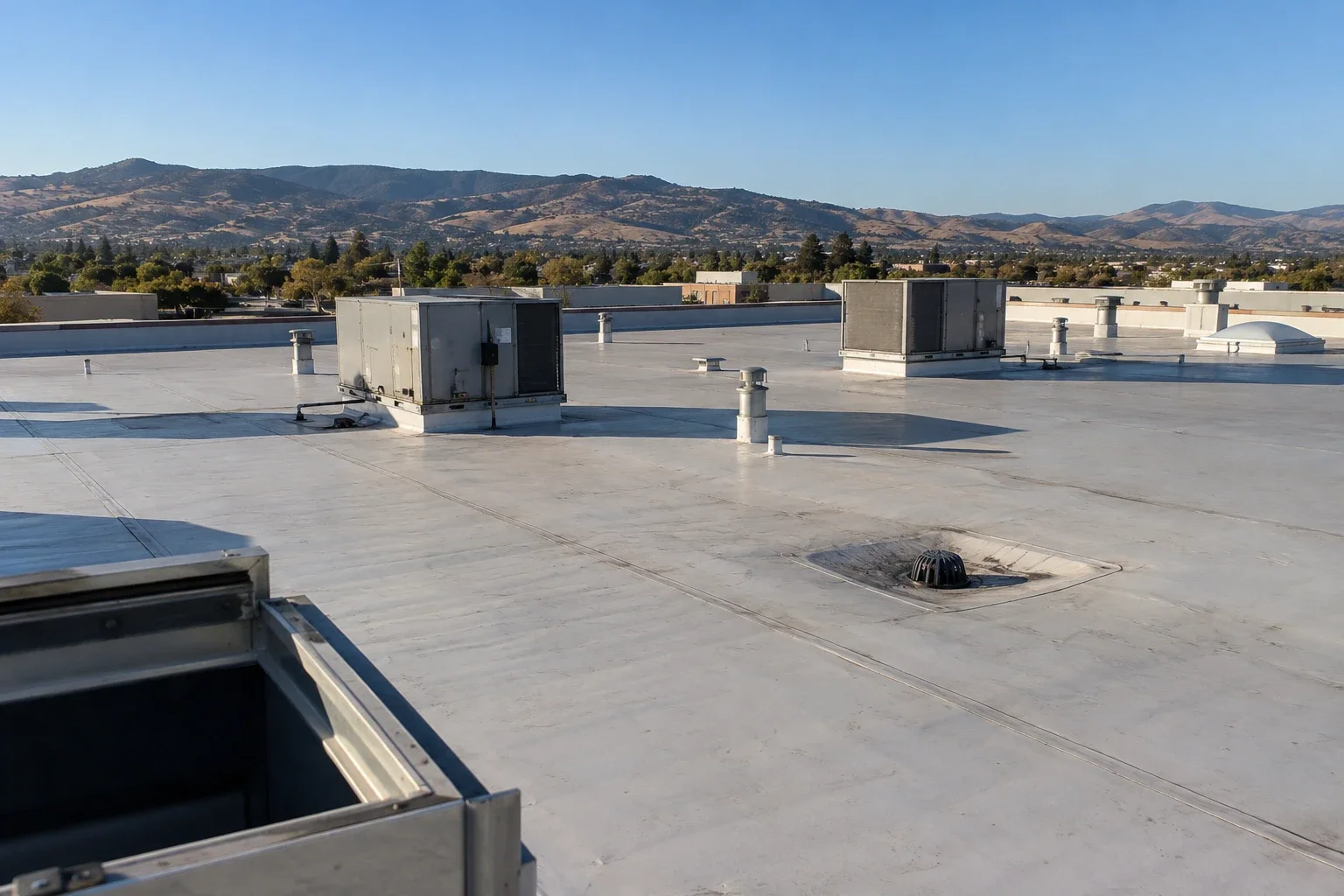
A single-ply sheet expands in afternoon heat and contracts overnight, and the valley gives it a wide swing. About 64 freezing mornings a year sit on the same calendar as the triple-digit stretch, and annual precipitation of only about 18.4 inches means little rain arrives to rinse or cool the surface. Every cycle tugs at seams, fastener plates and flashing terminations, and a detail that is slightly loose will work looser each season.
That movement is the reason we check termination bars, pull-out resistance at fasteners and the tension of flashing at walls. A tight roof in April may show a lifted edge by October, and the earlier visit documents it as a trend rather than a surprise. At Harry and David's Medford site, orchards, manufacturing and distribution buildings share one property, so the register tracks thermal behavior by building rather than by address.
Ember exposure at edges and equipment
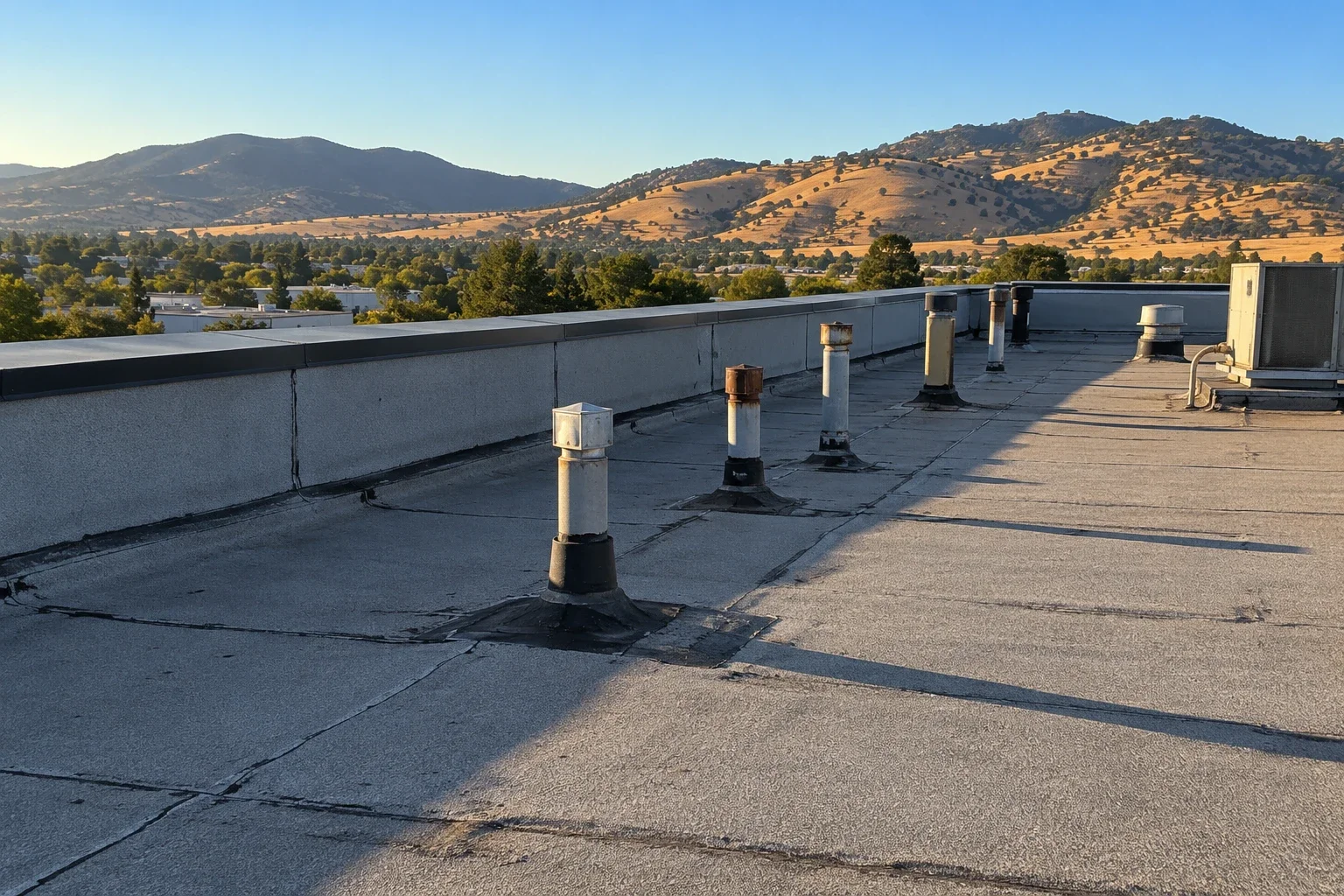
Wildfire is a local roof topic, with about 2,600 Jackson County homes lost in the 2020 Almeda and Obenchain fires. Embers behave predictably: they settle in debris at parapet corners, in gutters, behind curbs and along open edge metal. A single-ply roof with clean drains and sealed terminations gives them far less to ignite.
We clear debris, check sealant at edge details and report on any exposed combustible material such as wood nailers with open ends. The assembly's fire classification is stated in plain language, and no membrane is described as fireproof. Mechanical contractors are told where intake filters need attention after smoke events, since Medford recorded 26 smoke days in 2021 and filters load quickly in weeks like those.
Patching without making the next leak harder
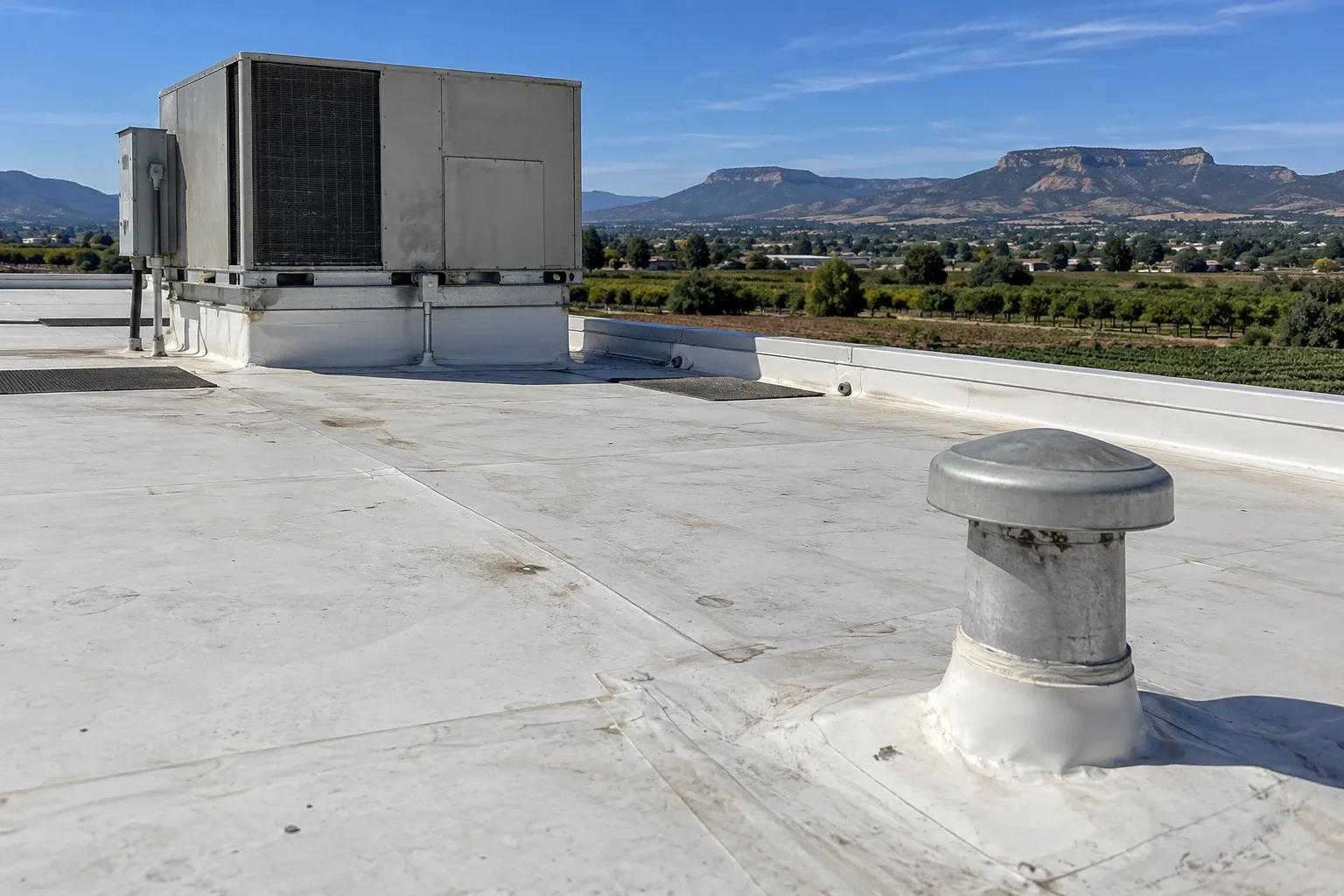
A bad patch is worse than no patch. Incompatible adhesives, unprepared surfaces and oversized covers can trap moisture or open new laps. We prepare the surface, match the patch to the sheet chemistry and avoid stacking repairs over a failing area. Where a section has failed seams across more than a small fraction of its length, we say so and price a section replacement instead of a patch.
The decision between leak repair and a larger scope depends on three facts: whether moisture has entered the insulation, how many seams or flashings have failed, and how long the owner plans to hold the building. A drone roof inspection and an infrared pass answer the first two questions quickly and without the foot traffic that damages a tired membrane.
Access also shapes the repair plan. A roof with narrow parapets, rooftop units clustered near hatches and limited tie-off points may call for staging that costs more than the repair itself, so we flag access constraints at the first visit and price them separately rather than burying them in a lump sum.
Setting one maker beside the others
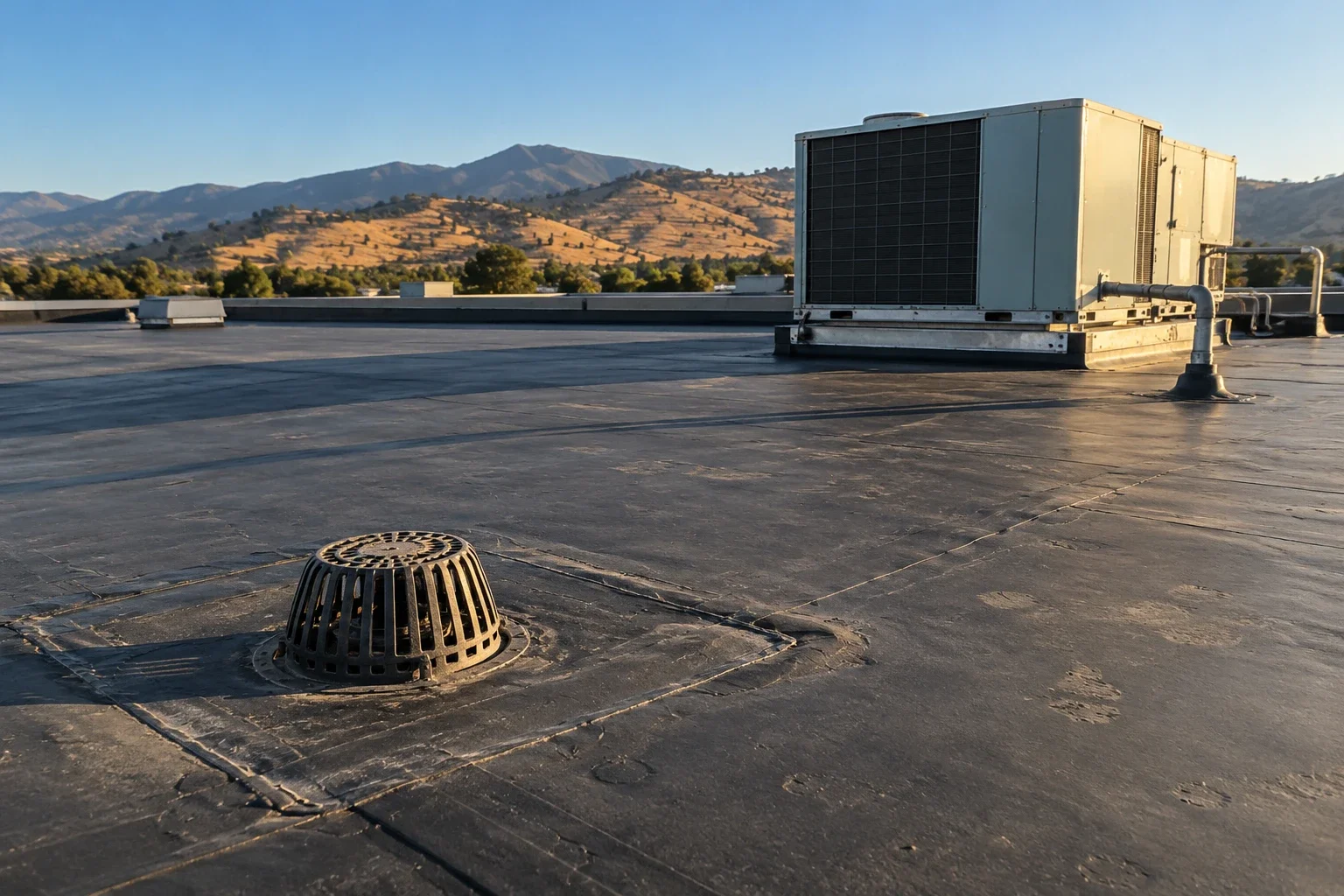
Owners often compare this system with Carlisle SynTec, Soprema or GAF. The useful comparison is installed detail, repair method and owner duty, not the logo. Warranty terms belong to the manufacturer, and the owner's obligations are walked through before work starts.
Code timing belongs in the same conversation: from April 1, 2026 the state's structural code, built on the 2024 International Building Code, is mandatory, and a tear-off or recover is checked against it. We confirm the current edition with the building department and fold the result into the plan.
Send the list and receive a grade for each roof

Related Roofing Pages

Questions About Versico Roofing Systems
Does a single-ply roof suit a trucking or distribution facility?
It can. Broad, open roofs with few penetrations suit a single-ply sheet, but walk paths to rooftop units need protection so service traffic does not wear through the surface.
Which Central Point building types need a different sheet?
Roofs near kitchen exhaust, fueling operations or process vents may need a chemically resistant sheet. Hangars and broadcast buildings add structural and equipment considerations we check during the first walk.
Can a drone replace a walk across the roof?
For a first look, largely yes. Imagery shows ponding, open seams and debris without foot traffic, and we follow with a hands-on check at any area the images flag.
How do I decide between patching and a section replacement?
Count failed seams, check moisture with infrared and weigh the years left in the lease. When failures cluster across a section, replacing that section usually costs less than repeated callouts.
What goes into the roof register for a single-ply roof?
Membrane type, attachment, age, seam condition, flashing grade, drain status, repair history and a remaining-service-life estimate. Each entry carries a date so the aging rate can be read year to year.
Why does a roof that passed inspection in spring show lifted edges in fall?
A summer of expansion and contraction can work a loosely fastened edge or termination further open. Documenting each spring condition makes the fall change visible and tells us whether a fastener repair or a termination upgrade is needed.